

I used to think a long morning run would knock our Aussie flat. He’d lap the park at full tilt, tongue flapping, and still drop a slobbery frisbee at my feet the second we got home. It was like the run never happened. That’s when I realized the problem: I was exercising his legs, not his head. An Australian Shepherd doesn’t run on just physical energy—they run on a need to work, solve, and anticipate. If you aren’t feeding that brain, you’re just building a marathoner who still wants to play.
Training & BehaviorBy Best Family Dog Breeds Editorial Team
How We Actually Tire Out Our Australian Shepherd (Walks Alone Don't Cut It)
A five-mile run barely scratches the surface for our Australian Shepherd. Here’s how we mix brain games and high-energy play to finally get a tired dog.
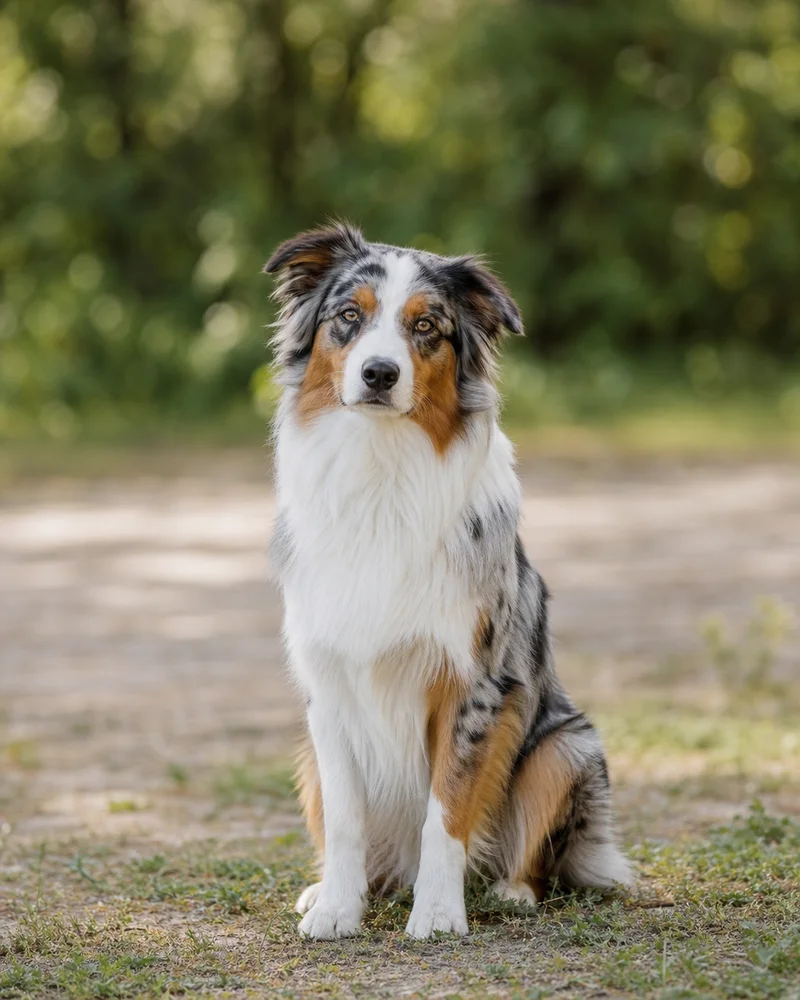
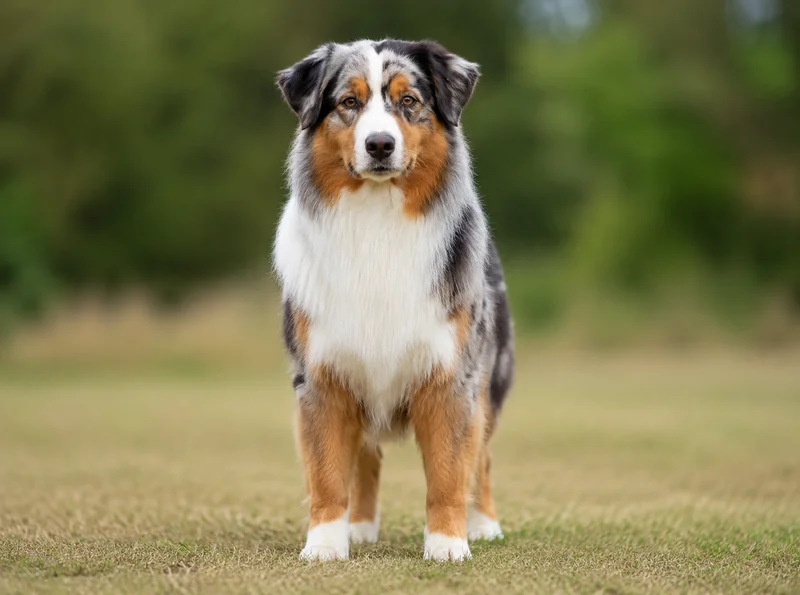
Australian Shepherd — sitting — View full breed profile →
The 5-Mile Run That Didn’t Even Make a Dent
Here’s the thing about Aussies: their energy level is a 5 out of 5. That’s not marketing fluff. These dogs were bred to move livestock all day across uneven terrain, making split-second decisions. A straight-line jog doesn’t engage the part of them that reads sheep, switches directions, or thinks three steps ahead. After a five-mile run, their muscles might be warm but their mind is still fresh. That’s why you’ll see a panting dog grab a toy box and shake it at you. He’s not showing off—he’s genuinely unfulfilled.
I learned this the hard way. We’d come back from a trail run and within twenty minutes he’d be pacing, nudging my elbow, or “herding” the cat from room to room. My legs were toast, but he was ready for round two. The missing ingredient wasn’t more distance; it was mental load. Once I started treating exercise like a two-part equation—physical plus cognitive—things changed.
It’s Not Just Energy—It’s a Brain That Won’t Quit
Australian Shepherds are trainability level 5 for a reason. They pick up patterns almost too fast, and they notice everything: the way you grab your keys, the sound of a snack bag, the squirrel that lives three houses down. That intelligence makes them brilliant partners, but it also means boredom hits hard. A bored Aussie doesn’t nap cutely—he redesigns your couch or barks at the ceiling fan. Their default state is “what’s next?”
This is where mental stimulation becomes non-negotiable. Think of it like this: physical exercise tires the body for an hour; mental exercise tires the brain for far longer. A dog who’s had to search for his dinner, decipher a new trick, or navigate a homemade agility course settles differently. His eyes get soft instead of darting, and he stops looking for a job to invent.
Games That Actually Wear Out an Aussie
I rely on a rotation of four activities that combine movement with thinking. They don’t require a ton of gear, just some creativity and a little time.
Nose work
Scent work is like meditation for a herding dog—it forces focus and deep breathing. I hide small treats in the living room, the backyard, even in a cardboard box maze. At first, I’d let him watch me place them, then release him with “find it.” Now I use odor kits and hide birch-scented Q-tips in trickier spots. A solid twenty-minute search leaves him mentally drained and temporarily uninterested in the doorbell. Bonus: it builds confidence without any pressure.
Puzzle feeders
Every meal becomes a brain game. I ditched the plain bowl and now use puzzle feeders: ones with sliding compartments, spinning layers, or treat-dispensing balls. On days when I’m rushed, a frozen Kong stuffed with kibble and a little peanut butter buys us 45 minutes of quiet, focused licking. The beauty is that he has to solve a problem to eat, which taps his natural drive. It also slows down a dog that’s food-motivated—common in the breed—and helps prevent bloat.
Frisbee
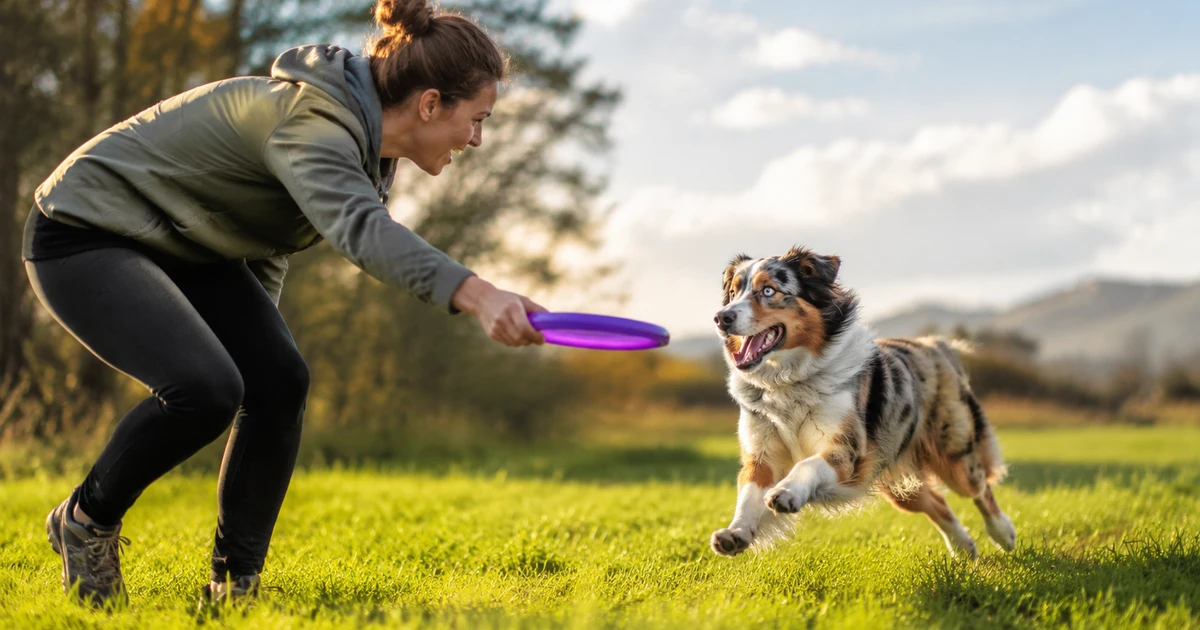
Frisbee hits the sweet spot between physical and mental. It’s not just a fetch toy; catching a disc midair requires timing, spatial judgment, and impulse control. We play with the roller method first: I roll the disc on the ground so he learns to track it without leaping dangerously. Once he’s warm, we up the ante with short tosses. The laser focus on my hand, the sprint, the catch—it’s a full-body workout that leaves him panting and content. Just be smart: keep sessions short and avoid hard landings to protect those joints.
Backyard agility
You don’t need a course full of tunnels. I use a broomstick propped on buckets for jumps, a hula hoop for weaving, and a picnic blanket as a “pause table.” Teaching him to run a simple sequence—jump, tunnel (a pop-up one from the pet store), weave, pause—forces him to listen, watch my body language, and throttle his speed. Agility is where the breed’s versatility shines; his body is built for it, and his mind loves the partnership. Even ten minutes of directed obstacle work leaves him more tired than a 5k.
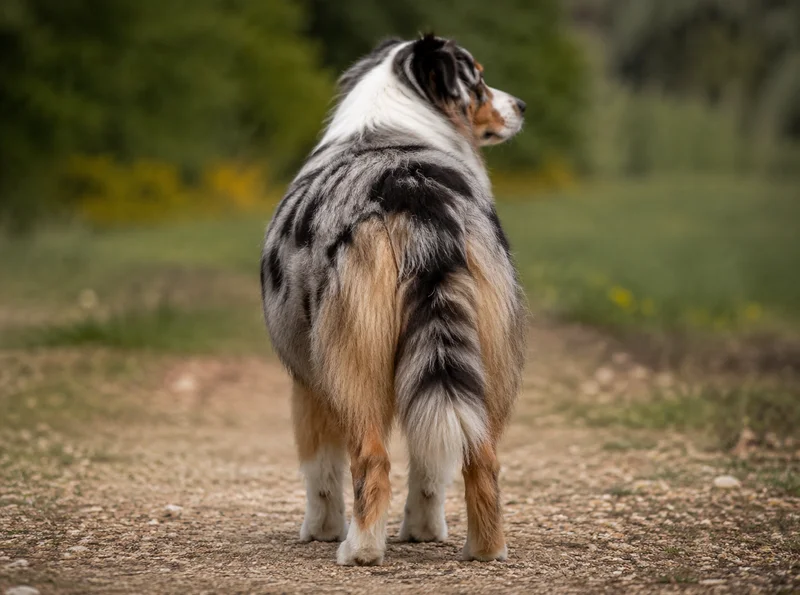
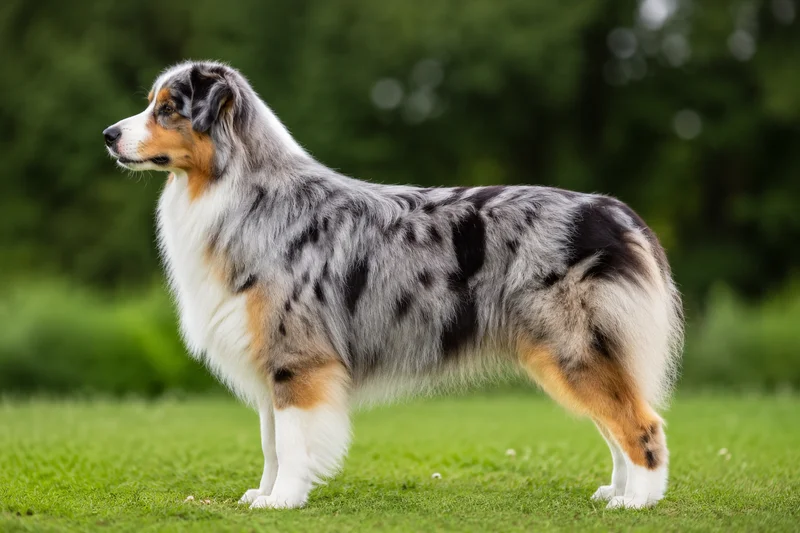
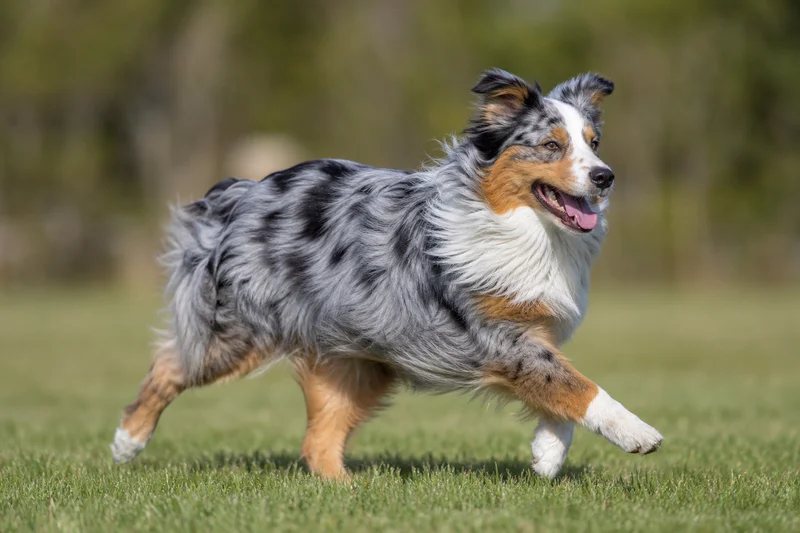
Australian Shepherd — rear — View full breed profile →
Why Mental Work Beats Physical Grind
A purely physical workout spikes adrenaline but doesn’t resolve that restless itch. A dog who’s only ever run might still pace because his brain is asking, “What are we doing next?” Mental games drain a deeper kind of energy. When an Aussie solves a puzzle or follows complex cues, he’s using the exact circuitry that evolution shaped for herding—and that’s what triggers genuine calm.
I also see a difference in his anxiety. This breed is sensitive; isolation or under-stimulation can fuel barking, chewing, or shadow chasing. A tired-from-thinking dog is less likely to spin out over a mail truck. He’s still alert—barking is a 4 out of 5, after all—but it’s more manageable.
Our Daily Recipe for a Calm(ish) House
No two days are identical, but the rhythm stays consistent. Mornings start with a 30-minute off-leash run or frisbee session, followed by a puzzle feeder for breakfast. Midday, when I’m working, he gets a scent game or a frozen Kong. Evenings, we do a short agility session or practice a new trick. By 8 p.m., he’s curled at my feet, not staring at me with those expectant blue eyes.
This routine isn’t for everyone. If you’re exploring best dog breeds for families, know that an Aussie is a wonderful, loyal companion but demands a serious time investment. They’re not apartment-friendly, and they need a handler who’s as engaged as they are. For us, the payoff is a dog who’s exuberant without being destructive, and who greets the mail carrier with a bark, not a disaster zone. That’s the difference between a worn-out body and a truly satisfied mind.
Breeds mentioned in this article
 Australian Shepherd
Free dog tools
Useful calculators for dog owners
🍫Chocolate Toxicity CalculatorEstimate the risk from the type and amount of chocolate your dog ate, by weight.🍖Dog Food CalculatorEstimate dry-food cups, wet-food containers, or fresh-food grams from daily calorie needs and your label.💧Dog Water Intake CalculatorHow much water your dog should drink per day, by weight, activity and food type.🦴Dog Treat Calorie CalculatorUse the 10% treat rule to calculate a safe daily treat budget and food adjustment.🎂Dog Age CalculatorConvert your dog’s age to human years using the modern, size-adjusted formula.⏳Dog Lifespan CalculatorEstimate life expectancy from breed size and weight, with tips to add healthy years.
Dog Diary
More articles you might like
Health
Hypoallergenic Dog Grooming: A Practical Guide for Allergy-Aware Homes
Low-shedding dogs still need thoughtful coat care. Learn what grooming can—and cannot—do in an allergy-aware home.
Tips
Best Large Dogs for Apartments: Calm Big-Breed Options and Real Constraints
Large dogs can fit apartment life when their energy, barking, grooming, and household fit align. Compare six database profiles.
Tips
Low-Maintenance Dogs for First-Time Owners: What “Easy” Really Means
“Low maintenance” is a fit between a dog’s scorecard and your routine—not permission to ignore a dog. Compare six first-time-friendly profiles.
Tips
Big Hypoallergenic Dogs: Large Low-Shedding Breeds and Their Trade-Offs
A larger low-shedding dog can still demand grooming, activity, and thoughtful household planning. Compare six profiles before choosing one.
Find your perfect dog
Browse our in-depth breed guides:
Share