

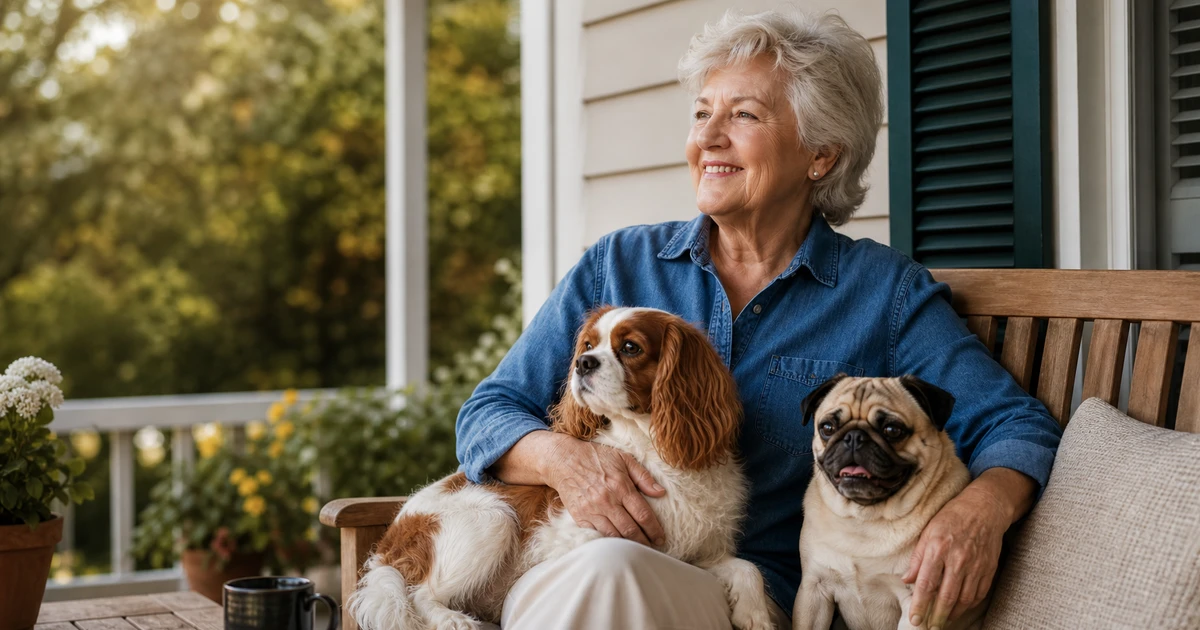
The best dog breeds for seniors share a short list of virtues: they're easy to handle, they don't pull you off your feet, and they'd rather follow you from room to room than tear up the backyard. Choosing wisely matters more later in life, when a dog's size, energy, and grooming demands can either fit neatly into your routine or quietly run it.
This ranking leans on companion breeds that thrive on human attention and adapt well to apartments, smaller homes, and quieter days. We weighed temperament, manageable size, exercise needs, and how forgiving each breed is for first-time or returning owners.
A few sighthounds made the cut too, which surprises people — but their couch-potato streak fits retirement better than you'd guess. Here's the full lineup, downsides included.
What makes a good dog for seniors?
The right dog for an older owner isn't about a single trait — it's the balance of several. A breed can be sweet-natured and still be a poor fit if it needs two hours of running a day or weighs enough to topple you on a leash.
Temperament
Look for dogs that are affectionate, calm in the house, and tolerant of a slower pace. Companion breeds like the Cavalier King Charles Spaniel, Havanese, and Maltese were bred to sit on laps and shadow their people, which is exactly the bond many seniors want. Steady nerves matter too — a dog that startles or snaps at grandchildren creates stress, not comfort.
Size & sturdiness
Small and medium dogs dominate this list for a reason. A Shih Tzu or Bichon Frise is easy to lift into a car, bathe in a sink, and manage if it lunges at a squirrel. But tiny doesn't always mean better — very small dogs like the Japanese Chin and Maltese can be fragile and easy to step on or trip over. The Whippet and Greyhound are larger, yet they're gentle leash walkers and rarely throw their weight around.
Energy & exercise
Most breeds here are content with short daily walks and indoor play. Frenchies, Pugs, and Shih Tzus are happy with a stroll and a nap. Sighthounds need a couple of brisk walks plus the occasional safe sprint, but they sleep most of the day. Match the dog's energy to what you can reliably deliver in bad weather and on low-energy days — not your best day.
Trainability & grooming
Breeds that aim to please, like the Cavapoo, Havanese, and Coton de Tulear, pick up house manners quickly and respond to gentle, reward-based training. The trade-off is coat care: Bichons, Cotons, Havanese, Maltese, and Cavapoos need regular brushing and professional grooming every few weeks, which adds cost and effort. Short-coated Pugs, Frenchies, Whippets, and Greyhounds are wash-and-go but shed and may need wrinkle or skin care. Decide honestly whether you'd keep up with daily brushing — a matted coat is a vet visit waiting to happen.
Compare at a glance
Tap any breed name to jump to its full write-up.
| Breed | Size | Weight | Energy | Trainable | Grooming | Apartment |
|---|---|---|---|---|---|---|
| Medium | 11–18 lb | ✓ | ||||
P Pug | Small | 13–18 lb | ✓ | |||
| Small | 11–18 lb | ✓ | ||||
| Small | 5–7 lb | ✓ | ||||
| Small | 11–15 lb | ✓ | ||||
| Small | 8–15 lb | ✓ | ||||
| Small | 7–13 lb | ✓ | ||||
| Medium | 24–29 lb | ✓ | ||||
| Small | 5–7 lb | ✓ | ||||
| Small | 9–13 lb | ✓ | ||||
| Small | 9–15 lb | ✓ | ||||
| Small | 9–25 lb | ✓ | ||||
| Large | 24–40 lb | ✓ | ||||
| Giant | 60–66 lb | ✓ |
The 14 best dog breeds for seniors
Cavalier King Charles Spaniel
Gentle, affectionate, and easy to live with in a quieter home.
Medium · 11–18 lb · 12 yr
Picture a small spaniel happy to spend the afternoon draped across your lap, then trot beside you for a gentle loop around the block — that's the Cavalier in a sentence. At 12 to 13 inches and a manageable 11 to 18 pounds, it's light enough to lift into a car or onto a couch without straining a back or a wrist. The energy level sits at a moderate 3 out of 5, which in practice means a couple of 20 to 30 minute walks and some indoor play keep this dog content. No marathon hikes required.
What makes the Cavalier shine for older owners is its eagerness to please. Trainability rates 4 out of 5, so basic manners come quickly, and barking sits low at 2 out of 5 — a quiet houseguest for apartments and shared buildings. Affection maxes out at 5 out of 5; this is a dog that wants to be touching you.
The honest caveat: that silky, slightly wavy coat needs regular brushing, and the breed's 12-year lifespan comes with well-documented heart concerns worth discussing with a breeder and vet. If you want a steady, devoted shadow that fits a calmer routine, the Cavalier earns its spot here. Plan grooming sessions into your week and you'll have a willing companion who asks for little beyond your company.
Pug
Small, sociable, and happy with short walks and sofa time.
Small · 13–18 lb · 10 yr
A Pug greets retirement the way it greets everything else — by parking itself in your lap and refusing to leave. Compact at 10 to 11 inches and 13 to 18 pounds, this is a sturdy little tank that doesn't demand much physical effort from its owner. Energy rates just 2 out of 5, so short walks and a snooze on the sofa suit a Pug perfectly. For a senior who wants companionship over cardio, that low-key wiring is the whole appeal.
The short, smooth coat keeps grooming simple at 2 out of 5, though it does shed (3 out of 5), so expect to run a vacuum. Barking is minimal at 2 out of 5. Affection clocks in at the top of the scale, and Pugs are easygoing with kids, other dogs, and cats — handy when grandchildren or another pet enter the picture.
Two honest caveats. First, that flat, wrinkled face makes Pugs sensitive to heat and prone to breathing trouble, so hot weather and overexertion are real risks. Second, trainability is a stubborn 2 out of 5 — patience and treats beat repetition. The breed's average lifespan is around 10 years.
If you keep a cool, calm home and don't mind wiping facial folds clean, a Pug repays you with relentless, comedic devotion and very modest exercise needs.
Shih Tzu
A classic lapdog: low shedding, low exercise, high grooming.
Small · 11–18 lb · 10 yr
Bred for centuries to do nothing more than warm a royal lap, the Shih Tzu arrives perfectly suited to a quiet household. It stands about 11 inches and weighs 11 to 18 pounds — solid and well-muscled under the hair, not a fragile puffball. Energy sits at 2 out of 5, meaning short walks and indoor pottering keep this dog satisfied, which matches a slower pace nicely.
The headline for allergy-conscious owners: shedding rates a remarkable 1 out of 5, and the coat is considered low-allergen. That comes at a price, though. Grooming is a full 5 out of 5 — that long, silky double coat mats fast and demands daily brushing or regular trips to a groomer who can keep it in a short "puppy cut." Budget for it, both in time and money.
Temperament is the draw. Affection rates 5 out of 5, and Shih Tzus are friendly with kids, dogs, and cats, with a steady trainability of 3 out of 5. Barking is moderate at 3 out of 5, so they'll announce visitors without becoming a nuisance.
Lifespan averages around 10 years. The dog hates being left alone for long stretches, so this is a breed for someone home most of the day. Keep up the coat care and you'll have a devoted lap dog that asks for very little exercise in return.
Maltese
Tiny, devoted, and low-shedding for owners who can manage the coat.
Small · 5–7 lb · 12 yr
Tiny enough to ride in a tote bag yet convinced he's the biggest dog in the room, the Maltese brings outsized personality to a five-pound frame. At roughly 10 inches and just 5 to 7 pounds, he's the lightest dog on this list — easy to carry, easy to settle on a lap, and well suited to a small apartment. Energy rates a moderate 3 out of 5, satisfied by short walks and indoor play.
For anyone wary of fur on the furniture, shedding is a minimal 1 out of 5, and the single white coat counts as low-allergen. But that flowing silk demands work: grooming sits at 5 out of 5, so daily brushing and routine trims are non-negotiable unless you keep him clipped short. Trainability is a bright 4 out of 5, and the breed is gentle and affectionate, scoring 5 out of 5 for devotion. Lifespan runs around 12 years.
The honest caveat is fragility. At under seven pounds, a Maltese can be injured by a careless step or a fall from a high bed, so a household with steady footing and watchful habits suits him best. Barking is moderate at 3 out of 5. If you want a featherweight, low-shedding companion who's content to stay close, the Maltese fits — just commit to the brush and mind where you step.
Bichon Frise
Cheerful and allergy-friendlier, with grooming as the main workload.
Small · 11–15 lb · 12 yr
Behind the white powder-puff coat sits a springy little athlete that loves to dance on its hind legs and entertain whoever's watching. The Bichon Frise stands 9 to 11 inches and weighs 11 to 15 pounds — compact and muscular rather than delicate. Energy rates 3 out of 5, so a daily walk plus some play keeps this cheerful dog balanced. It's a manageable size for lifting and a forgiving choice for first-time and returning owners alike.
The coat is the headline. Shedding is just 1 out of 5 and the curly coat is low-allergen, a real plus for owners sensitive to dander. The trade-off: grooming sits at 4 out of 5, meaning regular brushing and professional trims every few weeks to prevent matting. Factor that cost in. Trainability is a willing 4 out of 5, and affection tops out at 5 out of 5, with good marks for getting along with kids, dogs, and cats.
Lifespan averages around 12 years. The honest caveat: Bichons are sociable to the point of disliking long stretches alone, and barking sits at a moderate 3 out of 5, so an empty house can mean noise and restlessness. For an owner who's home often and enjoys a happy, interactive dog, the Bichon delivers a steady stream of good cheer for modest exercise demands.
Coton de Tulear
Soft, friendly, and sturdy enough for relaxed family visits.
Small · 8–15 lb · 15–19 yr
Descended from dogs that survived shipwrecks off Madagascar, the Coton de Tulear turned out improbably cheerful — a small, smiling powder puff that takes companionship seriously. He stands 9 to 11 inches and weighs 8 to 15 pounds, with a dense cottony coat that makes him look bigger than the sturdy little body underneath. Energy rates 3 out of 5, satisfied by daily walks and play without demanding athletic effort from his owner.
The standout figure for seniors is the lifespan: 15 to 19 years, among the longest on this list. That's a genuine long-term companion, which is worth weighing honestly — adopting one means planning for well over a decade of care. Shedding is a low 1 out of 5 and the coat is low-allergen, but grooming runs 4 out of 5, so regular brushing keeps the cotton from matting. Trainability is a bright 4 out of 5, and barking stays quiet at 2 out of 5, which apartment dwellers and neighbors will appreciate.
Affection rates 5 out of 5, and the Coton gets along with kids, dogs, and cats. The caveat: he doesn't do well alone all day and can turn anxious or destructive without enough company. For an owner who's home and wants a quiet, devoted, long-lived friend, the Coton is hard to beat — just keep up the coat care and keep him close.
Havanese
Social, trainable, and small enough for apartment living.
Small · 7–13 lb · 14–16 yr
Picture a dog that trots after you from the kitchen to the mailbox just to keep you company, and you've got the Havanese in a nutshell. At 7 to 13 pounds and 8 to 12 inches tall, this Cuban native is light enough to lift one-handed but built sturdy enough that you won't worry about handling him. For a retiree who wants a constant sidekick, the appeal is obvious: an affection score of 5/5 means this dog treats every quiet afternoon as quality time.
The energy level sits at a moderate 3/5, so a couple of short walks and some indoor play keep him content — no marathon hikes required. He's quick to learn (trainability 4/5), which makes housetraining and basic manners less of a battle than you'd expect from a toy breed. The silky double coat barely sheds (1/5), a real plus if you'd rather not vacuum daily.
The honest caveat
That gorgeous coat needs work. Grooming runs 4/5, meaning regular brushing and trips to a groomer to prevent mats — budget for both the time and the cost.
With a 14-to-16-year lifespan, a Havanese is a long-haul companion. Just plan for company during the day; this breed unravels when left alone too long.
French Bulldog
Quiet, compact, and low-grooming, with heat and breathing caveats.
Medium · 24–29 lb · 10 yr
A French Bulldog won't drag you around the block at dawn — and for many older owners, that's precisely the draw. With an energy rating of just 2/5, this compact, muscular dog is happy with a short stroll and a long stretch on the sofa beside you. At 24 to 29 pounds and 11 to 13 inches, a Frenchie is dense and low-slung; lifting one feels heavier than the number suggests, which is worth keeping in mind if your back or grip isn't what it was.
The coat couldn't be simpler. Short, smooth, and fine, it scores 1/5 on grooming — a quick wipe-down and you're done. Shedding lands at a moderate 3/5. Best of all for shared walls and quiet streets, the barking rating is a rock-bottom 1/5, so you're not policing noise complaints.
The honest caveat
That flat-faced charm comes with breathing limitations. Frenchies struggle in heat and humidity, and their 10-year lifespan runs shorter than most small breeds on this list. Air conditioning isn't optional in summer.
Affectionate to a fault (5/5) and easygoing by nature, a French Bulldog wants to be wherever you are. For a calm household craving a low-fuss, devoted companion, few breeds match the package.
Japanese Chin
Catlike, quiet, and well-suited to calm indoor routines.
Small · 5–7 lb · 10 yr
If you want a dog who watches the room rather than rules it, the Japanese Chin fits the role with quiet dignity. Weighing just 5 to 7 pounds and standing 8 to 11 inches, this is one of the daintiest companions you'll find — yet refined, not fragile. Bred for centuries to ornament the Japanese imperial court, the Chin still treats lap-warming as a serious vocation.
For seniors, the low-key nature is the headline. Energy sits at 2/5, and barking at a polite 2/5, so a stranger at the door earns a puzzled stare more often than a racket. This dog reads your mood like a book, pressing closer when you're tense and settling with a sigh when you're calm. The silky single coat needs moderate upkeep (grooming 3/5, shedding 3/5) — manageable brushing rather than a daily chore.
The honest caveat
At 5 to 7 pounds, a Chin is genuinely tiny. He's easy to trip over and easy to injure, so a household with grandkids racing through will need supervision. The 10-year lifespan is also shorter than the small-breed average.
Good with cats, other dogs, and apartment living, the Japanese Chin asks for little beyond your company. For a peaceful home, that quiet devotion is exactly the point.
English Toy Spaniel
A gentle toy spaniel for owners who want a soft companion.
Small · 9–13 lb · 12 yr
Here's a dog who'd rather claim the warm spot against your leg than patrol the yard, and she means it. The English Toy Spaniel runs 9 to 13 pounds and 10 to 11 inches — small and square-built, solid enough that she never feels breakable. Five centuries of lounging in royal bedchambers gave this breed a single talent it has perfected: keeping a person company.
The calm temperament suits a slower-paced home beautifully. Energy is a modest 2/5, and barking sits low at 2/5, so you get a gentle, devoted shadow rather than a noisy one. She'll follow you room to room simply to stay near. The long, silky coat needs regular but not punishing care (grooming 3/5, shedding 3/5), and with a 12-year lifespan she'll be around for the long haul.
The honest caveat
That deep attachment has a downside: this breed is prone to distress when left alone for long stretches. If your days involve hours out of the house, she's not your match.
Good with kids, cats, and other dogs, and well-suited to apartments, the English Toy Spaniel rewards a homebody owner. Keep her close and she'll repay you with quiet, unwavering loyalty.
Tibetan Spaniel
Small, alert, affectionate, and less fragile than many toy dogs.
Small · 9–15 lb · 12 yr
Don't let the silky coat fool you — the Tibetan Spaniel is a self-possessed little watchdog who'd happily perch on the back of your sofa and survey the room like he owns it. At roughly 10 inches and 9 to 15 pounds, he's a sturdy, rectangular dog with more spine than the typical lapdog, which suits owners who'd rather not coddle a delicate breed.
The appeal for a senior household is his middle-of-the-road nature. Energy lands at 3/5 — enough for short walks and play, not so much that he'll wear you out. He's alert and will sound off at the doorbell (barking 3/5), making him a tidy little early-warning system without becoming a nuisance. Affection runs 4/5, but on his terms: he'll cuddle when he's in the mood and nap solo when he isn't.
The honest caveat
That independent streak means training takes patience. With a trainability of 3/5 and a mind of his own, he won't bend over backward to please you the way some breeds do.
The double coat needs moderate brushing (grooming and shedding both 3/5), and a 12-year lifespan keeps him at your side a good while. Good with kids, cats, and apartment life, he's a confident companion for someone who appreciates a dog with opinions.
Cavapoo
A friendly companion cross with low-shedding potential and soft manners.
Small · 9–25 lb · 12–15 yr
A Cavapoo doesn't recognize personal space, and most owners decide that's the whole appeal. This Cavalier-and-Poodle cross blends the spaniel's velcro devotion with the Poodle's quick wit, producing a small dog who reads your mood and stays glued to your side. Size varies more than you'd think — anywhere from a 9-pound featherweight to a solid 25 pounds, depending on whether a Toy or Miniature Poodle was in the mix, so ask the breeder where the parents landed.
For older owners, two traits stand out. The soft wavy coat sheds almost nothing (1/5) and ranks low-allergen, a genuine help for sensitive sinuses. And at trainability 4/5, this is a bright, biddable dog that picks up housetraining and manners with ease. Energy sits at a manageable 3/5 — daily walks and play, nothing extreme.
The honest caveat
That curly coat demands real maintenance (grooming 4/5): regular brushing and professional trims, or it mats fast. Solitude also hits this breed hard, so long stretches alone are a poor fit.
With a 12-to-15-year lifespan and a 5/5 affection rating, a Cavapoo is a long, loving commitment. For a home with steady company and a grooming budget, it's a tough breed to beat.
Whippet
Quiet and clean indoors after a simple daily walk.
Large · 24–40 lb · 12–15 yr
Picture a dog that runs flat-out for ninety seconds, then commits to your lap for the rest of the afternoon — that's the Whippet's whole personality in two acts. For a retiree who wants companionship without a dog that demands constant management, this sighthound hits a sweet spot. At 24 to 40 pounds and 17 to 20 inches tall, it's substantial enough to feel like a real dog but light enough to lift into a car or onto a vet table without straining your back.
The care load is genuinely low. That short, fine coat scores a 1 out of 5 for grooming and only 2 for shedding, so a quick weekly wipe-down covers it. Barking is minimal (2/5), which keeps the peace in an apartment or a quiet street. Affection runs to a maximum 5/5, and Whippets are gentle, quiet, and easy with both kids and other dogs.
The honest caveat: that 3/5 energy isn't trivial. A Whippet needs a daily sprint in a securely fenced area, because the prey drive is hardwired — an unfenced yard or an off-leash park near traffic is asking for trouble. They can also feel the cold with so little coat.
With a 12-to-15-year lifespan, a Whippet is a long, calm commitment rather than a short novelty.
Greyhound
A large but mellow companion for seniors comfortable with the size.
Giant · 60–66 lb · 11–12 yr
Most people expect a racing dog to be a tornado in the living room, then meet a retired Greyhound and find it asleep across the entire sofa by mid-morning. These are the original 40-mph couch potatoes, and that quiet, settled nature makes them an underrated match for an older owner. They stand tall at 27 to 30 inches but carry only 60 to 66 pounds, so the frame is lanky rather than bulky — though the height does mean a sturdy dog to steady on a leash.
Daily upkeep is light. The short, smooth coat needs almost nothing (grooming 1/5, shedding 2/5), and the bark is about as rare as it gets at 1 out of 5 — you'll forget you have a dog until the doorbell goes ignored. Greyhounds are gentle, laid-back, and affectionate (4/5), good with kids and other dogs, and adoptable retired racers often arrive already house-savvy.
The caveat worth weighing: that independent streak and strong prey drive mean recall can't be trusted off-leash, and they need secure fencing plus a daily walk to burn their 3/5 energy. The thin coat also leaves them cold-sensitive.
With an 11-to-12-year lifespan and a temperament built around rest, a Greyhound asks for less than its size suggests.
How to choose the right dog for your home
Start with your actual day, not your ideal one. If you walk most mornings and want company on the sofa by afternoon, almost any breed here works. If mobility is limited or you travel often, lean toward small, low-exercise companions like the Pug, Shih Tzu, or English Toy Spaniel, and arrange backup care before the dog arrives.
Breeder vs rescue
A reputable breeder lets you meet the puppy's mother, shows health testing for the breed's known issues, and asks you plenty of questions back. Walk away from anyone selling multiple breeds, refusing a home visit, or pushing a quick sale. Rescue is often the smarter route for seniors: adult dogs come housetrained, with a settled personality you can assess on the spot. Breed-specific rescues exist for nearly everything on this list, including Greyhounds retired from racing.
Meeting the dog
Spend time with the parents or, for a rescue, the dog itself. You want calm curiosity, not frantic energy or fearful shrinking. Ask how it behaves around strangers, other dogs, and noise. For an older owner, a confident, easygoing adult often beats a cute but unpredictable puppy.
Budget and ongoing cost
The purchase price is the small number. Plan for food, annual vet care, parasite prevention, and pet insurance — premiums climb as the dog ages. Coated breeds add grooming bills every four to six weeks. Flat-faced dogs like Pugs and French Bulldogs can face breathing, eye, and skin issues that get expensive, so budget accordingly and ask the breeder about the parents' health.
Red flags
Be wary of any seller who won't show you where the dogs live, has no paperwork, or guarantees a temperament a puppy can't have yet. If a deal feels rushed or secretive, it usually is. A good match is worth waiting for.
Before you decide
These breeds are gentle, but none is maintenance-free. Coated dogs — Bichon, Havanese, Coton, Maltese, Cavapoo — demand consistent brushing and regular grooming appointments; skipping that leads to painful mats and skin trouble. If your hands or schedule can't manage daily care, choose a short-coated breed instead.
Flat-faced breeds deserve a clear-eyed look. Pugs and French Bulldogs are wonderful company, but their squashed muzzles can mean breathing difficulty, heat sensitivity, and higher vet costs. They are not the dogs for hot climates or owners who can't handle potential medical bills.
Sighthounds surprise people the wrong way too. A Whippet or Greyhound is calm indoors, but a strong prey drive means off-leash freedom is risky near small animals, and they need secure fencing and a couple of real walks a day.
The most common mistake is choosing a puppy when a calm adult would suit far better. Puppies mean sleepless nights, housetraining, and chewing — a lot for anyone with limited energy. And no dog should be left alone for long stretches; these are companion breeds that suffer when isolated. Line up a walker, sitter, or family backup before you commit.
Related reading

Dog-owner tools & calculators
Free calculators to help you plan, budget, and care for your dog — here's what each one does:
AI Tools
Compare & choose
Health & breeding
- Dog Heat Cycle CalculatorEstimate the four stages of your dog's heat, her fertile window, and when the next cycle is likely.
- Dog Age CalculatorConvert your dog’s age to human years using the modern, size-adjusted formula.
- Dog Lifespan CalculatorEstimate life expectancy from breed size and weight, with tips to add healthy years.
- Dog Quality of Life CalculatorScore comfort, mobility, appetite and good days vs. bad to support hard end-of-life decisions.
- Puppy Weight CalculatorPredict your puppy’s adult weight from its current age and weight.
- Dog Pregnancy CalculatorEstimate the whelping (due) date and key milestones from the breeding date.
- Dog Vaccination Schedule CalculatorSee your puppy’s DA2PP and rabies dates from birth, and what’s due now and coming up.
- Dog Body Condition Score CalculatorIs your dog a healthy weight? A guided 9-point body check with an ideal-weight range by size.
- Dog Skin Symptom CheckerUpload a skin photo and symptoms for cautious AI triage, red flags, and vet-visit guidance.
- Dog Spay & Neuter Timing CalculatorWhen is the right age to spay or neuter? Get a window by size and sex, with the trade-offs.
Care & feeding
- Dog Water Intake CalculatorHow much water your dog should drink per day, by weight, activity and food type.
- Dog Walking CalculatorHow much daily walking your dog needs by breed and age — and the calories you both burn.
- Dog Food CalculatorEstimate dry-food cups, wet-food containers, or fresh-food grams from daily calorie needs and your label.
- Homemade Dog Food CalculatorEstimate cooked homemade dog food portions, meals, ingredient split, and batch prep by calories.
- Dog Treat Calorie CalculatorUse the 10% treat rule to calculate a safe daily treat budget and food adjustment.
- Dog Veggie Prep CalculatorConvert raw dog-friendly vegetables into cooked yield, freezer bags, and plain cooking notes.
Cost & planning
- Dog Cost CalculatorWhat a dog really costs — upfront, monthly, and lifetime — adjusted for your country and dog size.
- Dog Insurance Cost CalculatorHow much is pet insurance? Estimate a monthly and yearly premium range by size, age, and region.
- Dog Food Cost CalculatorEstimate daily and monthly food cost from calorie needs, package price, and total package calories.
Sizing
Safety
- Onion Toxicity for Dogs CalculatorEstimate whether the amount of onion your dog ate is a toxic dose for their weight.
- Raisin & Grape Toxicity CalculatorGauge the risk after your dog eats grapes or raisins, and when to call the vet.
- Chocolate Toxicity CalculatorEstimate the risk from the type and amount of chocolate your dog ate, by weight.
- Can Dogs Eat It? Food Safety CheckerSearch any human food — chocolate, grapes, xylitol — to see if it’s safe or toxic for your dog.
Frequently asked questions
- What is the best dog breed for an elderly person living alone?
- Calm, affectionate companions like the Cavalier King Charles Spaniel, Shih Tzu, and Havanese suit solo seniors well because they crave closeness and don't need heavy exercise. They're small enough to handle and happy to spend the day nearby. Just plan for company during longer absences, since these breeds dislike being alone.
- What are the best low-maintenance dogs for seniors?
- Short-coated breeds like the Pug, French Bulldog, Whippet, and Greyhound need far less grooming than the fluffy companions on this list. They still require walks, vet care, and attention, but a quick brush and the occasional bath keeps them tidy. Avoid coated breeds if regular grooming feels like too much.
- Are small dogs better for seniors than large dogs?
- Small dogs are easier to lift, transport, and control on a leash, which is why most breeds suited to seniors are toy or small companions. That said, very tiny dogs can be fragile and a trip hazard underfoot. Gentle larger breeds like the Greyhound and Whippet can work for owners who want a calm, sturdier dog.
- What dog requires the least amount of exercise?
- Pugs, French Bulldogs, Shih Tzus, and English Toy Spaniels are content with short walks and indoor play. They tire easily and enjoy lounging more than running. Even the Greyhound, despite being a racing breed, sleeps most of the day and needs less activity than people expect.
- Is a puppy or adult dog better for an older owner?
- An adult dog is usually the smarter choice. Puppies need housetraining, chew through everything, and disrupt sleep, which can overwhelm anyone with limited energy. An adult or senior rescue arrives with a known temperament and settled habits, making the match easier to predict.
- Are Cavalier King Charles Spaniels good for seniors?
- Yes — they're affectionate, gentle, and happy with moderate exercise, which fits a slower routine. They bond closely with their owners and adapt well to apartments. Ask the breeder about heart and neurological health, as the breed has known concerns worth screening for.
- Do these breeds get along with grandchildren and visitors?
- Most companion breeds here are sociable and tolerant, making them good around visiting family. Supervise small children with tiny or fragile dogs like the Maltese and Japanese Chin to prevent injury on both sides. Early, gentle socialization helps any dog stay relaxed around guests.
- Which dog breeds are easiest to housetrain for seniors?
- Eager-to-please breeds like the Cavapoo, Havanese, and Coton de Tulear pick up house manners quickly with consistent, reward-based training. Adult rescues are often already housetrained, removing the hardest part entirely. Some toy breeds can be slower to train, so patience and routine matter.
- How much does it cost to keep one of these dogs each year?
- Beyond the purchase price, budget for food, annual vet visits, parasite prevention, and pet insurance, which rises with age. Coated breeds add grooming every four to six weeks. Flat-faced breeds like Pugs and Frenchies can carry higher medical costs due to breathing and skin issues.
- Are French Bulldogs a good choice for seniors?
- Frenchies are loving, low-energy, and great apartment companions, which appeals to many older owners. The catch is their flat-faced build, which can bring breathing trouble, heat sensitivity, and pricier vet care. They're a poor fit for hot climates or tight medical budgets.
- Can seniors with mobility issues manage a Greyhound or Whippet?
- Surprisingly, yes — both are calm indoors and walk politely on a leash without pulling. They need a couple of daily walks and secure fencing because of their prey drive. Retired racing Greyhounds often arrive already gentle and house-friendly through rescue groups.
- What's the best apartment dog for an older adult?
- Shih Tzus, Bichon Frises, Havanese, and Cavaliers thrive in apartments thanks to their small size and modest exercise needs. They're quiet and content indoors with daily walks. Choose a breed that isn't prone to nuisance barking if you have close neighbors.
- Which of these breeds lives the longest?
- Small companion breeds like the Maltese, Shih Tzu, and Havanese generally enjoy long lifespans typical of toy dogs. Lifespan also depends on weight, diet, and routine vet care. Ask your breeder or rescue about the specific dog's health background.
- Should seniors adopt from a rescue or buy from a breeder?
- Rescue is often ideal for older owners, since adult dogs come with settled temperaments and are frequently already housetrained. Breed-specific rescues exist for most dogs on this list. If you go with a breeder, insist on meeting the parents, seeing health testing, and visiting where the dogs live.
Sources & methodology
This guide is published by the Best Family Dog Breeds Editorial Team. Rankings reflect an editorial assessment of temperament, trainability, and suitability for this use, informed by recognized breed standards and reference materials. They describe general breed tendencies — every dog is an individual, so meet the dog, not just the breed.
- American Kennel Club (AKC) breed standards
- Fédération Cynologique Internationale (FCI) breed standards
- The Kennel Club (UK) Breed Information Centre
Keep exploring
- Best Dog Breeds for FamiliesCompare family-dog profiles by child fit, size, care, and the daily trade-offs behind the label.
- Small Fluffy Dog BreedsPint-sized, soft-coated companions that are all floof.
- Best Service Dog BreedsIntelligent, steady, highly trainable breeds suited to assistance work.
- Browse all dog breeds →
- Try the Dog Heat Cycle Calculator →