

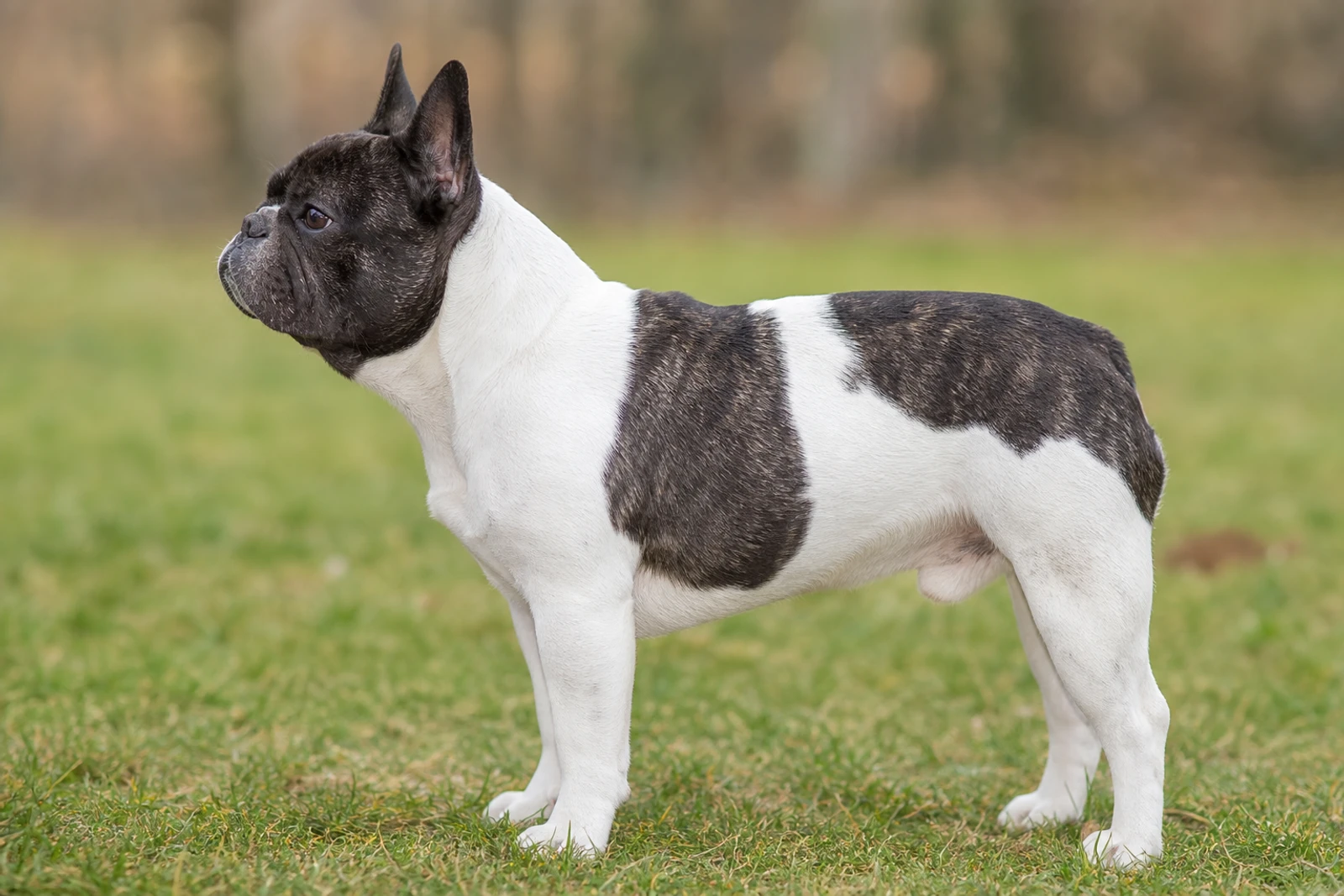
The French Bulldog is a compact, muscular charmer bred for companionship. With its distinctive bat ears and affectionate nature, it's ideal for city living and first-time owners seeking a low-exercise, easygoing lapdog. They thrive on human contact and get along well with children and other pets, but require careful temperature management and are prone to breathing issues. Perfect for those who want a loyal, entertaining indoor companion with minimal barking.
Family fit
Is the French Bulldog a good family dog?
Easygoing, apartment-friendly, and a total people-lover.
- Children
- Family shortlist
- Energy
- Lower
- First-time owners
- More approachable
- Grooming
- Lower
Breed tendencies are only a starting point. Supervise children, meet the individual dog, and make sure the exercise, training, grooming, space, and cost fit your household.
French Bulldog Sticker Pack
36 cartoon stickers • transparent PNG • no watermark
Pinterest-ready
Share all 36 reactions as one sticker sheet
Pinterest opens with the full pack and a fresh, tailored description. You choose the public board and publish it from your own account.
Save the full pack


Choose one reaction above to share it alone, or use the full-pack button for all 36 together.

































Free full-resolution download — no account, no payment, no watermark.
Includes all 36 transparent PNG stickers in one ZIP. A quick human check is required for each download.
At a glance
- Size
- Medium
- Height
- 11–13 in
- Weight
- 24–29 lb
- Life span
- 10 years
- Coat colors
- black and brindle, white with brindle patches
- Coat type
- short, smooth, fine
- Origin
- France
How much does a French Bulldog cost?
Adopt / rescue
$200–$600
Usually includes spay/neuter, first shots, and a microchip.
Buy from a breeder
$2,500–$6,000
From a reputable, health-testing breeder.
Rare colours (e.g. blue, merle) can run far above this range.
Approximate USD. Prices vary widely by region, breeder, pedigree, age, and coat colour — adopting is the lower-cost and recommended route. Avoid suspiciously cheap “breeders”; they’re often puppy mills.
Estimate the full cost of a French Bulldog →Want the ongoing number? Estimate the monthly food bill for a French Bulldog with our dog food cost calculator.
French Bulldog photos
Views
Front, side, rear and top — the full silhouette.Poses
How the breed sits, lies, moves and plays.Puppy to senior
The breed across its whole life.Expressions
The breed’s range of moods.Close-up details
Eyes, ears, nose, paws, tail and coat.Coat colors
The breed’s recognized colors.Click any photo to enlarge. We show the French Bulldog from every angle — three views, poses, life stages, expressions, close-ups, coat and colors.
Appearance & size
A French Bulldog’s silhouette is the first thing you notice — compact, low-slung, and surprisingly muscular for a dog who barely tops a foot tall. They stand 11 to 13 inches at the shoulder and tip the scales at 24 to 29 pounds, which puts them in that dense, substantial “medium” category where every pound feels like two when you scoop them up.
From the front, the look is unmistakable. The head is broad and square, with a short, wide muzzle that gives the face its pushed-in, almost comical expression. Deep wrinkles crease the forehead, especially when the dog is alert or working something out. The eyes are large, dark, and round, set wide apart with a slightly prominent gaze that makes them look perpetually curious. But the feature that really seals the deal is the ears: bat-like, upright, and broad at the base, they sit high on the skull and swivel toward sounds like fuzzy satellite dishes. There’s no mistaking a Frenchie in a crowd when those ears are silhouetted against a window.
Run your eye down the side view and you’ll see a short, glossy coat that lies flat and smooth against a thick, well-sprung ribcage. The back is compact, the chest deep, and the front legs are straight and set wide apart, giving the whole dog a sturdy, bulldog stance. The neck is thick and slightly arched, blending into powerful shoulders. Behind, the hindquarters are muscular and the belly tucks up just enough to keep the profile from looking slabby. The tail is short, low-set, and naturally curled or screw-shaped—it never needs docking, and it usually sits neat and tight over the rump.
Color-wise, you’ve got options. The coat comes in brindle (dark stripes over a fawn base), solid fawn, or white with brindle patches—often called pied. A black and brindle pattern also shows up, where the brindle striping is so dense the dog looks nearly black in certain light. The coat itself is a breeze to touch, but it does shed seasonally; those short hairs weave themselves into upholstery with surprising dedication.
From the rear, the Frenchie’s muscular thighs and slightly bowed hocks complete the picture of a dog who’s built more for short bursts of comedy than for speed, but whose physical presence is always a lot of dog in a very small frame.
History & origin
The French Bulldog didn’t actually get its start in France. Its story kicks off in England, where the hulking, tenacious bulldogs used for bull-baiting were being bred down into smaller, more manageable versions once the blood sport was outlawed in 1835. Among those smaller dogs, a toy-sized bulldog with a pushed-in face and a compact frame caught on with Nottingham lace workers. When the Industrial Revolution squeezed their trade, many of those artisans packed up and moved to Normandy in the mid-1800s, taking their little bulldogs with them.
In France, the dogs quickly became a hit—not as workers, but as companions. The French crossed them with local ratters, possibly terriers or even pugs, shortening the back, refining the snout, and, crucially, giving rise to the unmistakable upright “bat ears” that set the breed apart from the rose-eared English toy bulldog. By the 1860s, these dogs were strutting through Parisian streets alongside butchers, café owners, and the city’s bohemian set. Painters like Toulouse-Lautrec and writers like Colette immortalized them. The breed’s name, Bouledogue Français, stuck.
What was it bred to do? Nothing more than be a charming, low-maintenance city companion. It didn’t herd, guard, or retrieve. Its job was to sit on laps in cramped Montmartre apartments, offer a steady presence, and look good doing it. That remains its occupation to this day.
The breed’s leap across the Atlantic happened when wealthy American tourists fell for the dog during trips to Paris. They brought them home, and by 1897, fanciers founded the French Bulldog Club of America. A famous fight broke out over ear type: American breeders insisted the bat ear was the correct standard, while some Europeans still favored the rose ear. The Americans won, cementing the Frenchie’s signature silhouette. The American Kennel Club recognized the breed in 1898, and it’s been climbing the popularity charts ever since—ironically, not from any working past, but from exactly the same knack for companionship that made it a star in 19th-century France.
Temperament & personality
French Bulldogs are wired for companionship — not the casual, across-the-room kind; the full-contact, follow-you-to-the-bathroom kind. Most bond hard with one person but happily soak up affection from the whole household. That compact 24–29 pounds of muscle will try to be a lap dog, and they don’t take hints. If you value personal space, a Frenchie will politely ignore that boundary in the best way.
Energy and play
Don't mistake the snoring and couch-lounging for a total lack of get-up-and-go. These dogs enjoy short, silly bursts of energy — think living-room zoomies, a game of tug, or a determined effort to unstuff a toy. They tire fast, though, especially in heat. A couple of 10–15-minute play sessions plus a brief walk usually does it. You’re not getting a jogging buddy; you’re getting a companion who’s good for a stroll and then ready to nap hard.
Watchfulness
That deep, rolling bark from such a small body surprises a lot of new owners. Frenchies are naturally alert and protective. A knock at the door, a delivery truck, or an unfamiliar sound in the hallway often gets a vocal response. They’re not constant barkers — once they see you’ve assessed the situation, they usually stand down. This makes them effective little watch dogs who work fine in apartments, provided you teach a “quiet” cue early.
With family and other pets
They’re generally gentle with children, and their sturdy build holds up well to a clumsy toddler’s hug. Still, every interaction needs supervision; no dog is a stuffed animal. Most Frenchies coexist easily with other dogs and even cats, but that trademark loyalty can tip into possessiveness over food or their favorite person. Early, consistent socialization takes the edge off. Teach kids to let the dog eat in peace — never interrupt a Frenchie mid-meal, or you may meet a guarding response you don’t want.
The stubborn streak and other real talk
Frenchies are smart, but they don’t always put that intelligence toward obedience. They can decide that “come” means “not now,” especially if a squirrel is on the fence. Force or harsh corrections backfire — they’ll shut down. Respectful, positive training keeps them engaged, but you’ll still repeat yourself some days. That extreme people-orientation also has a flip side: they struggle with isolation. Left alone too long, a Frenchie can develop anxiety that shows up as frantic barking, chewing baseboards, or potty accidents. Crate training and gradual departures help, but this breed really needs someone who’s home a lot or can bring the dog along.
Potty training often requires extra patience. They may re-mark old accident spots if the scent lingers, so enzyme cleaners are your friend. And like many dogs, they’ll sometimes roll in something foul — less to disgust you and more because disguising their own odor feels like a sensible canine move.
Reading the signals
You’ll get to know your Frenchie’s moods quickly. A relaxed dog has soft eyes and a loose, wiggly body. Stress shows up as lip licking, yawning, or turning the head away — classic “please give me a minute” signs. A forward-leaning stance with a stiff posture and hard stare? That’s your cue to redirect attention before the squirrel outside becomes an obsession. Respect those little signals, and you get back a dog who trusts you completely.
A Frenchie won’t thrive on neglect or unpredictability. If you’re ready for a steadfast, snorty, occasionally headstrong sidekick who treats your lap as home base, you’ll have a companion that makes even ordinary moments feel lived-in.
Good with kids, dogs & other pets
A French Bulldog’s patient temperament makes them a genuinely good fit for families with children—but the dog’s physical safety is the part that catches people off guard. This is a squarely built, 24–29 pound dog with a broad chest and short nose. A young child who falls on a Frenchie or squeezes too hard can do real damage, even if the dog’s impulse is to forgive. Teach kids to sit on the floor and let the dog come to them, to avoid hugging around the neck, and to never interrupt a Frenchie who’s sleeping or eating. Most Frenchies are tolerant, but they’re also sensitive; a chaotic household with constant screaming or rough play can make them shut down or grow defensive. For toddlers, direct adult supervision is the rule—not a suggestion.
With other dogs, a Frenchie who got broad, positive exposure as a puppy usually lands on the easygoing end of the spectrum. The critical window runs from roughly 3 to 16 weeks. A puppy who meets a dozen friendly, vaccinated dogs in that stretch, along with people of all ages, learns to take new faces in stride. Skip that, and you can end up with an adult who is fearful, snappy when startled, or overly reactive on leash. Even a well-socialized Frenchie can be possessive of their person, so introductions with new dogs should happen on neutral ground, on leash, with plenty of treats and a clear exit. And because of that flat face, wrestling with a fast, high-energy dog for more than a few minutes can head into dangerous overheating territory. You’ll need to call the play breaks before the dog does.
Cats and French Bulldogs often work out, especially when they meet in puppyhood. A confident cat who doesn’t bolt is safer; a fleeing cat can trip a chasing instinct that’s more clumsy curiosity than real prey drive. Small caged pets—rabbits, guinea pigs, ferrets—should be housed in a separate, secure room. One excited paw through cage bars can leave a small animal injured. The dog may not mean harm, but the outcome is the same.
Here’s the honesty piece: Frenchies were built for companionship, not for independence. A dog left alone for a full workday, day after day, can unravel into barking, chewing, or soiling the house. They belong inside with the family, not shut in the backyard. The ideal setup is a home where someone is around for large chunks of the day, so the dog’s social world revolves around the people they already trust.
Trainability & intelligence
French Bulldogs are whip-smart, but they’ve got a streak of “what’s in it for me?” that can test your patience. They learn fast when you make it worth their while — and the right currency is usually food. A sliver of string cheese or a soft training treat delivered the instant they get it right builds a dog who wants to work with you. Raise your voice or try to muscle a Frenchie into obedience, and you’ll get a very different result: a shut-down dog who ignores you completely. They’re sensitive, and punishment-based methods trash their trust.
Keep sessions short and playful — five minutes, maybe ten if the mood is good — partly to match their attention span and partly because these flat-faced dogs overheat quickly when they’re worked up. Stop before they’re panting heavily. Start the day your puppy comes home: luring into a sit, charging a marker word with a treat, then layering in a reliable “come” inside the house. House training demands extra grit. Frenchies can be slow to catch on, so a rigid schedule, crating when you can’t supervise, and an immediate jackpot reward for going outside are your levers. If you’re inconsistent, you’ll be scrubbing floors for longer than you’d like.
Recall off-leash is a real risk. Between their low desire to please and a selective hearing switch they flip near distractions, a solid recall takes months of proofing in quiet spaces before you even think about testing it at the park. Even then, many Frenchie owners stay on-leash unless the area is fully fenced.
What you pour into socialization before 16 weeks of age gets returned tenfold in a friendly, unflappable adult. Take your puppy to hardware stores, sidewalk cafés, friend’s houses — let them meet calm dogs and gentle strangers and walk over wobbly surfaces. Pair every new thing with a treat or a calm cheer. Skip this and you can wind up with a dog who snarls at guests or shuts down around children. The payoff of all this early work is a confident little clown who follows the house rules, not because he’s a robot, but because you’ve built a bond where good things happen when he listens.
Exercise & energy needs
A French Bulldog’s exercise prescription is surprisingly modest for a 24–29 lb dog. You’re aiming for 20–30 minutes of total daily movement, always broken into two or three short sessions rather than one sustained walk. Their flat face makes cooling down difficult, and their compact, front-heavy build puts extra strain on the spine and joints. Pushing the duration or intensity quickly turns a fun outing into a dangerous one.
Short, sniffy walks of 10–15 minutes, ideally during cooler morning or evening hours, cover most of their physical needs. If the pavement feels hot on your hand, it’s already too hot for your Frenchie—stick to a shaded patch of grass or a quick bathroom break and head back inside. Indoor play fills the gaps beautifully: a gentle game of tug, rolling a soft ball across the living room, or chasing a flirt pole at a walking pace can raise the heart rate without jarring the back.
Because they tire physically so quickly, mental work does the heavy lifting. Stash part of their breakfast in a puzzle toy or snuffle mat, hide treats under cups for a “shell game,” or teach a low-key trick like “spin” or “touch.” Even 5 minutes of focused nose work can leave a Frenchie happily wiped out, without a single stair climbed or jump attempted.
What to skip matters as much as what to do. Avoid stairs, jumping on or off furniture, long runs, and any sport that demands sudden twists or high impact—agility is out. Frenchies are also poor swimmers; a life jacket is non-negotiable near water, and even then supervision must be constant. If you want to dabble in dog sports, try nose work or rally where the pace is slow and the movements are controlled.
Watch for heavy panting, a widening tongue, or a stumbling gait, and cut the session cold the moment you see it. Overdoing exercise can trigger heatstroke or a herniated disc that sidelines an otherwise healthy dog for weeks. On a stifling day, a 10-minute indoor scent game trumps a 15-minute sidewalk stroll every single time.
Grooming & coat care
The short coat is low-fuss — the wrinkles are the real job
French Bulldogs wear a fine, smooth, single coat with no insulating undercoat. That means you’ll never wrestle a mat out of this dog, but it also means the real grooming chore sits in those adorable skin folds.
Brushing. A weekly once-over with a soft pig-bristle brush or a rubber curry mitt pulls out loose hair, spreads natural oils, and puts a glossy finish on the coat — especially satisfying on black and brindle pups. When shedding ticks up a notch in spring and fall, brush twice a week to stay ahead of the tumbleweeds. After a dusty romp, a quick brush-out often spares you a full bath.
Bathing. Bathe every 4–8 weeks, or whenever your dog finds something truly stinky. Overdoing it strips the skin’s moisture barrier and can trigger allergies this breed is already prone to. Stick with a gentle, fragrance-free dog shampoo and rinse like your life depends on it — any leftover suds in a wrinkle can spell infection.
Wrinkle care. This is daily work. Deep folds around the nose, eyes, and sometimes a tail pocket trap moisture, food crumbs, and bacteria. Wipe each crease with a damp, soft cloth or an unscented pet wipe, then dry it until there’s zero dampness. A light dusting of cornstarch can help keep things dry in humid weather. Redness, odor, or goop? Head to the vet — yeast and bacterial infections flare up fast.
Ears and eyes. Those upright bat ears get good air circulation, but still check them weekly for wax or debris and wipe the outer ear with a vet-approved cleaner on a cotton ball. Prominent eyes tear easily; gently wipe away crusties with a moist cloth daily to prevent staining and irritation.
Nails and teeth. If you hear clicking on the floor, the nails are overdue. Trim every 3–4 weeks — small dogs often don’t wear them down naturally. Brush teeth 2–3 times a week with dog toothpaste to keep tartar in check. Handling paws and mouth regularly during grooming sessions makes nail trims and tooth checks a breeze, and it gives you a head start on spotting skin bumps, rashes, or hot spots.
Seasonal shifts. Without an undercoat, your Frenchie won’t explode in a twice-a-year fur storm. You’ll still see a moderate uptick in shedding when seasons change, handled easily with an extra brushing session. The bigger seasonal worry is summer: heat and humidity can turn those wrinkles into trouble spots overnight, so a wipe-and-dry routine never takes a vacation.
Shedding & allergies
French Bulldogs shed—and they shed more than that sleek, single-layer coat lets on. You won’t find tufts of fluff rolling across the floor, but those fine, short hairs weave themselves into upholstery, car seats, and dark clothing with surprising efficiency. The shedding is moderate and year-round, with a noticeable uptick as the seasons shift in spring and fall. Don’t expect a dramatic blowout; it’s more of a steady, low-grade rain of hair that a quick pass with a rubber curry brush or grooming mitt handles in a few minutes a couple of times a week.
Drool is part of the package, but not a faucet-level affair. Most Frenchies leave a little wetness after drinking or during hot-weather panting. You’ll wipe a chin now and then, but you’re unlikely to need a dedicated drool rag unless you get an unusually slobbery individual.
As for allergies—real talk—no dog is truly hypoallergenic. The allergen protein lives in dander, saliva, and urine, not just the coat. A Frenchie’s shedding spreads that dander throughout your home. If you have allergies, do not bank on the short hair alone saving you. Some people react more strongly, some don’t, but the breed isn’t a safe bet. Spend a solid chunk of time with several adults before you bring one home.
Diet & nutrition
French Bulldogs are world-class charmers, and they’ll use every ounce of that charm to convince you they’re starving. Don’t fall for it. This breed is exceptionally food-motivated and packs on pounds easily, so keeping them at a lean 24–29 lbs is the single most important thing you can do for their long-term health. Even a few extra pounds strain their compact, heavy-boned frame and can trigger painful spinal or joint issues — a real risk for a dog built like a small tank.
- Portion control comes first. Don’t free-feed. An adult Frenchie typically does well on two measured meals a day. Exact amounts depend on the food’s calorie density and your dog’s activity level, but use the feeding guide on the bag as a starting point, then tweak so you can feel — but not see — the ribs.
- Puppy schedule: Four evenly spaced meals until 16 weeks, then three meals until six months, dropping to the adult two-meal rhythm after that. Transition any new food gradually over a week to avoid stomach upset.
- What to put in the bowl: A high-quality commercial diet (dry, wet, or both) designed for small-to-medium breeds works well for most families. If you feed a homemade or raw diet, keep it species-appropriate — roughly 60% muscle meat and raw meaty bones, 20–30% dog-safe fruits and vegetables, and the rest from eggs, grains like pearl barley, or plain yogurt. Raw chicken wings can be introduced around 12 weeks under supervision, but puréed or blended meals help a Frenchie’s vertical-chewing jaws extract more nutrients.
- Slow them down: Many French Bulldogs inhale their food. Puzzle bowls or slow feeders prevent choking, reduce air gulping, and give that busy brain a small workout.
- Treats matter more than you think. Tiny training treats or bits of carrot and green bean can satisfy the begging routine without blowing the calorie budget. Reserve rich, fatty scraps for … never. A single holiday ham trimming or greasy piece of turkey skin can trigger a serious bout of pancreatitis in this breed.
- Senior adjustments: Older Frenchies often move less but still eat with enthusiasm. Gradually reduce portions as activity drops, and consider splitting the daily ration into three smaller meals if your old friend seems hungry or has trouble maintaining weight.
Always measure with a real measuring cup or scale, serve meals in the dog’s own bowl, and never slip food from the table — begging, once learned, is a tough habit to break. A lean French Bulldog is a comfortable, mobile French Bulldog, far less likely to face the back and joint crises that cut their years short.
Health & lifespan
Ten years is the average lifespan for a French Bulldog, but how you manage the next decade matters enormously. Their flat, pushed-in face — that classic smoosh — is also the source of this breed’s biggest vulnerability: heat sensitivity. With a short muzzle and narrow airways, they overheat fast, sometimes within minutes on a warm day. Keep walks to early morning or evening when the temp climbs above 75°F, and never leave a Frenchie in a car or a sun-drenched yard.
Responsible breeders screen for the structural issues that can shorten that 10-year window. Expect documentation for hip dysplasia, patellar luxation (slipping kneecaps), and eye problems like corneal ulcers and cherry eye through OFA or PennHIP certification. Many breeders also evaluate for brachycephalic obstructive airway syndrome (BOAS) — checking the nares, soft palate, and tracheal diameter — because a dog who can’t breathe comfortably is a dog at risk for chronic stress on the heart and lungs.
- IVDD (intervertebral disc disease) hits compact, long-backed breeds like the Frenchie. Their short ribcage and stocky build make them more likely to rupture a disc, so discourage jumping off furniture and use a harness instead of a collar to protect the trachea.
- Skin fold dermatitis is a daily reality. The deep wrinkles around the face, tail pocket, and any other folds trap moisture and debris. Clean them gently with a damp cloth and dry them thoroughly every day.
- Allergies — both food and environmental — often show up as itchy skin, recurrent ear infections, or paw licking. A limited-ingredient diet and vet-directed antihistamines can help.
- Weight management is non-negotiable. At 24–29 pounds, even two extra pounds overload those narrow airways and compact joints. Measure food, avoid table scraps, and swap high-calorie treats for single-ingredient chews.
Because these issues progress silently, twice-yearly vet visits catch early warning signs like subtle behavior changes — maybe your Frenchie isn’t chasing the ball as eagerly or seems winded after climbing stairs. Those are your cues to get knees, eyes, and heart checked. Socialize early with positive handling; a stressed, anxious Frenchie is more likely to overheat or strain its airway. Keep them lean, keep them cool, and they’ll give you a full decade of that comical, stubborn charm.
Living environment
French Bulldogs were practically built for apartment life. At 24–29 pounds and no taller than 13 inches, they take up very little real estate, and their exercise needs are modest — two 15–20-minute leash walks a day, plus some indoor play, usually gets the job done. They don’t require a yard, and a short sniffy stroll around the block often suits them better than hiking or running. If you do have a yard, keep it securely fenced and stick around while they’re out; these dogs can’t regulate heat well, so even a few minutes of unsupervised sunbathing in warm weather can turn dangerous.
Climate tolerance is zero for heat and iffy for cold. That flat face makes a Frenchie overheat faster than you’d think. Air conditioning is non-negotiable in summer, and walks should happen in the cool of early morning or late evening. Even mild, humid days can push them into heavy panting or worse. In winter, a coat and short outings handle most cold snaps, but they’re strictly indoor dogs year-round.
Barking is rarely a problem. They’ll let out a gruff “woof” when someone’s at the door, but they aren’t nonstop barkers. The noise you’ll actually notice is the snuffling, snoring, and contented grumbling — all part of the breed’s charm, as long as it doesn’t bother you.
Being left alone is where a French Bulldog can really struggle. These are velcro dogs bred for companionship. Long workdays with no one home often lead to anxiety, destructive chewing, or nonstop barking. If your schedule keeps you away, expect to invest in a dog walker, daycare, or serious gradual desensitization from puppyhood. Mental outlets like puzzle toys help, but nothing replaces human contact. A French Bulldog does best in a home where someone is around most of the time — even a small apartment with a dedicated owner beats a big house with empty rooms.
Who this breed suits
Perfect for
A French Bulldog makes sense if your ideal Saturday involves a blanket fort, a movie marathon, and a dog who snorts softly next to you. These 24–29 pound charmers are built for companionship, not endurance. Two 20-minute strolls and a quick wrestle with a squeaky toy usually satisfy their exercise needs — on sweltering days, a single potty break outside with the air conditioner blasting indoors is safer.
First-time dog owners often find their groove with a Frenchie. They’re deeply food-motivated, so training with tiny treats rarely feels like a battle of wills. They won’t drag you down the sidewalk on a leash, and their apartment-friendly size fits small spaces without making you feel crowded. Seniors and singles who want a low-key, affectionate shadow get a dog that rarely barks and thrives on lap time.
Families with older, gentle children can work well. A kid who understands not to yank on a Frenchie’s delicate back or try to carry the dog like a stuffed animal will have a devoted playmate. Because of the breed’s short snout and compact build, roughhousing that looks harmless can injure their spine or leave them gasping.
Think twice if
Skip this breed if you’re looking for a jogging partner, a hiking buddy, or a dog that can join you for long summer afternoons at the park. Their flat face means breathing is a struggle even at rest — high heat and humidity turn dangerous fast, and overexertion can land them in an emergency vet.
You should also pause if your household is empty for eight-plus hours daily. Frenchies bond hard and can slide into destructive chewing or separation anxiety when left alone too long. They’ll follow you from room to room, and they expect you to be around most of the time.
Be honest about the vet bills. The breed can be prone to brachycephalic airway syndrome, skin fold infections, allergies, and intervertebral disc disease. A responsible breeder screens for these issues, but even a well-bred Frenchie might need thousands in care over a 10-year lifespan. You’ll need to commit to daily wrinkle cleaning, ear checks, and a tight budget for emergencies. In return, you get a gregarious, self-important little dog who snores, drools, and treats every day like a comedy special — just never in the sun.
Cost of ownership
You’ll pay a premium to bring a French Bulldog home, and the bills don’t let up once they’re on your sofa. Well-bred pet-quality puppies from health-screened parents generally run $3,000 to $5,000. Rare coat colors like blue, lilac, or merle can push that to $6,000 to $10,000, though those high-dollar tags often come from breeders who prioritize color over respiratory health. Going through a breed-specific rescue instead? Adoption fees usually land between $250 and $600.
Once the dog is yours, expect a handful of recurring expenses that aren’t always obvious.
- Food: Plan on $40–$80 a month for a high-quality kibble. Many Frenchies have sensitive stomachs or food allergies that demand limited-ingredient diets, which drives the price up. Their notorious flatulence means ingredient choices really matter.
- Grooming: The short coat barely sheds, but those adorable wrinkles, tail pockets, and bat ears need near-daily wiping to prevent infections. If you let a pro handle baths, nail trims, and wrinkle cleaning every 4 to 6 weeks, budget $40–$60 per visit. Doing it yourself saves the cash but not the time.
- Parasite prevention: A monthly chewable or topical for heartworm, fleas, and ticks runs $30–$50.
- Routine vet care: Annual exams, shots, and basic bloodwork average out to another $20–$35 a month.
The real budget-breaker is medical care. Brachycephalic breeds come with built-in risks: breathing-crisis ER visits, stenotic nares surgery ($1,500–$5,000), eye injuries, and chronic skin fold infections are all on the table. Spinal problems like IVDD can require $3,000–$8,000+ surgeries. Because of this, pet insurance isn’t optional—it’s a financial safety net. A comprehensive policy for a French Bulldog typically costs $60 to $120 a month, reflecting the breed’s health baggage. Without insurance, you need a well-padded emergency fund, pronto.
All together, the ongoing cost of keeping a Frenchie happy and medically upright lands somewhere between $150 and $300 a month—and that’s before you add in a treat budget or the cooling vest they’ll need every summer. If that number makes you pause, take it seriously. A French Bulldog is a wonderful, snorty sidekick, but staying ahead of the vet bills is part of the deal.
Choosing a French Bulldog
You have two solid paths — a breeder who makes health the priority, or a rescue that matches you with an adult dog whose needs are already known. Both can work, but for a breed this structurally extreme, where you start decides a lot of the bills and heartbreak you’ll face down the road. Cutting corners on the front end often leads to a dog who can’t breathe comfortably, walk without pain, or sleep through the night.
Health Clearances You Need to See
Frenchies are a brachycephalic breed, so you aren’t just checking hips and patellas — you’re evaluating a whole airway and spine. Ask for hard proof, not a verbal nod.
- Hips: OFA or PennHIP evaluation on both parents. Hip dysplasia isn’t the headline issue it is in a Lab, but it’s present and painful.
- Patellas: OFA patellar luxation clearance. Knees that pop out are common and can require surgery.
- Eyes: A CAER exam by a boarded veterinary ophthalmologist within the last year. Cherry eye, cataracts, and corneal ulcers are realities in the breed.
- Cardiac: An echocardiogram or auscultation clearance from a cardiologist. Some lines carry pulmonic stenosis.
- Genetic screening: At minimum, DNA tests for degenerative myelopathy (DM), hyperuricosuria (HUU), and canine multifocal retinopathy 1 (CMR1). Many breeders also test for congenital hypothyroidism with goiter and cystinuria. Ask for the actual lab reports, and run the parents’ names through the OFA database yourself.
Red Flags You Shouldn’t Talk Yourself Past
- No health clearances — or clearances that are “pending” indefinitely. Walk.
- A breeder who always has puppies on the ground, multiple litters at once, or a website with a “buy now” button. Good Frenchie breeders have waitlists, small litters, and often require spay/neuter contracts.
- Anyone producing “rare” colors like blue, merle, chocolate, or fluffy long-haired Frenchies. These colors are not part of the breed standard, come with serious health baggage, and are a beacon of profit-over-welfare breeding.
- A breeder who won’t let you meet the dam on-site, keeps puppies in a separate building, or says “you can see them when you pick up.” You need to observe the mother’s breathing, movement, and temperament. If she’s struggling to breathe in a cool room, her puppies are a gamble.
- Puppies with noisy breathing at rest, pinched nostrils, weepy eyes, bald patches, or an arched, tucked-up stance. An eight-week-old Frenchie can be chunky and wobbly, but it shouldn’t look like it’s fighting for air.
Picking the Right Puppy
Spend time watching a puppy on the floor, not just in someone’s arms. Look for wide, open nostrils and a chest that doesn’t suck in sharply with each breath. Pick the puppy up after a gentle play session, listen for rasping or gurgling. Eyes should be clear and dry, the skin inside the folds clean without a yeasty smell. Temperament-wise, a well-bred Frenchie is curious, forward, and willing to engage — not hiding in the corner or launching into frantic, unprovoked nipping. Let the breeder guide you toward the pup whose energy fits your household; the quietest or most boisterous newborn isn’t always the best match for a family with young kids.
The Rescue Route
Breed-specific rescues regularly have Frenchies of all ages, often because an owner underestimated the medical commitment. Adopting an adult gives you a transparent picture: you’ll know how the dog breathes during a summer walk, whether allergies are manageable, and if there’s an existing spinal issue. The trade-off is that you may inherit a dog with rehab needs or ongoing medication. Go in with eyes open and a vet fund ready.
Plan on a purchase price in the low-to-mid four figures from a health-focused breeder — and know that a bargain puppy who skipped the clearances can easily cost you $5,000–$10,000 in airway surgery, spinal imaging, and allergy management before age three.
Pros & cons
Pros
- A cuddly, people-focused companion that lives for your lap. Frenchies bond hard and hate being left out—they’ll follow you room to room just to snooze against your leg.
- Perfectly sized for apartment life. At 24–29 pounds and 11–13 inches tall, they’re sturdy little tanks that don’t need a yard. A few short walks and some indoor play are plenty; they’re born couch potatoes.
- Quiet neighbors. They rarely bark without a reason, so you’re more likely to hear snorting, sighing, and the occasional “talking” grumble than nuisance noise.
- Minimal grooming, year-round. A quick once-over with a rubber brush handles the short coat, and shedding is manageable. Baths only when they’ve rolled in something suspect.
- Big personality in a compact body. Equal parts clown and stubborn charmer, they bring a loopy sense of humor that keeps you laughing. They’re famously good with kids and get along with other pets when raised together.
Cons
- Brachycephalic from nose to tail. That pushed-in face means compromised breathing, loud snoring, and dangerous heat sensitivity. A brisk 20-minute walk on a warm day can send their body temperature soaring—air conditioning is non-negotiable in summer.
- A wallet-draining health history. Expect a lifespan of around 10 years, shadowed by potential issues: allergies, skin fold infections, hip dysplasia, intervertebral disc disease (IVDD), and eye injuries. Responsible breeders screen for these, but even well-bred dogs can rack up vet bills fast.
- Stubbornness that’s almost performance art. House-training can take longer, and they’ll happily ignore a command if the treat isn’t good enough. Patience and positive reinforcement are the only way through.
- Gas and drool that clears rooms. The combination of that flat face, sensitive digestion, and enthusiastic eating creates a level of flatulence you need to experience to believe. Many also drool after drinking or when awaiting food.
- Swimming is off the table. Their top-heavy build and short snout make them sink like a brick. A life vest is mandatory around any pool or deep water, and even then, constant supervision is required.
- Too popular for their own good. High demand fuels backyard breeders and puppy mills churning out dogs with even more exaggerated breathing problems. Finding an ethical breeder who prioritizes airway health takes real legwork and often a long waitlist.
Similar breeds & alternatives
If the classic French Bulldog personality calls to you but the waitlists, price, or narrow respiratory window give you pause, a few other breeds scratch a similar itch with key differences.
-
Boston Terrier — Often called “the American gentleman” in a tuxedo coat. Height ranges 15–17 inches, weight 12–25 pounds. Bostons share the Frenchie’s short muzzle and people-centered nature, but they bring markedly more stamina. A Boston still needs caution in heat, yet typically handles a brisk 30–45 minute daily walk and a spirited game of fetch far better than a Frenchie would. Lifespan averages 11–13 years. The trade-off: they tend to be more terrier-like — alert, a bit quicker to bark, and not quite the same couch-potato champion.
-
Pug — Even more compact at 10–13 inches and 14–18 pounds. Pugs deliver that same comedic, affectionate devotion in a smaller, wrinklier package. They’re true lap-warmers and usually content with very short strolls. The flatter face often means louder snoring and greater heat sensitivity; eye injuries from protruding eyes are a real concern. Lifespan stretches 13–15 years. You lose the Frenchie’s signature bat ears, but gain a dog that’s often easier to scoop up and carry when needed.
-
English Bulldog — Consider this if you actually want a heavier, even lower-energy companion. Weighing 40–50 pounds and standing 14–15 inches, these dogs are built like tanks and demand almost no structured exercise — a few minutes of pottering around can suffice. That extra mass, though, amplifies every brachycephalic challenge: drool, skin fold maintenance, and a lifespan of just 8–10 years. The temperament is famously steady but can be more stubborn to train than a Frenchie’s eager-to-please streak.
All these flat-faced breeds require an air-conditioned home and an owner who never leaves them in a hot car or out in midday sun. If you want a brachycephalic look but with a longer snout and fewer respiratory extremes, a Cavalier King Charles Spaniel (12–13 inches, 13–18 pounds) is a softer-coated alternative with a much more moderate build — though it comes with a different set of heart and neurological health screenings to research.
Fun facts
- They are nicknamed 'Frenchie'.
- The breed's bat ears were initially considered a flaw but are now its signature characteristic.
- French Bulldogs cannot swim due to their heavy front body and short snout.
- They are among the most popular dog breeds in the United States.
Frequently asked questions
- Are French Bulldogs good with children?
- French Bulldogs can be excellent companions for children when properly socialized, as they are generally affectionate and patient. Due to their small to medium size, supervision is recommended to prevent accidental injury during rough play. Early introductions and gentle handling help build a strong, positive bond.
- How much do French Bulldogs shed?
- French Bulldogs have a short, fine coat that tends to shed moderately year-round, with a slight increase during seasonal changes. Regular brushing with a rubber curry brush or grooming mitt can help manage loose hair. Overall, they are considered relatively low-maintenance in terms of shedding compared to many other breeds.
- How much exercise does a French Bulldog need?
- French Bulldogs require only low to moderate daily exercise, such as short walks or interactive play sessions. They are brachycephalic, so care must be taken to avoid overheating, especially in warm or humid weather. Indoor activities can often satisfy their physical needs.
- Are French Bulldogs easy to groom?
- French Bulldogs are fairly easy to groom due to their short coat, needing only occasional brushing to remove dead hair. Their facial wrinkles require regular cleaning and drying to prevent skin irritation or infections. Nail trimming and ear checks should also be part of routine care.
- Are French Bulldogs suitable for apartment living?
- French Bulldogs are well-suited for apartments thanks to their moderate size and relatively low exercise requirements. They are not typically excessive barkers, which helps maintain good neighbor relations. However, they do need daily social interaction and mental stimulation to stay content indoors.
- Do French Bulldogs bark a lot?
- French Bulldogs are not known to be frequent barkers, though they may alert you to visitors or unusual sounds. Their barking is usually moderate and easier to manage with training. This breed's vocalizations more often include amusing snorts, grunts, and quiet 'talking' noises.
Tools & calculators for French Bulldog owners
Quick estimates tailored to French Bulldogs — pre-filled with this breed’s size where it matters.
Articles & stories about the French Bulldog

Low-Maintenance Dogs for First-Time Owners: What “Easy” Really Means
“Low maintenance” is a fit between a dog’s scorecard and your routine—not permission to ignore a dog. Compare six first-time-friendly profiles.

Dog Itchy Skin: What Owners Should Check Before Panicking
Your dog won't stop scratching, and your mind is jumping to worst-case scenarios. Take a breath—this observation checklist helps you gather the right information before you call the vet.

The Best Low-Maintenance Dogs for Busy Families
Low-maintenance isn't no work — it's lower grooming, manageable exercise, and a calmer indoor vibe. These 8 breeds fit the bill, honest caveats included.

Best Dog Breeds for Kids When the Parents Are Busy
Compare kid-friendly dog profiles for busy homes by energy, grooming, barking, size, and training—without mistaking a breed list for an alone-time promise.

French Bulldog Health Problems: Breathing, Heat, Eyes, and Vet Care
French Bulldogs need thoughtful attention to breathing, heat, eyes, and body condition. Learn which changes deserve veterinary advice and what to record.

Best Apartment Dog Breeds for Kids: Family Dogs for Smaller Homes
Searching for an apartment-friendly dog that's great with kids? These breeds combine low barking, gentle temperaments, and compact size for happy family living in smaller spaces.

Best Low-Maintenance Dog Breeds for Kids: Easy Does Not Mean Effortless
A practical, whole-profile comparison of low-maintenance dog breeds for kids: coat work, energy, barking, size, and the trade-offs that remain.

Apartment Dogs: What Breeds Actually Work (And What Doesn't)
Small size doesn’t always mean apartment-friendly. We use breed data on energy, barking, and temperament to reveal which dogs truly thrive in tight spaces—and which don’t.

Two Years With a French Bulldog in a Studio Apartment: An Honest Account
Snoring, vet bills, and a tiny shadow who follows me everywhere—two years with a French Bulldog in a studio apartment taught me that low exercise doesn't mean low cost. Here's the brutally honest math.
Sources & standards
This profile follows recognized breed standards from the American Kennel Club (AKC) and the Fédération Cynologique Internationale (FCI), along with established veterinary and breed-club guidance. These describe general breed tendencies — every dog is an individual.