

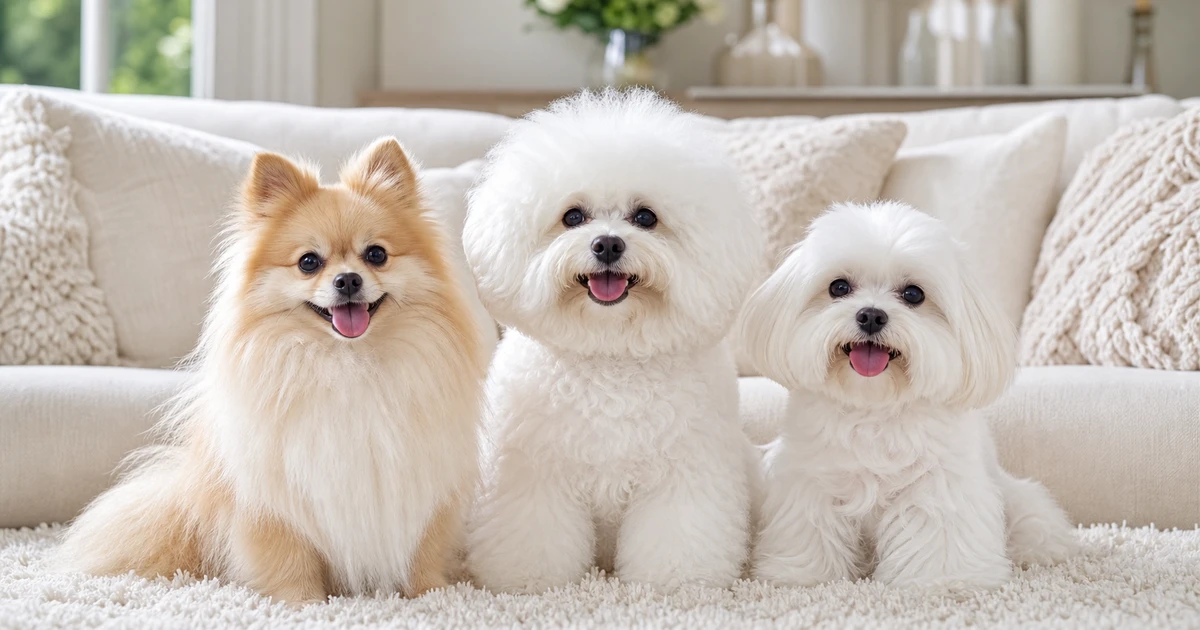
Small fluffy dog breeds pack a lot of personality into a compact, huggable package — and they've earned their popularity in apartments, suburban homes, and everywhere in between. The catch is that "small and fluffy" covers everything from a bold little terrier to a serene lapdog, and they don't all want the same life.
This list leans on each breed's documented temperament, size, grooming demands, and exercise needs rather than cuteness alone. I've ranked them with families in mind, flagging the loud ones, the high-maintenance coats, and the dogs that genuinely settle into a quiet flat.
Use it as a shortlist, not a verdict. The right match depends on your space, your patience for brushing, and how much barking your neighbors will tolerate.
What makes a good small fluffy dog?
A great small fluffy dog isn't just photogenic — it fits the rhythm of your household and stays happy doing it. A few things separate the breeds that thrive in family life from the ones that frustrate first-time owners.
Temperament
The gap between these breeds is wider than the size chart suggests. A Bichon Frise and a Maltese tend toward cheerful, people-focused companionship, while terriers like the West Highland White and the Yorkshire Terrier carry more spark and stubbornness. The Japanese Chin and Tibetan Spaniel are quieter, more reserved characters who bond hard with their people. An Affenpinscher is comic and bold for its size. Match the personality to your tolerance: a watchful, vocal dog suits some homes and drives others up the wall.
Size & sturdiness
Small doesn't mean fragile across the board. A Poodle (in its miniature and toy sizes) and a Cockerpoo tend to be sturdier playmates than a toy-sized Maltese or Papillon, whose fine bones need gentler handling around toddlers. If you have young children, lean toward the more robust breeds and supervise closely — tiny dogs are easily injured by an accidental tumble.
Energy & exercise
None of these are couch ornaments, but the demands vary. Poodles and Cockerpoos are genuinely active and clever, needing real walks plus mental work. Westies and Yorkies have terrier drive that wants an outlet. Shih Tzu, Lhasa Apso, and Japanese Chin are content with shorter strolls and indoor play. Underestimate a smart, energetic breed and you'll get barking, chewing, and a dog that invents its own entertainment.
Coat & grooming
This is the part people regret skipping. That fluff comes at a cost. The Poodle and Cockerpoo coats need regular professional clipping and don't shed much; Maltese, Shih Tzu, Lhasa Apso, and Yorkie coats grow long and tangle without daily attention or a short trim. Double-coated breeds like the Pomeranian and German Spitz shed and need consistent brushing. Budget time and money for grooming before you fall for the photos.
Trainability
Poodles sit near the top for working intelligence and eagerness to learn, and Papillons are quick and biddable too. Terriers and the more independent Asian breeds can be trained well but reward patience and consistency over repetition. Early socialization matters for every one of them — a confident small dog is a calmer small dog.
Compare at a glance
Tap any breed name to jump to its full write-up.
| Breed | Size | Weight | Grooming | Shedding | Low-allergen | Energy |
|---|---|---|---|---|---|---|
| Small | 5–7 lb | — | ||||
| Small | 11–15 lb | ✓ | ||||
| Small | 11–18 lb | ✓ | ||||
| Small | 5–7 lb | ✓ | ||||
| Small | 13–15 lb | ✓ | ||||
| Toy, Miniature, and Standard varieties | Varies by variety | ✓ | ||||
| Small | 7 lb | ✓ | ||||
| Small | 5–11 lb | — | ||||
| Small | 15–22 lb | ✓ | ||||
| Small | 18–22 lb | — | ||||
| Small | 5–7 lb | — | ||||
| Small | 11 lb | ✓ | ||||
| Small | 9–15 lb | — | ||||
| Small | 7–9 lb | ✓ |
The 14 best small fluffy dog breeds
Pomeranian
A pocket-sized puffball with a huge personality.
Small · 5–7 lb · 12–15 yr
Picture a 5-to-7-pound fox who's convinced he runs the building, and you've got the Pomeranian. He stands just 9–11 inches tall, but that double coat—a dense undercoat shoved beneath a long, stand-off outer layer—makes him look twice his actual size, which is exactly the point of putting him on a fluffy-dog list. Colors run the gamut: orange, cream, black, red, brown, and parti-color patchworks.
This is a lively, bold little dog who carries himself with absurd confidence. He's affectionate with his people, alert to every doorbell, and smart enough to learn tricks fast (trainability sits at a moderate 3/5). He'll do fine in an apartment, and he's friendly toward other dogs.
The honest caveat
Two things demand attention. First, that coat is a 5/5 grooming commitment with steady 4/5 shedding—you'll be brushing several times a week and vacuuming the rest. Second, the barking. At 5/5, a Pomeranian announces visitors, squirrels, and suspicious shadows with equal enthusiasm, so early training matters if you share walls with neighbors.
With a 12–15 year lifespan, you're signing up for over a decade of opinionated companionship. Start brush sessions and quiet-cue training in puppyhood and you'll enjoy the comedy without the chaos.
Bichon Frise
Cloud-soft, cheerful, and low-shedding.
Small · 11–15 lb · 12 yr
Lift a Bichon Frise and the white powder-puff fluff gives way to a surprisingly springy little athlete underneath. At 9–11 inches and 11–15 pounds, this French charmer has a sturdy, muscular frame built from a history of sailing ships and street performing—not the fragile lap ornament the cloud of coat suggests.
For fluffy-dog shoppers worried about allergies or vacuum bags, the Bichon is a standout: its curly, dense coat sheds at just 1/5 and rates as low-allergen. The cheerful temperament is the bigger selling point, though. These dogs are playful, gentle, and genuinely good with kids, other dogs, and cats—a rare clean sweep. They're smart and reasonably easy to train at 4/5, and they handle apartment life well. First-time owners do fine with them.
The honest caveat
Low-shedding doesn't mean low-maintenance. That curly coat mats if you ignore it, so grooming lands at 4/5—regular brushing plus professional trims every few weeks. Skip the routine and you'll end up with a felted mess and an expensive shave-down.
With a roughly 12-year lifespan and an energy level of 3/5, the Bichon wants daily walks and play but won't run you ragged. Commit to the grooming schedule and you get a sociable, dance-on-two-legs companion who suits busy family households.
Shih Tzu
A long, flowing coat and a happy lap-dog temperament.
Small · 11–18 lb · 10 yr
Built low and solid like a tiny lion, the Shih Tzu hides real substance under all that hair. At around 11 inches and 11–18 pounds, this is a compact dog with more bone than you'd guess from the floor-length coat—pick one up and you feel muscle, not a fragile puffball. That long, silky double coat is the breed's crown jewel and the reason it lands squarely on any fluffy-dog list.
The Shih Tzu was bred for one job: being a companion, and it shows. These dogs are affectionate, playful, and outgoing, happy to follow you room to room and curl into any available lap. They're a clean fit for families—good with kids, dogs, and cats—and they do well in apartments. The coat sheds at just 1/5 and rates low-allergen, a bonus for sneezy households.
The honest caveat
Two things. That gorgeous coat demands a 5/5 grooming effort—daily brushing or a practical short trim, otherwise it mats fast. And the lifespan here is listed at around 10 years, shorter than several others on this list, so factor that into your decision.
Energy sits at a mellow 2/5, so short walks and indoor play satisfy them. If you want a devoted shadow rather than a hiking buddy, the Shih Tzu delivers—just budget for the grooming.
Maltese
Silky white coat and a gentle, devoted nature.
Small · 5–7 lb · 12 yr
A waterfall of pure white silk that nearly brushes the floor—that's the Maltese first impression, and it's earned the breed a spot on fluffy-dog lists for centuries. Look past the glamour and you'll find a compact, squarely built toy dog of about 10 inches and 5–7 pounds, fine-boned but with more substance than the coat lets on.
This is a breed with no working past whatsoever—bred for over two thousand years purely to charm people, and it has the temperament to match. The Maltese is affectionate, playful, gentle, and surprisingly fearless, meeting the world with the swagger of a dog ten times his size. He's good with kids, dogs, and cats, suits apartment living, and his single, low-shedding coat (1/5) is rated low-allergen. He's also bright and trainable at 4/5.
The honest caveat
That single silky coat is high-maintenance—grooming sits at 5/5. Daily brushing keeps it from tangling, and many owners opt for a shorter "puppy cut" to stay sane. The fine white hair also shows tear staining around the eyes, which needs regular cleaning.
With a 12-year lifespan and 3/5 energy, the Maltese wants companionship more than exercise—he'll happily wedge into the coziest sofa spot and look wounded when you leave it. For someone home often who enjoys grooming routines, he's a devoted, glamorous little shadow.
Lhasa Apso
A dense, floor-length coat and a confident little spirit.
Small · 13–15 lb · 15–18 yr
Long, low, and draped in a dense floor-sweeping coat, the Lhasa Apso looks like a lapdog but acts like a tiny security guard. That's no accident—for over a thousand years these bearded dogs patrolled Tibetan monastery walls as sharp-eared sentinels with a startling deep bark. At about 10 inches and 13–15 pounds, the build is sturdy and well-muscled beneath all that hair.
For a fluffy-dog list, the Lhasa earns its place with that straight double coat, which comes in gold, cream, honey, smoke, dark grizzle, black, and parti-color. It sheds modestly at 2/5 and rates low-allergen, and the breed suits apartment living.
The honest caveat
This is not an eager-to-please cuddle machine. The Lhasa is independent, confident, and frankly stubborn—trainability sits at a low 2/5, and affection rates 3/5, meaning he doles out closeness on his own terms. He greets strangers with polite suspicion. If you want a dog who lives to obey, look elsewhere; if you want a dignified housemate with opinions, he fits. The full coat also demands a 5/5 grooming commitment.
The upside is remarkable longevity: a 15–18 year lifespan, among the longest of any small breed. Pair patient, consistent training with regular brushing and you'll share your home with a self-possessed companion for the better part of two decades.
Poodle
A curly, low-shedding coat in a compact toy or miniature size.
Small · 7–9 lb · 12 yr
Don't let the curls fool you—even at 11 inches and 7–9 pounds, this Toy Poodle descends from hard-charging water retrievers, and it shows in the brains. Square-built, light-boned but sturdy, with a high head carriage that gives a tiny dog real presence, the Poodle brings a curly, dense, single coat that's become the gold standard for low-shedding fluff.
This is arguably the smartest dog on the list. Trainability maxes out at 5/5—she learns cues in a handful of repetitions and cracks food puzzles you'd swear were childproof. She's affectionate, alert, and active, good with kids, dogs, and cats, and friendly enough for first-time owners and apartments alike. The coat sheds at just 1/5 and is rated low-allergen.
The honest caveat
Two demands stand out. Energy runs at 4/5—the highest here—so this is no doze-on-the-couch toy dog. She needs daily walks, games, and mental work, or that big brain finds its own mischief. And the coat requires a 5/5 grooming routine: regular brushing plus professional clips every four to six weeks, since curly hair doesn't shed out and mats quickly.
With a roughly 12-year lifespan, the Toy Poodle rewards owners who engage her. Give her a job—trick training, puzzle toys, a brisk walk—and you get a clever, devoted shadow in a tidy, hypoallergenic package.
Yorkshire Terrier
A silky, fine coat and a bold terrier heart.
Small · 7 lb · 12–15 yr
Picture a 7-pound terrier strutting across the room like he pays the mortgage, that long blue-and-tan coat sweeping the floor as he goes. The Yorkshire Terrier earns its spot on any small-fluffy list, but the fluff here is unusual: a fine, silky single coat that hangs dead-straight rather than puffing out. At 8 to 9 inches tall, he's genuinely tiny, yet there's nothing delicate about his attitude.
That coat sheds almost nothing (1/5) and qualifies as low-allergen, which is part of the appeal. The trade-off is grooming labor — 4/5 — because silk mats fast and tangles if you skip a few days. Many owners keep the show coat clipped into a short "puppy cut" just to stay sane.
This is a one-person dog at heart. Yorkies bond hard, often picking a favorite human and shadowing them everywhere. They're alert and quick to sound off (barking 4/5), so a Yorkie left alone or under-stimulated turns into a yapper. Energy sits at a manageable 3/5 — a couple of short walks plus indoor play does it.
Who it suits
First-timers and apartment dwellers do well here, since the breed is forgiving of small spaces. Just budget for regular trims and start barking boundaries early. Expect 12 to 15 years of opinionated company.
Papillon
Dainty, with feathered “butterfly” ears and a fluffy frill.
Small · 5–11 lb · 14 yr
Those ears stop traffic — wide, fringed, and fanned out like butterfly wings, which is exactly what "papillon" means in French. Below them sits a 5-to-11-pound dog wrapped in a flowing, silky single coat, white with patches of color. At 8 to 11 inches tall, the Papillon looks like delicate court jewelry, but the brain inside is anything but ornamental.
This is one of the sharpest toy breeds going, scoring a perfect 5/5 for trainability. Papillons learn tricks, agility courses, and obedience routines faster than most dogs ten times their size. Pair that with 4/5 energy and you get a small dog that genuinely needs jobs to do — puzzle toys, training games, real walks. Bored Papillons get clingy and noisy.
The coat is easier than it looks. Shedding lands at a moderate 3/5 and grooming at 3/5, with no undercoat to mat, so a few weekly brush-throughs keep it tidy.
Honest caveat
They attach almost obsessively to their people and sulk when left out, so a household that's gone all day isn't fair to them.
Good with kids, cats, and other dogs, apartment-friendly, and forgiving for beginners — and with a 14-year lifespan, you're signing up for a long, busy partnership.
West Highland White Terrier
A plush white double coat on a sturdy, friendly frame.
Small · 15–22 lb · 9–15 yr
Fifteen pounds of snow-white nerve, leaning forward like he's about to take charge of something — that's the Westie. Stocky and muscular under a dense double coat, he stands just 10 to 11 inches but weighs 15 to 22 pounds, so there's real substance packed into the small frame. The harsh outer coat gives him that crisp, scruffy outline rather than soft floof.
That coat sheds modestly (2/5) and counts as low-allergen, but it demands work (grooming 4/5). To keep the proper texture, the coat needs hand-stripping or regular clipping; left alone, it goes soft and shapeless.
The Westie's defining trait is cheerful self-assurance. He'll spoon on the couch one minute and bolt across the yard chasing something the next, riding 4/5 energy and a true terrier prey drive. He's also a vocal alarm system — barking sits at 4/5, so expect commentary on the mailman.
What to know going in
Independent thinking (trainability 3/5) means he'll weigh whether your command is worth his time. Consistency from day one matters.
Good with kids and other dogs, apartment-capable, and friendly toward beginners willing to keep up with grooming. With a lifespan stretching to 15 years, the Westie is a sturdy, low-drama small breed for active homes.
German Spitz
A stand-off double coat and a lively, alert nature.
Small · 18–22 lb · 14–15 yr
A miniature fox with a thick ruff and a perpetual grin — the German Spitz Klein looks built for a cold mountain trail, even if his real job is patrolling your living room. He's roughly square in outline, 9 to 11 inches tall and 18 to 22 pounds, sturdy enough that he never feels breakable. The thick double coat comes in everything from solid white to wolf-gray to vivid orange.
Here's the honest catch, and it's a big one: shedding is a full 5/5, and barking is too. This is a dog that blows coat and announces visitors with equal enthusiasm. If you want a quiet, low-vacuum household, this isn't your breed. Grooming runs 4/5 — that dense coat needs regular brushing to stay from felting.
What you get in return is a lively, devoted shadow with a sharp mind. The German Spitz forms tight bonds and wants in on everything, trotting room to room and nudging you when you've sat still too long. Energy is moderate (3/5), so he's satisfied with walks and play rather than marathon exercise.
Best fit
Families who want a vigilant little watchdog and don't mind the noise or the fur. Good with kids and other dogs, apartment-workable if you train the barking early. Expect 14 to 15 years of opinionated companionship.
Japanese Chin
A silky, profuse coat and an elegant, cat-like charm.
Small · 5–7 lb · 10 yr
Light-footed and oddly cat-like, the Japanese Chin glides across a room rather than trots through it. At 8 to 11 inches and just 5 to 7 pounds, draped in a silky black-and-white coat, this is a tiny, refined dog bred for one purpose: keeping royalty company. It has never held a working job, and it shows in the breed's relaxed, observant nature.
The Chin is the quiet one on this list — barking sits at a low 2/5. A stranger at the door earns a puzzled stare more often than a bark. Energy is also gentle (2/5), making this an ideal lap dog for calmer households and small apartments. The silky single coat sheds moderately (3/5) and needs only middling upkeep (grooming 3/5), with no dense undercoat to wrestle.
The big-picture caveat is the flat face. Like other short-muzzled breeds, the Chin can struggle in heat and humidity, so summer exercise needs to stay light and shaded. The 10-year lifespan is also shorter than several breeds here.
Who it's for
Quiet homes, first-timers, and anyone wanting a sensitive, affectionate companion that reads moods like a book. Good with cats and other dogs, gentle by default — a small fluffy dog that asks for closeness more than activity.
Cockerpoo
A soft, wavy crossbreed coat and a sunny disposition.
Small · 11 lb · 14–15 yr
Equal parts Cocker Spaniel charm and Poodle smarts, the Cockerpoo wraps both into a wavy, low-shedding 11-pound package. Standing around 10 inches with a slightly rectangular build, this is one of the original designer crosses — bred in the US back in the 1960s, decades before doodles became a trend. The curly-to-wavy coat is the fluff people come for, and it's genuinely low-allergen.
That coat is the catch. Shedding is low (2/5), but grooming runs high (4/5) — curls mat without regular brushing and need professional trims every couple of months. Skip the maintenance and you'll have a felted mess in weeks.
Temperament is the breed's headline. Cockerpoos are warm, outgoing, and people-focused to a fault, bonding hard and wanting to do everything alongside you. They're also smart and trainable (4/5), which makes them rewarding for beginners. Energy sits at 4/5, so they need real daily activity.
The honest downside
They hate being alone. A Cockerpoo left for long days can spiral into barking, chewing, or rummaging through the trash out of sheer loneliness.
Good with kids, cats, and other dogs, apartment-friendly, and forgiving for first-time owners with active routines. With a 14-to-15-year lifespan, it's a long, affectionate commitment for households that are home a lot.
Tibetan Spaniel
A silky mane and a watchful, affectionate temperament.
Small · 9–15 lb · 12 yr
Picture a small dog claiming the highest cushion on the back of your couch and staring down the room like he owns the lease — that's a Tibetan Spaniel in his natural state. He stands around 10 inches tall and runs 9 to 15 pounds, with a silky double coat that forms a little mane around the neck and feathering on the ears, legs, and tail. Colors range across gold, cream, fawn, red, black and tan, and parti-color, so no two seem to dress alike.
The fluff factor is real, but the upkeep is sane: grooming sits at a moderate 3/5, and shedding lands at the same middle mark. A weekly brush keeps the mane from matting, with more attention during seasonal blowouts.
He's intelligent and alert, scoring 4/5 on affection — though that affection arrives strictly on his schedule. Trainability is a middling 3/5, and the independent streak is the honest caveat here: this is not a dog who lives to obey, so expect negotiation rather than instant compliance.
That said, he fits apartments well, gets along with kids, dogs, and cats, and suits first-time owners who appreciate a confident little character over a clingy lapdog. A calm watchdog with a 12-year lifespan and a self-possessed personality you'll grow to love.
Affenpinscher
A shaggy, wiry-soft coat and a comical “monkey” face.
Small · 7–9 lb · 10–12 yr
This is the small fluffy breed for people who secretly want a tiny terrier wearing a permanent scowl. The Affenpinscher — German for "monkey terrier" — stands just 9 to 11 inches and weighs a dense 7 to 9 pounds, but he carries himself like he's triple the size. The coat is wiry and dense rather than soft, coming in black, gray, silver, red, black and tan, and belge, and it gives him that scruffy, expressive face that earned the name.
For anyone wary of fur on the furniture, the shedding score of 1/5 is a genuine selling point, paired with a low-allergen coat. Grooming sits at 3/5 — the wiry texture needs regular tidying and occasional hand-stripping to keep its character, not daily fuss.
He's confident, curious, and openly stubborn, with trainability at a modest 2/5. The honest caveat is the noise: barking rates 4/5, and this little guard dog will announce the mail carrier, the squirrel, and the rustling grocery bag with equal conviction. Early, patient training tempers it but won't silence the instinct.
Good with other dogs and cats and built for apartment life, he rewards owners who find stubbornness charming. Affection runs 4/5, and over a 10-to-12-year span you get a small dog with an outsized, comic personality.
How to choose the right dog for your home
Start with an honest look at your daily life, not the breed you find prettiest. A working couple in a flat will do better with a Shih Tzu or Tibetan Spaniel than with a high-drive Poodle or Cockerpoo that needs hours of stimulation. Active families who want a hiking buddy should look at the sturdier, brainier breeds. Map your free time, your space, and your noise tolerance before you browse litters.
Breeder vs rescue
Both are good routes. A responsible breeder health-tests the parents, raises pups underfoot in a home, and asks you plenty of questions — be wary of anyone who'll sell you a puppy on the spot with no paperwork. Rescues and breed-specific rescue groups often have wonderful adults whose temperaments are already known, which removes a lot of guesswork. "Designer" crosses like the Cockerpoo are popular, so vet those sellers especially carefully against backyard breeding.
Meet the parents
If you're buying a puppy, see the mother with the litter and, if possible, the father. Her behavior is your best preview of the pup's adult temperament. Shy, fearful, or aggressive parents are a red flag no matter how cute the babies look. For a rescue, spend real time with the dog and ask about its history.
Budget and ongoing cost
The purchase price is the cheap part. Long-coated and curly breeds need grooming every six to eight weeks — that adds up fast over a 12-to-16-year lifespan. Factor in food, insurance, vaccinations, dental care (small breeds are prone to dental issues), and the occasional vet surprise. A fluffy dog you can't afford to groom and treat isn't a bargain.
Red flags
Walk away from sellers who won't show you where pups are raised, can't produce health records, have multiple breeds and litters always available, or pressure you to pay a deposit before you've met anyone. A good breeder will happily take a dog back at any point in its life — that willingness tells you a lot.
Before you decide
Fluffy and small comes with trade-offs people tend to discover after the deposit is paid. The grooming is relentless on the long-coated breeds — skip the brushing for a week and a Maltese or Lhasa Apso mats to the skin, which is painful and ends in a full shave. If you won't commit to daily coat care or regular grooming bills, choose a breed with a simpler coat or a low trim.
Noise is the other surprise. Pomeranians, Yorkies, and terriers can be vocal alert-barkers, which is a real problem in shared walls and small flats. Train early and don't expect silence from a watchdog breed.
These dogs are not ideal for homes with very young, rough children, especially the toy-sized ones whose bones break easily. They also aren't a low-effort choice — small does not mean self-sufficient, and the smart breeds get destructive when bored.
The most common mistake is buying on looks. People fall for the puffball and ignore the terrier drive, the separation anxiety, or the grooming reality underneath it. Pick for temperament and lifestyle fit first; the fluff is a bonus, not a reason.
Related reading
Dog-owner tools & calculators
Free calculators to help you plan, budget, and care for your dog — here's what each one does:
AI Tools
Compare & choose
Health & breeding
- Dog Heat Cycle CalculatorEstimate the four stages of your dog's heat, her fertile window, and when the next cycle is likely.
- Dog Age CalculatorConvert your dog’s age to human years using the modern, size-adjusted formula.
- Dog Lifespan CalculatorEstimate life expectancy from breed size and weight, with tips to add healthy years.
- Dog Quality of Life CalculatorScore comfort, mobility, appetite and good days vs. bad to support hard end-of-life decisions.
- Puppy Weight CalculatorPredict your puppy’s adult weight from its current age and weight.
- Dog Pregnancy CalculatorEstimate the whelping (due) date and key milestones from the breeding date.
- Dog Vaccination Schedule CalculatorSee your puppy’s DA2PP and rabies dates from birth, and what’s due now and coming up.
- Dog Body Condition Score CalculatorIs your dog a healthy weight? A guided 9-point body check with an ideal-weight range by size.
- Dog Skin Symptom CheckerUpload a skin photo and symptoms for cautious AI triage, red flags, and vet-visit guidance.
- Dog Spay & Neuter Timing CalculatorWhen is the right age to spay or neuter? Get a window by size and sex, with the trade-offs.
Care & feeding
- Dog Water Intake CalculatorHow much water your dog should drink per day, by weight, activity and food type.
- Dog Walking CalculatorHow much daily walking your dog needs by breed and age — and the calories you both burn.
- Dog Food CalculatorEstimate dry-food cups, wet-food containers, or fresh-food grams from daily calorie needs and your label.
- Homemade Dog Food CalculatorEstimate cooked homemade dog food portions, meals, ingredient split, and batch prep by calories.
- Dog Treat Calorie CalculatorUse the 10% treat rule to calculate a safe daily treat budget and food adjustment.
- Dog Veggie Prep CalculatorConvert raw dog-friendly vegetables into cooked yield, freezer bags, and plain cooking notes.
Cost & planning
- Dog Cost CalculatorWhat a dog really costs — upfront, monthly, and lifetime — adjusted for your country and dog size.
- Dog Insurance Cost CalculatorHow much is pet insurance? Estimate a monthly and yearly premium range by size, age, and region.
- Dog Food Cost CalculatorEstimate daily and monthly food cost from calorie needs, package price, and total package calories.
Sizing
Safety
- Onion Toxicity for Dogs CalculatorEstimate whether the amount of onion your dog ate is a toxic dose for their weight.
- Raisin & Grape Toxicity CalculatorGauge the risk after your dog eats grapes or raisins, and when to call the vet.
- Chocolate Toxicity CalculatorEstimate the risk from the type and amount of chocolate your dog ate, by weight.
- Can Dogs Eat It? Food Safety CheckerSearch any human food — chocolate, grapes, xylitol — to see if it’s safe or toxic for your dog.
Frequently asked questions
- What is the best small fluffy dog breed for first-time owners?
- Bichon Frise and Cavalier-style companion temperaments are forgiving for beginners because they're sociable and eager to please. A Shih Tzu is another gentle, adaptable choice. Avoid the more independent terriers and high-drive Poodles until you've got some training confidence.
- Which small fluffy dogs don't shed much?
- Poodles and Cockerpoos have low-shedding curly coats, and the Bichon Frise sheds very little too. They still need regular professional grooming, so low-shedding doesn't mean low-maintenance. Double-coated breeds like the Pomeranian and German Spitz shed noticeably more.
- What's the best small fluffy dog for apartments?
- Shih Tzu, Tibetan Spaniel, Japanese Chin, and Lhasa Apso are content with shorter walks and indoor play, which suits flat living. Watch out for vocal breeds like Pomeranians and Yorkies if you have close neighbors. Any small dog still needs daily exercise and mental stimulation.
- Are small fluffy dogs good with children?
- It depends on the breed and the dog's size. Sturdier breeds like Poodles, Cockerpoos, and Bichons cope better with kids, while toy-sized Maltese and Papillons are fragile and easily hurt. Supervise all interactions and teach children to handle small dogs gently.
- Which small fluffy dog breed barks the least?
- Japanese Chin and Tibetan Spaniel tend to be quieter, more reserved companions. Shih Tzu are generally calm too. Pomeranians, Yorkshire Terriers, and the terrier breeds are the more vocal options on this list.
- How much grooming do fluffy dog breeds need?
- The long-coated breeds — Maltese, Shih Tzu, Lhasa Apso, Yorkie — need daily brushing or a regular short trim to prevent painful matting. Curly coats like the Poodle and Cockerpoo need clipping every six to eight weeks. Even shorter-coated breeds benefit from consistent brushing to manage shedding.
- What is the smallest fluffy dog breed?
- Pomeranians and Maltese are among the tiniest on this list, often well under 10 pounds. Their small size makes them delicate, so they need careful handling around children and larger pets. Toy Poodles and Papillons are also very light.
- Which small fluffy dog is the easiest to train?
- Poodles are exceptionally intelligent and eager to learn, which makes them quick to train. Papillons are also bright and biddable. The independent terriers and reserved Asian breeds can be trained well but reward patience and consistency over repetition.
- Do small fluffy dogs need a lot of exercise?
- It varies widely. Poodles and Cockerpoos are genuinely active and need real daily exercise plus mental work, while Shih Tzu and Japanese Chin are happy with gentle strolls. Underestimating an energetic, intelligent breed leads to barking and destructive behavior.
- Are fluffy dogs hypoallergenic?
- No dog is fully hypoallergenic, but low-shedding breeds like the Poodle, Cockerpoo, and Bichon Frise often suit allergy sufferers better. Spend time with the breed before committing, since reactions vary by person. Double-coated shedders like the Pomeranian are a poorer choice for allergies.
- How long do small fluffy dog breeds live?
- Small breeds generally enjoy long lifespans compared to large dogs, often living well into their teens with good care. Routine dental care, weight management, and regular vet checks help them reach the top end of their range. Always check the specific breed's typical lifespan before choosing.
- Is a Cockerpoo a good family dog?
- Cockerpoos are popular family dogs thanks to their friendly, trainable nature and low-shedding coats. They're active and need plenty of exercise and stimulation to stay happy. Because they're a crossbreed, vet the breeder carefully to avoid backyard breeding.
- Which fluffy breed is best for a quiet, low-key home?
- Japanese Chin, Tibetan Spaniel, and Shih Tzu fit calm households well — they're gentle, undemanding companions content with modest exercise. Steer clear of high-energy Poodles and Cockerpoos and the more vocal terriers if you want a peaceful environment.
Sources & methodology
This guide is published by the Best Family Dog Breeds Editorial Team. Rankings reflect an editorial assessment of temperament, trainability, and suitability for this use, informed by recognized breed standards and reference materials. They describe general breed tendencies — every dog is an individual, so meet the dog, not just the breed.
- American Kennel Club (AKC) breed standards
- Fédération Cynologique Internationale (FCI) breed standards
- The Kennel Club (UK) Breed Information Centre