

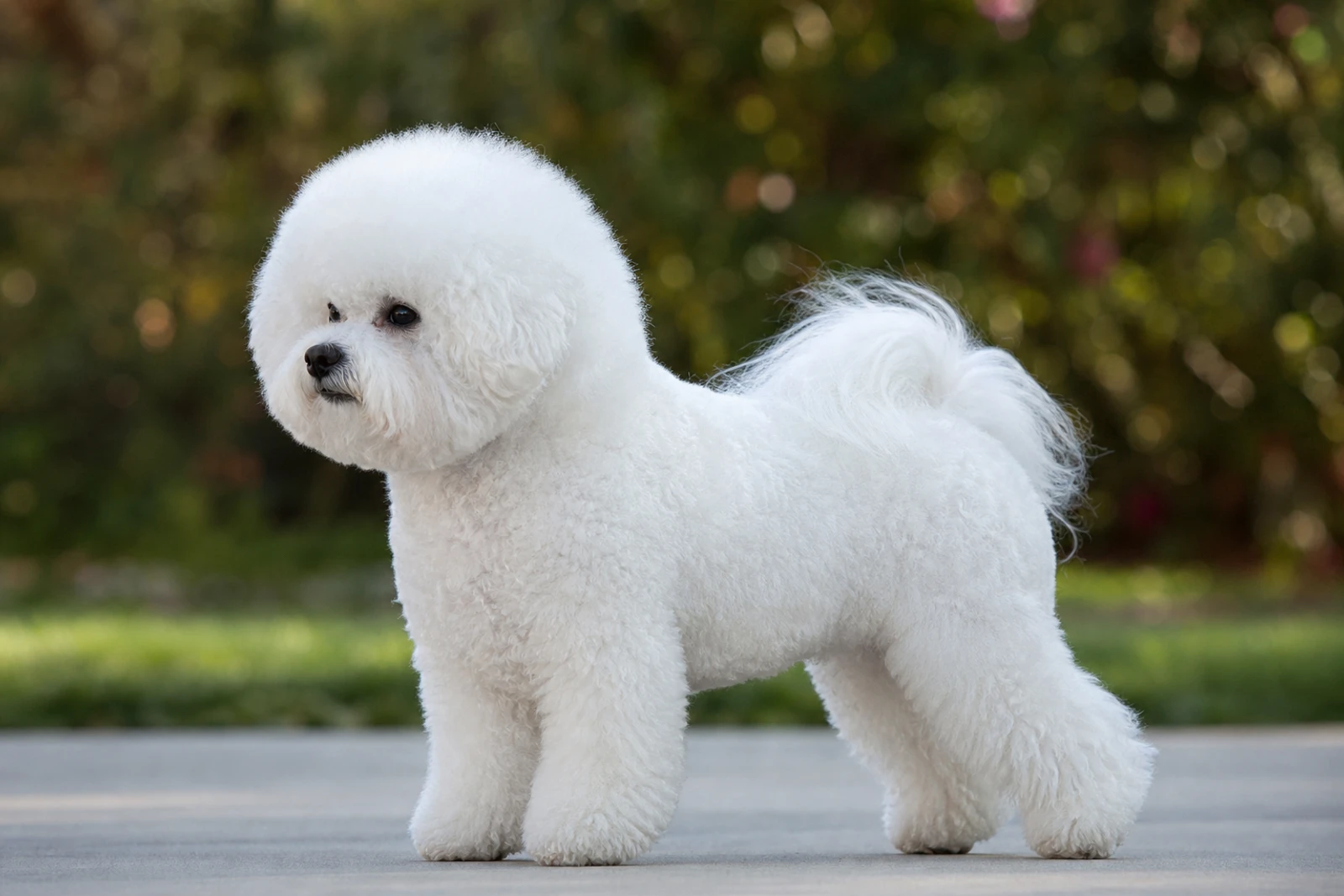
The Bichon Frise is a small, cheerful companion dog that thrives on human interaction. With a gentle, playful nature, they are excellent for families, singles, and seniors alike, adapting well to apartment living. Their signature white, curly coat is low-shedding, making them a great choice for allergy sufferers, though grooming demands are high. Intelligent and eager to please, they respond best to positive, consistent training. While they may bark to alert, they are generally friendly toward strangers, children, and other pets. They are known for their happy-go-lucky attitude and love of play. Ideal for first-time owners seeking an affectionate, lively lapdog.
Family fit
Is the Bichon Frise a good family dog?
Cheerful, low-shedding, and gentle with children.
- Children
- Family shortlist
- Energy
- Moderate
- First-time owners
- More approachable
- Grooming
- Higher
Breed tendencies are only a starting point. Supervise children, meet the individual dog, and make sure the exercise, training, grooming, space, and cost fit your household.
Bichon Frise Sticker Pack
36 cartoon stickers • transparent PNG • no watermark
Pinterest-ready
Share all 36 reactions as one sticker sheet
Pinterest opens with the full pack and a fresh, tailored description. You choose the public board and publish it from your own account.
Save the full pack


Choose one reaction above to share it alone, or use the full-pack button for all 36 together.

























Free full-resolution download — no account, no payment, no watermark.
Includes all 36 transparent PNG stickers in one ZIP. A quick human check is required for each download.
At a glance
- Size
- Small
- Height
- 9–11 in
- Weight
- 11–15 lb
- Life span
- 12 years
- Coat colors
- white
- Coat type
- curly, dense, low-shedding coat
- Origin
- France
How much does a Bichon Frise cost?
Adopt / rescue
$75–$400
Usually includes spay/neuter, first shots, and a microchip.
Buy from a breeder
$700–$2,000
From a reputable, health-testing breeder.
Approximate USD. Prices vary widely by region, breeder, pedigree, age, and coat colour — adopting is the lower-cost and recommended route. Avoid suspiciously cheap “breeders”; they’re often puppy mills.
Estimate the full cost of a Bichon Frise →Want the ongoing number? Estimate the monthly food bill for a Bichon Frise with our dog food cost calculator.
Bichon Frise photos
Views
Front, side, rear and top — the full silhouette.Poses
How the breed sits, lies, moves and plays.Puppy to senior
The breed across its whole life.Expressions
The breed’s range of moods.Close-up details
Eyes, ears, nose, paws, tail and coat.Coat colors
The breed’s recognized colors.Click any photo to enlarge. We show the Bichon Frise from every angle — three views, poses, life stages, expressions, close-ups, coat and colors.
Appearance & size
The first thing you notice about a Bichon Frise is the white powder-puff coat—but pick one up and you’ll feel the compact, springy body underneath. Standing 9–11 inches at the shoulder and weighing 11–15 pounds, this is a small dog built more like a little athlete than a delicate lap ornament. The sturdy, muscular frame reflects a history of sailing, street performing, and keeping up with people, not lounging on pillows.
The coat: a walking cloud
The double coat is pure white, dense, and famously curly. A soft, insulating undercoat pairs with a coarser outer coat to create loose corkscrew curls that feel almost like crushed velvet. The texture stands away from the body, giving the dog that round, cotton-ball silhouette. While the breed standard calls for white, some puppies show faint cream or apricot shading on the ears or body that usually disappears by adulthood. Because loose hairs catch in the curls instead of drifting onto your sofa, you’ll need a good brushing routine to keep mats at bay—this coat works like velcro for dead hair.
The face: dark punctuation in a sea of fluff
Peering out from all that white are two round, dark-brown eyes and a black button nose. That combination gives the breed its famously soft, inquisitive expression. A halo of black skin around the eyes helps them stand out against the white curls. Drop ears, covered with long, flowing hair, frame the face and add to the gentle look. The muzzle is slightly chiseled but never pointy, and the head is well-proportioned with a visible but not dramatic stop.
The tail: a feathery banner
A Bichon hallmark is the tail, carried jauntily over the back like a plume. It’s covered in the same long, silky hair as the ears and body, feathering out behind the dog. When the dog moves, that tail waves like a little flag—a permanent exclamation point that almost never drops.
A walk-around the Bichon
From the front, you see a rounded, almost teddy-bear-like head, with dark eyes and a black nose popping against white curls. The chest is moderately deep, and the front legs are straight and well-boned. From the side, the body is slightly longer than tall, with a level topline and a tucked-up belly that hints at real athleticism. The tail arches forward, touching or nearly touching the back. From the rear, muscular thighs and the tail’s long feathering cascade down the hindquarters. The impression is compact, cheerful, and coiled with energy—like a dog who’s always one beat away from a play bow.
Under that cotton-candy exterior is a real dog—solid enough to hike alongside you, light enough to tuck under your arm, and permanently dressed in what looks like freshly laundered pajamas.
History & origin
You can trace the Bichon Frise straight back to the lapdogs that sailed the Mediterranean with Spanish and Italian traders. The breed’s earliest ancestors grew out of a sturdy little white dog known as the Barbichon, itself a descendant of the water spaniels of the Barbet line. By the 14th century, sailors had refined these dogs on the island of Tenerife in the Canary Islands into a small, cheerful companion called the Bichon Tenerife — the direct forerunner of today’s Bichon Frise.
Sailors prized the dogs as barter and gifts, and they soon found a soft landing in the royal courts of Europe. In the 1500s, Spanish and Italian nobility treated the Tenerife dogs as living luxuries, but the breed really took off in France under King Francis I and later Henry III. Henry reportedly carried his Bichons in a basket around his neck. The dogs spent the next two centuries curled up on satin pillows, bred purely for charm and a merry, affectionate nature — no other job was ever expected of them.
That pampered life collapsed after the French Revolution. Tossed out of salons, Bichons became street performers. Their quick wit, spunky personality, and willingness to learn tricks made them naturals for organ grinders and circus acts across France and Belgium. For a long stretch, they were more likely to be seen balancing on a barrel or begging in a square than lounging in a drawing room.
A handful of breed lovers in France and Belgium decided that wasn’t the whole story. After World War I, they gathered remaining dogs, standardized the look, and in 1933 the Société Centrale Canine recognized the breed under the official name Bichon à poil frisé — “Bichon with the curly coat.” The French word frisé stuck, eventually shortening to Frise. The first American imports arrived in the mid-1950s, and the American Kennel Club welcomed the breed into the Non-Sporting Group in 1972. Today’s Bichon — all 11 to 15 pounds of cotton-ball white — still isn’t much of a working dog, and that’s exactly the point.
Temperament & personality
This little white powder puff is far more than a pretty face. A well-bred Bichon Frise brings a cheerful, lively spark to a home—think happy dances on two hind legs and a tail that seldom stops wagging. They thrive on being with their people, often described as affectionate without being clingy, and they’re naturally gentle, making them a solid match for families with respectful children.
Don’t let the fluffy coat fool you; these dogs have a playful, curious side that needs an outlet. A fenced yard romp, a vigorous indoor fetch session, or a brisk 30-minute walk twice a day keeps them fit and content. They’re not high-octane athletes, but boredom easily turns into mischief—chewed baseboards, shredded pillows. Giving them a steady supply of safe chew toys and a quick spritz of homemade citrus spray on off-limits items can save your furniture.
Bichons are emotionally tuned in. They read your mood and often mirror it. Raise your voice in anger and you might see a head turn, a lip lick, or a yawn—classic canine calming signals. Neglect or long hours alone can trigger separation anxiety, which often surfaces as barking or house soiling. If your Bichon paces by the door, it’s not spite; he’s stressed. Keeping arrivals and departures low-key and never punishing anxious behavior helps him learn that alone time is safe.
Expect an enthusiastic greeter who’s quick to announce the mail carrier with a flurry of barks. They’re alert watchdogs, not attack dogs—once you welcome a guest, your Bichon usually switches on the charm. Early socialization teaches them when quiet is golden and prevents knee-jerk barking at every squirrel.
There’s a clever, sometimes stubborn streak under all that fluff. These dogs respond beautifully to positive reinforcement—tiny treats and a clicker—but they’ll check out if training feels like a drill. Keep sessions short, upbeat, and reward heavily. A treat immediately after outdoor potty success works wonders; punishing indoor accidents only teaches a dog to hide when he needs to go. Because scent drives so much dog behavior, clean up messes with an enzyme cleaner and consider a distilled vinegar spray to erase urine odors that invite repeat marking.
Bichons generally play well with children and other dogs, but teach kids to let the dog eat in peace. Approaching any dog while he’s eating can trigger a defensive snap from even the sweetest pup. With early introductions and respectful handling, you get a tireless playmate who’s also perfectly happy to curl up for a nap. Because these dogs relish mental work, a short session of trick training after your walk tires out their busy brain more than another lap around the block.
Good with kids, dogs & other pets
Most Bichons live for company — human, canine, you name it. Their patient, non-aggressive nature makes them a natural fit for families, but a few ground rules go a long way.
With children
Because a Bichon Frise rarely tips the scale at more than 15 pounds, even well-meaning toddlers can accidentally hurt them. Always supervise interactions and teach kids to sit on the floor for cuddles rather than carrying the dog around. That said, a Bichon who’s been raised with gentle handling will bounce back from accidental bumps with remarkable resilience. They tend to match a child’s playful energy without nipping or showing aggression, which is why you’ll often see them recommended for first-time families. Still, their small size means they’re no fan of roughhousing — a sudden grab or a tumble off a couch can leave them shaken, so ground rules are essential.
With other dogs
A well-socialized Bichon typically greets other dogs with a wagging tail and a play bow. Early puppy classes and plenty of positive meet-ups during the 3-to-14-week window pay off here. Because they’re small, they can get intimidated by large, boisterous dogs, so steer clear of chaotic dog-park free-for-alls. Instead, set up supervised playdates with dogs who know how to dial it down. If you already have a calm resident dog, a Bichon will often form a tight pair — just don’t expect them to entertain each other all day; they crave human interaction and can develop separation anxiety if left alone for long stretches.
With cats and small pets
Bred as companion dogs, Bichons lack a strong prey drive, which gives them a leg up in multi-species homes. Many live amicably with cats, especially when introduced gradually during puppyhood. With pocket pets like rabbits or guinea pigs, never leave them unsupervised. The dog’s curiosity might read as play to you, but it can stress out a smaller animal fast. A baby gate and separate safe spaces keep everybody comfortable. Lack of early exposure to cats or small critters can lead to over-excitement, so use the first few months to build calm associations. Even after that window, you can still help an adult Bichon adjust with slow, gentle introductions — forcing a fearful or reactive dog into proximity only adds stress.
Trainability & intelligence
Bichons are clever little charmers with a 4-out-of-5 trainability rating, but that number doesn’t mean they’ll grind for a paycheck—they work for you once they trust you. They pick up new cues fast when there’s a treat at stake, and they genuinely enjoy learning if it feels like a game. The flip side: they’re smart enough to spot an inconsistent handler a mile away, and they’ll happily train you if you let them. Skip a rule once and you’ll see selective hearing return.
Short, upbeat sessions win here—three or four five-minute rounds sprinkled through the day—rather than one long drill. Use pea-sized bits of chicken, cheese, or freeze-dried liver to cement a fast recall, a solid “stay,” or a polite greeting at the door. Because Bichons tend toward curiosity, off-leash reliability doesn’t come built in; a squirrel or a new face can short-circuit even a well-rehearsed come. Proof your recall first on a long line in increasingly distracting places, and always pay the jackpot when they spin on a dime despite temptation.
- What works: praise, play, and high-value food rewards delivered the instant the right behavior happens.
- What backfires: any punishment-based method—a sharp tone, a leash pop, or shoving a bottom into a sit. These dogs are sensitive. Harshness doesn’t harden them; it makes them avoid you or shut down. Trust, once broken, takes a long time to rebuild in a breed this tuned in to your mood.
Socialization is the other half of the equation. Start between 3 and 14 weeks, gradually exposing your puppy to different people, sensible dogs, odd surfaces, and everyday sounds. Ongoing positive experiences keep the adult Bichon from tipping into nervous barking or skittishness. A well-socialized Bichon walks into new situations with that signature happy bounce instead of backing away.
Genuine stubbornness usually masks confusion or fear, not willfulness. If your Bichon isn’t getting something, step back, split the behavior smaller, and reward heavily for each baby step. A dog who trusts that you won’t yank or yell learns faster and keeps offering behaviors, even when things get tough. Do that, and you’ll have a small white shadow who practically throws a parade every time you pick up the clicker.
Exercise & energy needs
A Bichon Frise doesn’t need a long, strenuous walk to be content—ten minutes twice a day is often the baseline. That might be a brisk stroll around the block in the morning and a second loop after dinner. Because these little dogs weigh only 11–15 pounds, they burn through energy in short bursts, and multiple mini-sessions match their natural rhythm far better than a single marathon outing. You’ll know you’ve hit the sweet spot when your Bichon comes home ready to settle beside you, not collapse in a heap.
Don’t mistake small size for no drive. Bichons are playful, agile, and surprisingly sturdy, so they thrive on variety. A quick game of fetch down the hallway, a session chasing a flirt pole (keep it low impact), or a romp in a safely fenced yard counts toward the daily tally. They also love activities that engage their clever, people-oriented brain. Swap out a walk for ten minutes of hide-and-seek, a stuffed puzzle toy, or teaching a new trick—mental exercise tires them out just as effectively. Scent games are another winner: scatter a few pieces of kibble in a snuffle mat or a low-traffic room and let them sniff it out.
- Good activities: Short walks, indoor fetch, trick training, puzzle feeders, novice nose work, gentle play with other small dogs.
- Watch out for: High jumps off furniture or repeated stair-climbing, which can stress kneecaps. Bichons can be prone to luxating patellas, and responsible breeders screen for it, but it’s smart to keep surfaces and play safe.
Most Bichons adapt to your lifestyle as long as the daily 20-minute minimum is met—often in two lively, focused bursts. Skip a day, and you may see the fallout: a bored Bichon can turn into a barking, chewing shadow. Meet their modest needs consistently, and you’ll have a calm, merry companion who’s just as satisfied curling up on the couch when the action is done.
Grooming & coat care
That fluffy white cloud of a coat doesn’t stay that way on its own. A Bichon’s double coat — soft, dense, and curly — is closer to hair than fur, growing continuously and trapping loose strands instead of shedding them around your house. The trade-off: daily brushing is non-negotiable if you want to keep mats and skin irritation at bay.
-
Daily brushing is the single most important habit. A slicker brush with rounded pins gets through the topcoat and into the undercoat, breaking up tiny tangles before they become tight mats. Follow with a metal greyhound comb down to the skin, especially behind the ears, under the legs, and around the collar where friction knots form fast. If you hear the comb scraping, stop and work the snag loose with your fingers or the slicker — never rip through a mat.
-
Bathing every three to four weeks keeps that white coat looking bright, but overdoing it strips natural oils. Use a gentle whitening shampoo and always condition; a Bichon’s hair dries out easily. Towel-blot, then blow-dry while brushing to prevent the curls from shrinking into ringlets that twist together as they dry. Leaving the coat to air-dry almost guarantees mats.
-
Professional grooming every four to six weeks is standard unless you’re comfortable with clippers yourself. The classic round teddy-bear trim is popular, but many owners choose a shorter “puppy cut” for easier home upkeep. Sanitary trims around the eyes and hind end keep things clean between full grooms.
-
Face and eye care is a daily ritual for most Bichon owners. Pinkish tear staining under the eyes is common on all white dogs; wipe the area gently with a damp, soft cloth or a vet-recommended tear-stain wipe each morning. Keep the hair around the eyes trimmed short so it doesn’t poke and cause irritation.
-
Nails, ears, and teeth can’t slide just because the coat demands attention. Clip nails every three to four weeks — a Bichon’s small, quick-growing nails can curl and cause discomfort fast. Check and clean those drop ears weekly with a dog ear cleaner; pluck any hair blocking the ear canal if your vet shows you how. Brush teeth daily; the breed can be prone to dental issues, and a 12-pound dog won’t let you skip it without consequence.
Seasonal changes don’t bring heavy shedding spells, but you’ll still see a little extra fluff in spring and fall. Stick to the daily routine, and you’ll find a couple of stray white wisps on your lap rather than drifts all over the house.
Shedding & allergies
Most of the time, your dark pants stay clean. That’s the first thing you notice about a breed that barely sheds. Bichon Frises have a double coat of curly, continuously growing hair that acts more like human hair than typical dog fur. Loose hairs get trapped in the curls instead of dropping onto your floor, so you won’t see seasonal blowouts or daily drifts of white fluff.
The hypoallergenic reality
No dog is 100% allergy-proof. Allergens live in dander, saliva, and urine — not just hair. Because a Bichon sheds so little, far fewer allergen-laden hairs float around your home, which is why many people with mild dog allergies do well with the breed. Still, you need to spend time around adult Bichons before bringing one home if allergies are a dealbreaker. Reactions vary from person to person and even one Bichon to the next.
Drool and doggy smell
These are basically non-issues. Bichons aren’t droolers. You might see a tiny drip when they beg for a treat, but you won’t find wet spots on your sofa. And that “doggy odor” common in oily-coated breeds? Not here. A clean, well-groomed Bichon just smells like, well, clean hair.
What actually keeps the hair in check
The trade-off is grooming, not vacuuming. The tight curls that catch shed hair also mat quickly without daily brushing. Every 4 to 6 weeks a clipper trim or scissor cut removes the dead hair that would otherwise accumulate. Skip that, and you’ll end up with tangles — but still no shedding storm. You’ll find the occasional stray curl on a sweater, but nothing that a lint roller can’t fix in a few seconds.
Diet & nutrition
A Bichon Frise often acts like she’s starving — those big dark eyes are expert beggars — but this little dog packs on ounces fast. Most adults weigh only 11–15 pounds, so even a single extra pound strains joints and can set the stage for long-term weight issues. Measured meals twice a day, every day, keep things predictable.
For a balanced homemade diet, think roughly 60% raw or cooked meat, 20–30% fruits and vegetables, and 10% other ingredients like eggs, grains, or plain yogurt. That ratio matches how a dog’s system is built to eat. Blending or processing the mix helps nutrient absorption since dogs lack salivary enzymes and their jaws move only vertically. If you go with high-quality kibble, stick to the bag’s weight-based guidelines, then adjust up or down based on your dog’s actual body condition and daily exercise.
Puppies need more frequent fueling: four spaced meals a day until four months old, then three meals until six months, then the adult two-meal rhythm. Transition a puppy to new food slowly with lightly cooked, puréed meats and vegetables. Raw chicken wings can join the rotation around twelve weeks, always under supervision.
A lot of Bichons would eat whatever you put in front of them, so a puzzle bowl is your friend — it slows a fast eater and works her brain at the same time. Seniors may shift to smaller, more frequent meals and puréed food if teeth are missing. Watch the scale closely as activity drops with age; cut back gradually to avoid creeping obesity.
Never feed from the table, no matter how charming the act. Begging is hard to unlearn. Serve leftovers in her own bowl, and avoid rich, fatty scraps — they can trigger a painful pancreatitis episode. Bland grains like white rice or pearl barley soothe sensitive stomachs, while unsalted vegetable cooking water makes a decent quick stock for meals.
Health & lifespan
A well-bred Bichon Frise often reaches 12 years, sometimes longer with consistent care. That’s a solid run for a small dog, but it hinges on keeping a few known health quirks in check.
These dogs can be prone to skin allergies and chronic dry, itchy skin. You’ll usually see it first on the belly, paws, or around the ears. Responsible breeders screen for atopic dermatitis and will be upfront about any history of yeast or bacterial skin infections in their lines. The all-white coat doesn’t cause the problem, but it does make redness and irritation easy to spot early.
- Luxating patellas (slipping kneecaps) are quite common in the breed. A dog might skip a step or hold a back leg up for a second. Mild cases often stay manageable with lean body weight and the right exercise, but Grade 3 or 4 usually calls for surgery. Your vet should check knees at every annual visit.
- Dental disease hits little mouths hard. Without brushing and dental chews, tartar builds up fast, leading to gum infection and tooth loss. Count on daily toothbrushing and a professional cleaning every year or two.
- Eye issues, especially cataracts, can show up in middle age. A veterinary ophthalmologist exam is a good idea around age 5–6, even if you don’t notice cloudiness.
- Arthritis tends to creep in as they hit their senior years. The same patella problems that were no big deal at three can stiffen into painful joints at ten. Keeping your Bichon at 11–15 pounds—not an ounce over—is the single biggest favor you can do those knees and hips.
A few other things to stay ahead of: small breeds can have tracheal collapse, so use a harness instead of a collar to avoid pressure on the throat. Some Bichons run low blood sugar as puppies (hypoglycemia), so young pups need three to four small meals a day. And while the double coat gives decent insulation, don’t assume it’s a parka—limit time outside when temps drop below freezing.
Regular vet visits should include a close look at the knees, eyes, and that pink skin, plus a heartworm prevention schedule you don’t skip. A 12-year run is the average; catching these things early helps you push well past it.
Living environment
A Bichon Frise is built for indoor life. At 9–11 inches and 11–15 pounds, this is a dog that fits just about anywhere—studio apartment, townhouse, or suburban home—without ever feeling cramped. A yard is completely optional. What matters more is that someone is around: Bichons form intense bonds with their people and wilt during long, lonely afternoons.
Their exercise needs are refreshingly modest. Aim for two 10-minute walks a day, plus a few quick indoor play sessions—a flirt pole down the hallway or a puzzle toy stuffed with treats easily fills the gap. Because the breed isn’t brachycephalic but is small, short bursts work better than one marathon outing. Those little legs carry a lot of spirit, but the priority should be consistent, low-impact movement, not distance or speed. If your Bichon has any early joint sensitivity—common in small dogs—stick to carpeted games and avoid constant stair climbing.
- Noise level: A Bichon will definitely tell you the mail carrier arrived. Training an “enough” cue early can keep alert barking from becoming a habit in shared walls. Left unchecked, boredom or separation anxiety can amplify the noise.
- Alone time: These dogs were bred as companions, not independent guards. Leaving a Bichon alone for a full workday often triggers howling, pacing, or destructive chewing. If your schedule doesn’t allow midday breaks, gradual desensitization and puzzle feeders from puppyhood are essential. A midday dog walker or a neighbor’s check-in helps more than any gadget.
- Climate: The dense white double coat provides some insulation, but Bichons are indoor pets first. They overheat quickly in summer—step outside in the morning or evening, and keep indoor air circulating. In freezing weather, a waterproof coat and quick trips will do; they’re simply not built to be yard dogs in snow or blazing sun.
At the end of the day, a Bichon wants to be near your feet while you work, on your lap while you watch TV, and within earshot of the fridge. Give them that proximity, short daily outings, and a few creative brain games, and they’ll be quiet, content neighbors no matter the square footage.
Who this breed suits
A Bichon fits best when you want a sunny, lap-sized companion that treats every day like a party. This is a dog who thrives on your proximity — if your idea of downtime involves a little white shadow curled at your side, you’ll get along just fine.
First-time owners
Bichons are forgiving and eager to please, which makes training less daunting. They pick up tricks quickly with positive reinforcement, and their moderate exercise needs won’t overwhelm you. The bigger learning curve is the coat: daily brushing and a trip to a professional groomer every 4–6 weeks are non-negotiable to prevent mats. If you’re ready for that routine, the breed is a gentle introduction to dog ownership.
Families
These cheerful 11–15 pound dogs slot into family life with real enthusiasm. They play fetch, invent zoomies, and generally adore children who know how to handle a small dog respectfully. Because they stand only 9–11 inches at the shoulder, roughhousing can hurt them, so teach kids to sit on the floor for cuddles rather than scooping them up. Bichons also tend to get along with other pets, making them a smooth fit in multi-dog or cat households.
Seniors and singles
A moderate romp in the yard or a couple of 15–20 minute leash walks easily satisfies their physical needs — the rest of their joy comes from being near you. For retirees or someone living alone, that low-key exercise demand plus an affectionate nature is a perfect match. Just be aware that the breed can be prone to separation anxiety; they do best when someone is home most of the day or when you build up their alone-time tolerance gradually from puppyhood.
Who should think twice
- People away for long work hours. A Bichon left alone for 8–10 hours daily can develop barking, chewing, or housetraining setbacks.
- Anyone underestimating grooming costs. That cottony white coat doesn’t stay pristine on its own — budget for regular professional trims and at-home brushing.
- Hikers seeking a trail buddy. Bichons enjoy short adventures, but don’t expect them to log serious miles. They’re indoor companions at heart.
- Those wanting a quiet, low-maintenance dog. They’re alert little watchdogs who will announce the mail carrier, so silence isn’t their strong suit.
If the grooming commitment and need for companionship feel manageable, a Bichon gives you roughly 12 years of bright-eyed, tail-wagging devotion in a compact, travel-friendly package.
Cost of ownership
A well-bred Bichon Frise puppy from a responsible breeder who tests for patellar luxation, eye disease, and hip dysplasia usually lands between $1,500 and $3,000. Show prospects or rare lines can push higher. Adoption through a breed-specific rescue runs $200–$600, and adult dogs often come already spayed or neutered.
Monthly costs stack up differently here than with a low-shed breed that looks like one. The single biggest recurring expense is professional grooming. That powder-puff white coat mats close to the skin if you skip a session, so expect a trip to the groomer every 4–6 weeks. At $60–$90 per visit depending on your area, that’s roughly $60–$90 a month right out of the gate. You can learn to do it at home, but a good clipper, brush, and high-velocity dryer will still cost $200+ upfront and demand a couple hours of hands-on work every week.
- Food: A small dog eating high-quality kibble runs about $25–$40 a month. Some owners add canned food or fresh toppers, bumping it to $50.
- Routine vet care: Annual exams, vaccines, heartworm and flea prevention average out to $30–$50 a month when you spread a year’s worth of bills. Dental cleanings—often needed by age 3—add $300–$800 every couple of years, so stash another $15–$25 monthly.
- Pet insurance: For a Bichon, you’ll typically pay $30–$50 a month for a comprehensive plan. The breed can be prone to allergies, luxating patellas, and bladder stones, so skipping insurance means being ready for a surprise $2,000 surgery.
- Extras: Treats, poop bags, a sturdy harness, and occasional daycare or a dog walker add $20–$50 a month depending on your schedule.
All in, plan on $150–$250 a month to cover the basics comfortably. If you travel and need boarding, that figure climbs fast. The white coat is the financial X-factor—skip a grooming appointment and you’ll pay extra for a dematting session later, or worse, a shave-down under sedation.
Choosing a Bichon Frise
If you’re set on a Bichon Frise, the first real fork in the road is whether to go through a breeder or adopt. Neither is automatically better — it depends on what stage of life you want and how much known history matters to you.
Breeder or rescue?
Rescues frequently have adult Bichons, often through no fault of the dog. A family may have underestimated the grooming needs or had a landlord change the pet policy. You’ll skip the razor-tooth puppy phase, and many rescues come house-trained and with a known temperament. The trade-off is that health and genetic background may be fuzzy. A foster-based rescue that has lived with the dog for weeks can give you a solid read on personality, but you’ll rarely get DNA-level certainty.
Breeders give you that from-the-start blank slate. A thoughtful breeder socializes pups to everyday sounds, handling, and house manners from the moment they’re on their feet. You’ll also get predictable size (an adult 11–15 lb, 9–11 inches at the shoulder) and coat, and a health guarantee that covers genetic conditions for a reasonable window.
Health clearances nobody should skip
Bichons can be prone to a handful of inherited problems, and responsible breeders screen both parents before breeding. Ask to see the actual certificates — not just a vet check.
- Luxating patella: Kneecaps that slip out of place are common in small breeds. An OFA patella evaluation (or equivalent) is non-negotiable. Look for a normal grade on both knees.
- Eye disease: Juvenile cataracts and progressive retinal atrophy show up in the breed. A clear CERF or CAER exam within the past year tells you the eyes are structurally sound at that moment. Ideally, you want to see a history of clear exams, not just a one-off.
- Cardiac and hip: Some breeders also screen for heart murmurs via a board-certified cardiologist, and though hip dysplasia is less frequent in small dogs, a conscientious breeder may still do OFA hips.
Beyond paperwork, ask about allergies, bladder stones, and dental health in their lines. Bichons can suffer from severe skin allergies and calcium oxalate stones; while no test predicts all of it, a breeder who openly discusses what crops up in their pedigrees is far more trustworthy than one who claims their dogs never get sick.
Red flags that should make you walk away
- The breeder always has puppies available, multiple litters on the ground, or a “pick your color” menu. A well-bred Bichon is white, sometimes with a little cream shading that fades; any promoter selling “rare” colors like apricot or silver is mixing breeds or flat-out lying.
- They won’t let you see where the puppies are raised, or you meet in a parking lot. You want to see clean, household-type conditions where pups are handled daily — not a sterile kennel where humans are just food dispensers.
- Health testing is waved off with “my vet says they’re healthy.” A vet check is not the same as OFA or CERF evaluations. If they can’t produce the reports, assume they don’t exist.
- They push a puppy on you without asking about your lifestyle, other pets, kids, or work schedule. A good breeder is screening you as hard as you’re screening them.
Picking your puppy
When you visit, watch the whole litter together. You’re looking for a pup that’s curious and bounce-back resilient — not the one hiding in the corner, and not the one body-slamming everything in sight. At 8–10 weeks, a Bichon should approach you with a loose body, investigate, maybe nibble your fingers, then settle for a minute. Run your hands gently over the body: you want a soft, white coat (no bald patches or crusty skin), clear eyes with no squinting or discharge, clean ears, and a puppy that doesn’t cough or gag after a short play session. The breeder should hand you a folder with a health record, vaccination and deworming dates, microchip info, and a copy of the purchase contract. A 12-year family member is worth a moment of polite bluntness — if something feels off, trust your gut and keep looking.
Pros & cons
Pros
- Bichons are natural charmers — affectionate, playful, and deeply attached to their family. They thrive on companionship and tend to get along well with kids, other dogs, and even cats when properly introduced.
- The tightly curled, double coat barely sheds, which often makes them a better match for allergy sufferers. No dog is completely hypoallergenic, but this breed comes close.
- At just 11–15 lb and 9–11 inches at the shoulder, they fit easily into apartment life, a small house, or a travel crate. A couple of short walks plus indoor playtime (around 30–45 minutes total) usually satisfies their exercise needs.
- Quick to pick up tricks and eager to please, they respond beautifully to reward-based training. Many excel in agility, rally, or therapy work.
Cons
- That puffy white coat demands real commitment. Expect to brush down to the skin several times a week, detangle constantly, and schedule a professional groom every 4–6 weeks. Tears and saliva can also stain the face, so daily face wiping becomes routine.
- Bred solely as companions, they loathe being alone. Hours of isolation can trigger separation anxiety — barking, chewing, or house soiling. They need a family that’s around a lot.
- House training can be frustratingly slow. Small bladders and a stubborn streak mean crate training, strict schedules, and patience are non-negotiable.
- Alert and vocal, many Bichons will announce every visitor, squirrel, or delivery truck with persistent barking.
- Health-wise, the breed can be prone to luxating patellas, eye diseases (cataracts, PRA), and allergies. A 12-year lifespan is average, but vet bills for these issues can add up. Responsible breeders screen for orthopedic and eye conditions — always verify those clearances.
Similar breeds & alternatives
Maltese
If you love the Bichon’s powder-puff look but want something even smaller, the Maltese weighs in at under 7 pounds and stands just 7–9 inches tall. They trade the Bichon’s dense, springy double coat for a single-layer, silky coat that hangs straight to the floor — beautiful, but it tangles easily and demands daily brushing plus regular trims. Maltese tend to be a bit more mischievous and bold, yet they’re also legendary shadow dogs; if you can’t handle a dog that follows you into the bathroom, think twice. Lifespan runs 12–15 years.
Havanese
Often described as a Bichon with a paint job, the Havanese comes in almost every color and grows a similar 8.5–11.5 inches tall, though they average a lighter 7–13 pounds. Their double coat is silky rather than cottony, and it can cord if left unbrushed. Temperament wise, Havanese are a shade more thoughtful and mildly less clownish; they’re still cheerful family dogs but may hang back for a beat with strangers before turning on the charm. Grooming commitment is identical — factor in professional cuts every 4–6 weeks. Expect a 14–16 year lifespan.
Toy and Miniature Poodle
If the Bichon’s low-shedding coat is your main draw, Poodles are the obvious cross-shop. A Toy Poodle tops out around 10 inches and 4–6 pounds, while a Miniature Poodle hits 10–15 inches and 10–15 pounds — the Mini lines up closest in stature to the Bichon. Coat texture is curlier and crisper, and it traps less debris. The bigger difference sits between the ears: Poodles are markedly sharper, which means they need puzzle toys and purposeful training to stay sane. Without that mental outlet, you’ll get a restless, inventive barker. Many Poodles live 12–15 years.
Coton de Tulear
Think of the Coton as the Bichon’s closest cousin — almost the same 9–11 inch height, an 8–15 pound build, and that same “just-saw-a-ghost” white fluff (sometimes with a splash of light tan at birth). The coat feels more like raw cotton batting and waves a bit rather than forming tight curls. Cotons can be even more sociable with other animals and quicker to charm strangers, but separation anxiety is a real risk. They are still scarce in the US, so finding a responsible breeder usually means a significant wait. Plan on 15–19 years with this one.
Fun facts
- Originally bred as a companion dog for European nobility, the Bichon Frise was a favorite of King Francis I of France.
- Their name means 'curly lap dog' in French, perfectly describing their cuddly nature and trademark coat.
- Bichons were once popular circus dogs, thanks to their trainability and cheerful disposition.
- They are considered hypoallergenic, shedding minimally, which makes them ideal for allergy sufferers.
Frequently asked questions
- Are Bichon Frises good for apartment living?
- Yes, Bichon Frises can thrive in an apartment due to their small size and moderate energy level. However, they may bark at noises or passersby, so early training is helpful to manage this behavior. Daily walks and indoor play usually meet their exercise needs.
- Do Bichon Frises get along with children?
- Bichon Frises are known for their cheerful and gentle nature, which can make them good companions for families with children. They are playful and affectionate, but because of their small size, interactions with very young kids should be supervised to prevent accidental injury.
- How much do Bichon Frises shed?
- Bichon Frises are a low-shedding breed, which is why they are often considered hypoallergenic. However, no dog is completely allergy-free, as dander and saliva can still cause reactions. Regular grooming helps minimize loose hair in the home.
- What are the grooming requirements for a Bichon Frise?
- Their dense, curly coat needs frequent care, including brushing several times a week to prevent mats and tangles. Most owners also schedule professional grooming every 4 to 6 weeks to maintain a healthy coat. Regular ear cleaning and nail trimming are important too.
- Is a Bichon Frise a good choice for first-time dog owners?
- Bichon Frises can be suitable for first-time owners because they are friendly, eager to please, and adaptable. They do require consistent training, especially for housebreaking, and benefit from early socialization to prevent shyness or separation anxiety.
Tools & calculators for Bichon Frise owners
Quick estimates tailored to Bichon Frises — pre-filled with this breed’s size where it matters.
Articles & stories about the Bichon Frise
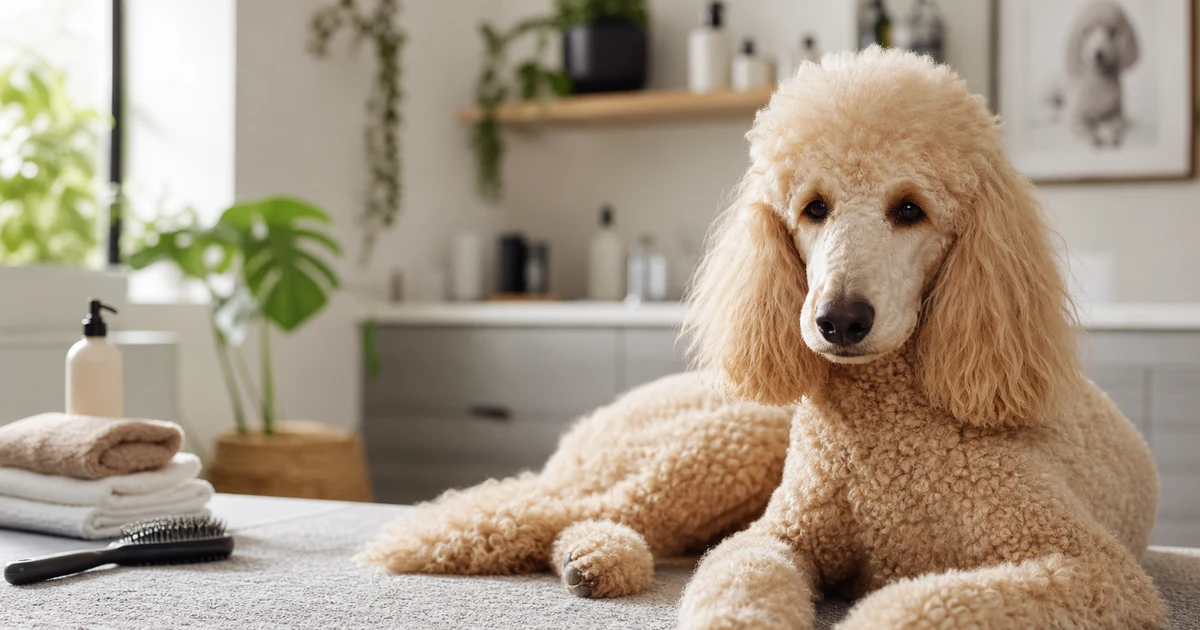
Hypoallergenic Dog Grooming: A Practical Guide for Allergy-Aware Homes
Low-shedding dogs still need thoughtful coat care. Learn what grooming can—and cannot—do in an allergy-aware home.
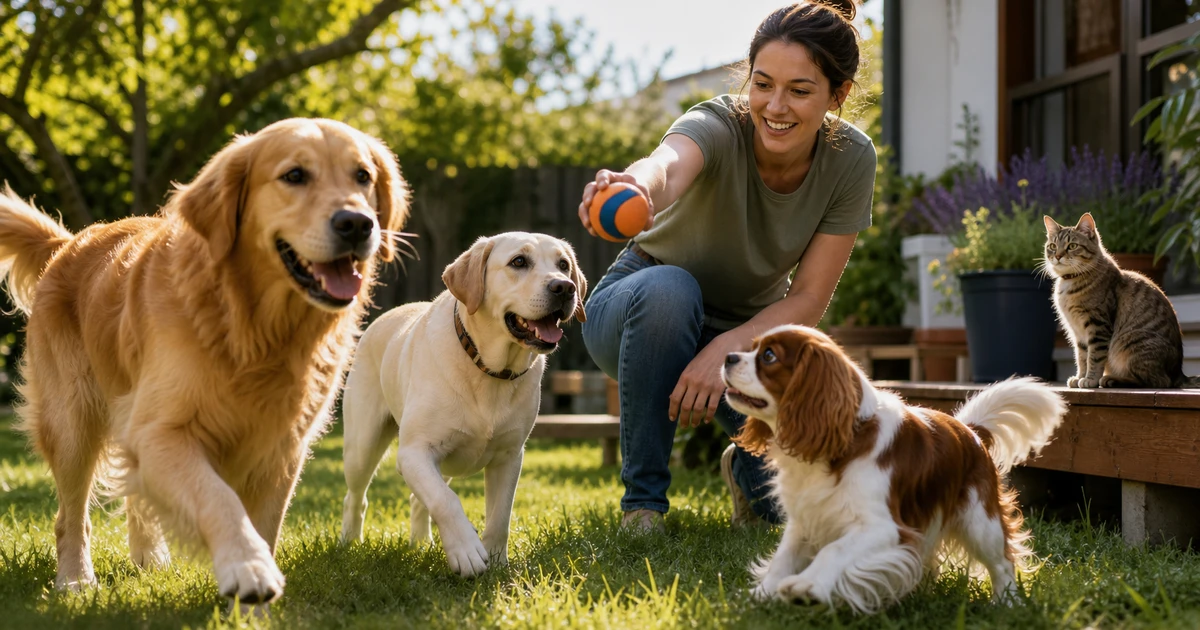
Best Dog Breeds for Cats: How to Choose a Dog That Can Share the House
Some breeds are easier to manage around cats, but no breed is automatic. Start with temperament, trainability, energy, and the individual dog.
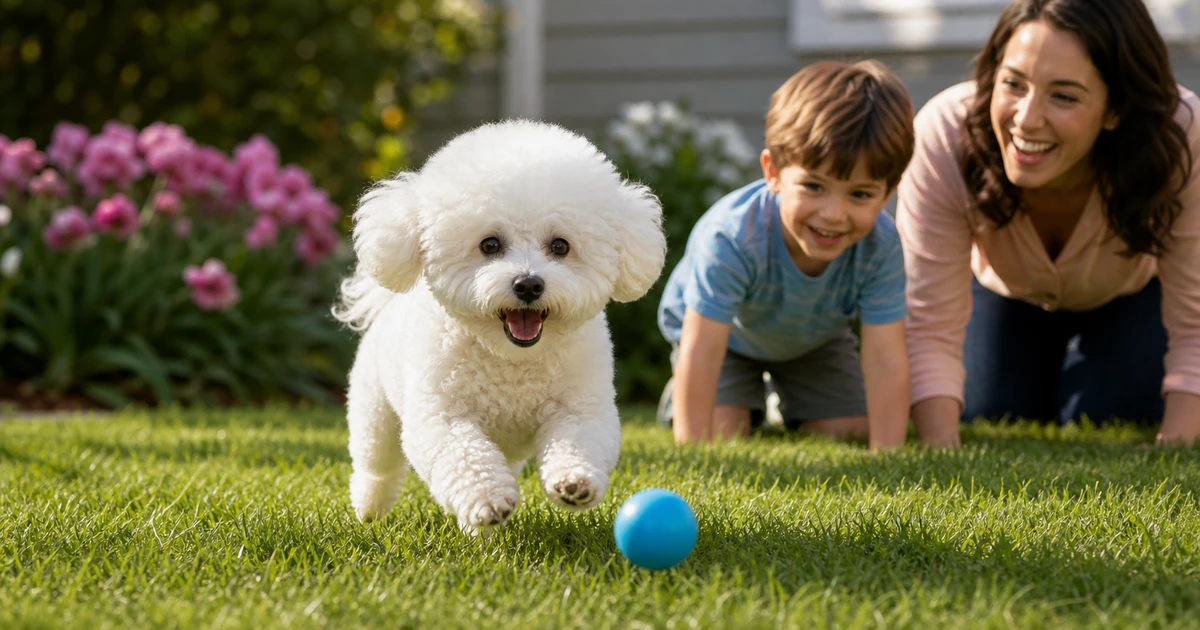
Is the Bichon Frise a Good Hypoallergenic Family Dog?
This little powder puff barely sheds and adores kids, but the fluffy coat demands daily work. Here’s what to really expect from a Bichon Frise in a family with allergies.
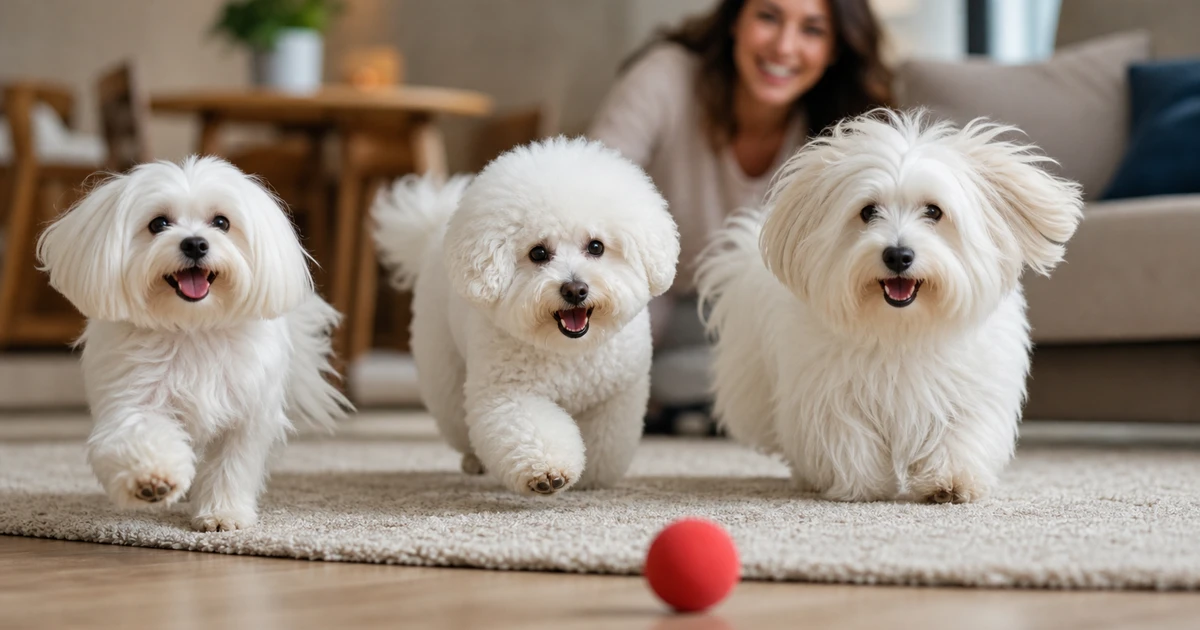
Small White Dogs That Actually Work in Apartments
White and small doesn’t mean easy. Here’s which fluffy apartment candidates actually handle close quarters—and which ones will drive your neighbors crazy.
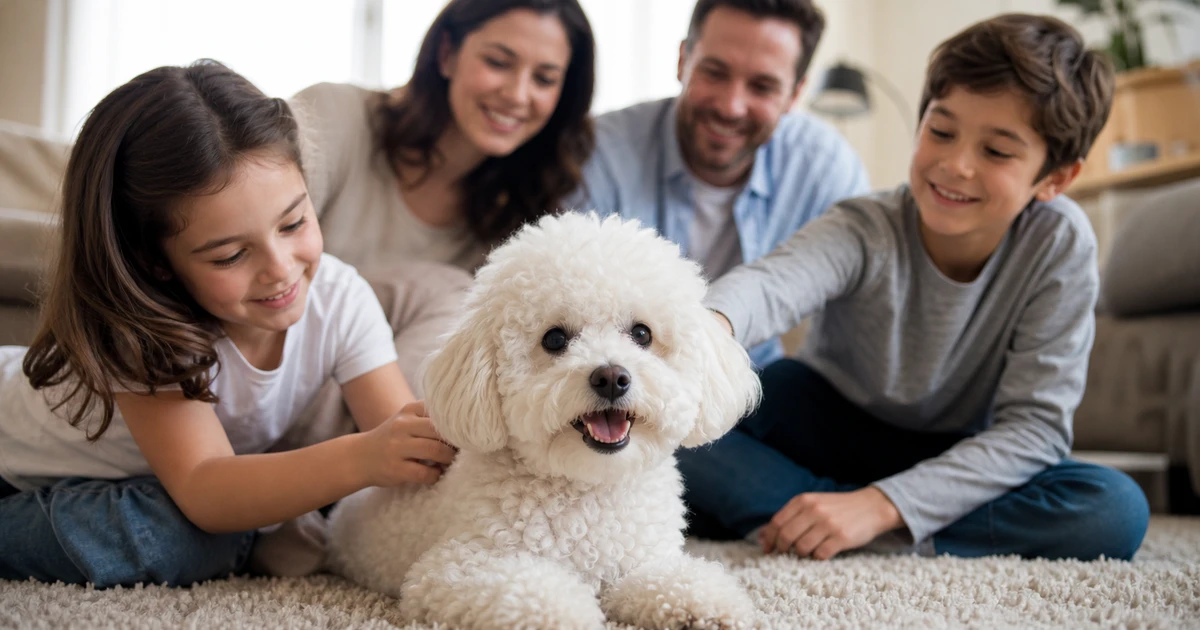
Choosing Our First Dog for the Kids: The Shortlist That Actually Made Sense
Google said “best dog breeds for kids.” Our real homework started there—and quickly moved past cute pictures to the list that actually fit our life.
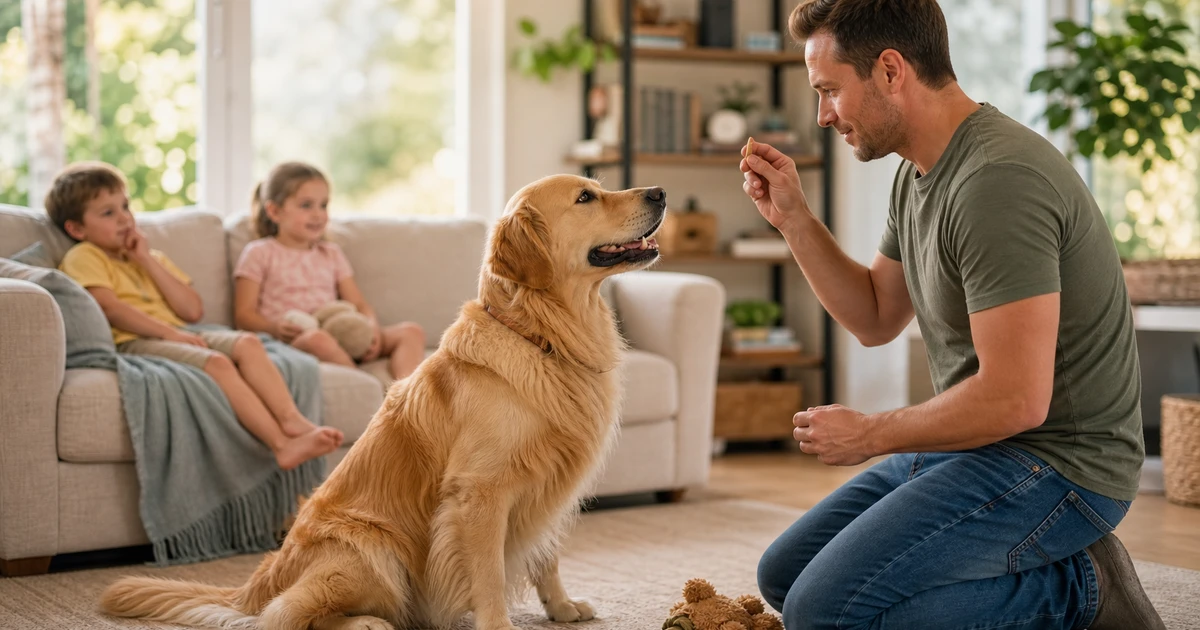
Kid-Safe Dog Training Rules Every Family Should Set Before Choosing a Breed
You scrolled through the best dog breeds for kids, but breed alone won't guarantee safety. These household rules come first.
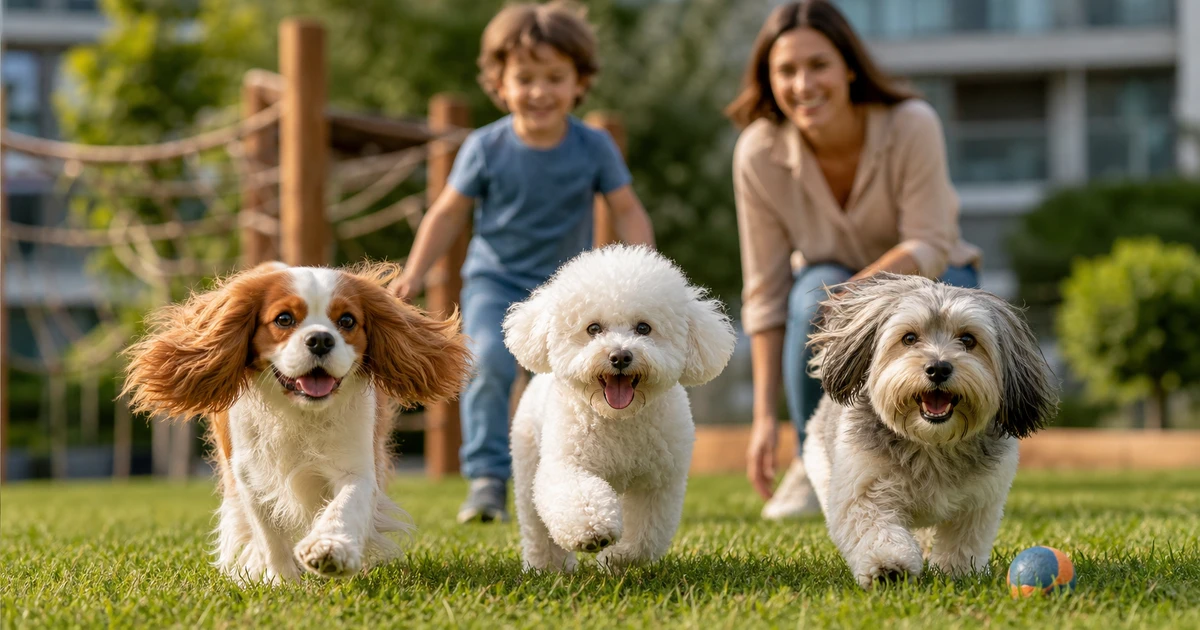
Best Apartment Dog Breeds for Kids: Family Dogs for Smaller Homes
Searching for an apartment-friendly dog that's great with kids? These breeds combine low barking, gentle temperaments, and compact size for happy family living in smaller spaces.
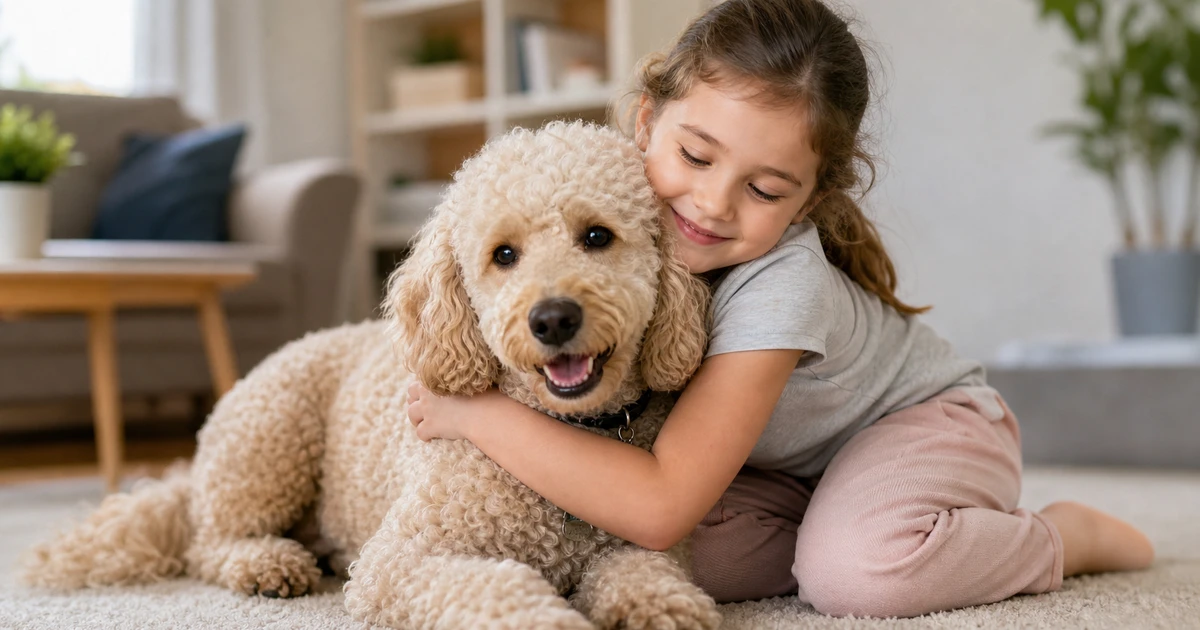
Best Hypoallergenic Dog Breeds for Kids: Low-Shedding Family Picks
Finding a dog that loves kids and won’t trigger allergies feels like a tall order—but these low-shedding breeds fit the bill. From tiny Maltese to sturdy Mini Schnauzers, here are family-friendly pups that keep dander low.
Best Dog Breeds for Kids and First-Time Owners
A dog that forgives clumsy cuddles and a first-timer’s learning curve—these eight breeds deliver. Here’s how to choose the right one for your family.
Best Small Dog Breeds for Kids: Gentle Options That Still Need Boundaries
Small dogs aren't always the easy option for families with children—but with the right breed and clear boundaries, they can be fantastic companions. Here are eight gentle picks that still need careful handling.
Sources & standards
This profile follows recognized breed standards from the American Kennel Club (AKC) and the Fédération Cynologique Internationale (FCI), along with established veterinary and breed-club guidance. These describe general breed tendencies — every dog is an individual.