

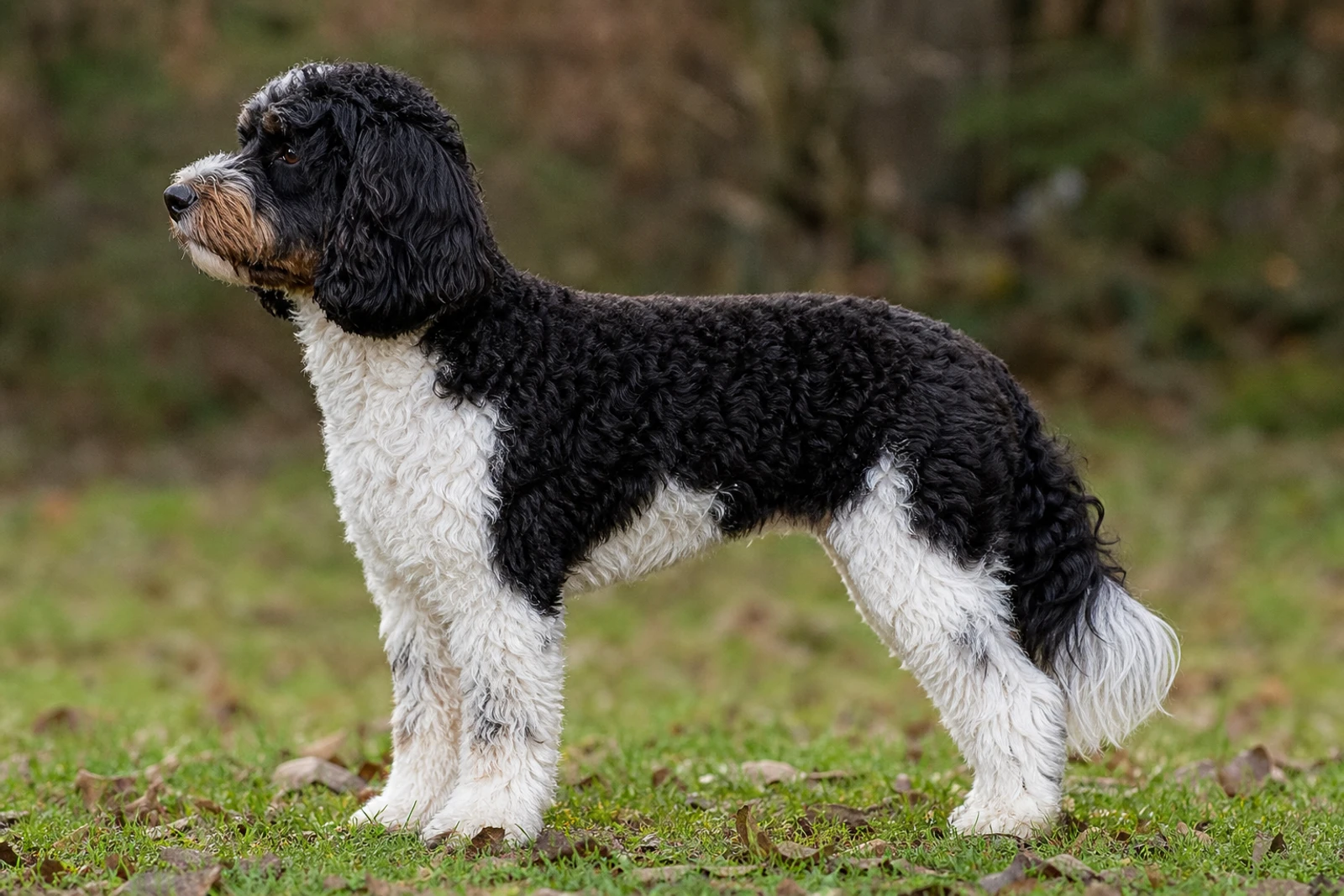
The Cockerpoo, a cross between a Cocker Spaniel and a Poodle, is an affectionate and intelligent companion ideal for families, singles, and first-time dog owners. Their adaptable nature suits apartment or house living, provided they get daily walks and playtime. Known for forming strong bonds with their humans, these small to medium dogs thrive on attention and are gentle with children when socialized early. With their happy, eager-to-please temperament, Cockerpoos excel in therapy work and make wonderful additions to active yet cuddly households.
At a glance
- Size
- Small
- Height
- 10 in
- Weight
- 11 lb
- Life span
- 14–15 years
- Coat colors
- black, white, cream, apricot, red, chocolate, parti-color
- Coat type
- wavy or curly, low-shedding
- Group
- Crossbreeds
How much does a Cockerpoo cost?
Adopt / rescue
$75–$400
Usually includes spay/neuter, first shots, and a microchip.
Buy from a breeder
$700–$2,000
From a reputable, health-testing breeder.
Approximate USD. Prices vary widely by region, breeder, pedigree, age, and coat colour — adopting is the lower-cost and recommended route. Avoid suspiciously cheap “breeders”; they’re often puppy mills.
Estimate the full cost of a Cockerpoo →Want the ongoing number? Estimate the monthly food bill for a Cockerpoo with our dog food cost calculator.
Cockerpoo photos
Views
Front, side, rear and top — the full silhouette.Poses
How the breed sits, lies, moves and plays.Puppy to senior
The breed across its whole life.Expressions
The breed’s range of moods.Close-up details
Eyes, ears, nose, paws, tail and coat.Coat colors
The breed’s recognized colors.Click any photo to enlarge. We show the Cockerpoo from every angle — three views, poses, life stages, expressions, close-ups, coat and colors.
Appearance & size
A small, sturdy dog with a silhouette that makes people smile—that’s the Cockerpoo in a nutshell. Most will stand right around 10 inches at the shoulder and tip the scales near 11 pounds, though you’ll see some variation depending on whether the Poodle parent was a Toy or Miniature. The body is compact, slightly longer than tall, giving it a rectangular outline rather than a square one. You won’t find a fragile toy dog here; the chest is deep for their size, the legs straight and well-boned, and the feet round and tight.
Look at a Cockerpoo from the front and the teddy-bear face hits you first. The muzzle is gently rounded, the nose either black or brown, matching the tight pigment around those almond-shaped eyes. The eyes themselves—dark, expressive, and set wide—give the dog a sweet, alert look that’s pure Cocker Spaniel. But then you notice the ears: long, lobular, set at eye level, thickly covered in soft curls or waves, framing the face like a spaniel’s. From the side, the topline is level, running clean from the withers to a slightly sloping croup. The tail is set high and carried up—often a happy plume of coat that never stops wagging. Docking is less common now, so expect a natural tail length that arches over the back in motion. The whole package moves with a springy, agile gait that’s more bounce than plod.
Coat is where the Cockerpoo really shows its Poodle influence. There’s no standard “one coat,” but you’ll typically get a single, dense, low-shedding fleece of curls or loose waves. It feels soft, almost woolly, and grows continuously rather than shedding out in bursts. Colors are all over the map: solid cream, apricot, red, chocolate, black, or silver, and plenty of parti-color mixes with white patches, ticking, or phantom markings. Some puppies even lighten with age, so the deep apricot fluffball you bring home might fade to a soft cream by adulthood.
From the rear, the hindquarters are moderately angulated, muscular for a small dog, and end in those same neat, compact feet. The tail is the star back here—erect, well-fringed, and a clear signal of the dog’s mood. Whether the coat is clipped short or left a little shaggy, the overall impression is of a dog that’s balanced, cheerful, and just a little bit human in its expression.
History & origin
The Cockerpoo is one of the oldest intentional “designer” crosses, first bred in the United States during the 1960s—a full generation before the doodle craze took off. Breeders wanted a small, sturdy companion that blended the Cocker Spaniel’s merry, people‑pleasing personality with the Poodle’s sharp intelligence and low‑shedding coat. The result was a 10‑inch, 11‑pound dog that fit easily into family life and didn’t leave a trail of hair on the couch.
Early efforts centered on crossing American Cocker Spaniels with Miniature Poodles, and later with Toy Poodles, to dial in a compact size without sacrificing health or temperament. The goal wasn’t a working dog or a hunting partner; it was purely companionship—a lap dog that could keep up with kids, charm visitors, and live comfortably in an apartment. The timing was right. More families were moving to the suburbs, and a friendly, small, relatively tidy dog hit a sweet spot.
By the 1970s and ’80s, word‑of‑mouth made the Cockerpoo a quiet success, even though no major kennel club recognized the cross. Hobby breeders carried the torch, often pairing carefully chosen parents to produce puppies with the plush, wavy coats and eager‑to‑please nature people kept asking for. When the designer‑dog boom erupted in the 1990s and 2000s, the Cockerpoo was already a familiar name, and demand surged. That popularity led to a double‑edged reality: extraordinary examples bred with health screening and care, and a flood of poorly raised puppies from commercial mills hoping to cash in.
Today, you’ll still find no Cockerpoo breed standard with the AKC, but the cross has multi‑generational lines that enthusiasts refer to as “Australian Cobberdogs” or simply multigenerational Cockapoos, often bred with a goal of consistency over several generations. They remain one of the most popular mixed breeds in the country—a fixture in family homes, therapy‑dog programs, and cozy city apartments. Knowing the difference between a responsible breeder who tests for Cocker and Poodle health issues and one who doesn’t is the most practical takeaway from their history, because the original vision was solid: a happy, smart little dog built for real life.
Temperament & personality
A Cockerpoo’s whole vibe is “let’s do everything together.” This is a dog who bonds hard, follows you from room to room, and gets genuinely sad if the family is gone all day. That warmth is the breed’s signature trait, but it comes with a flip side: they hate being left out and can invent their own entertainment — barking, chewing, or redecorating with the trash — if isolation drags on too long.
The velcro personality
Expect a lap dog who moonlights as a shadow. Most Cockerpoos are gentle and patient with respectful kids, and they typically get along well with other dogs and even cats when introduced early. Friendly does not mean pushover, though. They have a quiet stubborn streak inherited from the Cocker Spaniel side, so training works best with positive, consistent cues and a cheerful voice. A harsh correction often makes them shut down or get evasive rather than comply.
Energy, play, and that cheeky brain
At just 11 pounds and 10 inches tall, they’re compact but still need real daily exercise — a solid half-hour walk plus a couple of lively play sessions inside or in a fenced yard. Without enough physical and mental work, the sharp Poodle intelligence turns into problem-solving you don’t want: dismantling shoe insoles, unrolling toilet paper, or figuring out how to open a cabinet. Puzzle toys and short training bursts keep that brain busy and your belongings safe.
Watchful but not a guard
Cockerpoos notice everything. A delivery truck, a squirrel, a neighbor’s cat — and they’ll let you know with a sharp bark or two. They’re quick to sound the alarm, then just as quick to greet the person at the door with a wagging rear end. That alertness is useful, but you’ll need to teach a “quiet” cue early or you’ll have a tiny town crier on your hands.
Quirks you’ll live with
House-training takes vigilance. The scent of previous accidents cues repeat marking, so clean up with an enzymatic cleaner (or a vinegar spray) to truly erase the signal. Some Cockerpoos are inveterate rollers — they’ll drag their shoulder through dead worms, fox scat, or anything gloriously stinky, probably because scavenger instincts whisper that a good smell is worth sharing. And watch the body language, not just the tail. A stiff posture with a hard stare means something very different from a loose, wiggly frame with soft eyes, even if the tail is going. Knowing the difference helps you head off problems before they start.
Good with kids, dogs & other pets
Most Cockerpoos are naturally non-aggressive and patient, which makes them a solid pick for families with kids. The catch few people talk about is size. At just 10 inches tall and 11 pounds, this is a small dog — a toddler’s enthusiastic grab or a fall off the back of the couch can do real damage. So with children under six, keep a hand on the situation and show older kids how to support a tiny dog with two hands, low to the ground.
That same affectionate nature means these dogs don’t do well left to their own devices. A Cockerpoo who’s alone for long hours often broadcasts the fact with nonstop barking or chewed door frames. They need to be in the middle of family life, not relegated to a yard or a back room. If your household is empty much of the day, plan on a dog walker or midday sitter from day one.
With other dogs, the single biggest lever you can pull is socialization before 16 weeks. That’s the tight window when a puppy needs to meet calm, friendly adult dogs, walk on different surfaces, hear the vacuum cleaner, and see people of all sorts — without getting overwhelmed. A pup raised in a home environment with that kind of gentle exposure usually grows into a confident adult who rolls with the punches. A puppy-mill dog who missed that window often startles easily and may never fully relax around strange dogs. If you’re bringing home an adult who’s already fearful, forcing dog-park hellos tends to backfire; many adult Cockerpoos are perfectly content just coexisting with their immediate human and canine family.
Cats and small pets come down to early introductions and plain good sense. Raise a Cockerpoo puppy alongside a cat, and they typically work out a peaceful truce. Still, the Cocker side of the family tree can flick on a chase switch when a hamster bolts or a pet bird flaps its wings. Never leave your dog unsupervised with a free-roaming pocket pet. Use baby gates to give the cat an always-open escape route, and keep cages in a room with a closed door when you’re not there to supervise.
Trainability & intelligence
A Cockerpoo usually picks up new commands faster than you can pour your morning coffee. Both Cocker Spaniels and Poodles rank high in working intelligence, so you get a crossbreed that thrives on mental puzzles and reads your tone sharply. The flip side: this dog can outsmart you if you’re sloppy. Inconsistent cues or slipping treats “just because” teaches them to game the system, so decide early what’s allowed and what’s not, then stick to it.
How they learn best Bribery doesn’t work long term — clear communication does. Use short, upbeat training sessions built on positive reinforcement. Reward what you want with pea-sized bits of chicken, a quick tug session, or genuine praise. Punishment-based corrections backfire here; they tend to shut down or get anxious when voices turn harsh. That sensitivity also means you need to watch your body language. A Cockerpoo will spot a frustrated sigh from across the room and lose focus.
Start socialization between 3 and 14 weeks, but don’t stop there. Puppies need gradual, positive run-ins with kids, delivery trucks, crinkly bags, wobbling skateboards, and different floor surfaces. An under-socialized Cockerpoo leans nervous or barky around strangers, so keep the exposures frequent and upbeat as they grow.
Recall and common sticking points Their nose rules. A whiff of a squirrel trail can turn a wind-sprint into a deaf ear. Teach recall with a long line first — never off leash in unfenced areas until the response is boringly reliable. Use a squeaky voice, a special toy, or high-value treats you reserve only for coming when called. If your tone sounds even a little angry, this dog may arc around you instead of coming straight in, so always make the return worth their while.
Some owners mistake quick learning for finished training, then get frustrated when a Cockerpoo acts like they’ve “forgotten” a known cue. They didn’t forget; the environment got more interesting. You need to proof behaviors in a dozen different places before they stick. Short daily practice works better than long, drill-heavy weekends.
A realistic approach Work with the dog’s natural motivation: they want to engage, but also want to know what’s in it for them. Switch up rewards often — a toy one day, a treat the next — to keep the spark. If you ever feel stuck, step back and ask whether your timing is sharp enough. Late rewards muddy the picture for a quick-witted dog. Mark the exact instant they get it right, and you’ll see the difference by the next session.
Exercise & energy needs
A Cockerpoo might clock in at just 11 pounds, but this crossbreed runs on a steady, upbeat energy rather than a couch-potato setting. Most do best with 30 to 45 minutes of daily exercise, split into two or three short sessions instead of one long march. Think a 15-minute morning sniff walk, a lively fetch session in the afternoon, and a quick trot around the block in the evening. Binge-exercising a small dog on weekends just leaves you with a wound-up, barky companion the rest of the week.
Mental exercise counts just as much as physical steps. Both Cocker Spaniels and Poodles are clever, problem-solving breeds, so a bored Cockerpoo will invent her own jobs — like disassembling your couch cushions. Scatter a handful of kibble in a snuffle mat, teach a new trick in five-minute bursts, or hide a toy behind a door and let her puzzle it out. Puzzle feeders, frozen stuffed Kongs, and backyard scent trails tap that busy brain and leave her genuinely tired.
Good activities and sports
- Brisk leash walks with plenty of sniffing stops (the mental workout matters as much as the distance)
- Fetch on soft grass, using a lightweight ball or fleece tug — keep sessions short to protect growing joints
- Hide-and-seek with you or a favorite toy
- Nose work games: drag a treat across the yard and let her track it
- Low-impact agility foundations — cavaletti poles on the ground, tunnels, or a pause table, never full-height jumps
- Indoor trick training (spins, weaves, or picking up her toys)
Watch intensity. A Cockerpoo’s little legs cover a lot of ground, but she’s not built for pounding pavement alongside a jogger or joining a long hike on rough terrain without a carrier backup. Skip high-impact moves like repetitive leaping off furniture or hard surfaces; landing on hardwood floors can stress developing joints. A responsible exercise plan prioritizes comfort over distance — if your dog lags, pants heavily, or sploots mid-walk, call it a day.
On the flip side, skipping exercise entirely will backfire. Under-exercised Cockerpoos often get restless, reactive on leash, or vocal. Aim for consistency: two bits of intentional movement plus a brain game or two keeps a Cockerpoo cheerful and your house quiet.
Grooming & coat care
Your Cockerpoo inherited grooming needs from two very different coats: the Poodle’s dense, curly, single coat and the Cocker Spaniel’s silky, often feathery double coat. What you actually get can range from loose waves to tight ringlets, and it matters a lot for your daily routine. Regardless of curl pattern, that mix means daily brushing is non-negotiable to prevent mats from forming tight against the skin, especially behind the ears, in the armpits, and under the harness.
Work through the coat in sections with a metal slicker brush that has rounded pins. This pulls out loose hair and fine debris from the longer outer coat. Follow up with a steel comb to catch any snarls the slicker missed, paying extra attention to the feathering on the legs and tail if your pup has it. The comb is also your best tool for checking that you’ve actually reached the skin — matting often lurks beneath a tangle-free top layer.
Plan on a bath every 4 to 6 weeks, or sooner if your little explorer rolled in something foul. Use a gentle dog shampoo and be thorough about rinsing; leftover product turns into an instant mat magnet. Since the coat holds moisture, a force dryer or cool-setting blow dryer gets the dog fully dry without overheating the skin. Air-drying a dense or curly coat practically guarantees fresh mats by morning.
A professional clip or tidy-up every 6 to 8 weeks keeps this 11-pound dog comfortable and clean. Ask your groomer to trim the hair around the eyes, paw pads, and sanitary areas carefully — those spots collect moisture and gunk fast. Between appointments, round-tip scissors let you clear the vision lane yourself if you’re steady-handed.
Those floppy, Spaniel-style ears demand a weekly once-over. Lift the ear leather, sniff for any yeasty odor, and wipe the visible part with a damp cotton ball — never poke inside the canal. The warm, low-airflow environment makes Cockerpoos prone to ear infections, so red skin or a strong smell means a vet visit, not a home remedy. Keep nails short enough that you don’t hear clicking on the floor (usually every 3 to 4 weeks), and brush teeth several times a week to stay ahead of small-dog dental trouble.
Seasonal shifts rarely cause a massive shed, but many Cockerpoos will drop a bit more hair in spring and fall — stepping up your brushing from once to twice a day handles it without a house full of fluff.
Shedding & allergies
Every Cockerpoo is a genetic dice roll between a shedding Cocker Spaniel and a low-shedding Poodle, so you won’t find a consistent answer from litter to litter. Some puppies inherit the Poodle’s single, hair-like coat and drop very little fur; others get a denser, more Spaniel-like undercoat that sheds moderately year-round. People often throw around “hypoallergenic,” but the real trigger is dander and saliva proteins, not just airborne hair. Even a low-shed dog still produces these allergens.
- Everyday shedding: Many Cockerpoos leave only a few stray hairs on dark pants. The ones that favor the Cocker side, however, can leave a light dusting of hair on furniture, especially if their coat leans wavy rather than tightly curled.
- Seasonal blowout: If your dog inherited a thicker undercoat, expect a heavier shed a couple of times a year as the weather shifts. Brushing every other day during those weeks keeps it from becoming a tumbleweed situation.
- Drool: Virtually nothing. This isn’t a slobbery breed.
- What really helps: Regular professional grooming every 6–8 weeks, plus home brushing, catches dead hair before it lands on your rug. It also keeps the coat from matting close to the skin, which traps dander.
If allergies in the house are severe, don’t rely on a breed label. Spend a solid hour with the specific puppy or adult dog indoors, then see how you feel 24 hours later. That’s the only test that matters.
Diet & nutrition
Your Cockerpoo’s love of food is no joke—many inherit serious food motivation from both parent breeds. That charming “feed me” face needs a firm hand, because an extra pound or two on an 11-pound frame stresses developing joints and can set the stage for luxating patellas or other orthopedic trouble. Keep your dog lean. You should feel ribs easily under a light fat cover, and there should be a visible waist when you look down from above.
Puppy feeding schedule
Puppies burn through energy fast. From weaning to 4 months, they need four measured meals spaced evenly through the day. At 4 months, drop to three meals. Around 6 months, shift to the adult pattern of two meals a day. Transition a new pup to your chosen food gradually, starting with lightly cooked, puréed meats, fish, and soft fruits or vegetables, or a high-quality commercial puppy formula. You can introduce supervised raw chicken wings around 12 weeks—chewing on them helps with teething and dental development.
Adult portions and weight control
Most adult Cockerpoos thrive on about ½ to ¾ cup of high-quality dry kibble per day, split between morning and evening. That’s a starting point—adjust based on exercise. A dog that jogs alongside you for 45 minutes burns more fuel than a couch-loving lap warmer. Measure every meal with a proper scoop, not a random cup. Treats count, too. Use a puzzle bowl if your dog inhales food; it slows him down and provides mental engagement.
What to put in the bowl
Whether you feed kibble, home-prepared meals, or a mix, the diet needs to be meat-centric. Aim for roughly 60% high-quality animal protein (chicken, beef, fish, turkey), 20–30% dog-safe fruits and vegetables, and about 10% extras like eggs, plain yogurt, or cooked grains like pearl barley or white rice for sensitive stomachs. Blending or puréeing ingredients helps nutrient absorption because dogs lack salivary amylase and their jaws don’t grind side-to-side like ours. Skip vegetarian or vegan plans—a dog’s digestive system is built to process meat, and you risk depriving him of essential nutrients.
Watch the extras. Rich holiday scraps, fatty meat trimmings, and buttery leftovers can trigger pancreatitis, which is both painful and expensive to treat. If you do set aside safe leftovers (cooked veggies or lean protein), serve them in the dog’s bowl, never from your plate. Begging that starts at the table is hard to undo.
Senior adjustments
As your Cockerpoo ages and naturally slows down, keep an eye on the scale. Reduced activity means you’ll need to gradually cut back daily calories to prevent creeping obesity. There’s no solid evidence that older dogs need less protein; decent muscle mass helps support aging joints. Smaller, more frequent meals can be easier on a senior stomach, and puréeing food helps if teeth are missing or gums are sore.
Health & lifespan
Most Cockerpoos live 14–15 years, often well into their teens with consistent care. That’s a generous stretch for a small dog, but a long life still means you’ll want to stay ahead of a few health quirks this mix can inherit.
Since both parent breeds—Cocker Spaniel and Poodle—pass along their own genetic weak spots, a Cockerpoo can be prone to patellar luxation (a kneecap that slips out of place), ear infections, and eye issues like cataracts or progressive retinal atrophy. You might also see skin allergies and itchy ears that flare up with diet or environmental triggers. Small-dog realities count here too: at around 11 pounds, a Cockerpoo can face dental disease earlier than you’d expect, and a few lines carry a softer trachea that can lead to a honking cough, especially if you use a collar instead of a harness.
Responsible breeders screen parent dogs for the conditions that tend to run in the family—particularly knees, eyes, and hips—and they’ll be up front about test results and any health guarantees they offer. They also start handling and socializing puppies early, which takes the edge off stress-related issues and helps you avoid anxiety-driven habits later.
Once the dog is yours, preventive care is straightforward. Annual vet visits (twice a year for a senior) let your vet catch a shaky kneecap, an early cataract, or a heart murmur before they become big problems. Stay on top of dental cleanings: brushing a couple of times a week and a dental chew can dodge painful tooth loss. Clean those floppy ears after baths or swims—moisture is an ear infection’s best friend. Keep weight in check, because even a single extra pound strains tiny joints. And like any dog, a Cockerpoo needs monthly heartworm prevention during mosquito season (plus one more month after it ends), a rabies shot (required by law), and core vaccines your vet recommends.
Watch for subtle clues—scooting on the rear, a head tilt, squinting, or just a drop in usual zoomie energy—and you’ll catch most concerns when they’re still a quick fix.
Living environment
A Cockerpoo fits surprisingly well into apartment living, as long as you can commit to daily exercise and don’t mind a chatty little shadow. At 10 inches tall and just 11 pounds, this dog takes up barely more space than a throw pillow — but don’t mistake small size for low needs.
You don’t need a fenced yard to keep a Cockerpoo happy, though access to a patch of grass sure makes potty breaks easier. Two brisk 20- to 30-minute walks, split into morning and afternoon, usually hit the sweet spot. Toss in a couple of indoor play sessions — fetch down a hallway or a round of hide-and-seek with treats — and you’re golden. If you have a securely fenced yard, they’ll happily zoom around for short bursts, but the fence is non-negotiable. Squirrels and passing dogs can trigger a chase, and recall tends to evaporate when their small prey drive kicks in.
These dogs feel temperature extremes acutely. Their coat — often a curly or wavy Poodle-type mix — provides a little insulation, but an 11-pound body loses heat fast. A jacket in freezing weather and a minute spent touching pavement with your palm before summer walks will save you both grief. Keep indoor play areas soft, too; repetitive jumping off couches can be hard on developing joints, so consider a ramp or pet stairs early on.
Barking is baked in. A Cockerpoo will let you know about the delivery truck, the neighbor’s new wind chimes, and probably the squirrel that had the audacity to sit on the windowsill. Early, positive training can teach them when “enough” means quiet, but plan on a dog that stays vocal. Thin apartment walls might require extra attention to avoid friction with neighbors.
The real make-or-break item is alone time. Cockerpoos bond hard and fast, and they tend to unravel when left alone for long stretches. A full 8-hour workday, day after day, is often too much. Gradual desensitization — leaving for a few minutes at first, building slowly — and frozen puzzle toys can take the edge off, but this breed thrives when someone is around most of the time. If your household is empty for long hours regularly, this dog will struggle, no matter how many treat cams you buy.
Who this breed suits
A Cockerpoo slot into a household like a tiny, enthusiastic shadow — this is a dog that genuinely craves your company and wilts if left alone for long stretches. If your daily rhythm keeps someone at home most of the time, you’ll get a cheerful companion who treats every knock at the door like a long-lost friend and every walk like an adventure. At around 11 pounds and 10 inches tall, they’re portable but not fragile, with a 14–15 year lifespan that asks for a long commitment.
- First-time owners: You’ll find them forgiving and eager to please, thanks to a sharp Poodle mind wrapped in a sweet, sometimes clownish Cocker spirit. They pick up basic commands quickly with positive, treat-based training, but don’t mistake that for low-maintenance; without consistent boundaries, they can turn into charming little con artists who convince you that rules don’t apply.
- Families with kids: Cockerpoos do best alongside children old enough to respect a small dog’s body — think school-age and up. A rambunctious toddler who stumbles or grabs can accidentally hurt an 11-pound frame, so supervision is non-negotiable. In the right gentle-handed home, they’ll happily join in a game of fetch, then crash on a lap for a movie.
- Active seniors and singles: This is a standout match for someone who wants a dog-shaped sidekick for daily strolls and errands. Two 20- to 30-minute walks, plus a few rounds of fetch or a puzzle toy, keep their brain and body satisfied. The flip side: they aren’t a dog you can skip exercise with for days, and they’ll follow you from room to room, so privacy disappears.
- Who should think twice: If your schedule leaves the house empty for a full workday, a Cockerpoo is likely to develop exhausting separation anxiety — howling, chewing, potty accidents. The grooming needs also surprise people: that soft, low-shedding coat (they can still shed unpredictably) demands a brush every other day and a professional clip every 6–8 weeks. Skip it and you’ll face painful mats against the skin. Extremely sedentary homes or families expecting a yard ornament should look elsewhere; this is a dog that belongs on the couch and in your daily plans, not outside alone. They can also be prone to ear infections and luxating patellas, so responsible breeder health screening and regular ear cleaning are part of the deal.
If you can offer a person-centered home with a solid daily routine — real exercise, consistent coat care, and someone around to soak up their affection — a Cockerpoo repays you with a lively, long-lived plus-one that greets each morning like it’s the best day ever.
Cost of ownership
A well-bred Cockerpoo puppy from a breeder who tests for Poodle and Cocker Spaniel hereditary issues usually falls between $1,500 and $3,000. Prices climb for rare coloring or high-demand lines. Adopting through a rescue or shelter often costs $200 to $500, and many adult crosses end up in need of a home.
Once your Cockerpoo comes home, count on these monthly expenses for a roughly 11-pound dog:
- Food: High-quality small-breed kibble runs $20 to $30 a month; treats add a few dollars.
- Grooming: Those wavy or curly coats mat fast. A professional clip every 6–8 weeks costs $50 to $80 a visit, so budget about $35–$50 per month. Between appointments, you’ll brush at home almost daily to dodge painful tangles and the extra expense of shaving down pelted fur.
- Routine vet care: Annual exams, vaccinations, and year-round heartworm/flea/tick prevention for a small dog typically hit $250 to $400 a year—about $20–$35 monthly.
- Pet insurance: Plans run $25 to $50 a month, depending on coverage. Cockerpoos can be prone to ear infections, luxating patellas, and eye issues, so a solid policy helps cushion the hit when things go sideways.
That puts total running costs in the neighborhood of $100 to $165 a month, not counting occasional boarding, training classes, or that one chew-proof dog bed you’ll inevitably replace. Over a 14- to 15-year lifespan, that’s a tidy sum—stash away an emergency fund right from the start.
Choosing a Cockerpoo
Your first big decision is whether to work with a breeder or adopt from a rescue. Both routes can land you a healthy, affectionate 10-inch, 11-pound companion, but the upfront legwork differs.
A responsible breeder focuses on the parent breeds’ shared health risks. Cocker Spaniels and Miniature or Toy Poodles can pass along eye disease, hip dysplasia, and luxating patellas. Ask for OFA hip clearances (rated Fair or better) and an annual eye exam by a board-certified veterinary ophthalmologist — you want current results, not just a one-time check years ago. Many breeders also run DNA tests for prcd-PRA (progressive retinal atrophy) and von Willebrand disease (a bleeding disorder). Ask to see the paperwork on both parents. If a breeder hand-waves “hybrid vigor” and skips these screenings, walk away.
Red flags show up fast if you know what to look for:
- Puppies sold before 8 weeks of age
- No chance to meet the mother (or at least see her on a video call if breeding remotely)
- Multiple litters on the ground at once, or a breeder who won’t let you visit the home setup
- Cleanliness that doesn’t match the photos — you’ll smell the difference
When you meet the litter, watch for a puppy that trots over with a soft, wiggly body, not one bolting to a corner or growling at siblings. A Cockerpoo’s coat should be clean, ears free of heavy wax or odor, eyes bright. Don’t let a breeder pressure you to pick based on color alone. Spend 10–15 minutes sitting with the puppies and see which one checks in with you, plays, then settles.
Rescue Cockerpoos often come from breed-specific or small-dog rescue groups. You’ll rarely get full health clearances, but a good rescue will disclose any known medical history, vaccine dates, and behavior notes from the foster home. Ask up front about heartworm status, dental condition, and any allergy patterns — Cockerpoos can be prone to ear and skin trouble. A foster-to-adopt trial is a smart way to see if a particular dog fits your household.
Whether you go puppy or adult, the number you can’t skip is a vet exam within the first few days, plus the breeder’s or rescue’s written contract. That contract should spell out your health guarantee and specify what happens if the dog develops a serious genetic condition within the first year.
Pros & cons
-
Lively, people-loving temperament: Cockapoos inherit the Cocker Spaniel’s cheerful sociability and the Poodle’s sharpness, making them eager to join everything from couch cuddles to a trip to the café. They usually get on well with kids, other dogs, and visitors.
-
Compact but sturdy: At roughly 10 inches and 11 pounds, they fit apartment life, car rides, and on your lap without being fragile. A long 14- to 15-year lifespan means this is a real family member for the long haul.
-
Sharp, trainable mind: These dogs genuinely want to work with you. They pick up tricks, household routines, and recall quickly — often easier to motivate with a squeaky toy or a piece of kibble than many other small breeds.
-
Low-shedding coat (often mistaken for hypoallergenic): Many individuals inherit more Poodle-type coat, which drops far less hair around the house. That’s a relief for tidy homes, though no dog is completely allergen-free.
-
Go-with-you energy: A Cockapoo is equally up for a solid 45-minute walk, a game of fetch in the yard, or just following you from room to room. They match your pace but rarely demand marathon sessions.
-
Grooming is a real chore: That soft, wavy coat mats fast — right down to the skin — if you skip brushing. Count on a full comb-out 3–4 times a week and a professional clip every 6–8 weeks. Neglect it, and you’ll have a painful, shaved-down dog.
-
Velcro dog to a fault: The combination of Cocker clinginess and Poodle sensitivity often creates a dog that shadows your every step. Without early alone-time training, you can end up with howling, destructive separation anxiety — this is not a breed for a house that’s empty all day.
-
Ears and skin need constant attention: Floppy, hair-filled Cocker-style ears trap moisture like a sponge, so weekly cleaning and drying after baths or swims is mandatory to prevent stubborn infections. Allergies and yeast issues also pop up more than you’d like.
-
Sneaky exercise needs: Don’t be fooled by the size. A bored Cockapoo with pent-up energy will excavate cushions, shred mail, or nuisance-bark. They need a daily outlet — a brisk 30- to 45-minute walk plus something that makes them think (a puzzle toy, hide-and-seek, or a short training session).
-
Not a predictable off-the-rack pup: As a crossbreed, adult size, coat texture, and temperament can vary even within the same litter. You might get a curly non-shedder or a high-maintenance wavy coat that still sheds, and a couch potato or a busybody that climbs bookshelves. What you see at 8 weeks is not a guarantee.
Similar breeds & alternatives
If the Cockerpoo’s warm, people-loving personality and low-shed coat have you researching the mix, a handful of other small breeds and crosses share pieces of that puzzle but tilt the balance in different directions. Knowing the differences helps you pinpoint what actually fits your daily life.
Cavapoo
This Cavalier King Charles Spaniel–Poodle cross lands in a similar size range (roughly 10–18 lb), but tends to be a shade calmer. A Cavapoo leans hard into the Cavalier’s gentle, steady couch-snuggler side, while a Cockerpoo often carries more of the Cocker’s busy, retrieving drive. Both need regular coat upkeep. Cavapoos can inherit the Cavalier’s risk for mitral valve disease, so a reputable breeder screens hearts; Cockerpoos are more prone to Cocker-related ear infections and patellar luxation. If you want a dog that’s content with shorter walks and a longer lap time, the Cavapoo might be the easier fit.
Maltipoo
Tiny but full of personality, the Maltese–Poodle cross typically weighs 5–10 lb — noticeably more fragile than the 11‑pound Cockerpoo. A Maltipoo is an ultra-portable shadow, often more vocal and more prone to separation anxiety. The Cockerpoo, by contrast, brings sturdier bone and a spaniel’s love of a good game of fetch. If you have young children or want a dog that can handle a bit of rough-and-tumble without breaking, the Cockerpoo’s extra substance matters.
Miniature Poodle
For a purebred option with the same 10–15 lb frame, the Miniature Poodle delivers sharp intelligence and a reliably curly, non-shedding coat. Expect a higher need for mental challenges — puzzle toys, trick training — compared to the occasionally goofier, more easygoing Cockerpoo. A Miniature Poodle may also be more reserved with strangers, where many Cockerpoos are indiscriminate social butterflies thanks to the Cocker spaniel influence. Both excel with active owners who keep grooming appointments on the calendar.
Cavalier King Charles Spaniel
Without the Poodle influence, you lose the low-shed coat and gain a silky, moderately shedding dog. The purebred Cavalier is often the ultimate lap dog: gentle, quiet, and satisfied with less exercise than a typical Cockerpoo demands. The trade‑off is a heavier health burden — mitral valve disease and syringomyelia are real concerns in the breed. A Cockerpoo’s hybrid background doesn’t eliminate health risks, but it can spread the odds across a wider gene pool. Choose a Cavalier if your household genuinely prefers calm companionship over the daily bounce and play drive the Cockerpoo inherits from both parent breeds.
Bichon Frise
At 12–18 lb with a powder-puff white coat, the Bichon is pure cheerful energy. The breed’s merry, clownish nature lines up closely with the Cockerpoo’s happy-go-lucky vibe, but you’ll notice less retrieving instinct and a lower tendency to chase birds or squirrels. Both dogs need frequent brushing and professional grooming to avoid matting. A Bichon’s coat is typically denser and more cottony than many Cockerpoo coats; the all‑white color is a double‑edged sword — adorable, but tear stains show up fast. If you want a small family dog with a slightly softer edge and zero spaniel heritage, the Bichon merits a look.
Fun facts
- Cockerpoos combine the Cocker Spaniel's loving nature with the Poodle's intelligence, making them highly trainable.
- Their coat can be curly, wavy, or somewhere in between, often with a soft, teddy-bear texture.
- Thanks to their Spaniel ancestry, many Cockerpoos enjoy splashing in water and retrieving games.
- Each litter can produce puppies with a wide range of coat colors and patterns, even from the same parents.
Frequently asked questions
- Do Cockerpoos shed a lot?
- Cockerpoos typically inherit the Poodle's low-shedding coat, so they tend to shed minimally. Regular brushing helps remove any loose hair and keeps shedding controlled.
- Are Cockerpoos good with children?
- With early socialization, Cockerpoos can be affectionate and playful companions for children. Due to their small size, interactions should be supervised to prevent accidental injury.
- How much exercise does a Cockerpoo need?
- They have moderate energy levels and usually thrive on 30–45 minutes of daily exercise, such as walks and interactive play. Mental stimulation through games can also help keep them content.
- Do Cockerpoos require a lot of grooming?
- Their coat often needs regular professional grooming every 6–8 weeks to maintain a healthy length and prevent matting. Daily brushing at home is also recommended, particularly if the coat is curly.
- Are Cockerpoos suitable for apartment living?
- Their small size and moderate exercise needs make them well-suited to apartments. However, they can be prone to barking, so early training to manage noise is beneficial.
- Is the Cockerpoo a good choice for first-time dog owners?
- Their eager-to-please nature and intelligence can make them a manageable option for first-time owners. Consistent, positive training will help them flourish and prevent stubborn habits.
Tools & calculators for Cockerpoo owners
Quick estimates tailored to Cockerpoos — pre-filled with this breed’s size where it matters.
Articles & stories about the Cockerpoo
Sources & standards
This profile follows recognized breed standards from the American Kennel Club (AKC) and the Fédération Cynologique Internationale (FCI), along with established veterinary and breed-club guidance. These describe general breed tendencies — every dog is an individual.