

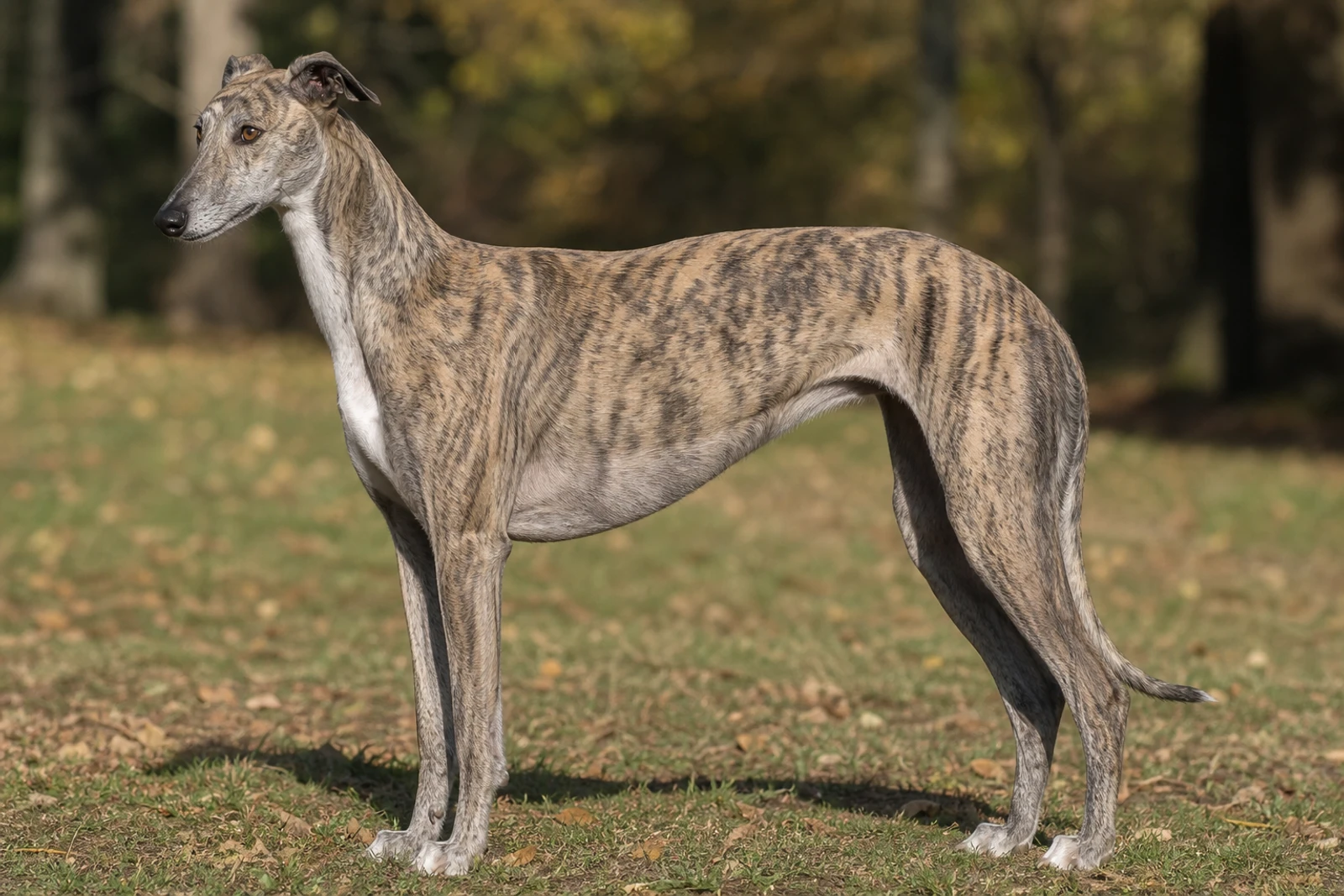
The Greyhound is a gentle and affectionate sighthound known for its incredible speed, but indoors they are calm and relaxed "couch potatoes." They suit owners who can provide daily walks and a safe area for occasional sprints. Ideal for apartment living due to their quiet nature, they are low-maintenance and shed minimally. Greyhounds are good with children and other dogs, but their high prey drive means they may not be safe with cats or small pets. This breed is independent but loving, making them a wonderful companion for first-time dog owners.
Greyhound Sticker Pack
36 cartoon stickers • transparent PNG • no watermark
Pinterest-ready
Share all 36 reactions as one sticker sheet
Pinterest opens with the full pack and a fresh, tailored description. You choose the public board and publish it from your own account.
Save the full pack


Choose one reaction above to share it alone, or use the full-pack button for all 36 together.










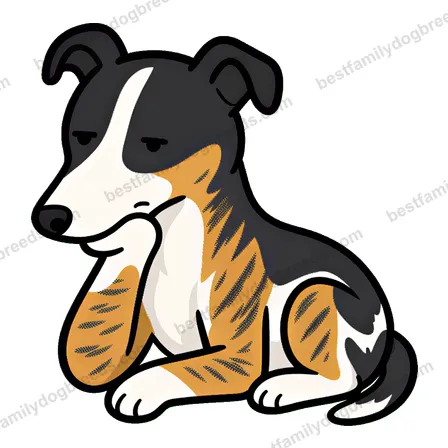



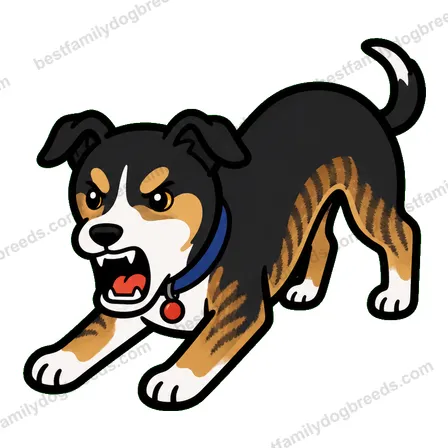
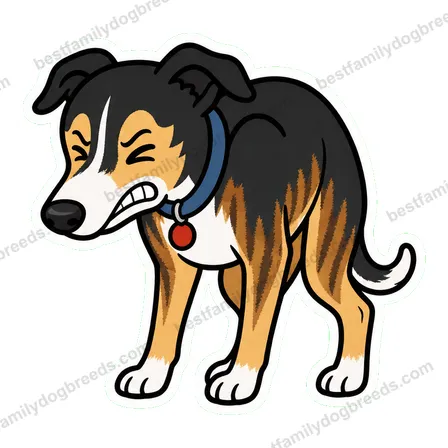

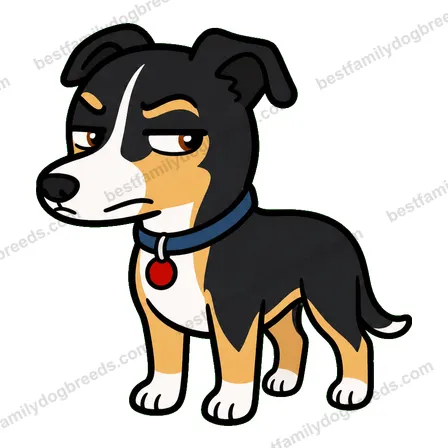


Free full-resolution download — no account, no payment, no watermark.
Includes all 36 transparent PNG stickers in one ZIP. A quick human check is required for each download.
At a glance
- Size
- Giant
- Height
- 27–30 in
- Weight
- 60–66 lb
- Life span
- 11–12 years
- Coat colors
- black, brindle, fawn, blue, red, white, parti-color
- Coat type
- short and smooth
- Group
- Sighthounds
How much does a Greyhound cost?
Adopt / rescue
$75–$400
Usually includes spay/neuter, first shots, and a microchip.
Buy from a breeder
$700–$2,000
From a reputable, health-testing breeder.
Approximate USD. Prices vary widely by region, breeder, pedigree, age, and coat colour — adopting is the lower-cost and recommended route. Avoid suspiciously cheap “breeders”; they’re often puppy mills.
Estimate the full cost of a Greyhound →Want the ongoing number? Estimate the monthly food bill for a Greyhound with our dog food cost calculator.
Greyhound photos
Views
Front, side, rear and top — the full silhouette.Poses
How the breed sits, lies, moves and plays.Puppy to senior
The breed across its whole life.Expressions
The breed’s range of moods.Close-up details
Eyes, ears, nose, paws, tail and coat.Coat colors
The breed’s recognized colors.Click any photo to enlarge. We show the Greyhound from every angle — three views, poses, life stages, expressions, close-ups, coat and colors.
Appearance & size
The first thing you’ll notice is how a Greyhound is built to slice through wind. Everything about this dog says speed and economy of motion, and the dimensions back that up: stand one at the shoulder and you're looking at 27 to 30 inches of height, yet the scale typically reads just 60 to 66 pounds. That lanky, lightweight frame is the secret to a gallop that can hit 45 miles per hour.
From the side, the silhouette is unmistakable. A long, muscular neck flows into a spine with a subtle arch over the loin. The chest is ridiculously deep—reaching all the way to the elbows—but knife-blade narrow when you view the dog head-on. This gives the Greyhound an almost two-dimensional profile from the front, a design that lets those long legs cycle straight forward without wasted lateral motion. The belly tucks up dramatically behind the ribcage, what you’d call a herring gut, leaving a wasp-like waist when seen from above.
The head is another study in aerodynamics. It’s long and lean, with a barely perceptible stop and a tapering muzzle. The eyes are dark and bright, set obliquely, and the ears are typically rose ears—folded back and half-pricked when the dog is relaxed, though they may stand fully erect when something catches their interest. From the front, the deep chest drops between straight, parallel forelegs. From the rear, you see powerfully muscled thighs and a low-set, whip-thin tail that curves slightly upward at the tip.
Coat is the simplest part of the dog: short, smooth, and sleek, lying flat against the body. There’s no undercoat to speak of. As for color, the Greyhound standard practically shrugs—any color or pattern is allowed. You’ll see solid black, white, blue (a dilute gray), red, fawn, and every shade of brindle. Many have white markings on the chest, feet, and tail tip. You might meet a blue brindle with a white blaze or a solid black dog with a few white toes; the variety is endless.
Under all that skin, the Greyhound’s bone structure is fine but not fragile. The pasterns slope gently, the feet are tight and knuckled-up like a cat’s, and the whole rear assembly angles to drive the dog forward like a coiled spring. They’re Goliaths in height but lightweights in mass, which means you can feel every rib and two vertebrae bumps along the spine when you run your hand down a healthy dog. That’s not underfeeding—that’s a fit sighthound in working condition.
History & origin
The Greyhound is ancient in a way few breeds can claim. Wall carvings and tomb paintings from Egypt’s Old Kingdom, dating back over 4,000 years, show sleek, deep‑chested dogs with the same unmistakable silhouette you see in a modern Greyhound. Those early sighthounds weren’t just decoration—they were prized hunting partners, built to spot, chase, and catch fast game like hares and gazelle across open desert and scrubland.
From the Nile, the type spread along trade routes. Phoenician merchants and later Greek and Roman travelers took them across the Mediterranean. The Romans called the speed‑driven courser a “vertragus” and introduced it to Britain by the early centuries AD. There, it found ideal open terrain and became firmly embedded in Celtic and then Anglo‑Saxon life. For centuries, owning a Greyhound was a marker of social rank. English forest laws as early as the 11th century restricted possession to nobility, and the penalty for a commoner caught with one could be brutal—yet the breed’s practical value as a deer‑ and hare‑hunter kept it in demand.
By the 1500s, Queen Elizabeth I formalized the sport of hare coursing, establishing rules that turned informal chases into organized competitions. These rules shaped the breed further, favoring dogs that combined raw acceleration with the tracking intelligence to twist and turn after a zigzagging hare. The first coursing club, the Swaffham Coursing Society, began in 1776, and the pattern was set: a Greyhound didn’t just run; it read the prey.
The jump to modern racing came in the early 20th century. Owen Patrick Smith invented the mechanical lure in 1912, replacing live game with an artificial rabbit on a rail. This made track racing cleaner, more predictable, and accessible to the public. In the United States, commercial tracks boomed after the 1920s, and the breed was refined for 5/16‑mile sprint distances, often on oval sand tracks. A fit racing Greyhound can hit 45 mph in three strides—something that 60 to 66 pounds of muscle, a massive heart, and a double‑suspension gallop make possible.
Decades later, the racing industry contracted. As tracks closed, thousands of retired racers needed homes, giving rise to a robust adoption network. That’s why, today, many people first meet the breed not in a history book but as a calm, 27‑to‑30‑inch‑tall house companion who’s perfectly happy to trade a 30‑second sprint for hours stretched out on a sofa.
Temperament & personality
The 40-mph couch potato
Greyhounds carry two speeds: full-out sprint and complete stillness. Inside the house, a healthy adult settles into a near-horizontal state, often occupying the softest sofa spot for hours. They are not wired for all-day pacing or guard-dog patrol. Expect a quiet, almost cat-like presence—until they spot a lure or a squirrel through the window. That prey drive is real and lightning-quick, so a 6-foot fence is non-negotiable. Off-leash roaming in an unfenced area is a gamble you don’t take with a dog who can hit 45 miles per hour in six strides.
Calm, but not aloof
They’re gentle housemates who bond tightly with their people, leaning against your leg or following you from room to room. With strangers, many hold back at first—a soft-eyed reserve, not suspicion. Once introduced, they usually warm up into polite acceptance. You’ll rarely hear a Greyhound bark without a reason; they’re one of the quieter large breeds, which surprises people expecting a high-strung athlete. Separation anxiety can surface in a dog who’s never lived alone, especially a retired racer new to home life. A predictable routine and short, confidence-building departures help more than hovering.
Subtle signals
A relaxed Greyhound moves with a low, easy tail and ears half-mast, eyes almost drowsy. Stress shows up small: lip licking, a wide yawn, turning the head away. Watch the body lean. A dog shifting weight backward or freezing in place needs space, not a direct approach. These are not pushy, headstrong dogs, so heavy-handed corrections backfire. What looks like stubbornness is often sensitivity, and they respond better to a calm, consistent tone than to a raised voice.
Household fit
They typically do well with respectful children, though a fast-moving toddler can surprise any dog. Teach kids to leave the dog alone when he’s on his bed or eating—food guarding is uncommon but can develop if mealtimes are stressful. With other dogs, most Greyhounds get along fine, especially in a quiet pack. Small animals, including cats, are the wildcard. Some live peacefully indoors with a cat after careful introductions and muzzled monitoring; others never lose the chase impulse. Honesty about that instinct matters more than wishful thinking.
A quirk worth knowing
You may catch your Greyhound rolling in something foul-smelling outdoors. It’s probably not a health issue—just an ancestral habit, possibly masking scent or simply a difference of opinion on what smells good. A quick rinse fixes it, and it’s a small price for a dog who sheds minimally, rarely drools, and spends most of the day being exceptionally easy to live with.
Good with kids, dogs & other pets
A gentle giant with a patient streak is exactly what many families want, and the Greyhound delivers that in spades. At 60–66 pounds and 27–30 inches tall, this dog is large enough to send a toddler tumbling by accident, so supervision is non-negotiable when small kids and zoomies collide. The temperament itself rarely sets off alarms—these are calm, non-aggressive dogs that tend to tolerate ear pulls and clumsy hugs without a fuss. Still, you’ll want to teach children the same ground rules you’d set for any big breed: no climbing on the dog, no grabbing the long tail, and giving the dog space when it’s resting. An adult Greyhound who has been gently introduced to kids early on usually becomes a devoted, fold-into-the-couch companion.
With other dogs, the picture is similarly mellow, provided you put in the social groundwork. Retired racers have spent their early lives around packs of Greyhounds, so they often slip into a multi-dog household with surprising ease. That said, their sighthound wiring means they read body language in a flash and won’t appreciate rude, in-your-face greetings from untrained dogs. Calm, structured introductions in a neutral space set the tone. Off-leash play in securely fenced areas works well, because with that 45-mph sprint locked in, a Greyhound can disappear after a squirrel in seconds.
Small pets are where the conversation gets serious. The same instinct that made them chase a mechanical lure around a track makes many Greyhounds view cats, rabbits, and tiny dogs as something to pursue. Some individuals coexist fine with a resident cat, especially if raised together from puppyhood or if the cat stands its ground confidently, but the prey drive doesn’t magically switch off. Retired racers are often “cat-tested” before adoption, yet that test is a snapshot, not a lifetime guarantee. If you bring a Greyhound into a home with small animals, manage every interaction with physical barriers, muzzle-training if needed, and total separation when you’re not present. A Greyhound that has lived peacefully with your cat for months can still react the instant the cat darts across the yard—so the rule is clear: never leave them alone together without a solid plan.
Trainability & intelligence
A Greyhound learns fast — often in just a few repetitions — but don’t mistake that for a dog who lives to please you. Intelligence comes paired with a strong independent streak and a brain wired to chase. Training works best when you treat it as a conversation, not a command performance.
What motivates them varies. Some will work for a paper-thin slice of hot dog; others care more about a squeaky toy or an excited “good job.” Figure out what your dog genuinely values, because they’re not the type to slog through dull drills just for a pat. Short, upbeat sessions (think 5–10 minutes tops) keep them from checking out.
Recall is the honest sticking point. A Greyhound’s prey drive can override months of training in a heartbeat. Even a rock-solid indoor recall rarely holds once those legs fire after a squirrel. Practice recall daily with high-value rewards, but never trust it off-leash unless you’re in a securely fenced area. That’s not a training failure — it’s just who they are.
Sensitivity runs deep in the breed. A raised voice or a sharp collar correction can cause a Greyhound to freeze, shut down, or avoid you entirely. Build trust with positive reinforcement — treats, play, calm praise — and you’ll get a dog who checks in willingly. Punishment-based methods backfire by making an already reserved dog anxious and distant.
Socialization needs to start early and stay ongoing. The critical window is roughly 3–14 weeks, but nervousness about new sounds, surfaces, and strangers can creep in later if not maintained. Gradually introduce your puppy to different people, friendly dogs, car rides, and household clatter. A well-socialized Greyhound is far less likely to spook at a dropped pan or a stranger’s sudden movement.
Consistency matters more than marathon training. Use the same cues, reward even tiny successes immediately, and don’t repeat commands while your dog stares blankly — you’ll just teach them to tune out. Keep it light, keep it fair, and respect their need to process without pressure. The payoff is a dog who connects with you, not just one who obeys out of habit.
Exercise & energy needs
The phrase “45-mile-per-hour couch potato” exists for a reason. Greyhounds are sprinters, not marathoners, and their exercise needs surprise people who expect a giant, racing-bred dog to be bouncing off the walls. A couple of short, focused outings each day — plus a safe place to cut loose a few times a week — keeps them happy, healthy, and ready to reclaim the sofa.
Aim for 30 to 45 minutes of total daily activity, split across at least two sessions. A brisk 15- to 20-minute walk in the morning and another in the evening works beautifully. What they really crave, though, is the chance to run flat-out in a controlled setting — a fully fenced yard or a securely enclosed field. Two or three all-out sprints lasting less than a minute each are enough to drain the tank. Never let a Greyhound off leash in an unfenced area; their prey drive overrides recall the moment something small darts away.
Intensity matters. This is a breed built for short, explosive bursts, not jogging alongside a bike or pounding pavement for miles. High-impact exercise on hard surfaces can tax thin-skinned paws and joints that may already carry old track injuries. Retired racers especially benefit from soft footing like grass or sand. Watch the temperature, too. With virtually no body fat and a single coat, Greyhounds overheat quickly and chill in cold weather — a 20-minute summer walk at midday can be too much, while winter outings call for a well-fitted coat.
Mental stimulation fills in the gaps. A Greyhound who’s physically tired but mentally bored may still pace, whine, or redecorate the kitchen counters. Scent games, puzzle toys, and snuffle mats give that quick mind a job. Lure coursing and straight-racing amateur events scratch the instinctual itch beautifully, but even a backyard flirt pole can send a happy dog into a contented, post-zoom nap. If you skip the brain work, don’t be shocked when your gentle hound finds his own entertainment — often involving the trash can or a loaf of bread left too close to the edge.
Grooming & coat care
Your Greyhound’s coat is about as low-maintenance as it gets for a giant breed — a short, single layer with no insulating undercoat to blow out twice a year. That means you’ll never deal with clumps of undercoat rolling across your floor like tumbleweeds, but you will still see light, year-round shedding. A quick weekly once-over keeps it in check.
Reach for a soft bristle brush, the kind made from pig bristle. It grabs loose hair, distributes natural oils, and leaves that sleek, glassy shine without scratching the thin, sensitive skin underneath. A rubber curry mitt or a hound glove works just as well for restless dogs that lean into the sensation like it’s a massage. Whatever you use, keep the pressure gentle — Greyhounds have little body fat and papery skin that can bruise or tear if you get too vigorous with a metal tool.
Bathing is strictly an as-needed affair. Most Greys are fastidious and keep themselves clean with very little doggy odor. Over-bathing strips the skin of oils, leading to flakes and itchiness, so a bath every three to four months — or when they’ve rolled in something unmentionable — is plenty. Use a mild, moisturizing shampoo and rinse thoroughly.
Nails grow fast on this breed and can curl into the pads if left alone, so plan on a nail trim every two to three weeks. If you hear clicking on the floor, you’re overdue. Those folded-back rose ears also need a weekly peek — wipe the outer ear flap with a damp cloth to clear any debris, but never dig deep. Round out the routine with daily toothbrushing; Greyhounds are prone to periodontal disease, and tartar build-up accelerates fast on their skinny snouts.
Come winter, you’ll notice your dog’s thin coat offers zero weatherproofing. That’s a comfort issue, not a grooming one — throw on a well-fitted dog coat before heading outside in cold or rain, and give him a quick rub-down with a towel when you get back. Five minutes of brushing per week and a mindful eye on nails and ears is the whole formula for a glossy, content hound.
Shedding & allergies
Greyhounds shed far less than most people expect, thanks to a sleek single coat with no insulating undercoat. You’ll find a few fine, short hairs on dark clothing or furniture, but not the constant drifts of fur that double-coated breeds leave behind. A quick once-over with a rubber curry or hound glove once a week is usually all it takes to catch those loose hairs before they land on your couch.
There is no dramatic seasonal blowout. You might see a tiny uptick in shedding as the days lengthen in spring or shorten in fall, but it’s so subtle you might not notice. These dogs don’t “blow coat” in clumps.
Drool is a non-issue for nearly every Greyhound. A hungry dog staring at a food bowl might produce a single string of drool, and some individuals drip a little water after a big drink, but in general they are exceptionally clean-mouthed. If slobber is a dealbreaker, a Greyhound is a safe bet.
- Coat type: single, short, and fine
- Shedding level: low year-round; no heavy seasonal shedding
- Drool tendency: very low
- Grooming effort: minimal – weekly brushing, occasional wipe-down
No dog is truly hypoallergenic. Greyhounds still produce the dander and saliva proteins that trigger allergies, but because they shed so little and don’t carry a dense odor-trapping undercoat, many people with mild allergies tolerate them well. If allergies run high in your household, spend time with adult Greyhounds in a home setting before committing — reactivity to a breed can vary from person to person, and the only way to know for sure is to get your nose right up against that fine, short coat.
Diet & nutrition
A Greyhound that carries extra pounds loses the long, elegant silhouette the breed is built on — and puts unnecessary strain on the lean frame and deep chest that already make them prone to bloat and joint stress. Keep your dog at a weight where you can feel the ribs without pressing and just spot the last couple. Because this is a giant breed (60–66 lb), even a few pounds matter.
Daily portions and meal rhythm
An adult Greyhound doing daily sprints and long walks usually does well on 2½ to 4 cups of high-quality kibble per day, split into two meals. Couch-potato retirees or less active dogs knock that toward the lower end. Avoid one big meal — two smaller meals help reduce the risk of bloat, a real concern in deep-chested sighthounds. Don’t let your dog run hard for at least an hour before and after eating.
Puppy feeding
From weaning to 4 months old, offer four evenly spaced meals daily, then switch to three meals until 6 months, and finally two meals. Transition a new puppy gradually — start with lightly cooked, puréed meats, fish, fruits, and vegetables, or a high-quality large-breed puppy formula. Raw chicken wings can be introduced around 12 weeks, under supervision, to encourage natural chewing.
What to put in the bowl
A Greyhound’s body thrives on animal protein. Aim for a diet built around roughly 60% raw or cooked meat, 20–30% fruits and vegetables, and the remaining 10% from eggs, grains, or plain yogurt. Because a dog’s jaw moves only up and down and lacks salivary digestive enzymes, blending or processing meals can boost nutrient absorption — especially for seniors with worn teeth, where puréed food makes life easier. If your dog bolts meals, a food-puzzle bowl slows eating and adds mental work.
- White rice provides bland, easily digestible carbs for upset stomachs.
- Pearl barley is a gentle, high-fiber grain alternative.
- Cooked vegetables, canned fish (in water, no salt), and eggs round out quick homemade combos.
- Use unsalted vegetable cooking water as a broth base.
Seniors and weight creep
As a Greyhound ages and its exercise dials back, cut calories gradually, but don’t assume you need to slash protein. Many older dogs do fine with smaller, more frequent meals to keep energy steady. Watch the scale — obesity in a senior increases arthritis pain and shortens that 11–12 year lifespan.
Food rules that stick
Never feed from the table. A Greyhound is tall enough to rest its chin on the counter, so a begging habit, once established, is tough to undo. Serve all leftovers, even healthy ones, in the dog’s own bowl. After rich holiday meals, resist the urge to share fatty trimmings — a sudden high-fat load can trigger pancreatitis. Stick to a routine that treats food as fuel for a sprinter, not a constant snack.
Health & lifespan
Greyhounds are a generally sound breed with a typical lifespan of 11–12 years, and well-cared-for individuals often reach the upper end of that range. The biggest health concerns aren’t everyday maladies but a handful of serious conditions that responsible owners and breeders work hard to stay ahead of.
Bloat (gastric dilatation-volvulus, or GDV) is the emergency every large, deep-chested breed faces. A Greyhound’s stomach can twist, cutting off blood flow. Watch for sudden restlessness, a distended belly, unproductive retching, or pacing — and get to a vet immediately. You can lower the risk by feeding two or three smaller meals a day, avoiding vigorous exercise right before and after eating, and using a raised feeder only if your vet specifically recommends it (the evidence is mixed).
Osteosarcoma (bone cancer) shows up more often in large, long-limbed dogs, and Greyhounds are no exception. A persistent limp or a firm swelling on a leg, especially in middle to old age, warrants X-rays right away. The earlier it’s caught, the more options you have.
Heart disease, particularly dilated cardiomyopathy, can develop as they age. Reputable breeders screen adult dogs with echocardiograms and offer that information upfront. Ask for those clearances when you’re talking to a breeder. Hypothyroidism crops up occasionally and is usually straightforward to manage with daily medication once diagnosed through a blood panel.
Then there are the quirks that come with that lean, aerodynamic body. Greyhounds carry very little body fat and have thin skin. That means they feel the cold acutely — a warm coat is non-negotiable in chilly weather. Their skin tears more easily than other dogs’, so soft bedding, limited roughhousing with sharp-clawed playmates, and quick attention to any scrape will spare you a lot of vet runs. Pressure sores can develop if they’re made to lie on hard floors; a thick, supportive bed is essential.
Their blood work looks odd to vets who don’t know the breed: naturally higher red cell counts, lower platelets, and thyroid values that sit at the low end of normal. This is completely typical for Greyhounds, but it means you need a veterinarian experienced with sighthounds, especially for surgeries. Their low body fat also changes how they process certain anesthesia drugs — another reason vet familiarity matters.
Preventive care is straightforward but non-negotiable. Keep up with monthly heartworm prevention during mosquito season (and for one month after it ends); heartworm is devastating and expensive to treat. Rabies vaccination is legally required, and once symptoms appear, the disease has no effective treatment. Annual wellness exams help catch emerging issues while they’re still manageable. A slim Greyhound at 60–66 pounds is a healthy one — you should see the outline of a couple of ribs, but not pronounced hip points. Resist overfeeding, because extra weight stresses their joints and heightens other risks.
Dental health deserves a special mention. Greyhounds can build up tartar quickly, and many retired racers arrive with neglected teeth. Regular brushing and professional cleanings as your vet advises will keep your dog comfortable and add healthier years. Pay attention to subtle changes: a drop in appetite, lethargy, or a new stiffness might be the first whisper that something’s off. Catch it early, and you’ll stack the odds in their favor.
Living environment
For a dog that can hit 45 miles per hour, a Greyhound is remarkably at home in a city apartment. These 60–66 pound giants stand 27–30 inches tall, but once you’re inside, they curl into impossibly small spaces on a soft bed. Their energy comes in short, intense bursts — a fast sprint in a secure area, then hours of deep couch-sleep. That makes them far less demanding indoors than their size suggests.
A fenced yard is a luxury, not a necessity, as long as you commit to daily outdoor sessions. What you absolutely cannot skip is a safely enclosed run. Greyhounds are sighthounds with a hair-trigger chase instinct; a squirrel or a plastic bag skittering in the wind can send them into a dead sprint that ignores all recall commands. An unfenced yard or an off-leash walk near a road is a serious risk.
Exercise works best in two shorter sessions rather than one long, plodding walk. Think a couple of 20-minute leash walks plus access to a fenced field a few times a week where they can truly open up for a minute or two. Avoid jogging them on pavement for miles — those lanky frames and thin pads aren’t built for repetitive pounding, and you’ll increase the chance of soft-tissue injuries.
Their thin skin and barely-there coat mean temperature comfort is a real thing. Get your Greyhound a winter coat for anything below about 50°F, and avoid midday summer pavement; they can overheat quickly. Inside, they’ll seek out the softest spot available because their bony elbows and hips can develop pressure sores on hard floors, so plan on a thick, well-padded bed in every room they use.
Noise-wise, you’ll barely hear from them. Barking is generally low, sometimes replaced by a whine when they’re anxious or want attention. This quiet nature makes them excellent neighbors.
The one genuine pain point is how poorly they do alone. Many Greyhounds come from kennel environments and form tight bonds with people. Left for a full workday without preparation, they can slip into destructive anxiety or house soiling. Crate training, puzzle toys, frozen Kongs, and gradually stretching the time you’re away help build confidence. Another dog can also be the best anti-anxiety prescription, but if it’s just you, plan on coming home at lunch or arranging a midday break — a 10–12-year commitment to a dog that really doesn’t want to be solo for 8 hours straight.
Who this breed suits
If your idea of a perfect dog is a 45-mile-per-hour sprinter who sleeps the day away on the softest spot in the house, you and a Greyhound will get along. Despite their giant size—27 to 30 inches at the shoulder—these dogs tip the scales at a manageable 60 to 66 pounds. They’re built for short, explosive bursts of speed, not endurance, and their off-switch indoors is legendary. A couple of fenced-yard zoomies or leashed long walks and they’re happy to curl into your couch for hours.
Great match for:
- First-time owners ready for a gentle, low-key companion. Retired racers transition smoothly into pet life and bond hard. You get a crash course in sighthound safety, not a high-maintenance project.
- Apartment dwellers and seniors who want a calm, clean dog. Greyhounds rarely bark, shed lightly, and don’t need a big house—just a plush bed and a few brisk walks daily. Their quiet nature makes them excellent condo dogs.
- Families with older kids who can respect a dog’s space. Their thin skin and sensitive personality mean they do best in relaxed households where nobody startles them off the couch or treats them like a climbing gym.
- People willing to provide safe, enclosed sprinting spots a few times a week. A 6-foot fence is non-negotiable; a long line run in a quiet, secure field works, too. They need to open up to full speed regularly to stay happy.
Think twice if…
- You want an off-leash hiking or dog-park regular. Their sighthound prey drive is hardwired—a squirrel or small dog in the distance can trigger a chase that no recall stops. They are never “safe” off-leash in an unfenced area.
- You have free-roaming small animals at home (cats, rabbits). Some Greyhounds coexist with a careful, slow introduction; many cannot turn off the instinct to pursue and will never be trustworthy with little critters.
- Your schedule keeps you away for 8+ hours daily. They thrive on companionship and can develop messy separation anxiety without it. A dog walker or a second dog often helps, but lone all-day absences are a recipe for stress.
- You live somewhere cold without plans for a winter wardrobe. With almost no body fat and a single coat, they shiver in anything below 45°F and need a warm jacket. Expect to keep a coat and snood on hand from fall through spring.
- You’re looking for a jogging partner. These dogs are built for 30-second bursts, not pavement-pounding miles, and forcing it can lead to joint injuries. Long, sniffy walks are fine; long runs are not their thing.
A Greyhound makes a surprisingly easygoing buddy for someone who gives them speed safely and softness endlessly.
Cost of ownership
If you’re hoping to live with a Greyhound, your wallet catches a break right out of the gate — most people adopt a retired racer instead of buying a puppy. Adoption fees through a rescue group typically land between $300 and $500, and that nearly always includes spay/neuter surgery, up-to-date vaccinations, a dental cleaning, and often a microchip. A puppy from a health-tested breeder will run you $1,000 to $2,500, and you’ll still need to cover those earliest vet visits.
Once the dog is home, monthly costs are moderate for a 60–66 lb athlete. Here’s what a typical month looks like:
- Food: An adult eats 3–4 cups of high-quality kibble a day — budget $50–$80. Use an elevated bowl to help lower bloat risk.
- Grooming: A short, single coat means very little shedding. A weekly brush and the occasional bath handle it. If you pay for nail trims, add $10–$20.
- Routine vet & preventatives: Annual exams, heartworm/flea/tick meds, and vaccines average $500–$800 a year. Plan for professional dental cleanings under anesthesia every year or two — Greyhounds’ mouths can be trouble.
- Emergencies & insurance: Bloat surgery can hit $5,000+ in a heartbeat. Thin skin tears easily too, and osteosarcoma is on the radar. Pet insurance runs $30–$70 a month, but some policies exclude the pre-existing conditions many retired racers bring. Build a dedicated emergency fund even if you’re insured.
Choosing a Greyhound
Most people who bring home a Greyhound don’t go through a breeder at all—they adopt a retired racing dog through a rescue group. These adults are typically 2–5 years old, crate-trained, leash-savvy, and already past the boisterous puppy stage. You’ll know their full-grown size (expect 60–66 pounds and 27–30 inches at the shoulder), prey drive, and sociability with other dogs, cats, or children before you commit. The trade-off: retired racers often come with dental calculus, may need house-training touch-ups, and you’re signing up for a 11–12 year lifespan, so you get fewer years than with a well-bred puppy.
If you go the breeder route
Look for a breeder who races, lure-courses, or shows, and who raises pups inside the home, not in a kennel run. Responsible Greyhound breeders screen for problems even though the breed is generally hardy. Ask for these health clearances:
- Cardiac clearance from a board-certified veterinary cardiologist (an echocardiogram to rule out dilated cardiomyopathy and other heart conditions).
- Thyroid panel (Greyhounds naturally have lower T4 levels than many breeds; a full panel including free T4 and TSH distinguishes true hypothyroidism from normal “Greyhound low”).
- Eye exam (CERF or OFA Companion Animal Eye Registry) to catch inherited issues like PRA.
- Bloat prevention—ask what the breeder does to reduce GDV risk (feeding schedules, whether gastropexy has been considered or performed on relatives, and any history of bloat in the lines).
No DNA test exists for osteosarcoma, which hits the breed harder than most. A straight-shooting breeder will tell you if bone cancer has appeared in the pedigree rather than shrug it off.
Red flags that should send you walking
A breeder who won’t show you the dam, doesn’t heart-test or thyroid-test the parents, runs multiple concurrent litters, or shoves a puppy into your arms at 6 or 7 weeks isn’t someone to trust. A good breeder interviews you just as hard as you interview them, because an under-socialized sighthound puppy can turn into a fearful adult that’s miserable in a busy household. Puppies need early exposure to household sounds, handling, and children if they’re going to land in a family home.
When you visit, ignore the puppy hiding under the chair—no matter how much that move tugs at you. The one who trots over, investigates your shoelaces, and recovers quickly from a startle is a safer bet. Timid pups in a giant, sensitive breed often stay timid, and that’s a rough match for a normal family life.
Whether you choose a rescue hound or a puppy from a careful breeder, insist on a written health record and a trial period. A properly chosen Greyhound slides into your home and spends the next decade perfecting the art of the couch nap.
Pros & cons
-
A true 40-mph couch potato — they need a daily walk or two and a chance to sprint in a securely fenced area, then happily nap for hours. The exercise is intense but brief, not an all-day marathon.
-
Quiet, gentle house companion — they rarely bark, move gracefully indoors, and lean into people for affection without being jumpy.
-
Low-maintenance coat — the single, short hair sheds minimally; a quick wipe-down or occasional brushing is all it takes.
-
Family-friendly temperament — patient and sweet with children and other dogs when socialized, making them an easy fit for many homes.
-
Manageable size — at 60–66 lbs and 27–30 inches tall, they’re substantial but often curl up surprisingly small on furniture.
-
Low odor — they tend to stay cleaner and less “doggy-smelling” than many breeds.
-
Hair-trigger prey drive — cats, squirrels, or small dogs can ignite an explosive chase. Off-leash freedom is never safe outside a fully enclosed area with a tall (6-ft) fence.
-
Fragile body — thin skin, minimal body fat, and bony frames mean cuts, nicks, and pressure sores are common; soft bedding and a winter coat are must-haves.
-
Separation anxiety — deeply people-oriented, they can howl, pace, or chew destructively if left alone too long without gradual training.
-
Bloat risk — that deep giant-breed chest makes gastric torsion a real threat; small frequent meals, no exercise right after eating, and knowing the emergency signs are non-negotiable.
-
Anesthesia sensitivity — as sighthounds, their metabolism requires a vet who uses specific drug protocols to avoid complications.
-
Sprint outlet required — even polite apartment dogs need regular access to a safe enclosed space for all-out running; a walk on leash won’t cut it.
Similar breeds & alternatives
If the Greyhound’s sprint-nap personality fits your life but the size gives you pause, a few sighthound cousins sit right on that sliding scale.
-
Whippet is the obvious downsized alternative. At 18–22 inches and 25–40 pounds, a Whippet packs nearly the same 50/50 split of explosive runner and sofa ornament into a more apartment-friendly frame. They tend to be a shade more playful with familiar dogs, yet the prey drive is identical — a fenced yard is non-negotiable. Lifespan of 12–15 years outpaces the Greyhound’s 11–12, so you may get a few extra years of that lean, easy-care coat.
-
Italian Greyhound pushes the concept to toy extremes: 13–15 inches, 7–14 pounds. You get the same sleek silhouette and velcro temperament, but in a physically delicate package. Leg fractures and cold sensitivity are real, everyday management concerns, not rare edge cases. They’re a poor fit for homes with young children or big, romping dogs. On the upside, a 15-year lifespan is common, and that tiny body still demands daily sprints.
-
Saluki is the aloof, long-format runner in the group. Comparable in height (23–28 inches) but lighter (40–65 pounds), the Saluki trades the Greyhound’s friendly, goofy-off-track nature for a more dignified, independent streak. Where a Greyhound unleashes a few minutes of 45-mph chaos and collapses, a Saluki may want a longer, ground-covering run and is less biddable in training. Feathered ears and tail look elegant but don’t bring significant grooming demands.
-
Borzoi is your choice if giant size appeals but a short coat doesn’t. Borzoi stand 26 inches and up, weigh 60–105 pounds, and carry a silky, heavily shedding coat that needs regular brushing. Indoors, they’re just as horizontal as a Greyhound, but their independent, sometimes cat-like temperament can feel less eager to please. Expect a similar 10–12 year lifespan.
All share the sighthound’s deep-rooted urge to chase anything small and fast, so off-leash freedom means a secure fence, always.
Fun facts
- Greyhounds can reach speeds of up to 45 miles per hour, making them the fastest dog breed.
- Despite their racing history, they are known as 'couch potatoes' and sleep up to 18 hours a day.
- They are one of the oldest dog breeds, with depictions found in ancient Egyptian tombs.
- Greyhounds have a unique 220-degree field of vision, allowing them to spot prey from afar.
Frequently asked questions
- Are Greyhounds good with children?
- Greyhounds are typically gentle and patient with children, making them good family pets when socialized early. However, due to their large size and sensitivity, interactions with very young children should always be supervised. They may chase small running children if not conditioned to see them as family.
- Do Greyhounds shed a lot?
- Greyhounds have short, fine coats that shed minimally year-round, so they are considered low-shedding dogs. Regular brushing with a soft brush can help keep loose hair under control.
- How much exercise does a Greyhound need?
- Despite their racing background, Greyhounds are surprisingly low-energy indoors and require only moderate daily exercise, such as a couple of brisk walks and a chance to sprint safely. They enjoy short, intense bursts of running but are often content to lounge around the house.
- Can Greyhounds live in apartments?
- Greyhounds can adapt well to apartment living if their exercise needs are met and they have comfortable resting spaces. Their calm, quiet nature indoors makes them suitable for smaller homes, though they may be stressed by noisy environments.
- Are Greyhounds easy to train for first-time owners?
- Greyhounds are intelligent but can be independent, which may present challenges for novice owners. They respond best to positive, reward-based training and can excel in activities like lure coursing, but house training and obedience may require patience.
- Do Greyhounds bark a lot?
- Greyhounds are generally quiet dogs that rarely bark without reason. They may alert to unfamiliar sights or sounds, but they are not known for excessive barking, making them good choices for noise-sensitive households.
Tools & calculators for Greyhound owners
Quick estimates tailored to Greyhounds — pre-filled with this breed’s size where it matters.
Articles & stories about the Greyhound
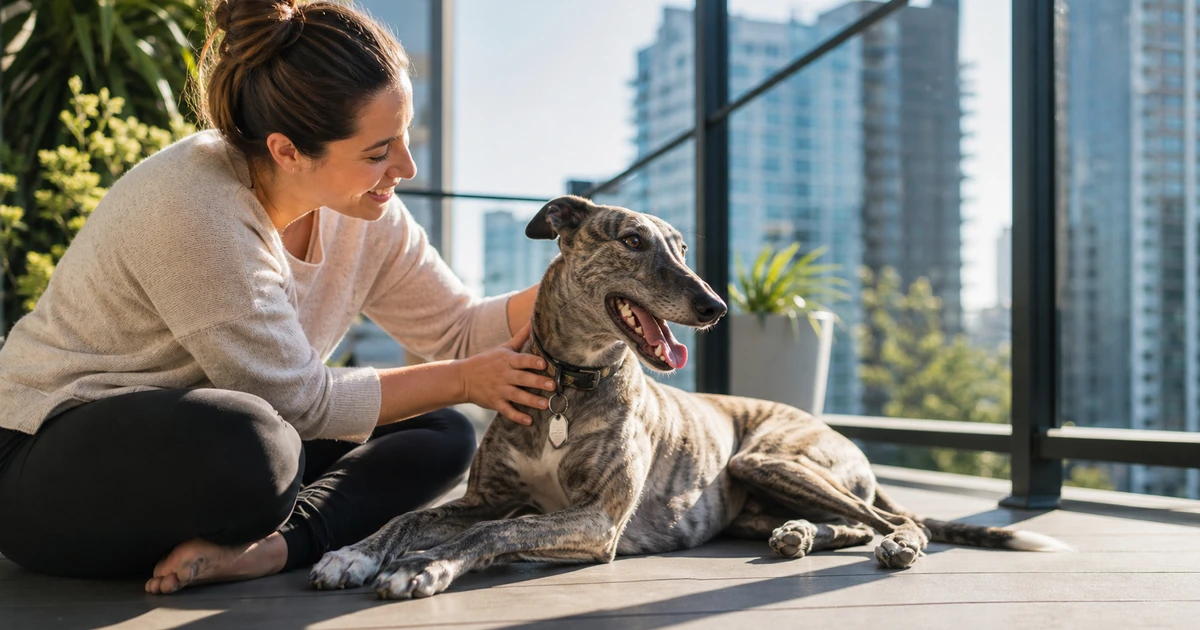
Best Large Dogs for Apartments: Calm Big-Breed Options and Real Constraints
Large dogs can fit apartment life when their energy, barking, grooming, and household fit align. Compare six database profiles.
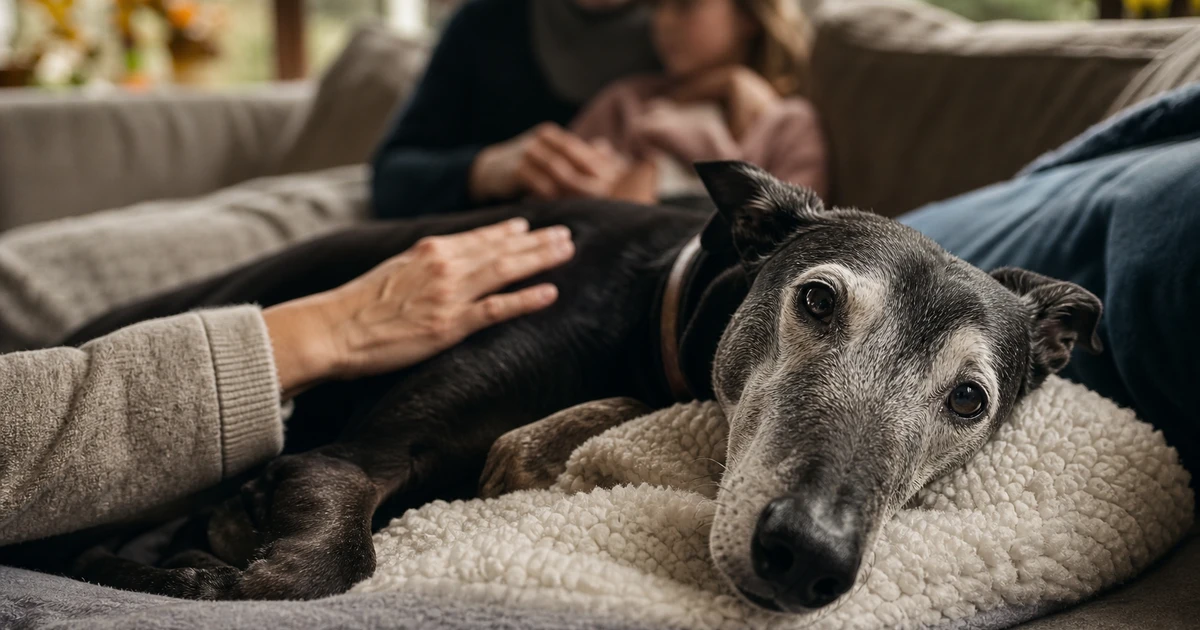
Adopting a Senior Dog: What the First Month Really Feels Like
The first month with a senior dog isn't about training—it's about learning. A realistic look at slow walks, deep naps, and the quiet bond you can't get from a puppy.
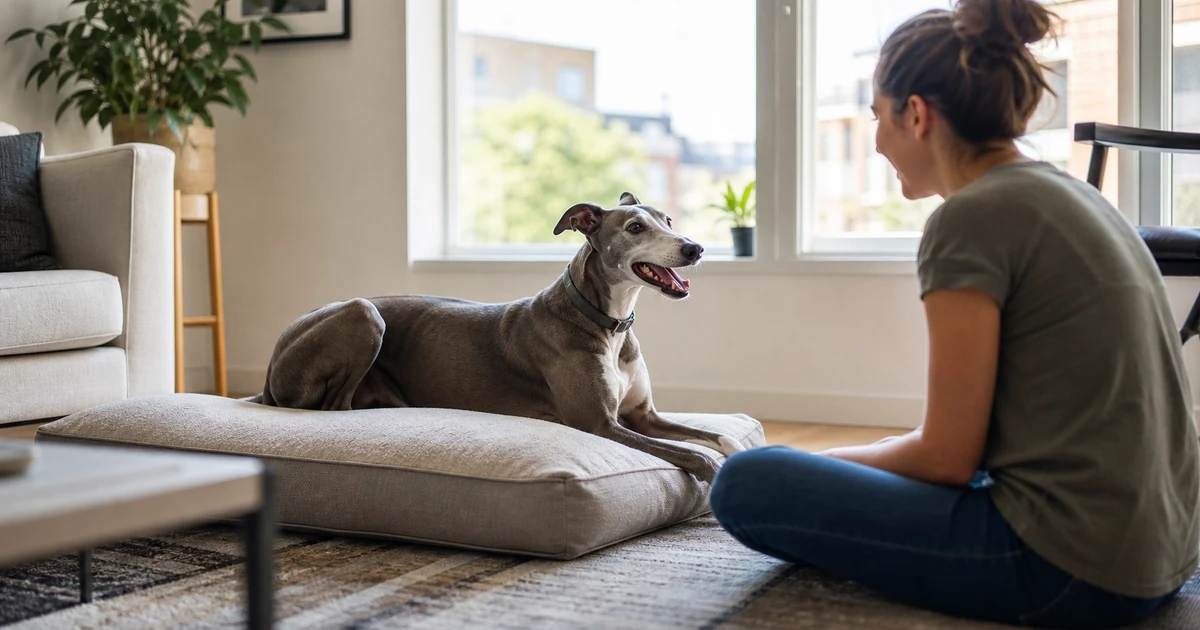
Is a Greyhound Really a Low-Maintenance Apartment Dog?
Greyhounds look athletic, but indoors they can be calm, quiet, and surprisingly easy to live with. Here is the reality behind the apartment-dog myth.
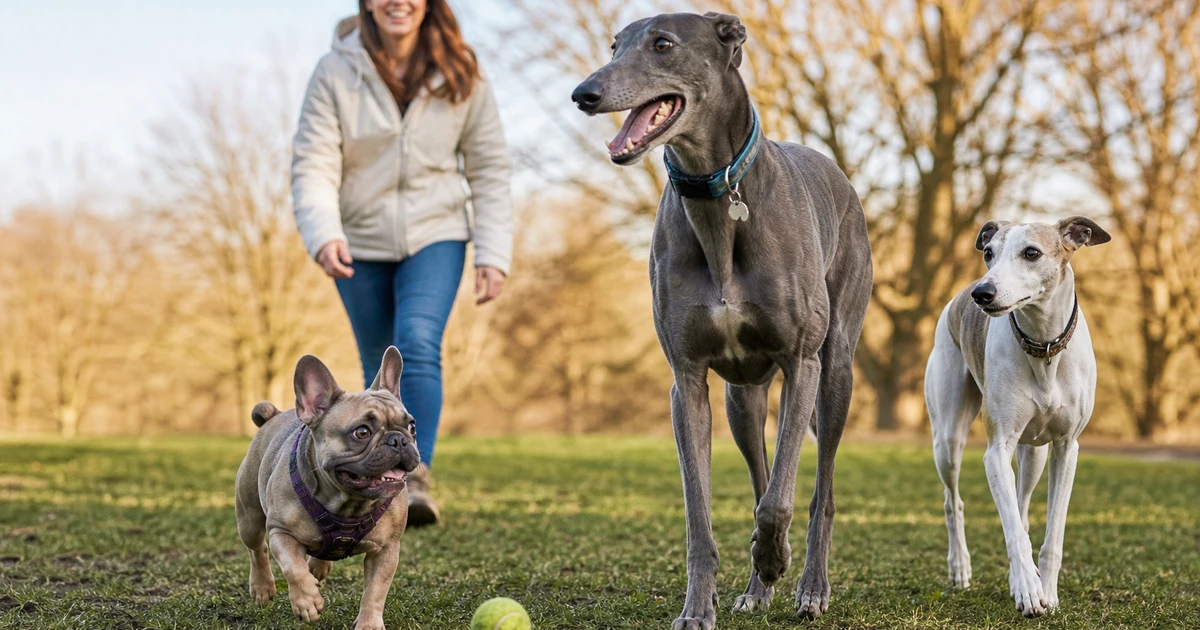
The Best Low-Maintenance Dogs for Busy Families
Low-maintenance isn't no work — it's lower grooming, manageable exercise, and a calmer indoor vibe. These 8 breeds fit the bill, honest caveats included.
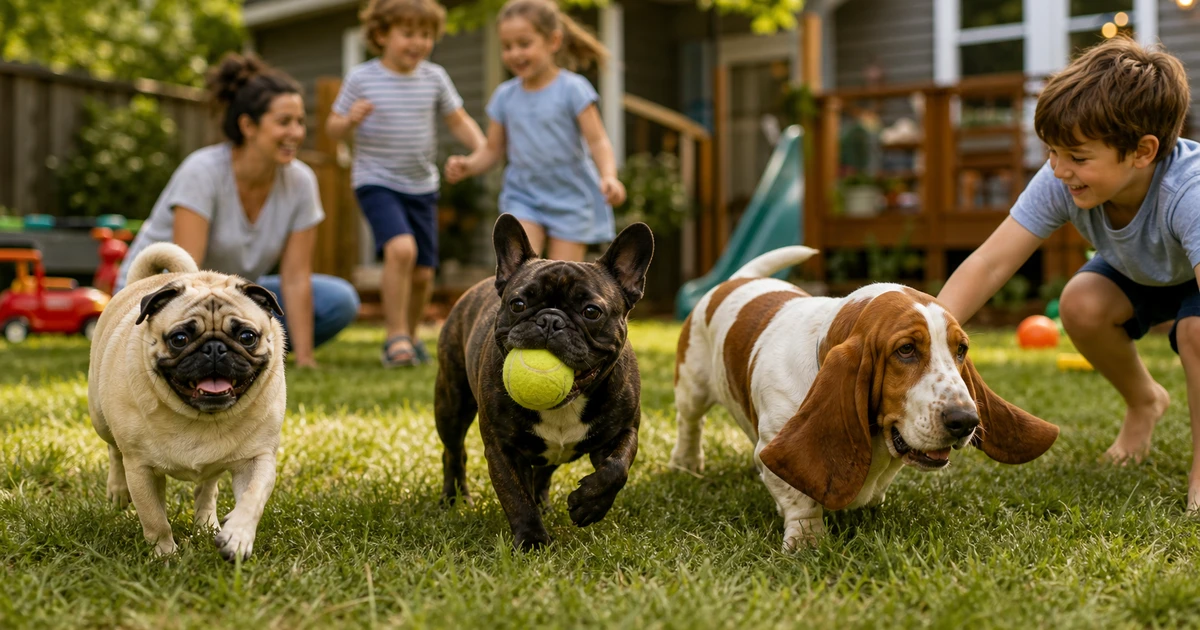
Best Dog Breeds for Kids When the Parents Are Busy
Compare kid-friendly dog profiles for busy homes by energy, grooming, barking, size, and training—without mistaking a breed list for an alone-time promise.
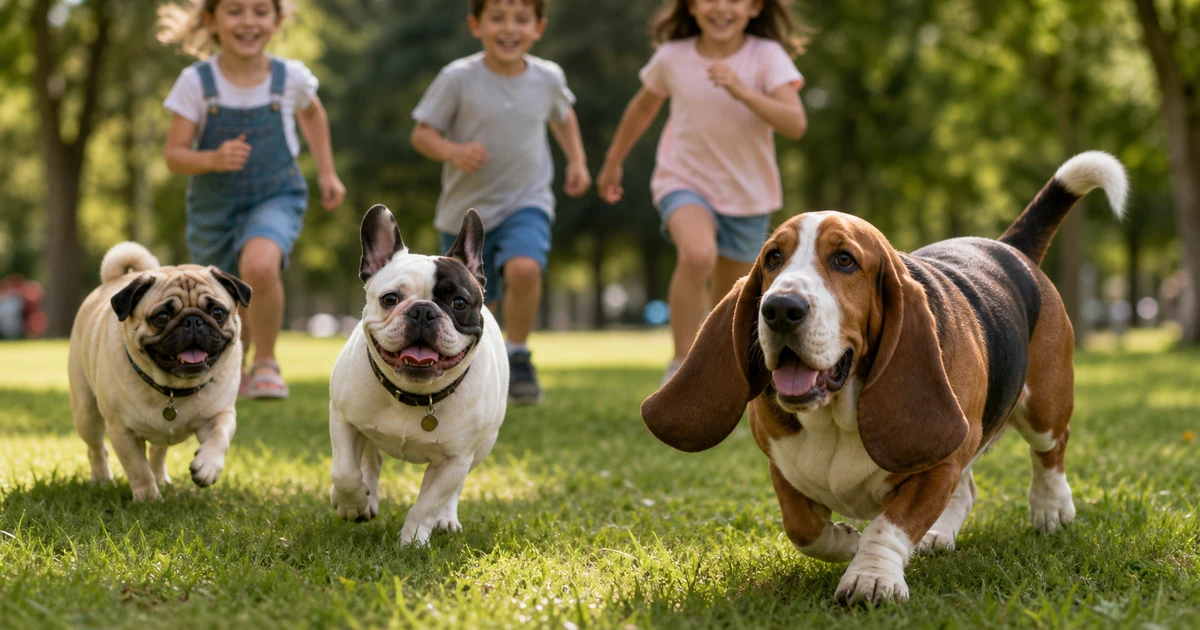
Best Low-Maintenance Dog Breeds for Kids: Easy Does Not Mean Effortless
A practical, whole-profile comparison of low-maintenance dog breeds for kids: coat work, energy, barking, size, and the trade-offs that remain.
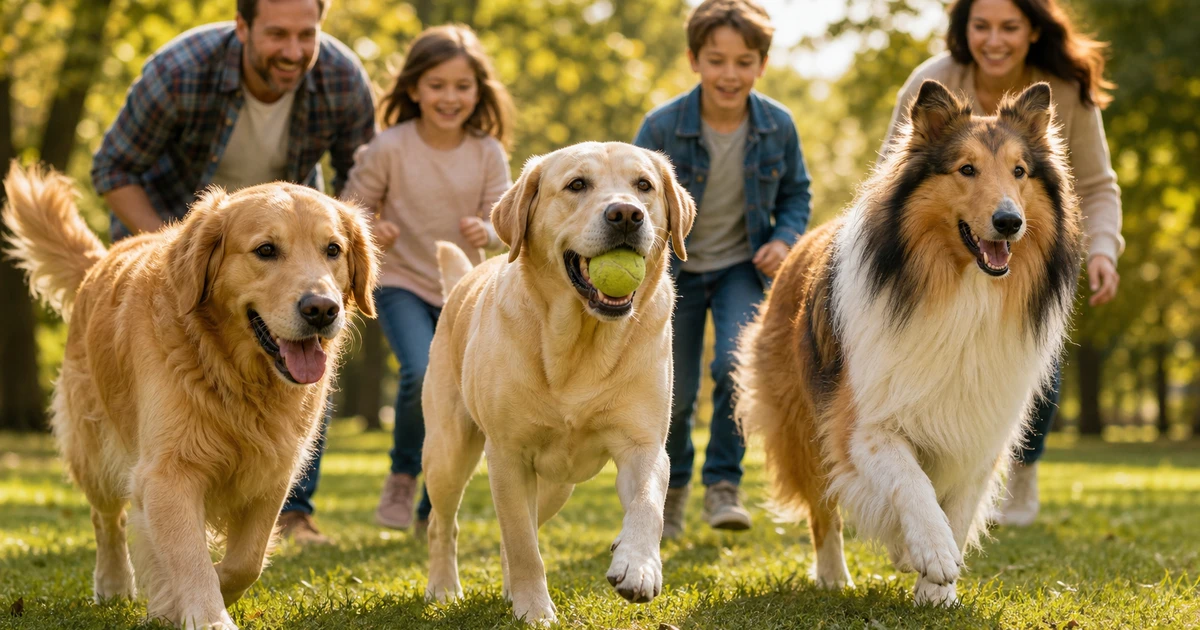
Best Large Dog Breeds for Kids: Gentle Dogs With Big Footprints
Looking for a big, kid-friendly dog? These gentle giants bring love and loyalty — but they also need space, training, and a good vacuum. Find your match.
Sources & standards
This profile follows recognized breed standards from the American Kennel Club (AKC) and the Fédération Cynologique Internationale (FCI), along with established veterinary and breed-club guidance. These describe general breed tendencies — every dog is an individual.