

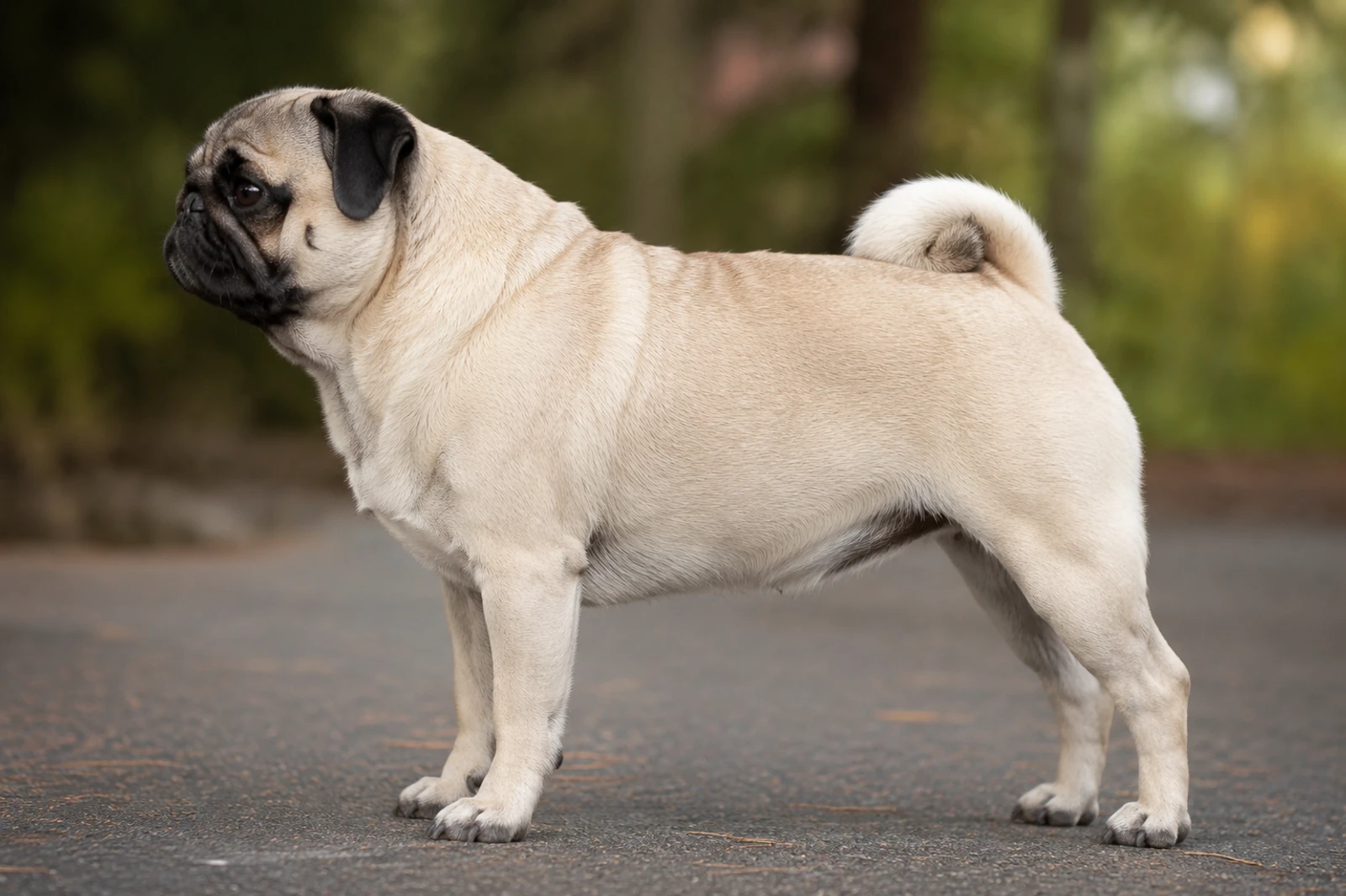
The Pug is a small, sturdy dog with a wrinkled face, curled tail, and a personality that's equal parts charming and mischievous. Ideal for first-time owners, seniors, and apartment dwellers, this affectionate breed thrives on human companionship. Pugs are generally calm, adaptable, and get along well with children and other pets. However, they are sensitive to extreme temperatures due to their flat faces, so indoor living is essential. Their low exercise needs and loving nature make them a delightful addition to any family seeking a loyal, comical companion.
Family fit
Is the Pug a good family dog?
Charming, sturdy little clown that lives to be with people.
- Children
- Family shortlist
- Energy
- Lower
- First-time owners
- More approachable
- Grooming
- Lower
Breed tendencies are only a starting point. Supervise children, meet the individual dog, and make sure the exercise, training, grooming, space, and cost fit your household.
Pug Sticker Pack
36 cartoon stickers • transparent PNG • no watermark
Pinterest-ready
Share all 36 reactions as one sticker sheet
Pinterest opens with the full pack and a fresh, tailored description. You choose the public board and publish it from your own account.
Save the full pack


Choose one reaction above to share it alone, or use the full-pack button for all 36 together.


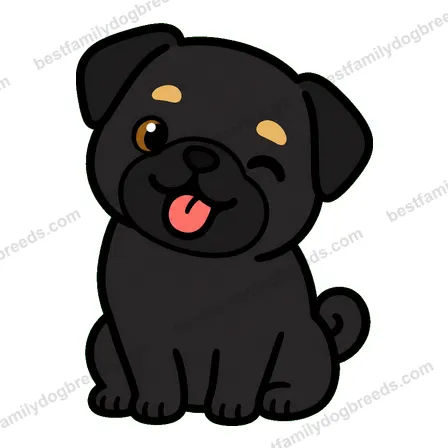




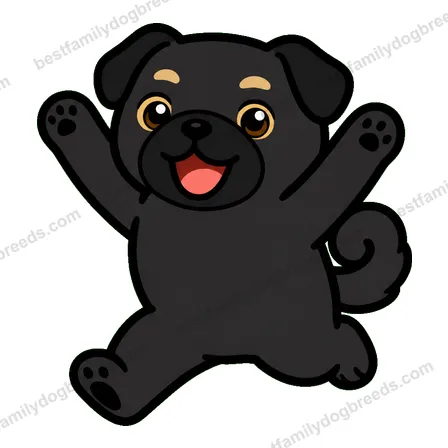

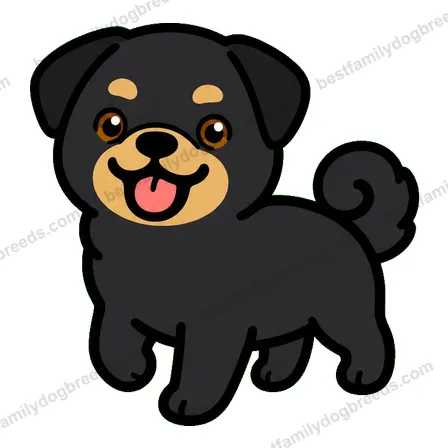
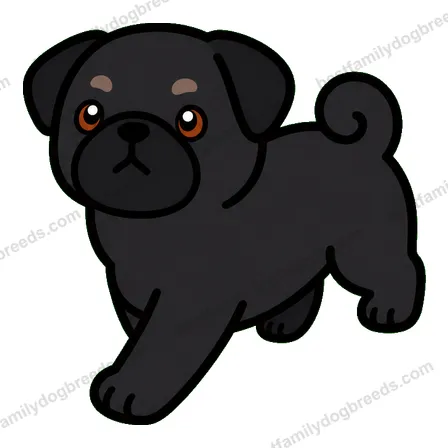
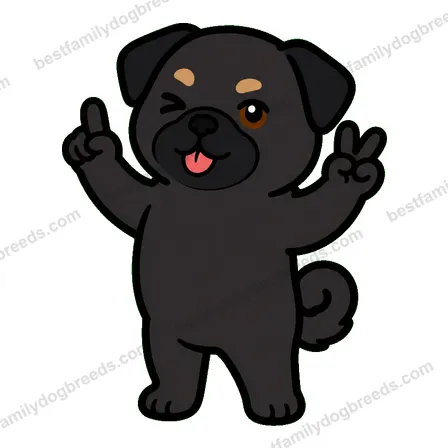

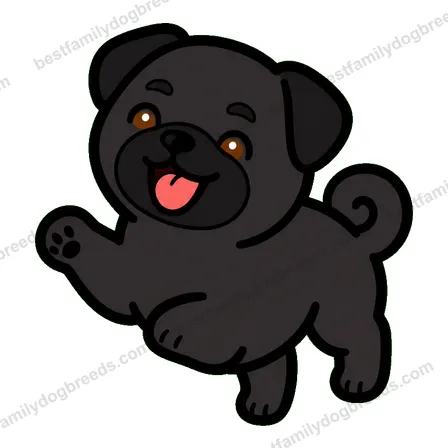
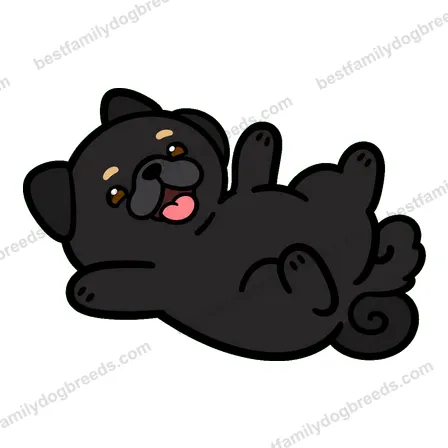
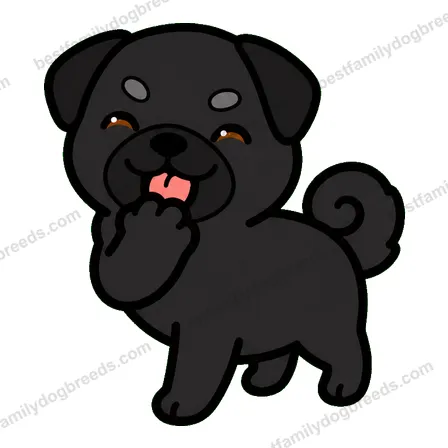
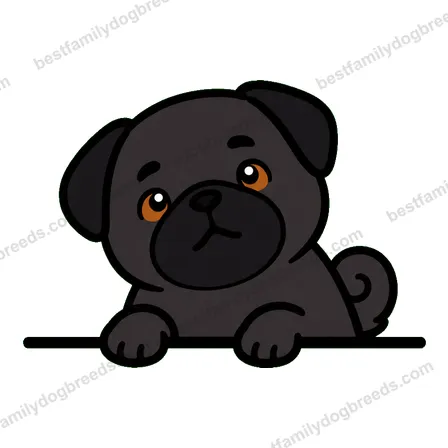
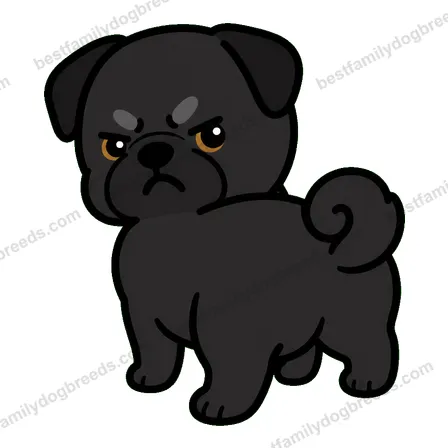



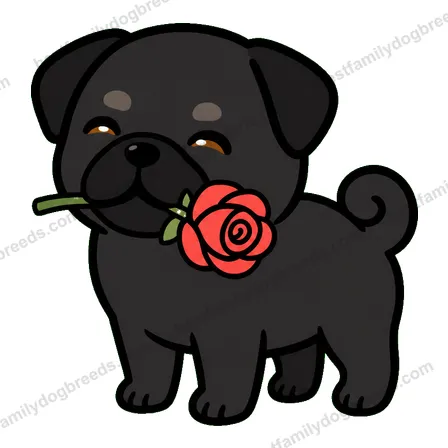


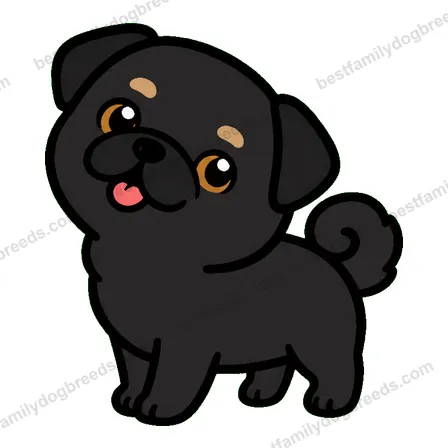




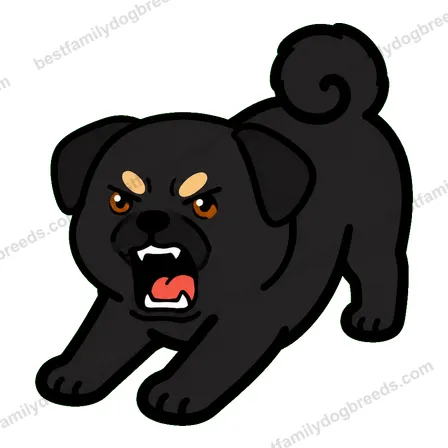
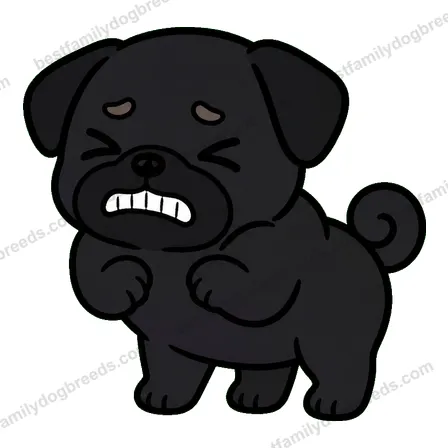

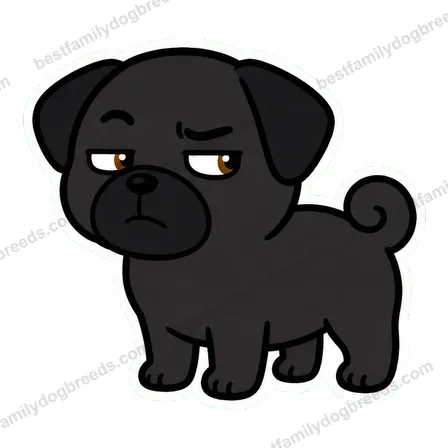
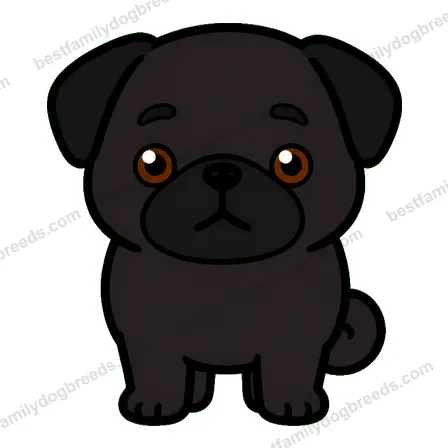

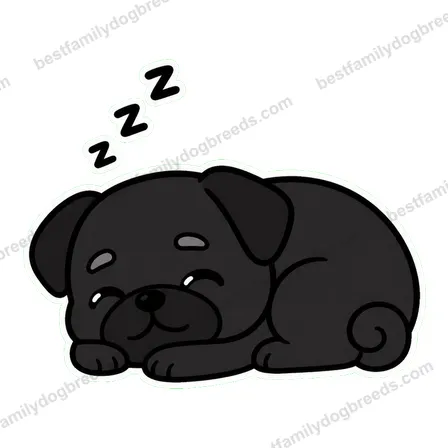
Free full-resolution download — no account, no payment, no watermark.
Includes all 36 transparent PNG stickers in one ZIP. A quick human check is required for each download.
At a glance
- Size
- Small
- Height
- 10–11 in
- Weight
- 13–18 lb
- Life span
- 10 years
- Coat colors
- Black, Fawn
- Coat type
- short, smooth
- Origin
- China
How much does a Pug cost?
Adopt / rescue
$75–$400
Usually includes spay/neuter, first shots, and a microchip.
Buy from a breeder
$700–$2,000
From a reputable, health-testing breeder.
Approximate USD. Prices vary widely by region, breeder, pedigree, age, and coat colour — adopting is the lower-cost and recommended route. Avoid suspiciously cheap “breeders”; they’re often puppy mills.
Estimate the full cost of a Pug →Want the ongoing number? Estimate the monthly food bill for a Pug with our dog food cost calculator.
Pug photos
Views
Front, side, rear and top — the full silhouette.Poses
How the breed sits, lies, moves and plays.Puppy to senior
The breed across its whole life.Expressions
The breed’s range of moods.Close-up details
Eyes, ears, nose, paws, tail and coat.Coat colors
The breed’s recognized colors.Click any photo to enlarge. We show the Pug from every angle — three views, poses, life stages, expressions, close-ups, coat and colors.
Appearance & size
A Pug looks like a little tank wrapped in velvet — compact, square, and much sturdier than his toy-dog label suggests. A well-built adult stands only 10 to 11 inches at the shoulder, but you’ll feel every pound when he leans against your leg. Weight runs 13 to 18 pounds, and that heft sits on a short, level back and straight, moderately-boned legs. His body is noticeably short-coupled, meaning the distance from withers to tail is almost equal to his height at the shoulders, which gives him that boxy silhouette you can spot from a block away.
From the front, everything about the Pug’s head is exaggerated and endearing. The skull is large and rounded, carved with deep, symmetrical wrinkles that shouldn’t be floppy or dripping — they’re meant to look like velvet folds. The muzzle is short and blunt, forming a near-right angle with the forehead, and the lower jaw is broad and strong, giving the face its characteristic undershot bite. Because the eyes are set wide apart and slightly prominent, you’ll almost always see dark, glistening orbs staring up at you, often ringed with moist tear stains even in a healthy dog. The ears are thin and soft, falling into two camps: a neat little fold-over “rose” ear or a flatter “button” ear that sits close to the head.
In profile, the square build really registers. The chest is broad and deep, the legs are planted square, and the topline stays level right through the rump. The high-set tail curls tightly over the hip — a single twist is acceptable, but a double curl is the breed’s prize trait. From the rear, you mostly notice that tail, plus the way the Pug carries himself with a slight, rolling sashay. The gait is surprisingly deliberate and a little springy; it’s often compared to a boxer’s stride, just in miniature.
The coat is fine, smooth, and short, laying flat against the body with a soft gloss. Color almost always lands in fawn with a black mask and black ears, though you’ll also see solid black, apricot fawn, and silver fawn. The mask should be dark and distinct, covering the muzzle and reaching up toward the eyes, and a trace of black often runs down the spine from the back of the head to the tail.
History & origin
Imperial lapdogs with a 600-year-old name
The Pug’s pedigree traces back to ancient China, well before the breed got its odd, memorable name. By the late 1300s, Chinese writings formally refer to the dog as “Pug” — a word that probably means “fist” or “little monkey,” a playful dig at that round head and flat, wrinkled face. The earliest Pugs were not quite the toy-sized couch potatoes you see now; they stood a bit taller and carried more leg, but they were already bred for one job only: human companionship in the imperial court.
The first trickle of Pugs into Europe happened in the mid-16th century, when a few dogs were exported to France. The real wave started in the 1600s, however, as the Dutch East India Company brought them back to the Netherlands. Dutch royalty and nobles fell hard for the breed, and for a while the Pug earned a second, tongue-in-cheek moniker — the Dutch Mastiff — honoring its self-assured swagger inside a compact frame.
From the Netherlands, Pugs spread across the continent, charming aristocrats and artists for the next two centuries. But being a palace favorite doesn’t guarantee survival. By the late 1800s, the breed’s numbers had plummeted so severely that it hovered near extinction. A handful of dedicated fanciers stepped in and established the first Pug breed club, pulling together the remaining dogs, documenting bloodlines, and agreeing on a consistent standard. That rescue effort at the tail end of the 19th century nursed the Pug back from the brink, and virtually every Pug snoozing on a modern sofa descends from those carefully preserved survivors.
Temperament & personality
A Pug’s default setting is “affectionate shadow.” They’ll follow you from room to room, wedge themselves onto your lap (all 13–18 pounds of them), and act personally wounded if you dare close a door. This isn’t a breed you casually own; it’s a breed you share your couch, your snacks, and most of your personal space with. Their love is earnest, slightly needy, and delivered with a comedic timing that makes them hard to resist.
A comedian with a strong stubborn streak. Pugs are natural clowns, always ready to spin in circles, pounce on a squeaky toy, or tilt their head in a way that guarantees a laugh. But don’t mistake that goofiness for pushover. They have an independent mind, especially when food isn’t on the table. You’ll see it during training: a Pug will sit, twist, and offer a paw the moment a treat appears, then become selectively deaf when you ask for a simple “come” without one. Respectful, consistent nudging works far better than force or frustration. They’re clever enough to know what you want—and stubborn enough to decide whether it’s worth their time.
Watchful, not fearsome. Pugs are alert little watchdogs. A knock at the door, an unfamiliar car in the driveway, or the mail carrier’s daily arrival will trigger a surprisingly big bark from that flat little face. They’re protective of their people and quick to sound the alarm. Once the “intruder” is welcomed inside, though, the Pug usually switches to enthusiastic greeting committee—true aggression is rare, but don’t be shocked if they need a moment to assess visitors. Early socialization keeps that bark from tipping into nervousness.
Fastidious and a bit particular. There’s a neat-freak streak in many Pugs. They’ll carefully avoid puddles, sometimes step around messes, and may clean their own faces with cat-like paw swipes. That fastidiousness also shows up in house-training: they can be slow to pick up on potty rules, partially because they form strong scent associations. If they’ve marked a spot indoors, the odor can pull them back like a magnet. The quickest path to reliable habits is immediate praise and a treat the moment they go outside, paired with a thorough enzyme cleaner to erase old signals indoors. Punishing accidents after the fact only confuses them.
Velcro with feelings. Pugs were bred to be constant companions, and isolation hits them hard. Left alone for long stretches, they can spiral into anxiety-driven behaviors like nonstop barking, chewing furniture, or even house soiling—not out of spite, but out of distress. They thrive in homes where someone is around much of the day or where a second dog can keep them company. Even then, they expect to be within touching distance while you work, watch TV, or cook. And when you eat? Those bulging, imploring eyes will be locked on you. Resist the urge to share everything—a Pug’s love of food is legendary, and they’ll pack on weight dangerously fast.
With respectful children who understand not to bother them during meals (Pugs can be possessive of a food bowl), they’re patient and warm. They might not want a rough-and-tumble playmate, but they’ll happily supervise a board game from a warm lap. In return for a little patience and a lot of togetherness, you’ll get a dog who greets you like you’ve been gone for years—even if you only stepped out to grab the mail.
Good with kids, dogs & other pets
A Pug’s first job has always been to be right next to you — so this is a dog that genuinely wants to be involved in everything the family does. That built-in people-orientation makes him refreshingly easy around respectful kids. He’s not fragile, but at 13–18 pounds he’s no bulldozer either. The real hazard is those prominent, dark eyes, which can be scratched if a toddler pokes or a cat swats. Adult supervision around young children isn’t cautious filler; it’s what prevents a painful and expensive corneal injury.
-
With kids: The Pug’s patient, non-aggressive temperament is a genuine plus. He’ll put up with dress-up and laps and general household noise as long as he’s included. Just teach kids to handle him gently, no lifting, and to back off when he heads to his crate for a break. The clowns of the dog world don’t bite when annoyed — they usually just snore a little louder from under the couch — but every dog has a limit. Keep things positive and short, and you’ll see the bond form naturally.
-
With other dogs: Most Pugs are social and easygoing with their own kind. Early and ongoing exposure is what seals the deal, not some magic breed default. A well-socialized Pug puppy (that critical window between 3 and 14–16 weeks is everything) learns to read other dogs’ signals and doesn’t turn into the pushy toy-stealer that a frustrated bigger dog might correct harshly. Because the Pug’s flat face already limits him in hot weather and rough play, you don’t want him tangled in a scuffle. Supervise play, especially with much larger dogs that might accidentally hurt him, and know that it’s okay if your adult Pug prefers a quiet walk over a chaotic dog park.
-
With cats and other small pets: A Pug raised with a feline housemate usually parades around like they’re long-lost siblings. Introductions still matter — leash the dog, let the cat have an escape route, and reward calm behavior. With small pets like rabbits or Guinea pigs, proceed with care. The Pug wasn’t bred to hunt, but his curiosity can come on strong. A door between them when you’re not there puts everyone at ease.
The non-negotiable part: Pugs require human companionship. Leaving one alone for long hours with just another dog or cat doesn’t solve the problem — it often amplifies distress barking or house-soiling. Socialize thoroughly as a puppy, and you’ll have an adaptable little shadow. Skip it, and you may end up with a dog that startles at doorbells or panics when a toddler runs past. Puppy-mill survivors can come with deeper fears, and forced “sink or swim” interactions only make them worse. For those dogs, it’s perfectly healthy if their world stays small and predictable, with you at the center.
Trainability & intelligence
Pugs aren’t the easiest breed to train — they can be willful and seem more interested in charming you out of a command than blindly following it. That’s not a lack of smarts; it’s an independent streak that makes them weigh every request against the obvious question: What’s in it for me right now? Once you understand that calculation, training gets a lot simpler.
What motivates a Pug?
Food. High-value treats turn a stubborn Pug into an attentive student almost instantly. Their eagerness to please runs on a full stomach, so keep tiny, soft rewards — bits of chicken, cheese, or freeze-dried liver — on hand. Verbal praise and a playful tone reinforce the deal, but if you rely on a pat on the head alone, you’ll lose their interest fast.
The approach that actually works
Skip punishment entirely. Harsh corrections, shouting, or leash pops shatter a Pug’s trust. They shut down, avoid training, and may even become hand-shy. Instead, use short, upbeat sessions — five to ten minutes at a time — and always end on a success. Reward the exact behaviors you want the instant they happen, so your Pug connects the action to the payoff. Consistency across every family member matters: if one person lets them ignore “sit” today, they’ll test it with everyone tomorrow.
Real-world challenges
- Recall is a weak spot. A Pug who spots a visitor, another dog, or a dropped potato chip will make their own choice unless you’ve built a rock-solid reinforcement history. Practice in boring, distraction-free environments first, and only raise the difficulty when their response is automatic.
- They’ll negotiate. A Pug may offer every trick they know — spinning, barking, lying down — to see which one unlocks that treat, instead of listening for the cue. Stay patient and wait quietly for the right behavior. They’ll catch on.
- Boredom sets in quickly. Drilling the same command over and over frustrates you both. Mix short bursts of obedience into daily life — ask for a “sit” before meals, a “down” on his mat while you cook — so training feels like a series of small wins, not a chore.
Socialization is part of trainability
A Pug’s natural sociability doesn’t mean you can skip early exposure. Without it, they can become cautious or reactive around new people and environments. Begin between 3 and 14 weeks, gradually introducing your puppy to different people (including calm children), friendly dogs, varied surfaces, and everyday sounds. Keep every new encounter positive: have strangers drop a treat, not loom over the pup. That early foundation turns into an adult who can adapt to new situations without fear, making later training far easier.
Training a Pug is a daily relationship game, not a one-time course. You’ll need patience, a sense of humor, and a steady supply of rewards. In return, you get a little clown who learns what you actually want — and, most of the time, decides it’s worth giving.
Exercise & energy needs
A Pug’s flat face is adorable, but it completely rewrites the exercise rulebook. Because they’re brachycephalic — those pushed-in noses aren’t just cosmetic — they can’t pull in air or cool themselves as efficiently as longer-nosed dogs. Overexertion can turn into dangerous oxygen shortage or heatstroke fast, even on a mild day.
What a Pug actually needs each day
You don’t need a stopwatch and a marathon route. Most adult Pugs do well with two short, easy walks of 10–15 minutes each, ideally during the cooler parts of the day. A third potty stroll or a little indoor play rounds things out nicely. That 13–18 pound body simply isn’t built for pounding pavement or long hikes. Think gentle strolls where your Pug gets to sniff at his own waddling pace — that’s the sweet spot.
Brains, not just legs
Mental work matters as much as the walk. A Pug left with nothing to think about will invent his own jobs (like dismantling your shoe collection). Puzzle toys, slow-feeders, and 5‑minute training sessions give him a satisfying mental drain without ever raising his respiratory rate. Short scent games — hiding a treat under a cup, scattering kibble in the grass — are perfect.
What to skip, no exceptions
- Jogging, running, or long uphill walks. Heavy panting is the immediate sign you’ve gone too far.
- High-impact play. Jumping for a frisbee or leaping off furniture strains joints and that spinal column.
- Midday heat and direct sun. Even a quick walk on hot pavement can overheat a Pug. If you’d be uncomfortable in a thick sweater, keep him inside.
- Any activity where “pushing through” seems like a plan. A Pug won’t always self-regulate — you have to be the one who stops the game while he’s still breathing comfortably.
When they need more, not less
A bored Pug is a noisy, destructive Pug. If he’s getting into trouble, it’s often a sign of pent-up mental energy rather than a need for more physical exertion. Add an extra puzzle feeder, a hide-and-seek session around the living room, or a few rounds of gentle tug (with a flat-faced dog, always watch for snorting that turns to distress). As long as you keep it cool and brief, you’ll drain the wiggles without putting that little body at risk.
Grooming & coat care
Pugs shed. A lot. That short, sleek coat with its dense undercoat drops hair year-round, and it will end up on every surface you own. Get ahead of it with a quick brush every other day – a soft bristle brush adds shine, while a rubber grooming mitt or curry brush pulls out loose undercoat before it hits the couch. During the big blowouts in spring and fall, bump that up to daily and add a de-shedding tool; you’ll still need a good lint roller, but your floors will thank you.
Wrinkle and eye care
Those adorable face folds are a Pug’s signature, but they trap moisture, food, and dirt. Clean each wrinkle daily with a damp, soft cloth or unscented baby wipe, then go back and dry thoroughly – a dry cotton round works well. Any redness or funky smell means infection is brewing, so have a vet-approved antiseptic wipe handy. The protruding eyes produce heavy discharge, so wipe the area around the eyes once or twice a day with a warm, damp cloth. Occasional lubricating eye drops (the kind your vet recommends) can ease irritation and help prevent conjunctivitis.
Bathing
A bath every 4–6 weeks is plenty, unless your Pug has rolled in something unmentionable. Use a mild dog shampoo and rinse thoroughly. The non-negotiable part: dry every wrinkle and skin fold completely after the bath. Trapped dampness leads to yeast and bacterial infections faster than you’d think. Between baths, a quick wipe-down with a damp towel and another round of wrinkle drying does the job.
Nails, ears, and teeth
- Nails: Trim every 3–4 weeks when you hear clicking on hard floors. If your Pug hates it, a scratch board or a professional trim is worth the cost.
- Ears: Check weekly for debris, wax, or redness. Wipe the outer ear with a dog-specific cleaner on a cotton ball – no poking into the canal.
- Teeth: Brush 2–3 times a week with dog toothpaste. Pugs are prone to dental issues, and skipping this can lead to costly vet visits down the line.
A Pug’s grooming routine isn’t complicated, but it rewards consistency. Skip a day of wrinkle care or put off nail trims, and small problems turn into painful ones fast.
Shedding & allergies
Pugs shed — a lot. If that short, sleek coat made you picture a low-maintenance dog, reset that expectation right now. Their hair is double-layered, with a dense undercoat that drops fur constantly. Fawn, black — doesn’t matter the color, it’ll show up on every light or dark surface you own.
- Year-round shedding: You’ll deal with a steady background snowfall of hair on furniture, clothes, and floors. Twice a year (spring and fall) it often intensifies into a full-blown coat blowout, with loose undercoat coming off in handfuls.
- Tools help, but don’t fix it: A rubber curry brush or de-shedding tool used a few times a week can catch loose fur before it lands everywhere. Daily vacuuming and lint rollers become part of the routine.
- Drool is part of the package: Pugs aren’t champion droolers like some giant breeds, but they do slobber — especially after drinking or when they’re hot and panting. Saliva can cling to those cute face folds and transfer to your arms, couch, or floor.
The real allergy picture
There’s no such thing as a truly hypoallergenic dog, because allergens live in dander, saliva, and urine — not just hair. But heavy shedders like Pugs scatter dander everywhere, making them a tough choice for allergy sufferers. A breeder can’t produce an allergy-friendly Pug; it’s not something health screening can change. Keep the dog bathed weekly and run a HEPA vacuum daily, and you might reduce the dander load, but it rarely eliminates symptoms. If someone in the house has serious dog allergies, you’re better off looking at breeds with continuously growing hair like a Poodle or a Bichon Frise.
Diet & nutrition
A Pug’s relationship with food is, frankly, an obsession. This breed lives for the next meal, which makes portion control your most powerful health tool. Left unmanaged, that enthusiasm packs on pounds fast — and extra weight on a small, flat-faced dog immediately taxes the joints, the spine, and already labored breathing.
The daily number that keeps your Pug healthy
Start with about ½ to ⅔ cup (180–220 g) of food per day, split into two meals. That’s a ballpark figure, not a commandment. The real gauge is your dog’s body condition: you should be able to feel the ribs with light pressure but not see them. If the waist is vanishing and the belly is rounding out, trim the portions back 10–15% and add a few more minutes to the daily walk. Even a half-pound gain matters on a 16-pound dog.
What to put in the bowl
Build meals around meat — it’s what a Pug’s digestive system expects. Cooked and chopped chicken, beef, or fish gives you a safe, digestible base. (Raw meat can harbor bacteria, so if you go that route, do it under informed, careful supervision.) Aim for roughly:
- 60% animal protein (the cooked meat plus eggs)
- 20–30% fruits and vegetables — cooked carrots, pumpkin, green beans, blueberries, or lightly steamed spinach. Use the unsalted water from cooking veggies as a flavor base if you’re short on stock.
- 10% extras like plain yogurt, grains, or legumes. White rice works well when the stomach is iffy; pearl barley adds digestible fiber.
Skip vegetarian or vegan diets entirely. A Pug’s teeth and short digestive tract are built to handle meat, not to extract full nutrition from a plant-based bowl.
Slow it down, blend it when needed
A Pug can empty a dish in seconds. A food-puzzle bowl or snuffle mat turns mealtime into a 10-minute brain game, which also helps prevent the bloat-like discomfort that can come from inhaling air with the kibble. For older Pugs with missing teeth or sensitive mouths, purée the meal. Dogs’ jaws move only up and down, and they lack salivary digestive enzymes, so a blended consistency boosts nutrient absorption.
From teething puppy to gray-muzzled senior
Puppies need 4 meals a day until 4 months, then 3 meals until about 6 months, then settle into the adult 2-meal rhythm. When you bring a puppy home, transition slowly from the breeder’s diet. Start with lightly cooked, puréed meats, fish, and dog-safe fruits and vegetables, or a high-quality commercial puppy food. Around 12 weeks, you can introduce a raw chicken wing under supervision for jaw exercise and novelty.
Senior Pugs often slow down but their appetite rarely does. Switch to smaller, more frequent meals if that suits them, and watch weight like a hawk. You’ll gradually reduce the daily total as activity drops — there’s no real evidence that old dogs need a drastic protein cut, but they absolutely need you to keep the scale steady. Obesity in a senior Pug magnifies arthritis and breathing trouble alarmingly.
A sharp word about rich scraps
Resist the urge to share holiday trimmings or fatty table food. Pugs can be knocked sideways by pancreatitis from a single rich meal. Canned fish, cooked eggs, and plain grains make fine quick meals; buttery, greasy leftovers do not. Stick to what your Pug’s body knows, measure every scoop, and reassess body condition weekly with your hands, not just your eyes.
Health & lifespan
A healthy Pug typically lives about 10 years, and a lot of that decade hinges on how well you manage the breed’s built-in physical quirks. The number one thing to accept right away: those flat faces are not just cute — they make breathing and cooling down a constant challenge. Pugs are brachycephalic, meaning shortened nasal passages that leave them prone to overheating even on mildly warm days. Expect loud snoring, snorting, and reverse sneezing as perfectly normal background noise. Heat stroke can come on fast, so air conditioning and a strict “no extreme outdoor heat” rule are non-negotiable. Use a body harness instead of a collar to avoid putting pressure on the already constricted throat.
Joint deterioration is nearly universal in the breed. By middle age, most Pugs have some degree of hip or elbow issues, and patellar luxation (wobbly kneecaps) isn’t uncommon either. In severe cases, spinal problems can progress to paralysis. Keeping your dog lean is the most direct way to delay that damage. Pugs are famously food-driven and will cheerfully overeat into obesity, which makes every breathing and joint problem dramatically worse. Watch the treat jar and the dinner bowl with an actual measured diet — no free-feeding.
Eye trouble is another ongoing expense. Eyelashes can grow inward, tear ducts block easily, and corneal ulcers pop up more often than you’d hope. You’ll see squinting, tearing, or pigment forming on the eye’s surface. Breeders who screen for inherited eye disease will have their dogs’ eyes evaluated by a veterinary ophthalmologist; ask to see those certificates.
Skin fold dermatitis is a daily battle. The deep creases around the face and nose trap moisture and debris, leading to red, smelly, recurrent infections even after treatment. Clean and dry those folds every single day — many owners keep a dedicated “face cloth” in the dog’s drawer. They’ll also need prompt dental care, because small mouths pack in teeth that gather tartar quickly, and infected gums can spill bacteria into the bloodstream.
Responsible breeders screen for hip dysplasia, patellar luxation, and eye disorders and will share those results openly. Expect to discuss vaccinations, monthly heartworm prevention during mosquito season, and at least yearly vet checks. With a Pug, you aren’t just signing up for a lap dog — you’re signing up for a routine of careful climate control, fold cleaning, monitored meals, and eyes-and-joints vigilance that spans their whole life.
Living environment
A 13-to-18-pound Pug belongs in the house, preferably on the couch next to you. This isn’t a yard-it-alone breed. That smashed nose makes them heat-up fast, so air-conditioned indoor living is non-negotiable during warm months — it’s a safety issue, not a comfort preference.
Apartment vs. house
Apartments fit Pugs like a glove. At 10–11 inches tall, they take up almost no square footage and are happiest on a lap or a soft bed near your feet. A fenced yard is a nice extra for sniff-and-sunbathe sessions, but it never replaces human company. Without a yard, a couple of 10- to 15-minute leash walks plus a few rounds of indoor fetch or nose-work games cover their physical needs. Protect their backs and joints by discouraging high jumps — a ramp to the sofa makes sense, and low-profile beds save wear and tear on compact frames.
Climate tolerance
Heat is the Pug’s biggest enemy. Even mild activity on an 80°F day can send a Pug into dangerous overheating. Walk early in the morning or after sunset in summer, stick to shady paths, and always have water. In cold weather, a sweater helps on brief bathroom breaks, but Pugs aren’t built for winter hikes. Their ideal climate is whatever temperature you keep your thermostat at.
Noise and barking
Pugs aren’t relentless barkers, but they’re not silent either. A doorbell or a stranger at the door gets a sharp opinion. An anxious or bored Pug left alone too long may bark more than you’d like. What you’ll really hear is the breed’s symphony of snores, snorts, and grunts — charming if you adore the sound, startling if you’re unprepared for a dog that wheezes like a tiny locomotive.
Time alone
This is the sticking point for many households. A Pug bonds hard with its people and can come unglued when left alone for long stretches. Full workdays with no break often lead to whining, pacing, and housetraining setbacks. You can build a little independence with gradual departures, frozen puzzle toys, and a cool, quiet den area, but the breed’s factory setting is “velcro.” If your schedule keeps you gone eight-plus hours a day, budget for a midday dog walker, doggy daycare, or a companion animal — and even then, a Pug’s heart stays with its preferred person.
Who this breed suits
If your ideal day involves a dog who’s as happy curled on your lap as he is trotting beside you to the mailbox, a Pug fits right in. They’re built for companionship, not for chasing frisbees for an hour. Apartment dwellers, first-time owners, and retirees often click with this breed because a couple of 15–20 minute walks plus indoor play keeps them satisfied — always in cool morning or evening hours, never during midday heat.
Families who want a clownish, affectionate sidekick usually do well, provided young children know to handle a small, front-heavy dog gently. Pugs don’t herd or guard; they bond with everyone and hate being left out, so a household where somebody is around most of the day is ideal. If you work long hours and can’t bring your dog along, this breed’s need for constant company can turn into destructive chewing or nuisance barking.
You should love a dog who snores, snorts, and sheds more than you’d expect from a 13–18 lb body. A Pug isn’t a clean freak’s dream — they drop hair year-round and need regular wrinkle cleaning to prevent skin infections.
Think twice if you’re a runner, hiker, or live in a hot, humid climate without air conditioning. Pugs overheat dangerously fast and can collapse from breathing stress even during “just a quick romp.” Their flat face makes anesthesia riskier and vet bills for eye injuries, allergies, or obesity can add up. A 10-year lifespan means you’re signing up for a decade of vigilant temperature management, dental care, and keeping that curly tail wagging at a healthy weight. Skip the breed if you can’t accept those limits — or if you’re someone who simply wants a quiet dog.
Cost of ownership
A well-bred Pug puppy from a responsible breeder typically costs $1,500 to $3,000. Show-potential pups can push past $4,000, but you’re paying for generations of health testing — OFA eyes, patellas, maybe even BOAS-aware breathing scores. If that number stings, Pug rescues are real; adoption fees usually land between $200 and $500. Just skip the pet store discount bin. Those pups often walk in with respiratory infections, cherry eye, or worse, and the first-year vet bills erase any “savings.”
Food
A 13–18 pound Pug eats roughly a cup of high-quality kibble a day. Budget $30–$50 a month. Grab a small-breed formula that won’t turn that compact body into a sausage; even a pound of extra weight makes breathing and joint stress worse.
Grooming
They shed. A lot. Short hair means you’ll find it everywhere. A few brush-outs a week at home cut the tumbleweeds, but a pro bath, nail trim, and ear cleaning every 6–8 weeks runs $40–$60 — average it to $20–$30 a month. The non-negotiable: daily wrinkle care. Unscented wipes and a drying powder add roughly $10 a month and prevent the kind of face-fold infections that smell like a dirty gym sock.
Vet and insurance
Flat faces equal vet visits. Annual exams with a brachycephalic-savvy vet run $300–$500, and you’ll almost certainly have an unplanned trip for an eye scratch or a breathing scare. Pet insurance isn’t optional. A solid plan for a Pug costs $50–$80 a month and can cover corneal grafts, stenotic nares surgery, or a bout of aspiration pneumonia. If you self-insure, stuff $100 a month into a dedicated savings account and pray you don’t need it fast.
All in, you’re looking at $140–$230 a month before initial supplies like a harness (never clip a leash to a collar on these necks), a cooling mat, and a crate. The biggest price lever is the breeder you choose. Pay for one who screens relentlessly, or you’ll pay a lot more later.
Choosing a Pug
The single most important decision you’ll make isn’t coat color or collar size—it’s who brings that puppy into the world. A Pug’s flat face is the breed’s signature, but it’s also ground zero for breathing problems, and shortcuts in breeding make the difference between a snorty companion and a dog that struggles just to exist. So start your search by looking for an obsession with functional airways, not ribbons on a wall.
-
Breeder or Rescue? Both are valid, but a responsible breeder is laser-focused on health, not just personality. A breed-specific rescue will have adult Pugs whose issues (snoring volume, heat sensitivity, wrinkle maintenance) are already laid out, which can be a huge advantage. You pay less upfront, but brace for potential long-term vet bills—many are surrendered because owners couldn’t afford eye or breathing care.
-
Health clearances you need to see —not just hear about. Ask for a written BOAS (brachycephalic obstructive airway syndrome) assessment or a functional exercise tolerance test from a vet. The parents should have an OFA or PennHIP hip score, a patellar luxation exam, and an annual CAER eye clearance. If the breeder waves this off with “They all snore a little,” you’re done. Real ones hand you the paperwork without being asked, and they’ll tell you the names of the veterinary specialists they use.
-
Red flags that should send you home Parents you can’t meet in person, especially the mother. If she’s panting heavily while just standing there, her puppies are likely carrying the same compromised airway. Puppies with nostrils pinched nearly shut, skin folds already pushing into the eyes, or a wet, gurgly sound when they breathe are ticking time bombs. Breeders who consistently produce 13-pound adults from 10-inch-tall frames—pushing the extreme of “compact”—are trading your heartbreak for their aesthetic. Also skip anyone breeding dogs under two years old; you can’t fully assess hip or airway health before then.
-
What to watch for in the litter Let the pups settle after a play session. A well-bred Pug puppy breathes quietly with its mouth closed at rest. Eyes should be clear and not bulging so much that you can see white all around the iris. The breeder should already be handling their faces daily—gently cleaning wrinkles and touching ears—so a puppy that freaks out when you do a simple eye check is a puppy that’s been set up for a lifetime of struggle during basic care.
Don’t leave without a contract that spells out what happens if the dog develops a severe breathing issue, plus a packet with vaccination dates, deworming records, and a health guarantee that actually means something. That folder is your best insurance against the Pug you see at pickup turning into the dog who can’t walk to the mailbox without collapsing.
Pros & cons
Pros
- A clown in a compact body. Pugs live to make you laugh — think snorting, head tilts, and an almost human sense of mischief. They’re happiest plastered to your lap or following you room to room.
- Apartment-ready size. At 10–11 inches tall and 13–18 pounds, they fit into small spaces, don’t need a yard, and travel easily.
- Minimal exercise demands. A couple of 15–20-minute walks plus some indoor play covers it. They’re perfect if you want a walking buddy, not a running partner.
- Generally quiet. They grunt, wheeze, and snore like a freight train, but actual nuisance barking is rare.
- Social with everyone. With early exposure, they get along well with gentle kids, other dogs, and even cats. They’re born sidekicks, not guard dogs.
- Food-motivated to a fault. That treat obsession means you can shape a lot of good behavior — as long as you use small, healthy morsels and a patient hand.
Cons
- Built-in breathing trouble. That squashed face is a brachycephalic setup: expect snoring, snorting, and serious heat sensitivity. Humid or hot weather can quickly turn dangerous, so AC is non-negotiable in summer.
- Shedding machine. Their short coat drops a shocking amount of hair year-round. You’ll find it on furniture, clothes, and even in your coffee cup.
- Obesity waiting to happen. Pugs will con you into extra meals with those big, pleading eyes. Without strict portion control, extra weight stresses joints and makes breathing worse.
- Eyes that need constant vigilance. Protruding eyes are magnets for scratches, ulcers, and dry eye. Many dogs require daily lubricating drops and careful play.
- Stubborn when it suits them. They can be willful, especially about potty training. You’ll need consistency, humor, and a pocketful of treats — force just makes them dig in their heels.
- Wrinkle maintenance. The deep facial folds trap moisture and grime; skip daily cleaning and drying, and skin infections set in fast.
- Not water-safe. Their dense build and breathing struggle make swimming a real drowning risk. Pools and ponds need secure barriers.
- Shorter years together. An average lifespan of around 10 years means you’ll get a decade of snorts, not the 14–16 some small breeds offer. Separation anxiety can also flare if you’re gone long hours — they’re true velcro dogs.
Similar breeds & alternatives
French Bulldog
If you’re drawn to the Pug’s comical, people-centered personality but want a sturdier body, the Frenchie is the closest match. They land at 16–28 pounds and about 11–12 inches tall, a bit heavier but not taller. Both breeds are flat-faced, heat-sensitive, and champion snorers who need careful management in warm weather. Frenchies typically have even lower exercise demands—short walks and loads of lap time suit them fine. The trade: similar breathing troubles, and Frenchies often come with higher price tags and a greater risk of spinal issues like IVDD.
Boston Terrier
The Boston brings more pep without dropping the clownish streak. Weights run 12–25 pounds and heights 15–17 inches, so they’re leggier and more athletic than a Pug. While still brachycephalic, their muzzle tends to be longer, and many breathe easier during exercise. Count on 30–60 minutes of active play or walking each day; they’ll outlast a Pug on a hike. Their eyes sit less prominently, which lowers the odds of scratches and ulcers. If you want a small, friendly dog that can keep up with an active lifestyle and then crash on the couch, this is the better bet.
Cavalier King Charles Spaniel
Roughly the same weight (13–18 pounds) and just as devoted, the Cavalier is the obvious choice when you want the Pug’s lap-dog devotion without the flat face. A longer muzzle means no snorting and far fewer heat-related breathing emergencies. They’re gentle, extremely affectionate, and wonderful with kids, though they replace the Pug’s mischief with a softer spaniel sweetness. The catch you need to face: mitral valve heart disease is so common that many Cavaliers don’t reach their 12–15-year potential. They also shed steadily, so the vacuum gets used either way.
Bichon Frise
Love the portable size but can’t stand the shedding or the snoring? A Bichon weighs 12–18 pounds and has a non-brachy face, a curly low-shedding coat, and zero flatulent breathing. That white puff does demand professional grooming every 4–6 weeks. Temperament-wise, Bichons are cheerful and playful but carry more battery charge than a Pug—they need more daily exercise and mental games. They bark more and tend to be less velcro-like, so the attachment style feels more social than shadow.
Shih Tzu
Sharing the Pug’s imperial Chinese roots, the Shih Tzu comes in at 9–16 pounds and likes life at the same unhurried pace. They’re brachycephalic and heat-sensitive, but the long, flowing coat either needs daily brushing or a routine clip. Personality: affectionate but often a shade more independent than the Pug’s constant follow-you-to-the-bathroom routine. Housetraining can be famously stubborn. If you want a calm, small house dog and can commit to the grooming, the Shih Tzu slots into a similarly low-key home.
Brussels Griffon
Picture a tiny, wiry Pug with a terrier’s throttle. At 8–10 pounds, the Griffon shares the big eyes, underbite, and monkey-like face that Pug fans love. Both rough and smooth coats have minimal shedding, though the rough coat needs hand-stripping. energy-wise, though, they’re a different animal—more alert, yappy, and demanding of mental work. Griffons often bond fiercely with one person and can be snappy if small children play rough. Consider this only if you want the expressive mug in a smaller, higher-octane package that won’t tolerate being a couch potato all day.
Choosing among these really comes down to which Pug trait you value most—the look, the stillness, or the velcro personality—and which health or care trade-off you’re willing to sign up for.
Fun facts
- Pugs are one of the oldest dog breeds, dating back to ancient China.
- They were bred to be companions for Chinese emperors.
- A group of Pugs is called a grumble.
- Their wrinkled faces need regular cleaning to prevent infection.
Frequently asked questions
- Are Pugs good with children?
- Pugs are typically affectionate and patient, making them good companions for gentle children. However, due to their small size and brachycephalic features, interactions should always be supervised to prevent accidental injury. They enjoy being part of family activities and can form strong bonds with kids.
- Do Pugs shed a lot?
- Yes, Pugs are heavy shedders despite their short coat. Regular brushing, at least a few times a week, can help manage loose hair. Their shedding tends to increase seasonally, so expect a consistent level of fur around the home.
- How much exercise does a Pug need?
- Pugs require moderate daily exercise, such as short walks and play sessions, to stay healthy without overexertion. Because of their flat faces, they can have trouble breathing and are prone to overheating, so activities should be gentle and avoided during extreme heat.
- Can Pugs live happily in an apartment?
- Yes, Pugs are well-suited to apartment living due to their small size and generally low energy indoors. They are not an overly active breed and are content with indoor play and short walks. However, their snoring and snorting might be noticeable in close quarters.
- Are Pugs easy for first-time dog owners?
- Pugs can be a good choice for first-time owners because they are generally friendly, adaptable, and eager to please. However, potential owners should be prepared for their specific health needs, such as cleaning facial wrinkles and monitoring for breathing issues. Their occasional stubbornness may require patient training.
Tools & calculators for Pug owners
Quick estimates tailored to Pugs — pre-filled with this breed’s size where it matters.
Articles & stories about the Pug
Low-Maintenance Dogs for First-Time Owners: What “Easy” Really Means
“Low maintenance” is a fit between a dog’s scorecard and your routine—not permission to ignore a dog. Compare six first-time-friendly profiles.
Best Dog Breeds for Cats: How to Choose a Dog That Can Share the House
Some breeds are easier to manage around cats, but no breed is automatic. Start with temperament, trainability, energy, and the individual dog.
Adopting a Senior Dog: What the First Month Really Feels Like
The first month with a senior dog isn't about training—it's about learning. A realistic look at slow walks, deep naps, and the quiet bond you can't get from a puppy.
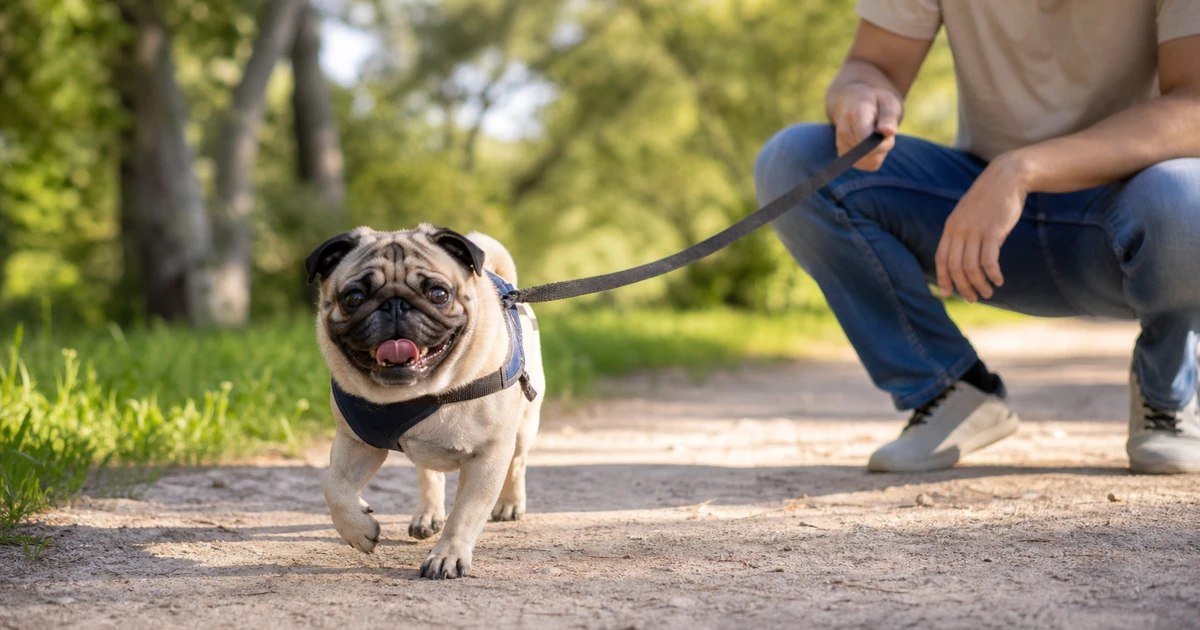
Is a Pug Really a Low-Maintenance Dog?
That squishy face might scream 'easygoing,' but Pugs pack daily wrinkle cleanings, constant shedding, and a need for companionship that'll surprise you. Low-maintenance? Let's talk.
The Best Low-Maintenance Dogs for Busy Families
Low-maintenance isn't no work — it's lower grooming, manageable exercise, and a calmer indoor vibe. These 8 breeds fit the bill, honest caveats included.
Choosing Our First Dog for the Kids: The Shortlist That Actually Made Sense
Google said “best dog breeds for kids.” Our real homework started there—and quickly moved past cute pictures to the list that actually fit our life.
Best Dog Breeds for Kids When the Parents Are Busy
Compare kid-friendly dog profiles for busy homes by energy, grooming, barking, size, and training—without mistaking a breed list for an alone-time promise.
Best Apartment Dog Breeds for Kids: Family Dogs for Smaller Homes
Searching for an apartment-friendly dog that's great with kids? These breeds combine low barking, gentle temperaments, and compact size for happy family living in smaller spaces.
Best Low-Maintenance Dog Breeds for Kids: Easy Does Not Mean Effortless
A practical, whole-profile comparison of low-maintenance dog breeds for kids: coat work, energy, barking, size, and the trade-offs that remain.
Best Dog Breeds for Kids and First-Time Owners
A dog that forgives clumsy cuddles and a first-timer’s learning curve—these eight breeds deliver. Here’s how to choose the right one for your family.
Sources & standards
This profile follows recognized breed standards from the American Kennel Club (AKC) and the Fédération Cynologique Internationale (FCI), along with established veterinary and breed-club guidance. These describe general breed tendencies — every dog is an individual.