

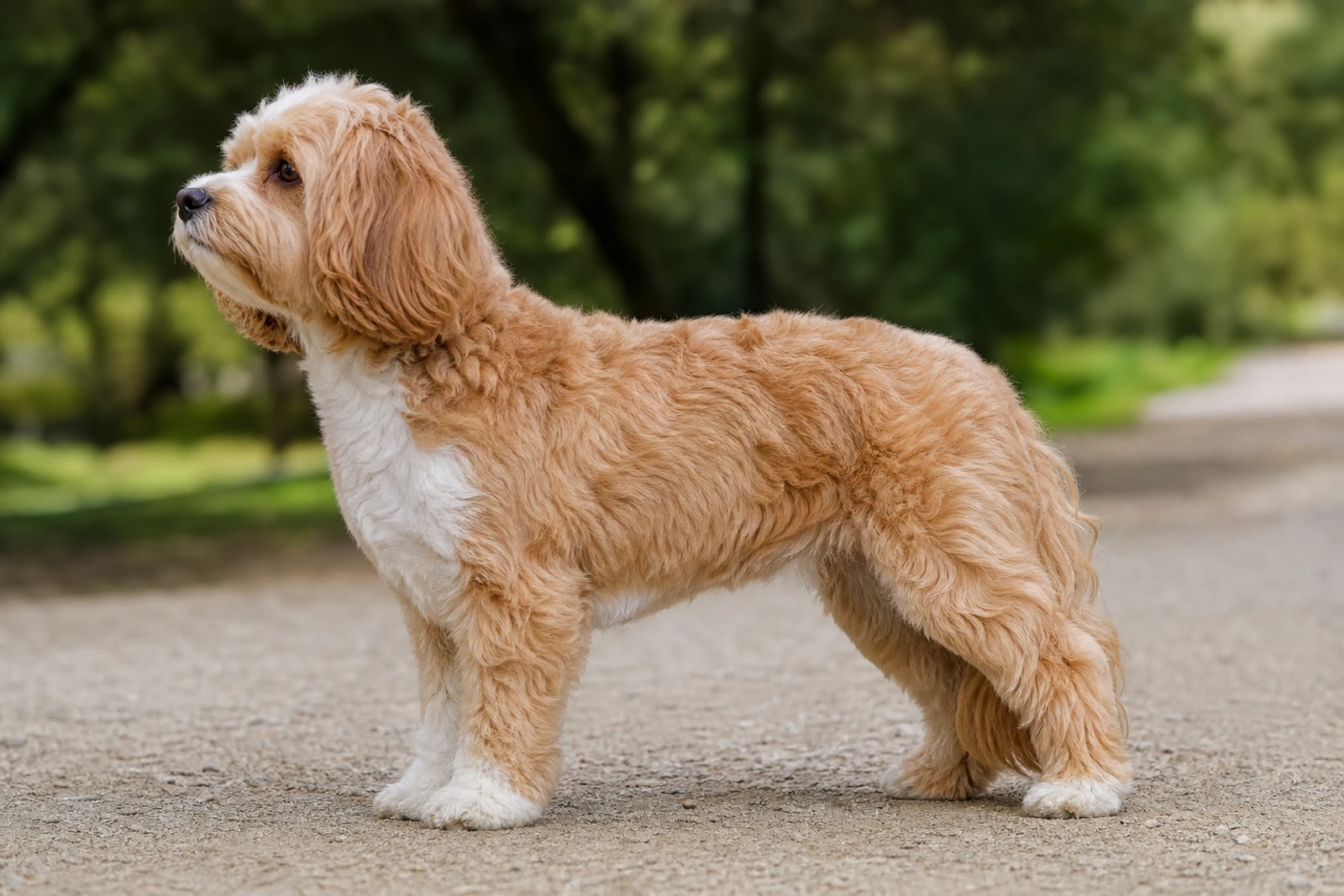
The Cavapoo is a small companion cross between the Cavalier King Charles Spaniel and Poodle. Most are affectionate, people-focused dogs with a low-shedding coat, making them popular with families and apartment owners who can keep up with grooming.
Cavapoo Sticker Pack
36 cartoon stickers • transparent PNG • no watermark
Pinterest-ready
Share all 36 reactions as one sticker sheet
Pinterest opens with the full pack and a fresh, tailored description. You choose the public board and publish it from your own account.
Save the full pack


Choose one reaction above to share it alone, or use the full-pack button for all 36 together.




































Free full-resolution download — no account, no payment, no watermark.
Includes all 36 transparent PNG stickers in one ZIP. A quick human check is required for each download.
At a glance
- Size
- Small
- Height
- 9–14 in
- Weight
- 9–25 lb
- Life span
- 12–15 years
- Coat colors
- Cream, apricot, red, white, black, chocolate, tricolor, parti-color
- Coat type
- Soft wavy or curly coat
- Group
- Crossbreeds
- Origin
- United States or Australia
How much does a Cavapoo cost?
Adopt / rescue
$75–$400
Usually includes spay/neuter, first shots, and a microchip.
Buy from a breeder
$700–$2,000
From a reputable, health-testing breeder.
Approximate USD. Prices vary widely by region, breeder, pedigree, age, and coat colour — adopting is the lower-cost and recommended route. Avoid suspiciously cheap “breeders”; they’re often puppy mills.
Estimate the full cost of a Cavapoo →Want the ongoing number? Estimate the monthly food bill for a Cavapoo with our dog food cost calculator.
Cavapoo photos
Views
Front, side, rear and top — the full silhouette.Poses
How the breed sits, lies, moves and plays.Puppy to senior
The breed across its whole life.Expressions
The breed’s range of moods.Close-up details
Eyes, ears, nose, paws, tail and coat.Coat colors
The breed’s recognized colors.Click any photo to enlarge. We show the Cavapoo from every angle — three views, poses, life stages, expressions, close-ups, coat and colors.
Appearance & size
Your first impression of a Cavapoo is that someone crossed a plush toy with a real dog. The face is round and open, with large dark eyes set well apart, giving an alert yet meltingly sweet expression. Long, silky ears drop down close to the cheeks and frame the face like a soft curtain. From the front, the head is proportional — never too narrow or too domed — with a distinct stop and a medium-length muzzle that tapers just enough without becoming pointy. A black or liver-colored nose (depending on coat) sits at the end, and the eyes are rimmed in dark pigment. Overall, the look is gently curious, not cartoonish.
Move to the side, and you see a compact body that’s slightly longer than it is tall. The topline is level, the chest moderately deep, and the legs are straight with good bone for a small dog. This isn’t a fragile lapdog — a well-built Cavapoo feels sturdy when you pick it up. The tail is set high and carried with a happy upward curve, often with a plume of longer hair. From behind, the rear is rounded and muscular, and you’ll frequently see that tail flipping back and forth like a windshield wiper when the dog is excited.
Size varies a lot because the Poodle parent can be Toy or Miniature, while the Cavalier side adds a bit of substance. Most adult Cavapoos stand between 9 and 14 inches at the shoulder and weigh anywhere from 9 to 25 pounds. That means you can find individuals who barely tip the scale at 9 pounds and others who are a solid 25 pounds of happy energy. Don’t rely on a “teacup” label — ask to see the parents and their health clearances so you have a realistic idea of adult size.
The coat is one of the breed’s headline features but it’s also where you’ll see the most variation. Ideally, a Cavapoo inherits a wavy or loosely curled single coat that’s soft to the touch and low-shedding. Some coats are closer to a Poodle’s tight curls; others lean toward the Cavalier’s straight, slightly feathered fur. The fleece-like texture — soft, springy, and minimal shedding — is what many breeders aim for. Colors run the full spectrum:
- Solid shades of cream, apricot, red, chocolate, black, or white.
- Parti (white with patches of any solid color).
- Tri-color (black, white, and tan).
- Blenheim (rich chestnut markings on a pearly white background), borrowed straight from the Cavalier palette.
Brindle and sable pops up occasionally too. No matter the color, a healthy Cavapoo coat has a natural sheen when groomed properly.
Distinctive features include the prominent, plumy tail that arches over the back, the expressive eyebrows and whiskers that add to the teddy-bear look, and the way the ears frame the face. Movement is light-footed and bouncy, with a wag that involves the entire back end. What you’ll notice most, day to day, are those bright, inquisitive eyes tracking your every move and the soft, wavy coat that seems purpose-built for sinking your hands into after a long day.
History & origin
The Cavapoo didn’t appear by accident — it was a deliberate answer to the designer-dog wave that swept through the late 1990s. Breeders in Australia and the United States started crossing Cavalier King Charles Spaniels with miniature or toy Poodles to create a small, affectionate family companion that shed less and triggered fewer allergies. Depending on where you are, you’ll hear Cavadoodle, Cavoodle, or Cavapoo; all three names point to the same Cavalier-Poodle blend. Australia’s “Cavoodle” tag took off first, with some of the earliest documented litters credited to breeders there around the late ’90s. In the US, the name Cavapoo became the dominant shorthand as demand rippled outward in the early 2000s.
Unlike working crosses bred for a specific job, this mix was built strictly for companionship. The goal was to bottle the Cavalier’s gentle, people-oriented temperament and pair it with the Poodle’s quick wit and low-shedding coat. Nobody expected a guard dog or a field athlete; they wanted a dog that would settle on the couch, travel easily, and fit into apartment life without leaving a layer of hair on everything.
The Cavapoo has never been recognized by major kennel clubs like the AKC — it’s a crossbreed, not a purebred — but you can register litters with hybrid and designer-dog registries. That hasn’t slowed its momentum. By the 2010s, the mix was a fixture on “best family dogs” lists and in suburban neighborhoods, fueled by word of mouth and an internet full of photos of scruffy, teddy-bear faces. Because it’s still a relatively young cross with no rigid breed standard, size and coat type can bounce around (the 9–25 pound range covers a lot of ground), and a first-generation puppy can favor either parent more heavily than you expected.
Early breeders concentrated on health and temperament, but the Cavapoo’s surge in popularity brought the usual problem: puppy mills and careless operations churning out litters with minimal testing. Responsible people today keep the cross true to its original promise by screening for the conditions that haunt both parent breeds — mitral valve disease and syringomyelia in Cavaliers, luxating patellas and progressive retinal atrophy in Poodles. That’s why, more than two decades after the first crosses, a well-bred Cavapoo is still defined less by its label and more by the actual health clearances in front of you.
Temperament & personality
Your Cavapoo didn’t get the memo about personal space—and that’s kind of the point. These dogs are wired for companionship, a blend of the Cavalier’s attachment-velcro nature and the Poodle’s sharp awareness. They pick one or two favorite humans and stick close, often physically touching a leg or lap. The upside is a sweet, intuitive dog who seems to read your mood. The catch is that solitude hits hard. Left alone for long stretches, a Cavapoo can develop anxiety-driven habits: nonstop barking, destructive chewing, or accidents on the carpet even if they were housetrained. That indoor urine scent becomes a powerful re-marking cue, so clean any mishap with an enzymatic cleaner to erase the olfactory nudge.
Energy levels sit medium-low to medium. A solid 30-to-45-minute walk and a couple of rowdy play sessions each day do the job. Without that outlet, restlessness brews, and you’ll see pacing or demand barking. Once exercised, they’re content to nap near your workspace or sprawl across your feet.
With family, the Cavapoo defaults to gentle. Most get along with respectful kids and other pets, especially when socialized early. However, they’re not bombproof. Teach children never to interrupt a dog mid-meal—even a mild-mannered Cavapoo can start guarding food if pushed.
-
Watchdog, not guard dog. A Cavapoo will alert you to delivery trucks, doorbells, and suspicious squirrels with a flurry of barks. Once you acknowledge the “threat,” they usually stand down, sometimes with a proud prance. They won’t escalate to aggression, but the noise alone is enough to make them a decent little announcer.
-
Scent-obsessed quirks. Prepare for the possibility of nose dives into something smelly on walks. Some dogs roll in pungent odors to mask their own scent, others seem to do it as a “check out this excellent find” signal, and plenty just seem to enjoy the stink. Either way, it’s a normal dog thing, not a defect. At home, they’ll likely chew to keep jaws strong and teeth clean; provide safe, durable chews and, for puppy exploration chewing, a homemade citrus spray on off-limits items can nudge their mouth elsewhere.
-
Body language worth learning. A relaxed Cavapoo carries a loose, wiggly body with soft eyes. A stiff freeze and hard stare often precede a snap or growl—reactive, not casual. Calming signals like lip licking, yawning, or turning the head away mean “I need a break.” Respect those and you’ll build more trust than you’d gain forcing the interaction.
Training holds few surprises if you stay positive. A small streak of independence can surface—your Cavapoo isn’t a robot—so skip hard corrections. Rewards and consistency shape the eager-to-please side. For housebreaking, deliver a treat the instant they eliminate outdoors. That immediate reward cements the habit far faster than punishing an indoor accident, and it weakens the appeal of marking inside later on.
Good with kids, dogs & other pets
A Cavapoo’s patient, people-loving nature usually makes him a solid match for families with kids, but his small size (9–25 pounds) means he’s not a rough-and-tumble playmate. Even the gentlest preschooler can accidentally step on a paw or squeeze too hard, so an adult should always coach young children on calm handling and never leave them unsupervised together. The upside: these dogs rarely guard resources or react with aggression, so a child who learns to read a dog’s body language will get a loyal, tail-wagging buddy rather than a snap.
With other dogs, Cavapoos tend to be friendly and non-confrontational, especially when they’ve had early, positive exposures. The prime socialization window slams shut around 12–16 weeks, so introduce your puppy to a wide variety of well-mannered dogs before that age to prevent timidity or fear-based snarkiness later. Off-leash play with much larger, rowdier dogs still warrants a watchful eye — one clumsy body slam can hurt a dog this size, even if everyone means well.
Cats and small pets like rabbits usually work out with a Cavapoo that’s been raised alongside them. Neither the Cavalier nor the Poodle side brings a strong prey drive, so with gradual introductions behind baby gates and some treat-sprinkled patience, a new Cavapoo often learns to share space peacefully. Puppies raised in barren environments — typical of puppy mills — can miss early exposure entirely, which sometimes leaves them jumpy or overly wary around other animals. When that’s the case, don’t force meetings. You can still build calm tolerance over time by letting the dog observe from a safe distance without direct pressure. End goal: a dog that co-exists without stress, not one forced into playdates.
Trainability & intelligence
Your Cavapoo’s smarts come from both sides of the family tree — the eager-to-please Cavalier and the whip-smart Poodle — so you get a dog who genuinely wants to figure out what you’re asking. That doesn’t mean they’re push-button obedient right away. They’re sensitive and pick up on your tone fast. A harsh word or a frustrated sigh can shut them down harder than you’d think, so the whole vibe of training has to stay upbeat.
What actually works
- Keep it reward-based. Tiny, soft treats, a quick game of tug, or excited praise — whatever makes your Cavapoo’s tail wag. They learn new cues in just a handful of repetitions when the payoff is clear.
- Short, frequent sessions. Five minutes three or four times a day beats a single 20-minute drill. Brains that quick get bored, and a bored Cavapoo will find something else to do.
- Consistency is everything. If “down” means lie on the floor today but was fine as a half-crouch yesterday, expect confusion. Pick your words and stick with them across every family member.
Common sticking points
This isn’t a breed you can bully into compliance. Because they’re so attuned to people, punishment-based methods can spike their anxiety or trigger submissive peeing — you lose trust and get slower progress. With a dog that tops out around 25 pounds, it’s easy to let little stuff slide (jumping up, demand barking). Don’t. Small-dog habits turn into big annoyances fast, and a Cavapoo clever enough to train you will exploit any loophole.
Recall and focus
A Cavapoo’s desire to stick near you gives you a head start on recall, but the Poodle side can add a streak of playful independence when squirrels or new smells enter the picture. Practice recalls on a long line in progressively busier spots. Pay off heavily every single time they come back, even if they moseyed in on their own schedule.
Start socialization early — between 3 and 14 weeks, gently introduce new people, sounds, surfaces, and calm dogs. A well-socialized Cavapoo stays curious rather than spooky. End all training on a win, even if that just means a simple “sit” for a jackpot of chicken, so your dog always remembers learning with you feels safe and good.
Exercise & energy needs
A Cavapoo doesn’t need hours of hard running, but skimp on daily movement and you’ll likely see restlessness, barking, or furniture chewing bubble up. Most fall solidly in the moderate-energy camp — a blend of the Cavalier’s easygoing nature and the Poodle’s sharper mind — so plan for about 30 to 45 minutes of total exercise each day, split into at least two sessions. A 9-lb adult might be perfectly content with a couple of 15-minute sniff walks and a short indoor fetch session, while a leggy 20-lb dog may want more — up to 60 minutes total.
How to structure the day
Rather than one long slog around the neighborhood, break things up. A morning walk of 15–20 minutes at a trotting pace, plus a late-afternoon walk or a rousing game of tug in the yard, often hits the sweet spot. Because the Cavalier side can bring a flatter face, watch for heavy panting or snorting on hot, humid days, and keep midday summer outings brief. Multiple shorter sessions also protect developing joints in puppies, and they match the breed’s attention span — a Cavapoo will get far more out of three 10-minute bursts than 30 minutes of bored plodding.
Mental stimulation matters just as much
This crossbreed has a Poodle brain that thrives on puzzles and problem-solving. A walk that lets him sniff, explore, and make decisions (go left or right?) tires him out faster than straight-line heelwork. At home, rotate puzzle toys, stuff a KONG with his breakfast, or hide a few treats around the living room for a scavenger hunt. Five minutes of nose work can equal 15 minutes of physical exercise for a Cavapoo who’s buzzing with energy.
Activities that work well
- Two daily brisk walks (15–25 minutes each) with plenty of sniff breaks.
- Fetch and tug in a fenced yard or hallway — keep throws low to the ground to avoid high-impact landing stress on the spine and knees.
- Short training sessions that double as mental burn: teach a new trick, practice recalls, or run through basic cues for a handful of kibble.
- Scent games — hide a smelly treat under a cup, or trail a bit of cheese across the floor.
- Indoor obstacle courses using couch cushions and boxes on rainy days.
What to moderate or skip: High jumps (off couches, over agility equipment) can strain a small dog’s kneecaps and back, especially since both parent breeds can be prone to patellar luxation and disc issues. Swimming is excellent and joint-friendly if you introduce it gradually, but never assume a Cavapoo is a natural swimmer — most need a dog life jacket and close supervision.
If you’ve got a particularly driven Cavapoo who still paces after a solid walk, add a food-dispensing toy or a 10-minute clicker session. The worst behavior problems in this mix — demand barking, anxiety, chewing — almost always trace back to a bored brain or pent-up physical energy. Aim for that daily 30–45 minute baseline, respect his limits on hot days, and pair every walk with a dash of mental work.
Grooming & coat care
Your Cavapoo’s coat won’t look after itself. Skip a day of brushing and you’ll likely find mats tangling behind the ears, under the collar, or deep in the feathering on the legs. This isn’t a high-maintenance luxury — it’s just the reality of owning a curly or wavy-coated mix that barely sheds the dead hair it produces.
-
Daily brushing Go through the entire coat with a metal slicker brush (with rounded pins) to catch loose hair and surface debris. Follow up with a greyhound-style metal comb down to the skin, especially in friction zones like the armpits, belly, and behind the ears. Line brushing — parting the hair section by section — keeps you from skipping hidden mats.
-
Bathing Aim for every three to four weeks, or whenever your dog rolls in something unspeakable. Use a gentle, moisturizing dog shampoo and rinse until the water runs completely clear. Soap residue left in that dense coat is a fast track to itching. Towel dry, then blow-dry on a low warm setting while brushing to prevent the damp curls from tightening into knots.
-
Trimming and professional grooming Most Cavapoos need a full body clip every four to six weeks. If you’re comfortable with scissors, you can keep the face tidy, trim paw pads, and do a sanitary trim between appointments. Otherwise, book a pro. The hair around the eyes can grow fast enough to block vision, so watch for that and snip carefully or ask a groomer.
-
Ears Those floppy ears trap moisture and wax. Lift each flap once a week, take a sniff (any yeasty or foul smell means an infection is brewing), and wipe the outer ear with a cotton ball dampened with a vet-approved ear cleaner. Never push anything into the canal.
-
Nails Trim every three to four weeks, or sooner if you hear clicking on hard floors. Small dogs often need more frequent touch-ups because their nails don’t wear down as quickly.
-
Teeth Daily brushing with dog toothpaste keeps decay and stinky breath at bay; a couple of dental chews a week help but don’t replace the brush.
You won’t face a seasonal undercoat blowout like a husky, but you might see a bit more loose hair in spring and fall. Stick to the daily routine and it won’t pile up. That same 10-minute brush session also gives you a daily once-over to catch hot spots, lumps, or ear gunk before they spiral.
Shedding & allergies
Most Cavapoos shed very little — that’s the big draw for many families. But the “hypoallergenic” label gets tossed around loosely, so let’s look at what you can actually expect.
The Cavapoo is a cross between a Cavalier King Charles Spaniel (a moderate shedder with a silky double coat) and a Poodle (a single-coated breed that traps dead hair instead of dropping it). Your dog can land anywhere on that spectrum. If the Poodle genes dominate, you’ll likely see a curly or wavy coat that barely sheds — loose hairs stay woven into the curls until you brush them out. A straighter, more Cavalier-like coat tends to release more fur around the house, though still less than the average dog.
You won’t deal with a dramatic seasonal blowout. Because Poodle influence typically overrides the Cavalier’s seasonal shed cycle, shedding stays low and fairly consistent year-round. The trade-off? That hair doesn’t magically disappear; it needs to be removed with a pin brush or comb every day or two, or mats build up fast.
Drool is a non-issue. Neither parent breed is a heavy drooler, so Cavapoos have clean, dry mouths. You won’t find wet spots on the couch after a nap.
Allergies are trickier. No dog is 100% hypoallergenic — allergy triggers come from dander, saliva, and urine, not just fur. Because Cavapoos shed minimally, they spread less dander around your home, and many allergy sufferers do fine with them. But a Cavapoo that takes after the Cavalier side can still produce enough dander to cause a reaction. The only reliable test is to spend unhurried time with the specific puppy or adult you’re considering, especially if someone in your household has known dog allergies. Regular brushing and the occasional bath cut down on loose dander even more, but they can’t erase the risk entirely.
Diet & nutrition
A Cavapoo’s small frame — anywhere from 9 to 25 pounds — doesn’t leave much wiggle room for extra weight. Many individuals are serious chowhounds who will eat well past full, so you drive the bus. Measure every meal, keep treats under 10% of daily calories, and learn to run your hands over your dog’s ribs. You should feel them easily without pressing through a layer of fat. Excess pounds stress the back and knees, and this mix’s Cavalier influence already comes with a predisposition to spinal and joint trouble. Protecting those areas starts at the food bowl.
Portion sizes and meal frequency
Puppies under four months need four evenly spaced meals a day. Drop to three meals from four to six months, then settle into the adult rhythm of two meals a day for the rest of their life. Follow the feeding guide on your chosen food’s label as a starting point, then dial up or down based on your dog’s body condition and real activity level — a couch-snuggling companion needs fewer calories than the one doing daily off-leash runs. If your Cavapoo inhales food in seconds, switch to a puzzle bowl or a slow feeder; it gives that busy brain a job and cuts the gulping that can lead to bloat.
What to feed
Whether you go with a high-quality commercial diet or home-prepared meals, the plate should look species-appropriate. A practical target is roughly 60% animal protein (meat, fish, and eggs), 20–30% fruits and vegetables, and the remaining 10% from grains, plain yogurt, or other whole food additions. Pearl barley or white rice can work for dogs with sensitive stomachs, and the unsalted water from cooking vegetables makes a fine base for mixing meals. A vegetarian or vegan plan deprives a dog of nutrients its physiology demands — this is not a dog built to graze.
For a puppy transitioning to solid food, start with lightly cooked and puréed meats, fish, fruits, and vegetables, or a gentle commercial puppy formula. If you’re comfortable feeding raw, meaty bones like chicken wings can be introduced around twelve weeks old under direct supervision. Always supervise a dog with bones.
Senior nutrition
Older Cavapoos often slow down but keep the same appetite, so obesity becomes a real threat. Gradually cut back portions as exercise wanes and check the scale often — you’re aiming for a stable, lean weight. There’s no solid evidence that healthy seniors need less protein, so maintain good muscle mass with quality protein sources. If dental pain or missing teeth make chewing difficult, puréeing the meal helps absorption without discomfort. Some old dogs do better with three smaller meals instead of two, keeping blood sugar even and the stomach settled.
A few absolute rules: never feed from the table — once begging takes hold, it’s a tough habit to break. Serve any leftovers in the dog’s own bowl. Skip rich, fatty scraps, especially after holidays; a single greasy indulgence can trigger a bout of pancreatitis. Feed for the dog in front of you, not the one on the label, and you’ll stack the odds for a long, sound 12 to 15 years.
Health & lifespan
A healthy Cavapoo usually lands between 12 and 15 years, and with careful preventive care, some sail past that. Those extra years come from tackling the breed’s mixed bag of inherited quirks head-on.
Because Cavaliers and Poodles bring very different health baggage, you can’t skip over the parentage. Mitral valve disease is the heavyweight on the Cavalier side—a heart condition that affects most Cavaliers as they age. A breeder who’s worth your time screens both parents annually with a board-certified cardiologist and refuses to breed a dog that develops an early murmur. From the Poodle side, watch for progressive retinal atrophy (PRA), cataracts, and other eye disorders. Ask for current CERF or OFA eye exam results for both parents. Patellar luxation—a kneecap that slips out of place—is common on both sides; parents should have an OFA patella certification. Some lines also carry hip dysplasia, so a hip evaluation isn’t overkill even in a small dog.
Those floppy, hairy ears are infection factories. Dry them after baths and swims, and check for odor or redness weekly. Small-breed dental disease creeps up silently, so daily brushing and a professional cleaning every year or two make a huge difference. A lean body condition protects joints and gives a vulnerable heart less work: measure meals, skip free-feeding, and get moving every day.
Don’t fudge on the basics. Monthly heartworm prevention during mosquito season (plus one month past it) and a legally required rabies shot are non-negotiable. Your vet should catch a heart murmur on an annual exam and monitor it over time; early medication can extend a dog’s quality of life by years. Senior Cavapoos—roughly age 7 and up—benefit from yearly bloodwork to catch kidney or liver changes before they become obvious. Subtle shifts like a quieter week, appetite changes, or hesitation on stairs deserve a prompt vet visit, not a wait-and-see.
Living environment
Cavapoos are one of the most apartment-friendly small mixes you’ll come across. They adapt easily if their daily needs are met, but they’re not a set-it-and-forget-it dog — they want to be where you are.
Apartment vs. house
A Cavapoo will do great in an apartment, a condo, or a single-family home. Size is on your side: at 9–14 inches and 9–25 pounds, he doesn’t need sprawling square footage. What he needs is daily movement and company. A couple of 15–20-minute walks plus a few indoor play and puzzle sessions usually cover his energy. Without them, expect restlessness and demand barking. Short, frequent bursts — a quick fetch game down a hallway, a snuffle mat session — often work better than one long march. Floor surfaces matter: slick hardwood can be hard on small joints, so throw down a runner if he’s skittering.
Yard space
A fenced yard is a bonus, not a requirement. He’ll happily trot out for a potty break and a sniff patrol, but a yard doesn’t replace structured walks or mental exercise. If you don’t have one, it’s no loss; leash walks and a nearby park will cover it. If you do, check fencing carefully — a 25-pound dog can squeeze through gaps a bigger dog can’t.
Climate tolerance
The Cavalier side leans a little snub-nosed, though not extreme. In practice, you’ll want to be sensible about weather. In summer heat, walk early or late, keep pavement cool enough for your bare hand, and always carry water. A tiny body can overheat fast. In winter, below-freezing walks call for a coat and shorter loops. He’s an indoor dog at heart; if it’s miserable outside, a round of hide-and-seek in the house will tide him over.
Noise and barking
Cavapoos tend toward alert, conversational barking, not relentless yapping. A knock at the door or a delivery truck will get a few woofs. Treat it early with a “thank you, quiet” routine, and you’ll keep the volume from becoming a problem. The bigger risk is boredom barking, so keep him busy. A mentally tired Cavapoo is a quiet Cavapoo.
Tolerance for being left alone
This is the honest caveat: Cavapoos can be prone to separation anxiety. They were bred for companionship, and puppy-mill or poorly socialized lines amplify that clinginess. Expect to work on it from day one. Start with very short absences — a minute, then five — paired with a frozen Kong or a safe chew. Build duration slowly. No drama when you leave or return. For full workdays, a midday dog walker or neighbor visit keeps him from spiraling. A well-adjusted adult can manage 4–5 hours alone, but if you’re gone 9–10 hours daily with no break, this isn’t the right fit.
Give him a predictable rhythm of walks, nose games, and calm practice separations, and he’ll settle into nearly any living situation. A stuffed Toppl left on his mat as you grab your keys makes goodbyes a whole lot smoother.
Who this breed suits
If you work from home, are retired, or have a flexible schedule that lets you spend most of the day with a velcro dog, a Cavapoo will happily stitch itself into your routine. First-time owners, couples, and singles who want a portable, upbeat companion tend to click with this mix — they’re eager to please and far more forgiving of training hiccups than a typical terrier. Their size helps: at 9–25 pounds and 9–14 inches tall, they fit easily under an airplane seat or onto a senior’s lap without overwhelming you.
Families with gentle, school-age kids get a playful sidekick that springs after a tennis ball and then flops down for a midday nap. The Cavapoo’s Cavalier half usually keeps the energy cheerful, not frantic, but they still need a daily commitment — two 20-minute walks plus some off-leash fetch or a sniffy stroll are the floor, not a bonus. Seniors who want a reason to walk around the block and a warm body on the couch will find the breed’s affection level almost excessive.
Think twice if you’re gone eight-plus hours a day. Cavapoos are wired for company and commonly develop separation anxiety, which shows up as barking, chewing, or potty accidents when left alone too long. A midday dog walker or a part-time schedule is a fair minimum. Grooming is another honest drawback: those soft, low-shedding coats mat fast, require brushing every day or two, and need a professional clip every 6–8 weeks. If you’re not up for that grooming bill and the daily maintenance, a wash-and-wear breed is a better match. Likewise, if a quiet, independent dog is your goal, the Cavapoo’s need to follow you from room to room can feel intrusive.
Cost of ownership
A well-bred Cavapoo from health-tested parents runs $1,500 to $3,500 in most of the US. Puppies from exceptional lines or breeders who perform extensive cardiac, eye, and patella screenings can push toward $4,000. “Bargain” listings under $1,000 almost always skip those health clearances or come from puppy mills — the vet bills later erase any savings.
Monthly upkeep for this little dog tends to land between $130 and $250, depending on where you live and how much you outsource.
- Food: $25–$45 a month. A small, moderately active Cavapoo eats 1 to 2 cups of quality kibble daily. A 25-pounder at the top of the size range will cost you more than a 9-pounder, but neither breaks the bank.
- Grooming: A non-negotiable. That low-shed Poodle coat mats fast. Expect a professional groom every 6 to 8 weeks at $60–$90 per visit, plus $10–$20 for shampoo, a slicker brush, and detangler between appointments. Over a year, that’s roughly $40–$80 a month.
- Vet and preventives: Routine visits, vaccines, heartworm prevention, and flea/tick meds average $30–$60 monthly. Keep in mind that both parent breeds can pass on mitral valve disease, luxating patellas, or eye trouble, so you may face specialty vet costs later. A good insurance plan ($25–$50 a month) can offset those surprises.
- Miscellaneous: $15–$30 for poop bags, treats, a dental chew, and toy replacement. A sturdy car harness or booster seat is a one-time buy but worth factoring in early.
The real figure to stare down is first-year cost. Once you add supplies, spay/neuter, microchipping, and that initial crate, bed, and collar, you’re looking at $500–$800 on top of purchase price and regular monthly expenses. If that stretch feels tight, consider setting aside a dedicated $1,000–$2,000 emergency fund before bringing puppy home.
Choosing a Cavapoo
You’re navigating one of the most in-demand crossbreeds out there, so the distance between a wonderful companion and a heartbreak puppy is often just a few good questions. Whether you go to a breeder or a rescue, your single best tool is insisting on verifiable health history — not just a vet check, but the genetic and structural screenings the parent breeds actually need.
What a responsible Cavapoo breeder shows you
Because Cavapoos mix a Cavalier King Charles Spaniel and a Poodle (usually Miniature or Toy), a good breeder tests the parents for the problems those breeds carry, not for a generic “hybrid vigor” promise.
Ask to see results, not a verbal assurance. Hard copies or links in the OFA database count. Expect at minimum:
- Heart clearance — a board-certified cardiologist’s exam within the past year on the Cavalier parent, since mitral valve disease is rampant in the breed. An OFA cardiac certification (or equivalent) is non-negotiable.
- Patella evaluation — both parents should be certified free of patellar luxation through OFA or a similar registry. Poodles and Cavaliers can both have loose kneecaps.
- Hip evaluation — OFA or PennHIP scores for the Poodle parent (and ideally the Cavalier), because hip dysplasia shows up in both.
- Eye exam — a recent CERF or OFA eye clearance on each parent, ruling out heritable cataracts, progressive retinal atrophy (PRA), and retinal dysplasia.
- Syringomyelia (SM) screening — the gold standard is an MRI on the Cavalier parent, since SM and Chiari-like malformation are severe and common. Many breeders skip this due to cost; if you find one who does it, you’re ahead of the curve.
- DNA panels — Poodles can carry von Willebrand disease type I, neonatal encephalopathy, and prcd-PRA. A good breeder runs the relevant DNA tests for the Poodle side and can explain how the results affect the litter.
A breeder who brushes off these specifics with “crossbreeds are healthier” or “our vet says they’re fine” is a red flag, not a discount.
Red flags that should make you walk away
Cavapoo puppies are big business for puppy mills and casual profit-breeders because the name sells. Steer clear if you see:
- Anyone releasing puppies before 8 full weeks. Earlier than that skips critical bite inhibition and social learning.
- “Teacup,” “micro,” or “tiny” Cavapoos. These labels usually mean underweight runts bred from unusually small parents — often with serious health gaps.
- No parent meeting (at least the mother). If you can’t meet the dam in person on-site because of “COVID protocols” that never went away, or if they offer to meet in a parking lot, leave.
- Multiple litters always available with no waitlist. A responsible breeder plans litters cautiously, usually no more than a couple per year.
- No take-back clause in the contract. A breeder who won’t guarantee they’ll take the dog back for life, no questions asked, is not standing behind their dogs.
- Cash-only sales or pressure to pay a deposit before you’ve seen the puppy and the setup.
Picking a puppy
When you visit, watch the whole litter for about 15 minutes before zeroing in. You want a pup who investigates new people with tail-wagging curiosity, not one who shuts down or bullies siblings relentlessly. Steer toward the middle of the road in boldness — that’s often the easiest fit for family life.
Check the basics yourself: clear, bright eyes with no discharge; clean ears without a yeasty odor; a glide-in gait with no limping or bunny hopping; and no persistent coughing or wheezing. A reputable breeder will have started potty-training cues, early neurological stimulation, and handling exercises, and will hand you a folder with a health record, microchip info, and a contract that includes a return clause.
The rescue route
Dedicated Cavapoo rescues are rare, but Cavalier- and Poodle-focused rescues frequently place mixes. Adult dogs skip the sharky puppy months, and you’ll have a clearer read on size and temperament upfront. The trade-off is less complete health history — so plan on a thorough veterinary intake exam and, ideally, a cardiologist listen if the dog is part Cavalier.
A solid placement group will do a home check, ask about your lifestyle, and disclose known behavioral or medical quirks before you commit. If they don’t ask you hard questions, keep looking.
Pros & cons
Pros
- Gentle, people‑pleasing temperament — Cavapoos are affectionate lap dogs who get along with kids, seniors, and other pets without much fuss.
- Low-shedding coat — the Poodle influence usually means less hair around the house, a plus for allergy-aware families (though no dog is truly hypoallergenic).
- Quick to train — smart and food-motivated, they pick up commands fast and often shine with positive, consistent methods, even for first-time owners.
- Adaptable size — at 9–14 inches tall and 9–25 lb, they fit in apartments, small homes, or city life without needing a big yard.
- Playful but off‑switch — they’ll romp with the kids then snooze on your lap after a solid walk.
- Long lifespan — expect 12–15 years with a well-bred, well-cared-for dog, so you’re getting a real long-term companion.
Cons
- Grooming workload — that soft, wavy coat mats fast. Count on brushing every other day and a professional clip every 4–6 weeks, plus regular ear cleaning and tear‑stain care.
- Separation anxiety is common — they bond hard and can become destructive or bark nonstop if left alone for long hours without a gradual training plan.
- Barking tendency — an alert nature means they’ll announce doorbells, squirrels, and unexpected noises; you need early training to keep it under control.
- Health risks from both parent breeds — potential issues include mitral valve disease (Cavalier side), luxating patellas, and eye conditions. Responsible breeders screen for these, but vet bills can still hit hard.
- Unpredictable adult size — the 9‑to‑25‑pound spread is real. A “small” puppy may end up a sturdy 20‑pound dog, so don’t bank on a specific weight.
- Daily energy needs aren’t optional — figure on a solid 45–60 minutes of exercise plus mental games; bored Cavapoos recycle that brainpower into chewing, digging, and barking.
Similar breeds & alternatives
If the Cavapoo’s size or coat isn’t a perfect fit, a few other Poodle mixes and spaniel types give you a similar temperament in a slightly different package.
- Cockapoo — Usually a notch bigger at 10–15 inches and 12–24 pounds. The Cocker Spaniel influence often means a higher play drive: expect more bouncing off the furniture and a need for a solid 45–60 minutes of active exercise. Barking at passersby can be more pronounced, but you still get a low-shed coat.
- Maltipoo — Runs smaller (8–14 inches, 5–20 pounds) and leans harder into the “velcro dog” category. That Maltese side can make separation anxiety a real issue if you work long hours. Coat care is daily—fine hair mats easily. Energy is manageable with two short walks and indoor games, similar to the Cavapoo’s routine.
- Cavalier King Charles Spaniel — The purebred parent ditches the Poodle cross and gives you the same gentle, sweet personality, but now you’re dealing with heavy shedding and a known heart problem. Mitral valve disease is so rampant that even well-bred Cavaliers often live just 9–12 years. You get the undiluted charmer without the hybrid vigor or the hypoallergenic advantage a Cavapoo offers.
All three do best with positive early training to head off house-soiling and clinginess. If you go the mixed route, demand parental health clearances—cardiac and syringomyelia for Cavaliers, hips and eyes for Poodles—so you don’t inherit the worst of both worlds.
Fun facts
- Cavapoo coats can range from wavy to curly depending on the Poodle parent.
- The breed is also widely called the Cavoodle.
- Many Cavapoos are chosen for therapy-style companion temperaments.
Frequently asked questions
- Are Cavapoos good with children?
- Cavapoos are typically affectionate and playful, so they can be great companions for gentle children. Their small size makes supervision important during interactions to prevent accidental injury. Early socialization helps them be comfortable and patient around kids of all ages.
- Do Cavapoos shed a lot?
- Cavapoos are a low-shedding breed, which can be a plus for those with mild allergies. No dog is completely hypoallergenic, as dander and saliva may still trigger reactions. Regular brushing keeps loose hair to a minimum and supports coat health.
- How much exercise does a Cavapoo need?
- With a moderate energy level, Cavapoos generally need 30–45 minutes of daily exercise, such as walks and play sessions. Mental stimulation through puzzle toys or training games is also beneficial. Without enough activity, they may become bored and develop nuisance behaviors.
- What are the grooming requirements for a Cavapoo?
- Cavapoos have high grooming needs due to their curly or wavy coat, which should be brushed several times a week to prevent mats. Professional grooming every 4–6 weeks is recommended to maintain coat condition. Routine ear cleaning and nail trimming are also essential for their overall care.
- Are Cavapoos suitable for apartment living?
- Yes, Cavapoos can thrive in apartments because of their small size and moderate energy. They still require daily walks and interactive play indoors. Their friendly, adaptable nature helps them coexist peacefully with neighbors, though training can minimize any excessive barking.
Tools & calculators for Cavapoo owners
Quick estimates tailored to Cavapoos — pre-filled with this breed’s size where it matters.
Articles & stories about the Cavapoo
Sources & standards
This profile follows recognized breed standards from the American Kennel Club (AKC) and the Fédération Cynologique Internationale (FCI), along with established veterinary and breed-club guidance. These describe general breed tendencies — every dog is an individual.