

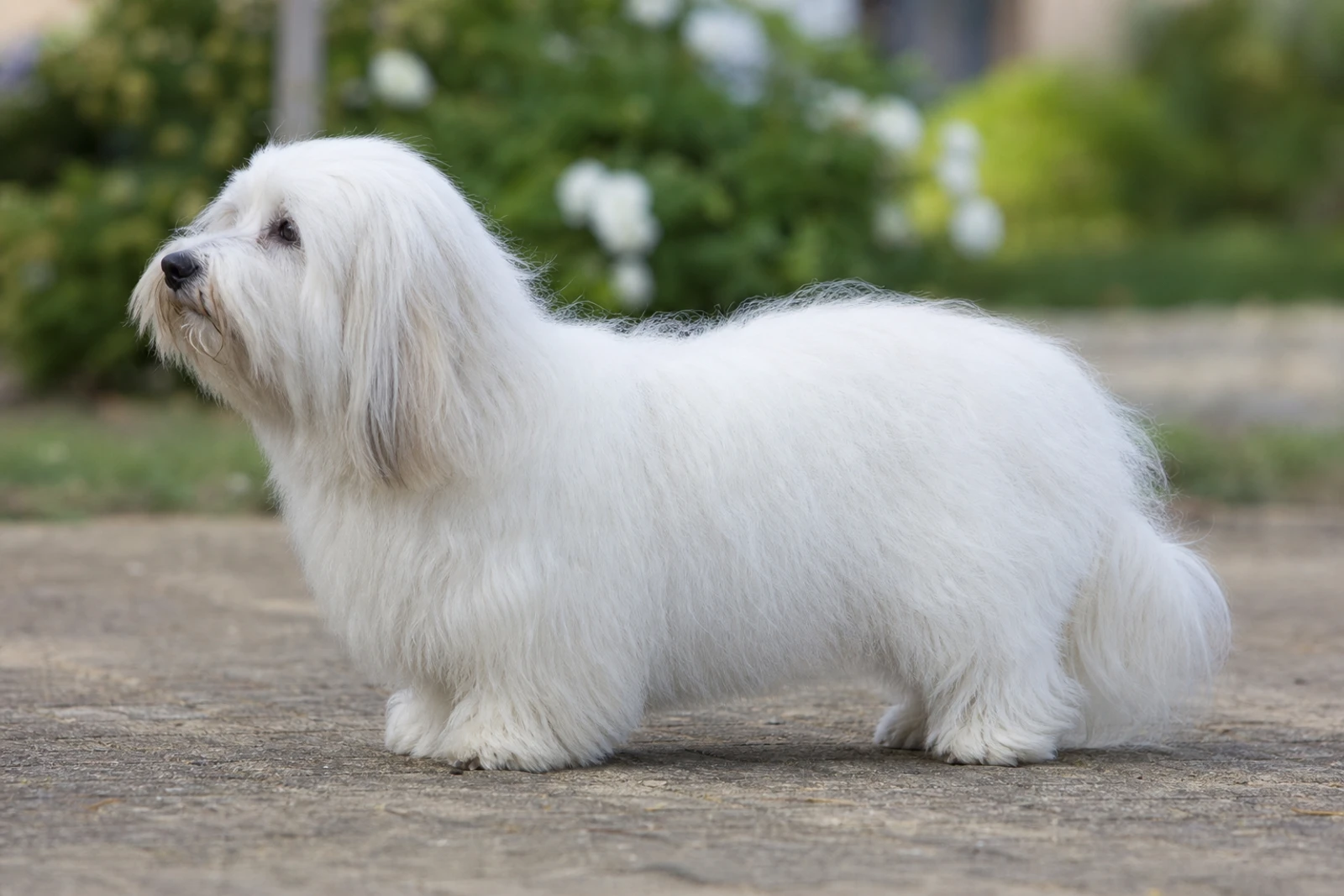
The Coton de Tulear is a small white companion dog with a soft cottony coat and a cheerful, people-loving personality. It is a strong fit for small-fluffy and allergy-conscious homes that can commit to regular brushing and coat care.
At a glance
- Size
- Small
- Height
- 9–11 in
- Weight
- 8–15 lb
- Life span
- 15–19 years
- Coat colors
- White, sometimes with light gray or tan shading
- Coat type
- Long cottony coat
- Group
- Companion
- Origin
- Madagascar
How much does a Coton de Tulear cost?
Adopt / rescue
$75–$400
Usually includes spay/neuter, first shots, and a microchip.
Buy from a breeder
$700–$2,000
From a reputable, health-testing breeder.
Approximate USD. Prices vary widely by region, breeder, pedigree, age, and coat colour — adopting is the lower-cost and recommended route. Avoid suspiciously cheap “breeders”; they’re often puppy mills.
Estimate the full cost of a Coton de Tulear →Want the ongoing number? Estimate the monthly food bill for a Coton de Tulear with our dog food cost calculator.
Coton de Tulear photos
Views
Front, side, rear and top — the full silhouette.Poses
How the breed sits, lies, moves and plays.Puppy to senior
The breed across its whole life.Expressions
The breed’s range of moods.Close-up details
Eyes, ears, nose, paws, tail and coat.Coat colors
The breed’s recognized colors.Click any photo to enlarge. We show the Coton de Tulear from every angle — three views, poses, life stages, expressions, close-ups, coat and colors.
Appearance & size
The Coton de Tulear looks like a small, sturdy powder puff with a face that never stops smiling. He stands just 9–11 inches at the shoulder and tips the scale at 8–15 pounds, but his dense cottony coat makes him appear a size larger than he really is. Don’t mistake all that fluff for a fragile body — under the hair you’ll find a rectangular build, slightly longer than tall, with surprising substance for a companion dog.
The coat is the breed’s signature. It’s long (usually 4–6 inches in an adult), soft, and compared to cotton or a cloud rather than fur. The texture is meant to be springy and airy, not silky or woolly. The color is white, occasionally with champagne, gray, or tan shadings — most noticeable on the ears, around the eyes, or along the back as a puppy. Those shadings often fade to pure white as the dog matures, though some keep a touch of biscuit. A pure white coat is perfectly acceptable and the most common. The hair falls in loose, slightly wavy locks that part naturally down the spine, so even without a fresh bath a Coton has that just-blow-dried look.
From the front, your eyes go straight to the dark, round, lively eyes and the black nose button. The eyes are set well apart and have a merry, mischievous expression that draws you in. The drop ears hang close to the head, shaped like triangles with a slight lift at the base, framing the face. From the side, you’ll notice the neck has a slight arch, the chest is well-developed, and the back is strong and level. The tail is set low at rest but carried high and curved over the back when the dog moves, with long, flowing hair that drapes like a plume.
Walk around behind and the hindquarters look moderately angulated, never exaggerated. The rear view shows a tail that arcs forward casually, not curled tight, and the same cottony coat covering the back legs. The legs themselves are straight and proportionate, and the feet are small and arched, often described as hare-like. Altogether, the Coton moves with a free-flowing trot — you’ll see the coat bounce and the tail wave, but there’s no mincing or prancing. He’s simply a cheerful, well-balanced little dog wrapped in white.
History & origin
The Coton de Tulear’s story starts with a shipwreck — or a handful of them — off the coast of Madagascar during the 16th and 17th centuries. Merchant and pirate ships sailing the Indian Ocean often carried small white dogs, likely Bichon Tenerife types and Maltese, as ratters and companions. When vessels broke apart on the reefs near the southern port of Tulear (now called Toliara), some of those dogs swam ashore and survived. On the island, they interbred with local terrier-like dogs, and a distinct foundation stock began to take shape.
The native Merina people noticed these fluffy little survivors and started refining them. Unlike in Europe, where small white dogs still had a job chasing vermin, the Malagasy bred strictly for a calm, engaging temperament and that uniquely soft, cottony coat. The result was a devoted companion that wormed its way into the favor of Madagascar’s ruling class. The breed became so tightly associated with nobility that commoners were largely forbidden to own one. That royal-only status earned the dogs the title Royal Dog of Madagascar, and they lived in the lap of luxury alongside the island’s Merina kings and queens, spending centuries in near-total isolation. The name Coton de Tulear — French for “cotton of Tulear” — perfectly describes the breed’s texture and its geographical heart.
For a long time, nobody outside Madagascar knew the Coton existed. That changed in the 1960s when a Frenchman visiting the island fell hard for the breed and brought a few dogs back to France. The French fleshed out the first written standard, and the Société Centrale Canine accepted the breed in 1970. The Fédération Cynologique Internationale (FCI) followed suit in 1971. From France, the Coton spread to other parts of Europe and eventually caught the eye of North American fanciers. In the United States, the breed entered the AKC’s Foundation Stock Service in 1996, moved to the Miscellaneous Class in 2012, and earned full recognition in the Non-Sporting Group in 2014.
Through it all, the Coton never got a real job beyond what it was doing on Madagascar: being a bright, affectionate lap dog that thrives on human contact. That same companionable instinct — alert, cheerful, and attached at the hip — is exactly what the breed still shows up with today.
Temperament & personality
A Coton de Tulear is a small dog with a huge appetite for family life. Expect a cheerful shadow who takes his job as your personal companion seriously. He’s affectionate without being needy — until you leave him alone too often, at which point a happy-go-lucky clown can turn into a barking, pacing, or destructive mess. This is not a breed for homes where everyone is gone 9-to-5. A Coton needs his people around most of the day.
The exuberant, gentle charmer
These dogs strut through life with a bouncy, light-on-their-feet gait and a tail that wags their whole rear end. They’re playful well into their senior years — 15 to 19 isn’t unusual — and will invent games if you don’t provide them. Tug with a sock, hide-and-seek behind the couch, or a sudden bout of zoomies across the living room are all standard. The energy level is moderate but persistent. A few brisk 20-minute walks plus indoor romping usually satisfy a Coton. He’s not a jogging partner and won’t demand marathon fetch sessions, but he does need daily engagement. A bored Coton finds his own entertainment, often at the expense of your baseboards or throw pillows.
Around children, the Coton leans gentle and tolerant when early socialization is consistent. He’s sturdy enough at 8 to 15 pounds to handle respectful handling, but young kids still need to learn the ground rules — including the universal one: never interrupt a dog while he’s eating. A relaxed, soft-eyed dog whose body is loose is a comfortable one; a stiff posture and hard stare signal it’s time to back off. Cotons rarely escalate to aggression, but they’re individuals, not guarantees.
Alert, but no guard dog
A Coton will let you know the mail carrier has arrived, a squirrel is in the yard, or a leaf dared to flutter past the window. His bark is bigger than his bite — he’s watchful and vocal, yet typically friendly when a guest actually walks through the door. You’ll want to teach a “quiet” cue early, or you’ll live with a built-in doorbell that rarely takes a break.
Quirks and honest downsides
Housetraining can be a project. Cotons are clever but sometimes stubborn, and they’ll reuse indoor spots if lingering scent gives them a green light. Clean accidents with an enzymatic cleaner or a homemade vinegar spray to break the cue. Reward outdoor potty breaks immediately with a high-value treat; punishment after the fact only creates a sneaky dog who hides to do his business. On the plus side, their desire to please makes clicker training and positive reinforcement highly effective. Heavy-handed corrections shut them down. Respectful, consistent engagement works because these are strong-willed little dogs with excellent memories — they’ll remember where you hid the treats and exactly which behavior earned them.
Separation anxiety is a real risk. A Coton defines his territory by the scent of his humans, not walls, so being left in a back room alone can trigger accidents or barking as much as an empty house. Crate training from puppyhood helps build a safe den feeling, but it’s no substitute for simply being present.
- Chewing: Puppies chew to explore and relieve teething pain; adults chew to keep jaws strong and teeth clean. Provide plenty of appropriate outlets — bully sticks, sturdy rubber toys — and use a citrus spray on tempting chair legs.
- The class clown: Expect a dog who rolls in smelly stuff just because he likes it (ancestral scavenger logic or canine perfume, depending on which theory you favor). Regular baths are part of the deal.
- Velcro tendencies: You won’t visit the bathroom alone again. Cotons follow you everywhere, not from anxiety in a well-adjusted dog, but from a deep-seated need to be where the action — and the bonding — is happening.
- Long memory: A Coton pairs specific scents with experiences. If a certain groomer’s cologne means nail trims, he may decide the whole shop is bad news. Early, positive introductions to handling and new places go a long way.
Good with kids, dogs & other pets
A Coton’s default setting is friendly, but his small size—just 8–15 lb—turns rough handling into a real injury risk. Young children need to sit on the floor to interact instead of carrying the dog; a wriggly drop from even knee height can break a leg. Supervise every interaction, not because the Coton will snap, but because a toddler’s enthusiastic hug is dangerous to a 10-inch-tall dog. Teach gentle, one-handed petting and let the dog approach, never trap or corner him. When those ground rules are in place, the Coton becomes an affectionate, tail-wagging playmate who genuinely enjoys being part of the kid chaos.
He’s a companion breed through and through—bred to be at your side, not alone in the yard. That means this dog suffers when left solo for hours on end. Families gone all day need a plan (dog walker, doggy daycare) or a different breed. Without that daily companionship, the easygoing temperament crumbles into whining, pacing, or housetraining accidents.
With other dogs, Cotons are usually peaceful, but early and ongoing socialization makes the difference. They’re sensitive, not scrappy, so a bad experience with a larger, rougher dog can leave a lasting mark. Get your puppy meeting calm, vaccinated dogs of all sizes before 16 weeks, and keep meetups positive. Never force an adult Coton into greetings if he’s already comfortable just sticking with his people—pushing a fearful dog into dog-park chaos adds stress and can backfire.
Cats and small pets often fit the picture when the Coton grows up with them. The breed lacks strong prey drive, so a cat that stands its ground generally gets a curious sniff rather than a chase. With rabbits or pocket pets, still use a secure barrier; a playful paw can do accidental damage to a tiny body. Introductions should be slow, supervised, and on the Coton’s terms—keep the dog leashed or baby-gated so nobody feels trapped.
The window that locks in soundness is short. Aim for dozens of gentle, varied experiences—kids, men in hats, clattering pots, traffic noises—between 3 and 14 weeks, and continue exposing him to new situations calmly throughout the first year. A dog raised in isolation, like a puppy-mill scenario, often carries lifelong skittishness that no amount of later cajoling can erase. With a well-socialized Coton, you get a steady little shadow who settles into family life without drama—but only if someone is home to share it with him.
Trainability & intelligence
The Coton de Tulear is a sharp little dog that learns routines and cues quickly when the payoff is clear — and usually that payoff is your happy voice, a quick play session, or a tiny treat. Because these dogs read your mood so closely, heavy-handed corrections or impatient body language shut them down fast. You get further by being the source of good things than by trying to prove who’s boss.
Early socialization matters enormously and needs to start before 16 weeks. Introduce your puppy to a wide range of people, gentle older dogs, different floor textures, and everyday sounds one at a time. A Coton that misses these gradual exposures can grow into an adult who startles easily, barks at visitors, or freezes in new settings — not out of defiance, but because the world feels unpredictable. Fortunately, the breed’s natural curiosity means that each calm introduction builds a bigger reservoir of confidence you can draw on later.
Sessions work best kept upbeat and short. These dogs are emotionally soft; a frustrated sigh or repeated failure on the same exercise can make them check out or offer appeasement behaviors instead of problem-solving. Mark the right response instantly — clicker or a cheerful “yes” — and follow through with something your specific dog values most. For some Cotons that’s a sliver of chicken, for others it’s a squeaky toy or simply being scooped up for a second. Figure out what actually floats your dog’s boat and use it.
The single most common training frustration is house soiling, and it’s usually not a lack of smarts. Small bladder, heavy coat that can hide discomfort, and a strong desire not to be away from you can all slow things down. Stick to a predictable schedule, supervise until the pattern is solid, and reward outdoor elimination like it won the lottery. Punishment only teaches a Coton to sneak off and potty behind the sofa.
Reliable recall takes real work because this is a companion breed, not a field dog. They’d rather orbit you in the living room than bolt across a park, but they’ll still tune you out if something more interesting shows up. Practice recall in low-distraction environments first, pair it with a high-value reward every single time, and never call the dog to you for something unpleasant. If you need to trim nails or end play at the dog park, go get him instead of calling him — you’ll keep the cue clean.
Stubbornness flares up most when a Coton senses inconsistency. If the rule changes depending on your mood or who’s holding the leash, the dog will test it. Decide what’s allowed today and what will still be allowed a decade from now (their 15- to 19-year lifespan means you’ll live with your choices a long time), then enforce it calmly. A dog that’s allowed on the couch one day and shooed off the next quickly learns to wait for you to look away. Calm consistency paired with plenty of quick, cheerful rewards is what turns their people-pleasing instinct into a truly reliable dog.
Exercise & energy needs
Think short, spirited bursts, not long slogs. A Coton de Tulear is a companion through and through — playful, clever, and far happier with two or three little sessions than one monotonous march around the block. Aim for 25 to 35 minutes of movement a day, split up. For most adults, that might look like a 10-minute sniff walk, 10 minutes of fetch or flirt-pole chasing down the hallway, and a final 5-minute trick-training quickie before dinner.
What you do together matters more than the clock. Cotons are people-focused and pick up on your mood, so games that mix brainwork with gentle movement are gold. Scent games, puzzle toys, and “find it” hide-and-seek tire out their minds faster than a walk alone. Hide a treat under an overturned cup. Scatter a few kibbles in a snuffle mat. Teach a new silly trick — they’ll be mentally done before they’ve broken a sweat.
Keep intensity moderate and low-impact. Their small frame and long body don’t need repetitive jumping or hard landings. Skip the high jumps and discourage launching off furniture. Instead, lean into indoor fetch on a nonslip rug, a short series of “puppy push-ups” (sit, down, stand), or a casual backyard zoomie session. They’ll tell you when they’re satisfied — usually by flopping beside you with a toy.
Skipping this daily blend of physical and mental work backfires. A bored, under-exercised Coton often becomes a nervy shadow who barks at every noise or chews baseboards for entertainment. Give them the right daily outlet and you get the polished family companion they were bred to be.
Puppies mostly self-regulate with brief play and short training spurts; seniors may only need a gentle saunter and a good sniffari. Adjust to your dog’s age, but never drop the brain games — a tired Coton is a calm lap warmer, and the path to that runs through their head as much as their legs.
Grooming & coat care
The Coton’s long, cottony coat is the breed’s hallmark—and its biggest daily commitment. It’s a single coat with no insulating underlayer, which means it doesn’t shed much, but that soft, dense hair tangles into mats at the drop of a hat. Daily brushing isn’t optional; skip a day and you’ll likely pay for it later with painful knots.
The daily session
A pin brush with rounded tips or a slicker brush works best to work through the fine, cotton-like texture without scratching the skin. Follow up with a greyhound-style metal comb to catch any small snags the brush missed. Mist the coat lightly with a detangling spray first—dry brushing creates static and breakage. Work in sections from the skin outward (line brushing), and pay extra attention to friction zones: behind the ears, under the “armpits,” and where the legs meet the body.
Bathing and drying
Plan on a bath every 1–4 weeks, depending on how fast your dog becomes a dirt magnet. That white coat shows everything. Use a gentle, whitening shampoo and condition thoroughly; a cottony coat drinks up moisture but gets brittle without it. The real workout is drying. Towel-blot, then blow-dry with a pin brush while the coat is still damp—if you let it air-dry without brushing, tangles lock in place almost instantly. Never bathe a tangled Coton, or those mats will shrink into felted lumps.
Trimming and sanitary care
Most owners keep their Coton in a shorter “puppy cut” that trims the body to an inch or two, which dramatically reduces home maintenance. Even with a short clip, you’ll need to trim the hair around the eyes to prevent tear staining and the overgrown fringe that can irritate the cornea. Keep the pads of the feet clear of overgrown hair that traps mud and mats, and do a sanitary trim under the tail for cleanliness. Professional grooming every 4–6 weeks keeps the shape tidy, but you can learn to handle the essentials at home with blunt-tipped shears or a quiet clipper.
Ears, nails, teeth
Those drop ears trap moisture, so check weekly for redness, odor, or wax buildup and clean with a vet-approved ear solution on a cotton ball—never push anything into the canal. Nails need a trim every 1–2 weeks; Cotons have small paws, and overgrown nails alter their gait and can split. Brush teeth daily with a dog-specific toothpaste to stave off the gum disease this companion breed is prone to.
Seasonal notes
Since there’s no undercoat, you won’t battle the twice-yearly “blowout” of a double-coated dog. Shedding is minimal year-round, but the coat can become a magnet for dry leaves, burrs, and snowballs in winter. A light leave-in conditioner spray helps repel debris on walks. The same coat you brushed yesterday might mat in higher humidity, so don’t let rain or pool season catch you off guard—dry and brush right after a soggy adventure.
Stick to the routine and you’ll catch skin irritations or hot spots before they blow up. A well-kept coat feels like a cloud, not a crisis.
Shedding & allergies
If you picture a dog that blankets your couch in fur every spring, the Coton de Tulear is the opposite. These little dogs shed minimally — their cottony, human-like hair grows continuously and tends to stay put. You’ll spot a stray strand here and there, but the daily tumbleweeds you get with a double-coated breed just don’t happen. There’s no seasonal blowout either, because they lack a heavy undercoat to dump when the weather changes.
Drool is practically a non-issue. A Coton might leave a tiny damp spot after a long drink, but you won’t be wiping slobber off walls or your pant legs.
Now for the realistic allergy picture: no dog is completely hypoallergenic. What triggers people isn’t the hair itself but proteins in dander, saliva, and urine. Because Cotons shed so little, they release less of that sticky dander into the air and onto your furniture. Many allergy sufferers do well with them, but it’s not a guarantee. If you’re allergic, spend at least an hour in a confined space with an adult Coton before committing. Puppies produce less dander, so a meet-and-greet with a grown dog gives you a truer test.
One catch: that low-shedding coat can work against you if you slack on grooming. Dead hairs get caught up in the soft curls, form mats, and pull on the skin. Those tight mats trap dander, moisture, and irritation close to the body, which can make allergies worse. A thorough brushing two or three times a week — and a comb down to the skin — keeps the air in your home and the dog itself far easier on a sensitive nose.
Diet & nutrition
Your Coton will happily convince you he’s starving at every meal—and probably between meals, too. This little charmer has a big appetite and no trouble using those expressive eyes to work the room. That’s why weight management is the single most critical piece of his diet. An extra pound on an 8-pound dog is a serious load on tiny joints and a back already prone to issues like luxating patellas; it also shaves time off that incredible 15- to 19-year lifespan you both want.
Portion control beats guessing every time. Skip the free-feed bowl and measure everything. A typical adult Coton thrives on about ½ to ¾ cup of high-quality dry food per day, split into two meals—but always calibrate to the calorie guidelines on the bag for your dog’s ideal weight, not his current weight if he’s already heavy. For an adult in that 8–15-pound range, even a few extra kibbles add up fast.
A puzzle bowl or snuffle mat is your ally. It stretches out a meal from fifteen seconds to several minutes, engages his smart little brain, and helps prevent the gulping that can lead to digestive upset.
Puppy feeding runs on a tighter clock. Give four evenly spaced meals daily until 4 months old, then three meals until about 6 months, then settle into the two-meal adult schedule. Transition a puppy to your home diet gradually, starting with lightly cooked, puréed meats, fish, and dog-safe fruits and vegetables, or a premium commercial puppy food. Raw chicken wings can be introduced around 12 weeks if you choose, under close supervision.
Seniors may slow down and get a little rounder on the same portions. As activity drops, cut back food gradually and consider switching to smaller, more frequent meals. If teeth are missing or mouths are tender, puréeing meals aids nutrient absorption and makes eating comfortable again.
A diet centered on animal protein works best for a carnivore-leaning digestive system. Whether you cook at home or pick a commercial formula, aim for a plate that’s roughly 60% meat (raw or lightly cooked), 20–30% dog-safe fruits and vegetables, and 10% nutritious extras like scrambled eggs, plain yogurt, or easily digestible grains such as pearl barley or white rice.
Rich, fatty handouts—especially after holidays—can trigger pancreatitis. Keep scraps out of the picture entirely. Serve any leftovers only in his own bowl, and never directly from the table; a begging Coton is a genius at persistence, and un-teaching the habit is ten times harder than preventing it. If he inhales his meals, a puzzle feeder turns each bite into a mental workout and protects that trim waistline.
Health & lifespan
A healthy Coton de Tulear can be your constant companion for 15 to 19 years—sometimes even longer. That’s a serious stretch of time, so the choices you make day to day really add up. The breed is generally robust for a small dog, but like any tiny package, they come with a handful of vulnerabilities that you’ll want to stay ahead of.
- Knees and hips: Luxating patellas (slipping kneecaps) top the list of orthopedic concerns. You might see a Coton skip or hold a back leg up for a stride before it pops back into place. Mild cases can be managed with weight control and muscle-building exercise, but responsible breeders screen breeding stock and can share the results.
- Eyes: Progressive Retinal Atrophy (PRA) and cataracts can show up. PRA causes gradual vision loss and has no cure, but an annual canine eye exam with a veterinary ophthalmologist catches changes early—often before you’d notice anything at home.
- Dental trouble: With a mouth that small, 8–15 pounds, teeth crowd easily. Without daily brushing and professional cleanings, painful periodontal disease sets in fast. This isn’t just about bad breath; bacteria from the mouth can damage heart valves and kidneys over a lifetime.
- Tracheal sensitivity: Like many small breeds, a Coton’s windpipe can collapse under pressure. Swap the neck collar for a well-fitted harness to protect that throat, and keep an eye on any honking cough that doesn’t clear up.
- Heart and liver: Older Cotons can develop myxomatous mitral valve disease or, less commonly, a portosystemic liver shunt. A vet who knows the breed will listen for heart murmurs during routine checkups and may run bloodwork if growth seems off in a puppy.
- Coat and climate: That cottony white coat is insulating, but it doesn’t make them invincible to heat. Hot pavement and 90-degree afternoons can push a Coton into overheating quickly. Provide shade, cool water, and air conditioning—not just a bowl of ice.
Everyday prevention that pays off
A monthly heartworm chew during mosquito season—and for a full month after the last bite—is non-negotiable. Rabies vaccination is legally required, and with no effective treatment once symptoms appear, skipping it isn’t an option. Since a Coton’s tiny frame puts on ounces before you realize it, use a kitchen scale to weigh meals and keep that waist tuck visible. Regular vet visits catch patellar luxation, early cataracts, and heart changes while you still have good options. Ask your vet about screening hip and elbow joints, too, even in a small dog.
Early handling does more than shape a friendly personality; it teaches your Coton to be calm during exams, nail trims, and tooth brushing, which lowers the cortisol rollercoaster that can aggravate everything from digestion to immune function. A pup who learns that a gentle mouth-check leads to a treat is a lot easier to care for at age three, seven, and thirteen.
Living environment
A Coton de Tulear adapts to almost any home, provided you’re in it with them. This is a true companion breed that wants to be where you are—whether that’s a downtown apartment or a house with room to spare. Their 8–15 pound frame and low-to-moderate exercise needs make them an easy fit for apartment living, and they get a surprising amount of their daily activity from indoor play. Chasing a ball down a hallway, wrestling a squeaky toy, or working through a puzzle feeder counts as genuine exercise. You still want to aim for at least 30 minutes of movement split into two or three short sessions; long, forced walks aren’t the right rhythm for this breed.
A fenced yard is a nice bonus, not a requirement. If you have one, it needs secure boundaries—these little dogs can slip through gaps or attract the wrong kind of attention from hawks. They’re no yard dogs; they prefer to supervise the outdoors from inside, preferably in your lap.
Climates with moderate temperatures suit them best. That cottony double coat looks soft but can trap heat, so on hot days stick to early-morning or evening potty breaks and keep the A/C running. In the cold, the coat offers some insulation, but at 9–11 inches tall, their belly is close to the snow, so long winter exposure still calls for a sweater and paw checks.
Cotons are alert and will announce a delivery truck or a neighbor at the door with a sharp, persistent bark. Without early guidance, that can slide from alert-barker to nuisance-barker. Consistent, calm redirection usually keeps noise levels manageable, but you won’t get a completely silent dog.
Leaving them alone for long stretches is where things get tricky. Cotons bond deeply and can develop separation anxiety if you’re gone 8–10 hours every day. Gradual alone-time training, safe chew items, and midday visits from a dog walker go a long way. A treat-release camera lets you check in—and often, a quick midday puzzle session is enough to reset their mood until you’re home.
Who this breed suits
The Coton de Tulear slots into more homes than almost any other small breed, but the real dealbreaker sits on top of its head—that cloud of cottony hair. If daily grooming isn’t something you’ll genuinely keep up, this isn’t your dog.
First-timers and apartment folks, take note
Cotons are forgiving for a first dog. Eager to please, smart without being stubborn, and compact at 8–15 pounds and 9–11 inches tall, they learn house manners fast. They adapt to apartment living beautifully, as long as you meet their modest exercise needs—a couple of 20-minute walks plus a few indoor play sessions. They’re not silent, though. Alert barking at the door is a given, so early training to settle keeps them from irritating the neighbors.
Families and gentle kids
They’re playful and affectionate, happy to join a kid’s tea party or follow you from room to room. Because they’re small and surprisingly light-boned, toddlers need supervision—an accidental drop can hurt them. But with school-age children who know how to handle a dog, a Coton becomes a devoted shadow.
Seniors and work-from-home singles
This is where the breed truly shines. Their exercise needs are manageable without being lazy, and they’re content warming a lap for hours. They live a long time—15 to 19 years is common—so they’re a steady companion. The catch? They bond hard and dislike being alone. A Coton left for a full workday will often voice that misery through nonstop barking or chewing.
Who should think twice
- You’re not into daily coat care. That cotton-ball texture mats against the skin within a day or two without combing. Expect to spend 10–15 minutes every single day working a steel comb down to the skin, plus a professional groom every 4–6 weeks.
- You’re gone more than 6–8 hours regularly. Separation anxiety can turn into destructive habits fast. A midday dog walker or a family member around is nearly non-negotiable.
- You want a jogging partner or an outdoor weekend warrior. Cotons like a stroll and a romp, not a five-mile run. Pushing them past their limits in heat or on long hikes invites trouble.
- You believe “hypoallergenic” means zero shedding or zero allergies. They shed very little, but dander and saliva still trigger reactions. Spend time around adult Cotons before committing if allergies are a concern.
If you can’t picture yourself combing out a living cotton ball every evening or arranging a midday break, a Coton will be miserable—and your rugs will pay the price.
Cost of ownership
Bringing home a Coton de Tulear means signing up for a dog that will be part of your life for 15 to 19 years, so the total financial picture matters. A well-bred puppy from a responsible breeder who health-tests the parents and raises pups underfoot typically costs $2,000 to $4,000. Prices climb toward the higher end for dogs from champion lines or breeders with extensive early socialization programs. Steer clear of bargains — a cheap Coton often skips the genetic screening that prevents heartbreak (and five-figure vet bills) down the road.
Once your pup is home, here’s what the ongoing budget looks like.
- Food: A 10-pound Coton doesn’t eat much. High-quality dry food runs about $20–$30 per month. Add a few dollars for training treats or dental chews.
- Grooming: This is the standout expense. That cloud-like coat needs a thorough comb-out every other day and a professional cut every 4 to 6 weeks. Expect $60–$90 per session, so plan on $50–$100 a month depending on your area. Buying a good slicker brush and detangler at home cuts down the misery between appointments but doesn’t replace the pro.
- Vet care: Annual exams, vaccines, heartworm and flea/tick prevention add up to about $200–$400 a year, or $20–$35 monthly. Cotons can be prone to dental issues and luxating patellas, so a dental cleaning under anesthesia ($300–$700) may come up every few years. Once they hit their senior years, expect more frequent bloodwork and checkups.
- Pet insurance: Policies for a small breed with a long lifespan typically sit around $30–$50 per month for accident and illness coverage. It’s worth pricing out before you commit — a single blown cruciate or emergency surgery erases years of premiums.
- Miscellaneous: Leashes, harnesses, beds, puzzle toys, pee pads for apartment training, and the occasional daycare or boarding stay. Throw in $20–$40 a month here.
All tallied, expect $150–$250 in monthly outlay, with grooming gobbling the biggest slice. The real eye-opener is the lifetime cost: with a lifespan pushing nearly two decades, even a modest budget stacks up well past $30,000 over the dog’s life. You’ll get your best return by paying upfront for a puppy from a breeder who screens for hereditary problems, then keeping a regular grooming and dental schedule so small things don’t become big-ticket emergencies.
Choosing a Coton de Tulear
This is a small, long-lived dog — 15 to 19 years is common — so every choice you make now echoes for nearly two decades. A healthy, well-bred Coton is an easygoing joy; a poorly bred one can bring expensive heartbreak. The split between finding a responsible breeder and adopting through rescue both deserve a hard look.
Starting with a responsible breeder
Cotons aren’t a high-volume breed, and that’s a good thing. Expect a waitlist. A solid breeder will talk your ear off about health testing, not coat colors or “teacup” claims. They raise puppies underfoot in the home, not kennels, and send them to you at 10–12 weeks after ears and eyes have opened to the world.
Key health clearances to ask for (and verify in the OFA database):
- Patellar luxation — slipping kneecaps are the breed’s most common orthopedic issue. Both parents should have an OFA patella evaluation (a passing result, not just a vet glance).
- Eye certification — a current CAER exam from a veterinary ophthalmologist. This checks for progressive retinal atrophy, cataracts, and other heritable eye diseases.
- Cardiac evaluation — not universal, but a good breeder often screens parents for congenital heart defects, especially if any line has a history.
- Hip dysplasia — rare in a 9–11 inch dog, but some breeders still submit OFA hip x-rays because the condition can pop up. If they’ve done it, great; if not, it’s not a dealbreaker, provided the patella and eye checks are solid.
Red flags to walk away from:
- No health tests “because my vet says they’re healthy.” A vet’s visual exam can’t see a loose kneecap or a retina going bad.
- Multiple litters on the ground at once, or always having puppies available. That’s a volume operation, not breed stewardship.
- Selling puppies before 8 weeks, or pushing “rare” colors (solid black, tri-color) at a premium. Cotons are white, sometimes with champagne or light gray shadings. Extravagant upcharges often mean they’re breeding for pigment, not temperament or health.
- Any mention of “teacup.” That signals deliberate under-sizing and the health problems that come with it.
When you visit, look for puppies that are curious and wiggly, not huddled in a corner. A Coton puppy at 8 weeks should toddle right up to you, ideally with a toy in its mouth. If the breeder won’t let you meet at least one parent (the dam, usually on-site), that’s a dealbreaker. You want to see adult temperament and a clean, house-based setup. A shy pup can be a project in a breed that naturally leans sociable, so don’t let a cute face override gut instinct.
The rescue route
Cotons don’t flood shelters, but breed-specific rescues do exist. You’ll typically find adults, often from owners who underestimated the grooming commitment or a life change. The advantage: you skip the puppy chaos and get a known personality. The trade-off: you likely won’t have health clearances, so budget for a thorough vet exam, including patella and eye checks, shortly after adoption. A good rescue will have the dog in a foster home and can tell you how it handles stairs, kids, and alone time. Don’t overlook this path — a 6-year-old Coton who just wants a lap is a gift.
Picking your puppy
If you go the breeder route, temperament trumps everything. Watch the litter interact. You want the puppy that’s playful without being a bully, and that readily moves toward people. One that startles and recovers quickly, not one that freezes or snaps. Coat texture is another clue: a proper cottony coat feels dry, dense, and slightly crisp, not silky or flat. That coat will require daily brushing either way, so don’t pick based on a fluffy face alone — pick the stable, friendly little dog who fits your household’s energy.
Pros & cons
Pros
- Small, portable size — 8–15 pounds, 9–11 inches tall — makes them a natural fit for apartments, travel, and laps.
- Long 15–19 year lifespan means you get an unusually steady, long-term companion.
- Minimal shedding. The cottony coat drops almost no hair; they’re often well-tolerated by mild allergy sufferers, though no dog is guaranteed hypoallergenic.
- People-centered to the core. They were bred purely for companionship, so they tune in to your moods and want to be wherever you are.
- Gentle with kids and other pets when raised together. They tend toward playful patience rather than sharpness.
- Modest exercise needs. A couple of short walks and some indoor play or trick training usually satisfies them — ideal for less active homes.
- Smart and willing. With positive methods they pick up tricks and dog sports readily, and many excel at therapy work.
Cons
- Demanding coat care. That soft, cloud-like fur mats tightly. Daily brushing and a professional groom every 4–6 weeks are real commitments.
- Velcro-dog tendencies can tip into separation anxiety. Without gradual training, they may panic or bark when left alone.
- A chatty breed. They bark to announce visitors, alert to sounds, or just express an opinion — tough in noise-sensitive buildings.
- Stubborn flashes. They read your mood, but they also know when you’re not consistent; house-training and manners need patient, reward-based repetition.
- Housetraining can drag on. Small bladder and occasional obstinacy mean plenty of accidents if you skip the schedule.
- Zero guard instinct. They’ll welcome strangers with wags or shyness, but won’t warn you off anyone.
- Health conditions worth screening for. Can be prone to luxating patellas, some eye diseases like progressive retinal atrophy, and heart issues. Responsible breeders test breeding stock, so ask for clear health records.
Similar breeds & alternatives
If the Coton de Tulear caught your eye, a few other fluffy small breeds sit right alongside it on the companion couch — each with its own personality and care requirements.
Bichon Frise
The Coton’s most famous relative. Both are white, cheerful, and low-shedding, but Bichons run heavier (12–18 lb) and wear a dense, powder-puff curl that practically requires a standing appointment with a groomer. Cotons stay at 8–15 lb and grow a longer, cottony coat you can manage at home with combing every other day. Temperament tips the scale, too: the Bichon often channels performer energy, while the Coton leans toward a mellower, adaptable companion — a clown without the constant spotlight. And when you look at years together, Cotons regularly live 15–19 years, outlasting the typical 12–15 of a Bichon.
Maltese
Much tinier, typically under 7 lb, draped in floor-length straight silk. That fine hair knots if you blink, so daily brushing is non-negotiable. The Coton’s texture gives you a little more grace between sessions. Build matters, too: the Coton’s sturdier frame handles life with gentle kids better than a Maltese, which can feel too delicate for any rough-and-tumble.
Havanese
Overlap in weight (7–13 lb) and height, and they share a sunshiny, people-loving attitude. Differences are in the details. Havanese coats are silky, come in many colors, and can mat quickly; the Coton’s uniquely cotton-soft coat is less prone to tangles. Behaviourally, Havanese are classic Velcro dogs that really struggle to be alone. Cotons still crave company, but many tolerate short stretches solo a bit better — a real consideration if you work outside the home.
Bolognese
Smaller (5–9 lb), all-white, and even calmer. A Bolognese is content to be a serene lap warmer, while the Coton brings a playful, often comedic spark that many families find irresistible. Just keep in mind the Coton’s 15–19-year lifespan — that’s several more years of daily care and grooming than you’d get from a Bolognese or Maltese, which is a practical commitment worth weighing now.
Fun facts
- The breed name refers to its cotton-like coat.
- Cotons are associated with Madagascar.
- Their long coat sheds lightly but needs consistent maintenance.
Frequently asked questions
- Do Coton de Tulear dogs shed a lot?
- No, the Coton de Tulear is a low-shedding breed, often considered hypoallergenic. Their long, cotton-like coat tends to trap loose hair rather than releasing it. However, regular grooming is essential to prevent matting.
- Are Coton de Tulear dogs good with children?
- Yes, Cotons are known for their bright and affectionate temperament, making them excellent companions for gentle children. Their small size means interactions should be supervised to prevent accidental injury. With proper socialization, they tend to be patient and playful family dogs.
- How much exercise does a Coton de Tulear need?
- Cotons have moderate energy levels, typically requiring around 30–40 minutes of daily exercise. This can include walks, playtime, and mental stimulation games. They adapt well to various living situations as long as their activity needs are met.
- What are the grooming requirements for a Coton de Tulear?
- This breed has a long, soft coat that needs thorough brushing several times a week to prevent tangles and mats. Professional grooming every 4–6 weeks is recommended to maintain coat health. Regular ear cleaning and nail trimming are also important.
- Are Coton de Tulear dogs suited for apartment living?
- Yes, their small size and moderate exercise needs make them well-suited for apartments. They are generally quiet dogs but can alert-bark occasionally. Early training helps ensure they are polite neighbors.
Tools & calculators for Coton de Tulear owners
Quick estimates tailored to Coton de Tulears — pre-filled with this breed’s size where it matters.
Articles & stories about the Coton de Tulear

Coton de Tulear: Is This Small White Dog Right for Families?
A cloud-soft, family-loving companion that thrives on attention—but demands daily brushing and near-constant company. Here’s what you need to know before bringing one home.

Small White Dogs That Actually Work in Apartments
White and small doesn’t mean easy. Here’s which fluffy apartment candidates actually handle close quarters—and which ones will drive your neighbors crazy.

Choosing Our First Dog for the Kids: The Shortlist That Actually Made Sense
Google said “best dog breeds for kids.” Our real homework started there—and quickly moved past cute pictures to the list that actually fit our life.

Best Apartment Dog Breeds for Kids: Family Dogs for Smaller Homes
Searching for an apartment-friendly dog that's great with kids? These breeds combine low barking, gentle temperaments, and compact size for happy family living in smaller spaces.

Best Hypoallergenic Dog Breeds for Kids: Low-Shedding Family Picks
Finding a dog that loves kids and won’t trigger allergies feels like a tall order—but these low-shedding breeds fit the bill. From tiny Maltese to sturdy Mini Schnauzers, here are family-friendly pups that keep dander low.

Best Dog Breeds for Kids and First-Time Owners
A dog that forgives clumsy cuddles and a first-timer’s learning curve—these eight breeds deliver. Here’s how to choose the right one for your family.
Best Small Dog Breeds for Kids: Gentle Options That Still Need Boundaries
Small dogs aren't always the easy option for families with children—but with the right breed and clear boundaries, they can be fantastic companions. Here are eight gentle picks that still need careful handling.
Sources & standards
This profile follows recognized breed standards from the American Kennel Club (AKC) and the Fédération Cynologique Internationale (FCI), along with established veterinary and breed-club guidance. These describe general breed tendencies — every dog is an individual.