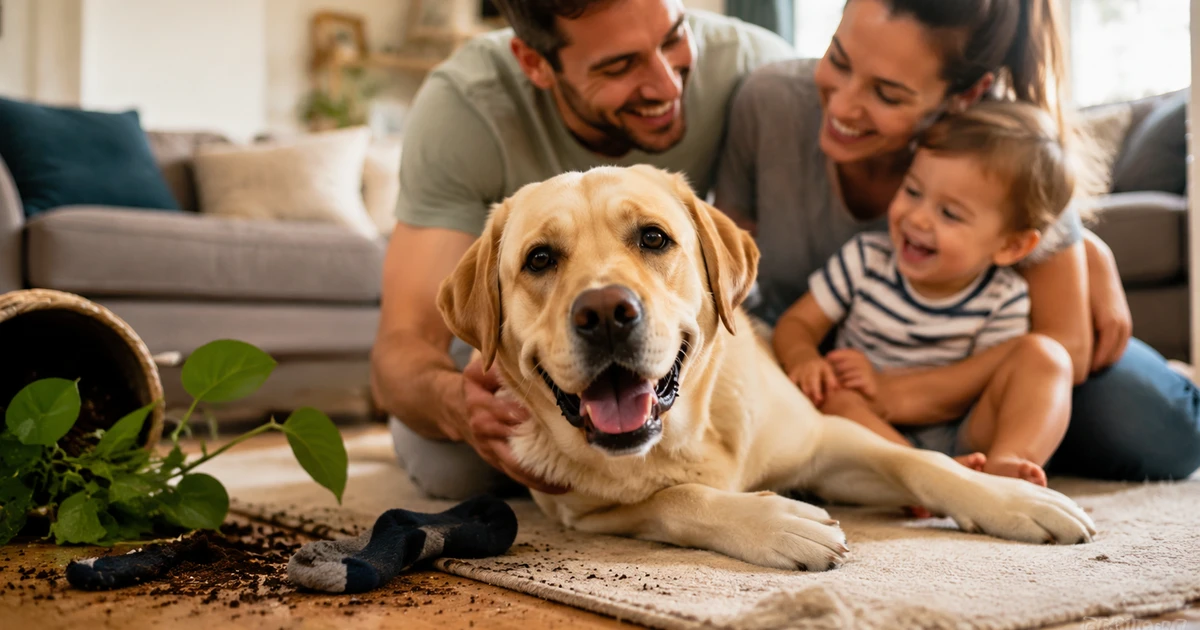
Month one, I was cleaning up pee from the floorboards at 3 a.m., questioning every life choice that had led me to stand barefoot in a puddle of urine. Our Labrador Retriever puppy, Gus, had been home for two weeks and had already christened every rug, chewed through two phone chargers, and perfected the soulful stare that said, “I’m starving, you monster,” despite having just eaten dinner. We were exhausted, broke, and utterly charmed.
The Puppy Arrives (Months 1–2)
We paid $1,800 for Gus from a breeder who cleared hips, elbows, and eyes, promising a healthier start for a breed with a 10–12 year lifespan. The real costs began immediately: a “chew-proof” crate ($120) that Gus dismantled, an orthopedic bed ($60) gutted in 12 minutes, and a $250 vet visit for vaccinations and preventatives. At 15 pounds, Gus was a fluffy black torpedo with a tail that functioned as a coffee-table-clearing device. Puppy guides warn that Lab energy levels hit 4 out of 5, and we quickly learned “a tired puppy is a good puppy” meant hours of fetch every day. My arms ached, my house smelled, and anytime I sat down, I’d find a chew toy in my lap.
The Biting Phase (Month 3)
At three months, Gus transformed into a land shark. Those needle teeth found my ankles during Zoom calls, the kids’ hands mid-play, and once, inexplicably, the edge of the toilet seat. The breed is known for a gentle, even-tempered nature, but nobody warns you about the “puppy piranha” phase. We redirected with frozen carrots, yelped “ouch!” dramatically—which only excited him more—and our five-year-old, in a desperate move, shoved a plush toy into Gus’s mouth during a nipping frenzy. He immediately swapped to thrashing it. That’s the Lab’s legendary trainability (a full 5 out of 5) peeking through: they want to do right, they just need help. A $150 puppy kindergarten class taught us bite inhibition, and by the end of the month, our skin was healing.
Chewing Everything (Months 4–5)
Baseboards? Gouged. TV remote? Obliterated. My favorite running shoes? He surgically removed the laces and swallowed one, leading to a $400 emergency vet visit. At four months, Gus was 35 pounds and climbing toward the typical Labrador weight of 55–82 pounds. His mouth explored everything, and everything was edible. Simultaneously, the shedding (rated 4 out of 5) kicked in: his dense double coat deposited black tumbleweeds in every corner despite daily brushing with a de-shedding tool. I found fur in my coffee mug and once in my sandwich. We invested in heavy-duty crate training and enough bully sticks to build a small fort.
Food Obsession (Months 5–6)
Gus counter-surfed a whole roast chicken, swallowed an unopened butter packet, and inhaled a breakfast burrito in the time it took me to grab my phone. Labs are wired to eat, and their food drive requires strict management. We fed measured meals, used puzzle feeders, and froze his dinners in Kongs. A $200 obedience class saved us: the first time he spit out a stolen sock on command, I nearly wept. The vet emphasized that extra weight punishes Labs’ hips and elbows, so we kept him lean with monthly weigh-ins. His “feed me” eyes still convinced visitors to slip him treats under the table.
First Swim (Month 7)
The lake transformed him. On his first visit, Gus bolted into the water and retrieved a bumper until my arm was dead. His thick otter tail steamed through the surface, and his double coat shed droplets like rain off a coat. Swimming—a zero-impact exercise—gave us the first truly calm evening in his life. The breed’s energy level (4) means you need this; without it, you get a destructive mess. We started going weekly, and it became our reset button. He’d stumble out, shake off, and collapse into a contented heap.
Training Wins (Months 7–9)
Gus’s trainability peaked. He nailed sit, stay, down, and “leave it” with speed. At the park, he’d drop a ball at any child’s feet, tail wagging, embodying the patient, gentle temperament that makes Labs one of the best dog breeds for families. Kids lined up to throw for him, and he retrieved tirelessly without even a hint of roughness. We added scent games and off-leash heel work, which exhausted his brain as much as his body. He even learned to ignore squirrels—mostly. For the first time, we felt like owners, not hostages.
The Adolescent Monster (Months 9–12)
Then adolescence raged in. At 10 months, Gus “forgot” everything. He jumped on guests, pulled on leash like a sled dog, and stole a stick of deodorant from the bathroom. The energy level 4 demanded 2–3 hours of purposeful exercise daily, or he’d dig holes to China in the backyard. We doubled training sessions, enforced crate naps, and reminded ourselves this stage passes. By his first birthday, at 75 pounds, he started to settle. He’d filled out into a classic Labrador frame: broad chest, powerful hindquarters. He still greeted every stranger like a long-lost friend—minus points for guarding, full marks for welcome committee.
The Tipping Point
One Tuesday evening, I looked around and realized the house was quiet. Gus was on his bed (the fourth one) gnawing a frozen Kong. No damage, no crying, no frantic energy. I hadn’t done a “damage check” in days. The dog who ate a sock and demolished baseboards was now the one who nuzzled our kids when they cried, fetched the newspaper without asking, and met me at the door with a full-body wag. That friendly, outgoing disposition had matured into a steady, joyful presence.
Worth Every Penny
The first year totaled about $4,500: $1,800 purchase, $1,200 in vet bills and insurance, $350 in classes, $300 in grooming tools and destroyed beds, and roughly $850 in high-quality food. Monthly costs now run $150–$200. That’s a lot. But when that muddy, shedding, former sock-obsessed maniac rests his head on my lap and sighs, the chewed baseboards become funny stories. I’d do it all again—the chaos, the cost, the 3 a.m. puddles. Because the joy a Lab brings isn’t just worth it; it’s irreplaceable.
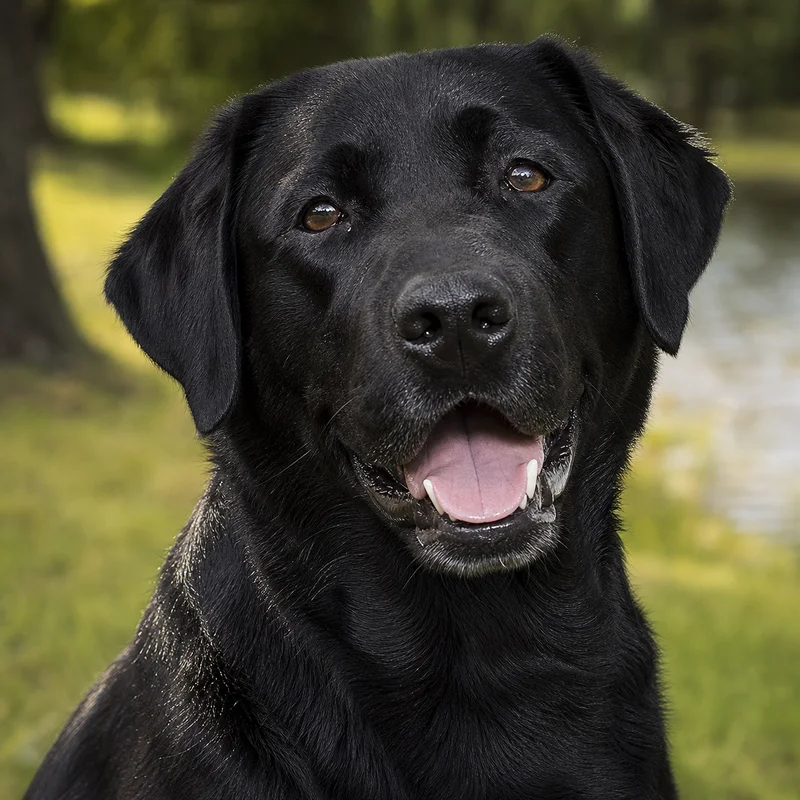
 Labrador Retriever