

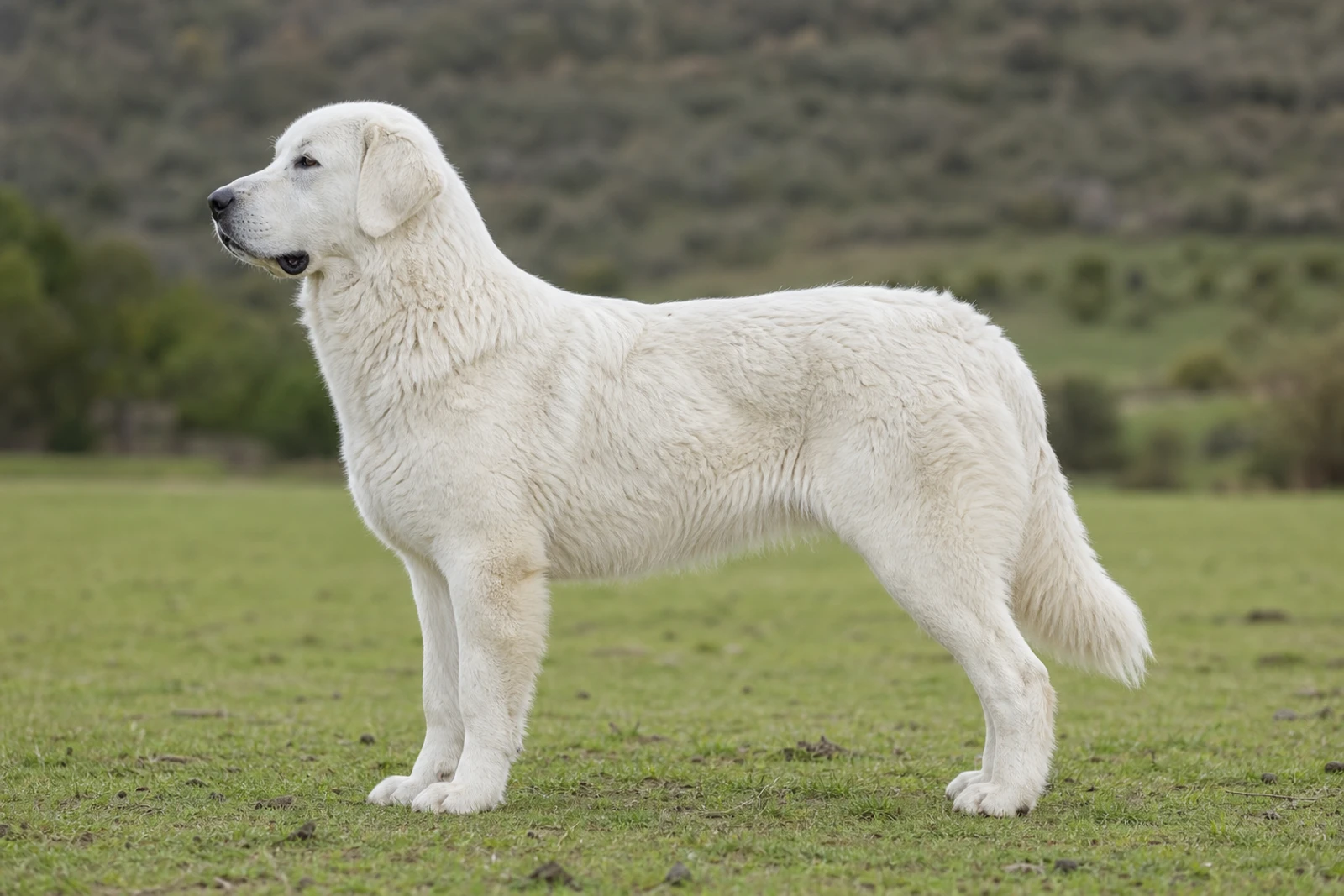
The Akbash is a steadfast and independent livestock guardian, best suited for experienced owners in rural settings. This giant white Turk is deeply loyal to its family, aloof with strangers, and naturally protective. Calm and gentle with trusted children and animals, it requires early socialization to curb guarding instincts. Not an apartment dog, the Akbash thrives with space to roam and a job to do. Its thick double coat sheds heavily and needs regular brushing. Ideal for those seeking a serious yet affectionate guardian, this breed demands a confident handler and a secure, spacious home.
At a glance
- Size
- Giant
- Height
- 27–31 in
- Weight
- 75–130 lb
- Life span
- 10–11 years
- Coat colors
- White
- Coat type
- Medium to long double coat
How much does a Akbash cost?
Adopt / rescue
$75–$400
Usually includes spay/neuter, first shots, and a microchip.
Buy from a breeder
$700–$2,000
From a reputable, health-testing breeder.
Approximate USD. Prices vary widely by region, breeder, pedigree, age, and coat colour — adopting is the lower-cost and recommended route. Avoid suspiciously cheap “breeders”; they’re often puppy mills.
Estimate the full cost of a Akbash →Want the ongoing number? Estimate the monthly food bill for a Akbash with our dog food cost calculator.
Akbash photos
Views
Front, side, rear and top — the full silhouette.Poses
How the breed sits, lies, moves and plays.Puppy to senior
The breed across its whole life.Expressions
The breed’s range of moods.Close-up details
Eyes, ears, nose, paws, tail and coat.Coat colors
The breed’s recognized colors.Click any photo to enlarge. We show the Akbash from every angle — three views, poses, life stages, expressions, close-ups, coat and colors.
Appearance & size
An Akbash is a big-boned, long-legged, snowy-white guardian built to cover ground and face predators without hesitation. Don’t let the gentle expression fool you — underneath that gleaming white coat is a muscular athlete capable of explosive speed.
Males typically stand 29 to 31 inches at the shoulder and weigh 100 to 130 pounds; females run 27 to 29 inches and 75 to 100 pounds. Despite the giant classification, this is a lean, leggy dog, not a draft-horse type. The chest is deep, the ribs well-sprung, but the underline tucks up cleanly — giving the silhouette a surprised greyhound look when the dog is in motion.
The double coat is all business. A dense, soft undercoat insulates against mountain cold and brutal sun, while the outer coat is coarse, straight, and slightly wavy, lying flat except for a heavier ruff around the neck and longer feathers on the tail and backs of the thighs. Males generally carry a thicker mane. Coat color is pure white; a little pale biscuit or gray shading on the ears or rump pops up in some lines, but the breed standard favors an unbroken white field.
The head balances strength and refinement. The skull is broad, with a gentle stop and a muzzle that tapers just enough to look noble, not snipey. Almond-shaped eyes are set slightly oblique and are always dark brown, with jet-black eye rims and a solid black nose. The lips and the roof of the mouth are black, too — that pigmentation protects against sun damage and stands out sharply against the white hair. V-shaped drop ears hang close to the cheeks when the dog is relaxed; they lift at the base when something gets the dog’s attention.
Seen from the front, the forelegs are straight, set wide apart on a broad chest, and end in large, oval paws with well-arched toes. From the side, you notice the long neck, the slight slope of the pasterns, and the deep keel of the chest extending to the elbows. The tail reaches at least to the hocks, carried low with a soft curve. When the dog is alert or moving out, the tail may rise in a gentle curl over the back but never forms a tight ring.
From the rear, the hindquarters are powerful and straight when viewed from directly behind, with moderate angulation that explains the breed’s easy, ground-eating trot. The whole package is built for endurance patrols in harsh terrain — a big white dog that disappears into a snowbank or a flock of sheep until you’re close enough to spot those dark, watchful eyes.
History & origin
The Akbash is a Turkish livestock guardian, not a herder — built to live among sheep and stop predators cold. The breed developed on the high plateaus and rolling plains of western Anatolia, a harsh landscape where shepherds needed a dog that could work alone for days, make split-second decisions, and face down wolves or bears without hesitation. You’ll still hear Turkish shepherds call them “Akbaş,” literally “white head,” a name that stuck for the whole dog.
No one sat down with a recipe to create them. They are a landrace shaped by centuries of practical, life-or-death selection. Shepherds bred only the dogs that guarded reliably, didn’t waste energy chasing, and bonded tightly with the flock rather than roaming off. The white coat was a deliberate choice — a pale silhouette lets a shepherd tell at dawn or dusk whether he’s seeing a dog or a predator. It also helped the Akbash blend with the sheep, giving the dog a quiet advantage when a wolf approached.
Physically, the breed pulls from ancient mastiff and sighthound roots. That explains the odd mix you’ll notice right away: a deep, powerful chest and a 75–130 pound frame paired with long legs, a tucked waist, and the effortless lope of a coursing dog. An Akbash can hit surprising speed over short distances, then turn around and lean its weight into a threat. The combination isn’t an accident — the dog needed to cover a scattered flock quickly and still have the raw power to finish a fight.
For generations, the Akbash stayed largely inside Turkey, working the same flocks as its ancestors. The breed began to trickle into North America in the 1970s, brought over by researchers and ranchers who recognized its no-nonsense guarding instinct and the way it bonded to livestock rather than people. Today, you’ll find them on ranches across the U.S. and Canada, protecting sheep, goats, and cattle from coyotes, cougars, and other predators. The job hasn’t changed, and the dog hasn’t either.
Temperament & personality
An Akbash is a guardian first and a pet second — and that trade-off shapes everything about living with one. These dogs are calm and deliberate, not frantic or needy. They bond deeply with their family but show it through vigilance, not a constant demand for attention. Expect a dog that prefers to survey the room from a quiet corner rather than curl up in your lap.
A steady, watchful presence
This breed’s bravery is quiet. An Akbash doesn’t launch into barking at every leaf that blows, but nothing enters their territory unnoticed. That watchfulness can tip into territorial urine marking. They’ll sniff and re-mark favorite spots around the property, depositing scent cues they recognize later. If you scrub an indoor accident but don’t neutralize the odor, you’re leaving a powerful invitation to do it again. A vinegar spray (white or cider) breaks down urine smells and helps break the cycle.
Strangers are met with reserve, not instant welcome. A stiff body, direct stare, and forward-leaning center of gravity are not subtle hints — that’s a dog telegraphing serious intent. You’ll want to learn the full vocabulary: a relaxed, loose posture and soft eyes mean all is well. Lip licks, yawns, and a turned head are the breed’s way of dialing down tension.
Inside the household
With their own people, Akbash dogs are gentle and deeply loyal. They can coexist with respectful children, but the relationship demands supervision and clear rules. The breed’s independent streak is real. They don’t thrive on drill-sergeant obedience; they need a handler who is consistent, fair, and reads their body language well. Force backfires. Bribes work, as long as you remember they’re negotiating, not complying.
A hard rule every household member must follow: never interrupt an Akbash while eating. The breed can develop food guarding, and a child who reaches for the bowl could trigger a bite. Peaceful meals and a predictable routine build trust.
Energy and everyday quirks
Don’t mistake calm for laziness. An Akbash needs a fenced area to patrol and a solid hour or more of purposeful activity each day — long walks, perimeter checks, or structured tasks. Without that outlet, a bored dog will create their own job, often turning to destructive chewing. Puppies chew to explore and relieve teething pain, while adults gnaw on hard objects to keep their jaws strong and teeth clean. A homemade citrus spray (boiled citrus peels steeped in water) can help redirect them away from furniture.
Two olfactory habits can catch a new owner off guard. First, an Akbash may roll in appalling things — dead fish, decay, manure. Biologists point to several theories: masking their scent, signaling an abundant food source to other dogs, or simply enjoying the stink the way we enjoy perfume. All of them mean you’ll be reaching for the shampoo. Second, past scent associations can trigger fear or aggression, so early and broad scent exposure — barns, other animals, a neighbor’s barbecue — pays off.
House training clicks when you reward the right moment. A treat given right after outdoor elimination reinforces what you want far more effectively than punishment ever could. If puddles appear inside, remember that the dog defines “house” by family member scents, not physical walls, so unfamiliar or rarely used rooms may get targeted. Clean thoroughly to remove every trace, or that spot becomes their chosen bathroom.
The Akbash temperament is a package of serious responsibility and subtle affection. You earn the loyalty by respecting their intelligence, guarding instincts, and need for a meaningful job — and by never expecting them to be a golden retriever.
Good with kids, dogs & other pets
An Akbash standing over a toddler isn’t just tall—these dogs can reach 31 inches at the shoulder and tip the scales at 130 pounds. That sheer bulk means the biggest daily risk to small children is accidental: a happy tail clears coffee tables, and a lean-in for attention can send an unsteady kid tumbling. Supervision is non-negotiable, and many households separate the dog from young children during chaotic play.
Temperament-wise, an Akbash that has been raised with kids is typically patient and steady, not quick to snap or correct a child. The breed’s guardian roots give them a calm, watchful presence, but they won’t tolerate being handled roughly or crowded when they want space. Teach children to respect a resting dog’s bubble, and you’ll head off most problems.
- Giant size + small kids: Close supervision around toddlers and young walkers; never leave them alone together.
- Positive reinforcement socialization: Start before 12–16 weeks—expose the puppy to gentle handling, kid noises, strollers, and pitter-patter feet. Miss that window and you’ll be working to reduce fear-based reactivity for months or years.
With other dogs, early and ongoing work matters enormously. A well-socialized Akbash can coexist peacefully with familiar household dogs, but same-sex tension or a low tolerance for rude, in-your-face behavior can surface as the dog matures. Livestock guardian breeds are bred to make independent decisions about threats; that instinct doesn’t always turn off when another dog charges up barking at the park. Off-leash greetings need to be gradual and on neutral ground. Many successfully live with a compatible opposite-sex dog, while others do best as the only canine in the home.
Cats, poultry, and small pets fall into a gray area that depends heavily on socialization and individual lines. Farm-raised Akbash dogs often view resident barn cats and poultry as part of their flock from puppyhood. But the breed’s size and quick reactions mean a fleeing small animal can trigger a chase, even without true prey drive. If you’re bringing an adult Akbash into a home with cats or rabbits, plan for weeks of managed, positive introductions where the dog is always on a leash or behind a barrier. Never assume good intent—manage the environment until you’ve seen months of relaxed, calm behavior.
Trainability & intelligence
An Akbash figures out new patterns fast — the challenge isn’t a lack of intelligence, it’s that this dog wasn’t bred to take orders. For centuries, these giants worked alone on remote hillsides, deciding which threats were real without a human in sight. That independence means you earn cooperation, you don’t demand it. They need a reason that makes sense to them, and they need to trust the person giving it.
Start training the minute your puppy comes home. A 75–130 lb dog with poor manners is a liability, and even a few weeks of letting things slide can create habits that are tough to undo. Use food rewards, a game of tug, or calm praise to mark and reinforce exactly what you want. Harsh corrections backfire hard — raise your voice or yank a leash and an Akbash doesn’t try harder; it mentally checks out, and a breed this big that stops trusting you becomes genuinely unsafe.
Why recall is a weak spot
Don’t expect a bombproof off-leash recall, ever. If an Akbash locks onto a coyote or a strange truck at the property line, that guarding instinct overrides whatever you’re calling. Train “come” daily with jackpot treats and practice on a long line, but manage the environment honestly. Use fences or tethers in open areas and never rely on a verbal cue alone in a charged moment.
The 3–14 week window shapes everything
Socialization isn’t optional — it’s what keeps a naturally suspicious guardian from turning into a reactive liability. Expose your puppy to friendly strangers, city sounds, slick floors, and calm livestock before 16 weeks, then keep those positive experiences going through the first year. Gradual, pleasant introductions teach the dog that not every unfamiliar thing is a threat. Skip this and you’ll likely end up with a dog that’s fearful, hard to handle, and quick to make bad decisions.
What a realistic training plan looks like
Keep sessions short and finish on a win. Akbash dogs will check out if you drill commands mindlessly. Practice two or three repetitions of a sit-stay near a distraction, pay with something the dog genuinely values, and stop. Consistency across every family member matters — mixed signals confuse a dog that’s already inclined to make its own call. Focus on a handful of life-saving behaviors (“wait,” “place,” a solid “drop it”) rather than a long list of tricks.
You’re not building a push-button obedience champion. You’re building a partnership where a powerful, thinking animal chooses to cooperate because you’ve proven yourself fair, predictable, and worth listening to. That takes patience, but the result is a steady guardian who can read a situation and act appropriately — often without being told.
Exercise & energy needs
A full-grown Akbash can weigh up to 130 pounds, but his exercise needs are more about steady, purposeful movement than hard running. Plan on 45 to 60 minutes of daily activity, split into at least two sessions to protect those giant-breed joints.
- Walks and patrols: Two 20- to 30-minute leash walks do the job well. This is a livestock guardian bred for slow, surveying treks — a sniff-rich, stop-and-stare ramble fits him perfectly. Forced jogging on pavement or chasing a ball for 40 minutes will only strain his frame.
- Off-leash decompression: A securely fenced yard is a lifeline. He’ll pace the perimeter, check the gate, then settle in to watch, repeating the loop on his own schedule. Without a yard, you’ll need a third longer sniffy walk or extra indoor scent games to meet that patrol drive.
- Mental work is non-negotiable: Physical exercise alone leaves this independent thinker restless and problem-solving in ways you won’t like (digging, barking, ignoring recall). Food-dispensing toys, hide-and-seek with treats, and short clicker-training sessions burn real energy. Nose work and barn hunt trials are top-tier outlets.
- Puppy and adolescent caution: Growth plates don’t close until around 18–24 months. Skip high-impact jumping, long stair marathons, and extended runs on hard surfaces. Stick to self-directed play on grass, gentle hikes, and skill-building games instead.
- Joint-friendly sports and activities: Once physically mature, casual hiking on soft trails, swimming with a life jacket, and even light, level-ground cart-pulling can give him a job without the concussion. Avoid anything that demands sudden stops or sharp turns.
A bored Akbash doesn’t get hyper — he gets creative. When the routine feels thin, add a 10-minute scent game or a new puzzle feeder. You’ll get back a calm, dignified guardian who’s ready to settle by your side instead of redecorating the yard.
Grooming & coat care
The Akbash wears a dense, white double coat built for sleeping in snow and shedding dirt after a long night with the flock. That coat comes in two lengths — a smoother shorter style and a heavier, long-haired version with feathering on the legs and tail. Both shed. A lot. Twice a year the undercoat lets go in earnest, and you’ll wonder if your dog is turning into a snowdrift indoors.
Plan on brushing 3–4 times a week with a long-toothed undercoat rake or a sturdy slicker brush to pull out loose fur before it lands on every surface. During the spring and fall blowouts, daily brushing keeps mats from setting up camp behind the ears, in the britches, and under the collar. A metal comb works well to check those spots. Don’t fall for the idea that a short-coated Akbash needs less work — that dense undercoat still packs in and clumps if ignored.
Bathing is a once-in-a-blue-moon event. Too much shampoo strips the natural oils that let this coat repel moisture and debris. When your dog rolls in something truly vile, use a gentle, whitening dog shampoo and rinse until the water runs clear. Between baths, dry dirt usually brushes right out; mud tends to flake off once the coat dries. For tear stains and muzzle discoloration, a wipe with a damp cloth is often all you need.
Trim nails every 3–4 weeks — a giant’s weight presses hard on long nails and leads to sore feet. Check the drop ears weekly for wax buildup or any funky smell, and wipe them clean with a vet-approved ear cleaner. Teeth get the same regular attention as any other big dog: a few brushings a week and a yearly vet look at the gums.
Shedding & allergies
If you love a spotless house, the Akbash will test your patience. This is a heavy, year-round shedder with a double coat designed to protect livestock through harsh weather. You’ll find loose white hairs on your furniture, clothes, and floating across the floor daily—not just during a short season.
- Year-round shedding: The outer guard hairs are coarse and the undercoat is dense and soft. Even with regular grooming, expect a constant rain of white fur. A quick pass with your hand can leave you with a handful.
- Seasonal blowouts: Twice a year, usually as the weather shifts in spring and fall, the Akbash “blows” its entire undercoat. Clumps of fluff pull away in tufts, and the volume of shed hair skyrockets for a few weeks. During these periods, daily brushing isn’t just a nice idea—it’s nearly mandatory to keep the fur from taking over.
- Drool factor: Akbash dogs aren’t the sloppiest giants, but they do drool. Be ready for slobber after drinking water, when they’re anticipating food, or on a hot day. Some individuals drool more than others, but long ropes of saliva can end up on your floors and walls.
- The “hypoallergenic” myth: No dog with this much shedding and dander is even remotely allergen-free. The Akbash produces both from its skin and coat, and the heavy blowout spreads allergens everywhere. If allergies are a dealbreaker in your home, this breed is a poor fit. You can brush and vacuum constantly, but you won’t eliminate the allergen load.
You can manage the mess with a high-velocity dryer, a good slicker brush, and a solid robot vacuum, but you’ll never stop the shedding entirely. If someone in your household is allergic, spend serious time around adult Akbash dogs before committing—what’s on the floor is also in the air.
Diet & nutrition
A healthy Akbash is a lean Akbash. At 75–130 pounds, this giant livestock guardian’s frame is already working hard — extra weight hammers joints and can slice years off a 10–11 year lifespan. The biggest nutritional choice you’ll make is keeping him at an ideal weight, not an Instagram-fluffy one.
- Puppy feeding schedule: Four evenly spaced meals a day until four months old, then three meals until six months. After that, switch to an adult’s twice-a-day rhythm. This spreads calorie intake and supports steady, safe growth in a breed prone to developmental joint issues.
- Adult portions: A typical adult Akbash eats between 4 and 6 cups of high-quality dry food per day, split into two meals — but you adjust based on his real condition. If ribs disappear under a fat pad, cut back. Use a measuring cup, not your eye.
- Senior adjustments: Older dogs often do better on three smaller meals. There’s no strong case for dialing down protein in a healthy senior; watch the scale instead and reduce total calories as his daily lumbering turns into longer naps.
What goes in the bowl
Aim for a diet that leans heavily on animal protein. A useful rough guide: about 60% raw or cooked meat, 20–30% dog-safe fruits and vegetables, and the remaining 10% from eggs, plain yogurt, or easily digestible grains like pearl barley or white rice. Puréeing or lightly blending meals — especially for puppies or dogs with missing teeth — unlocks more nutrients because a dog’s jaw goes up and down, not side to side, and he lacks salivary enzymes to start breaking down food in the mouth.
Food motivation varies by individual. Some Akbash are calm, tidy eaters; others would inhale a whole bag of kibble if you let them. For the gobblers, a food puzzle bowl turns mealtime into a five-minute brain game that slows down swallowing and cuts the risk of bloat.
- Puppy transition: When you bring a pup home, move him gradually to whatever you’ll feed long-term — lightly cooked and puréed meats, fish, vegetables, or a top-shelf large-breed puppy formula that controls calcium and calorie density. Raw chicken wings can be introduced around twelve weeks, always supervised.
- Ingredients to avoid: Rich, fatty table scraps (think holiday turkey skin or gravy) can tip a dog into a painful bout of pancreatitis. Never pour bacon grease onto kibble. Imposing a vegetarian or vegan diet on a dog shortchanges him of the nutrients his entire digestive system evolved to process.
- Water and meal prep: Unsalted vegetable cooking water makes an easy, nutritious base when you’re out of stock. Cook and freeze extra batches of grains or lean meats so a quick, healthy meal is always twenty seconds away.
No-begging house rules
Serve every scrap of leftover chicken or carrot in the dog’s own bowl, on the floor. Feeding even once from the table teaches a 100-pound dog that looming over your dinner plate gets results — a habit that’s a nightmare to undo.
Health & lifespan
The Akbash typically lives 10 to 11 years, right in line with what you’d expect from a giant breed that hits 75–130 pounds. A well-bred, lean, well-cared-for dog can nudge past 12, while poor weight management or unrecognized bloat can cut that short.
Health challenges to watch for
That deep, narrow chest comes with a hard reality: gastric dilatation volvulus (GDV) — bloat with a twisted stomach. Gas gets trapped, blood supply shuts off, and a dog can die within hours. Feed two or three smaller meals a day instead of one enormous dinner, skip heavy exercise for at least an hour before and after eating, and memorize the early signs: unproductive retching, a tight belly, pacing, drooling. Many giant-breed owners choose a prophylactic gastropexy (surgically tacking the stomach to the body wall) during spay or neuter to stop the twist before it happens.
Big bodies mean big joint forces. Hip dysplasia and elbow dysplasia aren’t rare in the breed, and they set the stage for early arthritis. Responsible breeders stack the odds by screening parents for:
- Hip and elbow health — OFA or PennHIP radiographs, with hip scores in the Fair-or-better range
- Eye disorders — yearly exams by a board-certified veterinary ophthalmologist (entropion, cataracts, and progressive retinal atrophy all appear in some lines)
- Cardiac function — echocardiograms if dilated cardiomyopathy (DCM) is suspected in the pedigree
Ask to see the actual reports, not a casual “the vet said he’s fine.” You’d also be smart to keep a puppy lean from day one. Rapid growth or extra weight during puppyhood grinds down cartilage that has to last a decade.
Skin and coat quirks show up partly because of that all-white, thick double coat. Hot spots, environmental allergies, and sunburn on the nose or thinly haired ears aren’t unusual. A diet with solid omega-3s, fast cleanup of damp fur, and dog-safe sunscreen on bare-skin areas help keep inflammation down. Don’t assume that thick coat means they shrug off heat — an Akbash can overheat dangerously fast once temperatures climb above 80°F. Permanent shade, cool water, and a spot inside with air movement or air conditioning are non-negotiable.
Prevention and everyday care
An under-socialized livestock guardian lives in a state of low-grade anxiety, and chronic stress drags down the immune system. Early, ongoing exposure to different people, places, and handling styles isn’t just training — it’s preventive medicine.
Rabies vaccination is legally required everywhere in the U.S. and has no effective treatment once symptoms appear, so don’t skip it. For heartworms, give a monthly preventive at minimum from the start of mosquito season through one month past the first hard freeze; most vets now push for year-round coverage because mosquitoes are unpredictable.
Weight is the quietest thing that steals years. An adult Akbash with a visible waist, ribs you can feel under a light fat cover, and an measured daily ration will have less joint destruction, lower surgical risk if bloat happens, and less cardiac overload. Cut treats to less than 10% of daily calories, and you’re adding life to those 10–11 years. Yearly vet exams (twice a year once they hit senior age) catch subtle changes — a mild limp, a drop in appetite, increased thirst — while you can still do something about them.
Living environment
An Akbash is not an apartment dog, period. This is a giant livestock guardian bred to patrol wide-open spaces, and a cramped living situation rapidly turns its calm vigilance into restless barking, pacing, or destructive digging. If you don’t have a house with a securely fenced yard, look elsewhere. A rural property with acreage works best; a large suburban lot with a six-foot fence is the bare minimum. This 75–130 lb dog sees the yard as its territory to survey and defend, and an invisible fence won’t cut it—an Akbash will push through one in a heartbeat if it spots a perceived threat.
Inside, they’re surprisingly quiet and low-key, often content to lie on cool tile. The real action happens outdoors. A couple of short, mentally engaging patrol sessions each day—not one grueling marathon—keep the dog settled. Think fence-line checks, scent games in the grass, or a stuffed puzzle toy stashed near a gate. Because of their size and growing joints, skip forced running and repetitive jumping; a few shorter sessions are safer and more satisfying.
The dense double coat handles cold well, but that white fur heats up fast in summer. Plan exercise for early morning or evening, and always provide deep shade and fresh water. A kiddie pool or a cool spot under a porch is a plus.
Noise is a dealbreaker for dense neighborhoods. Akbash dogs issue a deep, rolling bark at everything from stray dogs to the mail carrier—often at night. You can shape the behavior, but you won’t silence it entirely. If you have close neighbors who value quiet, this isn’t the right farm dog.
Alone-time tolerance surprises some people. Independent by nature, an Akbash manages being left for several hours better than many clingy breeds, but only if it has a meaningful territory to watch over. Without that purpose, boredom sets in fast: crater-sized holes, fence-fighting, and nonstop barking are common fallout. Build alone-time gradually with food-dispensing toys, a shaded perch, and a secure boundary they can patrol. When you meet those needs, you get a steadfast guardian who holds the property calmly while you’re away—not a dog that panics the moment you grab your keys.
Who this breed suits
The Akbash is not a starter dog. This is a serious, independent livestock guardian shaped over centuries to make decisions without human input. If you’re looking for an easygoing family pet that lives for cuddles and a game of fetch, move along. The ideal home has owned large working or guardian breeds before, lives on acreage, and needs a dog to protect livestock—or understands exactly what channeling that drive into a non-farm life demands.
Space is non-negotiable. A large, securely fenced yard is the bare minimum; these dogs patrol. A bored Akbash with too little territory will dig craters, bark incessantly, and escape. At 27 to 31 inches tall and 75 to 130 pounds, they have the power to go through flimsy barriers, so a sturdy 5- to 6-foot fence is a requirement. You’ll also need a high tolerance for shedding—the thick white double coat drops fur year-round and blows heavily during seasonal changes.
This breed bonds fiercely to its family, including respectful children they’ve been raised with, but they are not playmates. Their protective instinct means roughhousing, visiting friends, or the neighbor’s friendly dog can be read as a threat. Constant supervision and early, thorough socialization are essential, and even then many Akbash remain aloof with strangers and reactive to strange dogs. If your home has a revolving door of guests or you enjoy dog parks, this breed will make life difficult.
First-time dog owners, apartment dwellers, and anyone who wants a dog that snaps to “come” off-leash should look elsewhere. The Akbash is a partner, not a subordinate. Training is a negotiation, not a command performance. You need calm, consistent leadership and the physical strength to handle a giant dog that may simply plant its feet and survey the horizon.
What works beautifully is putting this breed on a working ranch or a quiet rural property where its natural assessment skills are respected. An Akbash with a flock to watch is fulfilled and typically calm indoors. Without livestock, channeling that drive means long, structured patrol walks on your own land, involved puzzle work, and a lifestyle that mimics the purpose they were bred for. These dogs live roughly 10 to 11 years; be ready for a decade of intense guardianship. If you’re up for that, the Akbash repays the commitment with unmatched vigilance and devotion. If you’re just after a big white dog for looks, the shedding, barking, and liability will catch up fast.
Cost of ownership
Bringing home an Akbash means budgeting for a dog that eats like a small horse and quickly outgrows standard supplies. Everything from kibble to crates comes in XXL size, so prepare for the ongoing financial commitment a 75- to 130-pound guardian demands.
Purchase price
Expect to pay $800 to $1,500 for a puppy from a breeder who screens for hip dysplasia and practices solid socialization. Working-line dogs from proven livestock guardians may cost more; a rare Akbash in rescue will be less — often $150 to $400 — though that’s uncommon outside of rural farm networks.
Monthly food costs
An active 100-pound Akbash easily puts away 4 to 5 cups of high-quality dry food daily. That translates to roughly $80 to $120 each month, depending on the brand. If you feed a raw or fresh diet for a giant breed, double that figure is not unusual.
Routine vet and preventives
Annual exams, vaccinations, and year-round heartworm and flea/tick prevention for a giant dog add up. Budget $600 to $900 a year for the basics. Bloodwork, dental cleanings, or emergency visits are extra. Many owners also sock away money for bloat surgery — a known giant-breed risk that can cost $2,500 to $5,000 out of pocket without insurance.
Insurance
Pet insurance for an Akbash typically runs $65 to $110 per month, influenced by your location, deductible, and whether you add wellness coverage. Given the breed’s potential for orthopedic issues and gastric torsion, a robust policy can soften the blow of a four-figure vet bill.
Grooming and supplies
Grooming is mostly a DIY job. A good pin brush and undercoat rake will cost about $40 to $50 upfront. You’ll want a high-velocity dryer or a $60 to $80 seasonal trip to a groomer when the dense double coat blows out. Upfront gear — a giant crate, heavy-duty leash, elevated feeders — easily adds another $300 to $500 in the first year, and that oversized bed your Akbash will probably skip anyway will set you back another $100.
Stash a separate emergency fund for the unexpected midnight bloat run and you’ll avoid the worst financial panic.
Choosing a Akbash
You don’t casually pick up an Akbash. This is a serious livestock guardian that can top 130 pounds and stand 31 inches at the shoulder, yet still climb a fence if it decides the coyote on the other side needs sorting out. Before you even think about a puppy or rescue, be honest about your setup: rural or deeply suburban with tall secure fencing, experience with independent dogs, and a job—even if that job is guarding a flock of chickens or an acre of goats.
Rescue or breeder?
Akbash rescues exist because too many people fail to out-stubborn a dog bred to work alone for 10,000 years. A rescue can be a good path if you’re open to an adult whose personality is already laid bare. The downside is that you rarely know the full health background, and a dog mishandled early may carry baggage that’s hard to unwind. A responsible breeder gives you more control—you can stack the deck by choosing parents with solid temperaments and clean health screens, and you can shape that puppy from day one.
Health clearances you can’t skip
A 10- to 11-year lifespan for a giant breed means you need to start with a sound dog. Ask to see current OFA or PennHIP scores for hips, plus OFA elbow clearances. An annual eye exam by a veterinary ophthalmologist matters—Akbash can inherit progressive retinal atrophy and other eye issues. Many breeders also run a thyroid panel. Bloat (GDV) kills fast, so ask whether any close relatives have twisted a stomach; some lines are more prone. No paperwork, no deal.
Red flags that should send you walking
- No health testing, or vague “vet-checked” claims instead of verifiable OFA records.
- The breeder doesn’t actually use their dogs as guardians. An Akbash without livestock exposure for generations is a gamble you don’t need to take.
- Puppies available anytime, no waitlist, no questions about your experience or fencing.
- A breeder who will sell you two littermates or send a puppy home before 8 weeks.
- You can’t meet at least the dam, or the dam is hidden because she’s “protective.” Protective is one thing; a snarling mess is another. Walk away.
Picking a puppy with staying power
With a breed this territorial, temperament is everything. Sit quietly and watch the litter. You want the pup that trots over to inspect you, maybe mouths a shoelace, then settles down. Avoid the frantic, pinballing puppy that can’t self-regulate, and absolutely pass on the one glued to the corner—fear in a dog that can reach 130 pounds isn’t manageable, it’s dangerous. Ask to see the pups exposed to something novel, like a metal pan dropping. A good breeder will have already begun that work, raising puppies underfoot with daily human handling and, ideally, near the livestock they’ll eventually watch over.
Pros & cons
Pros
- Natural protector with a calm, watchful presence — you’ll sleep soundly knowing this dog is on duty.
- Deeply loyal to its family and livestock; forms a tight bond without being clingy.
- Surprisingly low-key indoors once its outdoor patrol needs are met. Not a hyperactive breed.
- Clean, relatively low-maintenance white double coat; dirt shakes right out, and seasonal shedding is manageable with weekly brushing.
- Independent thinker that doesn’t need micromanaging — ideal for experienced owners who want a self-reliant guardian.
- Generally healthy with a lifespan of 10–11 years; responsible breeders screen hips, elbows, and eyes.
Cons
- An intense independent streak turns obedience training into a negotiation, not a command — deeply frustrating for first-time owners.
- Protective instincts can slide into territorial aggression with strangers and strange dogs without rock-solid, lifelong socialization.
- Loud, frequent alarm barking; a poorly suited choice for noise-sensitive neighborhoods or apartment living.
- Giant size (75–130 pounds, 27–31 inches) means big food bills, pricier medications, and a real risk of bloat and joint problems.
- Needs a large, securely fenced yard and a clear job; rarely content as just a casual house pet.
- Not cuddly or eager-to-please — affection is given on the dog’s terms, not yours.
Similar breeds & alternatives
When a leggy, all-white guardian like the Akbash feels like the right idea but the specific mix of speed, independence, and short double coat gives you pause, a handful of other livestock breeds shift the trade-offs. The Akbash stands 27–31 inches and weighs 75–130 pounds, built to cover ground fast with a lean, athletic frame. Alternatives below vary chiefly in coat, heft, and how hard they push the guarding instincts indoors.
Great Pyrenees
Heavier and thicker-coated, the Great Pyr (25–32 inches, 85–100+ pounds) often brings a more patient, watchful presence. You trade the Akbash’s swift, reactive patrol style for a dog that’s more likely to lay down a loud bark and rely on sheer size. The double coat demands serious shedding management, but the temperament typically leans a notch softer with familiar family—though still independent enough to ignore commands it deems pointless. Expect similar 10–12-year lifespan.
Kuvasz
Very close in height (26–30 inches) and weight (70–115 pounds) but with a denser, wavy white coat. The Kuvasz ramps up stranger suspicion and can be sharper in its protectiveness, making early, relentless socialization non-negotiable. If the Akbash’s aloofness seems manageable, the Kuvasz often requires an even firmer hand and a property with zero foot traffic.
Anatolian Shepherd
A Turkish cousin with a fawn coat, black mask, and heavier bone (27–29 inches, 80–150 pounds). The Anatolian works more like a bruiser than a sprinter. It brings quicker physical intervention, less tolerance of other dogs, and an extreme independent streak. This is a poor match if you want any off-leash flexibility outside a secure pasture.
Maremma Sheepdog
Slightly smaller (23.5–28.5 inches, 66–100 pounds) and often described as more biddable, the Maremma still needs a job but can settle into a family rhythm with less sharp reactivity than an Akbash. The coat is thick but not profuse, and they bring a similar white silhouette. Choose this if you want a guardian that’s a bit more likely to accept boundaries without constant reminders.
Fun facts
- The Akbash is an ancient breed, dating back over 3,000 years in Turkey.
- Their white coat provides camouflage among sheep flocks, aiding in predator defense.
- Despite their size, they are agile and can quickly sprint to confront threats.
Frequently asked questions
- Are Akbash dogs good with children?
- Akbash dogs can be loyal and protective of family children, but their independent nature means interactions should always be supervised. Early socialization is crucial to ensure they remain calm and tolerant rather than reserved or overly guarding.
- How much do Akbash dogs shed?
- The Akbash has a dense double coat that sheds heavily, especially during seasonal changes. Weekly brushing helps manage loose fur and maintain coat health, but expect some amount of hair around the home year-round.
- How much exercise does an Akbash need?
- Akbash dogs have moderate energy and benefit from daily walks plus some playtime in a secure area. They are not hyperactive but appreciate regular outdoor time to stay mentally and physically fit.
- Do Akbash dogs do well in apartments?
- Due to their giant size and guardian instincts, Akbash dogs are not well-suited to apartment living. They tend to thrive in homes with large, securely fenced yards where they can roam and watch over their property.
- Are Akbash dogs prone to barking?
- As natural livestock guardians, Akbash dogs can be alert barkers when they sense something unusual. Training can help manage excessive barking, but their protective nature often leads them to vocalize.
- Is the Akbash a good choice for first-time dog owners?
- Akbash dogs are intelligent but independent, which can make training a challenge for inexperienced handlers. They are usually better suited to owners familiar with guardian breeds and consistent, firm leadership.
Tools & calculators for Akbash owners
Quick estimates tailored to Akbashs — pre-filled with this breed’s size where it matters.
Articles & stories about the Akbash
Sources & standards
This profile follows recognized breed standards from the American Kennel Club (AKC) and the Fédération Cynologique Internationale (FCI), along with established veterinary and breed-club guidance. These describe general breed tendencies — every dog is an individual.