

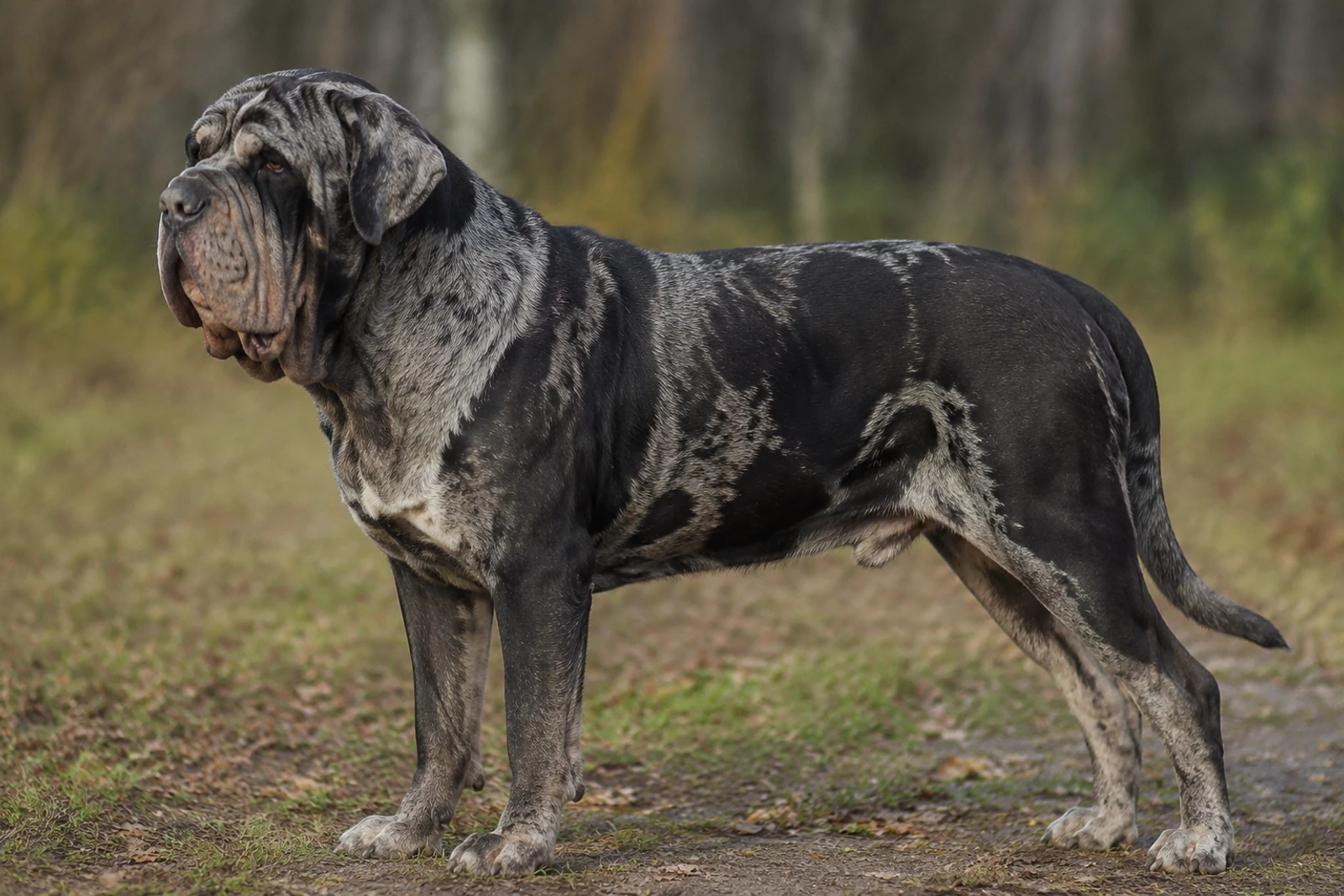
The Alapaha Blue Blood Bulldog is a rare working breed originally developed in the southern United States as a plantation guard dog. This large, muscular dog is fiercely loyal and protective, making it an excellent guardian for experienced owners. While affectionate with its family, it requires early socialization and firm, consistent training. Alert and courageous, this breed is best suited for homes with ample space and an active lifestyle. It is not recommended for first-time dog owners or households with other pets. When raised properly, it becomes a devoted and steadfast companion.
At a glance
- Size
- Large
- Height
- 18–24 in
- Weight
- 55–90 lb
- Life span
- 12–15 years
- Coat colors
- white, brindle, red, fawn, blue, brown, combinations with white
- Coat type
- short, smooth
- Group
- Working
How much does a Alapaha Blue Blood Bulldog cost?
Adopt / rescue
$75–$400
Usually includes spay/neuter, first shots, and a microchip.
Buy from a breeder
$700–$2,000
From a reputable, health-testing breeder.
Approximate USD. Prices vary widely by region, breeder, pedigree, age, and coat colour — adopting is the lower-cost and recommended route. Avoid suspiciously cheap “breeders”; they’re often puppy mills.
Estimate the full cost of a Alapaha Blue Blood Bulldog →Want the ongoing number? Estimate the monthly food bill for a Alapaha Blue Blood Bulldog with our dog food cost calculator.
Alapaha Blue Blood Bulldog photos
Views
Front, side, rear and top — the full silhouette.Poses
How the breed sits, lies, moves and plays.Puppy to senior
The breed across its whole life.Expressions
The breed’s range of moods.Close-up details
Eyes, ears, nose, paws, tail and coat.Coat colors
The breed’s recognized colors.Click any photo to enlarge. We show the Alapaha Blue Blood Bulldog from every angle — three views, poses, life stages, expressions, close-ups, coat and colors.
Appearance & size
The first thing you’ll notice is a dog that looks strong without being overdone — no smashed face, no huffing and puffing just standing still. This is a working bulldog, and he’s put together to move. You’re looking at a large, athletic animal with a deep chest, a thick neck, and a blocky head that still has enough muzzle to breathe freely through a full day’s work.
At the shoulder, most Alapahas fall between 18 and 24 inches, and you’ll see a weight spread from an agile 55 pounds all the way up to a rock-solid 90. The range isn’t sloppiness; the breed was built for function, so a smaller, rangier dog might be the one driving hogs while a heavier, wider-framed dog holds ground. What you get is a substantial presence, never delicate.
The coat is short, stiff, and flat — easy to run your hand over. Colors run the table: white, fawn, brindle, black, and a heavily speckled merle pattern you’ll often hear called “blue” or “glass eye” even though it has nothing to do with a blue tint. Many dogs sport a white blaze, white collar, or white feet. You’ll see solid-colored dogs and patched dogs. There’s no single “correct” look, so two well-bred Alapahas side by side might appear wildly different in markings.
From the front, the head demands attention. It’s broad and square, with a distinct furrow between the eyes. The muzzle is shorter than a shepherd’s but long enough that you see a real scissor or undershot bite, not a row of teeth jutting out. Cheek muscles are pronounced, jaw is heavy, and the ears — if left natural — fold into a rose or button shape. Cropped ears are still common and give a sharper, more alert outline.
Move around to the side and you’ll catch the true proportions: the body is just slightly longer than the dog is tall at the withers. A deep, well-sprung ribcage flows into a tucked-up belly — not a racing greyhound tuck, but enough to avoid the slab-sided look of a couch ornament. The neck carries no loose dewlap, and the topline stays level, sloping only gently toward a straight or naturally bobbed tail. In motion, that tail is carried low unless the dog is keyed up.
From the rear, you’ll see heavily muscled thighs and a stance that’s parallel and wide, not pinched at the hocks. These dogs are built for short bursts and hard stops, and you can see the shock-absorbing angulation in the hind legs. They aren’t fancy movers, but everything about their frame says competence — a dog whose appearance matches the old farm-utility purpose without the cartoonish exaggeration of some other bulldog lines.
History & origin
The Alapaha Blue Blood Bulldog is a piece of Southern history that almost vanished. It descends from old plantation bulldogs that worked the Alapaha River basin of southern Georgia long before there was a breed name. These dogs were tough catch dogs for free-ranging hogs and cattle, farm sentinels, and family guardians rolled into one—all without much record-keeping.
What turned those scattered farm dogs into a recognized breed can be traced to a single determined family. In the 1970s, Buck Lane of Rebecca, Georgia, set out to preserve a particular strain of white bulldog known locally as the “Otto” dog, named after a man who had bred them generations earlier. Lane’s dogs were compact, muscular, and relentlessly game. He called them Alapaha Blue Blood Bulldogs, tying them to the river region and giving a nod to what he saw as their noble, loyal temperament—the “blue blood” refers to character, not coat color.
The breed’s original job description was an all-purpose homestead dog. It needed to catch and hold semi-wild livestock, stand between its people and any threat, and still settle at the hearth without starting trouble. That’s a tall order, and the blue blood bulldog filled it with a quiet, steady intensity rather than flashy aggression.
The late 1980s nearly ended the breed. Buck Lane died, numbers dwindled to a handful of dogs, and the Alapaha stood at the edge of extinction. Lana Lou Lane, Buck’s granddaughter, stepped in and spent decades painstakingly rebuilding the gene pool from the few remaining authentic lines. Her work, along with a small circle of breeders committed to the original working standard, kept the bloodline alive.
Today’s Alapaha Blue Blood Bulldog is still rare. You won’t see one on every block, and that’s by design. Responsible breeders guard the foundational traits: a muscular 55–90 lb frame, a strong prey drive, and a deep loyalty that makes early socialization non-negotiable. The breed remains a capable catch dog and a formidable property guardian, but it’s also a surprisingly affectionate companion for owners who can handle a big, thinking dog with a long memory. The 12–15 year lifespan gives you that much time with a piece of living Georgia farm heritage.
Temperament & personality
This is a dog that takes his job seriously — and his job is you. The Alapaha Blue Blood Bulldog is, at heart, a guardian who thrives on being part of a family. Calm and steady indoors, he shifts into alert watchfulness the moment something unfamiliar approaches. Don’t mistake that laid-back demeanor for a free pass on exercise, though. He’s a working breed with a solid 55–90 pounds of muscle, and he needs a good daily workout — a brisk long walk plus some focused playtime, not just a wander around the yard.
With his own people, the Alapaha is affectionate and surprisingly gentle. He’ll lean into you during quiet moments, that forward shift of weight a sign of confidence and connection, not pushiness. He tends to form a tight bond with every family member, but he’s not a pushover. This is a strong-willed dog that respects clear, consistent leadership — not harshness. If you try to force him into something, he’ll dig in. Instead, work with his intelligence: show him the rules, reward him for getting it right, and he’ll become a cooperative partner.
Early socialization is non-negotiable. Without it, a natural wariness of strangers can tip into over-the-top suspicion. That stiff body posture and hard stare you see when he’s on alert? It’s his way of saying “I’m evaluating this.” You want him to learn, from puppyhood, that most strangers are just background noise, not a threat. Well-socialized Alapahas can coexist peacefully with other dogs and even cats they’ve been raised with, but same-sex aggression isn’t unheard of, so introductions need to be managed.
Household manners can take some work. Like many guardian breeds, he may mark his territory indoors if he’s feeling unsettled — and that scent cue will draw him right back to the same spot. Pay attention to those early signals: sniffing a particular corner repeatedly often precedes marking. Interrupt calmly, get him outside, and throw a party (treats, praise) the instant he eliminates where you want. If accidents happen, a vinegar spray neutralizes the odor far better than ammonia-based cleaners, breaking that re-soiling cycle. Teaching children to give him space during meals also prevents food-guarding grumbles from ever starting.
The Alapaha isn’t a bark-just-to-hear-himself kind of dog, but he will sound off when something’s off. You’ll learn to read his body language fast: a relaxed, loose posture and soft eyes mean all is well; lip licking or a sudden yawn are his way of dialing down tension. Give him a job — even if it’s just carrying a pack on your hike — and a stable, structured home, and you’ll get a deeply loyal companion who’s as steady as they come. Just go in with your eyes open: this is not a beginner’s dog. If you’ve never owned a guardian breed before, you’ll want hands-on guidance from a trainer who respects no-force methods.
Good with kids, dogs & other pets
Children
The Alapaha Blue Blood Bulldog earned an old‑fashioned title that still fits: “the child’s dog.” Patient and steady by nature, these dogs rarely spook or snarl at a toddler’s clumsy hug. That calm demeanor, however, comes in a 55‑to‑90‑pound frame, and a happy tail‑wag or a full‑speed zoomie can level a small child. Constant supervision around kids under five isn’t optional; it’s basic safety. Teach children to stay off the dog’s bed and out of the food bowl, and you’ll keep every interaction warm.
A well‑socialized Alapaha wants to be in the middle of the family action — not shut in the yard alone. Left isolated for long stretches, these dogs grow anxious and destructive; with their people, they’re affectionate without being clingy. Puppies that meet gentle, respectful kids during the first few months learn a soft mouth and a relaxed attitude that last a lifetime.
Other Dogs
Early and ongoing exposure makes the difference between an easygoing companion and a dog that views every unfamiliar canine as a threat. The breed can be reserved or territorial around strange dogs, especially when both are the same sex. Start introductions on neutral ground, keep them short and upbeat, and never force two adult dogs to “work it out” if one’s tense. Puppy classes, walks with a calm mentor dog, and positive reinforcement build a confident, dog‑friendly adult.
Within your own home, many Alapahas live happily alongside another dog, especially a dog of the opposite sex they’ve grown up with. A poorly socialized adult or one that’s been the solo dog for years may do best as the only canine. Know your dog’s history and respect their limits.
Cats and Small Pets
A puppy raised with cats, rabbits, or pocket pets often accepts them as part of the pack. But a full‑grown bulldog with a strong chase reflex will never be trustworthy around a fleeing ferret. The breed’s size and protective streak mean even play bow‑driven enthusiasm can hurt a smaller animal. Introductions should happen through a barrier, with the dog leashed and under control, for weeks — not days. Watch for stiff stares, whining, or a twitchy hunter’s gait. Some individuals coexist peacefully with a house cat; others always see a squeaky toy, and no amount of training rewires that hard drive. Supervise every moment until you’ve logged months of uneventful behavior, and even then, separate them when you leave the house.
The Socialization Factor
The sensitive window closes around 12 to 16 weeks old. Whatever a puppy hasn’t experienced positively by then — toddlers grabbing ears, a neighbor’s yapping dog, the rumble of a garbage truck — can later trigger fear or reactivity. Gradual, cheerful exposure to a wide variety of people, calm dogs, surfaces, and sounds during puppyhood builds unshakable confidence. Puppies from pet‑store cages or barren kennels often carry deep behavioral deficits; adopting one requires extra patience and a hard‑wired management plan.
For an adult Alapaha, forced socialization backfires. If your dog already feels safe around you and your own kids, you don’t have to beeline to the dog park. Manage his world so he succeeds, and skip the pressure to be everyone’s friend. A dog that has never learned to read other dogs’ cues won’t suddenly figure it out at three years old — and pushing it can spark fights instead of friendships.
Trainability & intelligence
This dog learns quickly, but don’t mistake quick learning for blind obedience. An Alapaha is sharp and independent—you’re negotiating with a partner, not programming a robot. He’ll figure out what you want in a handful of repetitions, then decide whether the payoff is worth his while. That means your training currency matters: food, a favorite tug toy, or a burst of genuine praise usually does the job. Boredom and repetition kill his motivation, so keep sessions short, upbeat, and unpredictable.
From day one, treat socialization as non-negotiable. The prime window is 3 to 14 weeks old—expose him gently to a wide range of people, sounds, surfaces, and other animals. Without that early and ongoing buffet of positive experiences, a dog this powerful (55–90 pounds of muscle) can tip into wariness or reactive behavior that’s tough to undo later.
Recall takes real work here. An Alapaha’s independent streak runs deep, and if something interesting grabs his attention, “come” can bounce right off. Proof the command in low-distraction settings first, reward extravagantly every single time, and never punish a slow response. Harsh corrections backfire spectacularly with this breed—they erode trust and can turn a confident dog anxious or deliberately hard-headed. Instead, build a relationship where he genuinely prefers checking in with you.
Early, consistent, reward-based training—starting in puppyhood—shapes a dog who is thinking with you instead of against you. Give clear communication, plenty of patience, and a reason to listen, and you’ll end up with a steady companion who wants to get it right.
Exercise & energy needs
Plan on giving this dog real work, even if that work looks like a long hike with a pack and a 20-minute training session afterward. The Alapaha Blue Blood Bulldog is a working breed through and through, originally used to catch and hold unruly cattle and hogs. That means a quick spin around the block won’t touch his energy reserves. Aim for a total of 45–60 minutes of physical exercise each day, split into at least two sessions — morning and late afternoon work well. A single long session often leaves a big, clever dog mentally restless the rest of the day. Two shorter sessions help him settle between activities.
Intensity matters more than sheer mileage here. He’s a substantial 55–90 lb dog built for short bursts of power and steady endurance, not for sustained sprinting alongside a bike. Brisk walks, hikes with elevation changes, hill climbs, and dragging games like tug-of-war or a flirt pole that let him use his shoulders and hindquarters are all excellent. Because this breed can be prone to hip and elbow dysplasia, keep high-impact pounding on hard surfaces to a minimum. Soft footing — grass, dirt trails, sand — protects joints, and for a young dog, avoid forced running on pavement until growth plates close (your vet can confirm timing). Watch the heat, too. His short muzzle won’t cool air as efficiently as a retriever’s, so move exercise to early morning or evening when summer temperatures climb and always carry water.
Physical exercise alone won’t cut it. This is a dog who needs a job for his brain. Pair the walk or hike with 10–15 minutes of focused mental work — obedience drills, scent games, or a puzzle toy session once you get home. Teach him to find a hidden treat in the yard, work through a multi-step puzzle toy, or practice a rock-solid “stay” with increasing distance. Without that outlet, a bored Alapaha will find his own entertainment, and it’s rarely the kind you’ll appreciate. Chewing, fence-running, or barking can surface quickly.
If you’re looking for a higher-octane outlet, weight pulling, carting, and protection sports (IPO, French Ring) are fantastic fits for an owner with breed experience and a trainer who understands working bulldogs. A properly fitted backpack on a hike adds purpose — start with an empty pack and gradually add small amounts of weight once he’s physically mature. Even a daily session of structured fetch with rules (wait, bring it, drop it) burns energy and reinforces that you set the terms. Short, frequent, purposeful activity keeps him sound in body and happily tired in the house.
Grooming & coat care
This is one of the easiest bulldog coats you’ll ever care for — short, smooth, and built to be wash-and-wear. A weekly once-over is all it takes to keep the skin healthy and the fur gleaming.
Brushing
Grab a boar-bristle brush or a rubber curry mitt. These pull up the natural oils, add a beautiful shine, and grab the light, loose hair before it ends up on your couch. Work against the lay of the coat first, then smooth it back down. Most of the year, once a week is plenty. You’re not fighting mats or tangles — just clearing dead fur and spreading skin oils. Skip the slicker brushes and pin brushes; those are overkill for a coat this short.
Bathing
Bathe only when your dog is genuinely dirty — say, after rolling in something foul. Over-washing strips the coat’s natural weatherproofing and can dry out the skin. When you do bathe, use a mild dog shampoo and rinse until the water runs clear. Towel dry, or let her air-dry inside where it’s warm. No professional grooming or trimming is needed.
Nails, ears, and teeth
Nails grow fast on a large dog. If you hear clicking on hard floors, it’s time for a trim — usually every three to four weeks. Keep styptic powder handy in case you nick the quick. The ears sit folded, so they trap moisture. Lift the flap every week, wipe out visible dirt with a damp cotton ball (never go deep), and you’ll avoid most infections. A quick smell test tells you a lot — a yeasty or sour odor means a vet check. Brush teeth two or three times a week with a dog toothpaste; it’s the simplest way to prevent stinky breath and pricey dental work down the road.
Seasonal shedding
This breed sheds lightly but steadily. Twice a year — spring and fall — you might see a small uptick as the old coat swaps out. Just bump the brushing to twice a week during those periods. The bristle brush does most of the heavy lifting, and you’ll notice less hair drifting around the house.
Every grooming session doubles as a hands-on health scan. Run your palms over ribs, spine, and legs. You’ll feel hot spots, new lumps, or hitchhiking ticks before they become big problems.
Shedding & allergies
You won’t find tumbleweeds of fur, but you will find a steady sprinkle of stiff, short hairs on your couch and clothes. The Alapaha Blue Blood Bulldog is a moderate year-round shedder with a smooth, close-lying coat that releases a bit more during spring and fall. Those tiny, bristle-like hairs wedge themselves into fabric and carpet, so a weekly once-over with a rubber curry brush or hound glove makes a real dent.
The bigger daily reality, though, is drool. Like many brachycephalic breeds, this is a dog that produces slobber after drinking, during meals, or whenever it’s warm. You’ll want a dedicated drool rag stationed in multiple rooms, and it’s smart to wipe down walls and furniture legs regularly.
No dog is truly hypoallergenic, and the Alapaha doesn’t make the short list for allergy-friendly breeds. Allergens live in dander, saliva, and urine — and this dog brings a double dose with moderate shedding plus copious drool. If someone in your household reacts to dogs, spend time with adult Alapahas in person before committing. You might manage the shed hair with consistent grooming, but you cannot eliminate the slobber factor.
Diet & nutrition
The Alapaha Blue Blood Bulldog's sturdy build can pack on pounds faster than you'd think. This breed's love for food makes obesity a real concern, and extra weight puts unnecessary strain on joints already working hard in a large, muscular frame. Keeping your dog lean isn't about deprivation — it's about feeding smart.
Puppies under 4 months do best with four evenly spaced meals a day. At 4 months, drop to three meals, and by 6 months, settle into the adult routine of two meals daily. Adult dogs typically fall between 55 and 90 pounds; start with the feeding guide on your high-quality food's label, then adjust up or down by how easily you can feel (but not see) their ribs. A dog that exercises heavily on a farm or during working trials will need more fuel than a laid-back companion, so watch their waistline, not the measuring cup.
What's in the bowl matters. A canine-appropriate diet leans heavily on meat — around 60% raw or cooked muscle meat and organs, with 20–30% safe fruits and vegetables, and a small portion of extras like eggs, plain yogurt, or cooked grains. Pearl barley or white rice can be gentle on a stomach that gets upset. Some owners introduce raw chicken wings around 12 weeks for good chewing and calcium, but always supervise.
A few rules keep trouble off the plate. Never feed from the table — it teaches begging that's nearly impossible to undo. Skip rich, fatty foods entirely, especially after holidays, since they can trigger pancreatitis. Older dogs often benefit from three smaller meals instead of two to ease digestion; keep protein quality high and taper daily calories as their pace slows. If your Alapaha inhales meals, a food-puzzle bowl slows them down and works their brain. And steer clear of vegetarian or vegan diets — these dogs are built for meat, and depriving them of it robs them of nutrients their body expects.
Health & lifespan
A well-bred Alapaha Blue Blood Bulldog typically lives 12 to 15 years — a generous window for a large, working breed. Hitting the upper end of that range is rarely luck; it’s almost always a combination of careful breeding decisions and consistent, proactive care.
Monthly heartworm prevention is non-negotiable. Give it during mosquito season and for at least one month after the last warm spell, exactly as your vet schedules it. Rabies vaccination is legally required everywhere in the U.S., and there’s no effective treatment once symptoms appear — skipping boosters isn’t worth the risk.
What can surface down the road
This is a brachycephalic breed, which means their shortened face makes them more vulnerable to overheating. You can’t leave them in a parked car even on a mild day, and summer exercise should shift to early mornings or evenings. Watch for heavy, raspy panting that doesn’t ease up — it’s a warning sign.
Joint issues show up with some frequency. Hip and elbow dysplasia are the big ones, and they get much harder to manage in overweight dogs. Alapahas carry 55 to 90 pounds of dense muscle, and if they pack on extra fat, it grinds down cartilage fast. Responsible breeders screen with OFA or PennHIP x-rays and can share those results openly. You may also see patellar luxation pop up; while more common in tiny breeds, it’s not off the table here.
Skin problems are another thing to stay ahead of. The wrinkles and facial folds trap moisture and debris, so you’ll need to clean and dry them regularly or risk skin fold dermatitis that can turn into a painful, stubborn infection. Some lines struggle with environmental or food allergies that show up as itchy ears, red paws, and thinning coat — a reason to talk with your vet if you notice subtle changes in scratching or coat quality.
Eye conditions like cherry eye, entropion, or ectropion occasionally appear. Breeders who check parent dogs’ eyes annually with a veterinary ophthalmologist catch a lot of that before it gets passed down. Mild heart issues — especially mitral valve concerns — are also documented in the broader bulldog family, so a cardiac clearance on the sire and dam is a good sign.
Keeping the odds in your favor
Strong, food-motivated dogs like this bulldog need strict portion control. Letting them graze or piling on treats will push weight up fast, and even a few extra pounds shorten an active life.
Early, positive socialization isn’t just about manners — it directly lowers stress-related health fallout. A chronically anxious dog often winds up with digestive upsets, excessive licking, or a weakened immune response. Introduce your puppy to handling, vet exams, and new environments calmly and early, so adulthood isn’t one long stress trigger.
Annual wellness exams catch a lot. For a senior Alapaha — say, around 8 or 9 onward — switching to twice-a-year checkups with blood work makes sense. Subtle signs like a half-day loss of appetite or a slight dip in activity are easy to dismiss but can flag a brewing problem.
You can avoid the worst heartache by buying from a breeder who tests for structural and cardiac health and shows you the paperwork without hesitation. Those health clearances aren’t paperwork theater; they’re your clearest look at a puppy’s genetic starting point.
Living environment
Space Needs
A securely fenced yard is the simplest way to keep this 55–90 lb working bulldog happy. They aren't content to be decorative couch ornaments — an Alapaha needs room to patrol, sniff, and burn off the serious muscle they carry on a 18–24 inch frame. Apartment living isn't impossible, but it puts the workload squarely on you. Without a yard, plan on at least two daily sessions of 30–45 minutes of brisk walking or off-leash running, plus scent games or puzzle toys to tire out their brain. If that routine slides, boredom surfaces fast: destructive chewing, digging at doorframes, and loud, echoing barking. That barking is a feature, not a bug — they're natural guardians who will announce every knock, passing truck, or suspicious squirrel. In thin-walled apartments, that instinct can sour neighbor relationships quickly.
Climate Tolerance
The short coat and bulldog build mean heat is a real threat. They can overheat in minutes during humid summer afternoons, so shift walks to early morning or late evening, carry water, and never leave them in a parked car. In winter, they lack insulation; a durable jacket is necessary once temperatures dip below freezing. Snow romps are fine for a short burst, but they are indoor dogs at heart and should sleep inside where it's warm.
Alone Time
An Alapaha bonds intensely with its family — and that loyalty comes with a dependence that doesn't suit long stretches of solitude. They are not a breed for a home where everyone is gone 8–10 hours a day. Left alone too often, many develop separation anxiety: shredded baseboards, broken blinds, and constant howling are common red flags. A household with staggered schedules, a remote worker, or a stay-at-home parent fits them far better. Start crate training and short solo departures early so they learn to cope, but expect them to be at your side every moment you're home. If your lifestyle demands a more independent dog, this isn't the right match.
Who this breed suits
If you've never owned a dog that could stare down a stranger and mean it, the Alapaha is not your starting point. This breed demands an owner with genuine confidence — the quiet, consistent kind that doesn't need to yell or force things. They bond fiercely with their person and view the rest of the world through a lens of suspicion, which makes them a phenomenal deterrent but a risky choice for anyone hoping for a social, tail-wagging ambassador. An ideal home is on a bit of land or a suburban lot with a 6-foot privacy fence, where the dog can patrol and then come inside to drool contentedly by the couch.
Experienced handlers who appreciate a dog that thinks for itself will find the Alapaha deeply rewarding. They're not high-energy in a frantic, bouncing-off-walls way, but they need a solid daily job. A 45–60 minute walk coupled with obedience work, scent games, or controlled tug keeps their athletic 55–90 lb body and busy brain satisfied. This is not a breed you can run off-leash at a busy park — same-sex dog aggression, a strong prey drive, and a "don't back down" attitude mean you'll spend a lot of time managing rather than relaxing.
Families can work, but the details matter. Kids need to be old enough to follow rules around a powerful, protective animal. A toddler's sudden shrieks and wobbly movements can trigger a guarding response, and a 90 lb bulldog body-checking a small child is a real risk even when no aggression is intended. If you have dog-savvy older kids who will help with training, the Alapaha becomes a steadfast, almost absurdly loyal companion. Singles and couples who want a dog that takes home security seriously and enjoys weekend hikes — then sleeps like a brick the rest of the day — will mesh beautifully.
Now the honest side of the coin. Steer clear if:
- You're a first-time dog owner or have a soft, permissive style. This bulldog will walk all over you and your furniture.
- You live in an apartment or a home without a secure yard. Close-quarters living with strangers in hallways is a recipe for constant tension.
- You already have multiple dogs, especially of the same sex, or a house full of small pets. Some individuals can coexist with careful introductions, but the genetic wiring for animal intolerance runs deep.
- You're looking for a dog that greets every visitor like an old friend. Alapahas are aloof guardians, not golden retrievers. Expect a reserved, watchful stance with newcomers — and a lot of management when guests arrive.
The payoff for the right owner is a dog with unmatched loyalty and a lifespan that often reaches 12–15 years, so you're committing to a long-term partnership. Just be ready: this is a breed that will test your boundaries, protect your household with zero hesitation, and require you to be a clear-headed leader every single day.
Cost of ownership
A well-bred Alapaha Blue Blood Bulldog puppy from a responsible breeder typically runs $1,800 to $3,500. Rarity, plus the cost of hip, elbow, and cardiac screenings on the parents, keeps prices firm. A sub-$1,200 puppy almost always means skipped health testing or a commercial kennel.
Once the dog is home, the monthly budget shapes up around a few steady costs.
Food is the biggest line item. A lean, muscular dog in that 55–90 lb range puts away 3 to 4 cups of quality large-breed kibble a day. That lands between $60 and $90 a month, with a bump if you feed raw or add fresh toppers. Watch the waistline — this breed puts on weight fast if portions creep up.
Routine vet care averages $50–$75 a month spread over the year. That covers an annual exam, vaccines, and year-round heartworm/flea/tick prevention. Don’t cheap out here; heartworm treatment costs far more than the preventatives.
Grooming is minimal. The short, harsh coat needs a weekly run with a rubber curry to pull out dead hair. Nail trims every few weeks and an ear check add about $10–$20 a month if you do it yourself, or $30–$50 at a groomer. Baths happen when they’ve rolled in something unspeakable, not on a schedule.
Pet insurance for a large working breed prone to hip dysplasia, allergies, and occasional cherry eye can run $45–$85 a month for solid coverage. One cruciate ligament repair or TPLO surgery easily crosses $5,000, so most owners treat the premium as a predictable expense rather than a gamble.
Add another $20–$40 for super-chewer toys, treats, and maybe a martingale collar that actually fits a bulldog neck. Training classes or a weekend pet sitter push the number higher, but a realistic all-in monthly range is $185 to $320.
Choosing a Alapaha Blue Blood Bulldog
You want an Alapaha Blue-Blood Bulldog, but you need to know who you’re getting this intense guardian from. The breed is uncommon, so you’ll likely start with the parent club or a trusted breed-specific rescue—not a casual online ad. A responsible breeder preserves working temperament and health; a good rescue can match you with a dog whose needs are already known.
Responsible Breeder vs. Rescue
A breeder who values the line will ask you more questions than you ask them. They’ll want to see your home, your experience, and your plan for a high-drive, protective dog. Expect a waitlist, a spay/neuter contract, and a lifetime return policy. Rescues are rarer but do exist; you may need to watch bulldog or working-dog groups. Any adult dog rehomed through a rescue will ideally come with a documented history and a trial period.
Health Clearances That Matter
Ask for proof, not promises. Hips should be evaluated through OFA or PennHIP—Alapahas can develop dysplasia. Eye clearances from the OFA Companion Animal Eye Registry or a board-certified ophthalmologist help rule out entropion, a rolling-in of the eyelid that rubs the cornea raw. Many breeders also run a cardiac exam and, for pups with lots of white on the head, a BAER hearing test to check for congenital deafness. No clearance means you’re gambling on costly repairs down the road.
Red Flags to Walk Away From
- No written documentation of health testing on both parents.
- Litters available constantly, multiple breeds on site, or breeding dogs under two years old.
- A seller who won’t let you meet the mother (and ideally the father), see the property, or talk through the breed’s original function as a catch dog and farm guardian.
- A puppy contract that doesn’t spell out health guarantees and a return-to-breeder clause.
- Pressure to buy because “these pups won’t last.”
Picking Your Puppy
You’re looking for a confident, sturdy puppy—not the one cowering in a corner or the one bullying littermates out of fear. A solid Alapaha pup investigates you, but settles when held. Check that the eyes are clear, the nostrils open wide for easy breathing, and the skin around the face isn’t so folded that it looks perpetually damp or irritated. The breeder should have already started handling and exposing the litter to normal household noise. If the puppy flinches at a dropped pan or refuses to leave its bed, that’s a red flag you can’t fix with extra love later. A properly raised litter will treat you like a curious new human, not a threat. If anything feels off—health records that don’t exist, a breeder who dodges the phone after you ask about hip scores, or a puppy who refuses to make eye contact—walk. The right dog is worth the wait.
Pros & cons
Pros
- Hardwired guardian — you won’t need to teach an Alapaha to protect your family and property; that instinct runs deep, and they’ll stand their ground against anything that seems off.
- Forms a tight, affectionate bond with their own people and is patient and gentle with household kids when raised alongside them.
- Athletic for a bulldog. A well-conditioned Alapaha can excel in weight pull, carting, advanced obedience, or even hog catching, not just couch duty.
- The short coat is a breeze: weekly brushing, minimal shedding, and no haircuts. Mud dries, brushes off, and you’re done.
- 12–15 years is a long run for a large, bulldog-type breed, giving you more time with a dog that stays spry longer.
- Settles calmly indoors once you’ve met their exercise quota — they’ll be a quiet shadow on the rug, not a pacer.
Cons
- Needs a solid 60–90 minutes of hard exercise daily. A leisurely walk won’t cut it; without genuine running, tug work, or structured tasks, you’ll get destructive digging, chewing, and barking.
- Intense stranger wariness that can tip into aggression fast without rigorous socialization starting at eight weeks and maintained for life. This is not a dog you can slack with and hope it turns out okay.
- Same-sex dog aggression is the rule, not the exception, and many adults want nothing to do with other dogs. Off-leash parks and doggy daycare are usually off the table.
- Stubborn, dominant, and physical. You need a confident handler who can set clear, fair rules without confrontation. First-time owners often find themselves overmatched.
- Brachycephalic issues mean heat is a serious danger. Even moderate exercise on a warm day can bring on overheating. Snoring, reverse sneezing, and elongated soft palate are common.
- Health screenings are essential: look for hip dysplasia, entropion, cherry eye, skin fold infections, and bloat. Vet bills can stack up.
- Rare and hard to source ethically. A real waiting list from a responsible breeder can stretch a year or more, and the price tag reflects it — don’t fall for cheap “exotic” offerings.
Similar breeds & alternatives
American Bulldog
- Size & build: American Bulldogs can hit 60–120 lb and 20–28 in, often carrying more bulk and a blockier head. The Alapaha (55–90 lb, 18–24 in) runs smaller, leggier, and more agile on the farm.
- Temperament: Both are loyal catch dogs, but the Alapaha tends to be a sharper guardian with deeper stranger wariness. A well-socialized American Bulldog often thaws faster around new people.
- Availability: American Bulldogs are common in rescues and through breeders. Alapahas remain rare; expect a waiting list from a responsible breeder.
Olde English Bulldogge
- Contrast in frame: At 50–80 lb and 16–20 in, the Olde English Bulldogge is a more compact, heavily muscled package. The Alapaha’s taller, leaner build suits active property work.
- Work drive: The Olde English was rebuilt as a healthier companion with a manageable off-switch. It’ll tug and play, but it lacks the deep-seated catching and guarding intensity that defines the Alapaha.
- Guardian instinct: You’ll get a solid watchdog; you won’t get the around-the-clock, suspicious-of-every-noise guardian that an Alapaha brings to an experienced home.
Catahoula Leopard Dog
- Energy mismatch: A Catahoula (50–95 lb, 20–26 in) is an endurance athlete built to herd and hunt for hours. The Alapaha needs a hard daily workout but won’t match that all-day motor.
- Independence: Both dogs think for themselves, but the Catahoula’s independent streak can veer toward stubborn. The Alapaha stays more handler-focused when guarding tasks are clear.
- Stranger reaction: A Catahoula alerts and may stand its ground, yet it generally lacks the intense, watchful suspicion that makes the Alapaha a dedicated property guardian.
English Bulldog
- Lifestyle divide: An English Bulldog (40–50 lb, 14–15 in) wants a short stroll and a cool couch. The Alapaha demands a solid hour of running or purpose-driven work to stay sane.
- Health & longevity: Alapahas typically live 12–15 years—nearly double the English Bulldog’s 8–10—while avoiding the crushing respiratory issues that come with extreme brachycephaly.
- Who fits each: Choose the English Bulldog for low-key companionship in a climate-controlled home. Pick the Alapaha if you’ve got fenced acreage and the experience to channel a serious guardian.
Fun facts
- They were developed from the now-extinct Old Southern White Bulldog.
- The breed is also known as the Otto Bulldog after the foundation dog, Otto.
- Their 'blue blood' name comes from the blue-merle coat color present in some lines.
- They are renowned for their unwavering loyalty and protective nature.
Frequently asked questions
- What is the typical temperament of an Alapaha Blue Blood Bulldog?
- They tend to be loyal, protective, and confident, making them devoted companions. They are intelligent but can be strong-willed, requiring consistent training. Early socialization is important to ensure they are well-mannered with strangers and other animals.
- Are Alapaha Blue Blood Bulldogs good with children?
- They can be affectionate and protective of children in their family, often forming strong bonds. However, due to their size and strength, supervision is recommended around young kids. Proper training and socialization help them be gentle and patient.
- How much exercise does this breed need?
- With a moderate energy level, they benefit from daily walks and playtime, typically 30 to 60 minutes. They enjoy activities that engage their mind and body, but they are not hyperactive. A securely fenced yard provides a good opportunity for off-leash exercise.
- Do Alapaha Blue Blood Bulldogs shed a lot?
- They are moderate shedders, shedding year-round with some increase during seasonal changes. Regular brushing once or twice a week helps manage loose hair. Their short coat is relatively easy to maintain.
- Are they suitable for first-time dog owners?
- Due to their strong-willed and protective nature, they may be a challenge for inexperienced owners. They require a confident handler who can provide firm, consistent leadership. First-time owners can succeed with a commitment to training and early socialization.
- Do Alapaha Blue Blood Bulldogs bark excessively?
- They are naturally alert and may bark to announce strangers or unusual sounds, but they are not known for nuisance barking. Proper training can help curb unnecessary vocalizations. They make effective watchdogs without being overly noisy.
Tools & calculators for Alapaha Blue Blood Bulldog owners
Quick estimates tailored to Alapaha Blue Blood Bulldogs — pre-filled with this breed’s size where it matters.
Articles & stories about the Alapaha Blue Blood Bulldog
Sources & standards
This profile follows recognized breed standards from the American Kennel Club (AKC) and the Fédération Cynologique Internationale (FCI), along with established veterinary and breed-club guidance. These describe general breed tendencies — every dog is an individual.