

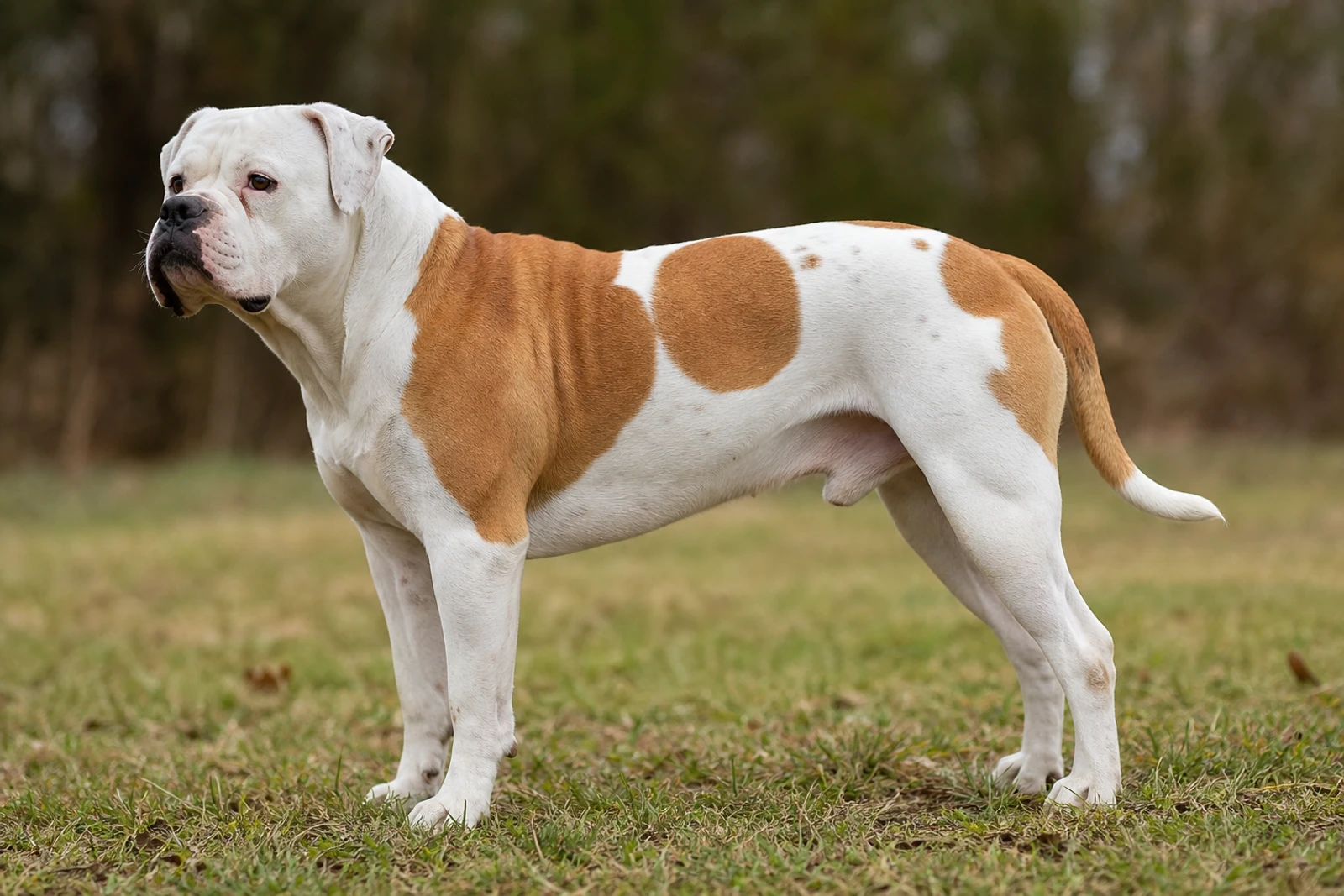
The American Bulldog is a powerful, loyal guardian best suited for experienced owners who can provide firm, consistent training and ample exercise. Affectionate and protective of family, this breed thrives in active homes with a yard. They are gentle and patient with children when properly socialized, though their size and strength demand supervision. Not ideal for first-time dog owners or apartment living, they require early socialization to be good with other pets. Their short coat is low-maintenance, and they form deep bonds with their people, making them devoted companions for those who understand their strong-willed nature.
American Bulldog Sticker Pack
36 cartoon stickers • transparent PNG • no watermark
Pinterest-ready
Share all 36 reactions as one sticker sheet
Pinterest opens with the full pack and a fresh, tailored description. You choose the public board and publish it from your own account.
Save the full pack


Choose one reaction above to share it alone, or use the full-pack button for all 36 together.






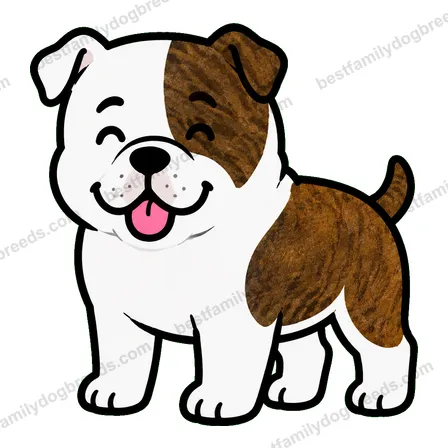
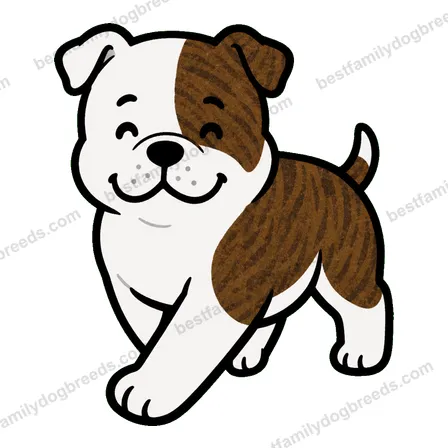


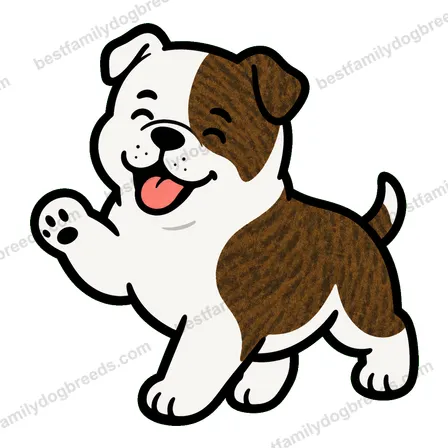
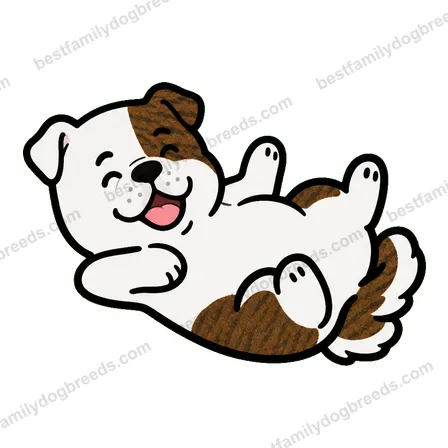














Free full-resolution download — no account, no payment, no watermark.
Includes all 36 transparent PNG stickers in one ZIP. A quick human check is required for each download.
At a glance
- Size
- Giant
- Height
- 20–27 in
- Weight
- 60–125 lb
- Life span
- 16 years
- Coat colors
- White, White with Brindle, White with Red, White with Fawn, Solid Brindle, Solid Red, Solid Fawn
- Coat type
- Short, smooth, dense coat
- Origin
- United States
How much does a American Bulldog cost?
Adopt / rescue
$75–$400
Usually includes spay/neuter, first shots, and a microchip.
Buy from a breeder
$700–$2,000
From a reputable, health-testing breeder.
Approximate USD. Prices vary widely by region, breeder, pedigree, age, and coat colour — adopting is the lower-cost and recommended route. Avoid suspiciously cheap “breeders”; they’re often puppy mills.
Estimate the full cost of a American Bulldog →Want the ongoing number? Estimate the monthly food bill for a American Bulldog with our dog food cost calculator.
American Bulldog photos
Views
Front, side, rear and top — the full silhouette.Poses
How the breed sits, lies, moves and plays.Puppy to senior
The breed across its whole life.Expressions
The breed’s range of moods.Close-up details
Eyes, ears, nose, paws, tail and coat.Coat colors
The breed’s recognized colors.Click any photo to enlarge. We show the American Bulldog from every angle — three views, poses, life stages, expressions, close-ups, coat and colors.
Appearance & size
You notice the mass first. The American Bulldog is not a dog you walk around the block and forget; he fills up the doorway. Males typically stand 22 to 27 inches at the shoulder and weigh anywhere from 80 to 125 pounds. Females run 20 to 25 inches tall and 60 to 100 pounds. That’s a lot of dog, yet the impression you get is not soft bulk — it’s dense bone and ropy muscle packed into a rectangular frame. A thick, slightly arched neck slopes into a deep, wide chest, and the body is just a hair longer than it is tall, which gives him a grounded, stable stance that feels immovable.
His coat is a short, close-lying single layer. Run your hand over it and it’s smooth and glossy, with just enough density to handle scrapes. Shedding is moderate year-round, but you won’t wrestle with tangles or mats. American Bulldogs wear their color like a uniform: white typically dominates — often covering more than half the dog — with brindle, fawn, red, or brown patches. Solid white dogs exist, solid brindles exist, and everything in between. A black mask or black-tipped hairs muddying the muzzle and ears is common, and the contrast sharpens an already keen expression.
The head is the signature. It’s large, blocky, and broad across the skull, with a wide, square muzzle that makes up about a third of the total head length. A distinct stop punctuates the space between the eyes, and the jaw muscles bulge so obviously you can trace them with your fingers. Ears are medium-sized and come in a few styles: rose ears (folding back like a rose petal), half-prick, or, less often in family homes, cropped. The tail is thick where it meets the body, tapers to a blunt point, and hangs low naturally. When the dog moves, that tail may lift to back level but never curls over the spine.
Look at him from the front, and the chest makes the rules. It’s broad, well-filled between the legs, and the forelegs set wide apart are straight and heavy-boned. The shoulders carry visible muscle without looking clunky. Shift to the side and you see the working geometry: a deep brisket that reaches at least to the elbows, a firm level back, and a slight tuck at the loin that hints at the flank. The hindquarters are built for explosive shove — thick thighs, moderate angulation at the stifle and hock. From behind, the rear legs stand parallel, and that low-set tail is a natural extension of the spine at rest. Nothing about this dog is subtle, because nothing was supposed to be.
History & origin
The American Bulldog’s story starts in the American South, where colonial settlers needed a dog that could wrestle a 200-pound hog, guard the homestead, and still be steady enough to walk beside children. Those first dogs weren’t show stock — they were working bulldogs brought over by English, Scottish, and Irish immigrants in the 17th and 18th centuries, descendants of the now-extinct Old English Bulldog. On isolated farms from the Carolinas to East Texas, breeders didn’t keep written pedigrees. They kept the dogs that could catch a stray bull by the nose, survive snakebites, and patrol the property at night.
For generations the type stayed true: big-headed, muscular, with a punishing grip and an off-switch at home. They earned their keep as catch dogs for free-ranging cattle and feral hogs, often working in pairs to hold an animal until the drover arrived. By day they cleared vermin, by night they guarded livestock from predators and strangers. There was no standardized look — function dictated form, and survival pressure shaped a dog with remarkable lung capacity, bone density, and a pain tolerance that still makes veterinary handling a challenge.
The breed nearly vanished after World War II, when rural electrification, mechanized farming, and suburbanization thinned the demand for hog-catching farm dogs. A handful of families in the Deep South kept small pockets of the old bloodlines, but by the 1960s the American Bulldog was close to forgotten. That’s when John D. Johnson started a deliberate breeding program, scouring remote farms for functional, bulldog-type dogs. Johnson leaned toward a heavier, mastiff-influenced silhouette — broad skull, undershot jaw, thick bone. Around the same time, Alan Scott and other breeders favored a leaner, more athletic variant that mirrored the performance dogs used in southern hog-hunting circles. These two threads — often called the Johnson and Scott types — became the foundation for the modern gene pool. No split is absolute, and many breeders today cross the lines for health and working ability.
The United Kennel Club recognized the American Bulldog in 1999, and while the breed never joined the AKC’s registry, its steady climb from obscurity is one of the more practical preservation stories in purebred dogs. The dogs you see now — whether registered as “standard” or “performance” type — still carry the original job description in their bones: a farm utility dog, bred for tasks that require an independent mind, tremendous physical courage, and a surprisingly steady temperament with their own people.
Temperament & personality
An American Bulldog is the dog who takes home security seriously one minute then flops against you on the couch as if they’ve forgotten they’re 100 pounds. Brave, calm, and deeply devoted are the traits you’ll often see, but they don’t come prepackaged—they’re built on clear, daily leadership that respects the dog’s stubborn streak without breaking it. Heavy-handed methods backfire; a firm, fair approach earns trust and keeps that powerful body under control.
Reading your dog’s body language is part of life with this breed. A forward-leaning stance, rigid spine, and unblinking stare can signal intent to act, while a loose, wiggly frame and soft eyes mean you’re looking at a content dog. Lip licking, yawning, or turning the head away are often attempts to calm a situation down—signals kids need to learn as “give me a minute.” When an American Bulldog is relaxed, they’re all in: floor-snoozing, belly-up, leaning into you for contact.
That affection runs hot, but it comes with a giant frame and a strong food drive. Never let anyone interrupt the dog mid-meal. Teach children early that bowls are no-touch zones, so a peacefully possessive dog doesn’t turn into a guarding issue. With strangers, they’re watchful—not always hostile, but a natural guardian who takes their cue from you. Socialization from puppyhood is non-negotiable, especially if you have other dogs. Same-sex aggression and a streak of prey drive are real possibilities, not rare exceptions.
Then there’s the chewing. Puppies chew to navigate teething; adults keep their jaws in shape by destroying hard things—a Kong or raw bone works, your chair legs won’t. A homemade citrus spray (boiled peels) or a 50/50 vinegar-water mix can steer them away from forbidden items, and vinegar has the side benefit of erasing urine odors that otherwise act like a “pee here again” memo. American Bulldogs are territory-aware, and scent markers matter. Clean accidents thoroughly with an enzymatic cleaner, then immediately reward any outdoor elimination with a treat. That simple sequence locks in the habit faster than punishing indoor messes.
They can clock a 16-year lifespan, remarkably long for a giant breed, so plan on a partner who needs a real job. Expect to provide a solid hour of daily running, tugging, or focused play—not a leisurely lap around the block. Without it, that protective energy can curdle into anxiety-driven barking or destructive chewing. Meet their need for work and structure, and you get a steady, affectionate guardian comfortable in their own skin.
Good with kids, dogs & other pets
A well-socialized American Bulldog is famously patient and gentle with children, but his sheer bulk—anywhere from 60 to 125 pounds—turns a happy lean into an unintended toddler tumble. Always supervise floor-level interactions, especially with kids under five. Teach children not to climb on him, pull ears, or disturb him while eating or sleeping. This breed craves household companionship and should never be left alone in the backyard or shut away from family life for long stretches; isolation breeds misery and can lead to destructive behavior.
With other dogs, early and ongoing exposure tips the scales. The critical socialization window closes around 12–16 weeks, so calmly introduce your puppy to friendly, vaccinated dogs, new people, and everyday sounds before then. Without that foundation, an American Bulldog may become over-excited, stiff, or uneasy around unfamiliar dogs as an adult—not from outright aggression but from poor social fluency. If you adopt an older dog who’s content as a solo companion, don’t force dog-park greetings. Pressured interactions can spark fights instead of play. Many thrive as the only dog, provided they get heavy doses of human attention and mental exercise.
Cats and small pets demand a careful, honest setup. The breed’s working heritage can fuel a strong chase drive—a darting cat or a squeaking guinea pig often triggers an instinctive grab. Raise a puppy alongside your cat using baby gates, crates, and lots of reward-based training for calm behavior around small animals. Even when things look friendly, separate them when you can’t supervise. For rabbits, ferrets, or pocket pets, secure enclosures and closed doors are non-negotiable. With a dog this powerful, supervision isn’t optional; it’s the everyday baseline.
Trainability & intelligence
An American Bulldog can tip the scales at 125 pounds and stand 27 inches at the shoulder, so training isn't a box to check — it’s the difference between living with a steady companion and living with a liability. These dogs are sharp and spring-loaded to please someone they respect, but that respect comes from consistent, fair handling, not from heavy-handed corrections.
Smarts meet stubborn
American Bulldogs pick up new commands quickly — they’re often food-motivated and will work enthusiastically for a treat or a tug session. The challenge is their independent streak. A dog that weighs more than your average adult human may decide a “sit” isn’t worth it unless you make it worth it. That means reward-based methods get results faster and stick longer. Jerk the leash or raise your voice, and a Bulldog this size can shut down or push back — neither ends well.
The socialization window is everything
A poorly socialized American Bulldog leans into suspicion of strangers and territorial reactivity. Start the moment you bring your puppy home. Between 3 and 14 weeks, gradually expose them to different people, well-behaved dogs, hard floors, car rides, and loud noises. Pair every new experience with high-value rewards — think real chicken, not kibble. Keep it upbeat and short. This early work prevents the fear-based reactions that make a giant dog dangerous.
What actually works, day to day
- Short, game-based sessions — five minutes, multiple times a day, always ending on a win.
- Clear communication — use the same word for the same behavior every time. Mixed signals confuse a dog that’s already thinking for itself.
- Reward what you want, ignore what you don’t — a treat tossed behind you can derail a counter-surf much better than a yell.
- Never punish after the fact — they don’t connect the punishment to the past event, and it erodes trust fast.
A reliable recall is the hardest thing to build with this breed. If your Bulldog is mid-chase after a squirrel or fixated on a stranger at the fence, their brain can blow right past the sound of your voice. Build that recall against increasing distractions, using rewards that scream “better than whatever is out there.” Practice on a long line until it’s automatic. At 100-plus pounds, you can’t afford to be ignored.
Living with a well-trained American Bulldog is the payoff for thousands of tiny, positive repetitions. Keep the relationship generous, predictable, and clear, and you’ll have a dog that settles into a long, safe life with you — 16 years isn’t uncommon for the breed, and it’s a whole lot easier to enjoy when your dog listens the first time, every time.
Exercise & energy needs
This dog needs to work and will not be satisfied with a leash stroll around the neighborhood. Plan on at least 60–90 minutes of solid exercise every day, broken into two sessions — morning and evening. A tired American Bulldog is a well-behaved one; a bored one will make his own entertainment, and with a 100-pound powerhouse, that usually means remodeled furniture or a fence that suddenly has a dog-shaped hole.
Intensity matters more than distance. Walk-jog intervals, uphill hikes, flirt pole sprints, and sustained games of tug all tap the breed’s working roots. Many American Bulldogs love weight pulling, spring pole, and structured fetch — activities that let them use their strength and determination. Just avoid repetitive high-impact pounding on hard surfaces, especially before growth plates close around 18–24 months. Giant breeds pay a bill later for overdoing it young.
Physical exercise alone rarely takes the edge off. You need to make the brain work, too. Scent games, puzzle feeders, hide-and-seek with a favorite toy, and 10-minute obedience tune-ups throughout the day round out their needs. Think of it as paying into the quiet, settled house dog you actually want.
Temper your plan to the individual and the weather. A 22-month-old male with boundless drive might genuinely need 45 minutes of sprint work plus a long sniff walk and a puzzle session, while a seasoned 8-year-old may do beautifully with a 30-minute swim and a round of “find it” in the yard. When you hit the sweet spot, the dog flops contentedly and the home stays intact.
Grooming & coat care
American Bulldogs wear a no-fuss, short, smooth coat that sits tight to the body — glossy when healthy, and about as easy as giant-breed grooming gets. You won’t find any long feathering, curly mats, or undercoat to rake out. The trade-off? They still shed, and that fine, stiff hair weaves itself into upholstery with surprising determination.
Brushing
A soft bristle brush or a rubber curry mitt is your best friend here. They pull dead, loose hair to the surface, spread natural oils for shine, and give a nice massage — which most Bulldogs will lean into like a hippo at a scratching post. Once or twice a week is plenty for much of the year. During the heavier shedding seasons — spring and fall — bump that to a quick daily pass if you want to stay ahead of the hair tumbleweeds. A metal slicker or pin brush is overkill; stick to tools made for short coats.
Bathing
Bathe only when he’s genuinely dirty or starting to smell doggy. Over-washing strips the coat’s natural oils and can trigger dry, flaky skin. A bath every couple of months works for most indoor dogs, though a romp in the mud resets the clock instantly. Use a mild, dog-specific shampoo and rinse thoroughly — any residue left in those wrinkles or dense folds can itch. Speaking of folds: if your Bulldog has pronounced facial wrinkles or a ropey muzzle, lift and wipe underneath with a damp cloth a few times a week, then dry completely. That pocket stays damp and can get yeasty fast.
Nails, ears, and teeth
Big dogs who pound pavement often wear their nails down naturally, but don’t count on it. Check nails monthly. If you hear clicking on hard floors, they’re too long. Ears flop down or hang rose-shaped on many Bulldogs, which traps moisture. Clean with a vet-approved ear wash weekly and after baths or swims. Teeth — yes, even on a 100-lb powerhouse — need a daily brushing habit or quality dental chews to hold back tartar. Start young and keep it low-drama.
Seasonal coat care
There’s no dramatic seasonal blowout like a double-coated breed, but you’ll see a noticeable uptick in shed fur as daylight hours change. A quick bristle-brush session before a walk or after a game of tug bumps off the loose hairs outdoors instead of on your carpet. The outdoor activity itself also helps the coat cycle normally and cuts down on stress-related shedding. Because the coat is so short, sunburn is a real risk on pink-skinned or white-patched areas — especially noses and bellies. A dog-safe sunscreen on those spots during long summer days is a smart move.
Regular handling during grooming does double duty: you’ll catch early hotspots, rashes, or the first signs of environmental allergies (which the breed can be prone to) before they blow up into a vet visit. A simple weekly once-over with a bristle brush and a peek inside those ears is all the routine this dog needs to stay comfortable and handsome.
Shedding & allergies
Short coat, big shedder. That's the American Bulldog paradox. Those fine, stiff white-and-brindle hairs weave themselves into upholstery, clothing, and carpet with a persistence that surprises first-time owners. Year-round, you'll see a steady dusting of hair on floors. Twice a year—usually spring and fall—the shedding turns into a full-blown blowout, where clumps come off in your hand with every stroke. A quick weekly pass with a rubber curry brush or a hound glove grabs the loose stuff before it hits the sofa. During heavy shedding season, plan on daily brushing to keep up.
Then there's the drool. American Bulldogs have loose, pendulous flews that trap saliva. After drinking, a trail of water and slobber across the kitchen floor is standard. They'll launch a thick rope of drool when they're excited, waiting for a treat, or just after a big yawn. Keep a drool rag handy near the water bowl and in your pocket on walks.
As for allergies—no, no, and no. No dog is truly hypoallergenic, but the American Bulldog is especially rough for allergy sufferers. They produce plenty of dander (dead skin flakes) and their saliva contains the Can f 1 allergen protein that gets deposited on surfaces during grooming and drooling. If someone in your household has dog allergies, spend time around adult American Bulldogs before committing. You're not just dealing with hair; you're dealing with a dog that spreads allergens via drool, dander, and hair.
Expect to vacuum regularly, keep lint rollers in every room, and become best friends with your mop. If a pristine house is high on your list, this breed will frustrate you.
Diet & nutrition
American Bulldogs pack serious muscle and bone density, and that size (60 to 125 pounds) makes every extra pound count. The thing is, they often don’t look overweight until their joints have already been carrying the load. Run your hands down the ribcage weekly — you want to feel ribs through a thin cover of flesh, not a padded layer. Because this breed can live a long 16 years, keeping weight in check directly protects hips, elbows, and knees from years of avoidable stress.
Puppy feeding basics
Four small meals a day until 16 weeks, then three meals until six months. By adulthood, twice a day is standard. A giant-breed puppy formula is worth it here; it’s designed to keep growth slow and steady so developing bones and joints don’t get overloaded. Around 12 weeks, you can offer a raw chicken wing under close supervision — it teaches real chewing and uses those jaws the way they were built. Any diet switch gets a gradual week-long transition.
Portion control, not guesswork
Calorie needs swing wildly. A 70-pound house dog might burn only two-thirds the energy of a 110-pound dog running a big property. Start where the food bag suggests for your dog’s ideal weight, then adjust every couple of weeks until that rib test stays consistent. Many American Bulldogs are food-motivated to the point of acting genuinely starved right after a meal. Don’t cave. If he gulps food instead of chewing it — and then paces or whines — a puzzle bowl slows things down and gives his brain a small workout along with his stomach.
What to put in the bowl
No single brand works for every dog, but a solid homemade baseline looks like this: about 60% raw or cooked meat, 20–30% fruits and vegetables, and 10% extras such as eggs, cooked grains, or plain yogurt. Dogs’ jaws move only vertically and they don’t have salivary enzymes to start breaking down plant matter, so blending or lightly processing that vegetable portion boosts nutrient absorption. Pearl barley and white rice are stomach-friendly grains that work when digestion is off. Canned fish (in water, no salt), cooked vegetables, and eggs combine into quick, healthy meals. Save the unsalted water from steaming veggies — it’s a decent base for moistening kibble or thinning a purée.
Skip vegetarian or vegan plans entirely. A dog’s digestive system evolved on animal protein, and plant-only diets leave real nutritional gaps.
Senior shifts
As an older Bulldog slows down, obesity becomes the single biggest threat. Cut back food in small steps the moment you notice less pep — don’t wait until the weight piles on. If teeth are missing or gums get sore, puréeing meals makes eating painless and helps a senior body absorb more nutrition. Smaller, more frequent meals (three or four light ones) often work better than two heavy ones for an aging metabolism.
A practical habit from day one: serve any leftovers in the dog’s own bowl. It kills the begging routine before it ever gets a foothold, and that matters because once a Bulldog learns to work the table, he rarely forgets.
Health & lifespan
Sixteen years is a long run for any dog, and it’s remarkable that a giant breed built like a tank can reach that mark. American Bulldogs that do are almost always the product of careful breeding and an owner who treats preventive care as a daily habit, not a last-minute scramble when something goes wrong.
Hip and elbow dysplasia sit near the top of the watch list. A fast-growing, heavy-boned frame that carries 60–125 lbs puts enormous stress on developing joints. Responsible breeders screen their breeding stock with OFA or PennHIP x-rays and openly share those ratings. Even with healthy parents, you protect a puppy’s future by keeping it lean through the first year — extra weight on soft growth plates invites early arthritis. Adults should stay visibly ribbed. If you can’t feel the ribs without pressing, the dog is too heavy.
Skin trouble is so common in American Bulldogs that experienced owners learn to spot the first signs and act fast. The short, tight coat traps moisture and irritants, creating the perfect conditions for yeast, bacterial infections, and environmental allergies. Hotspots flare between the toes, in armpits, and around the muzzle. A high-quality diet, regular wiping of skin folds where they exist, and immediate attention to obsessive licking or scratching can keep a small irritation from becoming a full-blown staph infection.
Given how strong and food-motivated these dogs are, obesity is a quiet, constant threat. It amplifies joint pain, makes breathing labored in the heat, and dramatically increases the risk of cruciate ligament tears. Free-feeding and generous treat-bombing shave years off a giant breed’s lifespan. Measure every meal, and don’t mistake a hopeful stare for hunger.
No breed gets a pass on the basics. Heartworm prevention needs to be given monthly during mosquito season and for one full month after the last buzz dies off. Rabies vaccination is legally required and has no effective treatment once symptoms appear — there’s zero room to gamble here. Schedule a thorough annual vet checkup, and switch to twice a year once the dog hits senior status around age seven or eight. Pay attention to subtle changes: a dog that usually charges the door and suddenly hangs back, or a reliable eater who starts leaving half the bowl, is telling you something isn’t right.
Early socialization and calm, consistent handling also protect physical health over the long haul. An American Bulldog that’s been introduced to vet exams, strangers, and new environments without force will carry far less stress, and chronic stress undermines immunity and healing. Force a willful dog into submission and you’ll see the fallout in everything from coat condition to recovery time. Respectful, steady engagement — not heavy-handed dominance — tilts the odds toward reaching that full sixteen-year lifespan.
Living environment
An American Bulldog is a lot of dog in every sense, so living space matters. A house with a securely fenced yard is the straightforward choice — these 60–125 lb athletes need room to move, and a token patch of grass won’t cut it. That said, an apartment can work if you’re honest about the commitment: two long, daily exercise sessions totaling at least 90 minutes of genuine running, tugging, or uphill hikes, not a leisurely stroll. Without that outlet, you’ll get a restless, 100 lb bulldozer redecorating your baseboards.
- Yard essentials: A six-foot physical fence is a must; invisible fences don’t stop a driven dog who spots a squirrel. The yard is for off-leash play and training, not a substitute for off-property walks and mental work.
- Climate and coat: Their short coat handles heat poorly and offers zero insulation against cold. In summer, exercise early or late to avoid overheating; in winter, expect them to be indoor dogs with only quick potty breaks when it’s freezing.
- Noise and neighbors: American Bulldogs bark with purpose — a deep, carrying alarm bark when someone approaches. It’s not constant yapping, but apartment dwellers should train a solid “quiet” cue early, and shared walls aren’t ideal for a novice.
- Being left alone: These are affectionate, people-focused dogs. They can develop separation anxiety if routinely left for 8+ hours. Gradual alone-time training, puzzle toys, and mid-day exercise help, but a household where someone is around more often than not suits them best.
End the day with a physically and mentally tired dog, and you’ll have a calm companion. Skip that, and a bored American Bulldog will find his own job — usually one you’ll hate.
Who this breed suits
An American Bulldog isn't a laid-back lap dog who's happy with a few walks around the block. This is a big, driven, intensely loyal guardian, typically weighing between 60 and 125 pounds, and he needs an owner who matches that presence with clear leadership and serious daily effort. The payoff is a 16-year partnership with a dog who is all-in on your family — but only if your lifestyle and experience line up.
You’re a strong match if:
- You’ve owned a powerful breed before. American Bulldogs come with a factory-installed protective streak and a stubborn side. They respect someone who is calm, consistent, and knows how to train a dog that can be physically overwhelming when he pulls on a leash or decides he doesn't want to get off the couch. First-timers often find themselves outmatched.
- You have a securely fenced yard and an active routine. "Active" here doesn't mean a couple of 15-minute strolls. Plan on an hour of focused, off-leash play, tug games, or a hard run each day — the kind that leaves a 90-pound dog actually tired. Under-exercised American Bulldogs channel that energy into destructive chewing, relentless barking, or re-imagining your drywall.
- Your household is structured, and kids are older (or you’ll supervise constantly). They can be patient and gentle with their own family, but that’s the thing — they’re protective of their people. A 110-pound bulldog who thinks he’s a nanny can easily knock over a toddler in his enthusiasm. Homes with teens or adults who can handle a 20-to-27-inch tall powerhouse are ideal. Kids need to be old enough to not tug ears or dangle food, because this breed won’t back down from a challenge.
- You’re okay with managing a watchful guardian, not a social butterfly. American Bulldogs don’t greet strangers with an automatic wagging tail; they assess first and warm up slowly. If your house has a revolving door of visitors, you’ll need to actively manage introductions and crate-train from day one. They’re not the dog for an open-house party lifestyle unless you’re willing to put in the management work.
- You want a single-dog household or have experience with same-sex aggression. Many American Bulldogs, especially males, don’t do well with another dog of the same sex. High prey drive also means cats, rabbits, or chickens are often viewed as squeaky toys that run. Some do coexist with other pets when raised together, but banking on it can be a dangerous gamble.
Think twice if:
- You live in an apartment, travel frequently, or don’t have a fenced area where a bulldog can really move. These dogs have large, booming barks and a territorial nature that makes close-quarters living stressful for everyone.
- You’re looking for a dog that’s reliably friendly with all other dogs at the park. This breed often matures into dog selectivity or outright intolerance, especially after adolescence. Off-leash dog-park days are usually off the table.
- You aren’t prepared for a financial commitment beyond food and vet bills. A giant breed with this kind of strength can do real property damage if anxious or bored — reinforced crate, sturdy fencing, and possibly professional training are not optional extras.
- You dislike drool or a certain level of slobber on your walls. American Bulldogs are brachycephalic enough that after drinking, the water travels with them. If a dog’s jowls dripping on your leg after a long drink is a dealbreaker, this breed will drive you nuts.
Owning one of these dogs is essentially a serious, long-term, full-contact hobby. If you’re the right person, the bond is steel-tough and the dog will be an unfaltering part of your life for well over a decade. If it feels like too much, it usually is.
Cost of ownership
A well-bred American Bulldog puppy from a health-tested, registered breeder usually runs $1,500 to $3,500. Show- or working-line dogs on the upper end of that range can push closer to $5,000. Adopting from a rescue or shelter is far less — typically $250 to $500 — and often includes a dog that’s already spayed or neutered and current on basic shots. Either way, you’re committing to a giant breed that eats, chews, and occasionally medical-bills like a small horse.
Monthly costs that hit the wallet
- Food: Count on $60 to $100 a month for a high-quality kibble formulated for large breeds. A 100-pound dog can put away 4 to 5 cups a day; raw or fresh diets easily double the number.
- Grooming: A short, stiff coat means you aren’t paying for haircuts, but you still need a decent curry brush, occasional baths, and regular nail trims. Budget $15 to $30 a month if you do it mostly yourself, or $40 to $60 every couple of months for a pro bath and nail grind.
- Vet and preventatives: Yearly check-ups, vaccinations, heartworm, and flea/tick prevention come to roughly $400 to $600 per year — so $35 to $50 a month, even on a healthy dog. Giant breeds also need early and frequent hip and elbow screenings, which add to first-year bills.
- Insurance: Monthly premiums for a giant breed lean $50 to $80, with deductibles and payout limits swinging the number. Without insurance, a single cruciate ligament repair or emergency bloat surgery can run $4,000 to $7,000 overnight.
American Bulldogs can live 16 years, so these monthly figures pile up into real money over a long life. The smartest move is to stuff an extra $75 to $100 a month into a dedicated pet emergency fund the moment you bring your dog home. That’s not a worst-case-scenario cushion — it’s just realistic for a big, powerful dog whose enthusiasm for life occasionally outruns its joints and stomach.
Choosing a American Bulldog
A well-bred American Bulldog can live 16 years—exceptional for a giant breed that pushes 125 lb. That kind of longevity starts with where you get the dog, so choose your source as carefully as the puppy itself.
Rescue or breeder?
Both paths are legitimate, but they offer different things. An adult rescue lets you skip the land-shark puppy stage and see the dog’s full size and temperament right away. Look for a rescue that evaluates the dog in a foster home, tests for dog and people reactivity, and honestly discloses any baggage. Many American Bulldogs wind up in shelters because owners underestimated the strength and management a 100 lb power-chewer requires—you’ll be doing a good thing, but you need to walk in with eyes open.
A puppy from a responsible breeder gives you control over early socialization and a known health history. For a breed prone to hip dysplasia, elbow dysplasia, thyroid problems, deafness, and skin allergies, that health history isn’t a bonus—it’s the whole point.
Finding a responsible breeder
Demand proof of health clearances, not just a verbal “they’re healthy.” Acceptable clearances are posted on the OFA website or available as PennHIP reports. You want to see:
- Hips: OFA good or excellent, or PennHIP scores above the breed median (absent public median, ask the breeder to share their dogs' numbers).
- Elbows: OFA normal.
- Thyroid: OFA thyroid panel within normal limits.
- Eyes: CAER exam from a veterinary ophthalmologist within the past year.
- Deafness: A BAER hearing test for any puppy or parent with a lot of white on the head, as pigment-associated deafness is real.
A sound breeder also raises the dam and litter in the home, not a kennel run, socializes pups extensively, and lets you meet at least the dam. They ask about your lifestyle, fencing, and experience with guardian breeds as much as you question them.
Red flags you can’t ignore
- No health testing results you can verify independently.
- Multiple litters on the ground or a “puppies always available” vibe.
- Parents out of sight or a refusal to show the whole property.
- Selling puppies under 8 weeks or without a written contract that spells out a health guarantee and a return-to-breeder clause.
- Pushing dogs as “rare” colors (blue, merle) or charging more for odd markings—those are marketing gimmicks, not breed standards.
Picking a puppy
At 8 weeks, a healthy American Bulldog pup feels solid and chunky, with clean eyes, a shiny coat, and no sign of rash or chronic ear gunk. Watch the litter for a good middle ground: not the bully who flattens littermates, not the one who hangs back trembling. You’re looking for a confident pup who checks in with people, recovers quickly from a surprise noise, and accepts being handled all over. A brief but obvious startle-and-recover in a new situation beats a pup that crouches or shuts down. Lean on the breeder to match personality to your home—they’ve watched these pups for two months and know who’s destined for a quiet family and who needs a job.
Pros & cons
Pros
- Unshakable loyalty and a protective streak that makes them a natural guardian — they’ll watch your family with intense commitment and bond hard with everyone in the household.
- Smart and work-driven when you bring clear, consistent leadership. They pick up obedience, weight pulling, and farm chores fast if you start young and stay firm.
- Athletic powerhouse built to move. A 60–125 pound dog with this much drive wants a real workout — a running buddy, a hiking partner, or a companion for 60–90 minutes of hard daily exercise, not a sidewalk stroll.
- Long lifespan for a giant breed. Many live 14–16 years, so you’re making a long-term teammate, not a short-term splurge.
- Minimal grooming hassle. The short, smooth coat sheds lightly; a weekly brush and the occasional bath handle it.
- Gentle with kids when raised together. They’re often patient and watchful, turning into that reliable “nanny” presence around children.
Cons
- Not a starter dog. A determined Bulldog topping out above 100 pounds can easily overpower someone without breed experience or the muscle to manage a strong pull.
- High energy in a large package. That 60–90 minute daily requirement is a hard minimum — skip it and you’ll see furniture destroyed, fences tested, and a dog making his own job.
- Dog aggression pops up frequently, especially between dogs of the same sex. Early, ongoing socialization isn’t optional; it’s survival for a multi-dog household or dog-park visits.
- Protective instincts can tip into over-guarding. Without firm boundaries and wide exposure to strangers, the mailman or a neighbor’s kid can look like a threat.
- Health risks you can’t ignore. Responsible breeders screen hips and elbows, but dysplasia, cherry eye, skin allergies, and bloat still show up. Vet bills can run high.
- Prey drive to rival a terrier’s. Cats, rabbits, and small dogs often read as targets, not roommates.
- Drool. Heavy jowls mean slobber after drinking, eating, or just lounging in the heat — keep a towel handy.
- Breed-specific laws. Their appearance puts them on banned lists in some cities and apartments, slashing your housing options.
Similar breeds & alternatives
If you love the American Bulldog’s sturdy, no-nonsense presence but wonder about other options, a handful of breeds come close—each trading off a key trait. The American Bulldog’s 16-year life span is exceptional for a 60–125 lb dog, and that durability sets the bar high whenever you look elsewhere.
-
English Bulldog: You get the bulldog tenacity in a much smaller, lower-octane package (40–50 lb). Perfect if you want a couch companion instead of a farm hand. The trade-off is stark: English Bulldogs rarely see 10 years, battle heat intolerance, and face chronic breathing and joint issues. An American Bulldog runs cool, stays athletic well into old age, and asks for a lot more daily movement.
-
Bullmastiff: If you’re after an even more formidable guardian, this 100–130 lb giant plays the role of silent deterrent. Bullmastiffs are naturally reserved with strangers and need less aerobic exercise—a long walk satisfies them. But they live only 7–9 years on average, and they lack the American Bulldog’s playful, agile streak. You’re trading a decade of companionship for a heavier, calmer watch dog.
-
Boxer: Similar height (21–25 in) but a leaner 55–70 lb build, the Boxer brings a clownish energy that’s a world apart from the American Bulldog’s deliberate confidence. They’re phenomenal family clowns but overheat quickly, can’t handle extreme cold, and average 10–12 years. An American Bulldog has more substance, a longer lifespan, and a steadier, less bouncy temperament.
-
Dogo Argentino: This all-white Argentine mastiff shares the American Bulldog’s athleticism and protective instinct, but the Dogo was built for big-game hunting, not farm work. Expect higher prey drive, a more intense personality, and an experienced-owner requirement. Life expectancy lands around 10–12 years. You’d pick a Dogo if you need a dedicated working hunter; the American Bulldog is a more versatile, longer-lived home protector.
Fun facts
- The American Bulldog was nearly extinct after WWII but was revived by breeders John D. Johnson and Alan Scott.
- They descend from the Old English Bulldog brought to America by working-class immigrants.
- Historically used as all-purpose farm dogs, they guarded livestock and hunted feral pigs.
- Despite their tough appearance, they are known for being gentle and affectionate with their families.
Frequently asked questions
- Are American Bulldogs good with children?
- American Bulldogs are known for their gentle and protective nature, which can make them good with children when properly socialized. They tend to be loyal and patient, but due to their large size and energy, supervision is recommended with small kids. Early training and boundaries help ensure positive interactions.
- How much exercise does an American Bulldog need?
- With an energy level of 4 out of 5, American Bulldogs require daily, vigorous exercise like long walks, runs, or play sessions. Without enough activity, they may become restless or develop unwanted behaviors. A fenced yard can be helpful, but they also enjoy structured outdoor time with their owners.
- Do American Bulldogs shed a lot?
- American Bulldogs have a short coat that sheds moderately, rated 3 out of 5. Weekly brushing helps manage loose hair and keeps their coat healthy. While not heavy shedders, expect some ongoing hair around the home.
- Are American Bulldogs suitable for first-time dog owners?
- Their confident and sometimes stubborn nature may be challenging for novice owners. They respond best to consistent, positive training and need an experienced hand to channel their energy appropriately. First-timers can succeed with commitment and professional guidance.
- Can American Bulldogs live in apartments?
- Due to their large size and high exercise needs, American Bulldogs are not ideal for apartment living. They thrive in homes with space to move and access to a yard. If an apartment is the only option, dedicated daily outdoor exercise is essential.
Tools & calculators for American Bulldog owners
Quick estimates tailored to American Bulldogs — pre-filled with this breed’s size where it matters.
Articles & stories about the American Bulldog
Sources & standards
This profile follows recognized breed standards from the American Kennel Club (AKC) and the Fédération Cynologique Internationale (FCI), along with established veterinary and breed-club guidance. These describe general breed tendencies — every dog is an individual.