

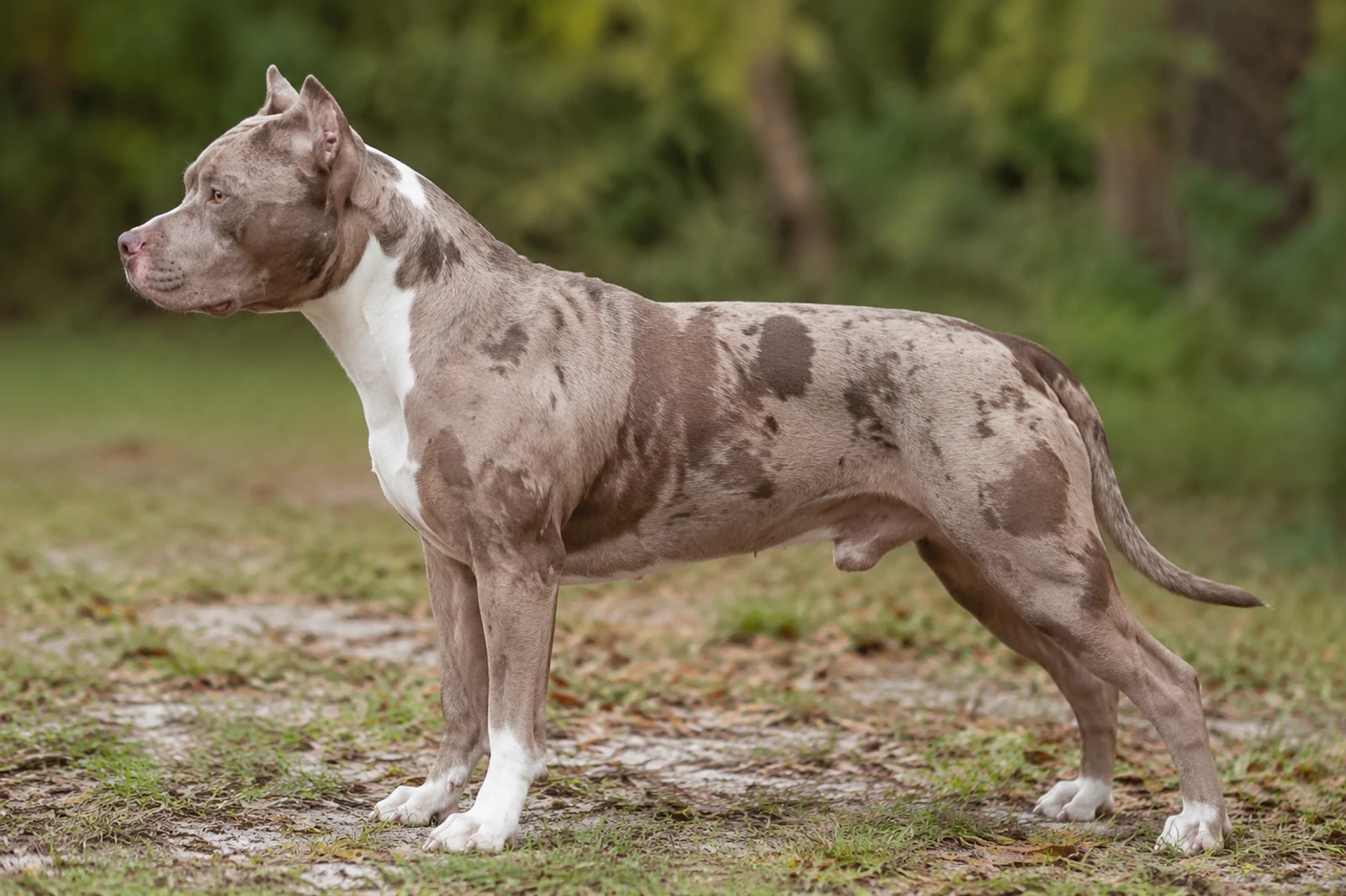
The American Pit Bull Terrier is an athletic, people-loving terrier type that needs responsible ownership, early socialization, and clear training. It can be deeply affectionate with its family, but dog selectivity, strength, and local breed rules make it a serious commitment.
At a glance
- Size
- Medium
- Height
- 17–21 in
- Weight
- 30–60 lb
- Life span
- 12–14 years
- Coat colors
- Many colors and patterns
- Coat type
- Short smooth coat
- Group
- Terriers
- Origin
- United States
Compare American Pit Bull Terrier vs
Compare with any breed →How much does a American Pit Bull Terrier cost?
Adopt / rescue
$75–$400
Usually includes spay/neuter, first shots, and a microchip.
Buy from a breeder
$700–$2,000
From a reputable, health-testing breeder.
Approximate USD. Prices vary widely by region, breeder, pedigree, age, and coat colour — adopting is the lower-cost and recommended route. Avoid suspiciously cheap “breeders”; they’re often puppy mills.
Estimate the full cost of a American Pit Bull Terrier →Want the ongoing number? Estimate the monthly food bill for a American Pit Bull Terrier with our dog food cost calculator.
American Pit Bull Terrier photos
Views
Front, side, rear and top — the full silhouette.Poses
How the breed sits, lies, moves and plays.Puppy to senior
The breed across its whole life.Expressions
The breed’s range of moods.Close-up details
Eyes, ears, nose, paws, tail and coat.Coat colors
The breed’s recognized colors.Click any photo to enlarge. We show the American Pit Bull Terrier from every angle — three views, poses, life stages, expressions, close-ups, coat and colors.
Appearance & size
This is a dog that looks like it was assembled with a single purpose in mind: effortless, explosive power in a no-frills package. A well-conditioned American Pit Bull Terrier can tip the scales anywhere from a compact 30 pounds to a rangy, athletic 60 pounds, standing 17 to 21 inches at the shoulder. That’s a huge spread, and it means you’ll see everything from a whipcord-lean little fireplug to a leggier, almost houndy silhouette — but every ounce is packed onto a frame that’s all dense muscle and bone.
You notice the head first. From the front, the skull is broad and flat, with a deep furrow running down the middle and pronounced cheek muscles that give the face a chiseled, determined expression. The muzzle is medium-length and slightly squared off, not snipy. Eyes are set low and wide; they can be any color, and that round-to-almond shape often conveys a startlingly soft, people-focused gaze that feels at odds with the dog’s tough reputation. Ears are typically rose or semi-prick, folding over naturally, though you’ll still see cropped ears in some circles. The neck is heavy at the base, flaring into a deep, broad chest that’s unmistakable from the side.
Profile the dog from the side and you get a clear read on its working DNA. A deep, well-sprung ribcage tucks up into a trim waist — there’s no slab-sided bulk here, just a clean underline that says the dog can run all day. The back is short and strong, sloping just a touch from the withers to the rump. From the rear, the hindquarters are wide and heavily muscled, driving down into straight, solid pasterns. The tail is a natural extension of the topline, thick at the base and tapering to a fine point; when the dog is alert, it pumps like a metronome.
Coat is as low-maintenance as it gets. A single layer of short, glossy hair lies flat and stiff to the touch — it feels more like a seal’s pelt than a typical dog’s fur. Shedding is moderate year-round. Color? Pick one. Solid black, red, fawn, chocolate, blue, white, or any brindle pairing you can imagine; parti-color or tri-color markings show up too. One color you won’t find from a responsible breeder is merle, because the merle gene isn’t native to the breed and comes with a known risk of deafness and eye defects. The overall picture, from any angle, is a dog that looks flexible, balanced, and ready to move — not a muscle-bound tank, but an athlete that happens to be built like a brick house.
History & origin
The American Pit Bull Terrier’s story starts in the early 1800s, not in America, but in the bull-baiting rings of England, Ireland, and Scotland. Breeders took the now-extinct Old English Bulldog — a dog built to grip and hang onto a bull — and crossed it with quick, feisty terriers. The result was the bull-and-terrier, a dog with the bulldog’s raw strength and the terrier’s lightning reflexes and tenacity. When Britain outlawed bull-baiting in 1835, those blood sports went underground, shifting toward ratting contests and dog fighting in pits, where the dogs’ pain tolerance and relentless drive were prized above all.
Immigrants packed these dogs onto ships bound for the United States, and that move changed everything. On American soil, the bull-and-terrier found work far beyond the fighting pit. Farmers and frontiersmen relied on them as all-purpose catch dogs for hogs and semi-wild cattle, as hunting partners for everything from squirrels to wild hogs, and as steady family guardians. Their people-centered nerve — you could grab a dog mid-scrap and it would still wag its tail at you — made them a fixture on homesteads. By the late 1800s, these dogs were no longer just imports; they were a distinctly American dog, even if they didn’t have a single name yet.
The United Kennel Club (UKC) stepped up in 1898 and gave them one: the American Pit Bull Terrier. The first registered dog, Bennett’s Ring, set the standard, and the breed’s working ability, not just looks, was the focus. At the time, the AKC wanted nothing to do with a breed tied to pit fighting, so in 1936 they recognized the same general stock under a different name — the American Staffordshire Terrier — with a heavier emphasis on conformation. That split created two parallel breeds from the same foundation, and you can still find dogs today whose papers list both registries.
Throughout the 20th century, the APBT pulled double duty as a military mascot (Sergeant Stubby in World War I is a notable example) and as the quintessential American family dog. The breed’s identity took a beating in the 1980s and beyond when underground fighting rings and sensationalized news coverage painted the whole breed with a broad, dark brush. Yet the core traits bred into these dogs for over a century — high intelligence, off-the-charts athleticism, and a deep desire to be with their people — persist in responsibly bred lines. That’s what puts well-bred APBTs in therapy work, weight-pull competitions, and on your couch, fully convinced they’re a lap dog.
Temperament & personality
A people-first dog
The American Pit Bull Terrier is, at its core, a people-oriented clown. Expect a 30–60 pound lap dog that will flatten you on the couch, lean into your legs, and follow you from room to room. They genuinely seem happiest when they’re touching a person. This intense connection to their family means they handle isolation poorly; left alone without enough exercise or interaction, they can develop anxiety-driven behaviors like destructive chewing, excessive barking, or indoor marking. You’ll get a much more settled dog if you can include them in your daily life instead of relegating them to the backyard.
Their affection doesn’t always translate into a soft, easygoing temperament. These are terriers, with a terrier’s tenacity and confidence. Many APBTs are bold, curious, and physically exuberant—great for an active household, less so for someone who prizes a quiet, low-key companion. They tend to greet strangers with a wagging tail and a wiggly body, not suspicion or aloofness. That said, they’ll certainly let you know when someone is at the door, though they’re not guard dogs by nature; a friendly intruder may simply get a guided tour of the living room.
Energy and outdoor drive
A single walk around the block rarely cuts it for this breed. These dogs are built for sustained athletic work and often need a solid 45–60 minutes of real running, hard play, or mental challenges daily—more on some days. Without that outlet, their intelligence and physical power can turn into frustrating property damage. Many owners channel that drive into weight pull, flirt pole sessions, spring pole, or trick training. The same intensity that makes them tireless playmates also revs up their prey drive, so off-leash time with small animals or strange dogs is something to manage carefully.
In the home: affectionate and watchful
With their own family, an APBT is typically calm indoors after exercise, curling up close and keeping a watchful eye on the household routine. They are famously tolerant and gentle with children when raised together, but their sheer strength and enthusiastic body slams mean interactions with little kids should be supervised. A happy APBT wagging its tail can clear a coffee table. Many will also put on a brief “guard bark” at the sound of an unfamiliar noise, then quickly settle once they see it’s nothing exciting.
Smart, strong-willed, and sensitive
This breed learns fast, yet they’re not always eager to please in the way a Golden Retriever is. A Pit Bull often asks, “What’s in it for me?” They respond best to clear, consistent rules and positive reinforcement that respects their independent streak. Harsh handling or force tends to backfire, making them shut down or resist. Instead, you get far more mileage from short, engaging training games and food rewards. Once you earn their trust, they’ll work their heart out for you—just don’t expect mindless obedience. That blend of sensitivity and stubbornness means they may offer calming signals (lip licking, yawning, turning away) when they’re frustrated or uncomfortable, so pay attention to the whole body, not just the wagging tail.
Quirks to expect (and manage)
Plenty of APBTs see chewing as a full-time hobby. Puppies explore the world with their mouths and need relief from teething pain, while adults often gnaw hard objects to exercise their jaws and clean their teeth. Providing a steady supply of tough, safe chew toys is non-negotiable. If your couch or shoes become targets, a homemade citrus spray (boiled citrus peels in water) or a vinegar solution can discourage the behavior—and vinegar also helps neutralize urine odors that invite repeat marking. On the subject of marking, even a well-house-trained APBT may leave scent cues inside if they feel unsettled or if previous accident smells linger. Cleaning with an enzymatic cleaner designed for pet messes removes those invisible triggers and prevents re-soiling, because to your dog, that smell is a neon sign saying “go here again.”
With other dogs, you may notice a gradual shift as the dog matures, usually between 18 months and 3 years. Some APBTs become less tolerant of strange dogs, especially those of the same sex. This is not a failure of training—it’s a known tendency in the breed’s history. Early and ongoing socialization helps, but you should always be prepared to manage situations and never force interactions. Off-leash dog parks are a gamble many experienced owners choose to skip entirely. With their own family members, however, they often remain the same goofy, affectionate dog they always were.
Good with kids, dogs & other pets
A well-bred American Pit Bull Terrier who’s been raised as part of the family often turns into a surprisingly patient, kid-loving shadow. Those 30–60 pounds of muscle and that full-body tail wag can be a lot of dog for a small child to handle, though. An enthusiastic APBT can knock a toddler over without meaning to, so close supervision around young kids isn’t optional — it’s the daily rule. Let him get his zoomies out first, then settle in for a cuddle. Never leave any dog unattended with a child, but with this breed’s strength and terrier persistence, that’s doubly important.
With other dogs, the picture gets real complicated real fast. The APBT’s history didn’t select for universal dog sociability, and even a puppy who adores every dog he meets can mature into an adult who’s dog-selective, same-sex intolerant, or outright reactive. Early and ongoing socialization — the kind that starts before 12–14 weeks and floods the pup with positive, varied experiences — gives you the best shot at a dog who’s comfortable around others. But it’s not a guarantee. Many adult APBTs live happily with a known housemate yet become tense or confrontational with unfamiliar dogs. Two intact males under one roof can be a powder keg, regardless of how they were raised. Off-leash dog parks are a gamble you don’t have to take; a solid “leave it” and a good fencing routine are smarter safety nets. If your APBT turns out to be an only dog at heart, respect that. Forcing adult dogs to “work it out” doesn’t build confidence — it builds fights.
Cats, rabbits, and other small pets trigger the deeply wired prey drive hard. The breed was built to grab, hold, and not let go, and that instinct doesn’t switch off because the bunny is a household member. Some individuals coexist peacefully with a cat they were raised with, but you’ll often see intense staring, stalking, or a sudden chase that can end in disaster. Management means baby gates, crates, and never leaving them loose together while you’re out. If a low-risk multi-pet household is high on your list, assume the APBT needs a separate wing and constant supervision.
What ties all of this together is the breed’s intense need for companionship. These dogs don’t do well parked in a backyard or left alone for eight-hour stretches. Loneliness can sour into destructive chewing, fence climbing, or noise complaints. When you’re home, they want to be touching you — on the couch, underfoot in the kitchen, wedged against your leg. That people-centric nature is what makes them so steady with their own family, and it’s exactly why they need to be in the middle of the action, not on the sidelines.
Trainability & intelligence
Your Pit Bull picks up new cues in a handful of repetitions, not an afternoon of drilling. This is a bright, people-focused dog that genuinely wants to work with you — right up until the terrier tenacity kicks in. The real training challenge isn’t intelligence; it’s channeling a whip-smart mind attached to a 30–60 lb athlete who sometimes decides the squirrel is more interesting than your recall cue.
Motivation comes easily. Most APBTs light up for a game of tug, a chunk of freeze-dried liver, or simply your goofy high-pitched praise. That enthusiasm cuts both ways. They learn fast, and they learn bad habits just as quickly if you’re inconsistent. A rule that slides one day — jumping up, pulling on leash — is a rule they’ll test again tomorrow. Set clear boundaries early, and everyone has a better time.
Recall is a common sticking point. A well-practiced “come” in the yard doesn’t automatically hold up at the park when another dog darts past. Pair the word with a jackpot reward — real meat, a squeaky toy — and proof it in a thousand boring locations before you trust it in exciting ones. Long lines are your friend while you build reliability.
The training style that sticks is reward-based and relationship-first. Harsh corrections often backfire with this breed: you’ll get a dog that shuts down or, worse, gets defensive. Instead, capture the behavior you want. Mark it. Pay with play or a treat, then ask for a little more next time. Keep sessions short and end on a win. Even a dog this driven gets mentally fried if you drill the same thing for twenty minutes.
Early socialization isn’t optional. Start between 3 and 14 weeks, exposing the puppy gradually to men in hats, wobbly toddlers, vacuum cleaners, slick flooring, and calm, well-mannered adult dogs. Continue those positive exposures well into adulthood. It won’t erase genetic dog-selectivity or prey drive — two real things you may need to manage — but it builds a dog that can think through a reaction instead of just launching into it. The goal is a confident partner who looks to you when the world gets weird, and that only happens when you’ve put in the trust-building reps.
Exercise & energy needs
Give your dog 60 to 90 minutes of real exercise every day — not a single marathon session, but broken into at least two solid blocks. This is a medium-sized terrier built like a crate engine: 30 to 60 pounds of muscle, ready to sprint, tug, and chase at the drop of a leash. Leisurely sniff-and-stroll walks won’t cut it. Your Pit Bull needs to move, hard enough to pant and use those powerful shoulders.
A morning session of 30–45 minutes of off-leash running, a flirt pole session, or a fast-paced game of fetch sets the tone. In the evening, a 30-minute brisk walk paired with a 15-minute tug session or nose work game rounds out the day. Two workouts also help the dog settle between sessions instead of ricocheting off the walls.
Mental work counts as much as physical. These dogs were bred to think on their feet. Puzzle toys, scent detection games (hide a smelly treat in a box of crumpled paper), and 10-minute trick-training sessions burn surprising amounts of energy and prevent frustration. A flirt pole isn’t just a cardio tool — it’s a self-control exercise when you require a sit or down before each chase.
- Best outlets: flirt pole, spring pole, weight pull, hiking, swimming, fetch on grass, structured tug with rules, and nose work.
- Watch the impact. A young, growing APBT shouldn’t be doing repetitive jumping or all-out stops on concrete. Responsible breeders screen hips and knees, but it’s smart to save the hard-surfaced sprinting until growth plates close and to warm up before high-intensity work. Overweight dogs and seniors benefit from low-impact options like swimming or walking on soft trails.
If you skip a day or two, the dog doesn’t just get a little antsy — you’ll likely see behaviors you don’t want, like chewing, leash reactivity, or barking that stems from stored-up tension. Consistency is everything with this breed. Meet their daily quota with sweat and brain games, and you get a calm, affectionate housemate who’s ready to nap at your feet.
Grooming & coat care
That short, glossy coat is one of the easiest traits to live with. The American Pit Bull Terrier has a single-layer coat — smooth, flat, and virtually tangle-proof. No undercoat means no dense seasonal blow-outs, just a steady, light shed that’s simple to manage.
- Brushing: A soft bristle brush or rubber curry mitt does the job. Once or twice a week pulls loose hair, spreads natural oils, and leaves a healthy shine. When shedding ticks up in spring and fall, bump it to every other day. You’ll never fight mats, and the whole routine takes three minutes.
- Bathing: Only when the dog’s actually dirty. A bath every 6–8 weeks is plenty — over-washing strips protective oils and can dry out skin that’s already sensitive if your APBT has allergies (something the breed can be prone to). Between baths, just hose off muddy legs and towel dry.
- Nails, ears, teeth: Clip nails as soon as you hear clicking on hard floors — roughly every 3–4 weeks. Those rose or button ears need a weekly wipe-down with a damp cloth; don’t dig inside. Brush teeth daily with dog toothpaste, or at minimum a few times a week, to prevent tartar and gum trouble.
- Skin checks: Because skin issues pop up in the breed, use brushing time to look for hot spots, rashes, or flaking. Catching a hotspot early can save you a vet visit.
- Seasonal bits: Daily outdoor exercise already boosts coat turnover. In dry winter air, a room humidifier helps stifle flaky skin. After summer romps, a quick brush removes pollen and grass that can trigger itching.
The whole setup is about as low-effort as it gets — consistent, simple habits keep an APBT looking good and feeling comfortable.
Shedding & allergies
If allergies are a dealbreaker, don’t let that short, sleek coat fool you. American Pit Bull Terriers shed more than many people expect — and they are not a hypoallergenic breed.
- Shedding level: Moderate, year-round. You’ll find little brown or white hairs on your couch, car seats, and dark clothing pretty much constantly. The hair is short and stiff, so it can weave itself into fabric and carpet fibers, making it surprisingly stubborn to vacuum out.
- Seasonal blowout: There’s no heavy undercoat to “blow” the way a Husky or German Shepherd does, but you will still see a noticeable uptick in shedding during spring and fall. A quick daily once-over with a rubber curry brush or grooming mitt during those weeks yanks out the loose stuff before it ends up all over the house.
- Drool: Low on the slobber scale. An APBT isn’t going to leave ropes of drool hanging off the furniture, though some individuals might get a little wet around the mouth when excited or after a big drink of water.
- The hypoallergenic picture: No dog is 100% hypoallergenic — allergies are triggered by dander and proteins in saliva and urine, not just hair. Because an APBT sheds regularly, dander gets dispersed throughout your home. If you or a family member have mild allergies, you might manage with frequent vacuuming and washing of dog beds, but don’t count on this breed being easy on severe allergies. Spend time around adult Pit Bulls before committing if allergies are a concern.
Diet & nutrition
A muscular, medium-sized terrier with a serious food drive, the American Pit Bull Terrier can go from lean to overweight in the blink of an eye if portions aren’t kept in check. Many APBTs will eat whatever you put in front of them and then look for more, so you — not the dog — have to be the gatekeeper.
For an adult, split the daily ration into two meals. A high-energy 50-pound dog who runs, pulls, or plays hard may burn through roughly 1,500 calories a day. That same dog living a more casual life might maintain weight on 1,100–1,200 calories. Use the dog’s body condition, not just the number on the scoop, to make adjustments: you want a visible waist from above and ribs you can easily feel under a thin layer of padding. Because APBTs can be prone to hip and knee issues, even a few extra pounds create unnecessary wear on the joints.
Puppies follow a tighter schedule:
- Four evenly spaced meals a day until four months old
- Three meals a day until six months
- Then move to the adult rhythm of two meals
Transition a new puppy onto your chosen diet gradually over a week or more. Start with lightly cooked, puréed meats, fish, fruits, and vegetables, or a high-quality puppy kibble. If raw feeding interests you, items like chicken wings can be introduced around twelve weeks under direct supervision, but go slow and make sure the recipes are balanced.
What goes in the bowl matters.
A diet built around high-quality animal protein supports their lean muscle mass. Aim for a foundation of cooked or raw meat (roughly 60% of the meal), rounded out with 20–30% vegetables and fruits, plus some eggs, grains, or plain yogurt. Pearl barley gives you a digestible, high-fiber grain option; white rice is a bland, easy carbohydrate if their stomach gets upset. Canned fish (packed in water, unsalted), cooked vegetables, and pre-cooked batch grains make quick healthy meals on busy days. Since a dog’s jaw moves only vertically and they lack the salivary enzymes we have, blending or processing homemade meals helps them pull more nutrition out of every bite.
Stay away from vegetarian or vegan diets — dogs’ teeth and digestive systems are designed for animal protein, and removing it strips out nutrients they can’t easily replace.
Managing the food-obsessed pit bull.
If your dog inhales meals in seconds, a puzzle bowl or food-dispensing toy forces them to slow down, aids digestion, and adds a mental workout. Never feed directly from the table; once begging takes hold, it’s a tough habit to break. Put leftovers in the dog’s own bowl after the humans have finished eating.
Skip rich, fatty tidbits (especially those holiday scraps), which can trigger pancreatitis. Unsalted vegetable-cooking water can double as a broth base if you need a quick meal topper.
Senior adjustments.
Older dogs do well on two or three smaller meals a day. Contrary to some old advice, there’s no strong need to slash protein — just keep portions honest and watch the scale. As activity naturally drops, reduce food gradually so that extra weight doesn’t silently creep on.
Keep fresh water out all day, measure every meal, and be the one who decides when the kitchen is closed. Your Pit Bull’s waistline — and his joints — depend on it.
Health & lifespan
A well-bred American Pit Bull Terrier typically lives 12–14 years. That’s a solid run for a medium-sized dog, but how you manage the day-to-day makes the difference. These are strong, food-motivated dogs. Letting them pack on extra pounds strains joints, taxes the heart, and shortens their window. Keep them lean, and you stack the odds in your favor.
The conditions you’ll hear about most
- Skin allergies (atopy) show up often — licking paws, rubbing the face, recurrent ear infections. Triggers can be environmental (pollen, dust mites) or food-related, so diet trials and environmental tweaks are part of the long game.
- Hip dysplasia occurs in some lines. It’s not a guarantee, but a dog that moves wrong or acts stiff after exercise needs a vet’s eye.
- Hypothyroidism can sneak in mid-life, dragging down energy and coat quality. A simple blood test catches it.
- Cardiac issues, particularly aortic stenosis, pop up as a congenital concern. Puppies from unscrupulous breeding are most at risk.
Responsible breeders don’t guess. They screen with hip x-rays (OFA or PennHIP), thyroid panels, and cardiac exams by a board-certified cardiologist. Ask to see the paperwork — CHIC numbers or clearances — before you commit. That weeds out a lot of heartache.
Preventive care that actually matters
Monthly heartworm prevention during mosquito season, plus one month after it ends, is non-negotiable. Rabies vaccination is a legal requirement everywhere in the U.S. — there’s no cure once symptoms appear, so you stay current, always.
Schedule annual wellness exams for a thorough listen to the heart, a joint check, and a look at that skin. Senior dogs or those with a known condition need visits twice a year. Subtle shifts — a dip in appetite, less interest in a favorite tug toy — are early red flags, not just a dog “slowing down.”
The stress connection
This is a breed that thrives on connection. Chronic isolation or heavy-handed training fuels anxiety-driven behaviors like destructive chewing or nonstop vocalizing. You’ll get a healthier, calmer dog with early socialization, positive handling, and respectful consistency — not force. A mentally steady pit bull simply holds up better over time, inside and out.
Living environment
An American Pit Bull Terrier is a medium-sized dog with the energy of a dog twice its size. A house with a securely fenced yard is the gold standard; apartment life only works if you treat outdoor exercise like a part-time job—two or three vigorous sessions a day, not just a lazy stroll around the block. Plan on at least 60–90 minutes of hard exercise daily. Think off-leash running, flirt pole sprints, tug, or hill climbs. Split it into multiple sessions—this is a dog that thrives on bursts of intensity, not a single long walk. Mental work matters just as much: puzzle toys, nose games, and obedience drills help drain that terrier brain.
Yard Needs
If you have a yard, build the fence like you're keeping in a small, muscular escape artist. A 6-foot wood or privacy fence is the practical minimum; chain link can be climbed, and a 30-pound Pit Bull can scale a 4-foot barrier without a second thought. Bury the bottom or add an L-footer because digging comes naturally. Check local laws, too—many rentals, HOAs, and even entire cities ban the breed, which will dictate where you can live long before the dog’s preferences do.
Climate Tolerance
That sleek, single-layer coat provides about as much insulation as a T-shirt. In cold weather, a jacket and short outdoor sessions are a must—this dog feels the chill fast. Heat is easier for them, but they'll still overdo it chasing a ball in July. Exercise early or late, always carry water, and provide shade. Inside, they're couch-hogs who will happily burrow under a blanket.
Noise and Barking
They aren't serial barkers by nature. You'll get an alert bark when someone approaches the door—usually deep and serious-sounding—but the breed tends to be quiet indoors. That said, a bored, under-exercised Pit Bull stuck in a yard can become a nuisance barker, so the real fix is meeting their activity quota.
Time Alone
This is a people-centered breed that bonds hard. Left alone for too long, they often slide into separation anxiety: destructive chewing, howling, or frantic door-scratching. Crate training and gradual desensitization from puppyhood help, but even the most adjusted adult shouldn't be left 8-9 hours day after day. If your schedule demands long absences, line up a dog walker or doggy daycare. The critical point: a fenced yard doesn't make the dog self-sufficient—they need your presence as much as they need space to run.
Who this breed suits
An American Pit Bull Terrier fits best with an owner who views a dog as a full-contact hobby, not a background companion. This is a medium-sized terrier — 30 to 60 pounds of muscle, curiosity, and drive — that prioritizes physical and mental work over lounging. If your idea of a good day involves a long trail run, a training session, and then a tug-of-war marathon on the living room floor, you’re in the right headspace.
Who clicks with this breed
- Active singles and couples who treat daily exercise as non-negotiable. A bored APBT will dismantle your couch. Count on at least an hour of sustained, heart-pumping activity — a jog, flirt pole work, or a structured game of fetch — not a leisurely stroll around the block.
- Families with older kids who understand terrier play styles. These dogs often love children but can knock over a toddler with a happy tail whip or a zoomie bump. Homes with sturdy, dog-savvy kids over eight tend to fare best.
- Experienced dog people who genuinely enjoy training. An APBT thrives on clear rules and positive reinforcement, and its eagerness to work can be addictive for the right handler. If you geek out over perfecting a trick chain or competing in rally, scent work, or weight pull, you’ll find a ready partner.
- People who don't need their dog to be a social butterfly with other animals. Some APBTs live peacefully with other dogs or cats; many don’t. A responsible owner accepts that same-sex dog aggression and a high prey drive are common breed traits and never sets the dog up to fail.
Who should think twice
- First-time owners without a mentor or hands-on support. These dogs aren't forgiving of inconsistent training. If you've never taught a reliable recall or managed leash reactivity, the learning curve is steep — and the stakes are high with a powerful terrier.
- Sedentary homes or apartments with no outlet for daily, vigorous exercise. A yard is nice, but a yard alone won’t cut it. If you work long hours and can’t commit to a dog walker who actually runs them, you’ll come home to destruction.
- Those living under breed-specific legislation or landlord restrictions. It’s not fair, but it’s real. Before falling in love with this breed, confirm your lease, homeowner’s insurance, and local laws don’t ban “pit bulls” or similar-looking dogs. A dog returned to a shelter because of a lease violation is a preventable tragedy.
- Homes where off-leash dog park culture is a priority. APBTs often play rough and can escalate scuffles. Many mature adults prefer human company to a pack of unfamiliar dogs, and that’s a management reality you’ll live with for the next 12 to 14 years.
- Anyone unwilling to be a breed ambassador. You’ll get comments. You’ll get stares. You’ll need to train twice as well so your dog is five times more polite than the neighbor’s Lab. That pressure isn’t for everyone.
Cost of ownership
If you go through a rescue or shelter, you’ll typically pay an adoption fee between $50 and $300. That often includes spay or neuter surgery, microchipping, and basic vaccinations. Buying from a responsible breeder who health-tests and titles their dogs pushes the initial price higher — usually $800 to $2,000, sometimes more for pups from working or show lines.
Once the dog is home, monthly expenses settle into a predictable rhythm. A 30–60 lb APBT will eat around 2 to 3 cups of high-quality kibble per day, which lands most owners in the $40 to $70 per month range for food. Grooming costs are minimal: the short, single coat barely sheds and only needs the occasional bath, so you can handle it yourself for the price of shampoo and a rubber curry brush. Nail trims every few weeks add roughly $10 to $20 if you outsource them.
Vet care is where the real numbers come in. An annual wellness exam, vaccines, and heartworm/flea prevention generally run $400 to $700 a year. The breed can be prone to skin allergies and hip dysplasia, so responsible owners budget for the occasional allergy workup or joint supplement. Pet health insurance helps smooth out the unpredictable stuff — expect $30 to $60 monthly for a solid accident-and-illness policy on a medium, younger dog. Factor in a crate, leash, bed, and chew-safe toys (these are powerful chewers) for about $200 to $400 in first-year supplies. All told, a steady monthly budget around $100 to $200 keeps a healthy APBT well cared for, not counting training classes or replacing the Kong they finally broke.
Choosing a American Pit Bull Terrier
If you are looking for an American Pit Bull Terrier — not just a dog that looks like one — where you get your dog matters more than with almost any other breed. A poorly bred or mishandled APBT can be a liability, but a sound, well-raised Pit Bull from a responsible source is a steady, affectionate, medium-sized athlete with a 12–14 year lifespan.
Rescue is the most common route, simply because there are more Pits in shelters than homes. It can be a great way to get an adult dog whose personality around people, kids, and other animals is already visible. Look for a rescue that does in-foster evaluations, not just a quick shelter behavior test. They should be upfront about the dog’s dog-tolerance level (many adult APBTs are selective or same-sex aggressive — that is normal for the breed, not a flaw) and should never pressure you with “save this dog today.” Ask how they handle post-adoption support if issues arise. If you have other dogs or small pets, be especially choosy; you want a dog whose known history doesn’t include high prey drive toward cats or unresolved dog fights.
If you go to a breeder, slow down. The American Pit Bull Terrier is a 30–60 lb, 17–21 inch terrier, not a 80+ lb blocky mastiff. A breeder who advertises “XL,” “XXL,” or weights well beyond the standard is selling a mixed-breed novelty, not an APBT, and structure problems often follow. Ask to see both parents on-site, or at least the dam. She should be friendly, wiggly, and completely manageable around strangers — not shy, not lunging.
Health clearances are non-negotiable. Request documented OFA hip scores (at minimum “fair” or better) and an OFA elbow evaluation. Cardiac screening is critical: demand proof of an echocardiogram by a board-certified cardiologist to rule out inherited heart disease like aortic stenosis. A thyroid panel and, for some lines, a BAER hearing test for pigment-related deafness are also smart. If the breeder waves these off with “my dogs are healthy,” walk away. Also dig into allergies — ask directly about chronic skin or ear issues in the line. A responsible breeder will talk openly about it and have a record of which dogs produce it.
Red flags come fast in this breed. Anyone churning out multiple litters a year, breeding “rare” merle or blue tri colors for extra cash, or shipping puppies sight-unseen to anyone with a credit card is a puppy mill, period. No contract, no health guarantee, no requirement to return the dog to them if you can’t keep it — all dealbreakers. Puppies should stay with the litter until at least 8 weeks and have early exposure to household sounds, children, and gentle handling.
When picking a puppy, you’re choosing for a lifetime of human-solid temperament. Sit on the floor and see who approaches willingly, explores over your lap, and recovers quickly from a startle like a dropped set of keys. An APBT puppy should be bold and people-seeking, not hiding in the corner or stiffening and staring. You cannot reliably test for dog aggression in a 8-week-old puppy — it often surfaces at maturity — so focus on the puppy’s sociability toward you. A good breeder will have already started raising pups in a home environment and can match you to the most even-tempered prospect, not just the one that grabs your sleeve first.
Pros & cons
Pros
- Fiercely people-oriented and forms an almost velcro-like bond with the family; famously gentle and patient with children when raised together.
- A sharp, biddable mind that thrives on positive training — picks up commands fast and shines in dog sports like weight pull, rally, and nose work.
- Wash-and-wear coat needs only a quick weekly brushing; they’re clean, low-odor dogs that often groom themselves like a cat.
- Medium, athletic build (30–60 lb) makes them a portable workout partner that can live in an apartment if you deliver a solid hour of running, not just a leash stroll.
Cons
- Dog selectivity is deeply wired. Many adults are same-sex aggressive and can never safely visit a dog park; multi-dog homes demand constant, savvy supervision.
- High prey drive flips a switch around squirrels, stray cats, or a loose dog — a reliable recall is a long-haul training project, not a given.
- Power and “never quit” tenacity mean a squabble can escalate into a serious bite-and-hold situation in seconds; early bite inhibition work is non-negotiable.
- Breed-specific legislation and insurance blacklists are a real-life headache: you may get denied an apartment, dropped by your carrier, or barred from entire cities.
- They need an owner who treats calm, consistent leadership as a daily practice. Soft handling plus boredom equals a counter-surfing, chew-everything tornado.
Similar breeds & alternatives
If you’re cross-shopping the APBT, you’ve probably also spotted the American Staffordshire Terrier. They share the same roots, but they’ve been bred in different directions for decades. The AmStaff is noticeably stockier — thicker bone, broader chest, often 10–15 pounds heavier at the same height. That extra bulk can make them a little calmer around the house. An APBT is the athlete of the two: leaner, faster on its feet, and usually has a higher motor. When I’ve seen both work a spring pole or run a lure course, the APBT’s intensity is just different — it’s a terrier through and through, built to go hard and then go again.
A smaller alternative is the Staffordshire Bull Terrier. At 24–38 pounds and 14–16 inches, they’re a pocket-sized bulldog with a famously affectionate bent toward kids. A Staffy still has grit, but the energy demands are a notch lower. If you live in an apartment or don’t have a solid hour of hard exercise to give daily, the Staffy is more forgiving. The APBT is taller, rangier, and needs that genuine physical outlet — not just a walk, but full-on running, pulling, or structured work.
You might also come across the American Bully, which is a deliberate departure. Breeders took the APBT’s blocky look and magnified it into a wide, heavy, exaggerated frame. Bullies can top 80 pounds easily, with heads like a cinder block. They were created for companionship, not for the grit and athleticism that define the APBT. A Bully is often happiest on the couch, while an APBT will be bouncing off the walls without a job. On the flip side, that extreme build can bring breathing issues and joint strain you just don’t see as commonly in a well-bred, working-line APBT. If you want a dog that can hike 10 miles or compete in weight pull, the APBT’s sturdy, moderate frame is the smarter bet.
Fun facts
- Pit Bull is often used loosely for several related bull-and-terrier breeds.
- Responsible ownership and local laws matter more for this breed than for most pages on the site.
- The short coat is easy to maintain.
Frequently asked questions
- Are American Pit Bull Terriers good with children?
- American Pit Bull Terriers can be affectionate and patient with children when properly socialized from a young age, but interactions should always be supervised due to their strength and energy. They tend to be sturdy playmates, but their exuberance may accidentally knock over small kids. Early training and boundaries help ensure harmonious relationships.
- How much exercise does an American Pit Bull Terrier need?
- This breed has high energy levels and typically needs at least an hour of vigorous exercise daily, such as running, fetch, or agility work. Without sufficient physical and mental stimulation, they may become bored and destructive. Consistent activity helps channel their athletic nature positively.
- Do American Pit Bull Terriers shed a lot?
- American Pit Bull Terriers have short coats and tend to shed minimally compared to many breeds, making them relatively low-maintenance in terms of fur. A quick weekly brushing usually suffices to keep loose hair under control. They are not considered heavy shedders.
- Are American Pit Bull Terriers easy to groom?
- They are very easy to groom due to their short, smooth coat, requiring only occasional brushing and baths as needed. Their grooming needs are minimal, but regular nail trimming, ear cleaning, and dental care are still important. Overall, they are low-maintenance in the grooming department.
- Can American Pit Bull Terriers live in apartments?
- While adaptable, this active breed may find apartment living challenging unless their exercise needs are met consistently. They can thrive in apartments if given multiple daily walks and mental stimulation, but their energy and potential for barking when bored could be an issue in close quarters. A home with a securely fenced yard is often ideal.
- Are American Pit Bull Terriers good for first-time dog owners?
- American Pit Bull Terriers are intelligent and eager to please but can be strong-willed and require firm, consistent training. Their strength and energy may overwhelm novice owners, so they are often better suited for those with some dog experience. However, with dedicated commitment to training and exercise, a first-time owner can succeed.
Tools & calculators for American Pit Bull Terrier owners
Quick estimates tailored to American Pit Bull Terriers — pre-filled with this breed’s size where it matters.
Articles & stories about the American Pit Bull Terrier
Sources & standards
This profile follows recognized breed standards from the American Kennel Club (AKC) and the Fédération Cynologique Internationale (FCI), along with established veterinary and breed-club guidance. These describe general breed tendencies — every dog is an individual.