

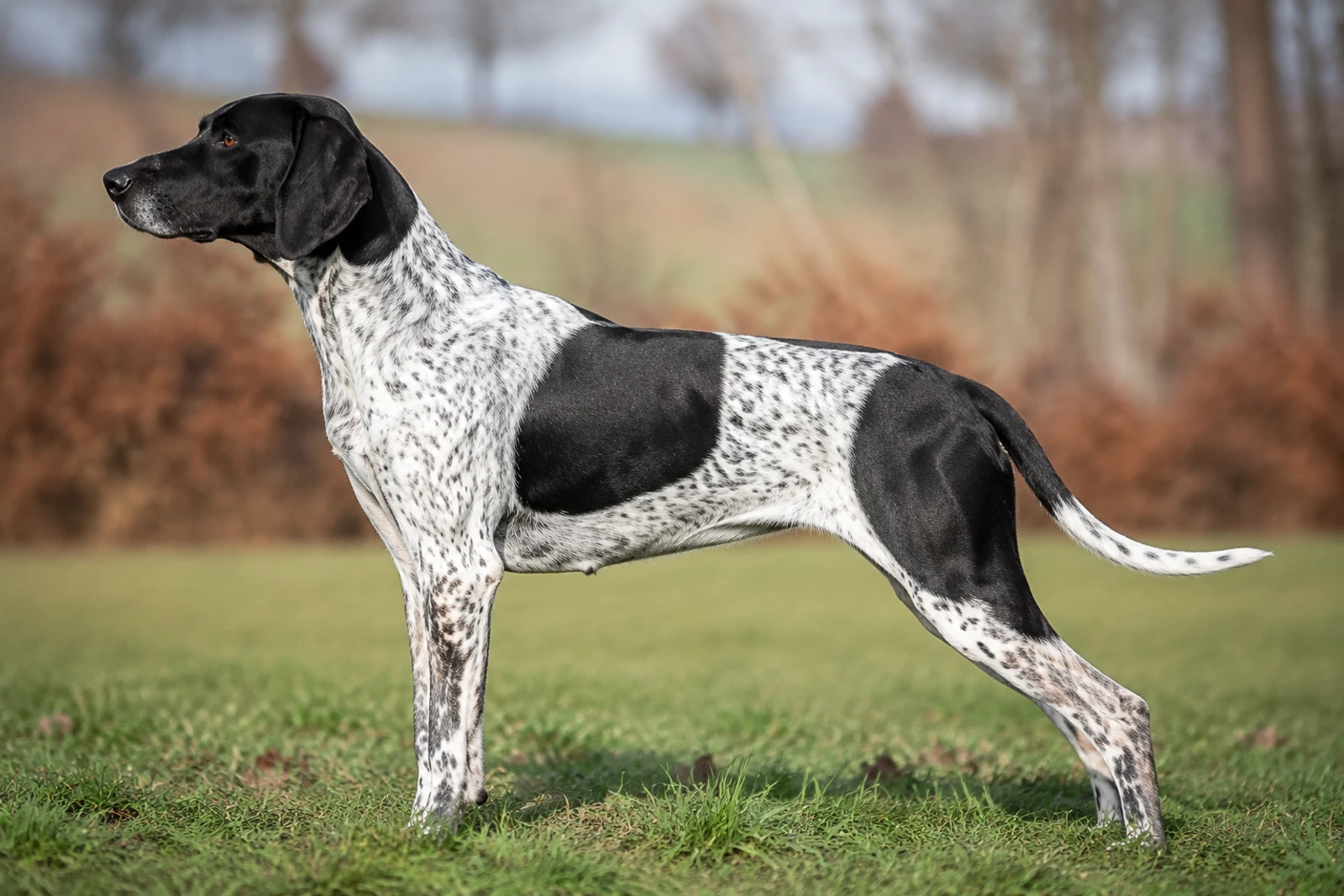
The Auvergne Pointer, also known as the Braque d'Auvergne, is a versatile French gundog celebrated for its gentle, affectionate nature and exceptional hunting skills. Ideal for active families or hunters, this breed thrives on human companionship and daily exercise. Its short, low-maintenance coat and eager-to-please attitude make it a wonderful indoor companion, though its high energy may overwhelm novice owners. With a strong pointing instinct and love for water, the Auvergne Pointer suits those who enjoy outdoor adventures and can provide consistent training and ample space.
At a glance
- Size
- Large
- Height
- 21–25 in
- Weight
- 49–62 lb
- Life span
- 12–13 years
- Coat colors
- Black and White, Black and White with Ticking, Black Roan
- Coat type
- Short, dense, and fine
How much does a Auvergne Pointer cost?
Adopt / rescue
$75–$400
Usually includes spay/neuter, first shots, and a microchip.
Buy from a breeder
$700–$2,000
From a reputable, health-testing breeder.
Approximate USD. Prices vary widely by region, breeder, pedigree, age, and coat colour — adopting is the lower-cost and recommended route. Avoid suspiciously cheap “breeders”; they’re often puppy mills.
Estimate the full cost of a Auvergne Pointer →Want the ongoing number? Estimate the monthly food bill for a Auvergne Pointer with our dog food cost calculator.
Auvergne Pointer photos
Views
Front, side, rear and top — the full silhouette.Poses
How the breed sits, lies, moves and plays.Puppy to senior
The breed across its whole life.Expressions
The breed’s range of moods.Close-up details
Eyes, ears, nose, paws, tail and coat.Coat colors
The breed’s recognized colors.Click any photo to enlarge. We show the Auvergne Pointer from every angle — three views, poses, life stages, expressions, close-ups, coat and colors.
Appearance & size
The Auvergne Pointer is a solid, well-built gundog that looks like it could hunt all day without missing a beat. It stands 21 to 25 inches at the shoulder and weighs anywhere from 49 to 62 pounds, giving it a medium-to-large footprint that’s athletic rather than bulky. From the side, the silhouette reads as a classic pointer: a moderately deep chest reaches down to the elbows, the back is straight and strong, and the loin tucks up just enough to signal speed and endurance. The tail, traditionally docked where legal, is set on high and carried level with the topline; when natural, it’s medium-length and tapers to a fine point.
The coat is the first thing most people notice. It’s short, dense, and glossy — smooth to the touch but weather-resistant enough for a morning in wet cover. The base color is always white, overlaid with heavy black mottling or roaning that creates a blue-gray sheen, often described as “blue belton” in pointer circles. Some dogs are born nearly solid black with white speckles, but the breed standard calls for enough white to keep the pattern distinct. Large black patches on the head and body are common, and a black saddle across the back is perfectly acceptable.
Up front, the head is a study in balance. The skull is oval and not too wide, stopping cleanly into a long, square muzzle that’s slightly shorter than the skull. The nose is broad and black, with wide-open nostrils — you’ll see it working scent even at rest. Eyes are large and round, a dark hazel that gives a soft, intelligent expression. The ears are set low, hanging close to the cheeks with a slight inward fold, and they’re long enough to reach the nose when pulled forward.
From the front, the chest is deep and well-sprung, with straight, muscular forelegs that stand squarely under the body. The shoulders slope nicely into strong pasterns, giving the dog an agile, forward-reaching stride. Turn it around, and the rear view shows a powerful set of hindquarters: broad, well-muscled thighs, a moderate bend at the stifle, and straight hocks that drive the dog forward without wasted motion. The overall picture is a working pointer built for stamina, not showiness — every piece of its frame says “ready.”
History & origin
The Auvergne Pointer was built for a specific piece of ground — the volcanic highlands of the Cantal in south-central France — and it still works the same way it did 200 years ago. Most kennel histories trace the breed’s local roots to the 1700s, when hunters in the Auvergne region shaped a dog that could handle tough cover, point with intense steadiness, and retrieve over rocky, uneven terrain. They needed a biddable, muscular gundog with a soft mouth and the stamina to push through thick briar and snow, and they produced exactly that.
The breed’s precise ancestry is untidy, but the leading theory points to old French pointing dogs crossed with imports brought by the Knights of Malta. Those black-and-white “Maltese” dogs may have introduced the breed’s signature pied coat and ticking, which helped hunters pick the dog out against dark undergrowth and at distance. Early dogs were known simply as braque d’Auvergne, a regional type shaped by generations of practical selection rather than a written standard.
Structured breeding began in earnest in the late 19th century. A handful of passionate breeders in and around the town of Aurillac worked to unify type, culling dogs that lacked the signature black-and-white mottled coat or a natural retrieve. Their efforts gave the breed its modern head shape — a squarely built muzzle, a slightly rounded skull, and those warm, rounded hazel eyes that are still a hallmark. In 1913, M. de Tournay and other enthusiasts founded the breed club and drew up the first official standard, just as large-scale field trials started formalizing French pointing dogs.
World War II hit the breed hard. The occupied Auvergne saw kennel numbers collapse, and by the 1950s the Auvergne Pointer was dangerously close to disappearing. A committed revival centered on Cantal breeders brought the population back slowly, though the breed has never been numerous. Today the Auvergne Pointer remains primarily a specialist’s hunting companion in France, with modest but steady exports to Belgium, the Netherlands, and more recently North America. The FCI recognizes it in Group 7 (Continental Pointing Dogs), and dedicated breed clubs in France and abroad continue to prioritize working ability over looks, making the modern dog a direct link to the farmers’ and poachers’ dogs that earned their keep on the Massif Central.
Temperament & personality
You notice the Auvergne Pointer’s intensity before anything else. This is a serious working dog that lives to partner with you outdoors. Indoors, that drive translates into a dog who wants to be near you — often leaning against your leg or following you from room to room. They are affectionate without being clingy, but they are not the sort of breed that happily entertains itself in the backyard while life goes on inside. Leave one alone too long without a job or exercise, and you’ll see anxiety-driven behaviors surface: pacing, chewing, barking.
Energy demands are real. A couple of leisurely walks around the block won’t cut it. Plan on at least an hour of off-leash running, field work, or a long, structured hunt to keep an Auvergne Pointer sane. A tired one settles nicely in the house, but they keep a mental lid on that energy — they are generally calm and steady once their needs are met. The breed’s 12–13 year lifespan means you’re signing up for over a decade of this daily commitment.
With family, they are typically gentle and patient, though that 49–62 pound frame can be a lot for a toddler if the dog spins to welcome you home. Supervise early interactions and teach children to respect the dog’s meals and resting spots. Resource guarding is not a breed hallmark, but any dog can develop it if repeatedly bothered while eating. This is a dog that reads household mood and usually matches it — relaxed and soft-eyed when the home is calm, alert and watchful when a stranger approaches.
Speaking of strangers: they notice everything. An Auvergne Pointer is a natural watchdog, not because of aggression but because of a keen awareness of territory and scent. They may bark to announce a visitor, then quickly warm up once you signal all is well. That nose rules their world. You might see them point a paw at a bird in the yard, lock onto a scent trail on a walk, or — fair warning — roll in something truly foul. Some do it to mask their own odor, others just seem to enjoy the stink. It’s a quirk tied to their hunting heritage, not misbehavior.
Training a breed this sharp requires consistency and respect, not force. They are strong-willed enough to tune out corrections they don’t understand, but they light up with clear, positive guidance. Early socialization keeps their natural reserve from tipping into shyness. House-training clicks quickly if you reward outdoor elimination the moment it happens; a lingering urine smell indoors will cue repeat marking, so enzymatic cleaners are your friend.
This is not a low-maintenance companion. If your idea of dog ownership is a weekend jog and couch time, the Auvergne Pointer will invent its own — often destructive — outlets. Give this dog real work, and you’ll get a steady, devoted partner who is content to crash at your feet after a day afield.
Good with kids, dogs & other pets
An Auvergne Pointer who grew up around kind children is typically steady, patient, and non-aggressive — but those 49 to 62 pounds of solid muscle can knock over a toddler without meaning to. A 21–25-inch-tall dog whipping through a doorway or turning sharply in play is a real hazard for small kids. Constant supervision and teaching a dog to sit calmly around running, squealing children pays off fast.
- Always supervise interactions between toddlers and any large dog. Even a friendly tail at coffee-table height can send a plate flying.
- Teach children to respect the dog’s space, avoid grabbing ears or jowls, and never disturb a resting or eating Pointer.
- Invite calm kids over during puppyhood. Repeated, positive exposure before 16 weeks teaches the young Pointer to relax around unpredictable movements and noise.
With other dogs, the Auvergne Pointer is generally cooperative, especially when introduced early. Breeders who raise puppies inside the home, not in isolation, give them a solid head start. If well-socialized, this breed usually gets along fine with other family dogs, though some same-sex pairs may butt heads. Off-leash meets with unfamiliar dogs still warrant caution — a Pointer’s hard stare and freeze can be misread by less-tolerant breeds.
Prey drive is the real sticking point for cats and small animals. Centuries of pointing and retrieving mean even the sweetest Pointer will lock onto a fleeing cat, rabbit, or guinea pig. Raise a puppy alongside a confident, dog-savvy cat from day one, and they often learn to coexist. But a loose hamster or a cat bolting across the yard will light up every hunting instinct. Assume rodents, ferrets, and pocket pets are never safe alone with this breed, and use baby gates to give the cat an always-available escape route.
Do not leave the Auvergne Pointer isolated outdoors. He needs to be underfoot with his people, and long periods of solitude breed whining, destructiveness, and over-the-top greetings. A tired Pointer — one who’s had a solid hour of off-leash running and some nose work — settles indoors without climbing the walls, making him a far safer companion around children and other pets. If you miss the early socialization window, an anxious adult may never fully relax around novel dogs or loud kids. You can often improve confidence with gentle, reward-based counter-conditioning, but it’s harder and slower than stacking those positive experiences during puppyhood.
Trainability & intelligence
The Auvergne Pointer learns fast, but he learns for someone he trusts. Put pressure on this dog with a heavy hand, and you’ll get a dog who shuts down or finds his own entertainment — likely at a dead run.
What you’re working with
A 50- to 60-pound athlete with a nose that can override his ears. He’s smart enough to solve problems on his own in the field, which means he can also figure out how to open the treat cupboard. His natural inclination is to cooperate, but it’s a partnership, not an obedience contest. Harsh corrections make zero sense to him — they degrade the very trust that keeps him checking back in with you.
Cracking the code
Reward-based training isn’t just kinder; it’s the only thing that sticks. A piece of cheese, a quick game of tug, real praise — those flip a switch in this breed. Shape the behavior you want in short, upbeat sessions, and stop before his nose drifts under the fence line. Nail the basics (sit, wait, a solid “leave it”) inside first. Then take it outside where the world is more interesting than you.
Recall is your real benchmark
Off-leash reliability doesn’t come preloaded. A Auvergne Pointer whose recall is sketchy at 50 yards will keep going if a bird flushes. Use a long line religiously during early training so he never practices ignoring you. Call him back, pay him big, and release him again — coming to you should never end the fun.
Socialization that matters
The critical window slams shut around 16 weeks. Between 8 and 14 weeks, calmly expose him to different surfaces, sounds, strangers, and friendly dogs. Make every new encounter brief and positive. Rushing a hesitant pup into a chaotic setting breeds an adult who startles or reacts, so read his body language and back off when he’s had enough. A confident adult Auvergne Pointer takes the world in stride because nobody forced it on him as a puppy.
Exercise & energy needs
Target 60–90 minutes of real, heart-pumping exercise every day, split into at least two sessions. A 30-minute leash walk is a warm-up for an Auvergne Pointer — this is a dog bred to quarter fields for hours at a steady run. You’ll see the real dog come out when he’s off-leash, covering ground at a gallop, working scent lines, and checking in with you between bursts.
Plan on an hour of vigorous off-leash running in the morning, or 30–40 minutes cantering next to a bike, and a second session in the afternoon or evening — fetch, swim, or a long sniff-explore hike where he sets the pace. Puppies and adolescents need this broken into smaller chunks to protect developing joints, but the total demand doesn’t go down. A tired Pointer is a calm indoor companion; a shortchanged one will redesign your sofa cushions.
Mental work matters just as much as miles. Hide a scent drag, bury a duck-scented dummy, or work him on a long line through tall grass. Puzzle toys and obedience drills alone won’t dent the need to hunt, so tie up his brain with nosework, barn hunt, or teaching hand signals at a distance. These dogs thrive on the partnership of pointing, flushing, and retrieving, even if you never step foot in a field trial. Dock diving, canicross, and flyball are all good outlets, but nothing replaces a couple of hard runs where he can use his nose. Skip the heavy-impact stuff on pavement while he’s young, and watch for heat — his dark coat soaks up sun fast on hot days.
Grooming & coat care
Auvergne Pointers wear a short, close-fitting coat that rarely mats or tangles. A quick weekly session with a bristle brush or a rubber curry mitt is all it takes to yank loose hair, spread natural oils, and restore that sleek, almost metallic sheen. During spring and fall, shedding ramps up for a few weeks. You’ll want to bump brushing to two or three times a week then, or run a damp chamois over the dog after a field run to catch flying fur before it lands on the sofa.
Bathing is an occasional chore, not a routine one. These dogs have a coat that resists sticking mud; often, a wipe-down with a wet cloth and a good toweling off will handle post-hunt grime. When you do bathe them — every couple of months, or when they roll in something memorable — use a mild dog shampoo so you don’t strip the coat’s protective oils.
The floppy, pendant ears need real attention. Trapped moisture behind those leathers invites yeast and bacteria. Lift each ear weekly, sniff for any funk, and gently swab the visible canal with a vet-approved cleaner and a cotton ball. Never dig deep. Nails grow fast on an active dog, but pavement walking usually wears them down somewhat. Check every three to four weeks and clip the tips before you hear clicking on hard floors. Teeth? Brush two or three times a week with dog toothpaste to keep that mouth healthy through a 12- to 13-year life. There’s no coat trimming to fuss over — just keep the ears dry, the nails short, and the brush handy, and this pointer will stay field-ready and shed less on your rugs.
Shedding & allergies
If you’re expecting a pristinely hair‑free house, the Auvergne Pointer will politely disappoint you. This is a moderate shedder — not the kind that leaves tumbleweeds blowing across the floor, but a steady dropper of short, dark, needle‑fine hairs that show up on light‑colored furniture and work clothes. The coat is dense, glossy, and lies flat, with no undercoat to speak of. That means you won’t deal with the fluffy clumps of a double‑coated breed, but you’ll still find a fine dusting everywhere the dog goes.
- Year‑round shedding: A constant, low-level rain of hair. It’s visible but manageable with weekly effort.
- Seasonal blowout: Twice a year — usually spring and fall — the shed kicks into higher gear for about two to three weeks as the old coat cycles out. During that window, you’ll want a rubber curry brush or grooming mitt in hand most days.
- Grooming fix: A five‑minute once‑over with a curry brush or a hound glove pulls loose fur before it migrates to your sofa. Follow with a damp cloth or chamois wipe‑down and you’ll pick up most of what’s left. A warm‑water rinse right at the start of a blowout softens the hairs and speeds the whole process up.
Drool? Almost a non‑factor. You might catch a drip or two after a big drink of water, but Auvergne Pointers don’t have the loose, jowly lips that leave glossy strings on your walls or lap. Wipe the muzzle after a water bowl session and you’ll rarely give it a second thought.
Now for the allergy part: no short‑haired dog is magically hypoallergenic. Auvergne Pointers still produce dander — fine, dry flakes of skin — along with proteins in saliva and urine that trigger reactions. Their moderate shedding can spread that dander onto floors, upholstery, and into the air. If you have mild allergies, regular brushing, a good vacuum with a HEPA filter, and keeping the dog out of the bedroom can often let you coexist. But if your allergy is severe, don’t rely on coat length or shedding volume as a workaround. Spend time around an adult Auvergne in someone’s home before you commit. That single visit tells you more than any abstract promise of “low‑allergy” ever will.
Diet & nutrition
The single most important diet rule with an Auvergne Pointer is keeping them lean. These dogs are built to cover ground all day, and even a few extra pounds can silently punish their joints. You should be able to feel the ribs through a thin layer of flesh — if you can't, the food bowl is too full.
Feeding by age and size
- Puppies: Four evenly spaced meals a day until 4 months old, then three meals until 6 months, then the adult schedule of two meals a day for life. When you bring a puppy home, transition gradually over a week: start with lightly cooked, puréed meats and soft fruits or vegetables, or use a high-quality large-breed puppy kibble that supports steady, controlled growth.
- Adults (49–62 lb): Actual portions ride entirely on how hard the dog works. A dog that hunts for hours or runs off-leash on rough terrain needs substantially more than one strolling the neighborhood. Use the feeding guide on the bag as a starting point, then adjust by body condition — not by how much the dog acts hungry. Auvergne Pointers often stay eager around food, so measure every meal.
- Seniors (roughly 8+ years): When the daily sprint turns into a long walk, cut portions back a little at a time. Smaller, more frequent meals can help an older dog’s digestion; there’s no sound reason to drop the protein level unless your vet advises it. If teeth go missing or gums get tender, purée the meals to unlock the nutrition.
What should go in the bowl
An Auvergne Pointer thrives on a meat-anchored diet. A practical homemade plate is roughly 60% raw or cooked meat, 20–30% dog-safe fruits and vegetables, and the rest from eggs, plain yogurt, or digestible grains like pearl barley or white rice (white rice is excellent for a touchy stomach). Blending or processing the mix, especially for puppies and old-timers, makes a real difference — a dog’s up-and-down jaw motion and lack of salivary enzymes mean puréed food absorbs better.
Raw chicken wings can be introduced around 12 weeks under your supervision. They’re good for jaws and brains. If your dog inhales meals, slow things down with a puzzle bowl or snuffle mat.
A hard no on freebies and fads
Feed the dog in his own bowl, on his own mat, and never from the table. Leftover cooked vegetables, plain meat, or unsalted veggie-cooking water go into that bowl after you eat. A single rich, fatty handout — the holiday plate of scraps — can trigger pancreatitis. And skip any vegetarian or vegan plan: a dog’s teeth, gut, and short digestive tract are wired for meat, not a meat-free experiment.
If you're batch-cooking grains or chicken for yourself, set a plain portion aside before you season it. It costs almost nothing and gives you a rock-solid meal starter.
Health & lifespan
Expect a well-bred Auvergne Pointer to live 12 to 13 years, and many stay sharp and moving well into their senior years. This is a generally sound, athletic breed without a laundry list of inherited nightmares, but a few conditions do surface often enough that responsible breeders screen for them aggressively.
Like a lot of deep-chested, large dogs, bloat (gastric dilatation-volvulus) is a real threat. A dog who gulps its food, races around right after eating, or is built with a narrow, deep ribcage can have the stomach twist, cutting off blood flow. Knowing the early signs — restlessness, a tight or swollen belly, unproductive retching — can save a life. Talk with your vet about whether a preventive gastropexy at neuter makes sense for your dog.
Hip and elbow dysplasia also appear in the gene pool. Dogs should move with that effortless, floating trot, but a dysplastic joint makes every step a chore. Reputable breeders won’t breed a dog without current OFA or PennHIP clearances — ask to see the paperwork on both parents. Eye problems like progressive retinal atrophy (PRA) and cataracts have been documented, so annual eye exams by a veterinary ophthalmologist are wise, and breeders should provide CERF or OFA eye certifications.
Those velvety drop ears are magnets for moisture and gunk. A weekly ear cleaning with a vet-recommended solution is non-negotiable if you want to sidestep chronic infections that can turn painful and require longer treatment.
Keep your Pointer lean. These dogs love to eat, and a frame that should carry 49 to 62 pounds doesn’t forgive extra weight. Extra pounds accelerate joint degeneration — you should feel the ribs easily under a thin layer of flesh. Pair measured meals with the real, hard running this breed was built for, every single day.
Routine preventive care catches threats early. Monthly heartworm prevention during mosquito season (and one month past its end) is a must, and stay current on rabies vaccination — it’s the law, and once clinical signs of rabies appear, there’s no treatment. A well-socialized dog is also a healthier dog: early, positive handling reduces the kind of chronic anxiety that can lead to pacing, relentless barking, or a depressed immune response. When a higher-drive dog lives in respectful, consistent engagement rather than isolation or force, you sidestep a lot of stress-driven wear on the body.
Subtle shifts often flag trouble before major symptoms do. If your normally tireless Pointer suddenly hangs back on a run, refuses a meal, or just seems off, get them seen. Book a thorough annual wellness exam, and bump that to twice a year once the dog hits 10.
Living environment
An Auvergne Pointer is a large, athletic dog—49 to 62 pounds, standing 21 to 25 inches—with the relentless drive of a pointing breed. Apartment life rarely works. They need a house with a securely fenced yard and direct outdoor access. The fence should be at least 5 feet high; a bored pointer with strong prey instincts will clear a shorter barrier the moment something interesting moves on the other side. Inside a small space, that 60-pound frame knocks into furniture, topples lamps, and feels like too much dog the second they get a burst of energy.
Noise alone rules out most shared-wall living. These dogs are enthusiastic alert barkers, and they’ll voice frustration loudly if their exercise needs aren’t met. Even a well-exercised Auvergne Pointer will let you know about a delivery truck or a squirrel on the porch. A detached home gives breathing room between you and the neighbors.
Tolerance for being left alone is low. This breed bonds fiercely and doesn’t cope well with long absences. If the household is empty for an eight- or nine-hour workday, separation anxiety can surface as barking, chewing, or house-soiling unless you’ve built up alone-time slowly and left a thoroughly tired dog with a puzzle toy. Expect to budget for a midday dog walker or daycare. They shadow you from room to room and want to be part of whatever you’re doing—not shut away for hours.
The single coat offers almost no insulation. An Auvergne Pointer gets cold quickly once temperatures dip toward freezing, so a dog coat is essential for winter outings, and they shouldn’t live outdoors. Heat is equally risky; save hard runs for early morning or evening, and always provide shade and cool water. A climate-controlled indoor space is non-negotiable in hot or cold extremes.
A yard is just a starting point. Without scent games, hide-and-seek, or time spent tracking a hidden toy, even a spacious property can become a stage for barking marathons and serious digging. This is a breed that needs mental work matched to its physical output every single day.
Who this breed suits
Active families and outdoorsy singles
This dog needs a solid hour of off-leash running, field work, or scent games each day — two quick walks won’t cut it. Hunters, trail runners, and weekend hikers will find a tireless partner who’ll match stride for 12–13 years. With older kids, the Auvergne Pointer is patient and gentle, though that whip-like tail can clear coffee tables. They’re compact for a pointer at 49–62 pounds, but count on a fenced yard for the post-run zoomies.
First-time owners and seniors
First-timers can succeed if they commit to daily hard exercise and a training class. The breed learns fast but will out-negotiate you when bored. Fit seniors who routinely walk several miles may enjoy an adult rescue that’s calmed down, but a puppy’s athletic demands and sudden leash lunges ask a lot from an older handler.
Who should think twice
If you work 9–10 hours away, look elsewhere. These pointers get destructive and loud when left alone. Apartments only work if you’re religious about daily field trips; even then, the lack of a safe off-leash spot grates on them. They shed white-and-black hair year-round and have a big voice for a 50-pound dog. Skip the breed if you can’t give them real off-leash freedom or a steady nose-work job — a restless Auvergne Pointer will eat your couch. Families with frail toddlers may find the dog’s exuberance overwhelming.
Cost of ownership
A well-bred Auvergne Pointer puppy from a breeder who screens hips, elbows, and eyes usually lands between $1,500 and $2,500. Since the breed is still uncommon in the U.S., expect a waitlist, a deposit, and possibly travel or shipping on top of that—rarely a last-minute purchase.
Once the dog is home, typical monthly costs run $110 to $180. Here’s where it goes:
- Food ($50–$75): A high-quality kibble or raw diet for a 49–62 lb adult. If your dog hunts or runs hard daily, you’ll likely pay toward the high end for a performance formula.
- Routine vet care ($15–$35/month if you annualize): Annual exam, vaccines, heartworm and flea/tick prevention. A separate emergency fund matters, too—field cuts, pad tears, and sudden lameness happen with an athletic pointing breed.
- Pet insurance ($35–$60): Accident-and-illness coverage for a large breed. With a deep chest that can bloat and a working dog’s risk of orthopedic trouble, many owners find it pays for itself after one trip to the emergency vet.
- Grooming ($0–$20): The short, low-maintenance coat mostly needs a weekly brush, an occasional bath, and regular nail trims—almost free if you DIY. A pro bath and nail grind every other month runs $25–$40.
- Training and gear (first year): Group obedience classes ($150–$250) and key supplies—a check cord, a sturdy 6-foot leash, a crate, and a well-fitted harness—add a few hundred dollars up front.
First-year expenses, counting the puppy itself, initial vet visits, spay/neuter (if you go that route), and setup gear, typically push past $3,500. After that, the monthly rhythm isn’t wildly expensive compared to other large dogs, but the real cost of an Auvergne Pointer is time. Skimp on off-leash running and brain work and you’ll pay with shredded furniture and a restless, stressed-out dog—that bill no money covers.
Choosing a Auvergne Pointer
The Auvergne Pointer is a rare pointing breed in the US, so your search almost always starts by contacting the national breed club (the Braque d’Auvergne Club of America) for a breeder referral list. Because litters are few, expect to wait—a thoughtful breeder often has a list of approved homes before a breeding even takes place. Rescue Auvergne Pointers occasionally surface through breed-specific networks, but they are uncommon.
Responsible breeder vs. rescue
A responsible breeder does more than produce puppies. They compete with their dogs in field trials or hunt tests, screen for genetic conditions, and match each pup to a home based on energy level and lifestyle. They will interview you as thoroughly as you interview them. Rescue, while rare, is worth exploring through the club’s designated rescue contact. A rehomed adult can be a fantastic way into the breed if you’re honest about your experience with high-drive pointing dogs. Either path should leave you with a healthy, temperamentally sound companion—not a surprise project.
Health clearances to ask for
Health testing is not optional. Ask to see original documentation—not just a verbal assurance. At minimum, both parents should have:
- Hip dysplasia screening: OFA (excellent, good, or fair) or PennHIP scores with favorable distraction index.
- Elbow dysplasia screening: OFA evaluation; the breed is not riddled with elbow issues, but responsible breeders check anyway.
- Eye examination: A recent (within the last year) passing result from a board-certified veterinary ophthalmologist, clearing for things like cataracts, progressive retinal atrophy, and eyelid anomalies.
- Cardiac evaluation: Many breeders also do an echocardiogram to screen for congenital heart defects, given the breed’s athletic demands.
Some breeders may additionally test for autoimmune thyroiditis or submit DNA samples for research, since the breed’s small gene pool makes transparency crucial. A breeder who waves off these tests or says “my vet checked them” without official clearances is cutting corners. Healthy Auvergne Pointers routinely live 12–13 years, and these screenings help stack the odds in your favor.
Red flags that should make you walk away
Watch for breeders who never let you meet the mother dog (or at least video-chat if distance is an issue), run a constantly rotating cast of litters, or sell multiple breeds from the same property. Pushy sales tactics—pressure to send a deposit right now over social media, a website with a “buy now” button—are incompatible with the kind of placement a rare, working breed demands. Also skip anybody who:
- Breeds dogs younger than 2 years (health clearances can’t be finalized before then).
- Fails to provide a written contract that requires you to return the dog to them if you can’t keep it.
- Paints all puppies as identical; a good breeder will describe specific temperaments and suggest which pup fits your life.
Picking a puppy
You’ll typically visit the litter around 7–8 weeks. Trust the breeder’s guidance—they’ve been observing these pups since birth. A well-socialized Auvergne Pointer puppy will approach you with a loose, wagging body, not shrink into a corner or launch into frantic nipping. Look for clear eyes, clean ears, and a pudgy-but-not-bloated belly. The breeder should have introduced the litter to crates, outdoor surfaces, and everyday household sounds. A puppy raised in an isolated kennel without these exposures will face a steeper adjustment curve. Take home the pup that shows steady curiosity and bounce, and you’ll have the raw material for a devoted field partner and family dog.
Pros & cons
-
Steady split-personality temperament: All business and tireless in the field, then genuinely calm indoors — no pacing, no neurotic shadowing once exercise needs are met.
-
Straightforward, honest nature: Unlike some pointers, the Auvergne is famously biddable and soft-mouthed; consistent reward-based training gives you a reliable partner who wants to get it right.
-
Wash-and-wear coat: Short, dense black-and-white hair (often heavily ticked) repels dirt and burrs. A quick weekly brush handles normal shedding, with a little extra effort during seasonal blows.
-
Alert without the edge: A sharp watch dog who announces strangers with a deep bark, but lacks aggression. Early socialization keeps it smart rather than incessant.
-
Robust health span: 12–13 years is typical, with relatively few breed-specific issues when parents are screened for hip and eye conditions.
-
An athlete’s exercise load: A 20-minute walk is barely a warm-up. Plan on an hour of hard off-leash running, swimming, or retrieving daily — boredom turns to destructive chewing fast.
-
Velcro to a fault: Bonds intensely with its people and can unravel if routinely left alone for a 9-to-5. Separation anxiety manifests as howling, pacing, or jailbreak crate escapes.
-
Nose-driven recall risk: A scent trail or squirrel shot can override months of training in a heartbeat. A securely fenced yard and long-line work are non-negotiable until recall is bombproof.
-
Sheds more than the short coat suggests: Seasonal coat blows blanket furniture and clothes; not a good fit for allergy sufferers or fastidious housekeepers.
-
Apartment non-starter: Space to gallop and tolerance for enthusiastic alert barking make city or condo living a poor match.
Similar breeds & alternatives
If the calm-but-capable Auvergne Pointer feels like a fit but you’re struggling to find one — or you just want to weigh your options — a handful of other pointing breeds share its versatile, people-loving temperament. Each brings different trade-offs in size, energy, and coat.
German Shorthaired Pointer
The most direct comparison. Both are all-around bird dogs with short, dense coats. A GSP is a touch taller and leaner, typically 55–70 pounds. The real split is drive. A GSP runs hot — it needs a solid 60–90 minutes of hard, off-leash running most days, or it’ll redecorate your house. The Auvergne Pointer has an off switch; it settles more easily after its workout. GSPs are everywhere, so locating a litter from health-tested parents is simpler, but you get a dog that’s often pushier and less forgiving of boredom.
Brittany
At 30–40 pounds, the Brittany is a smaller, spaniel-esque gun dog with a similarly soft mouth and eager-to-please personality. Brittanys tend to be a notch more energetic and sensitive, and they lack the Auvergne’s signature black-and-gray roan coat. If you want a compact, foot-hunting companion that’s easier to travel with and far more available across the U.S., a Brittany is a strong alternative — just plan on daily off-leash time and some early impulse-control training.
Wirehaired Pointing Griffon
For rough cover and cold mud, the Griffon’s wiry, low-shedding coat is a clear upgrade. Weight runs 50–70 pounds, similar to the Auvergne. Griffons are famously clownish and sociable, while the Auvergne Pointer skews a bit steadier and less boisterous in the home. Coat upkeep tilts in the Griffon’s favor if you don’t mind occasional hand-stripping; Auvergne Pointers just need a quick weekly curry. Watch for ear infections with the Griffon’s hairy canals.
English Pointer
If you’re laser-focused on field performance and don’t care about retrieving or lounging on the sofa afterward, the English Pointer is the specialist. Built for speed and range (45–75 pounds), these dogs were bred to locate birds and point, period. The Auvergne Pointer is a true versatile retriever that goes from the blind to the family room without skipping a beat. English Pointers also carry less body fat and a thinner coat, so they’re chilly in winter and need a jacket.
Because Auvergne Pointers remain rare in North America, imported pups and breed-specific rescues can mean long waits. Any of these alternatives is easier to find through a responsible breeder. If the steady, sweet nature and unique black-roan speckling are what caught your eye, none of the others is a one-to-one match — but a well-bred Brittany or Griffon can come remarkably close as a family hunting partner.
Fun facts
- Originated in the Auvergne region of France, with ancestry dating back to the 18th century.
- Natural pointer with a keen nose, often used for hunting woodcock and partridge.
- The breed nearly went extinct after World War II but was revived by dedicated breeders.
- Known for its distinctive black-and-white coat with ticking, often called 'blue' or 'roan'.
Frequently asked questions
- How much exercise does an Auvergne Pointer need?
- Auvergne Pointers have a high energy level and require at least an hour of vigorous daily exercise, such as running, hiking, or fetch. Without adequate physical and mental stimulation, they can become restless or develop unwanted behaviors.
- Do Auvergne Pointers shed a lot?
- They are moderate shedders with a short, dense coat that sheds year-round, with heavier shedding during seasonal changes. Weekly brushing helps manage loose hair and keeps their coat healthy.
- Are Auvergne Pointers good with children?
- Yes, they tend to be affectionate and gentle, making them excellent family companions when properly socialized. As with any large breed, interactions with young children should always be supervised to ensure safety for both.
- Can an Auvergne Pointer live in an apartment?
- Apartment living is not ideal unless you can provide extensive daily exercise and outdoor time. They are large, active dogs that thrive in homes with a securely fenced yard where they can run freely.
- How much grooming does an Auvergne Pointer require?
- Grooming needs are minimal due to their short coat. Occasional brushing and baths when needed are usually sufficient, along with routine nail trims and ear checks.
- Is an Auvergne Pointer a good choice for first-time dog owners?
- They can be a good fit for dedicated first-time owners who are prepared for their exercise needs and eager to train. Their intelligence and loyalty make them responsive, but consistency and early socialization are important to channel their energy positively.
Tools & calculators for Auvergne Pointer owners
Quick estimates tailored to Auvergne Pointers — pre-filled with this breed’s size where it matters.
Articles & stories about the Auvergne Pointer
Sources & standards
This profile follows recognized breed standards from the American Kennel Club (AKC) and the Fédération Cynologique Internationale (FCI), along with established veterinary and breed-club guidance. These describe general breed tendencies — every dog is an individual.