

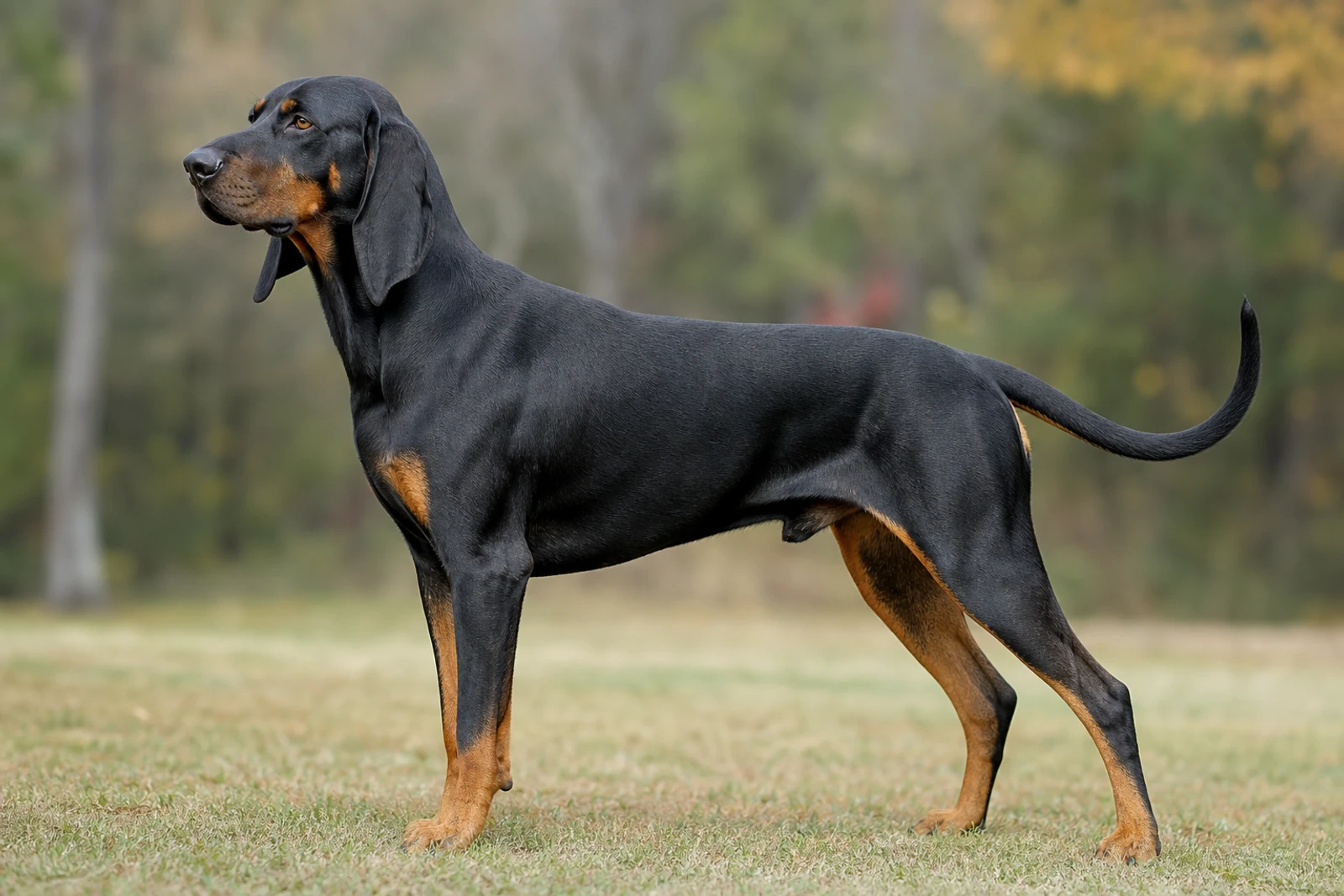
The Black and Tan Coonhound is a large, easygoing scenthound built for endurance. With a calm indoor demeanor and a tenacious tracking instinct, they suit active families, hunters, or outdoorsy owners who appreciate a loyal but independent nature. Their baying voice and strong prey drive require space and thoughtful training. Best for those who enjoy a blend of gentle affection and determined work ethic.
At a glance
- Size
- Giant
- Height
- 23–27 in
- Weight
- 51–75 lb
- Life span
- 10–12 years
- Coat colors
- Black and Tan
- Coat type
- short and dense
- Group
- Scenthounds
How much does a Black and Tan Coonhound cost?
Adopt / rescue
$50–$300
Usually includes spay/neuter, first shots, and a microchip.
Buy from a breeder
$400–$1,200
From a reputable, health-testing breeder.
Approximate USD. Prices vary widely by region, breeder, pedigree, age, and coat colour — adopting is the lower-cost and recommended route. Avoid suspiciously cheap “breeders”; they’re often puppy mills.
Estimate the full cost of a Black and Tan Coonhound →Want the ongoing number? Estimate the monthly food bill for a Black and Tan Coonhound with our dog food cost calculator.
Black and Tan Coonhound photos
Views
Front, side, rear and top — the full silhouette.Poses
How the breed sits, lies, moves and plays.Puppy to senior
The breed across its whole life.Expressions
The breed’s range of moods.Close-up details
Eyes, ears, nose, paws, tail and coat.Coat colors
The breed’s recognized colors.Click any photo to enlarge. We show the Black and Tan Coonhound from every angle — three views, poses, life stages, expressions, close-ups, coat and colors.
Appearance & size
The Black and Tan Coonhound is built to work, and every part of its frame backs that up. This is a giant scenthound—23 to 27 inches at the shoulder, 51 to 75 pounds—but the weight sits on a lean, stretched-out body that’s all endurance muscle. The dog is noticeably longer than tall, a design that trades compactness for a ground-covering, effortless trot.
From the front, the chest drops deep between the shoulders, wide enough to house serious lung capacity. Straight, heavy-boned forelegs lead down to tight, cat-like feet with well-arched toes, not flat hare feet. The head is long and cleanly chiseled, with a slightly domed skull and a muzzle that’s squared off at the end, not pointy. Deep brown eyes, set well apart, carry a soft, gentle expression—no hard staring here. The ears are the feature that grabs you immediately: set low, long, and folded in velvety drapes that hang well below the jaw. When the dog’s nose drops to the ground, those ears sweep the earth, mechanically funneling scent particles toward a wriggling black nose with wide-open nostrils.
From the side, the topline runs mostly level from the withers to the hip, with just a subtle arch over the loin. The brisket reaches to the elbow, and behind it the belly tucks up noticeably—no potbellied outline on a fit Coonhound. The tail springs from a slight upward set, thick at the base and carried saber-like with a gentle curve, never curled over the back. Everything about the silhouette says distance and stamina.
The rear view shows powerful, well-angled hindquarters. Thighs are thick and muscular, the hocks low and parallel when standing, providing the drive to push through brush and climb ridges. The tail tapers to a fine point, often with a small brush of black hair at the tip.
The coat is short, dense, and lies flat, with enough gloss to shed light rain and brambles. Color follows a rigid pattern: solid jet black covering the body, with rich tan markings on the muzzle, dots above the eyes, the chest, all four legs, and under the tail. The tan can vary from deep mahogany to lighter copper, but no white is allowed in the standard. That tight, smooth coat showcases the dog’s musculature, so you’ll always see exactly what shape the animal is in. It also means shedding is a reality and a distinct hound odor tends to build up without regular grooming—something to factor in if you’re sharing the couch.
History & origin
The Black and Tan Coonhound was cobbled together in the American South by hunters who needed a dog that could work a cold trail through thick river bottoms and dark hollers, then tree a raccoon and raise enough noise to lead a man to the spot. The recipe started with foxhounds brought over by settlers—mostly English strains that were already fast, tough, and game—crossed onto Bloodhounds for a dramatically more powerful nose and the signature black-and-tan coat. No one wrote down a master plan, but by the early 1800s breeders in the Appalachians and the Ozarks were deliberately producing large, long-eared hounds with the stamina to hunt all night and a voice you could pinpoint from a mile away.
Those early hunters prized two things above all: a “cold nose” that could unravel a scent that was hours old, and a bawl mouth that changed tone the instant the quarry was treed. The Black and Tan checked both boxes. Its blunt muzzle and deep flews shamelessly announce the Bloodhound ancestry, while the rangy frame and muscled rear deliver miles of trotting on rough ground. Coon hunters wanted a dog that didn’t just chase—it stayed with a single raccoon or opossum, worked it silently until the climb, then locked on and bayed without letup.
The United Kennel Club recognized the breed in 1900, making the Black and Tan the first registered coonhound breed in the country. The American Kennel Club followed much later, granting recognition in 1945. Through those years, the Black and Tan served as the foundation stock from which several other coonhound varieties splintered off. Even as the Treeing Walker and Redbone grew in numbers, the original Black and Tan held its ground in night-hunt competitions and on working farms across the Southeast.
A Black and Tan Coonhound’s entire build—deep chest, big feet, hanging skin—comes straight from that original job description. The dog was expected to plunge into briars and creek water without hesitation, handle a cornered raccoon on its own, and keep baying loud and steady until the hunter showed up. That loud, unmistakable bawl still rings through hilly timber on a crisp fall night, and it’s the same sound a hunter in 1850 would have leaned on to find his dog in the dark.
Temperament & personality
A Black and Tan Coonhound is, at heart, a laid-back family companion with a nose that never takes a day off. Inside your house, a 51–75-pound dog will surprise you with how happily he sprawls on the couch—as long as he’s already clocked some serious sniff time. Outdoors, he’s all business. Those long ears and soulful eyes are attached to a scent-processing machine that can lock onto a trail and tune out everything else, including your voice. It’s not stubbornness for its own sake; a fresh raccoon track simply matters more than a recall command. Patience and high-value treats go further than any heavy-handed correction.
With people, the breed skews gentle and affectionate. Most Black and Tans do well with children, though small kids should never be left unsupervised around any large dog, especially near a food bowl. Coonhounds take mealtime seriously, and a child who interrupts can trigger a guarding response. They’re generally good with other dogs, but a strong prey drive makes cats, rabbits, or other small pets a gamble unless you’ve raised them together from puppyhood and managed introductions carefully.
This is a pack hound, not a loner. Left alone for long stretches, a Black and Tan may bay—a deep, rolling sound that carries—or dismantle a table leg with the same dedication he brings to a scent trail. Sturdy chew toys and a predictable routine help, but he genuinely needs his people nearby. When he’s content, you’ll see a relaxed, loose body and soft eyes; a stiff posture with direct staring means give him space.
Expect your hound to roll in something foul-smelling. The reasons range from masking his own scent to “advertising” a find, or simply because he enjoys eau de dead thing. It’s ingrained, so keep a towel and dog-safe shampoo handy.
Training means working with the nose, not against it. A treat right after outdoor elimination teaches the right spot faster than punishment for accidents. And because scent drives everything, clean indoor messes with an enzymatic cleaner to truly break down the odor; otherwise, that spot remains a bathroom in his mind. When you learn to read the forward lean of a hound on a trail versus the loose, wiggly greeting at the door, living together gets a whole lot easier.
Good with kids, dogs & other pets
A Black and Tan Coonhound’s default setting around children is patient and non-aggressive, but at 51–75 pounds and up to 27 inches at the shoulder, this is a dog that can sideswipe a toddler without meaning to. Supervise any time your hound is loose with small kids, and teach children not to climb on, grab, or startle the dog. That gentle temperament means many families find the breed a steady companion for older kids who can join in scent games or long walks, but the hound’s size and independence mean you still set clear boundaries.
With other dogs, the outlook is generally good. Bred to trail game in packs, these hounds often enjoy canine company and read social cues well when properly introduced. Early and ongoing positive exposure makes the difference—let a puppy meet calm, vaccinated dogs in safe settings well before that 12–16 week socialization window slams shut. After that, continue offering playdates and controlled greetings on leash. Same-sex aggression isn’t a breed hallmark, but any large, intact dog can bring tension, so neutering and careful introductions matter.
Cats and small pets are where you hit the real management piece. This is a scent hound with a nose that overrides brains the moment a rabbit streaks across the yard or the neighbor’s cat darts under a car. Some Black and Tans coexist peacefully with indoor cats they’ve grown up with from puppyhood, raised side-by-side with calm supervision and zero chase rewarded. But don’t count on that translating to strange cats, pocket pets, or backyard poultry. Even a well-socialized adult may revert to instinct when that high-pitched squeak triggers a chase chain. Separate securely when you’re not there, and never leave a coonhound alone with a free-roaming ferret, hamster, or bird.
Socialization isn’t a one-and-done puppy class checkbox. The breed can trend toward wariness of new people and situations if under-exposed. You want to introduce your puppy gradually to men with beards, kids on bikes, vacuum cleaners, slick floors, and the vet’s exam table before 14 weeks old. After the sensitive period closes, forcing a fearful adult hound into crowded dog parks or strangers’ hands just piles on stress. Instead, build confidence through positive, repeated experiences at the dog’s pace. A Black and Tan who learns early that the world is mostly harmless grows into an easygoing house dog. One raised in isolation may struggle with timidity, noise phobias, or over-excitement around other dogs for life.
A final note on companionship: these dogs were not designed to be backyard ornaments. They bond hard to their people and can develop separation distress if left alone for long hours. A bored, lonely hound is a loud, destructive hound. If your household’s schedule means the dog is solo most of the day, that patient, kid-friendly nature won’t mean much—you’ll have an anxious problem-solver on your hands. Plan for real daily togetherness, not just a quick walk before work.
Trainability & intelligence
If you want a dog who hangs on your every word and obeys instantly just to please you, a Black and Tan Coonhound will humble you fast. These are scenthounds built to follow their nose for miles, making independent decisions while working out of sight. That’s the heart of their intelligence — and the core of every training challenge you’ll face.
They learn new cues surprisingly quickly when you use high-value food rewards. The catch is that motivation vanishes the moment a raccoon or a rabbit leaves a scent trail. Your “come” command, no matter how well practiced in the kitchen, means nothing once a Coonhound locks onto an odor. That’s not stubbornness for stubbornness’ sake; it’s a genetic override that selective breeding jammed into them for generations.
What actually works
- Short, upbeat sessions — five minutes of work followed by a break keeps a hound engaged. Long, repetitive drills cause them to check out.
- Reward, don’t punish. Punishment-based methods break trust and can make these dogs shut down or become anxious. A Coonhound who’s worried about your reaction won’t learn faster; he’ll just avoid you.
- Motivation comes from the nose, so use it. In addition to treats, hide a scented toy or make finding you a game. Food rewards should be stinky — think tiny bits of hot dog, cheese, or freeze-dried liver — not dry biscuits.
Recall and the long-line reality
Expect off-leash reliability in unfenced areas to be a lifelong maybe. The breed’s recall is notoriously situational. A 30-foot training line lets them roam and follow scent without turning into a lost-dog emergency. Pair the line with a high-rate-of-reward recall, and practice “check ins” where you reward them for glancing back or returning without being called. Even then, keep your treat pouch stocked and your expectations realistic — when a good trail fires up, your voice may not exist.
Socialization starts early
Hounds can be outgoing with family but reserved with strangers. That reserve can tip into fear-based reactivity without early, positive exposure. Between 3 and 14 weeks of age, introduce your puppy to as many calm people, new surfaces, and everyday sounds as you can manage. Make each experience rewarding with treats or play. Continue those exposures through adolescence so the dog learns that new situations predict good things, not a reason to worry.
Invest your energy in a bombproof “watch me” cue and solid leash manners. Both become everyday management tools for a dog whose brain is geared to follow scent, not you. A Coonhound who knows how to walk politely on leash and check in with a glance will be far more enjoyable to live with than one you’ve spent months drilling on formal obedience, only to lose the connection the second he steps outside.
Exercise & energy needs
Plan on giving a Black and Tan Coonhound at least 60–90 minutes of real movement every day, split into two sessions. A single stroll on a six-foot leash doesn’t touch this dog’s reserves. He was built to cover miles of rough terrain behind a scent, and that working motor still hums in a pet home. If you shortchange his exercise, you’ll hear about it — the breed’s famous baying voice carries a long way, and a bored coonhound will bellow his complaints or redecorate your house.
Two solid outings per day is the minimum. A morning session that lets him trot and sniff for 30–45 minutes, then an evening session that’s equally demanding. One of those should ideally happen off-leash in a securely fenced area or on a 30- to 50-foot long line — not because he’s disobedient, but because his nose overrides his ears the instant a scent trail lights up his brain. A Black and Tan on a hot track will follow it with single-minded focus and zero regard for your recall, so a loose, safe space to roam is gold.
- Intensity matters more than speed. These dogs are marathoners, not sprinters. They thrive on steady, ground-eating movement: a long hike with changes in elevation, trotting alongside a bike on a soft trail, or an hour of exploring a creek bed while you walk the bank. Avoid repetitive high-impact work on pavement, especially during the first 18 months while joints are still developing. Responsible breeders screen for hip dysplasia, and you can protect those joints by sticking to dirt, grass, and varied terrain.
- Mental work is non-negotiable. A Black and Tan can jog for miles and still be restless if his nose never got a serious job. Hide meals in puzzle toys, scatter kibble across the yard for him to find, or play hide-and-seek with a smelly rag in the house. Formal scent work classes, barn hunt, or local tracking trials are perfect outlets — many owners say a 20-minute nosework session tires their hound out more than an hour of running.
- Activities that fit the breed. Hiking wooded trails, canicross, swimming (easy on joints), and coonhound-specific events like night hunts or AKC Scent Work all channel his natural drives. Let him nose through a field on a long line for 45 minutes and you’ll see his whole body soften. Skip the dog-park scene if it’s small and crowded — this breed’s size and occasionally rough play style can clash with strangers, and his nose won’t get a workout anyway.
When a Black and Tan Coonhound is truly exercised, you’ll know it. He’ll flop onto his side on the cool kitchen floor, let out a deep sigh, and sleep so soundly you’ll check if he’s breathing. Give him half-measures, and he’ll hand you a behavioral problem wrapped in sad brown eyes and a loud, mournful howl.
Grooming & coat care
The Black and Tan Coonhound’s short, dense single coat is about as low-drama as it gets. It doesn’t tangle, doesn’t mat, and sheds dirt like it never happened. Your real grooming time will go to those floppy ears, not the brush.
Brushing
Grab a pig-bristle brush or a rubber curry mitt — not a slicker or pin brush, which are overkill here. Twice-a-week sessions will sweep out loose hair, spread the skin’s natural oils, and put a healthy gleam on that black-and-tan hide. When shedding picks up in spring and fall, bump it to three or four times a week to stay ahead of the hair tumbleweeds. Because there’s no insulating undercoat, you won’t face the dramatic blowouts of a double-coated breed, but the short hairs are stubborn clingers on couches and car seats, so consistent quick brushings pay off.
Bathing
These hounds carry little doggy odor and their coat repels light grime, so a full bath is an occasional event. Plan on every two to three months, or when they’ve rolled in something unmentionable. Over-washing strips the coat’s protective oils and can lead to dry, flaky skin. Use a mild dog shampoo, work it in well, and rinse until the water runs absolutely clear — soap residue trapped against the skin by that short coat can trigger hot spots.
Ears, nails, teeth
Long, droopy ears are the breed’s Achilles’ heel. They seal in warmth and moisture, creating a perfect setup for yeast and bacterial infections. Check ears every few days and wipe the inner flap with a vet-approved cleaner and a cotton pad. Never dig into the canal. If you catch a sour smell, redness, or your dog starts shaking its head, it’s vet time.
Nails grow fast on a mostly outdoor dog that isn’t grinding them down on pavement. Trim every three to four weeks — if you hear clicking on your kitchen floor, you’ve waited too long. Start handling paws when the dog is young; a 65-pound Coonhound who decides she hates clippers will make you earn every nail.
Teeth need the same consistent attention. Brush two or three times a week with an enzymatic dog toothpaste. It doesn’t take much to head off the dental bills that creep up in later years.
Seasonal coat care
Expect heavier shedding as daylight stretches in March and April, and again when the coat thickens in October. More frequent brushing keeps it manageable, and a quick outdoor rinse with the hose on a warm day loosens dead hair before it migrates indoors. If your Coonhound treks through brambles or wet woods, do a hands-on post-hike check for burrs, ticks, and scratches — that single coat is no match for thorns.
Shedding & allergies
A short, no-fuss coat doesn’t mean a low-shed dog. The Black and Tan Coonhound drops a steady supply of stiff, needle-sharp hairs year-round — the kind that weave themselves into upholstery and stick in your socks. Shedding is moderate but constant, and a quick hand-swipe down your pants will usually prove it.
Twice a year, usually as winter gives way to spring and again when summer fades, that low-grade shedding turns into a real blowout. For a few weeks you’ll pull out tufts of undercoat when you brush, and your floors will collect tumbleweeds along the baseboards. A weekly once-over with a rubber curry brush or hound glove keeps the worst of it in check, and during seasonal peaks you’ll want to do that outside, ideally two or three times a week.
This is a scenthound with generous flews, so drool comes with the territory. You’ll see it after a long drink of water, on a hot day, or anytime food is nearby. They shake their heads and send thin ropes onto walls and ceilings. Keep a drool rag handy, especially near the water bowl.
If allergies are a concern, let’s be clear: no dog is truly hypoallergenic, and a Black and Tan Coonhound checks most of the boxes that stir up a reaction. They shed, they produce dander, they drool (saliva proteins can be a trigger), and they carry the classic “houndy” oil in their coat that lingers on furniture. Someone with mild allergies might manage with air purifiers and diligent cleaning, but for a household with significant sensitivities, this breed is a poor gamble.
Diet & nutrition
Black and Tans love their food, and that enthusiasm can tip into trouble if you’re not careful. Keeping this large, deep-chested breed lean is one of the best things you can do for his joints and long-term health. Even a few extra pounds add load to hips and elbows that already work hard on long tracking sessions.
Portion sizing that actually works
Start with the feeding guide on a high-quality kibble, but treat it as a rough sketch. A moderately active 65-pound adult typically needs somewhere between 1,800 and 2,000 calories a day — roughly 3 to 4 cups of dry food split into two meals. The more accurate gauge is your hands: you want to feel ribs easily under a thin layer of flesh. Can’t feel them without pressing? Cut back by a quarter-cup per meal and reassess in two weeks. Coonhounds are opportunistic scavengers, so free-feeding is a fast track to obesity. Measure everything, and lock the trash bin.
Puppy rhythms
- 8 weeks to 4 months: four evenly spaced meals a day.
- 4 to 6 months: drop to three meals.
- 6 months on: twice-daily feeding for life.
When you bring a puppy home, transition slowly — mix increasing amounts of the new food with the old over 7–10 days. Around twelve weeks you can introduce raw chicken wings or necks under supervision; they’re great for jaw strength and mental engagement, but always stay close because a determined pup can gulp too large a piece.
What to put in the bowl
A species-appropriate diet centers on animal protein. Many owners aim for about two-thirds of the meal to come from raw or gently cooked meat, organs, and bony parts, with the rest made up of dog-safe fruits, vegetables, and small amounts of add-ins like eggs, plain yogurt, or cooked grains. For sensitive stomachs, white rice is bland and easy to digest; pearl barley offers a high-fiber alternative for dogs that do well on grains. If you cook vegetable scraps, use the unsalted water as a soup base. Always present leftovers in the dog’s own bowl — never from the table — because food-motivated hounds will learn to beg in a heartbeat and it’s miserable to undo.
These dogs often inhale their meals. A puzzle bowl or snuffle mat slows them down, engages that problem-solving nose, and can shave minutes off a meal that would otherwise vanish in seconds.
The senior shift
As activity naturally tapers off, a Black and Tan’s metabolism cools right along with it. By age 7 or 8, start trimming daily calories by roughly 10% and monitor his waistline every few weeks. Keep protein quality high to maintain muscle, but don’t hesitate to split the same volume into three smaller meals if he seems stiff or less interested in food. Missing teeth or sensitive gums are common later on; puréeing his meals helps him absorb nutrients without pain. After holidays or rich family dinners, resist the urge to share fatty trimmings — a single greasy plate can spark pancreatitis in a breed already prone to weight gain. A lean Coonhound is one who can still tree a raccoon at ten.
Health & lifespan
A well-cared-for Black and Tan Coonhound typically lives 10 to 12 years. As a giant, deep-chested hound, this breed sidesteps many tiny-dog dramas but comes with a short list of its own predictable vulnerabilities. Responsible breeders screen for these, so you’ll want to ask about parent clearances upfront.
- Hip Dysplasia: The hip joint doesn’t form snugly, and over time that loose fit grinds into arthritis. Look for OFA (Orthopedic Foundation for Animals) certificates on both parents — they confirm hip radiographs were graded normal.
- Ear Infections: Long, drop ears are a Coonhound signature, but they also seal in moisture and debris. A quick weekly wipe with a vet-approved drying solution prevents the waxy, smelly build-up that turns into a full-blown infection.
- Gastric Dilatation-Volvulus (Bloat): The stomach fills with gas and twists on itself — a condition that can kill within hours. You’ll see a distended belly, restlessness, and unproductive retching. Lower the risk by feeding two smaller meals instead of one large bowl, skipping heavy exercise right after eating, and knowing the route to the nearest emergency vet.
- Eye Disease: Progressive retinal atrophy (PRA) and cataracts can show up. A CERF exam from a veterinary ophthalmologist confirms breeding dogs start with clear eyes.
- Factor IX Deficiency (Hemophilia B): An inherited clotting disorder that responsible breeders DNA-test for so they don’t pass it on. Carriers are healthy themselves, but two carriers together produce affected puppies.
These dogs run on their noses and their stomachs — often in that order — so weight creeps up quietly. Keep portions measured, not guessed. You want a visible tuck at the waist and ribs you can feel with light pressure. Extra pounds stress joints and deepen the bloat-risk profile.
Routine care isn’t complicated. Monthly heartworm prevention goes year-round or at least through mosquito season and one month past the first freeze. Rabies vaccination is required by law, no exceptions. Annual wellness exams give your vet a chance to spot early lens changes, a subtle hitch in the gait, or a low-grade ear infection before any of it spirals. Because these hounds are so tuned to their people, isolation and rough handling can trigger stress-related behaviors that chip away at their wellbeing — positive, early handling from puppyhood builds a sturdier adult dog.
If your Coonhound suddenly turns down dinner or you catch a whiff of something foul from an ear, act fast rather than waiting. A minor problem today is far simpler than an emergency tomorrow.
Living environment
Living with a Black and Tan Coonhound means living with a nose on legs, and that shapes almost everything about the right setup. This is not an apartment dog. Even a townhouse with shared walls will test your neighbors’ patience, because when he catches a scent or gets bored, you’ll hear a deep, ringing bay that carries halfway down the block. Plan on a single-family home with a sturdy, tall physical fence—at least six feet—dug in or reinforced at the bottom. These dogs can climb, dig, and slip through gaps you haven’t noticed yet, especially if a raccoon or squirrel is taunting them.
A yard is non-negotiable, but just turning him loose back there won’t cut it. He needs a good 60 to 90 minutes of real exercise daily, broken into at least two dedicated sniff-and-move sessions. Walk him on a long line or visit a secure open space where he can follow his nose at his own pace. Add mental work on top of that: hide treats for him to find, feed meals in puzzle toys, or practice short scent-trailing games. A tired nose settles far better than just tired legs.
This is a short-coated, deep-chested breed. He handles moderate heat fine with shade and water, but don’t mistake him for an all-weather outdoor dog. Once the temperature drops, he gets cold fast and needs to sleep inside with his people. Pay attention to hard surfaces and excessive jumping when he’s young—big frames don’t need the extra joint stress.
As for being left alone, a Black and Tan Coonhound usually doesn’t do well with long stretches of solitude. He’s wired to work in a pack and forms a tight bond with his humans. Left solo for a full workday, he can tip from a patient househound into a howling, destructive mess. Crate training and slow, patient desensitization help, but ideally someone is home part of the day, or you line up doggy daycare or a midday walker who understands scent hounds.
Who this breed suits
You live with a Black and Tan Coonhound for the calm, almost lazy hours indoors — and you earn those hours with long, meandering walks where the dog’s nose runs the show. This isn’t a breed for a quick jog around the block. They need real sniff time: an hour or more of walking, ideally with off-leash hikes in safe, fenced areas, because a scent can override any recall.
Who’s a great fit
- Active, patient families. The Black and Tan is gentle with kids, rarely sharp or snappy. As a giant scenthound (51–75 lb, 23–27 in), they’re sturdy enough for roughhousing but calm enough to doze through a movie. Just know they drool and have a distinctive hound odor — you’ll wipe slobber off walls.
- Outdoorsy singles or couples. They make excellent weekend camping buddies, happy to wander forest trails at a steady pace, then snooze by the fire. A partner who likes hiking, tracking, or just long, deliberate sniffari walks will click.
- Multi-dog homes. Coonhounds were bred to work in packs, and most get along famously with other dogs. A bored Black and Tan without a buddy may be louder and more destructive.
- Seniors with strength and sound tolerance. An active older person who can handle a strong puller on leash (they can suddenly lunge after a scent) and doesn’t mind a resonant bay could do well — but a 75 lb dog that pulls hard isn’t for everyone in their 70s.
- People who rarely need silence. They bay — a deep, carrying, melodic howl — when excited, bored, or when a squirrel dares exist. You have to find that endearing, not nerve-fraying.
Who should think twice
- Apartment or condo dwellers. The baying will make you very unpopular with neighbors. Even houses with thin walls or nearby units are a risk.
- First-time owners who want off-leash reliability. Training is a negotiation, not a command. A Black and Tan’s nose overrules your voice once a scent trail heats up, so off-leash freedom in unenclosed areas is a gamble unless you invest serious effort in long-line work and proofing.
- Anyone squeamish about drool, shedding, or “hound smell.” They drool after drinking, shed a fair bit, and have oily coats that hold scent. Weekly wipe-downs help, but the aroma never disappears.
- Neat-freaks who hate dirt and counter-surfing. Those long ears drag through everything, and a 55-lb dog can easily trade a muddy paw for a sandwich off the counter.
- People who need a quiet, independent day. When bored or lonely, they don’t just whine — they project a sound that carries for a mile. A bored Black and Tan might also redecorate your home with chew art.
This hound suits you if your idea of a good day ends with a tired, droopy-faced dog snoring on the sofa while you wipe drool off the coffee table — and you genuinely don’t mind doing it again tomorrow.
Cost of ownership
You can expect to pay $800 to $1,500 for a Black and Tan Coonhound puppy from a responsible breeder who screens for common issues. Puppies from proven hunting or show lines can push past $2,000. Adoption fees through breed rescues are typically $200 to $400. Before you bring a dog home, budget another $300–$500 for a crate, leash, collar, bowls, and initial supplies — a Giant breed puppy outgrows the small stuff fast.
Once the dog is settled in, plan on $150 to $300 a month in routine costs for the next decade. The biggest chunk is food. A 51–75 lb adult with a scenthound’s energy level eats about 3 to 4 cups of quality kibble a day, which works out to $60–$100 monthly. Cheap food can inflame that famously sensitive Coonhound skin, so most owners stick with a formula free of common triggers.
Grooming is minimal, but not zero. That short, dense coat sheds year-round and benefits from a weekly rubber curry brush. Bathe a couple of times a year unless they’ve rolled in something memorable. Plan on $30–$50 every few months for nail trims and ear cleaning if you don’t tackle the long, floppy ears yourself — they’re a magnet for infections.
Veterinary care will dominate the long-term budget. Routine annual exams, vaccines, and heartworm prevention run $400–$600 a year, so set aside $50–$80 a month. Black and Tans are deep-chested, which makes bloat (GDV) a real risk; an emergency gastropexy can cost $3,000–$6,000 if you aren’t prepared. Responsible breeders screen for hip dysplasia and eye conditions, but ear infections and hypothyroidism still pop up. Pet insurance helps smooth out those spikes. For a Giant breed prone to a few expensive problems, $45–$70 a month gets solid coverage with a reasonable deductible. Over a 10–12 year lifespan, you’re looking at a $20,000-plus commitment, and a good chunk of that hits in the senior years when the dog needs more frequent bloodwork and joint support.
Choosing a Black and Tan Coonhound
If you’re set on a puppy, understand that Black and Tan Coonhounds aren’t churned out by the dozen. Reputable breeders often have waiting lists, so patience is part of the process. That same patience often pays off by looking into coonhound-specific rescues first. Many hounds end up in rescue simply because their owners underestimated the volume, the exercise demands, or the nose-driven independence of the breed. Adoption gives you an adult dog with a known temperament and, usually, a house-training head start. Puppies do pop up in rescues occasionally, but don’t bank on it.
Health clearances to ask for
These dogs can live 10–12 years, and a responsible breeder stacks the odds in your favor. Ask for written proof of hip screenings — either OFA (a grade of Fair or better) or PennHIP. Because the breed is deep-chested, some breeders also screen for cardiac issues, and thyroid testing is a reasonable ask. Hip dysplasia is the big one. Don’t be shy. A breeder who can’t produce a certificate or acts put out by the question is a red flag. Similarly, pups should come with a written health guarantee that covers genetic defects for at least the first year or two.
Red flags that should send you elsewhere
- No health testing, but plenty of excuses. “My vet said they look great” isn’t a clearance.
- Puppies available right now, every time you call. A single responsible breeder typically plans one or two litters a year at most.
- You’re not grilled about your life. A coonhound’s bay can carry a quarter mile, and their nose leads them into trouble. A good breeder will flat-out ask if you have a tall, secure fence and whether you’ve lived with a baying hound before. If they don’t probe hard, they aren’t protecting the breed.
- You can’t meet the mother on-site. At minimum, the dam should be there, calm and tolerant of strangers. Seeing a nervy or aggressive mother in a kennel setup is a deal-breaker.
- Puppies leave before 8 weeks. Large-breed puppies need that time with littermates to learn bite inhibition and social cues. Run from anyone pushing a 6-week sale.
Picking your puppy
When you visit, trust your nose almost as much as your eyes. A well-raised litter lives in a clean, busy part of the house — not isolated in a garage run. Watch the puppies interact. You’re looking for a middle-of-the-road pup: the bold-but-not-bully one who comes over to sniff your hands without cowering or totally ignoring you. The Black and Tan’s whole life revolves around scent, so use that. Crumple a treat in your pocket or drag a piece of butcher paper along the floor. A pup that immediately locks onto the trail and follows it with a wagging tail is showing you exactly what you’ll live with for the next decade. Avoid the puppy who startles and won’t recover, and skip the one who hides behind furniture the whole time. Ask the breeder what they’ve done for early socialization — exposure to different surfaces, kids, household sounds, and being handled all over (paws, ears, mouth) is non-negotiable. Finally, if you can, spend five minutes with the sire or another related adult. Calm, friendly adults don’t guarantee a puppy’s personality, but they stack the deck.
Pros & cons
-
Sweet, mellow temperament — these hounds are famously friendly, gentle with kids, and get along with other dogs once they’ve had a good sniff.
-
Short, sleek coat that needs nothing more than a weekly once-over with a hound glove; shedding is moderate, and doggy odor stays low.
-
Reliable house dog when exercised: after a solid walk or a tracking session, a 51–75 lb Black and Tan will happily sprawl on the couch for hours.
-
Generally robust health; a life span of 10–12 years is common, and responsible breeders screen for hip dysplasia and eye issues.
-
Deep, booming bay is a hallmark of the breed — music to a hunter’s ears and rarely used indoors without a reason.
-
Voice. That same bay can be a serious liability in a close-set neighborhood. Left outside unsupervised, they’ll sing to every scent, and the sound carries for blocks.
-
Nose rules all. Off-leash reliability is almost nonexistent — if a raccoon crossed the path five minutes ago, your hound is gone. A secure, 6-foot fence is a must.
-
Independent to a fault. Training sessions feel more like a negotiation; they’ll check in with you, decide whether the treat is worth it, and only then possibly sit.
-
Drool factor. Expect ropes of slobber after drinking or when you’re cooking anything aromatic.
-
Giant-size clumsiness. At 23–27 inches and with a whip of a tail, they can clear a coffee table or bowl over a toddler without meaning to.
-
Not a watchdog. A Black and Tan is more likely to greet an intruder with a wag and a lean than with any protective instinct.
Similar breeds & alternatives
If the Black and Tan’s deep, rolling bawl and deliberate trailing style speak to you but you’re curious who else shows up to the hunt, a few close cousins in the coonhound family share that nose-down obsession while wearing a different coat.
- Bluetick Coonhound: The blue-mottled ticking and heavier black saddle give this breed its name. Compared to a Black and Tan, a Bluetick often brings a little more tenacity on cold, all-night trails and can be slightly more independent off leash, but you’ll still get the same thunderous bark when a squirrel hits the fence line. Size overlaps (45–80 lb, 21–27 in), but the coat pattern is a 180-degree switch.
- Redbone Coonhound: A solid, rich red coat and a reputation for being more even-keeled at home make the Redbone an alternative if you want the trailing drive with a marginally softer off-switch indoors. They’re still a giant scenthound (45–70 lb, 21–27 in) who will drag your nose across the woods; just expect a slightly smoother, less bell-toned bawl.
- Treeing Walker Coonhound: Built like a leaner, faster Black and Tan, the Walker is often the sprinter of the group — quick to tree game, quick to sound off. Their white-blazed face and tri-color coat are a visual departure, and the voice can be a touch more frantic. Exercise needs edge higher; pure walking rarely blunts their edge.
- American English Coonhound: More white, more ticking, and a higher-pitched chatter set this breed apart. They share the same weight range (45–65 lb) but often stand slightly shorter (21–25 in), and many owners find them a bit more social with other dogs.
If you’re drawn to the relentless trailing nose but want an even larger, slobbery giant, the Bloodhound drops the coonhound’s athletic edge for a slower, more wrinkled machine. Bloodhounds run 80–110 lb, demand less daily sprinting, and trade bawl volume for a face-full of drool — but they’ll follow a scent just as single-mindedly. Any of these breeds will treat your backyard like a scent safari, so if quiet and tidy are the goal, look elsewhere entirely.
Fun facts
- They are named after their coat color and their quarry—the raccoon.
- George Washington is said to have owned early ancestors of the breed.
- They have an exceptional cold nose, able to follow old scent trails.
- Their long, pendulous ears help stir up scent particles when tracking.
Frequently asked questions
- Are Black and Tan Coonhounds good with children?
- They are typically gentle and friendly with children, making them good family dogs when properly socialized. Their tolerant nature can be a good match for respectful kids, though due to their large size, supervision around toddlers is recommended.
- How much does a Black and Tan Coonhound shed?
- They have a short, dense coat that sheds moderately year-round, with heavier shedding during seasonal changes. Weekly brushing helps manage loose hair and keeps shedding under control.
- How much exercise does a Black and Tan Coonhound need?
- As high-energy scenthounds, they require at least an hour of vigorous exercise daily, such as long walks, jogging, or playtime in a securely fenced area. Without sufficient activity, they may become bored and develop destructive behaviors.
- Are Black and Tan Coonhounds easy to train?
- They are intelligent and eager-to-please but have an independent streak typical of hounds, which can make training a challenge for inexperienced owners. Positive reinforcement and consistency work best, though their strong scent drive may distract them.
- Do Black and Tan Coonhounds bark a lot?
- They are a vocal breed known for their distinctive baying, which can be loud and frequent, especially when they catch a scent or see potential prey. Training and providing enough mental stimulation can help manage excessive barking.
- Are Black and Tan Coonhounds suitable for apartment living?
- Their high energy level, tendency to bay, and large size make them less than ideal for apartments, as they thrive in homes with room to roam. They can adapt if given ample daily exercise and if noise isn't an issue with neighbors.
Tools & calculators for Black and Tan Coonhound owners
Quick estimates tailored to Black and Tan Coonhounds — pre-filled with this breed’s size where it matters.
Articles & stories about the Black and Tan Coonhound
Sources & standards
This profile follows recognized breed standards from the American Kennel Club (AKC) and the Fédération Cynologique Internationale (FCI), along with established veterinary and breed-club guidance. These describe general breed tendencies — every dog is an individual.