

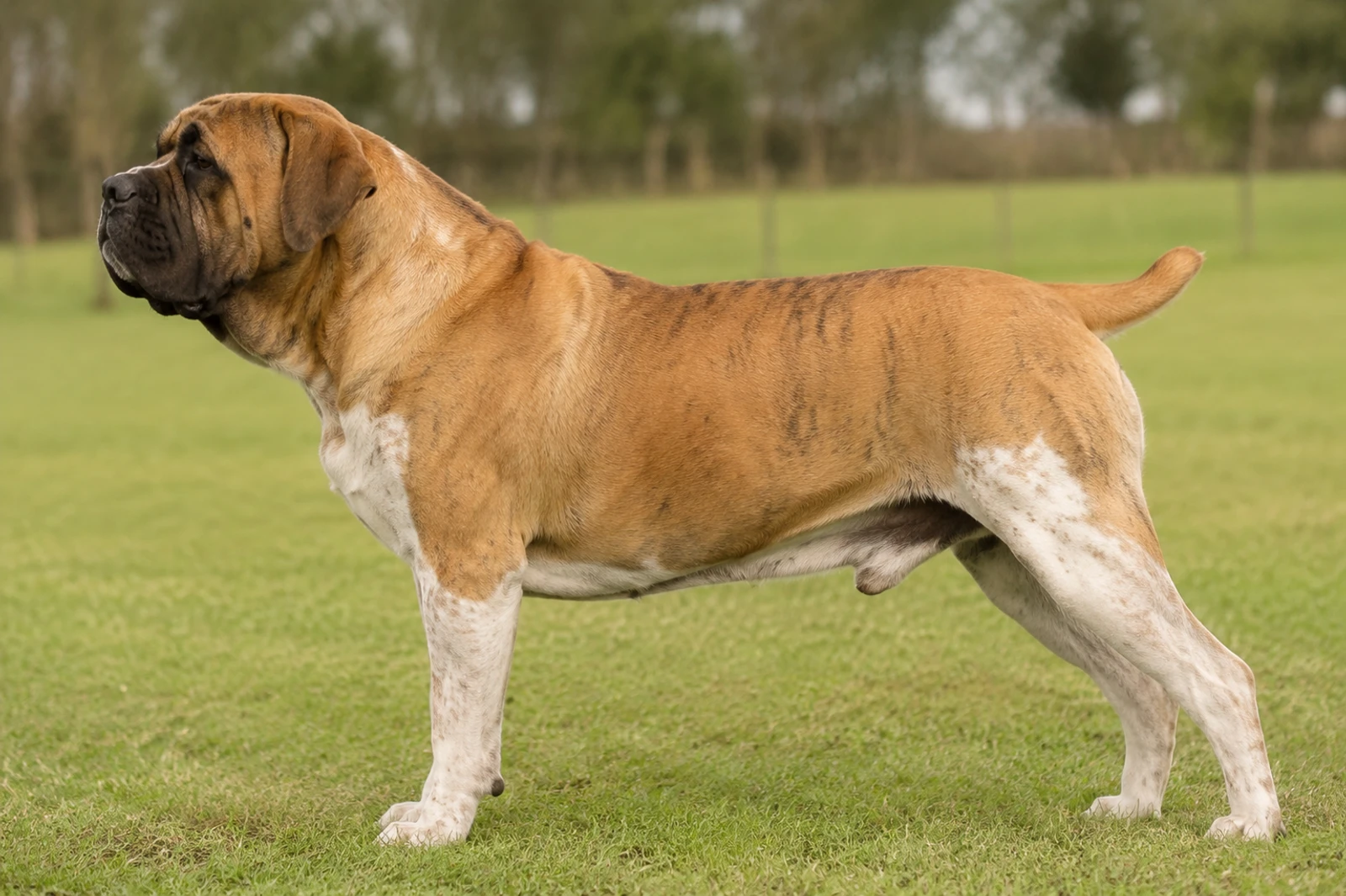
The Boerboel is a massive, powerful South African mastiff breed, renowned for its unwavering loyalty and protective instincts. Bred to guard homesteads, this confident and intelligent dog thrives in homes with experienced owners who can provide firm, consistent leadership. Best suited to spacious, rural environments with securely fenced yards, the Boerboel is deeply devoted to its family, including children when properly socialized, but may be aloof with strangers and dominant with other animals. This breed demands early socialization and ongoing training to channel its protective nature appropriately, making it a poor choice for novice owners or apartment living.
Boerboel Sticker Pack
36 cartoon stickers • transparent PNG • no watermark
Pinterest-ready
Share all 36 reactions as one sticker sheet
Pinterest opens with the full pack and a fresh, tailored description. You choose the public board and publish it from your own account.
Save the full pack


Choose one reaction above to share it alone, or use the full-pack button for all 36 together.




































Free full-resolution download — no account, no payment, no watermark.
Includes all 36 transparent PNG stickers in one ZIP. A quick human check is required for each download.
At a glance
- Size
- Giant
- Height
- 22–26 in
- Weight
- 165–198 lb
- Life span
- 12–15 years
- Coat colors
- Fawn, Brindle, Brown, Red, Cream, Piebald
- Coat type
- Short, dense, smooth
- Group
- Working
How much does a Boerboel cost?
Adopt / rescue
$75–$400
Usually includes spay/neuter, first shots, and a microchip.
Buy from a breeder
$700–$2,000
From a reputable, health-testing breeder.
Approximate USD. Prices vary widely by region, breeder, pedigree, age, and coat colour — adopting is the lower-cost and recommended route. Avoid suspiciously cheap “breeders”; they’re often puppy mills.
Estimate the full cost of a Boerboel →Want the ongoing number? Estimate the monthly food bill for a Boerboel with our dog food cost calculator.
Boerboel photos
Views
Front, side, rear and top — the full silhouette.Poses
How the breed sits, lies, moves and plays.Puppy to senior
The breed across its whole life.Expressions
The breed’s range of moods.Close-up details
Eyes, ears, nose, paws, tail and coat.Coat colors
The breed’s recognized colors.Click any photo to enlarge. We show the Boerboel from every angle — three views, poses, life stages, expressions, close-ups, coat and colors.
Appearance & size
You’re looking at a dog built like a fortress, but one that can still move with surprising agility. A full-grown Boerboel is a giant in every sense: males typically stand 24 to 26 inches at the shoulder and tip the scales between 175 and 198 pounds. Females are slightly smaller, usually 22 to 24 inches and 165 to 180 pounds. That weight isn’t just bulk — it’s dense bone, thick muscle, and a broad, powerful frame that makes the Boerboel one of the most imposing mastiff-type breeds.
The coat is short, sleek, and smooth, lying flat against the body. It’s built for function, not fuss. You’ll find it in shades of fawn (anything from light cream to deep reddish-tawn), brown, and brindle. A dark muzzle is a hallmark of the breed, often extending to the ears and eye rims, and a small white patch on the chest or toes is acceptable. The coat is low-shedding but certainly not hypoallergenic — you’ll still find short hairs on clothing and furniture.
The head is what grabs your attention first. It’s blocky and broad, with a flat skull, a moderate stop, and a muzzle that’s about a third of the total head length. The jaw is deep and strong, lending a serious, confident expression. Dark brown eyes sit wide apart, and the V-shaped ears are set high, dropping forward to frame the face. In countries where it’s still practiced, the tail is traditionally docked to the third or fourth vertebra, but many Boerboels now carry a natural tail that’s thick at the base and reaches just below the hock, curving upward slightly when the dog is alert.
From the front, the chest is broad and deep, with straight, heavy-boned forelegs set well apart. Large, well-arched feet with sturdy pads complete the picture. In profile, you see a level topline, a deep brisket reaching to the elbows, a well-sprung rib cage, and a powerful loin that drives the hindquarters. There’s a moderate tuck-up, which keeps the body from looking soft. From the rear, the thighs are heavily muscled and wide, and the legs stand parallel when the dog is relaxed — not cow-hocked or turned out.
History & origin
The Boerboel didn’t emerge from a royal kennel; it was cobbled together by tough farmers who needed a dog with the grit to stare down a lion and the sense to back off when a child was playing too rough. That’s the heart of this South African giant.
Its foundation traces back to the mid-1600s, when Dutch, German, and French Huguenot settlers arrived at the Cape of Good Hope. They brought along large, heavy-muscled dogs—Bullenbijter and Old Mastiff types—to guard remote homesteads. Isolated and often hundreds of miles from a neighbor, these farmers crossed their European dogs with native African canines, selecting ruthlessly for a single job: protect the family, livestock, and property from every threat, whether four-legged or human. The result was a dog that could cover long distances, track wounded game, and still face a leopard without flinching. By the 19th century, this dog was simply the Boerboel—literally “farmer’s dog” in Afrikaans.
What made the Boerboel work wasn’t just its 150-plus-pound frame; it was the brain. A Boerboel on a 5,000-acre farm had to make solitary decisions. There was no handler barking commands. That shaped a breed that is confident, territorial, and unnervingly smart about threats. But it also meant the Boerboel’s temperament was anchored to that isolated farming life. When urbanization hit South Africa mid-20th century, the breed nearly vanished. Crossbreeding with other large dogs diluted the gene pool, and true farm-bred Boerboels became rare.
A serious revival kicked off in the 1980s. A handful of breeders scoured the backcountry, tracking down dogs that still matched the old functional type. The South African Boerboel Breeders’ Society was formed in 1983 to set a standard and meticulously rebuild healthy bloodlines. That mission is still ongoing. Today’s Boerboel isn’t a restored antique; it’s a working guardian rebred for modern homes, but the ancient bouncer instinct is all still there. If you’re considering one, a breeder who proves that temperament through real work—not just a show ring—is everything.
Temperament & personality
A Boerboel is calm and self-assured inside his own home, but don’t mistake that steady presence for indifference. He watches everything, usually from a spot where he can see the whole room. He’s deeply bonded to his people and physically affectionate — a 165- to 198-pound lap dog isn’t a joke. When strangers approach, that watchfulness sharpens into a silent, imposing assessment; he won’t bark without cause, but the low rumble is unmistakable.
You need to lead with quiet consistency, not force. Strong-willed and smart, a Boerboel will test boundaries if he senses hesitation. Respectful, firm handling — clear rules and follow-through — turns that stubborn streak into a reliable, eager-to-please partner. Isolation or neglect can unravel the bond fast, triggering anxiety-driven behaviors like excessive barking or destructive chewing. These aren’t hyperactive dogs: a couple of 30-minute walks plus a hard play session or a job to do usually satisfies their need for physical and mental work.
Within the family, they’re often gentle with their own children, but the sheer size and protective instinct mean never leaving a Boerboel unsupervised with small kids. Food guarding can surface, so teach children to let the dog eat in peace — never interrupt a meal. Puppy chewing is normal exploration and teething relief, while adults gnaw hard objects to keep jaws strong. A homemade citrus spray (boil citrus peels) or a vinegar spray (white and cider vinegar) discourages chewing and neutralizes urine odors if accidents happen indoors, preventing repeat marking.
Learn to read body language. A loose, wiggly body and soft eyes signal a content dog. A stiff posture combined with a direct stare is a clear warning that often precedes aggressive behavior. Subtle calming signals like lip licking, yawning, or turning the head away tell you he’s uncomfortable. A forward-leaning center of gravity can signal confidence or intent to move, while a backward lean often means fear. Don’t interpret a tail wag in isolation — check the whole picture.
Outdoors, a Boerboel marks his territory by urinating over spots he sniffed earlier, banking scent cues for later. He may also roll in foul-smelling stuff — theories range from masking his own scent to simply enjoying a stink that appeals to his scavenger ancestry. It’s a quirk, not a flaw. With a 12- to 15-year lifespan, this is a long-term partnership. If you’re a novice or have a busy home with other pets, think hard. A Boerboel is a loyal guardian who thrives under experienced, confident ownership.
Good with kids, dogs & other pets
Around children
A well-socialized Boerboel can be a patient, steady companion for kids, but his sheer size — up to 198 pounds — means every interaction needs supervision. A happy tail-wag clears a coffee table; a casual lean against a toddler ends in a tumble. Teach children to stay off the dog’s bed, never interrupt meals, and give him space when he retreats to his crate. Early, positive exposure to gentle handling teaches the dog that small humans aren’t threats. His protective nature usually makes him a watchful, loving presence rather than a rough playmate, but don’t mistake calm tolerance for a free pass. Even the steadiest Boerboel has limits, and a yanked ear or a surprise hug while sleeping can trigger a warning growl. Respect those signals.
With other dogs
You’re not looking at an automatic park socialite. Intact males, in particular, can become same-sex aggressive if early training slips. Start puppy play dates between 3 and 14 weeks, introducing him to well-mannered adult dogs in controlled, neutral settings. Even then, some Boerboels grow up preferring their own family’s company to a romp with strangers. Leashed greetings on neutral ground prevent posturing; off-leash play belongs only with dogs you know well. Learn to read a stiff posture or a hard stare — it’s your cue to step in before things escalate. This breed wasn’t designed to be a carefree dog-park regular, and forcing adult interactions often backfires, adding stress instead of building confidence.
With cats and other small pets
Raised alongside a household cat from puppyhood, many Boerboels learn to coexist indoors without issue. A strange cat darting through the yard, however, flips a different switch — the chase instinct runs deep. Pocket pets like rabbits, ferrets, or guinea pigs are safer in secure enclosures behind a closed door, because prey drive can override even solid obedience. If you’re bringing a Boerboel into a home with small animals, separate spaces and sturdy barriers are non-negotiable until you see months of calm, disinterested behavior.
The foundation
This is a dog who craves connection. Being shut in a back yard or left alone for long stretches breeds anxiety, and an anxious 180-pound guardian can direct that stress toward kids, other pets, or visiting dogs. The sensitive socialization window slams shut around 16 weeks. Before that, expose your pup gradually to a variety of people, sounds, surfaces, and other animals — always keeping the experiences positive. After that window closes, you can still improve comfort, but forcing a fearful adult into social chaos only deepens the worry. A Boerboel who knows his family has his back meets the world with steadier eyes than one left to figure it out solo.
Trainability & intelligence
A Boerboel is sharp, observant, and reads you faster than you read him. He’ll figure out a new command in a handful of reps — when he’s motivated. But intelligence here isn’t the eager-to-please, Labrador kind. It’s the assess-the-situation-first kind. He was bred to guard property and make his own decisions about threats, so “because I said so” doesn’t hold much weight. You earn his cooperation, you don’t extract it by force.
What makes training tricky
That independence is the central challenge. A Boerboel is perfectly capable of understanding a recall command and then deciding the stranger at the fence needs a closer look first. His default isn’t defiance, it’s judgment. Pair that with a 165–198 lb body, and you have an animal who absolutely must see you as the most relevant, rewarding thing in his world — or he’ll follow his own agenda. Harsh corrections backfire fast. A breed this sensitive and powerful stores a grudge if you break trust, turning a potential partner into a guarded, reactive liability.
An approach that actually works
- Start absurdly early. Socialization blitz between 3 and 14 weeks is non-negotiable. Get him calmly exposed to chaotic noises, different floor surfaces, delivery people, children, other dogs — all before the 16-week window starts to close. Pair each new encounter with high-value food or a favorite tug toy so his brain logs “new thing = good thing.”
- Keep rewards real. Food lures work, but many Boerboels will sell their soul for a game of tug or a calm, genuine praise session when they get it right. Mark the exact second of the right choice (a clicker or a short “yes”) and pay immediately.
- Practice in the face of distraction. A sit in a quiet kitchen means nothing. Build layer by layer: sit while a family member walks past, sit while a dog barks on TV, sit at the park entrance. Expect to re-teach every command in a dozen new locations before it sticks.
- Teach an emergency recall that drops everything. Use a special, never-poisoned cue (like a whistle or a specific word) and reward it with over-the-top jackpots — whole chicken breast level — so the dog’s reflex overrides any guardian instinct. Without that, you don’t have a family protector, you have a 170-lb dog who won’t come when kids run toward the road.
No matter how calm he seems as a puppy, an adolescent Boerboel will test boundaries around 12–18 months. If you’ve banked thousands of positive repetitions and a solid relationship, that phase is a speed bump, not a wreck. Keep sessions short and end on a win, because a bored Boerboel will find his own entertainment, and at this size, that generally means chewed door frames or dug-up irrigation. Expect slow, steady progress, not flashy performance — and when he locks in and gives you that silent, reliable check-in, you’ll know the work was worth it.
Exercise & energy needs
A full-grown Boerboel weighs in anywhere from 165 to 198 pounds. That’s a lot of dog to tire out, but you won’t do it by logging marathon miles. This is a calm, watchful working breed, not a high-rev herder. Aim for 45–60 minutes of total daily exercise, split into two sessions. A brisk 30-minute morning walk and a 20-minute evening stroll with some yard sniff time usually gets it right for a healthy adult. What tires a Boerboel out isn’t just distance — it’s using his brain.
- Two sessions a day work better than one long slog. Give him a solid walk and then 10–15 minutes of focused mental work: obedience drills, scent games, or a puzzle toy loaded with his meal.
- Low-impact movement is the name of the game. These dogs grow heavy, and their joints pay the price if you push too hard, too young. Wait until growth plates close (often 18–24 months) before any jogging, jumping, or pulling sports. Even with adults, skip running on pavement or repetitive hard-impact work.
- Puppies need short, free-play bursts on soft ground rather than leashed pounding. Over-exercising a juvenile giant breed sets the stage for hip and elbow trouble later.
- Mental stimulation hits the sweet spot. Nose work, hide-and-seek with a toy, or teaching a new skill drains more energy than another trip around the block. A bored Boerboel left alone in the backyard will find his own job — and you probably won’t like the landscaping project.
- Good-fit activities: controlled walks on grass or dirt trails, swimming (when water is warm and safe), trick training, and cart-pulling only after the dog is fully mature and conditioned. Boerboels often enjoy a long, sniff-heavy decompression walk more than a fast-paced run.
Skip the agility tunnel and the dog-park sprint sessions. This giant wants to move with purpose, then park himself at your feet for the rest of the day.
Grooming & coat care
The Boerboel’s short, dense coat puts him squarely in the low-maintenance camp — a real gift when you’re already managing a 165–198 lb dog. The hair lies smooth, sheds moderately year-round, and doesn’t tangle, so you won’t need slicker brushes, combs, or detangling sprays. A quick session with a pig-bristle brush once or twice a week pulls out loose hair, distributes natural oils, and gives the coat a healthy gleam. During spring and fall blowouts, bump that to every other day; it cuts the hair cloud in the house noticeably.
Bathing is an as-needed affair. A bath every two to three months (or when he’s rolled in something unspeakable) is plenty. Use a gentle dog shampoo so you don’t strip the coat of its natural weather-resistant oils.
This breed doesn’t require any coat trimming. Focus instead on the true maintenance spots:
- Nails: Giant breeds put massive pressure on their feet, so keep nails short. Trim every 3–4 weeks, or as soon as you hear clicking on hard floors.
- Ears: Floppy ears trap moisture and gunk. Lift them weekly, wipe visible dirt with a damp cotton pad, and dry thoroughly. Redness or a yeasty smell means a vet visit, not a home remedy.
- Teeth: Brush several times a week with dog toothpaste. Tartar buildup can sneak up fast in big dogs, and dental neglect has real consequences for heart and kidney health.
A bristle brush run over the coat after an outdoor romp also brushes off dirt and dry grass before it hits your floors — a tiny habit that saves a lot of vacuuming.
Shedding & allergies
A Boerboel’s short, sleek coat sheds a steady trickle of small, stiff hairs all year. It’s not a blizzard, but if you want a spotless couch, you’ll vacuum two or three times a week. Twice a year — usually spring and fall — that trickle becomes a real blowout. The undercoat lifts and lets go for a few weeks straight, leaving hair tumbleweeds in corners and a faint sandy layer on every dark piece of clothing you own. Brushing with a rubber curry or a hound glove a couple of times during the heavy weeks helps, but you’ll still stay busy.
Drool is the bigger everyday reality. Those heavy, loose jowls are built for grip, not for keeping the floor dry. Water spills after every drink; long strands dangle during meals or on a hot walk. When the dog shakes, it flies. Keep a drool rag near the water bowl, another in the living room, and one in the car.
No dog with a shedding coat is truly hypoallergenic, and the Boerboel piles on an extra layer of trouble. The dander kicked up by shedding combines with protein-heavy saliva that sticks to fur and skin. For someone with dog allergies, that’s a double trigger. If anyone in your household is sensitive, spend time inside a Boerboel home — not just a quick meet-and-greet — before making a decision. A test run will tell you fast whether the coat, the drool, or both will be a problem.
Diet & nutrition
Boerboels rarely turn down a meal—and that food motivation, left unchecked, can pack on pounds that punish their joints. Portion control starts the day you bring your puppy home.
- Puppy schedule: Until four months old, feed four small, evenly spaced meals a day. From four to six months, drop to three meals. After six months, settle into a twice‑daily routine like an adult.
- Adult portions: A full‑grown Boerboel weighing 170–190 pounds typically eats 4–6 cups of high‑quality dry food daily, split into at least two meals. That’s a starting point—an active working dog may need more, a laid‑back companion less. Check by feel: you should find his ribs under a light touch, and a clear waist when you look down.
- What goes in the bowl: Build the diet around animal protein. Some owners follow a rough split of 60% meat (raw or gently cooked), 20–30% dog‑safe fruits and vegetables, and the remainder from eggs, plain yogurt, or digestible grains like pearl barley. A premium giant‑breed kibble works just as well. If you go the homemade route, work with a veterinary nutritionist to cover all the bases—guessing creates gaps.
Bloat prevention matters. A deep‑chested Boerboel gulping one enormous meal is a bloat risk. Keep the daily ration in two or three sittings, and never exercise him hard right before or after eating. If he inhales his food, use a puzzle bowl or snuffle mat to slow him down and engage his brain at the same time.
Senior adjustments. As a Boerboel ages and naturally slows down, cut back calories gradually to avoid obesity that taxes aging hips and elbows. There’s no strong evidence older dogs need less protein, so keep the protein quality high and dial down the extras. Purée meals if worn teeth make chewing tough.
Habits to avoid. Never feed from the table—a 180‑pound beggar trains fast and breaks slow. If you have healthy leftovers, add them to his bowl on your schedule, not his. Resist fatty holiday scraps and rich trimmings; a single high‑fat binge can trigger pancreatitis, and in a giant breed that’s an expensive emergency.
Measure every scoop with a real measuring cup, weigh your dog monthly, and adjust as needed. Keeping a Boerboel lean from puppyhood onward is the single best nutritional gift you can give his bones.
Health & lifespan
A healthy Boerboel can live 12 to 15 years, which is impressive for a dog that often tops 170 pounds. Hitting that upper range is rarely luck—it comes down to careful breeding and a routine that catches small problems before they become big ones.
The joint issues you’d expect in a giant breed are front and center. Hip and elbow dysplasia show up regularly in the breed, so responsible breeders screen breeding stock with OFA or PennHIP evaluations. Ask to see those results; they matter more than any guarantee. Bloat (gastric dilatation-volvulus) is a real, life-threatening emergency. Feed two or three smaller meals a day instead of one huge one, and enforce a solid rest period before and after eating—no hard exercise for at least an hour on either side. Some owners opt for prophylactic gastropexy, a surgery that tacks the stomach in place, done at the same time as spay or neuter.
Heart issues, particularly dilated cardiomyopathy, pop up in lines without proper cardiac screening. An annual echocardiogram by a veterinary cardiologist starts being wise around middle age. Eyes deserve attention, too. Entropion and ectropion—eyelids rolling in or out—can cause chronic irritation and may need surgical correction. A yearly eye exam by a veterinary ophthalmologist picks these up early.
Weight management isn’t optional; it’s the single biggest lever you control. An extra 10 pounds on a 180-pound dog adds massive strain to joints already under load. Keep him lean enough that you feel ribs without digging. These dogs are often food-motivated, so measure meals religiously and go light on treats.
Boerboels have a short, dense coat that thrives in heat but offers almost no insulation in cold weather. In freezing temperatures, limit time outdoors and consider a coat for him if walks are non-negotiable. In summer, provide shade and cool water—they’ll overheat faster than you’d think because of their bulk.
As with any dog, you’ll need to stay current on rabies vaccination (it’s legally required and there’s no treatment once symptoms appear) and give a monthly heartworm preventive during mosquito season, continuing for a full month after the first frost. Talk to your vet about the specific heartworm risk in your area.
Finally, remember that a Boerboel often hides discomfort until it’s severe. A subtle drop in energy, a hesitation to jump in the truck, or a shift in appetite might be the first clue something’s wrong. Pair that stoicism with at least an annual wellness exam, and step it up to twice a year once your dog hits seven.
Living environment
The Boerboel is not an apartment dog and will struggle in any home that lacks a large, securely fenced yard. This is a 165–198 lb guardian breed with a deep-seated need to patrol and protect its territory. A privacy fence with at least 6-foot height is the minimum — anything less invites both escape attempts and confrontations with passersby. The yard serves as the dog’s primary station, so expect some wear and tear; digging and perimeter pacing are hardwired behaviors, not signs of misbehavior, and you’ll mitigate them best with ample exercise, not a raised voice.
Climate-wise, the Boerboel originated in South Africa and handles heat well as long as there’s shade and cool water. In cold or wet weather, these dogs are less comfortable — short coat, no insulating undercoat — and they belong indoors with the family, not kenneled in a drafty run. If you live where winters bite, plan for quick potty breaks and indoor activities.
The Boerboel is watchful, not noisy. You’ll get a deep, deliberate bark when something truly concerns the dog, but nuisance barking is rarely an issue in a well-exercised, mentally satisfied adult. The trouble shows up when boredom hits or when a young dog is left alone to invent its own job. That brings us to alone-time tolerance: low. Boerboels bond tightly to their people and can develop separation anxiety if left solo for a full workday. Gradual desensitization from puppyhood helps, and so does a routine of puzzle toys, scent games, and two daily exercise sessions — think 60 minutes of brisk walking and structured work, broken into morning and evening chapters. But if your household is empty for 9+ hours straight, this breed isn’t a fit. They need a person around enough to make the partnership feel real.
Who this breed suits
The Boerboel belongs with an owner who already understands large guardian breeds and isn’t fazed by a 180-pound dog that can make decisions on its own. You’ll need quiet confidence, consistency, and a lifestyle that revolves around managing a powerful protector. If you’ve successfully handled a dominant Molosser or working-line shepherd, this breed can be an intensely loyal, clear-eyed partner.
Best-fit homes
- Experienced, physically strong singles or couples. You’re capable of handling a dog that outweighs many adults, especially when he locks onto a threat or a passing squirrel. You’re not just training a dog—you’re setting boundaries with a sober, self-assured mind.
- Active families with older children. Boerboels are famously tender with “their” kids, but accidental knockdowns are a real risk with small children. Teenagers who can participate in training and respect the dog’s space fit much better. The dog will naturally appoint himself guardian, so you’ll need to channel that, not stifle it.
- Rural or suburban setups with a fortress-like yard. A cramped apartment won’t work. You need a six-foot fence (undermined if needed—they dig), and enough room for a breed that patrols as naturally as it breathes. A long line in an open field works; off-leash dog parks rarely do, especially once same-sex intolerance kicks in around maturity.
- People seeking a true guardian, not just a deterrent. This isn’t a go-everywhere, tail-wagging greeter. He’ll watch, assess, and step between you and anything he deems a threat. If you want a dog you can take to a crowded patio without a management plan, this isn’t it.
Think twice if…
- You’re a first-time owner, or uncertain about leadership. The Boerboel does not forgive hesitation, permissiveness, or force-based shortcuts. A softly-spoken person who can’t physically back up a command may end up with a dog who runs the house.
- You’re older, frail, or have limited mobility. A 165–198-pound dog that lunges at a fence line can take you off your feet. If you can’t feasibly handle a 180-pound animal during a reactive outburst, the partnership becomes dangerous.
- Your home is a revolving door of strangers. Intense wariness of unfamiliar people is a feature, not a bug. Management means crating or contained introductions, always. Without early and sustained socialization, the wariness can slide into liability.
- You have small indoor pets or another same-sex large dog. Many Boerboels won’t tolerate an adult dog of the same sex in their space, and the breed’s prey drive can make cats or tiny dogs look like targets unless raised together impeccably.
- You travel often or can’t provide a job. A bored Boerboel with 12–15 years to fill will dismantle your drywall. This breed needs a solid hour of real exercise (not a leisurely stroll) and a mental task—advanced obedience, weight pull, property patrol—or you’ll end up with a destructive, depressed animal the size of a small person.
Stepping into life with a Boerboel means accepting that your home will never be casually open again. Get that right, and you’ve got a steady, velvet-velvet bodyguard who reads your moods before you do.
Cost of ownership
Purchase price
A well-bred Boerboel from a breeder who screens for hip and elbow dysplasia, cherry eye, and cardiac issues typically costs $2,000–$4,000 in the US. Show-prospect pups or those from imported South African lines can push closer to $5,000. Steer clear of low-price listings around $800–$1,200; those often skip the health testing that’s non-negotiable in a breed this size. A quality breeder will happily show you OFA or PennHIP results on both parents and walk you through the puppy’s early socialization.
Ongoing monthly costs
A 180-pound guardian eats like one. Count on $150–$220 a month for high-quality giant-breed kibble — 5 to 6 cups a day isn’t unusual — and you’ll spend another $20–$50 on joint supplements, which most owners start early given the breed’s weight.
- Vet and preventives: Routine annual exams, vaccines, and heartworm/flea/tick prevention scaled to a dog this size run $700–$1,200 a year. Heartworm meds alone are $25–$40 per dose. You’ll also want a proactive relationship with a vet who understands giant-breed bloat risk, which can mean an emergency gastropexy costing $3,000–$6,000 if you don’t opt for it during a planned spay/neuter.
- Insurance: A comprehensive accident-and-illness policy for a Boerboel averages $80–$130 a month, driven by the breed’s size and potential orthopedic claims. A high-deductible emergency-only plan drops to $35–$50 but leaves you exposed on cruciate tears or hip replacements.
- Training: Puppy kindergarten and basic obedience are essential with a 160-pound dog who doesn’t know his strength. Plan on $150–$300 for a group class series; private sessions addressing guardian-breed territoriality add $75–$125 each.
- Grooming: The short coat is low-maintenance — a quick weekly brush, baths as needed. If you pay for nail trims and occasional baths, figure $25–$50 every 6–8 weeks, though most owners handle this at home.
- Equipment and incidentals: Heavy-duty crates, raised feeders, XL beds, and chew toys built to survive a powerhouse jaw can set you back $400–$700 in the first year. Replacing a destroyed dog bed once or twice a year isn’t rare.
All in, you’re looking at a realistic monthly budget of $350–$500 before any surprise vet visits. A Boerboel’s food bill alone can outpace a small SUV payment — and that’s before you factor in the fence reinforcement he might inspire.
Choosing a Boerboel
Breeder or Rescue
A Boerboel is a 165-to-198-pound guardian — get one from a source that takes that seriously. A responsible breeder puts the same effort into health, temperament, and puppy raising that you’ll need to put into training.
Rescue can work if you’re already an experienced mastiff owner. Boerboel-specific groups sometimes place adults with known histories, and you skip the all-consuming puppy stage. The trade-off: you rarely get full health records, and a giant dog with an unknown past can be a liability in a home with kids or other pets. If you go that route, arrange a long meet-and-greet and be brutally honest about your experience level.
Health Clearances That Matter
A dog this large lives 12–15 years only if the foundation is solid. Ask the breeder to show you results — not just a verbal promise — from the following screenings.
- Hips: OFA or PennHIP evaluation. Even mild dysplasia in a 190-pound dog leads to pain and expensive interventions.
- Elbows: Dysplasia is less talked about but just as crippling.
- Heart: A board-certified cardiologist’s exam, because Boerboels can carry subaortic stenosis and other silent heart issues.
- Eyes: A current CERF or OFA eye exam rules out entropion, ectropion, and progressive retinal atrophy.
- Bloat awareness: There’s no genetic test, but a breeder who discusses feeding strategies and recognizes GDV risk is one who thinks long-term.
Red Flags When Searching
Walk away fast from anyone who leans on “South African bloodlines” instead of handing you health paperwork. Other deal-breakers:
- Litters always available, multiple breeds under one roof, or pressure to put a deposit down before you’ve visited.
- No questions for you. A breeder who doesn’t grill you about your fencing, experience, and family setup isn’t looking out for the dogs.
- Puppies raised in a kennel or garage with minimal household exposure. A Boerboel needs early handling, sounds, and people to become a stable adult.
- A “guard dog” pitch that frames shyness or outright fear as protectiveness. You want steady confidence, not a powder keg.
- No return clause in the contract. Good breeders take a dog back for any reason, for life.
Picking a Puppy
Start by meeting the dam — she should be calm, approachable, and clearly in charge of her space. A mother who cowers or lunges is a giant red flag.
Watch the litter as a whole. You’re looking for the middle-of-the-road pup: one that comes to investigate you without bowling over littermates and recovers quickly after a startle. The wallflower hiding in the corner may struggle in a busy household; the bully puppy may channel that pushiness into resource guarding later.
Expect the breeder to have records of early neurological stimulation, deworming, and first shots. Ask what they do in weeks five through eight — exposing puppies to crates, stairs, car rides, and respectful handling pays off in a dog that will soon weigh more than most people can lift. Good hips, elbows, heart, and eyes aren’t a bonus; they’re the bare minimum for a 12-to-15-year partnership with a dog of this caliber.
Pros & cons
-
Loyal to the bone. A Boerboel bonds deeply with its family and takes the job of protector seriously — no extra training needed to get a dog who reads your mood and watches the yard with quiet confidence.
-
Long lifespan for a giant. 12–15 years is exceptional for a dog that can outweigh a grown man; you get a lot of life with a well-bred Boerboel, and responsible breeders screen for joint and heart issues to help get there.
-
Steady, not frantic. When properly exercised and socialized, the dog is calm indoors — content to sprawl at your feet rather than bounce off the walls, despite the working-group engine.
-
Low-maintenance coat. The short, dense fur sheds seasonally but requires nothing more than a quick curry comb once a week and the occasional bath when the drool gets ahead of you.
-
Surprising agility. For a 170–190 lb dog, a fit Boerboel can turn, jump, and move with real athleticism — you’ll see it when they heel next to a bike or scramble over a fallen log on a hike.
-
Too much dog for most homes. At 150–200 pounds of muscle, this is not a breed you can physically overpower or bluff; a Boerboel without solid training turns into a 170 lb liability in a heartbeat.
-
Strong guarding instinct needs strict boundaries. Without early, nonstop socialization and clear leadership, wariness of strangers can slide into aggression — you’ll need to work neutrality around guests from day one, and even then, mail carriers and delivery drivers may never get a warm welcome.
-
Same-sex dog aggression is real. Many Boerboels, especially males, will not back down from another dog of the same sex; off-leash dog parks are usually a no-go, and household harmony with another large, assertive dog takes careful management.
-
The drool is a lifestyle choice. Slobber comes with the territory — after drinking, eating, or standing near the treat jar, expect strings on walls, laps, and ceilings.
-
Cost and space are non-negotiable. High-quality food bills for a near-200 lb animal are staggering, giant-breed vet care adds up fast, and an apartment or cramped row house won’t give this dog the room or the fence security it requires.
Similar breeds & alternatives
You’re looking at the Boerboel because you want a serious, giant guardian that bonds hard with its family—and that’s a specific kind of dog. If the sheer size, intense territorial instinct, or the need for an experienced hand gives you pause, a few other mastiff-type breeds let you adjust the dial.
Cane Corso
Think of the Corso as the Boerboel’s lighter, leggier cousin. Males typically stand 25–27.5 inches and weigh 100–115 pounds—still big, but a full 50–80 pounds lighter. You get a similar rock-solid protective streak, but the Corso often leans more biddable and agile, bouncing back faster from training. The head is wedge-shaped rather than broad and blocky. Drool is minimal. Life expectancy runs 9–12 years, which is shorter than the Boerboel’s 12–15 years, so longevity may tip the scale. A Corso works when you want the guard-dog presence without quite as much raw power on the end of the leash.
Bullmastiff
This is the quiet watcher. A male Bullmastiff hits 110–130 pounds and 25–27 inches, with a calmer indoor demeanor. Where Boerboels tend to patrol and challenge, Bullmastiffs were bred to pin and hold intruders silently, then go back to snoring. They’re less likely to escalate without a clear threat, making them a bit easier to manage in a busy household—though you still need to own the room. The trade-off is a shorter lifespan (7–9 years) and significantly more snoring and drool thanks to that pushed-in face. If the Boerboel’s around-the-clock vigilance feels like more than you need, the Bullmastiff offers a softer off-switch.
Dogue de Bordeaux
For pure mass and a deeply affectionate nature, the Dogue hooks a lot of giant-breed seekers. Males run 130–150+ pounds, with a massive, wrinkled face and a coat that demands less coat care than the Boerboel’s dense shedding. But the lifespan plummets to 5–8 years, and the drool is a non-negotiable cleanup project. Temperament skews devoted but stubborn—less drive to guard every inch of the yard and more interest in staying glued to your side. Exercise needs are lower, which can be a plus if you don’t have an hour a day to burn off a Boerboel’s reserve energy.
- Anatolian Shepherd is worth a mention only if your property and lifestyle match a livestock guardian. They’re independent to the bone, bred to make their own calls, and far less fixated on constant human contact than a people-needy Boerboel. Not a family guardian in the same sense—better suited to acres and a flock than a suburban back door.
All these breeds demand early socialization, firm handling, and a high, secure fence. The Boerboel stands out for its combination of top-end size, a surprisingly long life span when well-bred, and an intensity that won’t settle for a casual owner. If any of that feels like too much, dropping down to a Corso or Bullmastiff could be the smarter move.
Fun facts
- Bred to protect South African homesteads from predators like lions and leopards.
- The name 'Boerboel' means 'farmer's dog' in Afrikaans.
- They are one of the most powerful dog breeds, with a bite force of over 450 PSI.
- Boerboels are known for their exceptional loyalty and often follow family members from room to room.
Frequently asked questions
- Are Boerboels good with children?
- Boerboels are known for being loyal and protective, which can make them excellent family guardians. With proper socialization and supervision, they tend to be gentle and patient with children they consider part of their pack. However, due to their size and strength, interactions with small children should always be supervised. Their calm and intelligent nature often shines in a family environment.
- How much do Boerboels shed?
- Boerboels have a moderate shedding level, rated a 3 out of 5, so you can expect some loose hair around the home. They typically shed more heavily during seasonal changes, requiring weekly brushing to manage the coat. Regular grooming helps keep shedding under control and maintains their short, dense coat in good condition.
- How much exercise does a Boerboel need?
- With a moderate energy level, Boerboels need daily exercise to stay physically and mentally stimulated. A couple of brisk walks plus playtime in a secure yard generally suffice, though they also enjoy activities like fetch or tug-of-war. Without adequate exercise, they may become bored and display undesirable behaviors. Their calm disposition indoors means they can relax after a good workout.
- Are Boerboels easy to groom?
- Grooming a Boerboel is relatively low-maintenance, scoring a 2 out of 5. Their short coat only requires weekly brushing to remove loose hair and distribute skin oils. Occasional baths and routine nail trims, ear cleaning, and dental care are typically all that’s needed to keep them looking their best.
- Can Boerboels live in apartments?
- Boerboels are giant dogs that need ample space to move comfortably, so apartment living is generally not ideal. They can adapt if given sufficient outdoor exercise and mental stimulation, but a home with a securely fenced yard is strongly preferred. Their protective nature may also lead to barking in close quarters, which can be problematic in apartment settings.
- Are Boerboels good for first-time dog owners?
- Boerboels are intelligent and loyal, but their confidence and protective instincts require an experienced owner who can provide consistent training and socialization. First-time owners may find their size and strength challenging to manage without prior dog experience. They thrive under a calm, firm leader who understands guardian breeds, making them better suited for owners with some background in dog ownership.
Tools & calculators for Boerboel owners
Quick estimates tailored to Boerboels — pre-filled with this breed’s size where it matters.
Articles & stories about the Boerboel
Sources & standards
This profile follows recognized breed standards from the American Kennel Club (AKC) and the Fédération Cynologique Internationale (FCI), along with established veterinary and breed-club guidance. These describe general breed tendencies — every dog is an individual.