

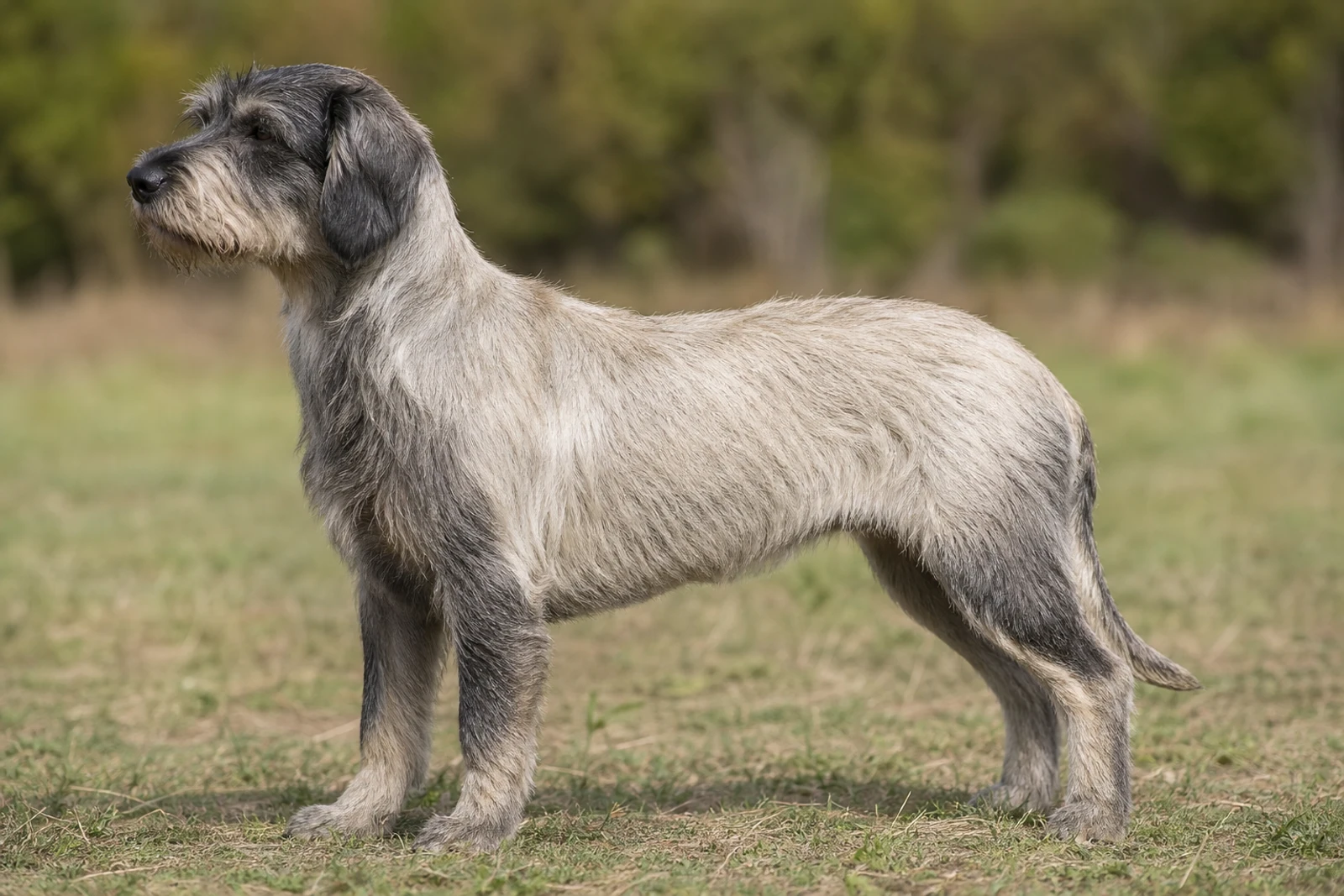
The Bosnian Rough-coated Hound, also known as the Barak, is a rare, large scenthound bred for hunting in the rugged Balkans. With a weather-resistant double coat and a sturdy build, this breed suits active outdoor families who can provide ample exercise and mental stimulation. Known for their persistence and resonant, far-carrying voice, they thrive in rural environments with space to roam. While loyal and affectionate with their family, they require consistent training and socialization. Ideal for experienced owners who appreciate a determined, independent canine partner with a strong prey drive.
At a glance
- Size
- Large
- Height
- 18–22 in
- Weight
- 35–55 lb
- Life span
- 12 years
- Coat colors
- wheaten, reddish yellow, earthy gray, black with tan markings
- Coat type
- rough, double coat
How much does a Bosnian Rough-coated Hound cost?
Adopt / rescue
$75–$400
Usually includes spay/neuter, first shots, and a microchip.
Buy from a breeder
$700–$2,000
From a reputable, health-testing breeder.
Approximate USD. Prices vary widely by region, breeder, pedigree, age, and coat colour — adopting is the lower-cost and recommended route. Avoid suspiciously cheap “breeders”; they’re often puppy mills.
Estimate the full cost of a Bosnian Rough-coated Hound →Want the ongoing number? Estimate the monthly food bill for a Bosnian Rough-coated Hound with our dog food cost calculator.
Bosnian Rough-coated Hound photos
Views
Front, side, rear and top — the full silhouette.Poses
How the breed sits, lies, moves and plays.Puppy to senior
The breed across its whole life.Expressions
The breed’s range of moods.Close-up details
Eyes, ears, nose, paws, tail and coat.Coat colors
The breed’s recognized colors.Click any photo to enlarge. We show the Bosnian Rough-coated Hound from every angle — three views, poses, life stages, expressions, close-ups, coat and colors.
Appearance & size
You see a rugged, rectangular hound that was made to hunt, not to pose. The Bosnian Rough-coated Hound is a large, solid dog without an ounce of frill, standing 18 to 22 inches at the shoulder and typically weighing 35 to 55 pounds. Males usually push toward the upper end of both ranges; females run a little lighter and sometimes a touch shorter. Even a moderately tall dog in this range can look bigger than the numbers suggest because the profuse coat adds visual bulk all over.
The body is built for endurance in rough terrain. From the side, the chest is deep, reaching at least to the elbows, with well-sprung ribs carried well back. The topline is level, firm, and only slightly rounded over the croup. A moderate tuck-up keeps the silhouette athletic rather than racy. From the front, the forelegs stand straight and parallel, with strong, oval bone. The chest appears broad without being cloddy, and the shoulders slope smoothly into a muscular neck. Moving around to the rear, you see powerful, moderately angulated hindquarters — broad thighs, well-let-down hocks, and an overall impression of steady, tireless drive.
The most distinctive feature is the double coat: a shaggy, harsh outer layer over a short, dense undercoat. Length runs about 2 to 4 inches across the body, often a little shorter on the face, with soft feathering on the backs of the forelegs, thighs, and the underside of the tail. It gives the hound a scruffy, practical look — built to shed water and fend off thorny brush. Coat colors are wheaten (any shade from pale yellow to rich red), black and tan, and tricolor with a black saddle and tan markings on the legs, face, and under the tail. A small white flash on the chest shows up occasionally but is not the norm.
The head carries the typical hound expression: a fairly long muzzle, a slight stop, and loose but not pendulous lips. Ears are set moderately high, drop flat with a distinct crease, and reach roughly to the corner of the mouth. Dark, oval eyes sit well apart and look calm and steady. In motion, the saber-shaped tail hangs low, then lifts no higher than the back when the dog is excited — never curled over. That rustic coat does shed dirt readily, but the undercoat demands consistent brushing to keep mats from forming behind the ears, under the tail, and in the feathered areas.
History & origin
You can trace this dog back to the limestone highlands of Bosnia and Herzegovina, where local hunters needed a scent hound tough enough to work the rocky, timbered slopes year-round. The breed they shaped became the Barak — a name that literally means “rough-coated” in the local language — and it’s that dense, shaggy double coat that tells you everything about its origins. Nights dip below freezing, brush tears at a smooth coat, and a dog that hunts wild boar, hare, or fox in those conditions has to be built for punishment.
For centuries, the Barak was a loosely standardized type rather than a formal breed, passed from hunter to hunter across the Dinaric Alps. Old accounts from the region describe a rangy hound with a deep voice, a steady nose, and the stamina to push through a full day’s hunt without hanging back. Its working style was relentless but methodical: a steady tracking pace that didn’t waste energy, punctuated by a baying cry that carried over rough terrain so the hunter on foot could follow. That voice wasn’t just a signal — it was a tool, letting the hunter know whether the dog was on a cold trail, a fresh line, or had the quarry bayed.
Written records start surfacing in the late 19th and early 20th centuries, but the first official standard wasn’t locked down until the mid-1960s. In 1965, the Fédération Cynologique Internationale recognized the breed as the Bosnian Rough-coated Hound, under its original Yugoslav name. The timing was critical. Over the next decades, political upheaval and the Bosnian War scattered breeders and nearly erased the population. Dedicated enthusiasts in the Balkans pulled the dogs back from the edge, scouring remote villages for surviving stock and rebuilding a gene pool that still carried the old working temperament.
Today, the breed remains a rarity outside its homeland. It’s still found most often in the hands of active hunters in Bosnia and surrounding countries, where it’s valued for exactly the same traits that defined it three hundred years ago — a relentless nose, a raspy baying cry that can be heard for miles, and a rough, weatherproof coat bred to shrug off the sharp karst and cold.
Temperament & personality
This is a dog with a work brain and a home brain. Inside the house, many Bosnian Rough-coated Hounds settle into a surprisingly calm, almost reserved presence. They’ll curl up near your feet, accept quiet affection, and watch the household routine without needing to be the center of it. Outside, that reserve drops away. The nose engages, and suddenly you have a 40-pound missile on four legs, flying after a scent with relentless purpose. You won’t call them off a hot trail with a half-hearted “come.”
With their own people, the bond runs deep. They are alert and watchful, and they take the job of announcing visitors seriously — expect a booming bay, not a polite woof. That makes them a solid natural watchdog, but their wariness of strangers can tip into aloofness or outright suspicion if you skip early socialization. They usually coexist well with children they’ve been raised with, but they aren’t a rough-and-tumble playmate. This breed prefers quiet proximity to goofy wrestling. Small pets, like rabbits or outdoor cats, can trigger a hardwired prey drive; a carefully managed introduction from puppyhood helps, but the instinct never fully turns off.
A Bosnian Rough-coated Hound is an independent thinker. Respectful, consistent training works far better than a heavy hand. These dogs can be stubborn, and they’ll shut down if you bully them. Build a daily routine and set clear boundaries, because they’ll push against loose rules. Separation or boredom easily leads to anxious howling, destructive chewing, or indoor urine marking — a bored hound left alone in a yard often digs, follows his nose, and finds the weak spot in the fence.
Quirks are part of the scent-hound territory. They have a scavenger’s love for intense smells, so don’t be surprised when they roll in something foul. Their scent memory is sharp; you’ll see them return to the same spots on every walk to sniff and lightly mark, reinforcing a mental map. That same carryover applies to house training. A single accident that isn’t eliminated with an enzyme cleaner leaves a persistent cue to go again, so keep a vinegar-based spray handy to neutralize odors. Reward outdoor elimination immediately and interrupt indoor mistakes calmly — punishment just teaches them to hide it.
Watch their body language. A forward-leaning posture and still, fixed stare means they’re locked onto something and a bolt may be seconds away. Lip licking, yawning, or a turned head signals uncertainty; don’t force interactions when you see those signs. They need a solid hour or more of daily exercise — real trotting, sniffing, and mental problems, not a quick leash loop around the block. For an experienced owner who values a focused, loyal hunter and companion, the Bosnian Rough-coated Hound delivers a deep partnership. First-time dog owners may find the independence and intensity a steep climb.
Good with kids, dogs & other pets
This hound brings the patience of a dog bred to track game across rugged terrain, and that translates into a gentle, steady presence around kids. Tipping the scales at 35–55 lb and standing 18–22 inches tall, a Bosnian Rough-coated Hound is sturdy enough to handle the bumps of family life without being so large he’ll bowl a toddler over. Expect a tolerant playmate who rarely snaps or retreats; the breed’s non-aggressive temperament makes well-supervised interactions with respectful children easy. Still, that rough coat can be a magnet for grabbing hands, so teach kids early how to touch gently.
Pack life is hardwired. Bosnian Rough-coated Hounds were developed to hunt with other dogs, and that shows in their sociability. They typically slot right into multi-dog households, especially when introduced during puppyhood. An adult who grew up as an only dog may need slower, structured introductions, but outright aggression toward housemates is uncommon.
Small pets are another story. That famous nose comes with a hefty prey drive. A rabbit darting across the floor or the neighbor’s cat can ignite an instinct that’s difficult to call off. Some individuals coexist peacefully with a cat they’ve known since they were a pup; others never see a small furry animal as anything but quarry. Close the gap with early, positive exposure—raising the puppy alongside the family cat, rewarding calm behavior, and never leaving them loose together without a barrier. But be honest: this is a scent hound, not a lapdog, and predatory drift is always a possibility.
Socialization still matters, but it doesn’t have to look like a checklist. Expose a puppy gently to different people, friendly dogs, and everyday noises before he hits four months. After that, keep experiences positive. If you adopt an adult who’s already uneasy around crowds or new dogs, don’t force it. Meet the dog where he is—let him settle into your pack’s rhythm and skip the chaotic dog park if it stresses him out. A Bosnian Rough-coated Hound who is secure with his own family can live a full, happy life without becoming a social butterfly. Just remember: he’s a high-companionship breed that doesn’t do well stuck outside alone. Include him in family routines, supervise rough-and-tumble play, and make sure your yard has a secure fence—because when his nose kicks in, he’ll follow it.
Trainability & intelligence
The Bosnian Rough-coated Hound learns quickly when there’s something in it for him — and that “something” is rarely blind obedience. This is a capable, independent scenthound built to follow his nose for hours over rough terrain. He won’t automatically glance your way for approval. Training starts with accepting that your job is to make partnership more rewarding than the next fascinating scent trail.
- Motivation that works: High-value treats, a favorite tug toy, or a burst of excited praise. Boring repetition loses this dog fast. Keep sessions short, upbeat, and end before his nose wanders.
- Recall requires real honesty. Off-leash reliability in an unfenced area is a high bar. A Bosnian Rough-coated Hound on a fresh scent can tune out your voice completely. Start recall work indoors, then in a long line in quiet fields, and build slowly from there. A fenced yard is non-negotiable for safe, sane daily life unless you plan on long-line walks forever.
- The intelligence is real, but it’s paired with stubbornness. He’ll solve puzzle toys in minutes, figure out how to open low cabinets, and learn obedience cues when he sees a clear payoff. Expect him to sometimes test whether “down” still pays when there’s a squirrel 50 yards away. Patience and consistency keep him honest — not force. Harsh corrections destroy the trust you need for off-lead recall and will often make him shut down or get hand-shy.
Socialization needs to be thorough and early. Between 3 and 14 weeks, introduce your puppy gradually to different people, friendly dogs, traffic sounds, and uneven ground. These hounds can be reserved with strangers; rushed exposure often backfires. The aim is a dog who’s calm and confident, not one who’s forced into greetings before he’s ready. Keep every new experience positive — slip him a treat when a bicycle passes, play a short game when a stranger tosses a ball nearby.
Long-term, this breed thrives on clear communication and a trainer who doesn’t take independence personally. You’re building a working partnership, not programming a robot. Reward the behaviors you want, ignore the theatrics, and accept that some days his nose will win. That’s not failure — that’s a hound doing exactly what he was bred to do. A Bosnian Rough-coated Hound who trusts you will eventually choose you over the scent more often than you’d expect, provided you never make that choice into a battle.
Exercise & energy needs
Plan for at least two dedicated exercise sessions a day—this is a hound built to cover miles of rough Balkan terrain in search of game. A couple of leisurely 20-minute walks won’t cut it. You’re looking at a bare minimum of 60 minutes total, but 90 minutes or more is where this dog settles into a manageable groove. At least half that time should involve a run, a long off-leash hike, or sustained trotting; think heart-pumping, nose-to-the-ground movement, not a casual sniff-and-stroll.
- Mental work matters just as much as mileage. A Bosnian Rough-coated Hound’s brain runs on scent. Let him track a hidden treat trail in the yard, work a snuffle mat, or solve layered puzzle toys. Nose games indoors can take the edge off on nasty weather days, but they’re not a substitute for outdoor exploration.
- Great outlets: off-leash hiking in safe areas (fenced or remote), scent work classes, barn hunt, canicross, or a long jog alongside a bike once he’s fully grown. A flirt pole or tug session makes a good rainy-day backup, but nothing makes this dog happier than following his nose at his own pace.
- Be smart about impact and structure. Avoid forced running on pavement until growth plates close—usually around 12–18 months for a medium-large breed. Soft trails, grass, and varied footing are kinder on developing joints. Even as an adult, mix in mental fatigue so you’re not just building an ultra-marathoner who still acts wired indoors.
Skip the exercise, and the trade-off is loud and destructive. A bored Bosnian Rough-coated Hound channel-surfs with his voice—baying, howling, and barking—or redecorates your house. Give him real work for his legs and nose, and you get a calm, easygoing companion the rest of the day.
Grooming & coat care
That rough, shaggy coat does a lot of the work for you. It’s a dense double coat — a harsh, weather-resistant outer layer and a softer undercoat — that naturally sheds dirt and water. The trade-off: this hound sheds. Not constantly, but in two big seasonal blowouts each year when the undercoat loosens up.
Brushing
A weekly session with a metal slicker brush or a pin brush picks up loose undercoat and any field debris. During spring and fall shedding peaks, bump that to every other day — you’ll pull out handfuls of dead hair that would otherwise end up on your floors. A wide-toothed steel comb helps you check behind the ears, under the legs, and around the tail where tangles can start. Spend five minutes going over those spots even when the rest of the coat looks fine.
Bathing
Bathe only when he’s truly muddy or stinky. A couple of baths a year is typical; over-washing strips the natural oils that keep that outer coat hard and protective. Use a dog shampoo that won’t dry the skin, and rinse thoroughly — soap residue in a dense coat can cause irritation. After a wet, messy hunt or hike, a quick rinse with plain water often does the job.
Nails, ears, teeth
- Nails: Check every two weeks. If you hear clicking on hard floors, they’re too long. A large dog’s weight makes overgrown nails uncomfortable to walk on.
- Ears: Those drop ears trap moisture and debris. Lift them weekly, look for redness or a sour smell, and wipe the outer flap with a vet-approved cleaner — never poke into the canal.
- Teeth: Brush two or three times a week with dog toothpaste to keep tartar in check. A raw, meaty bone or a sturdy dental chew helps between brushings.
Seasonal coat care
When the undercoat blows, spend ten minutes outside with a slicker brush and a rubber curry mitt. The curry grabs loose fur and stimulates circulation, speeding the shed. Don’t be surprised if you fill a grocery bag each time. A brisk walk before grooming loosens the dead hair and makes the session more productive. Skip any urge to shave or clip the coat down — that outer layer insulates against heat and cold, and once cut, it rarely grows back with the same texture.
Shedding & allergies
A Bosnian Rough-coated Hound won’t dust your house in a layer of hair, but don’t expect a spotless floor either. The double coat—a harsh, wiry outer layer and a softer undercoat—sheds lightly year-round, then blows out dramatically in spring and fall. During those seasonal peaks, you’ll find clumps of undercoat on the couch, in the car, and woven into dark clothing. If you stay on top of it, the mess is manageable.
Weekly brushing with a slicker or pin rake grabs the worst of the loose undercoat before it settles everywhere. When the coat is blowing, a daily 5–10 minute session saves you from chasing tumbleweeds across the kitchen. The rough outer hair tends to trap dead fur, so the shedding you see between brushings can be deceptively light—right up until you pull a handful out of the coat.
Drool
Compared to loose-lipped hounds, this breed is dry-mouthed. A slobber string after a big drink or when a high-value treat appears is about as much as you’ll encounter. Keep a rag near the water bowl, but you won’t be wiping walls.
Hypoallergenic? No.
No dog is truly allergen-free, and a shedding, dander-producing hound with a thick undercoat lands far from hypoallergenic territory. The wiry coat might look like a low-shedding terrier type, but it isn’t one. Regular grooming and occasional baths can cut down on airborne allergens, yet they won’t make this dog a safe bet for someone with allergies. If your eyes itch around dogs, spend time with a full-grown Bosnian Hound—not just a clean puppy—before you commit.
Diet & nutrition
A Bosnian Rough-coated Hound’s enthusiasm at the bowl can easily tip into extra pounds, so weight control is the real foundation of good feeding for this breed. A 40–55 lb adult who runs hard for an hour or more each day will need more fuel than the same dog lounging in the yard; start with the “active large breed” suggestion on your kibble bag and adjust every week by feel — you want to find ribs with a thin cover of fat, not lose them under a spare tire.
Puppies under four months need four evenly spaced meals, then three meals until six months, and finally the adult rhythm of two meals a day. Switch to a new diet slowly with lightly cooked, puréed meats, fruits, and vegetables or a premium puppy formula. Around twelve weeks, supervised raw chicken wings are a natural chew that also delivers nutrients.
Adult meals — whether high-quality commercial food or home-prepared — should be built around animal protein. A practical baseline is roughly 60% raw or cooked meat, 20–30% fruits and vegetables, and 10% extras like eggs, yogurt, or cooked grains. Because a dog’s jaw moves only vertically and lacks salivary digestive enzymes, blending or processing home-prepared food improves nutrient absorption. Pearl barley offers a digestible, high-fiber grain option; plain white rice works well for a sensitive stomach. Use a puzzle bowl or snuffle mat to slow a gulper down and add a few minutes of mental work.
As your Hound ages and activity drops, adjust portions down — senior weight gain is hard on joints and organs. Older dogs with missing teeth do better with puréed meals, and three smaller feedings can be gentler than two large ones. Never slip food from the table; once begging starts, it’s tough to unwind. If you want to share safe extras like eggs, cooked veggies, or a spoon of plain yogurt, put them in the dog’s own bowl. Batch-cook whole grains and lean meats once a week so you always have a healthy base ready — and keep the scale handy for a quick monthly check.
Health & lifespan
Twelve years is a solid run for a large hound, and many Bosnian Rough-coated Hounds hit that mark with few surprises — as long as you stay ahead of a handful of practical concerns. They’re a naturally tough, athletic breed, but deep-chested dogs like this one carry a real risk of bloat (gastric dilatation-volvulus). Feed two or three smaller meals instead of one big one, and don’t let your dog tear around the yard for at least an hour after eating. Knowing the early signs — restlessness, unproductive retching, a distended belly — can save a life.
Weight management matters in a dog that lives to follow its nose and rarely says no to a treat. These hounds pack a lot of drive into a 35–55 lb frame, and extra pounds stress joints and shorten an already modest lifespan. Keep them lean and muscled with daily off-leash running, not just leash walks. Their floppy ears trap moisture, so weekly ear cleaning with a vet-approved drying solution prevents the chronic infections that plague many scent hounds.
Responsible breeders screen for hip and elbow dysplasia and eye disorders, though this breed isn’t drowning in genetic red flags. Still, any concentrated gene pool warrants caution, so ask to see OFA or PennHIP results and eye clearances before you commit. Year-round, mosquito-born heartworm is a threat that demands monthly prevention during mosquito season and for a month after it ends. Rabies vaccination is legally required, and there’s no treatment once symptoms appear — so never skip it.
Schedule annual wellness exams, more often once your dog is past seven, and pay attention to small shifts in appetite, stamina, or drinking habits. Subtle changes are often the first hint that something’s off, and early intervention buys you more good years with a hunting buddy who’s built to go the distance.
Living environment
This dog was never designed to lounge in a city apartment. The Bosnian Rough-coated Hound is a working scent hound through and through, and it needs space to move, sniff, and stretch its legs in a way that no daily walk on a leash can fully satisfy. A house with a large, securely fenced yard is non-negotiable — and “securely” means a fence at least five feet tall, because a 35–55 lb hound with a nose full of rabbit scent will dig under or climb over anything shorter.
Expect to provide at least two solid hours of off-leash running, tracking, or rugged hiking every day. This isn’t a breed you can tire out with a half-hour stroll. Multiple sessions work best: an early morning run or bike ride, followed by an afternoon romp where they can put their nose to work. Scent games and puzzle toys help fill the gap when you can’t get outside — stacking a few 15-minute nose-work sessions into the day can take the edge off a rainy afternoon.
Noise is part of the package. When excited or on a trail, the Rough-coated Hound has a deep, rolling bay that carries. Neighbors won’t appreciate it in a duplex or townhouse setting. Indoors, they’re generally calm, but barking from boredom or frustration can become a habit if exercise falls short.
Their thick, rough double coat makes them remarkably tolerant of cold, wet, and wind. Summer heat is a bigger concern; restrict hard exercise to mornings and evenings when temperatures climb. Provide plenty of shade and water if they’re out in the yard.
These hounds bond tightly to their people. While they’re not as famously clingy as some small breeds, leaving them alone for a full workday rubs against their pack instincts. If your household is gone eight hours or more, invest in gradual alone-time training from puppyhood and arrange a midday drop-in or dog walker to break up the stretch. A bored, lonely hound will voice its displeasure — and that bay will travel.
Who this breed suits
You’re an experienced dog person — that’s the first filter. A Bosnian Rough-coated Hound isn’t a plug-and-play pet. These are hardy, independent scenthounds built to hunt for hours over rough terrain, and they expect you to keep up. If you already speak hound, have a secure fenced yard, and can commit to serious daily exercise, you’ll find a loyal, no-fuss companion with a surprising off-switch indoors. If you’re looking for a quiet, eager-to-please family dog who sticks close on walks, this isn’t your breed.
Great match if
- You run, hike, bike, or hunt regularly and want a 35–55 lb dog who can go the distance. An hour of hard running or a couple hours of tracking work is baseline; a lazy day just doesn’t fly.
- You appreciate an independent thinker. They’re not Velcro dogs — they check in on their own terms, and training rewards patience and creativity (usually food). Experienced owners who enjoy the puzzle find it genuinely fulfilling.
- You live where a deep, carrying bay won’t cause neighborhood drama. They were bred to sound off on scent, and they’ll announce every rabbit and squirrel within a quarter mile.
- You have older kids who respect a hound’s personal space. Early socialization makes them solid family members, but they won’t tolerate toddler-level handling.
Think twice if
- You’re a first-time owner or prefer a biddable dog. The breed’s stubborn streak and sky-high prey drive will overwhelm you. Off-leash reliability is a myth without a massive time investment, and even then it’s never a sure thing.
- You share walls. The noise, plus the need for a secure area to burn off energy, makes apartment, condo, and townhouse living a recipe for conflict.
- You keep cats, rabbits, or other small pets. Generations of hunting instinct don’t switch off with a treat. Some individuals coexist with cats if raised together, but it’s a gamble you shouldn’t take lightly.
- Your exercise plan tops out at a couple of 20-minute leash strolls. Under-exercised hounds redirect that energy into barking, digging, and creative destruction that’ll push you up the wall by week two.
- Your retirement dream centers on a quiet lap dog. A 12-year lifespan means a long, high-activity commitment; seniors who can’t provide multiple hours of outdoor movement daily will struggle.
A Bosnian Rough-coated Hound slots in beautifully with hunters, scent-work hobbyists, and serious outdoor athletes who can laugh at the breed’s vocal commentary and don’t need a dog glued to their side. For everyone else, choosing a lower-key breed saves both you and the dog a heap of frustration.
Cost of ownership
Purchase Price
The Bosnian Rough-coated Hound is still rare in the US. If you find a responsible breeder here, expect to pay $2,000 to $3,500 for a puppy — sometimes more if the parents were imported. Litters are small and carefully planned, so you’ll probably join a waitlist. Importing a pup yourself from a reputable European kennel can add another $800–$1,500 in transport and paperwork.
Monthly Costs
Plan on $180 to $320 a month, not counting one-time gear.
- Food: $60–$90. A 35–55 lb dog with a deep chest and working roots needs high-quality kibble (roughly 2.5–3 cups a day). Active, intact, or working-line dogs can eat more.
- Grooming: $15–$30. The rough double coat sheds moderately and needs weekly brushing with a slicker and a steel comb. Occasional baths and nail trims keep professional visits to a minimum — maybe a quick appointment every 6–8 weeks.
- Vet care (averaged): $45–$75. Annual exams, vaccines, heartworm and flea/tick prevention, plus an occasional ear cleaning (those drop ears trap moisture). Dentals or unexpected visits push the cost higher.
- Insurance: $35–$60. Good coverage helps offset breed-prone issues like hip dysplasia or bloat. Wait to enroll after a puppy’s first vet check, but don’t skip it if you want real financial protection.
- Miscellaneous: $25–$65. Tough chew toys, a secure harness for the strong nose, and maybe a GPS tracker if you hike in big country — this hound will follow a scent and has zero recall when on a trail.
Because the breed rarely shows up in rescue, adoption fees are hard to predict, but a dedicated Balkan hound rescue might charge $300–$600 if a dog becomes available. Realistically, though, you’re looking at breeder prices and a lifetime bill that lands on the high side of moderate, mostly driven by food and decent insurance.
Choosing a Bosnian Rough-coated Hound
Finding a Bosnian Rough-coated Hound takes patience
This is not a dog you'll find on every street corner. The breed is rare outside its homeland, so expect to wait for the right litter from a dedicated breeder — or to spend time searching rescues, where they appear even less often. Either path can land you a great dog, but you need to know what to look for.
The responsible breeder difference
A good breeder hunts or works their dogs. The Bosnian Rough-coated Hound is a serious scenthound built to track game across tough terrain, not a casual house pet. Breeders who treat them as such invest in genetic health, temperament, and working ability. Ask for written proof of hip and elbow clearances (OFA or PennHIP) and a current eye exam from a veterinary ophthalmologist. Because of their deep chest, ask about any family history of bloat — a reputable breeder will discuss the risk openly. Puppies should come with a contract that includes a health guarantee and a requirement to return the dog if you can't keep it.
Red flags that should make you walk away
- No health testing on the parents, or claims that it's "not needed" for this breed.
- Puppies kept in kennels without daily household exposure or early socialization.
- A breeder who can't show you proof of working titles or hunt performance — these dogs need a job.
- Anyone offering to sell you a puppy younger than 8 weeks, or pressuring you to commit without an interview. Good breeders interrogate you just as hard.
Rescue: a long shot worth checking
Because numbers are tiny, you're unlikely to trip over a Bosnian Rough-coated Hound in a shelter. Still, contact the breed's parent club (if one exists in the US, often linked to European clubs) and keep an eye on scenthound-specific rescues. A retired hunting dog or a rehome can be a wonderful, lower-cost introduction to the breed, though you'll seldom know the full medical background.
Picking your puppy from the litter
When the big day comes, watch the litter for at least 20 minutes before choosing. You want a puppy that moves with confidence and curiosity, not one that hangs back shaking or bullies littermates. Pick the breeder's brain: Which pup would she pick for your situation? A Bosnian Rough-coated Hound is independent by nature, so don't mistake aloofness for shyness — a middle-of-the-road puppy often makes the best family companion while still having enough drive to work. Look for clear eyes, clean ears, and a coat that feels rough and dense. The breeder should send you home with a detailed health record, feeding schedule, and a blanket that smells like mom.
Pros & cons
-
A marathoner’s engine in a medium-large frame. Weighing 35–55 lb and standing 18–22 inches, this hound is built to cover ground all day without tiring, perfect for hunters or ultra-hikers.
-
Thrives in a pack. Bred to work alongside other dogs, it typically settles into multi-dog homes with fewer squabbles than many breeds.
-
Wash-and-wear coat. The rough, dense double coat sheds dirt and brambles. A weekly brush and the occasional rinse is all it asks.
-
Long-lived hardiness. A 12-year lifespan means you get a decade-plus with a robust, no-fuss partner that rarely acts fragile.
-
Voice that carries for miles. This is a deep, resonant baying hound — not a dog for close neighbors or thin walls. The whole block will know when a leaf blows by.
-
Nose overrules ears. On a scent, a recall becomes background noise. Patience and secure fencing are mandatory, because impulse control fades fast once that nose locks on.
-
High-octane prey drive. Cats, squirrels, deer — all are chase-worthy, making off-leash walks a constant gamble unless you’re in a controlled area.
-
Serious daily exercise requirement. A quick walk around the block won’t cut it; plan on at least an hour of hard running, scent work, or off-trail hiking, or you’ll hear about it.
-
Supply is scarce. This is a rare breed outside its homeland, so finding a responsible breeder often means a long wait and a road trip.
Similar breeds & alternatives
Scratch the nose of one rough-coated scenthound and you’ll often find yourself comparing a few others — especially since the Bosnian Rough-coated Hound is scarce in the US. If the idea of a tenacious, vocal hunting companion with a wire jacket fits your life but you want a breed that’s easier to find, these alternatives share important traits while trading off size, temperament, or intensity.
-
Grand Basset Griffon Vendéen
A French cousin that runs 15–18 inches and 40–45 lb, the GBGV shares the Bosnian’s shaggy, weatherproof coat and sonorous bay. The GBGV is a bit shorter in the leg and often more sociable with other dogs, but still delights in following its nose wherever it leads. Daily off-leash running in a secure area matters for both, though the GBGV may settle into family chaos a touch more smoothly. -
Petit Basset Griffon Vendéen
Think of the PBGV as a compact, peppy take on the rough-coated hound — 13–15 inches, 25–40 lb. It keeps the wiry coat, the stubborn joy, and the booming voice. The biggest differences: shorter stride, more clownish energy in a smaller package, and a slightly longer list of stateside breeders. -
Otterhound
If sheer size and good-natured mess appeal, the Otterhound jumps far bigger — 24–27 inches and 65–115 lb — with a double rough coat, webbed feet, and a deep, rolling bay. This one’s even rarer than the Bosnian and comes with serious drool and a shaggy “wet dog” lifestyle, but the scenthound mindset and family patience required feel familiar. -
Basset Fauve de Bretagne
A less common rough-coated scenthound standing 12.5–15.5 inches and 25–35 lb. The Fauve is bold, a little cuddlier indoors, and equally prey-driven. Its harsh coat needs similar hand-stripping, and like all the breeds here, a fenced yard is non-negotiable — once a scent trail fires up, these dogs forget recall even exists.
All of these scenthounds share a deep, baying voice and an independent work ethic that can frustrate novice owners. The Bosnian Rough-coated Hound sits in a middle ground: lighter and leggier than the GBGV, far smaller than an Otterhound, and less jester-like than a PBGV. If you can’t get your hands on one, the GBGV or PBGV will still give you the wiry coat, the baying soundtrack, and years of joyful, nose-down partnership.
Fun facts
- The breed's name 'Barak' refers to its distinctive, rough, wire-haired coat.
- They possess a deep, resonant bay that can carry for miles, excellent for mountainous terrain.
- Rare outside its homeland, this hound is considered a national treasure in Bosnia and Herzegovina.
- Traditionally used to hunt foxes, hares, and even larger game like wild boar.
Frequently asked questions
- Are Bosnian Rough-coated Hounds good with children?
- They can be devoted family companions with proper socialization, but their high energy and stubbornness mean they are best suited for families with older, respectful children. Supervision is important, as their boisterous play may overwhelm small kids.
- How much exercise does a Bosnian Rough-coated Hound need?
- These are high-energy dogs requiring at least 60–90 minutes of vigorous daily activity such as running, hiking, or scent work. Without adequate exercise, they can become restless and develop unwanted behaviors.
- Do Bosnian Rough-coated Hounds shed a lot?
- They have a moderate shedding level, with some loose hair year-round. Regular brushing a few times a week helps manage shedding and keep the coat healthy, but they are not considered hypoallergenic.
- Are Bosnian Rough-coated Hounds easy to groom?
- Their rough coat requires weekly brushing to prevent mats and remove debris, with occasional baths when necessary. Routine care should also include ear checks, nail trims, and dental hygiene, but overall grooming is fairly straightforward.
- Is the Bosnian Rough-coated Hound a good choice for first-time owners?
- Due to their independent, stubborn nature and intense exercise needs, they can be challenging for novice owners. Experienced handlers who can provide consistent training and plenty of outdoor activity tend to be a better match.
- Do Bosnian Rough-coated Hounds bark a lot?
- As a hound breed, they are naturally vocal and may bark or bay when excited, alerting, or following a scent. Training and early socialization can help curb excessive barking, but potential owners should expect some noise.
Tools & calculators for Bosnian Rough-coated Hound owners
Quick estimates tailored to Bosnian Rough-coated Hounds — pre-filled with this breed’s size where it matters.
Articles & stories about the Bosnian Rough-coated Hound
Sources & standards
This profile follows recognized breed standards from the American Kennel Club (AKC) and the Fédération Cynologique Internationale (FCI), along with established veterinary and breed-club guidance. These describe general breed tendencies — every dog is an individual.