

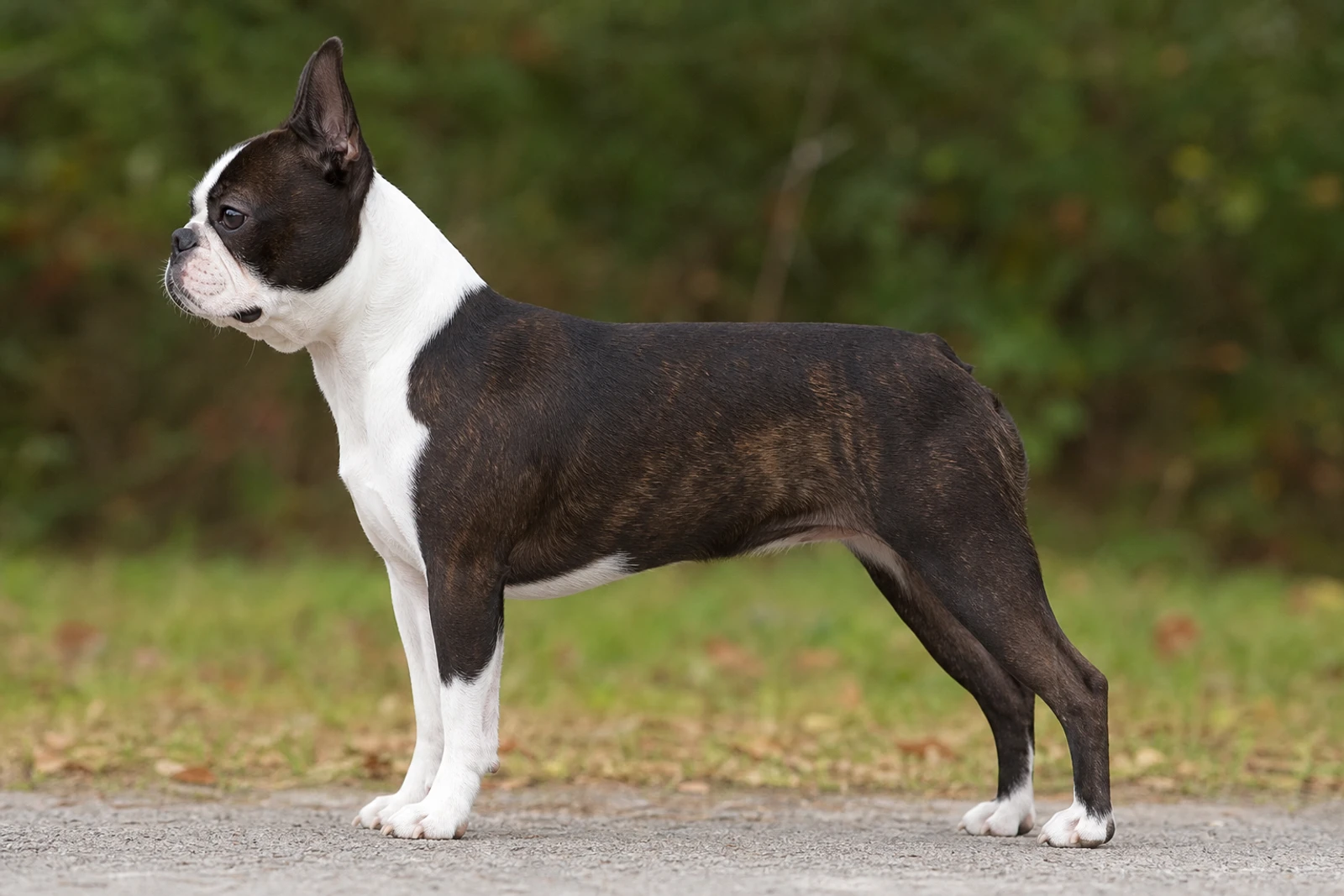
The Boston Terrier, affectionately known as the 'American Gentleman,' is a charming and compact companion dog originating from Boston, Massachusetts. This breed is celebrated for its tuxedo-like coat and friendly, lively personality. Boston Terriers thrive on human companionship and adapt well to various living situations, including apartments, as long as they receive daily walks and play. They are intelligent and eager to please, making them relatively easy to train, though they can be stubborn at times. With minimal grooming needs and a loving nature, they are excellent pets for first-time owners and families with children.
Family fit
Is the Boston Terrier a good family dog?
Compact, comical, and adaptable — a friendly city family dog.
- Children
- Family shortlist
- Energy
- Higher
- First-time owners
- More approachable
- Grooming
- Lower
Breed tendencies are only a starting point. Supervise children, meet the individual dog, and make sure the exercise, training, grooming, space, and cost fit your household.
Boston Terrier Sticker Pack
36 cartoon stickers • transparent PNG • no watermark
Pinterest-ready
Share all 36 reactions as one sticker sheet
Pinterest opens with the full pack and a fresh, tailored description. You choose the public board and publish it from your own account.
Save the full pack


Choose one reaction above to share it alone, or use the full-pack button for all 36 together.



































Free full-resolution download — no account, no payment, no watermark.
Includes all 36 transparent PNG stickers in one ZIP. A quick human check is required for each download.
At a glance
- Size
- Medium
- Height
- 15–17 in
- Weight
- 11–24 lb
- Life span
- 13 years
- Coat colors
- black and white, brindle and white, seal and white
- Coat type
- short, smooth
- Group
- Terriers
- Origin
- United States
How much does a Boston Terrier cost?
Adopt / rescue
$75–$400
Usually includes spay/neuter, first shots, and a microchip.
Buy from a breeder
$700–$2,000
From a reputable, health-testing breeder.
Approximate USD. Prices vary widely by region, breeder, pedigree, age, and coat colour — adopting is the lower-cost and recommended route. Avoid suspiciously cheap “breeders”; they’re often puppy mills.
Estimate the full cost of a Boston Terrier →Want the ongoing number? Estimate the monthly food bill for a Boston Terrier with our dog food cost calculator.
Boston Terrier photos
Views
Front, side, rear and top — the full silhouette.Poses
How the breed sits, lies, moves and plays.Puppy to senior
The breed across its whole life.Expressions
The breed’s range of moods.Close-up details
Eyes, ears, nose, paws, tail and coat.Coat colors
The breed’s recognized colors.Click any photo to enlarge. We show the Boston Terrier from every angle — three views, poses, life stages, expressions, close-ups, coat and colors.
Appearance & size
That unmistakable tuxedo coat grabs your eye first, but underneath it is a compact, surprisingly muscular body. Boston Terriers pack a lot of substance into a small frame: they stand 15 to 17 inches at the shoulder and weigh between 11 and 24 pounds. Breed standards sort them into three weight classes — under 15 pounds, 15 to under 20 pounds, and 20 to 25 pounds — but no matter the division, the dog reads as balanced and sturdy, never spindly or coarse.
The head is the breed’s signature. From the front you see a flat, broad skull, a short square muzzle that’s deep and wide, and large, round, dark eyes set well apart. The expression is gentle and alert, not bug-eyed or nervous. Ears are small, thin, and naturally held erect, which opens up the face and gives it that characteristic attentive look. A slight stop, a well-defined nose, and an even or slightly undershot bite (with the lips covering the teeth) complete the picture. There’s no wrinkle or heavy fold, just a clean, sculpted outline.
The coat is short, smooth, and shiny, with a fine texture that lies close to the body. Brindle, seal, or black paired with crisp white markings create the “tuxedo” pattern. You’ll see a white blaze between the eyes, a white band around the muzzle, a white chest, and white on the forelegs and part of the hind legs. Not every Boston needs to have show-ring-perfect markings, but the clean contrast is a breed hallmark.
Viewed from the side, the Boston’s body is short-backed and deep-chested. The topline is level, the ribs are well-sprung, and there’s a slight tuck-up at the loin for a compact, athletic silhouette. Legs are straight and moderate in bone, ending in small, oval feet. From the rear, the hindquarters are well-muscled and the tail is naturally short — either straight or screw-shaped — set low and carried without any docking. Movement carries this shape into action: a jaunty, straight, ground-covering stride that mirrors the dog’s tidy, no-fuss build.
History & origin
The Boston Terrier is the first dog breed developed entirely in the United States, and its origin story starts on the streets of late‑19th‑century Boston. Breeders there wanted a smaller, well‑mannered house dog that still had the sturdy build and lively spirit of the bull‑and‑terrier types popular at the time. The foundation came from crossing English Bulldogs with white Bull Terriers — the lean, gamey dogs often called “white cavaliers.” That early blend produced a compact, squared‑up dog with a broad skull, big eyes, and a short muzzle, but the look wasn’t fully set.
To refine the breed, fanciers folded in French Bulldogs during the 1890s. The French influence brought the unmistakable bat ears, a rounder head, and the smaller, apartment‑friendly size most people associate with the breed today. Some lines also carry the stamp of Pit Bull and German Boxer outcrosses, which gave more bone substance, a deeper chest, and the blocky jaw that anchors the Boston’s expressive face. The resulting dogs were originally called the “Round‑headed Bull and Terrier” and later the “American Bull Terrier,” but pushback from Bull Terrier breeders led to the name change honoring the city where it all happened.
From the start, the goal was companionship — not ratting, fighting, or guarding. These dogs were bred to warm laps and brighten cramped city apartments, and their even‑tempered personality shows it. The first breed standard was written in 1891, and the American Kennel Club took the Boston Terrier into its stud book just two years later, making it the first U.S. breed to gain formal recognition. Global acceptance followed swiftly; by 1920 the breed had club registries and devoted followers across Europe and beyond. After that, the “American Gentleman” with the crisp tuxedo coat and easy‑going nature never really looked back.
Temperament & personality
The Boston Terrier doesn’t just live in your home — he appoints himself a full voting member of the household and expects to be treated like one. These are alert, affectionate dogs with a quiet intelligence that picks up on family routines faster than you might expect. They form intense bonds and have a well-documented sense of fairness; scold one unfairly and you’ll get a chilly side-eye or a dramatic retreat to his bed until amends are made.
Energy-wise, a Boston is a sprinter, not a marathoner. He’ll tear around the yard for a few minutes, then sprawl on the couch for the next hour, ideally touching a human. Aim for a solid 30–40 minutes of walking plus a couple of rowdy play sessions a day. Without that, the bright mind gets bored, and a bored Boston is an inventive chewer. Puppies explore the world with their mouths, and even adults stay determined chewers — providing appropriate hard chews helps keep jaws strong and furniture safe.
Watchfulness comes naturally, but don’t mistake it for aggression. He’ll bark sharply when the doorbell rings, then wag his whole rear end once you tell him it’s okay. He’s a gentle soul who rarely escalates beyond a vocal announcement, which makes him a fine city companion.
Now, the stubborn streak. A Boston can be strong-willed, and pushing too hard only makes him dig in. Engage him with clear, consistent rules and plenty of positive reinforcement — treats immediately after outdoor potty wins work wonders. He’s likely to push boundaries if you’re wishy-washy, but respectful, firm guidance earns you a cooperative partner for life. One quirk to manage: like many small dogs, he can be territorial about his favorite spots and occasionally tests the house-training rules by revisiting the same indoor spot if the scent isn’t thoroughly removed. A vinegar spray removes urine odors and helps break the cycle.
With children and other pets, the typical Boston is patient and playful, but he’s not a stuffed animal. Teach kids never to interrupt him while eating so food guarding doesn’t develop, and pay attention to his body language — a stiff posture or direct stare is a plea for space, while a loose, wiggly body and soft eyes mean he’s all in for a belly rub. Left alone for long hours, a Boston can slide into anxious barking or destructive chewing, so a household where someone is around most of the day suits him best.
Remember, these descriptors paint a breed tendency, not a blueprint. Your particular dog might be calmer, spunkier, or more reserved. Early socialization and daily connection shape the dog you’ll actually live with.
Good with kids, dogs & other pets
A well-socialized Boston Terrier is a patient, people-loving dog that fits right into family chaos. Their 11- to 24-pound frame is sturdy enough for play but small enough that toddlers need to learn to sit on the floor rather than loom or tumble onto the dog. Supervise all interactions with young children, not because the breed is aggressive—they’re famously non-aggressive—but because a startle or rough grab can make any dog snap. Teach kids to give the dog space when it retreats to its bed, and you’ll avoid the mutual frustration that can lead to that distinctive Boston whine or grumble.
Other dogs
Bostons generally enjoy the company of other dogs, particularly when introductions happen during the 3- to 16-week socialization window. Puppy classes and controlled playdates set the pattern. Without that early exposure, some may become barky or tense on leash around strange dogs. Keep introductions neutral—side-by-side walks before face-to-face sniffing—and always separate for meals and high-value chews. Resource guarding can surface even in mild-mannered Bostons, so don’t assume a cuddly personality overrides normal canine manners.
Cats & small pets
A Boston raised with a cat from puppyhood often cozies up for naps together. The terrier background means some individuals have a flicker of chase drive, so a fast-moving cat or a scurrying hamster can trigger a pursuit. Early, positive exposure and consistent redirection to a toy usually teach the dog to relax around the family cat. Free-roaming small pets like rabbits or ferrets are safer behind a secure barrier unless you’ve observed repeated, calm behavior. If the dog fixates or gets overexcited, don’t force interactions—adding stress only deepens the pattern. The best predictor of harmony is a steady stream of supervised, low-pressure introductions during those first four months. After that, protect the comfort zone of a breed that would really rather just be near its people.
Trainability & intelligence
Boston Terriers catch on fast — they’re sharp, observant, and genuinely want to figure out what you’re asking. That eagerness can make training feel more like a two-way conversation than a chore. But they’re also sensitive dogs who shut down under a hard hand or an impatient tone. If you raise your voice, a Boston is more likely to slink away and avoid you than to suddenly listen better.
The approach that works runs almost entirely on positive reinforcement. Treats, a squeaky-voiced “good dog,” or a quick game of tug reward what you want repeated. Because they bond tightly with their people, praise often carries as much weight as food. Consistency matters — if “off” means nothing today but you’re hollering it tomorrow, your Boston won’t take the rule seriously. Short, upbeat sessions several times a day stick far better than one long grind.
Recall and basic obedience come easily once trust is built, but don’t mistake quick learning for finished training. Boston Terriers can be a little distractible when a squirrel or a visitor shows up, so proofing commands in different settings is where the real work lies. Start puppyhood training right away — ideally by 8–10 weeks — and make a point of getting them out to meet new people, hear weird noises, and walk on different surfaces during that 3–14 week socialization window. A well-socialized Boston takes novel situations in stride. One that misses early exposure may become nervous or reactive, and that fear-based behavior is tougher to unwind later.
The biggest mistake people make is assuming their Boston is stubborn when the dog is actually confused or anxious. If a command isn’t working, resist the urge to physically push them into position or repeat yourself louder. Instead, back up a step, break the behavior into smaller pieces, and reward any try. This is a dog that learns best when training feels safe and fun — not when it feels like a test he can fail.
Exercise & energy needs
Forget the marathon – your Boston Terrier thrives on short, playful bursts. Aim for two 10- to 15-minute sessions a day. That might mean a brisk walk around the block in the morning and a game of fetch in the living room after dinner. These aren’t dogs you jog with for miles; their flat faces (they’re brachycephalic) make heavy breathing and overheating real risks, especially in warm weather.
Because they run on moderate energy with a silly streak, mental engagement matters just as much as the physical. A 10-minute trick-training session, a snuffle mat with hidden treats, or a quick game of hide-and-seek can wipe them out far more effectively than an extra lap around the park. They love being the class clown, so anything that lets them show off and use their brain is a win.
- Good activities: Short, shaded walks; indoor fetch with a soft toy; scent games (hide a smelly treat behind a cushion); basic agility at low jump heights if your dog’s structure is sound.
- Intensity to avoid: Midday pavement baking in summer, steep hikes, and repeated high-impact jumping – the breed can be prone to back and knee problems, so skipping crazy leaps off the sofa is smart long-term care. Use a harness instead of a collar to avoid pressure on the throat.
Listen to your dog. Some 11-pound Bostons buzz around like bees while a 24-pounder might be a champion couch-snuggler after a single trip down the hallway. Age, weight, and that day’s humidity all matter. A Boston with pent-up energy often gets briefly destructive – think shredded magazine or rebellious shoe theft – so consistent, bite-sized activity keeps the peace. When you hear heavy panting, snorting that turns into rasping, or see that tongue hanging extra low, that’s your cue to stop, offer cool water, and let them flop down on a tile floor. No conclusions, just a simple rhythm: a couple of short, smile-filled outings each day, a puzzle for the brain, and you’ll have a content little shadow ready to nap against your leg.
Grooming & coat care
The Boston Terrier’s coat is about as low-maintenance as it gets. You're dealing with a short, fine, single layer — no undercoat to blow out twice a year. A quick weekly session with a soft bristle brush (or even a grooming mitt) is all it takes to pull up loose hair and spread natural oils for that glossy, show-ring shine. During spring and fall you might see a little more dust-bunny hair around the house, so bump it to twice a week; nothing dramatic.
Baths don’t need to be part of your calendar. Every two to three months is fine, unless he finds something smelly to roll in. Use a gentle, dog-specific shampoo and rinse thoroughly — that short coat makes it easy, but leftover soap can make his skin dry and itchy.
The real grooming focus sits right on his face. Those endearing wrinkles trap moisture, bits of food, and dirt. Skipping them is asking for irritation or a yeast infection. Wipe each fold with a damp, soft cloth or a canine-safe wipe at least a few times a week, then get everything bone-dry with a separate cloth or tissue. After meals or a long romp outside is a smart habit.
Plan on a nail trim once a month, or whenever you hear click-clacking on the floor. Ears only need a quick check once a week — dampness or a musty smell means it’s time for a cleaner your vet recommends. Tooth-brushing a few times a week (daily if you can swing it) fights off that classic small-dog tartar buildup.
A dirty little secret: regular outdoor exercise actually improves coat turnover and reduces stress shedding. So that daily walk doubles as a grooming bonus. Keep things simple — a bristle brush, a few cloths for those wrinkles, and you're covered.
Shedding & allergies
Boston Terriers shed lightly most of the year, but it’s a constant, fine rain of short hairs — not apocalyptic tumbleweeds. Their single-layer coat releases a steady trickle that shows up on dark clothing and upholstery like pepper. In spring and fall, seasonal shifts kick in and you’ll see a noticeable bump for a few weeks while they blow through the old coat. Because the breed weighs just 11 to 24 pounds, the overall fur volume stays modest; a quick weekly once-over with a rubber curry or grooming mitt traps most of it before it lands on your sofa, and it takes about five minutes.
If allergies run the show, go in with realistic expectations. No dog is allergen-free, and Boston Terriers are no exception. They produce dander, and the proteins in their saliva and urine can trigger reactions just like any breed. The breed isn’t considered hypoallergenic. Some mild-allergy households manage by keeping the dog out of bedrooms, running an air purifier, and sticking to a monthly bath, but there’s no guarantee. Drool doesn’t add much weight to the allergy picture — these dogs are famously dry-mouthed. A damp chin after a big drink is about as slobbery as it gets, so you won’t be wiping walls or dodging airborne spit.
Diet & nutrition
Boston Terriers pack a lot of appetite into a small frame, and obesity is their number-one dietary trap. Even an extra pound or two can strain the breed’s short back and knees, so portion control isn't optional—it's the foundation of keeping your dog sound. Use a measuring cup, follow the feeding guide on your food’s label as a starting point, and adjust based on your individual dog’s waistline, not a begging stare. These dogs are famously food-motivated, which makes training a breeze but also means they’ll work you for extra snacks if you let them.
- Puppies (up to 4 months): Four evenly spaced meals a day.
- 4–6 months: Three meals daily.
- 6+ months: Two meals, like an adult. Gradually transition a puppy from lightly cooked, puréed meats, fish, and soft fruits/vegetables, or a high-quality commercial puppy formula. Raw chicken wings can be introduced around 12 weeks under supervision, but go slowly.
For adults, feed twice a day and never free-feed. A meat-focused diet—whether high-quality kibble, canned, or a balanced home-prepared mix—is what their bodies are built for. If you cook at home, think roughly 60% animal protein, 20–30% vegetables and fruits, and a small bit of extras like eggs, plain yogurt, or cooked grains. Purée or finely chop the ingredients; a dog’s jaw moves only up and down, and they lack salivary enzymes to begin breaking food down, so smaller pieces jump-start digestion.
- Slow them down. Many Bostons inhale food. A food puzzle bowl or scattering kibble on a snuffle mat adds mental work and prevents gulping air (important for a flat-faced breed prone to gas).
- Treats count. Use single-ingredient training morsels and subtract those calories from the day’s total. A couple of baby carrots or a sliver of apple often scratch the same itch.
- Avoid holiday leftovers. Rich, fatty scraps can trigger pancreatitis in any dog, but a chunky Boston’s system is particularly unforgiving.
Older dogs who slow down need fewer calories, not more fillers. Drop the daily portion gradually as activity declines, and consider three smaller meals to ease digestion. For seniors with missing teeth or a sore mouth, puréed meals help them absorb nutrients without struggling. A bland base of white rice and poached chicken can soothe a sensitive stomach, but long-term, stick to species-appropriate nutrition—a meat-free diet goes against everything a dog’s body expects and deprives it of essential nutrients.
The simplest rule: you should feel your dog’s ribs with your thumbs, not see them, when you run your hands along his sides. If you can’t, it’s time to cut back.
Health & lifespan
Expect a Boston Terrier to share your life for about 13 years. That’s a solid run, and a lot of Bostons sail right past it with the right care. But no breed is bulletproof. The same features that make these dogs so expressive — that pushed-in face, those big round eyes — also come with a few known vulnerabilities. Knowing them now means you can head off trouble before it digs in.
What a Boston might face
The flat face (brachycephalic airway syndrome) is the big one. It can mean noisy breathing, snoring, and a low tolerance for heat or humidity. A 15-minute romp in the midday sun can turn into an emergency if you’re not paying attention. So you’ll learn to save walks for cooler hours and keep the thermostat low.
Responsible breeders screen for a short list of inherited issues that pop up in the breed:
- Eye disorders — cataracts, corneal ulcers, cherry eye, and glaucoma aren’t rare. Yearly checks with a veterinary ophthalmologist can save a Boston’s sight.
- Deafness — especially in dogs with a lot of white on the head. The BAER hearing test can confirm whether a puppy hears in both ears by 5 weeks old.
- Patellar luxation — a trick knee where the kneecap slides out of place. It’s graded from mild to severe, and keeping your dog lean goes a long way toward easing the strain.
- Heart disease — mitral valve disease shows up in some lines. A cardiac exam should be part of any breeding dog’s clearance.
- Skin allergies — itchy, yeasty skin can make a Boston miserable. Often, an elimination diet or environmental tweaks clear it up.
- Cleft palate — a birth defect that keeps a puppy from nursing properly. An ethical breeder won’t sell a pup with an unrepaired cleft and won’t breed that pairing again.
Prevention that pays off
Weight management is not a gentle suggestion; it’s a direct line to longevity. Even a few extra pounds on an 11 to 24-pound frame stresses breathing, joints, and the heart. Measure meals, go easy on treats, and you should feel the ribs without a layer of padding.
Routine vet visits are non-negotiable. You’ll stay on top of heartworm prevention (monthly during mosquito season and one month after it ends) and the legally required rabies vaccine. Your vet can spot a brewing ear infection, a luxating patella that’s getting worse, or early signs of an eye problem — often before your dog shows any discomfort.
Climate protection is part of the deal with a brachycephalic, thin-coated breed. Hot days call for air conditioning and plenty of water. Cold snaps mean a snug jacket and shorter outings. Never leave a Boston in a parked car, even with the windows cracked.
Early socialization and positive handling do more than build manners — they lower stress hormones that can aggravate skin conditions or trigger anxiety-driven barking. A dog that’s comfortable being touched is also a dog you can examine easily, check paws, clean ears, and spot trouble sooner.
When you stack up those habits — a well-screened puppy, careful weight control, and proactive vet care — you’ve given your Boston its best shot at a full, goofy, snort-filled 13 years and beyond.
Living environment
If you’re in an apartment, a Boston Terrier will settle right in. They don’t need a yard, don’t bounce off the walls, and their compact size makes them a natural fit for smaller spaces. That said, they do need daily movement — just not the long-haul kind. A couple of 15-minute walks or indoor fetch sessions, paired with a puzzle toy or a frozen Kong, usually hits the sweet spot. If you’ve got a yard, they’ll zip around for a few minutes, then head straight back to the couch.
Climate is the real sticking point. This is not an outdoor dog. That short, sleek coat and flat face mean they overheat fast in summer and shiver the second temperatures drop. In cold weather, a fitted sweater or coat isn’t optional — it’s a necessity, even for quick potty breaks. They’re built for climate-controlled indoor life, preferably snuggled under a blanket or soaking up a sunbeam on your lap.
Noise-wise, you won’t get many complaints. They’ll let you know when the delivery guy shows up, but nuisance barking isn’t part of the package — unless they’re stressed. A Boston left alone for long stretches can slide into anxiety barking, whining, or destructive chewing. They bond hard and fast, so a full workday without a midday break often hits them harder than it would a more independent breed.
- Yard required: No. Short potty outings and indoor play work fine.
- Cold tolerance: Poor. Expect shivering and reluctance below 50°F.
- Heat tolerance: Limited. Short-nosed dogs struggle to cool themselves.
- Barking level: Low, but can spike with separation anxiety.
- Alone time: Not their strong suit. Crate training, gradual desensitization, and enrichment toys help, but they thrive most with people around more often than not.
Who this breed suits
A Boston Terrier slots effortlessly into a surprising number of homes—if you understand their limits. First-time owners, families with gentle kids, apartment dwellers, and retirees often click with this breed. The dog is genuinely adaptable: a brisk 30-minute walk plus some indoor fetch is a solid day’s exercise, and a 15-pounder won’t bowl over a six-year-old. You get the alert, people-oriented spirit of a companion breed without the relentless go-go-go of a true terrier. They’re usually quiet, clean, and quick to housetrain, which makes them an easy sell for urban life or a first dog.
A great fit for…
- First-time dog owners who want a smallish, forgiving dog that learns fast with food motivation and positive reinforcement. Boston Terriers aren’t typically hard-headed like some terriers; a little daily training goes a long way.
- Families with school-age children who understand downtime. The breed’s sturdy build (that 11–24 lb range) handles clumsy cuddles better than many toy breeds, but toddlers who grab at faces should be supervised. The dog’s own play style is bouncy and clownish, not fragile.
- Apartment and condo residents who can handle a short walk twice a day. Bostons are remarkably quiet, low-shedding, and content to nap on the couch while you work. They do need climate control—more on that below.
- Seniors or less active singles looking for a sunny companion that’s happy to match a slower pace, provided someone can cover the basic walk-and-play needs. The breed’s life expectancy of around 13 years means you’re signing up for a steady, affectionate shadow.
Think twice if…
- You’re an avid hiker or distance runner. A Boston Terrier is not built for sustained cardio. The short muzzle makes heavy panting and heat dissipation a real challenge. In warm weather, even a longer walk can tip into dangerous territory. This is a dog for climate-controlled outings, not midday summer trails.
- Your household is loud, chaotic, or expects a rough-and-tumble yard dog. While tough for their size, Bostons can get overstimulated by shouting or roughhousing. They want to be on a lap or a soft bed, not stuck outside. Neglect their craving for indoor togetherness and you’ll get a miserable, attention-barking dog.
- You’re sensitive to snoring, snorting, or the occasional gassy moment. Brachycephalic breeds are noisy breathers and prolific farters—diet helps, but it’s part of the package. If a symphony of snuffles at night bothers you, reconsider.
- You want a dog to leave alone for long workdays. Boston Terriers bond hard and isolation triggers anxiety, destructive chewing, or nonstop barking. A midday break or dog walker isn’t optional—it’s a must.
The Boston’s real sweet spot is a person or family who wants a compact, low-exercise charmer that lives for indoor companionship and can handle a few quirky health realities without flinching.
Cost of ownership
A well-bred Boston Terrier from a responsible breeder who screens for genetic issues typically runs $800–$2,500. Show prospects or puppies from champion lines can push past $3,000. Adoption through a rescue or shelter usually costs $200–$500, often including spay/neuter and initial vaccines.
Monthly upkeep lands around $100–$200, depending on diet and how aggressively you save for medical surprises. Here’s how that breaks down.
- Food: $30–$60 a month. You’ll feed a high-quality kibble for small-to-medium breeds. Many Bostons have sensitive stomachs or food allergies, so a limited-ingredient recipe can bump the bill toward the upper end. A 12–24 lb dog eats about 1–1.5 cups a day; you won’t go through a giant bag fast.
- Grooming: $10–$20 a month. A slick coat that barely sheds. Occasional baths, a brush once a week, nail trims, and wrinkle cleaning (that face folds need wiping to avoid skin infections). You’ll buy wipes and ear cleaner, but professional grooming is rarely necessary.
- Vet and preventives: $40–$70 a month. Annual checkup, vaccinations, heartworm and flea/tick prevention for a brachycephalic breed. Don’t skip the dental cleanings—those crowded teeth are decay magnets. Plan for one professional cleaning every year or two ($300–$700) unless you’re a daily-brushing purist.
- Pet insurance: $30–$50 a month. Worth it. Bostons can be prone to cataracts, corneal ulcers, patellar luxation, and breathing issues tied to that flat face. A policy with a decent annual cap and no breed exclusions keeps emergency palate or eye surgery from blindsiding you.
- Supplies and extras: $20–$40 a month. A padded harness (never a flat collar—it puts pressure on the trachea), chew toys, treat puzzles, a cozy bed they’ll hog.
The first year runs higher. Spay/neuter ($200–$500), a crate, puppy classes, and a few rounds of puppy shots all pile on. Beyond the predictable numbers, the real cost is owning a dog who doesn’t handle extreme heat or strenuous exercise well—you may run the AC harder in summer, and you’ll need a backup plan if a hot day keeps you from walking them long.
Choosing a Boston Terrier
You’ve got two good paths: finding a responsible breeder who health-tests and raises puppies underfoot, or adopting through a Boston Terrier rescue. Both can land you a great dog, but skipping the homework lands you a heartbreaking mess.
A responsible breeder doesn’t just hand you a puppy because you have cash. They’ll ask about your home, your schedule, and why you want a Boston. They’ll proudly show you health clearances — not just vet records, but actual OFA or CHIC results. For a Boston Terrier, you want to see:
- Eye exam by a veterinary ophthalmologist (CERF or OFA Eye) — juvenile cataracts and corneal ulcers are real problems in the breed.
- Patella evaluation (OFA) — luxating patellas are common in small, muscular dogs.
- BAER hearing test — especially if the puppy has a lot of white on the head; congenital deafness can happen.
- Heart screening — not every breeder does it, but a dilated cardiomyopathy screen shows they’re going the extra mile.
Walk away from anyone who says testing isn’t necessary or “my vet checks them.” That’s a red flag the size of a barn. Other dealbreakers: puppies available before 8 weeks, a breeder who won’t let you meet at least one parent, or who pushes “rare” colors like blue or merle (those aren’t breed standard and often come with bigger health risks). If the place smells like ammonia or the dogs seem skittish, you leave.
You want a puppy who approaches you with a relaxed wiggle, not one who cowers or acts snappy. Watch how they breathe. Boston Terriers are brachycephalic, and a flat face is part of the package, but a puppy with overly pinched nostrils, loud snorting at rest, or obvious breathing effort may be headed for expensive surgery later. Eyes should be bright, not watery or squinting. The breeder should match you to a puppy based on temperament, not just the markings you think are cutest.
Rescue is a crapshoot, health-history wise, but a good group will be honest about what they know. An adult Boston from a foster home gives you a window into the dog’s real personality around kids, noise, and alone time. Many are surrendered because their owners underestimated the exercise or the gas — not because there’s anything wrong with the dog. Whether you go puppy or adult, you’re committing to a 13-year companion who’s equal parts couch potato and clown. Make the choice like the dog’s life depends on it, because it does.
Pros & cons
Pros
- A true people-pleaser with a sunny, playful temperament — Boston Terriers form tight bonds and adapt happily to family life, singles, or seniors.
- Compact and portable at 11–24 pounds and 15–17 inches tall. They travel well and fit easily into apartments, RVs, or city living.
- The short, smooth coat needs very little upkeep — a quick weekly brushing and the occasional wipe-down handle most shedding.
- Exercise fits a real-life schedule. Expect a couple of brisk 20–30-minute walks plus some tug or fetch, not hours of hard running.
- Remarkably quiet for a smallish dog; they rarely bark without a reason, which neighbors appreciate.
- Social and gentle, most Bostons get along well with kids and other pets when introduced properly. Sturdy enough for gentle play, not so fragile you’re constantly hovering.
- Quick to catch on to training — they’re clever and food-motivated, though a light touch works better than drilling.
Cons
- The flat face is a double-edged sword. Brachycephalic syndrome means they overheat fast, snore like a freight train, and can struggle during strenuous exercise or hot, humid weather.
- Prone to gassiness — diet matters a lot here, and even then, you’ll want a sense of humor about it.
- Eye problems (like cataracts, cherry eye, and corneal ulcers) and luxating patellas show up in the breed. Responsible breeders screen for these, but ongoing vet vigilance is part of ownership.
- That people-loving nature turns into separation anxiety if left alone all day. Not a dog to crate for 10 hours and expect calm.
- They can be little piglets about food and pack on weight fast, so portion control is mandatory — no free feeding.
- Stubborn streaks pop up. A Boston might decide a command is optional, especially if you’ve gotten boring. Short, upbeat sessions keep cooperation high.
Similar breeds & alternatives
If you’re drawn to the Boston’s tuxedo charm, people-focused nature, and terrier-like playfulness, but want to weigh a few alternatives, these breeds overlap in some ways while diverging in others.
-
French Bulldog — Heavier-boned and lower to the ground, typically under 28 pounds but more compact than the leggy Boston. Frenchies are content with shorter strolls and more lap time; they won’t bug you for the same daily burst of zoomies. Both share brachycephalic risks, but the Frenchie’s more extreme flat face often demands extra vigilance in heat. A Boston is usually quicker to learn and more alert; a Frenchie brings more stubborn clowning.
-
Pug — Smaller (14–18 pounds) and wrinklier, with a curly tail and a slower tempo. Pugs shed heavily and tire faster, while Bostons are slick-coated athletes that need a solid half-hour to hour of active play. Both adore people, but the Pug’s lower energy can slide into obesity without strict portion control. If you want minimal grooming and more endurance, the Boston wins.
-
Cavalier King Charles Spaniel — Right in the same weight ballpark (13–18 pounds), but covered in a silky, feathered coat that needs regular brushing. Cavaliers swap terrier tenacity for gentle spaniel sweetness—better if you want a soft, intuitive lapdog without the Boston’s occasional independent streak. Responsible breeders of both screen for heart and eye trouble, though the specific risks differ; Cavaliers face mitral valve disease, Bostons face patellar luxation and juvenile cataracts.
-
Boxer — Essentially a 60–70-pound Boston in spirit. Same goofy, grinning, people-obsessed personality, but a Boxer demands a fenced yard and a solid hour of hard running daily—not just a walk. A Boston can thrive in an apartment with moderate exercise; a Boxer rarely can without becoming destructive. Go this route only if you’re ready for the leap in size and athletic requirements.
Fun facts
- Nicknamed the 'American Gentleman' for their tuxedo-like markings
- The first non-sporting dog breed developed in the United States
- Originated in Boston, Massachusetts in the 1800s
- Known for their round head, erect ears, and expressive eyes
Frequently asked questions
- Are Boston Terriers good with children?
- Boston Terriers are generally affectionate and gentle, making them excellent companions for families with children. Their lively and friendly nature means they often enjoy playtime, but supervision is always advised with very young kids.
- Do Boston Terriers shed a lot?
- Boston Terriers have a low shedding level and a short, fine coat, so they typically shed minimally. Weekly brushing can help keep loose hair under control.
- How much exercise does a Boston Terrier need?
- With a moderate energy level, a daily walk and some interactive play sessions are usually enough to keep a Boston Terrier happy. They enjoy activities like fetch but are not overly demanding in their exercise needs.
- Are Boston Terriers easy to groom?
- Their short coat requires minimal grooming—usually weekly brushing and occasional baths. Regular nail trims, ear cleaning, and dental care are also important.
- Can Boston Terriers live comfortably in an apartment?
- Yes, their relatively small size and moderate energy make Boston Terriers well-suited for apartment living. As long as they get daily walks and mental stimulation, they can thrive in smaller spaces.
- Are Boston Terriers good for first-time dog owners?
- Boston Terriers are intelligent and eager to please, which can make training easier for first-time owners. Their friendly, adaptable nature and manageable size often appeal to those new to dog ownership.
Tools & calculators for Boston Terrier owners
Quick estimates tailored to Boston Terriers — pre-filled with this breed’s size where it matters.
Articles & stories about the Boston Terrier

Low-Maintenance Dogs for First-Time Owners: What “Easy” Really Means
“Low maintenance” is a fit between a dog’s scorecard and your routine—not permission to ignore a dog. Compare six first-time-friendly profiles.
The Best Low-Maintenance Dogs for Busy Families
Low-maintenance isn't no work — it's lower grooming, manageable exercise, and a calmer indoor vibe. These 8 breeds fit the bill, honest caveats included.

Choosing Our First Dog for the Kids: The Shortlist That Actually Made Sense
Google said “best dog breeds for kids.” Our real homework started there—and quickly moved past cute pictures to the list that actually fit our life.
Best Dog Breeds for Kids When the Parents Are Busy
Compare kid-friendly dog profiles for busy homes by energy, grooming, barking, size, and training—without mistaking a breed list for an alone-time promise.

Best Apartment Dog Breeds for Kids: Family Dogs for Smaller Homes
Searching for an apartment-friendly dog that's great with kids? These breeds combine low barking, gentle temperaments, and compact size for happy family living in smaller spaces.

Best Dog Breeds for Kids and First-Time Owners
A dog that forgives clumsy cuddles and a first-timer’s learning curve—these eight breeds deliver. Here’s how to choose the right one for your family.

Best Small Dog Breeds for Kids: Gentle Options That Still Need Boundaries
Small dogs aren't always the easy option for families with children—but with the right breed and clear boundaries, they can be fantastic companions. Here are eight gentle picks that still need careful handling.

Best Dog Breeds for Kids: 10 Family Dogs Ranked by Real Fit
A parent's honest guide to the 10 best breeds for children, ranked by real-world kid compatibility — not kennel-club clips. Real caveats included.
Sources & standards
This profile follows recognized breed standards from the American Kennel Club (AKC) and the Fédération Cynologique Internationale (FCI), along with established veterinary and breed-club guidance. These describe general breed tendencies — every dog is an individual.