

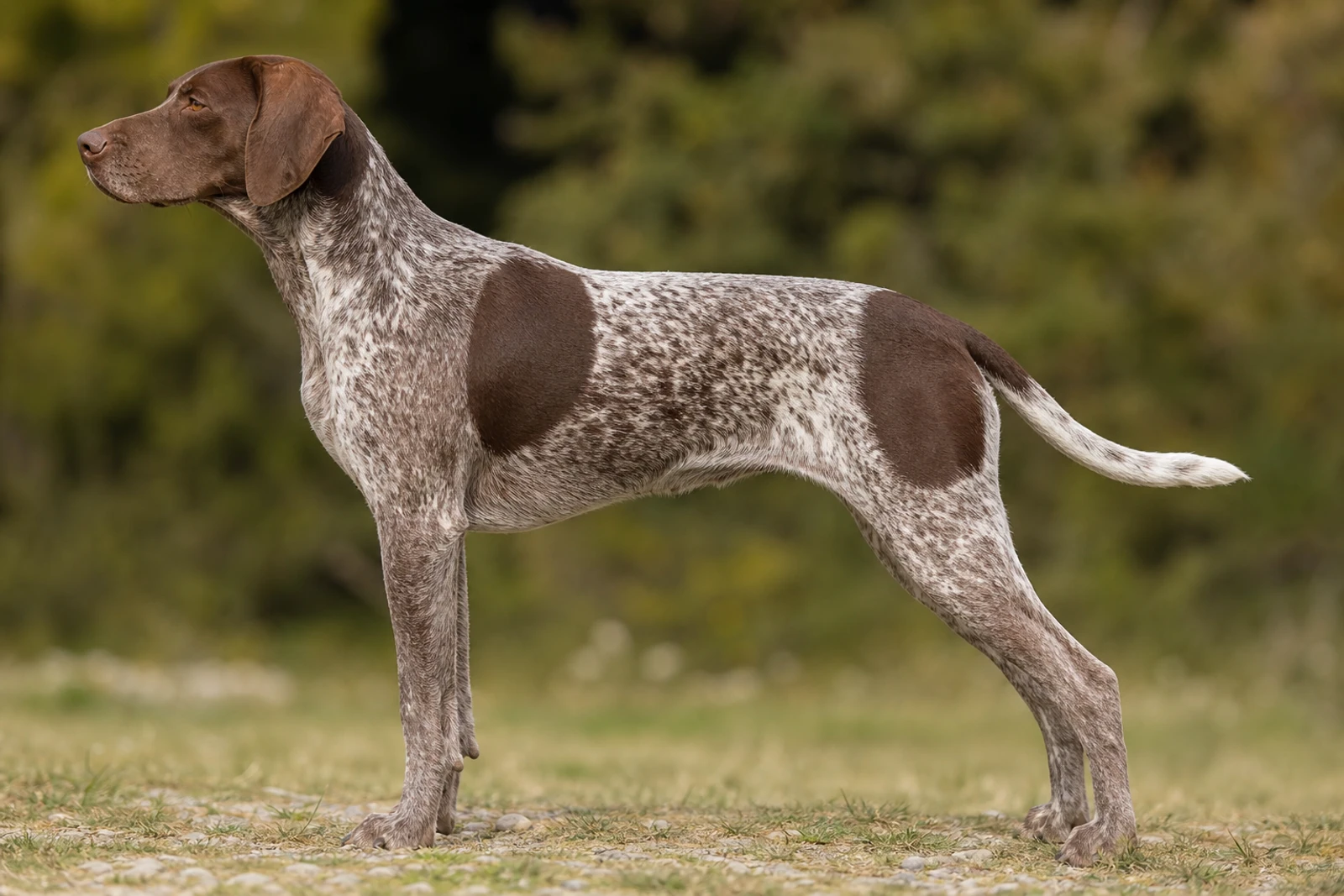
The Braque Francais, Pyrenean Type is a versatile and gentle French pointing dog, perfectly suited for active families and outdoor enthusiasts. This breed is known for its affectionate nature, intelligence, and eagerness to please, making it a wonderful companion both in the field and at home. While they have a moderate to high energy level, they are calm and well-mannered indoors, provided they receive sufficient daily exercise. Their short, low-maintenance coat and friendly disposition make them an excellent choice for those seeking a loyal hunting partner or a devoted family pet. This breed thrives on human companionship and is not suited for a sedentary lifestyle.
At a glance
- Size
- Large
- Height
- 19–23 in
- Weight
- 40–53 lb
- Life span
- 12–14 years
- Coat colors
- white & chestnut, chestnut roan, white & liver
- Coat type
- short, fine, and dense
- Group
- Gun
- Origin
- France
How much does a Braque Francais, Pyrenean Type cost?
Adopt / rescue
$75–$400
Usually includes spay/neuter, first shots, and a microchip.
Buy from a breeder
$700–$2,000
From a reputable, health-testing breeder.
Approximate USD. Prices vary widely by region, breeder, pedigree, age, and coat colour — adopting is the lower-cost and recommended route. Avoid suspiciously cheap “breeders”; they’re often puppy mills.
Estimate the full cost of a Braque Francais, Pyrenean Type →Want the ongoing number? Estimate the monthly food bill for a Braque Francais, Pyrenean Type with our dog food cost calculator.
Braque Francais, Pyrenean Type photos
Views
Front, side, rear and top — the full silhouette.Poses
How the breed sits, lies, moves and plays.Puppy to senior
The breed across its whole life.Expressions
The breed’s range of moods.Close-up details
Eyes, ears, nose, paws, tail and coat.Coat colors
The breed’s recognized colors.Click any photo to enlarge. We show the Braque Francais, Pyrenean Type from every angle — three views, poses, life stages, expressions, close-ups, coat and colors.
Appearance & size
The first thing that strikes you about a Pyrenean-type Braque Francais is that nothing about him is overdone. He’s a pointing dog built to work, with the lean, athletic frame of an endurance hunter—substantial enough to tackle rough terrain, compact enough to slip through heavy cover without a wasted motion.
Build and size
Males stand 19 to 23 inches at the shoulder; females typically stay in the lower half of that range. Weight runs 40 to 53 pounds, and it’s carried on a body that is noticeably longer than tall. The chest is deep and reaches to the elbows, but the ribs are moderately sprung, never barrel-shaped. A firm, pronounced tuck-up flows into a muscular loin, giving the dog a sleek silhouette from the side. Bone is solid but not heavy, and the legs are straight and clean, with tight, round feet.
Coat and color
The coat is short, fine, and lies flat against the skin—dense enough to shed water and brambles, but you won’t find any feathering or wave. Color is always some version of chestnut brown and white. You’ll see large chestnut patches on a white ground, sometimes with heavy ticking that merges into a roan pattern, or a solid chestnut dog with small white markings on the chest, toes, or muzzle. The brown is deep and warm, never black.
Distinctive features
From the front, the head looks elegant but practical. The skull is slightly rounded, the stop well-defined. The muzzle is just a touch shorter than the skull, with broad, open nostrils that flare when the dog catches scent. Eyes are oval and a rich chestnut, set wide apart, with an alert, intelligent expression that never looks hard. The ears are a key breed marker: set on just above eye level, they hang flat, with a slight fold and a rounded tip. When you look at the dog head-on, the ear leather should reach no farther than the corner of the lips.
How the dog moves and carries itself
Viewed from the side, the topline is straight from the withers to the croup—no swayback, no roach. The tail is customarily docked by about half, leaving a straight, moderately thick extension of the spine that the dog carries horizontally or slightly lifted when working. In countries where docking is banned, the natural tail is longer and tapers nicely, but the carriage stays the same. From the rear, the hindquarters are parallel and well-muscled, driving the dog forward without any rolling or wobbling. At a ground-covering trot, the front legs reach straight ahead, and the dog looks like he could go for hours—which he can. On point, the whole body freezes, tail rigid, one front paw often tucked up, every tendon and muscle sharp under the fine coat.
History & origin
The Braque Francais, Pyrenean Type traces back centuries as the hunter’s dog of southwestern France, shaped by the rugged Pyrenees Mountains that run along the Spanish border. While pointing dogs existed across Europe since the Middle Ages, this smaller, lighter version—historically called the Braque Francais de Petite Taille—emerged as a distinct landrace by the 1600s, built to handle rocky slopes and dense cover without wearing out its owner.
Shepherds, farmers, and local market hunters put the dog to work on feathered game like red-legged partridge and on hare. They needed a close-ranging pointer that could find and hold birds, then bring the bag home over steep terrain. This practical job dictated everything: a medium-sized frame (the modern standard is 19–23 inches and 40–53 pounds), a short coat that dried fast, and a steady, cooperative temperament—a dog that lived beside the family when not in the field.
No single kennel created the breed. Old Spanish pointers, brought across the Pyrenees by traders and travelers, likely mixed with indigenous French scenthounds and early pointing types. Over generations, a reliable gundog emerged that differed markedly from the heavier, broader Braque Francais, Gascogne Type found in the flatlands to the north and east. While the Gascogne type evolved to cover more open ground, the Pyrenean remained compact and methodical, prized for its stamina in thin air and its soft mouth on game.
The breed drifted close to obscurity after the World Wars, as other gundogs gained fashion and rural populations shifted. Dedicated French breeders worked through the mid-1900s to stabilize the remaining mountain stock, and the modern standard was formally recognized by the FCI. Today, these dogs remain a fixture among European hunters who appreciate a hardy pointer that doesn’t range too wide. In North America they’re still rare, known mostly within serious bird-dog circles, but the few that make the trip across the Atlantic often leave an impression as calm, no-fuss companions that live 12 to 14 years.
Temperament & personality
The Braque Francais, Pyrenean Type would rather lean against your leg than bounce off the walls. Indoors, this is a calm, soft-eyed dog who folds himself neatly onto a couch and watches the household with quiet contentment — the kind of dog that makes you forget he’s even there until his head lands in your lap. He’s intensely people-oriented, forming a deep bond with his whole family, and he doesn’t do well when shut away from the action. Leave him alone too long and that quiet devotion can curdle into anxiety-driven barking or destructive chewing. He’s not a dog for a home that’s empty all day.
That mellow house-dog demeanor vanishes the second you step outside with a purpose. This is a pointing breed through and through: driven, tireless, and laser-focused in the field. Expect a solid hour or more of real running, scent work, or off-leash exploring daily — not just a quick walk around the block. Without that outlet, the same dog who slept on your feet all morning will start inventing his own jobs, and they rarely involve things you want chewed.
With strangers, he’s reserved without being sharp. He watches, assesses, then usually decides the new person is just a friend he hasn’t leaned on yet. He’s not a watchdog, though he’ll bark enough to let you know the delivery van arrived. His default communication is soft: a nudge, a sigh, those expressive eyebrows. You’ll learn to read him by the looseness of his body and the set of his tail — when he’s truly relaxed, his whole frame goes soft and his eyes turn squinty.
With children, he brings a steady, gentle patience, provided he’s been raised alongside them and no one messes with his food bowl. Like any dog, he values undisturbed meals, and it’s smart to teach kids early that dinner time is off-limits. He generally gets along well with other dogs, especially if socialized young, though his easygoing nature can be mistaken for pushover. He’s not — training needs to be consistent and respectful, never heavy-handed. A quick mind and a desire to collaborate mean he thrives on clear, positive cues, but a frustrated tone will shut him down faster than any correction.
One quirk you’ll notice: he has the typical pointer’s attraction to interesting smells, which can occasionally lead to a joyful roll in something disgusting. He’s not being naughty; he’s just following a nose that rarely quits. Keep a sense of humor, a good recall command, and maybe a hose nearby.
Good with kids, dogs & other pets
Kids
The French Pyrenean Pointer’s patient, non-aggressive temperament draws families in — and for good reason. This is a dog that rarely looks for a fight and tolerates clumsy handling better than many working breeds. The catch is physics. A 45-pound dog leaning into a two-year-old for a cuddle can send that child sprawling, and a joyful sprint across the yard turns into a bowling alley when small legs are in the path. Supervise interactions closely, especially with toddlers, and teach kids not to grab ears or interrupt the dog’s meals and rest.
Early, positive exposure to children locks in that steady nerve. Introduce your pup to calm, treat-wielding kids before 16 weeks, then keep layering on good experiences — noisy playgrounds, crawling babies, shrieking backyard birthday parties. A dog that only encounters children occasionally may grow uncertain or overstimulated. Consistent, gentle handling through the first year shapes the adult dog who can nap beside a crib or trot alongside a wobbly tricycle without stress.
Other dogs
This breed was built to hunt in pairs and small groups, so same-species sociability is part of the package. A well-bred Pyrenean Braque that meets friendly, vaccinated dogs during the 8- to 14-week window usually winds up easygoing. Off-leash greetings on neutral ground feel natural, and play bows come quickly.
The flip side: a dog who missed that early window — a rescue from a kennel or a puppy-mill background — can be skittish or defensive with new dogs. Forcing adult-dog interactions at a crowded dog park often does more harm than good. Read the individual dog. Some adult Pointers live happily with a housemate but have zero need to mix with strangers. Meeting a known, calm resident dog on leash in the backyard is a safer bet than an uncontrolled free-for-all. For the socialized Pyrenean, multi-dog homes work well, especially when one dog isn’t left alone all day.
Cats and other small animals
This is where breed history hits home. The pointer instinct — freezing, staring, stalking — gets triggered fast by quick, skittering creatures. A cat that stands its ground inside the house can coexist with a slow, structured introduction: feed them on opposite sides of a closed door for a week, then allow leashed looks, gradually working up to loose supervision. Some individuals live peacefully with indoor cats for years; others never stop that low, trembling point.
Rabbits, guinea pigs, chickens, and small birds are a different story. Assume they’ll light up the chase sequence. The drive isn’t meanness, it’s deeply genetic. Management is the realistic answer — keep prey-type pets in secure enclosures and separate rooms, and never leave the dog loose with them. Accept that a dog who shadows you for affection in the living room can become a silent statue in the yard the instant a squirrel rustles in the leaves.
Trainability & intelligence
This is a dog that genuinely wants to work with you — but he’s not a push-button companion. The Pyrenean Pointer learns fast when the task makes sense to him and you keep things upbeat. He’s sharp enough to read your mood, and sensitive enough that a heavy hand or a frustrated tone can sour his enthusiasm for training, often faster than you’d think. Skip the corrections and lean hard into positive reinforcement. A quick “yes!” paired with a scrap of chicken or a toss of a ball buys you a dog who offers behaviors freely instead of one who checks out.
Because his whole world runs through his nose, the biggest training challenge is a bombproof recall. In an open field, a drifting scent will trump your voice unless you’ve put in the foundation. Start indoors with zero distraction, then gradually move to fenced areas with light scent trails, rewarding every check-in like it’s a jackpot. Use a long line outside until you’re genuinely confident — chasing a pointer into traffic isn’t a risk you want to take.
Early socialization is non-negotiable. Between 3 and 14 weeks, introduce your pup to a wide variety of people, kids, household sounds, and different walking surfaces. Keep each new encounter positive and let him investigate at his own pace. This builds the steady, unflappable adult you can take anywhere, not a dog who spooks at a flapping tarp or a stranger’s hat.
What works best:
- Short, game-like sessions — 5 to 10 minutes — that always end on a success.
- Finding his currency: praise, a retrieve, or a high-value treat; most will work hard for all three.
- Teaching a rock-solid “look at me” cue before you ever expect reliable obedience outdoors.
- Patience when he gets busy with a scent. Calling him repeatedly when he’s not ready only teaches him to ignore the command.
He’s not stubborn for the sake of it, but he is independent enough that brute force will backfire. Build a partnership where you’re the most interesting thing on the landscape, and a 45-pound pointer with a 12-year life span becomes a dog you can trust off-leash in difficult terrain — one reward at a time.
Exercise & energy needs
This dog was born to work off-lead across big country, so a quick leashed walk around the block won’t come close to tuckering him out. Plan on at least 60–90 minutes of real exercise every day, split into two sessions. One long, slow stroll after work almost always leaves a Braque Francais with gas left in the tank—and a bored pointer tends to invent his own job, like redesigning your couch cushions.
Prioritize off-leash running in a secure area or long hikes over pavement pounding. A fenced field, open woods, or a stretch of beach where he can stretch his legs at a gallop and follow his nose will satisfy him in ways a sidewalk never can. Short, frequent bursts suit this breed perfectly: a 30-minute morning romp with a ball or another dog, followed by a 45-minute afternoon hike or training session that engages his brain. And his brain needs just as much work as his legs. This is a pointing breed through and through, so mental stimulation isn’t optional. Scent games, hide-and-seek with a favorite toy, or structured nose work classes tap into what he was literally bred to do for hours on end. Puzzle toys and food-dispensing challenges can fill the gaps on days when weather keeps you inside.
High-impact activities like running on concrete or repetitive jumping before his growth plates close can stress developing joints. Like many larger gun dogs, he can be prone to hip dysplasia, so stick to natural surfaces and avoid forced roadwork until he’s physically mature. In his prime, though, he’ll thrive on hunting, field trials, canicross, swimming, and any sport that combines running with scenting and retrieving. A tired Pyrenean Pointer is a calm, affectionate house companion who curls up quietly at your feet—a far cry from the restless, anxious chewer that boredom creates.
Grooming & coat care
The Braque Français Pyrenean Type wears a short, fine, close-lying coat that’s built for the field, not the grooming table. It’s dense but has little to no undercoat, so you won’t wrestle with mats or tangles. What you will deal with is shedding — this is a breed that drops hair year-round, with a noticeable uptick in spring and fall when the old coat blows out.
A weekly once-over with a rubber curry brush or a soft bristle brush does the job for routine care. The curry brush lifts loose hair and dead skin while massaging the skin, and a boar-bristle brush afterward adds shine by distributing natural oils. During heavy shedding spells, switch to a de-shedding tool or a fine-toothed comb two or three times a week to stay ahead of the hair tumbleweeds. You won’t need a slicker or pin brush here — those are for longer coats.
Baths are strictly as-needed. The coat repels a surprising amount of dirt, so unless your dog rolls in something foul, a bath every few months is plenty. Too much shampoo strips the thin protective oils and can lead to dry, itchy skin. Use a gentle dog shampoo, and rinse thoroughly.
Ears demand more attention. Those pendant ears can trap moisture and lack airflow, making them prone to infection. Check and clean them once a week with a vet-recommended ear cleaner and a cotton ball; never poke deep into the canal. After a swim or a rainy hunt, dry them out completely.
Keep nails trimmed every 3–4 weeks — if you hear clicks on the floor, they’re too long. Teeth benefit from daily brushing, but three times a week is a realistic minimum to prevent tartar buildup. Because this breed thrives outdoors, do a quick body scan after runs in brushy terrain for ticks, scratches, or foxtails lodged between toes. It’s a low-maintenance coat, but a five-minute check catches problems before they start.
Shedding & allergies
This dog sheds more than you’d guess from that short, glossy coat. The hair is fine, needle-sharp, and weaves itself into upholstery and dark clothing, so you’ll notice it even though the volume isn’t overwhelming. Expect to find stray hairs on floors and furniture year-round, with a real spike twice a year when the coat cycles.
A weekly once-over with a rubber curry brush or hound glove grabs most of the dead hair before it lands on your couch, and you’ll do that more often (every other day) during the spring and fall blowouts. The shedding is moderate overall — not the constant drift of a Lab, but definitely not “barely sheds” territory.
Drool is a non-issue for most individuals. Jowls are tight, and you won’t be wiping slobber off your walls. A few will drip a little after drinking, but the breed generally keeps a dry mouth.
No dog with skin and saliva is truly hypoallergenic, and this one is no exception. Short hair doesn’t reduce the dander or the Can f 1 protein that triggers allergies — it just makes the shed hair easier to spot. If someone in your home reacts strongly to dogs, spend real time with adult Pyrenean Pointers before bringing one home. In many cases, the fine, needle-like hairs can actually be more irritating to sensitive people than a longer, softer coat would be.
Diet & nutrition
This is a dog that will work for a single piece of kibble — and then stare at you like he’s starving. That food obsession makes the Pyrenean Braque easy to train, but it also means he’ll pile on pounds the moment portions creep up. Keep him lean; extra weight strains joints and a deep chest, and this breed already carries a risk for hip and elbow issues later in life.
How much to feed
An adult typically needs 2 to 3¼ cups of high-quality dry food per day, split into two meals. That range covers a 40-pound house dog on the low end and a 53-pound dog logging an hour or more of hard running on the high end. Use a measured scoop or kitchen scale — guessing fills out a dog fast. You should be able to feel his ribs with light pressure but not see them. Adjust every few weeks based on body condition, not the pleading eyes.
Puppies to seniors
Puppies start on four evenly spaced meals until 4 months, then three meals until 6 months, then the adult two-meal routine. Transition any new food gradually over a week to sidestep digestive upset. A large-breed puppy formula is a smart pick if you’re using kibble; the controlled calcium helps safeguard developing joints.
As the dog ages past ten, switch to smaller, more frequent meals if he’s eating less at one sitting. Don’t slash protein without a vet’s say-so, but do gradually cut total calories as his daily mileage drops. Soft food or puréed vegetables can help seniors with missing teeth absorb more nutrients.
What’s in the bowl
A complete commercial diet that meets AAFCO standards is straightforward and balanced. If you home‑cook, partner with a veterinary nutritionist — these pointers need a meat‑heavy base, not a grain pile. Helpful add‑ons include cooked eggs, plain canned fish (in water, no salt), steamed vegetables, and digestible grains like pearl barley or white rice, especially for a sensitive stomach. Never impose a vegetarian or vegan plan; their entire digestive system depends on animal protein to thrive.
Keeping weight in check
This breed will inhale a meal in seconds and then shop for more. A puzzle bowl or slow feeder stretches mealtime to 10‑15 minutes and works his brain. Treats should stay under 10% of daily calories — carrot coins or green beans do the job without the baggage. Skip table scraps entirely. A single fatty holiday handout can trigger pancreatitis, so serve any safe leftovers in the dog’s own bowl, well away from the dinner table, and never feed from your plate. Once begging takes root, you’ll fight it for years.
Health & lifespan
A healthy Braque Francais, Pyrenean Type typically lives 12 to 14 years. This is a robust, athletic gun dog without the laundry list of inherited nightmares some breeds carry, but that doesn’t mean you skip prevention. Responsible breeders screen for issues that can show up in larger hunting dogs—hip and elbow dysplasia come to mind—and they’ll be upfront about any eye or cardiac clearance testing they’ve done on the parents. When you talk to a breeder, ask to see those OFA or equivalent results. No one can guarantee a puppy won’t develop a problem, but good records stack the odds in your favor.
Weight management is where many owners accidentally shorten this breed’s life. A Braque Francais that carries 40 to 53 pounds on a 19–23-inch frame needs to stay lean. Even an extra five pounds puts unnecessary torque on joints built for sprinting and sharp turns in the field. Two solid meals a day, not free-feeding, and skipping the table scraps keeps them where they belong. An active dog that chases birds for hours also needs a diet that supports muscle recovery, so choose a high-quality food with an honest protein percentage.
Routine veterinary care isn’t negotiable. Annual wellness exams catch subtle changes—like a slight limp or a dip in appetite—that you might brush off until something serious takes hold. This is especially true once the dog hits their senior years around age 8 or 9; twice-a-year vet visits then make sense. Keep up with monthly heartworm prevention during mosquito season and for one month after it ends, and stay on top of the legally required rabies vaccination. Dental disease creeps up on plenty of dogs, and a Braque Francais is no exception; brushing or using veterinary dental chews pays off in less pain and fewer extractions down the road.
These dogs have a short, dense coat that doesn’t armor them against extreme cold, so on frigid hunts or long winter hikes they may need a neoprene vest. In hot weather, they’ll run themselves to exhaustion if you let them—provide water breaks and shade, and condition them gradually. A dog that’s bred to hunt all day is also prone to anxiety-driven behaviors when isolated or ignored. Early socialization and positive, consistent handling don’t just make for a better companion—they reduce stress-related health risks like destructive chewing or excessive barking that can lead to injury.
Living environment
A Braque Français Pyrenean type is a house dog first, but a house dog that needs serious outdoor elbow room. Apartment living, even with a dedicated owner, almost always ends in a frustrated dog and chewed baseboards. This is a 40-to-53-pound athlete bred to quarter fields and point game, not curl up on a balcony. They belong in a single-family home with direct access to a securely fenced yard.
Yard needs
Think yard, not a postage-stamp patch of grass. A tall, solid fence — at least five feet, preferably six — is non-negotiable. These dogs have a strong prey drive and can easily clear a low barrier or dig underneath if a squirrel teases them. Invisible fencing won’t stop a Braque in hot pursuit, so stick with a physical barrier. Inside, they want to be right with their people, not banished to the backyard alone.
Climate tolerance
They handle moderate weather just fine, but that short, dense coat doesn’t offer much insulation. In freezing temperatures they need a coat and shorter outings; prolonged exposure can make them miserable. Hot summers require common sense: run them early or late, provide shade and water, and watch for overheating. They’ll adapt to most North American climates as long as you adjust the timing of exercise.
Noise and barking
Don’t expect a yappy dog. Indoors, they’re typically quiet and calm, but they will sound a reasonable alarm bark if someone approaches the house. The real noise problem crops up when they’re under-exercised or isolated — boredom can turn into a whining, howling habit that neighbors won’t appreciate. A tired Braque is a quiet Braque.
Being left alone
This is where the breed draws a hard line. Braque Français Pyreneans form intense bonds and crumble when left solo for long stretches. If your household is gone eight or nine hours a day, you’re likely to see destructive chewing, howling, or house soiling rooted in separation anxiety. Even with gradual desensitization training, they need someone around most of the time. A work-from-home arrangement, a stay-at-home parent, or a dog-savvy retiree fits much better. They need you — not just a dog walker — and they’ll repay that commitment with an affectionate, ready-to-go partner for every hike, hunt, or backyard game you can dream up.
Who this breed suits
The Pyrenean Braque is a hunter at heart, built to cover miles in the mountains. If your daily walk is a 20-minute leash stroll, you’ll end up with a frustrated, destructive dog. Plan on at least an hour of off-leash running, vigorous hiking, or field work every day.
Best fits: active singles and couples who run, bike, or hike and want a tireless buddy. Families with school-aged kids who can join the action — the breed is gentle, but an enthusiastic 50-pound dog can topple a toddler. First-time owners who genuinely embrace an active lifestyle will find a biddable, soft dog that aims to please and learns fast with positive, calm handling.
Think twice if: you’re gone 8+ hours a day. These are Velcro dogs prone to separation anxiety. Apartment living without a big yard or immediate open space is a poor match. High prey drive means unreliable recall unless trained relentlessly — so homes with free-roaming cats or backyard chickens are risky. Sedentary seniors or those with limited mobility will quickly be overwhelmed. Expect a goofy, rambunctious adolescent phase for the first couple of years.
If you can commit to the daily sweat and togetherness, you get a 12-14 year shadow that lives to work beside you. If not, pass.
Cost of ownership
A well-bred Braque Francais, Pyrenean Type puppy from a breeder who screens for hip dysplasia, eye issues, and heart conditions typically runs $1,200–$2,200. These dogs are still pretty rare in the US, so expect a waiting list and, if you go the import route, another $500–$1,200 on top of the litter price for transport, crate, and health paperwork. Adoption through a breed-specific rescue is a long shot but not impossible, usually costing $300–$500 for a young adult or senior.
Monthly costs: what to budget
This is a lean 40–53 lb athlete with a 12–14 year lifespan, and the monthly numbers reflect an active gun dog’s needs.
-
Food: $60–$85
Plan on high-quality kibble or a raw diet to support muscle and joint health. For a dog eating 2.5–3.5 cups a day, a good 30-lb bag runs $55–$75 and lasts roughly a month. Add another $10 for training treats and joint supplements (glucosamine/chondroitin) if your vet recommends them. -
Grooming: $15–$30
The short, dense coat barely sheds and needs nothing more than weekly brushing, occasional baths, and nail trims. You’ll spend a few bucks on shampoo and a good bristle brush, then maybe $12–$20 every 6–8 weeks for a quick nail dremel at the vet or groomer. Mostly a DIY job. -
Routine vet and preventives: $35–$55
Annual exams, vaccines, and heartworm/flea/tick meds average out to around $400–$650 a year. That’s your baseline; emergency visits or chronic conditions push it higher. Many owners budget an extra $50/month into a pet emergency fund instead of relying solely on insurance. -
Pet insurance: $30–$60
Premiums for a comprehensive accident/illness plan with a reasonable deductible land in this range for a medium-large purebred. It offsets costs for anything from a broken toe to bloat surgery or early arthritis management down the road. -
Toys, chews, and miscellany: $25–$40
This breed needs a job for its mouth. Budget for heavy-duty chew toys, treat-dispensing puzzles, and the occasional replacement leash or dog bed destroyed in a zoomies fit. A good-quality crate, bed, bowls, and collar run $200–$350 one time.
Plan on roughly $165–$270 per month for a healthy adult, not counting the purchase price. If you travel often, add boarding or a daily dog walker at $20–$35 a pop, because this is not a dog that thrives on a day full of napping alone. Over a 12-year life, you’re looking at a total financial commitment somewhere in the $25,000–$45,000 range — and that’s before you factor in the cost of the truck you might decide you need to haul muddy gear around after a weekend of pointing practice.
Choosing a Braque Francais, Pyrenean Type
This is a rare breed in the US, so finding a well-bred Pyrenean Braque will likely take patience and a willingness to wait for the right litter. Most people start with a breeder, but don’t overlook rescue; occasionally a pointer-savvy group will place a dog into a hunting or active home. The probability of finding a young, healthy Braque Francais in a shelter is low, but not zero. If you go the breeder route, you’re not just buying a puppy — you’re entering a relationship that should last the dog’s lifetime.
Health clearances you should ask for
Responsible breeders screen breeding stock before a mating. For this medium-large gun dog, the bare minimum includes:
- Hips: An OFA or PennHIP evaluation. Scores should be fair, good, or excellent (OFA) or within breed average (PennHIP). Hip dysplasia is not rampant but occurs often enough to matter.
- Eyes: An annual CAER (formerly CERF) exam by a veterinary ophthalmologist, ruling out inherited issues like cataracts or progressive retinal atrophy.
- Elbows: Often overlooked, but some lines can carry elbow dysplasia. Ask if they’ve done an OFA elbow radiograph.
- Cardiac: A basic cardiac auscultation, especially if the dog will be hunted hard in heat.
Ask to see the actual certificates, not just a verbal “all good.” A breeder who waves it off or says “my vet checked them” without sending you the official records is a red flag.
Red flags that should make you walk away
- No health testing of parents. Even if the breeder is “experienced,” skip anyone who skips clearances.
- Multiple litters on the ground at once or a dam who is bred back-to-back. This breed isn’t a cash crop.
- Puppies sent home before 8 weeks. Nine to ten weeks is even better for this somewhat sensitive, biddable pointer — they benefit from extra littermate socialization.
- Breeder doesn’t ask you hard questions. A good breeder will grill you on your lifestyle, exercise plan, and knowledge of pointing dogs. They won’t just take a deposit.
- A refusal to show you the dam. The sire might be far away, but you should meet the mother and see her temperament. A nervous or aggressive dam can pass those traits on.
Picking a puppy from a litter
You won’t be picking a show prospect — this is a working breed first. A healthy Pyrenean Braque pup should come to you willingly, not skulk in the corner or nip and charge. Look for a litter raised inside the home (or in a stimulating kennel setup) with plenty of varied handling from birth. In the 15–20 minutes you spend, observe:
- The puppy who investigates you, tugs a shoelace, then settles a bit — that’s a good middle-ground temperament for a family dog that may also hunt.
- Steer away from the pup who freezes, hides, or startles badly at a dropped key. Extreme timidity is hard to rehab in a sensitive gun dog and isn’t normal.
- A pup that’s all bitey, no off-switch, and can’t settle even after you gently restrain it for a few seconds may be too much for a novice.
Ask the breeder about early scent introduction and any exposure to birds or water. Puppies raised with ENS (Early Neurological Stimulation) and regular novel stimuli — different surfaces, crates, car rides — adjust faster to a new home. Take the breeder’s recommendation seriously; she knows these pups for 8+ weeks and can match energy levels and drive better than your first impression. A good match beats picking “the cute one” every time.
Pros & cons
Pros
- Affectionate, family-centered companion. This pointer wants to be with its people — often described as a Velcro dog — and forms deep bonds with everyone in the household.
- Moderate size that fits many lifestyles. Weight runs 40–53 pounds and height 19–23 inches at the shoulder. Big enough for outdoor adventure, yet compact enough to travel and live indoors without overwhelming your space.
- Low-maintenance coat. The short, fine hair needs only a weekly once-over with a mitt or rubber brush to remove dead hair. For a gun dog, shedding is surprisingly modest.
- Eager to please and straightforward to train. A natural hunting partner, the Braque Francais picks up obedience, retrieval, and field commands quickly with positive, consistent methods. Even as a pet, that cooperative streak makes daily manners and recall work rewarding.
- Great with kids and other dogs when raised together. Early socialization seals the deal, but the breed’s typical gentle mouth and play style make it a trustworthy addition to a multi-pet, multi-child household.
- Solid lifespan of 12–14 years. With responsible care, you get a long-running, healthy partner; responsible breeders screen for known issues to stack the deck in your favor.
Cons
- Demands a real workout, not a stroll. An hour of vigorous off-leash running, field work, or high-intensity fetch is the daily baseline — leash walks around the block leave this dog buzzed and frustrated.
- Intense prey drive. Cats, squirrels, and backyard birds will trigger a full-on chase response the moment they move. A securely fenced yard and a leash in unfenced areas are non-negotiable.
- Does not do well alone for long stretches. The Velcro nature cuts both ways: left solo for a full workday, a Braque Francais can develop separation anxiety and destructive chewing or howling. Not an apartment dog and not a fit for an all-day-empty house.
- Reserved with strangers. Without active, ongoing socialization, the breed’s watchful side can tip into timidity or aloofness that makes guests and public outings uncomfortable.
- Drop ears come with maintenance reminders. Those soft, floppy ears trap moisture and wax, so weekly cleaning and checking for infections are part of the routine. Responsible breeders screen hips and eyes, but hip dysplasia and certain eye conditions still pop up in the gene pool; ask to see OFA or equivalent clearances.
- Shedding, while moderate, is still shedding. Fine white hairs will find your dark pants, sofa, and car upholstery — a price you pay for that easy-care coat.
Similar breeds & alternatives
If you’re drawn to the Pyrenean Braque’s mix of off-switch manners and real hunting ability but want to see what else is out there, a handful of breeds sit close. The differences usually come down to size, coat, and just how much engine you want to live with.
-
German Shorthaired Pointer – More dog in almost every dimension. They run 45–70 lb and 21–25 in at the shoulder, typically need a solid 90 minutes to two hours of hard running daily, and can be relentless indoors without it. The GSP is sharper, higher‑octane, and often more independent. You get a tremendous athlete, but the Pyrenean type is noticeably calmer and more forgiving if you miss a day.
-
Braque d’Auvergne – A close cousin in size (49–62 lb, 21–25 in) and temperament, with the same soft, cooperative nature. The obvious difference is the coat: a dramatic black‑and‑white ticked pattern with heavy spotting. They share the Pyrenean breed’s trainability and gentle house presence, though the d’Auvergne can be a touch more reserved with strangers. If you want a nearly identical companion but prefer the look, it’s worth a look.
-
Brittany – Smaller and tighter‑wound. Brittanys stand 17.5–20.5 in and weigh 30–40 lb, which makes them easier to travel with but often more kinetic in the house. They’re merry, affectionate, and need a real job to settle. The Pyrenean type gives you more mass and a softer “off” switch; a Brittany gives you a compact package that thinks jogging five miles is just a warm‑up.
-
Wirehaired Pointing Griffon – Similar weight range (50–60 lb) and a harder, wiry coat that sheds less but requires hand‑stripping or regular grooming. Griffons are steady, devoted pointing dogs with a slightly more serious, sometimes aloof temperament. The Pyrenean Braque is easier to read at home, with a short, low‑maintenance coat and a warmer, more openly affectionate family demeanor.
The Pyrenean type carves out a nice middle ground: big enough to handle late‑season pheasants, small enough that a 50‑pound dog isn’t a handful on leash, and bred with a biddability that doesn’t demand a professional trainer. If the alternatives above swing too far into workaholic, aloof, or high‑strung territory, this is the one that remembers how to lie down when the shotgun goes back in the safe.
Fun facts
- One of the oldest French pointing breeds, dating back to the 17th century.
- The Pyrenean type is smaller and lighter than the Gascogne type, standing 19-23 inches tall.
- They are known as 'Braque Francais de Petite Taille' in France, meaning 'small-sized French pointer', though they are still a large breed.
- Renowned for their excellent nose, they are versatile hunters capable of pointing, retrieving, and tracking.
Frequently asked questions
- How is the Braque Francais Pyrenean Type with kids?
- This breed is known to be affectionate and gentle, making it a great family companion that tends to get along well with children. They have an even-tempered nature and are typically patient, but their energy level means supervision is recommended with small kids to prevent accidental bumps. Early socialization helps ensure a harmonious household.
- How much exercise does a Braque Francais Pyrenean Type need?
- As a high-energy gun dog, they require at least 60–90 minutes of vigorous exercise daily, such as running, fetching, or hiking. Without adequate physical and mental stimulation, they can become restless or develop unwanted behaviors. They excel in active families who enjoy outdoor adventures.
- Do Braque Francais Pyrenean Type dogs shed a lot?
- They are moderate shedders, ranking about 3 out of 5, so you can expect some loose hair around the home year-round. Weekly brushing helps manage shedding and keeps their coat healthy. Overall, they are not considered hypoallergenic but aren't heavy shedders either.
- Are they easy to groom?
- Yes, grooming is quite minimal for this breed, rated 1 out of 5. Their short, dense coat only needs occasional brushing and a bath when they get dirty. Regular ear checks and nail trims complete the easy-care routine.
- Is the Braque Francais Pyrenean Type a good choice for first-time dog owners?
- They can be a good match for first-time owners who are prepared for a high-energy dog. Their intelligence and eagerness to please make training relatively straightforward, but consistent exercise and mental engagement are key. A novice owner committed to an active lifestyle will find a loyal, affectionate companion.
Tools & calculators for Braque Francais, Pyrenean Type owners
Quick estimates tailored to Braque Francais, Pyrenean Types — pre-filled with this breed’s size where it matters.
Articles & stories about the Braque Francais, Pyrenean Type
Sources & standards
This profile follows recognized breed standards from the American Kennel Club (AKC) and the Fédération Cynologique Internationale (FCI), along with established veterinary and breed-club guidance. These describe general breed tendencies — every dog is an individual.