

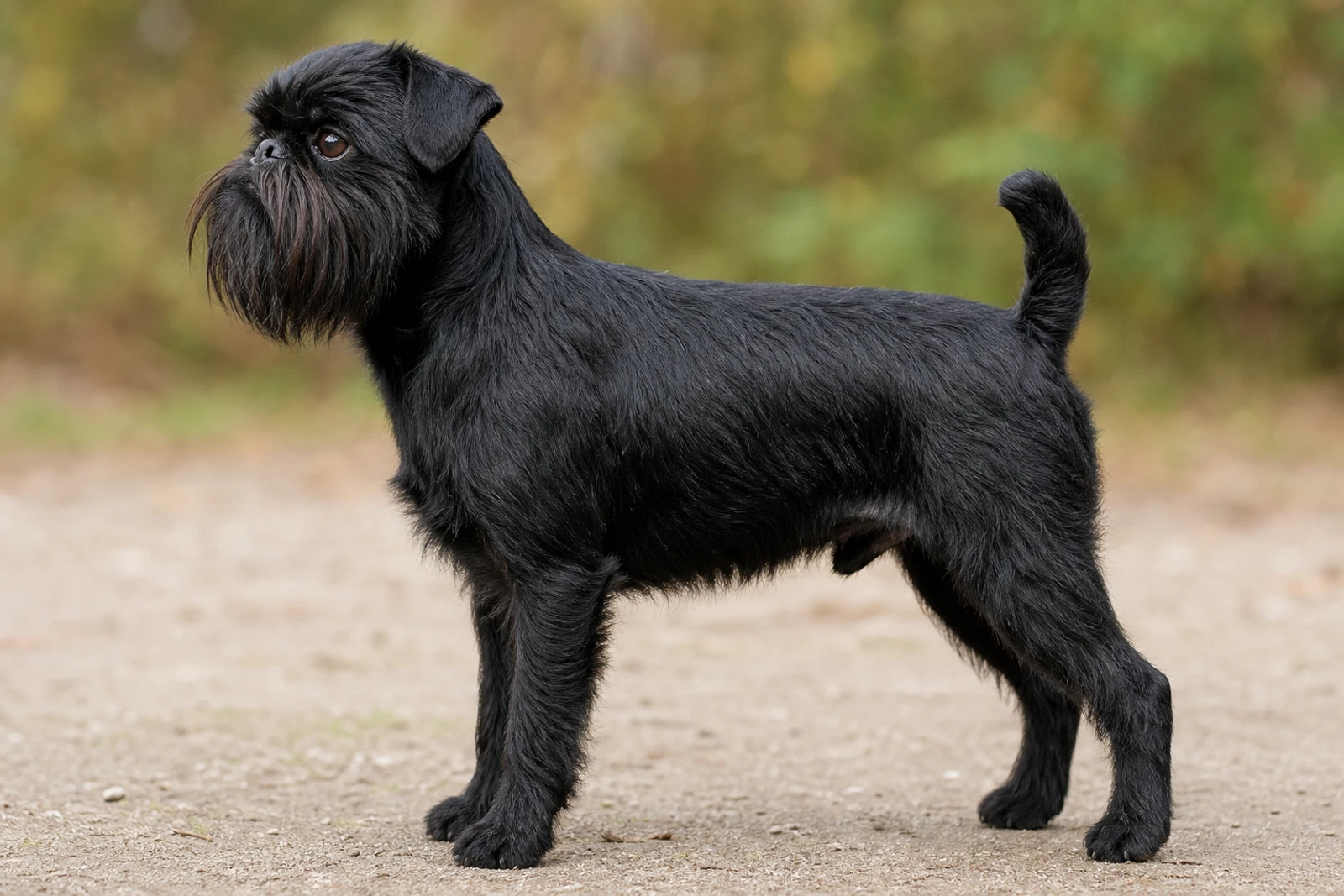
The Brussels Griffon is a tiny dog with an enormous personality, known for its human-like expressions, wiry beard, and confident nature. This devoted breed thrives on close companionship, making it ideal for singles, seniors, or families with older children who can handle their sensitivity and small size. Alert and curious, they need mental stimulation but adapt well to apartment life with moderate exercise. Their affectionate, loyal disposition creates deep bonds with their owners. While they may be stubborn, early socialization and positive training bring out their best. Not suited for rough play, they prefer a calm, loving environment.
At a glance
- Size
- Small
- Height
- 9–11 in
- Weight
- 7–11 lb
- Life span
- 12 years
- Coat colors
- Red, Belge, Black and Tan, Black
- Coat type
- Rough and wiry double coat
- Group
- Companion
- Origin
- Belgium
How much does a Brussels Griffon cost?
Adopt / rescue
$75–$400
Usually includes spay/neuter, first shots, and a microchip.
Buy from a breeder
$700–$2,000
From a reputable, health-testing breeder.
Approximate USD. Prices vary widely by region, breeder, pedigree, age, and coat colour — adopting is the lower-cost and recommended route. Avoid suspiciously cheap “breeders”; they’re often puppy mills.
Estimate the full cost of a Brussels Griffon →Want the ongoing number? Estimate the monthly food bill for a Brussels Griffon with our dog food cost calculator.
Brussels Griffon photos
Views
Front, side, rear and top — the full silhouette.Poses
How the breed sits, lies, moves and plays.Puppy to senior
The breed across its whole life.Expressions
The breed’s range of moods.Close-up details
Eyes, ears, nose, paws, tail and coat.Coat colors
The breed’s recognized colors.Click any photo to enlarge. We show the Brussels Griffon from every angle — three views, poses, life stages, expressions, close-ups, coat and colors.
Appearance & size
The Brussels Griffon is a square little dog, standing nearly as tall as he is long. That 9-to-11-inch height and 7-to-11-pound weight pack a lot of substance into a small frame. Under the coat he is surprisingly sturdy, with good bone for a toy breed — nothing spindly or fragile about him. His build is compact, with a deep chest that fills the front of your shirt when you scoop him up and a level topline that stays steady whether he’s trotting ahead or planted on your lap.
You’ll see two coat types, both dense enough to feel alive under your hand. The rough coat is wiry and hard, with a fringe of longer hair around the eyes, cheeks, and chin that sculpts the face into a distinctly monkey-like frame. The smooth coat (sometimes called Petit Brabançon) lies flat and glossy, short all over, with no beard or eyebrow furnishings. Both types shed minimally, though the rough coat requires regular hand-stripping to keep its texture.
Color is straightforward. Red covers anything from a clear reddish-fawn to a deeper mahogany, often with a black mask on the muzzle and ears. Belge is a mix of black and reddish-brown, typically with black on the head and body and tan markings on the legs, chest, and under the tail. Black and tan has a solid black coat with sharply defined tan points in the same places you’d see on a Doberman. Solid black rounds out the acceptable colors, and a small white star on the chest is permissible but not preferred.
Face is everything on a Griffon. From the front, you’ll notice the huge, dark, wide-set eyes that give him a shrewd, human-like expression — they’re round and very glossy, and they communicate a distinct “I know what you’re thinking” look. His nose is pushed back just enough to create a short, upturned muzzle, but not so flat that he’s snorting for air. A prominent, slightly undershot jaw lifts the chin and gives the whole face a pouty, confident attitude. The ears are small and set high; in the U.S. they’re often cropped to a neat point, though natural drop ears are equally correct and frame the head like little pendant triangles.
From the side, the neck arches nicely out of a well-laid-back shoulder, and the deep chest carries plenty of heart room. The ribs are well sprung, tapering into a moderate tuck-up behind the elbow. The tail is set high and carried jauntily — traditionally docked to about one-third its length, but natural tails are becoming more common and curve up in a merry sickle shape.
From the rear, the hindquarters stand straight and true, with moderate angulation that matches the front, so the dog appears balanced from every angle. The thighs carry enough muscle to propel that compact body onto the sofa or around the agility course without looking heavy. The overall impression is a small dog with big-dog substance: sturdy, alert, and unmistakably expressive from every viewpoint.
History & origin
The Brussels Griffon started out as a rough-and-tumble ratter in 19th‑century Brussels, not as a lapdog. Coachmen kept small, wiry‑coated terrier‑type dogs to keep stables and cabs free of vermin. These street dogs, known as griffons d’écurie (stable griffons), were scrappy, alert, and unglamorous. Their job was straightforward: kill rats before they ate the horse feed.
Over time, coachmen bred them to other small dogs to refine the look. The Affenpinscher contributed the wiry coat and monkey‑like face. The Pug brought in a shorter muzzle and a pushed‑in nose, while the Ruby King Charles Spaniel added rich red color and a softer expression. The result was a dog with a human‑like beard and an expressive, almost worried forehead. By the 1880s, three distinct varieties had emerged: the rough‑coated red Griffon Bruxellois, the rough‑coated black‑and‑tan Griffon Belge, and the smooth‑coated Petit Brabançon—all considered the same breed with different coat types.
The breed leaped from stable to salon after Queen Henrietta Maria of Belgium took an interest. Her patronage made the Griffon fashionable among the Belgian aristocracy. The first Brussels Griffon club formed in 1883, and the breed standard was drawn up soon after. By the early 1900s, exports to England and the United States had begun, and the American Kennel Club recognized the breed in 1910.
Two world wars nearly wiped the Griffon off the map. With Belgium under occupation, breeding ground to a halt, and many dogs were lost. Dedicated fanciers in England and the U.S. kept the breed alive, starting from just a handful of survivors. Today’s Brussels Griffons still carry that stable‑dog tenacity: a big‑dog personality in a 10‑pound body, unafraid to voice an opinion when a doorbell rings or a squirrel dares to trespass.
Temperament & personality
A Brussels Griffon packs more personality into his 7-to-11-pound frame than dogs four times his size. He’s equal parts velcro companion, self-appointed watchdog, and goofy little clown — with a stubborn streak that can catch first-time owners off guard. This is not a low-key lapdog that melts into the background. He wants your attention, he’ll demand it, and he’s quick to tell you when something feels off.
Loyalty that borders on shadowing
Griffs bond fiercely with their humans. Expect a small, wiry shape following you from room to room, perching on the back of the sofa, or insisting on a spot in your lap. That devotion makes them sensitive to being left out. Neglect or long hours alone often trigger anxiety-driven barking or, in some cases, indoor marking — a dog’s way of placing familiar scent cues where he feels insecure. If the family's scent is thin in a bedroom or guest bath, your Griff may “claim” it with a stray puddle. Paying him with a treat immediately after he eliminates outdoors, and diligently removing any indoor urine smells with an enzymatic cleaner, prevents a cycle of re-soiling.
Watchful and a little wary
Don’t let the monkey-like face fool you. A Griffon notices every leaf that blows past the window and every delivery truck two streets over. He’s an alert little watchdog who will announce visitors with a sharp, sometimes startling bark. Without early socialization, that wariness can slide into suspicion of strangers or stiffness around unfamiliar dogs. Learn to read his body language: a stiff, forward-leaning posture paired with a direct stare frequently precedes a snarky remark or a growl. A loose, wiggly body and soft eyes mean he’s feeling social. If he lip-licks, yawns, or turns his head away while being greeted, he’s telling you he needs space — and smart owners listen.
Big brain, strong will
Training a Griff is more negotiation than command. He’s bright, but he'll dig in his heels if pushed around. Respectful, consistent engagement works far better than force. Use treat-based motivation and keep sessions short and playful, or he’ll simply opt out. This same intelligence shows up in mischievous ways: a bored Griff may decide your wooden chair leg is his new chew toy. Puppies gnaw to explore and ease teething pain; adults often chew hard objects to keep jaws strong and teeth clean. A homemade citrus peel spray or a diluted vinegar spray (white and cider) on off-limits items can redirect the habit without a battle.
Quirks you’ll learn to love (or tolerate)
- Big-dog attitude — He’ll boss around much larger dogs with zero awareness of his size. Supervise play with bigger housemates.
- Food guarding risk — Never interrupt a Griff while he’s eating. Teach children to give him peaceful meals. A stiff body or low growl over the bowl is a warning, not a conversation starter.
- Scent rolling — Like many dogs, a Griff might drop a shoulder into something foul-smelling on a walk. One theory holds that dogs roll in strong odors to mask their own scent or, oddly, to broadcast the discovery of something “good.” To you it’s a bath-worthy offense; to him, it’s the height of self-expression.
- Comedy on four legs — He’ll make you laugh with exaggerated head tilts, dramatic sighs, and sudden zoomies. That sense of humor is part of why owners fall so hard for him.
A Griffon is not a guarantee — temperament labels like “brave” or “calm” reflect general tendencies, not a personality painted on at birth. But in the right home, with early socialization, plenty of togetherness, and a human who enjoys a small dog with the soul of a terrier, he’s an endlessly entertaining, fiercely loyal companion.
Good with kids, dogs & other pets
With children
A Brussels Griffon barely tips the scale at 7–11 pounds, so rough handling from a young child can do real damage — even when the dog’s temperament is patient and non-aggressive. That’s the first thing to get right. Your three‑year‑old’s bear hug might feel threatening to a dog this small, and a startled Griffon may snap. Kids who are old enough to follow “gentle hands” rules (think six and up) usually do best. No child of any age should be left unsupervised, and toddlers on the floor need a watchful adult right there.
Early exposure to calm, polite children during puppyhood makes a huge difference. If you miss that window — roughly the first 12–16 weeks — a Griffon can grow up skittish around small, erratic humans. Ongoing, positive encounters keep that fear-based reactivity in check. This is also a breed that bonds hard to its people and doesn’t do well being left alone for long stretches. A household where someone is home much of the day naturally provides the constant supervision kids-plus‑toy-dog situations demand.
With other dogs
Done right, a Brussels Griffon can live peaceably with other dogs, but the path runs straight through early socialization. Puppies need controlled, upbeat meetings with a variety of friendly, well-mannered dogs before that critical 16‑week mark. Skip this, and you’re likely to get a dog who is fearful, snappish, or over‑reactive on leash when strange dogs appear.
Even with good socialization, size matters. A romping 70‑pound Labrador can accidentally hurt a 9‑pound Griffon. Playdates with pups of similar stature and calm energy work better than a free‑for‑all at the dog park. Watch for possessive guarding, too — a Griffon may not appreciate another dog muscling in on his person’s lap. Supervise, interrupt play that looks one‑sided, and don’t force interactions. An adult Griffon who’s perfectly content as your one‑on‑one shadow doesn’t need a pack of dog friends to be happy.
With cats and small pets
Raised together from puppyhood, many Brussels Griffons learn to share space with a cat or even a house rabbit. But this breed’s curious, bold streak can flip into a chase the moment a furry shape darts across the room. A cat that stands its ground is usually safer than one that bolts. Never leave them unsupervised until you’ve seen months of calm, predictable behavior. For small caged pets like hamsters or ferrets, assume the Griffon will be intensely interested — secure lids and out‑of‑reach placement are non‑negotiable. Gradual, positive introductions and consistent management are the through line for any multi‑pet home with this sensitive, people‑focused dog.
Trainability & intelligence
Brains aren’t the problem with a Brussels Griffon—this is a sharp little dog that picks up new cues faster than you expect. The real work is building the trust and mutual respect that make him want to listen. Push him around with force or intimidation, and you’ll get a dog that freezes up or digs in his heels. Swap scolding for high-value treats and genuine positive reinforcement, and the Griffon flips into an eager, quick study.
Start day one. The window between 3 and 14 weeks is critical for socialization. That doesn’t mean a few polite hellos at the pet store; it means gradual, upbeat exposure to kids, men with beards, skateboards, vacuum cleaners, slick floors—anything you can dream up. Griffons can be suspicious of strangers and reactive toward the unfamiliar if they’re left to figure the world out on their own. Ongoing, calm introductions keep that big-dog confidence from curdling into fear-based barking or snapping.
Training sessions should be short, upbeat, and never a wrestling match. A Brussels Griffon will try to outsmart you when he senses inconsistency. He’ll test whether “sit” means “sit” every single time, or just when you’re holding chicken. That’s where consistency and patience earn their keep. Be clear, follow through, and reward what you want immediately—a treat, a squeaky toy, a quick game of tug. Punishment breaks trust fast and can turn a thoughtful little dog into an anxious mess.
Recall can be a particular hurdle. Independent thinking and a touch of terrier-like sass mean your Griffon may decide chasing a squirrel is more rewarding than trotting back to you. Build a rock-solid recall indoors and in fenced areas using praise and food that beats whatever distraction is out there. Don’t expect him to morph into an off-leash robot on day two.
Your Griffon is smart enough to know his own mind—your job is to make cooperation feel like his idea, through a patient, relationship-first approach that never forgets you’re dealing with a sensitive, often hilarious thinker, not a wind-up toy.
Exercise & energy needs
Your Brussels Griffon might look like a tiny, wide-eyed companion, but don’t mistake small for sedentary. Plan on two 20- to 30-minute activity sessions a day, broken into short walks, indoor play, or training bursts. This dog runs on frequent, moderate movement, not one long hike.
With a pushed-in nose and a compact build, Griffs overheat quickly and can struggle during intense exercise. Midday summer pavement is a no-go. Stick to early mornings, late evenings, or a quick romp inside an air-conditioned room. The same flat face that gives them that expressive look means you’ll trade duration for mental engagement almost every time.
Mental exercise counts just as much. A bored Griffon becomes a creative problem-solver — the kind that barks at every delivery truck or dismantles the trash. Puzzle toys, snuffle mats, and short scent-tracking games inside the house burn energy without stressing joints. Teach a new trick, practice rally-style heelwork, or hide treats under cups for a two-minute brain workout that leaves them flopped and satisfied.
- Two short leash walks a day (15–20 minutes each) let them sniff, strut, and check the neighborhood news.
- Indoor fetch with a soft toy down a hallway gets the zoomies out without concussive landings.
- Clicker training or trick sessions (5–10 minutes) are ideal; Griffs love showing off and work for food.
- Low-impact sports like nose work or rally give them a job without high jumps. Agility at a lowered height is possible, but watch for patella issues — avoid fixating on hurdles.
Skip the dog-park chaos. A Griffon’s small size and sensitive nature can make rough-and-tumble play stressful or dangerous. When exercise falls short, you’ll see the fallout — pacing, excessive alert barking, or clingy behavior. Meet their modest physical needs with short, engaging outings and a steady stream of mental puzzles, and you get a calm, wiggly housemate who’s ready to snuggle.
Grooming & coat care
The Brussels Griffon shows up in two very different coats—and which one you’re living with sets the whole grooming rhythm.
- Rough coat: wiry, dense, with a harsh outer layer and a softer undercoat. It doesn’t shed much if you keep it stripped, but it mats easily around the legs, belly, and beard.
- Smooth coat: short, flat, and glossy. Sheds more than the rough, especially when seasons change.
Brushing and coat maintenance For a rough-coated Griffon, reach for a metal slicker brush with rounded pins once or twice a week to pull loose hair out of that thick undercoat, then follow with a greyhound comb to catch tangles behind the ears and in the armpits. The real key is hand-stripping every two to three months—plucking dead topcoat by hand or with a stripping knife—to keep the coat hard and weather-resistant. If you clip instead, the texture softens, colors can wash out, and you trade that low-shed trait for more fluff and more frequent trims.
A smooth-coated Griffon needs a quick weekly session with a natural bristle brush. It massages the skin, spreads oils, and puts a shine on that short coat. During spring and fall she’ll drop more hair; bump brushing to every other day and run a damp cloth over her afterward to collect the strays.
Bathing and skin check Bathe either variety only when dirt or dog smell requires it—roughly every four to six weeks. Too much shampoo strips natural oils, leaving the rough coat brittle. Always use a mild dog shampoo and rinse thoroughly. That wiry beard traps moisture and food bits, so wipe it dry after meals and give it a quick comb to prevent skin crud underneath.
While you’re brushing or toweling off, look for dry patches, redness, or tiny bumps. Catching skin trouble early makes all the difference with a breed that can be prone to allergies.
Nails, ears, teeth Nails grow fast on these small, light-boned feet. Trim every three to four weeks—if you hear clicking on the floor, you’re overdue. Check the ears weekly for wax or debris; a damp cotton ball on the outer ear is enough, no poking down the canal. Daily toothbrushing isn’t optional here. Small breeds pack teeth into tiny jaws, and plaque builds up quickly. A finger brush and enzymatic dog toothpaste keep breath and gums in check.
Seasonal note Rough coats mostly hold onto dead hair until you strip it out, so you won’t get a giant spring blowout. Smooth Griffons, though, shed more noticeably when daylight hours shift. Increase the brushing, add a quick comb-through if you’re seeing extra tumbleweeds, and stick with it for a couple of weeks. The coat levels out again once the new season settles in.
Shedding & allergies
If you're picturing tumbleweeds of fur, relax. A Brussels Griffon is never going to cover your couch like a Golden Retriever. But the real story depends almost entirely on which coat you bring home.
The rough-coated Griff has a wiry, dense double coat that barely sheds — as long as you maintain it the right way. Dead hairs stay trapped in the wire texture instead of dropping onto your floor. The catch? You have to physically remove them. A quick brush won't cut it. Most owners hand-strip every few months (plucking the loose, dead outer hairs by hand or with a stripping knife), and when that's done consistently, you'll find almost zero loose fur in the house. Skip the hand-stripping and just clip with clippers, and you'll get more dead hair hanging around — and the coat will soften, shed a bit more, and lose that iconic scruffy look.
The smooth-coated Griff is an entirely different animal. It's a short, slick coat that sheds lightly but steadily all year. Think of it like a small hound — you’ll see a few hairs on your dark pants, and you'll do a quick vacuum sweep every few days. They blow coat seasonally in spring and fall, when shedding can ramp up noticeably for a week or two, but it's still manageable in a 7- to 11-pound dog.
Neither variety is a drooler. You won't find wet spots on your shoulder or slimy toys.
Now for the allergy question. No dog is truly hypoallergenic, and anyone who tells you otherwise is selling something. Allergies are triggered by dander (dead skin flakes) and proteins in saliva and urine, not just by loose hair. A rough-coated Griff who is hand-stripped regularly produces very little airborne hair, but she still makes dander. Some allergy sufferers do remarkably well with them; others react anyway. Spend real time with an adult of the exact coat type you're considering before you commit. It's the clearest test you'll ever get.
Diet & nutrition
A Brussels Griffon carries its whole world on a 7- to 11-pound frame, so every extra ounce matters. A half-pound gain on a Griffon is like 10 pounds on the average human — enough to strain tiny knee joints, a sensitive spine, and a breathing apparatus already shortened by that flat face. Portion control isn’t optional; it’s the daily difference between a bouncy companion and a dog who struggles halfway around the block.
- Puppies need four meals a day until four months old, then three meals until six months, after which two meals work for life. Choose a premium kibble sized for small mouths or a fresh-cooked diet. Switch foods slowly over a week to avoid diarrhea.
- Food motivation runs the gamut. A polite nibbler needs little oversight; a speed-eater who inhales every crumb needs a puzzle bowl or snuffle mat to turn meals into a thinking game and prevent choking or regurgitation.
- On the plate, whether commercial or homemade, aim for roughly 60% animal protein, 20–30% fruits and vegetables, and 10% extras like eggs, whole grains, or plain yogurt. Purée or finely chop meals for seniors or dogs with dental gaps — a dog’s jaw moves only vertically, so blending aids nutrient absorption.
- Treats add up lightning-fast. Pea-sized training rewards still count toward daily calories and should never exceed 10% of total intake. Factor them in before that waistline starts disappearing.
- Older dogs keep the two-meal cadence but may appreciate a small, extra mini-meal if energy dips. Don’t slash protein on autopilot; instead, weigh your dog weekly and reduce overall portions gently as activity falls.
- Table scraps are a landmine. Feeding from your plate teaches a begging habit you’ll never fully erase. Scrape leftovers into the dog’s bowl after you clear away, and never hand over fatty holiday morsels — a single rich meal can trigger pancreatitis in a breed this small.
Use a digital kitchen scale. Weighing every meal takes ten seconds and protects those fragile joints far better than a cagey guess with a measuring cup.
Health & lifespan
A healthy Brussels Griffon often makes it to 12 years, but those years can be rocky if you ignore the breed’s flat face and featherweight frame. Every pound counts when your dog tops out at 7–11 lb, and that smooshed muzzle—classic brachycephalic anatomy—affects everything from heat tolerance to dental crowding.
Brachycephalic risks hit hard in summer. A Griffon can overheat in minutes during a walk that barely makes you sweat. Restrict outdoor exercise to early morning or evening when it’s above 75°F, keep air conditioning on indoors, and never, for even a moment, leave the dog in a parked car. A cooling mat or damp bandana helps, but common sense is the real lifesaver.
That small jaw packs a lot of teeth, which makes periodontal disease almost inevitable without daily brushing. Bacteria from neglected gums migrate to heart valves and kidneys, shortening life. Brush those teeth every day, and schedule a professional cleaning when your vet recommends it—waiting until a dog’s breath stinks means you’ve already missed the early stage.
Patellar luxation—a kneecap that slips out of its groove—shows up in many toy breeds, and an overfed Griffon feels it sooner. At 7–11 pounds, even a quarter-pound weight gain translates to extra strain on joints. Keep ribs easily palpable but not protruding. Use a harness, never a collar, to protect the windpipe. A honking cough after pulling on a leash isn’t cute; it often points to tracheal collapse, and the damage is cumulative.
Those round, prominent eyes are accident magnets and genetically vulnerable. Cataracts, progressive retinal atrophy (PRA), and corneal ulceration run in the breed. Responsible breeders screen parent dogs through OFA or CERF eye exams and will hand you the paperwork without being asked. They also palpate patellas and may test for hip dysplasia—yes, even in a dog the size of a loaf of bread.
Be ready for hypoglycemia in young puppies. A Griffon pup who misses a meal or wrestles too hard can spiral into a lethargic, shaky crash fast. Three small feedings a day and a tube of Nutri-Cal in the cupboard prevent an emergency. This stabilizes by adulthood, but keeping a snack on hand during travel never hurts.
Monthly heartworm prevention during mosquito season and a rabies shot (legally mandated, and 100% fatal once symptoms appear) aren’t optional, even for a mostly-indoor companion. Beyond vaccines, your vet will want to check for heart murmurs (mitral valve disease crops up in small seniors) and will look for early signs of syringomyelia—fluid pockets in the spinal cord that can cause oversensitivity to touch near the neck. Not every Griffon faces it, but a breeder who says “that doesn’t happen in this breed” is lying or uninformed.
The dog’s emotional wiring matters physically. A Griffon isolated for hours slides into anxiety-driven stress that suppresses immunity. A dog who barks nonstop or refuses food may be sick with loneliness more than anything else. Annual wellness exams become twice-a-year visits around age 7 or 8, which is when a small weight change, a subtle limp, or a faint cloudiness in the eye often starts.
You’ll spend time wiping eye goop and cleaning wrinkles, but those five-minute rituals double as daily health checks. A little crust that turns into a squinty, irritated eye by afternoon is your cue to call the vet before a $300 ulcer treatment turns into a $3,000 surgery.
Living environment
A Brussels Griffon will settle into an apartment as happily as a house — as long as you’re ready to manage two things: their voice and their velcro nature. At 7–11 pounds, they simply don’t need a yard. A few brisk laps around the living room, a game of tug, or a sniffy-matsession burns more energy than you’d expect.
-
Exercise: Skip the long, leashed march. Two or three 10–15-minute bursts of indoor play and brain games throughout the day suit their brachycephalic build and attention span far better than a single long walk. Short sniff-walks are great for mental stimulation, but avoid high-impact jumping (off furniture, over obstacles) to protect their backs and joints.
-
Climate tolerance: That pushed-in face makes heat a real danger. When temps climb, move potty breaks to early morning or late evening and keep a cooling mat handy indoors. In cold weather they’re close to the ground and lose body heat fast — a fitted sweater or coat gets them through a winter potty run, but they’ll want back inside quickly.
-
Noise: Alert and whip-smart, a Griffon will sound the alarm for every knock, delivery truck, or squirrel conspiracy. In a shared wall situation, early training matters. Teach a quiet “thank you” cue and stuff a rotation of puzzle toys to head off boredom barking, or you’ll hear about it from neighbors.
-
Alone-time tolerance: This is the dealbreaker for many homes. Griffons forge a deep, almost anxious bond with their person. Left alone for a full workday, they can spiral into barking, chewing, or house-soiling. They do best when someone works from home, when schedules are staggered, or when you commit to gradual desensitization from puppyhood. Even then, a midday dog walker and food-puzzle toys aren’t luxuries — they’re baseline needs. If your household is empty for eight hours straight, this breed will struggle.
Who this breed suits
If your idea of a perfect weekend involves a dog that wants to be in your lap, under the blanket, or supervising your every move — the Brussels Griffon might be your match. These 7–11 lb charmers were bred purely for companionship, and they take the job seriously. The best home is one where someone is around most of the day. Griffons bond intensely and can develop separation anxiety if left alone for long stretches, so remote workers, retirees, and stay-at-home parents get the green light here.
Singles and seniors often find the breed an ideal fit. The Griffon’s exercise needs are modest — a couple of brisk 20–30 minute walks plus some indoor playtime keeps them happy. Their small size makes them excellent apartment dogs, as long as you don’t expect a silent roommate; they’re bright and alert, which means they’ll announce every visitor. First-time dog owners can succeed with a Griffon, but only if they’re ready for a surprisingly stubborn streak. This isn’t a push-button breed. They respond well to positive, consistent training, but will exploit any inconsistency.
Families need a realistic look at that 7–11 lb frame. A Brussels Griffon can be a loving companion for older, dog-savvy kids who understand gentle handling, but the breed has little patience for clumsy toddlers. Roughhousing can injure the dog and may trigger a defensive nip. Active families that equate “dog time” with long hikes or backyard soccer will find the Griffon’s short snout and compact build limit him in heat and on rugged terrain; this is an indoor companion, not a trail buddy.
Who should think twice? Anyone needing a low-maintenance, independent dog. Griffons demand face time. They can be bossy with other pets, and their grooming — whether you keep the rough coat natural or clipped — requires regular attention. Finally, if a 12-year commitment to a constant shadow feels suffocating instead of endearing, bypass this breed for a more aloof companion.
Cost of ownership
A well-bred Brussels Griffon puppy from a responsible breeder typically costs $1,800–$3,500, with show-potential pups sometimes exceeding $4,000. Adoption through a rescue generally runs $200–$600.
Monthly upkeep is modest but has a few breed-specific spikes:
- Food: $25–$40. A 10-pound dog eats roughly ½–1 cup of high-quality small-breed kibble per day, plus training treats.
- Grooming: $50–$80 every 6–8 weeks. That rough, wiry coat needs hand-stripping to keep its texture, and many owners pay a pro who knows the breed. If you learn to strip at home, you’ll invest in a stripping knife and time, not salon bills. Even the smooth-coated variety needs regular brushing and nail trims.
- Vet and preventives: $50–$85/month when you spread out an annual exam, core vaccines, heartworm, and flea/tick control. Plan for a little extra margin—the Griffon’s flat face and toy build can bring dental cleanings, patella checks, or eye issues that show up as he ages.
- Pet insurance: $30–$50/month. A solid policy helps cushion bills for luxating patellas, corneal ulcers, or any breathing trouble tied to the brachycephalic head. Many owners decide it’s cheap peace of mind.
Figure $150–$250 in recurring monthly costs, not counting the purchase price. The biggest long-term money saver is buying from a breeder who screens for patellas, eyes, and respiratory health before the puppy ever comes home.
Choosing a Brussels Griffon
Choosing a source
You’ve got two paths with a Brussels Griffon: a breeder who does it right, or a rescue. Both can work, but you’ll need a sharp eye to avoid heartache.
Finding a responsible breeder
A good breeder treats health testing as non-negotiable. For this flat-faced little dog, patellar luxation and eye problems top the list. Ask to see OFA patella certifications and a current CAER exam from a veterinary ophthalmologist. Some also screen for hip dysplasia, though it’s less common in a 7–11 lb frame. If they dismiss these or wave a “vet checked” note, keep moving.
You want a breeder who asks you hard questions about your living space, work schedule, and kid plans. That mutual grilling is a green light. Visit and watch the dam. A nervous, snappy, or wheezy mother often passes those tendencies along. Puppies raised underfoot in a home — not relegated to a garage or kennel — tend to handle real life better. Red flags: two or more litters available at once, a refusal to show clearances, or the promise that a Griffon is a “no-exercise” lap ornament. These dogs thrive on 45–60 minutes of daily mental and physical work.
The rescue option
Griffons land in rescue less often than big breeds, so patience becomes currency. You’re more likely to find an adult or a mix. A reputable rescue screens for known temperament issues and can clue you into quirks like resource guarding or sensitivity around rough handling. Fess up about toddlers; a Griffon’s small size and sassy streak means he’ll snap when manhandled. Ask directly about bite history. You might bypass puppy teething and house training, but you’ll still inherit some — often amusing — baggage.
Picking your puppy
Observe the litter for 10 minutes before anything else. The ideal pup is curious without steamrolling siblings. Avoid the one cowering behind the couch or obsessively pestering littermates. Check practical things: a clean, dry nose; clear eyes; and a stride on a non-slick floor that doesn’t hitch or skip. Place your fingertips on the skull — a persistently open fontanel past 12 weeks can mean trouble. Look at the bite: a slight underbite is typical, but a jaw that’s dramatically off-line sets the stage for costly dental work down the road.
At 8–10 weeks, a healthy pup weighs roughly 3–4 pounds and should have had at least one round of shots and deworming. Handle the puppy yourself. A breeder who has done daily handling since birth hands you a pup that’s already learning people aren’t terrifying. If the puppy shuts down completely when held, dig deeper. A Griffon with sound nerve shows some initial caution but recovers fast.
Pros & cons
Pros
- Velcro personality in a tiny package. Weighing 7–11 lb, a Brussels Griffon truly wants to be in your lap, on your pillow, or tucked inside your jacket. This is a breed that thrives on proximity and will follow you from room to room, making them a constant, affectionate shadow.
- Urban-sized exercise needs. A couple of solid walks and some indoor play sessions satisfy most adults. You’re not signing up for hours of running — 30–40 minutes of total daily activity usually keeps a Griffon happy, which suits apartment and condo life perfectly.
- Alert, devoted watchdog. Do not let the size fool you. They have a big-dog bark and zero hesitation about using it when something weird happens outside the door. You get a 24/7 doorbell without the bulk.
- Brains and charm to spare. Quick to read your moods and clever enough to learn tricks, Brussels Griffons shine in short, positive training sessions. They’ve got a comedic, confident swagger that entertains everyone they meet.
- Long-lived, with responsible breeding. A well-bred Griffon frequently reaches 12–15 years, so you’re looking at a long-term family member rather than a brief chapter. Talk to breeders who screen for patellar luxation and eye issues and you stack the deck in your favor.
Cons
- Separation anxiety is a real demon. This is not a dog you leave alone for a nine-hour workday and expect a clean, calm house. Loneliness often translates into nonstop barking, destructive chewing, or using your pillows as a toilet — even a well-trained adult can unravel without company.
- House-training can test your patience. Small bladders and a stubborn streak mean accidents indoors may persist longer than you’d think. Foul weather only magnifies the problem; many owners keep a litter box or pee pad as a backup.
- Vocal to a fault. That fantastic watchdog bark quickly becomes a headache in shared-wall living if you do not manage it early. They’ll alert you to the mail carrier, the neighbor’s cat, and a leaf blowing down the sidewalk with equal urgency.
- Fragility around kids and clumsiness. At just 9–11 inches tall, a Griffon is easy to step on or drop. Playful but not rough-and-tumble, they can snap if handled too hard, so they are a poor match for households with young, grabby children.
- Grooming is a commitment, not an afterthought. The rough coat needs weekly combing plus regular hand-stripping or clipping to keep its texture and prevent matting. Even the smooth variety sheds more than many people expect from a tiny breed.
Similar breeds & alternatives
- Affenpinscher: The closest visual match, with the same pushed-in face and a nearly identical 9–11.5-inch, 7–13-pound frame. An Affenpinscher acts more like a tenacious terrier — bolder, more mischievous, and less likely to lock onto a single person the way a Brussels Griffon does. Both need regular brushing or hand-stripping, but the Griffon's sensitivity and constant-companion need run deeper.
- Toy Poodle: Under 10 inches and 4–6 pounds, a Toy Poodle trades the Griffon’s stubborn, self-appointed-sentinel attitude for eager-to-please brains. Poodles adapt more easily to strangers and other pets, making them a smoother fit in busy households. The catch: you’ll face professional grooming every 4–6 weeks and lose the Griffon’s quirky, conversational barking.
- Yorkshire Terrier: Weighing around 7 pounds, a Yorkie brings a bold, independent streak while a Brussels Griffon sticks to you like Velcro. The Yorkie’s long, silky coat demands daily care; a rough-coated Griffon sheds less and can go longer between grooming. The Griffon’s vocalizations tend to be grumbling and talkative, not the sharp, repetitive yap of a watchdog Yorkie.
- Cavalier King Charles Spaniel: A larger alternative at 12–13 inches and 13–18 pounds, the Cavalier is unfailingly sweet and welcoming to everyone — no suspicion of strangers. If you want the same lap-dog devotion but zero stubborn guard-dog edge, this is your breed. Exercise is lighter too: a couple of moderate walks suffice, while a Griffon needs more interactive play and mental puzzles to stay calm.
Fun facts
- Their monkey-like face earned them the nickname 'monkey dog'.
- George Lucas's Brussels Griffon inspired the Ewoks in Star Wars.
- They were once used as rat-catchers in Belgian stables.
- Their expressive eyebrows and beard are defining features.
Frequently asked questions
- Are Brussels Griffons good with children?
- They can be affectionate with gentle, respectful children, but their small size makes them vulnerable to rough handling. Early socialization and supervision are essential to ensure positive interactions. This breed may do better in homes with older kids who understand how to interact safely with a small dog.
- Do Brussels Griffons shed a lot?
- The Brussels Griffon has a rough or smooth coat; the rough coat sheds minimally, while the smooth coat sheds moderately. Regular grooming helps manage loose hair. Neither coat type is considered heavy-shedding compared to many breeds.
- How much exercise does a Brussels Griffon need?
- They have moderate energy levels and typically benefit from short daily walks and indoor play. They enjoy interactive games and can adapt well to apartment living if given sufficient attention. Consistent exercise helps prevent obesity, which the breed can be prone to.
- Is the Brussels Griffon a good apartment dog?
- Yes, their small size and moderate exercise needs make them well-suited for apartment living. They are generally quiet dogs but can alert bark at noises, so training can help manage excessive barking. Their need for human companionship means they thrive when owners are home often.
- Are Brussels Griffons easy to train for first-time owners?
- They are intelligent but can be somewhat stubborn, which may pose a challenge for novice owners. Positive reinforcement and consistency work best, and early training classes are recommended. With patience, they can learn commands and even participate in dog sports.
- Do Brussels Griffons bark a lot?
- They tend to be alert and may bark to announce visitors or unusual sounds, making them good watchdogs. Without proper training, this behavior can become excessive. Early training can help curb nuisance barking and teach them when quiet is expected.
Tools & calculators for Brussels Griffon owners
Quick estimates tailored to Brussels Griffons — pre-filled with this breed’s size where it matters.
Articles & stories about the Brussels Griffon
Sources & standards
This profile follows recognized breed standards from the American Kennel Club (AKC) and the Fédération Cynologique Internationale (FCI), along with established veterinary and breed-club guidance. These describe general breed tendencies — every dog is an individual.