

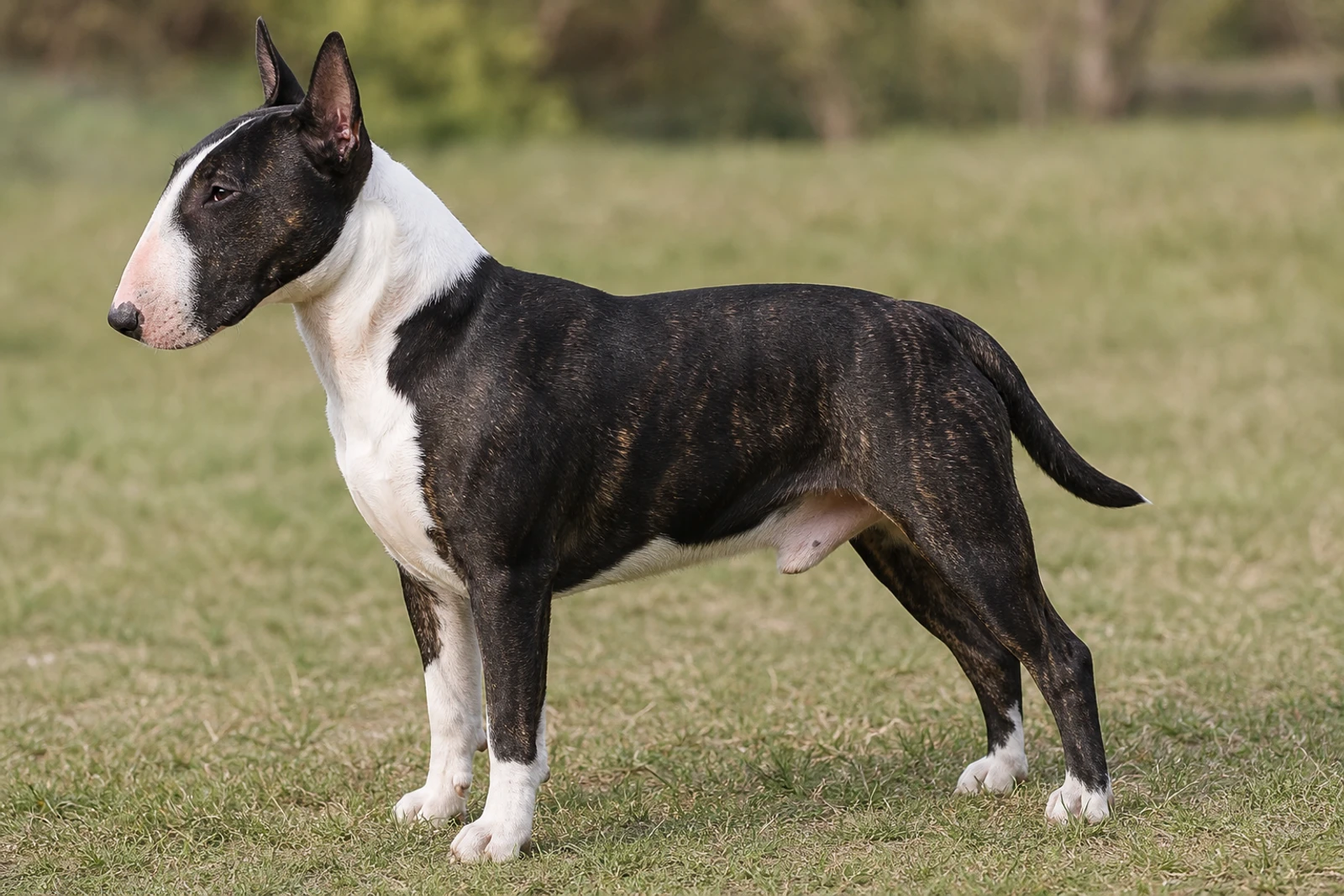
The Bull Terrier is a distinctive breed known for its egg-shaped head, muscular body, and playful, mischievous nature. Loving and fiercely loyal, they form deep bonds with their families but require experienced owners who can provide consistent training and plenty of physical and mental exercise. Best suited for active households without other small pets, they thrive on human companionship and can be clownish entertainers. Their short coat is low-maintenance, but they need early socialization to ensure a well-rounded companion. Ideal for those seeking a unique, energetic, and affectionate dog with a big personality.
Bull Terrier Sticker Pack
36 cartoon stickers • transparent PNG • no watermark
Pinterest-ready
Share all 36 reactions as one sticker sheet
Pinterest opens with the full pack and a fresh, tailored description. You choose the public board and publish it from your own account.
Save the full pack


Choose one reaction above to share it alone, or use the full-pack button for all 36 together.


































Free full-resolution download — no account, no payment, no watermark.
Includes all 36 transparent PNG stickers in one ZIP. A quick human check is required for each download.
At a glance
- Size
- Large
- Height
- 21–22 in
- Weight
- 51–71 lb
- Life span
- 10–12 years
- Coat colors
- white
- Coat type
- Short, flat, and harsh
- Origin
- United Kingdom
How much does a Bull Terrier cost?
Adopt / rescue
$75–$400
Usually includes spay/neuter, first shots, and a microchip.
Buy from a breeder
$700–$2,000
From a reputable, health-testing breeder.
Approximate USD. Prices vary widely by region, breeder, pedigree, age, and coat colour — adopting is the lower-cost and recommended route. Avoid suspiciously cheap “breeders”; they’re often puppy mills.
Estimate the full cost of a Bull Terrier →Want the ongoing number? Estimate the monthly food bill for a Bull Terrier with our dog food cost calculator.
Bull Terrier photos
Views
Front, side, rear and top — the full silhouette.Poses
How the breed sits, lies, moves and plays.Puppy to senior
The breed across its whole life.Expressions
The breed’s range of moods.Close-up details
Eyes, ears, nose, paws, tail and coat.Coat colors
The breed’s recognized colors.Click any photo to enlarge. We show the Bull Terrier from every angle — three views, poses, life stages, expressions, close-ups, coat and colors.
Appearance & size
That head stops you in its tracks. The Bull Terrier’s unmistakable egg-shaped skull curves from a deep, broad top down to a strong Roman muzzle with no break or stop. From the front, the entire face fills a smooth, oval outline. Small, thin ears sit close together and prick straight up. The eyes are narrow triangles, set deep and dark, and they gleam with a keen, almost unnerving intelligence — a serious expression that can look right through you.
Build
Standing 21–22 inches at the shoulder and packing 51–71 pounds onto a large frame, this is a dog built of solid, heavy bone and clean muscle. The body is dense, not leggy. A thick, arched neck runs into wide shoulders and a chest that’s deep and barrel-like, with well-sprung ribs and plenty of heart room. The back is short and level, the loin slightly arched, and the underline tucks up just enough to hint at speed. From the side, the silhouette looks powerful and compact, with straight forelegs set well apart and a low-set tail carried horizontally. From the rear, the hindquarters are muscular and well-angulated, with short, strong hocks that drive a deceptively springy gait.
Coat & Color
The coat is short, flat, and harsh to the touch — almost prickly — with a natural gloss that catches the light. The breed facts list white as the color, and a pure white Bull Terrier gleams from nose to tail. You may see a small colored patch on the head, often brindle, fawn, red, or black, but the body stays solid white. Shedding is moderate year-round, and a quick once-over with a rubber curry brush usually keeps the coat shining.
The Look from Every Angle
Face on, that egg-shaped head and those tiny, erect ears dominate. In profile, the Roman nose arcs downward, giving the muzzle a slightly downturned finish. From the side or rear, the dog reads as a balanced athlete: deep chest, powerful round bone, and a tail that’s thick at the root and tapers to a fine point. That serious expression isn’t a sign of aggression — it’s the look of a dog with intense focus and a surprisingly playful streak waiting to switch on.
History & origin
Most people see the egg-shaped head and glossy white coat and never guess that the Bull Terrier started out as a purpose-built fighting dog in the grimy pits of early 19th‑century England. The breed’s foundation was a cross between the tenacious Old English Bulldog and the now‑extinct White English Terrier—a pairing meant to fuse raw power with the quick‑striking agility of a terrier. The goal wasn’t companionship; it was to produce a gladiator for bull‑baiting and, once that was outlawed in 1835, for underground dog fights and ratting contests.
The man who shaped the modern Bull Terrier was James Hinks, a Birmingham dog dealer who around the 1850s set out to clean up the rough‑and‑tumble early dogs. He introduced further infusions—likely from Dalmatians and some type of pointer—to lengthen the legs, refine the head, and lock in an all‑white coat. His “Hinks’s White Cavalier” was a sensation: still fiercely game and doggedly courageous, but sleek and elegant enough to saunter beside a gentleman through Victorian streets. The white coat became a signature, a deliberate move away from the patched, brindle look of the old bull‑and‑terrier crosses.
Later breeders added Staffordshire Bull Terrier blood back into the line. That move restored substance and jaw strength without sacrificing the distinctive down‑faced, oval profile that was now the breed’s trademark. By the late 1800s the Bull Terrier had crossed the Atlantic, and the American Kennel Club recognized it in 1885. Over the decades, the breed shed its pit‑fighting past for good. Today’s Bull Terrier stands 21 to 22 inches at the shoulder, weighs 51 to 71 pounds, and typically lives 10 to 12 years. It’s still a bundle of muscle and mischief, but the only thing it’s expected to fight for now is a spot on the couch.
Temperament & personality
A Bull Terrier is equal parts clown, stubborn sidekick, and velcro dog. You don’t just own one; you cohabitate with a 50–70-pound creature who genuinely believes he’s a lap dog. He’ll follow you from room to room, lean heavily on your legs, and nose-bump your hand when the petting stops. That emotional tether cuts both ways: left alone too long, a Bull Terrier can spiral into destructive anxiety—chewed drywall, shredded couch cushions, or nonstop barking aren’t spite, they’re a distress flare.
His energy comes in explosive bursts. A leisurely neighborhood stroll is a warm-up, not an outing. He needs at least a solid 45 minutes of hard running—think flirt pole sessions, tug, or off-leash sprints—before he’ll park himself upside down on the sofa for a nap. A bored Bull Terrier will redecorate your baseboards and door frames, so channel that powerful jaw from day one. Sturdy chew toys, frozen Kongs, and a homemade vinegar or citrus spray on forbidden items can redirect the gnawing before it becomes a habit.
This breed lives for goofy theatrics. The “bully run” (a sudden, full-tilt loop around the living room) and the “trance” (a slow, weirdly mesmerizing creep along the sofa back or a bush) are standard owner experiences. But don’t mistake the silliness for pushover: a Bull Terrier has a mind of his own and will negotiate. He’ll tilt his head, stare, and decide whether your request suits him. Bribery with high-value treats works far better than a heavy hand, which can flip his stubbornness into defiance or shutdown. Consistent, unflappable boundaries earn his cooperation.
With his own family, he’s affectionate and surprisingly gentle, but his rowdy enthusiasm can steamroll a toddler. He’s not a beginner’s dog. Early, ongoing socialization with children and adults is essential, and interactions with small kids need adult supervision. Around other dogs—especially same-sex dogs—tension can escalate fast. Watch for a forward-leaning posture, hard stare, or stiff body; those are your warnings. Soft eyes, a loose body, and a relaxed mouth say all is well. His prey drive is strong, so cats and other small critters usually spell trouble unless he’s been raised with them.
He’s alert and will announce odd noises with a bark, but he’s more likely to greet a stranger with wiggly enthusiasm than guard-dog menace. You’ll also learn his vocal repertoire: grumbles, groans, and odd mumbles that owners affectionately call “bully talk.” One practical quirk: many Bull Terriers suffer from skin allergies, and constant scratching can sour their mood. If your white-coated buddy seems itchy or irritable, get a vet check sooner rather than later. A comfortable bullie is a much happier, less anxious companion.
Good with kids, dogs & other pets
Bull Terriers are naturally patient dogs — the breed scores 4 out of 5 for friendliness — and many owners describe them as goofy, affectionate goofballs with kids. Just keep their size in mind. A 51–71 pound dog moving at full speed can easily send a toddler flying, and this breed plays like a bouncing bowling ball. Supervision isn’t optional; it’s the price of admission. Children who understand not to roughhouse or tease do best, and a Bull Terrier that grows up alongside a child often becomes fiercely devoted.
When it comes to other dogs, the answer depends heavily on early life experience. A well-socialized Bull Terrier puppy who meets a wide variety of friendly dogs during the critical 3-to-14-week window can learn to coexist peacefully. Without that foundation, you may end up with an adult who is over-excited, pushy, or reactive. Forcing a fearful or unsocialized adult dog into dog-park playdates adds stress and can trigger fights — so read your own dog and respect his limits. If he’s comfortable just being with you, he doesn’t need a pack of canine friends.
Cats and small pets are a bigger question mark. While some Bull Terriers raised from puppyhood with a cat learn to share the couch, their terrier instincts can surface. Assume a strong chase drive and never leave a Bull Terrier unsupervised with a rabbit, guinea pig, or free-roaming cat. Gradual, positive introductions behind barriers can improve the odds, but a multi-pet household still requires constant management.
Above all, this is a high-companionship breed. A Bull Terrier left alone in the backyard for hours isn’t going to become a happy family dog — he’s going to become a lonely, destructive one. Involve him in daily life with the kids, and you’ll get a loyal shadow who takes supervision and roughhousing in stride.
Trainability & intelligence
You’re not getting a push-button dog. Bull Terriers rate about a 3 out of 5 for trainability, not from a lack of smarts, but because they pair sharp intelligence with an independent, “what’s in it for me?” attitude. Their 4/5 judgment score means they’re reading you nonstop — inconsistent expectations, and they’ll find every loophole.
What actually works
Positive reinforcement is not optional — it’s the only reliable path. Treats, a squeaky toy, a quick game of tug: any of these can be immediate payment for a job well done. Punishment, raised voices, or yanking on the leash shuts these dogs down fast. It damages trust and can spike anxiety or stubborn avoidance. A Bull Terrier who works with you because you’ve built real trust will give you more than one who merely fears consequences.
- Keep sessions short and upbeat. They bore easily, so quit while they’re still winning rather than drilling a command into the ground.
- Recall usually lags behind. Curiosity and prey drive can override a trained “come” in a heartbeat. Until you’ve proofed it in a thousand distractions, a securely fenced area or long line is smarter than gambling off-leash.
- Consistency is everything. If you let them on the couch once, expect a regular occupant. Clear rules from day one prevent the barging, counter-surfing habits that a dog this clever will invent.
Socialization is training, too
The most brilliant obedience means little if a dog reacts badly to a stranger. Start exposure between 3 and 14 weeks old: let the puppy soak up new people, sounds, surfaces, and calm other dogs at their own pace. Pair each encounter with treats and praise. This early, ongoing investment is what keeps a confident Bull Terrier from tipping into fear-based reactivity as an adult. Skip it, and you’ll spend years managing the fallout.
A Bull Terrier trained with mutual respect and shown the world from puppyhood is a hilarious, quick-learning partner. One trained with force? That’s a liability waiting behind a cute egg-shaped head.
Exercise & energy needs
Plan on a committed hour of movement every day — but don't dump it all into one marathon session. A Bull Terrier does best with two solid 30-minute outings, ideally spaced morning and evening. This isn’t a breed that will be satisfied with a couple of leisurely strolls around the block. These dogs pack 51–71 pounds of dense muscle and coiled energy into a low-slung, tank-like frame. When they’re “on,” they move with an explosive, clownish enthusiasm that can shred your landscaping and your patience if it isn’t channeled.
Match the activity to the dog’s age and build. Young adults thrive on brisk walks mixed with off-leash running in secure areas, chase games with a flirt pole, or retrieving a sturdy ball. Hills and short, controlled sprints tap that power without the relentless pounding of nonstop road running. For an adult Bull Terrier, a fenced yard is not an exercise plan — they need engaged, directed movement with you, not solo pacing. Puppies need shorter, gentler sessions: their growing joints don’t need high-impact jumps or forced road work, so keep it to soft surfaces and let them set the pace.
Physical exercise alone rarely wears out this breed’s brain. Mental work is non-negotiable. Bull Terriers are smart problem-solvers with a stubborn streak, and a bored one can turn obsessive or destructive fast. Build scent games, hide-and-seek, puzzle toys, or short trick-training sessions into the daily routine. Even a 10-minute session of “find the treat” under cups or learning a ridiculous new trick (they’re naturals at the goofy stuff) can take the edge off as effectively as another lap around the park.
While they’re athletic and generally sturdy, sensible precautions matter. Avoid repetitive high-impact exercise on hard surfaces, especially if your dog has been screened for patellar luxation or heart concerns — two areas responsible breeders watch closely. In warmer months, white-coated Bull Terriers can overheat quickly, so stick to early morning or evening exercise and always carry water. If you give this breed your full hour (split, never skipped) plus daily brain games, you’ll have a tired, content, and much more cooperative housemate. Skip it, and they’ll invent their own activities, which rarely end well for couch cushions.
Grooming & coat care
Your Bull Terrier’s coat is a single, short, hard layer—no undercoat to mat, no feathering to untangle. That tight white hair sheds year-round and lets loose in earnest twice a year when the dog blows coat. Two or three brushings a week with a soft pig-bristle brush sweep out dead hair, spread natural oils, and leave the coat with the crisp, porcelain shine the breed is known for. During the spring and fall shedding peaks, switch to a daily once-over with the bristle brush or a rubber grooming mitt; it catches white fur before it blankets your dark sofa.
Bathing stays minimal. Every two to three months is plenty unless your Bull Terrier has rolled in something foul. A gentle, oatmeal-based or hypoallergenic shampoo protects the skin’s moisture barrier—overwashing strips the very oils that keep the coat gleaming. If that bright white starts to look dingy, a whitening shampoo used once a month is enough to lift the tone without drying the skin. Because pink skin on the ears, muzzle, and belly can burn, smooth on a dog-safe sunscreen before long sunny stretches outside.
The rest of the routine is standard but not optional:
- Nails: Trim every 3–4 weeks. If you hear clicking on hard floors, the nails are already too long. Keeping them short prevents splayed toes and off-kilter movement.
- Ears: Flip those upright ears once a week. A quick wipe with a damp cloth or a vet-approved ear cleaner removes wax and debris. Redness, a yeasty smell, or head shaking warrants a vet look—white Bull Terriers can be prone to allergies that show up in the ears.
- Teeth: Brush daily with dog-specific enzymatic toothpaste, or hit at least three times a week. This breed sometimes faces plaque and gum problems, and a few minutes of brushing goes a long way.
Shedding & allergies
Bull Terriers shed more than their short, slick coat lets on. You’ll find a steady drift of fine white hairs on floors, cushions, and dark jeans all year, with two seasonal blowouts — usually spring and fall — where the volume kicks up noticeably. If your dog is solid white, that shed hair becomes impossible to miss against dark fabrics.
This is not a low-allergen breed. Dog allergies are triggered less by fur itself and more by dander and proteins in saliva. Bull Terriers produce both, and many of them drool openly after a drink of water or when they’re revved up. A vigorous head shake can fling saliva onto walls and clothes, so allergy-sensitive owners need to weigh that along with the shedding.
Keep the coat manageable with a quick weekly session using a rubber curry brush or a soft bristle brush. The rubber pulls loose hair out of the short, dense coat without scratching the skin. During heavy shedding weeks, two or three brushings a week cut down the tumbleweeds. A monthly bath helps rinse away dander, but bathing too often strips natural oils and can dry out the skin.
If a family member has dog allergies, spend real time in a Bull Terrier home before bringing one in. No amount of grooming turns this dog into a good match for most allergy sufferers — the combination of year-round shedding and sporadic drool is a tough hand to bluff through.
Diet & nutrition
Bull Terriers are muscular dogs that love their food — and that’s exactly why weight management is the number one nutrition issue with the breed. A 51–71 pound dog carrying an extra five or ten pounds is putting unnecessary stress on its joints, especially as it ages. Free-feeding doesn’t work with a breed this food-driven. You control the portions, period.
Feed an adult Bull Terrier two measured meals a day. The exact amount hinges on exercise. A dog that gets a solid hour of running might need 3 cups of high-quality kibble split across those meals; a less active dog might thrive on half that. Use the rib test: you want to feel individual ribs with light pressure, not see them poking out, and not have to press through a layer of fat.
- Puppy schedule:
- 4 meals a day until 4 months old.
- 3 meals from 4 to 6 months.
- 2 meals a day after 6 months.
Start a pup on a high-quality commercial puppy food or a lightly cooked, puréed blend of meats, fish, fruits, and veggies. Transition any new food gradually over a week. Around 12 weeks, supervised raw chicken wings are a fine option for powerful chewers.
If your Bull Terrier inhales every meal, a food puzzle bowl slows eating and adds a quick mental workout. Skip the blender for adult dogs with healthy teeth — their jaws do the job. For seniors (usually 8 years and up), you might split the daily ration into smaller, more frequent portions. Purée meals only if the dog has missing teeth or a tender mouth. Don’t automatically slash protein — focus instead on monitoring the scale and trimming calories as activity winds down.
A few non-negotiables: a vegetarian diet deprives this carnivore-adapted breed of essential nutrition. Build meals around quality meat, fish, and eggs, with small amounts of pearl barley for fiber or bland white rice when the stomach is off. Avoid rich, fatty table scraps, especially after holidays — those can trigger pancreatitis. Serve any leftovers in the dog’s own bowl to squash begging. And if you have vegetable cooking water (unsalted), use it as a nutrient base for their food.
Health & lifespan
A well-bred Bull Terrier typically lives 10 to 12 years.
They can be prone to a handful of hereditary and environmental conditions — the kind a responsible breeder actively screens for, so you know what you’re dealing with from day one.
- Skin allergies are the most common headache. Atopic dermatitis, food sensitivities, or contact irritants show up as relentless itching, red paws, and chronic ear infections. That pure white coat also provides almost zero UV protection; sunburn and sun-related skin cancers are a real threat. Dog-safe sunscreen and shade aren’t optional on bright days.
- Deafness is a well-documented risk, especially in white Bull Terriers. Puppies should have a BAER hearing test before leaving the breeder — and you should see the results for both ears.
- Hereditary nephritis, a serious kidney disease, can strike young dogs. DNA tests and routine urine protein checks let breeders avoid producing affected litters, so ask about those screenings.
- Heart conditions, particularly aortic stenosis, and luxating patellas (wobbly kneecaps) also appear in the breed. A puppy cardiologist exam and an orthopedic once-over catch a lot early.
Because Bull Terriers are muscular, food-obsessed dogs, weight management is a daily piece of the longevity puzzle. Extra pounds strain the joints and heart, so keep meals measured and treats strategic.
On the prevention side, monthly heartworm medication during mosquito season (plus one month after) and a legally required rabies vaccine are must-do’s, just like for any dog. Temperature management matters too — a short, thin coat means they chill fast in winter and can overheat in high humidity. Rethink that midday walk when it’s sweltering.
Even emotional health ties back to the physical. Early, positive socialization and calm vet visits (not just when something’s wrong) lower chronic stress, which often dials down the intensity of allergy flare-ups. Catch subtle shifts — a slight heart murmur, a kidney value inching upward, a lens that’s starting to slip — during twice-yearly checkups, and you’ll handle problems while they’re still small.
Living environment
A securely fenced yard is a Bull Terrier’s happy place, but you can keep one in an apartment if you treat daily exercise like a non-negotiable appointment. This muscular 50–70 pound dog needs more than a quick spin around the block.
Plan on two 30- to 45-minute sessions of real movement—brisk walks, off-leash sprints (in a safe area), and games that make him think. Replace marathon runs on pavement with grass or sand sessions, especially while he’s growing. Reputable breeders screen for patellar luxation and other joint concerns, but it pays to be cautious with high-impact stuff.
Mental work is just as critical. A bored Bull Terrier becomes a chewing machine. Heavy-duty puzzle toys, hide-and-seek with treats, and frozen Kongs that survive his power-jawing keep him occupied between outdoor adventures.
Your yard, if you have one, needs a tall, dig-proof fence. A Bull Terrier can be an escape artist when a squirrel or skateboard glides past. Even with a yard, he’ll still demand your involvement—tossing the ball or supervising zoomies is a highlight of his day.
His short, sleek coat offers almost no insulation, so he’s a freeze baby in winter. A coat and limited outside time when temperatures dip below freezing are smart. In summer, move exercise to early morning or late evening to avoid overheating, and always carry water.
Noise-wise, he’s not silent. Bull Terriers “talk” with grumbles, snorts, and outright barking when excited or under-stimulated. Training can take the edge off nuisance barking, but if you need church-mouse quiet, this breed will frustrate you.
Tolerance for being alone is the real sticking point. A Bull Terrier bonds intensely and can rapidly develop separation anxiety if left for long stretches. Chewed door frames, nonstop barking, and accidents indoors aren’t spite—they’re distress. If you’re gone more than a few hours daily, a dog walker or daycare isn’t a splurge; it’s how you keep your home intact and your dog sane. Start with short, practice absences, leave him with a stuffed puzzle toy, and never scold the aftermath of panic—that only deepens the problem.
Who this breed suits
A Bull Terrier fits best with an owner who’s been around strong-willed dogs before and actually loves the challenge. This is not a chill, go-with-the-flow breed. You get a muscular 51–71 lb clown with a hard head and a soft spot for its people, but only if you’re ready to commit to firm, consistent training from day one. First-timers often struggle here. While it’s not impossible, the breed’s independence and creative mischief test your patience in ways that can overwhelm someone still learning dog body language. If you’re a new owner, you’ll need to pair up with a trainer who knows terriers, not just puppy manners.
Active families can make great homes, especially if the dog grows up with kids and learns early that wild body slams aren’t play. Still, that 21–22 inch frame is pure muscle and enthusiasm. A Bull Terrier might accidentally topple a small child during a zoomie, so supervision around toddlers is non-negotiable. With older, dog-savvy kids who can respect boundaries, you get a loyal, play-all-day buddy with a ridiculous sense of humor.
Single adults and couples with an active lifestyle get the best match. You become this dog’s whole universe, and the bond is intense. Expect to be followed from room to room, treated to conversations of grunts and chortles, and challenged to a game of tug when you’d rather sit down. If you work from home or can bring a dog along, even better—Bull Terriers hate long stretches alone and may find destructive ways to express that.
Seniors or low-energy households should look elsewhere. This is a large breed with a 10–12 year lifespan, and it needs a solid hour of hard running or off-leash play, not just a few walks around the block. Without it, that famous stubbornness turns into problem chewing (drywall, furniture, door frames—you name it) and obsessive behaviors like tail chasing.
You should think twice if you value a quiet, orderly house. Bull Terriers shed enough to coat your black pants, dig with conviction, and have a prey drive that makes small pets a constant risk. They’re also often same-sex aggressive with other dogs, so multi-dog homes need experienced management. If you can’t laugh when your couch cushion explodes for the third time, or aren’t willing to outsmart a dog who views rules as negotiation, pass. The right owner sees all that—the stubbornness, the chaos, the endless energy—and signs up anyway because the payoff is a fiercely devoted dog with a personality bigger than most people you’ll meet.
Cost of ownership
A well-bred Bull Terrier puppy from a breeder who does BAER hearing tests, cardiac ultrasounds, and kidney screenings typically costs $1,500 to $3,000. Show-line prospects can reach $3,500. Adoption through a breed-specific rescue usually runs $200 to $500, and you’ll often find young adults that are already past the headstrong puppy stage.
Once the dog is home, the monthly rhythm breaks down like this.
Food: $70–90
An adult Bull Terrier (51–71 lb) does best on a high-quality, high-energy kibble. Figure two to three cups a day. A 30-pound bag of premium food costs around $70 and lasts roughly a month, sometimes longer. Add another $15–20 for sturdy chews and treats — this breed is a power chewer that needs safe, long-lasting outlets.
Grooming: $10–25
The short, flat coat is genuinely low-maintenance. A weekly once-over with a rubber curry brush handles shedding, and a bath every month or two keeps the white coat bright. Basic nail trims and ear cleaning are easy to do at home. If you prefer to have a groomer handle the nails and a deep clean, budget about $25 a visit — but monthly costs are negligible once you have the tools.
Vet: $25–40
Routine care — annual exam, vaccines, heartworm and flea/tick prevention — usually lands between $300 and $500 a year. That’s the baseline. Responsible breeders screen parents for deafness, heart disease, and kidney problems, but the breed can still develop allergies, luxating patellas, or cardiac issues. Those don’t hit every dog, but when they do, the bills jump quickly.
Insurance: $50–80
Because of those breed-specific vulnerabilities, comprehensive pet insurance for a Bull Terrier rarely comes cheap. A plan with a reasonable deductible and good coverage typically falls in the $50–80 range per month. For a dog that may need lifelong allergy management or an unexpected cardiac workup, that premium can pay for itself fast.
Toys, chews, and misc: $20–40
Bull Terriers are hard on their gear. Heavy-duty rubber toys, puzzle feeders, and bully sticks help channel their energy and save your furniture. Throw in the occasional replacement leash or a training class, and you’re looking at another $20–40 a month.
Add it up and a realistic monthly budget sits between $180 and $300, with the first year running higher as you buy a crate, bed, collar, and invest in puppy classes.
Choosing a Bull Terrier
Between a breeder and a rescue, the right path depends on how much puppy chaos you’re ready for. A responsible breeder gives you a blank slate — a 10–12 year project — but you’ll navigate the razor-toothed, bull-headed puppy months that can overwhelm a first-timer. A Bull Terrier–specific rescue often places adults whose energy levels and quirks are already on full display; you skip housebreaking and teething, but you might inherit baggage from a dog who was never taught to settle. Whichever you choose, the dog’s structural soundness and temperament are non-negotiable.
Health Clearances You Need to See
Bull Terriers pack serious power into a 51–71 lb frame, and a few inherited problems can flatten that clownish spirit fast. Ask for clearance certificates, not a verbal “the vet said they’re fine.”
- Heart: An echocardiogram done by a board-certified cardiologist within the last year. Bull Terriers can develop aortic stenosis and mitral valve disease.
- Kidneys: A urine protein-to-creatinine ratio (UPC) test — ideally annually — to screen for hereditary nephritis, a progressive kidney disease. Some breeders also use the available DNA test, but a normal UPC is the strongest reassurance right now.
- Patellas: OFA certification showing knees are tight. Luxating patellas are sneaky and expensive.
- Hearing (BAER test): Mandatory for white puppies. Unilateral deafness is common enough that every white pup should have a printed BAER result. A breeder who shrugs and says “he can hear just fine” is guessing.
Red Flags That Should Stop You Cold
Walk away if the breeder can’t produce the above clearances for both parents, dismisses the breed’s stubborn streak as “just being playful,” or cranks out litters back-to-back. Also beware anyone selling “teacup” or “XXL” Bull Terriers — that’s a marketing gimmick, not a type. Puppies raised in a kennel run with minimal human handling often grow into jumpy, mouthy adults who never learned bite inhibition during the critical 3–8 week window.
Picking Your Puppy
Watch the whole litter interact. You want the pup who trots over to investigate your shoelaces with a loose, wiggly body — not the one hiding under the whelping box, nor the one pinning a littermate and refusing to back off. Bold, curious, and slightly ridiculous is the sweet spot. Pick up the pup: clear eyes, clean ears, no potbelly or grimy rear. Ask how the breeder introduces early nosework or puzzle toys; a Bull Terrier’s brain needs a job even at 8 weeks, and good breeders start that early. Expect a contract that requires you to return the dog if life falls apart — that’s a sign someone cares about where their dogs land, not just the sale.
Pros & cons
Pros
- Devoted, zany companions that bond fiercely with their people — expect a shadow who keeps you laughing with goofy antics every day.
- Low-maintenance coat: a quick once-over with a rubber brush and an occasional bath keep the short white coat gleaming; shedding is minimal.
- Sturdy and athletic at 51–71 pounds, they’re game for a run, a long hike, or an all-out backyard play session and thrive on activity with their family.
- Naturally alert and protective without excessive barking; they’ll announce strangers but warm up quickly once you give the cue.
- Their distinctive egg-shaped head and muscular build turn heads, but it’s the clownish personality that wins hearts.
Cons
- Hard-headed and independent: training takes patience, consistency, and a sense of humor. Not an easy choice for first-time owners.
- Demanding exercise needs: plan on a solid 60–90 minutes of running, flirt-pole play, or vigorous off-leash games daily. A walk around the block won’t prevent chewed baseboards and dug-up gardens.
- Same-sex dog aggression and a sky-high prey drive are real risks; early socialization helps, but many can’t be trusted at dog parks or around cats and small pets.
- Prone to separation anxiety — left alone too long, a Bull Terrier may bark nonstop, destroy door frames, or hurt themselves trying to escape.
- Health watch list: congenital deafness (BAER testing essential, especially in solid whites), heart murmurs, kidney disease, and skin allergies. Vet bills can add up, so seek a breeder who screens rigorously.
Similar breeds & alternatives
If the Bull Terrier’s clownish energy and independent streak feel like a lot of dog, a few closely related breeds—or simply different ones with a similar playful spirit—can slide the slider toward something that fits a little easier.
Miniature Bull Terrier
Think of this as the home-sized version: 10–14 inches tall, 25–33 pounds, with the same egg-shaped head and goofy antics. You get all the terrier tenacity and need for early socialization in a body you can actually lift if the training goes sideways on a walk. The Mini’s lifespan often hits 11–14 years, a nice bonus over the standard’s 10–12.
Staffordshire Bull Terrier
If the muscular bull-and-terrier look appeals but you want a dog that’s more of a “yes, what’s next?” type, the Staffy is a solid pivot. At 14–16 inches and 24–38 pounds, they’re sturdy without the standard Bull Terrier’s heft. They tend to be far more biddable and famously soft with kids, though you still need to put in work on dog-on-dog socialization. Same-sex scuffles are less common here than in the Bull Terrier world, and the training partnership feels like teamwork rather than a friendly debate.
Boxer
For the same bouncy clown energy in a larger frame (21–25 inches, 55–75 pounds), the Boxer is a strong alternative from the working group. Expect a need for a genuine hour of running, not just a walk around the block. Boxers match the Bull Terrier’s go-for-broke play style but are more eager to please and less likely to get creative with the rules when bored. That shorter face brings heat sensitivity and a lifespan in the 9–12 year range, a health note to weigh. Both breeds bond like glue and turn daily life into a comedy show, but the Boxer dials down the stubborn streak noticeably.
Fun facts
- The Bull Terrier was originally bred for dog fighting and ratting in 19th-century England.
- Famous Bull Terriers include Spuds MacKenzie, the Budweiser mascot, and Bullseye from Target.
- Their unique egg-shaped head is technically called 'downface' and provides a distinct profile.
- They are known for their clownish behavior and love to entertain their families.
Frequently asked questions
- Are Bull Terriers good with children?
- Bull Terriers can be affectionate and playful with children, especially when raised with them. However, their high energy and strong build mean supervision is essential, as they may accidentally knock over small kids. Early socialization and training are crucial to ensure gentle interactions.
- How much exercise does a Bull Terrier need?
- Bull Terriers are energetic dogs that require at least 60 minutes of vigorous exercise daily. Without sufficient physical and mental stimulation, they can become bored and destructive. Activities like brisk walks, runs, and interactive play help keep them happy and well-behaved.
- Do Bull Terriers shed a lot?
- Bull Terriers have a short, flat coat that sheds moderately year-round. Weekly brushing with a rubber curry or hound glove helps manage loose hair and keeps their coat glossy. They are not considered hypoallergenic, but their shedding is manageable with regular grooming.
- Can Bull Terriers live in apartments?
- Bull Terriers can adapt to apartment living if their exercise needs are met with daily outdoor activities. They are relatively quiet indoors but need space to move around. Without enough exercise, they may become restless, so apartment living requires a committed owner.
- Are Bull Terriers easy to train for first-time owners?
- Bull Terriers are intelligent but can be headstrong, making them a challenge for first-time owners. Consistent, positive reinforcement training works best, and early obedience classes are recommended. They thrive with a confident, patient owner who can provide structure and socialization.
Tools & calculators for Bull Terrier owners
Quick estimates tailored to Bull Terriers — pre-filled with this breed’s size where it matters.
Articles & stories about the Bull Terrier
Sources & standards
This profile follows recognized breed standards from the American Kennel Club (AKC) and the Fédération Cynologique Internationale (FCI), along with established veterinary and breed-club guidance. These describe general breed tendencies — every dog is an individual.