

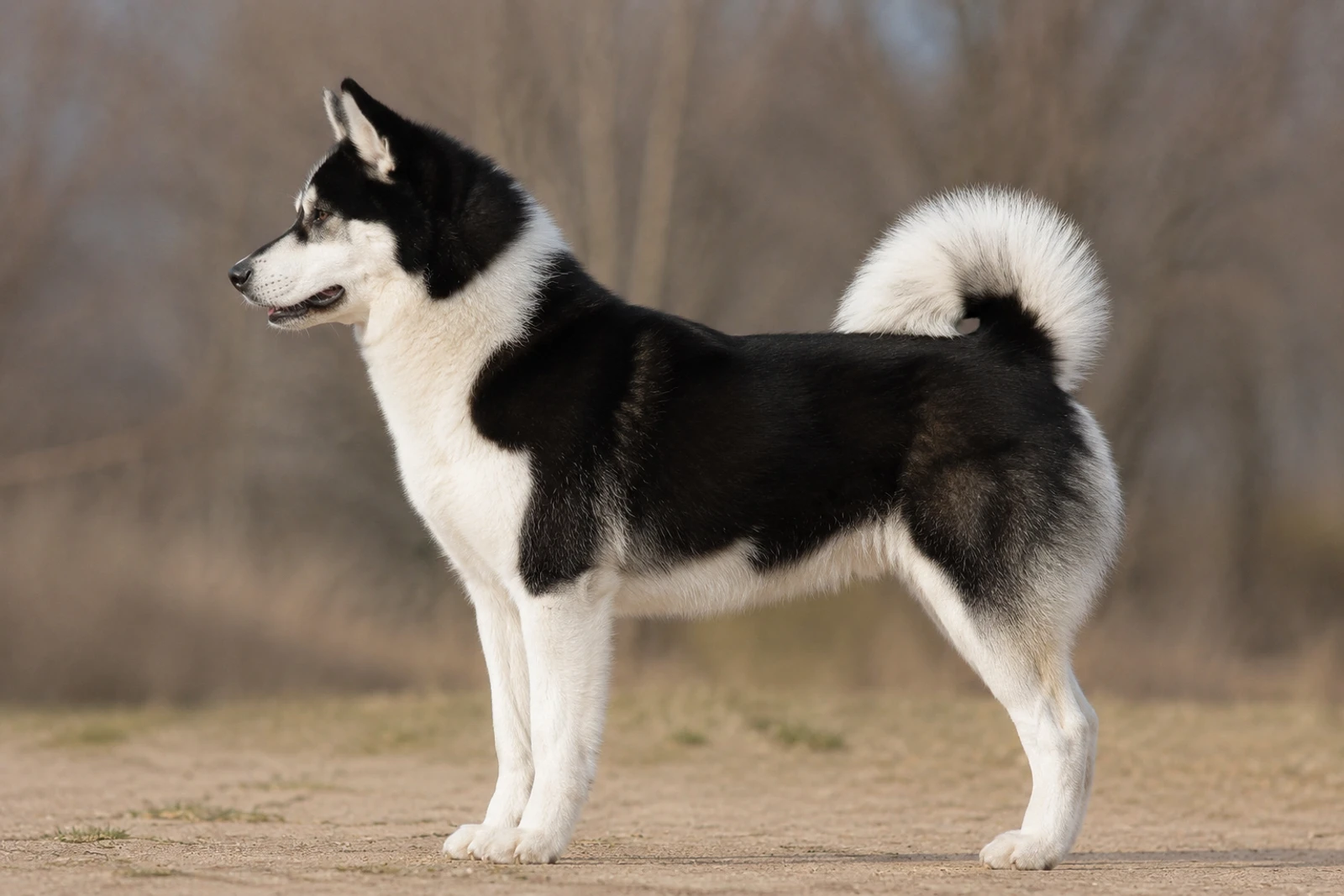
The Canadian Eskimo Dog is a powerful, ancient Arctic breed built for endurance and hard work. Standing 20–28 inches and weighing 40–88 pounds, they are robust and energetic, requiring an experienced owner with an active lifestyle. They thrive in cold climates and excel at sledding and skijoring. Loyal and affectionate with their family, they also have a strong independent streak and high prey drive. This breed is best suited for a home with a large yard and a job to do, not for apartment living or first-time dog owners.
At a glance
- Size
- Giant
- Height
- 20–28 in
- Weight
- 40–88 lb
- Life span
- 10 years
- Coat colors
- White, Black, Gray, Sable, Red, Black & White, Gray & White
- Coat type
- dense double coat
How much does a Canadian Eskimo Dog cost?
Adopt / rescue
$75–$400
Usually includes spay/neuter, first shots, and a microchip.
Buy from a breeder
$700–$2,000
From a reputable, health-testing breeder.
Approximate USD. Prices vary widely by region, breeder, pedigree, age, and coat colour — adopting is the lower-cost and recommended route. Avoid suspiciously cheap “breeders”; they’re often puppy mills.
Estimate the full cost of a Canadian Eskimo Dog →Want the ongoing number? Estimate the monthly food bill for a Canadian Eskimo Dog with our dog food cost calculator.
Canadian Eskimo Dog photos
Views
Front, side, rear and top — the full silhouette.Poses
How the breed sits, lies, moves and plays.Puppy to senior
The breed across its whole life.Expressions
The breed’s range of moods.Close-up details
Eyes, ears, nose, paws, tail and coat.Coat colors
The breed’s recognized colors.Click any photo to enlarge. We show the Canadian Eskimo Dog from every angle — three views, poses, life stages, expressions, close-ups, coat and colors.
Appearance & size
The Canadian Eskimo Dog is a big, workmanlike spitz built to pull heavy sleds through brutal Arctic snow — not a lanky giant, but a dense, muscular powerhouse that covers ground efficiently. Height at the shoulder lands anywhere from 20 to 28 inches, and weight swings from 40 to 88 pounds. That’s an unusually wide spread that reflects real-world differences between working lines, sex, and condition. A hard-driving male in his prime will push the top of the scale, while many females and lighter-framed dogs sit well below it. Either way, every pound is functional; there’s no wasted bulk.
The body is slightly longer than tall, with a deep, broad chest, well-sprung ribs, and a strong, level topline. The loin is short and solid, the hindquarters moderately angulated and heavily muscled. Legs are straight, with thick bone and large, snowshoe-like paws that spread under load. The neck is thick, medium in length, and carried with an alert, proud arch.
The coat is a dense double layer that makes zero apologies for shedding. The undercoat is thick and woolly, while the outer coat consists of coarse, straight guard hairs that shed snow and ice. A pronounced ruff frames the neck and shoulders, and the tail is bushy with long hair, carried in a tight curl over the back when the dog is alert. Colors run the gamut: solid white, white with patches of black, gray, red, buff, or sable — often with a distinct mask or cap markings on the face. Solid-white dogs may have pink or dark skin pigmentation. There’s no preferred color in a working kennel; function always trumps fashion.
You can’t miss the head: a broad-based wedge, powerful muzzle, and triangular ears standing erect and set well apart. Eyes are almond-shaped, dark, and serious, giving the dog an expression that reads as direct and unflinching. The bite is a scissors, and lips are tight and black.
- From the front: The chest is wide and deep, forelegs set squarely under the body with no looseness at the elbows. Paws point straight ahead. Ears form a clean, upright V above a broad skull.
- From the side: The outline is balanced and purposeful — a deep brisket, moderate tuck-up, strong loins, and the tail’s dense plume curled forward over the croup. No exaggeration in angulation, just a grounded, ready-to-go stance.
- From the rear: Thighs are thick with power, hocks straight and well let down, and the heavy tail falls dead center over the back.
If you’re sizing up a dog from any angle, what sticks is the sheer density of bone and coat wrapped around a frame that’s built to grunt a loaded sled out of a drift — not just look pretty on a tundra.
History & origin
You’re looking at one of North America’s oldest and rarest purebred dogs, a living piece of Arctic history that nearly vanished twice. The Canadian Eskimo Dog developed over at least 4,000 years alongside the Thule people — direct ancestors of today’s Inuit — who migrated across the Bering Strait and spread across the Canadian North. These were working partners, not pets. A single dog could be the difference between survival and starvation.
Bred to pull heavy sleds, pack supplies, and hunt, they needed explosive strength, freakish endurance, and a coat that could handle -50°F without blinking. Teams hauled loads that outweighed them many times over: seal meat, whale blubber, trade goods, even whole families on migration journeys hundreds of miles long. When there was no sledding work, the dogs located seal breathing holes, held muskoxen and polar bears at bay until hunters arrived with harpoons, and provided body heat in igloos at night. No other breed was asked to do so much in such an unforgiving climate.
That deep partnership began to unravel in the mid-20th century. Snowmobiles arrived in the 1960s and replaced dog teams across the Arctic practically overnight. Government resettlement programs moved many Inuit families into permanent communities where sled dogs were less needed, and disease outbreaks — plus a wave of RCMP and other authorities shooting loose dogs — decimated the remaining population. The numbers are stark: by the early 1970s an estimated 200 purebred Canadian Eskimo Dogs were left, and many of those were in remote camps with no breeding oversight.
A quiet revival started in 1972 when a small group of enthusiasts, backed by the Canadian government and the Canadian Eskimo Dog Club, combed through those remote settlements and gathered foundation stock from the few genuine dogs that had escaped crossbreeding. Brian Ladoon was a key figure, buying and breeding dogs from the few remaining lines. The project wasn't just about preserving a breed — it was about saving a breed that had been integral to human survival in the Arctic for millennia.
Even with that careful rebuilding, the Canadian Eskimo Dog today clings to existence by a thread. Global population estimates run between a few hundred and maybe 300, and the breed remains critically endangered. The Canadian Kennel Club recognizes it, and a handful of dedicated breeders and Inuit communities keep the bloodlines going, but every litter matters. If you’re considering one, you’re not just choosing a dog — you’re helping carry forward a 4,000-year working partnership that still runs on raw power, loyalty, and a fierce instinct to pull.
Temperament & personality
This is a working dog through and through — intense, independent, and built for the brutal Arctic, not the suburban couch. A Canadian Eskimo Dog is not going to check in with you for approval. He expects a job, clear leadership, and the respect due a teammate who’s pulled sleds and hunted polar bears for millennia. If you’re looking for a biddable, eager-to-please companion, this isn’t it.
Energy and drive are off the charts. A 40–88 lb dog bred to run all day in harness needs a serious daily outlet — think pulling, canicross, or long off-leash hikes in cold weather, not a couple of walks around the block. Without that, you’ll get destruction at a giant-breed scale. Chewing is a default; he’ll dismantle your deck or shred furniture to keep his jaws strong and boredom at bay. Give him hard, durable chews and keep a homemade citrus or vinegar spray handy for off-limits items. A tired Canadian Eskimo Dog is a quieter one, but don’t confuse “tired” with “easy.” He still has opinions.
Affection is on their terms. These dogs bond tightly to their pack — and that includes you, if you earn it — but they won’t smother you. Expect a calm, quiet presence rather than frantic tail-wagging. They’ll follow you from room to room, but many don’t snuggle. Physical closeness often looks like leaning, a head resting on your knee, or simply sleeping at your feet. With strangers, the default is aloof to suspicious; early and continuous socialization is non-negotiable.
Watchfulness is hardwired. They’ll alert to anything unusual with deep howls or a sharp bark. But be careful interpreting that vocalization: they don’t distinguish a delivery driver from an intruder the way a trained protection dog might. A stiff body, direct stare, and forward-leaning posture often precede a bite, so anyone in the household needs to read dog body language fluently. Lip licking, yawning, or turning the head away are “calming signals” that mean “back off” — not “I’m relaxed.” If you ignore those, the dog won’t keep negotiating.
Around the household, the Canadian Eskimo Dog demands grit. He can be territorial, sometimes urine-marking indoors to define his boundaries. The scent lingers and triggers repeat marking, so you’ll need enzymatic cleaners — vinegar spray can help neutralize the odor and deter the behavior. In less-used rooms, he might forget the house rules entirely, because his concept of “home” is tied to where your scent lives, not drywall. This is not a dog for a home with small, chaotic children. He may guard his food bowl; teach kids to never interrupt him while eating and to give him a wide berth. Same-sex dog aggression is common and can be severe, so multiple-dog households need careful management, not just good intentions.
The breed also has an endearingly gross quirk: a passion for rolling in decaying matter. It’s likely a scavenger holdover — some dogs just revel in stinky perfume. Don’t be surprised to find your proud sled dog coated in eau de dead fish. A strong stomach and a sense of humor help.
At 10 years, the lifespan is heartbreakingly short for a dog this intense. Make every year count with work that engages his mind and body — and never try to bully him into compliance. Respectful, consistent engagement is the only path that sticks. Force just starts a fight you’ll lose.
Good with kids, dogs & other pets
A Canadian Eskimo Dog that grows up with respectful kids is often patient and remarkably gentle. Still, a 70-pound working sled dog can accidentally bowl over a toddler just by turning around. Never leave a young child unsupervised with any dog of this size. Teach kids not to hug, tug, or crowd the dog — especially around food or resting spots. Even a tolerant dog has a breaking point, and an adult rescue with an unknown history may not give you a warning. If your household includes infants or wobbly toddlers, wait until you can consistently manage interactions and install baby gates to give the dog a kid-free retreat.
With other dogs, things get more nuanced. These are pack-oriented animals that often thrive with a compatible canine housemate, especially if introduced during puppyhood. Same-sex aggression can show up, particularly in intact males. Early, positive exposure to many stable dogs — starting in the 3-to-14-week window — makes a big difference. A poorly socialized adult may only be comfortable with dogs already in the family, not strangers at the dog park. Forcing meet-and-greets with an adult that is already fearful or reactive adds stress and can trigger fights. Adopt an older dog that’s content with its own people? Don’t push it to “make friends.” Respect the dog’s limits.
Cats and small pets are a high-risk proposition. The breed’s prey drive runs deep — these dogs hunted for their own food not so long ago. Some live peacefully with a house cat they were raised alongside, but you should never leave them alone together. A skittering rabbit, guinea pig, or loose backyard chicken is likely to be seen as prey. If small pets are a non-negotiable part of your home, a different breed will save you a world of stress.
Socialization is the thread that runs through all of this. Start by 8 weeks and keep at it well past the 12–16 week sensitive period. Your pup needs gradual, upbeat exposure to kids of different ages, calm adult dogs, city sounds, car rides, and handling by strangers. A reputable breeder will have done a ton of this before you ever bring the puppy home — look for one who raises pups indoors underfoot, surrounded by daily household noise and human contact. A dog from an isolated kennel or puppy mill setup often struggles with fear, sound sensitivity, and overreaction for life. You can rehab a sketchy start, but it’s a long road with fewer guarantees.
These dogs were never meant to be alone. Bred to run and sleep in tight packs, they form intense bonds and don’t do well left solo all day in a yard or a crate. Expect whining, destruction, or escape artistry if your schedule keeps you away for hours. A household with a person around most of the time — and where the dog lives indoors as part of the action — is the only setup that makes sense. Gradual alone-time training helps, but a Canadian Eskimo Dog is a lifestyle commitment, not a part-time pet.
Trainability & intelligence
This is a working dog bred to think for itself, not a breed that hangs on your every word waiting for the next command. The Canadian Eskimo Dog is intelligent in a way that demands you earn its cooperation — it’s less about “obedience” and more about building a communication system between two independent minds.
Reward-based training is the only route that holds up. These dogs have zero tolerance for heavy-handed methods; punishment breaks trust and hardens resistance. You’ll see the fastest learning when you pair a clear request with an immediate payoff: a high-value treat, a burst of play, or genuine, well-timed praise. Keep sessions short, or you’ll get a dog that simply opts out when it decides the deal isn’t worth it.
Recall is one of the hardest skills to lock in because a Canadian Eskimo Dog often values running harder and further over returning. They were bred to pull and explore, so off-leash reliability in an unfenced area is a tall order. Your best shot is layering a bombproof recall from puppyhood, rewarding every successful return with something that beats the distraction — a game of tug, a whole handful of something smelly. But even then, manage your expectations: many stay politely deaf when the drive kicks in.
The big challenge is dogged stubbornness wrapped in that raw intelligence. You aren’t fighting a lack of understanding; you’re negotiating with a dog that has its own opinion on whether the request is worth interrupting what it’s doing. Consistency matters more than repetition. Give a command once, then follow through with calm, patient insistence until the dog complies, then reward. Repeating a cue over and over teaches the dog to tune you out.
Socialization starts before 16 weeks and never really stops. Confident adult dogs don’t spring from a few puppy classes; they come from gradual, positive exposure to new people, sounds, surfaces, and animals throughout the first year. A poorly socialized 70-pound sled dog with fear-based reactivity is a liability you don’t want. Pair every new experience with something the dog loves, and move at a pace that keeps the tail up and the eyes soft.
Ultimately, training this breed is about forging a genuine working relationship. If you bring patience, humility, and a willingness to listen back to your dog, you’ll earn a partner that checks in with you voluntarily — not because you broke its will, but because it trusts your judgment. That trust, once built, is what turns a powerful, independent animal into a safe, reliable companion.
Exercise & energy needs
The Canadian Eskimo Dog is a born athlete bred to pull heavy sleds across frozen tundra for hours on end. That means a couple of leash strolls around the block won’t come close to taking the edge off. Plan on at least 60 to 90 minutes of hard, purposeful exercise every single day, broken into at least two sessions. Think running, pulling, mushing — not ambling. If you can’t commit to that, this isn’t the breed for you.
Intensity matters as much as the clock. A fenced yard is nice, but it’s no substitute for structured work. These dogs want to go. Great outlets include canicross, bikejoring, skijoring, carting, and weight pull. They’re also naturals for sledding and dryland mushing, so if you live in a cold climate, you’ve got the ideal partner. In warmer weather, shift sessions to early morning or evening and watch for overheating — a thick Arctic coat is unforgiving in the heat.
Physical exercise alone won’t satisfy a brain that was independently solving problems on the sea ice for centuries. Mental stimulation is non-negotiable. Puzzle toys, scent-identification games, hide-and-seek, and ongoing training that demands focus all wear this dog out in ways a mindless run can’t. Combine physical and mental work, and you’ll have a settled, cooperative companion. Skip it, and you’ll discover just how creative a bored working dog can be — expect excavation projects, escape artistry, and a chorus of howls.
Puppies and adolescents come with a special note: their joints are still developing, so avoid repetitive high-impact pounding on concrete or asphalt. Stick to softer surfaces like grass, dirt, or snow, and keep sessions frequent but shorter. Once mature, these dogs can rack up serious miles, but they still need warm-up and cool-down time to stay sound. The ten-year average lifespan is a reminder to invest in consistent, appropriate activity — not just for today, but for the long haul.
Grooming & coat care
The Canadian Eskimo Dog’s thick double coat is built for Arctic winters, and it sheds with enthusiasm — especially twice a year when the undercoat comes out in clumps. During those seasonal blow-outs, expect to brush every single day. The rest of the year, three to four sessions a week keeps loose fur from taking over your home.
A metal slicker brush with rounded pins works through the dense, medium-length guard hairs and teases dead undercoat free without scraping the skin. Follow up with a wide-toothed metal comb to catch any tangles starting around the ruff, britches, and tail. An undercoat rake can speed things up during peak shedding, but go gently — this dog’s skin is not overly sensitive, yet harsh scraping can still cause irritation.
Bathe only when he’s truly dirty or during a heavy shed, when a lukewarm soak helps loosen dead hair. Use a mild dog shampoo and rinse thoroughly; residual soap dries the skin and dulls that coarse, weather-resistant outer coat. Between baths, regular brushing and plenty of outdoor activity do most of the cleaning. A blow from a force dryer after a bath will blast out an astonishing cloud of undercoat, so do it outside if you can.
No trimming is needed. The coat insulates against both cold and heat, and clipping damages the texture and natural protection. A light sanitary trim is fine if you see soiling, but otherwise leave the scissors alone.
Nails grow fast on a hard-working dog, but a Giant breed like this (20–28 inches tall, 40–88 lb) often wears them down naturally on varied terrain. Check weekly and clip with heavy-duty trimmers if you hear clicking on floors. Ears should be clean and dry; wipe them out once a week with a damp cloth, and never let water pool inside after a bath. Brush teeth at least three times a week with a dog toothpaste — this breed can be prone to tartar buildup as it ages.
If you’re unprepared for the sheer volume of hair, a good vacuum and a lint roller collection will become permanent fixtures. But stick to the routine, and you’ll keep that coat healthy, shiny, and surprisingly odor-free.
Shedding & allergies
You’ll find fur on every surface, in your morning coffee, and woven into your car upholstery. The Canadian Eskimo Dog packs a dense double coat built for -50°F weather, and it sheds year-round with two monumental blowouts each year—typically spring and fall—when the soft undercoat comes out in fist-sized clumps. During those periods, daily brushing (and sometimes twice-daily) with a slicker brush or undercoat rake is non-negotiable unless you want tumbleweeds of hair racing across your floor.
Expect to fill a grocery bag per session. A high-velocity dryer after a bath helps blast out loose undercoat before it ends up on your couch. Drool isn’t a big issue; this breed keeps its jowls relatively dry, so you’re mainly battling airborne fuzz.
As for allergies: nothing about a breed that sheds this much is hypoallergenic. The sheer volume of dander-laden hair makes it a poor fit for allergy sufferers. And with an average lifespan of 10 years, that’s a decade of fur management—not a phase. If you’re serious about this dog, budget for a robot vacuum that runs twice a day and a lint roller in every room.
Diet & nutrition
This breed lives to work, and that work ethic needs to be matched by how you feed — not by overfilling the bowl. A Canadian Eskimo Dog who gets less than a solid hour or two of hard exercise will pile on weight quickly. They’re efficient metabolizers with a nose that never quits, so many will gulp food like they haven’t eaten in days. Portion control lives and dies by the measuring cup and a consistent schedule.
How much? Start with the feeding guide on your dog food, then adjust for the body you can see and feel. A fit adult — somewhere between 40 and 88 pounds — might need anywhere from 2 to 4 cups of high-quality kibble or a roughly equivalent 1.5–2.5 pounds of raw food daily, split into two meals. The exact number depends on whether your dog is pulling a sled or napping by the wood stove. You should easily feel the ribs with a flat palm, no digging required. If you don’t, cut back. These dogs carry their weight well, but extra pounds hammer joints that already work hard.
Puppies to seniors
- Up to 4 months: four evenly spaced meals.
- 4–6 months: three meals.
- 6 months and older: the adult two-meal rhythm.
Transition a puppy off milk gradually — start with lightly cooked and puréed meats, fish, fruits, and vegetables, or a high-quality large-breed puppy formula that won’t push growth too fast. Raw chicken wings under supervision come into play around twelve weeks, and they do a solid job of cleaning teeth and engaging a chewing drive.
Senior dogs (this breed often lives around a decade) slow down. When that happens, drop the calories before you see the weight creep up. Smaller, more frequent meals can ease an aging gut, and there’s no reason to slash protein — keep the meat content high. If teeth go missing, blend or purée the food; your dog’s jaw already moves only up and down and lacks the salivary amylase to start carb digestion, so mashing helps nutrient absorption across the board.
What to put in the bowl
A diet anchored in animal protein makes biological sense for this arctic breed. A practical split looks like:
- 60% raw or cooked meat (including canned fish like mackerel or sardines)
- 20–30% dog-safe fruits and vegetables (carrots, blueberries, spinach, unsalted vegetable cooking water as a moisture base)
- 10% extras — eggs, plain yogurt, pearl barley, or white rice for dogs with touchy stomachs
If you prep food at home, cook grains and vegetables in advance so you can throw together a quick meal without reaching for rich holiday leftovers that trigger pancreatitis.
Keep the beggar at bay
Never feed from the table and always serve leftovers in the dog’s own bowl. Once begging takes hold, breaking it is a misery. If your dog inhales meals, a puzzle bowl or snuffle mat adds the mental work this breed craves and slows down a speed-eater.
A final note on weight: even a moderately food-motivated Canadian Eskimo Dog can become obese if you eyeball portions or let treats drift into double digits. Measure, weigh, and adjust. Your dog’s decade on this earth should be spent hauling and running — not dragging around extra baggage.
Health & lifespan
A healthy Canadian Eskimo Dog can expect about 10 years — short, but not surprising in a giant breed built to muscle sleds across hardpack. That decade will be a lot easier on both of you if you stay ahead of a few predictable pressure points.
Weight is the thing that makes or breaks these dogs. A lean 70-pounder will move cleanly into old age; an 88-pound dog carrying even five extra pounds is asking for joint trouble. Hips and elbows are the big-ticket items. Responsible breeders screen both parents with OFA hip and elbow evaluations and also test eyes for inherited disorders like progressive retinal atrophy. Ask for clearances in writing. No papers, no puppy.
Their dense double coat is Arctic engineering, but it backfires in heat. Restrict heavy exercise to early morning or after dusk when temperatures climb, and never leave one in a parked car — not even with the windows cracked. Watch for signs of overheating: heavy panting that doesn’t settle, brick-red gums, or a staggering gait. At home, a cooling mat or a bare tile floor can help, and always have shade and cold water on tap.
That same coat hides skin issues. Hot spots and yeast infections can brew unnoticed under all that fluff. Once a week, run your hands methodically along the body, legs, and tail to catch moisture, scabs, or a greasy feel before it blows up.
Emotional health counts, too. A Canadian Eskimo Dog left alone for long stretches or handled with heavy corrections will often unravel into pacing, howling, or destructive chewing. Early socialization and consistent, respectful handling keep stress at bay — and stress-related health fallout along with it.
Routine care is straightforward but non-negotiable: monthly heartworm prevention during mosquito season (continue it one month past the first hard freeze), a legally required rabies vaccination, and an annual vet visit. Once your dog hits 7 or 8, bump that to twice-yearly exams with senior bloodwork to catch kidney or thyroid changes early. This breed won’t always tell you it’s hurting, so you’ll need to notice when the appetite drops, the gait stiffens, or the spark dims.
Living environment
This is a dog bred to haul heavy freight across frozen tundra, and that history shapes every square foot of your home. A Canadian Eskimo Dog does not fit an apartment or a small row house. You need a house with a large, securely fenced yard — this is a powerful, athletic escape artist with a strong prey drive. Underground barriers or a tall wood fence are worth considering, because a bored Eskimo Dog will dig or climb without a second thought.
Expect to give this dog at least an hour of real running twice a day, not leash strolls. A quick walk around the block won’t touch his energy. Pair that movement with serious mental work: scent games, puzzle toys, or pulling a cart or sled when the weather cooperates. Without it, you’ll see chewing, howling, and destruction that can escalate fast.
Cold doesn’t bother this breed — double-coated and built for Arctic winters, he’ll nap happily in a snowdrift. Heat is another story. In warm months, exercise shifts to early morning or late evening, and you’ll need air conditioning and plenty of shade. He’s not a dog you can leave out in a hot yard.
He’s also vocal in a way many owners don’t expect. Howling, yodeling, and sharp barks are part of how he communicates. Close neighbors won’t appreciate it, which is another reason apartment living is a non-starter.
This dog bonds tightly to his people and does poorly when left alone for long stretches. Separation anxiety is a real risk. If you work full-time away from home, you’ll need a plan: gradual desensitization from day one, frozen food-stuffed toys, midday check-ins, or doggy daycare. A tired Eskimo Dog who knows you’ll come back is a much quieter, calmer housemate.
Who this breed suits
A Canadian Eskimo Dog isn’t for someone who just wants a big, fluffy companion. This is a serious working breed built for hauling heavy sleds across frozen tundra, and that heritage shows up in everything from its exercise needs to its independent mindset. If your idea of an active weekend is a long walk and a Netflix marathon, look elsewhere.
Ideally, you already have experience with primitive or high-drive spitz breeds. This dog doesn’t work for applause — they work because they were bred to run, pull, and think for themselves. You’ll need to earn their cooperation with calm, consistent leadership, not boss them around. A home with access to open land, a securely fenced yard, and an outdoor lifestyle is where they shine. Runners, mushers, skijorers, or anyone who regularly puts in serious miles on trails will find a willing, tireless partner. They can adapt to an active family, but that assumes adults who understand the breed and are prepared for a powerful, mouthy dog that can knock over a toddler without meaning to. They’re not inherently aggressive toward people, but they are often aloof with strangers and not the kind of dog who solicits belly rubs from every houseguest.
Think twice if you’re a first-time dog owner, live in an apartment, or need a dog that stays calm when left alone all day. A bored Canadian Eskimo Dog can be a wrecking crew: digging massive craters, shredding drywall, or scaling a six-foot fence just because it was there. They also pack an immense prey drive — cats, small dogs, and backyard wildlife can trigger an instant chase, and their recall, once switched on, is famously unreliable. The breed’s lifespan averages about 10 years, and in that decade you’ll be managing a 40-to-88-pound athlete standing up to 28 inches tall who needs at least an hour of hard running daily, plus mental work like pulling a weighted sled or solving complex tasks. A half-hour stroll off leash won't cut it. While they’re intensely loyal to their pack, they are not biddable in the typical sense; training requires patience, problem-solving, and a willingness to laugh off a dog who decides your brilliant plan is optional. If you’re still reading and nodding, you might be exactly the right kind of crazy for this breed. If not, a more easygoing northern breed or a companion spitz will give you far fewer gray hairs.
Cost of ownership
A Canadian Eskimo Dog puppy from a responsible preservation breeder typically costs $2,500–$4,500, and waitlists are common because litters are small and the breed is rare. Some breeders may charge more for a pup with strong working or show potential. Expect to travel; there are very few breeders in the United States. You might also encounter older dogs available through rescue, with adoption fees usually under $500, but even those placements screen carefully for northern-breed experience.
Monthly upkeep runs $150–$250+, depending on how you feed and insure the dog.
- Food: Plan on $60–$100 per month for a high-quality, protein-dense kibble or raw diet. A working adult in the 50–80 lb range eats roughly 3–4 cups a day; a sledding or skijoring dog may burn enough calories to double that intake in winter.
- Grooming: This is a heavy seasonal shedder with a dense double coat. A good slicker brush and undercoat rake will be your daily tools during blowouts. If you send him to a pro for a thorough deshedding treatment a few times a year, budget $15–$30 a month averaged out. Between coats, weekly brushing keeps things manageable.
- Vet & preventives: Routine care (annual exam, vaccinations, heartworm/flea/tick prevention) easily lands at $40–$70 a month. Expect a few hundred dollars extra in puppy year for spay/neuter and initial shots.
- Insurance: Because this is a rare, large breed with some known risk for hip dysplasia, bloat, and eye issues, a decent accident-and-illness policy typically costs $40–$80 a month depending on your deductible and location. Some insurers exclude hereditary conditions, so read the fine print.
- Other recurring costs: Heavy-duty toys, a secure harness or pulling setup, and occasional boarding or pet sitting. If you don’t have a tall, dig-proof fence, budget for that upfront — these dogs are escape artists who can clear a low barrier without a running start.
Year-one total, including the purchase price and all supplies, often lands between $5,000 and $8,000. After that, $2,000–$3,000 a year is a realistic baseline for a healthy, well-cared-for dog, not counting major emergencies or serious orthopedic surgery. A Canadian Eskimo Dog is a low-frills working animal, not a cheap one.
Choosing a Canadian Eskimo Dog
This is a vanishing breed — so rare you may spend years on a waiting list — and it is not a beginner-friendly dog. If you’re serious, lead with that reality.
Rescue is barely a blip. Canadian Eskimo Dogs almost never surface in general rescue. When one does appear, it’s through a dedicated northern breed group and will be an adult with an uncertain history. Given the breed’s sky-high prey drive, independence, and tendency to bond hard with one person, an adult with baggage is a serious handling project. If a breeder return or retired sled dog pops up, the organization will vet you ruthlessly. A puppy from an ethical breeder is the more predictable path, but expect to be vetted just as hard — these dogs do not bounce back from a bad match.
Health clearances aren’t optional. With a gene pool this small, a responsible breeder screens for every test that makes sense. Demand proof of:
- Hips: OFA or PennHIP radiographs on both parents, rated fair or better. Hip dysplasia can be a quiet, painful problem in a high-drive working dog.
- Eyes: Annual CERF or OFA eye exams by a board-certified veterinary ophthalmologist to catch progressive retinal atrophy, cataracts, and other inherited issues. Ask to see the current certificate — not just “the vet checked.”
- Bloat awareness: The deep chest puts this breed at risk for gastric dilatation-volvulus. A breeder who can lay out a prevention plan (multiple small meals, no sprinting after eating) is one who’s thought past the sale.
They should openly discuss any health hiccups in the line, not hide behind “the breed is tough.”
Red flags hit hard and fast. Walk immediately if you see:
- No health testing, or excuses like “they’ve never had problems.”
- Puppies shipped to anyone with no written questionnaire about your fencing, exercise plan, or experience with primitive dogs.
- Refusing to let you meet the dam in person — a rare breed may use a distant stud, but the mother dog and her living conditions are non-negotiable.
- Kennels that feel like a holding pen: strong odors, filthy runs, dogs that cower or never stop screaming.
- “Always available” — a real breeder will have a waitlist years deep.
Picking the right puppy leans on the breeder’s eye. You’ll visit around 7–8 weeks. A well-socialized pup approaches confidently, recovers fast from a noise, and doesn’t bully siblings nonstop. A trembling, shut-down pup in a primitive breed often becomes a fear-biter as an adult; the loudest, pushiest pup can overwhelm an unprepared home. A good breeder matches by temperament, not coat color, and will direct you to the puppy that fits your lifestyle. Scan for clear, bright eyes, clean ears, thick coat without bare spots, and a springy gait. If the dam is relaxed and welcoming with you, that’s gold.
Because a litter might be the only one in the country that year, plan to travel, cough up a deposit early, and get grilled about your frozen-raw diet plan or securely-fenced yard. That interrogation is the single best sign you’ve found the right hands for a Canadian Eskimo Dog.
Pros & cons
-
Built for real work. If you’re a musher, skijorer, or distance runner, this dog thrives on pulling or running for hours in bitter cold — and needs that outlet.
-
Deep loyalty. Forms a tight, protective bond with its family without being pointlessly aggressive. It’s a natural watchdog, not a social butterfly with strangers.
-
Extreme cold tolerance. Dense double coat and tough feet let it happily sleep outside in subzero temperatures that would send most breeds indoors.
-
Impressive stamina. Can cover vast distances pulling heavy loads; a serious partner for backcountry adventures or sledding.
-
Low-maintenance coat between blowouts. Outside of the two big seasonal sheds, the coat stays relatively clean and only needs occasional brushing.
-
Relatively quiet indoors (when exercised). Not a yappy breed; a tired Eskimo Dog may howl now and then but won’t bark at every leaf that falls.
-
Demands an athlete’s schedule. An hour-long walk barely registers. Without miles of running, pulling, or sledding daily, you’ll face chewed walls, digging, and nonstop restlessness.
-
Sky-high prey drive. Will chase and kill cats, small dogs, and wildlife. Off-leash freedom is not realistic — this is a hardwired hunting machine.
-
Not for first-time owners. Independent, stubborn, and often dismissive of commands that don’t make sense to them. Training takes patience, consistency, and a sense of humor.
-
Massive seasonal shedding. Twice a year, tumbleweeds of undercoat invade your home. Daily vacuuming is the norm.
-
Escape artist tendencies. A bored Canadian Eskimo Dog can dig under or climb a tall fence. Secure containment and a job to do are non-negotiable.
-
Short lifespan with big-dog health risks. Typical life expectancy is around 10 years. The breed can be prone to bloat and hip dysplasia — responsible breeders screen for these.
-
Strong pack hierarchy. Same-sex dog aggression is real. They’ll challenge other dogs and rarely back down, so multi-dog homes need careful management.
Similar breeds & alternatives
If the Canadian Eskimo Dog’s rare, primitive nature grabs you but you’re weighing other options, a few northern breeds share its sled-dog roots while splitting off in meaningful ways — size, intensity, and how easily you can actually get a puppy.
Greenland Dog
The Greenland Dog is the Canadian Eskimo Dog’s closest living relative, descended from the same ancient Inuit dogs. Physically, they’re nearly twins: a powerful, deep-chested spitz built to haul heavy loads in brutal cold. Temperamentally, both are independent, pack-driven, and have a sky-high prey drive that makes off-leash reliability a serious challenge. The biggest practical difference is location: Greenland Dogs are even harder to find outside their homeland, so unless you’re set on a near-identical breed, you won’t gain much in accessibility.
Alaskan Malamute
The Malamute is what most people picture when they want a big freight-hauling sled dog, and it’s far more available than the Canadian Eskimo Dog. A male Malamute can easily hit 85–100 pounds and stand 25 inches at the shoulder — heavier and thicker-boned than most Eskimo Dogs, with a denser coat. Malamutes were bred to pull massive weight at a steady pace, while the Canadian Eskimo Dog is leaner and faster, built for endurance and hunting as much as hauling. Both have strong pack instincts and can be pushy with a soft owner, but the Eskimo Dog tends to be more intense, with a raw, survivalist edge that makes it a less forgiving pet. If you want a slightly more mellow (and easier to source) northern puller, a well-bred Malamute from a show or working line is a solid alternative.
Siberian Husky
The Siberian Husky is the lightweight runner of the sled-dog world: 35–60 pounds, sleek, and bred for speed over brute force. Compared to the Canadian Eskimo Dog, a Husky is noticeably smaller, more playful, and more sociable with strangers — part of why you see them in so many suburban homes. That doesn’t mean they’re easy: they’re escape artists with a deep well of energy and a hair-trigger chase instinct. The Canadian Eskimo Dog carries a more serious, working-group mentality; it’s less of a comedian and more of a no-nonsense partner. For someone who wants a sled dog that’s easier to find, a bit less defensive, and often willing to entertain human nonsense, the Siberian Husky fits many families better.
Samoyed
The Samoyed swaps the Canadian Eskimo Dog’s tough, survival-hardened demeanor for a fluffier, friendlier package. Samoyeds are white, 35–65 pounds, and famously smiley — originally used to herd reindeer and haul light sleds. They still need serious exercise and blow coat like a snowstorm, but they’re generally warmer with people and more eager to interact. Prey drive is lower (though not absent), and same-sex dog aggression is less common. The tradeoff is a dog that absolutely craves human connection and won’t do well left alone for long stretches. A Samoyed gives you a snowy spitz without the hard-edged, independent streak of the Canadian Eskimo Dog, which can be a relief — or a disappointment — depending on what drew you to the breed in the first place.
Fun facts
- The Canadian Eskimo Dog is one of the oldest and rarest Indigenous dog breeds in North America.
- In Inuktitut, they are known as 'Qimmiq', meaning 'dog'.
- These dogs were vital for Inuit survival, used for sledding, hunting, and bear protection.
- They can survive in temperatures as low as -40°F due to their thick double coat.
Frequently asked questions
- Are Canadian Eskimo Dogs good with children?
- They can be loyal and gentle with family children when socialized early, but their strong prey drive and large size call for supervision around small kids. They thrive in active households that include them in daily adventures. Early obedience training is recommended to ensure respectful interactions.
- How much do Canadian Eskimo Dogs shed?
- They have a dense double coat that blows heavily twice a year, with moderate shedding year-round. Expect significant fur in the home during seasonal changes, requiring daily brushing to manage. They are not considered hypoallergenic.
- How much exercise does a Canadian Eskimo Dog need?
- As a high-energy working breed, they need at least 60–90 minutes of vigorous exercise daily, such as pulling, running, or hiking. Without adequate physical and mental stimulation, they can become destructive. A spacious yard and an active owner are essential.
- Can Canadian Eskimo Dogs live in apartments?
- This breed is poorly suited to apartment life due to their large size, high energy, and tendency to be vocal. They need room to roam and a securely fenced area. They are happier in homes with outdoor access and a job to do.
- Are Canadian Eskimo Dogs good for first-time dog owners?
- Generally not; their independent, strong-willed nature and high exercise demands make them challenging for novices. They require consistent, experienced leadership and early socialization. First-time owners may struggle to meet their physical and mental needs.
- What are the grooming needs of a Canadian Eskimo Dog?
- Their thick double coat needs thorough brushing 2–3 times per week, increasing to daily during shedding seasons. Baths are needed only occasionally, as they stay relatively clean. Pay special attention to the undercoat to prevent matting and overheating.
Tools & calculators for Canadian Eskimo Dog owners
Quick estimates tailored to Canadian Eskimo Dogs — pre-filled with this breed’s size where it matters.
Articles & stories about the Canadian Eskimo Dog
Sources & standards
This profile follows recognized breed standards from the American Kennel Club (AKC) and the Fédération Cynologique Internationale (FCI), along with established veterinary and breed-club guidance. These describe general breed tendencies — every dog is an individual.