

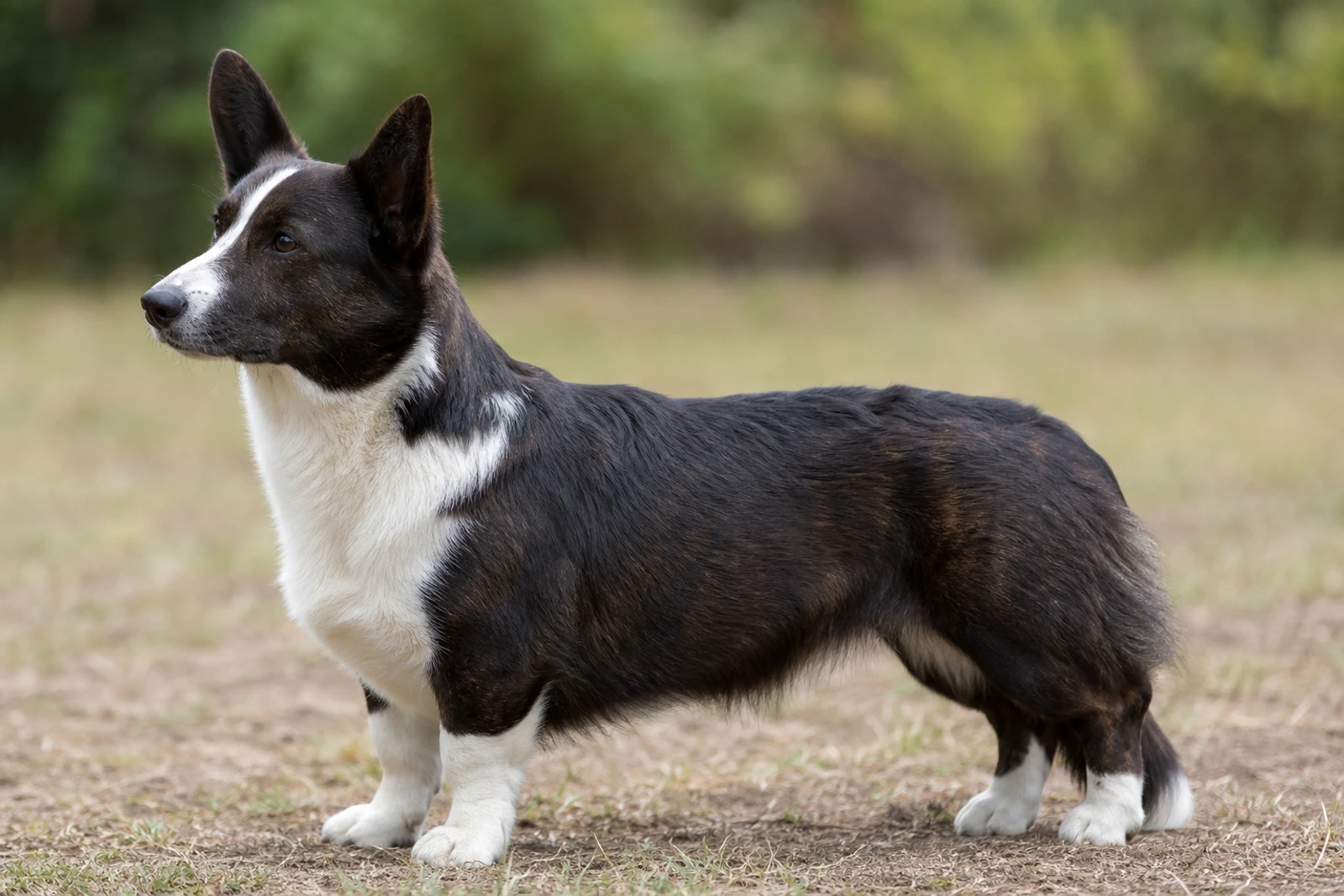
The Cardigan Welsh Corgi is a bright, devoted companion best suited to active families or singles who enjoy daily walks and playtime but also value a calm, affectionate lap dog. Their herding heritage makes them alert and occasionally nippy, but early training and socialization yield a well-mannered, adaptable pet. They thrive on human interaction and mental challenges, fitting well into homes with children, other dogs, or cats when introduced properly. Ideal for those seeking a medium-sized, sturdy dog with a big personality, they require regular brushing to manage seasonal shedding.
At a glance
- Size
- Medium
- Height
- 11–12 in
- Weight
- 24–37 lb
- Life span
- 12–15 years
- Coat colors
- Red, Sable, Brindle, Black and Tan, Blue Merle
- Coat type
- Medium-length, dense, weather-resistant double coat
- Group
- Working
Compare Cardigan Welsh Corgi vs
Compare with any breed →How much does a Cardigan Welsh Corgi cost?
Adopt / rescue
$75–$400
Usually includes spay/neuter, first shots, and a microchip.
Buy from a breeder
$700–$2,000
From a reputable, health-testing breeder.
Approximate USD. Prices vary widely by region, breeder, pedigree, age, and coat colour — adopting is the lower-cost and recommended route. Avoid suspiciously cheap “breeders”; they’re often puppy mills.
Estimate the full cost of a Cardigan Welsh Corgi →Want the ongoing number? Estimate the monthly food bill for a Cardigan Welsh Corgi with our dog food cost calculator.
Cardigan Welsh Corgi photos
Views
Front, side, rear and top — the full silhouette.Poses
How the breed sits, lies, moves and plays.Puppy to senior
The breed across its whole life.Expressions
The breed’s range of moods.Close-up details
Eyes, ears, nose, paws, tail and coat.Coat colors
The breed’s recognized colors.Click any photo to enlarge. We show the Cardigan Welsh Corgi from every angle — three views, poses, life stages, expressions, close-ups, coat and colors.
Appearance & size
Picture a dog built like a scaled-down heavy-duty farmhand — not delicate, not stubby, but substantial. The Cardigan Welsh Corgi stands just 11 to 12 inches at the shoulder, yet tips the scales anywhere from 24 to 37 pounds. That heft sits on a long, ground-skimming frame that’s surprisingly agile. You’re seeing a working breed shaped by centuries of driving cattle, so every angle reads capable.
From the front, the first thing you notice is the distinctive front assembly. The chest is deep and wide between the legs, with a well-sprung ribcage that gives the lungs plenty of room. The forelegs wrap slightly around the chest — a breed hallmark — turning the paws outward just a touch, which balances the broad front. The head sports a flat skull and a gentle stop, with a muzzle that tapers only slightly. Large, erect ears, rounded at the tips, swivel constantly; they’re enormous relative to the head and give the dog an alert, almost mischievous expression. Eyes are medium to large, dark (except in blue merles, where blue or partially blue eyes are allowed), and rimmed with dark pigment.
Move to the side and the silhouette tells you this is no Pembroke. Cardigans have a longer body, with a tail that completes the picture. The tail is low-set, fox-brush in shape, reaching at least to the hock and carried low or with a slight upward curve — never curled over the back. The back is level, blending into a slightly sloping croup. The hindquarters appear strong and well-angulated, driving movement with a powerful push.
From the rear, you see a sturdy, muscular stance. The hind legs are parallel at rest, with substantial bone and well-let-down hocks. The thighs are broad and the overall impression is one of endurance and moderate angulation — nothing extreme.
The coat is a dense, double layer built for weather. A harsh, medium-length outer coat lies over a soft, insulating undercoat. It’s never overly fluffy or trimmed. Colors come in a variety of patterns, but all typically feature white markings on the neck, chest, legs, muzzle, belly, and tail tip. The base colors include:
- Brindle (dark stripes on a lighter background)
- Red (clear reddish-brown)
- Sable (red with black-tipped guard hairs)
- Black with tan points
- Blue merle (marbled gray and black) with tan points
White should never dominate the head or wrap fully around the body; it’s decoration, not the main color. You might see a patch of white on the back of the neck — a “collar” — but a full white collar is a fault. A solid black mask on red or sable dogs is common and often preferred. The overall look is rustic, neat, and ready to work.
History & origin
The Cardigan Welsh Corgi is the older of the two Corgi breeds, with roots that dig back more than 3,000 years—making it one of the earliest herding dogs in Britain. The story starts not on Welsh soil, but with the Celts. When migrating tribes crossed Europe and eventually settled in Wales around 1200 BC, they brought along an ancestor of today’s Dachshund family: a long-bodied, short-legged dog built not for speed, but for close-range cattle work where a low silhouette meant survival.
Those early dogs landed in the rugged, rainy hill country of Cardiganshire (now Ceredigion), where they earned their keep as all-purpose farmhands. Their real job? Moving cattle. The Cardigan wasn't asked to gather sheep across open pastures in a wide outrun—it worked in a scrappier, more dangerous way, driving herds over rough terrain and to market. The dog’s ground-hugging build let it dart in, nip a cow’s heel, and drop flat to avoid the inevitable kick. That same shape also kept it out of sight when a herd got restless. And because a small farm needed more than a drover, the Cardigan moonlighted as a watchdog and vermin dispatcher, clearing the homestead of rats and alerting to strangers.
The name Corgi itself is Welsh: cor meaning dwarf and gi for dog. Some argue it comes from cur, an old term for a working dog. Either way, the name stuck, and for centuries these tough little dogs were selected not for looks but for the grit to handle stubborn Welsh Black cattle in miserable weather.
For a long time, the Cardigan and its cousin the Pembroke were often interbred, because both were simply “Corgis” to the farmers who kept them. That changed in the 1920s and early 1930s, when breed enthusiasts pushed for clear separation. The turning point came in 1934, when the British Kennel Club officially declared them distinct breeds. The American Kennel Club followed suit the same year, with the Cardigan Welsh Corgi Club of America forming in 1935. The easiest visual separator? The Cardigan has a long, low-set tail; the Pembroke is naturally bobtailed or has a docked tail.
The Cardigan’s path wasn’t always secure. By the early 1900s, the breed had dwindled sharply as farming methods changed and fewer families kept working Corgis. A handful of determined breeders, mostly in Wales and later the US, rebuilt the population without losing the dog’s steady nerve and sensible temperament. Today, the Cardigan remains less flashy and less numerous than the Pembroke, but it is still the same levelheaded, durable farm dog at heart—built to work cattle right up close, dodge a hoof, and then curl up by the fire like none of it ever happened.
Temperament & personality
A Cardigan Welsh Corgi isn't a pushbutton dog. You're getting a thinking, problem-solving partner who weighs 24–37 pounds but behaves like a big dog on short legs. That brain was bred to move stubborn cattle across rough Welsh hills, and it still expects a daily job. Without one, it invents its own — herding the cat, reorganizing your shoes, or warning you about a suspicious squirrel three backyards away.
Affection on their terms
The Cardigan bonds hard with its people and often picks one person as its sun. Expect a shadow that follows you from room to room, not a dog that flops over for belly rubs from every stranger. With unfamiliar humans, the typical response is reserved — a quiet assessment, not a tail-wagging welcome. This makes early and frequent socialization non-negotiable. You want a dog that calmly accepts guests, not one that stiffens and stares at every newcomer. A forward-leaning stance and a hard, steady look are often the first signs a Cardigan is shifting from watchful to defensive, so learn to read that body language early.
The watchdog that means it
Alertness is wired in. Most Cardigans will bark when they hear a knock, a package drop, or an odd sound. That deep, big-dog bark is startling from a medium-sized body. You can shape the behavior with training — teaching a "thank you, that's enough" cue — but you'll rarely extinguish it completely. If you leave them alone for long stretches without enough exercise or company, the barking can escalate from watchdog mode into an anxious loop. A loose, relaxed body and soft eyes mean your dog feels safe; lip-licking, yawning, or turning the head away are early calming signals that tell you the training session or crowded room is getting uncomfortable.
Confident, not stubborn
This breed learns fast but doesn't aim to please mindlessly. If you try to force a Cardigan into a command, you'll meet polite resistance. They respond to respectful, consistent engagement — make them think something is their idea. Food rewards work beautifully, but never interrupt a Cardigan while it's eating; that's a fast track to resource guarding. If you have children, teach them to leave the dog in peace during meals. Guarding can also surface around chews, so manage that from day one.
Chewing, marking, and house rules
Puppies chew to explore and relieve teething pain. Adult Cardigans often keep a strong chewing habit to maintain jaw strength and tooth health. Give them sturdy, appropriate outlets — stuffed kongs, yak chews — or your baseboards will suffer. A homemade citrus spray (boiled citrus peels steeped in water) can deter repeat offenses on furniture. Vinegar spray (equal parts white vinegar and water) works to neutralize urine odors inside, which is critical because that scent acts as a return ticket. Dogs mark territory using urine as a scent cue they'll recognize later, so if your Cardigan piddles in a guest room you rarely use, the smell might signal "my space" — and a dog that defines its territory by human-family scent won't automatically see that spare bedroom as part of the pack den. Take your pup out on a schedule, throw a party with a treat immediately after outdoor elimination, and the message sticks better than any punishment for an indoor accident.
Good with kids, dogs & other pets
A Cardigan Welsh Corgi’s easygoing, patient nature makes them a natural fit for households with kids. They’re sturdy enough at 24–37 pounds to handle the occasional bump from a toddler, but that same herding brain can kick in around scampering children: expect a few heel-nipping attempts, especially during chase games. Redirect with a chew toy and teach kids not to run screaming—the fun stops when everyone walks calmly. Never leave a young child unsupervised with any dog, and show children how to pet gently, avoid ear-pulling, and give the dog quiet space when it’s eating or resting.
Early socialization is the single biggest lever you can pull. That window between 3 and 14 weeks is prime time to introduce your puppy to kids, other dogs, wheelchairs, skateboards, and all the commotion of active family life. Keep each interaction positive—treats, praise, and the freedom to retreat—and you’ll stack the deck against fear-based reactivity later. A well-socialized Cardigan typically greets other dogs politely and can live with another canine, especially if they grow up together. With cats, many make peace quickly, though that flash of movement across the floor can still trigger a chase. For rabbits, guinea pigs, or other small caged pets, simply provide a secure enclosure up high, because the instinct to herd or hunt little scurrying things doesn’t vanish completely.
These dogs were bred to work alongside people and hate long stretches of isolation. A Cardigan left alone in the yard for hours often turns to nuisance barking or digging. But fold him into daily family life—a fenced romp with the kids, a training session, or just a spot on the kitchen rug during dinner prep—and you’ll get a companion who settles in like he’s always been there.
Trainability & intelligence
A Cardigan Welsh Corgi doesn’t just learn commands — they size up the entire situation first. Bred to work cattle independently, these dogs are quick, clever, and used to making their own calls. That means a new cue might stick in a handful of repetitions, but they’ll also decide whether it’s worth listening to you in that moment. Stubbornness gets the blame, but it’s usually a thinking dog waiting to see if you mean what you say. Build trust and clear, consistent communication, and you earn a partner who works with you instead of finding loopholes.
What training looks like in practice
- Positive reinforcement gets the best results. Treats, a squeaky toy, a fast game of tug — these are real paychecks. Dry praise alone rarely cuts it.
- Consistency is critical. If one person lets jumping slide and another corrects it, your Cardigan learns that rules are negotiable.
- Punishment backfires. Yelling or physical corrections damage trust and can provoke defensive nipping. A low, calm “no” followed by an immediate redirection teaches what you want without souring the relationship.
Socialization and recall
Early socialization prevents a lot of heartburn later. Introduce your puppy gradually to different people, sounds, surfaces, and calm dogs between 3 and 14 weeks of age, and keep every outing positive. A Cardigan who misses that window often becomes suspicious or reactive with strangers, so you’ll need ongoing controlled exposures well into adulthood.
Recall is the skill most owners wrestle with. Strong herding instinct means a darting squirrel or bicycle can short-circuit even a trained dog’s brain. Build recall in low-distraction spaces first, using high-value rewards like diced chicken or a treasured ball. A long line gives you safety while the dog learns; never punish a delayed return, no matter how frustrated you feel. The goal is for coming back to be the absolute best option.
Channeling all that brainpower
A bored Cardigan invents its own jobs — barking at every bird, dismantling baseboards, herding the kids. Give them a real occupation. Trick training, scent work, rally, and herding all feed that mind. Even five minutes of indoor “find it” games can burn off steam on a rainy day. Teach a rock-solid “watch me” early; it pulls focus away from distractions and reminds a thinking dog that paying attention to you pays off.
Exercise & energy needs
Plan on about an hour of daily exercise, split into at least two sessions. This is a working breed with real stamina, not a lap dog that’s satisfied with a couple of quick walks. A Cardigan Welsh Corgi is compact but built to move stock all day, so a single long session rarely cuts it. Aim for a 30-minute morning walk that includes sniffing time, followed by a more active afternoon session — another walk, a hike, or 20–30 minutes of structured play. On days when you’re short on time, a fast-paced walk with hills plus a hard mental workout can fill the gap.
Match activity to the dog’s body
Cardigans have the long, low build of a dwarf breed, which puts their spine at risk. Responsible owners avoid high-impact exercise that compresses the back. Skip repetitive jumping, hard turns on pavement, and intense fetch that has them twisting mid-air. Stick to low-to-moderate impact activities like hiking on soft trails, swimming, or long sniffy walks. A backyard with room to trot and explore is ideal, but even there, watch for sudden stops and leaps.
Mental work isn’t optional
This breed was meant to think on its feet around livestock, so physical exercise alone won’t tire a Cardigan out. Without mental engagement, you can walk for miles and still have a restless dog indoors. Build puzzle toys, scent games, or trick training into every day. Herding trials, rally, and nose work classes let them use their brain and body together. Even a few 10-minute indoor sessions — hiding treats, practicing new cues — take the edge off when weather keeps you inside.
Two shorter sessions beat one marathon
A single hour-long walk can over-tire a young dog or a senior, and it does little to stop zoomies at dusk. Breaking exercise into a morning stretch and an afternoon challenge aligns with their natural energy spikes. For a healthy adult, a typical rhythm might be a 30-minute off-peak walk before work, then a 30-minute hike, long sniff walk, or backyard herding game in the evening. A tired Cardigan is calm and content indoors; a bored one will invent its own jobs — often destructive ones.
Grooming & coat care
A Cardigan’s double coat sheds heavily year-round, with massive blowouts in spring and fall. Brush 3–4 times a week normally; increase to daily brushing during those seasonal peaks. A slicker brush with rounded pins and an undercoat rake tackle the thick undercoat. Follow with a bristle brush for shine. Expect to fill a wastebasket every session — that’s normal for this breed.
Bathe every 6–8 weeks or when he’s genuinely dirty. The drying step matters more than the shampoo: a damp undercoat trapped against the skin can cause hot spots. Towel vigorously, then use a low-heat dryer until the coat is completely dry at the skin.
Trimming is minimal. Never shave a Cardigan — the double coat insulates from heat and cold, and cutting it can ruin the texture. Just clip the hair between the paw pads to prevent mud clumps and ice balls. You can also neaten stray hairs on the legs and hocks if you like.
Nails grow quickly; plan to trim about once a month, or whenever you hear clicking on hard floors. Check ears weekly for wax or odor, wiping with a damp cloth. Brush teeth several times a week to keep tartar at bay.
When the coat blows, a high-velocity dryer (used outdoors) strips out loose undercoat in minutes and drastically reduces the fur drifts inside your house. It’s an extra tool, but many Cardigan owners consider it a sanity-saver.
Shedding & allergies
If you’re hoping for a dog that won’t leave fur on your couch, lower your expectations — and then lower them again. The Cardigan Welsh Corgi has a dense, double-layered coat built for all-weather farm work, and that coat is an enthusiastic shedder. You’ll find corgi glitter on your floors, clothes, and probably in your coffee cup.
The undercoat is soft and thick; the outer coat is coarser and water-resistant. Together they provide year-round, moderate shedding that picks up steam during two seasonal blowouts each year — typically spring and fall — when the coat renews itself for changing weather. During those weeks, fur comes out in tufts, and daily brushing becomes non-negotiable if you want to keep the tumbleweeds under control.
Drool, mercifully, is a total non-issue. Cardigans aren’t slobbery dogs. The real concern for allergy sufferers isn’t hair volume alone — it’s the skin dander and saliva proteins that stick to shed fur. No dog is truly hypoallergenic, and a Cardigan, with its constant shedding and dander distribution, is a poor match for anyone with dog allergies. Spending time around adult Cardigans before you commit is the only realistic test; don’t rely on a breeder’s promise of a “low-allergy” puppy.
- Shedding: heavy year-round, with extreme seasonal blowouts twice a year. A good vacuum and a slicker brush become household staples.
- Drool: negligible — you won’t need a slobber rag.
- Hypoallergenic: no. Expect dander, airborne fur, and the full allergic load that comes with a high-shedding double coat.
Diet & nutrition
The Cardigan’s legendary appetite is a double-edged sword. These dogs rarely turn down a meal, and that food drive makes obesity a real threat — especially for a breed with a long back. Extra pounds add dangerous stress to the spine and can trigger or worsen joint problems, so keeping your Cardigan at a lean working weight directly protects their mobility over that 12–15 year lifespan.
For an adult weighing 24–37 lb, start with the bag guidelines (usually 1–1½ cups of high-quality dry food per day, split into two meals) and adjust. A Cardigan that hikes an hour a day burns far more fuel than one whose main workout is a stroll to the food bowl. Use the hands-on gauge: you want to feel ribs easily, never see them, and see a visible waist from above.
- Puppies: Four evenly spaced meals until four months, then three meals until six months, finally two meals like an adult. Around 12 weeks you can introduce raw chicken wings under supervision. Transition to new foods gradually with lightly cooked, puréed meat and vegetables.
- Seniors: As energy wanes, switch to three smaller meals a day to avoid weight creep. You don’t usually need to cut protein, but you do need to cut portions the moment that waistline softens.
Cardigans often inhale food. Slow-feeder bowls or puzzle dishes turn mealtime into a mental workout and reduce the risk of bloat. Never feed from the table — even a single tidbit trains a stubborn beggar. If you have leftovers to share, put them in the dog’s own bowl after you’ve finished eating.
For home-prepared meals, a sensible foundation is roughly 60% raw or cooked meat, 20–30% fruits and vegetables, and 10% other ingredients (eggs, grains, plain yogurt). Purée or blend the mix; dogs’ jaws only move vertically and they lack salivary enzymes, so breaking down cell walls beforehand significantly boosts nutrient absorption. Pearl barley provides a digestible, high-fiber grain option, while white rice works well for a bland diet during stomach upsets. Batch-cook grains and proteins so you always have a healthy base ready.
Hard no’s: Vegetarian or vegan diets shortchange a dog’s carnivore physiology, and rich holiday scraps can trigger a dangerous bout of pancreatitis. Stick to portion control, treat food as a game, and you’ll have a satisfied, lightweight Cardigan whose only big back worry is outrunning the neighbor’s cat.
Health & lifespan
With good care, a Cardigan Welsh Corgi often reaches 12 to 15 years — some sail past that. The first thing to absorb is that this is a long-backed, low-slung dog with a sturdy frame, and that body plan comes with a few built-in vulnerabilities. Weight management is the single most powerful tool you have to protect those joints.
You’ll hear a lot about intervertebral disc disease (IVDD). It’s not a guarantee, but it’s more likely in a heavy Cardigan or one who spends a lot of time launching off sofas. A responsible breeder checks for hip and elbow dysplasia (look for OFA or PennHIP scores) and screens eyes annually with a veterinary ophthalmologist, since progressive retinal atrophy (PRA) can pop up in the breed. Degenerative myelopathy (DM) is another concern — a DNA test lets breeders avoid producing at-risk pups, so ask about it.
Keeping your Cardigan lean isn’t just about looks. These dogs are food-obsessed and will happily run a con for an extra treat, but carrying even five extra pounds puts dangerous strain on the back and elbows. Aim for at least an hour of daily walking and play, plus a couple of good sniffy outings. Skip high-impact jumping sports if your vet sees signs of spinal wear.
That dense double coat keeps them comfortable in cool weather, but it can tip them into overheating fast on a warm day. Exercise in the coolest parts of the day when it’s hot, and watch for heavy panting or lagging.
Standard preventive care goes a long way: monthly heartworm medication during mosquito season (and one month after), year-round flea-and-tick coverage, and the legally required rabies vaccine — there’s no effective treatment once rabies symptoms appear, so don’t skip it. Annual wellness exams help your vet catch subtle shifts in weight, eyes, or mobility. Senior Cardigans often benefit from bloodwork and more frequent check-ins. A trim, well-muscled Cardigan who gets steady low-impact exercise and quick attention to any stiffness or limping can easily stay bossy and bright into the mid-teens.
Living environment
A Cardigan Welsh Corgi settles in happily to a house or an apartment, but he does best when his people understand two things: he needs real mental work, and he’ll tell you — loudly — when a package hits the front porch. At 24–37 pounds and only about a foot tall, he’s not a space hog; a well-exercised Cardigan can curl up in a studio just fine. What you trade off is quiet. Expect an alert watchdog who barks at knocks, passing dogs, and sometimes a squirrel that looked at him wrong. Early training tones it down, but the instinct never fully disappears.
Yard needs
A fenced yard gives him a safe place to explode into one of his signature zoomies or herd a soccer ball, but a yard isn’t a substitute for your attention. Without it, two or three dedicated outings a day work just as well. What you can’t do is rely on a tie-out or an unfenced patch — his herding eyes lock onto moving things, and a loose Cardigan will chase a bike into traffic without a second thought.
Climate tolerance
That thick double coat is built for drizzle and chilly mornings. He’ll happily march through snow and mud. Heat is another story. When the temperature climbs past 80°F, stick to early-morning and late-evening walks, keep sessions short, and always have water and shade. A cooling mat indoors helps, too.
Handling alone time
A Cardigan bonds hard and doesn’t enjoy being the only heartbeat in the house for eight straight hours. Left alone too long without preparation, he can spiral into barking, pacing, or chewing. Crate training, puzzle toys stuffed with breakfast, and gradually stretching out your absences make a real difference. If everyone’s gone all day every day, this probably isn’t your breed.
A note on that long back
Those short legs carry a sturdy, long-backed frame, so treat his spine like it’s precious. Jumping off the couch, galloping up and down flights of stairs, and hard stops on slick floors can add up. Ramps, area rugs, and teaching him to wait for a lift onto the bed go a long way toward keeping him comfortable into his teens.
Who this breed suits
If you’re looking for a portable partner who punches above their weight in smarts and stamina, a Cardigan Welsh Corgi might be your match. They suit owners who genuinely enjoy training, not just a quick walk. This is a thinking breed first: without a daily mental workout—puzzle toys, trick training, scent games—that sharp brain will redecorate your house. Physically, they need a solid 45–60 minutes of movement, ideally off-leash romping where they can stretch those short legs, not just a sidewalk stroll.
First-timers can absolutely succeed here if they’re ready to commit. Cardigans are a bit more easygoing and less impulsive than their Pembroke cousins, but they’ll still test a novice who is inconsistent. Sign up for a positive-reinforcement class early; their herding heritage makes them quick, handler-focused learners, but they get bored with repetition. A first-time owner who views training as a daily bonding ritual, not a chore, will find a clever, devoted sidekick.
Active families do well with a Cardigan, especially those with slightly older kids. That 24–37 lb frame seems sturdy, yet the long back makes them prone to injury if a small child tries to pick them up or encourages couch-leaping. The bigger kid hurdle: herding instincts. Even a well-socialized Cardigan will often chase and nip at fast-moving feet. Families who can teach children to become “still trees” when the puppy starts herding—and who actively manage those moments—thrive. Supervising play protects both child and dog.
Singles and active seniors can also be a great fit, but the equation shifts. For a single person who works long hours away, a Cardigan is a tough sell. This is a breed that bonds intensely and can slide into separation anxiety or nuisance barking when left alone for 8+ hours daily. A single with a dog-friendly workplace, a dog walker, or a work-from-home setup gets a bright companion who keeps pace on hikes and then snoozes at your feet. For seniors, the manageable size and moderate lifespan (12–15 years) are appealing, but leash manners are a must. A determined Cardigan who spots a squirrel can yank hard off the line, and a senior who’s unsteady on their feet may struggle. A fenced yard for off-leash exercise solves much of that risk.
Who should think twice. This is not a quiet, low-maintenance lapdog. You’ll battle heavy shedding year-round, and the double coat means tumbleweeds of fur across floors. The voice is generous: they bark at delivery trucks, squirrels, and suspicious leaves. Apartment dwellers often get noise complaints. Couch potatoes will not meet the breed’s energy—an under-exercised Cardigan gains weight fast and develops bad habits. And if your household has toddlers who are still learning gentle handling, the combination of a sensitive back and a dog prone to defensive nipping when hurt means it’s better to wait until your kids are grade-school age. Ultimately, the right owner looks at that intense, stubborn-to-a-fault intelligence and sees a daily project they can’t wait to start.
Cost of ownership
A well-bred Cardigan Welsh Corgi puppy from a breeder who screens for hip dysplasia, progressive retinal atrophy, and degenerative myelopathy typically runs $1,500–$3,000. Show-quality lines or puppies from exceptionally health-tested parents can push higher. If you go the rescue route, adoption fees usually land between $200 and $500, but purebred adults are less common.
Monthly upkeep isn’t negligible for a sturdy 24–37 lb dog with a 12–15 year lifespan. Here’s what to pencil in:
- Food: A high-quality kibble appropriate for a medium, active breed will run you about $40–$70 a month. Treats and dental chews add another $10–$20.
- Grooming: The dense double coat sheds steadily and blows heavily twice a year. If you do most of the brushing and bathing yourself, you might spend only on tools and the occasional self-wash. A professional groom every 6–8 weeks can cost $50–$80 per visit, or roughly $30–$55/month on average.
- Routine vet care: Annual exams, vaccinations, and year-round heartworm/flea/tick prevention add up. Budget $500–$800 per year, which breaks down to about $40–$70/month.
- Pet insurance: Premiums for a medium purebred prone to back and joint issues often fall between $35 and $60 a month, depending on your deductible and coverage.
Expect total ongoing costs in the $150–$350/month range before factoring in one-time startup expenses like a crate, bed, leash, and a couple of training classes. A Cardigan’s long back makes orthopedic emergencies a real financial risk, so either solid insurance or a dedicated savings account makes the monthly number feel less abstract the day your dog decides the sofa is a launch pad.
Choosing a Cardigan Welsh Corgi
Where to start
A Cardigan from a responsible breeder is a 12- to 15-year investment in health and temperament — not an impulse buy. You have two solid routes: find a breeder who puts the breed first, or open your home to a rescue dog. Either way, your job is to spot the difference between someone who protects the breed and someone who just produces puppies.
Health clearances to demand
Hip dysplasia, progressive retinal atrophy (PRA), and degenerative myelopathy (DM) all show up in the breed. So ask for:
- Hips: OFA or PennHIP evaluation — the public database should show a passing grade (Fair, Good, or Excellent).
- Eyes: A current CAER exam from a veterinary ophthalmologist, ideally within the past year.
- DNA: Testing for the rcd3 mutation that causes PRA in Cardigans, plus the DM gene. A carrier or at-risk dog can still be bred responsibly when paired with a clear mate, but the breeder must know the statuses and explain the pairing.
- Cardiac: Some breeders also do an echocardiogram; a history of heart issues in the lines makes this worth asking about.
A breeder who hands over certificates or gives you OFA numbers without hesitation is already ahead of the pack.
Red flags
- No proof of hip or eye screening, or a breezy “my dogs are healthy” instead of actual results.
- Breeding a female before age two or back-to-back heats.
- Puppies released before eight weeks.
- Always has litters on the ground, a dozen “rare” colors (blue merle is a legitimate Cardigan shade, but pricing it as a premium or breeding merle-to-merle is a serious gamble with blindness and deafness).
- Never asks about your home, yard, work schedule, or experience with a vocal, pushy herding breed.
Choosing a puppy
Visit around 7–8 weeks, when you can see real personality. The dam should be steady and watchful — not cowering or on edge. Puppies vary: the most forward pup may be a handful, the wallflower might need extra coaxing. A good breeder helps you read the litter, because they’ve been watching these pups since day one. Look for pups raised inside the home, handled daily, and exposed to normal household noise. Expect a written contract with a multi-year health guarantee, and a take-back clause that covers the dog’s entire life.
Rescue reality
The Cardigan Welsh Corgi Club of America rescue network and regional herding-dog rescues place adults. You’ll pay around $300–$500 and likely see dogs who are already housetrained and past the chewing stage. Be ready to answer detailed questions — rescues know this breed’s smarts and stubbornness, and they won’t hand a dog to someone who underestimates it.
Pros & cons
Pros
- Compact and adaptable. At 24–37 pounds and 11–12 inches tall, a Cardigan fits easily into apartment life with a solid daily walk, yet is sturdy enough for weekend hikes and road trips.
- Quick learner. Bred to work alongside a shepherd, they pick up commands fast, love trick training, and thrive on puzzle toys — no guesswork needed.
- Alert, not aggressive. They’ll bark to announce a visitor but settle when you give the all-clear, making them trustworthy watchdogs without the bite risk.
- Built to last. A healthy Cardigan’s 12–15 year lifespan means more than a decade of loyal, steady companionship.
Cons
- Sheds. A lot. A dense double coat drops fur year-round, with twice-yearly blowouts that demand daily sweeping and a serious vacuum.
- Herding instinct kicks in at knee level. Without redirection, that drive means chasing and nipping at running kids’ heels or passing bicycles.
- A voice that carries. Alert barking can snowball into a constant commentary on every outdoor sound if you don’t teach a reliable “quiet” cue.
- A mind that demands a daily job. Skip the puzzle toys or training, and you’ll find cushions disemboweled and flower beds redesigned.
- Stubborn when bored. Repetitive drills get tuned out fast; keep sessions short, game-like, and varied to keep cooperation high.
- The long back liability. That stretched spine predisposes them to IVDD — keep a Cardigan lean, use ramps, and discourage jumping from furniture.
- Aloof with strangers. Many are reserved or wary around unfamiliar people, so early, positive socialization is essential to prevent sharpness.
Similar breeds & alternatives
If you’re drawn to the Cardigan’s sturdy build and working smarts, two closely related breeds offer a different spin on the same low-slung charm.
- Pembroke Welsh Corgi: Smaller males rarely top 30 lb, with a docked or naturally bobbed tail and pointy, fox-like ears. Pembrokes run more outgoing—they tend to greet strangers like old friends—while the Cardigan is naturally watchful and reserved. Shedding is equally relentless, and both breeds demand a solid hour of exercise that engages their brain, not just a casual loop around the block.
- Swedish Vallhund: This spitz-type herder stands 12–14 inches tall and carries 20–35 lb without the exaggerated long back. The coat is harsher, often grey with harness markings, and the tail can be a stub, curl, or full plume. Vallhunds are notoriously vocal (yips, barks, howls are all on the table) and have an “always on” work ethic. They share a 12–15 year lifespan and a need for a real job, but the shape and personality diverge sharply from the Cardigan’s thoughtful, ground-dwelling style.
All three breeds see hip dysplasia and progressive retinal atrophy; responsible breeders screen for both. If you want the Cardigan’s steady, watchful nature in a more upright frame with a different coat story, the Vallhund is a rugged alternative. Prefer a lighter, bolder dog with a natural bob and a performer’s streak? The Pembroke is the obvious cross-shop.
Fun facts
- The Cardigan is the older of the two Corgi breeds, with a history tracing back over 1,000 years to Celtic settlers.
- Unlike the Pembroke, the Cardigan boasts a long, bushy fox-like tail.
- Their name 'Corgi' likely comes from the Welsh 'cor' (dwarf) and 'ci' (dog).
- They were bred to drive cattle by nipping at heels, a trait still seen in their playful herding behaviors today.
Frequently asked questions
- Is the Cardigan Welsh Corgi good with kids?
- Typically yes, they are affectionate and patient, but early socialization and supervision are recommended, especially with toddlers, due to their herding instincts which may lead to nipping at heels.
- How much does a Cardigan Welsh Corgi shed?
- They shed moderately year-round with heavier shedding during seasonal changes. Weekly brushing helps manage loose fur, but you can expect some level of dog hair in the home.
- How much exercise does a Cardigan Welsh Corgi need?
- They are an active working breed requiring daily exercise of about 45–60 minutes. Long walks, play sessions, and mental stimulation keep them happy and prevent boredom-related behaviors.
- Is the Cardigan Welsh Corgi easy to groom?
- Yes, their medium-length double coat is relatively low-maintenance. Weekly brushing and occasional baths suffice, though they do shed so regular grooming reduces loose hair.
- Can a Cardigan Welsh Corgi live in an apartment?
- Yes, they can adapt to apartment living if given enough exercise and mental stimulation. However, their barking tendency might be a concern in close quarters, so training is important.
- Is the Cardigan Welsh Corgi easy to train for first-time owners?
- They are intelligent and eager to please, which can make training relatively easy, but they also have a stubborn streak. Consistent, positive reinforcement works best, and first-time owners can succeed with patience and early obedience classes.
Tools & calculators for Cardigan Welsh Corgi owners
Quick estimates tailored to Cardigan Welsh Corgis — pre-filled with this breed’s size where it matters.
Articles & stories about the Cardigan Welsh Corgi
Sources & standards
This profile follows recognized breed standards from the American Kennel Club (AKC) and the Fédération Cynologique Internationale (FCI), along with established veterinary and breed-club guidance. These describe general breed tendencies — every dog is an individual.