

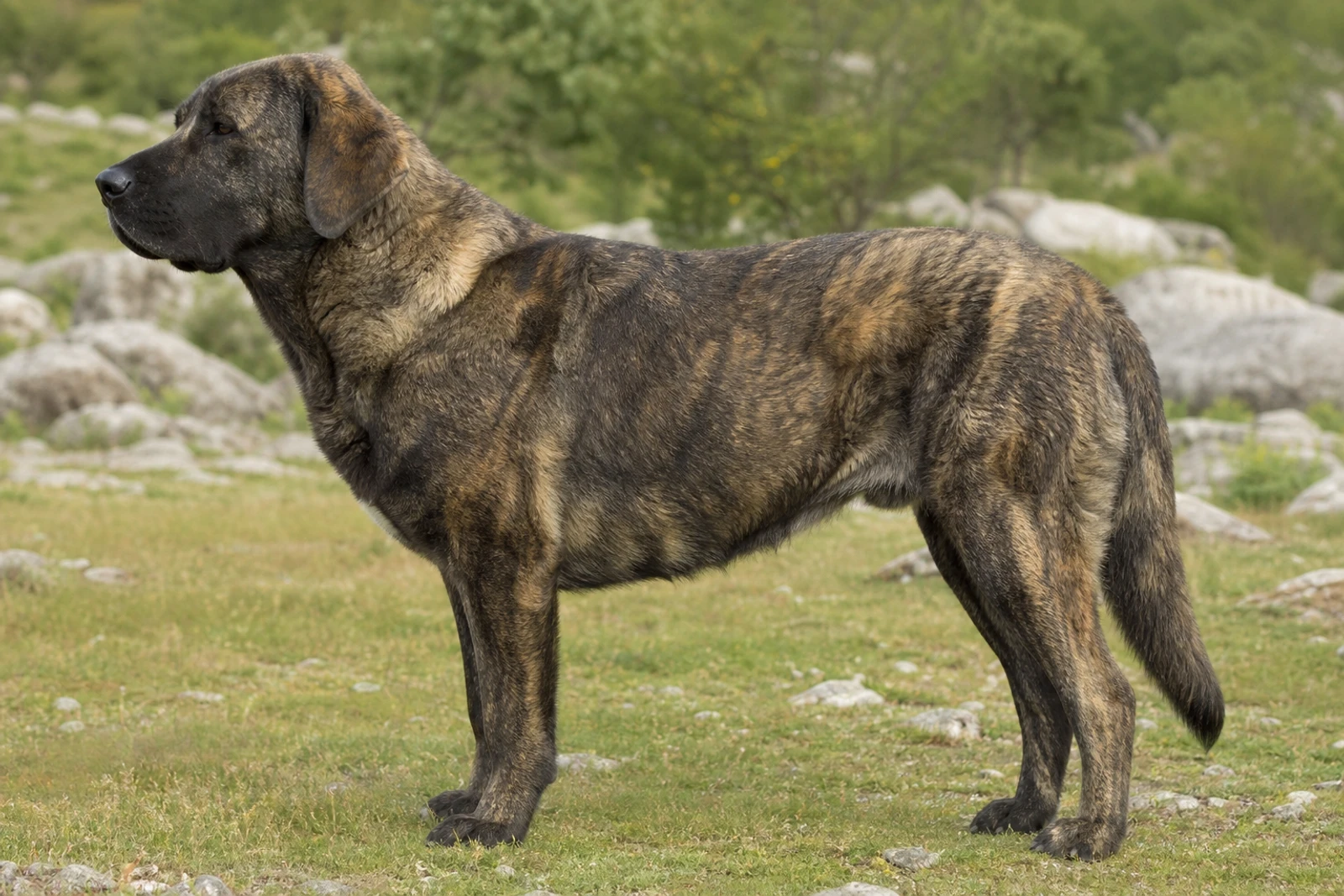
The Castro Laboreiro Dog is a giant Portuguese livestock guardian breed, ideally suited for experienced owners with rural properties or active farms. Loyal and protective, they form strong bonds with their families but require early socialization to manage their natural wariness of strangers. This breed thrives with a job to do and ample space to roam, making them poor fits for apartment living or first-time dog owners. Their independent nature demands patient, consistent training.
At a glance
- Size
- Giant
- Height
- 25–29 in
- Weight
- 77–132 lb
- Life span
- 12 years
- Coat colors
- Wolf gray, Fawn, Brindle, Black
- Coat type
- Short, dense, weather-resistant double coat
How much does a Castro Laboreiro Dog cost?
Adopt / rescue
$75–$400
Usually includes spay/neuter, first shots, and a microchip.
Buy from a breeder
$700–$2,000
From a reputable, health-testing breeder.
Approximate USD. Prices vary widely by region, breeder, pedigree, age, and coat colour — adopting is the lower-cost and recommended route. Avoid suspiciously cheap “breeders”; they’re often puppy mills.
Estimate the full cost of a Castro Laboreiro Dog →Want the ongoing number? Estimate the monthly food bill for a Castro Laboreiro Dog with our dog food cost calculator.
Castro Laboreiro Dog photos
Views
Front, side, rear and top — the full silhouette.Poses
How the breed sits, lies, moves and plays.Puppy to senior
The breed across its whole life.Expressions
The breed’s range of moods.Close-up details
Eyes, ears, nose, paws, tail and coat.Coat colors
The breed’s recognized colors.Click any photo to enlarge. We show the Castro Laboreiro Dog from every angle — three views, poses, life stages, expressions, close-ups, coat and colors.
Appearance & size
A Castro Laboreiro Dog is a massive, square-built mountain guardian that somehow looks both imposing and agile. Males stand 25 to 29 inches at the shoulder, and weight swings from a lean 77 pounds to a dense, thick-boned 132 pounds. Females sit at the lower end of that spectrum. The sheer range is normal for a rustic working breed where function trumps a narrow show standard — a dog herding on steep Portuguese slopes may be lighter and lankier, while a livestock guardian working a flatter property can carry more bulk without losing mobility.
The body is rectangular, not cobby. A straight, level topline runs from the withers to a muscular, slightly sloping croup. The chest is deep and reaches down to the elbows, the ribs well sprung without looking barrel-shaped. There’s a moderate tuck-up, making the silhouette athletic rather than slab-sided. The neck is thick, slightly arched, and clean at the throat, blending into powerful shoulders. From the side you notice that the legs are strong-boned but not cloddy, with tight, cat-like feet that would handle rocky terrain with ease. From the rear, the thighs are broad and well-muscled, hocks are straight, and the thick tail tapers from a robust base, naturally hanging low or rising in a gentle saber curve when the dog is alert — never curled over the back.
The head stamps the breed as a molosser, but a dry, functional one. From the front it looks broad and slightly domed between the ears, with a distinct stop and a muzzle that’s almost as long as the skull. The jaw is deep and powerful. Eyes are almond-shaped, dark, and quietly watchful, set under slightly arched brows. Ears are medium-sized, triangular, and hang close to the head — rose-shaped or folded — falling at or just below the eye line. A hallmark of the breed is the black mask that covers the muzzle and often extends to the eye rims, lending a serious, wolfish expression.
The coat is short to medium in length, dense, and lies flat. It’s a coarse, weather-resistant double coat, slightly softer on the head and ears but noticeably thicker over the neck, shoulders, and tail, forming a light ruff. The color is where the Castro Laboreiro really stands out: a wolf-grey called lobeiro. Real dogs carry a mix of pale grey, dark grey, and black guard hairs that create an overall silvery or charcoal cast, sometimes with fawn undertones. Black-tipped hairs are common, especially over the back and tail. A small white patch on the chest or white on the toes pops up occasionally, but the true working dog’s coat is all about blending into the mountain shadows.
History & origin
The Castro Laboreiro Dog comes from an unforgiving corner of northern Portugal, a place that shaped it into one of the most resilient livestock guardians in the world. The breed takes its name from the village of Castro Laboreiro, tucked deep in the Peneda-Gerês mountains right along the Spanish border. Isolation here wasn’t a choice — it was geography. Steep granite slopes, thick scrub, and howling winter winds kept this population of dogs genetically sealed for centuries.
Nobody can pin down exactly when the first mastiff-type dogs arrived, but they’ve been moving cattle and sheep through these highlands since at least Roman times, possibly earlier. The native Castro Laboreiro Dog emerged as the region’s answer to the Iberian wolf. While shepherds moved livestock between mountain pastures in summer and sheltered valleys in winter, these dogs worked day and night, often without direct human supervision. Their job was brutally simple: put themselves between a predator and the herd, no matter the cost. That bred-in vigilance and independent decision-making still runs strong in the modern dog.
Because the villages and summer grazing settlements were so isolated, the breed developed with almost no outside influence. Families relied on a handful of dogs to guard not just the flocks but entire homesteads. A good Castro Laboreiro Dog had to read a situation in a heartbeat — a wandering goat kid was one thing, a prowling wolf or a stranger creeping toward the sheepfolds was another. That sharp, protective mind set them apart from heavy, slow-moving flock guardians.
By the mid-20th century, wolves were heavily persecuted and the traditional transhumant lifestyle began fading. The breed slipped into obscurity. A formal standard wasn’t written until the 1960s, and the Portuguese Kennel Club recognized the Castro Laboreiro Dog in 1993, with FCI acceptance following later. Even so, it remains one of Portugal’s rarest native breeds. Outside the country, you can count dedicated preservation breeders on your fingers.
Today, the Castro Laboreiro Dog is still most at home on the mountain slopes it’s never really left. Conservation programs in the Peneda-Gerês National Park use them to protect free-ranging native cattle and horses from the slow recovery of wolf populations — exactly the work their ancestors were doing a thousand years ago.
Temperament & personality
You won’t get a wagging, people-pleasing greeting from a Castro Laboreiro. This dog saves his warmth for the inner circle — his own family — and watches strangers with a calm, evaluating stare. He forms a deep, quiet bond with the people he considers his and a politely distant relationship with everyone else. First-time dog owners should look elsewhere; this breed’s independence and 77–132 lb frame demand a handler who reads canine body language fluently.
A guardian’s mind
Energy isn’t frantic. He conserves it for a purpose. Expect a long, silent patrol of the yard or property line rather than a ball-chasing frenzy. That steady watchfulness is bred into him: a forward lean, stiff posture, and direct stare aren't play signals — they're intent. When he’s loose-bodied, soft-eyed, and relaxed, you know the threat assessment is complete and he’s at ease. His bravery is real, not a show. A well-socialized Castro Laboreiro stands his ground but doesn’t escalate without cause, provided you’ve taught him from puppyhood what “normal” looks like. Neglect that early exposure and you’ll get a dog who treats every unfamiliar scent or visitor as a potential breach.
Inside the home
With his own people he’s gentle, not needy. A 120-lb guardian leaning against your leg can be comforting — or accidentally knock a toddler sideways, so supervise the kids. He’s famously good with children he’s raised alongside, but enforce the rule: never interrupt him while he eats, and give him a peaceful meal spot. His strong will shows up in small ways. You can’t bully him into compliance; he’ll shut down or push back. Respectful, consistent guidance and a reward the moment he does what you want (a treat right after outdoor elimination, for instance) get far better results than scolding an accident indoors. He’s too smart to forget a scent cue — if he smells old urine in a spare room, he may decide that’s a valid marking spot because he doesn’t link it to the family’s core living area. A thorough enzymatic clean and blocking off that spot prevents the habit.
Quirks you’ll live with
This is a dog who thinks for himself, which means you’ll occasionally get ignored when you call. It also means he’s a powerful chewer from puppyhood through adulthood — a raw bone or durable chew toy channels that jaw-strengthening instinct away from your furniture. And yes, he may roll in something hideous-smelling. That’s the scavenger ancestry talking: a rotten, stinking coat was once a badge of a good resource find. A spray bottle of diluted white vinegar or citrus peel solution can discourage repeat offenses on off-limits items or re-marking spots.
Isolation hits him hard. Left alone in the backyard with no job and no family interaction, a Castro Laboreiro can tip into anxiety-driven barking that alienates neighbors. He belongs near the household, with a clear but unforced job. Learn to read the shift from a relaxed, soft-eyed guardian to a forward-leaning, hard stare — that’s when you step in and redirect, because he won’t bluff.
Good with kids, dogs & other pets
A Castro Laboreiro Dog is large enough to knock a toddler flat by accident, so even the breed’s naturally patient, non-aggressive temperament doesn’t erase the need for hands-on supervision around small children. Teach kids to interact gently, never grab or climb on the dog, and give the dog a quiet spot to retreat to. When those boundaries are in place, this breed often becomes a steady, protective shadow for the whole family — watchful but not reactive.
The real deciding factor with other dogs, cats, and small pets is early socialization. The window between 3 and 14 weeks is when a puppy learns what’s normal. Gradual, positive exposure to friendly adult dogs, cats, and even livestock during that stretch builds a dog that’s easy to live with later. A Castro Laboreiro Dog who missed that window can still improve with patient, reward-based training, but you can’t force it. Forcing an adult who’s already uneasy around other animals adds stress and risks an altercation, especially when 110 pounds of dog decides he’s had enough.
This is a breed that bonds hard to its people and does not do well left isolated in a yard or alone for long stretches. That high companionship drive can actually work in favor of multi-pet homes — a properly introduced Castro Laboreiro Dog often views a household cat or another dog as part of his flock. Just keep initial meetings short, leashed, and under control. With small animals that dart (rabbits, toy-breed puppies), the dog’s sheer size and guardian instincts mean you’re the fail-safe. Manage the environment with baby gates or crates until you’re certain he’s learned to be gentle.
What you put in during those first four months is what you’ll live with for the next 12 years. A well-socialized Castro Laboreiro Dog can be a rock-solid, kid-tolerant, animal-friendly family member; one raised in isolation is likely to struggle with fear-based reactivity and pushy behavior that’s hard to unwind.
Trainability & intelligence
Understanding a Castro Laboreiro Dog starts with recognizing he was never designed to follow commands for applause. He’s a livestock guardian, bred for centuries to patrol mountain pastures on his own judgment. That makes him independent to the core — highly intelligent, but in a problem-solving, “what’s in it for me?” way that can frustrate owners expecting Labrador-like biddability.
Housetraining and basic manners come fairly quickly if you’re consistent from day one, because he’s sharp and reads patterns well. The challenge flares when you ask for obedience that contradicts his instincts — recall is the prime example. A Castro Laboreiro who spots something suspicious 200 yards away may blow off your call entirely, not because he doesn’t understand it, but because his internal job description overrides it. You’re working against centuries of selective breeding that valued autonomous decision-making. Respect that, and train around it.
The only training approach that works is relationship-based, reward-driven, and relentlessly consistent. Heavy-handed corrections with a dog that can weigh 77 to 132 pounds are a recipe for fear or pushback. Use high-value treats, praise, and a calm, confident tone. Build trust first: short, positive sessions, clear expectations, and never asking for something you can’t enforce kindly. Once he believes you’re a fair partner, he’ll offer impressive cooperation — but it’s earned, not automatic.
Socialization is non-negotiable. Start before 12 to 14 weeks, exposing your puppy gradually to strangers, different surfaces, household sounds, and other dogs. Without that early and ongoing work, natural wariness hardens into fear-based reactivity, and managing a reactive 100-pound guardian is not something you want to gamble with. Pair each new experience with food or play so he builds a positive association.
Where many new owners stumble is mistaking his wariness for stubbornness. He is not being difficult; he’s assessing threats, exactly as his genetics demand. Patience, not frustration, keeps communication open. Every time you punish that hesitation, you erode the very trust that makes him reliable.
Give a Castro Laboreiro a clear job — even something simple like carrying a pack on hikes — and you’ll see his intelligence shine. Expect a trick dog, and you’ll be disappointed. Train for partnership, and you’ll end up with a powerful, thinking guardian who listens because he wants to, not because he has to.
Exercise & energy needs
A Castro Laboreiro Dog isn’t built for a quick sprint around the block. This is a serious, giant working guardian bred to patrol Portugal’s rugged mountain slopes for hours — covering territory, checking fences, and thinking independently. If you’re bringing one home, plan on two substantial daily outings that together add up to at least 90 minutes of movement. For younger, high-drive adults, that might climb closer to two hours split across morning and evening. A bored Castro Laboreiro with pent-up energy won’t just nap; he’ll channel that frustration into barking, digging, or dismantling your couch.
Intensity matters just as much as the clock. These dogs aren't frantic sprinters, but they do need purposeful, steady exercise that engages both body and brain. Long, off-leash hikes on soft terrain let them stretch out at a comfortable trot and use their nose. A fenced acre or more is ideal — not just for zoomies, but so they can make their own patrol rounds between your walks. Avoid pounding pavement, repetitive high-impact fetch on hard surfaces, or forced running before growth plates close (around 18–24 months) because those giant joints are vulnerable.
Mental work is non-negotiable. This is a livestock guardian breed selected for centuries to make decisions on its own. Without a flock to watch over, you’ll need to simulate that job. Scent games, hide-and-seek, puzzle toys, and training sessions that build on his natural wariness and problem-solving streak burn energy faster than just adding another mile. Teach him to find a hidden object, drag a light cart, or track a scent trail. These dogs thrive when you give them a real task — even if it’s “carry this pack on the trail” or “patrol the fence line with me.”
Skip the dog park. A Castro Laboreiro’s guarding instincts and size can lead to trouble with strange dogs. Instead, lean into activities that respect his independent nature: weight pulling, carting, advanced nose work, or long, structured pack walks where he gets to move beside you. Two shorter sessions — say, a 45-minute morning hike and a 30-minute evening sniff walk plus a 15-minute brain game — often fit the breed better than one marathon outing. The payoff is a calm, contented dog who’s satisfied with his “shift.” Neglect that daily quota, and he’ll assign himself a project you didn’t ask for.
Grooming & coat care
The Castro Laboreiro Dog wears a dense, weather-resistant double coat that does exactly what a mountain livestock guardian’s coat should — it sheds dirt and handles rain with little fuss. You aren’t signing up for a complicated grooming routine, but you will deal with a seasonal shedding avalanche. Twice a year, usually in spring and fall, the undercoat comes out in clumps. Daily brushing with a slicker brush or an undercoat rake keeps the dead hair from burying your floors and prevents matting behind the ears and at the thighs. Off-season, once-a-week passes with a boar-bristle brush are enough to spread natural oils and bring out the coat’s natural shine.
Bathing is a rare event. Two or three baths a year is plenty — any more strips the protective oils that make the coat so self-cleaning. Use a gentle dog shampoo and skip anything with harsh detergents. After a muddy hike, hosing off with plain water and towel-drying usually gets the job done.
Trimming isn’t part of the standard plan. This breed has a natural, untrimmed silhouette. Just snip the fuzzy hair that grows between the paw pads to prevent ice balls in winter and keep the sanitary area tidy if needed.
Check the floppy ears every week for wax buildup or moisture, and give them a wipe with a drying ear cleaner. Nails need attention every three to four weeks — with a dog this big, overgrown nails affect gait and joint comfort. Brush teeth several times a week; giant breeds can carry tartar into their senior years.
During heavy sheds, brush outside and watch for any red patches or flaking as you work — early signs of skin trouble are easier to spot when you’re spending ten extra minutes with a rake in hand. You’ll probably spend more time sweeping than grooming, but that weekly once-over keeps the dog comfortable and your furniture decidedly less hairy.
Shedding & allergies
You’re looking at a giant, double-coated guardian breed, so accept it now: this dog sheds. A lot. Year-round, you’ll find coarse gray-and-black fur woven into your sofa, your clothes, your morning coffee. Twice a year, in spring and fall, the Castro Laboreiro “blows” its dense undercoat in earnest — a soft, dusty blizzard that can last two to three weeks. At 77 to 132 pounds, that’s a big animal sloughing off enough wool to fill a grocery bag every few days during peak season.
The coat itself is weather-resistant: a straight, harsh outer layer over a thick, insulating undercoat. Daily brushing with an undercoat rake or slicker brush during the blowouts keeps the fallout manageable, but the hair still comes. Off-season, two or three good brush sessions a week will quiet the tumbleweeds, but don’t expect a clean house. You lower the volume of loose fur, you don’t eliminate it.
Drool adds to the picture. The Castro Laboreiro isn’t a heavy-jowled breed like a Mastiff, but a big dog with a deep chest and loose lips will leave wet marks after a long drink, and you’ll see slobber trails on hot days or after exercise. That saliva, combined with all that shed hair and dander, lands on every surface.
Now the hard truth for allergy sufferers: no part of this dog is hypoallergenic. The double coat constantly releases dander-laden fur into the air. Saliva proteins stick to furniture and skin. If you react to dog allergens, living with a Castro Laboreiro means daily exposure you can’t brush away. Airing outdoors regularly and feeding a high-quality diet can support coat health and may reduce dry flaking, but they won’t stop the shedding or make the breed safe for someone with real sensitivities. Go in with clear eyes — this is a heavy shedder and a drooler, and no amount of wishful thinking changes that.
Diet & nutrition
Keep your Castro Laboreiro Dog lean — it’s the single biggest dietary favor you can do for those joints. These are massive, rugged dogs (77–132 lb), and every extra pound adds stress to hips and elbows that a working mountain breed doesn’t need. They can be food-motivated to a fault, so free-feeding is a fast track to obesity. Portion control isn’t optional; it’s the backbone of their daily care.
How much to feed
There’s no one-size-fits-all calorie count, but you’re generally looking at 4–6 cups of high-quality dry food a day for an adult, split into two meals. A dog on the leaner side of the weight range who runs for an hour or more will need the upper end; a lower-energy house companion might need less. Adjust based on ribs — you want to feel them easily, not see them.
Puppies grow hard and fast before they fill out. Start with four evenly spaced meals a day until four months old, then drop to three meals until six months, then settle into the adult two-meal rhythm. Overfeeding a giant-breed puppy can rush growth and inflame developing joints, so stick to a formula suited for large-breed growth.
Older dogs slow down, and their waistlines can quietly expand. Switch to smaller, more frequent meals if digestion gets sluggish, and don’t be afraid to reduce the total daily ration as activity wanes. There’s no solid reason to slash protein for a senior, but you do need to watch the scale.
What to put in the bowl
They thrive on a diet that respects their carnivore ancestry — roughly 60% meat (raw or cooked), 20–30% fruits and vegetables, and the remaining 10% from eggs, grains like pearl barley, or plain yogurt. If you go the home-prepared route, blend or purée the food. Dogs don’t chew side-to-side and lack salivary amylase, so blending helps them actually absorb the nutrients instead of passing them whole.
Raw chicken wings can be introduced around 12 weeks under close supervision, and lightly cooked, puréed meats make an ideal puppy transition from milk. For adults, a quick meal might be canned fish (in water, no salt), steamed vegetables, and some leftover quinoa. Avoid rich, fatty scraps — a single indulgence after a holiday meal can tip a dog into pancreatitis.
Serve every bite in his own bowl, never from the table, and never in response to begging. It sounds trivial, but a 120-pound dog who’s learned to stare you down at dinner is no joke, and breaking that habit is miserable. If you need to slow a gulper, a puzzle bowl turns mealtime into a few minutes of problem-solving and protects against bloat, a real risk in deep-chested giants.
Health & lifespan
A well-cared-for Castro Laboreiro Dog often reaches 12 years, which is solid for a giant breed. That longevity depends heavily on keeping him lean, active, and mentally settled. Even a few extra pounds stress his frame, and with his size, joint wear adds up fast.
Hip and elbow dysplasia can be a concern, as in many large mountain breeds. Responsible breeders screen breeding stock through the Orthopedic Foundation for Animals (OFA) or similar registry to stack the odds in the pups’ favor. Ask to see those clearances. Bloat (gastric dilatation-volvulus) is another giant-breed emergency worth preventing — feed two or three smaller meals a day instead of one big one, and avoid vigorous exercise right after eating.
This isn't a dog with a long list of flashy inherited diseases, but his sheer mass means you don't ignore subtle signs. A slight limp, stiffness when rising, or reluctance to go up stairs warrants a vet check, not a wait-and-see attitude. Annual bloodwork and joint assessments catch early arthritis or metabolic shifts before they spiral.
Preventive care stays straightforward but non-negotiable. Monthly heartworm prevention during mosquito season (and for a month beyond) plus a year-round flea and tick protocol protect a dog who loves being outdoors. Rabies vaccination is legally required everywhere; skipping it isn't an option when there's no treatment once symptoms show. Keep a written log of his vaccine schedule, deworming, and any skin oddities — the breed’s thick coat can hide hot spots or parasites if you're not hands-on.
Weight management is everything. These dogs are food-motivated and big enough to counter-surf without stretching, so portion control and daily measured meals beat free-feeding by a mile. Aim for a visible waist and easily felt ribs. Combine that with regular vet dental checks — giant breeds sometimes slack on chewing, and neglected teeth pump bacteria into the bloodstream, stressing the heart and kidneys.
Finally, don't underestimate the health impact of isolation. A Castro Laboreiro left alone in a yard without a job can develop stress-driven behaviors like excessive barking or pacing, which wear down the dog mentally and physically. Early socialization and respectful, consistent handling keep his stress hormones in check, making that 12-year lifespan a whole lot healthier.
Living environment
A Castro Laboreiro Dog takes up real space, and her needs don’t shrink to fit your square footage. At 25–29 inches tall and anywhere from 77 to 132 pounds, she’s a giant breed that moves through a room like a piece of furniture that breathes. Apartment living almost always means you’re fighting the current. Stairs, tight hallways, and thin walls stack the odds against both of you.
What she really needs is a house with a securely fenced yard—not just a postage stamp of grass, but enough ground to patrol, sniff, and burn off steam between walks. She’ll use that yard for her own self-appointed rounds, so check your fence height and bury-proof the perimeter. A bored Castro Laboreiro left to invent her own entertainment can dig craters or sample your deck furniture.
Daily exercise has to be a ritual, not a toss-the-ball-once situation. Plan on 60 to 90 minutes of real movement, split into two sessions. Think a long, hilly hike in the morning and a brisk, structured walk or a pull session in the evening. Sniffy walks don’t cut it—she needs her lungs and legs fully engaged. Pair that with mental work: hide her meals in a puzzle toy, teach her to find a hidden scent tin, or run through five-minute training drills. Without that mix, you’ll hear about it. Her bark is deep and carries. A under-exercised Castro Laboreiro will let the whole neighborhood know she’s restless.
She’s not a dog who brushes off long absences. Leave her alone for a full workday with no prep, and you may come home to shredded doorframes or a dog who’s screamed herself hoarse. Teach alone time in small slices from puppyhood. When you do head out, leave a frozen stuffed Kong, a snuffle mat, or a rotating cast of tough chews to keep her brain busy. If your schedule means nobody’s around for 9 or 10 hours straight, this isn’t the breed for right now. She thrives when she’s woven into the daily rhythm, right beside you, job or no job.
Who this breed suits
The Castro Laboreiro is an uncompromising livestock guardian, not a neighborhood family pet. He’s wired to patrol, assess threats, and act independently — traits that can be magnificent in the right hands and a liability in the wrong ones. If your life doesn’t include room to roam and a genuine need for a watchful protector, skip to the next section.
A likely match
- Experienced owners with land. This is a breed for farms, ranches, or homes on acreage with sturdy, high fencing. He’ll turn a postage-stamp yard into a stress furnace.
- Singles or couples who are homebodies. The Castro Laboreiro binds tightly to his people and property. He’s not interested in social butterfly outings; he wants to know his territory is secure and you’re in it. If you work from a rural property and want a quiet deterrent who doesn’t need constant direction, you’ll appreciate his style.
- Active families with older, respectful kids. He can be gentle with his own family, but this is a 77-to-132-pound dog with a serious streak. Toddlers crash around unpredictably — that triggers a guardian’s alertness, not his cuddle reflex. Kids need to understand that this isn’t a wrestling buddy.
- Homesteaders who need a real guardian. If you have poultry, goats, or other livestock to protect, he’s in his element. He’ll work all night and sleep lightly during the day, as he has for centuries in Portugal’s mountains.
Who should look elsewhere
- First-time dog owners. He doesn’t ask permission. A dog that thinks for itself and weighs over 100 pounds can quickly demote a novice to spectator. You need timing, confidence, and the physical presence to command respect without force.
- Apartment or city dwellers. This isn’t negotiable. He requires space to patrol and will likely bark at every odd sound in a dense neighborhood. A daily walk around the block barely registers as exercise — he needs hours of moving across acreage, checking fence lines, and watching for intruders.
- Seniors or anyone with limited strength. A 29-inch-tall dog with a burst of guardian energy can pull you off your feet in a heartbeat. Handling him through adolescence and into old age demands serious muscle, not just goodwill.
- Highly social households. Expecting this dog to welcome a rotating cast of playdates, delivery drivers, and visiting relatives is wishful thinking. His default is suspicion, and a 130-pound guardian who decides a guest is a problem carries heavy consequences. Early socialization helps, but it polishes edges, doesn’t erase them.
- People away from home 9-to-5. Left alone without a job, the Castro Laboreiro often invents one — usually involving property destruction or obsessive perimeter barking that alienates neighbors.
A 12-year commitment to a giant, independent guardian means a decade-plus of managing a dog who will always place his own judgment ahead of your commands. If you don’t have the land, livestock, or livestock-guardian experience to give that mindset a constructive outlet, you’re gambling with a very large set of teeth.
Cost of ownership
A Castro Laboreiro Dog is a significant financial commitment from day one. This is a rare Portuguese livestock guardian, so finding a puppy in the US usually means a waitlist and a higher price tag. Expect to pay $2,000 to $4,000 from a responsible breeder who screens hips, elbows, and eyes. Importing a pup adds $500–$1,000 in transport and import fees. Adopting an adult is almost unheard of—rescue organizations rarely, if ever, have them. If you find one, it's likely a working-line rehome and still carries a rehoming fee around $300–$600.
Monthly expenses
Feeding a 100+ pound working dog isn't cheap. Budget $80–$120 a month for high-quality kibble or raw food. In cold weather or during heavy activity, a working dog may eat even more. You can't skimp on cheap filler; a giant breed needs joint support from the start.
- Grooming: The dense, weather-resistant double coat sheds moderately year-round with heavy seasonal blows. A thorough brush-out once a week and a bath every couple of months handles most of it. You can do it yourself with a good undercoat rake, so professional grooming is optional—roughly $0–$60 a month if you choose to outsource.
- Vet and preventives: Routine checkups, vaccinations, and heartworm/flea/tick meds run about $50–$80 monthly, but giant breeds can have steep emergency bills. Bloat (GDV) surgery can hit $3,000–$7,000, and hip dysplasia management adds up fast.
- Insurance or a vet fund: A policy for a giant breed often costs $70–$120 a month depending on deductible and coverage. If you self-insure, set aside at least $100 a month from the start.
- Training and containment: This is a serious guardian breed, not a casual pet. Factor in $150–$500 for a secure six-foot fence if you don't already have one, plus $100–$300 for early professional training classes or one-on-one help with socialization.
All in, plan on a monthly outlay of $200–$400, not counting the unpredictable first-year costs for spay/neuter, microchipping, and supplies like a sturdy crate and heavy-duty chew toys. A 12-year lifespan means you're looking at a total cost north of $30,000—and that's before you factor in replacing your favorite chair if a bored adolescent decides to redecorate.
Choosing a Castro Laboreiro Dog
Sourcing a puppy responsibly
The Castro Laboreiro Dog is vanishingly rare in the U.S. — you won’t stumble on a litter in a classified ad. Start with the breed’s parent club (or the FCI-affiliated Clube Português de Canicultura) to find breeders who understand that this is a giant 77–132 lb livestock guardian, not a laid-back novelty. Most good breeders will have a waitlist, and they’ll ask you harder questions than you ask them: your fencing, your livestock (or lack of it), how much time a day you can give to serious socialization. Lean into that. They’re protecting the dogs.
Rescue is a slim but real option. Occasionally an adult becomes available through dedicated guardian-dog rehoming networks or the breed club’s own rescue, but a dog that’s already patrolled a mountain ridge for years may never slot happily into a suburban yard. Be prepared to drive halfway across the country and prove you’ve handled a strong-willed protector before.
Health clearances you should ask for
Given the size, joints are the first concern. Insist on verifiable hip and elbow dysplasia screening — OFA “excellent” or “good” hips, or a PennHIP distraction index well below the breed median. Elbows should be normal. Responsible breeders also run a basic cardiac exam (ideally an echocardiogram) and a recent ophthalmologist evaluation. Ask point-blank about bloat history in the pedigree and whether the breeder follows prophylactic gastropexy for breeding stock. A lifespan of 12 years is solid for a giant, but it hinges on generations of sound hips and careful feeding.
Red flags to walk away from
Run if you see any of these: no published hip/elbow results for both parents, puppies always “in stock,” a seller who never asks about your experience with a protective breed, a claim that these dogs are “easy” or “just big sweethearts” with strangers. Avoid anyone who can’t show you the mother on site (or at least a live video tour). No take-back clause in the contract — no puppy. Price as the main selling point and buzzwords like “rare color” are also giant warning signs.
Picking the right puppy
Visit when the litter is 6–7 weeks old to see the environment: clean, roomy, and full of novel objects like crates, tunnels, and unfamiliar sounds. A well-bred Castro Laboreiro pup will investigate confidently, maybe circle you once, then go back to playing — not cower in a corner or launch into hard-eyed staring. Ask the breeder which pups she’d place in an experienced guardian home versus which ones show lower drive and might adapt to an active, livestock-free life. Mother’s temperament matters; she should be aloof but willing to approach under her handler’s direction, not a trembling mess. The breeder should send you home with microchip details, a health record (first shots, deworming, any vet notes), and a written contract that says the dog comes back to them if you can’t keep it.
Pros & cons
Pros
- Unshakeable loyalty and a deep bond with their family. A Castro Laboreiro will put itself between you and any perceived threat without hesitation—this isn’t a dog that sits on the sidelines.
- Natural guardian instincts honed over centuries of defending flocks from wolves. You get a 24/7 sentry that doesn’t need to be trained to alert; it’s hardwired.
- Impressive athleticism for a giant breed. A healthy adult can hike, trot, and patrol for hours, thriving in active rural homes where they have a real job or plenty of acreage to roam.
- A thick, weather-resistant double coat that shrugs off rain and cold. Grooming is straightforward: a weekly brush handles moderate shedding most of the year, with heavier blowing only a couple of times a year.
- Generally robust health with a 12-year life expectancy that beats many giant breeds. With good breeding and weight management, they often stay sound well into their senior years.
Cons
- Intense wariness of strangers is the default setting. Don’t expect a dog that greets everyone with a wagging tail; early, ongoing socialization is non-negotiable just to get a manageable level of aloofness, and even then they remain reserved with outsiders.
- Independent thinking that crosses into stubbornness. They were bred to make decisions alone on a mountainside, so they’ll question your commands unless you prove you’re a fair, consistent leader. Novice owners get steamrolled.
- A strong territorial drive that escalates quickly without firm boundaries. A bored Castro Laboreiro that decides the mail carrier is a threat becomes a giant, fast-moving liability. You’ll need tall, secure fencing and the mindset that management is constant.
- Serious exercise requirements that go far beyond leash walks. They need a solid hour of roaming, sniffing, and trotting each day, preferably on a large property. Cramped quarters without enough outdoor time generally turn into destructive chewing, digging, and nonstop barking.
- Giant breed health concerns include hip and elbow dysplasia—responsible breeders screen rigorously—and bloat (gastric dilatation-volvulus). You’ll have to split meals, avoid raised feeders if your vet recommends against them, and enforce rest after eating to lower the bloat risk.
Similar breeds & alternatives
If you’re drawn to the Castro Laboreiro’s intense guardian focus and no-nonsense mountain roots, a few other breeds offer a similar working drive but shift the balance in size, coat, or availability. Each one here comes with genuine trade-offs — not a watered-down version, just a different set of daily realities.
-
Estrela Mountain Dog: The other big Portuguese livestock guardian. Males run 88–110 lb (some larger) at 24–29 in, lifespan 10–12 years. The Estrela is more common outside Portugal, so finding a responsible breeder is easier. Two coat types exist: long and short, both with a softer expression than the Castro Laboreiro’s hardened, watchful stare. Temperamentally, an Estrela tends to be slightly more demonstrative with its own family — still reserved with strangers, but the Castro Laboreiro often carries a sharper edge of suspicion that never quite turns off. If you need a farm guardian who doubles as a steadier house companion, the Estrela tips that direction. If you want an uncompromising sentry who’s lighter on its feet, the Castro Laboreiro’s 77–132 lb frame and dense brindle coat keep it leaner and more agile in rough terrain.
-
Anatolian Shepherd: A Turkish guardian with comparable height (males 29+ in, often 110–150 lb) and a 11–13 year lifespan. The Anatolian is built to cover ground — historically, it moved with nomadic flocks across vast open steppes. That translates into a dog with a stronger independent streak and a tendency to patrol a wider perimeter, while a Castro Laboreiro typically tightens its orbit to a specific village, farm, or family unit. Coat is short to rough, in any color, whereas the Castro Laboreiro’s signature brindle or “wolf-gray” is nearly breed-defining. Both are deadly serious about their job, but the Anatolian may test boundaries more persistently; the Castro Laboreiro often just makes a silent decision and acts on it. Expect high drive from either, and plan for a solid hour-plus of purposeful work or walking, not just lounge-in-the-yard time.
-
Spanish Mastiff: If sheer mass is a priority, this breed goes there — males routinely 140–200+ lb, with a heavier, less agile build. Lifespan hovers at 9–11 years. The Spanish Mastiff is more phlegmatic, bred to move with large herds and deter wolves through size rather than lightning-quick reactions. A Castro Laboreiro, by contrast, is more athletic and reactive, bred for precipitous mountain valleys where sudden threats demand rapid, independent judgment. The Spanish Mastiff’s coat is thick and often lighter in color; it sheds heavily and drools, while the Castro Laboreiro’s tighter lips and medium-length coat mean less slobber and a slightly easier grooming load. Both can be calm household presences, but the Spanish Mastiff’s lower energy can be misread as “easy,” whereas the Castro Laboreiro’s watchfulness keeps it mentally coiled for action, even indoors.
Fun facts
- They are an ancient breed from the Castro Laboreiro region of Portugal.
- Known as the 'wolf of Castro Laboreiro' due to their lupine appearance.
- Historically used to guard livestock against wolves and other predators.
- This breed is extremely rare outside of its native Portugal.
Frequently asked questions
- Is the Castro Laboreiro Dog good with children?
- With proper socialization, they can be loyal and protective family members, but their independent and courageous nature means supervision is essential around young kids. They may be better suited to households with older children who understand canine boundaries, as this giant breed's size can be overwhelming.
- How much exercise does a Castro Laboreiro Dog need?
- As a high-energy working breed, they require plenty of daily physical activity—typically at least 1–2 hours of exercise. Long walks, jogging, or off-leash play in a secure area are ideal to keep them mentally and physically satisfied; without it, they can become restless and destructive.
- Do Castro Laboreiro Dogs shed a lot?
- They have a moderate shedding level, ranking about 3 out of 5. You can expect some fur around the house year-round, with heavier shedding during seasonal changes. Regular brushing helps manage it.
- Are Castro Laboreiro Dogs easy to groom?
- Their coat is relatively low-maintenance, requiring only occasional brushing to remove loose hair and dirt. Bathing can be infrequent unless they get into something messy. Overall grooming needs are minimal, ranking about 2 out of 5.
- Can Castro Laboreiro Dogs live in apartments?
- Generally, no. Their large size, high energy, and guarding instincts make them unsuitable for apartment living. They thrive in homes with spacious, securely fenced yards where they can roam and patrol.
- Is the Castro Laboreiro Dog a good choice for first-time owners?
- They can be challenging for novices due to their independent, strong-willed temperament and need for consistent training and socialization. Experienced owners familiar with guardian breeds will manage them best. First-timers may find their protective nature and exercise demands overwhelming.
Tools & calculators for Castro Laboreiro Dog owners
Quick estimates tailored to Castro Laboreiro Dogs — pre-filled with this breed’s size where it matters.
Articles & stories about the Castro Laboreiro Dog
Sources & standards
This profile follows recognized breed standards from the American Kennel Club (AKC) and the Fédération Cynologique Internationale (FCI), along with established veterinary and breed-club guidance. These describe general breed tendencies — every dog is an individual.