

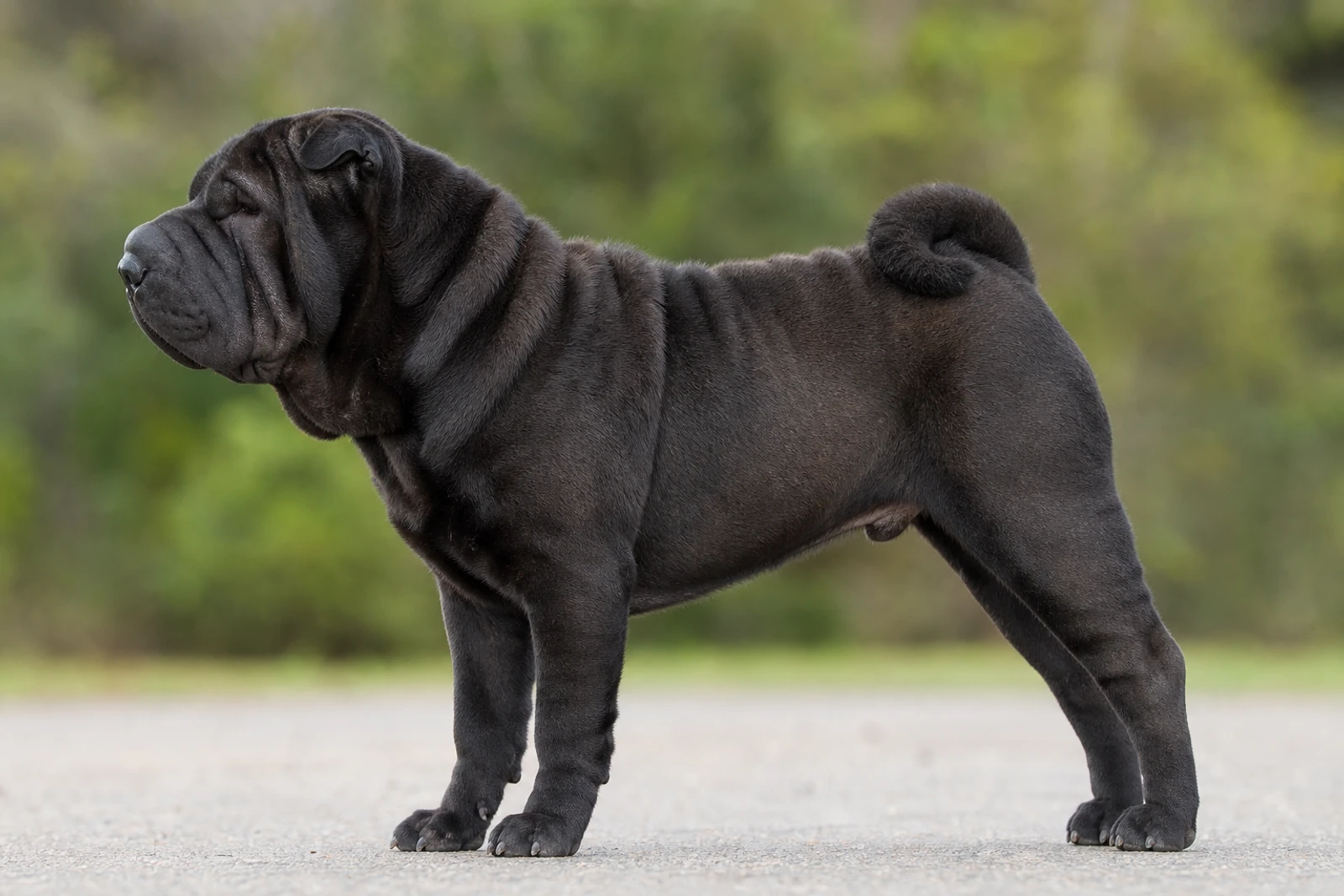
The Chinese Shar-Pei is a loyal, independent breed best suited for experienced owners who understand guarding instincts. Devoted to family but aloof with strangers, they need early socialization and consistent training. Their moderate energy fits active homes without being hyper. With proper handling, they become calm companions, but their stubborn streak challenges novices. Not ideal for young children or multi-pet owners, these dignified dogs thrive with confident leadership and daily exercise.
At a glance
- Size
- Large
- Height
- 18–20 in
- Weight
- 40–55 lb
- Life span
- 10 years
- Coat colors
- Black, Blue, Brown, Cream, Fawn, Red, Sable
- Coat type
- Short, harsh, and straight
- Group
- Working
How much does a Chinese Shar-Pei cost?
Adopt / rescue
$75–$400
Usually includes spay/neuter, first shots, and a microchip.
Buy from a breeder
$700–$2,000
From a reputable, health-testing breeder.
Approximate USD. Prices vary widely by region, breeder, pedigree, age, and coat colour — adopting is the lower-cost and recommended route. Avoid suspiciously cheap “breeders”; they’re often puppy mills.
Estimate the full cost of a Chinese Shar-Pei →Want the ongoing number? Estimate the monthly food bill for a Chinese Shar-Pei with our dog food cost calculator.
Chinese Shar-Pei photos
Views
Front, side, rear and top — the full silhouette.Poses
How the breed sits, lies, moves and plays.Puppy to senior
The breed across its whole life.Expressions
The breed’s range of moods.Close-up details
Eyes, ears, nose, paws, tail and coat.Coat colors
The breed’s recognized colors.Click any photo to enlarge. We show the Chinese Shar-Pei from every angle — three views, poses, life stages, expressions, close-ups, coat and colors.
Appearance & size
The first thing that stops you in your tracks is the sheer number of wrinkles—a Chinese Shar-Pei looks like a puppy that never quite grew into its skin. But that’s only part of the story. These dogs stand 18 to 20 inches at the shoulder and weigh a solid 40 to 55 pounds, giving them a compact, square frame that feels heavier and more substantial than the numbers suggest. Their muscular build fits neatly into the “large” category, with a broad chest, moderate bone, and a calm, confident stance.
From the front, your eye goes straight to the head. The skull is flat and wide, and the muzzle is famously blunt and padded—often compared to a hippopotamus. Deep-set, almond-shaped eyes give a slight scowl that can look serious but is simply the breed’s natural expression. Small, thick, velvety ears fold forward and lie flat, framing the face. That face is loaded with wrinkles: a heavy brow, folds on the cheeks, and loose skin around the neck and throat. Inside the dark muzzle, the tongue is solid blue-black, a trait shared with only one other breed.
Run your fingers through the coat and you’ll feel an unusual texture. There are two varieties: the horse coat, which is very short (under an inch), prickly, and stands slightly off the body, and the brush coat, which is slightly longer but still coarse and straight. Both shed minimally but can be rough to sensitive skin. Color-wise, the breed comes in a broad palette of solid tones—fawn, cream, red, black, blue, chocolate, and sable, among others. A darker shading on the muzzle and ears is common and acceptable.
From the side, the Shar-Pei is squarely built. The topline is level, the chest deep, and the ribs well-sprung. Wrinkles are most exaggerated in puppies; adults typically retain loose skin only on the forehead, withers, and at the base of the tail. That tail is a hallmark: thick at the base, tapering to a point, and carried tightly curled over one hip. From the rear, you’ll see the tail set high and the hind legs straight and powerful. The dog’s movement is free and low to the ground—no prancing, just a purposeful, easy stride. Everything about the breed says substance without bulk, a working heritage wrapped in a one-of-a-kind suit of skin.
History & origin
The Chinese Shar-Pei is one of those breeds that makes you do a double-take — ancient, distinct, and almost lost to history. Its story starts in the southern provinces of China, likely around the village of Tai Li in Guangdong, at least 2,000 years ago. We know this because Han dynasty pottery and figurines show dogs with the same blocky build, small ears, and characteristic scowling expression. They weren't palace dogs. They were all-purpose farm workers, bred by peasants for sheer utility. A Shar-Pei hunted wild boar, herded livestock, and guarded the homestead with a deeply territorial instinct that didn't need a big bark. The loose, wrinkled skin and harsh, prickly coat weren't a fashion statement — they were a survival tool. If a wild animal or an intruding dog latched on, the Shar-Pei could twist around inside its own hide and bite back, and that sandpaper coat made it unpleasant to hold on. Over time, people in the region also used them in dog fighting, though the breed's role on the farm always came first.
By the mid-20th century, a combination of events nearly wiped the breed out. When Mao Zedong's Communist Party rose to power, dogs were labeled a bourgeois luxury. Heavy taxes and outright culling made keeping a dog nearly impossible. In mainland China, the Shar-Pei population collapsed. A handful survived in rural pockets and in nearby Hong Kong and Macau. By the early 1970s, the Shar-Pei was recognized as the world's rarest dog breed. That's when a Hong Kong businessman named Matgo Law made a desperate move. He wrote to Dogs magazine in the United States in 1973, pleading for help to save the breed before it vanished entirely.
The letter struck a chord. American dog lovers scrambled to import available dogs — a tiny foundation stock of maybe a dozen or so Shar-Pei. Breeders in the U.S. built the modern gene pool from those few individuals, carefully working around health issues that came with such a narrow start. The Chinese Shar-Pei Club of America formed in 1974, and the American Kennel Club recognized the breed in 1992. That's the Shar-Pei you see today: a walking piece of history that went from common farmhand to near extinction and back again, all because a few people refused to let it disappear.
Temperament & personality
The Shar-Pei bonds deeply with his family, but he’s about as far from a tail-wagging social butterfly as a dog gets. Bred to guard property and livestock, he brings a serious, independent mind to your home. He doesn’t hand out affection freely; instead, his loyalty shows up as a quiet, watchful presence that never really loosens his grip on the front door. If you’re looking for a dog who greets strangers with a wag and a lick, you’re in the wrong breed.
With his own people, he’s calm and devoted. He’ll follow you from room to room, settle at your feet, and keep an eye on things. He’s not typically a cuddle bug, but he craves proximity. Expect a dog who regards houseguests with suspicion—sometimes silent, sometimes a low rumble of warning. This wariness, paired with a thick-skinned stubbornness, means socialization as a puppy is non-negotiable. Without it, the breed’s territorial instinct can harden into reactivity or outright aggression with strangers and other dogs.
Energy-wise, a Shar-Pei is large but not frantic. A solid 30–45 minute walk plus a few short play sessions per day meet his needs. He’s content to lounge indoors, making him suited to apartment life if you don’t skip the daily exercise. But don’t confuse “dignified” with “pushover.” He thinks for himself and will question your authority if you try to bully or force him. Positive, consistent training built on respect—not correction—earns his cooperation. A harsh hand will get you a dog who shuts down or pushes back.
-
Watchdog and body language cues: The Shar-Pei is a natural watchdog who rarely misses a sound or movement. A stiff, forward-leaning posture and unblinking stare often mean he’s on the verge of a reaction. A relaxed body and soft eyes, hidden though they may be in wrinkles, tell you he’s at ease. Stress shows up as yawning, lip-licking, or head-turning. Learn to spot these early so you can dial back pressure before he feels cornered.
-
Resource guarding and mealtimes: Many Shar-Pei are possessive about food and chews. Teach every family member to leave him completely alone while he eats. Never reach into his bowl, and don’t let children near his feeding spot.
-
House-training and marking: His territorial instinct makes him a dedicated marker. A single old urine stain—even from a previous pet—can trigger repeat accidents. Clean all messes with an enzymatic cleaner that destroys the scent, not just the stain, or you’ll fight an uphill battle.
-
Chewing drive: Even as an adult, your Shar-Pei will love gnawing on hard, sturdy chews. It keeps his powerful jaws strong and his teeth clean. Without proper outlets, that need can turn your table legs into splinters.
-
With kids and other animals: Same-sex dog aggression is common. Some Shar-Pei live amicably with a dog of the opposite sex, but many never become dog-park candidates. Small children and this breed are a risky mix because the dog won’t tolerate rough handling. Older, dog-savvy kids typically do better. He may view cats and other small pets as intruders, so introductions require careful management.
A Shar-Pei isn’t a forgiving, go-anywhere kind of dog. He thrives with an owner who respects his independence, reads him honestly, and never puts him in situations that overwhelm his guarded nature. If you’re ready to be that steady, tuned-in person, you’ll get a steadfast companion who takes home security personally—no alarm system necessary.
Good with kids, dogs & other pets
A well-raised Shar-Pei can be a loyal, calm presence with his own kids, but you’re not getting a natural babysitter. This isn’t a breed that thrives on roughhousing or endless patience from toddlers. A 40-to-55-pound dog with a low center of gravity can accidentally knock a small child over just by leaning, and those famous wrinkles mean he feels every grab and poke a bit more literally than a smooth-coated dog would. Supervision around young children is non-negotiable. When you put in the time to teach kids gentle handling and let the dog have a quiet space to retreat to, Shar-Pei often become serious, watchful companions who stick close to their people.
With other dogs, the picture gets complicated fast. The breed’s past as a fighting and guard dog means same-sex aggression and general selectivity are real, not rare. A puppy who starts structured, positive exposure to friendly dogs before 12–14 weeks stands the best shot at adult sociability. After that critical window closes, forcing an adult Shar-Pei to mingle with strange dogs often backfires into posturing or fights. Plenty of well-socialized Shar-Pei live peacefully with a compatible opposite-sex housemate, but expecting yours to enjoy dog parks or pack walks is a gamble. If your adult dog is happiest with just you and your household, there’s no obligation to “fix” that.
Cats and small pets trigger the breed’s guarding and hunting instincts. Slow, supervised introductions from puppyhood can work, especially with a cat that stands its ground. But the prey drive doesn’t just disappear. Letting a Shar-Pei with an unknown history loose around rabbits, pocket pets, or a running cat is asking for trouble. Set up baby gates, crate rotate, and never leave them alone together unless you’ve seen months of proven, calm indifference.
Trainability & intelligence
A Shar-Pei will surprise you with how fast he figures things out — and then frustrate you when he decides there’s nothing in it for him. This is a deeply independent breed, molded by centuries of guarding and fighting, and that self-reliance still hums under the surface. Training a Shar-Pei isn’t about commanding blind obedience; it’s about building a partnership where he actively wants to work with you.
Positive Partnership, Not Pushy Commands
Start puppy training the day he comes home, and make every session uncompromisingly positive. Shar-Pei are sensitive to rough handling. A raised voice or a leash jerk doesn’t produce compliance — it breeds resentment and anxiety. Mark the behavior you want with genuine enthusiasm: a high-value treat, a squeaky toy, a quick game of tug, or calm, direct praise when he checks in. Consistently reward what you like, and you’ll shape his choices. Lean on force or punishment, and he’ll simply shut you out.
Socialization Starts Now, Not Later
The window for core socialization runs from about 3 to 14 weeks, but with a Shar-Pei you keep at it for life. His natural wariness of strangers can tip into fear-based reactivity without gentle, wide-ranging exposure early on. Introduce him to different people, calm dogs, clattering surfaces, and everyday sounds in brief, positive bites — always pairing a new experience with a treat or a quiet happy voice so his brain logs unfamiliar as safe. This is the foundation for a 40–55 pound dog who can stay level-headed around visitors and in new places, rather than one who reacts first and thinks later.
The Recall Reality
A reliable recall rarely comes built-in. A Shar-Pei’s independent streak means he’ll often weigh your “come” against the smell in the grass and decide which one pays better. That changes only when he trusts that returning to you always leads to something good — never the end of fun or a scolding. Lay the groundwork in boring, low-distraction rooms, reward like it’s the lottery, and gradually work up to busier settings. Accept that a rock-solid response around squirrels might take months, not weeks. Use a long line outdoors so he can practice without the risk of self-rewarding an ignore.
Respect that your Shar-Pei is always thinking. Give him a concrete, consistent reason to choose you over whatever else catches his eye, and he’ll surprise you with how reliable he becomes — on his own terms.
Exercise & energy needs
A Shar-Pei won’t run laps around you, but don’t mistake that dignified calm for laziness. These dogs need a steady daily routine — usually 30 to 45 minutes of total activity, broken into two shorter sessions, to stay happy without overheating or stressing their joints.
-
Pace and type of exercise: Think two 15- to 20-minute leash walks in the cool parts of the day, plus a few minutes of free sniffing in a secure yard. Shar-Peis are a brachycephalic-adjacent breed with thick, padded skin that traps heat, so they can overheat fast. Avoid mid-day pavement walks and never push them into panting, heavy exertion. A gentle walk that lets them explore is worth more than a forced jog.
-
What to avoid: High-impact sports like agility jumping, long runs, or chasing balls on hard surfaces are a bad fit. Hip dysplasia and patellar issues can crop up in the breed, so responsible owners skip anything that pounds the joints. Watch for fatigue or heavy breathing, especially in warmer weather — Shar-Peis don’t always self-regulate well.
-
Mental work matters just as much: This is a smart, independent breed that bores easily. A bored Shar-Pei quickly turns into a destructive or anxious one. Puzzle toys, frozen Kongs, and short training sessions using positive reinforcement give their brain a workout without physical strain. Scent games — hiding treats in a snuffle mat or around the living room — are a favorite way to tire them out indoors. You’ll get a calmer dog at night with 10 minutes of nose work than from an extra walk around the block.
-
A real downside: Shar-Peis can be stubborn about exercise if not motivated. They may plant their feet and refuse to move when they’d rather stay home. Keep walks short enough that they stay enjoyable, and never drag a resistant dog — you’ll damage trust faster than you’ll build fitness. Bribe with high-value treats if you must; it’s fair trade for a cooperative outing.
Stick to two relaxed daily walks and a few mental challenges, and you’ll see a content, well-mannered dog that’s not climbing the walls. Skip the routine for a couple of days, and that same dog might suddenly find your couch cushions fascinating in a destructive way.
Grooming & coat care
The Shar-Pei’s coat is one of the easiest parts of this breed to maintain — until you factor in those famous wrinkles. There are two coat types: the short, prickly “horse coat” and a slightly longer “brush coat,” but both are single-coated with no insulating underlayer. That means you won’t deal with massive seasonal blowouts the way you would with a double-coated breed, though they still shed lightly year-round and more noticeably a couple of times a year.
Brushing — A quick weekly once-over with a bristle brush (pig bristle is great for bringing up natural shine on that short fur) or a soft rubber curry comb grabs dead hair and stimulates the skin. During the heavier shedding periods in spring and fall, step it up to two or three times a week. Skip the slicker brushes and pins meant for long coats; they’re overkill here and can irritate the skin.
Bathing — Less is more. Over-bathing strips the natural oils that keep the Shar-Pei’s coat harsh and healthy. Every two to three months is plenty, unless your dog has rolled in something rank. Always use a mild, dog-specific shampoo, and — this is non-negotiable — dry every fold, wrinkle, and crevice thoroughly with a towel. Trapped moisture invites yeast and bacterial infections.
Wrinkle care — Between baths, wipe out the facial folds, the area around the tail, and any deep body wrinkles a couple of times a week with a soft, damp cloth, then follow with a dry one. Puppies are extra wrinkly and need more frequent checks. If you notice a funky smell, redness, or gunk, clean the area more often and get your vet’s guidance — Shar-Pei skin can be prone to issues.
Nails, ears, teeth — The small, tightly folded ears trap wax and debris easily. A gentle wipe with a vet-approved ear cleaner once a week helps prevent infections. Trim nails every three to four weeks; if you hear clicking on the floor, they’re too long. And aim for teeth brushing two or three times a week — their breed lifespan sits around 10 years, and good dental care helps them reach it comfortably.
Seasonal coat care — When temperatures swing, you’ll see more dead hair around the house. Just add a couple of extra brushing sessions that week. Regular outdoor exercise also supports healthy coat turnover, so your Shar-Pei’s skin and fur benefit from a good daily walk or backyard romp.
Shedding & allergies
A short, bristly coat can fool you into thinking the Shar-Pei barely sheds. Actually, these dogs drop a steady drizzle of coarse hairs year-round, and twice a year they kick into full-blown shedding mode when the seasons change. Those stiff little hairs don’t float in the air like fluffy undercoat — they work their way into upholstery, carpet, and clothing like tiny needles. A lint roller becomes part of your daily routine.
Shar-Peis are not a good match for allergy sufferers. The breed produces plenty of dander, and that prickly coat seems to spread it efficiently. Some owners with mild dog allergies can manage by brushing outdoors with a rubber curry or hound glove every few days and bathing monthly, but you should never count on this breed to be hypoallergenic. It simply isn’t.
On top of shedding, many Shar-Peis are moderate droolers, especially after drinking or during warm weather. Loose, fleshy cheeks around the muzzle can drip saliva onto floors and furniture, carrying allergens along with it. If a truly clean, hair-free home is non-negotiable, the Shar-Pei will disappoint. You can reduce the mess a bit with a quick wipe of the face after meals and water, but you’ll still find slobber trails and wiry hair in unexpected places. A robot vacuum helps, but it won’t win every battle.
Diet & nutrition
Shar-Pei carry their weight on a compact, heavy-boned frame, so every extra pound puts real strain on joints that are already vulnerability points in the breed. Obesity can shave precious time off a lifespan that averages just 10 years. Most adults do best on two measured meals a day and zero free-access food — this is not a dog that self-regulates.
What to feed
Aim for a diet built around roughly 60% high-quality meat (cooked or carefully handled raw), 20–30% fruits and vegetables, and about 10% eggs, grains like pearl barley or white rice, and plain yogurt. Puréeing or blending ingredients can make nutrients easier to absorb, especially for a dog that bolts its food or has a sensitive mouth. If using a commercial kibble, pick a large-breed formula with joint-friendly extras and steer clear of recipes overloaded with cheap fillers.
Portion size and weight control
There’s no universal cup measure — you adjust based on age, build, and real daily activity. A 45-pound moderately active Shar-Pei might thrive on 2 to 2½ cups of a dense kibble split across two meals, but you need to watch the waistline, not just the scale. The ribs should be easy to feel under a thin layer of flesh. Use a slow-feeder or puzzle bowl; this breed often eats fast and acts hungry even when it isn’t. Leftovers go in the dog’s own bowl, never directly from the table, to avoid hard-to-break begging.
When sensitivities flare
Some Shar-Pei wrestle with food allergies that show up as itchy skin, ear infections, or loose stools. If that describes your dog, a limited-ingredient diet built around a novel protein (venison, duck, or fish) often helps. Cooked vegetables, canned fish, and eggs can be combined for simple, gentle meals. White rice makes a bland, stomach-soothing base when things go sideways.
Puppy meals
Puppies thrive on structure. Under four months, feed four evenly spaced meals a day; move to three meals until six months, then transition to the adult two-meal rhythm. Introduce a new diet gradually, starting with lightly cooked and puréed meats, fish, and fruits, or a high-quality commercial puppy food. Raw chicken wings can be offered around 12 weeks, but only under close supervision.
Senior shifts
A 7- or 8-year-old Shar-Pei often starts slowing down, and weight gain hits hard. Shift to smaller, more frequent meals if joint pain or mobility issues crop up, and gradually cut back total daily food as activity drops. Puréeing meals helps dogs with missing teeth or tender gums absorb more nutrition without discomfort.
Health & lifespan
A well-cared-for Shar-Pei typically reaches about 10 years. That’s not a huge number on paper, but it can be a full, comfortable decade if you stay ahead of the breed’s known vulnerabilities.
Weight management is non-negotiable. This is a thickset, powerful dog where even 5 extra pounds deepens skin folds and strains hips that are already predisposed to dysplasia. Keep your dog lean — ribs easily felt under a light cover of flesh, with a visible waist from above.
The skin is the breed’s signature and its biggest headache. Deep wrinkles and a short, bristly coat trap moisture, fostering fold dermatitis — that yeasty, musty smell between skin layers. Some dogs overproduce mucin, creating harmless-looking bubbles or blisters that can become infected if not kept clean. Far more serious is Shar-Pei fever, an inherited auto-inflammatory condition. Flares bring a sudden high fever and swollen, painful hock joints; left unchecked, the cycle can deposit amyloid proteins in the kidneys or liver, leading to organ failure. Not every episode of limping and fever signals this syndrome, but a tender, hot hock warrants an immediate vet visit.
Eye problems are also common. Entropion — where eyelids roll inward, scraping lashes against the cornea — often appears in puppies and young adults. Corrective surgery is routine, and responsible breeders select against lines with severe or early cases.
- Hip and elbow dysplasia appear in lines that aren’t screened; good breeders provide OFA clearances on both parents.
- Narrow ear canals invite yeast and bacteria. A quick weekly sniff and wipe with a drying cleanser prevents many infections.
- Hypothyroidism can creep in during middle age, sapping energy and thickening the skin even more. Annual bloodwork catches it early.
Heat tolerance is poor. The short muzzle and heavy folds make thermoregulation a struggle — a warm afternoon walk can push a Shar-Pei into heat stress faster than you’d think. Shift exercise to early mornings, supply plenty of shade, and skip pavement walks on hot days.
Prevention and screening are the foundation. Monthly heartworm medication during mosquito season (and one month past the first frost) and a current rabies vaccination are baseline care. Early, positive handling pays off too: a dog that lets you calmly check paws, ears, and wrinkles is a dog you can catch problems in early. That low-stress foundation matters doubly here, because stress is thought to trigger Shar-Pei fever flares in predisposed dogs.
A breeder you can trust screens for hips, elbows, eyes (CERF or OFA), and thyroid function. They’ll talk frankly about any history of Shar-Pei fever in the line and may bank DNA for the known associated gene test, though that test isn’t a perfect predictor — family history still guides decisions. Schedule yearly wellness exams, and scan for subtle changes: a little more water consumption, a squint that lasts, a skin odor that doesn’t clear. Small clues often point to bigger issues in this breed.
Living environment
The Chinese Shar-Pei’s independent streak makes them one of the more apartment-friendly large breeds, but you’ll still need to factor in their sensitivity to heat and their need for predictable routines. They aren’t yard-obsessed dogs. A securely fenced space is a nice bonus for off-leash sniffing, not a must-have. Far more important is that you can keep your home comfortably cool — these dogs overheat quickly because of their thick, wrinkly skin and slightly compact muzzle. Air conditioning in summer isn’t a luxury; it’s a safety requirement. In cold weather, they manage decently but don’t have a heavy insulating coat, so a sweater helps on bitter days.
You won’t get a lot of noise for the sake of it. A Shar-Pei typically barks to alert you when something is genuinely off — a stranger at the door, a weird sound — then settles back into their default quiet watchfulness. They’re not a yappy neighbor nuisance.
Exercise fits neatly into apartment life. Aim for two shorter sessions, around 20–30 minutes each, rather than a single marathon walk. This breed benefits from low-impact movement like walking or swimming, because their joints (especially hips) can be vulnerable. Skip high-impact jumping or long jogs on pavement. Adding puzzle toys or a few minutes of scent work inside does wonders for that clever brain and rounds out their activity needs.
As for solo time: Shar-Pei aren’t clingy, but they do bond hard with their people. A well-adjusted adult can handle 4–6 hours alone without issue, provided you build up to it gradually and leave something engaging behind, like a stuffed Kong or a snuffle mat. A dog who hasn’t been taught to self-pacify or who’s stuck indoors bored for 9-hour stretches may turn to destructive chewing or anxious pacing. The fix is simple — meet their modest daily exercise and mental stimulation, and you’ll come home to a calm, dignified housemate.
Who this breed suits
The Shar-Pei is a thinking owner’s guard dog — independent, reserved, and often more cat-like than dog-like in his affections. He’s best matched with someone who doesn’t need a velcro companion and who respects his space. If you want a dog that greets everyone at the door, look elsewhere. This breed bonds hard to his own people and remains suspicious of strangers, exactly what he was bred to do as a Chinese guardian.
Who thrives with a Shar-Pei
- Experienced owners who read canine body language. A Shar-Pei won't constantly wag his tail or seek cuddles. He shows loyalty with a quiet presence. You’ll need to recognize subtle signs of discomfort before they escalate, especially around unfamiliar children or guests.
- Singles or couples with a predictable routine. The breed adapts well to an apartment or a house, provided he gets a couple of brisk 30-minute walks and a fenced potty break each day. Inside, he’s often a dignified couch potato, which makes him a fit for less active households that still commit to daily outings.
- Families with older, dog-savvy kids. A well-socialized Shar-Pei can be gentle with his own children, but the 40–55 lb, low-slung build means toddlers get knocked over easily. His reserved nature also means he won’t tolerate tail-pulling or clumsy hugs from little ones he didn't grow up with.
- Seniors who are physically steady and have owned strong-willed dogs before. The breed’s exercise needs are moderate, not exhausting. However, a Shar-Pei on a leash that spots a critter can lunge with surprising power. If you have balance concerns or weak hands, pass.
Who should think twice
- First-time dog owners. Shar-Pei puppies are adorable, but the adult dog brings a stubborn streak and an independent mind that requires consistent, positive training from day one. A novice can easily create a territorial, hard-to-manage adult without even realizing it.
- Homes with frequent visitors or a revolving door of strangers. This isn’t a party dog. He will patrol the perimeter and sound the alarm. Forcing introductions to a stream of guests stresses the dog and risks a defensive reaction.
- Multi-pet households, unless you’re exceptionally committed to early and ongoing socialization. Same-sex aggression, particularly with other dogs, is well-documented. Living with cats is possible if raised together, but the prey drive toward a running feline can kick in fast.
- Anyone unprepared for the grooming and vet bills. The trademark wrinkles are not a set-it-and-forget-it feature. Without daily wipe-downs between folds, skin infections blossom. Entropion (rolled-in eyelids), ear issues, and a median lifespan of just 10 years mean you’re signing up for a decade of likely veterinary vigilance. Responsible breeders screen for these problems, but even a well-bred Shar-Pei needs an owner who treats skin care as non-negotiable.
If you see yourself in the first group and are ready for a loyal, low-key guardian who will never be the life of the dog park, the Shar-Pei might be your match. Go in with your eyes open about the maintenance and the aloof temperament — this is a breed you earn, not one that immediately earns you.
Cost of ownership
Expect to spend more on vet bills than on the puppy itself. The Chinese Shar-Pei’s famous wrinkles come with a real price tag: a lifetime of managing skin, eyes, and joint health. Budget with that in mind from the start.
What you’ll pay upfront
A responsibly bred Shar-Pei puppy typically costs $1,500–$3,000. Breeders who perform rigorous health screenings (hips, elbows, eyes, and a DNA test for Shar-Pei Autoinflammatory Disease) charge toward the higher end — but that testing saves you money later. Show-quality or rare coat colors can push the price past $3,500. Adopting through a breed-specific rescue runs $200–$500, and that’s a solid option if you’re okay with an adult dog whose temperament is already known.
Initial gear — a heavy-duty crate, stainless food bowls, a harness (collars can rub the neck folds raw), cozy bedding, and cleaning supplies — will hit your credit card for another $200–$400.
Monthly costs in the real world
- Food: $50–$70. A 40–55 lb dog eats about 2½–3 cups of high-quality kibble daily. Many Shar-Pei have food allergies, so you often end up on a limited-ingredient or hydrolyzed-protein diet, which costs more than standard chow.
- Grooming supplies and occasional pros: $15–$40. The coat is a no-fuss “horse coat” that sheds minimally, but the wrinkles demand constant attention. You’ll go through a lot of fragrance-free wipes, medicated pads, and ear cleaner. A professional groomer every 6–8 weeks for a nail trim and deep wrinkle check adds $40–$60 per visit.
- Routine vet care: $30–$50/month averaged out. Annual exams, vaccines, heartworm prevention, and flea/tick meds for a large breed fall in the normal range. But that’s the cheap part.
- Health surprises and insurance: $50–$100+. The breed is prone to entropion (eyelids rolling inward), which often requires surgery at $500–$1,500 per eye — sometimes before the dog turns one. Recurrent skin infections, ear infections, and hip dysplasia management are common. A robust pet insurance policy isn’t optional here; premiums run $50–$100+ a month with a decent deductible, and you’ll likely use it. Without insurance, a single emergency can hit $3,000–$5,000 fast.
All told, you’re looking at $150–$300 a month for the life of the dog — and with a 10-year lifespan, those senior years (and their bump in palliative care costs) arrive sooner than you’d think. The Shar-Pei isn’t a dog you cheap out on; buy the best insurance you can afford on day one, before any pre-existing conditions get flagged.
Choosing a Chinese Shar-Pei
A Chinese Shar-Pei is not a casual breed, so where you get one matters enormously. You’re choosing between a breeder who treats every pairing like a genetic chess game and a rescue Shar-Pei who arrives with a history you may have to manage from day one. Neither path is plug-and-play.
Health Clearances and Red Flags
Start with the paperwork. Responsible breeders test breeding stock beyond a quick vet check. Ask for OFA hip, elbow, patella, and CAER eye certifications at minimum. The big one for this breed is Familial Shar-Pei Fever (FSF) . A DNA test for the Shar-Pei Autoinflammatory Disease (SPAID) mutation tells you whether a dog is clear, a carrier, or affected. An affected parent — even one who hasn’t had a fever episode yet — passes the mutation to every puppy. The safest combos are clear-to-clear or clear-to-carrier, and a good breeder will walk you through the results before you put down a dime.
Run from anyone who dodges health questions or trots out the “vet checked” line without OFA links. Other immediate red flags: breeders who fixate on “meat-mouth” heads and heavy, cascading wrinkles. Excessive wrinkling drives chronic skin fold infections and often requires repeated entropion surgery to stop lashes from scraping the cornea. Also walk if they won’t let you meet the mother (or at minimum see her on live video), send puppies home before eight weeks, or pressure you to buy without a contract that includes a return guarantee. If a puppy listing reads “rare blue/ lilac” without a word about SPAID status, you’re dealing with a color salesman, not a preservation breeder.
Picking a Puppy
When you visit, watch the litter on familiar ground. A healthy Shar-Pei puppy should be curious and slightly reserved with strangers — not trembling in a corner, and not bowling you over. Check eyes for any squinting, tearing, or a bluish haze; early entropion can show up even at this age. Skin should be a little loose but clean, not raw or yeasty between folds. Ask to see both parents’ SPAID results again, and ask how old the grandparents lived. If the breeder can’t produce a grandparent who saw age 9 without kidney failure, the fever-to-amyloidosis chain hasn’t been broken in that line.
The Rescue Route
Shar-Pei-specific rescues take in dogs surrendered for the very problems a careful breeder screens out — recurring fevers, skin that never quits, or behavioral issues triggered by pain. You skip puppy teething and housebreaking, but you take on an unknown health clock. Be honest about your budget and tolerance for vet visits. Ask the foster or coordinator directly: has this dog ever had a swollen hock, unexplained fever, or squinting eye? Any history of entropion surgery or chronic ear infections? A rescue with a thick file and a transparent foster home can still be the right dog if you go in eyes open and wallet ready.
Pros & cons
The Chinese Shar-Pei’s intense loyalty and stone-faced composure hide a dog that demands experienced handling and serious healthcare commitments. Here’s a frank look at the rewards and the headaches.
Pros
- Fiercely devoted to their own people and naturally protective — they’re quiet watchdogs who seldom bark without a real reason.
- Calm and dignified inside the home; a well-socialized Shar-Pei settles in with the whole family and isn’t clingy or demanding.
- Short, bristly coat sheds minimally and needs no professional grooming; a quick weekly brush handles loose hair.
- Manageable size (40–55 lb) for such a sturdy, large-boned dog, paired with moderate exercise needs — a brisk 30–45 minute walk and a romp usually suffice.
- Unforgettable look and an independent mind — they’re not a breed that follows you around nagging for attention.
Cons
- Profound wariness of strangers and unfamiliar dogs; without early, relentless socialization they can become reactive, territorial, or aggressive.
- That independent streak often reads as stubbornness. Training takes patience, clear rules, and a handler who doesn’t cave to quiet standoffs.
- Wrinkles demand daily upkeep. Moisture and debris trapped in skin folds rapidly lead to painful fold dermatitis, and ears need vigilant cleaning.
- A genetically loaded breed. Responsible breeders screen for hip dysplasia and entropion, but the list still includes severe allergies, Familial Shar-Pei Fever (a periodic inflammatory syndrome that can damage the kidneys), patellar luxation, and bloat.
- Heartbreakingly short average lifespan of about 10 years, and the vet bills during those years aren’t small — between skin treatments, eye surgeries, and fever monitoring, this is not a low-maintenance guardian.
Similar breeds & alternatives
The Shar-Pei’s intense loyalty and distinctive wrinkles aren’t for everyone. If you need a different set of trade-offs, here’s how three other breeds stack up.
Chow Chow
If the Shar-Pei’s aloof, cat-like independence draws you in but you’d trade skin folds for a fluffier coat, the Chow Chow shares a similar Chinese guard-dog heritage and a famously standoffish personality. Chows are 45–70 lb and 17–20 in tall, carrying a dense double coat that blows profusely and needs 15–20 minutes of daily brushing. That grooming load replaces the Shar-Pei’s wrinkle-cleaning routine. Both breeds bond hard with their people and ignore or bristle at strangers, but a Chow is often less tolerant of clumsy handling and quicker to muzzle-punch. Lifespan ranges 9–15 years. A Chow suits a single-owner home that can accept a dog even more reserved than a Shar-Pei and manage serious shedding year-round.
Bulldog
For a wrinkle-rich dog that swaps guarding instinct for couch-potato charm, the English Bulldog is a low-octane alternative. Bulldogs weigh 40–50 lb and stand just 14–15 in — compact, built like a brick, and not built for hiking. They’re notoriously friendly with everyone, not a sentinel, and they snore, drool, and overheat fast. A 10-minute stroll on a warm day can be enough. You trade the Shar-Pei’s classic FSF (familial Shar-Pei fever) and kidney risk for brachycephalic airway trouble, cherry eye, and joint issues; lifespan is 8–10 years. Pick a Bulldog if you want wrinkles without the watchdog edge and are ready for air conditioning and daily face-wiping. Stick with a Shar-Pei if you need a real guardian who can go the distance on a walk.
Boxer
When the protective nature clicks but you’d rather have an openly playful, people-giddy dog, a Boxer fits the bill. Boxers are taller (21.5–25 in) and heavier (50–80 lb), with a sleek coat, an endless tank, and a wiggle-butt greeting that’s the opposite of the Shar-Pei’s dignified tail thump. A Shar-Pei often settles with a long leash walk and yard patrol; a Boxer typically needs a solid hour of hard running, fetch, or agility work to stay sane indoors. Both are working-group guardians, but the Boxer is far more biddable and sociable with welcomed guests. Health concerns shift from skin folds and amyloidosis to cardiomyopathy and certain cancers. Lifespan 10–12 years. Choose a Boxer when you want a large, watchful dog that acts like a puppy until the end, and you have the schedule to match that energy.
Fun facts
- Their wrinkles were historically a defense mechanism, allowing them to twist and escape from predators or opponents.
- The breed neared extinction in the 1970s but was revived by a dedicated Hong Kong breeder named Matgo Law.
- Shar-Peis have a distinctive blue-black tongue, a trait shared with the Chow Chow.
- The name 'Shar-Pei' translates to 'sand skin,' referencing their rough, prickly coat texture.
Frequently asked questions
- How much exercise does a Chinese Shar-Pei need?
- Chinese Shar-Peis have moderate exercise needs and typically do well with a couple of 20–30 minute walks per day plus some playtime. They enjoy mental stimulation but are not high-energy dogs, and care should be taken in hot weather as they can overheat due to their heavy build.
- Do Chinese Shar-Peis shed a lot?
- They shed a moderate amount year-round with heavier shedding seasonally. Their short, bristly coat is relatively low-maintenance, but weekly brushing helps manage loose hair and keep the skin healthy.
- Are Chinese Shar-Peis good with children?
- Shar-Peis can be loyal and protective of their family, but they tend to be independent and may not tolerate rough handling. Early socialization and supervision are essential, especially with younger children, to ensure positive interactions.
- Can a Chinese Shar-Pei live in an apartment?
- Yes, they can adapt to apartment living if given daily walks and mental stimulation. They are generally calm indoors, but prospective owners should be mindful of potential barking and ensure the dog gets enough exercise to prevent restlessness.
- How much grooming does a Chinese Shar-Pei require?
- In addition to weekly brushing, Shar-Peis require regular cleaning of their skin folds to prevent bacterial or yeast infections. Their ears should be checked and cleaned regularly, and nails trimmed as needed, though bathing is only necessary occasionally.
- Is the Chinese Shar-Pei easy for first-time dog owners?
- The Shar-Pei’s strong-willed and independent nature can make training a challenge, so they may not be ideal for first-time owners. They benefit from consistent, positive reinforcement training and early socialization to become well-mannered companions.
Tools & calculators for Chinese Shar-Pei owners
Quick estimates tailored to Chinese Shar-Peis — pre-filled with this breed’s size where it matters.
Articles & stories about the Chinese Shar-Pei
Sources & standards
This profile follows recognized breed standards from the American Kennel Club (AKC) and the Fédération Cynologique Internationale (FCI), along with established veterinary and breed-club guidance. These describe general breed tendencies — every dog is an individual.