

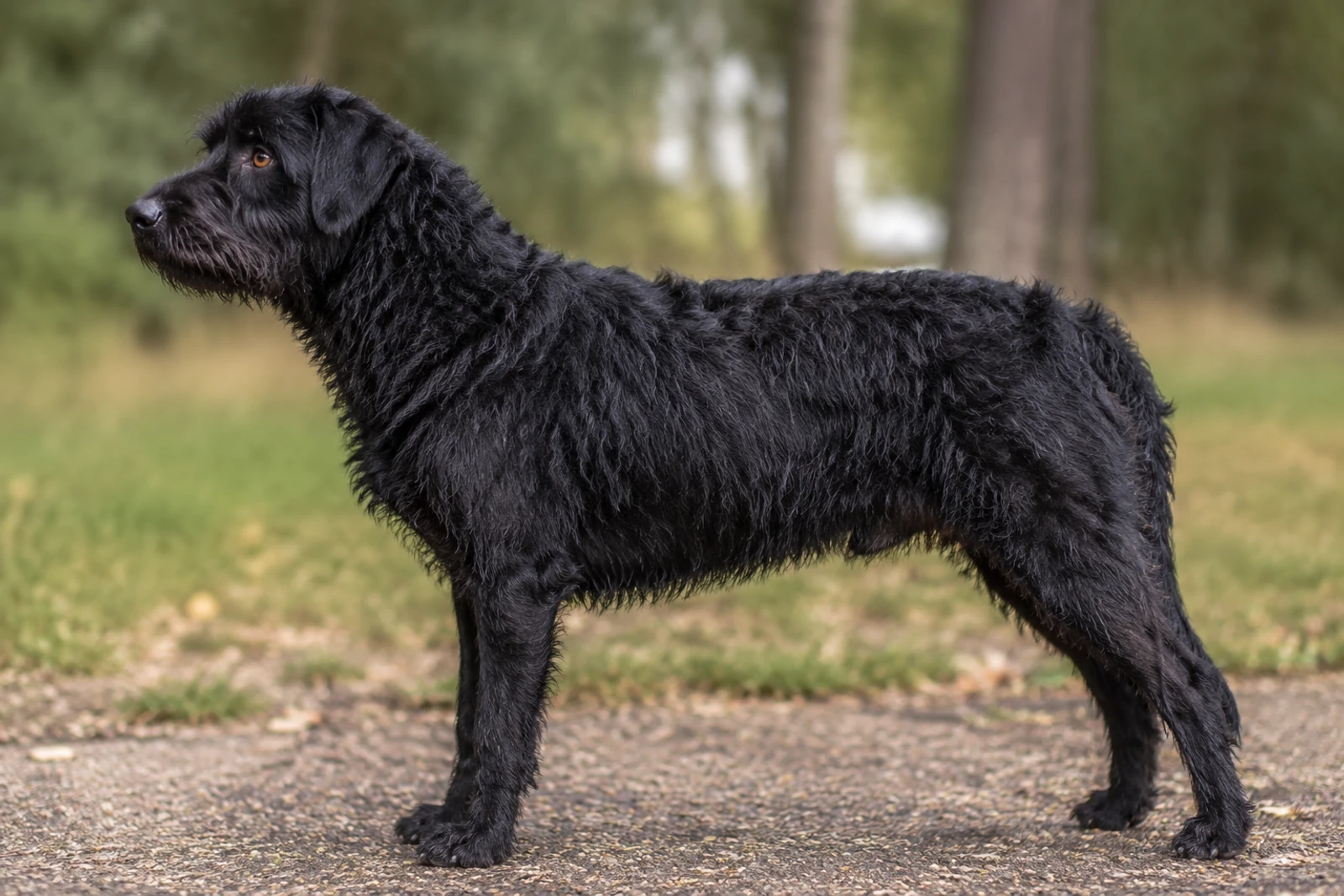
The Dutch Smoushond is a lively, friendly terrier and excellent companion for active families. Originally a rat catcher on Dutch canal barges, this medium-sized breed has a wiry yellow coat and a cheerful, affectionate nature. Intelligent and eager to please, they may be stubborn but adapt well to training. With moderate exercise and low shedding, they suit apartment living. Their good-natured temperament makes them ideal for first-time owners and children.
At a glance
- Size
- Medium
- Height
- 14–17 in
- Weight
- 20–22 lb
- Life span
- 12–15 years
- Coat colors
- Yellow
- Coat type
- Rough, wiry, medium-length double coat
- Group
- Terriers
How much does a Dutch Smoushond cost?
Adopt / rescue
$75–$400
Usually includes spay/neuter, first shots, and a microchip.
Buy from a breeder
$700–$2,000
From a reputable, health-testing breeder.
Approximate USD. Prices vary widely by region, breeder, pedigree, age, and coat colour — adopting is the lower-cost and recommended route. Avoid suspiciously cheap “breeders”; they’re often puppy mills.
Estimate the full cost of a Dutch Smoushond →Want the ongoing number? Estimate the monthly food bill for a Dutch Smoushond with our dog food cost calculator.
Dutch Smoushond photos
Views
Front, side, rear and top — the full silhouette.Poses
How the breed sits, lies, moves and plays.Puppy to senior
The breed across its whole life.Expressions
The breed’s range of moods.Close-up details
Eyes, ears, nose, paws, tail and coat.Coat colors
The breed’s recognized colors.Click any photo to enlarge. We show the Dutch Smoushond from every angle — three views, poses, life stages, expressions, close-ups, coat and colors.
Appearance & size
The Dutch Smoushond looks like a grooming experiment gone adorably wrong — a rough-and-tumble terrier whose entire face disappears behind a shaggy beard, mustache, and expressive eyebrows. He’s a medium-sized dog, but everything about his build says purposeful. At the shoulder, he stands just 14 to 17 inches tall, and his compact frame carries a solid 20 to 22 pounds with no wasted bulk.
Coat & Color
His coat is the headline act. A harsh, wiry outer layer — think weatherproof jacket, not silky fluff — covers a soft, dense undercoat. The texture feels crisp to the touch, never curly or open. Color is exclusively yellow, ranging from a pale fawn to a rich, dark straw. Many individuals sport a darker muzzle and ears, but solid self-coloring is the breed standard. The coat gives the dog a natural, unpolished edge that’s entirely deliberate. A well-kept Smoushond should never look sculpted or clipped; stripping out dead hair by hand is what keeps the jacket doing its job.
Distinctive Head & Expression
From the front, you notice the head first. It’s a rectangular, slightly rounded block with a distinct stop and a straight muzzle that’s not overly long. Dark, oval eyes peer out through a veil of wiry hair, always with a lively, mischievous glint. The eyebrows are full and arched, while the beard and mustache combine to give the face its trademark scruffy, gentlemanly charm. Ears are small, set high, and fold forward into a neat triangle; they hang close to the cheeks without being flat.
Body & Silhouette
Seen from the side, the Smoushond shows a level topline, a deep chest that reaches the elbows, and a moderate tuck-up. His body is slightly longer than tall, but he still reads as square and well-knit. Legs are straight and well-boned, ending in compact, rounded feet. The rear view reveals a muscular, well-angulated hindquarters with a high-set tail. Tradition often had the tail docked to a short stub, but many dogs today carry a natural, undocked tail that resembles a stubby carrot — it’s carried gaily and rarely hangs still.
The whole package is a dog who looks like an enthusiastic, scruffy workmate. Nothing delicate, nothing overdone. Just a sturdy little terrier in a straw-yellow suit, ready for whatever you’ve got going on.
History & origin
The Dutch Smoushond earned its keep in the horse stables and cobblestone streets of 19th-century Holland. It was the scrappy, straw-colored terrier you’d see trotting alongside a carriage or flushing rats from the hayloft. People called it a “Smous” — a nod to the beardy, whiskered face that reminded them of Jewish gentlemen in Amsterdam’s old quarter, a nickname that stuck so hard it became the breed’s formal name.
What did it do? Everything a stable dog needed to do. It hunted vermin with terrier tenacity, kept the coachman company on long, lonely drives, and acted as a living burglar alarm around the horses and tack. The dogs were common around the canals and city stables, but they weren’t the property of aristocrats. They belonged to grooms, coachmen, and small merchants who appreciated a dog that could work, then curl up in a modest flat at night. There was no grand breeding program — just a practical type that reproduced along functional lines, resulting in a rugged, medium-sized dog (eventually refined to 14–17 inches and 20–22 pounds) with a rough, yellowish coat that shed dirt and hid a fair amount of grime.
Where did that type come from? No one wrote it down, but the consensus points to yellow-and-wirehaired terrier stock that flowed through the Low Countries, possibly related to the old German Pinscher type and sharing some ancestry with the Brussels Griffon. By the late 1800s, you could spot these shaggy yellow dogs in enough Amsterdam stables that they were practically a neighborhood fixture.
Then the world changed. The automobile shoved the horse aside, stables emptied out, and the breed’s entire purpose evaporated. By World War II, the Dutch Smoushond was nearly gone. Rationing and the chaos of occupation pushed it to the edge. In the 1970s, a determined breeder named H.M. Barkman-van der Doel set out to rebuilt the breed from the handful of rough-haired yellow dogs she could still find in the countryside. She used selective crossbreeding with similar types — most notably, the Yellow Irish Schnauzer-type dogs that had lingered in farm districts — and poured decades into fixing the temperament and look. The Dutch Kennel Club officially recognized the breed in 1978, and the FCI followed later.
Today, the Dutch Smoushond is still a rare sight outside its homeland, but it has quietly secured a place as a lively, unassuming family dog. It never did make the leap to glamour breed, and that suits it just fine — it’s the same practical little terrier, minus the rats.
Temperament & personality
If you’re after a terrier-sized dog who defaults to cheerful company rather than non-stop feistiness, the Dutch Smoushond will surprise you. These 20–22 lb dogs stand just 14–17 inches tall, but they fill a room with a wiggly, good-natured energy that seems larger than their build. They form tight bonds with their people, shadowing you from room to room and leaning into any available lap once they’ve burned off the day’s steam.
That steam needs a real outlet — plan on a solid 45–60 minutes of exercise daily, split between brisk walks, backyard trots, and off-leash sniffing. A bored Smoushond left alone too long isn’t quietly patient; he’ll turn that terrier tenacity toward your baseboards or bark with the kind of high-pitched persistence that travels right through walls. If your household is gone 9–10 hours routinely, this isn’t the breed for you. They’re emotionally tuned to family rhythms and can develop genuine anxiety when isolated, which emerges as destructive chewing or near-constant vocalization.
With people they know, the Smoushond is a marshmallow — soft-mouthed, patient with respectful children, and quick to roll over for belly rubs. They’re watchful without being suspicious, and their alert bark makes them a reliable early-warning system for delivery trucks and unexpected guests. Once you welcome that visitor inside, the dog typically shifts from watchdog to party host within two minutes. Strangers aren’t a threat; they’re just friends who haven’t pet him yet.
Don’t mistake that affable streak for pushover. The Smoushond has a terrier’s core: clever, self-assured, and occasionally convinced he knows better than you. Training goes smoothest when you’re consistent but light-handed — a respectful, engaged approach gets results where force backfires. Use the fact that he wants to be with you to your advantage; a session that feels like a game keeps that independent mind from wandering.
You’ll learn to read him quickly. A loose, gently wagging body and soft eyes say he’s content; a stiff stance with a hard stare usually means a squirrel just entered his line of sight. Lip licking or a sudden yawn signals he’s getting overstimulated, and a backward lean — weight shifted toward his hind end — tells you he’d rather retreat than confront something. These dogs wear their emotions on their sleeve, which makes it easy to catch trouble before it escalates. If you want a scrappy, go-everywhere companion who’s up for a hike and then ready to melt into the couch for the evening, the Smoushond fits that rhythm beautifully — just make sure someone’s there to share most of the day’s hours with him.
Good with kids, dogs & other pets
The Dutch Smoushond’s whole job, historically, was to keep a stable free of rats and then curl up with the family at night. That dual-purpose background shows: he’s a terrier with a gentle off switch. At 20–22 pounds, he’s sturdy enough that a clumsy toddler’s hug won’t break him, and his patient, non-aggressive temperament means he rarely reacts sharply. Still, no dog is a toy. Young children need to learn when to back off — especially if the Smoushond is eating or in his crate. Supervise, and teach gentle hands from the start.
With other dogs, the Smoushond is generally amiable, especially if he’s been meeting unfamiliar pups in a positive way since puppyhood. The sensitive side of his personality shows here: a rude, body-slamming dog can make him shut down or snap defensively. Arrange early playdates with calm, vaccinated dogs you know, and keep exposing him to different sizes and play styles through adolescence. A Smoushond that missed out on early socializing — say, from a puppy mill — may carry lasting wariness. Forced greetings at the dog park often backfire. If your adult dog is fine just hanging with you and a few known friends, that’s okay. Not every dog needs to be a social butterfly.
Around cats and small pets, the terrier wiring matters. He was bred to dispatch vermin, so a scurrying hamster or a cat that bolts can trigger a chase. Plenty of Smoushonds live peacefully with indoor cats, particularly when raised together, but you’ll need to manage introductions carefully. A baby gate that lets the cat pass through but blocks the dog gives everyone time to adjust. Even then, never leave him alone with a free-roaming rabbit or guinea pig. Accept that some Smoushonds simply can’t be trusted with small prey animals — it’s not a training failure, it’s instinct.
This breed thrives on companionship and can develop separation-related barking or chewing if left alone for long stretches. He’s not a backyard dog. Provide mental enrichment (frozen Kongs, puzzle toys) and practice short departures early so he learns that being alone is temporary and safe. A Smoushond who gets daily interaction with his people — even if it’s just following you from room to room — is the one who stays sunny, not stressed.
Trainability & intelligence
Smart but with an independent terrier streak — that’s the Dutch Smoushond in a nutshell. You won’t drill this breed like a retriever who lives to please. They learn quickly when the lesson makes sense to them, and they’ll just as quickly check out if you rely on repetition or force. Harsh corrections damage trust and breed avoidance, not reliability. Instead, keep sessions short, upbeat, and heavy on positive rewards: high-value treats, a squeaky toy, a quick game of tug. Motivation, not intimidation, is what gets a Smoushond to offer the behavior you want.
Because these dogs were bred to work independently — dispatching rats in stables — recall can be a real challenge. If a scent or a scurrying critter grabs their attention, they may blow off a command they “know” perfectly at home. That means practicing recall as a high-reward game from the very start, not waiting until you’re in a distraction-heavy park. Use a long line to prevent self-reinforcement when they ignore you, and reward every check-in with something better than what they’re chasing.
Early socialization is non-negotiable. Expose your puppy to different people, dogs, sounds, and surfaces between 3 and 14 weeks, always at a pace that doesn’t overwhelm them. Smoushonds can be sensitive; a bad experience with a noisy truck or an overly assertive dog can create a fear response that lasts. Gentle, gradual introductions build the steady confidence you want in an adult dog.
- Start formal training by 8–10 weeks; focus on calm engagement and a few basics like “sit,” “touch,” and name response.
- Use food rewards, play, and calm praise — mix them up so the dog doesn’t know what’s coming.
- Keep sessions to 5–10 minutes. A bored Smoushond wanders off mentally, and then you’re just repeating commands to thin air.
- Teach a solid “leave it” and “drop it” — terrier mouths get into everything.
Skip punishment-based tools. They spike anxiety and erode the bond, and a mistrustful Smoushond won’t work with you willingly. Consistent, patient communication shapes a dog who wants to cooperate, not one who obeys out of fear. If you run into stubbornness, ask whether your reward is exciting enough or if the environment is too chaotic — not whether the dog is being “bad.” Adjust the setup, not the relationship.
Exercise & energy needs
A Dutch Smoushond isn’t a couch potato, but he’s also not a dog who needs to run for miles. Aim for 45–60 minutes of daily movement, split into two or three sessions. Two 20–30 minute walks, plus a midday play or training break, usually hit the sweet spot. This terrier is lively, curious, and built for bursts of activity rather than endurance slogs, so short, interesting outings work far better than one long march.
Mental exercise matters just as much as the walks. A bored Smoushond is a creative troublemaker—digging, barking, or reorganizing your trash. Feed his brain with scent games, puzzle toys, and short training drills. Hide a few treats around the living room, teach a new trick, or let him sniff every bush on a leisurely walk. His ratting heritage means his nose is always on duty, and a few minutes of focused sniffing can tire him out as thoroughly as a run.
- Good activities: brisk neighborhood walks, games of fetch or tug, hide-and-seek, nose work, flirt pole (low jumps only), and off-leash romps in a securely fenced yard.
- Watch out for: small prey drive. A loose Smoushond may bolt after squirrels, so off-leash time needs solid fences or a long training lead.
- Heat sensitivity: their wiry double coat provides insulation, but on hot days exercise him in the cool morning or evening.
Joint strain is rarely a headline issue for the breed, but it’s smart to protect a small, compact dog from repetitive high-impact leaping—especially during puppy growth and as joints age. Skip the agility-class A-frame and stick to ground-level movement.
If your workdays run long, a midday dog walker or a stuffed puzzle toy at lunch can keep your Smoushond content instead of wired. A tired, well-sniffed terrier is a quiet, happy housemate.
Grooming & coat care
The Dutch Smoushond wears a rough, wiry double coat that’s purpose-built to shrug off dirt and light moisture. That harsh outer layer sits over a softer undercoat, so the coat feels crisp to the touch — not plush or silky. The trade-off: dead hair tends to hang around instead of falling on your floor. Without regular attention, it tangles at the base and can form tight mats, especially behind the ears, in the armpits, and where the collar rubs.
Brushing frequency and tools
Plan to brush two to three times a week. A metal slicker brush with rounded pins works well to pull loose undercoat and tiny bits of debris from the wiry topcoat. Follow with a greyhound-style metal comb to check for hidden snarls right down to the skin. When the undercoat starts to “blow” — typically a couple of times a year — you may need to brush every other day for a week or two.
Bathing and coat texture
Bathe only when the dog is truly dirty, roughly every four to six weeks. Over-bathing softens the natural harshness that keeps the coat weather-resistant. Use a gentle dog shampoo that rinses clean; a conditioner is rarely necessary and can make the hair floppy.
Stripping vs. clipping
The wiry coat was never meant to be clipped. If you shave a Smoushond, the coat will grow back softer, lighter in color, and lose its dirt-shedding ability. Instead, many owners learn to hand-strip — plucking dead topcoat hairs by the root — or take the dog to a terrier-savvy groomer two to three times a year. Hand-stripping maintains the correct texture and rich color. Between full strips, you can pull a few dead hairs after a brushing session to keep things tidy.
Nails, ears, and teeth
- Nails: Clip or grind every three to four weeks. If you hear clicking on hard floors, they’re already too long.
- Ears: The drop ears can trap moisture. Check weekly for wax buildup or redness, and wipe the outer ear with a damp cotton ball or a vet-approved cleaner — never dig into the canal.
- Teeth: Brush with dog toothpaste a few times a week. The breed’s bearded muzzle tends to catch food particles, so pay extra attention to the area under the chin when you wipe down after meals.
Seasonal shifts
The double coat adapts to weather changes. You’ll see heavier undercoat in cold months and a noticeable shed-out in spring and fall. Increase brushing during those transitions, and go right back to twice-weekly once the bulk of loose hair is out. If your dog romps outside in wet snow or mud, a quick rinse with plain water and a thorough towel-dry usually beats a full bath — the wiry coat dries fast and sheds crud fairly well on its own.
Shedding & allergies
You won’t find drifts of fur under the couch with a Dutch Smoushond. The rough, wiry double coat holds onto dead hair much more than a typical drop-coat breed, so day-to-day shedding is genuinely low. On dark pants or the back seat of your car, you’ll see a few stray hairs, not a constant blizzard.
The catch is that this coat needs help to stay that way. Without regular hand-stripping or at least a thorough comb-out, dead undercoat builds up and eventually releases in a noticeable seasonal shed — usually spring and fall, though it’s never dramatic compared to a Lab. If you clip the coat instead of stripping, you’ll save time at the groomer but get a bit more loose hair around the house, because clipping doesn’t remove the old dead hairs from the follicle.
Drool is not part of the picture. This is an exceptionally dry-mouthed breed, so you won’t be wiping slobber off your knees or walls.
As for allergies: no dog is truly hypoallergenic, and the Smoushond is no magic exception. The wiry coat does trap dander and loose hair, which can mean less airborne allergen than a high-shedding breed, but allergens also come from saliva and skin oils. If someone in your house has dog allergies, the only real test is spending time with an adult Smoushond in a normal indoor setting — not just a quick meet-and-greet — to see how they react.
Diet & nutrition
For a 20–22 pound Dutch Smoushond, total daily calories—not cup volume—is what you actually need to watch. Most adult dogs stay fit on roughly ½ to 1 cup of high-quality dry food per day, divided into two meals, but that number shifts depending on your dog’s age, metabolism, and real exercise schedule. A Smoushond who runs hard for an hour daily will burn through more fuel than a neighborhood stroller. Use the feeding guide on the bag as a starting point, then adjust based on what you see: you want to feel ribs without seeing them, and a visible waist from above.
Feeding by age and size
Puppies under four months need four evenly spaced meals. From four to six months, drop to three meals, then settle into the adult two-meal rhythm. Introduce new foods gradually—start with lightly cooked and puréed meats, fish, fruits, and vegetables, or a premium commercial puppy formula. Raw meaty bones like chicken wings can be offered around twelve weeks, always supervised, to encourage healthy chewing and gum development. Seniors often do better with smaller, more frequent portions to keep digestion easy, especially if teeth become sensitive; puréeing meals helps nutrient absorption when chewing is a struggle.
Weight management: a real priority
This is a terrier with a reputation for enjoying its food, which means a Smoushond can pack on ounces before you notice. Extra weight on a small frame puts unnecessary strain on joints—the same joints that may already be prone to issues like patellar luxation in terrier breeds. Measure every meal, limit calorie-dense treats, and weigh your dog regularly. If the scale creeps up, cut back food by a tablespoon or two before the problem gets serious. Fast eaters benefit from puzzle bowls or food-dispensing toys. It slows them down, engages their brain, and mimics the hunt-and-search behavior they were bred for.
What and how to feed
A practical ratio for home-prepared meals is around 60% high-quality animal protein (raw or cooked), 20–30% vegetables and fruits, and 10% additions like eggs, cooked grains, or plain yogurt. Pearl barley and white rice are gentle, digestible carbohydrate sources when you want a break from standard dog food. Canned fish (packed in water, no salt) and cooked veggies make a quick, nutritious topper. Save unsalted water from steaming vegetables to use as a meal base if you run out of stock. Never feed from the table; if there are healthy leftovers, put them in the dog’s own bowl after the family finishes eating. That keeps begging from ever taking root, and it reinforces that good things happen at the dog’s station, not yours.
Health & lifespan
A healthy Dutch Smoushond typically lives 12 to 15 years, and many reach the upper end of that range with sensible daily care. These are sturdy little terriers, but like any breed, they come with a handful of inherited quirks that responsible breeders actively try to screen out.
What you’ll want to keep an eye on
- Patellar luxation: Loose kneecaps pop up in plenty of small-to-medium terriers. A breeder who tests her breeding stock through the Orthopedic Foundation for Animals (OFA) or an equivalent registry is doing the right thing.
- Eye disease: Cataracts and progressive retinal atrophy (PRA) show up in a few lines. Again, OFA eye exams by a veterinary ophthalmologist are a green flag.
- Skin trouble: That wiry, double coat can trap moisture, and seasonal allergies or hot spots aren’t rare. A quick towel-dry after a wet walk and a high-quality diet with plenty of omega fatty acids help keep the skin in good shape.
- Hip dysplasia: Not as common in a 20-pound dog, but it can still occur — especially if extra weight stresses under-developed joints.
Weight management is the thing that touches nearly all of these. A Smoushond who discovers you’re a soft touch for treats will happily pack on pounds. Those extra few pounds amplify knee strain, tax the heart, and set the stage for metabolic issues. Use a measuring cup, keep training treats tiny, and honestly assess that waistline every week.
Preventive care that pays off
- Routine vet visits — annual exams for a young dog, twice a year once your Smoushond is a senior — catch subtle shifts you might miss at home, like a minor heartbeat irregularity or early lens changes.
- Heartworm prevention is non-negotiable. Give the monthly medication during mosquito season and for one full month after the last mosquito dies off in your area. It’s cheap insurance compared to the treatment.
- Rabies vaccination is legally required everywhere in the U.S., and there’s no effective treatment once symptoms appear. Stay current.
- Dental care matters more than most people assume. Small, food-motivated terriers accumulate tartar fast. Daily brushing and a dental chew routine cut the risk of gum disease that can cascade into kidney or heart issues.
A note on nerves and environment
The Smoushond is a people-oriented terrier. Isolation or rough handling breeds anxiety, and chronic stress shows up physically — a dull coat, digestive upsets, and sometimes that classic terrier bark-fest. Early, positive socialization and a household where he feels securely part of the action are genuine health measures. Protect the dog from extreme heat; that dense coat insulates well against cold but makes him more vulnerable to overheating, so move long walks to early morning or evening in summer.
Any well-bred Smoushond can still develop a health issue. What tilts the odds in your favor is a breeder who screens for the known problems, combined with a lifetime of small, unsentimental habits: keeping the dog lean, respecting his knees by discouraging high-impact jumps, and never skipping the monthly heartworm pill.
Living environment
The Dutch Smoushond is a compact 20–22 lb terrier built to slide easily into apartment life—as long as you’re ready to deal with his two most pressing needs: daily mental workouts and a voice you can’t ignore. He doesn’t demand a yard. A few brisk walks and a couple of puzzle-toy sessions indoors can keep him happy. If you do have a fenced yard, he’ll patrol it with enthusiasm, nose to the ground, alert for any squirrel foolish enough to enter his perimeter.
His shaggy, weather-resistant coat gives him a decent buffer against chilly walks, but he’s still a small dog, so don’t leave him out in freezing weather. Heat requires more caution. Those rough double coats trap warmth fast, so during summer, stick to early-morning or late-evening strolls and keep indoor play light when temperatures climb.
Barking is the feature that can make or break apartment harmony. This breed is hardwired to announce visitors, passing dogs, and the mysterious clatter of a garbage truck with a sharp, repetitive bark. You can train a reliable “quiet” cue, but don’t expect silence—a Smoushond will always want the last word. Thin walls and sensitive neighbors might not appreciate the commentary.
Being alone for long stretches is where the breed falters. They bond hard and fast with their people, and an empty house can quickly trigger pacing, howling, or destructive chewing. A four-hour stretch is doable if you’ve built up to it with gradual alone-time practice and left a frozen Kong behind. Consistently leaving a Dutch Smoushond alone eight-plus hours, however, usually backfires. Daycare, a midday dog walker, or a work-from-home arrangement sidesteps a lot of heartache—and shredded couch cushions.
Who this breed suits
A great fit for…
The Dutch Smoushond easily settles into a surprising number of households — he’s one of the few terriers I’d hand to a first-time owner without too many caveats. He stands 14 to 17 inches and hovers around 20 to 22 pounds, a compact, sturdy build that works in an apartment just as well as a house with a small yard. If you can offer a daily routine that includes a solid 45-minute walk, a few riotous fetch sessions, and genuine companionship, he’ll thrive.
First-time owners get a cheerful, medium-energy dog who is more eager to please than his terrier cousins. He’s smart and food-motivated, so basic obedience usually clicks without excessive power struggles. You’ll still need to stay on top of his occasional stubborn streak, but he won’t run circles around you like a high-drive working breed.
Active families will find the Smoushond a patient playmate. He adores children and his 20-pound frame is robust enough for gentle roughhousing — think living room wrestling matches rather than tackle football. His beard and wiry coat add to the clownish charm, and he’ll happily join a backyard soccer game as the unofficial ball chaser. Just teach kids to give him a quiet space when he’s done, because he’s a velcro dog who can get overwhelmed without a breather.
Singles and couples who work from home or have staggered schedules are an ideal match. The Smoushond bonds deeply and wants to be part of whatever you’re doing — cooking, reading, doom-scrolling on the couch. He’s not a latchkey dog; being left alone for long, unstructured days sets off a chorus of protest barking and possibly some unboxing of sofa cushions. If someone is around most of the time, you get a devoted, whiskered shadow.
Seniors who remain mobile often click with this breed. At 20-ish pounds, he’s manageable on leash, fits easily in a smaller vehicle, and won’t haul you off your feet. His exercise needs — a couple of 20-minute sniff walks and some indoor play — pair well with a relaxed but not sedentary rhythm. The trade-off is the grooming: we’ll get to that next, but hand-stripping a few times a year can be hired out if your hands aren’t up to it.
Think twice if…
Your household is gone 8 to 10 hours straight. A Smoushond left alone that long often becomes a barking, pacing mess, and separation anxiety can slip into destructive chewing. Doggy daycare or a midday walker is non-negotiable.
You want a wash-and-wear dog. The rough, wiry double coat barely sheds, but it needs plucking or hand-stripping every 8 to 12 weeks to keep the texture and skin healthy. Between sessions, that glorious beard collects water, food, and general debris — expect to wipe it daily and comb out tangles. You’ll also be cleaning tear stains from the corners of his eyes.
You prize a silent home. He’s not a yapper by nature, but he was bred to alert stable hands to vermin, so the Smoushond will announce the mail carrier, the neighbor’s cat, and the suspicious plastic bag blowing down the street. Training can moderate it, but the instinct runs deep.
You want a running or hiking powerhouse. This is a terrier built for short bursts, not long-haul cardio. A brisk walk and some spirited play satisfy him; expect a lagging companion if you try to take him on a 10K trail run. His ideal day is more “sniff-intensive stroll with a side of zoomies” than endurance athlete.
You aren’t willing to wait — or hunt a little. The Dutch Smoushond is rare outside the Netherlands. Finding a responsible breeder almost always means a waitlist, and rescue dogs are like hen’s teeth. If you need a puppy next month, this isn’t the breed. The payoff for patience is a 12- to 15-year run with an affectionate, scrappy little character who treats every day like a new adventure.
Cost of ownership
A Dutch Smoushond puppy from a responsible breeder typically costs $1,500 to $3,000 in the US. The breed isn’t common here, so expect a wait and a thorough application process. That price usually includes initial vaccinations, microchipping, and a health exam — all things you’d pay for separately with a bargain dog.
Once you bring that 20–22 lb scruffball home, monthly upkeep lands in the $100 to $200 range, not counting surprise vet bills.
- Food ($30–$50/month): A healthy 20–22 lb adult eats about 1 to 1.5 cups of high-quality dry food per day. A $60 bag lasts six to eight weeks. Treats for training add a few bucks.
- Grooming ($40–$80 every 6–10 weeks): The rough, wiry double coat needs regular hand-stripping or a pro clip to stay tidy and weatherproof. Between appointments, a weekly brush and the occasional paw trim keep the dog comfortable and your floors less hairy.
- Veterinary care ($200–$400/year routine): Annual check-ups, core vaccines, heartworm testing, and preventatives run about $20–$35 a month averaged out. Dental cleanings under anesthesia can hit $300–$700 when they’re needed.
- Pet insurance ($30–$50/month): Medium-sized terriers can face issues like luxating patellas or hereditary eye conditions. A solid accident-and-illness policy softens the financial blow of a surprise surgery. Responsible breeders screen breeding stock for known problems, which lowers but doesn’t eliminate your risk.
- Extras ($10–$30/month): Poop bags, a sturdy harness, a couple of puzzle toys (this is a clever terrier), and the occasional dog walker or day half-day of daycare if your workday runs long.
Initial setup — crate, bed, bowls, leash, ID tag, and maybe a few training sessions — tacks on $300–$600 the first month. Rare breed, so plan on a pet budget that can absorb a pricey orthopedic issue later in life, because with a 12–15-year lifespan, you’re in it for the long haul.
Choosing a Dutch Smoushond
Breeder or Rescue?
A Dutch Smoushond is not a dog you’ll stumble across at the local shelter. The breed is still uncommon in the U.S., so most prospective owners will need to track down a responsible breeder — and brace for a waiting list. That’s a good thing. A breeder who has a waitlist isn’t pumping out puppies for quick sales.
Rescue is rare but not impossible. Check the breed’s national club and Dutch Smoushond-specific rescue networks. Sometimes an adult dog lands in a terrier rescue group, and an adult can be a perfect fit if you want to skip the puppy chaos. Just be prepared to prove you know what a terrier household looks like.
Health Testing You Should Ask For
Every breeder should happily hand over proof of health clearances on both parents — not just a vet check, but results you can look up on OFA.org. For a small terrier like this, non-negotiables include:
- Patellar luxation scored through OFA (or an equivalent orthopedic foundation). Loose kneecaps are a common small-dog headache, and a normal rating on both knees matters.
- Eye clearance from a board-certified veterinary ophthalmologist (CAER exam), ideally done within the last year before breeding.
- Hip dysplasia screening is less common in a 20–22 lb dog, but many thorough breeders still do it because dysplasia can crop up in any breed. Ask if they have OFA hip ratings.
Some breeders also screen hearts (cardiac evaluation) or test for any emerging genetic markers the parent club recommends. If the breeder brushes these off with “my dogs are healthy,” walk.
Red Flags That Should Send You Running
You’re buying a family member, not a toaster. If you see any of these, move on without guilt:
- The breeder won’t let you meet at least the dam and see where the puppies are raised. A clean, home-like setup shows the pups have been handled and exposed to everyday life.
- Puppies go home before 8 weeks. Terrier pups need every day of that time to learn bite inhibition and doggy manners.
- Multiple litters are available at once, or the breeder always “has puppies.” Hobby breeders who prioritize health usually produce one or two litters a year, tops.
- You don’t get asked a single question about your lifestyle, yard, or experience with terriers. A breeder who doesn’t screen you doesn’t care where the puppy lands.
- They push a specific puppy on you before you’ve described what you’re looking for.
- No health guarantee, no contract, no promise to take the dog back for any reason.
Picking a Puppy That Fits Your Life
A well-bred Dutch Smoushond puppy is busy, friendly, and cheerful — not shy or cowering. When you visit, sit on the floor and watch. You want the puppy who trots over to investigate your shoelaces, not the one hiding under the whelping box. A little terrier sass is normal and actually part of the charm, but avoid a pup who freezes, flinches, or snarls when picked up gently.
Let the breeder guide you. They’ve watched these puppies for eight weeks and can tell you which one is the independent explorer, which one wants to be in your lap, and which one might be too much dog for a first-time terrier owner. Trust their notes over a cute face. And if a rescue dog is an option, you’ll skip the guesswork entirely — you’ll get a temperament that’s already an open book.
Pros & cons
-
Good-natured with respectful kids — patient, steady, and happy to join the living room ruckus without getting snappy.
-
Low-shedding wire coat — a bonus for tidy homes and people with mild allergies, though no dog is completely allergen-free.
-
Compact and surprisingly sturdy — 20–22 lb of muscle that will happily trot beside you on a hike or curl up in an apartment if given enough daily exercise.
-
Alert without being shrill — a reliable doorbell that announces strangers, but settles back down once you’ve taken over.
-
A 12–15 year sidekick — with good care and responsible breeding, you get a long stretch of companionship.
-
Coat care is non-negotiable — this wiry jacket needs hand-stripping two or three times a year; clipping ruins the weatherproof texture and turns the warm straw color into a dull, soft fuzz, so you’ll need a groomer who knows terrier coats.
-
Terrier prey drive runs deep — squirrels, cats, and small flappy things hijack the brain. Reliable off-leash recall takes real work, not just a six-week puppy class.
-
Boredom sparks noise and destruction — a Smoushond left without a solid 45–60 minutes of exercise and a puzzle toy will redecorate your baseboards and serenade the neighbors.
-
Can be pushy with other dogs — especially same-sex pairs; early, ongoing socialization isn’t a box to tick, it’s a way of life.
-
Hard to find and pricey — buying from a health-testing breeder (eyes, patellas) usually means a waitlist, and skimping there can land you with a poorly bred dog and some tough vet bills.
Similar breeds & alternatives
If the Dutch Smoushond’s rarity in the US gives you pause, the Miniature Schnauzer is the most visually comparable alternative. Both sport a wiry, weather-resistant coat, bristly eyebrows, and a solid 12–15 year lifespan. But where the Smoushond tops out around 22 pounds and 17 inches with a calm, almost Golden Retriever-like patience, a Miniature Schnauzer is often smaller (typically 11–20 pounds, 12–14 inches) and dials up the alertness. That means a more vocal watchdog and a dog that needs firmer, consistent handling to keep bossy tendencies in check. Schnauzer coats, especially if you hand-strip, can be higher maintenance; both breeds need weekly brushing and occasional clipping.
A nearby choice with a softer temperament is the Border Terrier. These 11.5–15.5-pound dogs share the same otter-like head shape and affectionate, people-oriented nature. The key difference lives in drive. A Smoushond was bred to patrol stables and dispatch rats; a Border Terrier was built to bolt fox from dens, so expect sharper instincts and more exercise demands. A Smoushond is happy with a long daily walk and some play, while a Border Terrier often needs a solid 45–60 minutes of off-leash running plus mental puzzles to stay sensible.
For someone drawn purely to the Smoushond’s size and scruffy look, the Affenpinscher is a smaller, feistier cousin. At 7–13 pounds, they pack terrier sass into a toy frame and can be more stubborn with house training. But if a lower-key, 20-pound dog that gets along with kids, cats, and other dogs without a fuss sounds like your household, the Smoushond itself—if you can find one—fills that slot better than any substitute.
Fun facts
- Originally bred to catch rats on Dutch canal barges and in stables.
- Once nearly extinct after WWII, the breed was revived in the 1970s.
- Its harsh, wiry coat requires hand-stripping rather than clipping.
- The Dutch Smoushond comes in every shade of yellow, from light cream to dark red-gold.
Frequently asked questions
- Are Dutch Smoushonds good with children?
- Dutch Smoushonds tend to be affectionate and playful, making them good companions for families with children. They usually enjoy interactive games and can be patient, but early socialization and supervision are recommended to ensure positive interactions, as with any breed.
- Do Dutch Smoushonds shed a lot?
- Dutch Smoushonds have a wiry, double coat that sheds very little, which can be ideal for owners concerned about loose hair. Regular brushing and occasional hand-stripping help maintain the coat's texture and minimize any shedding.
- How much exercise does a Dutch Smoushond need?
- A daily moderate exercise routine of about 30 to 60 minutes typically satisfies a Dutch Smoushond. They enjoy brisk walks, playtime, and mental challenges, but they are not overly demanding and can adapt to their owner's activity level if given consistent opportunities to move.
- Is the Dutch Smoushond suitable for apartment living?
- The Dutch Smoushond can adapt well to apartment living if given sufficient daily exercise and mental stimulation. Their moderate size and relatively calm indoor demeanor make them a feasible choice, though they may need thoughtful management to prevent nuisance barking.
- Are Dutch Smoushonds easy to train for first-time owners?
- Dutch Smoushonds are intelligent and eager to please, which can make training straightforward for first-time owners who use positive reinforcement methods. However, they may have a terrier-independent streak, so consistency and patience are important to maintain focus.
- Do Dutch Smoushonds bark a lot?
- Dutch Smoushonds can be alert barkers, often vocalizing to announce visitors or unusual sounds. With proper training and socialization, excessive barking can usually be managed, but they may not be the quietest breed in all environments.
Tools & calculators for Dutch Smoushond owners
Quick estimates tailored to Dutch Smoushonds — pre-filled with this breed’s size where it matters.
Articles & stories about the Dutch Smoushond
Sources & standards
This profile follows recognized breed standards from the American Kennel Club (AKC) and the Fédération Cynologique Internationale (FCI), along with established veterinary and breed-club guidance. These describe general breed tendencies — every dog is an individual.