

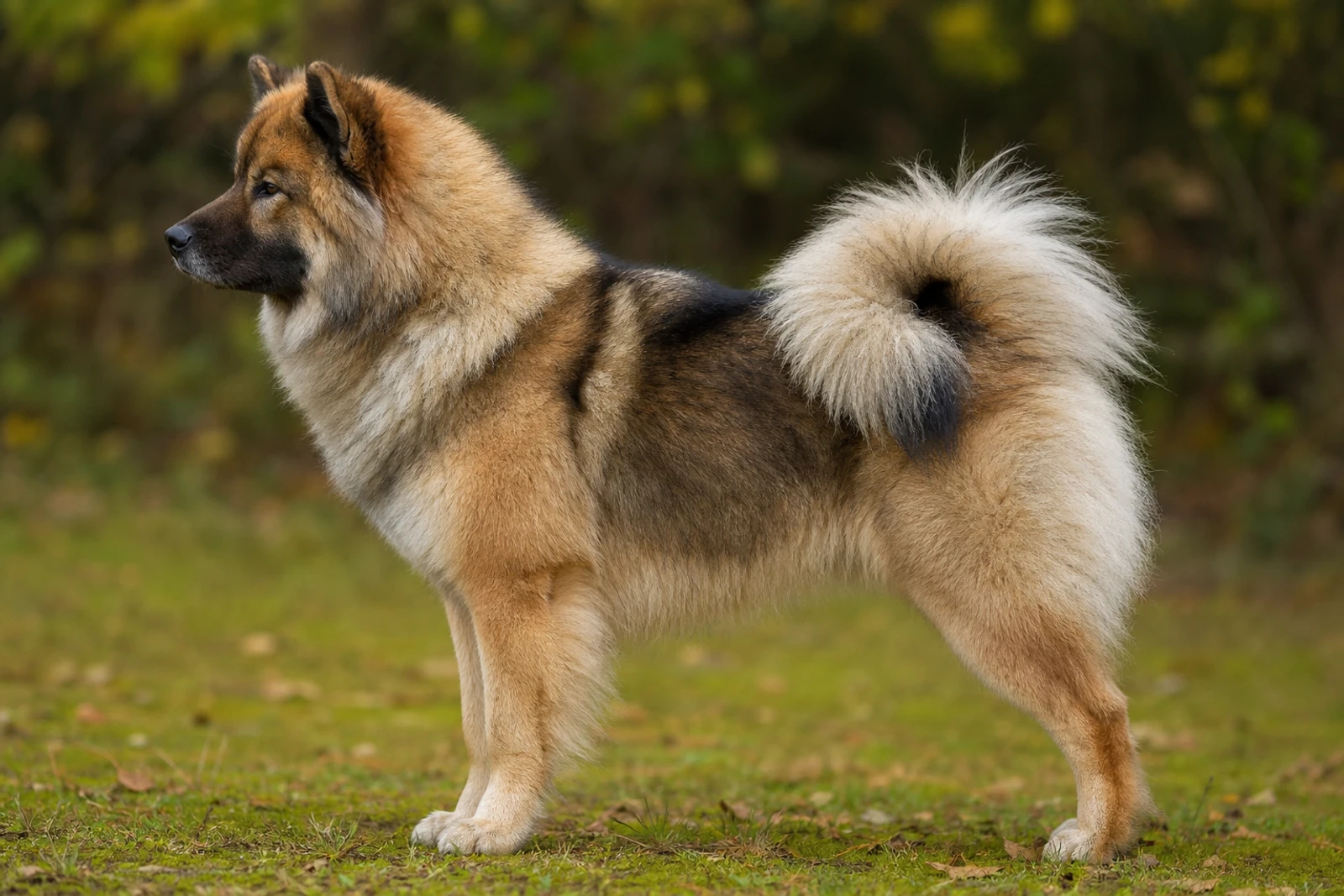
The Eurasier is a calm, affectionate, and loyal companion, ideally suited to active families or singles seeking a devoted shadow with a dignified air. This medium-large spitz-type breed thrives on close human contact, making it an excellent house dog, provided it receives daily walks and mental stimulation. With a reserved nature towards strangers but deep bonds with its people, the Eurasier does best with experienced owners who appreciate its sensitive, independent streak. Not ideal for prolonged isolation, this breed rewards consistent, positive training with unwavering devotion, fitting well into homes with older children and other dogs.
At a glance
- Size
- Large
- Height
- 19–24 in
- Weight
- 40–71 lb
- Life span
- 12 years
- Coat colors
- Fawn, Red, Wolf-Gray, Black, Black and Tan
- Coat type
- Medium-length double coat
How much does a Eurasier cost?
Adopt / rescue
$75–$400
Usually includes spay/neuter, first shots, and a microchip.
Buy from a breeder
$700–$2,000
From a reputable, health-testing breeder.
Approximate USD. Prices vary widely by region, breeder, pedigree, age, and coat colour — adopting is the lower-cost and recommended route. Avoid suspiciously cheap “breeders”; they’re often puppy mills.
Estimate the full cost of a Eurasier →Want the ongoing number? Estimate the monthly food bill for a Eurasier with our dog food cost calculator.
Eurasier photos
Views
Front, side, rear and top — the full silhouette.Poses
How the breed sits, lies, moves and plays.Puppy to senior
The breed across its whole life.Expressions
The breed’s range of moods.Close-up details
Eyes, ears, nose, paws, tail and coat.Coat colors
The breed’s recognized colors.Click any photo to enlarge. We show the Eurasier from every angle — three views, poses, life stages, expressions, close-ups, coat and colors.
Appearance & size
What you notice first is a dog without exaggeration. No pushed-in face, no towering bulk, no feathery cascade — just a balanced frame 19 to 24 inches at the shoulder and a body that usually settles between 40 and 71 pounds. That weight range is broad because females often tip toward the lighter end while males can fill out substantially, especially across the chest and neck.
From the front, the Eurasier reads as an alert, medium-boned spitz. Erect, triangular ears sit well apart and always seem to be catching sound before you do. The eyes are almond-shaped, dark for preference, and set at a slight slant that gives the face a calm, watchful expression. A medium-length wedge-shaped muzzle tapers cleanly from a flat forehead without any abrupt stop. The tongue can be solid pink, but don’t be surprised to see blue-black spots or a wholly blue tongue — a remnant of Chow Chow ancestry that still crops up in the breed.
Move to the side and the dog’s proportions come clear. The body is slightly longer than the height at the withers, which gives a rectangular outline that stays athletic, not stocky. The back is straight and firm, the loin well-muscled, and the ribs lightly sprung so the chest is deep but never barrel-shaped. Forelegs stand straight and parallel; hindquarters show moderate angulation — enough for an easy, ground-covering trot, not a showy rear push. The tail is a defining feature: thick at the base, carried in a loose sickle or a soft curl over the back, never tight or double-rolled.
From the rear, the hind legs are straight when viewed from behind, with pads firmly on the ground. There’s no cow-hocking or narrow stance — just a clean, functional build that says endurance more than speed.
The coat is a pure working double coat, not a silky ornament. Stand-off guard hairs grow about two to three inches long over the body, shorter on the face and fronts of the legs, and form a modest ruff around the neck and a slight feathering on the backs of the forelegs, haunches, and tail. The undercoat is dense and woolly, which is what traps heat when temperatures drop. Colors span the wolf spectrum — wolf sable, black, black-and-tan, red, fawn — plus solid creams and any shade of gray. White patches are a fault according to the breed standard, so responsible breeders select for solid or shaded coloring. Even in a heavy coat, the Eurasier still looks like an agile dog, not a puffy cushion. You can see the outline of ribs and muscle underneath the fluff, proof that this is a breed still built for active life on cold terrain.
History & origin
The Eurasier is a modern companion breed, deliberately created in Germany during the 1960s and 1970s by a single dedicated breeder, Julius Wipfel. He wanted a calm, adaptable family dog that retained the northern spitz look — thick coat, curled tail, erect ears — without the intense guarding drive of some spitz types. His starting point was a cross between a Chow Chow male and a Wolfspitz (the breed we call the Keeshond in the US). The resulting dogs were originally referred to as “Wolf-Chow.”
Wipfel’s early dogs had the appearance and pack loyalty he valued, but he soon realized they needed a lighter, more sociable temperament to fully fit into modern family life. In 1972, he introduced a Samoyed into the gene pool, refining the breed’s open, approachable nature. This careful three-way foundation — Chow Chow, Wolfspitz, and Samoyed — gave the Eurasier its stable, even-keeled personality and its name, which reflects the blend of European and Asian spitz ancestry.
The breed was established with a clear goal from the start: a non-hunting, non-guarding companion whose primary job was to be a devoted household member. Wipfel and early breeders selected rigorously for sound nerves, low aggression, and a quiet, watchful manner rather than working drive. The Fédération Cynologique Internationale (FCI) granted full recognition in 1973, and the breed began a slow, steady spread through Europe.
The Eurasier arrived in North America much later, gaining a small but loyal following in the late 1990s and early 2000s. It joined the AKC’s Foundation Stock Service in 2010 and eventually earned full recognition in 2022 as a member of the Working Group. Even today, Eurasiers remain a relatively uncommon breed, kept largely within a network of conscientious breeders who closely guard temperament and health. That deliberate breeding pace means this is still a dog you are more likely to learn about through word of mouth than to spot at a busy dog park.
Temperament & personality
The Eurasier’s personality is built around a quiet, steady devotion. They don’t shower you with frantic affection; instead, they settle into your life like a calm presence that’s always near, always aware. With strangers, most are reserved — not aggressive, just watchful and unhurried to trust. With their own family, though, they’re warm, gentle, and surprisingly attuned to moods. That watchfulness rarely turns into nuisance barking. A low woof when someone’s at the door is about as dramatic as it gets.
They bond deeply with everyone in the household, not just one person. That makes them a true family dog, but it also means isolation hits hard. A Eurasier left alone while the family’s gone for long stretches can develop anxiety-driven habits — pacing, chewing, or barking — simply because their people are their world. They do best in a home where someone is around most of the day, or at least comes home around lunchtime. Expect to provide about an hour of exercise daily, split into a couple of walks plus some backyard roaming. They’re not high-octane athletes, but a bored Eurasier is an unhappy one, and that clever mind will turn to creative trouble (think cabinet doors and unattended shoes).
At 40 to 71 pounds and standing up to 24 inches at the shoulder, they’re substantial enough to handle an active family while staying light on their feet. Their thick coat suggests a burly powerhouse, but you’ll quickly discover a dog that moves with balance and grace. Training calls for a soft, patient hand. Eurasiers are smart and independent, which means harsh corrections or endless drills fall flat. They’ll cooperate willingly with positive reinforcement and a consistent routine, but the real motivator is the relationship you’ve earned. When a Eurasier trusts you, they’ll try hard to please — no force required.
A common quirk: many Eurasiers follow you from room to room, not out of neediness, but because they want to keep tabs on the action. It’s a quiet companionship, not a demanding one. You can expect about 12 years with this steadfast shadow. Early socialization makes a big difference, too. Exposing a puppy to different people, places, and everyday sounds ensures that natural reserve doesn’t curdle into shyness. A well-socialized Eurasier grows into a confident, unflappable adult who handles life with a calm dignity — exactly the kind of dog that becomes the gentle constant in a busy household.
Good with kids, dogs & other pets
Children
Eurasiers have a patient, non-aggressive nature that makes them a natural fit for families, but that 40–71 lb body means accidents happen purely from size. A happy tail wag at toddler eye level or an enthusiastic lean can knock a small child over, so active supervision is mandatory until kids are steady on their feet. These dogs bond intensely with their people and often shadow their favorite small humans, which is wonderful — but it also means they absorb household moods. Harsh voices or chaotic roughhousing can make a sensitive Eurasier shut down, so teach children to interact gently and respect the dog’s quiet moments. Also worth knowing: a Eurasier that’s left alone for long stretches while the family is away may develop separation distress, which is not something to risk when kids are part of the equation. This is a breed that thrives on companionship, not backyard isolation.
Other dogs
Your Eurasier isn’t likely to start a fight, but he’s also not going to be the life of the dog park without the right foundation. These are reserved, thoughtful dogs, not lab-level social butterflies. Early puppy socialization — that critical window from about 3 to 14 weeks — is what separates a Eurasier who views strange dogs with calm curiosity from one who reacts with fear or aloofness. After that sensitive period, forcing an adult dog to “make friends” usually backfires, piling on stress and potentially triggering defensive snapping. If you adopt an older Eurasier who’s content with just his own family, accept that. He doesn’t need a packed social calendar. For a puppy, though, regular, positive exposures to calm, well-mannered dogs, in controlled settings, lay the groundwork for a dog who can walk past others without drama.
Smaller pets
The Eurasier was developed as a companion, not a hunting dog, so the prey drive isn’t hardwired the way it is in some spitz breeds. Many live peacefully with cats and even small animals — if they’re raised together from puppyhood. A well-socialized Eurasier who grows up with a cat will often treat it as part of the pack. Without that early experience, the story changes. A fleeing squirrel or a neighbor’s outdoor rabbit may trigger a chase, and a fast-moving small pet inside the home can do the same. Introduce any small animal gradually, with the dog on a leash and plenty of high-value rewards for calm behavior. Never leave them unsupervised until you’ve watched long-term, relaxed coexistence play out over weeks, not days. And if your adult Eurasier has never lived with pocket pets, assume he’ll view them as something to pursue, not befriend.
Trainability & intelligence
If you've ever loved a spitz breed, you already know the pattern: a razor-sharp mind wrapped in an independent streak that can look a lot like stubbornness. The Eurasier is no exception. These dogs learn fast — sometimes after seeing you do something once — but they'll also decide whether they feel like acting on that knowledge right now. That isn't disobedience; it's a dog who evolved to think for itself, not to hang on your every word like a retriever. So you work with the brain, not against it.
What works (and what backfires) Reward-based training with food, play, or quiet praise is the only road in. Eurasiers shut down under punishment, raised voices, or even a disappointed tone — they're sensitive to the core. If you damage trust, you'll spend weeks getting it back. Consistency wins, but it has to be patient, low-key consistency, not drill-sergeant repetition. Keep sessions short, clear, and upbeat. When the dog figures something out, reward immediately and move on; they bore easily with repetition.
The recall question Recall is where that independent streak shows up hardest. Off-leash reliability doesn't come gift-wrapped. You'll need to build it step by step, starting in a boring backyard at 8–10 weeks old, rewarding every time the puppy checks in voluntarily. Use a long line later and practice in progressively more distracting places. Even then, some Eurasiers never become 100% off-leash reliable around wildlife or other dogs. Accepting that early prevents frustration — and a lost dog.
Socialization: a non-negotiable foundation Eurasiers are naturally reserved with strangers, and poor socialization turns that reserve into fear-based reactivity. The critical window is 3–14 weeks. Expose your puppy to different people (ages, ethnicities, hats, wheelchairs), surfaces, city sounds, calm dogs, and handled by a vet before 16 weeks. Keep every experience positive — a scared puppy here can become a reactive adult who barks and backs away from anyone new. For the first year, continue taking the dog to new places weekly while reading body language and never forcing interaction. This early work isn't optional; it's what separates a confident companion from a lifetime of management.
Exercise & energy needs
Plan on giving an adult Eurasier about 60 minutes of real movement every day, split into at least two sessions. The breed isn’t a hyperactive marathon runner, but undershooting that baseline often turns a calm companion into a restless barker or a dog that makes its own entertainment by digging or chewing.
A typical routine lands somewhere around two 30-minute walks, plus a romp or training game. A brisk morning walk before the day heats up, then a longer sniffy stroll or off-leash hike in the evening, fits their moderate, steady energy. They’re solid, medium-to-large dogs (40–71 lb), built more for endurance than all-out sprinting, so steady trotting, hill work, and exploring trails work far better than short, hard bursts on pavement. If you jog with your dog, wait until growth plates have fully closed — usually around 18 months — and build distance gradually to protect developing joints.
Mental exercise matters just as much as physical. Eurasiers were shaped from spitz-type stock and still carry a thinking dog’s need for a job. Puzzle toys, hide-and-seek with treats, or 10-minute nose-work sessions in the yard tap into that brainpower and leave them pleasantly tired. Trick training with positive reinforcement also doubles as bonding time, and many take well to low-impact sports like rally obedience, barn hunt, or agility with jump heights kept reasonable.
- Stick to multiple shorter sessions rather than one marathon outing; it matches their steady temperament and reduces the risk of boredom in between.
- Avoid high-impact, repetitive jumping on hard surfaces, especially before maturity, to protect hips and elbows. Responsible breeders screen for dysplasia, but smart management still helps.
- A rain-shortened day doesn’t have to be a disaster. A 20-minute indoor scent game — hiding kibble under boxes or teaching a new trick — burns surprising mental energy and keeps a Eurasier from staring at you with that “I’m underemployed” look.
A tired Eurasier is an easygoing family member. Consistently hitting that hour of combined physical and mental activity keeps the breed’s natural reserve from slipping into standoffish anxiety, and you’ll enjoy the quiet, steady presence that makes them so good in the home.
Grooming & coat care
The Eurasier’s double coat is thick, medium-length, and surprisingly clean for a dog that sheds a lot. It’s built to insulate, which means you’ll deal with moderate shedding year-round and a full-blown undercoat blowout twice a year. The key to staying ahead: brush smarter, not harder.
Brushing tools and frequency
Most weeks, three to four brushings keep things in check. Use a pin brush with rounded tips to glide through the outer guard hairs without scratching the skin, then run a fine-toothed metal comb behind the ears, under the tail, and along the backs of the thighs—spots mats love to sneak in. When seasonal shedding ramps up, switch to a slicker brush or undercoat rake daily. You’ll pull out loose fluff by the handful, but it’s far less than what would otherwise end up on your sofa.
- Pin brush or slicker brush for regular detangling
- Undercoat rake for heavy shedding periods
- Greyhound-style comb for feathering and tight areas
Bathing and drying
A Eurasier is naturally fastidious and doesn’t carry a strong doggy odor, so bathe him only when he’s truly dirty—a few times a year, tops. Over-bathing strips the coat’s weatherproofing oils. When you do bathe him, use a gentle dog shampoo and, critically, dry him down to the skin. A damp undercoat invites irritation. A high-velocity pet dryer works wonders for blowing out dead coat, but towel-drying and a warm, draft-free room also work if you’re patient.
Nails, ears, and teeth
- Nails: Trim every three to four weeks, or right when you hear clicking on hard floors.
- Ears: Check those drop ears weekly. A quick swipe with a vet-approved cleaner removes wax and prevents buildup—no deeper digging.
- Teeth: Daily tooth brushing with dog-formulated paste is your best defense against tartar and gum disease.
Seasonal coat blowouts
Twice a year, expect an avalanche of fluff that can last two to three weeks. During these windows, daily brushing with an undercoat rake is non-negotiable. A warm bath followed by a forced-air dryer can loosen the undercoat dramatically, cutting the shedding period shorter. Resist the urge to shave him—a double coat regulates heat and cold, and once clipped, it may never grow back with its original texture. If you embrace the ritual for those intense weeks, the rest of the year feels almost effortless.
Shedding & allergies
If you’re looking for a dog that won’t leave fur everywhere, the Eurasier isn’t it. These dogs have a dense double coat—a straight, medium-long outer layer and a thick, woolly undercoat—that sheds moderately all year and heavily during seasonal blowouts twice a year. When a Eurasier blows coat, you’ll pull out tufts of undercoat the size of cotton balls, and loose fur collects in every corner of your home. A good vacuum becomes a daily essential during peak shed, and you’ll need to brush the coat thoroughly several times a week—often daily in spring and fall—just to keep up with the fluff.
Drool is minimal, so wet messes aren’t the issue. The real challenge is the sheer amount of airborne and embedded fur. No dog is hypoallergenic, and Eurasiers produce plenty of dander that clings to all that shed hair. If someone in your household has allergies, this breed will likely trigger them—the thick spitz coat releases allergens year-round and amplifies them during blowouts. Even if you’re not allergic, the volume of fur can become a real nuisance without constant grooming and cleaning. If allergies are a dealbreaker, pick a breed with hair, not fur.
Diet & nutrition
Eurasiers rarely say no to food, so the biggest nutrition mistake is simply feeding too much. A lean, healthy adult does best on two measured meals a day — no free-feeding. Start with the feeding guide on your kibble bag, then tune amounts to your dog’s build. For a 50‑pound dog that gets a solid hour of daily exercise, that might mean about 2½ to 3 cups of high-quality dry food split across morning and evening. If your Eurasier is more couch potato than hiking buddy, dial it back a little to avoid piling on extra weight.
Feeding amounts by age
Puppies need four small, evenly spaced meals until four months old, then three meals until six months. By then, you can shift to the adult two-meal rhythm. Use a high-quality large-breed puppy formula or make the switch to a balanced homemade diet gradually — start with lightly cooked, puréed meats, fish, fruits, and vegetables over the course of a week so tiny guts don’t rebel. Raw chicken wings can be introduced around twelve weeks under your direct supervision, but always size them appropriately for the dog’s mouth.
Senior Eurasiers often slow down without you noticing. If they still clean the bowl but start getting soft around the middle, cut portions back by about 10% and consider splitting the daily ration into three smaller meals to keep digestion comfortable. There’s no reason to reduce protein unless your vet directs it — older dogs need it for muscle maintenance.
Keeping the waistline in check
This is a large breed, and even an extra five pounds puts unnecessary stress on joints and the spine. Run your hands along the ribcage every couple of weeks. You want to feel ribs under a light blanket of flesh, not a padded coating. If you can’t find them, reduce the next few meals and bump up exercise. Eurasiers are smart enough to act starved when they aren’t, so don’t be fooled by the sad eyes.
Use a puzzle bowl or scatter kibble in a snuffle mat if your dog inhales food in thirty seconds. It forces slower eating and provides a little mental workout. For training treats, factor those calories into the daily total. Tiny pea-sized pieces of lean meat or vegetable work fine — you don’t need a whole biscuit to reward a sit.
What to put in the bowl
A diet built around animal protein suits their digestive design. Aim for roughly 60% meat (cooked or raw as you’re comfortable), 20–30% puréed or finely processed fruits and vegetables, and the remaining 10% from eggs, plain yogurt, or cooked grains like pearl barley or white rice. Puréeing or blending the plant matter breaks down cell walls and makes nutrients absorbable, since dogs lack those flat molars and salivary enzymes for grinding. If you cook extra grains, vegetables, or proteins in batches, you’ll have a quick meal foundation on hand.
Skip rich holiday leftovers — fatty meats and buttery sides can trigger pancreatitis. If you do share a little unseasoned cooked vegetable or poached fish, place it in his regular bowl after you’ve finished eating. That one habit prevents a lifetime of begging at the table and keeps the calorie math honest.
Health & lifespan
Eurasiers typically live about 12 years, and many stay active and engaged well into their senior years. They’re a fairly robust breed, but a few inherited conditions crop up often enough that responsible breeders screen closely and you’ll want to stay ahead of them with your vet.
The biggest orthopedic concerns are hip dysplasia and elbow dysplasia, both of which can be exacerbated by carrying extra weight. Keep your dog lean — you should feel ribs with a light touch, not a hard press — especially since a fit Eurasier weighs anywhere from 40 to 71 pounds. Patellar luxation (a kneecap that slips out of place) also appears, and a young dog that occasionally skips a step or kicks a leg out may be showing an early sign. Reputable breeders run OFA or PennHIP evaluations on hips and elbows and have a vet certify knees before breeding.
Eye health gets attention, too. Distichiasis — extra eyelashes growing where they rub the eye — isn’t rare, and left untreated it causes chronic irritation. Some lines also carry a risk for progressive retinal atrophy. Breeders who take this seriously screen annually with a canine ophthalmologist and can show you CERF or OFA eye exam results.
Autoimmune thyroiditis is another one to watch. It can sneak up in middle age with subtle signs: unexplained weight gain, coat changes, or a drop in energy you might write off as “slowing down.” Annual wellness bloodwork catches it early, and daily medication keeps it manageable.
The Eurasier’s dense double coat handles cold beautifully, but heat is a different story. Don’t leave one outside in summer for long, and time walks for morning or evening. It’s also a breed that needs early positive handling — gentle from day one — because stress eats into long-term health in real ways. A Eurasier that isn’t regularly touched and socialized as a pup can become anxious, which ripples into everything from digestive upset to fear-based reactivity.
On the routine-care side, stay current on rabies vaccination (required by law), and give a monthly heartworm preventive during mosquito season and for one month after it ends. Dental care — brushing a few times a week — does more for quality-of-life years than people realize. And because this is a spitz breed with a strong food drive, portion control is non-negotiable; eyeballing the kibble bag won’t cut it.
Living environment
A Eurasier settles into almost any home as long as his family is close by. He’s a large, 40–71 lb dog with a calm indoor presence, but his deep bond with his people shapes every housing decision.
An apartment works surprisingly well. Eurasiers are famously quiet — an alert bark when someone’s at the door is typical, then silence. They’re not nuisance barkers and have a clean, cat-like approach to grooming themselves. The trade-off: you’ll need to provide two daily outings totaling about an hour, mixing a brisk walk with a chance to sniff and explore. A couple of 30-minute sessions often satisfy him better than one long march. Inside, puzzle toys and short scent games keep his mind busy without rattling the neighbors.
A fenced yard is a bonus, not a must. He won’t patrol the perimeter obsessively or dig massive craters, but he’ll enjoy a safe spot to lounge in cool weather and watch the world. Driven by companionship, not a desire to roam, most Eurasiers stay near you anyway.
Climate matters. A dense double coat means he thrives in cold and snow. In summer, limit exercise to early mornings or evenings; watch for overheating and keep walks low-key. This isn’t a dog you jog with on a hot afternoon.
The real test is time alone. Eurasiers lean hard toward their family and can develop distress if left by themselves for long workdays. You’ll often see whining, pacing, or destructive chewing. If your schedule demands all-day absences, start gradual alone-time training early and supply puzzle feeders and frozen Kongs. Even so, this breed does best in a household where someone is around more often than not. A midday dog walker or a pet-friendly office setup goes a long way toward keeping him steady and content.
Who this breed suits
The Eurasier is built for someone who wants a quiet shadow, not a party guest. This breed settles into the rhythm of your household and bonds so deeply that being left alone feels like a betrayal. If you work from home, are retired, or have a family where one person is usually around, you’re the picture of an ideal Eurasier owner.
First-time dog guardians can absolutely succeed here — but only if you understand that a Eurasier’s feelings matter as much as the rules. They shut down under harsh corrections or drill-sergeant training. You’ll get the best results with patience, clear routine, and a gentle hand, because this dog reads your tone and body language like a novel. They thrive on calm, predictable homes and a yard they can wander. Apartment living works if you meet their need for a couple of 30-to-45-minute walks daily and you don’t expect them to be a social butterfly in the hallway.
Families with kids get a steady, affectionate companion. A Eurasier will lean against a child rather than knock them over, but early supervision is still smart — a 40-to-71-pound dog can accidentally bowl over a toddler during a burst of zoomies. For active singles or couples, the breed tags along happily on hikes or long sniffy walks, yet you’ll never be dragging a hyper dog off the walls. A good outing plus mental puzzles is plenty. Seniors appreciate the indoor calm and the moderate exercise requirement, but the double coat’s grooming load is real. You’ll see drifts of fur twice a year when they blow coat, and weekly brushing is non-negotiable if you want carpets, not tumbleweeds.
Now, who should think twice. If you’re out of the house for eight-plus hours a day, a Eurasier isn’t your dog. This breed can tip into severe separation anxiety, leading to howling, destruction, or house-soiling that stems from panic, not spite. You’ll also want to cross them off your list if you crave a gregarious dog who loves every stranger at the door. Eurasiers are famously reserved; they’ll hold back, watch, and maybe accept a polite scratch, but they won’t smother your guests. That same dignified restraint frustrates people who dream of a bombproof off-leash retriever or an obedience-ring star. The Eurasier thinks independently and may simply decide the third “sit” isn’t worth the biscuit. And if shedding is a dealbreaker, move along — this is a full-coat spitz that marks furniture and black pants with equal abandon. Expect a 12-year commitment to a dog that will love you quietly but completely, and only if you’re there to receive it.
Cost of ownership
Buying a Eurasier puppy from a responsible breeder typically runs between $1,800 and $3,000 in the United States. Because the breed is still uncommon, expect to join a waiting list, sometimes for a year or more. That price should include age-appropriate vaccinations, a health guarantee, and proof that the parents have been screened for hip dysplasia, elbow dysplasia, patellar luxation, and thyroid or eye issues — all things Eurasiers can be prone to. You’re paying for a genetically sound dog from a breeder who won’t cut corners.
Monthly upkeep lands in the $150 to $250 range, depending on where you live and how much you outsource.
- Food: A high-quality kibble for a 40–71 lb dog runs $50 to $80 a month. This breed does well on moderate protein and fat; overfeeding leads to extra weight on those large joints.
- Grooming: That plush double coat needs thorough brushing several times a week, plus a full comb-out when they blow coat. A professional session every 6 to 8 weeks costs $70 to $100 per visit, or $30 to $50 monthly if you budget for it. Many owners invest in a good slicker brush and undercoat rake and do most of it at home.
- Vet and prevention: Routine checkups, vaccines, and year-round flea, tick, and heartworm prevention average $25 to $45 a month. A 12-year lifespan means you’ll face at least a few age-related bills in the later years.
- Pet insurance: For a large purebred dog, a proper accident-and-illness policy runs $35 to $60 monthly. It softens the sting of the breed’s possible orthopedic or thyroid issues down the road.
Don’t forget one-time startup costs: a crate, leash, harness, beds, bowls, and a secure backyard fence if you don’t already have one — easily another $300 to $600. All in, plan for a first-year outlay around $4,000 to $5,500, then that steady $150-to-$250 monthly rhythm after that.
Choosing a Eurasier
If you’re after the soulful Spitz that’s equal parts calm companion and alert guardian, you’ll quickly discover that finding a Eurasier takes patience. This is a rare breed, and responsible breeders keep waitlists. Rescue is an honorable path, but Eurasier-specific rescues are tiny in the U.S. If you go the adoption route, connect with the US Eurasier Club’s rescue network — just be prepared for a long search.
Health clearances that matter
Eurasiers can be prone to a handful of inherited conditions, so a breeder who waves away health testing isn’t worth your time. Ask for documentation on both parents — not just a “vet check” — for these minimums:
- Hips: OFA or PennHIP evaluation (fair or better)
- Elbows: OFA clearance
- Patellas: OFA certification (the breed can see luxating patellas)
- Thyroid: Full panel from an OFA-approved lab within the past year
- Eyes: Annual exam by a board-certified veterinary ophthalmologist (watch for PRA and other inherited eye diseases)
A thorough breeder will also test for the D locus (dilute) gene if blue or liver coats are a concern, though coat color is secondary to temperament and structural soundness.
Red flags to sidestep
Because the Eurasier community is small, most dedicated breeders know each other. Anyone producing multiple litters a year without screening buyers is a glaring warning. Run if a breeder:
- Won’t share health clearance certificates or pedigrees
- Ships a puppy without ever speaking to you by phone or video
- Has no questions about your lifestyle, dog experience, or fenced yard
- Doesn’t raise puppies inside the home with daily handling, sights, and sounds
- Won’t take the dog back — no matter the age or reason
Eurasiers are reserved without being fearful, and early socialization is non-negotiable. A puppy that spent its first eight weeks in a kennel or garage will struggle in a busy household.
Picking your puppy
When you finally meet the litter, watch how the pups react to you. A well-bred Eurasier puppy often hangs back for a moment, then approaches with a soft, curious expression — not a frantic scramble, and not a cowering huddle in the corner. Ask to see the mother (the father may not be on-site) and gauge her temperament: she should be steady and accepting, if a little aloof.
The breeder should hand you a folder with vet records, microchip info, a written contract, and a health guarantee that covers genetic issues for at least the first two years. A good breeder will match you with the puppy whose energy suits your home, rather than letting you pick by color alone. Trust that guidance — they’ve spent every day with the litter.
A Eurasier from fully screened, home-raised lines stacks the odds heavily in your favor for the gentle, loyal companion this breed is meant to be. Rushing the process to grab the first available puppy skips the very thing that makes the breed work: careful, thoughtful breeding behind a calm, stable mind.
Pros & cons
Pros
- Calm, even-tempered companion – A Eurasier bonds deeply with its family, is gentle indoors, and rarely demands attention, yet stays quietly present.
- Natural, discriminating watchdog – Reserved with strangers and alert without being reactive, he’ll announce visitors with a bark or two, then settle once you’ve given the all-clear.
- Adaptable for size – Standing 19–24 inches and 40–71 lb, he’s a large dog that can live comfortably in an apartment or a house, as long as you meet his outdoor needs.
- Willing to work with you – Intelligent and sensitive to tone, he responds beautifully to positive, relationship-based training and can excel in rally, obedience, or trick work when you make it a game.
- A coat that cleans itself – The thick double coat sheds dirt and has little “doggy” smell. Twice-weekly brushing handles most of the year; during seasonal coat blows, a daily rake-out keeps the fur tumbleweeds manageable.
- Decent lifespan and manageable health – With an average 12 years, responsible breeders screen for hip dysplasia, thyroid issues, and eye conditions, so a well-bred dog has a solid start.
Cons
- Heavy seasonal shedding – Twice a year he “blows” his undercoat and every surface will collect fur. You’ll vacuum more than you thought possible, even with daily grooming.
- Reserved to a fault – Natural aloofness can tip into fearfulness or defensive behavior without thorough, ongoing socialization. He’ll never be a dog that greets everyone at the door, and early exposure to a wide variety of people and situations is essential.
- Quietly stubborn and sensitive – Harsh corrections shut him down. He’ll balk or pretend he didn’t hear you if training feels pressured. You need patience, consistency, and the ability to read his subtle signals.
- Not a low-effort exercise dog – A casual around-the-block walk won’t do. He needs 45–60 minutes daily of real movement — a long sniffy walk, off-leash time in a secure area, or a jog — plus mental work to keep him from finding his own (destructive) entertainment.
- Struggles with being left alone – Bred as a family companion, he forms tight bonds and can develop separation anxiety if routinely left for a full workday. A predictable schedule and gradual alone-time training are non-negotiable.
Similar breeds & alternatives
If the Eurasier’s calm, watchful companionship hits close to the mark but the size or the reserved nature gives you pause, several other Spitz‑family breeds make worthy comparisons. Each shares the thick double coat, erect ears, and a mind of its own, but they split off in key ways.
Keeshond
Standing 17–18 inches and 35–45 pounds, the Keeshond is noticeably smaller and far more outgoing. Where the Eurasier is politely aloof with strangers, the Keeshond wants to be everyone’s friend and thrives on constant interaction. That sociability brings a trade‑off: more barking and a lower threshold for being left alone. Choose the Kees if you want a lively, people‑focused dog in a compact package; stick with the Eurasier if you prefer a quiet, watchful presence that doesn’t demand attention from every houseguest.
Samoyed
At 19–23 inches and 45–65 pounds, the Samoyed shares the Eurasier’s size range but flips the energy dial. Bred to pull sleds and move reindeer, the Samoyed needs a solid hour of hard running daily, not a couple of sedate walks. The ever‑present “Sammy smile” masks a dog that can be pushy for activity and prone to separation anxiety if under‑exercised. Grooming is a bigger job, too: the pure white coat mats faster and shows every speck of dirt. Pick a Samoyed when you want a relentlessly friendly, athletic partner; lean toward the Eurasier for a lower‑key, more self‑contained household member.
Chow Chow
The Chow (45–70 pounds, 17–20 inches) contributed to the Eurasier’s dignified aloofness, but the raw Chow can be a handful. Strong guarding instincts, stubbornness, and a tendency toward same‑sex dog aggression mean a Chow requires expert, early socialization. Lifespan is often shorter, 8–12 years. The Eurasier sands off the rough edges: you get the quiet dignity and wariness of strangers without the same bite risk or standoffishness toward other dogs. Consider a Chow only if you value an intensely independent guardian and are ready to manage a dog that won’t bend to please.
Norwegian Elkhound
If your life tilts more toward hard trail miles, the Elkhound (48–55 pounds, 19–21 inches) deserves a look. Originally a moose‑ and bear‑hunting dog, it brings relentless stamina, a piercing bark, and a strong prey drive. Compared to the Eurasier, the Elkhound is louder, more driven to patrol, and less content with moderate backyard play. Dedicated hikers and outdoorsy families get a tireless companion; house‑proud owners looking for a calm, low‑drama companion will find the Eurasier the better fit.
All of these breeds blow coat heavily and need regular brushing, but the Eurasier’s coat tends to mat less than the Samoyed’s or the Chow’s. The deciding factor often comes down to how much reserve you want with unfamiliar people and how many minutes of honest exercise you can give every day, rain or shine.
Fun facts
- The Eurasier was developed in Germany in the 1960s by crossing Chow Chows, Wolfspitz, and Samoyeds.
- They are known for their fox-like expression and thick, dense coat.
- Eurasiers are exceptionally people-oriented and form deep attachments to their families.
- The breed's name reflects its origins: 'Eurasier' combines 'Eur' from Europe and 'Asier' from Asia.
Frequently asked questions
- Are Eurasiers good family dogs, especially with children?
- Eurasiers typically do well with children when properly socialized, forming deep bonds with all family members. They tend to be gentle and patient, but interactions should always be supervised to ensure safety for both dog and child. As with any breed, early socialization helps foster a harmonious relationship.
- Do Eurasiers shed a lot?
- Yes, Eurasiers have a thick double coat that sheds moderately year-round and heavier during seasonal changes. Regular brushing a few times a week helps manage loose fur and minimize shedding around the home. Their grooming needs are manageable but not hypoallergenic.
- How much exercise does a Eurasier need?
- Eurasiers have moderate exercise needs, typically requiring a daily walk of 30 to 60 minutes along with playtime. They enjoy outdoor activities but are not overly demanding; they can adapt to a reasonably active household. Mental stimulation through training or puzzle toys is also beneficial.
- Is a Eurasier suitable for apartment living?
- Eurasiers can adapt to apartment living if their exercise and mental stimulation needs are met. They are generally calm indoors and not overly active, but they do best with access to outdoor space. Regular walks and a quiet indoor environment can make them comfortable in apartments.
- How much grooming does a Eurasier require?
- Eurasiers require regular grooming to maintain their dense double coat, usually brushing 2–3 times per week and more during shedding seasons. They rarely need baths unless dirty, and their coat naturally repels dirt. Occasional nail trims and ear cleaning are also part of their routine care.
- Are Eurasiers easy to train for first-time owners?
- Eurasiers are intelligent but can have an independent streak, which may pose challenges for first-time owners. Consistent, positive reinforcement training methods work best, and they respond well to patience and consistency. Early socialization and obedience classes are recommended to bring out their cooperative nature.
Tools & calculators for Eurasier owners
Quick estimates tailored to Eurasiers — pre-filled with this breed’s size where it matters.
Articles & stories about the Eurasier
Sources & standards
This profile follows recognized breed standards from the American Kennel Club (AKC) and the Fédération Cynologique Internationale (FCI), along with established veterinary and breed-club guidance. These describe general breed tendencies — every dog is an individual.