

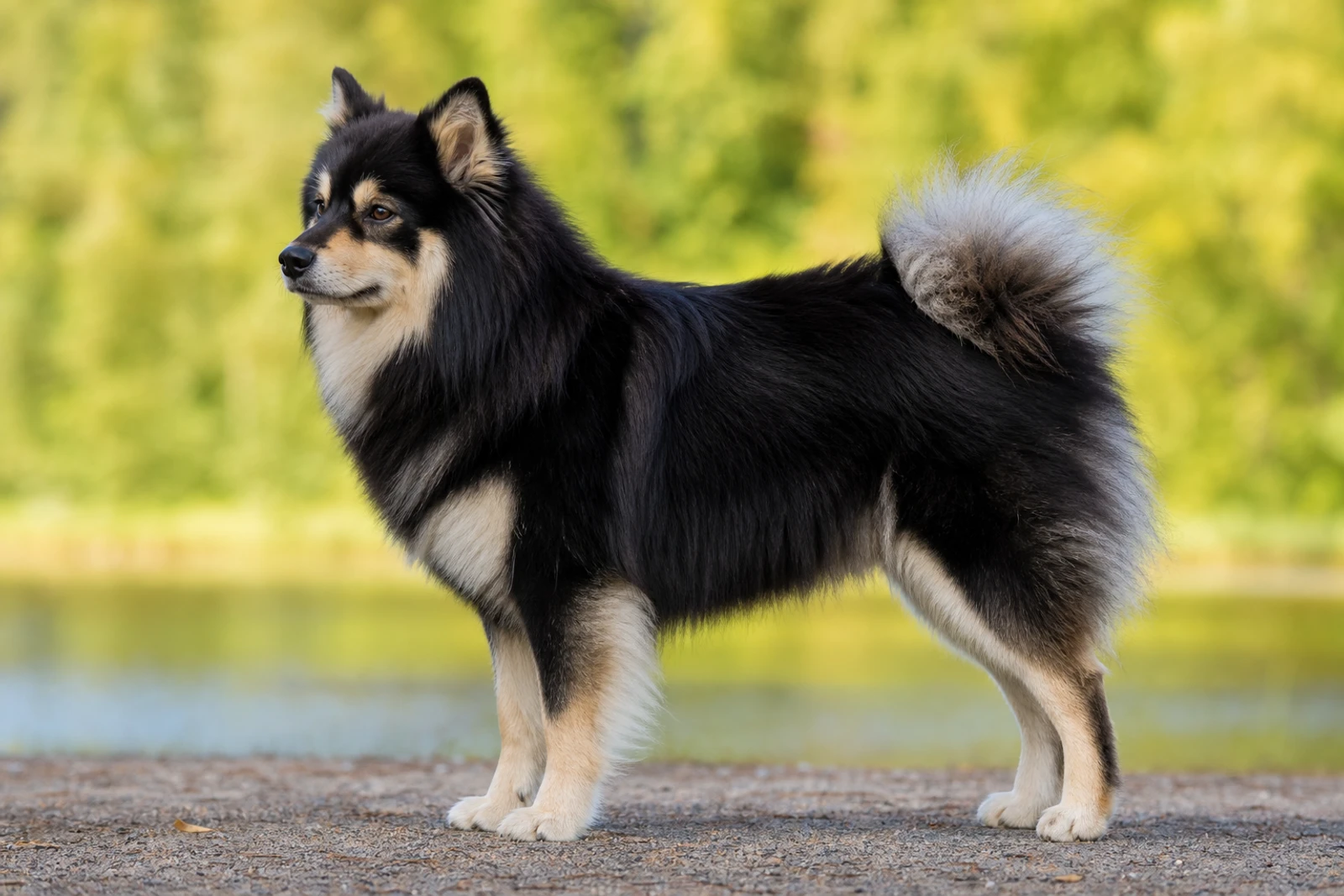
The Finnish Lapphund is a medium-sized, affectionate Spitz breed originally bred by the Sámi people to herd reindeer. With their friendly and gentle nature, they make excellent family companions, especially for active households. They are intelligent and eager to please, thriving in cold climates thanks to their thick double coat. This breed suits first-time owners willing to commit to regular grooming and moderate exercise. They are known for their loyalty and alertness, making them good watchdogs, but require early socialization to manage barking tendencies.
At a glance
- Size
- Medium
- Height
- 17–19 in
- Weight
- 33–53 lb
- Life span
- 12–15 years
- Coat colors
- black, brown, tan, cream, white, sable, wolf-sable
- Coat type
- thick double coat with harsh outer fur
How much does a Finnish Lapphund cost?
Adopt / rescue
$75–$400
Usually includes spay/neuter, first shots, and a microchip.
Buy from a breeder
$700–$2,000
From a reputable, health-testing breeder.
Approximate USD. Prices vary widely by region, breeder, pedigree, age, and coat colour — adopting is the lower-cost and recommended route. Avoid suspiciously cheap “breeders”; they’re often puppy mills.
Estimate the full cost of a Finnish Lapphund →Want the ongoing number? Estimate the monthly food bill for a Finnish Lapphund with our dog food cost calculator.
Finnish Lapphund photos
Views
Front, side, rear and top — the full silhouette.Poses
How the breed sits, lies, moves and plays.Puppy to senior
The breed across its whole life.Expressions
The breed’s range of moods.Close-up details
Eyes, ears, nose, paws, tail and coat.Coat colors
The breed’s recognized colors.Click any photo to enlarge. We show the Finnish Lapphund from every angle — three views, poses, life stages, expressions, close-ups, coat and colors.
Appearance & size
The Finnish Lapphund gives the immediate impression of a sturdy, north-country worker wrapped in a cloud of dense fur. You’re looking at a medium dog built for endurance in brutal cold, not a dainty showpiece. Males stand 18–19 inches at the shoulder, females about 17–18 inches, with a weight range of 33–53 pounds — males on the heavier end. The body is slightly longer than tall, what breeders call “off-square,” which shows up best in a side view: a deep chest extending to the elbows, a firm back, and a moderate tuck-up that says functional, not tucked-up sleekness.
The coat tells the whole story
A profuse double coat is the defining feature. The outer coat is harsh, straight, and stand-off — meaning it lifts away from the body rather than lying flat — while the undercoat is incredibly soft and thick. This combination creates a weatherproof shield that let these dogs sleep in snow. The neck and chest carry a distinct mane, heavier on males, and the backs of the thighs, tail, and britches all have longer feathering.
Color is wide-open in this breed. You’ll see solid black, brown, tan, and cream, as well as wolf-sable shading, plus white markings almost anywhere — often a chest blaze, collar, paws, and tail tip. Many Lapphunds have “spectacle” markings: lighter rings around the eyes that make them look permanently alert and a little amused.
Details that catch your eye
From the front, straight, strong forelegs with moderate bone and oval feet covered in hair between the pads. The ears are small, triangular, and pricked, set high on a wedge-shaped head — they’re incredibly mobile and reflect the dog’s moods constantly. Dark brown, oval eyes with a soft, gentle expression offset the sharp-eared spitz alertness. Nose leather matches pigmentation: black on darker dogs, brown on lighter ones.
In profile, the neck is powerful, the top line level, and the tail is a showstopper: set high, richly coated, and carried curled over the back when the dog moves. From the rear, you’ll see well-muscled thighs and straight, parallel hocks — no cow-hocking, no looseness. The overall movement is light, effortless, and covers ground without wasted energy, exactly what you’d expect from a reindeer herder that worked on deep snow and rocky tundra.
History & origin
The Finnish Lapphund didn’t come from a formal breeding program. It emerged from centuries of partnership between the Sami people and the dogs that kept their reindeer herds together across the Arctic. Spitz-type dogs have lived in northern Scandinavia and Russia for thousands of years, but the Lapphund as we know it took shape in Finnish Lapland, where it learned to read a single reindeer’s twitch and bark at just the right moment to turn a whole herd without panic.
These dogs were never specialized for one job. They worked in bitter cold, guarded camps, and moved reindeer over frozen tundra by darting around the herd, using short bursts of speed and a startling bark — a technique you still see if you watch one work sheep today. Their double coat and sturdy, medium build (33–53 pounds, 17–19 inches tall) are a direct result of surviving outdoors in deep snow.
By the mid-20th century, that survival looked shaky. Snowmobiles, roads, and fences replaced the dog’s role in reindeer management. The breed nearly vanished. In the 1940s, a few dedicated breeders in Finland gathered the remaining working dogs and laid down the first written standard, formally recognizing what was then called the Lapponian Shepherd Dog. That effort bounced the population back, but it also revealed a split: most of the dogs were long-haired, while a smaller number carried a short-haired coat. In 1967 the long-haired variety got its own standard, and in 1993 it received the official name Finnish Lapphund to distinguish it from its close cousin, the short-haired Lapponian Herder.
From there, the breed quietly spread. The first Lapphunds arrived in the United States in the late 1980s, gained UK Kennel Club recognition in 1995, and earned full AKC status in 2011. Today you’ll find them in suburban backyards far more often than on reindeer migration routes, but the temperament that made them invaluable — biddable, agile, alert without being sharp — still defines the breed.
Temperament & personality
Finnish Lapphunds pair a gentle, easygoing spirit with a sharp watchfulness that makes them excellent family companions—provided you’re okay with a dog who likes to announce visitors. They bond deeply with their people and show affection without being needy. Expect a dog that follows you from room to room, leans against your legs, and occasionally flashes a distinct, relaxed “smile” when content.
Energy & play
These are medium-energy herders, not high-strung sprinters. A solid 45–60 minutes of daily exercise—brisk walks, romps in a fenced yard, or a good off-leash hike—keeps them happy. Without it, a bored Lapphund may dig up your garden or reorganize your shoe collection. They love snow and cold weather; a 40-pound adult will happily bound through drifts long after you’ve had enough. Mental outlets matter just as much. Puzzle toys, short training sessions, and nose work tap into their reindeer-herding roots and prevent the kind of restlessness that leads to barking for its own sake.
Around the family
A well-socialized Finnish Lapphund is patient and soft-mouthed with children, often treating toddlers like oddly shaped lambs—supervised, of course. They’re not pushovers, but they rarely meet a situation with aggression. Early exposure to kids, cats, and other dogs builds that natural goodwill. This is a breed that thrives inside the household, not kenneled in the backyard. Left alone too long, they can develop anxiety-driven barking or chewing, so they’re a poor fit for owners who are gone 10 hours a day without a plan.
Watchdog without the bite
You’ll hear a bark—maybe a lot of barking—when someone approaches the door. Finnish Lapphunds are alert and territorial in a friendly way: they sound the alarm, then wag their tail when they see you’re okay with the visitor. They don’t typically escalate to aggression, but a stiff body and direct stare are signals to take seriously. A loose, wiggly posture and soft eyes, on the other hand, tell you your dog is calm and receptive. If you catch your Lapphund yawning, lip licking, or turning its head away during a tense moment, those are calming signals; back off and let the dog reset.
Quirks and communication
This breed “talks” beyond barking. Grumbles, yodels, and excited whines are part of the package. They may circle or nudge people—vestiges of herding instinct—especially when children are running around. Provide a suitable outlet like a herding ball or structured fetch, and teach a solid “settle” cue.
Puppies explore the world through their mouths during teething, and adults maintain jaw strength by gnawing on hard objects. Give them appropriate chews from day one. If you catch them going after a table leg, a homemade citrus spray (boiled peels) or a 50/50 vinegar-water mix often sends them elsewhere. That same vinegar spray helps neutralize urine odors indoors, since dogs return to spots that still smell like a bathroom. When accidents happen, clean thoroughly and reward your Lapphund with a high-value treat the instant they eliminate outside. That single habit builds a reliable potty routine faster than any scolding.
Respect the dog’s meal times. Teach kids never to interrupt a Lapphund while eating, and you’ll steer clear of food-guarding issues before they start. A relaxed, trusted dog in a busy household is less about rigid rules and more about reading the small signals your Lapphund gives you every day.
Good with kids, dogs & other pets
The Finnish Lapphund’s default setting with children is patient and gentle. This isn’t a dog who gets edgy around grabby hands or high-pitched chaos. Still, a 33–53 lb herding dog can accidentally topple a toddler, and those herding instincts may surface as a light heel nip if a child dashes across the yard. Supervision is non-negotiable, no matter how solid the dog’s track record. Teach kids to interact calmly, and you’ll have a dog who leans into the role of full-time playmate and living room pillow.
With other dogs
Lappies tend to be easygoing with other dogs, especially when they’ve had early, positive exposure. Same-sex aggression or resource guarding isn’t typical, but they appreciate polite introductions. The herding background can turn into a mild obsession with corralling canine housemates — harmless herding circles, but not every dog enjoys being rounded up. Watch for mismatched play styles and step in if the chase gets one-sided.
With cats and small pets
Raised together from puppyhood, many Finnish Lapphunds live peaceably alongside cats. The catch is that fleeing triggers instinct. A cat who stands its ground usually gets a curious sniff; one who bolts becomes an irresistible target. Small caged pets like rabbits or guinea pigs are riskier. Even a well-meaning Lapphund can slip into predatory drift. Separate housing and supervised-only access is the safest approach, no matter how relaxed your dog seems.
Socialization matters early and often
These dogs are wired for companionship — an adult Lapphund left alone for long stretches can spiral into barking, chewing, or anxious pacing. That same sensitivity means shaky introductions leave a mark. The prime socialization window closes around 14–16 weeks, so use those first months to calmly introduce your puppy to children of all ages, unfamiliar dogs, traffic sounds, and a variety of surfaces. Keep it positive. Pushing a nervous Lapphund into a crowd does more harm than good. Even after puppyhood, ongoing, low-stress exposures cement a dog who adapts rather than flinches. A well-socialized Finnish Lapphund is a steady, bombproof member of a busy household — but they earn that steadiness through your consistency, not just their nature.
Trainability & intelligence
A Finnish Lapphund learns fast when training feels like a partnership, not a drill. These herding dogs are sharp and tuned into their handler, but they also have an independent streak from centuries of making split-second decisions around reindeer. That intelligence means they think for themselves — if a command seems pointless or the repetition turns dull, they’ll find something more interesting to do. Motivation is everything. A pocketful of high-value treats, a squeaky toy, or a quick game of tug and you’ll see an eager student who picks up new cues in a handful of repetitions. Drill the same behavior over and over, and you’ll get a dog who stares off into the distance.
Sensitivity runs deep in the breed. A harsh tone or a frustrated collar pop can shut them down and damage trust. This is not a dog you bully into compliance. Clear, patient, reward-based methods are non-negotiable. Clicker training or a simple verbal marker works beautifully because it leaves zero guesswork about what you want.
Recall deserves early, relentless attention. The same watchfulness that made them light-footed reindeer herders can also send them after a fast-moving bike or a darting squirrel. You’ll need to make returning to you the best deal in town — think roast chicken or a crazy tug session — and you’ll need to proof it in increasingly distracting environments. Start recall games in puppyhood, paired with a long line, before they learn that blowing you off is an option.
Socialization is a layer of training. Get your puppy out before 16 weeks and gradually expose them to different people, sounds, surfaces, and friendly dogs. Many Lapphunds are naturally reserved; without a broad portfolio of positive early experiences, that reserve can harden into fear-based reactivity later. Keep exposures gentle and let the puppy approach at their own pace — never force it.
Common challenges surface when consistency wavers. An adolescent Lapphund may test boundaries, but if you hold clear, fair rules and reward the choices you want, their natural desire to work alongside you kicks in. Once trust is solid, that eagerness powers everything from reliable off-leash manners to agility.
- Use food, play, or praise immediately to mark the behavior you want.
- Keep sessions short — 5 to 10 minutes — and stop while they’re still leaning in.
- Skip punishment. These dogs remember unfairness and can become hand-shy or avoidant.
- Socialize early and continuously. A confident Lapphund is a safer, more relaxed companion in the long run.
Exercise & energy needs
Plan on giving your Finnish Lapphund at least 60 minutes of honest exercise every day, split across a couple of sessions. A casual stroll around the block won’t drain the tank. These dogs were bred to move reindeer for miles over snowy fells — their stamina is baked in, even if yours is a family companion.
Mornings might be a 30-minute jog or a long off-leash romp; evenings another brisk walk with a fetch session or a run beside your bike. They thrive when they can really stretch their legs. Because Lapphunds love to pull, harness sports are a natural fit. Canicross, skijoring, and bikejoring let them put that forward drive to good use while giving you both a fantastic workout. Agility, rally, and herding trials also burn energy and work the brain simultaneously.
Mental exercise matters just as much. A bored Lapphund gets creative — barking, digging, or dismantling pillows. Feed meals in puzzle toys, hide treats around the house for scent games, or teach a new trick in short, upbeat training bursts. Their herding history makes them quick problem-solvers, so nose work and clicker shaping are brilliant ways to tire them out without budging from the living room.
Be mindful of heat. That dense double coat that laughs at subzero winters puts them at risk of overheating in summer. Push the big workout to early morning or late evening on hot days, and always carry water. Cold weather, though, is their happy place. When you meet his needs, you get a calm, agreeable house dog. Skimp on the daily run and brain games, and you’ll hear about it — with plenty of vocal commentary.
Grooming & coat care
The Finnish Lapphund’s thick double coat looks plush but works hard—insulating against arctic cold and, surprisingly, moderate heat. Upkeep is straightforward once you lock in a rhythm and the right tools.
Brushing
Hit the coat 3–4 times a week during normal months. Work through the outer guard hairs with a rounded-pin slicker brush to lift loose fur and surface debris. Then grab a greyhound comb to find tangles hiding deep in the undercoat. When the coat blows heavily in spring and fall, an undercoat rake pulls out dead fluff in minutes without wrecking the weather-resistant outer layer. During those shed-fests, daily brushing prevents mats and keeps drifts of hair off your sofa.
Bathing
A bath every 6–8 weeks is plenty unless they’ve found something foul to roll in. The real work is drying. That dense undercoat soaks up water like felt. After a bath, use a high-velocity dryer on the cool setting and work in sections until the skin feels bone-dry at the roots. Air drying almost always leaves hidden dampness that can sour the skin and trigger hot spots. Skip the dryer and you’re rolling the dice.
Trimming
This is a wash-and-wear breed. Snipping the hair between the paw pads prevents ice balls in winter and slipping on hard floors. You can tidy the feathering on the back of the legs and tail if you like a neater outline, but never shave a Lapphund. That double coat insulates against both heat and cold—shaving destroys the guard hairs and they may never grow back right.
Nails, ears, teeth
- Nails: Clip or grind every 3–4 weeks. Don’t overlook the dewclaws.
- Ears: Check weekly for wax, dirt, or a funky smell. Wipe gently with a dog ear cleaner when needed.
- Teeth: Daily brushing is ideal, but even a few solid sessions a week cuts tartar and keeps breath tolerable.
Seasonal coat care
When the spring and fall coat blow hits, ramp up to daily brushing with the undercoat rake and greyhound comb. A bath combined with the dryer loosens a staggering amount of dead coat all at once. After a rainy hike, check behind the ears and in the fluffy “britches” on the back legs—those spots mat the moment they stay wet.
Shedding & allergies
The Finnish Lapphund is a heavy shedder. That thick, stand-off double coat that keeps them warm in Lapland’s snow also deposits a steady stream of hair year-round, with two major blowouts that will make you question your vacuum's warranty.
The undercoat is dense and plush; the outer coat is longer, straight, and harsh. Daily shedding is a given — you’ll find hair on furniture, clothes, and floating through sunbeams. Twice a year, usually in spring and fall, the entire undercoat comes out in clumps over a span of two to four weeks. During those windows, daily brushing with a pin rake or undercoat tool is non-negotiable, and you’ll still be sweeping up drifts of fluff. Outside of blowout season, three to four brushings a week keep the worst of it manageable, but nothing stops the shedding entirely.
Drool is a non-issue. This is a dry-mouthed breed; you might see a few drops after a long drink, but you won’t need a drool rag.
- Shedding level: High year-round, extreme during seasonal coat blows
- Drool factor: Minimal
- Hypoallergenic? No
There is no such thing as a truly hypoallergenic dog, and the Lapphund is a particularly poor choice for allergy sufferers. The shedding hair carries dander and proteins from saliva and skin flakes, which are the real triggers. If someone in your household has moderate to severe dog allergies, spend time around adult Lapphunds in a home setting before committing — this breed fills a house with hair and dander, and no amount of grooming will change that.
Diet & nutrition
Finnish Lapphunds are generally “easy keepers” — and that’s a polite way of saying many of them would eat the entire bag if you let them. They’re food-motivated to a fault, so free-feeding is a recipe for a pudgy dog. Measure every meal and resist the sad eyes. A 33–53 lb adult usually does well on 2–3 cups of high-quality dry food daily, split into two meals, but your exact amount depends on age, activity, and the calorie density of the food. If your Lapphund herds sheep, jogs with you, or trains hard in agility, they’ll burn more fuel. Start with the bag’s feeding guide and adjust by feel — you want to see a waist from above and easily feel (but not see) the ribs through that thick double coat.
Weight management matters here because extra pounds add stress to joints, and like many medium breeds, Lapphunds can be prone to hip dysplasia. Keeping them lean from puppyhood on is one of the best things you can do for long-term soundness.
Puppy feeding schedule is straightforward: four evenly spaced meals per day until 4 months, then three meals until 6 months, then the adult two-meal routine. Transition a new puppy gradually — lightly cooked and puréed meats, fish, fruits, and veggies, or a premium large-breed puppy formula — and introduce raw, meaty bones like chicken wings around 12 weeks under supervision.
If your dog inhales food, use a puzzle bowl to slow them down and engage that clever brain. Skip the table scraps entirely; once begging takes root, it’s misery to undo. Rich, fatty leftovers (holiday turkey skin, gravy) can trigger pancreatitis, so any treats — even a sliver of cheese — count against the day’s calories. For homemade meals, aim for roughly 60% meat, 20–30% fruits and vegetables, and 10% other ingredients like eggs, grains, or plain yogurt. Blend or process the mix lightly to aid nutrient absorption. Seniors stay on a similar diet but often do better with three smaller meals; keep an eagle eye on the scale and dial back portions as their activity drops.
Health & lifespan
Finnish Lapphunds typically live 12 to 15 years, and they're a rugged, generally sound breed — but that doesn't mean you can skip the basics.
What responsible breeders screen for. Progressive retinal atrophy (PRA), an inherited eye disease that causes gradual vision loss, shows up in the breed. Responsible breeders test both parents' eyes through the Canine Eye Registration Foundation (CERF) or OFA eye exams before breeding, and they'll be straight with you about the results. Hip dysplasia also crops up occasionally, even in a medium-framed dog who tops out around 53 pounds, so asking for OFA hip scores on the parents is a fair question, not an interrogation.
Weight matters more than you'd think. These dogs are food-motivated, sturdy, and built for pulling sleds across tundra — which means they pack on pounds fast if portions creep up and exercise drops off. A Lapphund carrying an extra 10 pounds stresses joints that were never meant to lug dead weight, especially as the dog ages into the double-digit years. Keep meals measured, treats accounted for, and don't let that grinning face at the counter talk you into seconds.
Routine care that actually prevents problems. Monthly heartworm prevention during mosquito season (and one month past it) is non-negotiable — it only takes one infected mosquito. Rabies vaccination is legally required everywhere in the US, and once symptoms appear there's no treatment, just tragedy. Your vet should also stay ahead of the usual: dental cleanings, parasite control, and an annual senior blood panel once the dog hits seven or so.
The double coat is built for Arctic winter, not summer heat. If you live where it gets genuinely hot, exercise in the early morning or after sundown, provide constant access to shade and water, and watch for heavy panting or a lagging pace. A kiddie pool in the backyard buys a lot of goodwill on a 95-degree afternoon.
What trips up owners. Lapphunds are sensitive dogs who read your tone and stress level like a book. Neglect, isolation, or harsh handling can tip them into anxious behaviors — obsessive barking, pacing, shutdown. The flip side is that early socialization and consistent, respectful training build a dog who handles vet visits, boarding, and strangers without coming unglued. A mentally settled dog is a physically healthier dog, and with this breed the connection runs deep.
Living environment
This breed does best in a home where someone is around most of the time. Finnish Lapphunds were developed to work closely with their people on reindeer herding grounds, and that deep bond hasn’t faded. They’ll follow you from room to room and quickly grow unhappy if left alone for long stretches — barking, destructive chewing, or howling are common fallout. If you work full-time outside the house, plan on a dog walker, doggy daycare, or a patient neighbor who doesn’t mind a chatty companion.
Apartment vs. house and yard needs — A house with a securely fenced yard is the dream. These are medium (33–53 lb), nimble herders with a healthy chase drive; a solid fence keeps squirrels and cyclists from triggering an impromptu roundup. An apartment can work, but only if you’re truly committed to meeting their energy needs. That means at least 60–90 minutes of real exercise every day, split into two sessions — a couple of quick leash loops won’t cut it. Fill the gaps with scent games, food puzzles, or hide-and-seek indoors. Without that outlet, boredom barking will make you unpopular with the neighbors fast.
Climate tolerance — A Finnish Lapphund’s dense double coat makes them cold-weather fanatics. They’ll happily romp through snowdrifts while you’re shivering. Hot weather is the real challenge. Temperatures above 75–80°F can send them looking for a cool tile floor to pancake on. Shift walks to early mornings and evenings, provide plenty of shade and water, and never leave them outside unsupervised in summer heat. Air conditioning isn’t a luxury for this breed in warm climates — it’s a basic comfort.
Noise and barking — Expect a talker. Bred to alert reindeer herders to danger and straying animals, Lapphunds use their voice freely. They’ll announce the mail carrier, a leaf blowing across the yard, and sometimes just their own opinions. Early training can shape their barking into more manageable alert-and-quiet patterns, but you won’t silence the instinct entirely. Thin-walled apartments with noise-sensitive neighbors are a risky fit unless you’re home to redirect and reward calm.
Being left alone — This isn’t the breed for long, solitary days. Puppies especially need gradual, positive-alone training from day one. Start with short departures, leave sturdy enrichment toys, and avoid making a big production of arrivals and departures. Even a well-adjusted adult Lapphund typically tops out at 4–5 hours alone without getting antsy. A second dog sometimes helps, but it’s no substitute for human company when the real prize is being right next to you on the couch.
Who this breed suits
If you love a clever, conversation-happy dog who treats every snowfall like a personal invitation, the Finnish Lapphund might be your match. This is a medium-sized (33–53 lb, 17–19 in) herding breed built for cold climates and close family life — not for tidy homes that want silence.
A Lapphund fits naturally with active families who want a gentle but playful companion for kids. They’re patient and sturdy enough for supervised roughhousing, and they read household moods like a book. The same traits make them a solid pick for singles or couples who can give the dog a real job in daily life: a solid hour of sniffy walks, off-leash hikes, or a few rounds of backyard fetch in deep snow. They’ll then flop contentedly beside you, content to simply be near their people.
For first-time owners, this can be a remarkably forgiving breed — if you go all-in on positive training. Lapphunds are smart and food-motivated, but they come with a herder’s independent streak. You’ll need to enjoy teaching, not just commanding. They’re sensitive; a harsh tone shuts them down. The payoff is a dog that learns tricks lightning-fast and turns into an intuitive sidekick.
Seniors who still love a good daily walk and have time for regular brushing can thrive with a Lapphund, but honestly assess your tolerance for a dog that might pull when a squirrel appears. A 40-pound dog with a sudden lunge can be a lot, and this breed’s alertness doesn’t fade with age. Retired raisers often appreciate the companionship and the excuse to stay active, but the dog does best when someone is home most of the day — Lapphunds lean toward velcro-like attachment and can develop separation anxiety.
Think twice if:
- You hate barking. Lapphunds were bred to alert reindeer herders; they will announce visitors, passing trucks, and suspicious leaves. You can manage it, but you won’t silence it.
- Shedding is a dealbreaker. A thick double coat blows heavily twice a year and sprinkles your home the rest of the time. You’ll need a good vacuum and a sense of humor.
- You’re gone 10+ hours daily. Loneliness hits this breed hard, often showing up as destructive chewing or nonstop howling.
- You live in simmering heat without AC. They’re built for the Arctic and can overheat fast on a summer afternoon.
- You want a dog that follows commands off-leash with robotic reliability. A Lapphund’s “come” is frequently delayed while they finish circling that interesting shrub — independent thinking is part of the package.
Cost of ownership
Initial costs
A well-bred Finnish Lapphund puppy from a breeder who screens for hip dysplasia, progressive retinal atrophy (PRA), and other heritable issues typically runs $1,500 to $3,000. This breed is still uncommon in the U.S., so you may wait months for a litter. Prices below $1,200 often mean the breeder skipped essential health testing or isn’t part of the national breed club. A retired show dog or an older rehome through breed rescue can bring that initial outlay down to $400–$800, though availability is hit or miss.
First-year gear adds another $300–$600. You’ll need a sturdy crate, a grooming table or non-slip mat, a high-velocity dryer (worth its weight in gold for that dense double coat), quality brushes, and the usual leash, collar, ID tag, and chew-proof toys. Figure on $100–$200 for a basic obedience class — Lappies are smart and social, but their independent streak means you’ll want professional guidance early.
Ongoing monthly costs
Once the dog is home, expect to spend $130–$250 per month, depending on your choices. Food is straightforward: a 40- to 50-pound adult eats about 2.5 to 3 cups of high-quality kibble daily, landing around $45–$70 a month. A raw or fresh-food diet can push that to $100 or more.
Grooming hits the wallet seasonally. The Lapphund’s plush double coat resists matting if you brush it thoroughly two or three times a week, but twice a year the dog “blows” its undercoat — a fur-pocalypse that many owners handle with a professional deshedding treatment. A full groom every 6–8 weeks with a skilled groomer costs $60–$90 per visit. Amortized, budget $25–$45 monthly; you can halve that if you do the work yourself and invest in the right dryer and tools.
Veterinary care and preventives run $50–$80 a month for a healthy adult: yearly exams, vaccines, heartworm and flea/tick meds, and a dental cleaning every year or two. Hereditary issues — chiefly hip dysplasia and PRA — can surface later in life. A good insurance policy for a medium breed with these risks runs $35–$55 a month, but it shields you from a surprise $4,000 hip surgery. Even if you skip insurance, stash $50–$100 a month in a dedicated emergency fund. The breed’s 12-to-15-year lifespan means you’re in it for the long haul, and a little planning keeps the joy from getting buried under a stack of bills.
Choosing a Finnish Lapphund
A Finnish Lapphund isn’t a breed you stumble onto at a shelter every weekend. The breed still has a small, dedicated following in the US, which means most puppies come from responsible breeders who screen owners and keep waiting lists. That said, the national breed club (the Finnish Lapphund Club of America) maintains a rescue network, and occasionally you’ll find an adult dog needing a new home. If you go the rescue route, expect the dog to be between 2 and 7 years old, possibly with minimal training, and you’ll need patience to work through any habits shaped by its previous life.
Health Clearances to Demand
Finnish Lapphunds are generally sturdy, but a few inherited conditions pop up in the gene pool. A good breeder won’t flinch when you ask for paperwork — they’ll already have it ready. Here’s the minimum you should see for both parents:
- Hips: OFA or PennHIP certification, rated Fair or better. Dysplasia does occur, even if it’s not rampant.
- Eyes: A recent (within 12 months) exam by an ACVO board-certified veterinary ophthalmologist, clearing the dog of progressive retinal atrophy (PRA), cataracts, and other eye defects. Many breeders also run a genetic test for prcd-PRA; it’s a simple DNA swab that proves a dog is clear, carrier, or affected. Carriers can be bred to clear dogs safely, but you should see the result.
- Elbows and Patellas: Elbow dysplasia shows up in some lines, so ask for an OFA elbow clearance. Patellar luxation (slipping kneecaps) is less common but not unheard of; some breeders test patellas through OFA, too.
Responsible breeders often participate in the Canine Health Information Center (CHIC) program. A CHIC number means that minimum health tests are done and publicly listed in the OFA database. It’s not a guarantee, but it’s a good filter.
Red Flags That Should Send You Running
Walk away if a breeder says they don’t test because “the breed is healthy” or “my vet says they look fine.” Other dealbreakers: multiple litters on the ground at once, prices suspiciously lower than the typical $1,800–$2,800 range for a well-bred puppy, pushing a puppy on you without asking about your lifestyle, or refusing to let you meet at least one parent (usually the dam) on-site. Beware of anyone who makes the puppy available before 8 weeks — 9 to 10 weeks is more common in this breed to ensure solid early socialization.
Picking Your Puppy
The litter visit should show you pups raised underfoot, not shut in a kennel. Finnish Lapphund puppies are naturally curious and friendly. At 8–10 weeks, you’re looking for a bold, confident puppy that approaches without hesitation, then settles after a few minutes. A pup that cowers in a corner or snaps when handled is a red flag, even in a spitz breed known for some reserve. The sweet spot is a puppy that engages with you, follows your voice, and recovers quickly from a sudden noise.
Reputable breeders often pick the puppy for you based on temperament testing and what you’ve told them about your home. Trust that. If you have young kids or live in an apartment, they’ll steer you toward the lower-key pup, not the firecracker. Expect a wait of several months to a year. The right dog is worth the delay, and a breeder who makes you wait is often the one who did the homework.
Pros & cons
-
Pros
- A gentle, friendly temperament that makes them a natural fit for families with kids. Finnish Lapphunds are famously patient and playful without being pushy, so they snuggle as hard as they chase a ball.
- Sharp but biddable. They’ve got real herding smarts and genuinely want to work with you, which makes training satisfying — they pick up new commands quickly and thrive on positive reinforcement.
- Manageable exercise needs for an active household. A solid 45–60 minutes of walking, hiking, or off-leash romping daily usually keeps them happy. They’re up for more, but won’t dismantle your house if you miss a day.
- Sturdy medium build (17–19 in, 33–53 lb) that’s easy to live with. Big enough for outdoor adventures, small enough to curl up at your feet.
- A long 12–15 year lifespan when bred responsibly, so you get over a decade with a dog who stays playful well into old age.
- Built for cold. That dense double coat sheds snow and shrugs off sub-zero temps, making them a great buddy for winter sports or just long walks when everyone else is shivering.
-
Cons
- The coat. Expect hair on every surface, tufts drifting across the floor, and seasonal blowouts that can bury a vacuum. You’ll spend 15–30 minutes brushing several times a week, more during shedding peaks, or you’ll be wearing it.
- A throaty bark is part of the package. These herders use their voice to alert, control movement, or just comment on the squirrel situation. Without early training, it can become a habit that frays neighborly relations.
- Herding instinct can spill over. Some Lappies will circle and nip at running kids or try to round up other pets. That soft mouth usually means no damage, but it’s startling and needs active redirection.
- Can be reserved with strangers. Proper socialization usually produces a polite, watchful dog, not a fearful one, but they’re not the breed to bound up to every visitor like a long-lost friend.
- Not built for heat. That same coat that shrugs off blizzards becomes a liability in summer. You’ll need to plan exercise for cooler hours and provide plenty of water and shade so they don’t overheat.
- Health watchpoints decent breeders screen for: hip dysplasia, progressive retinal atrophy, and other eye issues. Ask for proof of testing — without it, you’re gambling on that nice long lifespan.
Similar breeds & alternatives
If you’re drawn to the Finnish Lapphund’s blend of spitz personality and family-friendly calm, a few breeds sit close on the map — but each has its own tilt.
-
Swedish Lapphund is the closest genetic cousin and still uncommon in the US. It’s slightly larger (35–50 lb, 16–20 in) and often a touch more reserved with strangers. Both have dense double coats and a heritage of reindeer herding, but the Finnish Lapphund tends to be the softer, more overtly social of the two, which matters if you want a dog that leans into new people rather than watching from a distance.
-
Keeshond (35–45 lb, 17–18 in) trades herding drive for full-time companion energy. You get the same thick, stand-off coat and alert bark, but a Keeshond is less likely to invent jobs for itself — ideal if you want a people-focused spitz without quite as much mental itch to scratch. Expect similar grooming demands and a near-constant need to be near the family.
-
Samoyed (45–65 lb, 19–23.5 in) is the bigger, brighter-white option with a higher exercise bill. A Samoyed needs 60–90 minutes of hard running or pulling every day; a Lapphund is often satisfied with a long walk and a solid training session. Samoyeds also tend to be more exuberantly demanding, whereas Lapphunds read the room a bit more.
-
Icelandic Sheepdog (20–30 lb, 16–18 in) is a smaller herding spitz with similar weatherproof coat and watchdog tendencies, but it brings a quicker, more vocal motor. That extra yap can be a dealbreaker in close quarters, while the Lapphund’s alert barking is typically a little more measured.
-
Shetland Sheepdog (15–25 lb, 13–16 in) forgoes the Nordic coat but doubles down on herding smarts. They’re sharper, more sensitive, and need a job with real precision — a better fit if you’re hooked on agility or advanced obedience and less concerned about cold-weather sturdiness.
The Finnish Lapphund lands in a sweet spot many northern breeds miss: genuinely gentle with kids, tuned in without being frantic, and moderate in size and exercise demands. If you want a dog that feels like a mellow, affectionate spitz rather than a full-throttle herder or an arctic marathon runner, it’s a rare find.
Fun facts
- Bred by the indigenous Sámi people of Lapland for herding reindeer.
- Known for their 'startle reflex'—they may jump at sudden noises, a trait from their herding days.
- One of the most popular dog breeds in Finland but relatively rare elsewhere.
- Their thick double coat provides insulation, allowing them to work in Arctic conditions.
Frequently asked questions
- Are Finnish Lapphunds good with children?
- Finnish Lapphunds tend to be gentle and patient with children, making them excellent family companions when properly socialized. They are known for their affectionate and playful nature, but supervision is always recommended with young kids.
- Do Finnish Lapphunds shed a lot?
- Finnish Lapphunds have a thick double coat that sheds moderately year-round and more heavily during seasonal changes. Regular brushing a few times a week can help manage loose hair and keep their coat healthy.
- How much exercise does a Finnish Lapphund need?
- As an active herding breed, Finnish Lapphunds require daily exercise including walks and play sessions to stay happy and healthy. They enjoy mental stimulation like puzzle toys or training, and generally need at least an hour of activity each day.
- Are Finnish Lapphunds suitable for apartment living?
- While adaptable, Finnish Lapphunds can thrive in apartments if given sufficient daily exercise and mental engagement. However, their tendency to bark may be a concern in close quarters, so early training is essential.
- Is a Finnish Lapphund a good choice for first-time dog owners?
- Finnish Lapphunds are intelligent and eager to please, which can make them manageable for first-time owners committed to consistent training. Their independent streak might require patience, so novice owners should seek guidance from positive reinforcement classes.
Tools & calculators for Finnish Lapphund owners
Quick estimates tailored to Finnish Lapphunds — pre-filled with this breed’s size where it matters.
Articles & stories about the Finnish Lapphund
Sources & standards
This profile follows recognized breed standards from the American Kennel Club (AKC) and the Fédération Cynologique Internationale (FCI), along with established veterinary and breed-club guidance. These describe general breed tendencies — every dog is an individual.