

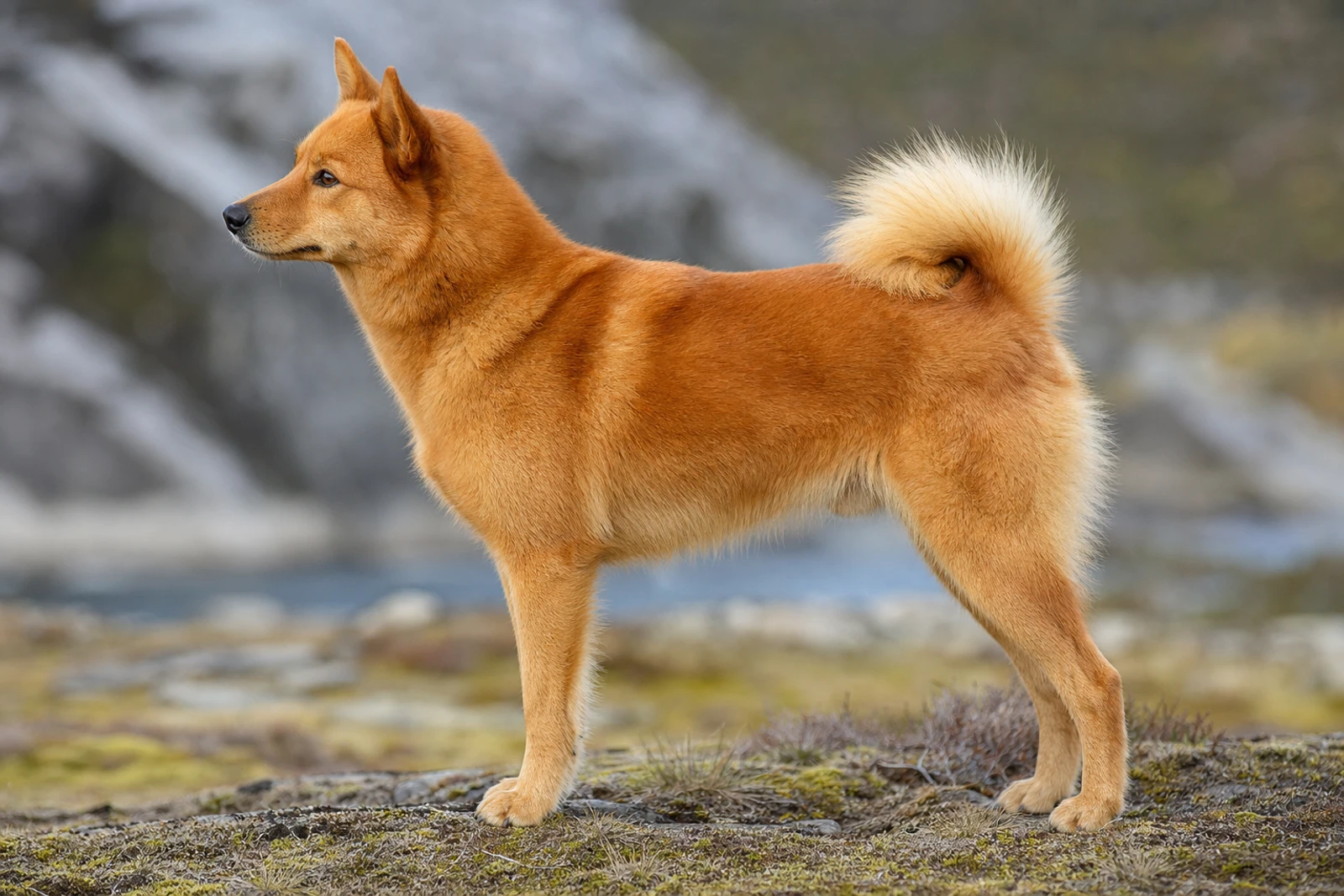
The Finnish Spitz is a lively, alert, and vocal breed, originally bred for hunting game birds and squirrels in Finland. With a fox-like appearance and a loyal, playful nature, they bond closely with their families. Best suited for active owners who can provide daily exercise and mental stimulation, they thrive in homes with a secure yard and enjoy cold climates. Early socialization is key, as they may chase small animals and are wary of strangers. Their high barking tendency makes them excellent watchdogs but less ideal for apartment living. Independent yet affectionate, they suit experienced dog owners.
At a glance
- Size
- Large
- Height
- 15–20 in
- Weight
- 31–35 lb
- Life span
- 12–15 years
- Coat colors
- Red-gold, Golden-red, Honey, Auburn
- Coat type
- Double coat with harsh outer guard hairs and soft, dense undercoat
- Group
- Spitz–Type
How much does a Finnish Spitz cost?
Adopt / rescue
$75–$400
Usually includes spay/neuter, first shots, and a microchip.
Buy from a breeder
$700–$2,000
From a reputable, health-testing breeder.
Approximate USD. Prices vary widely by region, breeder, pedigree, age, and coat colour — adopting is the lower-cost and recommended route. Avoid suspiciously cheap “breeders”; they’re often puppy mills.
Estimate the full cost of a Finnish Spitz →Want the ongoing number? Estimate the monthly food bill for a Finnish Spitz with our dog food cost calculator.
Finnish Spitz photos
Views
Front, side, rear and top — the full silhouette.Poses
How the breed sits, lies, moves and plays.Puppy to senior
The breed across its whole life.Expressions
The breed’s range of moods.Close-up details
Eyes, ears, nose, paws, tail and coat.Coat colors
The breed’s recognized colors.Click any photo to enlarge. We show the Finnish Spitz from every angle — three views, poses, life stages, expressions, close-ups, coat and colors.
Appearance & size
At first glance you won’t mistake the Finnish Spitz for anything but a northern breed. Standing 15 to 20 inches at the shoulder and weighing a lean 31 to 35 pounds, this is a squarely built, medium-sized dog that carries itself with a lively, alert posture. The size fits a busy family home without cramping it, though that dense coat does make the dog look a bit larger than the scale says.
The coat is a true double coat built for harsh winters: a soft, short undercoat and a straight, harsh outer coat that stands slightly off the body. You’ll see one accepted color — a rich red-gold ranging from pale honey to deep auburn. Some dogs have a small white mark on the chest or tips of the toes, but the ideal is a clear, glowing red without large patches. The color often deepens with age, and puppies are born darker, with more black shading that fades as the adult coat comes in.
Look at the dog head-on, and the fox-like face is the first thing that hits you. Dark, almond-shaped eyes with black rims give a sharp, intelligent expression. The ears are set high, pointed, and perfectly erect — always moving, always on. A black nose and tight, dark lips complete the picture. You’ll notice the muzzle is moderately long and tapers slightly, but never looks snipey.
From the side, the body reads compact and square: the length from chest to rump is about equal to the height at the withers. The back is level and strong, the chest deep but not barrel-like. A moderately tucked-up belly adds a touch of elegance without taking away from the sturdiness. The neck slopes cleanly into well-laid-back shoulders, and the tail — a thick, plumed tail that curls up and over the back in a tight arch — is the defining silhouette you’ll see from the rear. Viewed from behind, the tail falls just to one side of the hip, with profuse feathering that catches the light. The hind legs are straight and parallel, with moderate angulation that explains the breed’s light, ground-covering trot.
Distinctive features add up quickly: the vibrant red-gold coat, the ever-alert prick ears, and that proud, curling tail are non-negotiables in the standard. Even the dog’s trademark “blaze” — a lighter shading on the cheeks and under the tail — is part of the package. This isn’t a dog you’d describe as delicate; it’s an agile, well-boned hunter built to move all day in deep snow. That coat will shed seasonally in a big way, so don’t expect a pristine house without a good vacuum.
History & origin
Ancient Roots
The Finnish Spitz wasn’t bred to retrieve or tackle big game — it was shaped for a single, vital job: locating grouse, capercaillie, and other forest birds deep in Finland’s dense woods and then holding them with a steady, ringing bark until the hunter crept close enough to shoot. This bark-pointing style is the breed’s signature, and it grew out of a long, isolated history.
Dogs of this spitz type traveled into the region thousands of years ago alongside Finno-Ugric tribes. Their descendants, kept in Finland’s remote eastern and northern villages, remained essentially pure for centuries because there was little outside contact. Early written accounts from the 17th and 18th centuries describe reddish, fox-like dogs that hunted squirrels and birds, but the real prize was the “bark pointer” — a dog that would follow a bird’s flight, tree it, and then yodel steadily, sometimes for hours, without lunging or flushing the prey. That precision made the dog indispensable in a landscape where a single missed shot meant an empty stewpot.
Salvage and Modern Recognition
By the late 1800s, the breed nearly vanished. Railroads brought new people and new dogs, and unregulated crossbreeding diluted the old spitz type. Two Finnish sportsmen, Hugo Roos and Hugo Sandberg, recognized the crisis. They traveled to Karelia in the 1890s, seeking out the few remaining dogs that fit the ancient mold — erect ears, a dense red-gold coat, a curled tail, and that unmistakable bark. They bought them, bred them carefully, and wrote the first standard in 1892, naming the breed Suomenpystykorva (Finnish Erect-Eared Dog). Their effort saved a national treasure.
The Finnish Kennel Club opened a registry in 1927, and by 1979 the Finnish Spitz was officially declared Finland’s national dog. After World War II, exports trickled into Europe and beyond. The American Kennel Club recognized the breed in 1987, initially placing it in the Non-Sporting Group; in 2011 it moved to the Hound Group — a nod to its true function, not just its looks. Today, bark-pointing instinct remains non-negotiable among serious breeders. In Finland, the annual King of the Bark contest still measures how many barks a dog can produce per minute, a playful throwback to the working trait that literally saved the breed from extinction.
Temperament & personality
The Finnish Spitz runs on enthusiasm—a busy, sharp-eyed dog who notices everything and has a whole lot to say about it. Bred to bark-point game in dense Finnish forests, they come wired with a rapid-fire yodel that’s nothing like a typical backyard barker. That voice will announce squirrels, delivery trucks, and suspicious leaves with equal conviction. If you value quiet, this isn’t your dog. They also whine, chirp, and throw in a full-throated song when a moment calls for it. It’s part of their charm, not a bug—channel it with a “speak” cue and you’ll both be happier.
In the house, a well-exercised Finnish Spitz is a playful, affectionate shadow who follows you from room to room and curls up with a cat-like fastidiousness. They’re gentle with respectful older kids but sensitive to rough handling or loud scolding; harshness makes them check out. With strangers they’re aloof watchdogs, not aggressive, sizing up newcomers before offering a tail wag once properly introduced. That wariness, combined with a hefty independent streak, makes early and ongoing socialization a must.
Training needs a coach, not a commander. They’re whip-smart but easily bored, and force shuts them down. Keep sessions short, upbeat, and loaded with high-value treats. They’ll learn a command in minutes, then decide whether it’s worth their time—consistency and a sense of humor get you a lot further than a stern voice.
House-training leans on that keen nose. They remember exactly where they had an accident before, so clean indoor spots with an enzyme cleaner that erases the scent cue. The second they go outside, shove a treat in their mouth and throw a party—punishing mishaps indoors backfires. Expect a dog that’s naturally clean indoors yet will gleefully roll in something foul the moment you’re not looking. It’s ancient scavenger instinct, not a hygiene protest. A diluted vinegar spray on the coat afterward helps de-stink them, and the same spray on off-limit items can deter a chewing puppy.
This is a social breed that hates being benched. Leave them alone too long and they’ll funnel that anxiety into marathon barking that strains neighborly goodwill. Give them at least a solid hour of running, hiking, or vigorous play every day, plus puzzle toys and nose work to tire out that busy brain. A tired Finnish Spitz is a content one—look for a loose, wiggly body and soft eyes. When the body stiffens and the stare hardens, they’ve locked onto something and an operatic alert is coming. Respect that heads-up, and you’ve got a loyal, hilarious sidekick who’ll fill your home with sound and sass for the next 12 to 15 years.
Good with kids, dogs & other pets
The Finnish Spitz’s patient, non-aggressive temperament makes it a good match for families with children — with the right groundwork. These are sturdy 31–35 lb dogs, big enough to handle a tumble but small enough not to bowl over a toddler. You still need to supervise interactions, because the breed can be sensitive. A yanked ear or a sudden grab might make them wary rather than snappy, but repeated rough handling can turn into avoidance. Teach kids to be calm and respectful, and your Finnish Spitz will return the favor with loyalty and playful companionship.
This breed craves togetherness. They’re not suited to long days alone outdoors or in a crate — isolation feeds separation anxiety and the kind of barking that drives neighbors crazy. They do best when someone is around, so households where a parent works from home or schedules are staggered are ideal. That social need also extends to other dogs. Most Finnish Spitzes enjoy canine company and aren’t typically dog-aggressive, especially when raised with plenty of early, positive exposure. But they are vocal playmates and natural hunters. Their play style can be loud and chase-heavy, which might overwhelm a shy or senior dog. Socialization during the 3–14 week window matters enormously here: set up puppy play dates with well-mannered dogs, and visit dog-friendly spaces so they learn to read other dogs’ signals.
Cats and small pets are a different story. The Finnish Spitz was bred to hunt birds and small game in dense Finnish forests, so the prey drive is baked in. A cat that runs triggers instinct, and rodents or rabbits are never safe. Some individuals learn to live peacefully with a family cat if they grow up together, but you can’t assume they’ll extend that truce to a neighbor’s cat or a fluttering bird outside. Never leave them unsupervised with small animals, and don’t expect an adult dog to suddenly “get used to” a new kitten or guinea pig without intense management.
Everything hinges on those first few months. The critical socialization window slams shut around 12–16 weeks. After that, forcing a fearful adult to mingle with kids, strange dogs, or new situations backfires — it adds stress instead of confidence. So get your Finnish Spitz puppy out into the world early: let them meet gentle children, walk on different surfaces, hear traffic and vacuums, and see calm cats from a distance. Pair every new encounter with treats or play, and you’ll build a steady family dog instead of a reactive one.
Trainability & intelligence
A Finnish Spitz learns fast—but obeys on his own terms. This is a thinking dog, bred to work solo in the woods, flashing a bark to guide the hunter to treed birds. That independence is still wired tight. He doesn’t hang on your every word; he weighs whether the request is worth his time.
Training has to be a partnership, not a power struggle. Harsh corrections or a tense voice shut him down. Instead, lean hard on positive reinforcement. High-value treats—tiny bits of cheese, freeze-dried liver—paired with an upbeat “yes!” the instant he gets it right. Keep sessions short, maybe 5–10 minutes, and quit while he still wants more. Drilling the same sit-stay for twenty reps will get you a dog who wanders off to sniff something more interesting.
The biggest day-to-day challenge is recall. He was selected to range far, bark at game, and not check in until the job is done. Off-leash reliability in an unfenced area is a long shot for most Finnish Spitz. Use a long line for safe freedom, practice recall with jackpot rewards, and never punish a late return or you’ll teach him that coming back ends the fun.
Barking is literally in the breed charter. Shaping a reliable “quiet” cue is slow work—expect to manage it more than cure it. Provide plenty of puzzle toys, scent games, and hide-and-seek to tire that busy brain, because a bored Spitz will fill the silence himself.
Early socialization is non-negotiable. Introduce him to new people, dogs, and environments between 3 and 14 weeks, always keeping things positive. A poorly socialized Finnish Spitz quickly becomes suspicious of strangers and reactive to anything out of the ordinary. Puppy kindergarten, trips to the hardware store, and short car rides where good stuff happens all build a steady adult.
Motivation is a moving target. One day it’s food, the next it’s a squeaky toy or a chance to chase a flirt pole. You’ll do best reading his mood and mixing rewards. Force-free methods aren’t just kinder here—they’re the only thing that consistently works. Build that trust, stay patient, and you’ll have a clever, game partner who’s ready to work when it’s truly worth his while.
Exercise & energy needs
Plan on a solid 60 to 90 minutes of daily movement for a healthy adult Finnish Spitz, split into at least two sessions. This is a hunting spitz bred to work independently in big forests — not a dog you can tire out with a few laps around the block. A 31–35 lb body houses a serious engine, and that engine runs best on off-leash exploration, trotting, and brain games.
What real exercise looks like
A long stroll on a six-foot leash won't do much for your Finnish Spitz. They need to run, sniff, and problem-solve. Aim for one session of true aerobic work — a hike with steep terrain, a 30-minute off-leash romp in a secure field, or a couple miles of on-and-off jogging. A second session can be a sniff-heavy trail walk, a backyard agility course, or a vigorous game of hide-and-seek with toys.
Because these dogs have a deep prey drive and selective hearing when something feathered scuttles by, off-leash reliability takes serious training. Until that’s bulletproof, use a long biothane line in open spaces so your dog can cover ground without the risk of bolting after a grouse.
The mental half of the exercise equation
A Finnish Spitz’s brain needs as much attention as its legs. This is the breed that became famous for using its voice to pinpoint game birds — your backyard version will bark with the same enthusiasm if bored. Puzzle toys, scent work, and “find it” games are not extras; they’re what keep a Spitz from inventing its own (loud) entertainment. Ten minutes of hiding treats around the house or practicing nose work in the yard can take the edge off on rainy days better than double the walk time.
Sports that fit the breed
Finnish Spitz thrive in activities that mimic their original job. Nose work and barn hunt let them hunt with that incredible sniffer. Rally and trick training build a cooperative relationship and tire out the brain. Some can take to canicross or skijoring with a properly fitted pulling harness, though they aren’t freight-train pullers. Avoid high-impact jumping until growth plates close, since this breed’s moderate frame can be hard on developing joints.
Skipping a day doesn’t just mean a mopey dog — it means singing. The Finnish Spitz will tell you, loudly, that the bargain for its companionship is daily action. Meet that, and you get a lively, hilarious partner who settles indoors without turning your sofa into a trampoline.
Grooming & coat care
The Finnish Spitz wears a double coat that looks plush enough to need constant fussing, but the reality is refreshingly straightforward: brush regularly, bathe rarely, and never reach for clippers. The real work comes during the two annual shedding seasons, when that dense undercoat makes its dramatic exit.
Brushing: the non-negotiable
A slicker brush with rounded pins is your everyday tool. It reaches through the straight, harsh outer coat to snag loose undercoat before it drifts into every corner of your house. Work through the entire dog two or three times a week during normal periods. Pay extra attention to the thick ruff around the neck and the feathering on the back of the thighs — those spots love to hide tangles. Follow up with a metal comb to catch anything the slicker missed. Skip the soft bristle brush; it’s designed for short, sleek coats and won’t penetrate the Finnish Spitz’s layered armor.
Bathing: a rare event
This coat is practically self-cleaning. Mud and dirt dry, then flake right off. A Finnish Spitz rarely develops that doggy odor, so you’ll likely bathe just two or three times a year unless he finds something truly foul to roll in. When you do, use a mild dog shampoo and rinse until the water runs absolutely clear — soap residue trapped under a dense coat is a fast track to itchy skin.
Trimming: hardly anything
Do not shave or clip the body. The double coat insulates against heat and cold, and cutting it short can permanently ruin the way the hair grows back. The only scissor work most owners do is tidying the hair between the paw pads to keep the feet from turning into fuzzy slippers and maybe trimming a few long hairs at the back of the hocks. Otherwise, leave the silhouette alone — the breed’s off-square outline depends on that natural coat length.
Nails, ears, and teeth
Nails grow quickly on this active, light-footed dog. Trim every two to three weeks to preserve his prancing gait; if you hear clicking on the floor, you’re overdue. Ears are upright and gather less gunk than floppy ones, but a weekly wipe with a damp cotton ball or an ear cleaner still prevents wax buildup and keeps you ahead of any early signs of infection. Brush teeth several times a week with a dog-safe paste. Small routines now fend off expensive dental trouble later.
Seasonal shedding: the big blowout
Twice a year, usually in spring and fall, your Finnish Spitz drops his entire undercoat in a matter of weeks. Daily brushing becomes essential during these spells. Many owners add an undercoat rake to their lineup or visit a groomer for a high-velocity blow-out to speed the process. The silver lining? Outside those short, furry blizzards, the coat stays neat with just a couple of brushings a week. Regular outdoor exercise — chasing, sniffing, running the trails — also keeps skin healthy and shedding on a more even keel.
While you’re grooming, run your hands over the whole dog. A dense coat can conceal lumps, hot spots, or scrapes, and you’ll catch them early if you check weekly. And when you’re pulling tufts of undercoat from your brush during a coat blow, remember: that fur would be all over your couch otherwise, and at least this way the dog still looks glorious.
Shedding & allergies
If you’re looking for a dog that barely sheds, the Finnish Spitz is not your breed. These dogs drop fur year-round, and twice a year, they blow their entire undercoat in what can only be described as a snow-globe event.
A Finnish Spitz has a dense, stand-off double coat — a soft, thick underlayer and a straight, harsher outer coat. That coat served them well in freezing Finnish forests, but in a warm house it means a constant release of hair onto your sofa, floors, and clothes. During spring and fall shedding seasons, the amount of loose fur is staggering. For a few weeks, you’ll need to brush them daily with a slicker brush or undercoat rake to keep the tumbleweeds under control, and even then, you’ll still find hair everywhere. Outside of blowout, two or three good weekly brushing sessions catch a lot of the dead hair before it lands on your rug.
On the allergy front, no Finnish Spitz is hypoallergenic. Heavy shedders spread the dander and saliva proteins that trigger reactions. If someone in your home has dog allergies, this breed is a high-risk housemate — the sheer volume of airborne hair and dander makes symptoms very likely.
The one bright spot? They don’t drool. You won’t deal with slobber on your walls or lap, just an impressive amount of red-gold fluff. Regular brushing and a good vacuum are your only real defenses.
Diet & nutrition
A Finnish Spitz will often act like he hasn’t eaten in a week — food motivation is strong in this breed. Portion control isn’t optional; it’s the difference between a fit, active dog and one carrying extra pounds that strain his joints and shorten his life. An adult weighs 31–35 pounds and typically stays lean on 700–900 calories a day, divided into two meals. Adjust up or down based on exercise: a dog who runs through the woods daily needs more fuel than one trotting around the block.
Puppies grow best on frequent, smaller meals: four times a day until four months, then three meals until six months, then the adult two-meal rhythm. Transition a new diet gradually with lightly cooked, puréed meats, fish, fruits, and vegetables, or a high-quality commercial puppy food. Raw chicken wings can be introduced around twelve weeks, always under supervision.
If your Spitz inhales his bowl in seconds, use a puzzle feeder. Slower eating aids digestion and gives this clever breed a mental workout he genuinely needs.
Obesity is the big risk here, not any breed-specific sensitivity, but the extra weight can still set off joint or back problems. Never free-feed. Measure every meal, and be stingy with treats. As your dog ages and naturally slows down, cut food back gradually. Seniors do fine without reducing protein; just split their daily portion into smaller, more frequent meals and keep tracking the scale.
If you prepare home-cooked meals, aim for roughly 60% meat (raw or cooked), 20–30% fruits and vegetables, and 10% add-ins like eggs, plain yogurt, or grains. Since dogs’ jaws only move vertically and lack the salivary enzymes we have, blending or puréeing produce helps them absorb nutrients. Pearl barley and white rice are gentle, digestible grain choices for sensitive stomachs. Avoid excessively rich leftovers, especially after holidays — fatty scraps can trigger pancreatitis, a painful and dangerous condition. And never feed a vegetarian or vegan diet: a dog’s body is built to get essential nutrients from meat, not plants.
To keep begging from taking hold, put any safe leftovers in your dog’s own bowl after you’ve finished eating. A lean Finnish Spitz will out-hike, out-bark, and out-live a chubby one every time.
Health & lifespan
The Finnish Spitz typically stays by your side for a solid 12 to 15 years. That’s a generous run for a dog this size, and many individuals stay active well into their teens. Still, that kind of longevity isn’t automatic — it leans heavily on a few key choices.
Where the real health vulnerabilities lie. This is not a sickly breed, but it’s not bulletproof either. The issues that pop up most often in the Finnish Spitz are orthopedic and neurological. Hip dysplasia can show up, just as it does in many medium-to-large dogs, and a fair number of lines carry a tendency toward patellar luxation — a trick kneecap that can cause intermittent skipping or lameness. You’ll also bump into idiopathic epilepsy in some families, which usually surfaces between six months and three years of age. Eye conditions, particularly progressive retinal atrophy (PRA) and juvenile cataracts, appear at low but real frequencies. Responsible breeders don’t guess at any of this. They screen parent stock through OFA or PennHIP for hips and knees, and a board-certified veterinary ophthalmologist should clear the eyes yearly. Ask to see those certificates.
Weight, weather, and the big-picture stuff. A 31–35 lb dog with a dense double coat doesn’t need much cushioning. Extra pounds hammer those joints and can tip a predisposition toward arthritis into a genuine mobility problem. Feed for a lean, waist-tucked silhouette and give the dog a real workout daily — a solid hour of movement, not a lazy stroll. That thick coat also makes Finnish Spitz heat-sensitive. They adore cold weather, but anything over about 80°F puts them at risk for overheating. Provide shade, water, and never leave one in a parked car.
The things that don’t change by breed. Heartworm prevention dosed every month during mosquito season (and one month past it) is non-negotiable. Rabies vaccination is the law. And because the Finnish Spitz is so intensely bonded to its people, neglect or extended isolation often triggers stress-driven howling and barking that can fray a dog’s own nerves. Early, calm handling and regular social contact keep that anxiety in check.
An annual wellness exam with bloodwork catches early signs of trouble — a subtle limp, a weight shift, a change in appetite. For this breed, catching things early often means the difference between a minor fix and a shortened lifespan.
Living environment
The Finnish Spitz is a talker — expect it. Bred to bark almost non-stop while pointing game birds, this dog has a sharp, yodel-like voice and a hair-trigger alertness that doesn’t switch off just because you live in a quiet neighborhood. If you’re in an apartment or share walls, the noise factor alone can tip the scales against you. Yes, you can redirect some of the barking with training, but silencing it entirely goes against everything the breed was built to do.
A securely fenced yard goes a long way. These dogs have a deep prey drive and an independent streak forged by centuries of hunting in dense Finnish forests. A squirrel, a scent, or an open gate can trigger a full-speed chase, and they’re not above digging or climbing. Plan on a 5-foot fence with a dig barrier, and never leave them unsupervised off-leash in an unsecured area.
Exercise needs are substantial for a 31–35 lb dog. Count on a full hour of vigorous movement each day, ideally split into two sessions. A couple of easy walks around the block won’t dent their energy. They need chances to run freely in a safe space, paired with scent games, puzzle toys, or trick training to wear out their busy brain. Without that outlet, the barking escalates and boredom quickly turns into destruction.
The thick double coat makes them nearly impervious to cold. They’ll romp happily through snow while you shiver on the porch. In warm months, shift walks to early morning or evening and watch for heavy panting — overheating is a real risk. This is not a dog built for the dog days of summer without extra care.
Alone time is another friction point. Finnish Spitz form intense bonds with their family and can become anxious or vocal when left by themselves for long stretches. They do best in homes where someone is around for a good part of the day. Gradual desensitization, crate training, and food-stuffed toys can help, but if everyone’s gone from 8 to 6, you’ll likely come home to a serenade — or shredded door frames — before the week is out.
Who this breed suits
This dog belongs to anyone who genuinely wants a chatty, spirited partner—not a quiet one. If your ideal companion is a four-legged alarm system that yodels at every squirrel, delivery truck, and suspicious leaf, the Finnish Spitz is your breed. Their trademark bark comes rapid-fire and piercing, and during a hunt it can top 160 barks per minute. Tolerance for noise isn’t optional; it’s the whole deal. For the right person, that voice is music. For everyone else, it’s a dealbreaker.
Best-fit owners are active singles, couples, or families who treat daily movement like second nature. A 31–35-pound dog this agile and hunting-driven needs at least an hour of genuine running, hiking, or spirited off-leash time in a secure area—not a polite leashed stroll. A tired Finn is a content Finn; shortchange that outlet and you’ll get destruction paired with a concert. They’re natural trail runners and biking buddies, but a securely fenced yard isn’t optional. Selective hearing kicks in the moment something small darts away.
You’ll click with this breed if you enjoy training as a collaborative puzzle, not a command performance. Finnish Spitz are whip-smart and fiercely independent—they were bred to range ahead and report back, not wait for instructions. Patience, food rewards, and short, playful sessions win far more than repetition or a heavy hand. Housebreaking is usually quick, and aside from heavy seasonal shedding twice a year, grooming is low-fuss.
First-time owners can certainly succeed if they do their homework on the bark and the stubborn streak, but the noise level surprises many. Families with respectful kids get a gentle, playful companion; supervise toddlers, because these dogs don’t appreciate clumsy handling. Other friendly dogs are usually fine with early socialization, but cats and pocket pets trigger a strong prey drive. Active seniors who still hike or jog daily can be a great match—just be honest about whether you’ll embrace the racket.
Think twice if you share walls with neighbors who value silence, or if your vision of dog ownership involves a calm, quiet lap warmer. This is not that dog. But if you want a lively, affectionate, and endlessly entertaining redhead who makes you laugh and keeps you moving, the Finnish Spitz will reward you with 12–15 years of devoted, vocal company. The bark itself ends up being your best litmus test: either you love it, or you’ll dread it.
Cost of ownership
Purchase price
You’ll pay $1,500–$2,500 for a puppy from a breeder who screens for hips, patellas, and epilepsy—the big-ticket health concerns in this breed. Show-line dogs or pups from titled parents can push toward $3,000. Adoption through a Finnish Spitz rescue, when one turns up, runs $200–$500.
Always ask for OFA hip and patella clearances on both parents. A 12–15 year companion is worth that upfront homework.
Monthly costs
- Food: A 31–35 lb Finnish Spitz eats about $45–$65 of quality kibble a month. They aren’t food gobblers by nature, so a 30–40 lb bag stretches further than you’d think if you measure meals and don’t overdo treats.
- Grooming: You’ll handle most of it at home. The dense double coat blows heavily twice a year, and a weekly slicker-brush session covers the rest. A good brush and deshedding shampoo might cost $20 a month on average. If you prefer a pro, plan on $50–$80 every 6–8 weeks for a groomer who respects a spitz coat—shaving one is a fast track to skin trouble.
- Vet and prevention: Annual exams, vaccines, and year-round heartworm/flea/tick prevention spread out to $30–$50 a month. Finnish Spitz can be prone to hip dysplasia, patellar luxation, and epilepsy, so many owners carry pet insurance at $35–$55 a month (typical policy: $500 deductible, 90% reimbursement).
- Training: Expect to budget for real obedience work. A 6-week group class costs $150–$250, and it’s money well spent. These dogs are independent thinkers who bark with enthusiasm—early training channels that voice into something livable.
- First-year gear: Crate, harness, long line, puzzle toys, and a secure leash for a dog that’s quick and squirrel-obsessed add $300–$500.
All told, expect in the neighborhood of $150–$250 a month beyond the purchase price, with grooming and insurance being the swing factors.
Choosing a Finnish Spitz
Finding a Finnish Spitz puppy takes patience — this is a rare breed in the US, and litters are few. A responsible breeder who puts the breed’s health and temperament ahead of profit is non-negotiable. Rescue can work, but waiting lists are long and adult dogs often come with strong, ingrained habits. If you go the breeder route, expect a wait and a thorough interview; good breeders want you to succeed as much as they want the right home for their puppies.
Responsible breeder vs. rescue
A dedicated Finnish Spitz breeder will talk your ear off about the breed’s barking, independence, and exercise needs before they ever mention a price. They raise puppies underfoot in the home, start socialization early, and keep the litter together until at least 8–10 weeks. Rescue is a valid path if you’re open to an adult dog. The Finnish Spitz National Rescue Network occasionally has dogs available, but they’re rarely puppies. An adopted adult can be a gamble — you may get a calm ex-show dog or a dog surrendered for exactly the traits (nonstop vocalizing, high prey drive) that make the breed challenging. Either way, skip impulse decisions.
Health clearances to ask for
Responsible breeders screen for several known breed issues. You’ll want to see documentation — not just a vet’s say-so:
- Hip dysplasia: OFA or PennHIP evaluation, with results in the fair-to-excellent range.
- Elbow dysplasia: OFA elbow clearance.
- Patellar luxation: OFA patella exam; slipping kneecaps can show up in small-to-medium Spitz breeds.
- Eye exam: Annual CERF or OFA eye clearance from a veterinary ophthalmologist. Finnish Spitz can inherit PRA and other eye conditions.
- Epilepsy: No definitive DNA test exists, but ask directly about any seizure history in the line. A breeder who dodges this question or claims “never had a case” without years of tracking is a red flag.
A good breeder offers a health guarantee that covers genetic issues for at least two years and takes back any dog you can’t keep, no questions asked.
Red flags that should send you walking
- The breeder sells puppies younger than 8 weeks or always “has puppies available.”
- They can’t produce health clearances on both parents, or they imply that “hobby breeders don’t need ’em.”
- You never meet the dam, or the dam is kept far from the home area. The dam’s temperament tells you a lot about your puppy’s future.
- They avoid discussing the breed’s noise level and prey drive, or they frame a Finnish Spitz as a quiet couch potato.
- The puppies live in a kennel run or garage with limited human contact. Early isolation breeds a spooky, difficult adult.
Picking your puppy
When you visit, the litter should be clean, active, and curious. A Finnish Spitz puppy isn’t going to bowl you over with Labrador-style enthusiasm — the breed has a reserved side — but a well-socialized pup will investigate you with a wagging tail, not skitter away and hide. Steer clear of the pup that cowers in a corner or the one that bullies littermates relentlessly. You want a middle-of-the-road temperament: bold enough to explore, sensitive enough to engage with you. Check for clear, bright eyes, clean ears, and firm stools. Ask to see the vet check records, deworming schedule, and first vaccinations. The breeder should be able to describe each puppy’s emerging personality and steer you toward the one that fits a family home.
A good breeder will spend an hour on the phone making sure you can handle the noise and the daily mental workout before they even discuss a deposit. That’s the first green flag.
Pros & cons
Pros
- Striking, low-odor coat — The red-gold double coat sheds dirt and self-cleans; a Finnish Spitz rarely has a “doggy” smell and grooms itself almost like a cat.
- Practical size — At 31–35 lb and 15–20 in, the dog is portable enough for a car or apartment (with enough exercise) but rugged enough for all-day hikes and snowy outings.
- Long life — A lifespan of 12–15 years means you get a lot of years with that bright, foxy face.
- Excellent natural watchdog — Alert and quick to announce visitors or anything unusual, without tipping over into outright aggression.
- Sharp, playful mind — Highly intelligent and game for hiking, running, trick training, or scent games, especially when you make it fun.
- Family bonding — Raised with kids and other dogs, they form strong, affectionate ties and often show a gentle, patient side with their own people.
Cons
- Barking is the breed’s job — Bred to bark-game birds to a tree, they are exceptionally vocal. Expect noise: at the doorbell, passing squirrels, and sometimes just because.
- Independent streak — “Stubborn” fits; training needs patience, fair consistency, and high-value motivators. They shut down if you’re heavy-handed.
- High daily exercise requirement — A quick walk around the block won’t cut it. Plan on 60–90 minutes of running, off-leash hiking, or vigorous play, or you’ll see destructive boredom.
- Heavy seasonal shedding — The thick double coat blows heavily once or twice a year, demanding near-daily brushing; weekly brush-outs are needed even between blowouts.
- Strong prey drive — Squirrels, birds, and the neighbor’s cat can trigger a chase. Reliable recall takes major training and may never be bulletproof off-leash in open areas.
- Stranger reserve — Aloofness with unfamiliar people is normal, making early and ongoing socialization non-negotiable for a well-adjusted dog.
- Separation sensitivity — They bond tightly and don’t do well left alone for long stretches. A home where someone is around much of the day works best.
- Some hereditary health risks — Responsible breeders screen for hip dysplasia, luxating patellas, and epilepsy, but the conditions can still pop up in the breed.
Similar breeds & alternatives
If the Finnish Spitz pulls you in with that flame-orange coat and foxy grin, but you’re not sure you want a dog that was literally bred to bark at treetop birds for hours, a few other spitz breeds might hit the sweet spot. Each one below shares the prick-eared, tail-over-the-back look, but the day-to-day living experience differs in ways that matter.
Keeshond
At about 35–45 lb and 17–18 inches, the Keeshond is a similar-sized spitz that leans hard into the role of devoted house companion. Where the Finnish Spitz is a bark pointer first and a pet second, the Keeshond was built to be a barge dog and family watchdog. You still get a talkative, alert dog — Keeshonden bark, no doubt — but the vocalizing is more about guarding the front door than working game trails. They’re generally softer, more biddable, and less independent than a Finkie. A Keeshond wants to be in the middle of family life, and while they need daily walks and mental work, they won’t lose their mind without a woodland to patrol. Their dense grey-and-black coat does shed heavily, and the breed can be prone to separation anxiety if left alone too much. If you love the spitz personality but need a dog that’s easier to train off-leash and less likely to take off after every bird call, the Keeshond is a better fit for a suburban home.
Norwegian Elkhound
Bigger and burlier — 48–55 lb and about 20 inches — the Norwegian Elkhound is another Nordic hunting spitz, but bred to hold moose and bear at bay rather than point grouse. Similar vocal enthusiasm and similar independence: Elkhounds will bay and bark with purpose, and they have zero interest in blindly obeying a command that doesn’t make sense to them. They’re sturdier and more cold-weather hardy than a Finnish Spitz, but they tend to be a little more protective and less reserved with strangers. Both breeds need rigorous exercise every day (a solid hour of running, not a casual leash stroll), and both will blow coat with impressive volume. Expect a strong prey drive and a dog that thinks for itself. If you prefer the Finnish Spitz’s lighter build and specialize in bird hunting, stick with the Finkie; if you want a hiking and home-guarding partner that can handle deeper snow and larger quarry, the Elkhound edges ahead.
Shiba Inu
Smaller by a fair margin — 17–23 lb and 13.5–16.5 inches — the Shiba Inu shares the Finnish Spitz’s clean fox-like lines and independent streak, but in a more apartment-friendly package. Shibas are fastidious, cat-like, and deeply aloof with strangers. They vocalize less with persistent barking and more with the infamous “Shiba scream” when unhappy. Both breeds have a high prey drive and selective hearing, but the Shiba’s exercise needs are lower; a couple of long walks and a sprint in a fenced yard usually suffice. Neither is a great choice for a first-time owner who wants a Velcro dog, though. The Finnish Spitz tends to be more sociable within its own family and more overtly playful, while the Shiba will often keep its own counsel. If you adore the spitz attitude but need a smaller, quieter voice around the house, the Shiba is worth a hard look — just brace for a dog that considers your commands optional.
Fun facts
- National dog of Finland
- Known for their distinct yodel-like bark, earning them the nickname 'barking bird dog'
- Bred to hunt game birds and squirrels, they point and bark to alert hunters
- Their tail curls tightly over their back in a characteristic spitz plume
Frequently asked questions
- Are Finnish Spitzes good with children?
- Finnish Spitzes are generally loyal and playful, which can make them good companions for older children who understand how to interact respectfully. Their independent nature may mean they are not as tolerant of rough handling, so supervision is recommended. Early socialization helps them bond well with kids.
- Do Finnish Spitzes bark a lot?
- Yes, Finnish Spitzes are known for being very vocal. They were historically bred to bark while hunting to alert hunters, and this trait remains strong. Training can help manage excessive barking, but potential owners should expect a dog that uses its voice frequently.
- How much exercise does a Finnish Spitz need?
- Finnish Spitzes have high energy levels and require at least an hour of vigorous exercise daily. They enjoy activities like running, hiking, and playing fetch, which help prevent boredom and destructive behaviors. Mental stimulation through puzzle toys is also beneficial.
- Do Finnish Spitzes shed a lot?
- Finnish Spitzes are heavy shedders, especially during seasonal changes. Their dense double coat requires regular brushing—at least twice a week—to manage loose fur. Daily brushing may be needed during peak shedding periods to keep your home clean.
- Can Finnish Spitzes live in apartments?
- Finnish Spitzes can adapt to apartment living if their exercise needs are met, but their tendency to bark can be a challenge in close quarters. They require daily outdoor activity and mental stimulation. If neighbors are sensitive to noise, this breed may not be ideal for apartment life.
Tools & calculators for Finnish Spitz owners
Quick estimates tailored to Finnish Spitzs — pre-filled with this breed’s size where it matters.
Articles & stories about the Finnish Spitz
Sources & standards
This profile follows recognized breed standards from the American Kennel Club (AKC) and the Fédération Cynologique Internationale (FCI), along with established veterinary and breed-club guidance. These describe general breed tendencies — every dog is an individual.