

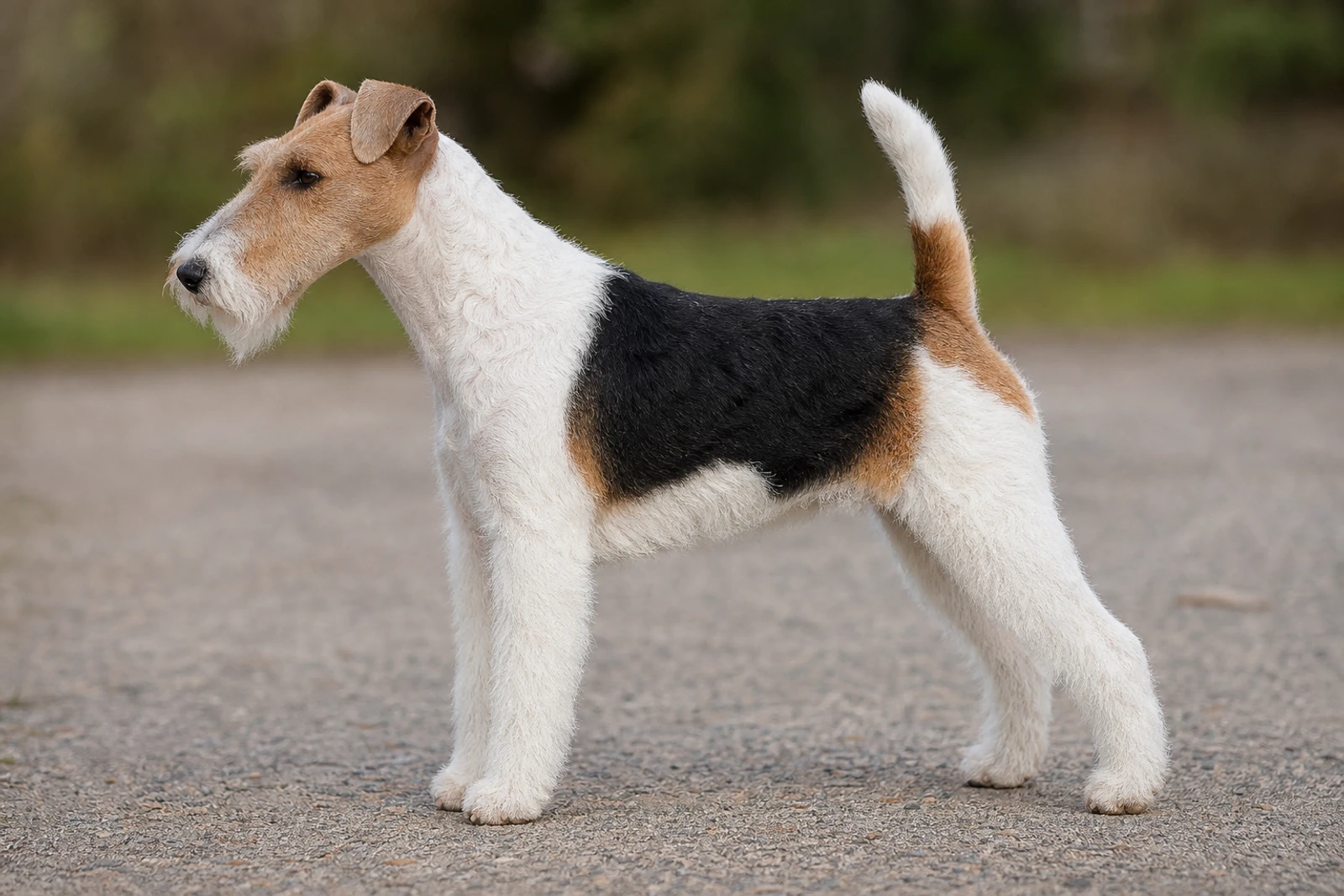
The Fox Terrier, encompassing both Smooth and Wire varieties, is a spirited and affectionate companion best suited for active individuals or families with older children. Originally bred to flush foxes from their dens, these terriers possess boundless energy, sharp intelligence, and a bold, curious nature. They thrive on adventure and require consistent training and plenty of exercise. Though they can be strong-willed, their loyalty and playful antics make them delightful pets for those who appreciate terrier tenacity. The smooth coat is easy-care, while the wire coat needs regular grooming.
At a glance
- Size
- Medium
- Height
- 15 in
- Weight
- 18 lb
- Life span
- 10 years
- Coat colors
- White, White & Black, White & Tan, White Black & Tan
- Coat type
- Smooth or wire-haired
How much does a Fox Terrier cost?
Adopt / rescue
$75–$400
Usually includes spay/neuter, first shots, and a microchip.
Buy from a breeder
$700–$2,000
From a reputable, health-testing breeder.
Approximate USD. Prices vary widely by region, breeder, pedigree, age, and coat colour — adopting is the lower-cost and recommended route. Avoid suspiciously cheap “breeders”; they’re often puppy mills.
Estimate the full cost of a Fox Terrier →Want the ongoing number? Estimate the monthly food bill for a Fox Terrier with our dog food cost calculator.
Fox Terrier photos
Views
Front, side, rear and top — the full silhouette.Poses
How the breed sits, lies, moves and plays.Puppy to senior
The breed across its whole life.Expressions
The breed’s range of moods.Close-up details
Eyes, ears, nose, paws, tail and coat.Coat colors
The breed’s recognized colors.Click any photo to enlarge. We show the Fox Terrier from every angle — three views, poses, life stages, expressions, close-ups, coat and colors.
Appearance & size
A Fox Terrier stops you with a silhouette that’s all business: square, balanced, and so hard-bodied that 18 pounds looks like 25. The breed stands no more than 15 inches at the shoulder, and most dogs hover right around 18 pounds, though a working male might carry a couple of extra ounces. This is a medium-sized dog put together like a bantamweight fighter—compact, with a short back and legs that are neither stubby nor spindly.
- Build from the side: The chest reaches deep to the elbows but stays narrow, so the dog slips through cover easily. The back is dead-level and short, the loin a tight, muscular arch. A gentle tuck-up keeps the underline tidy without going whippet-lean. The neck is long, clean, and set into well-laid shoulders, giving the head a proud, alert carriage.
- Front view: Forelegs drop straight from the elbows, parallel to each other, ending in small, round, cat-like feet that point forward. There’s no hint of coarseness or loose skin anywhere. The chest neither bows out nor sinks between the legs—just a clean, lithe front with the elbows running close to the ribcage.
- Rear view: Hindquarters drive the picture. Thighs are long, stifles well-bent, and hocks are short and perpendicular to the ground when the dog stands naturally. Viewed from behind, the legs are straight and parallel, never cow-hocked or wide. The tail is set high and carried upright with a jaunty little kink; where docking is still practiced, the tail appears erect and stumpy, but a natural tail is strong and held up like a flag.
Coat comes in two distinct types, and this is where you make a real choice. The Smooth Fox Terrier wears a dense, flat coat that’s hard to the touch and glossy in good condition—practically a slick, rain-shedding jacket. The Wire Fox Terrier sports a dense, wiry, broken coat with a soft undercoat; the outer hairs are so crisp they feel like crimped coconut fiber, and a proper wire jacket takes on a tousled, almost sculpted look when hand-stripped. Both varieties are overwhelmingly white, with markings of black, tan, or black-and-tan. White usually dominates the body, while the head carries the color—often a solid patch or a symmetrical blaze that leaves the face crisp and watchful.
The head itself is a distinctive wedge. The skull is flat and moderately narrow, tapering smoothly into a long, chiseled muzzle with a barely perceptible stop. The V-shaped ears fold forward neatly, dropping close to the cheeks, and the dark, deep-set eyes burn with that classic terrier intensity. Viewed head-on, the combination of folded ears, white face markings, and brick-like muzzle gives the dog a perpetually quizzical, confident expression.
From tip to tail, nothing on a Fox Terrier is overdone. The proportions are so tidy that the dog looks custom-built for squeezing into tight earths and snapping around on a dime. Whether smooth or wire, the coat never hides the outline underneath, so you always see the daylight under a Fox Terrier—lithe, spring-loaded, and entirely unmistakable.
History & origin
Fox hunting in the 18th-century English countryside demanded a terrier that could go where hounds and horses couldn’t — straight into a fox’s underground lair. That job created the Fox Terrier. Hunters needed a compact, narrow-chested dog to squeeze into tight earths, face a cornered fox, and either bolt it back toward the guns or bark to signal the diggers above. The practical blueprint called for a height of about 15 inches and a weight around 18 pounds: small enough to work below ground, sturdy enough to hold its own.
The breed took shape from the general pool of working terriers across the British Isles, but two distinct varieties soon emerged. The Smooth Fox Terrier came first, descended from the old smooth-coated Black and Tan terriers with likely infusions of Bull Terrier for courage, Beagle for scenting ability, and Greyhound for a racy outline. The Wire Fox Terrier arrived later, built on a similar foundation but crossed with rough-coated terriers from the mining districts of Wales and northern England. For decades, English breed clubs viewed the two coat types as a single breed with two varieties, and they competed together in the show ring. The Fox Terrier Club in England published the first written standard in 1876, locking in the lively, leggy silhouette and fearless temperament.
The breed crossed the Atlantic quickly. The American Kennel Club recognized the Fox Terrier in 1885, initially grouping smooths and wires together, then splitting them into separate breeds in 1985 — though Canada and the UK still treat them as two varieties. American showgoers took notice early, and the Smooth Fox Terrier made history when Ch. Warren Remedy won Best in Show at Westminster three consecutive years (1907, 1908, and 1909), a feat no dog has repeated. The Wire variety didn’t stay quiet for long; it went on to claim 15 Westminster Best in Show titles, more than any other breed. That spotlight turned the Fox Terrier into a familiar face at dog shows and in suburban homes, but never completely dimmed the original fire. Whether digging up a yard or standing at attention on a green carpet, a 15-inch, 18-pound Fox Terrier still moves with the brisk purpose of a dog bred to slip underground and make something happen.
Temperament & personality
You’re looking at 15 inches and 18 pounds of pure terrier voltage. A Fox Terrier doesn’t settle into the background; he runs the room with an alert, almost electric presence. Affectionate with his people, yes — but don’t mistake him for a lap dog. He’d rather be busy, and he’ll let you know if he’s bored. A bored Fox Terrier often becomes a loud one: neglect or isolation can quickly tip into anxiety-driven barking or frantic digging. These are dogs that need a job, not just a walk around the block.
Stubbornness is part of the package, and it deserves respect, not force. A heavy hand will shut him down or spark defiance. He learns fast when you’re fair and keep sessions short, but he’ll test boundaries if you waver. New owners sometimes misinterpret that tenacity as aggression. Stiff body posture and a hard stare often signal a decision about to happen — not malice, but the classic terrier impulse to act first and ask later. Recognizing his calming signals (lip licking, yawning, turning his head) helps you dial down intensity before he escalates.
Inside the house, the Fox Terrier defines his territory by more than walls. He may urine-mark in less-trafficked rooms, especially if he catches the scent of previous accidents. Cleaning with an enzyme-based or vinegar solution is non-negotiable; that smell is a billboard telling him to repeat the spot. When you catch him about to go, whisk him outside and reward him the second he finishes — it sticks a lot better than scolding an indoor puddle.
Chewing is a lifelong hobby. Puppies gnaw through teething pain; adults target hard objects to keep jaws strong and teeth clean. Protect your furniture with a homemade citrus spray (boiled peels) or a vinegar deterrent. But give him something tough and appropriate to shred, or your baseboards become the plan.
Fox Terriers genuinely like their families, yet the affection comes on terrier terms. They’re watchful, quick to sound the alarm, and not the best choice for homes with tiny, flapping pets or young kids who might interrupt a meal. Food guarding can surface if a child hovers near the bowl — teach everyone to let the dog eat in peace. With older kids who match his energy, he’s a tireless, playful companion. He’ll also roll in unmentionable things, a scavenger’s habit that researchers compare to us dabbing on perfume. He thinks it smells great; you won’t.
A 10-year lifespan means roughly a decade of this spirited, gritty company. Count on a dog who leans forward into life, rarely backward. If you want a calm, easygoing breed, walk on. If you’re ready for a bold, brainy dog who treats every day like an expedition, the Fox Terrier is waiting.
Good with kids, dogs & other pets
A Fox Terrier’s 18-pound frame packs a confident, high-energy terrier brain — and that makes early and consistent socialization the single biggest factor in how smoothly things go with kids, dogs, and other animals later on.
With kids, these dogs often have a patient, non-aggressive streak, but their bouncy enthusiasm can quickly overwhelm toddlers. A 15-inch dog that launches off the back of the couch for a toy will accidentally knock down a small child. Older kids who understand how to interact with a feisty dog — no ear pulling, no cornering — fare best. Still, never leave a Fox Terrier unsupervised with young children. The same tenacity that makes them fun playmates can flip into frustration if a child mishandles them. Start gentle introductions during the 3–14 week window, and keep experiences positive.
With other dogs, Fox Terriers can be scrappy. Same-sex pairings sometimes breed friction, and a bossy terrier attitude doesn’t always go over well at the dog park. They weren’t bred to back down. That doesn’t mean cohabitation is impossible — plenty live peacefully with another dog — but it requires careful introductions, neutral territory meet-ups, and ongoing management. Don’t force interactions with unfamiliar adult dogs, especially if your terrier already shows stiff body language. A forced greeting can escalate fast.
Cats and small pets are where that prey drive really shows. Fox Terriers were honed to pursue and bolt after small game, so a fleeing rabbit, hamster, or even a skittish cat triggers an instinct you won’t train out easily. Some do learn to coexist with a family cat if they’re raised together from puppyhood, but the risk never drops to zero. For bird or rodent cages, secure them well out of jumping range — these dogs can clear surprising heights.
The pattern with all three groups is the same: the prime socialization window closes around 12–16 weeks. A Fox Terrier that missed out on calm, varied exposures during that stretch may grow into an adult who’s dog-reactive, noise-sensitive, or nippy with strangers. If you’re adopting an older dog that’s already set in his ways, don’t force new friendships; focus on management and enrichment that work for the dog in front of you.
Trainability & intelligence
Your Fox Terrier is one sharp dog. This is a breed that figures out puzzles and patterns faster than most, but that quick mind comes with an independent streak. You can’t just expect blind obedience — you have to make it worth their while.
They learn new commands in a flash when the payoff is right. Food, a squeaky toy, or a brief tug session all work, and you’ll need to rotate rewards to keep them guessing. If a training session gets repetitive or drill-like, your terrier will mentally check out and invent its own game. Treats can fade into the background while a squirrel on the fence becomes the only thing that matters, so train in low-distraction areas first.
Recall is the big battle. A Fox Terrier who catches a scent or spots movement will bolt, and no amount of yelling will bring it back until the chase is over. Build a rock-solid “come” using high-value treats and a long line, practicing in a fenced area for months before you ever trust it off-leash.
- What works: Short, upbeat sessions where you mark and reward the instant they get it right. Use clickers or a consistent “yes” and pay generously.
- What backfires: Raised voices, frustration, or any kind of force. That approach either shuts them down or triggers a defiant argument you won’t win. They’ll remember the bad experiences and avoid you next time.
Socialization has to start early — expose the puppy to different people, dogs, sounds, and floor surfaces before 16 weeks. A Fox Terrier who misses that window can become suspicious of strangers and snappy with other dogs, especially same-sex ones. Even a well-socialized adult may be selective about canine friends.
The real glue is your relationship. Spend time playing together, hiding toys, teaching silly tricks. When your terrier learns that listening to you leads to fun, the stubborn edge softens. They’ll never be a dog that waits for permission to think, but they can be a quick, enthusiastic partner when you keep your promises and treat them fair.
Exercise & energy needs
Plan on at least 60 minutes of honest, get-your-heart-rate-up exercise every day — and that’s a floor, not a ceiling. Fox Terriers are lean, wiry, 18-pound hunt-born athletes, and they need to move. Break this into two or three sessions: a 30-minute brisk walk or jog in the morning, then a high-intensity play session or off-leash sprint in a secure area later, and maybe a 10-minute mental workout in the evening.
A single leash stroll around the block won’t touch their energy. These dogs were bred to bolt foxes from dens, so they come with a remorseless prey drive and a work ethic that looks for a job. You’ll see the best side of them when you mix physical cardio with real mental engagement. A flirt pole, a long game of fetch, or a tug session where you let them win now and then will burn far more steam than doubling the walk time.
Brain games count as exercise
A Fox Terrier’s mind runs as hot as its legs. Short, frequent puzzle-solving bursts keep them from inventing their own entertainment — and trust me, what they invent is rarely charming. Use food-dispensing toys, hide-and-seek with a favorite squeaky, or a 5-minute scent-work game where you hide treats around the room. Even basic obedience drills and trick training count; they learn fast and love the interaction.
Built for dog sports
This is a breed that shines in activities that lean into their nature. Agility, barn hunt, flyball, and earthdog trials (where they safely follow a scent through tunnels to a caged rat) are practically tailor-made. In the backyard, a flirt pole or a digging box (a sandbox with buried toys) gives them a safe outlet for the urge to excavate. Because that prey drive is hardwired, never let a Fox Terrier off-leash in an unfenced area — a squirrel can vanish a reliable recall in a heartbeat.
- Watch the joints. While generally sturdy, some Fox Terriers can be prone to luxating patellas. Avoid repetitive high-impact landings from heights, and skip full-tilt jumping on slick floors until you know your dog’s structure.
- Skip the exercise, and pay the price. Under-exercised Fox Terriers become champion diggers, barkers, and furniture recyclers. A tired one, on the other hand, is a sharp, funny, cuddly housemate who’s happy to curl up after the real work is done.
If you can’t commit to a solid hour of moving, solving, and chasing every day — rain, shine, or snow — this is not your dog. If you can, you’ll have a partner who never phones it in.
Grooming & coat care
Fox Terriers come in two coat varieties, and which one you bring home dramatically changes your grooming routine. The Smooth Fox Terrier sports a short, dense, single coat that lies flat, while the Wire Fox Terrier has a thicker, wiry outer coat with a softer underlayer. Both shed, but the hair type dictates how you manage it.
For a Smooth Fox Terrier, a weekly once-over with a pig-bristle brush distributes natural oils and pulls out loose hair, keeping that glossy, hard coat gleaming. During spring and fall shedding peaks, bump it to twice a week — you'll still find tiny red-brown or white hairs on dark pants, but it's manageable. A Wire Fox Terrier needs more hands-on work. A metal slicker brush with rounded pins should go through the coat at least two or three times a week to prevent matting in the dense undercoat and to lift out dead hair. Beyond brushing, the wire coat requires hand-stripping every few months to maintain its harsh texture and vibrant color. If you clip the coat instead, it will turn soft and cottony, lose weather resistance, and the color can fade.
Bathing is an occasional job. A Smooth Fox Terrier can go months between baths unless he's rolled in something foul. The Wire coat repels dirt better, so a rinse might be all he needs after a muddy romp, followed by a good towel dry. Over-bathing strips the natural oils that give both coats their sheen.
Nails, ears, and teeth follow the same small-dog drill. Trim nails every 3–4 weeks — if you hear clicking on the floor, you're late. Check the ears weekly for wax buildup or redness, especially since Fox Terriers are active diggers and can trap debris. A quick wipe with a damp cloth keeps the inner ear clean. Brush teeth at least three times a week to combat the tartar that can plague small jaws.
Seasonal shifts don't trigger massive coat blowouts, but you'll notice a heavier shed in spring and fall. That's when an extra brushing session makes the most difference. Keeping up with outdoor exercise — these are high-energy terriers — also encourages healthy coat turnover, so don't slack on walks just because it's shedding season. The brush is your cheapest tool, and a few minutes a week keeps the coat healthy and your home just a little less hairy.
Shedding & allergies
Fox Terriers are moderate shedders — not the worst you’ll see, but definitely not a non-shedding breed. The experience depends on which coat you’re dealing with.
A Smooth Fox Terrier drops short, stiff hairs year-round. That hard, flat coat constantly pushes out old hair, and those little bristles weave themselves deep into upholstery, carpet, and dark clothing. You’ll notice dust bunnies collecting along baseboards within days of vacuuming. The Wire Fox Terrier sheds just as much biologically, but the dead hair often gets trapped in the wiry outer coat instead of floating off. It stays in place until you brush it out, which can fool people into thinking they shed less. Both types hit a seasonal blowout in spring and fall when the undercoat cycles; during those weeks, you’ll see a real uptick in loose fur.
Drool is a non-issue. Fox Terriers have tight lips and don’t slobber after drinking or eating, so your dry-clean-only pants are safe from that end.
No dog is truly hypoallergenic, and Fox Terriers are no magic exception. The Wire’s coat can be a slight edge for some allergy sufferers because the dense hair holds more dander close to the skin rather than releasing it into the air, but it’s not a guarantee. The Smooth variety puts more dander directly into your environment. If allergies run in your household, spend 20 minutes in a closed room with an adult Fox Terrier before committing — the individual dog’s dander and your reaction matter far more than breed labels.
A weekly brushing (twice weekly for Smooths, daily during blowouts) and a hand-strip or clip every few months for Wires keeps the mess manageable. Expect to own a good lint roller and a vacuum with strong suction.
Diet & nutrition
A Fox Terrier at a healthy 18 pounds looks lean and muscular — but keeping him that way takes an honest eye on the food bowl. This breed often runs high on food motivation, so those bright, pleading eyes don’t mean he’s hungry. They just mean he knows how to work the room. If you follow the feeding guide on the bag without checking his actual body condition, you’ll likely end up with a pudgy dog.
- Adult portions: For a typically active Fox Terrier, that usually means about 1 to 1 ¼ cups of high-quality kibble per day, split into two meals. The real number depends on his daily exercise, metabolism, and the calorie density of the food. Keep an eye on his waist — you should feel his ribs with light pressure, not see them, and he should have a visible tuck-up.
- Puppy schedule: From weaning to 4 months, feed four evenly spaced meals. Drop to three meals until 6 months, then switch to the adult two-meal rhythm. Puréed or ground meats, fish, and cooked vegetables work well as you transition a puppy off milk, whether you go homemade or choose a premium commercial puppy food.
- Weight management: Extra pounds hit a small dog hard. Fox Terriers have a relatively short lifespan (around 10 years), so joint stress from obesity can steal active years. If your dog starts getting soft, cut the portions back by a tablespoon or two per meal and increase his exercise — real running, not just a leash stroll. Using a puzzle bowl or scattering kibble on a snuffle mat forces him to eat slowly and stops him from inhaling a meal in 30 seconds flat.
- What to put in the bowl: A meat-based diet suits his digestion best. If you cook at home, aim for roughly 60% meat (raw or cooked), 20–30% fruits and veggies, and the rest from eggs, grains like pearl barley, or plain yogurt. A little cooked white rice helps settle an upset stomach. Never go vegetarian or vegan with a Fox Terrier — his teeth and gut are built to handle animal protein, and you’ll deprive him of nutrients he can’t easily get elsewhere.
- Senior shifts: As he slows down, switch to smaller, more frequent meals if he seems less interested in food, but don’t automatically cut protein. Just watch the scale and reduce calories gradually to match his declining activity level. Puréeing his food can help an older dog with missing teeth absorb nutrients better.
- Household habits that backfire: Never feed your dog directly from the table or your plate. Even a single slipped scrap teaches him that begging works, and a Fox Terrier with a learned begging habit is a noisy, persistent dinner companion. Put any healthy leftovers (cooked veggies, a bit of unsalted meat) into his own bowl, after the humans have finished eating.
Don’t experiment with rich holiday leftovers or greasy trimmings, either. A sudden high-fat meal can trigger pancreatitis in a small dog. Stick to his normal diet, measure it, and you’ll keep that compact, wired frame in good shape for his full decade.
Health & lifespan
A healthy Fox Terrier typically lives around 10 years—shorter than you might expect for an 18-pound dog, so every preventive step counts. Good breeding and steady care can stretch that, but you're working against a handful of inherited conditions that responsible breeders actively screen for.
- Primary lens luxation (PLL): A painful eye disorder where the lens slips out of place. DNA testing lets breeders avoid mating carriers. If you don't know your dog's status, watch for squinting, tearing, or a bluish haze over the eye—this one can go from subtle to emergency fast.
- Legg-Calvé-Perthes disease: The head of the femur deteriorates from decreased blood supply, causing rear-leg lameness in young dogs. Surgery has a high success rate when caught early.
- Patellar luxation: A kneecap that pops out of its groove. Mild cases may come and go, but if your dog bunny-hops or skips a step on walks, get it checked.
- Deafness: Almost always linked to white-headed dogs, particularly Wires, and often detectable by 6 weeks of age. A BAER hearing test separates unilateral from bilateral deafness so you can adapt training and safety.
- Allergies and skin trouble: Food or environmental allergies show up as itchy skin, ear infections, or paw licking. You'll need to partner with your vet on diet trials or environmental controls rather than just buying a medicated shampoo and hoping it blows over.
Health isn't just genetics. A Fox Terrier's compact frame and big appetite make obesity a quiet threat—18 pounds is the breed's working weight. Piling on even two extra pounds can aggravate joints and shorten lifespan. Feed exact portions, not free-choice bowls. Monthly heartworm prevention during mosquito season and one month after is non-negotiable, and the rabies vaccine is legally required; there's no effective treatment once symptoms surface.
Schedule an annual wellness exam, more often for seniors. A Fox Terrier who suddenly stops launching off the furniture or loses his maniacal toy drive might be masking joint pain or a brewing lens issue, not just slowing down. Catch it early and you preserve the three things he loves most: chasing, digging, and bossing you around.
Living environment
Apartment vs. house
A house with a securely fenced yard is the gold standard for a Fox Terrier. These little dynamos need space to burn off their legendary energy, and a yard gives them a safe place to sprint, sniff, and dig—digging is a natural behavior you can’t train out of them, so give them a designated digging spot instead of fighting it. An apartment can work only if you’re fully committed to multiple daily trips to a park or open area for off-leash running. Even then, the sheer volume of their barking can make close-quarters living a headache for neighbors. They’re quick to sound the alarm at every passerby, squirrel, or suspicious leaf, and that sharp, piercing bark carries.
Yard needs
A tall, sturdy fence is non-negotiable. Fox Terriers are escape artists with serious digging instincts and surprising hops—they’ll tunnel under or climb over a flimsy barrier. Bury chicken wire along the fence line or install a dig-proof base. Set up a sandbox or dirt patch for legal excavating, but don’t expect them to amuse themselves unsupervised for long. Left alone in the yard, they’ll find a project, and it may involve uprooting your flower beds or trying to chase the neighbor’s cat through the slats.
Climate tolerance
These are hardy little dogs, but common sense applies. In hot weather, exercise during the coolest parts of the day and keep water close; their intensity pushes them to keep going long after they should stop, raising the risk of heatstroke. Smooth Fox Terriers have short, single-layer coats that offer almost no insulation against cold, so a winter jacket is wise when temperatures drop. Wire Fox Terriers have denser, double coats and handle chillier walks better, but both varieties need protection if they’ll be out in prolonged cold, wet, or icy conditions.
Noise and barking
Fox Terriers are vocal by design—they were bred to bark underground so hunters could locate them, and that instinct remains on full blast. They’ll bark at the doorbell, other dogs, strange noises, and during excited play. Training can curb excessive barking, but you won’t make them silent. If you share walls or have noise-sensitive neighbors, this breed will create constant friction unless you manage it early with consistent cue training and redirection.
Time alone
Leaving a Fox Terrier alone for a full workday is asking for trouble. They bond tightly with their families and can develop separation anxiety that shows up as destructive chewing, nonstop barking, and potty accidents. Crate training and gradual desensitization help, as does stuffing a puzzle toy or Kong to occupy their brain when you leave. Ideally, someone is home for a chunk of the day. For long absences, a midday dog walker or day care isn’t a luxury—it’s practically a necessity. These dogs thrive on company and purpose; hours of isolation will make both of you miserable.
Who this breed suits
The Fox Terrier is built for a home that treats intense daily exercise like a non-negotiable appointment. A couple of 15-minute leash walks won’t scratch the surface—this 18-pound, 15-inch-high dog needs a solid hour of running, chasing, and mental work every day. If your weekends involve long hikes, bike rides, or agility courses, you’ve found a tireless sidekick. They shine in dog sports: earthdog, flyball, barn hunt, even advanced trick training.
Active singles and couples who jog, bike, or skateboard get a compact, sturdy partner that doesn’t tire easily. The breed’s small-medium size means they tuck into an apartment if you’re truly dedicated to multiple daily outings, but the high barking tendency can strain neighbor relations. Families with school-age children (8 and up) do best—kids need to understand the Fox Terrier’s quick, no-nonsense temperament. Rough handling or teasing will likely earn a growl or a nip. Respectful kids get a funny, game-playing buddy who’ll fetch until your arm gives out.
Experienced dog owners who love a dog with opinions thrive here. This terrier isn’t blindly obedient; they’re clever, independent, and sometimes stubborn. First-timers can manage with a strong commitment to positive training classes and a willingness to outsmart the dog’s escape-artist tendencies, but it’s a steeper curve. Active retired folks who still walk miles daily and want a lively companion can make it work, though be realistic about the breed’s intensity carrying into old age. The average lifespan is 10 years; responsible breeders screen for cardiac issues, lens luxation, and patellar luxation, so ask about health testing.
Who should think twice: A house that wants a low-key lapdog or quiet couch companion will be miserable. The Fox Terrier’s prey drive is sky-high—squirrels, cats, rabbits, and small pets trigger an instant chase instinct that makes off-leash freedom in unfenced areas dangerous. A securely fenced yard is almost mandatory because they’ll dig under and charge. First-time owners looking for an easygoing starter dog, families with toddlers who can’t read a dog’s warning signs, apartment renters with thin walls, and anyone who works long hours away from home will quickly find themselves with a loud, destructive, unhappy terrier. Sedentary households are simply a poor fit.
Cost of ownership
A well-bred Fox Terrier puppy from a responsible breeder who screens for luxating patellas, eye issues, and deafness will typically run between $1,200 and $2,500. Show-quality or working-line pups can push past $3,000. Adoption fees through breed-specific rescues often land in the $200–$500 range, though adult dogs are less common.
Ongoing costs for this 18-pound firecracker break down pretty simply. A high-protein kibble suited to active small-to-medium breeds will set you back about $30–$50 per month. Skip the bargain brands; these dogs burn serious energy and the coat reflects diet quality.
Grooming is blessedly low-maintenance. A stiff bristle brush, occasional stripping (or a quick clipper trim if you skip the show ring), and a nail trim will run $30–$60 per session if you outsource it—but many owners learn to handle it at home with a $15 stripping knife and some patience.
The big wildcard is veterinary care. Expect to drop $300–$500 a year on routine stuff: exams, vaccines, heartworm prevention. Fox Terriers are generally hardy, but they can be prone to knee problems, lens luxation, and a touch of skin sensitivity. A single unexpected surgery can shred a tight budget. Pet insurance for a young, healthy dog typically runs $25–$45 a month; skip it and you’re betting you’ll never need it. Over a 10-year lifespan, that’s a bet you’re likely to lose.
Choosing a Fox Terrier
You can go two ways, and the choice matters. A well-bred Fox Terrier doesn’t happen by accident — these are high-octane dogs with a low tolerance for boredom. The wrong start from a careless breeder can saddle you with temperament problems and health bills that a 10-year lifespan won’t soften.
Breeder or rescue?
Fox Terrier rescues do exist, often through national breed clubs. You might get an adult whose personality is already visible, which is a real plus. But if you want a puppy, a responsible breeder is non-negotiable. Don’t impulse-buy from a website with a shopping cart. The best breeders are deliberately slow — they have wait lists, they ask you plenty of questions, and they breed only after health testing the parents.
Health clearances to ask for
Fox Terriers can be wrecked by a handful of inherited conditions. Responsible breeders screen for them and can show you the certificates.
- Primary Lens Luxation (PLL): DNA test. A dog needs just one copy of the gene to be at risk. A responsible breeder won’t breed an affected dog.
- Patellar Luxation: OFA evaluation. Loose kneecaps are common in small, active dogs.
- Legg-Calvé-Perthes disease: A hip joint deterioration that can show up in young dogs. OFA radiograph clears the parents.
- Cardiac check: OFA cardiac (auscultation or echocardiogram) rules out early heart murmurs.
- BAER hearing test: Especially important for white-headed lines, where congenital deafness can lurk.
If a breeder tells you their line is “healthy” but produces no paperwork, walk. Paperwork from a vet saying the dog “seems fine” doesn’t count.
Red flags that should make you leave immediately
- The breeder won’t let you meet at least one parent on the property.
- Puppies are always available, or there are multiple litters on the ground at once.
- They sell to the first person with cash, no questions asked about your lifestyle.
- They brag about “teacup” or “rare” Fox Terriers — that’s marketing, not breeding.
- The puppies are shy, flinch at handling, or seem flat rather than feisty. That’s not normal for this breed.
Picking a puppy
At 8 weeks, a Fox Terrier puppy should be a self-contained firecracker. Look for the one that trots up to investigate you, not the one hiding in the corner or the one bullying its littermates. Bold is good, but a puppy that can’t settle or redirect when you gently restrain it for 5 seconds may be a harder dog to live with than you’re ready for. Ask the breeder, “Which puppy would you place in a home with kids?” or “Which one is the most trainable?” They know. That guidance matters more than coat markings or gender.
This breed thrives with owners who understand that “medium” size doesn’t mean moderate energy. A bored Fox Terrier will repurpose your yard, your couch, and your patience faster than you can say “digging.” Choose your source as carefully as you’d choose a dog who’ll spend a decade living at a full sprint.
Pros & cons
-
Spirited, compact companion: At 15 inches and 18 pounds, you get a sturdy, portable dog with a huge personality. They’re up for a hike or a long fetch session, but small enough to curl up beside you after.
-
Low-shedding coat: Both Wire and Smooth Fox Terriers shed minimally. A weekly brush and occasional hand-stripping (for Wires) keeps the house surprisingly hair-free.
-
Natural watchdog: Ears and eyes miss nothing. You’ll get a sharp alert bark for every delivery truck, squirrel, or neighbor, but they’re not typically nuisance barkers.
-
Boundless trainability: These dogs thrive on mental work. Agility, earthdog trials, trick training — they’ll outthink you if you don’t stay a step ahead, but that drive makes them stellar performance dogs.
-
Resilient health profile: Generally a hardy breed. Responsible breeders screen for cardiac issues, luxating patellas, and eye conditions, giving you a solid start.
-
Relentless exercise engine: This is not a “couple walks around the block” dog. Plan on at least 60–90 hard-charging minutes per day — running, digging, chasing. Under-exercised Fox Terriers dismantle furniture with surgical precision.
-
Ironclad prey drive: Squirrels, cats, small dogs, even a blowing leaf — the chase switch flips and recall evaporates. Safe, secure fencing or leashed adventures are non-negotiable.
-
Same-sex scrappiness: Many Fox Terriers carry a fiery edge with other dogs, especially same-sex rivals. Early, constant socialization helps, but some individuals never become dog-park material.
-
A creative, stubborn intellect: They don’t just learn commands — they question them. Repetitive training bores them fast. You’ll need variety, humor, and firm consistency to channel that cleverness productively.
-
Distinctly shorter lifespan: A 10-year average is lower than many dogs their size. Dilated cardiomyopathy and primary lens luxation can surface; knowing the lines and early screening matter more than usual here.
Similar breeds & alternatives
If you like the wiry alertness of a Fox Terrier but suspect the 10‑year lifespan and full‑throttle energy aren’t for you, a few close cousins sit right next door on the terrier shelf—similar frame, different trade‑offs.
- Jack Russell Terrier (10–12 in, 13–17 lb, 13–16 years): smaller, even more motion‑dense, and built with a hair‑trigger drive that makes a Fox Terrier look measured. A Fox channels his fire into focused, trainable tasks; the Jack often scatters it into digging, fence‑climbing, and non‑stop ball obsession. Longer‑lived, but a greater management challenge for everyday homes.
- Rat Terrier (10–18 in, 10–25 lb, 12–15 years): often lands in the same weight class, yet brings a softer off‑switch and a genuine snuggle mode indoors. Less vocal, a little easier to settle, and a household companion who still hunts vermin but won’t periscope after every squirrel. The Rat’s longer lifespan stands out against the Fox’s 10 years, making it a solid pick if you want that terrier look with a lower‑maintenance emotional dial.
- Miniature Schnauzer (12–14 in, 11–20 lb, 12–15 years): shares the wiry‑coat terrier silhouette but swaps raw prey drive for a calmer, more biddable nature. Schnauzers adapt to apartment life with a couple of brisk walks; a Fox needs a yard and a real heart‑rate workout. They’re more trainable, shed less, and will actually recall away from small critters. The trade‑off is regular professional grooming and a dog that guards the front window with barks, not ballistic launch.
If you’re torn, think about your daily pace. The Fox Terrier delivers a big personality in a 18‑lb package but demands you match its intensity year after year—and that decade of life may feel short. The Jack, Rat, and Schnauzer each stretch the timeline and soften the edges in their own way.
Fun facts
- The Wire Fox Terrier has won the Westminster Kennel Club Dog Show more than any other breed, with 15 Best in Show titles.
- Originally bred in England to hunt foxes, the breed's name comes from its job of bolting foxes from their hiding spots.
- The smooth and wire varieties were once considered the same breed but were separated in the 1980s in most kennel clubs.
- A Fox Terrier named Caesar was the constant companion of King Edward VII and often appeared at his side in royal portraits.
Frequently asked questions
- Are Fox Terriers good with children?
- Fox Terriers can be good with older, respectful children but may be too energetic for toddlers. They are playful and sturdy, yet supervision is recommended as their terrier tenacity can lead to nipping if provoked. Early socialization helps them coexist happily with kids.
- Do Fox Terriers shed a lot?
- Fox Terriers have a short, dense coat that sheds moderately seasonally. Weekly brushing with a firm bristle brush helps control loose hair. They are not heavy shedders, but regular grooming keeps shedding manageable.
- How much exercise does a Fox Terrier need?
- Fox Terriers are high-energy dogs needing at least 30–60 minutes of vigorous exercise daily. They enjoy brisk walks, fetch, and mental stimulation like puzzle toys. Without sufficient activity, they may become destructive or bark excessively.
- Are Fox Terriers suitable for apartment living?
- Fox Terriers can adapt to apartments if given ample exercise, but their alert barking may disturb neighbors. They are active indoor dogs and benefit from a securely fenced yard for play. Early training can help manage barking tendencies.
- Do Fox Terriers bark a lot?
- Fox Terriers are alert and may bark at unfamiliar sounds or visitors, making them good watchdogs. With consistent training, excessive barking can be controlled. Their vocal nature is typical of the terrier group.
Tools & calculators for Fox Terrier owners
Quick estimates tailored to Fox Terriers — pre-filled with this breed’s size where it matters.
Articles & stories about the Fox Terrier
Sources & standards
This profile follows recognized breed standards from the American Kennel Club (AKC) and the Fédération Cynologique Internationale (FCI), along with established veterinary and breed-club guidance. These describe general breed tendencies — every dog is an individual.