

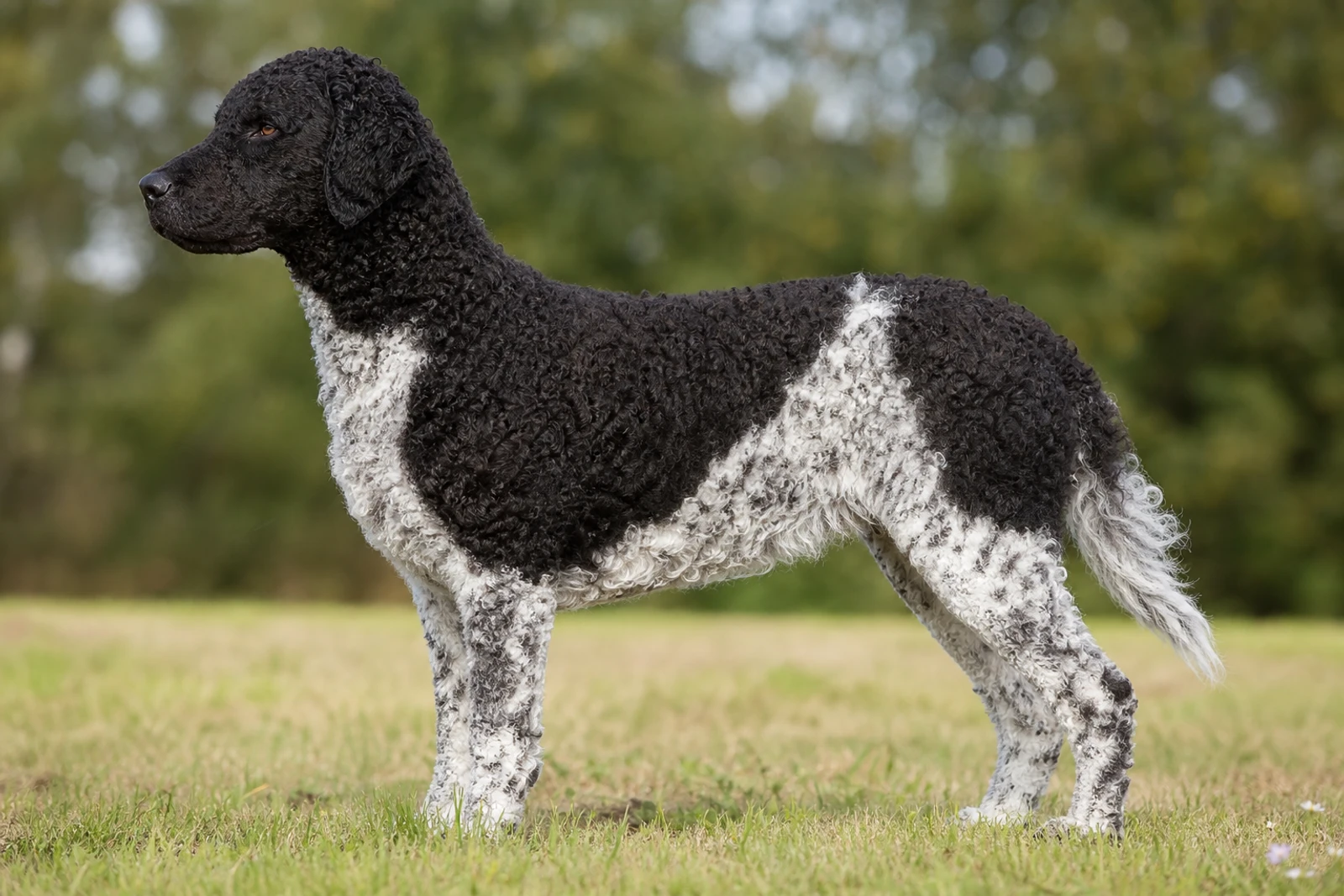
The French Water Dog, commonly known as the Barbet, is a cheerful, water-loving companion perfect for active families or sporty individuals. They thrive on companionship and outdoor adventures, especially swimming. Gentle with children and friendly with other dogs, they’re highly affectionate and intelligent. Their curly, low-shedding coat suits allergy sufferers but demands regular grooming. Best suited to homes with space and time for exercise and mental stimulation, they’re not ideal for sedentary households.
At a glance
- Size
- Giant
- Height
- 21–26 in
- Weight
- 35–60 lb
- Life span
- 12–14 years
- Coat colors
- Black, Brown, Fawn, Grey, White, Parti-color
- Coat type
- Thick, curly, water-resistant
How much does a French Water Dog cost?
Adopt / rescue
$75–$400
Usually includes spay/neuter, first shots, and a microchip.
Buy from a breeder
$700–$2,000
From a reputable, health-testing breeder.
Approximate USD. Prices vary widely by region, breeder, pedigree, age, and coat colour — adopting is the lower-cost and recommended route. Avoid suspiciously cheap “breeders”; they’re often puppy mills.
Estimate the full cost of a French Water Dog →Want the ongoing number? Estimate the monthly food bill for a French Water Dog with our dog food cost calculator.
French Water Dog photos
Views
Front, side, rear and top — the full silhouette.Poses
How the breed sits, lies, moves and plays.Puppy to senior
The breed across its whole life.Expressions
The breed’s range of moods.Close-up details
Eyes, ears, nose, paws, tail and coat.Coat colors
The breed’s recognized colors.Click any photo to enlarge. We show the French Water Dog from every angle — three views, poses, life stages, expressions, close-ups, coat and colors.
Appearance & size
You’ll spot the French Water Dog’s silhouette before you register any detail: a big, shaggy outline that reads as soaked-in-the-bones sturdy rather than delicate. The breed lands in the giant category, though the numbers on the scale tell a slightly different story — 35 to 60 pounds, with males typically filling the top half of that range. At 21 to 26 inches at the shoulder, these dogs are more about frame than heft. A deep chest, broad back, and heavy coat create the visual punch of a much larger animal, and that illusion only grows when they’re wet or running.
Coat and color
The coat is the breed’s calling card. Think dense, wooly, and undeniably rustic — a thick, curly or wavy layer that covers the dog from crown to tail tip. It’s a true double coat with a waterproof underlayer, built to shrug off cold water and brush. You’ll feel a slightly oily texture when you run your hands through it, a natural armor the breed still carries from its working roots. Colors stay traditional and solid: black, brown, fawn, grey, and occasionally white. A small white patch on the chest or a few white toes is permissible, but you’re far more likely to meet a dog in a single, unbroken shade. The coat weathers a bit with age — sun and water can bleach black coats to a softer charcoal — but it never thins out.
What catches your eye from every angle
Head-on, the face is all soft lines and shaggy charm. A rounded skull, a strong muzzle, and long drop ears that hang close to the cheeks give the dog an earnest, almost comical expression. The beard and mustache are not just decorative; they funnel water away from the mouth when the dog works. Eyes are large, dark, and set to look straight at you with a calm, steady gaze.
From the side, you appreciate the real structure. A muscular, slightly arched neck flows into straight shoulders and a level topline. The ribcage is deep and reaches well back, leaving room for serious lung capacity, while the underline tucks up just enough to avoid a slab-sided look. The tail is a natural extension of the spine, carried with a slight upward curve when the dog moves, never curled over the back.
From the rear, you see powerful, well-angulated hindquarters. Thighs are broad and muscled, hocks are straight and short, and the whole back end is obscured by that characteristic woolly coat — which means you’re also looking at a grooming commitment. The feathering on the backs of the legs can drag mud, snow, or burrs inside, so plan on checking the dog over after every good romp. Beneath the hair, the feet are large, oval, and webbed, a detail that makes this breed an efficient, tireless swimmer.
History & origin
The French Water Dog you meet today carries a 500-year-old legacy in its webbed paws and dense, curly coat. Known to breed historians as the Barbet—from the French barbe, meaning beard, a nod to its shaggy face—this retriever first splashed onto the scene in France’s coastal marshes and inland waterways sometime in the 1500s. Woodcuts and early hunting manuscripts from the 16th century already show a thick-set, woolly dog fetching downed ducks and geese in icy water, and the breed’s waterproof double coat and calm, businesslike water entry were prized by common hunters and kings alike. King Henry IV’s own Barbet, a female named Citron, famously accompanied him on hunts and even earned a royal pardon for a man accused of killing her.
What the Barbet lacked in speed it made up for in cold-water stamina and a soft mouth. Fishermen and market hunters worked them from flat-bottomed punts; the dogs slipped over the gunwale with barely a ripple, then swam tirelessly to retrieve birds from dense reeds. For centuries, the breed was also a quiet bedrock of European dogdom. Its genetics trickled into the creation of the Poodle (originally a water dog itself), the Briard, the Newfoundland, and several other breeds that needed a thick, weatherproof coat and a gentle retrieving instinct.
By the early 20th century, two world wars and a shift away from subsistence hunting nearly erased the Barbet. Only a handful of dogs remained in scattered French villages. A small, stubborn group of French breeders tracked down the last typey specimens in the 1970s and 1980s, painstakingly rebuilding the population while holding true to the original working standard. The breed gained Fédération Cynologique Internationale recognition in 1954, but it took decades longer to put down roots outside Europe. The Barbet was imported to North America by dedicated enthusiasts in the 1990s, entered the American Kennel Club’s Miscellaneous class, and won full Sporting Group acceptance in 2021. Today’s French Water Dog remains a scarce gem—fewer than 500 new AKC registrations per year—still expected to do the same steady, splashy work its ancestors did along the rivers of Brittany and the Camargue.
Temperament & personality
The French Water Dog is a steady, people-centered companion that forms tight bonds with the whole household. If you’re looking for a gentle giant—though this breed actually tops out at a lean 35–60 pounds and stands 21–26 inches—you’ll get a calm, affectionate presence that wants to be part of whatever you’re doing. They’re generous with their affection and rarely aloof, but don’t mistake that easygoing nature for a pushover. These dogs can be quietly strong-willed. They respond best to respectful consistency, not force. If you try to bully them into compliance, you’ll meet a dog that simply opts out.
Inside the home, the French Water Dog is notably good with children, provided kids learn a non-negotiable rule: leave the dog alone during meals. Food guarding can surface if they’re pestered while eating, so peaceful, uninterrupted mealtimes matter. They’ll also need early socialization to keep their confidence in check around new people and other dogs. Without it, a naturally watchful side can tip into skittishness or unnecessary barking. A forward-leaning posture and direct staring aren’t typical of this breed, but if you ever see stiff body language and a hard gaze, step back—that’s the dog telling you it’s uncomfortable, and you need to listen.
Expect a generous daily dose of goofy charm mixed with a few messy quirks. A French Water Dog’s scavenger ancestry is alive and well; on a walk, they might decide a rotting fish or a pile of mystery scat is exactly what they want to wear home. Rolling in strong odors seems to be a personal passion—whether they’re masking their own scent or simply enjoying a good stink, nobody really knows. It makes off-leash time in swampy areas an olfactory gamble. They also chew with enthusiasm. Puppies gnaw through teething pain, and adults will work a hard object for jaw exercise and dental benefits. Protect your shoes with a homemade citrus or vinegar spray, and give them plenty of approved chews to redirect the instinct.
As a water dog, they’re natural swimmers and happiest when there’s a pond, creek, or kiddie pool involved. That love of water often comes with an equally enthusiastic tail wag and a relaxed, loose body when they’re content. You’ll see plenty of soft eyes, and if they’re anxious—say, during a thunderstorm—you might catch them yawning, licking their lips, or turning their head away. These are calming signals, not stubbornness. Paying attention to that language keeps a smart, sensitive dog feeling safe. Without enough time together, boredom and isolation can brew into barking marathons or indoor accidents; they draw their “house” boundaries by your family’s scent, not by rooms. If you don’t want them to claim an unused guest room as a bathroom, make that space smell lived-in or block access entirely. Reward outdoor potty trips with a treat immediately after they go, and clean any indoor mess with a vinegar solution that erases the scent cue completely.
Good with kids, dogs & other pets
With children
French Water Dogs come by their kid-friendly reputation honestly. Their patient, non-aggressive nature means they rarely startle or snap, and the breed’s lighter frame—35 to 60 pounds, even with a 21- to 26-inch shoulder height—makes them less likely to flatten a toddler during a doorway zoomie. That said, you’re still dealing with a big, affectionate animal. Bump-and-fall accidents happen, especially with a young dog who hasn’t yet learned to rein in its enthusiasm. Teach children the usual rules: no hugging a sleeping dog, no pulling ears or tail, and give the dog an escape route when it’s had enough. Because this breed is sensitive, loud shrieking or rough handling can erode its trust faster than you’d think. Close supervision around crawling babies and toddlers is non-negotiable—a well-meaning paw swipe can scratch a face.
With other dogs
These are inherently sociable dogs that enjoy the company of their own kind, provided the introductions are handled well. The magic all happens early. From 3 to 14 weeks old, let your puppy have frequent, positive experiences with healthy, known, puppy-tolerant adult dogs. Playdates, short walks in calm environments, and supervised yard time build a dog who reads canine body language fluently. Skip that early window and you may wind up with an adult who’s uneasy or overamped around unfamiliar dogs. An older French Water Dog who hasn’t been socialized doesn’t suddenly need a dog-park crash course—forcing interactions in adulthood just adds stress and can spark a fight. If your dog is content with you as its primary social circle, that’s perfectly fine.
With cats and small pets
In-house harmony with cats boils down to early, supervised exposure. A French Water Dog raised alongside a cat from puppyhood often accepts it as part of the family, ignoring it or even curling up beside it. Still, these dogs were originally bred for water retrieval, so quick movements from a fleeing cat or a caged small animal can pull at old instincts. Make introductions gradual, behind a baby gate at first, and only leave the animals together unattended once you’ve seen weeks of calm, predictable behavior. Never trust a dog who hasn’t lived with a rabbit, ferret, or guinea pig to automatically ignore those animals—management and separate spaces are the safest bet.
The socialization advantage
This isn’t just about getting along with other living things. A well-adjusted French Water Dog needs early, broad exposure to children of all ages, strollers, skateboards, vacuum cleaners, loud music, and new environments. The sensitive period for wiring the brain to “normal” closes around 16 weeks; after that, it’s about maintenance and gentle desensitization. Puppies raised without that rich social diet—think isolated kennel settings—often struggle with fearfulness and noise sensitivity for life. Keep the outings positive, brief, and treat-heavy, and you’ll end up with a steady companion who doesn’t panic when the doorbell rings. An undersocialized adult can still improve with patient training, but you can’t truly replicate what’s lost from that tight puppyhood window.
Trainability & intelligence
This dog learns fast, but “fast” doesn’t mean “compliant.” A French Water Dog’s brain is built for independent problem solving — think retrieving waterfowl from marshy brush without a human directing every move. That intelligence means he’ll figure out what you want quickly; it also means he’ll decide whether today’s request is worth his time. The minute a training session turns repetitive or heavy-handed, he checks out. Keep things light, short, and game-like, and you’ll have a dog who shines.
What motivates him
Most French Water Dogs will work enthusiastically for food, a favorite tug toy, or the chance to plunge into water. Lean on what the individual dog finds rewarding. For many, a single piece of dehydrated liver or a quick toss of a bumper into the lake fuels far more drive than a hundred lifeless “good dog” repetitions.
The recall reality
A reliable recall doesn’t come free with the breed. If a pond, a creek, or a bird flushes 30 yards away, your voice may drop to background noise. Start recall training inside at 8 weeks, then move to fenced outdoor spaces with gradually bigger distractions. Use a long line to prevent self-rewarding sprints, and pair every check-in with something that tops whatever he was about to chase. Never call him to you and then end the fun; call him, reward, and release him back to what he loves.
Cracking the stubborn streak
Whip-smart breeds with a strong independent streak — and this one qualifies — can appear stubborn when they’re just making their own calculations. Avoid corrections that chip away at trust. A frustrated tone or collar pop teaches him that you’re unpredictable, and a 55-pound dog who doesn’t trust you is a load you don’t want on the end of a leash. Quiet consistency does more than any punishment ever will. If he blows off a known cue, reset the situation instead of upping the pressure. End every session on a successful rep, even if it’s something simple.
Early socialization shapes everything
The window between 3 and 14 weeks is non-negotiable. Expose a French Water Dog puppy to kids, traffic noises, slick floors, other dogs, and, crucially, different bodies of water with gradual, positive introductions. A poorly socialized adult can be wary of strangers or skittish in new environments, and that fear complicates training drastically. Pair every new experience with treats or play so he logs “that was safe and rewarding” in his mental file.
A workflow that fits his wiring
- Mark and reward the split-second you get a correct response. Precision builds clarity.
- Mix up locations early — the backyard, a quiet park, a friend’s place — so he generalizes commands beyond the living room.
- Keep spoken cues calm. A sensitive dog will react to your frustration before he processes the command.
- Pair training with what he was bred for. Throw a retrieve, then ask for a sit-stay before you release him. You’ll get far more buy-in when work taps his natural retrieving drive.
A French Water Dog wants to partner with you, not obey you. Build the relationship with groundwork that respects his intellect, and you’ll end up with a steady, inventive companion who reads you as well as you read him.
Exercise & energy needs
A French Water Dog was built to retrieve in rough water and marshland, not trot politely around the block. Plan on 60 to 90 minutes of vigorous exercise every day, split into at least two sessions. One long walk won’t cut it — this dog needs to charge off-leash, swim hard, and work its muscles until genuinely tired.
Daily rhythm
Mornings often start with a 30-minute off-leash run or an intense game of fetch. Afternoons or evenings call for another 30–45 minutes. Swimming, retrieving bumpers from a pond, or a fast-paced training session can all fill that second slot. The breed’s water instincts run deep; a wet workout is both a joy and a joint-friendly way to burn energy.
Brain work, not just legwork
Physical exercise alone isn’t enough. A French Water Dog is smart and gets bored easily. If you skip mental stimulation, you risk building a finely conditioned athlete that still dismantles the sofa. Daily brain games — scent work, hide-and-seek with toys, food puzzles, or 10 minutes of new trick training — can be as tiring as a 20-minute run. Weave these in throughout the day, not just after physical sessions.
Sports and jobs that fit
These dogs thrive with a purpose. Dock diving, field retrieving, water trials, agility, and rally all tap natural talents. Nose work and advanced obedience give them structured problem-solving. Even informal jobs, like carrying a backpack on a hike or finding hidden objects around the house, keep their mind engaged.
Puppy and safety notes
Puppies need shorter, self-paced bursts on soft ground. Repetitive jumping and pounding on concrete can damage developing joints until growth plates close — typically around 12–14 months. Swimming and grassy free play are ideal. For adults, watch for overheating during hot-weather workouts and provide frequent water breaks. The breed often doesn’t know when to quit, so it’s up to you to call the session.
A French Water Dog that doesn’t get this mix of hard exercise and mental work will find its own job — barking, chewing, or escaping. Meet the need consistently, and you get a calm, cheerful housemate who crashes at your feet once the day’s work is done.
Grooming & coat care
The French Water Dog’s thick, curly coat is a magnet for debris and mats if you skip a day. That dense, wool-like texture was built for cold water work, but inside your house it means a strict daily brushing habit—no exceptions. Use a metal slicker brush with rounded pins to reach the undercoat, working section by section down to the skin. Follow up with a greyhound comb to catch any tiny snarls near the ears, armpits, and behind the legs, where tangles love to hide. If you let it slide for even two or three days, you'll be facing a de-matting session that's no fun for anyone.
Bathe every 4 to 6 weeks, or more often if your dog regularly swims in lakes or the ocean. Rinse thoroughly—soap residue trapped in those curls leads to dry, itchy skin. A diluted, dog-formulated conditioner helps keep the coat pliable enough for brushing, but heavy leave-in products can weigh it down and attract grit.
Professional trimming every 6 to 8 weeks keeps the coat manageable. You can opt for a shorter "retriever cut" that mimics the body's natural lines while snipping away enough length to reduce home maintenance. Even with routine trims, expect to clean up stray hair around the house, because this breed does shed lightly year-round rather than dropping a seasonal blizzard.
Ears: flap them over, give them a sniff, and clean with a vet-approved drying solution weekly. Those drop ears trap moisture and turn a simple swim into an ear infection waiting to happen. Nails need clipping every 3 to 4 weeks—on a 55-pound dog pacing across hardwood, you'll hear the click when they're too long. Teeth get a quick daily brush with enzymatic dog toothpaste; giant breeds can be stoic about dental pain, so don’t wait for bad breath to set in.
The coat doesn’t dramatically blow out with the seasons, but you might notice a slight uptick in loose hair during spring and fall. Double down on the slicker work during those stretches, and add a natural bristle brush pass a couple times a week to distribute oils and bring up the shine. Keep the dog active outdoors—exercise encourages healthy skin turnover and cuts down on stress-related shedding. A tired, well-groomed French Water Dog is a much happier roommate.
Shedding & allergies
A breed with a thick, curly coat and the word “water” in its name doesn’t sound like a low-shedder at first glance, but the French Water Dog will surprise you. These dogs drop very little hair day to day. Most of the loose strands get caught in the woolly curls instead of ending up on your sofa or floating through the air. You’ll find more hair in the brush during a grooming session than you ever will on dark pants.
There’s no dramatic seasonal blowout. You might notice a slight uptick in shedding as the weather shifts, but nothing that fills a vacuum canister. The real trade-off is coat maintenance: those curls mat easily if left unattended, so line brushing down to the skin several times a week is non-negotiable.
Drool is minimal. You won’t be wiping slobber off walls or keeping a towel handy after every drink of water, which is a plus for families who can’t stand the gooey side of giant breeds.
Now for the “hypoallergenic” picture. No dog is 100% allergen-free. People react to proteins in dander, saliva, and urine — not just hair. Because a French Water Dog traps dander in its coat and sheds so little, many allergy sufferers tolerate the breed better than heavy shedders. However, that same coat can accumulate dust, pollen, and outdoor allergens brought in from walks, so regular rinsing and brushing actually help keep the indoor environment more comfortable for you, not just the dog. If allergies are a serious concern, spend a few hours with an adult dog before committing to a puppy.
Diet & nutrition
Weight management is the quiet giant in this breed’s health picture. A French Water Dog carries 35 to 60 pounds on a 21-to-26-inch frame, and extra ounces land hard on joints that already work through years of swimming and retrieving. Even a few extra pounds can invite arthritis or spinal stress, so your job is to feed the dog in front of you, not the one in the food bowl fantasy.
What to feed
Aim for a diet built around roughly 60% raw and cooked meat, 20–30% fruits and vegetables, and about 10% extras like eggs, grains, or plain yogurt. Blending or processing meals helps because a dog’s jaw moves vertically and lacks the salivary enzymes that kickstart digestion in humans; partial “pre-digestion” gets more nutrients out of every bite.
Staples that work for many French Water Dogs:
- Pearl barley – a digestible, high-fiber grain that doesn’t spike blood sugar.
- White rice – bland and easy on a sensitive stomach.
- Canned fish (in water, no salt added), cooked eggs, and batches of cooked vegetables for quick, balanced meals.
- Unsalted vegetable cooking water as a light stock for kibble or homemade food.
Skip the vegetarian or vegan route. A dog’s entire plumbing evolved to process meat; depriving it of species-appropriate nutrients is asking for trouble. And stay away from excessively rich, fatty foods—a holiday handout of greasy scraps can tip a pancreas into dangerous inflammation fast.
Portions and frequency
Because many French Water Dogs would happily eat themselves into a barrel shape, portion control isn’t optional. Feed according to your dog’s current weight, not a hopeful goal weight, and adjust based on real daily exercise—not what you plan to do tomorrow.
Puppies follow a tight schedule:
- Up to 4 months: 4 evenly spaced meals a day
- 4 to 6 months: 3 meals a day
- 6 months and older: morning and evening meals, like an adult
Transition a puppy gradually when switching foods; start with lightly cooked, puréed meats, fish, fruits, and vegetables, or a high-quality commercial puppy food. Around 12 weeks, you can introduce raw chicken wings under direct supervision—good for jaw strength and mental work.
For seniors (12–14 years is a common range), weight creeps on as the tired dog still polishes off the same bowl. Shift to smaller, more frequent meals, and dial back calories the moment you notice an extra rib cover. There’s no need to slash protein just because the muzzle is grey; lack of evidence says it helps, and older muscles still need it. Purée meals if teeth are missing or gums are sensitive.
Little habits that pay off
Put every ounce of food in the dog’s own bowl—never a scrap from the table. Once begging takes root, it’s harder to unlearn than a bad recall. If your Water Dog inhales meals, a food puzzle bowl slows things down and trades speed for a few minutes of brain work.
Cook a double batch of grains or vegetables on the weekend and freeze extra portions; it turns a harried Tuesday into a “real food” day without the chaos. When you do use leftovers, serve them in that same dog bowl so the message stays clear: human tables don’t equal dog dining.
Health & lifespan
A well-bred French Water Dog typically lives 12 to 14 years—a generous lifespan for a dog this size, but one that hinges on smart prevention and early action. The numbers are on your side if you stay ahead of a few known weak spots.
Dogs built for water tend to have water-related trouble, and that holds true here. The same thick, curly coat that shrugs off cold lakes also traps moisture against the skin. Mats form fast where air can’t circulate, creating a perfect setup for hot spots, yeast, or bacterial infections. After every swim—or even a rainy romp—rinse the coat thoroughly and get it dry, especially under the arms, behind the ears, and down the legs. You’ll stop most skin problems before your vet ever sees them.
Those drop ears are another moisture trap. A dark, warm, damp ear canal invites yeast and bacteria, so chronic ear infections are a real frustration in this breed. Wipe the outer ear dry after water exposure, clean with a vet-approved solution weekly, and learn what a healthy ear should smell like. A musty odor or head-shaking means it’s already brewing.
What responsible breeders screen for
Because the French Water Dog is still relatively uncommon in the U.S., hereditary conditions haven’t been amplified the way they have in some popular breeds. But no breed is bulletproof. Reputable breeders run the following tests and hand you the paperwork willingly:
- Hips and elbows: OFA (or PennHIP) evaluations to rule out dysplasia. Don’t accept “they look fine”—get the actual clearance numbers.
- Eyes: Annual CAER (formerly CERF) exams by a veterinary ophthalmologist to catch progressive retinal atrophy (PRA), cataracts, and other inherited eye diseases early.
- Cardiac and thyroid: Some breeders also screen for heart abnormalities and autoimmune thyroiditis, though these are less prevalent.
If a breeder hedges or says “we’ve never had a problem,” walk away. You want documented results, not promises.
Keeping weight where it belongs
At 35 to 60 pounds, a French Water Dog should be lean and athletic—you want to feel ribs beneath a thin layer of flesh, not a thick cushion. These dogs are often highly food-motivated, which makes them easy to train but dangerously easy to overfeed. Even five extra pounds load joints and shorten a lifespan. Measure meals in grams, not scoops, and use part of the daily ration for training treats. If your vet mentions your dog is “well-covered,” that’s a polite nudge to cut back.
Preventive care that saves lives
Heartworm prevention: Give it monthly during mosquito season and for one month after temperatures drop. In warm climates, year-round protection is the safer bet. Treatment for a full-blown heartworm infection is brutal and expensive; prevention isn’t.
Rabies vaccination: It’s the law, and for good reason. Once clinical signs appear in a dog, rabies is untreatable and fatal. Keep that certificate current.
Yearly wellness exams catch what you won’t see—a subtle limp, an early cataract, a thyroid value drifting low. As a French Water Dog ages past 8 or 9, schedule vet visits every six months, even if everything seems normal. You’re looking for quiet warnings: a less enthusiastic swimmer, a dog who sleeps through dinner, a slight increase in accidents indoors.
The mental health piece
A French Water Dog kept in isolation or handled with heavy-handed corrections can develop anxiety-driven behaviors—barking all day, chewing the drywall, shutting down during grooming. Early, positive socialization with people, kids, and other dogs pays off in a dog who handles stress without tipping into panic. Use respectful, consistent training methods. Force creates resistance in a smart dog, and stress-related colitis or suppressed immune function are real consequences over the long haul. A steady, well-connected dog simply stays healthier.
Living environment
A French Water Dog isn’t giant by weight—that 35–60 lb frame sits on a 21–26 inch shoulder—but his need for movement and mental work is enormous. This is a working retriever built to splash through marshes. He won’t do well in a cramped apartment unless you treat the world outdoors as his real living room and commit to two solid daily sessions, not a casual stroll. Plan on at least 60 minutes of exercise split into morning and afternoon runs, swims, or retrieval drills. A short leash walk around the block barely warms him up.
A house with a securely fenced yard is the straightest path to sanity. The fence matters—he’ll test gaps if there’s a bird or puddle on the other side. He lives for water, so a yard with a kiddie pool or access to a clean lake cuts your work in half. Without it, you’ll need to create wet, messy play somewhere else.
Climate tolerance swings heavily toward cool and wet. That dense, woolly coat insulates him in chilly water but traps heat fast when the temperature climbs. In summer, exercise early or late, and always provide shade and fresh water. He’ll choose a cold puddle over a patch of sun every time. High humidity and heat together can make him dangerously uncomfortable, so avoid midday exertion.
As for noise, he’s no constant barker, but he’s got a booming alert bark. If he’s bored or left staring out a window at passing dogs, you’ll hear about it. A tired French Water Dog is typically quiet indoors, but his voice is deep enough that thin apartment walls won’t hide it.
Being left alone hits this breed hard. He bonds like glue to his people and can spiral into distress, chewing or howling when hours stretch too long. Crate training and gradual desensitization help, but a household where someone works from home or comes back midday is far better. If your schedule keeps you gone nine hours straight, you’re setting up a dog that will make his own miserable entertainment.
Who this breed suits
If you can give a dog a real job—even if that job is just retrieving a bumper from a lake twice a day—a French Water Dog will make you look like a training genius. This breed sinks its teeth into work with glee, so the ideal owner is someone who genuinely enjoys daily, hands-on activity. A 40-minute neighborhood stroll won’t cut it; plan on at least an hour of off-leash running, hiking, or swimming. If you’re the type who spends weekends at the river or beach, this dog already fits your life.
Active families get a tireless playmate who is famously patient and silly with kids. Just brace for a 50-pound dog who still thinks “gentle” means galloping through the living room with a sopping wet toy. Older children who can handle that enthusiasm are a better match than toddlers who might get bowled over. Singles or couples who run, bike, or paddleboard will find a shadow that never quits and a watchdog who alerts without aggression. The breed’s people-orientation means it’s miserable left alone for long workdays, so work-from-home setups or dog-friendly offices are a big plus.
First-time owners can succeed if they’re committed to positive training from day one. This is a whip-smart, problem-solving dog that gets bored fast and will invent its own entertainment—digging, counter surfing, dismantling the couch. You’ll spend as much time on mental toys and trick training as on physical exercise. Seniors should look carefully: the dog’s energy and strength can pull a walker off balance, and the high-maintenance curly coat needs thorough brushing two or three times a week plus professional clipping every couple of months.
Think twice if your idea of “pet” is a quiet lapdog or if you don’t have easy access to water. A French Water Dog without a pond or creek to splash in is like a retriever without a ball—it’ll manage, but you’re missing half the point. The coat also forms a life-of-its-own mess of mats if you skip grooming for even a week, so be honest about the upkeep. This is a dog that shines with a handler who isn’t just active, but actively involved.
Cost of ownership
A well-bred French Water Dog puppy from a reputable breeder who screens for hip dysplasia, eye disorders, and other inheritable conditions typically costs between $2,500 and $4,000. Because the breed is still uncommon in the U.S., you may spend months on a waitlist. Expect to put down a non-refundable deposit of $200–$500 to hold your spot.
Once your dog comes home, the recurring expenses break down like this:
- Food: $50–$80 per month. A 35–60 lb adult eats roughly 2 to 3 cups of high-quality kibble a day. Adding canned food, fresh toppers, or prescription diets pushes that toward the upper end.
- Grooming: $80–$120 every 6–8 weeks, or about $45–$80 monthly when you average it out. The dense, curly coat mats fast without regular line brushing at home and professional scissoring or clipping. Plan on at least a quick daily comb-through plus a full wet-bath and blowout at the salon.
- Routine vet care: $300–$500 per year ($25–$42/month) for annual exams, vaccines, heartworm and flea/tick preventives, and basic bloodwork. Dental cleanings, if needed, add $300–$800 to a given year.
- Pet insurance: $40–$75 per month for a comprehensive accident-and-illness policy with a reasonable deductible. Rates climb with the dog’s age and your ZIP code. Without insurance, a single orthopedic surgery — hips and cruciate ligaments are weak spots in water-retrieving breeds — can run $3,500–$6,000.
- Supplies and miscellaneous: $25–$50 monthly, averaged over the year. That covers a sturdy crate, a waterproof bed (this breed loves water and will soak whatever it lies on), chew toys, training treats, and replacement leashes or harnesses.
All told, you’re looking at a first-year outlay of roughly $5,500–$7,500 (including the purchase price) and then $1,800–$3,000 per year after that. Professional training classes, dog walkers, or boarding during travel add to the tab, but they’re wise investments for a smart, energetic dog that thrives on consistent work.
Choosing a French Water Dog
Finding a French Water Dog isn’t like picking up a Labrador from the classifieds. This is a small-population breed with fewer than a couple hundred new puppies registered each year. Start by accepting you’ll probably wait 12–18 months for a well-bred puppy from a responsible breeder — and that’s a good sign, not a hassle.
Breeder or rescue? Both paths exist, but rescue is rare. A few Barbet-specific rescue groups occasionally place adults whose families couldn’t keep up with the grooming and energy demands. These dogs are often wonderful, but they may come with unknowns about health history or early socialization. If you go the breeder route, you’re looking for someone who treats their breeding dogs like family and can show you the receipts.
Health clearances you need to see
Any responsible breeder will hand over official results — not just a vet’s “looks healthy” nod. Ask for these minimum clearances on both parents:
- Hip dysplasia: OFA or PennHIP evaluation (look for a rating of Fair or better).
- Elbow dysplasia: OFA clearance.
- Eye exam: A recent CAER (OFA eye) exam by a board-certified veterinary ophthalmologist.
- Cardiac: An echocardiogram or board-certified cardiologist exam clearing the dog for hereditary heart issues.
- DNA testing: prcd-PRA (progressive retinal atrophy) and, ideally, a broader panel that includes degenerative myelopathy and other known mutations for the breed.
Seizure disorders like idiopathic epilepsy can pop up in some Barbet lines. There’s no DNA test yet, so a good breeder will be brutally honest about any known occurrences in the extended pedigree and may avoid repeat matings that produced affected dogs.
Red flags that should make you walk
No hesitation refunding your deposit if you spot these: The breeder can’t produce the health clearances above, or they claim they’re “working on it.” Puppies are always available, or there’s a constant carousel of litters. They won’t let you meet at least one parent on-site (usually the dam). They don’t ask you any hard questions about your lifestyle, yard, or why you want a giant water dog that needs a solid hour of off-leash running and grooms like a wool sweater. A breeder who doesn’t vet buyers is producing puppies for profit, not for the breed’s future.
Picking your puppy
You’ve found a litter: great. Now watch more than you touch. French Water Dog puppies should be curious, bumbling toward new people, not shrinking into a corner. Avoid the one that startles easily and won’t recover, and also the one that bullies littermates nonstop — extremes rarely age into easygoing family dogs. A savvy breeder will match temperament to your home anyway. If they can describe each pup’s personality (the cheeky one, the cuddler, the thinker), you’re in good hands. Trust their read. They’ve been living with these dogs 24/7.
Pros & cons
-
Low-shedding, allergy-friendly coat — tightly curled fleece traps loose hair, so you won’t find tumbleweeds of fur on the floor.
-
People-centered and gentle — bonds deeply with the whole family, plays nicely with children, and typically gets along with other dogs.
-
Born water athlete — with webbed feet and a waterproof coat, a French Water Dog is in its element swimming, dock diving, or retrieving from lakes.
-
Sharp and eager to work — responds well to positive training, picks up new skills fast, and excels in obedience, agility, and scent-based games.
-
Healthy staying power — a typical life span of 12–14 years means plenty of time for hiking, hunting, and daily adventures.
-
High-maintenance grooming — that non-shedding coat mats painfully close to the skin if neglected. Brush 2–3 times per week and see a professional clipper roughly every 6–8 weeks.
-
Separation anxiety is a real risk — a true velcro dog that can unravel into barking, chewing, and house-soiling when left alone for long workdays. This isn’t a breed that handles 9-to-5 absences well.
-
Serious daily exercise requirement — a walk around the block won’t cut it; count on a solid hour or more of vigorous movement — swimming, running, retrieving — plus puzzle toys or training behind it, or you’ll face destructive boredom.
-
Hard to find, harder to wait — a rare breed with a small gene pool. A responsible breeder who screens for hip dysplasia, eye disorders, and epilepsy will almost certainly have a long waiting list.
-
Grooming sticker shock — keeping a dense, water-repellent coat clipped and scissored isn’t a quick buzz cut; professional trims add up fast, so budget accordingly.
Similar breeds & alternatives
If the French Water Dog’s bouncy, waterproof personality grabs you but you’re still sorting through options, a handful of other curly-coated retrievers push the same buttons — with a few distinct twists. Each trades a bit of size, coat fuss, or drive for something different.
-
Portuguese Water Dog: Think 20–23 inches tall, 42–60 pounds, so a stockier build than the leggier, lighter-framed French Water Dog (21–26 inches, 35–60 pounds). Both demand serious swim time, but the Portie leans more mischievous, more vocal, and often tests boundaries in a way the go-with-the-flow French Water Dog doesn’t. Grooming is a commitment either way, though the Portie’s lion or retriever clips require a religious schedule.
-
Spanish Water Dog: A smaller, rustier alternative at 17–20 inches and 30–50 pounds. The coat naturally cords if left to air-dry — striking, but you trade a brush for meticulous drying and regular cord separation to dodge mildew. The French Water Dog’s woolly single coat is simpler: clip it short every few months and you’re done.
-
Lagotto Romagnolo: The truffle hunter of the bunch. Much more compact (16–19 inches, 24–35 pounds), with a curly coat that mats easily if ignored. Lagotti are scent-obsessed and want a job for their nose; they’ll sniff every square inch of a walk. The French Water Dog channels its energy into retrieving in water, making it a more straightforward partner if you just want a swimming buddy, not a dedicated nose-work enthusiast.
-
Standard Poodle: Stands 18–24 inches, weighs 45–70 pounds. Athletic and whip-smart, but also more reserved with strangers and more sensitive to a chaotic household. The French Water Dog is typically warmer with people and settles more easily after a hard run — you won't need the same level of daily mental gymnastics to keep it sane.
All these breeds share potential health hiccups: hip dysplasia and eye disorders crop up across the board, so responsible screens matter everywhere. If you want a cheerful water dog that’s light on its feet, stranger-friendly, and content with a solid workout instead of a second full-time job, the French Water Dog sits in a sweet spot the others don’t quite match.
Fun facts
- Originated in France as a waterfowl retriever
- Has webbed feet for powerful swimming
- One of the oldest French water dog breeds
- Their waterproof coat allows them to work in cold water
Frequently asked questions
- Are French Water Dogs good with children?
- French Water Dogs tend to be affectionate and patient with children when properly socialized. Their gentle nature makes them a solid family companion, though supervision is recommended around very young kids due to their size. Early positive experiences help ensure safe interactions.
- How much exercise does a French Water Dog need?
- As a giant breed with moderate energy, a French Water Dog generally requires around 60 minutes of daily exercise. They thrive on activities like swimming, long walks, and retrieving games, and benefit from mental challenges to stay content. Without enough activity, they may become restless.
- Do French Water Dogs shed a lot?
- French Water Dogs have a curly, low-shedding coat that is considered hypoallergenic. While no dog is completely non-shedding, they tend to drop less hair than many breeds. Regular brushing and grooming are still essential to prevent matting and keep the coat healthy.
- Are French Water Dogs easy for first-time owners?
- They can be a good match for dedicated first-time owners due to their trainable and eager-to-please nature. However, their size and grooming needs may present challenges for complete novices. Consistent, positive training and early socialization are key to success.
- Can French Water Dogs live in an apartment?
- Due to their giant size, French Water Dogs are not ideally suited for apartment living. They can adapt if provided ample daily exercise and mental stimulation, but a home with a secure yard is preferable. Their calm indoor demeanor can make larger living spaces manageable.
Tools & calculators for French Water Dog owners
Quick estimates tailored to French Water Dogs — pre-filled with this breed’s size where it matters.
Articles & stories about the French Water Dog
Sources & standards
This profile follows recognized breed standards from the American Kennel Club (AKC) and the Fédération Cynologique Internationale (FCI), along with established veterinary and breed-club guidance. These describe general breed tendencies — every dog is an individual.