

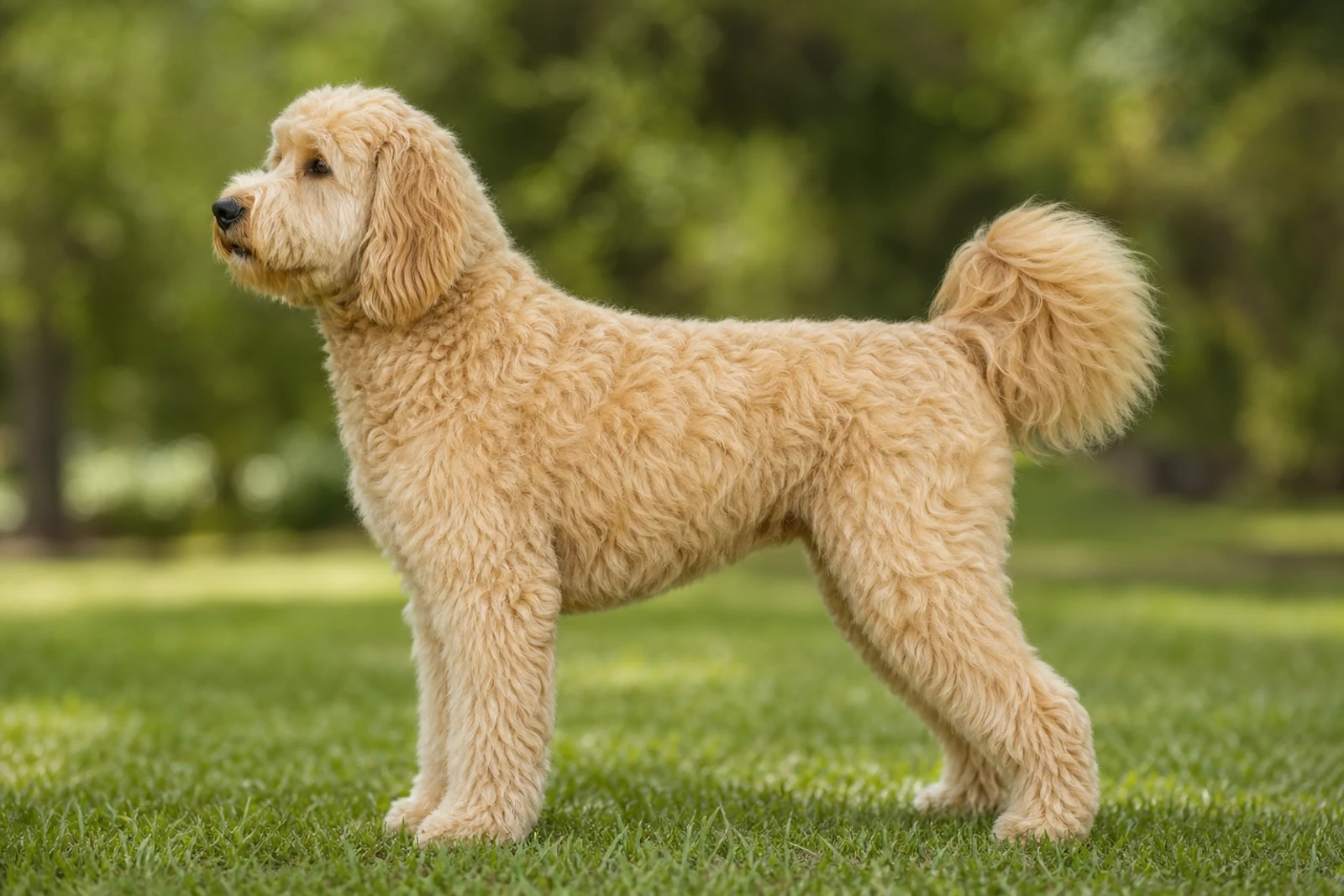
The Goldendoodle is a beloved crossbreed that combines the gentle, affectionate nature of the Golden Retriever with the low-shedding intelligence of the Poodle. Thriving in active families, these playful dogs adore children and social environments. While their size requires space, they adapt well to various living situations with sufficient exercise. Highly trainable and eager to please, Goldendoodles excel in therapy work and dog sports. Their curly or wavy coat needs regular grooming to prevent mats, making them a commitment for owners willing to invest time in their care.
Family fit
Is the Goldendoodle a good family dog?
Friendly, low-shedding crossbreed beloved by families.
- Children
- Family shortlist
- Energy
- Higher
- First-time owners
- More approachable
- Grooming
- Higher
Breed tendencies are only a starting point. Supervise children, meet the individual dog, and make sure the exercise, training, grooming, space, and cost fit your household.
Goldendoodle Sticker Pack
36 cartoon stickers • transparent PNG • no watermark
Pinterest-ready
Share all 36 reactions as one sticker sheet
Pinterest opens with the full pack and a fresh, tailored description. You choose the public board and publish it from your own account.
Save the full pack


Choose one reaction above to share it alone, or use the full-pack button for all 36 together.




































Free full-resolution download — no account, no payment, no watermark.
Includes all 36 transparent PNG stickers in one ZIP. A quick human check is required for each download.
At a glance
- Size
- Large
- Height
- 24 in
- Weight
- 51–90 lb
- Life span
- 10–15 years
- Coat colors
- Cream, Gold, Red, Apricot, Chocolate, Black, Parti
- Coat type
- Curly or wavy, low-shedding
- Group
- Crossbreeds
How much does a Goldendoodle cost?
Adopt / rescue
$75–$400
Usually includes spay/neuter, first shots, and a microchip.
Buy from a breeder
$700–$2,000
From a reputable, health-testing breeder.
Approximate USD. Prices vary widely by region, breeder, pedigree, age, and coat colour — adopting is the lower-cost and recommended route. Avoid suspiciously cheap “breeders”; they’re often puppy mills.
Estimate the full cost of a Goldendoodle →Want the ongoing number? Estimate the monthly food bill for a Goldendoodle with our dog food cost calculator.
Goldendoodle photos
Views
Front, side, rear and top — the full silhouette.Poses
How the breed sits, lies, moves and plays.Puppy to senior
The breed across its whole life.Expressions
The breed’s range of moods.Close-up details
Eyes, ears, nose, paws, tail and coat.Coat colors
The breed’s recognized colors.Click any photo to enlarge. We show the Goldendoodle from every angle — three views, poses, life stages, expressions, close-ups, coat and colors.
Appearance & size
The first thing you notice is sheer variety — and that’s the point. Goldendoodles don’t come off an assembly line. The “standard” large Goldendoodle stands around 24 inches at the shoulder and tips the scales anywhere from 51 to 90 pounds, with males often on the heavier end. That’s a substantial dog, squarely in the large breed category, though frame matters more than the number on the scale. Some lines lean leggy and athletic like a Golden Retriever; others carry the deeper chest and heavier bone of a Standard Poodle. Either way, you’re looking at a solid, well-balanced body that moves with an easy, ground-covering stride.
From the front, the face is the headliner. The muzzle is broad and moderately long, never pointy, with a black or liver-colored nose and those dark, almond-shaped eyes set well apart. The ears hang flat and slightly feathered, framing a gentle, intelligent expression that’s earned the breed its teddy bear reputation. A Goldendoodle’s head should look proportionate — no exaggerated Poodle refinement or heavy Retriever blockiness, just a nice, kind middle ground.
In profile, the neck flows smoothly into a level topline and a moderately deep chest that doesn’t dip below the elbow. The tail is set naturally high and carried with a cheerful curve; it’s often heavily plumed with longer hair. Stand behind one and you’ll see muscular hindquarters and straight, parallel rear legs — a build meant for a good romp, not just a walk around the block.
Coat is where things get really interesting. You’ll see three main textures: straight (more Retriever-like, prone to shedding), wavy (the shaggy, relaxed look most people picture), and curly (tight, fleece-like, closer to the Poodle side). The coat can be anywhere from two to four inches long if left natural. Color is a grab bag — cream, apricot, gold, red, chocolate, black, phantom, parti, merle, you name it. A single litter can throw a dozen different shades and patterns. That unpredictability is part of the appeal: your doodle looks like a one-of-a-kind, even if the classic “golden” hue still steals hearts. Grooming needs will ride entirely on which coat type you get, so before you fall for a fluffy puppy photo, check the parents and ask about the coat’s typical adult density and curl pattern.
History & origin
The Goldendoodle didn’t spring from a centuries-old tradition. This is a young crossbreed, deliberately created in the 1990s when breeders in North America and Australia started crossing Golden Retrievers with Poodles. The goal was practical: a dog with the low-shedding coat of a Poodle and the patient, people-pleasing temperament of a Golden Retriever, ideally suited for guide and service work with allergy-sensitive owners.
It built directly on the Labradoodle’s earlier success. After Wally Conron bred the first Labradoodle for a blind woman whose husband had allergies in 1989, interest in similar Poodle crosses surged. Breeders turned to the Golden Retriever — a softer, often more biddable alternative to the Labrador — and the Goldendoodle was born. The earliest documented litters appeared in the United States around 1992, with the cross gaining momentum through the late ’90s and early 2000s.
Both parent breeds bring deep working roots to the mix. Golden Retrievers were developed in mid-19th-century Scotland to retrieve waterfowl on land and from water with a soft mouth. Poodles trace back centuries as skilled water retrievers in Germany and later became beloved performers and companions in France. That combination of hunting instinct, intelligence, and eagerness to collaborate with people made the cross an immediate fit for service organizations, therapy programs, and family homes.
The breed has never been recognized by the American Kennel Club or other major purebred registries — it remains a cross, not a true breed. That means you won’t find a unified standard. Size, coat type, and shedding level can vary wildly from litter to litter, ranging from wavy “fleece” coats that barely shed to curlier wool coats or even a shedding Golden-like coat. Still, the Goldendoodle’s popularity exploded in the 2000s as the “doodle” craze took off. Today it’s one of the most intentionally bred designer dogs, filling roles from service animal to everyday family companion, and responsible breeders work hard to stack the deck in favor of health and temperament — not just a cute face.
Temperament & personality
The Goldendoodle is essentially a friendship machine. Most take after both parent breeds — the Golden Retriever’s sunny, let’s-be-best-friends outlook and the Poodle’s sharp, people-pleasing brain. You’re getting a dog who wants to be in the middle of everything you do, whether that’s a family movie night, a hiking trip, or just walking from the kitchen to the living room. They thrive on human contact and tend to flatten into a sad puddle if left alone for long stretches. That sensitivity can turn into problem barking, chewing, or indoor accidents if you’re gone nine-to-five without a plan.
A social butterfly with a work ethic
This is not a couch potato. A 24-inch, 50-to-90-pound athlete needs a real daily workout — think a solid hour of running, swimming, or off-leash fetch, not just a leash stroll around the block. Because they’re whip-smart, mental exercise matters just as much. Puzzle toys, hide-and-seek, and short training sessions keep their busy brains from inventing their own games (like dismantling your throw pillows). Even as adults, they often chew with enthusiasm to keep their jaws strong and teeth clean, so a steady supply of sturdy chews is non-negotiable. When that energy has nowhere to go, you might find a bored Goldendoodle counter-surfing, shredding the mail, or digging through the laundry.
The Velcro factor
Expect a shadow. They follow you from room to room, lean against your legs, and may try to climb into your lap despite being the size of a small canoe. That devoted streak makes them wonderful family dogs — patient with respectful kids and usually eager to welcome guests. They’re more likely to wag and show a toy than to guard the house, though they’ll definitely announce a delivery truck. Early socialization helps prevent exuberance from tipping into jumping or mouthing, especially around toddlers who could get knocked over by a joyful body slam.
Individual personality still varies
Crossbreeds aren’t photocopiers: you can get a pup who’s more retriever-like (goofy, mouthy, obsessed with water) or more poodle-like (reserved at first, quick to pick up patterns, a bit more particular). Meeting the mother and, if possible, the father gives you the best clue. Look for relaxed, soft-eyed dogs that approach willingly with a loose, wiggly body — not stiff, staring, or skittish. Ask how the breeder handles noise, handling, and early puppy enrichment. A dog that yawns, lip-licks, or turns away during interactions is signaling discomfort, and those calming signals are your cue to slow down.
A Goldendoodle that gets daily exercise, company, and gentle, consistent training will repay you with a decade or more of affectionate, slightly clownish companionship. Neglect those needs, and you get a stressed-out dog who marks inside, chews the drywall, and howls when left alone. The fastest way to a calm, house-trained companion is positive reinforcement: reward outdoor potties immediately with a high-value treat, and clean indoor accidents with an enzymatic cleaner to erase any scent that says “bathroom.” Never punish anxiety — it fuels bigger problems. With this breed, respect and routine unlock the best version of their personality.
Good with kids, dogs & other pets
A 50-to-90-pound dog that throws a happy wiggle instead of a growl is already ahead of the game with kids. The Goldendoodle’s default is patient and non-aggressive, which makes them a natural choice for families. The bigger concern isn't temperament — it’s physics. A full-speed, 65-pound zoomie can flatten a toddler who happens to be in the wrong spot. Supervise every interaction between a young child and any dog this size, and teach kids to stay upright instead of climbing or grabbing. The payoff is a dog that genuinely likes hanging out with children, not one that merely tolerates them.
With other dogs
Goldendoodles tend to read social cues well and rarely start trouble. Because they come from two retrieving lines that were selected to work cooperatively, they’re usually happy to meet new dogs if you’ve put in the early reps. Puppies should meet a wide range of calm, vaccinated, friendly adult dogs before 16 weeks, when that socialization window starts closing. A dog-park frequent flyer you can skip — forced greetings with unknown dogs can backfire — but steady, positive exposure during puppyhood builds a dog that stays relaxed on leash and in the yard.
Cats and small pets
A Goldendoodle raised with a house cat often does fine; some become inseparable. Start introductions slowly, with the dog on leash and the cat free to leave, and never leave them unattended until you’ve seen months of calm, predictable behavior. Small pocket pets like rabbits or guinea pigs are riskier. Retrievers can have a soft mouth, but a squeaking, running creature will still light up prey drive. Use sturdy enclosures and separate spaces unless your dog has proven bombproof — and even then, keep an eye on the door.
Socialization that sticks
Goldendoodles are highly social. That means they thrive on companionship, but they also can’t be parked in a backyard or left alone for 10 hours without fallout. Isolation breeds restlessness, barking, and sometimes true separation distress. From the day you bring a puppy home, begin short, positive exposures to new people, surfaces, sounds, and handling — nail trims, ear exams, toddlers shrieking. The sensitive period closes around 12–16 weeks, but continued exposure through adolescence locks it in. A puppy raised with variety becomes an adult that shrugs off the unexpected instead of panicking. Skip the gentle introductions, and you’ll spend the next 12 years managing a dog that startles at doorbells and snaps in fear. The work you put in now shapes every family interaction later.
Trainability & intelligence
You’re working with a dog that honestly wants the job. Goldendoodles pull their smarts from two breeds that reliably land near the top of obedience lists: the Golden Retriever’s people-pleasing drive and the Poodle’s sharp, puzzle-solving brain. Most pick up a new cue in 5 to 10 repetitions, especially when you make it feel like a two-way game. Food usually gets an enthusiastic response, though plenty of Goldendoodles will happily work for a squeaky toy or an ear scratch instead. That quick learning cuts both ways — a pup who nails “sit” by breakfast can just as easily realize that countertops yield unattended butter dishes unless you establish clear rules early.
The real engine here is positive reinforcement, and it’s non-negotiable. Harsh corrections or a frustrated tone tend to backfire with a dog this perceptive; you’ll see them shut down or get jumpy, and trust evaporates fast. Short, upbeat sessions work best. Think three or four 5-minute rounds a day rather than one marathon. Keep your criteria consistent, because these dogs will spot loopholes a mile away.
Recall is the skill that often needs the most proofing. Your Goldendoodle may barrel toward you in the living room, but a fluttering bird or a whiff of something dead can override all that training unless you’ve layered in real-world distractions. Use a long line and practice in gradually busier spots, making “here” the most rewarding thing on the menu — every single time. Early socialization underpins it all: exposing a puppy to varied people, sounds, surfaces, and friendly dogs before that 16-week window closes reduces the fear-based reactivity that can make an otherwise brilliant dog tune you out. By the time a Goldendoodle reaches 18 months, that combination of consistent, gentle handling and steady expectations typically produces a dog who’s genuinely looking for the next cue, not just checking a box.
Exercise & energy needs
Plan on a solid 60 to 90 minutes of real exercise every day, split into at least two sessions. A slow stroll around the block won’t come close to burning the motor these dogs pack. Goldendoodles spring from two working breeds — Golden Retrievers who’d retrieve all afternoon, and Poodles built to hunt and problem-solve — so the resulting mix is athletic, quick to learn, and easily bored if under-worked.
Two or three shorter bursts often work better than one marathon workout. A morning off-leash run, game of fetch, or a 30-minute swim sets a calm tone, while a second outing (another walk, some hill sprints, or a training session that doubles as brain work) takes the edge off before evening. Mental stimulation matters just as much as the miles. Puzzle toys, hide-and-seek with a favorite ball, or 15 minutes of nose work around the house tire out a thinking dog faster than pure physical exercise alone.
- Puppy and teen caveat: Growing joints can be vulnerable. Avoid repetitive high-impact jumping or hard-surface running until growth plates close — usually around 12–18 months. Swimming, soft-surface romps, and short, frequent play sessions are safer bets.
- Joint health: Larger Goldendoodles can be prone to hip and elbow dysplasia (responsible breeders screen for it). Keeping your dog lean and favoring low-impact exercise like swimming or hiking on dirt trails can help protect those joints for the long haul.
The breed excels at dog sports — agility, dock diving, rally, and scent work all tap both the retriever’s body and the Poodle’s puzzle-loving brain. Even a simple backyard obstacle course or a rotation of frozen Kongs will keep a Goldendoodle satisfied. Skip the consistent daily commitment, and you’ll see the fallout fast: chewing, counter-surfing, and barking are all signs a clever, energy-packed dog is making his own entertainment.
Grooming & coat care
Goldendoodle coats demand more time than most new owners expect. Low shedding does not mean low maintenance — those soft curls and waves mat right against the skin if you skip a day. Most have a single coat (no heavy undercoat), but you’ll still see a mix of textures: loose waves, tighter curls, or even flat coats with moderate shedding. The curlier the coat, the more often you’ll need to brush. Plan on 10–15 minutes at least five days a week for a curly doodle; a wavy coat might get by with every other day.
The right tools
- A slicker brush with rounded pins breaks up surface tangles and grabs loose hair without scratching.
- A metal comb is non-negotiable — run it from skin to ends after brushing to find hidden mats in friction zones (behind the ears, armpits, under the collar).
- A pin brush works for quick smoothing on a straighter coat, but it won’t reach deep curls.
Bathing and drying
Bathe every 4–6 weeks, or whenever your dog rolls in something memorable. Use a gentle, moisturizing dog shampoo and follow with a conditioner made for curly coats to prevent dryness and breakage. Rinse until the water runs completely clear; leftover product is a magnet for mats. Towel-dry well, then either air-dry while brushing in sections or use a cool-setting blow dryer to fluff and straighten the hair as it dries — damp coat left to air-dry on its own will tighten and mat.
Trims and clips
You’ll need to stay on top of a few spots between pro appointments. Trim the hair around the eyes, the sanitary area, and the fur between the paw pads every 2–3 weeks with blunt-nosed scissors or a small trimmer. A full body clip every 6–8 weeks keeps the coat at a manageable 1–2 inches. If you prefer a longer “teddy bear” look, you’re signing up for near-daily line brushing to keep the length mat-free.
Ears, nails, and teeth
Floppy ears trap moisture and wax, so clean them once a week with a vet-approved solution — especially after swimming. Nails need a trim or grind every 3–4 weeks; if you hear clicking on hard floors, you’re overdue. Get your Goldendoodle used to a dog toothbrush and paste early, and aim to brush teeth at least three times a week (daily is ideal) to stay ahead of plaque.
Through the seasons
This isn’t a breed that blows its coat twice a year, but you might notice a light uptick in loose hair during spring and fall if there’s a hint of undercoat. In summer, resist the urge to shave down to the skin — leave at least an inch for sun protection and air circulation. In winter, keep paw pads trimmed short and rinse feet after walks to remove salt and prevent ice-ball buildup. A paw balm helps with cracked pads.
A metal comb is your best early-warning system. Slide it down to the skin after every brush session — if it snags, you’ve already found tomorrow’s mat.
Shedding & allergies
Goldendoodle shedding is wildly unpredictable — some drop barely a hair, others leave a daily dusting on the floor. The reality sits right between the Golden Retriever’s year-round blast and the Poodle’s near-absence of it. Which side you get depends on coat genetics, not luck.
- Curly coat (more Poodle): Hair sheds, but it gets trapped in the curls instead of floating into the air. That means you won’t see much on your sofa — until you brush. Without regular line-brushing, the caught hair mats painfully and the dog can release a surprising amount of dander and loose fuzz when you finally rake it out.
- Wavy coat: Often the middle ground. These dogs tend to shed lightly all year, with a noticeable seasonal blowout in spring and fall. You’ll find fluff on dark pants and under furniture.
- Straight coat (rare, mostly in F1 litters): Sheds openly like a Golden Retriever. Expect a steady supply of hair tumbleweeds.
No Goldendoodle is truly non-shedding. Even a curly-coated dog with minimal visible hair loss still sloughs off skin cells (dander) and produces allergens in saliva and urine. The “hypoallergenic” label is a marketing term, not a medical promise. Many allergy sufferers tolerate well-bred curly doodles, but some still react — so spend real time with the actual dog, not just its parents, before bringing one home.
Drool is practically a non-issue. You might catch a few drips after a long drink of water or during a hot walk, but this is not a jowly, slobbery breed.
Diet & nutrition
A Goldendoodle’s enthusiasm for food can be endearing, but it also means this crossbreed will pack on pounds quickly if you’re not deliberate about portions. Extra weight puts real stress on the hips and elbows many large dogs already contend with, so keeping your dog lean is one of the most direct ways to protect those joints.
Puppy feeding schedule
Puppies need four evenly spaced meals a day until about four months old, then three meals until six months. After that, switch to the standard two meals a day you’ll stick with for life. Start with lightly cooked, puréed meats, fish, fruits, and vegetables, or a high-quality commercial puppy formula that lists a named meat first. Transition gradually over a week or so to avoid digestive upsets. At around twelve weeks you can introduce raw chicken wings under supervision, but always match the amount to your individual pup’s size and energy level.
Adult portions and weight management
Most adult Goldendoodles fall between 51 and 90 pounds. A moderately active dog in that range typically needs somewhere around 1,200 to 1,800 calories a day, but the real guide is your dog’s body condition. You should be able to feel the ribs without pressing hard, and from above there should be a visible waist tuck. If you’re home-preparing meals, a useful blueprint is roughly 60% meat (raw or cooked), 20–30% dog-safe fruits and vegetables, and about 10% other ingredients like eggs, plain yogurt, or cooked grains such as pearl barley or white rice. Pearl barley adds digestible fiber for dogs with sensitive stomachs; white rice provides bland, simple carbs when the gut needs a reset.
Because some Goldendoodles inhale their food, use a food puzzle bowl or a slow feeder to stretch out mealtime and add a little mental work. Blending or processing meals can also improve nutrient absorption—unlike us, dogs lack salivary digestive enzymes and their jaws don’t chew side to side.
- Adjust portions according to the day’s exercise. A dog that just logged a solid hour of off-leash running needs more fuel than one that had a couple of leash walks.
- Avoid feeding rich, fatty trimmings or holiday scraps. Even a single high-fat meal can trigger pancreatitis, especially in a breed that tends to carry a little extra padding.
- Serve any healthy leftovers strictly in the dog’s own bowl. Feeding from the table teaches begging, and that’s a tough habit to undo once it sticks.
Senior adjustments
As your Goldendoodle ages and naturally slows down, weight can creep up even if the diet stays the same. Gradually reduce food as activity declines, and split the daily ration into smaller, more frequent meals if that helps an older dog’s digestion or appetite. There’s no solid evidence you need to slash protein for healthy seniors, but you might purée meals for a dog with missing teeth or a tender mouth.
Batch-cooking a stash of plain grains, steamed vegetables, or poached chicken gives you ready-to-use meal foundations—so when life gets busy, your dog still eats well without you reaching for something overly processed or calorie-dense by default.
Health & lifespan
A well-bred Goldendoodle typically lives 10 to 15 years—right in line with his Golden Retriever and Standard Poodle parents. Hybrid vigor often gives crossbreeds a health edge, but it doesn’t erase the fact that both parent breeds share a few inherited vulnerabilities. A responsible breeder screens for them, so you’re not flying blind.
What can follow the genes
- Hip and elbow dysplasia – Large, fast-growing dogs are prone. Reputable breeders OFA- or PennHIP-score both parents and don’t breed dogs with bad ratings.
- Eye disease – Progressive retinal atrophy (PRA), cataracts, and glaucoma run in Goldens and Poodles. Yearly CERF exams clear breeding stock; ask for those certificates.
- von Willebrand’s disease and other clotting disorders – More common on the Poodle side. A DNA test tells you if a parent is a carrier.
- Ear infections and skin allergies – Those floppy ears trap moisture and wax, and many Goldendoodles inherit food or environmental allergies that show up as itchy skin, hot spots, or chronic ear gunk. A clean diet and weekly ear checks make a difference.
- Bloat (GDV) – Deep-chested dogs can bloat, especially if they gulp food or exercise hard after a meal. Some owners opt for a preventive gastropexy during spay/neuter.
- Obesity – A Goldendoodle will happily eat himself to 90-plus pounds. That extra weight pounds his joints and shortens his life, so measure meals and keep treats lean.
Preventive moves that pay off
- Heartworm prevention – Monthly med during mosquito season and for one month after. It’s non-negotiable.
- Rabies vaccination – Required by law; there’s no cure once symptoms appear.
- Vet rhythm – Annual exams for younger dogs, twice a year for seniors. Bloodwork catches kidney or thyroid shifts before they become obvious.
- Dental care – Daily brushing or high-quality dental chews. Neglected teeth feed bacteria into the bloodstream, hitting the heart and liver.
- Early handling and socialization – A dog who’s calmly handled from puppyhood has lower stress hormones and fewer stress-related flare-ups of skin or gut issues. Vet visits, nail trims, and ear cleaning all go smoother.
Catch small changes early—a dog who suddenly shies away from stairs or startles when you touch his head might be telling you his hips hurt or his eyes are failing. That’s the cue to book the appointment, not wait it out.
Living environment
You’re looking at a large, athletic dog that will top out anywhere from 51 to 90 pounds and stand roughly 24 inches at the shoulder. That means a Goldendoodle does best with a fenced yard where they can stretch out, sprint, and burn off that signature crossbreed energy. A couple of leashed walks per day won’t fully cut it — plan on at least 60 to 90 minutes of real movement split into a few sessions, plus off-leash play or a good game of fetch. The yard doesn’t need to be huge, but it needs to exist.
Apartment living is possible, but it puts the burden squarely on you. Without a backyard, you’ll need to schedule multiple long outings every single day, rain or shine, and add indoor mental work like puzzle feeders and scent games. Otherwise, boredom can turn into destructive chewing and nonstop barking. Goldendoodles are not a quiet breed by default; they can be alert barkers, and frustration barking kicks in when they’re under-exercised or left alone too long.
Which brings up the next point: these dogs are deeply people-oriented. They can develop serious separation anxiety if you’re gone for full workdays without a break. Many do better with a midday dog walker or doggy daycare, and gradual desensitization to alone time should start early. Leaving them in a crate for 10 hours is a recipe for a stressed-out, noisy dog.
Climate tolerance varies with coat type. The classic shaggy or curly coat provides decent insulation in cold weather, but a close summer trim helps when it’s hot. Extreme heat and humidity are bigger concerns — skip high-impact exercise during peak sun, and stick to early morning or evening outings. After all, the joint genes from both parent breeds mean you’ll want to protect those hips and elbows from overdoing it on hard surfaces, especially during the first year of growth.
Who this breed suits
This is a family dog that leans hard into the “family” part. A well-bred Goldendoodle lands at 51–90 pounds of enthusiastic, people-focused energy that wants to be in the middle of whatever you’re doing — whether that’s a Saturday soccer game, a hike through wet leaves, or just supervising dinner prep from two inches away. If you’re looking for a dog that settles easily into a quiet, tidy home where nobody’s home for nine hours, that’s not this one.
First-time owners who are ready to treat training as a daily habit often do well here. These dogs are sharp and eager to please, so they soak up commands fast — but a bored 70-pounder can design his own games, and countertops at Goldendoodle height (around 24 inches) hold a lot of temptation. You’ll need real consistency, not just a puppy class.
Active families with kids who’ve been taught how to interact with a bouncy, whip-tailed dog are a natural fit. The breed’s default setting is social, optimistic, and less likely to spook when a toddler shrieks with joy. Still, that full-body enthusiasm can topple a small child, so management when things get loud matters. Singles and couples who work from home or can arrange a dog-friendly daily rhythm also thrive with a Goldendoodle — the dog will be a constant, affectionate shadow, but that also means they’re not wired for long stretches of isolation. Separation anxiety is a real risk, so crate training and gradual alone-time practice need to start early.
Active retirees who still hit the pavement for long daily walks and genuinely enjoy the upkeep can make it work. The crucial question is whether you’re up for handling a strong, 60-plus-pound dog that may lunge for a squirrel or tow you toward the park. It’s not a lapdog, even if it thinks it is.
Who should think twice:
- You’re not ready for the grooming bill. A Goldendoodle’s coat — whether wavy or curly — mats fast without daily brushing, and a professional trim is a 6-to-8-week line item.
- You expect a guarantee of zero shedding. Some shed very little, others surprise owners with a constant coating of hair.
- Your exercise plan is a quick leash loop around the block. These dogs need 60–90 minutes of real exercise plus mental work (puzzle toys, scent games, training) to stay sane.
- Your home is a small apartment and you don’t have a nearby off-leash area or a daily runner/biker ready to burn the edge off that energy. A yardless life is possible, but it takes serious commitment, not half-measures.
- Everyone in the house is gone all day, every day. Leaving a Goldendoodle alone for eight-plus hours routinely invites a destructive, stressed-out dog who’ll express himself through chewing and barking.
A Goldendoodle isn’t a casual add-on; it’s a full-coverage roommate who tracks in mud, counter-surfs when you turn your back, and greets visitors like they’ve just returned from war. If there’s room in your schedule, your car, and your daily chaos for a dog that doesn’t do “part-time,” you’ll get 10–15 years of relentlessly cheerful company.
Cost of ownership
Upfront cost: what you’ll pay a breeder
A well-bred Goldendoodle from health-tested parents typically runs $1,500–$4,000. Puppies with rare coat colors, mini or petite sizes, or multigenerational pedigrees can push the price over $5,000. Because they’re a popular crossbreed, you’ll also see plenty of backyard breeders charging less — but they often skip the hip, elbow, eye, and heart screenings that prevent five-figure vet bills later. Adoption is possible but scarce; a doodle-specific rescue may have rehoming fees around $200–$500, though waitlists are long.
Monthly food bill for a big dog
A Goldendoodle at the top of the size range (80–90 lb) will eat roughly four cups of quality kibble a day. Count on $60–$100 a month for a food that lists meat first and avoids filler grains. Treats, dental chews, and the occasional puzzle-stuffer add another $10–$20. Some owners feed fresh or raw diets, which can double that monthly figure.
Grooming: the recurring expense many owners underestimate
That shaggy, no-shed coat doesn’t maintain itself. Plan on a professional groom every 6–8 weeks at $75–$120 per visit, depending on your location and the dog’s size. If you stretch it to every six weeks, you’re looking at $50–$80 a month. Between appointments, you’ll need a good slicker brush, metal comb, and detangling spray (about $50 upfront). Doodle owners who learn to clip at home can invest in quality clippers, a grooming table, and shears — $200–$400 — but that’s a time commitment, not a one-and-done fix. Skipping grooming leads to painful matting and skin infections that cost far more to treat at the vet.
Vet care and insurance
Routine care — annual exams, vaccinations, heartworm and flea/tick prevention — runs $300–$600 a year, roughly $25–$50 a month. A large crossbreed like the Goldendoodle can be prone to hip dysplasia, ear infections, and allergies, so responsible owners budget for the unexpected. Pet insurance for a young, healthy dog often lands in the $30–$70 a month range with a $500 deductible. Without it, a single emergency surgery or overnight stay can easily blow past $3,000.
What your monthly budget realistically looks like
After the purchase, ongoing food, grooming, and basic veterinary care will settle in around $150–$300 a month. First-year costs run higher: a sturdy crate, bed, bowls, leash, collar, and toys can cost $200–$500, and a puppy obedience class adds another $150–$300. Spaying or neutering, if not included with the purchase, is a one-time $300–$800 expense depending on your area and the dog’s size.
Stash $1,000 in a dedicated pet emergency fund before you bring the puppy home. When a 70 lb adolescent doodle eats a sock, the surgical removal is not the time to wonder whether you can afford it.
Choosing a Goldendoodle
The first and most useful thing you can do is treat a Goldendoodle like any other large, long-lived purchase: start with the breeder, not the puppy. Because this is a crossbreed, not a purebred, you have to be especially sharp about health — mixed ancestry doesn’t automatically mean healthy. A responsible breeder screens both parent breeds for the issues that show up in Goldens and Poodles, not just one side, and can hand you the paperwork to prove it.
Reputable breeder or rescue?
You’ll find countless listings, but many come from high-volume breeders who skip health testing and rely on the “hybrid vigor” myth. A well-bred Goldendoodle puppy from a breeder who does all the right things typically runs $2,500 to $4,000. If an older puppy or adult is available through a rescue, you’ll pay far less — often $300–$800 — but you’ll rarely know the full health history. Goldendoodle-specific rescues do exist, and it’s worth keeping an eye on them if you’re open to a dog with some unknowns. Just be ready for a dog who may have been surrendered for energy-level mismatches or grooming neglect.
Health clearances you must ask for
Don’t accept “vet-checked” as a substitute. For a Goldendoodle puppy, each parent should have final OFA or PennHIP clearances for hips, and OFA for elbows. Since one parent is a Golden, request a cardiac exam (cardiologist, not just auscultation) and a current ACVO eye exam. From the Poodle side, insist on patella evaluation and another ACVO eye exam. DNA tests matter too: both parents need clear results for PRA (prcd‑PRA, GR‑PRA1), degenerative myelopathy (DM), and at least the Poodle parent for von Willebrand’s disease (vWD) if it’s a Standard Poodle. Responsible breeders test for these and post results on OFA’s public database; they also wait until both parents are at least 2 years old so the hip and elbow ratings are final, not preliminary.
Red flags that scream “walk away”
- No physical meeting with at least the mother. If you can’t visit in person, a video call where you see the dam with the litter is bare minimum.
- Litters that are “always available” or a website with a shopping cart.
- Breeders who sell “teacup,” “micro,” or promise a specific adult weight to the pound in a crossbreed.
- A health guarantee that’s only good for 72 hours or requires you to feed a specific MLM supplement.
- No written contract, no return policy if you can’t keep the dog, and zero questions about your lifestyle.
- A breeder who claims they don’t need hip clearances because “both breeds are healthy.”
Picking the right puppy from the litter
A good breeder won’t just let you pick the cutest one. They’ll match you based on temperament. They should have done early neurological stimulation (ENS) and kept notes on things like curiosity, startle recovery, and human focus. Look for a puppy who comes to investigate you without hesitation — not the one hiding in the corner or the one bowling over littermates nonstop. Check that eyes are clear, ears are clean and sweet-smelling, and the puppy moves freely with no stiffness or bunny-hopping. Ask the breeder what they’ve done to start crate training and housebreaking; a 7‑to‑8‑week‑old puppy should already be comfortable in a crate for short stretches and used to being handled all over, including feet and mouth.
When you’re sizing up the litter, keep the adult size range in mind. A standard Goldendoodle lands anywhere from 51 to 90 pounds, and even within the same litter, that spread is real. Pick a puppy whose energy seems like a good fit for your daily routine — a more laid-back puppy for a home that walks and hikes on weekends, a driven, toy-focused one if you want a future running or agility partner. And if you’re drawn to a rescue dog, ask the foster about how they handle being left alone, nail trims, and meeting strange dogs, because those everyday realities will matter far more than their coat color.
Pros & cons
-
Pro: Low-shedding coat that’s often easier on allergies. Most Goldendoodles inherit more Poodle than Golden in their coat, meaning they drop very little hair around the house. That said, no dog is truly 100% hypoallergenic — meet the individual pup if allergies are a deal-breaker.
-
Pro: A famously sunny, people-loving personality. Bred from two of the friendliest family dogs, Goldendoodles usually greet strangers with a wagging tail instead of suspicion. They thrive in the middle of family chaos and get along well with kids and other pets when socialized early.
-
Pro: Sharp mind, eager to please. Both parent breeds are intelligent and biddable, so this cross often picks up commands quickly and excels at positive-reinforcement training. They’re a solid match for first-time owners willing to put in consistent work.
-
Pro: Long, active life alongside you. A well-bred Goldendoodle can live 10 to 15 years, often staying playful well into their senior years. That’s a lot of hikes, fetch sessions, and couch snuggles.
-
Con: Daily energy that demands more than a quick walk. This is a athletic crossbreed. Plan on a solid hour of off-leash running, swimming, or active play — plus mental puzzles — or you’ll see chewing, barking, and restless pacing.
-
Con: Coat care is a real commitment. That fluffy, non-shedding fur matts easily. Brush thoroughly every 1–2 days and budget for a professional groom every 6–8 weeks. Ignoring it leads to painful mats and skin problems.
-
Con: Size and strength can surprise you. Adults weigh 51–90 lb, often standing 24 inches at the shoulder. A bouncing Goldendoodle can knock over small kids, and leash pulling is no joke without early training focused on loose-leash walking.
-
Con: An intense need to be near you. The Golden Retriever’s shadow tendency gets dialed up here. Left alone too long, many develop separation anxiety — barking, destruction, or attempts to escape. This breed does best when someone is home for much of the day.
-
Con: No guarantee on coat type or adult traits. As a crossbreed, puppies in the same litter can vary wildly. Some shed, some don’t. Some have wavy fleece, others tight curls that demand even more grooming. If you need a very specific allergy-friendly coat, a purebred Poodle from a health-tested line is often a safer bet.
Similar breeds & alternatives
Labradoodle
If you’re looking at Goldendoodles, a Labradoodle is the natural next stop — a Labrador Retriever crossed with a Poodle. Standard Labradoodles typically weigh 50–65 pounds and stand 21–24 inches, so they run a little stockier than a Goldendoodle’s 51–90-pound, 24-inch range. Both produce a grab bag of coat types (straight-ish to curly) and no guarantee of low shedding. The personality split is subtle but real: Labradoodles often inherit the Labrador’s obsessive ball drive and higher intensity, thriving on a solid hour of hard running daily. A Goldendoodle’s goofy, people-pleasing charm is still there, just dialed up a notch in fetch-frenzy mode.
Bernedoodle
A Bernese Mountain Dog–Poodle mix that goes bigger and fluffier. Expect 23–29 inches and 70–90+ pounds. The Bernedoodle’s indoor vibe tilts calmer and more gentle, thanks to the Bernese influence, but training sessions can hit a stubborn wall if they get tedious. Coat texture varies; many have loose, wavy fur that sheds more than a Goldendoodle’s, especially in first-generation crosses. You trade a shorter lifespan — 7 to 12 years — for that tri-color coat and thick, huggable frame. If you’re okay with drool, more hair around the house, and a slower-moving giant who’d rather lean on you than chase a ball, it’s worth considering.
Standard Poodle
Forget the crossbreed lottery entirely. A Standard Poodle stands 22–27 inches and runs 45–70 pounds, giving you a similar-sized dog without the coat guessing game. The tight, curly coat sheds so little it’s the most reliable option for allergy-conscious households — at the cost of clipping every 4–6 weeks. Poodles are sharp-witted problem-solvers that demand mental work; a bored one will dismantle your trash can. They often greet strangers with a more reserved, watchful eye, whereas a Goldendoodle treats everyone like a long-lost buddy. If you want a predictable, no-shed companion and value a breeder who screens hips, eyes, and thyroid by default, a well-bred Standard Poodle is the straightest path.
Fun facts
- Goldendoodles were first intentionally bred in the 1990s as a larger, low-shedding alternative to the popular Cockapoo.
- They are widely chosen as therapy and service dogs due to their calm demeanor, empathy, and high trainability.
- Their coat type can vary significantly even within a single litter, from straight to curly, with 'furnished' faces inheriting the Poodle's distinctive beard and eyebrows.
- Goldendoodles often excel in canine sports like agility, rally, and dock diving, thanks to their athleticism and enthusiasm.
Frequently asked questions
- Are Goldendoodles good with children?
- Goldendoodles are typically affectionate and patient, often making excellent family dogs. Their playful nature and social temperament can be a great match for households with kids, but like any dog, supervision and proper introductions are key.
- Do Goldendoodles shed?
- Goldendoodles tend to be low to non-shedding, especially those with a curly Poodle-like coat, which can be more allergy-friendly. However, no dog is completely hypoallergenic, and shedding can vary depending on the generation and coat type.
- How much exercise does a Goldendoodle need?
- Goldendoodles are active dogs that generally require at least 30 to 60 minutes of daily exercise, including walks and playtime. They tend to have high energy levels, but the exact amount can depend on the individual dog's size and age.
- What kind of grooming does a Goldendoodle need?
- Regular grooming is essential for Goldendoodles, including brushing a few times a week to prevent matting, especially if they have a curly coat. Professional grooming every 6 to 8 weeks is often recommended to keep their coat healthy and manageable.
- Are Goldendoodles suitable for apartment living?
- Goldendoodles can adapt to apartment living if they receive sufficient daily exercise and mental stimulation. However, their large size and energetic nature mean they often do best with access to outdoor space.
Tools & calculators for Goldendoodle owners
Quick estimates tailored to Goldendoodles — pre-filled with this breed’s size where it matters.
Articles & stories about the Goldendoodle
Sources & standards
This profile follows recognized breed standards from the American Kennel Club (AKC) and the Fédération Cynologique Internationale (FCI), along with established veterinary and breed-club guidance. These describe general breed tendencies — every dog is an individual.