

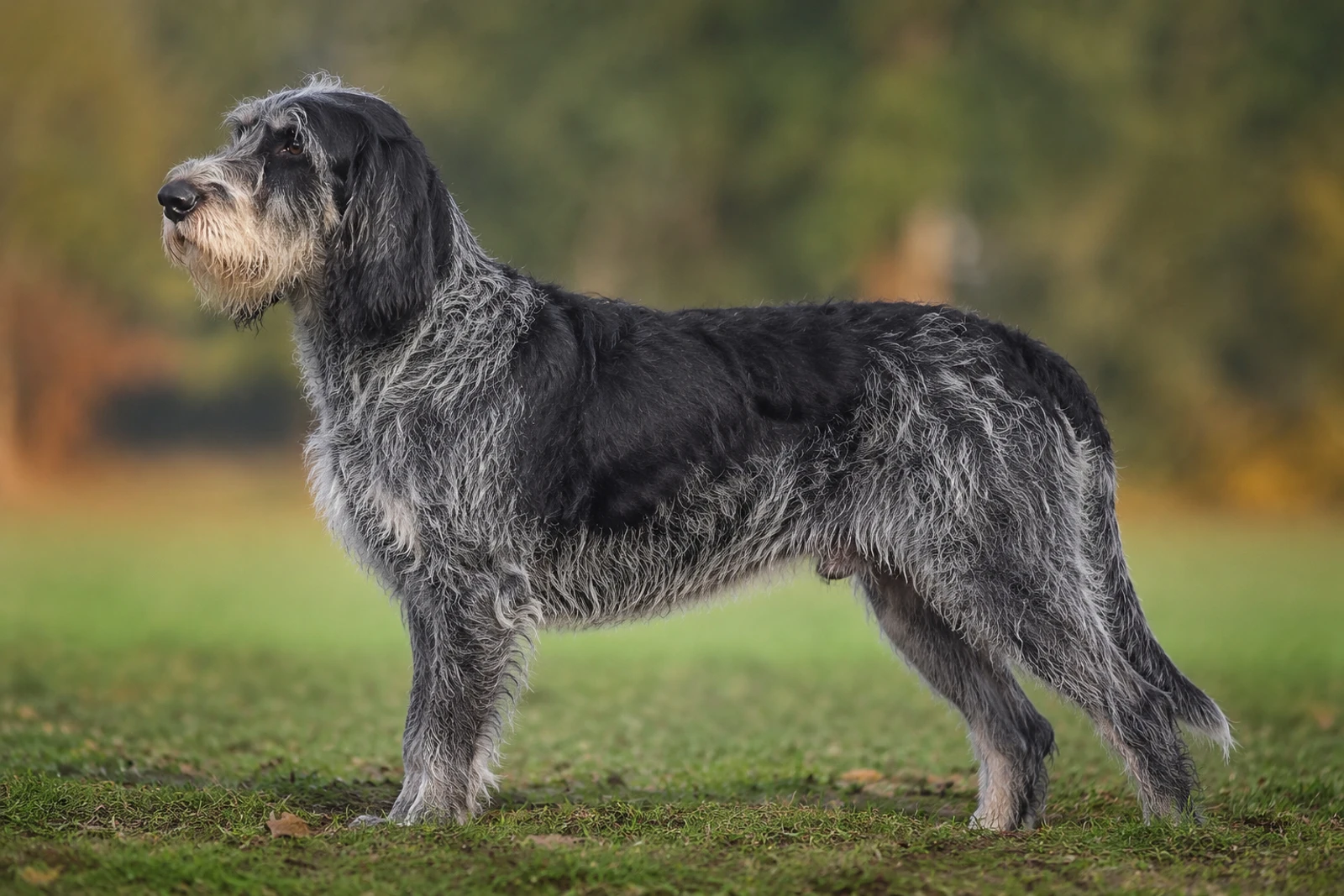
The Grand Griffon Vendéen is a large, rough-coated French scenthound bred for hunting big game. With its independent yet affectionate nature, this breed suits experienced, active owners who appreciate a loyal but stubborn companion. They thrive in rural settings with plenty of room to roam and require consistent training. While devoted to family, their high prey drive and loud bark may not suit apartments or novice pet parents. Great for outdoor enthusiasts seeking a rugged, tireless partner.
At a glance
- Size
- Giant
- Height
- 24–27 in
- Weight
- 66–77 lb
- Life span
- 12–13 years
- Coat colors
- White & Orange, White & Lemon, White & Black, Tricolor, Black & Tan, Grizzle
- Coat type
- Harsh, wiry double coat
- Group
- Scenthounds
How much does a Grand Griffon Vendéen cost?
Adopt / rescue
$75–$400
Usually includes spay/neuter, first shots, and a microchip.
Buy from a breeder
$700–$2,000
From a reputable, health-testing breeder.
Approximate USD. Prices vary widely by region, breeder, pedigree, age, and coat colour — adopting is the lower-cost and recommended route. Avoid suspiciously cheap “breeders”; they’re often puppy mills.
Estimate the full cost of a Grand Griffon Vendéen →Want the ongoing number? Estimate the monthly food bill for a Grand Griffon Vendéen with our dog food cost calculator.
Grand Griffon Vendéen photos
Views
Front, side, rear and top — the full silhouette.Poses
How the breed sits, lies, moves and plays.Puppy to senior
The breed across its whole life.Expressions
The breed’s range of moods.Close-up details
Eyes, ears, nose, paws, tail and coat.Coat colors
The breed’s recognized colors.Click any photo to enlarge. We show the Grand Griffon Vendéen from every angle — three views, poses, life stages, expressions, close-ups, coat and colors.
Appearance & size
The first thing you notice is the coat: rough, tousled, and built to turn aside bramble and weather. Beneath that shaggy exterior is a large, rectangular scenthound with enough bone and muscle for a full day in the field, yet nothing about him looks heavy. He stands 24 to 27 inches at the shoulder and tips the scale at 66 to 77 pounds — substantial, but never clunky.
Build
The Grand Griffon Vendéen is slightly longer than tall, with a deep chest that reaches the elbow, well-sprung ribs, and a strong, level topline. His legs are straight and long, ending in tight, oval feet. A broad back and muscular loin give him the endurance to cover rough ground at a steady trot. He carries a thick, saber-like tail with a slight curve, never curled over the back.
Coat and color
The double coat is a defining feature. The outer layer is long, harsh, and wiry — often 2 to 4 inches — while the undercoat stays dense and insulating. Don’t expect a polished look; the breed standard calls for a naturally rustic appearance. The face is furnished with a shaggy beard and prominent eyebrows that shade dark, expressive eyes, giving him a wise, almost old-soul expression. The ears are set low, long enough to reach the nose when pulled forward, and covered in softer, wavy hair.
Coat colors are typically white with patches or ticking in:
- Orange or lemon
- Grizzle (a mix of black and white hairs)
- Tricolor (black, white, and tan)
Some dogs are solid orange or lemon with white markings, and you’ll often see a pale, washed-out look on the ears and face that deepens with age.
From every angle
From the front, his head is held at a confident height, with a slightly domed skull and a square muzzle. The eyebrows and beard frame the face, and the forelegs drop straight down from broad shoulders. From the side, the rectangular body shape stands out — level topline, deep chest, and a natural tuck-up that hints at the stamina underneath. From the rear, the hindquarters are powerful and well-angulated, with the tail set high and carried like a banner when he’s on the move. The overall impression is a sturdy, symmetrical hound that looks ready to work, no matter the terrain.
History & origin
The Grand Griffon Vendéen came together in the rocky, brush-choked Vendée region of western France, a place where a hound needed more than a good nose. Thick brambles, uneven ground, and big, combative quarry — wild boar and deer — demanded a dog with stamina, a protective coat, and the nerve to close in. The breed’s earliest foundation goes back centuries, but the recognizable Grand Griffon Vendéen really took shape in the 19th century. French noblemen running large packs set out to create a tall, rough-coated scent hound that could push through heavy cover all day without tearing itself to shreds.
At the core of that effort was the old Grand Vendeen, a mostly smooth-coated, long-eared pack hound known for a deep, resonant voice and relentless drive. To fix the shaggy, wire-haired coat that would become the breed’s signature, breeders crossed these dogs with other French griffon types — likely the Griffon Fauve de Bretagne and early rough-coated hounds from the same region. The result was a giant scenthound (males stand up to 27 inches and weigh 66 to 77 pounds) with a double coat: a dense underlayer and a harsh, tousled outer coat that shed water and turned aside thorns.
For generations, the Grand Griffon Vendéen did exactly the job it was bred for. Hunters on horseback followed packs of these deep-baying hounds as they unraveled scent trails over vast stretches of coastal forest and marsh, holding boar or stag at bay until the huntsman arrived. The dogs’ methodical, ground-scenting style and ability to work independently in tight-knit packs made them indispensable for big-game hunting in that difficult terrain.
When pack hunting declined after the French Revolution and later, the World Wars, the breed nearly slipped away. By the mid-20th century the Grand Griffon Vendéen had shrunk to perilously low numbers, kept alive only by a few die-hard breeders in France. The revival leaned heavily on the closely related Briquet Griffon Vendéen — a smaller but nearly identical hound that had fared better — to inject genetic diversity and restore type. That careful rebuilding stabilized the population, though the Grand remains uncommon even today.
Now the breed fills a dual role: a tenacious working hound for hunters who still chase boar over the old Vendéen routes, and a steady, good-natured companion for families that can give it the long, off-leash runs it craves. A lifespan of 12 to 13 years means that, with proper care, you get over a decade with a dog that carries a living piece of French hunting history in its shaggy frame.
Temperament & personality
A Grand Griffon Vendéen lives by his nose first and his heart second — and both work overtime. He’s an affectionate, sometimes clownish pack dog who can flip into a focused hunter the instant a scent trail demands it. Expect a dog that greets you with full-body wags, then suddenly ignores you because the corner of the yard just delivered an urgent olfactory bulletin.
Energy and the nose on legs
This is a giant hound who needs real outdoor time, not a token stroll. Plan on at least an hour daily where he can move at his own pace with his nose pinned to the ground. A leash walk that lets him sniff and process the neighborhood’s scent map will tire him out far more than jogging mindlessly beside a bike. He’ll memorize the smell of his turf, and he may mark it with urine to reinforce those boundaries. Indoors, any accident leaves a powerful scent cue that invites repeat performances, so clean up with an enzymatic cleaner, not just soap. A spray of white vinegar and water neutralizes odors and can discourage re-soiling in trouble spots.
Independent, not indifferent
Grand Griffons are brave and steady, but they’re also strong-willed. They don’t crumble under a harsh tone — they shut down or dig in. Respectful, consistent engagement gets cooperation; force gets you a dog who finds something more interesting to do. That independent streak makes them a poor match for a first-time owner who wants instant obedience, but they thrive with someone who treats training like a partnership. Around the house, they form deep bonds and hate being isolated. Left alone too long without mental stimulation, a Grand Griffon can turn to anxious barking or destructive chewing just to soothe himself.
Family life and everyday quirks
With kids, he’s generally patient and good-natured, provided he’s been socialized early. One hard rule: teach children never to interrupt him while he’s eating. Like many dogs, he can develop food guarding if his meals feel threatened. Puppies chew to explore and relieve teething discomfort; adults chew hard objects to keep their jaws strong. Give him raw bones or tough, safe chews, and protect your furniture with a homemade citrus spray from boiled peels. The same citrus or vinegar spray can redirect a chewer from off-limits items without confrontation.
Then there’s the rolling. A Grand Griffon will gleefully drop a shoulder into something foul — decay, dung, you name it — and writhe like it’s expensive cologne. It may be a leftover instinct to mask his own scent or simply a case of “I found something amazing, let me wear it home.” You’ll never train that out completely, so a rock-solid “leave it” and a fenced yard are your allies.
Reading him right
Learn his body language and you’ll see exactly what mood he’s in. A loose, wiggly body with soft eyes and an easy tail wag means he’s calm and content. A stiff forward lean with hard staring usually signals intense focus — often on a scent or small animal, not necessarily aggression, but worth interrupting before he bolts. Lip licking, yawning, or turning his head away are his ways of dialing down tension. He’s not a guard dog, but he’ll alert bark when something changes outside. His default is curiosity, not confrontation.
Give a Grand Griffon plenty of scent-rich exercise, a consistent but gentle hand, and a family that includes him in the daily rhythm, and you’ll get a dog who flops happily at your feet, nose twitching even in his dreams.
Good with kids, dogs & other pets
This big, shaggy hound is genuinely patient with children—even clumsy toddlers who grab ears or tug loose skin. At 66 to 77 pounds, though, he’s a lot of dog, and an enthusiastic tail wag can topple a small child. Supervision around kids under five or six comes down to physics more than temperament; teach children to be gentle, but accept that you’ll need to referee the occasional collision.
Grand Griffon Vendéens were bred to work in packs, so they usually get along well with other dogs. Actual aggression is rare. A well-socialized adult will happily share the house and yard with canine buddies, though a dog who missed out on early puppy experiences may be standoffish or reactive. For new introductions, a neutral space and slow pace go far. Don’t force an adult who’s content with just his people to suddenly buddy up with every dog at the park.
With cats, the picture gets more nuanced. A Grand Griffon raised alongside a confident cat often coexists peacefully—sniffing, then napping nearby. But that nose-driven brain can still flip into chase mode when a cat darts unexpectedly. Small caged pets like rabbits, ferrets, or guinea pigs read like quarry to a scent hound, so they need separate, secure living areas and zero unsupervised contact. Chickens and other outdoor birds are similarly risky.
The real backbone for peaceful multi-species living is early, consistent socialization. Start between 3 and 14 weeks: gently expose your puppy to children of all ages, other dogs, cats, and the everyday chaos of family life. Positive experiences during this window reduce fear and overreaction later. If you’re adopting an adult who wasn’t raised around kids or cats, don’t force encounters—let him set the pace, use gates and leashes, and work with a force-free trainer if needed.
Because these hounds form tight bonds and dislike being left alone for long stretches, a Grand Griffon fits best in a home where someone is around most of the day. A lonely, under-exercised dog is more likely to get jumpy or mouthy, which makes supervising him alongside small children and other animals that much harder. Meet his need for companionship and daily running time, and you’ll have a steady, gentle presence that integrates easily into a bustling household.
Trainability & intelligence
The Grand Griffon Vendéen is sharp and curious, but don’t mistake that for biddability. This is a scenthound through and through — bred to solve problems on its own and follow a nose, not to hang on your every word. That means training lands somewhere between a conversation and a negotiation, and it works best when you lean into relationship, not authority.
What works — and what backfires
Reward-based methods are non-negotiable here. A Grand Griffon lights up for a stinky treat, a tug toy, or a burst of excited praise, and those paychecks build reliable responses far faster than harsh corrections ever will. Punishment-based approaches poison trust fast, and a dog this large (66–77 pounds of determined muscle) can’t afford to be anxious or hand-shy. You’ll get genuine cooperation only when the dog believes good things happen with you — not when it’s afraid of the consequences.
- Motivation: Food drive runs high. Use it. Incorporate rapid-fire treat rewards early on, then fade to intermittent reinforcement once a behavior is solid.
- Patience over pressure: This breed has an independent streak that can read as stubborn. Repeating a command louder won’t help; stepping back, re-engaging the dog’s brain, and trying again with a clearer cue will.
- Short sessions: A Grand Griffon’s mind wanders toward interesting scents quickly. Three five-minute sessions a day beat one 20-minute slog.
Recall and other real-world challenges
Recall is the make-or-break skill. That nose locks onto a scent trail and all bets are off unless you’ve put in months of high-value reinforcement in low-distraction environments. Start in a fenced yard or on a long line with a reward the dog would trade its dinner for. Gradually add mild distractions, never punish a slow return, and accept that off-leash reliability in unenclosed spaces may never be 100% — that’s not a training failure, that’s genetics.
Early socialization sets the foundation
A giant hound that’s unsure of new people or environments can be a handful to manage. Expose your puppy to a wide variety of people, sounds, surfaces, and calm dogs between 3 and 14 weeks old, always pairing novelty with snacks or play. Keep experiences positive and pressure-free; a bad scare at this age can create noise phobias or reactivity that are tough to unwind later. Continue that exposure through adolescence. A confident, well-socialized Grand Griffon is a steady companion; a fearful one can become a barker or a puller.
The bedrock is trust
Before you even think about polishing obedience or off-leash manners, focus on clear communication and a history of positive interactions. When this breed knows that checking in with you leads to something good, it becomes a surprisingly willing partner. Skip that step, and you’ll spend years arm-wrestling a dog that’s simply more motivated by the world than by your voice.
Exercise & energy needs
Forget casual walks around the block — a Grand Griffon Vendéen was built to hunt for hours over rough French terrain with his nose glued to the ground. Satisfying that drive takes real, daily effort. You’re looking at a minimum of 60 minutes of purposeful exercise twice a day, and this is not stroll-on-a-leash time. He needs sustained trotting, galloping off leash in a safe area, or intense scent work that wears out his brain as much as his body.
- Split the workload into morning and late-afternoon sessions. One short potty break at noon won’t cut it. Without enough structured activity, this breed will invent his own jobs — usually ones involving baying, digging, or dismantling your sofa.
- Intensity matters more than duration alone. A slow 90-minute walk on a six-foot leash barely registers. Swap a chunk of that for 30 minutes of free running in a fenced field, a long drag race with a flirt pole, or a canicross run where he can pull and stretch out.
- Mental stimulation is non-negotiable. A Grand Griffon’s world revolves around scent. Give him 15-minute nose-work sessions twice a day: hide his breakfast kibble in a snuffle mat, bury a favorite toy under a pile of leaves, or lay a short tracking trail in the yard. Structured sports like barn hunt, tracking, or mantrailing are even better — they let him work independently and wear him out faster than a treadmill ever could.
- Puppies and adolescents need this energy channeled carefully. Avoid forced road work or repetitive high-impact moves until growth plates close (around 18 months). Free play on soft ground, short hikes, and scent puzzles build coordination without stressing developing joints. Many lines are prone to hip and elbow dysplasia, so responsible breeders screen for it; ask about clearances and talk to your vet before introducing high-impact sports.
- Household calm depends entirely on meeting these needs. A Grand Griffon who puts in a solid two hours of nose-driven motion each day is surprisingly relaxed indoors — but skip the mental piece, and you’ll get an anxious, noisy companion who can’t settle. If you love hiking, trail running, or nosework trials, this breed will make you feel like you finally have a partner who can keep up.
Grooming & coat care
That shaggy, tousled coat looks like it belongs to a dog that never needs a brush, but the Grand Griffon Vendéen’s rough double coat will mat into painful sheets if you skip regular sessions. Plan on breaking out the tools two or three times a week year-round, and every day during the two big seasonal sheds when the dense undercoat lets go in earnest. A sturdy pin brush or a slicker with rounded pins does the heavy lifting — reaching through the harsh outer hairs to pull loose undercoat and debris. Follow that with a wide-toothed metal comb down the legs, belly, and tail feathering to catch tangles before they lock tight. (Ears and collar are the disaster zones; check those spots every time.)
Bathing is a seasonal task, not a weekly one. The wiry coat repels water and dirt surprisingly well, so a bath every 6–8 weeks — or when your dog has rolled in something truly memorable — is plenty. Over-bathing strips the natural oils that keep the coat weather-resistant and can turn that crisp texture soft and cottony. Use a mild, rinsing-friendly shampoo, and towel-dry thoroughly. If you’re dealing with post-shedding fluff, a lukewarm bath followed by a blow-dry on cool helps lift the last dead hair out.
Trimming is where pet homes and show homes diverge. For a correct, hard coat that sheds brambles, show dogs get hand-stripped — dead outer hairs are pulled by finger or stripping knife, preserving color and texture. In a family setting, an occasional tidy-up with thinning shears around the feet, hocks, and ear edges keeps things neat, but never clip the body short. Shaving wrecks the insulation properties and often grows back patchy and woolly.
Nails, ears & teeth
Those big, floppy hound ears are perfect traps for moisture and wax. Lift the leather and give them a sniff and a swipe with a vet-approved ear cleaner once a week — you’re looking for no funky smell, no brown gunk. Nails on a 70-pound dog hitting hard ground can quickly get out of control; trim every 3–4 weeks, or whenever you hear clicking on the kitchen floor. Teeth brushing gets the same low-frequency-but-obsessive treatment: every day is ideal, but three solid sessions a week with a dog-safe toothpaste will keep that hound mouth fresher and healthier.
Seasonal coat blowouts
Twice a year — usually spring and fall — the undercoat comes out in handfuls. This is when daily brushing with an undercoat rake or a deshedding tool saves your furniture. Right after the worst of it, a bath and a cool blow-out can remove much of what’s left. Don’t reach for the clippers in July to “cool him off”; that rough double coat insulates against both heat and cold, and shearing disrupts that natural thermostat. Instead, offer shade, water, and a quick post-hike brush to pull out grass seeds and burrs before they dig into skin.
A Grand Griffon Vendéen coat isn’t a wash-and-wear free pass — it’s a hands-on project that returns exactly what you put in, with that gloriously scruffy, rustic outline intact.
Shedding & allergies
If you’re picturing tufts of hair on every surface, relax — the Grand Griffon Vendéen’s harsh, wiry double coat isn’t a heavy shedder in day-to-day life. Dead hairs tend to get caught in the rough outer coat instead of dropping onto your floors. That’s the good news. The catch is, if you don’t manually remove that trapped hair, it’ll mat. Weekly brushing with a slicker or pin brush, plus hand-stripping a few times a year, keeps things tidy. During the twice-yearly seasonal blowout — typically spring and fall — you’ll see a real uptick in loose fur, and skipping a stripping session means you’ll find wiry tumbleweeds in corners anyway.
Drool is in the mix, but it’s not faucet-level. This is a large scent hound, so wet beards after drinking and the occasional slobber when you’re preparing dinner are part of the deal. Keep a towel handy by the water bowl and you’ll manage.
Nobody should call this a hypoallergenic breed. No dog truly is, since allergens are in saliva and skin oils, not just hair. That said, a well-maintained wire coat releases less airborne dander than a constantly-shedding smooth coat, so some allergy sufferers react less. Spend time with adult dogs before committing — what works for one person’s allergies tells you nothing about yours.
Diet & nutrition
Grand Griffon Vendéens eat like they just ran a marathon—every time. A deep, food-driven appetite is part of the scenthound package, but it’s a double-edged sword in a dog this size (66–77 pounds). Extra weight slams joints and a long back, so keeping him lean is non-negotiable. You control the portions, not that bottomless stare.
Split his daily ration into two meals. How much you feed depends on age, build, and real exercise—a dog tearing through the brush for an hour needs more fuel than a walk-around-the-block companion. Ignore the bag chart and use your eyes: you should feel ribs under a light fat pad and see a waist tuck from above. If the scale creeps up, cut back by 10% before it becomes a problem.
What goes in the bowl
A high-quality large-breed kibble with a named meat first is straightforward. If you go home-prepared, a workable ratio is about 60% muscle meat and organs, 20–30% dog-safe fruits and vegetables, and 10% other nutrient-dense foods—eggs, plain yogurt, or cooked grains like pearl barley. Barley adds digestible fiber without spiking starch. White rice is fine for a day or two if his stomach gets upset, but don’t make it a staple.
This is a dog that can inhale a full meal in under 30 seconds. A puzzle bowl or scatter feeding forces him to slow down and works his nose at the same time.
Puppies to seniors
- Puppies under four months get four small meals a day; then three meals until six months, then the adult two-meal rhythm. Transition any new food gradually—start with lightly cooked, puréed meats and soft vegetables. If you introduce raw chicken wings or necks around twelve weeks, supervise closely.
- Adults maintain on that twice-daily schedule. Batch-cook grains and vegetables ahead; unsalted vegetable water makes a handy soup base.
- Seniors (the breed often lives 12–13 years) slow down. Their metabolism drops—shift to a senior or weight-control formula if needed, and consider three smaller meals. Don’t slash protein without a vet’s reason; that’s outdated advice. Do weigh him monthly. Obesity in an older Grand Griffon amplifies arthritis and shortens the golden years.
What to avoid
No vegetarian or vegan diet. A dog’s teeth, jaw, and gut evolved on meat, and you can’t fake those nutrients with plants alone. Pass on rich holiday fat and skin—a sudden load can set off acute pancreatitis. And never feed from the table. Serve leftovers in his own bowl, away from the dining room. Breaking a begging habit is ten times harder than preventing it.
Health & lifespan
A healthy Grand Griffon Vendéen typically lives 12 to 13 years — a solid run for a dog that can stand over two feet at the shoulder and weigh up to 77 pounds. You won't see a laundry list of genetic landmines with this breed, but that doesn't mean you can skip prevention.
Responsible breeders don't guess. They screen for conditions that can show up in large, deep-chested hounds. Think hip and elbow dysplasia, eye disorders, and, because these dogs are built with a barrel chest and a tucked-up waist, gastric dilatation-volvulus (bloat). Ask your breeder for OFA or PennHIP scores on both parents, plus a recent eye exam from a veterinary ophthalmologist. Bloat risk means you'll want to feed two or three smaller meals a day and avoid vigorous exercise right after eating. Know the signs — unproductive retching, a distended belly, restlessness — and have an emergency plan, because bloat moves fast.
Those expressive, hanging ears are perfect for funneling scent, but they also trap moisture and debris. Plan on a weekly ear check with a gentle cleaner to head off infections. The breed's wiry double coat sheds dirt, yet skin issues can still crop up. You might see hot spots or allergies that respond to diet tweaks and environmental management.
Weight management matters more here than you might think. A Grand doesn't just get heavy; extra pounds strain joints that are already supporting a big frame, and these dogs are champion-level food-motivated. Measure meals, keep treats lean, and maintain a body condition score of 4 or 5 out of 9. You should feel ribs easily beneath a light layer of fat.
- Heartworm prevention: Give a monthly chew or topical year-round, not just during mosquito season. The risk window isn't always predictable, and missing a dose sets up a costly, tough treatment.
- Rabies: Keep the vaccination current. It's legally required and, once clinical signs appear, uniformly fatal.
- Vet visits: An annual physical catches subtle shifts — a heart murmur, early kidney changes, a slowly enlarging lymph node. When your dog hits seven, bump that to twice a year with bloodwork. Know what's normal for your dog: a drop in appetite, sleeping more, or suddenly refusing a long walk tells you something's off.
Early socialization does more than shape a good housemate. A Grand Griffon Vendéen that's been positively exposed to handling, strangers, and new environments is less likely to carry chronic stress, which suppresses immune function. This breed thrives on respectful, consistent engagement — not hard corrections — and a neglected, isolated hound will sound the alarm with a bay you can hear three blocks away. That's not anxiety; it's boredom and pent-up drive. Give him a job, keep him lean, and stay ahead of routine care, and you'll stack the deck for a long, sound life.
Living environment
Forget apartment living — a Grand Griffon Vendéen simply doesn’t fit that picture. This is a 66–77-pound scenthound who needs a house with genuine outdoor space and a fence that means business.
- Yard: A tall, secure fence (at least 6 feet) is non-negotiable. He’ll tunnel under, pop loose boards, or scale anything shorter if a rabbit trail catches his nose. Check the perimeter often for fresh digging spots, because once he’s locked on a scent, recall disappears.
- Noise: He doesn’t bark — he bays. That deep, musical hound voice carries across fields by design. Even with training, you’ll never suppress it entirely, and close neighbors will hear every performance. Suburban zero-lot-line homes and apartments are a mismatch.
- Climate: Built for the damp, cool fields of western France, his rough, double coat handles cold and drizzle easily. Hot, humid summers are a different story. In the South, air conditioning and exercising only in early morning or late evening are essential to avoid overheating.
- Alone time: Bred to work in a pack, he gets miserable without company. Routinely leaving him solo for a full workday invites howling marathons, shredded drywall, and excavated flowerbeds. He thrives with another dog as a buddy or a family member around most of the time. Crate training and puzzle feeders can bridge short absences, but he’s not wired to chill alone for eight hours.
If your life includes acreage, a flexible schedule, and an honest appreciation for hound music, the Grand Griffon Vendéen brings plenty of humor and loyalty. If you want quiet, tidy, low-maintenance indoor living, look elsewhere.
Who this breed suits
This big, baying scenthound suits an owner who genuinely gets what it means to live with a pack hound—someone who won’t mistake independence for stubbornness, or a full-chested bay for a nuisance. If you’re the type who wants a quiet, tidy, off-leash shadow, you’ll both be miserable. Flip that: you’re active, have a sprawling fenced yard, and you’re looking for a dog whose joy is running full tilt after a scent, then crashing at your feet with muddy paws. The Grand Griffon Vendéen might just be your fit.
- Active singles, couples, and families with older kids. A 66–77 lb dog at full gallop can topple a preschooler by accident. Kids who can handle that exuberance and are old enough to not run squealing (triggering chase mode) do fine. This breed generally enjoys the hubbub of a household but needs daily, vigorous exercise—at least an hour of hard running or structured training that uses his nose, not a stroll around the block.
- Experienced owners, not first-timers. You’ll need patience and a sense of humor. Grands were bred to hunt large game in packs, making decisions miles ahead of the hunter. That independent streak shows up in training: he knows what you want, but he might weigh whether your treat is worth it. A clear, consistent, reward-based approach works, but he’s not a dog who aims to please out of sheer devotion.
- Multi-dog homes. Bred to work in packs, these griffons often thrive with another dog—especially another hound. They wrestle, run, and vocalize together. Just steer clear if you keep cats, rabbits, or other small pets; prey drive is hardwired and not something you can “love” out of them.
- Space and sound tolerance. Apartment life? Hard no. His voice carries for miles and he uses it—a deep, rolling bay that some find musical and others find maddening. Neighbors close by won’t share your appreciation. A securely fenced yard is non-negotiable; invisible fences won’t stop a nose on a scent line.
- Who should think twice. Sedentary seniors, anyone who works long hours and can’t provide a midday romp, and owners who prize a spotless home. The rough, wiry double coat sheds moderately and tracks in debris. Ears need regular checks to prevent infections. Health-wise, responsible breeders screen for hip dysplasia, eye conditions, and bloat—and you’ll need to learn the signs of bloat since deep-chested giants are at higher risk. A 12–13 year commitment means planning for an active dog well into his senior years.
If you’re ready to embrace the noise, the scent obsession, and the sheer physicality of a giant scenthound, you’ll get a dog who transforms any walk in the woods into an event—and who greets you with a wagging tail and a voice that sounds like home.
Cost of ownership
Finding a Grand Griffon Vendéen puppy in the U.S. takes patience, and that scarcity shapes the biggest upfront cost. Responsible breeders who screen for hip dysplasia, eye issues, and temperament often charge $2,500 to $3,500, and you’ll almost certainly be on a waitlist. A ready-to-go adult dog through a breed rescue is a rare lottery ticket.
Once the dog is home, the monthly budget reflects a giant scenthound with a big appetite and a coat that needs real upkeep. Here’s how things typically break down:
- Food: $80–$100 a month. A 66–77 lb dog with a working nose will easily put away 3–4 cups of quality large-breed kibble daily. Choosing a formula that supports joint health can push the cost toward the higher end.
- Grooming: The rough, wiry coat mats if left to its own devices. Plan on a professional hand-strip or clip every 6–8 weeks, running $60–$80 per visit. That averages $40 a month if you don’t learn to do it yourself.
- Routine vet and preventatives: An annual exam, vaccinations, and year-round heartworm/flea/tick protection run $400–$600 a year. Because of the dog’s size, medication dosages cost more—set aside $45–$55 monthly.
- Pet insurance: Scenthounds can be prone to bloat, hip dysplasia, and stubborn ear infections (those long, drop ears trap moisture). A comprehensive accident/illness policy usually sits at $60–$80 a month for a giant breed.
- Supplies and extras: Start with $200–$300 for a crate rated for a large, determined dog, a no-pull harness, a long training line, and chew-proof toys. Obedience classes or nose-work sessions are a smart investment—reckon another $150–$250 for a group class.
Add it up, and you’re looking at $225–$275 in routine monthly costs, not counting replacing the garden bed he might excavate when a squirrel runs through the yard.
Choosing a Grand Griffon Vendéen
The Grand Griffon Vendéen isn’t a breed you’ll stumble on by accident. With only a handful of dedicated breeders in North America, expect a wait—often a year or more. That’s your first clue: a genuine breeder who’s in no rush to hand you a puppy is usually a good one.
Responsible breeder or rescue?
Rescue is a long shot, but not impossible. A few breed-specific placement groups exist, and scenthound rescues occasionally take in a Vendéen or a mix. The adoption route means you’ll likely skip the puppy stage, which can be a plus when you’re looking at 24–27 inches and 66–77 pounds of energetic hound. If you go breeder route, you’re looking for someone who proves their dogs in the field or the show ring—or both—and treats every litter like a legacy, not a cash crop.
Health clearances you should see
For a giant scenthound that can live 12–13 years, stacking the genetic deck matters. Never settle for a verbal “they’re healthy.” Ask for physical certificates and verify them online in the OFA database. At minimum, look for:
- OFA hip and elbow scores (final results after age 2), or a PennHIP report.
- A current CAER eye exam (not just the puppy check—ask for the parents’ results).
- Cardiac evaluation by a board-certified cardiologist; some lines can be prone to dilated cardiomyopathy or other heart issues.
- Test results for any breed-club recommended DNA screenings, which can include degenerative myelopathy or epilepsy markers, depending on what the parent club advises.
Don’t be shy about asking the breeder directly if they’ve seen bloat (GDV) in their lines. Not all list it on a form, but an open, plain-spoken answer tells you a lot.
Red flags that send you walking
A rare breed attracts people who cut corners. Walk away if:
- The breeder pushes you to take a puppy on the first visit or has multiple litters on the ground with no waiting list.
- They can’t produce health clearances for both parents—printed, dated, and verifiable.
- They breed dogs under 2 years old before final hip and elbow scores are in.
- They won’t let you meet the dam (and the sire, if he’s onsite) or show you where the puppies are raised. Puppies quarantined in a barn or garage with zero household exposure are a hard no.
- They have no involvement in hunting trials, scentwork, or conformation, and can’t point to any working titles or temperament evaluations.
- The contract is flimsy or missing; a responsible breeder will have a clear, written agreement outlining a return clause if you ever can’t keep the dog.
Picking your puppy
You’ll likely choose your puppy around 7–8 weeks, after a few visits. Watch the litter together. A Grand Griffon Vendéen puppy should be nose-down, investigating every scent, but still circling back to people with a loose, wagging tail. The one who hangs back entirely or the one who barks relentlessly and bullies siblings may be harder to live with. Reputable breeders will stack the deck with early neurological stimulation, sound desensitization, and crate introduction before you ever show up.
Check the puppy over: clear eyes, no discharge, ears that don’t smell sour (those long drop ears trap moisture), and clean rear. Ask what they’ve been fed, what vaccines and dewormers they’ve had, and what kind of house-training ground work has been laid. A breeder who hands you a care packet, a blanket smelling like mom, and asks you a dozen questions about your lifestyle is exactly who you want. If they don’t care where their puppy ends up, you’re just a transaction, not a partner in the dog’s life.
Pros & cons
-
A deeply social pack hound that settles happily into a multi-dog home and stays good-natured with the whole family.
-
Built for all-day stamina: if you want a tireless hiking or running partner across rough ground, this breed will outlast you.
-
The shaggy, weather-resistant coat sheds minimally and gives the Grand Griffon Vendéen a rustic, no-fuss look.
-
Alert but not aggressive; a deep, rolling bay lets you know someone’s at the door without any sharpness.
-
Solid longevity for a giant dog—12 to 13 years with health-conscious breeding and care.
-
A nose that never quits. Off-leash reliability is a fantasy; secure 6-foot fencing and on-leash walks are the only way to keep him safe.
-
You will hear about every squirrel, delivery truck, and suspicious gust of wind. That booming bay echoes through a neighborhood, so apartment life and close neighbors are a real challenge.
-
Smart but independent, he treats commands as polite suggestions. Training demands patience, short sessions, and high-value treats—this is not a push-button retriever.
-
At 66–77 pounds and 24–27 inches tall, pure enthusiasm can knock over toddlers and clear a coffee table with one happy tail swipe.
-
Floppy ears and a deep chest mean ear infections and bloat are genuine daily concerns. Responsible breeders screen for hip dysplasia, but you’ll spend time cleaning ears and enforcing post-meal rest periods.
-
Heavy drool after drinking, combined with a coat that traps mud and burrs, makes him a low-grade cleanup operation after every walk.
-
A quick stroll around the block won’t come close. He needs a solid hour of full-tilt running (or off-leash sprinting in a safe area) plus a task, or he’ll channel that energy into redecorating your house.
Similar breeds & alternatives
If the Grand Griffon Vendéen’s towering 66–77 pound frame and booming pack-howl give you second thoughts, you have solid alternatives that keep the shaggy charm in a more manageable package.
The Petit Basset Griffon Vendéen is a direct, down-sized cousin: 25–40 pounds and 13–15 inches of rough coat and happy baying. He’s every bit the tenacious scenthound, but his size makes him a far easier house-mate. The less common Grand Basset Griffon Vendéen splits the difference at 15–18 inches and 40–45 pounds, with the same basset-like build and a slightly calmer outlook.
For a closer physical match, the Otterhound stands the same 24–27 inches but tips the scales at 80–115 pounds. Both are big, friendly, independent hounds with a deep voice, though the Otterhound’s coat is denser and oilier, and finding a puppy can mean a long wait.
If the wirehaired look appeals but you want a dog that tunes into you rather than chasing a scent into tomorrow, the Wirehaired Pointing Griffon (50–70 pounds) swaps the scenthound’s single-mindedness for a versatile gun dog that points, retrieves, and eagerly works with you. He’s just as rugged outdoors but far more biddable and off-leash-reliable — no howling, just a silent point and a habit of checking back in.
Fun facts
- Originally bred to hunt large game such as wild boar and deer
- One of the four Vendéen griffon breeds, the Grand Griffon Vendéen is the largest
- Nearly went extinct after World War II but was revived by dedicated breeders
- Known for their deep, melodious bark and incredible stamina
Frequently asked questions
- Are Grand Griffon Vendéens good family dogs?
- They can be excellent family companions, especially with older children, as they are generally gentle and affectionate. However, due to their large size and boisterous energy, supervision around young kids is recommended. Early socialization helps them get along well with everyone in the household.
- How much exercise does a Grand Griffon Vendéen need?
- This breed has high exercise requirements and typically needs at least an hour of vigorous activity daily, such as long walks, runs, or scent work. Without proper outlets, they can become bored and destructive. A securely fenced yard is ideal, as their strong nose may lead them to wander.
- Do Grand Griffon Vendéens shed a lot?
- They are moderate shedders, but their rough, dense coat tends to trap loose hair, so you may find less fur around the home than expected. Regular brushing about twice a week helps control shedding and prevent mats. Seasonal shedding can be heavier.
- Are Grand Griffon Vendéens easy to train?
- As intelligent scenthounds, they can be independent and easily distracted by smells, which can make training a challenge for novice owners. Consistent, positive reinforcement methods work best, and they respond well to patient, firm guidance. They are not typically recommended for first-time dog owners.
- Can Grand Griffon Vendéens live in apartments?
- Apartment living is generally not recommended due to their large size, high energy, and tendency to bark loudly when they catch a scent or see something. They do best in homes with ample indoor and outdoor space. Without sufficient room to roam, they may become frustrated.
Tools & calculators for Grand Griffon Vendéen owners
Quick estimates tailored to Grand Griffon Vendéens — pre-filled with this breed’s size where it matters.
Articles & stories about the Grand Griffon Vendéen
Sources & standards
This profile follows recognized breed standards from the American Kennel Club (AKC) and the Fédération Cynologique Internationale (FCI), along with established veterinary and breed-club guidance. These describe general breed tendencies — every dog is an individual.