

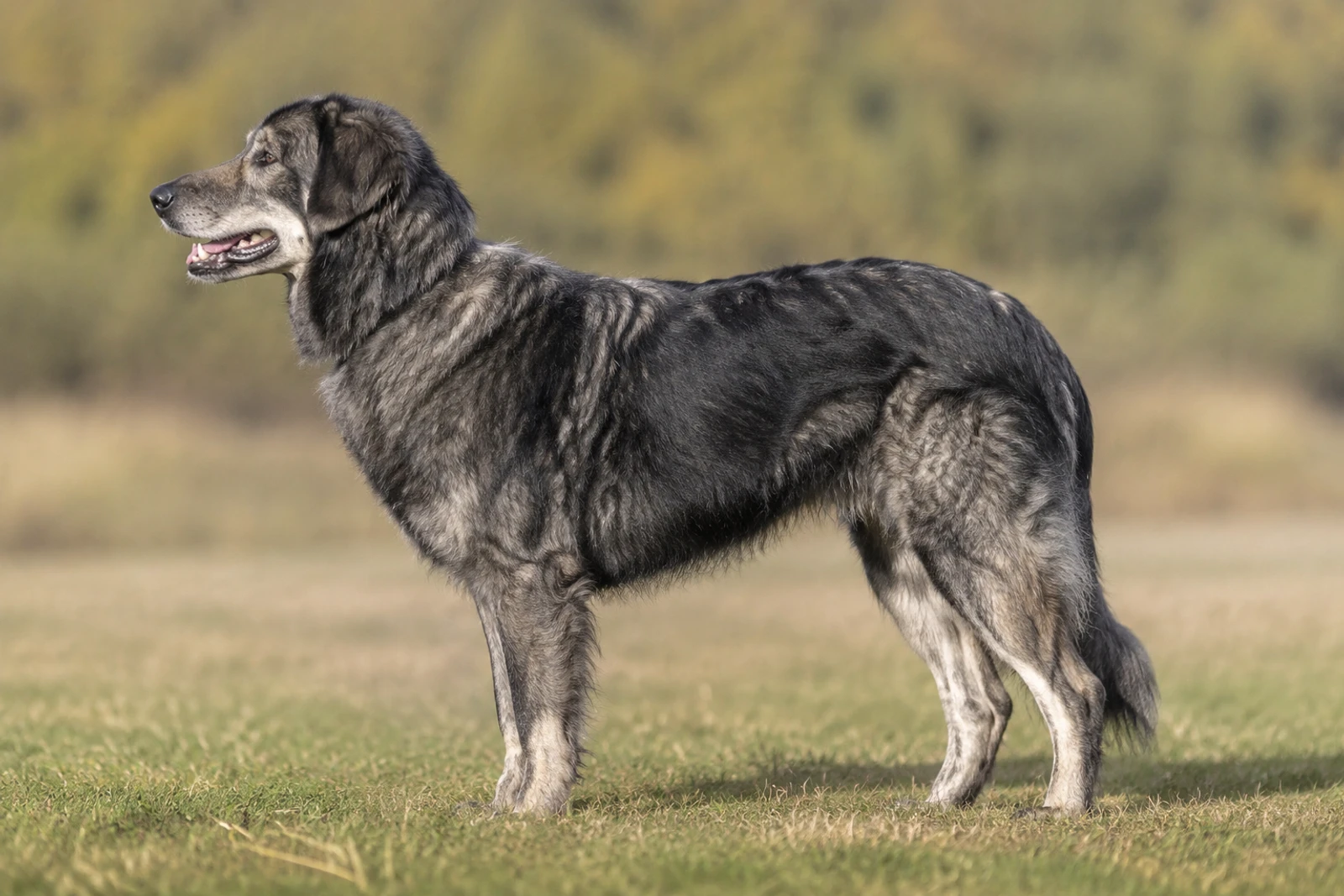
The Hellenic Shepherd Dog, also known as the Greek Shepherd, is a giant, ancient breed developed to guard livestock in the mountainous regions of Greece. Standing 24–30 inches tall and weighing 71–110 pounds, this powerful dog is loyal, protective, and independent. With a dense double coat, they thrive in outdoor environments and need plenty of space to roam. Best suited for experienced owners with large, securely fenced properties, the Hellenic Shepherd bonds deeply with its family but can be wary of strangers. Proper socialization is crucial to ensure a well-adjusted guardian that is gentle with its flock and family.
At a glance
- Size
- Giant
- Height
- 24–30 in
- Weight
- 71–110 lb
- Life span
- 12 years
- Coat colors
- Black, White, Brown, Brindle, Gray
- Coat type
- Dense, weather-resistant double coat
How much does a Hellenic Shepherd Dog cost?
Adopt / rescue
$75–$400
Usually includes spay/neuter, first shots, and a microchip.
Buy from a breeder
$700–$2,000
From a reputable, health-testing breeder.
Approximate USD. Prices vary widely by region, breeder, pedigree, age, and coat colour — adopting is the lower-cost and recommended route. Avoid suspiciously cheap “breeders”; they’re often puppy mills.
Estimate the full cost of a Hellenic Shepherd Dog →Want the ongoing number? Estimate the monthly food bill for a Hellenic Shepherd Dog with our dog food cost calculator.
Hellenic Shepherd Dog photos
Views
Front, side, rear and top — the full silhouette.Poses
How the breed sits, lies, moves and plays.Puppy to senior
The breed across its whole life.Expressions
The breed’s range of moods.Close-up details
Eyes, ears, nose, paws, tail and coat.Coat colors
The breed’s recognized colors.Click any photo to enlarge. We show the Hellenic Shepherd Dog from every angle — three views, poses, life stages, expressions, close-ups, coat and colors.
Appearance & size
A Hellenic Shepherd Dog doesn’t just walk into view — it occupies ground. At 24 to 30 inches at the shoulder and anywhere from 71 to 110 pounds, this is a giant breed in every sense, with males often pushing the upper end of that scale in both height and dense bone. The body is rectangular and substantial, a classic molosser frame: longer than tall, broad through the chest, and corded with working muscle rather than show-ring bulk.
The head is the first thing that grabs you — massive, bear-like, with a wide skull and a deep, blunt muzzle that’s slightly shorter than the length of the back skull. Viewed head-on, the strong stop and pronounced brow ridges give the face a serious, assessing expression that’s amplified by dark, almond-shaped eyes set well apart. Ears are medium-sized, triangular, and hang flat against the cheeks, though many working dogs in Greece are cropped close to the head. From the front, the dog’s thick neck blends into a powerful, broad chest with straight, heavy-boned forelegs planted square.
From the side, the outline reveals a level topline, a deep chest that reaches at least to the elbows, and well-sprung ribs that carry back into a moderate tuck-up. The coat is one of the breed’s most distinctive features — a dense, shaggy double coat that repels rain, snow, and predator teeth. The outer guard hairs are coarse and straight or slightly wavy, while the undercoat is thick and woolly. Length varies: shorter on the face and front of the legs, heavy feathering on the backs of the thighs, and a profuse ruff around the neck that adds to the lion-like silhouette. The tail is thick at the base, set low, and carried in a downward curve with a slight upward hook at the end.
Color tends to be white as the base, often with large patches of cream, fawn, brindle, or black — sometimes solid, sometimes in a tricolor pattern. You’ll also see solid-coloured dogs in dark shades, but the white plus contrasting patches is the most common look in the mountains. Moving behind, the rear end is just as robust: broad hips, well-muscled thighs, and rear pasterns that remain vertical when the dog is standing naturally. There’s nothing exaggerated or delicate here; every angle says endurance and power built for guarding flocks on rough terrain for 12 years and beyond.
History & origin
The Hellenic Shepherd Dog is a living relic of Greece’s mountain pastoralism, forged over centuries in the Pindus range and the highlands of Epirus, Thessaly, and Macedonia. For shepherds navigating rocky terrain where wolves and brown bears still hunt, a flock guardian needed to be more than just large — it had to think independently, fight ferociously when required, and yet move gently among nursing ewes. This dog filled that role without a written standard for most of its history; its form followed survival.
While nobody set out to “create” a breed, the Hellenic Shepherd’s blueprint traces directly to the powerful molosser-type dogs that spread across the ancient Mediterranean with Greek and Roman armies. In the isolated mountain villages, those heavy-boned dogs interbred with local herding stock to produce a resilient, white-bodied guardian whose coat blended with the flocks and whose size and courage deterred predators. Generations of shepherds selected only the soundest, most protective dogs that stayed with their charge through blizzards and summer heat, ignoring any trait that didn’t improve working ability.
By the late 20th century, modern farming and a shrinking shepherd lifestyle caused numbers to dive. Crossbreeding with imported breeds further diluted the original type. To preserve it, Greek enthusiasts and the Greek Kennel Club (Kynologikos Omilos Ellados) developed a formal standard, officially recognizing the Hellenic Shepherd Dog in the early 2000s. The goal was to document and protect the traditional livestock guardian — not to reshape it for the show ring.
Today, some still work alongside flocks, while others transition into family guardians where their deep-rooted need to protect is channeled into bonding with their people. The breed remains rare outside Greece and isn’t yet recognized by the FCI, which keeps it largely in the hands of committed breeders who prioritize working temperament and health over mass production. If you meet a true Hellenic Shepherd, you’re looking at a dog whose every instinct was scraped out of mountains and centuries of silent, solitary labor.
Temperament & personality
You’re not looking at a casual family pet that lives for the next belly rub. The Hellenic Shepherd Dog is a serious, independent guardian, built to patrol and protect livestock across rough, open country—and that mindset doesn’t switch off in the backyard. Aloof with strangers and intensely watchful, this dog reads every movement and silhouette as potential threat. A relaxed, soft-eyed dog is content; a forward-leaning, stiff-bodied stare is your early warning that the dog has sized someone up as an intruder. Pay attention.
With their own people, they’re steady and loyal, not effusively affectionate. A 100-pound dog leaning gently against your leg is as close as you’ll get to a hug. They bond deeply but don’t demand constant attention. Isolation or neglect, however, can flip a calm dog into an anxiety-driven barker, and that resonant voice carries. This is not apartment living.
Territorial instincts run deep. Indoors, they may urine-mark spaces that smell unfamiliar—a less-used guest room that lacks the family’s scent profile becomes fair game. Outdoors, they’ll patrol and renew boundary markers by depositing scent in the same spots, sniff-checking earlier claims. If an accident happens inside, clean it with an enzymatic cleaner or a vinegar spray; the lingering odor signals “go here,” not “stop.” Reinforce outdoor elimination with an immediate treat, not punishment after the fact.
The Hellenic Shepherd’s strong will demands respectful, consistent engagement. Force backfires. You earn cooperation by reading the dog’s calming signals—lip licks, yawns, a turned head—and backing off before the pressure cooker boils over. That same independent streak means they’re not blindly obedient. They’ll assess a command and decide whether it makes sense in the moment.
Food-guarding tendencies can surface, so teach children to let the dog eat in peace. Never interrupt a meal. Chewing, both as a teething puppy and a jaw-strengthening adult, is non-negotiable. Provide tough natural chews; a home-brewed citrus or vinegar spray can redirect gnawing from chair legs. And yes, like many shepherds, they may roll in foul-smelling muck—possibly to mask their own scent, possibly to brag about a “find,” or simply because it smells incredible to a scavenger-descended brain. Keep a dog-safe shampoo handy.
Low friendliness scores and a natural wariness mean this isn’t a breed for novice homes, off-leash dog parks, or households with fragile small pets. Their size alone makes any aggressive moment dangerous. If you have children, constant supervision is non-negotiable, and you’ll need to teach kids to read the dog’s body language as well as you do. In the right hands, though, you get a calm, brave guardian who works for you every single day—expecting nothing but clarity, consistency, and a job to do.
Good with kids, dogs & other pets
A 100-pound dog that decides to lean against a toddler can cause an accidental tumble — so with the Hellenic Shepherd, supervision around small children isn’t optional. These dogs are naturally patient and non-aggressive with their own family, and they often form an especially devoted bond with the kids they grow up beside. That said, their guarding instincts run deep. A child’s roughhousing with friends in the backyard can look like a threat to a dog bred to patrol and protect, and a well-meaning bark or body block from a giant dog can frighten a visiting child. You manage that by giving your puppy calm, positive exposure to kids of all ages — infants in strollers, squealing five-year-olds, teenagers on skateboards — before 16 weeks, and continuing that exposure throughout life.
With other dogs, the Hellenic Shepherd is more of a “choose your company carefully” breed. They tend to be aloof or even dominant with unfamiliar dogs, and same-sex aggression, especially between intact males, isn’t unusual. A puppy raised alongside another dog usually does fine, building a quiet, working partnership. Bringing an adult Hellenic Shepherd into a home with a resident dog calls for slow, neutral-ground introductions and reading body language honestly — don’t force play or tolerate tense staring. Dog parks are often a poor fit. The noise, chaos, and pushy strangers can trigger a guarding response rather than provide healthy socialization. A few trusted dog friends and long, focused walks are usually all the canine interaction they need.
Cats and small pets land in a gray area. These dogs were developed to guard livestock, so they can learn to accept a family cat as a member of their flock, especially when introduced as a puppy. A running outdoor cat or a darting ferret, however, may kick up a chase instinct that’s hard to override. Keep initial meetings controlled — dog on a leash, cat with a high escape route — and reward calm, disengaged behavior. The same goes for rabbits, guinea pigs, and other small animals; don’t assume a harmonious picture just because the dog is gentle with people. With any pet this large and this capable, stacking the deck with thorough, early socialization and a household rule of “no unattended time together” is the smart play.
Trainability & intelligence
You’re not dealing with a push-button retriever. The Hellenic Shepherd was bred to make independent decisions while guarding flocks in remote mountains, so his intelligence comes wrapped in a “what’s in it for me?” mindset. He learns fast—sometimes in one or two repetitions—but he’ll also decide whether your request makes sense. If it doesn’t, he’ll ignore it, and no amount of sternness will change that.
Training, then, is less about commands and more about building a working partnership. Start the day your puppy comes home. Use food, a favorite tug toy, or calm praise to mark the behavior you want, and be generous with it. This breed can be sensitive; harsh corrections or frustrated tone erode trust fast, and once trust is gone, you’ll get a dog who simply checks out or offers avoidance behaviors instead of compliance. Stick with short, clear sessions, and always end on a win.
Recall is one of the hardest things you’ll teach. His instinct is to scan the perimeter and move toward anything out of place, not race back to you for a cookie. Work on a long line in a variety of environments, proofing the recall daily, but expect that off-leash reliability in an open area may never reach 100%—especially if livestock or unfamiliar people appear. That’s not stubbornness; it’s the guardian brain doing its job.
Early socialization is non-negotiable. Introduce your puppy to a hundred different neutral, positive experiences before 16 weeks: people of all ages, calm dogs, unusual sounds, city streets, slick floors. Keep sessions short and upbeat, and let him investigate at his own pace. A poorly socialized Hellenic Shepherd becomes suspicious and reactive, and a 100-pound dog with a hair-trigger wariness is a liability. Done right, though, that natural watchfulness turns into steady discernment rather than fear.
Focus impulse-control work into everyday moments—waiting at doorways, settling on a mat while you cook, ignoring a tossed toy until released. This pays off when he needs to pause and look to you instead of lunging at a potential “threat.” If you try to muscle through a standoff, you’ll lose. Instead, teach a rock-solid “look at me” and reward voluntary check-ins. That’s the trust that turns an independent thinker into a reliable partner you can live with safely.
Exercise & energy needs
A Hellenic Shepherd Dog won’t chase a ball for an hour, but skipping his daily rounds sets you up for a bored, loud, and surprisingly creative guardian. This is a giant working breed built to patrol, not sprint, so think in terms of steady, purposeful movement spread across the day rather than a single high-intensity workout.
Shoot for at least 60–90 total minutes of walking and roaming, split into two or three sessions. A 30-minute loop on leash in the morning, a longer off-leash patrol on your property midday, and a relaxed evening walk with plenty of sniffing is a good baseline. These dogs come alive when they have a territory to inspect — if you’ve got a securely fenced acre or more, let him do his self-appointed rounds. That mental map-making burns real energy without turning him into a hyperactive mess indoors.
Mental work matters just as much. Scent games, puzzle feeders, and “find it” tasks channel his natural suspicion and nose. Hide a smelly treat out in the yard and send him to locate it, or use a food-dispensing toy that makes him work for his meal. Ten minutes of focused nose work tires him faster than another mile on leash.
Be careful with high-impact exercise, especially during the first 18–24 months. Joints in a dog that will top 100 pounds need time to mature. No repetitive jumping, no hard stops on pavement, no forced running next to a bike until growth plates close. Swimming and walking on soft ground are safer options for building fitness without wrecking elbows and hips.
A Hellenic Shepherd under-exercised or mentally starved will find his own job — and you probably won’t like it. Obsessive barking, digging craters along the fence line, and escape attempts are all signs that his engine is still idling. Give him a predictable daily routine with real physical and mental outlets, and you’ll get the calm, watchful presence the breed is meant to be.
Grooming & coat care
The Greek Shepherd’s coat is a dense, double-layered barrier designed for life in rough mountain weather. That means you’ll deal with a serious undercoat blowout twice a year, turning your home into a fur festival unless you stay ahead of it.
Brushing
Reach for a large slicker brush or a pin brush with rounded tips to work through the long outer guard hairs without scratching skin. Follow up with an undercoat rake—this pulls out mounds of loose fluff before it ends up on your sofa. During the heavy shedding seasons in spring and fall, brush every day for 10–15 minutes. Out of season, two or three thorough sessions a week keep the coat clean and mat-free. Run a metal comb behind the ears, under the legs, and along the feathering where tangles love to hide. Regular brushing not only cuts down on flying hair but also lets you spot ticks, hot spots, or dry skin early.
Bathing
These dogs have a naturally weather-resistant coat, so over-bathing strips the protective oils. Plan on a full bath every three to four months, or when your dog finds something truly stinky to roll in. Use a gentle, dog-specific shampoo and take the time to rinse completely—leftover soap can trigger dandruff and itching in that thick undercoat.
Nails, ears, and teeth
Trim nails every three to four weeks; if you hear clicking on hard floors, they’re too long. Check those floppy or drop ears weekly for redness, wax buildup, or a sour smell, and wipe them clean with a vet-approved solution. A quick daily tooth-brushing with dog toothpaste goes a long way toward preventing gum disease in a giant breed.
Seasonal coat care
Outdoor exercise on varied terrain helps the old coat loosen naturally, so don’t skimp on walks during shedding periods. A forced-air dryer or a professional blow-out at the groomer can dislodge a week’s worth of loose undercoat in one session—a lifesaver when your vacuum is crying uncle. Just expect to live with drifting tumbleweeds of hair for a few intense weeks each year, and keep that undercoat rake handy.
Shedding & allergies
If you like a tidy house, the Hellenic Shepherd will test your commitment. This is a heavy shedder year-round with a dense, weather-proof double coat that served Greek shepherds well in harsh mountains—and now covers your floors with a fine layer of fur. The undercoat is soft and woolly; the outer coat is coarser and repels dirt, but neither layer stays on the dog.
The seasonal blowout
Twice a year, usually in spring and fall, shedding shifts into overdrive. For a few weeks you’ll pull tufts of loose undercoat off the dog by the handful. Daily brushing with an undercoat rake and a slicker brush becomes non-negotiable, and even then your vacuum cleaner gets a workout. Outdoors is the place to brush—a gust of wind can send a cloud of fluff across the yard.
Drool is less dramatic than some giants, but expect a wet beard after drinking and the occasional rope of slobber after exercise or on hot days. Keep a rag handy near the water bowl.
Is the breed hypoallergenic? No, and nobody should tell you otherwise. All that shedding means dander spreads everywhere. People with dog allergies will react. If you’re allergic but determined, spend time around adult dogs of this breed before you commit—some allergy sufferers find the coat’s dander less irritating than others, but there’s no guarantee. Your best allies are a robot vacuum that runs daily, washable couch covers, and realistic expectations.
Diet & nutrition
Feeding schedule & quantities
Puppies burn through calories in a hurry. Give a Hellenic Shepherd pup four evenly spaced meals a day until four months old, then three meals from four to six months. After that, switch to the adult rhythm: two meals a day. Transition any new diet slowly—start with lightly cooked, puréed meats, fish, fruits, and vegetables, or a high-quality commercial puppy formula that supports steady, controlled growth in a giant breed.
An adult typically runs between 71 and 110 pounds, so portions shift with build and workload. A lean, active 100-pound dog who runs hard for an hour daily might need 5–6 cups of quality dry food split across morning and evening. A more sedentary 80-pounder often does fine on 4 cups, adjusted whenever you feel the ribs getting harder to find. If you feed a combination of kibble, raw, or home-cooked meals, aim for roughly 60% animal protein (raw or cooked meat), 20–30% vegetables and fruits, and about 10% extras like eggs, grains, or plain yogurt. That balance mirrors what their digestive system handles best.
Weight management for a giant breed
Extra pounds punish a Hellenic Shepherd’s joints fast. The breed isn’t notorious for a runaway food drive the way some dogs are, but any giant dog who overeats or gets too little exercise can become overweight. Since they’re already prone to hip and elbow issues, keeping them lean is non-negotiable. You want to feel the ribs without digging, and see a clear waistline from above. Cut back portions gradually if your dog slows down with age—seniors face a higher obesity risk as activity drops. Avoid feeding rich holiday scraps or fatty trimmings; they can trigger pancreatitis, a painful and dangerous condition in large breeds.
What to put in the bowl
Dogs are built to process meat. A vegetarian or vegan diet robs a Hellenic Shepherd of essential nutrients. Instead, give him a varied mix: raw or cooked meats, canned fish, eggs, cooked vegetables, and digestible grains like pearl barley or plain white rice. The breed’s jaw motion is vertical, and saliva contains no digestive enzymes, so blending or processing whole meals helps break down cell walls and improves nutrient absorption—especially useful for young pups or old dogs with sore mouths.
Use a puzzle bowl if your dog gulps food. It slows eating and adds the mental work a thinking breed needs. For seniors with missing teeth, purée meals to keep nutrition uptake high; there’s no solid evidence that healthy older dogs need less protein, so don’t slash the meat content without a vet’s okay.
Introduce raw chicken wings around twelve weeks, always under your supervision. They strengthen jaws, clean teeth, and give a growing pup something to focus on. Never feed directly from the table—once begging takes root, it’s hard to break. Leftovers you plan to share go into the dog’s own bowl, on your schedule.
Health & lifespan
Expect about 12 years with a Hellenic Shepherd Dog — a solid run for a giant who can weigh 71 to 110 pounds. That lifespan isn’t a given, though. It hinges on staying ahead of a handful of well-known big-dog issues and keeping him lean from day one.
Hip and elbow dysplasia are the main orthopedic concerns. A 29-inch-tall dog pounding across rough terrain puts serious demand on those joints, so responsible breeders screen breeding stock through OFA or PennHIP and won’t breed dogs with borderline results. On your end, weight management is the most direct lever you can pull. A heavy Hellenic Shepherd is a joint-pain case waiting to happen; you want a defined waist and the last couple of ribs easily felt.
The deep, barrel chest that makes him so imposing also makes bloat — gastric dilatation-volvulus — a real threat. This is a sudden, life-threatening emergency. Split meals into at least two servings, avoid raised feeders unless your vet specifically recommends one, and enforce a full hour of quiet rest after eating. No hard running, no wrestling.
Some lines can carry hereditary eye conditions like entropion or progressive retinal atrophy. A breeder who takes health seriously will have the parents’ eyes examined annually by a veterinary ophthalmologist and share those clearances openly. The dense double coat, built for mountain weather, can bite back if you ignore it: moisture trapped against the skin breeds hot spots and yeast, especially behind the ears and under the collar. Brush down to the undercoat weekly and dry him thoroughly after he gets soaked.
This is a dog who hates being isolated. Neglect or chronic stress can spill into anxiety-driven behaviors that take a toll on overall health — so early, positive socialization isn’t just training; it’s protection. Plan for an annual wellness exam (twice yearly once he’s a senior), keep him on monthly heartworm prevention during mosquito season, and stay current on rabies — there’s no treatment once symptoms appear. When you’re looking at a puppy, ask to see hip, elbow, and eye certifications. That paper trail is the quiet signal of a breeder who puts a long, sound life ahead of a quick sale.
Living environment
A Hellenic Shepherd Dog doesn’t just want space—it needs a territory to guard. Forget apartment living entirely; this 71–110 lb giant was bred to patrol mountain flocks, not curl up in a condo. Even a suburban house with a standard yard falls short unless you’re ready for a dog that will bark at every squirrel, delivery truck, and passing stranger, day and night.
Yard requirements. A large, securely fenced property is non-negotiable. A 6-foot fence with dig guards or buried wire is the minimum—these dogs can clear shorter barriers and will excavate if under-stimulated. Underground electronic fences won’t contain a working guardian’s drive to patrol. The ideal setup is an acre or more, ideally rural, where the dog can move with purpose and have a flock (livestock, other animals, or the family) to protect. Without that, expect fence-running, incessant barking, and shredded landscaping.
Climate tolerance. Built for the Greek mountains, the breed handles everything from freezing winds to blazing Mediterranean sun. A dense double coat insulates against cold and sheds rain, but they still need a shaded shelter and plenty of water when temperatures climb. This isn’t a dog that wilts in bad weather; it’s more likely to nap in the snow or sun and ask for more.
Noise and barking. Barking is the breed’s primary tool, not a nuisance you can train away. They sound off at anything unusual and will produce a deep, rolling alarm that carries across the property. At night, the barking often intensifies because that’s when predators approach. If you have noise-sensitive neighbors or local ordinances, you’ll be fighting a deeply ingrained instinct—this is not a quiet household companion.
Tolerance for being alone. Independent and bred to work autonomously, a Hellenic Shepherd isn’t a Velcro dog that panics when you leave. But that independence assumes the dog has a defined territory and a job to do. Left alone in a bare backyard for 8–10 hours while you’re at work, he’ll invent his own tasks—usually digging, escaping, or barking at nothing until a neighbor complains. If another dog, livestock, or a family member is usually home, he’ll settle into his guardian role. For the alone-time scenario, a securely fenced outdoor space with a clear view of the property, plus puzzle toys, raw bones, or scent work, can help, but it’s no substitute for real work. A Hellenic Shepherd who has nothing to guard is a frustrated, destructive one.
Who this breed suits
A Hellenic Shepherd Dog is a serious livestock guardian, not a casual companion, and no amount of affection will wish away centuries of hardwired protective instinct. The ideal owner is an experienced handler who understands independent, territorial breeds and has a genuine job for this dog — whether that’s guarding property, protecting a flock, or a similar purpose on rural acreage. If you’re looking for a biddable dog who hangs on your every word, look elsewhere. This breed was built to make its own decisions.
A first-time owner is a non-starter. These dogs read situations and act without waiting for a command, and that requires a human who knows how to channel that drive into structured work, not just obedience drills. A novice will be outmatched by the dog’s size (up to 110 pounds and 30 inches at the shoulder), physical power, and stubborn problem-solving.
The breed can work for a single, dedicated person living on a securely fenced property, provided that person has the time, physical strength, and guardian-breed background to provide clear leadership. Active families with older, dog-savvy children might be okay if adults supervise interactions and the dog is raised with those kids from puppyhood — but don’t expect a cuddly family pet. This dog views strangers and sudden movements as potential threats, and even a well-socialized Hellenic Shepherd will default to guarding when pushed. A bouncing child’s friend or a neighbor popping over unannounced can be a trigger, not a party.
Seniors, apartment dwellers, or anyone who wants a quiet life with a gentle giant should think twice. This dog needs a tall perimeter fence — at least 6 feet — and enough space that it doesn’t feel compelled to patrol every squirrel in sight. Without a job, it will invent one, often by barking incessantly or reacting to every passerby. Mental engagement matters more than pure running; a bored Hellenic Shepherd can become destructive or impossible to manage, and you can’t simply tire it out with a long walk. It needs to feel responsible for a territory.
Same-sex dog aggression is common; multiple-dog homes run best when the Hellenic Shepherd is the sole guardian or paired with a subordinate opposite-sex dog. Off-leash dog parks are a risk, not recreation. If your life can’t accommodate a powerful, suspicious- of-strangers guardian who lives to patrol, this breed isn’t a good fit. For the right, experienced owner with land and a real security need, you’ll get a fiercely loyal partner that works a 12-year shift without complaint. For everyone else, there are easier paths.
Cost of ownership
A Hellenic Shepherd Dog is rare in the U.S., so you’re not just buying a dog — you’re often importing a piece of Greek livestock guardian heritage, and the price reflects that. Expect to spend $1,500–$3,000 for a well-bred puppy from parents with health screenings (hips, elbows, eyes). Some working-line dogs from Greek shepherds may cost less, but overseas shipping, import fees, and quarantine add $500–$1,200 on top. Rescue opportunities are almost nonexistent; a handful of Greek rescues will occasionally place an adult, for $400–$800 after transport.
Monthly costs add up quickly for a 70-to-110-pound guardian.
- Food: A giant, active dog eats a lot. High-quality kibble or balanced raw runs $80–$130 a month. You’ll go through a 30-pound bag every two to three weeks. Don’t cut corners — cheap fillers can aggravate joint stress in a fast-growing frame.
- Vet and prevention: Routine visits, annual vaccines, heartworm/flea/tick preventives average $45–$75 monthly. Giant breeds are prone to bloat, hip dysplasia, and cruciate tears; a single emergency gastropexy or TPLO surgery can exceed $5,000.
- Grooming: They blow a dense double coat seasonally. You’ll invest $30 in a good slicker brush and undercoat rake, and many owners pay for a professional deshedding treatment ($80–$120) twice a year. Ongoing costs sit around $25–$40 per month.
- Insurance: With a 12-year lifespan and giant-breed orthopedic risks, decent pet insurance lands between $60 and $90 monthly, less if you choose a high deductible. Skip it only if you have a fat emergency fund.
All in, count on $200–$300 a month once the dog is home, plus an initial spend of $400–$600 for a crate large enough to hold a horse, heavy-duty bowls, and indestructible chew toys. Factor in $1,000–$2,000 for puppy vet bills and spay/neuter in the first year. And stash at least $3,000 in a “just in case” account — giant dogs don’t do cheap emergencies.
Choosing a Hellenic Shepherd Dog
Where you get a Hellenic Shepherd matters immensely. These are giant, brains-and-brawn livestock guardians — independent, territorial, and not wired to be everyone’s best friend. A poorly bred or under-socialized individual can become a major liability, while a sound dog from the right source can be a steadfast family protector for a dozen years.
Rescue vs. breeder
Adopting an adult Hellenic Shepherd isn’t a shortcut; it’s a deep commitment. A breed-specific or working-dog rescue may occasionally place one with an experienced guardian-breed home. The upside: you skip the baby-dinosaur phase and can gauge the dog’s real temperament. The catch: you rarely know the dog’s full history, and some dogs land in rescue because their protective instincts were mishandled. Always ask for a detailed behavioral assessment — look for a dog that is aloof but not outright fearful or aggressive with strangers, and one that has shown genuine affection toward its previous people. If you’re a first-time guardian-owner, an adult rescue with a known, stable track record inside a home can work, but be brutally honest about your skills.
A responsible breeder, however, gives you the chance to shape the dog from puppyhood and stack the genetic deck in your favor. Because the Hellenic Shepherd is a rare working breed, you’ll likely need to wait. That’s a good sign. Top breeders don’t churn out litters for the pet market — they breed to preserve working ability, sound structure, and a steady nerve. Expect them to work their dogs on livestock or maintain a large, securely fenced property where the dogs get real guardian exposure. They’ll grill you about your fencing, your other pets, and how you plan to handle a 71–110 lb dog whose default response to a perceived threat is to advance, not retreat.
Health clearances to demand
The 12-year lifespan is solid for a giant breed, but it assumes you start with hips and elbows that won’t fall apart. Insist on seeing the following, at minimum:
- OFA hip certification (or PennHIP) on both parents — scores should be at least “fair” or better; borderline or dysplastic hips are a dealbreaker.
- OFA elbow clearance to rule out elbow dysplasia, which can plague heavy, fast-growing dogs.
- Cardiac evaluation — an echocardiogram or OFA cardiac clearance is wise. Dilated cardiomyopathy and other heart issues can surface in giant breeds, and early screening gives you a baseline.
- Eye exam by a board-certified veterinary ophthalmologist (CERF/CAER) within the last year.
- Thyroid panel — autoimmune thyroiditis isn’t the breed’s headline issue, but a full panel adds peace of mind.
No genetic test exists for gastric dilatation-volvulus (bloat), but a breeder who casually dismisses it isn’t your breeder. They should talk frankly about prophylactic gastropexy, multiple small meals, raised bowls (or not — the science shifts, they’ll know the latest), and avoiding frantic exercise right after eating.
Red flags you can’t ignore
Walk away if a breeder:
- Has no health clearances or shows you paperwork that’s over a year old or from parents who were tested at barely two years of age (final hip OFA ratings are typically only done at 2+).
- Pushes a “rare color” or claims the dogs “guard without training” — healthy Hellenic Shepherds guard because of genetics plus careful rearing, not magic.
- Won’t let you meet the dam (or sire, if present) on their property, or the dam appears cowering, sick, or unpredictably aggressive.
- Sells puppies younger than 8–9 weeks. Giant-breed puppies need that extra time with mom and littermates for bite inhibition and social learning.
- Asks zero questions about your home, breed experience, or exit plan if things don’t work out.
Picking your puppy
When you visit, what you see matters less than what the breeder tells you about each pup’s day-to-day behavior over weeks of observation. Still, look for a puppy that notices you without instantly shrinking back or lunging. A pup that investigates your shoes, gives a little bark, then decides you’re boring and flops down is often a balanced candidate. Run from the puppy that hides in a corner and doesn’t recover, or the one that ignores littermates and fixates on you with stiffness.
The breeder should have already started early socialization — gentle handling, exposure to different surfaces, sounds, and safe visitors. Ask how they introduce pups to livestock if that’s in your future; even pet homes benefit from early exposure to the sights and smells the dog will later take in stride. Also confirm that the pups have been dewormed, received age-appropriate vaccinations, and come with a written health guarantee that spells out what happens if a hereditary issue surfaces.
A Hellenic Shepherd isn’t a dog you pick up on impulse because it looks majestic. You’re choosing a decade-plus working partnership. Start with a source that sweats the structural and mental soundness as much as you’ll later sweat the daily management — that’s the single move that tilts the odds in your favor.
Pros & cons
Pros
- A natural, no-compromise guardian — their imposing size (up to 110 lb and 30 inches at the shoulder) and deep, rolling bark deter predators and intruders without any extra training.
- Fiercely loyal to their own; once bonded, they will put themselves between you and a perceived threat, whether that’s a strange dog, a wild animal, or an unwelcome visitor.
- Calm and undemanding when not on alert. They conserve energy and are content patrolling the property at a walk — not a breed that needs constant play or marathon runs.
- Relatively long-lived for a giant breed. A well-bred Hellenic Shepherd often reaches 12 years, giving you a long partnership compared to many other massive dogs.
- Thrives outdoors in harsh climates. The double coat insulates against heat and cold, and they genuinely prefer living where they can oversee their territory.
Cons
- Strong-willed and independent to a fault. They were bred to make solo decisions guarding flocks miles from a shepherd — not to wait for your command. Training is a battle of wits that demands experience and rock-steady consistency.
- Massive physical power and a deep suspicion of strangers mean poor handling can lead to a dangerous dog. This is not a breed for a first-time owner or a meek handler.
- Apartment or suburban life is a non-starter. They need a large, securely fenced yard or rural acreage; without a real job and space to patrol, they become frustrated and destructive.
- Heavy shedding year-round with two intense seasonal blowouts. Expect tumbleweeds of hair indoors, plus drool — especially after eating or drinking.
- Same-sex aggression and dog reactivity are common. Many Hellenic Shepherds will not tolerate strange dogs of the same sex, making off-leash parks and casual dog greetings a non-negotiable “no.”
- Nocturnal barking can test even the most understanding neighbors. They bark at real and imagined threats in the dark, a deeply ingrained trait that’s nearly impossible to extinguish.
- Giant-breed health concerns loom: bloat, hip dysplasia, and eyelid abnormalities (entropion) can appear. Responsible breeders screen for these, but you should budget for higher-than-average veterinary and food costs.
Similar breeds & alternatives
If you’re drawn to the Hellenic Shepherd Dog’s protective nature but need a breed that’s easier to find or a little less intense, a handful of livestock guardians share its roots and working style — with key differences.
-
Akbash Dog — This white Turkish guardian is the Hellenic Shepherd’s closest lookalike and functional cousin, standing 28–34 inches and 90–140 pounds. The Akbash can be slightly taller and heavier. Both are independent, serious flock protectors bred for harsh mountain terrain, but the Akbash tends to be more one-person oriented and even sharper with strangers. Neither is a novice dog.
-
Maremma Sheepdog — At 23.5–28.5 inches and 66–100 pounds, the Italian Maremma overlaps the Hellenic Shepherd in weight but caps out a bit shorter. It’s still a large, rustic guardian, though often described as more patient and slightly less combative with unfamiliar people if well-socialized. The coat is thick and white, needing similar brushing but shedding heavily.
-
Great Pyrenees — The Pyrenees runs bigger (27–32 inches, 100–160 pounds) and brings a famously calm, gentle expression. This breed is more likely to lean into a laid-back family companion role while still patrolling your property at night. However, its double coat drops mountain-sized drifts of fur, and the instinct to roam and bark is just as hardwired.
-
Anatolian Shepherd — Anatolians stand 27–32 inches and range from 88–150 pounds, giving you a larger, more imposing frame. They’re leaner and faster than the Hellenic Shepherd, with an intense, no-nonsense guarding drive. If you want a more readily available American-bred dog with that same ancient, no-frills working ethos, this is a close match — but you’ll be trading some of the Hellenic’s rawer, slightly lighter build for a rangier, heavier-boned athlete.
If you’re simply after a giant breed without the full-time guarding edge, a Bernese Mountain Dog or Greater Swiss Mountain Dog brings size and strength but a people-oriented, generally non-protective temperament — essentially the opposite of the Hellenic Shepherd’s default wariness.
Fun facts
- One of the oldest livestock guardian breeds in Greece
- Nearly extinct after WWII, but revived by dedicated breeders
- Also known as the Greek Shepherd or Hellenikos Poimenikos
- Has a deep, booming bark to deter predators and intruders
Frequently asked questions
- Are Hellenic Shepherd Dogs good with children?
- They can be gentle and protective with children they are raised with, but due to their large size and guarding instincts, supervision is essential. Early socialization helps them distinguish between normal interactions and threats. Their natural wariness means they may not be ideal for families with frequent new visitors or very young kids.
- Do Hellenic Shepherd Dogs shed a lot?
- They have a dense double coat that sheds moderately year-round and heavily during seasonal changes. Regular brushing, at least a few times per week, can help manage loose hair. They are not considered hypoallergenic and may not suit allergy sufferers.
- How much exercise does a Hellenic Shepherd Dog need?
- As a working breed, they require daily physical activity, such as long walks or secure outdoor time, but they are not hyperactive. Mental stimulation through tasks or training is equally important to prevent boredom. A large, fenced yard is beneficial, but they still need structured exercise.
- Are Hellenic Shepherd Dogs suitable for apartment living?
- Due to their giant size and need for space, they are generally not recommended for apartments. They thrive in homes with a securely fenced yard where they can patrol. Confined living can lead to restlessness and unwanted behaviors like excessive barking.
- Are Hellenic Shepherd Dogs good for first-time dog owners?
- Their independent and protective nature makes them a challenge for novice owners. They require consistent training, early socialization, and a confident handler who understands livestock guardian breeds. First-time owners may find their strong-willed temperament difficult to manage.
- Do Hellenic Shepherd Dogs bark a lot?
- This breed is naturally alert and vocal, often barking to warn of perceived threats. Proper training can moderate their barking, but they are unlikely to be silent companions. Their guarding instincts make them excellent watchdogs, but this trait can be problematic in noise-sensitive environments.
Tools & calculators for Hellenic Shepherd Dog owners
Quick estimates tailored to Hellenic Shepherd Dogs — pre-filled with this breed’s size where it matters.
Articles & stories about the Hellenic Shepherd Dog
Sources & standards
This profile follows recognized breed standards from the American Kennel Club (AKC) and the Fédération Cynologique Internationale (FCI), along with established veterinary and breed-club guidance. These describe general breed tendencies — every dog is an individual.