

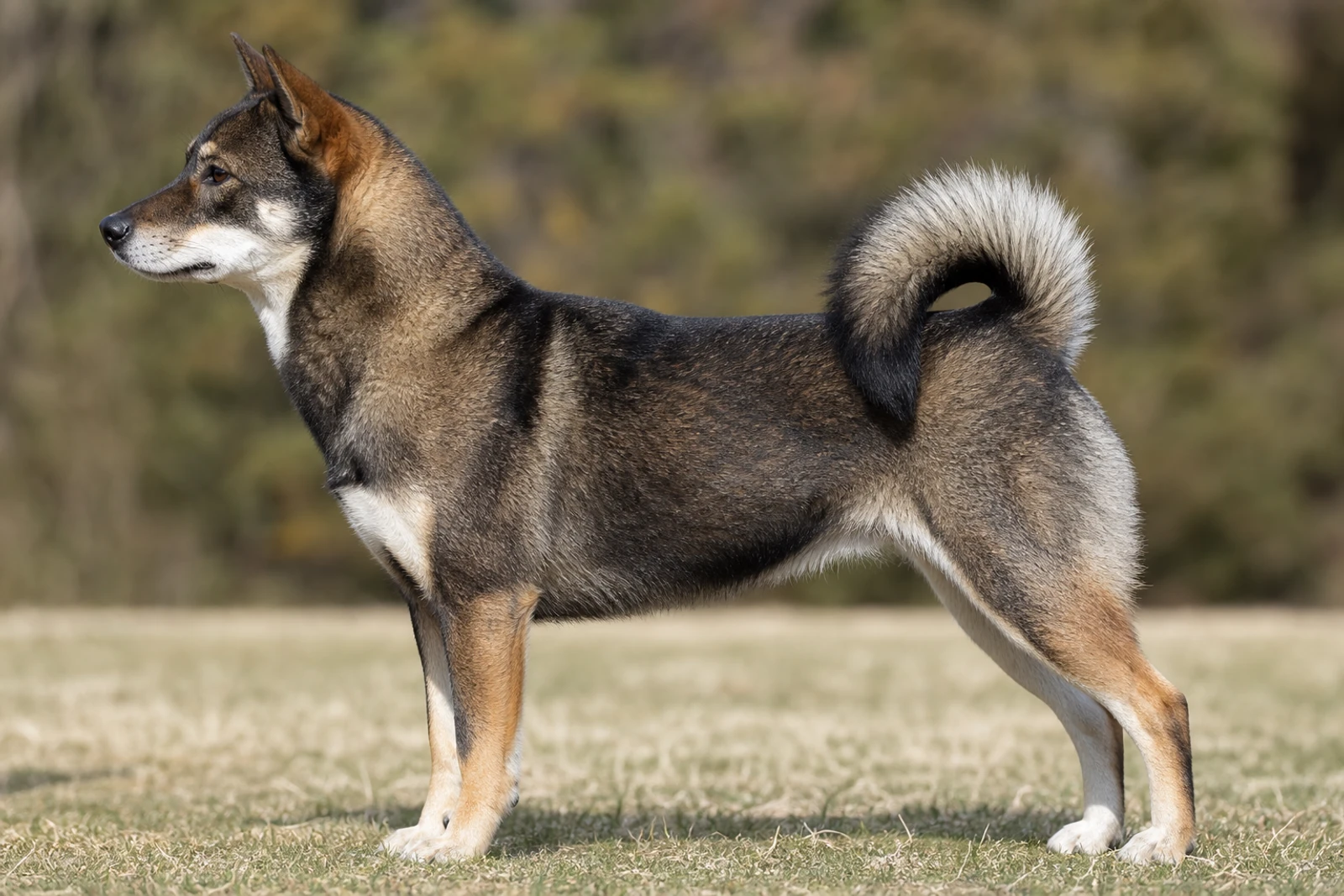
The Hokkaido Dog is a fearless, loyal Japanese spitz, originally bred for hunting and guarding. Best suited for experienced owners, this medium-to-large breed needs an active home with space to roam. Its affectionate yet independent temperament demands consistent training and early socialization. While devoted to family, its strong prey drive and assertive nature make it less ideal for homes with small pets or novice handlers. With proper care, the Hokkaido is a magnificent, steadfast companion.
At a glance
- Size
- Large
- Height
- 18–20 in
- Weight
- 44–66 lb
- Life span
- 11–13 years
- Coat colors
- sesame, brindle, red, black and tan, white
- Coat type
- thick double coat
How much does a Hokkaido Dog cost?
Adopt / rescue
$75–$400
Usually includes spay/neuter, first shots, and a microchip.
Buy from a breeder
$700–$2,000
From a reputable, health-testing breeder.
Approximate USD. Prices vary widely by region, breeder, pedigree, age, and coat colour — adopting is the lower-cost and recommended route. Avoid suspiciously cheap “breeders”; they’re often puppy mills.
Estimate the full cost of a Hokkaido Dog →Want the ongoing number? Estimate the monthly food bill for a Hokkaido Dog with our dog food cost calculator.
Hokkaido Dog photos
Views
Front, side, rear and top — the full silhouette.Poses
How the breed sits, lies, moves and plays.Puppy to senior
The breed across its whole life.Expressions
The breed’s range of moods.Close-up details
Eyes, ears, nose, paws, tail and coat.Coat colors
The breed’s recognized colors.Click any photo to enlarge. We show the Hokkaido Dog from every angle — three views, poses, life stages, expressions, close-ups, coat and colors.
Appearance & size
You’re looking at a medium-large Spitz that reads as rugged and balanced from every angle—no exaggeration, no fragility. The Hokkaido stands 18 to 20 inches at the shoulder and tips the scale between 44 and 66 pounds, with males typically hitting the upper end of both ranges. That puts them in the “large” category, but a Hokkaido is compact, not leggy, with a body slightly longer than tall. Think of a dog built to power through deep snow: broad chest, well-sprung ribs, and a thick neck that flows smoothly into strong shoulders.
The coat is the first thing your hands notice. A double coat with a straight, harsh outer layer and a dense, soft undercoat that sheds seasonally. It’s weatherproof—the kind of fur that sheds snow and dirt easily. Around the neck and withers, the ruff is noticeably heavier, giving a mane-like impression, especially in males. The tail brushes out full and plumed.
Color-wise, the breed standard calls for sesame (red with black-tipped guard hairs), brindle, red, black and tan, or white. You’ll see all of them, but sesame and brindle tend to catch the eye. A solid white Hokkaido has an almost luminous quality against winter backdrops. There’s no preferred color; responsible breeders just avoid thin, washed-out coats.
The face is pure northern type. Triangular ears stand stiff and slightly forward, cupped to catch sound. The eyes are small, dark brown, and triangular in their own way—set deep and angled upward at the outer corners, which gives a bold, confident expression without looking mean. A black nose, tight black lips, and a wedge-shaped head complete the picture.
From the front, forelegs are straight, bone is substantial, and feet are round and tight with thick pads. From the side, the topline is level and the belly tucks up moderately—nothing whippet-thin, but definitely athletic. The rear shows powerful thighs and a tail that curls over the back in a sickle or tight curl, the hallmark of the breed. The tail never lays limp; it’s carried high and active, even at rest.
History & origin
The Hokkaido’s story starts on the northernmost of Japan’s main islands — Hokkaido itself — where the breed has been hunting, guarding, and pulling sleds for well over a thousand years. When the indigenous Ainu people migrated from Honshu to Hokkaido around the 12th century, they brought along medium-sized spitz-type dogs. Those dogs were selectively shaped into a rugged, fearless partner capable of taking on the island’s largest game: brown bears, deer, and wild boar.
Isolation did the rest. Hokkaido’s rugged terrain and harsh winters — deep snow, sub-zero temperatures — hardened the dogs. Only the ones that were tireless, sharp, and willing to charge a bear head-on earned their keep and passed those traits along. The breed that emerged stood 18 to 20 inches at the shoulder and weighed 44 to 66 pounds, a compact but heavy-boned build that gave them power without sacrificing agility in mountainous terrain. Their dense double coat, prick ears, and curled tail all became trademarks of a cold-weather working dog that could also serve as a loyal family guardian.
Originally called Ainu-ken (Ainu dog), the breed later took the name Hokkaido Dog once the Japanese government began formally preserving it. In 1937, Japan designated the Hokkaido as a Protected Species and Living Natural Monument, a recognition shared by only a handful of native Japanese breeds (the Nihon Ken). That legal status didn’t just honor the dog’s cultural significance — it actively shielded the gene pool from dilution, which was critical because the breed’s numbers had dropped sharply during the chaos of World War II and its aftermath.
Dedicated breeders in Japan carefully rebuilt the population from remaining pure lines, keeping the dog’s original bear-hunting grit intact. Even today, the Hokkaido remains less processed and more “original” than many breeds that spent centuries outside their homeland. Outside Japan, the breed is still uncommon. The American Kennel Club doesn’t fully recognize it, but it’s listed in the Foundation Stock Service, and the United Kennel Club registers it in the Northern Breed group. So while you’re unlikely to see one at the average US dog park, every Hokkaido walking around today carries a direct line back to those snow-blasted Ainu villages and a working partnership that’s essentially unchanged for 800 years.
Temperament & personality
This dog is an independent thinker with a deep well of loyalty. A Hokkaido isn’t a push-button companion; he’s more like a serious, self-possessed partner who expects you to earn his respect. Descriptors like “calm,” “brave,” and “gentle” fit the breed’s general profile, but every dog is an individual — and this one comes with a healthy dose of stubbornness. If you’re a novice owner or you want a goofy, everyone’s-best-friend type, the Hokkaido is likely a poor match. He can be reserved, even suspicious, with strangers and may score toward the less-forgiving end of the friendliness scale, so a home with frequent young visitors or multiple small pets calls for serious caution.
Energy runs medium-high. A 44–66 lb adult can cover rough terrain all day and still be ready for more, but inside the house he’s typically calm and watchful. Plan on a solid hour of off-leash running, hiking, or jogs — not just a walk. Without that outlet, the dog’s intelligence curdles into busywork: gnawing on chair legs, digging through drywall, or alarm-barking at every squirrel. Adult dogs chew hard things to keep jaws strong and teeth clean, so supply sturdy chews; if he picks the wrong target, a homemade citrus spray from boiled peels or a white vinegar spritz often turns him away.
Affection runs deep but isn’t worn on the sleeve. A Hokkaido bonds tightly with his people and becomes a vigilant watchdog without any training for it. He’ll often lean forward slightly, gaze fixed, body stiff — that’s confidence and focus, not necessarily aggression. When he’s relaxed, the eyes go soft and the body loosens. Watch for lip licking, yawning, or head turns when new people approach; those are calming signals that tell you he’s uncomfortable, not just being aloof. Respect that, and don’t force greetings. With family, he’s quiet, tidy, and surprisingly gentle indoors, but he’s no pushover. Nag or bully him, and he digs in his heels. Calm, consistent engagement and a good sense of humor get you much further than force.
Household harmony takes early work. Hokkaido dogs often do okay with respectful older kids when raised together, but food guarding can surface — never interrupt a dog while he’s eating, and teach children to leave him be at mealtimes. His prey drive is blunt and honest; cats, rabbits, or even small dogs can trigger a chase, and male-to-male aggression isn’t rare. A large, securely fenced yard is non-negotiable. Inside, this breed may urine-mark to define territory, especially if it smells a previous accident, so cleaning with an enzymatic remover that destroys odor cues is crucial. The same dog who prefers to toilet far from his sleeping area might still mark a rarely used guest room because family scents don’t saturate it. The fix: reward him the instant he eliminates outside, and manage indoor access until the habit sticks.
Quirk-wise, a Hokkaido has a world-class nose and an inherited love of stink. He may roll ecstatically in decay or dung — a leftover from scavenger days that researchers liken to wearing strong perfume or bragging to other dogs about a food source. It’s messy, harmless, and completely predictable. Just keep shampoo handy. With all that scent-driven behavior, reading his body language becomes second nature: a tail held high and stiff with a forward-leaning stance often predicts forward movement or confrontation, while a backward lean and low tail signal retreat. The more you pay attention to the small signals, the smoother life with this breed becomes.
Good with kids, dogs & other pets
A Hokkaido’s patient, steady nature makes them a surprisingly good fit for families with children, provided everyone plays by the same rules. These are 44–66 lb dogs with a sturdy frame, so a happy tail wag can topple a toddler by accident. Teach kids to approach calmly, avoid hugging the dog’s neck, and never bother them while eating or sleeping. In return, you get a tolerant companion who is far more likely to walk away from rough handling than snap. That said, this breed hates being isolated in the yard or left alone for long stretches — they need to be inside with their people, not stuck outdoors.
With other dogs, early and ongoing socialization is everything. Hokkaidos aren’t inherently aggressive, but they can be reserved or wary around unfamiliar dogs if they missed out on positive puppy experiences. The critical window slams shut around 12–16 weeks, so you want friendly, controlled introductions to a variety of calm dogs well before that. Puppy classes and supervised playdates pay off big. An adult Hokkaido who missed that boat may never be a dog-park social butterfly, and forcing interactions only adds stress — peaceful coexistence at home is a more realistic goal.
Cats and small pets live on a case-by-case basis. Raised together from puppyhood with slow, managed introductions, many Hokkaidos learn to accept the family cat. But never forget this is a hunting breed with a prey drive. A darting squirrel or a neighbor’s free-range rabbit will likely trigger a chase, so off-leash reliability in unfenced areas is a pipe dream without serious training. For multi-pet households, separate feeding areas and a secure crate give everyone a break when you can’t supervise. Start introducing your puppy to other species before 10 weeks, and keep every encounter calm, short, and full of high-value treats.
Trainability & intelligence
A Hokkaido learns fast — and then decides whether you’ve made it worth his while. Quick to pick up new cues, he pairs sharp intelligence with the independent judgment of a dog bred to hunt bear and boar on his own. That makes him fascinating to work with and, yes, stubborn.
Why force fails
Punishment, heavy corrections, or repetition-for-the-sake-of-it will erode trust fast. A Hokkaido doesn’t need a drill sergeant. He needs a partner who communicates clearly and pays well. Use food, a favorite tug toy, or a chance to sprint as currency. Short, upbeat sessions beat marathon drills every time. The moment you see him weigh a command and then choose you, you’ve hit the right note.
The recall reality
His prey drive runs deep, and the same independence that helped him survive rugged mountain hunts means off-leash reliability is never guaranteed. A 50-pound dog that locks onto a scent and tunes you out isn’t being defiant — he’s doing his job. Work a long line into daily life, and proof your recall in low-distraction spots before you ever consider unfenced areas. Even then, manage expectations.
Start early, stay social
Reserved with strangers is normal. Fear-based reactivity is not, and it’s preventable. Before 16 weeks old, gently expose your puppy to a checklist of people, smooth and uneven surfaces, traffic noise, and calm adult dogs. Every positive encounter builds the confidence that makes an adult Hokkaido calmly aloof instead of skittish. Keep those exposures going into adulthood. A poorly socialized Hokkaido can weaponize his wariness, and at up to 66 pounds, that’s a problem.
This is a thinking dog who returns the respect you give him. Earn it with patience and consistency, and you get a level of loyalty and problem-solving that pure biddability can’t match.
Exercise & energy needs
Plan on giving a Hokkaido at least 90 minutes of genuine, heart-pumping exercise every day, split into two dedicated sessions. A casual 20-minute stroll around the neighborhood won’t come close to meeting this dog’s needs. These are serious working animals, originally bred to hunt large game in deep snow, and they retain the stamina, smarts, and drive of their ancestors.
What does “real exercise” look like? Think off-leash running in a securely fenced area, hiking with a weighted pack once joints are mature, or pulling sports like canicross and skijoring. They’re built for endurance in cold, rugged conditions, and many Hokkaido light up when they get to drag a sled or cart. If you live in a warmer climate, shift the hardest work to early mornings or evenings to keep them comfortable.
- Daily split: Aim for 45–60 minutes of high-intensity activity in the morning and another 45–60 minutes later in the day. That can be a fast off-leash hike combined with a game of scent work, or a long run followed by a puzzle-toy session. Two shorter, intense outings do far more for this breed than one marathon slog.
- Mental work, not just muscle: Physical exercise alone can leave an intelligent Hokkaido wired and restless. Scent games, hide-and-seek, advanced trick training, or a frozen stuffed Kong after a run taps into their problem-solving brain. Nose work classes are a perfect match—these dogs use their noses instinctively and love the challenge.
- Respect the joints: Like many large breeds, Hokkaido can be prone to hip dysplasia. Puppies should avoid repetitive high-impact jumping on hard surfaces until growth plates close. Even with adults, alternate grass, dirt, or snow over concrete when possible, and check with your vet before introducing heavy pulling or high-mileage running.
- Age adjustments: Youngsters thrive on short, frequent play-and-exploration bursts rather than forced distance. Senior dogs still need mental stimulation and moderate steady walks, but you’ll dial back the pounding and replace some physical work with more sniff time and food puzzles.
A bored Hokkaido doesn’t just curl up—they get loud, destructive, anxious, or reactive. The exercise commitment here is a real dealbreaker. If you can’t provide that daily physical and mental outlet, this breed will let you know in ways that make everyone miserable.
Grooming & coat care
The Hokkaido Dog wears a dense double coat that means business — a coarse, straight outer layer to shrug off snow and a soft, woolly undercoat for insulation. That weather-ready coat also comes with a serious shedding schedule. Twice a year, usually in spring and fall, expect drifts of fluff to roll across your floors like tumbleweeds. The rest of the year shedding is moderate but steady. Ignoring it isn’t really an option; matting can creep in fast where the undercoat packs down.
Brushing routine
Plan on brushing 2–3 times a week during normal months, and daily during peak shed cycles. A metal slicker brush with rounded pins cuts through loose hair and debris in the longer outer coat. Follow up with a wide-toothed undercoat rake — it reaches deep into the plush underlayer to pull out dead fur before it mats. A quick once-over with a pin brush afterwards smooths the topcoat and distributes skin oils. If you slack off, you’ll find clumps forming behind the ears, under the legs, and along the britches. Those spots tangle first.
Bathing and trimming
Hokkaido Dogs stay surprisingly clean. Their outer coat repels dirt, so a bath every 8–12 weeks is plenty — or when they’ve rolled in something foul. Over-bathing strips the coat of its natural water resistance. When you do wash, use a dog shampoo made for double-coated breeds and rinse until the water runs clear; leftover residue invites skin itching. Trimming isn’t part of the breed’s normal routine. Resist the urge to clip the coat short in summer. That undercoat actually insulates against heat as well as cold, and shaving can ruin the guard hairs’ texture. The one trim worth doing: neatening the hair between the paw pads to prevent ice balls and mud buildup.
Nails, ears, and teeth
Long nails on a Hokkaido can alter gait and put strain on the toes, which matters for a dog built to move over rough terrain. Trim every 3–4 weeks, or whenever you hear clicking on hard floors. Ears are upright and reasonably open, but weekly checks for wax, redness, or odor keep problems small. A cotton ball dampened with vet-approved ear cleaner — never cotton swabs — does the job. Teeth need brushing 2–3 times a week with dog-safe toothpaste to fend off tartar. Annual vet dental checks fill the gaps.
Seasonal coat care
The big blow-outs in spring and fall demand an extra dose of elbow grease. Use the undercoat rake daily, then follow with the slicker brush. A high-velocity dryer (if your dog tolerates the noise) blows out loose fluff dramatically — you’ll see clouds of it. Regular exercise helps too: a good run outdoors stimulates natural coat turnover and reduces stress-related shedding. Stick with the routine and you’ll have a gleaming, healthy coat and a lot less hair on the couch.
Shedding & allergies
The Hokkaido sheds — and then some. You’ll find hair on your floors, furniture, black pants, and sometimes in your morning coffee. Their dense double coat (a harsh outer layer over soft, insulating underfur) does the actual work of keeping them comfortable in snow and wind, but it also means year-round shedding that ramps up into two dramatic seasonal blowouts.
Twice a year, usually in spring and fall, that undercoat detaches in clumps. You’ll wonder if the dog is losing a fight with the vacuum. Daily brushing during these periods isn’t optional — it’s the only way to keep the tumbleweeds under control. A deshedding tool and a slicker brush will save your sanity. Outside of the blowout, plan for a thorough brushing at least two or three times a week.
Drool is practically a non-issue. You won’t need a slobber rag constantly draped over your shoulder.
And the hypoallergenic question: no, they’re not. No double-coated, heavy-shedding dog is. The protein that triggers most dog allergies lives in dander and saliva, and a Hokkaido’s shedding spreads dander everywhere. If someone in the house has allergies, spend time around adult Hokkaidos before committing — don’t trust a quick meeting with a puppy, since they produce less dander and their adult coat hasn’t developed. You’re signing up for a dog that leaves evidence of itself on every surface.
Diet & nutrition
A Hokkaido in lean working condition should show a visible waist and ribs that are easy to feel under a thin fat cover — not protruding, but definitely there. This breed is muscular and often highly food-driven, so extra weight appears fast and quietly. Even a few excess pounds add strain on joints during the hikes and sprints they love, so weigh meals with a kitchen scale. Eyeballing “a cup” is the fastest way to overfeed.
How much to feed
For the typical 44–66 lb adult, start with 2½ to 3½ cups of a high-quality, meat-first dry food per day, split into two meals. If you feed home-prepared or raw, aim for roughly 2–3% of ideal body weight daily and adjust based on activity and body condition. A hard-charging hunting or trail dog burns through the upper end; a more laid-back companion needs less. Use a slow-feeder or puzzle bowl if your Hokkaido bolts meals — it slows eating and cuts the chance of bloat.
Puppy timeline
Puppies need four evenly spaced meals until they’re four months old, then three meals until six months, then switch to the adult twice-a-day rhythm. Transition a new puppy to your chosen food over 7–10 days. Start with lightly cooked and puréed meats, vegetables, and fruit, or a premium large-breed puppy formula. Around 12 weeks you can introduce raw chicken wings or similar meaty bones, but only under direct supervision.
Senior adjustments
As activity naturally drops, move to smaller, more frequent meals and keep a monthly eye on the scale. There’s no need to slash protein — just reduce total calories if weight begins to creep. For dogs with worn teeth or sore mouths, blending or mashing meals improves nutrient uptake and comfort.
Everyday do’s and don’ts
- White rice and pearl barley are gentle, digestible carb sources for a sensitive stomach.
- Safe add-ins: eggs, unsalted canned fish in water, steamed vegetables, plain yogurt. Save unsalted veggie cooking water to moisten kibble.
- Never feed from the table, and skip rich holiday scraps — pancreatitis is a sudden, dangerous emergency.
- Dogs evolved on a meat-based diet. A vegetarian or vegan approach denies them essential nutrients their body expects; avoid it entirely.
- Always serve leftovers in the dog’s own bowl to prevent beggging that’s tough to undo.
Stay honest with yourself about that waistline, and you’ll keep your Hokkaido strong and ready for every adventure — without the hidden drag of extra pounds.
Health & lifespan
A healthy Hokkaido Dog typically lives 11 to 13 years. That’s a solid run for a large, athletic breed, especially one that loves to throw itself into outdoor work and play well into its senior years. But hitting that upper end depends on genetics, preventive care, and how you manage a few key things day to day.
Hokkaidos are considered a pretty robust breed overall, but like any large dog, they can be prone to hip and elbow dysplasia. Responsible breeders screen for these with OFA or PennHIP evaluations before breeding, which gives you a much better shot at a pup with sound joints. Eye conditions such as progressive retinal atrophy and cataracts show up in some lines, so annual eye exams by a veterinary ophthalmologist are part of a solid breeder’s protocol. Bloat (gastric dilatation-volvulus) is a life-threatening risk in deep-chested dogs, and while it’s not talked about as often in Hokkaidos as in some other breeds, feeding two or three smaller meals a day and avoiding heavy exercise right after eating is cheap insurance.
Weight management matters more with this breed than people expect. These are sturdy, food-motivated dogs who pack muscle on a 44-to-66-pound frame, and extra pounds stress those joints and cut into lifespan. Keep a Hokkaido lean — you should see a waist from above and feel ribs with a light touch. A bored, under-exercised Hokkaido is also a prime candidate for weight gain, so daily movement that genuinely tires them out — not just a couple of leash walks — is part of the health picture.
That thick double coat handles cold like a champ, but it can become a liability in heat. Watch for heavy panting or slowing down on warm days, provide shade and water, and never leave one in a parked car. Skin hot spots can crop up if the undercoat stays damp, so dry them well after a bath or a swim.
Hokkaidos are clear-headed and independent, but they’re not dogs that bounce back from heavy-handed training. Early, positive socialization and consistent handling reduce stress-related behaviors that can spin into anxiety or compulsive barking, which then ripple into physical health.
Basic preventive care ticks the same boxes as for any dog: monthly heartworm prevention during mosquito season (and one month past it), a rabies vaccine (legally required, and the disease is untreatable once symptoms appear), and at least an annual vet checkup to catch subtle changes — appetite shifts, a drop in activity level, a stubborn limp — before they become big problems. For a Hokkaido pushing into its senior years, a six-month exam rhythm makes sense.
Living environment
An apartment is a tough fit for a Hokkaido unless you’re genuinely prepared to give them a lot of the outdoors. This is a sturdy, 44–66 lb spitz built to cover miles in deep snow, not to lounge on a high-rise balcony. A single-family home with a large, securely fenced yard is the closest thing to ideal — not just for space, but because a Hokkaido wants to patrol its territory and will announce anything it deems suspicious.
That pointed, alert nature means barking is part of the package. They’re reserved with strangers and don’t tend to nuisance-bark out of boredom, but they will sound a deep, sharp alarm at a knock on the door or a neighbor in the hallway. In a tightly spaced apartment or condo, that can wear thin quickly.
Their dense double coat tells you everything about climate tolerance. A Hokkaido thrives in cold, snowy weather and will happily nap outside in freezing temperatures. Heat is a different story — summer outings need to shift to early morning or late evening, and air conditioning isn’t optional. If you live in a hot, humid climate, you’ll be managing a panting dog who’d rather not move during the midday hours.
They don’t do well when left alone for long stretches. These dogs bond intensely with their people and can develop serious separation distress — destructive chewing, endless howling, or attempts to escape — if your schedule leaves them alone for 8 hours a day. Gradual desensitization from puppyhood, plus mentally taxing puzzle toys and scent games, can help build some independence, but it’s not a guarantee.
On the exercise front, a quick leash stroll won’t cut it. Hokkaidos need at least two substantial sessions daily, each in the 45–60 minute range, with time to run at full speed in a safe area. Put that energy to work with hiking, canicross, or nose work in the yard. A house without a yard can work, but only if you’re religious about getting out in all weather — rain, snow, or sweltering night — because skipping a day can turn a pent-up Hokkaido into an anxious, vocal handful. If you’re away from home for long hours without a dog walker, this isn’t the right match.
Who this breed suits
The Hokkaido fits squarely into a narrow owner category: experienced, outdoorsy, and ready for a dog that values partnership over blind obedience. This is not a breed that hands you its loyalty—you earn it with consistency and respect.
Who clicks with a Hokkaido
- Active singles or couples with a hardcore outdoor routine. These dogs came up hunting bear and deer in deep snow. A stroll around the neighborhood does nothing for them. Think hiking, trail running, skijoring, or daily off-leash romps in secure, private areas. If your idea of a weekend is a 10-mile trek and the dog keeps pace, you’re getting warm.
- Experienced handlers who enjoy a thinking dog. Hokkaidos are sharp problem-solvers with an independent streak. They don’t hang on your every word—they assess the situation and act. That’s thrilling for someone who’s trained a primitive breed before, frustrating for anyone who expects a retriever-like biddability. You teach them why a command matters, not just what it means.
- Homes with older, dog-savvy kids. They can be gentle with their own family, but a Hokkaido’s play style is rough-and-tumble and they have a low tolerance for clumsy handling. Kids who understand body language and give the dog space fare best. Leave the toddler-and-treat-dispensing-machine fantasy at the door.
- Rural or large-fenced suburban dwellers. Apartment life is a recipe for neurosis. A 44- to 66-pound spitz bred to patrol and hunt needs room to sprint and a real job—even if that job is just patrolling the perimeter of a big yard and flushing squirrels. Underground electronic fences don’t cut it; prey drive overrides any beep.
Who should think twice
- First-time dog owners. This isn’t a starter dog. Hokkaidos are sensitive in odd ways, stoic about pain, and will walk all over a tentative owner. They need calm, consistent leadership that doesn’t turn into a battle of wills. If you’re still figuring out how to set house rules, pick a more forgiving breed.
- Homes with small pets. High prey drive isn’t a switch you flip off. Cats, rabbits, even small dogs can trigger a chase-and-kill response that standard “leave it” training rarely extinguishes. Some individuals coexist with cats they’ve grown up with, but every new furry intruder is a risk.
- People banking on a social butterfly. Dog parks are a gamble. Same-sex aggression and general wariness of strange dogs are common. A Hokkaido might tolerate a few known canine buddies in a controlled group, but the chaotic free-for-all of a public park often ends badly. Leash reactivity is another possibility, so the “bring my dog everywhere” lifestyle quickly becomes stressful.
- Fair-weather owners. Thick double coat or not, these dogs need hours of physical and mental work year-round—snow, rain, 90-degree heat. Shove a Hokkaido in the backyard and call it “exercise,” and you’ll get a destructive escape artist who digs craters and howls at 2 a.m.
These dogs commit to you 11 to 13 years, and they expect the same dedication back. A Hokkaido doesn’t just fill a role in your life; it reshapes your daily rhythm around its needs.
Cost of ownership
Bringing home a Hokkaido Dog starts with a search, not a quick click. These dogs are rare in the US, so expect to join a waiting list with a responsible breeder. A well-bred puppy typically runs $1,500 to $3,000. That price should include early health screenings, first vaccinations, and proof of parentage for a breed where hip and elbow issues can appear. Avoid anyone offering a “bargain” without documentation — cutting corners now often leads to higher vet bills later.
Once your dog is home, the predictable monthly rhythm looks like this:
- Food: $55–$85. A 50-pound Hokkaido with a high prey drive and solid stamina needs quality, protein-forward kibble. Plan on roughly 2.5 to 3 cups a day, more if you’re hiking or running regularly.
- Grooming supplies and occasional pro help: $20–$40 averaged monthly. The thick double coat blows heavily twice a year. You’ll invest in a good undercoat rake and pin brush upfront, and maybe pay a groomer $60–$90 for a thorough deshedding bath during peak shedding seasons. Between those, weekly brushing keeps the fur tumbleweeds manageable.
- Vet care and prevention: $40–$70 a month. Annual checkups, vaccinations, and year-round heartworm/flea/tick meds for a large dog form the baseline. As the dog ages, joint supplements or bloodwork may nudge this higher, especially given the breed’s working-dog frame.
- Pet insurance: $35–$55. Policies vary, but covering hereditary conditions like hip dysplasia or luxating patellas is worth the premium for a breed where those can crop up. Get quotes early, before any pre-existing condition is noted.
Don’t forget one-time setup costs: a crate ($60–$150), a secure leash and harness ($40–$80), and a sturdy food puzzle or two ($20–$40). And honestly, budget $200–$400 for a good vacuum — those twice-yearly coat blows will test every machine you own.
Choosing a Hokkaido Dog
You won’t stumble onto a Hokkaido Dog at the neighborhood park — they’re still rare in the US. That means your search will take patience, and you’ll likely be working with a handful of devoted breeders, often with a waitlist. Before you do anything else, accept that a puppy from a health-tested litter is worth the drive, the wait, and the questions.
Breeder or rescue?
A purebred Hokkaido in a shelter is uncommon, but it happens. Check Hokkaido-specific networks or spitz breed rescues. An adult rescue lets you skip the razor-puppy phase and see the dog’s temperament up front, though you’ll inherit whatever history came with it. A puppy from a responsible breeder, on the other hand, gives you a known lineage, early socialization, and a health guarantee — critical for a breed that bonds tightly to one family.
Health clearances that matter
Hokkaidos are a sturdy natural breed, but no line is perfect. Ask for written documentation of hip evaluations (OFA or PennHIP) on both parents, plus an annual CAER eye exam and a patellar luxation screening. The breed can be prone to hip dysplasia and slipping kneecaps; responsible breeders screen for both and will show you the paperwork without hesitation. Don’t accept a verbal “they’re healthy.”
Red flags that should send you packing
- A breeder who has puppies available right now, every time you call — especially if they’re also selling Akitas, Shibas, and “rare wolf-lookalikes.”
- No interest in you as a buyer. A good breeder interviews you hard about your yard, your experience with primitive dogs, and your plan for the next 12 years.
- You can’t meet at least one parent. “Mom’s not available” without a solid reason is a dealbreaker. You need to see an adult’s temperament in person — reserve with strangers, yes, but not fearful or aggressive.
- No health testing beyond a vet “checkup.” Walk away.
- Shipping a puppy sight unseen, no video calls, no references.
Picking your puppy
Let the litter’s behavior guide you. At 7–9 weeks, a well-bred Hokkaido puppy should be curious, not crashing into your legs but also not flattening itself in the corner. Look for the pup that approaches, investigates your shoelaces, and recovers quickly after a startle. Extreme shyness in this breed can harden into fearfulness, so don’t talk yourself into “the quiet one” hoping it’ll warm up. That said, the bossiest puppy may challenge you daily; if you’re not an experienced handler, aim for the middle ground. A breeder who temperament-tests and heavily socializes litters — handling paws, exposing puppies to kids, crates, and household racket — has already done the most important work. If a puppy actively avoids eye contact and won’t engage after a few minutes, trust your gut and wait for the next litter.
Pros & cons
Pros
- Fiercely loyal and watchful. They bond deeply with their family, alerting you to anything unusual without being nuisance barkers. Expect a calm but steady presence.
- Built for cold weather. A thick double coat lets them thrive in snow and freezing temps, and they’re naturally clean with minimal doggy odor.
- Courageous problem-solver. Originally bred to hunt bear and boar, the Hokkaido brings genuine grit, quick thinking, and a strong work ethic to every task you give them.
- Compact power. At 44–66 lb with a substantial frame, they’re big enough for rugged hikes and pulling a sled or cart, yet still manageable in a home.
- Good with their own pack. Raised with respectful children and early socialization, they’re gentle and dependable family dogs who coexist peacefully with other pets they know.
Cons
- Intense exercise needs. An hour of focused activity — running, scent work, or pulling — isn’t optional. A bored Hokkaido will redecorate your house with chewing and digging.
- High prey drive and independence. Bred to corner large game, they’re often not safe off-leash around cats, squirrels, or unfamiliar dogs unless you’ve trained an ironclad recall.
- Shedding is a full-contact sport. Twice-yearly undercoat blows blanket every surface; year-round brushing and vacuuming become part of the routine.
- Not a pushover breed. Stubbornness paired with extreme cleverness means they’ll outthink an inexperienced owner. First-time dog guardians will struggle here.
- Wary of strangers. Without loads of positive puppy exposure, the guardian instinct can harden into excessive suspicion, making guests uncomfortable.
- Joint health vigilance. Can be prone to hip dysplasia and luxating patella; responsible breeders screen parents and share the results.
Similar breeds & alternatives
-
Shiba Inu – The smaller cousin of the Hokkaido, weighing just 17–23 lb and standing 13.5–16.5 in. The Shiba shares the same independent streak, fastidious house habits, and heavy seasonal shedding. However, a Shiba is more cat-like and aloof, while the Hokkaido tends to be bolder with its family and more responsive to training. A Hokkaido is the better athlete if you want a 50–60 lb dog that can break trail through snow, but a Shiba fits well if apartment living and a smaller package are priorities.
-
Akita – At 70–130 lb and 24–28 in, the Akita is a much larger and more powerful guardian. Both breeds are famously loyal and reserved with strangers, but the Akita brings a stronger territorial drive and a reputation for same-sex dog aggression that requires careful management. Hokkaidos are generally more tolerant of other dogs and easier to handle physically, though they remain a primitive breed that needs an experienced owner. Lifespan runs 10–12 years for the Akita, slightly less than the Hokkaido’s 11–13.
-
Kai Ken – Another Japanese boar-hunting breed, the Kai Ken weighs 20–40 lb and sports a distinctive brindle coat. It shares the Hokkaido’s intelligence, loyalty, and wariness of strangers in a distinctly smaller, lighter build. If you want the primitive-dog experience in a tidier size and a slightly calmer indoor presence, the Kai Ken fits — but it is extremely rare and waitlists can stretch for years. The Hokkaido offers more muscle and a denser undercoat for serious cold.
-
Korean Jindo – With a near-identical frame (40–50 lb, 18–22 in), the Jindo mirrors the Hokkaido’s fierce loyalty, cleanliness, and sky-high prey drive. Jindos are famous for an almost magical homing instinct and often bond intensely with a single person, while Hokkaidos tend to spread that devotion more evenly across the family. Both demand a securely fenced yard and an owner who never lets them off-leash in unfenced areas. If bitter winters are part of your life, the Hokkaido’s heavy double coat edges out the Jindo, which evolved on a milder Korean peninsula.
Fun facts
- One of Japan’s oldest and purest breeds, designated a living national monument.
- Bred by the Ainu people to hunt large game like black bears.
- Their thick double coat and webbed feet excel in cold, snowy conditions.
- Known for an extraordinary sense of smell, they’ve been used in search and rescue missions.
Frequently asked questions
- Do Hokkaido Dogs shed a lot?
- Hokkaido Dogs have a thick double coat and shed heavily, especially during seasonal shedding periods twice a year. Regular brushing, at least once or twice a week, is needed to manage loose fur, with daily brushing recommended during heavy shedding.
- Are Hokkaido Dogs good with children?
- They can be good with children when properly socialized from an early age, but their protective nature may make them cautious around unfamiliar kids. Supervision is advised due to their size and strength, and they may not tolerate rough handling.
- How much exercise does a Hokkaido Dog need?
- Hokkaido Dogs require significant daily exercise, typically at least an hour of physical activity such as long walks, jogging, or play. They were bred for endurance, so mental stimulation through training or puzzle toys is also important to prevent boredom.
- How often do Hokkaido Dogs need grooming?
- Their dense double coat should be brushed once or twice a week to control shedding and maintain coat health, increasing to daily during seasonal blows. Baths are rarely necessary, as their fur naturally repels dirt, but regular nail trims and ear checks are needed.
- Are Hokkaido Dogs good for apartment living?
- They are generally not recommended for apartments due to their large size and high energy needs. Without a securely fenced yard and sufficient exercise, they may become restless and bark, which can be problematic in close quarters.
- Are Hokkaido Dogs easy for first-time dog owners?
- These dogs can be challenging for first-time owners because of their independent and strong-willed nature. They require consistent, firm training and early socialization, along with an owner who can provide adequate mental and physical stimulation.
Tools & calculators for Hokkaido Dog owners
Quick estimates tailored to Hokkaido Dogs — pre-filled with this breed’s size where it matters.
Articles & stories about the Hokkaido Dog
Sources & standards
This profile follows recognized breed standards from the American Kennel Club (AKC) and the Fédération Cynologique Internationale (FCI), along with established veterinary and breed-club guidance. These describe general breed tendencies — every dog is an individual.