

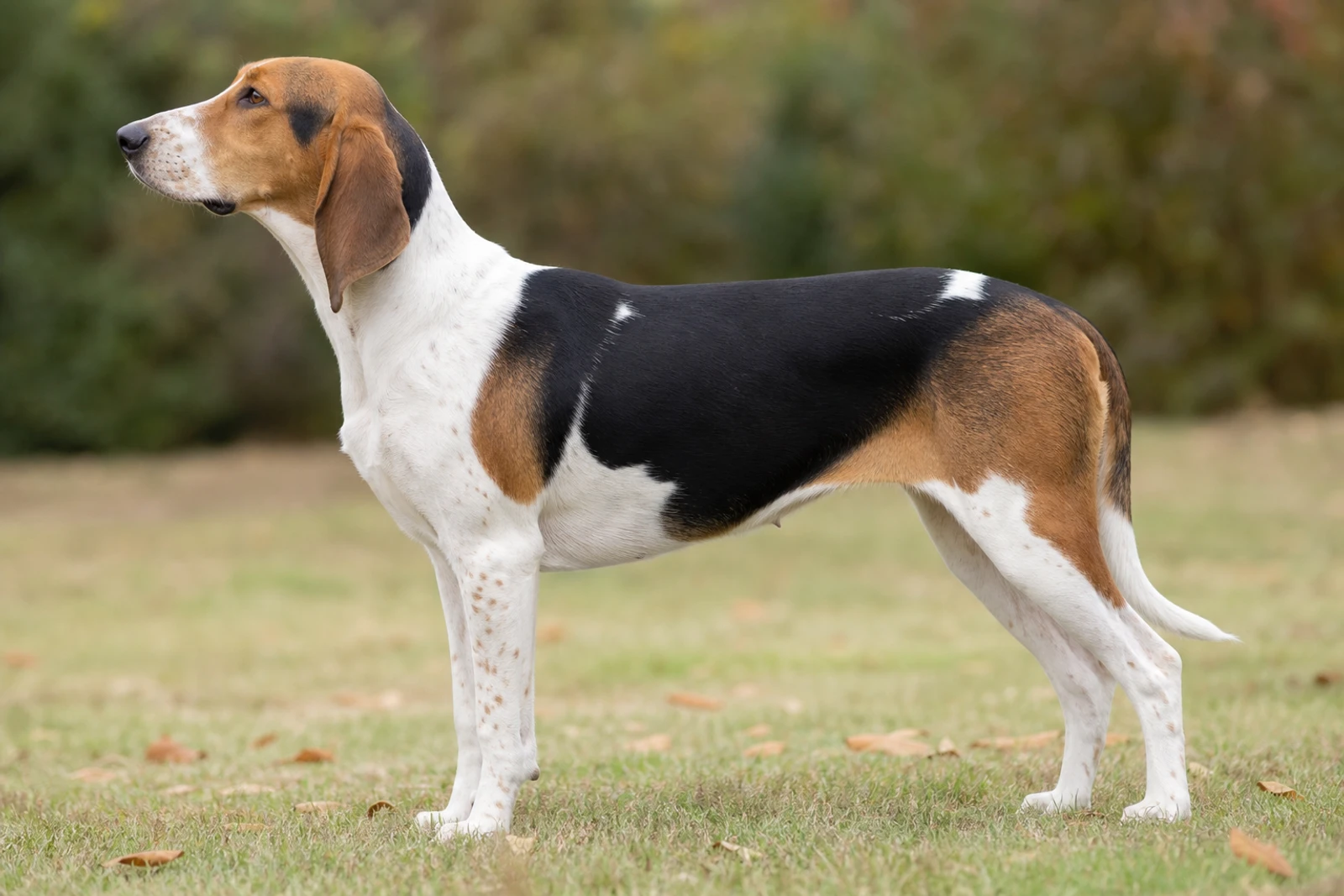
The Hygen Hound is a Norwegian scenthound bred for endurance, making it an excellent choice for active families or hunters who can provide daily vigorous exercise. With a strong prey drive and independent spirit, this breed thrives in a home with a secure yard. They are friendly and sociable with children and other dogs but require consistent training to manage their stubborn streak. Not suitable for novice owners or apartments, the Hygen Hound flourishes with a job to do and plenty of human companionship, forming deep bonds with its pack.
At a glance
- Size
- Large
- Height
- 20–24 in
- Weight
- 46–55 lb
- Life span
- 12 years
- Coat colors
- Brown & white, Black & tan, Red & white, Tri-color
- Coat type
- Medium-length, dense, straight coat
- Group
- Scenthounds
How much does a Hygen Hound cost?
Adopt / rescue
$75–$400
Usually includes spay/neuter, first shots, and a microchip.
Buy from a breeder
$700–$2,000
From a reputable, health-testing breeder.
Approximate USD. Prices vary widely by region, breeder, pedigree, age, and coat colour — adopting is the lower-cost and recommended route. Avoid suspiciously cheap “breeders”; they’re often puppy mills.
Estimate the full cost of a Hygen Hound →Want the ongoing number? Estimate the monthly food bill for a Hygen Hound with our dog food cost calculator.
Hygen Hound photos
Views
Front, side, rear and top — the full silhouette.Poses
How the breed sits, lies, moves and plays.Puppy to senior
The breed across its whole life.Expressions
The breed’s range of moods.Close-up details
Eyes, ears, nose, paws, tail and coat.Coat colors
The breed’s recognized colors.Click any photo to enlarge. We show the Hygen Hound from every angle — three views, poses, life stages, expressions, close-ups, coat and colors.
Appearance & size
You spot a Hygen Hound and you see a purposeful athlete, not a showpiece. This is a medium-large scenthound with the balanced proportions of a dog bred to hunt all day across rough Scandinavian ground.
Height runs between 20 and 24 inches at the shoulder, and weight settles at 46 to 55 pounds — large without any bulk. Most adults land in the middle of that span, showing a leggy stance and a body that’s more about stamina than raw power. The chest is deep and reaches down to the elbows, the waist tucks up noticeably, and the bone is moderate but never fragile.
The coat is short, dense, and lies smooth against the body — a practical, weather-shedding single layer that repels light rain and brambles with equal ease. Shedding is moderate, and a quick wipe-down with a hound glove keeps things tidy. Color almost always comes in clear, well-defined patterns. Black and tan is the most common, with rich rust markings over the eyes, on the muzzle, legs, and under the tail. Tricolor dogs add crisp white to the mix, typically a blaze on the face, a white chest patch, and white feet and tail tip. You won’t see muddy or faded borders; the contrast is sharp.
From the front, the head is unmistakably hound. The skull is slightly domed with a distinct occiput at the back, and the muzzle is long, deep, and straight — no snipiness. Dark hazel or brown eyes sit well apart, giving a calm, intelligent look, and the nose leather is solid black. The ears hang low in soft folds; pull one forward and it reaches past the nose.
In profile, a clean, muscular neck flows into well-laid-back shoulders and a level topline. The back is firm, the loin short and broad. The tail is a natural extension of the spine — set high, carried in a slight upward curve when the dog moves. Rear angulation is moderate, with muscular thighs and straight hocks driving an effortless, ground-covering trot. Feet are tight, cat-like, and well-arched. Nothing on this dog is exaggerated; every angle says function without fuss.
History & origin
The Hygen Hound traces back to a single breeder with a clear vision. In the early 1830s, Norwegian sportsman Hans Fredrik Hygen set out to build the ideal hare-hunting hound for Scandinavia’s harsh winters. The local dogs at the time couldn’t deliver the stamina, cold tolerance, and independent working style he demanded. Hygen began cross-breeding imported German hounds—especially the heavy-boned Holsteiner—with smaller, more agile Scandinavian scenthounds, and likely some English Foxhound. His goal was a dog that would hunt hare alone, not in a pack, methodically working a cold track through deep snow and dense forest for hours on end. Speed mattered less than relentless drive and a voice a hunter could follow from a ridge away.
Hygen kept meticulous records, and by the 1850s his line was firmly established. The dogs became known simply as Hygen’s hounds, later Hygen Hound. Their characteristic baying voice—carrying, melodious, and distinct—made it possible to track their progress without visual contact, a practical necessity in rugged Norwegian terrain. Physically, they settled into a large but lean frame: 20 to 24 inches at the shoulder and 46 to 55 pounds, built for endurance over raw power. A dense, harsh coat shrugged off wet undergrowth and freezing temperatures, while a calm, methodical hunting style conserved energy.
The Norwegian Kennel Club formally recognized the breed, and a standard was written in the early 20th century. The Hygen Hound enjoyed steady use among hare hunters for decades, but World War II and the post-war rise of snowmobiles and shifting land use cut sharply into its working population. By the late 1900s, numbers had dwindled so much that dedicated fanciers had to mount a concerted effort to rebuild the gene pool. Today, the breed is still rare, with its strongest presence in Norway, where it remains first and foremost a working hare hound. Puppies are bred with hunting ability at the forefront; responsible breeders also screen for joint and eye issues common in larger scenthounds. Outside of Norway, the breed is virtually unseen—a handful live as active companions in Europe and North America, but it never caught on as a show dog or casual pet. That scarcity is a reflection of its original purpose: a tool for the solo hunter, unchanged from the 19th century and unlikely to ever be reimagined as anything else. The typical lifespan sits around 12 years.
Temperament & personality
The Hygen Hound is a 46–55 pound bundle of contradictions: calm indoors, single-minded outdoors, affectionate with his people yet perfectly willing to ignore you when his nose locks onto a trail. That nose runs the show. If you expect a dog who hangs on your every word during a walk in the woods, you’ll be disappointed. If you appreciate a dog with a quiet sense of humor, a steady disposition, and a love for a good long sniff, you two will get on fine.
Living with a scent-driven brain
Everything in a Hygen Hound’s world is about smell. He doesn’t just walk through life; he reads it in scent layers. This means you’ll deal with some distinct behaviors:
- Indoor marking. Even house-trained dogs may leave a few drops of urine to settle into a new home or when he’s anxious. Enzyme cleaners are non-negotiable—ordinary soap leaves behind scent cues he feels duty-bound to refresh.
- Rolling in the foul. He will find the dead worm, the fox scat, the mystery goo, and wear it like cologne. There are a few theories (masking his own scent, showing off a good find, or just plain liking it), but no amount of pleading will stop it. A solid recall before he drops his shoulder is your best defense.
- Yard escapes. A fence that contains a Labrador won’t necessarily hold a Hygen Hound. He’s a scent artist, not a climber, but a loose board or a gap under the gate is an invitation to follow a rabbit scent to the next county.
Personality at home and with family
Indoors, a well-exercised Hygen Hound is a laid-back companion. He’ll claim a spot on the couch (or your bed, if you let him) and watch the household with soft eyes and a relaxed, heavy sigh. He’s not a frantic barker, but he will bay—a deep, rolling sound that carries—when he catches an interesting scent or someone approaches the door. That makes him a decent, if not sharp, watchful presence.
He is gentle with family, but that gentleness comes with conditions. Never let children bother him while he’s eating or chewing a favorite bone. He isn’t a resource guarder by default, but any dog can become protective of food. Teach kids to let his meals be peaceful. He also does best with respectful handling; a sudden yank on the collar or a rough ear pull can make him withdraw. Read his body language: a lip lick, yawn, or head turn is him asking for space. A stiff, forward-leaning posture may mean he’s locked onto a scent and not in the mood for cuddles. Respect those signals and you’ll have a friend for life.
With other dogs, Hygen Hounds tend to be sociable. They were bred to hunt in packs, so loneliness hits hard. A solo Hygen Hound left alone all day may howl, chew drywall, or pace. He needs another dog for company, or an owner who is home more often than not. Small pets like cats? Many coexist fine, but his nose and prey drive can be triggered by a fleeing squirrel or a darting house rabbit. Early, thoughtful introduction matters.
Training the independent thinker
The Hygen Hound is smart, but he’s not a border collie—he won’t obey for the sake of a job. He’ll work for treats and a respectful relationship. Force deadens his cooperation. Consistent, upbeat training sessions where you reward him for checking in with you (even when a scent distracts him) build a dog who eventually chooses you over the trail. Sometimes. Honesty matters here: if the scent is hot enough, you’ll still wait while he finishes investigating.
Puppies explore the world with their mouths. Chewing is a given. Hard chew toys for adult jaw strength, a frozen carrot for teething pups, and a homemade citrus spray (boil citrus peels and strain) on chair legs save both furniture and patience. A vinegar spray works too—it discourages chewing and neutralizes urine odors, which helps prevent re-marking indoors.
The everyday reality
A Hygen Hound doesn’t demand marathon runs—a solid hour of sniffy walks where he can work his nose exhausts his brain and body. He’s not a high-strung athlete, but he is a stamina trotter. Without that outlet, he’ll invent his own enrichment, and you won’t like his choices. The upside is a dog who settles into the evening, pressed against your leg, content and deeply relaxed. He’s a calm, brave spirit who reads the room better than most people give him credit for—as long as you’ve given that magnificent nose a proper outlet first.
Good with kids, dogs & other pets
The Hygen Hound’s patient, non-aggressive nature makes them a steady companion for kids who understand how to behave around a dog. They aren’t quick to startle or snap — this is a scenthound built to work in packs, not a nervy guard breed. That said, they top out around 55 pounds and can bowl over a toddler simply by leaning into a greeting, so close supervision is non-negotiable. They thrive when children are old enough to play a calm game of fetch or join a short backyard sniffari, but small kids need an adult to keep the wrestling from getting too rowdy. More than anything, the Hygen Hound craves company; a dog left alone in the yard all day or shut away from family life will quickly spiral into whining, chewing, and distress. They belong inside with their people.
With other dogs
Hygen Hounds were bred to run in a pack, and most carry that amiable attitude into adulthood — provided they got solid socialisation between 3 and 14 weeks of age. Without that early exposure, timidity around other dogs can creep in. A well-raised Hygen Hound usually greets fellow canines with loose, easy body language and can do beautifully in a multi-dog household. The caveat: a dog who has lived happily as the only pet may not need doggy playmates. Forcing an adult Hound who is comfortable solo into dog-park chaos often backfires. If you add a second dog, introduce them on neutral ground at a calm pace, not in a head-on hallway confrontation.
With cats and small animals
Here’s where the prey drive of a scenthound has to be taken seriously. Hygen Hounds were bred to track game by nose over miles of rough terrain, and a darting cat or pet rabbit can look an awful lot like quarry. Puppies raised alongside the family cat sometimes form safe relationships indoors, though you’ll always need to manage off-leash yard time — a sudden bolt can flip the switch. Small pets like hamsters, guinea pigs, or birds should be housed securely and never left unsupervised around the dog. Cautious, gradual introductions during puppyhood give you the best shot at a peaceful coexistence, but acceptance is never a guarantee. Many Hygen Hounds do best in homes without small, fleeing animals.
Trainability & intelligence
The Hygen Hound follows his nose first and answers questions later. He’s smart — he’ll pick up a new cue in a few repetitions when you have his attention — but the scent of a rabbit shreds that focus in an instant. That isn’t defiance; it’s the hard-wiring of a scenthound bred to work long trails and make his own decisions.
Recall is where you’ll feel that independence most. You can build a reliable response, but it won’t be bombproof. A fresh scent overrides even a well-practiced “come” with startling speed. Start recall work from puppyhood using a long line and rewards that compete with the outdoors — tiny chunks of chicken or liverwurst, delivered the moment he turns your way. Jackpot the first few responses when he’s distracted. This breeds a habit of checking in, even when his nose is screaming at him to do otherwise.
Because he’s sensitive, punitive methods backfire hard. A harsh correction teaches him you’re unpredictable, not that he should pay closer attention. Leave the heavy hand at home. Short, game-like sessions built on positive reinforcement keep him engaged and willing. If a drill turns boring or unfair, he’ll mentally check out, and you’ll just be a person calling a dog who isn’t listening.
Early socialization shapes the adult Hygen Hound’s steadiness. Introduce him gradually to new people, sounds, surfaces, and other dogs during that 8- to 16-week window. Hounds who miss this can tip into shyness or noise sensitivity, which makes training on a busy street tough. Pair every novel experience with a treat or calm praise so he learns the world is safe — and that looking to you pays off.
A Hygen Hound trained with consistency, patience, and extremely good treats becomes a cooperative partner. He’ll never be a robot; he’ll always weigh your request against whatever his nose just found. Keep your pocket full of something smelly, and you’ll hold his vote a little longer.
Exercise & energy needs
A Hygen Hound isn’t a sprinter — he’s built for steady, all-day work following his nose. Plan on at least 60 to 90 minutes of physical exercise each day, split into two outings. A single walk around the block won’t come close to draining his tank. He needs space to trot and time to process scent trails.
Mental stimulation counts just as much as miles. This is a scenthound through and through, meaning his brain lights up when he’s tracking. Without that outlet, you’ll have a dog who makes his own nose-work projects — usually ones involving the trash can or the neighbor’s hedge. Daily scent games, puzzle toys, and hide-and-seek with treats keep him satisfied indoors, but nothing replaces a long, meandering “sniffari” where you let him call the pace and direction.
Good activities for the breed include:
- Tracking and nose work classes — formal or informal. Lay a track with a drag rag, or scatter kibble in the yard and let him hunt.
- Hikes on wooded trails with novel smells and uneven terrain. Keep him on a long line or in a secure area; a scent-driven hound will ignore recall when his nose locks on.
- Canicross or bikejoring once he’s physically mature. Pulling at a steady canter feels natural to a dog bred to range ahead of hunters.
- Frequent short training sessions that mix obedience with scent discrimination — find the hidden birch-scented tin, for example.
If you short-change his exercise, expect vocalizations, digging, or destruction. Hygen Hounds become restless and anxious when bottled up. That 46–55 lb body can do surprising damage to a couch. Bored hounds also tend to bay their complaints at top volume.
Be mindful of joint health during growth. While no list of breed-specific vulnerabilities is mentioned here, large scenthounds can be prone to hip and elbow issues. Avoid repetitive high-impact exercise — like hours of fetch on pavement — until growth plates close, and keep him lean to reduce stress on joints.
Swap one daily walk for a long tracking session in a field or quiet park. You’ll notice a dramatic shift indoors: a Hygen Hound who has used his nose properly is a calm, contented companion, not a pacing problem-solver.
Grooming & coat care
The Hygen Hound’s coat is short, dense, and built to shed brush and weather — but those long, floppy ears demand far more attention than the fur ever will. Think of the coat as a tight double layer: a sleek outer coat and a softer undercoat that insulates and blows out heavily twice a year.
For everyday maintenance, a quick once-over with a natural pig-bristle brush a couple times a week does the job. It distributes skin oils, adds shine, and whisks away loose hair before it lands on your couch. During the spring and fall shedding seasons, swap to a rubber curry comb or a de-shedding tool and work through the coat in short, firm strokes. The extra five minutes pulls out clumps of dead undercoat and keeps the tumbleweeds under control.
Bathing is an “as-needed” affair. A Hygen Hound that’s been tearing through the woods or found something ripe to roll in gets a bath with a gentle dog shampoo, but overdoing it strips the natural oils that make the coat dirt- and water-resistant. Every two or three months is usually plenty.
The real grooming priority? Those drop ears. They trap moisture, dirt, and wax, setting up a perfect environment for infections. Check and clean the ears once a week with a vet-recommended solution and a cotton ball — never a q-tip. Gently flip the ear leather back, wipe out any visible debris, and make sure the ear is dry after baths or swims.
Nails grow fast on an active hound. If you hear clicking on the floor, it’s time for a trim — typically every three to four weeks. And a few minutes of tooth brushing several times a week with dog-formulated toothpaste goes a long way toward preventing dental trouble down the line.
This is a no-clippers-needed breed; the coat stays its natural length. Weekly brushing doubles as a quick skin check where you can catch hot spots, burrs, or the odd tick early. Stay on top of the ears, and you’ve already headed off the single most common vet visit in the breed.
Shedding & allergies
Everyday shedding
The Hygen Hound wears a short, dense, hard coat that never truly stops dropping hair. You’ll find a fine layer of reddish-brown and black-tipped fur on your floors, couch cushions, and car seats just about every day. A quick weekly pass with a rubber curry brush or a hound glove keeps most of it off your clothes, but don’t expect a no-maintenance dog. Light-colored fabrics show the shed hair relentlessly.
The big seasonal blowout
Twice a year—usually spring and fall—this moderate shedding ramps up into a full-blown molt. Clumps of undercoat will release in tufts, especially along the neck, flanks, and hindquarters. During these periods, plan on daily brushing sessions to stay ahead of the tumbleweeds. A deshedding tool or a slicker brush makes quick work of the loose fluff, but you’ll still be emptying the vacuum canister more often.
Drool: not a faucet, but keep a rag handy
Scenthounds often come with a bit of drool, and the Hygen Hound is no exception. It’s rarely the ropes of slime you see on a Bloodhound, but you’ll notice wet jowls after a drink of water, during a scent trail, or when you’re holding a treat just out of reach. A dedicated drool rag stashed near the water bowl prevents the worst of it from ending up on your pants.
Is this a hypoallergenic dog?
No. The term “hypoallergenic” is a marketing label, not a biological guarantee. The Hygen Hound sheds plenty of dander-laden fur and produces the same Can f 1 protein that triggers human allergies. Some people with mild allergies might manage with diligent house cleaning, a HEPA air purifier, and keeping the dog off the bed, but if allergies are a serious concern, spend time with an adult Hygen Hound before you commit. This breed won’t do you any favors if you’re looking for a truly low-shed companion.
Diet & nutrition
A Hygen Hound will convince you she’s starving even five minutes after a full meal — and that’s why the scale is your best training tool. Most are highly food-motivated, so free-feeding or guessing on portions leads straight to extra pounds. For a 46–55 lb adult, start with the manufacturer’s recommendation on a high-quality food and then tweak based on what your hands tell you: you should feel ribs without pressing hard, and she should have a visible waist from above.
Because large breeds carry joint and spinal risk, any extra weight matters. Ration daily food into two measured meals, not one big dump in the bowl. If she gulps it in seconds, a puzzle bowl or slow-feeder stretches out the meal and gives that scent-driven brain something to do. Puppies under four months need four evenly spaced meals; drop to three meals until six months, then shift to the adult two-a-day cadence.
Diet composition doesn’t have to be complicated. A mix that lands around 60% animal protein (meat, fish, eggs), 20–30% fruits and vegetables, and 10% other ingredients like pearl barley, rice, or plain yogurt works well. Raw meaty bones like chicken wings can show up around twelve weeks under your watch. If you home-cook, blending or processing unlocks nutrients — dogs don’t chew side-to-side and lack salivary enzymes the way we do. Canned fish, cooked vegetables, and a batch of grains make a fast, healthy meal base. Vegetable cooking water (unsalted) works as a broth if you’re out of stock.
Steer clear of the table. Even one slipped scrap teaches a begging habit that takes months to undo; serve all leftovers in her own bowl. Skip rich, fatty foods entirely — a post-holiday plate of grease and skin can trigger pancreatitis. And no vegetarian or vegan diets: a dog’s digestive system evolved on meat, not plants.
As she ages, the same 12-year lifespan means she’ll slow down. Switch to smaller, more frequent meals if appetite wanes, and cut back portions gradually the moment her activity drops. For seniors with dental trouble, purée meals so they absorb more from every bite. Obesity in an older Hygen Hound punishes joints that are already working hard, so keep that waistline trim all the way into her golden years.
Health & lifespan
The Hygen Hound typically lives about 12 years—a solid, active decade-plus if you keep them lean and catch problems early. These dogs are built to cover ground, and their joints need to last. Weight management isn't a side note here; it's the centerpiece. A Hygen Hound who carries an extra 5 or 10 pounds is asking for arthritic changes that could sideline them years before their time.
Like many scenthounds, they can be prone to hip dysplasia and occasional elbow trouble. Responsible breeders screen both parents with OFA or PennHIP evaluations and won't breed a dog with bad scores. Deep-chested and barrel-ribbed, the Hygen Hound also shares the bloat risk common to the group—feeding two or three smaller meals instead of one big one and avoiding heavy exercise right after eating are cheap insurance. Ear infections crop up in any breed with long, drop ears that trap moisture and dirt, so a weekly sniff-and-wipe routine is worth the 30 seconds it takes.
You won't find a long list of breed-specific inherited diseases for the Hygen Hound, but that doesn't mean you skip the vet. Annual wellness exams—and twice-yearly once they hit senior status—let your vet catch things like subtle eye changes or a heart murmur before they become expensive emergencies. Keep up with the basics, too: monthly heartworm prevention during mosquito season (and a month beyond), because lung damage from heartworms isn't reversible, and a current rabies vaccine, which is legally required and non-negotiable once symptoms appear.
A few practical health habits that pay off with this breed:
- Watch the waistline. Hygen Hounds are food-motivated hunters. Measure meals, limit treats, and keep a light hand with table scraps. Obesity will shorten that 12-year expectancy and worsen any joint predisposition.
- Protect those ears. Dry them after a swim or a rainy walk. A quick clean with a vet-approved solution prevents the yeasty, painful infections that can go unnoticed until the head shaking starts.
- Know the bloat signs. Restlessness, a distended belly, unproductive retching—these demand an immediate vet trip. It's a rare but real emergency in deep-chested dogs.
- Mind the skin. Some Hygen Hounds can develop environmental or food allergies that show up as red, itchy skin. A diet rich in omega-3s and a talk with your vet about elimination diets can calm that down before secondary infections set in.
- Socialize early. A Hygen Hound who's stressed from isolation or harsh handling may develop anxiety-driven habits like self-licking or barking fits that fray their own nerves—and yours. Gentle, consistent handling from puppyhood keeps their mind and body healthier over the long haul.
You're looking at a generally sturdy dog, but that doesn't mean you coast. The Hygen Hound stays sound when you stay proactive about the routine stuff and stay honest about the weight on their ribs.
Living environment
Apartment vs. house
This is not an apartment breed. A Hygen Hound needs space — a single-level home with direct access to a securely fenced yard is the minimum. Even then, think country or suburban, not city rowhouse. They’re a working scenthound built to cover ground, not to curl up quietly while neighbors argue through thin walls.
The yard you’ll need
A yard isn’t optional, and “fenced” means six-foot solid wood or chain-link with a dig-proof apron. A Hygen Hound’s nose overrides every other instinct; if a scent trail crosses the property line, they’ll dig under or climb over without a second thought. Invisible fencing won’t stop them. The yard should be big enough for full-speed sprints and dedicated sniffing games — not just a postage stamp of grass.
Inside, they’re calm housemates provided they’ve had their fill of outdoor work. Expect them to claim a spot on the couch and stretch out.
Climate sense
Bred in Norway for hunting in snow and wet forests, Hygen Hounds handle cold weather beautifully. Coats are dense and weather-resistant. Hot, humid summers are the real challenge. Plan exercise for early mornings or late evenings, provide plenty of shade and water, and never leave one out in midday heat. A cooling mat indoors helps.
Noise and neighbors
They bay. Loudly and often. This is a deep, carrying hound voice that alerts the entire block to the presence of a squirrel, a delivery truck, or a suspicious leaf. Close-quarters living — apartments, townhomes with shared walls — is a recipe for noise complaints. Even in a detached house, soundproofing considerations matter.
Tolerance for being left alone
Hygen Hounds form tight bonds and don’t do well with long stretches of solitude. Left alone for a full workday, they’re prone to howling, destructive chewing, and escape attempts driven by isolation distress. If your household is gone eight-plus hours daily, this breed will struggle. You can build independence through gradual desensitization, but that’s training homework, not a guarantee. Providing scent-based puzzle toys and leaving radio or white noise on helps, but the best setup includes another dog for company or a schedule that keeps absences short.
Who this breed suits
You’ll fit with a Hygen Hound if you want a dog that’s more independent hunting partner than eager-to-please shadow. This is a medium-large scenthound (46–55 pounds, 20–24 inches at the shoulder) built for long days in cold, rough country, and he needs an owner who genuinely enjoys that kind of outdoorsy life. A quick lap around the block won’t cut it — plan on at least an hour of focused walking, jogging, or hiking daily, with plenty of time for him to follow his nose.
The best home is on a rural or suburban property with a tall, dig-proof fence. These hounds are bred to track hare and fox, and a loose cat, a deer scent, or a rabbit across the road will override any command. Off-leash reliability is not a realistic expectation; you’ll need a secure yard and a good leash. Inside the home, the Hygen Hound is generally calm, friendly, and good with older children who won’t be toppled during a burst of play. He’s pack-oriented, so he often settles into multi-dog households easily, and his easy-going temperament makes him a steady companion for singles, couples, or active families who treat him as part of the daily adventure.
A first-time owner can succeed if you’re patient and don’t take his stubborn moments personally. He’s smart but bred to solve problems without human direction, so training takes consistency and creativity—not harsh corrections. You’ll also need to accept the music: the Hygen Hound is a vocal breed, with a deep, ringing bay that he’ll use when excited, bored, or on a scent trail. Apartment neighbors won’t thank you.
Think twice if you want a dog that’s laser-focused on you, a quiet house, or reliable recall. Seniors and less-active people might find his strength on the leash and his need for hard daily exercise draining. Households with free-roaming small pets like rabbits, guinea pigs, or even cats are a real gamble; a Hygen’s prey drive can kick in fast. And if dog hair and a mild hound odor bother you, note that his dense double coat sheds seasonally and needs regular brushing.
He’s a dog for someone who finds joy in a long, meandering walk with a hound that suddenly throws his head back and sings because the world smells interesting. If that’s you, the relationship works.
Cost of ownership
A Hygen Hound from a conscientious breeder typically runs $1,000 to $1,500 in the US, though you’ll likely sit on a waitlist — litters are scarce. Occasionally an adult or rescue becomes available for $300 to $600, but the breed’s rarity means you’re more likely to pay a breeder’s price.
Once the dog is home, budget $150 to $250 a month for routine costs.
- Food: A 50‑pound athlete burns through calories. Plan on high‑quality kibble or raw at $50 to $75 a month. If you hunt or do long scent work, add recovery snacks.
- Grooming: The short, dense coat needs a weekly hound glove and the occasional bath. You’ll spend maybe $10 to $20 a month on shampoo, ear cleaner (those drop ears trap moisture), and nail trims — or a quick pro visit for nails and ears every 6 weeks.
- Vet & prevention: Annual exams, vaccines, heartworm/flea/tick preventives run about $400 to $600 a year — roughly $35 to $50 a month. Hygen Hounds can be prone to hip dysplasia and ear infections, so responsible breeders screen hips, and you’ll want to budget for the inevitable ear flare‑up or a joint supplement.
- Insurance or emergency fund: A solid accident‑and‑illness policy runs $40 to $60 a month for a large breed. If you self‑insure, set aside at least $1,000 to $1,500 a year for unexpected vet bills.
Don’t overlook the invisible costs. This is a scent‑driven escape artist. A 6‑foot secure fence (often $2,000–$5,000 installed) isn’t optional if you have a yard. Long‑line leads, GPS tracker, and scent‑work gear add another couple hundred dollars up front. If you work full‑time, a midday dog walker who can handle a pully hound might cost $20–$30 per visit. None of this is wasted money — it’s what keeps a Hygen Hound tired, safe, and out of trouble.
Choosing a Hygen Hound
Because the Hygen Hound is a rare Norwegian scenthound, you’ll almost certainly need to find a dedicated breeder and get comfortable waiting for the right litter. Rescue is a long shot — occasionally a scenthound-specific group or a general hound rescue may have a dog that looks part Hygen, but a true, well-bred puppy almost never lands in a shelter. If you go the rescue route, expect to spend significant time learning the individual dog’s history and prey-drive level, since a displaced hunting hound can be a handful in a pet home.
What a Responsible Breeder Looks Like
A breeder who genuinely cares about this uncommon hound will root their program in purpose: hunting ability, sound structure, and a steady temperament suited for both field work and family life. Start by asking which clearances they run on their breeding dogs. At minimum, you should see proof of hip and elbow screenings (OFA Good or Excellent, or PennHIP scores showing no dysplasia), and a current eye exam from a veterinary ophthalmologist to rule out inherited problems like progressive retinal atrophy. Some will also test for heart and thyroid function. They’ll produce the certificates without hesitation.
Expect them to ask you plenty of questions in return — about your daily routine, fenced yard, other pets, experience with independent scenthounds — and they’ll match you to a puppy whose emerging personality fits your lifestyle. They won’t sell a high-drive, bold pup into a quiet, sedentary home just to move inventory.
Red Flags That Should Make You Walk Away
- No health clearances on either parent, or vague promises that “they’re healthy.”
- Multiple litters on the ground at once, or puppies kept in outbuildings with little human contact.
- Selling puppies younger than 8 weeks.
- Breeding for rare colors or “pet-only” dogs without understanding the breed’s working roots.
- A dam who is fearful, snappy, or hiding — poor temperament often passes to the pups.
- A breeder who can’t tell you why they chose the sire, or who dismisses the value of hunting instinct entirely if you want a companion that can still use its nose.
Picking Your Puppy
Visit after the puppies are 6–7 weeks old, when social play and individual quirks are clear. You want a puppy that trots up to investigate you, recovers quickly from a moderate noise (like keys dropping), and interacts with littermates without constant bullying or cowering. For most families, the middle-of-the-road pup — curious, friendly, not the pushiest — is the safest bet. Check that eyes are clear, ears have no foul odor (floppy hound ears are prone to infections), and bellies aren’t pot-bellied with worms.
Ask whether the litter was raised with early neurological stimulation, exposure to household sounds, and short car rides. A breeder who handles each puppy daily and starts crate introduction before they leave sets you up for a much smoother transition. If they won’t let you see the dam on site or seem cagey about any of these basics, move on—there will be other litters.
Pros & cons
The Hygen Hound is a devoted, cold-weather scenthound that was bred to trot for hours on a hare’s trail — that endurance and relentless nose shape everything about living with one.
Pros
- A genuinely friendly, even-tempered family dog that gets along with children and usually other dogs when raised together.
- Tireless hiking, running, or skijoring partner; the dense, weather-shedding coat thrives in snow and rain.
- Moderate size (46–55 pounds, 20–24 inches) fits an active household without needing a massive yard.
- Low-maintenance coat: a weekly once-over with a hound glove handles dirt and seasonal shedding.
- Keen tracking drive means it excels at scent work, nose games, or simply joining you on long, meandering sniff walks.
- Generally healthy; responsible breeders screen for hip dysplasia and ear issues to support a typical 12-year lifespan.
Cons
- Needs a solid hour of real running or off-leash galloping daily — a couple of leash walks lead to restlessness, digging, and howling.
- Prey drive is non-negotiable; the nose locks on and the dog will ignore your recall when a rabbit or deer crosses the path. Not safe with cats or small pets without careful management.
- A born bayer. The deep, carrying hound voice travels through walls and across neighborhoods, making apartment or dense-suburb living a gamble.
- Independence shows up in training: smart but easily bored, it will check out if you drill commands. Short, reward-heavy sessions and a sense of humor work better than repetition.
- Fence security is everything. A scent trail on the other side of a four-foot fence is an invitation to go over or under; plan on six feet and dig-proofing.
- Wrong choice for a sedentary owner or someone who wants a reliable off-leash shadow. A Hygen Hound runs on its nose — and expects you to keep up.
Similar breeds & alternatives
If the Hygen Hound’s blend of endurance and a gentle nose in a compact, cold-weather build speaks to you, a few other scent hounds sit in a similar size class and were shaped by demanding northern hunting traditions.
- Finnish Hound (20–24 in, 40–56 lb): The closest living relative, and so alike that the handling reality is nearly identical. You get the same tricolor coat, a slightly heavier-boned frame, and a voice that often carries more volume. Daily exercise needs are a solid 60–90 minutes of scent work or hard running, and they tend toward a more independent, watchful indoor temperament. The Finnish Hound can be easier to find in parts of Europe but shares the Hygen’s rarity in the U.S.
- Hamiltonstövare (20–23 in, 50–60 lb): Sweden’s hare hunter tacks a bit more stockiness onto the same chassis. The Hamiltonstövare typically settles a touch harder at home and shows more reserve with strangers, though boredom still turns into creative destruction without a real job. Expect a dense, weatherproof tricolor coat and an off-switch that demands you first burn off a full hour of nose-down activity.
- Harrier (19–21 in, 45–60 lb): If you want that medium-sized, tireless scenthound drive but live where winters stay mild, the Harrier is a more available alternative. Harriers lean into pack-dog sociability and play harder with other dogs, but they’re noisier and can be quicker to redecorate when idle. They lack the deep-snow build and cold tolerance bred into the Hygen, making them a stronger match for warmer, less challenging terrain.
Fun facts
- Developed in Norway by Hans Fredrik Hygen in the 1830s.
- Bred from English Foxhounds and other European scenthounds.
- Known for their deep, melodious bay when tracking.
- Stamina allows them to hunt in harsh Scandinavian terrain.
Frequently asked questions
- Are Hygen Hounds good with children?
- Hygen Hounds tend to be gentle and patient with children when properly socialized from a young age. Their calm yet playful nature can make them good family companions, but supervision is always recommended with young kids due to their large size and energy.
- How much exercise does a Hygen Hound need?
- Hygen Hounds have high exercise needs and thrive with daily long walks, runs, or opportunities to follow scent trails. Without sufficient physical and mental stimulation, they may become restless or develop undesirable behaviors.
- Do Hygen Hounds shed a lot?
- Hygen Hounds have a short, dense coat that sheds moderately year-round. Regular brushing a couple of times a week can help manage loose hair and keep their coat healthy.
- Can a Hygen Hound live in an apartment?
- A Hygen Hound is not ideally suited to apartment living due to their large size and high energy levels. They generally do best in a home with a securely fenced yard where they can safely explore and burn off energy.
- Are Hygen Hounds easy to train for first-time owners?
- Hygen Hounds can be independent and strong-willed, which may present challenges for first-time owners. Consistent, positive reinforcement training from an early age is important, and they respond best to patient, scent-based motivational techniques.
Tools & calculators for Hygen Hound owners
Quick estimates tailored to Hygen Hounds — pre-filled with this breed’s size where it matters.
Articles & stories about the Hygen Hound
Sources & standards
This profile follows recognized breed standards from the American Kennel Club (AKC) and the Fédération Cynologique Internationale (FCI), along with established veterinary and breed-club guidance. These describe general breed tendencies — every dog is an individual.