

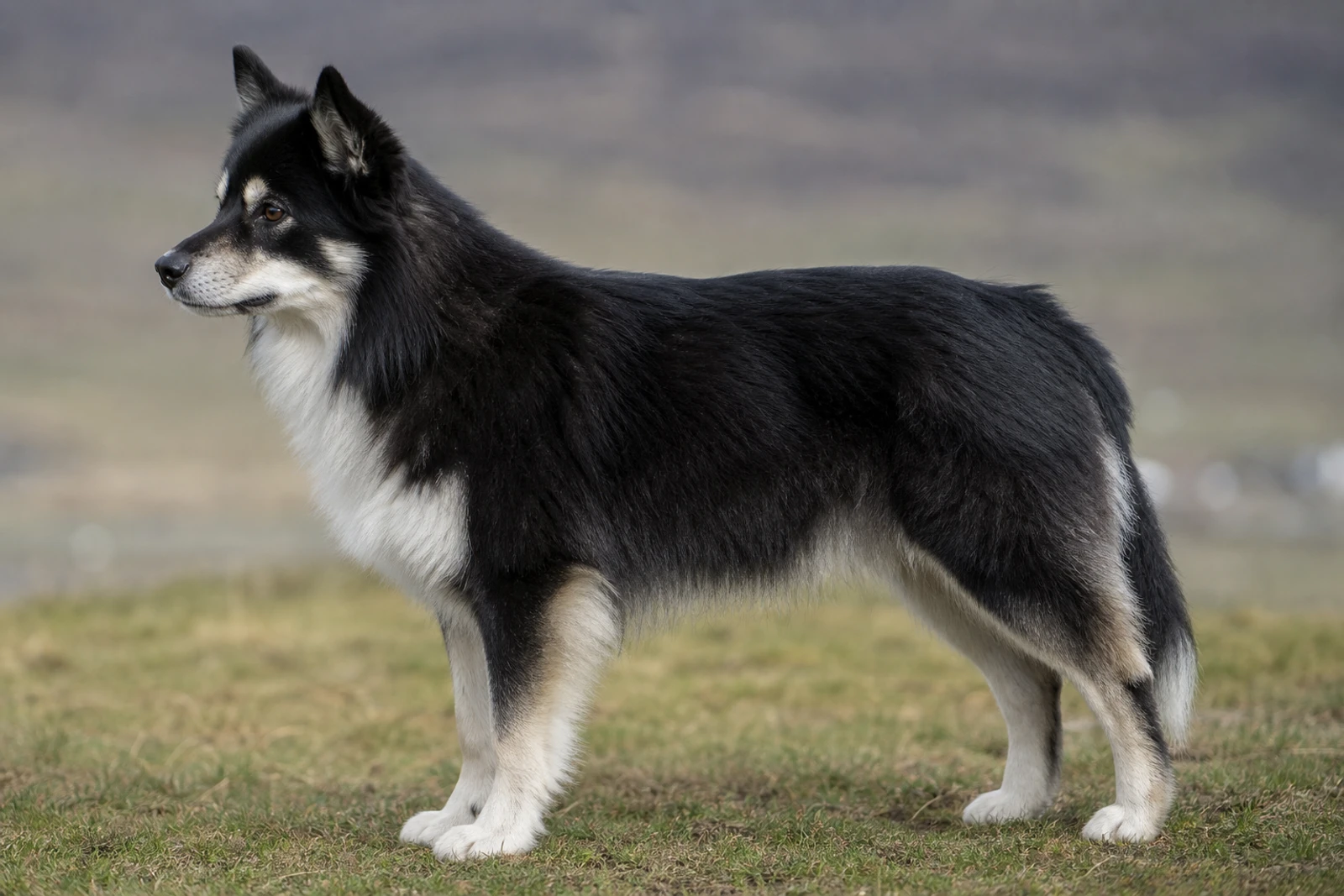
The Icelandic Sheepdog is a cheerful, energetic herding breed perfect for active families who love the outdoors. Originating from Iceland and brought by Viking settlers, this spitz-type dog is known for its friendly, affectionate nature and strong watchdog instincts. They thrive on human companionship and require plenty of exercise and mental stimulation. Their thick double coat needs weekly brushing, and they shed seasonally. Best suited for homes with yards and patient owners who can manage their barking and herding tendencies, they make loyal and playful pets for those willing to meet their needs.
At a glance
- Size
- Medium
- Height
- 17–18 in
- Weight
- 20–31 lb
- Life span
- 12–15 years
- Coat colors
- Red, Wheaten, Cream, Black & Tan, Chocolate & Tan, Gray
- Coat type
- Thick double coat, waterproof; either short or long
- Group
- Spitz–Type
- Origin
- Iceland
How much does a Icelandic Sheepdog cost?
Adopt / rescue
$75–$400
Usually includes spay/neuter, first shots, and a microchip.
Buy from a breeder
$700–$2,000
From a reputable, health-testing breeder.
Approximate USD. Prices vary widely by region, breeder, pedigree, age, and coat colour — adopting is the lower-cost and recommended route. Avoid suspiciously cheap “breeders”; they’re often puppy mills.
Estimate the full cost of a Icelandic Sheepdog →Want the ongoing number? Estimate the monthly food bill for a Icelandic Sheepdog with our dog food cost calculator.
Icelandic Sheepdog photos
Views
Front, side, rear and top — the full silhouette.Poses
How the breed sits, lies, moves and plays.Puppy to senior
The breed across its whole life.Expressions
The breed’s range of moods.Close-up details
Eyes, ears, nose, paws, tail and coat.Coat colors
The breed’s recognized colors.Click any photo to enlarge. We show the Icelandic Sheepdog from every angle — three views, poses, life stages, expressions, close-ups, coat and colors.
Appearance & size
A rectangular, foxy-faced Spitz with a tail that curls tight over the back — that’s the first thing you’ll clock when you see an Icelandic Sheepdog. This is a medium-sized, sturdy dog, built like a light-framed herder ready to scramble over lava rock and frozen turf.
Males stand about 18 inches at the shoulder; bitches are a bit smaller, typically 16.5 inches. Weight runs 20 to 31 pounds, with most falling in the 25- to 30-pound range. The body is slightly longer than tall — a classic herding silhouette — with a deep chest that shows its lung capacity and straight forelegs set squarely under the brisket. From the side, the topline is level, the loin short, and that signature tail arches forward in a neat, tight curl. Viewed from the rear, you’ll notice a well-muscled, sparsely feathered back end, but what really jumps out are the double dewclaws on the hind legs — a breed hallmark you won’t miss.
The coat is pure North Atlantic practicality. It’s a double coat with a coarse, water-repellent outer layer and a dense, insulating undercoat. You’ll find two lengths: a shorter outer coat that gives the dog a neat, smooth silhouette, and a longer one with extra feathering on the backs of the forelegs, the chest, and the underside of the tail. Both lengths hold off rain and sleet, and they shed accordingly — expect a full-blown seasonal blowout.
Color is rich and varied. The base can be shades of tan, red, gold, cream, gray, black, or chocolate. Every single dog carries white markings — usually a blaze on the face, a full or partial collar, white socks on the paws, and a white tip on that curly tail. Puppies often start with a dark mask or brassy tones that lighten as the adult coat comes in. Black-and-tan or chocolate-and-white combinations are common and striking.
Up top, the head is wedge-shaped with moderately pointed, prick ears that tip slightly forward, always on the lookout. Dark brown eyes, tight lips, and a black nose (brown in chocolate dogs) give the face that cheerful, smart-aleck grin the breed is known for. There’s nothing overdone here — just a practical, handsome working dog whose appearance has barely changed since the Vikings settled Iceland. Check those back feet for the extra toes; it’s the fastest way to confirm you’re not looking at a generic brown-and-white Spitz mix.
History & origin
The Icelandic Sheepdog didn’t evolve in isolation from wolves or ancient landraces — it paddled ashore right alongside the first Viking families. When Norse settlers sailed their longships to Iceland around 874 AD, they brought the essentials: livestock, tools, and their hardy spitz‑type dogs. Those early canines were all‑purpose farmhands, half hunter and half watchdog, shaped by centuries of Scandinavian life. Isolated on a wind‑battered island with no native dog population, they became the foundation stock for what you see today.
Shaped by sheep and stone walls
For over a thousand years, these dogs worked the scattered farms and high pastures of Iceland. They weren’t soft‑mouthed flock guardians that simply fenced sheep in; they were quick, upright herders that barked and nipped to move livestock across rough terrain. They also kept a sharp eye out for eagles and foxes, sounding an alarm long before a threat reached the barn. Farmers relied on them to gather free‑roaming sheep and ponies from vertical hillsides where a horse couldn’t go, often in fog so thick you couldn’t see your own gate. That work built a dog with tireless legs, weather‑proof double coat, and an almost chatty vocal style — traits that still pop out today if someone leaves a toy in the wrong spot.
A near miss and a deliberate comeback
By the late 19th century, the breed nearly vanished. A wave of distemper swept through Iceland in the 1880s, killing thousands of dogs. At the same time, a new law taxed dog ownership and restricted imports to prevent disease, which meant folks stopped breeding dogs altogether or crossed them with whatever came over on a boat. By the 1950s, pure Icelandic Sheepdogs were down to a scant few individuals hiding out on remote farms. That’s when a group of determined Icelanders and English enthusiasts started deliberately gathering the last true remnants. They combed isolated valleys, documented every dog, and began a careful breeding program anchored by a handful of foundation animals like the famous dog “Laki.” The Icelandic Kennel Club granted the breed official recognition in 1969, and every dog today can trace its pedigree back to those survivors. The breed still isn’t numerous — you won’t trip over one at every dog park — but it’s secure, and it’s right back doing what it always did on smallholdings and family farms across Iceland.
Temperament & personality
The Icelandic Sheepdog is a sunny, tireless companion who believes every day should involve you, plenty of exercise, and a job to do. Chase away birds? Check. Herd the grandkids into a tidy circle? Absolutely. This is not a dog who thrives on a quick leash stroll and hours of solitude. He needs a solid hour or more of real movement — a hike through uneven terrain, a spirited game of fetch, or a chance to practice his natural herding chops — otherwise that busy brain starts to fizz.
Affection runs deep and unguarded. Expect a dog who leans against your legs, follows you from room to room, and inserts himself into any family activity. He greets strangers with the same wagging enthusiasm, making him a terrible guard dog but a fantastic early-warning system. He *will* announce the mail carrier, the squirrel, and the suspicious leaf — using a voice that’s varied, confident, and often. If you’re gone for long stretches on a regular basis, that vocal nature can tip into anxiety-driven barking or destructive chewing. This breed forms a tight bond and prefers the pack together.
With his Spitz heritage comes a stubborn streak, but it’s a cheerful one. He responds best to training that stays respectful, consistent, and loaded with treats. Harsh corrections or a battle of wills just turns cooperation into a standoff. Use his food motivation and eagerness to please — you’ll get much further coaxing a behavior than demanding it.
Around the household, his herding instincts are never fully off the clock. He may try to corral small children by nudging or a light nip at heels, so early training and supervision are essential. With patient socialization, he’s usually gentle and playful with respectful kids, and he can coexist with other pets as long as he learns that the cat is *not* livestock to be rounded up. Don’t be surprised to see him try to boss around a much larger dog, either.
You’ll quickly learn to read his body language. A forward lean with pricked ears and a locked stare means he’s spotted something worth chasing; a loose, wiggling frame with soft eyes says he’s putty in your hands right now. A bored Icie, left too long without a puzzle toy or a run, makes his own fun — often by reorganizing your shoes with his teeth. Keep that active mind engaged with trick training, hide-and-seek games, or a treat-dispensing toy, and you’ll have a settled, ridiculously charming housemate who is happiest just having a place in the middle of your life.
Good with kids, dogs & other pets
The Icelandic Sheepdog’s patient, people-centered nature — honed over centuries of close work with Icelandic farmers — makes him a surprisingly solid fit for families with kids. At 20–31 pounds he’s sturdy enough for gentle wrestling but light enough not to steamroll a toddler. The real thing to watch isn’t aggression; it’s the herding instinct. He’ll often try to “round up” running, shrieking children with a body block or a nip at the heels. That’s not a bite — it’s hardwired work behavior — but it means close supervision and redirection training are non-negotiable. His deep need for companionship works in your favor here: he wants to be in the middle of the family action, not banished to the yard. Left isolated, he’ll bark, fret, and develop bad habits. Invite him into daily life, and you get a patient, tolerant playmate who rarely puts a tooth on skin unless a fast-moving kid triggers that herding response.
With other dogs
Early socialization turns this naturally sociable breed into an easygoing housemate for other canines. The critical window is tight — roughly 3 to 16 weeks. Use it. Arrange calm, positive meet-ups with a variety of friendly, vaccinated adult dogs and keep the introductions rolling through adolescence. A puppy who misses out often grows into a timid or reactive adult. If you adopt an older dog who’s been isolated, skip the forced-dog-park scrum; it’s stressful and can backfire. Instead, build confidence with slow, controlled exposures at a distance he can handle.
Cats and small pets
That same herding brain sees a fleeing cat as something to chase and control. With consistent, early exposure many Icelandic Sheepdogs learn to leave the family cat alone, though you’ll still catch them trying to manage the cat’s comings and goings. Pocket pets like hamsters or rabbits are a different story — the chase instinct is usually too strong. Keep small animals securely housed and never unsupervised. Teach a rock-solid “leave it” and reward calm behavior around the smaller critter from day one.
Start those puppy meet-and-greets early, and you’ll likely end up with a dog who regards the household cat as a quirky roommate instead of a target.
Trainability & intelligence
This dog wants to work with you — but not for you the way a Border Collie might. That distinction shapes every training session. Icelandic Sheepdogs are sharp problem-solvers (rated 4/5 in trainability) who thrive on clear communication, yet they have an independent streak born from centuries of moving stubborn Icelandic sheep without human micromanagement. If you push too hard or lean on repetition drills, you’ll get a shut-down stare or a creative workaround. Keep sessions short, varied, and upbeat.
Positive reinforcement is non-negotiable. A quick "yes!" paired with a treat, a tug toy, or a chance to bark in celebration (they love to use their voice) locks in behaviors far faster than corrections ever will. These dogs are sensitive — more akin to a Japanese Spitz than a pull-toy Husky — so a harsh tone can erode trust and slow progress for days. That sensitivity also makes them excellent readers of your mood, which you can use to your advantage: stay calm and patient, and they’ll mirror it.
- Start puppyhood training the day you bring them home, around 8 weeks. Teach a rock-solid "look at me" and hand-target first. Once you have that attention, everything else stacks.
- Recall deserves early and obsessive practice. Icelandic Sheepdogs have high chase drive and may decide that a distant sheep, bird, or blowing leaf is more interesting than your voice. Begin indoors, then fenced areas, using a long line and rewards that truly compete with the distraction. Never punish a slow return — that's the fastest way to teach them to dodge you when free.
- Common challenge: alert barking. Don't suppress it entirely; it's part of their farm-watch heritage. Instead, teach a "thank you, quiet" cue where you acknowledge the sound and redirect to a mat or toy. Expect this to take months of consistency.
- Socialization before 16 weeks is critical. Expose the puppy gently to different people, surfaces, sounds, and calm animals. Force nothing. A single scary experience can imprint as reactivity later, especially toward unfamiliar dogs or strangers reaching over their head.
They learn obedience quickly when it's framed as a game — hide-and-seek with stays, find-it for scent work, rapid-fire sits for a tossed ball. But intelligence without early trust-building equals a dog that outsmarts you rather than cooperating. Build the relationship first, and you'll have a biddable partner who practically pirouettes for the next cue.
Exercise & energy needs
An Icelandic Sheepdog without a job will invent one—usually herding the kids, chasing shadows, or barking alarms at every flicker of movement. This is a 20–31 lb farm dog built to cover rough Icelandic ground all day. Real exercise means at least 60 to 90 minutes of focused, pulse-raising activity, split across two or more sessions. A leashed stroll around the block won’t touch the sides.
Break the daily total into doable chunks. A pair of 30- to 45-minute workouts—off-leash runs in a secure area, a snappy hike with elevation, or a jog where the dog can truly stretch out—works better than one long, plodding walk. This breed needs to gallop, change direction, and work its mind at the same time.
- Mental exercise carries equal weight. Puzzle toys, scatter-feeding meals, hide-and-seek with treats, and short, upbeat training sessions drain mental steam that a purely physical workout leaves behind. A 15-minute nose game can take the edge off as quickly as a long run.
- Lean into dog sports you can do together. Agility, rally, flyball, and herding trials tap the Sheepdog’s athleticism and deep desire to work in partnership with you. Even backyard herding games with a large ball scratch that ancient itch.
- Go easy on growing joints. Adult dogs handle varied terrain, but puppies benefit from softer surfaces and limited repetitive leaping until growth plates close. Use those months to build foundation skills and nose work instead.
When the exercise bank runs low, the breed cashes checks in nuisance barking, fence running, and overzealous herding of household members. A tired Sheepdog is a happy partner; a bored one is a noisy, persistent project. On storm days, double down on indoor brain games—a few rounds of “find it” with a favorite toy can leave your dog content and flopped on the rug.
Grooming & coat care
Icelandic Sheepdogs wear a thick, weatherproof double coat that's built for the harsh Nordic climate — and it sheds. A lot. Twice a year, usually spring and fall, they “blow” their dense undercoat in tufts that seem to multiply overnight. The rest of the year, you’re still dealing with moderate shedding. A quick once-over with a brush won’t cut it during those peak weeks, so plan on daily brushing with a slicker brush or an undercoat rake to pull out the dead woolly layer before it mats or carpets your furniture. For the rest of the year, 2–3 solid sessions a week with a pin brush and a metal comb keeps the coat looking healthy and cuts down on loose hair around the house.
Bathe only when the dog is truly dirty — every few months at most. Overbathing strips the coat’s natural oils that give it that nice dirt- and water-resistant finish. When you do bathe, a high-velocity dryer (the kind groomers use) is your best friend for blasting out loosened undercoat. If you don't have one, a thorough toweling and a long brushing session while the coat air-dries works, just be prepared for a cloud of fluff.
Ears need a weekly check and a gentle wipe with a damp cloth — those prick ears can trap dirt and wax, especially in an active outdoor dog. Nails should be trimmed every 3–4 weeks, or as soon as you hear them clicking on hard floors. Don’t skip dental care: small-to-medium dogs like these can be prone to tartar buildup, so daily brushing with dog toothpaste saves you expensive vet cleanings down the road.
Seasonal blowouts are messy, but they’re manageable with the right tools and a good vacuum. Stick to a routine, and you’ll keep the coat comfortable for the dog and the hair situation tolerable for you.
Shedding & allergies
If you’re picturing a tidy house with an Icelandic Sheepdog on the sofa, go ahead and delete that image. These dogs are champion shedders. They have a classic Nordic double coat — a harsh, weather-resistant outer layer and a soft, insulating undercoat that turns your home into a fur hurricane twice a year.
During the seasonal blowouts (spring and fall), the undercoat comes out in fistfuls. You’ll find hair woven into your sweaters, floating across the kitchen floor, and stuck to every black surface you own. The rest of the year, expect a steady, moderate snowfall of fur. A quick brushing a few times a week helps, but running a vacuum is just part of daily life.
Drool isn’t a problem. This breed is neat-mouthed, so you won’t wipe slobber off the walls. The issue is purely airborne fur and dander.
Now for the allergy question: no dog is 100% hypoallergenic, but an Icelandic Sheepdog is about as far from allergy-friendly as you can get. All that loose hair spreads dander everywhere. If someone in your household has dog allergies, this breed will likely make symptoms worse, not better. And because some lines can be prone to skin conditions (responsible breeders screen for allergies and other hereditary skin problems), unhealthy skin can crank up dander production even more. A solid diet and regular grooming keep the coat in good shape, but you can’t turn a heavy shedder into a non-shedder.
Your best tools: a good vacuum, a sturdy undercoat rake, and a sense of humor about the fur tumbleweeds.
Diet & nutrition
Icelandic Sheepdogs are a medium-sized spitz breed that can pack on pounds faster than you’d think if you free-feed or use too many treats. These dogs tip the scales at just 20–31 pounds, so even a couple extra pounds strain joints and dampen the energy they need for herding or long hikes. Measure everything. Most adults do well on 1 to 1½ cups of high-quality dry food per day, split into two meals, but the exact amount depends on activity level. A dog running alongside a bike needs more fuel than a weekend walker.
A diet built around real meat, not fillers, aligns with their anatomy. Aim for meals where animal protein makes up the bulk, with cooked or puréed vegetables and a small portion of digestible grains like pearl barley or white rice. That’s especially handy if your dog has a sensitive stomach after a hardworking day. Use a slow-feeder bowl if your Icelandic Sheepdog inhales food; keeping the mind busy is half the point of caring for this clever breed.
For puppies, start with four evenly spaced meals a day until four months, then drop to three meals until six months, then settle into the adult two-meal rhythm. Introduce raw items like a chicken wing around 12 weeks, but always supervise. Older dogs that slow down still need good protein; just cut back calories if the waistline disappears. As senior teeth go missing, puréeing the meal helps them absorb nutrients without gumming through tough chunks. And whatever you do, resist handing out scraps from your plate—once begging takes root, it’s a tough habit to undo. Dish up leftovers in their bowl instead.
Health & lifespan
Typical life span for an Icelandic Sheepdog is 12 to 15 years, right in line with other medium-sized dogs. To get there, you need to stay on top of a few breed-specific hurdles.
Skin trouble is the big one. These dogs can be prone to allergies, hot spots, and dry, flaky skin, especially if their thick double coat isn’t dried properly after a swim or bath. You’ll often hear breeders and owners talk about managing diet, adding omega-3 supplements, and brushing down to the undercoat weekly to catch redness or irritation early. A damp coat trapped against the skin breeds bacteria and yeast fast, so after a hike in the rain or a roll in the snow, towel them thoroughly.
Watch their weight, too. An Icelandic Sheepdog packs a serious appetite into a 20- to 31-pound frame. They’re smart and food-motivated, which means they’ll act like they’re starving an hour after breakfast. Keep training treats tiny, measure meals, and honor their real exercise needs—these herding dogs want at least an hour of off-leash running or a task that works their brain, not a casual leash walk. Extra pounds strain their joints and can make any underlying skin condition harder to manage.
Heat sensitivity is real. That dense double coat is built for Icelandic winters, not humid summers. When temperatures climb, walk early or late, provide constant shade and water, and never leave them in a parked car. Some owners keep a cooling mat or a shallow kiddie pool handy for hot days.
Responsible breeders screen for eyes and hips. The breed is generally hardy, but hip dysplasia and hereditary cataracts do show up. A good breeder shares OFA or PennHIP scores for hips and a current CERF eye exam for both parents. Ask to see those clearances before you commit.
Routine vet care isn’t optional. You’ll need monthly heartworm prevention during mosquito season (and one month after it ends) and a rabies vaccination as required by law. Annual checkups help catch subtle signs early—a dip in energy, appetite shifts, or a new scratching pattern. These dogs bond fiercely with their people, so isolation or harsh handling can fuel stress-driven barking and anxiety; consistent, positive training from puppyhood keeps their mind and body in better shape. State-specific vaccine requirements vary, but leptospirosis and Lyme are worth discussing with your vet if you hike in brushy or wet areas.
Living environment
An Icelandic Sheepdog is a working partner at heart, not a casual apartment companion. Bred to herd and guard in the Icelandic countryside, they do best in a home with a securely fenced yard and a family that includes them in daily life. Without enough physical outlet and company, you’ll quickly get a high-decibel barker who finds her own jobs — like dismantling furniture or excavating the garden.
Yard and space
A house with a real yard is the closest match. These are not “put them outside and forget” dogs. They’re happiest underfoot indoors, but they need a safe, fenced area to sprint, sniff, and patrol. The fence should be at least 5–6 feet high and dig-proof. Their strong herding drive means they’ll chase joggers, bikes, and cars if a gate is left open. Apartment life isn’t impossible, but it takes a dedicated owner ready to provide 60–90 minutes of real exercise every day — think off-leash hiking, canicross, or agility sessions, not just two short leash walks. Boredom indoors triggers nonstop barking and nervous pacing.
Climate tolerance
That thick double coat laughs at snow and sub-zero temps. Icelandic Sheepdogs thrive in cold, wet weather and will happily bound through drifts long after you’re ready to go inside. Heat is the real problem. In warm climates, walk them early and late, keep the house air-conditioned, and watch for heavy panting. Provide plenty of shade and cool water — skip midday pavement walks.
Noise and barking
Barking is a feature, not a bug. They used it to move sheep and alert farmers to visitors (or foxes). You can train a reliable “enough” cue, but you’ll never have a quiet dog. Expect vocal announcements for doorbells, delivery trucks, and squirrels on the fence line. This makes them a poor fit for shared walls or noise-sensitive neighborhoods.
Being left alone
Icelandic Sheepdogs bond fiercely with their people and can unravel when left alone all day. A dog left solo from 9 to 5 will likely develop separation anxiety — destructive chewing, howling, or house-soiling. If you work long hours away, this breed isn’t a great match. For shorter absences, build up alone time gradually with food puzzles and a frozen stuffed Kong, and arrange a midday break from a neighbor or dog walker.
Who this breed suits
You’ll connect with an Icelandic Sheepdog if you want a sunny, people-obsessed herder who acts like every hello is the best moment of his day. This breed fits first-time owners who are truly ready for a lively, vocal shadow — not a quiet, go-with-the-flow sidekick.
Active families get a sturdy, nimble playmate. At 20–31 pounds and 17–18 inches tall, he’s manageable around young children, but expect him to herd running kids with a gentle nip, so early redirection and supervision matter. He needs a solid hour of off-leash running, hiking, or vigorous games, not just a stroll around the block. Skip that, and he’ll invent his own job — one that usually involves digging, shredding, and nonstop barking.
Singles and couples who crave an interactive dog will love the breed’s velcro loyalty. He follows you everywhere, settles at your feet, and is up for any outdoor excursion. But you have to make peace with noise: Icelandic Sheepdogs bark — a lot. Bred to alert farmers to livestock and approaching strangers, they’ll sound off at visitors, squirrels, and suspicious gusts of wind. If you’re in an apartment or have noise-sensitive neighbors, that’s a serious headache.
Active seniors who are home much of the day can thrive with this breed, provided daily exercise and the vocal nature aren’t dealbreakers. The dog’s compact size is easy to handle, and he’s a devoted companion. The caveat is the shedding — a thick double coat blows heavily a couple of times a year, so you’ll vacuum often and find fur on everything.
Who should think twice:
- Sedentary households or anyone who can’t commit to daily, heart-pumping exercise.
- People who dislike barking. This isn’t a quiet breed, and training only dials it down so much.
- Owners gone for long workdays. The breed bonds intensely and isolation can trigger separation anxiety, destruction, and howling that strains neighbor relations.
- Those unwilling to manage heavy shedding and seasonal coat blow.
If you can meet his need for movement, togetherness, and good-humored tolerance of noise, you get a funny, affectionate, and fiercely devoted partner for 12–15 years.
Cost of ownership
Plan on paying $1,500 to $3,000 for an Icelandic Sheepdog puppy from a breeder who screens hips, eyes, and thyroid. The breed isn’t common outside Iceland, so you’ll likely sit on a waiting list. That upfront cost includes early vaccinations and health clearances, but it’s just the first check you’ll write.
Once your dog settles in, the monthly rhythm starts. A 20- to 31-pound Spitz with real herding energy burns through about 2 cups of quality dry food a day — figure $40–$60 per month. If your vet recommends a joint supplement (responsible breeders screen for hip dysplasia, but support never hurts), tack on another $15–$25.
Grooming eats more of the budget than most people expect. The thick double coat sheds all year and blows heavily twice a year. A slicker brush and an undercoat rake are your daily home tools, but many owners schedule a professional groom every 6–8 weeks at $50–$80 per session to keep the fluff manageable and nails short.
Vet visits for this generally healthy breed still run $300–$500 a year for annual exams, core vaccines, and heartworm/flea/tick prevention. The breed can be prone to progressive retinal atrophy and hip issues, so even with screened parents, you’ll want a cushion for diagnostics. Pet insurance for a medium dog lands around $30–$50 monthly.
Monthly expenses settle between $100 and $200, before one-time gear like a crate ($50–$150), a good harness, a bed, and a basic puppy class ($150–$300). A 12- to 15-year lifespan means you’re committing to that cheerful, hardworking personality for a long stretch — and the costs that come with it.
Choosing a Icelandic Sheepdog
Finding an Icelandic Sheepdog usually means getting on a waitlist with a dedicated breeder. These dogs are uncommon outside Iceland, and responsible breeders plan just a litter or two a year to maintain genetic health. Start with the breeder directory from the Icelandic Sheepdog Association of America — that’s where you’ll find people who test, title, and track every pup.
Rescue happens, but it’s rare. The parent club occasionally networks rehomes, and you may spot an adult in a herding-breed rescue. If you go that route, dig into the dog’s barking habits and response to livestock or small animals. A surrender labeled “too vocal” or “chased the chickens” is often a normal Sheepdog doing what it was bred for.
Health clearances you ask for — every single time
A breeder who isn’t transparent about testing is the biggest red flag, full stop. Ask to see documentation you can verify on the OFA or PennHIP sites. Four screenings matter:
- Hips – OFA or PennHIP evaluation. Hip dysplasia isn’t rampant, but it crops up enough to make this non-negotiable.
- Patellas – Luxating patellas can show up in lean, active medium breeds like this.
- Eyes – A current CAER exam from a veterinary ophthalmologist, checking for PRA, cataracts, and other heritable eye conditions.
- BAER hearing test – Unilateral deafness occasionally appears in spitz-type breeds, and puppies should be tested before they head home.
If a breeder says “my vet says they’re healthy” without providing verifiable numbers, walk.
Spotting trouble before you commit
- No waitlist, always has pups. A tiny gene pool means responsible breeders don’t produce litter after litter. If you can pick up a Sheepdog puppy tomorrow, someone is cutting corners.
- You can’t meet at least one parent. Spitz types can be reserved with strangers. Seeing mom or dad’s real-world temperament — eye contact, recovery from a startle, ease with a stranger in the kitchen — tells you more than a photo ever could.
- They match on color instead of energy. Even within a single litter you’ll see a spread from laid-back companion to high-drive herder. A breeder who pushes the tri-color because it’s “prettier” isn’t thinking about your daily life.
What to look for in a puppy
A healthy, well-raised puppy greets you with curiosity, not frantic scrabbling or outright flight. After a minute of sniffing and a brief play session, the pup should be able to settle — flop down, chew a toy, or simply watch what’s happening. A puppy that stays in constant, frantic motion or one that panics and hides may struggle in a busy household.
Ask the breeder about early noise exposure. Icelandic Sheepdogs are hardwired to bark — they use it to move livestock and announce visitors. A responsible breeder will tell you plainly how vocal their line tends to be and describe the daily desensitization they start at three weeks: vacuum cleaners, dropped pans, doorbells, the works. Pups raised in a quiet garage and handed over at eight weeks are a recipe for a reactive barker you’ll be frantically training out.
Before you put down a deposit, find out what impulse-control and toy-play routines the breeder begins. Even at six weeks, these pups want to chase, grip, and work. You’ll want a head start on games with rules rather than bringing home a tiny herding tornado with no off switch.
Pros & cons
Pros
- Deeply affectionate and people-focused — he’ll bond with everyone in the family, including gentle children who know how to treat a dog.
- Quick, eager learner who shines in agility, rally, herding, and trick training; not just basic obedience.
- Practical size at 20–31 pounds and 17–18 inches tall: sturdy enough for all-day hikes, small enough to tuck next to you on the couch.
- Long lifespan of 12–15 years, often staying active and playful well into old age.
- Friendly watchdog — he’ll sound the alarm at anything unusual, then happily greet guests once you’ve welcomed them.
Cons
- Barking is baked in. Bred to control livestock with his voice, he’ll narrate squirrels, passing neighbors, and falling leaves; teaching a reliable “quiet” cue is non-negotiable.
- Heavy seasonal shedder. The thick double coat blows twice a year, leaving tumbleweeds of fur everywhere. Expect brushing three to four times a week (daily during coat blows).
- Needs a job, not just a stroll. A solid hour of running, herding games, or off-leash hiking is the baseline; bored Icelandic Sheepdogs will chew, dig, or bark nonstop.
- Separation anxiety runs deep. He’s wired to be with you constantly, so long hours alone can trigger howling and destruction. Crate training and a midday break are bare-minimum fixes.
- Strong herding drive. Without an outlet, he’ll practice on kids, cats, and joggers by nipping at heels — something you’ll need to redirect from the first day home.
- Rare and hard to find. Responsible breeders often have waitlists, so you may need to travel and wait.
Similar breeds & alternatives
If the Icelandic Sheepdog’s spitz spark and working drive caught your eye, a few neighboring breeds share some of those traits — with clear differences that might tilt the scale for your situation.
Norwegian Buhund — another Nordic farm spitz with a similar height (16–18.5 inches) but a weight range that often runs heavier, 26–40 lb. The Buhund tends to be warier around strangers and quicker to sound the alarm, which can be an asset or a headache, depending on your tolerance for bark. Both breeds are upbeat and family-oriented, but the Buhund’s energy tends to arrive in intense, sprint-like bursts, while the Icelandic Sheepdog often settles into a steadier, all-day working rhythm. Coat care is parallel (dense double coat, heavy seasonal shedding), but the Buhund’s coat is a shade shorter and a bit easier to towel off after wet weather.
Swedish Vallhund — think of a spitz-like herder stuffed into a low-slung, corgi-shaped frame (11.5–13.75 inches, 20–35 lb). The Vallhund matches the Icelandic Sheepdog’s confidence, smiley nature, and alertness, but those stubby legs mean it won’t cover rough ground at the same pace. Vallhunds often bark more indoors and can be just as pushy about keeping their people together. A great alternative if you want a portable herding dog with a big voice and a smaller footprint — and can still commit to a solid 45–60 minutes of daily movement.
Finnish Lapphund — a slightly taller, heavier-coated Nordic spitz (16–21 inches) originally used for reindeer. Where the Icelandic Sheepdog is a goofy, outgoing charmer, the Lapphund can be softer, more sensitive, and noticeably reserved with unfamiliar people. It sheds just as heroically and needs similar coat maintenance, but many Lapphunds are content with a long walk and a good sniff session rather than the Icelandic’s demand for off-leash running and hard thinking. A natural fit if the northern spitz look calls to you but a calmer, more introverted demeanor suits your home.
Fun facts
- Iceland's only native dog breed, brought by Vikings over 1,000 years ago.
- Most Icelandic Sheepdogs have double dewclaws on their hind feet, a breed hallmark.
- They use their bark to herd and protect livestock, making them excellent watchdogs.
- The breed nearly went extinct in the 20th century but was revived by dedicated breeders.
Frequently asked questions
- Are Icelandic Sheepdogs good with children?
- They are typically affectionate and patient with children, making them excellent family pets. Early socialization helps ensure gentle interactions, but supervision is always wise around very young kids.
- Do Icelandic Sheepdogs shed a lot?
- Yes, their thick double coat sheds heavily, especially during seasonal changes. Regular brushing a few times per week can help manage loose fur, and ongoing shedding is normal year-round.
- How much exercise do Icelandic Sheepdogs need?
- As an active herding breed, they need daily exercise like long walks and playtime, plus mental stimulation. Without enough activity, they may become restless or bark excessively.
- What are the grooming needs for an Icelandic Sheepdog?
- Their coat requires brushing two to three times per week to prevent mats and control shedding, with more frequent brushing during shedding seasons. Occasional baths, nail trims, and ear checks round out routine care.
- Can Icelandic Sheepdogs adapt to apartment living?
- They can adapt if given plenty of daily exercise and mental engagement, but their tendency to bark may disturb neighbors. A home with a yard is ideal, though dedicated owners can make apartment living work.
- Are Icelandic Sheepdogs suitable for first-time dog owners?
- They are intelligent and eager to please, which helps with training, but their energy and herding instincts need consistent guidance. First-time owners committed to exercise, training, and socialization can succeed, and puppy classes are highly recommended.
Tools & calculators for Icelandic Sheepdog owners
Quick estimates tailored to Icelandic Sheepdogs — pre-filled with this breed’s size where it matters.
Articles & stories about the Icelandic Sheepdog
Sources & standards
This profile follows recognized breed standards from the American Kennel Club (AKC) and the Fédération Cynologique Internationale (FCI), along with established veterinary and breed-club guidance. These describe general breed tendencies — every dog is an individual.