

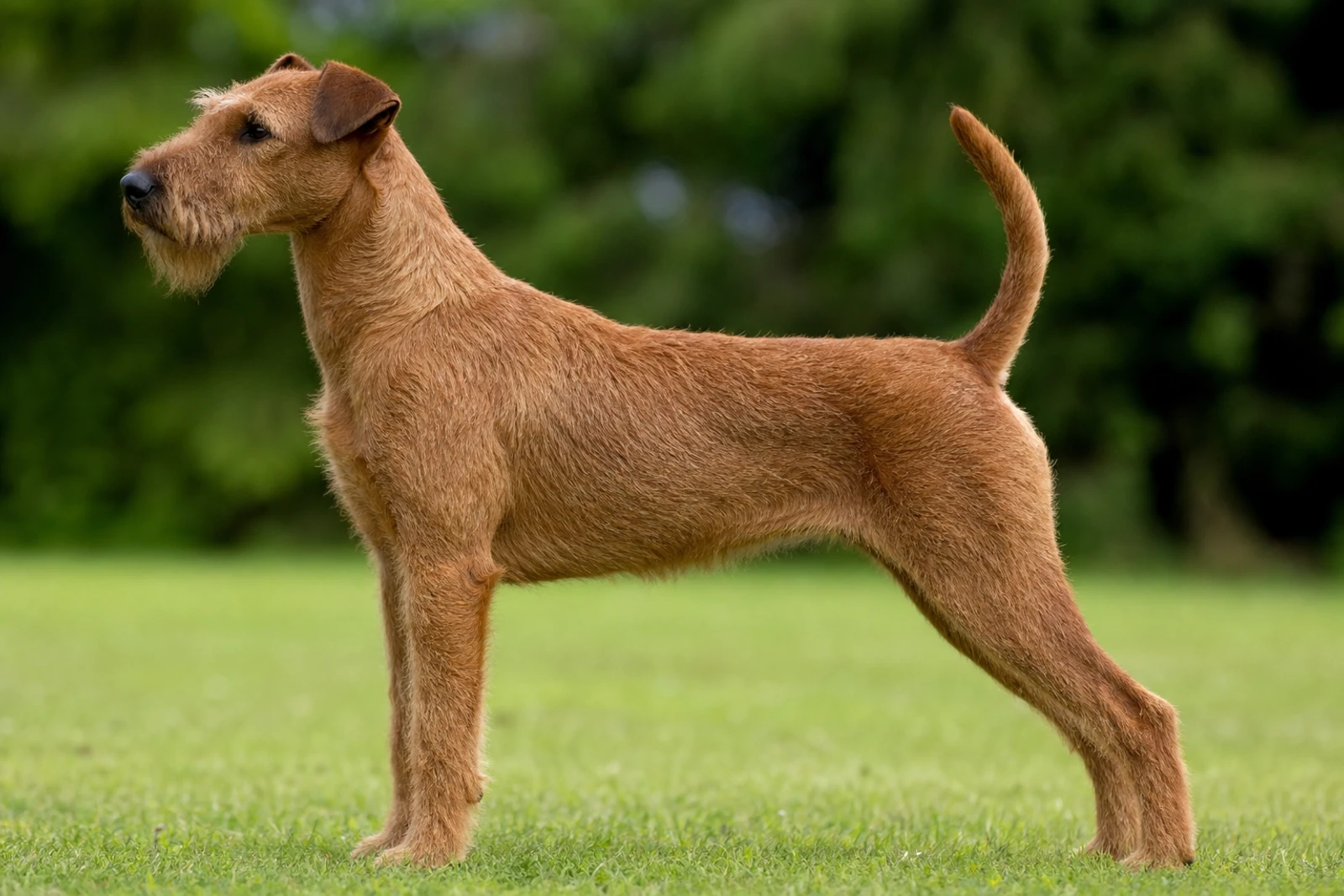
The Irish Terrier is a spirited, courageous, and affectionate breed, ideal for active owners who appreciate a dog with a sense of humor and boundless energy. This medium-sized terrier thrives in homes with a securely fenced yard and an owner committed to consistent training and daily exercise. Not suited for a sedentary lifestyle, the Irish Terrier is fiercely loyal to family but may be too bold and reactive for novice handlers or homes with small pets.
At a glance
- Size
- Medium
- Height
- 18–19 in
- Weight
- 24–26 lb
- Life span
- 12–15 years
- Coat colors
- red, wheaten, red wheaten
- Coat type
- dense, wiry, broken coat
- Group
- Terriers
How much does a Irish Terrier cost?
Adopt / rescue
$75–$400
Usually includes spay/neuter, first shots, and a microchip.
Buy from a breeder
$700–$2,000
From a reputable, health-testing breeder.
Approximate USD. Prices vary widely by region, breeder, pedigree, age, and coat colour — adopting is the lower-cost and recommended route. Avoid suspiciously cheap “breeders”; they’re often puppy mills.
Estimate the full cost of a Irish Terrier →Want the ongoing number? Estimate the monthly food bill for a Irish Terrier with our dog food cost calculator.
Irish Terrier photos
Views
Front, side, rear and top — the full silhouette.Poses
How the breed sits, lies, moves and plays.Puppy to senior
The breed across its whole life.Expressions
The breed’s range of moods.Close-up details
Eyes, ears, nose, paws, tail and coat.Coat colors
The breed’s recognized colors.Click any photo to enlarge. We show the Irish Terrier from every angle — three views, poses, life stages, expressions, close-ups, coat and colors.
Appearance & size
Visually, the Irish Terrier reads as a no-nonsense farm dog wrapped in flame-colored wire. Standing 18 to 19 inches at the shoulder and carrying 24 to 26 pounds of dense, athletic muscle, he’s a solid medium-sized terrier with the look of an athlete who genuinely means business.
Built for a full day’s work
The body is moderately long — slightly longer than tall — giving him the reach and flexibility to cover ground, not just trot around a ring. The chest is deep and well-sprung but never so broad that it costs him agility. A strong, level topline runs from the withers to the base of the tail, with a short, muscular loin and just a hint of tuck-up. The neck is fairly long, slightly arched, and flows cleanly into well-laid-back shoulders. At the rear, powerful thighs and well-bent stifles telegraph coiled energy; from behind, you see straight, parallel hocks that drive forward without wasted motion.
That fiery red coat
The Irish Terrier’s most arresting feature is a dense, wiry double coat that feels like a stiff brush — harsh to the palm, with a fine, soft undercoat beneath. It lies flat and close against the body, never fluffy or open. Breed standard calls for a solid whole-colored dog: vibrant red, red wheaten, or golden wheaten. A small white patch on the chest is the only white allowed, and even that isn’t preferred. Puppies are often born much darker, then lighten into their adult red as the wiry jacket grows in.
The face tells you everything
A long, lean head with a flat skull and a pronounced stop holds small, dark eyes that burn with a famously fiery, intelligent expression. The ears are small, V-shaped, and fold forward to lie close to the cheeks. A wiry beard and pronounced eyebrows deepen the keen, almost reckless expression. The tight, dark-rimmed lips and powerful jaws finish a look that’s part daredevil, part old soul.
From every angle
From the front, the forelegs are straight as gun barrels, set under a chest that’s deep but not wide, ending in compact, rounded feet. The side view reveals a balanced, racy outline — no exaggerated angles, just functional symmetry. From the rear, strong, well-muscled thighs slope to a well-set tail (traditionally docked, though many countries now leave it natural), carried gaily and adding to the jaunty, confident silhouette. The overall picture isn’t elegant or toy-like; it’s a dog who looks like he’d be as comfortable sprinting after a rabbit as he is sleeping by the fire — delivered in a crisp, russet-colored package.
History & origin
Before the Irish Terrier became the solid-red whirlwind we know, it was a rugged, no-fuss farm dog in rural Ireland. By the 1700s, a scrappy terrier type had already carved out a job—ridding barns and stone walls of rats, running down rabbits, and sounding the alarm when anyone approached the cottage. The exact lineage is murky, but it likely shares ancestry with the old Black and Tan Terrier and the broken-coated working terriers common across the British Isles. What set these early Irish dogs apart was their unshakeable nerve. A dog that would face a badger, then curl up by the fire with the kids, earned the nickname “Daredevil” for good reason.
The breed we'd recognize today took shape in the 1870s. Enthusiasts in County Cork, including a fellow named George Jamison, started selectively breeding for a consistent look and temperament. The first Irish Terrier club formed in Dublin in 1879, and they made a rule that would define the breed: the coat had to be a whole-colored red—ranging from bright red to wheaten. Any black, brindle, or white markings were disqualified. That decision pushed the breed away from the patchwork terriers that still existed and cemented its identity. In 1881, the Irish Terrier was the first native Irish breed officially recognized by the English Kennel Club, and by the late 19th century it had exploded in popularity. At one time, it was among the top five most registered dogs in Britain.
World War I forced the Daredevil to prove its mettle on a bigger stage. Irish Terriers served as messenger dogs and sentinels in the trenches. Their compact size (18–19 inches, 24–26 pounds) and fearless disposition made them exceptional at dodging shellfire to deliver vital communications. Many never came home, but their war record cemented a reputation for unshakeable loyalty. After the war, the breed’s numbers softened as other terriers caught the public’s fancy, and today the Irish Terrier is considered a rare breed—a steady companion rather than a fad. That suits the dog just fine. It still has a long memory for its working roots, and a short fuse with rats.
Temperament & personality
An Irish Terrier is a little firecracker wrapped in a wiry red coat—bold, scrappy, and fiercely loyal. This is the “Daredevil” of the terrier group, and he lives up to it every day. At 24–26 pounds and 18–19 inches, he’s a medium-sized athlete packed with curiosity and a sense of humor. He adores his people with a devotion that borders on possessive, but he’s not a pushover. An Irish Terrier thinks before he acts, and often he decides your idea needs a bit of editing. That independent streak means you’ll earn his best behavior through consistent, respectful handling—not by trying to out-muscle him.
Energy pours out of this dog. A leashed walk twice a day won’t cut it. He needs a solid hour of hard running, chasing a ball, or tearing up the yard in a game of keep-away. Without that outlet, he’ll design his own fun, which often involves chewing anything that fits in his mouth and barking till the neighbors know your schedule by heart. Sturdy chew toys are less a suggestion than a household requirement. His jaws need real work, and he takes pride in destroying flimsy playthings in minutes.
With his family, he’s affectionate and surprisingly gentle—when he wants to be. He’ll curl up on the couch after a good romp, though he’s just as likely to patrol the windowsills making sure no delivery truck goes unreported. That watchfulness makes him an exceptional alarm system. He’s naturally reserved with strangers, so early socialization is non-negotiable. He’s not the breed that welds itself to every guest, but a well-introduced visitor will get a polite, measured welcome.
The biggest caution is around other animals. Irish Terriers often carry a hot streak of same-sex dog aggression and a prey drive that makes cats, rabbits, or even the neighbor’s ornamental chickens look like a game. This isn’t a casual dog-park regular. Many adult Irish Terriers do best as the sole pet, or you’ll manage a carefully choreographed multi-dog household where the rules never slip. With kids, he can be a riotous, fun-loving companion if raised together and if adults teach children to respect his space—especially during meals and rest times. That mouthy terrier playstyle and low tolerance for being mishandled mean unstructured kid-puppy free-for-alls are a bad idea.
House training takes patience. He’s smart enough to learn fast but stubborn enough to test you on the details. Pee accidents, if not cleaned with an enzymatic odor neutralizer, can turn into a repeat invitation because scent is a powerful cue. Reward outdoor success immediately, and skip the punishment routine—it only builds resentment in a dog this clever. Plan on a securely fenced yard, a sense of humor, and a readiness to pivot the daily agenda when your Irish Terrier wakes up and chooses mischief. He’s not a low-maintenance companion, but he’s a real one.
Good with kids, dogs & other pets
With kids
Irish Terriers can be terrific family dogs — spirited, affectionate, and sturdy enough to handle rough-and-tumble play. Their medium build (24–26 lb) means they won’t bowl a toddler over by accident, but the same wiry energy that makes them fun can also knock over a small child during a zoomie. Supervision is non-negotiable, not because the dog means harm, but because they move fast and don’t always know their own strength.
Their patience runs deep when kids treat them respectfully. Yank ears, poke ribs, or invade their space while eating, and even the most easygoing Irish will eventually say “enough.” Teach children to read a dog’s body language — a tucked tail, sideways glance, or low growl means back off now, not push harder. When kids and dog learn each other’s signals, they often become inseparable.
With other dogs
This is where the terrier wiring shows. Irish Terriers were bred to think independently and solve problems — rats, badgers, other dogs — without waiting for permission. Same-sex aggression is real and can surface even in a well-socialized adult. A male-male or female-female pairing is a risk; opposite-sex pairs usually fare better.
That said, an Irish raised with another dog from early puppyhood can coexist beautifully. The magic window is socializing between 3 and 14 weeks old, with ongoing positive exposures. Introduce an adult Irish to a new dog later? Go slow. A leashed parallel walk on neutral ground for several sessions before any off-leash meeting. Don’t force a friendship. Some dogs simply prefer being the only dog, and that’s fine.
Dog parks are a gamble. The breed’s scrappy play style and low tolerance for rude behavior can spark fights fast. A fenced yard, long-line hikes, or one-on-one playdates with known, calm dogs are safer outlets.
With cats and small pets
High prey drive meets high speed — cats, rabbits, hamsters, even small dogs can trigger the chase-and-grab instinct. An Irish Terrier who lives peacefully with the family cat indoors may still lose its mind over the neighbor’s cat outside. Introduce a puppy to a cat with extreme care, using gates, leashes, and high perches so the cat can escape. Reward calm behavior around the small animal for months, not days.
Some Irish Terriers learn to view a specific cat as a packmate; others never do. Accepting that your dog might never be safe around small pets isn’t a training failure — it’s honoring the breed’s history. Never leave them unsupervised together, no matter how “fine” things seem. A squeaking noise or sudden dart can undo years of peace in half a second.
For homes with pocket pets, keep cages secure and out of the dog’s reach. An Irish Terrier who stares fixedly at a guinea pig enclosure isn’t curious — it’s cataloging a target.
Trainability & intelligence
The Irish Terrier is all brains and independent fire — they learn a new command in a flash, but they’ll also calculate whether following it is worth their time. You’re not training a pushover; you’re negotiating with a fast-thinking dog who values fair deals over blind obedience. Once you accept that, training becomes a lively back-and-forth that this breed genuinely enjoys.
What motivates an Irish Terrier
Food works, but don’t lean on it exclusively. These dogs often light up for a squeaky toy, a game of tug, or a chance to chase a flirt pole. Keep your reward kit varied — a mix of high-value treats, a favorite ball, and genuine, excited praise. If a session gets repetitive, they’ll check out. Short 5- to 10-minute rounds, laced with play, keep that whip-smart mind engaged.
The recall challenge
Terrier prey drive is real and it’s strong. A squirrel or a stray cat can flip a switch that makes your voice disappear. Build recall with a long line and rewards so absurdly good — think real chicken or a jackpot of tug — that coming back beats the chase. Never punish a slow return. You’ll just teach them that recall ends the fun, and they’ll get faster at dodging you.
Common hurdles
Stubbornness flares when something else is more interesting or when training feels like nagging. They also have a surprisingly soft side under that wiry coat: harsh corrections either shut them down or provoke defiance. Socialization needs an early start, ideally before 14 weeks, with gradual exposure to people, dogs (carefully — same-sex aggression can appear), noises, and new surfaces. A well-socialized Irish Terrier still has opinions, but far less reactive fear.
A training approach that sticks
Positive, relationship-based methods are non-negotiable. Clicker training pairs beautifully with their problem-solving streak — shape a new trick and watch them light up. Consistency matters across all family members; if one person lets them counter-surf, they’ll test the rule every time. Give them jobs that channel their intelligence: agility, barn hunt, rally, or even teaching them to tidy up their toys. Teach a bombproof “leave it” before you need it. That cue, practiced daily, is worth more than any obedient sit when a rabbit darts across your path.
Exercise & energy needs
Plan on giving your Irish Terrier at least a solid hour of real exercise every day, split into two or more sessions. This isn’t a breed satisfied with a couple of leisurely walks around the block. A 15-minute potty stroll barely registers. They need to run flat out, chase a ball, or tear after a flirt pole until their lungs burn. A fenced yard or a safe open field is non-negotiable for off-leash burns — their prey drive is strong, and they’ll bolt after squirrels if given the chance.
Physical work alone won’t cut it, either. Irish Terriers are thinking dogs with a streak of independence. They need mental challenges to stay sane. Puzzle toys, stuffed Kongs, and treat-dispensing balls buy you some quiet time, but the real gold is in interactive work: short, high-energy training sessions, scent games, or even teaching new tricks. This breed thrives on activities that engage their nose and brain — consider barn hunt, earthdog trials, or simple hide-and-seek with a favorite toy. Without that outlet, boredom quickly turns into digging, barking, or redecorating your couch cushions.
Puppies and adolescents need their running carefully managed to protect growing joints; stick to softer surfaces and avoid repetitive jumping until they’re fully mature. Adult dogs are robust and can handle more intense workouts, but always watch for overheating in warm weather — that wiry coat insulates well. Many Irish Terriers excel in canine sports like agility, rally, or flyball, which combine physical exertion with the problem-solving they crave. Even a vigorous game of tug (with rules) can be a workout and a training opportunity in one.
Grooming & coat care
The Irish Terrier’s hard, wiry double coat is a low-shed marvel, but it won’t take care of itself—skip the right maintenance and that dense red jacket turns soft, dull, and loses its weatherproof bite. The outer hairs are crisp and broken; underneath sits a fine, insulating undercoat. This is a coat meant to be hand-stripped, not buzzed with clippers.
The weekly brush-out
Between stripping sessions, a metal slicker brush with rounded pins pulls out loose dead hair and prevents little mats from forming where the legs meet the chest. Follow up with a medium-toothed comb once a week to check for tangles behind the ears and under the belly. You’re not just brushing—you’re keeping the coat crisp and the skin stimulated.
Hand-stripping: the non-negotiable
Hand-stripping removes dead outer hairs by the root, which lets new, correct-textured hair grow in and preserves the rich wheaten-to-red color. Most pet owners can learn to strip the dog’s back, neck, and sides every 6–8 weeks, or do two big strip-outs in spring and fall when the undercoat naturally lets go. Show dogs need rolling maintenance every few weeks. Clipping is the common alternative, but it ruins the harsh texture and can cause the coat to fade to a washed-out biscuit color over time.
Bathing, but barely
You’ll bathe far less than you think. Dirt tends to dry and brush right out of that hard coat. When you do need a bath—maybe every 2–3 months, or after a truly muddy adventure—use a mild dog shampoo and avoid over-washing, which strips the natural oils that keep the topcoat hard. Rinse thoroughly; leftover residue is a magnet for skin irritation.
Nails, ears, teeth
- Nails: Trim every 3–4 weeks. If you hear clicking on the floor, they’re overdue. The quick is harder to see in darker nails, so take small snips or have a groomer show you the safe angle.
- Ears: The folded, V-shaped ears need a weekly peek and a wipe with a damp cloth or a dog-specific ear cleaner. Redness or a yeasty smell means it’s time to get the vet involved.
- Teeth: Brush two or three times a week with an enzymatic dog paste to keep that terrier smile healthy.
Cold-weather dryness and summer sun don’t drastically alter the grooming routine—more important is that outdoor exercise naturally helps the coat turnover and sheds dead undercoat. Pay attention during seasonal blows: a thorough hand-strip in early spring and late fall clears the old jacket before it mats and gives you a fresh, vibrant coat that repels water and dirt like it’s supposed to.
Shedding & allergies
If you hate finding dog hair on your black pants, the Irish Terrier is about as close to a non-shedding dog as you’ll get. This breed wears a harsh, wiry single coat — no soft undercoat to blow out twice a year. That’s the secret behind the near-zero shed.
You will see the occasional wiry red hair, but it’s not going to blanket your sofa. The trade-off is that dead hairs don’t fall out on their own; they hang around in the coat until you pull them. A quick weekly brush with a slicker removes loose stuff, but to really keep shedding to a whisper, most owners hand-strip the coat two to three times a year. If you clip the coat instead, the texture softens over time and you may notice a bit more loose hair around the house.
Dander is the real allergy trigger, and because the Irish Terrier produces very little of it, many allergy sufferers do perfectly fine. Still, no dog is 100% hypoallergenic. Spend time with the breed before you commit if allergies are a concern.
Drool? You won’t find slobber trails on your walls or a wet spot on your lap after a pet. These dogs are famously clean-mouthed, which only reinforces their neatnik reputation. You’ll still need a lint roller once in a while, but your vacuum won’t be working overtime.
Diet & nutrition
An Irish Terrier’s wiry frame and turbocharged metabolism can trick you into thinking he’s a bottomless pit. These 24–26 lb terriers often act starving even right after a meal, but free-feeding or heavy-handed portions are a direct route to obesity. Carry extra weight on a small, active frame and you’ll see it in joint strain, reduced stamina, and a shorter overall lifespan. A lean, muscular terrier is the goal.
Stick to a measured, twice-a-day routine for adults. A high-quality commercial kibble formulated for active medium breeds works well; start with the bag’s guideline for a 25 lb dog and adjust based on body condition. You should feel ribs easily under a thin layer of flesh. Many owners prefer a homemade approach built around roughly 60% muscle meat and organs, 20–30% dog-safe fruits and vegetables, and 10% other ingredients like eggs, plain yogurt, or pearl barley for fiber. Canned sardines or mackerel (in water, no salt) and cooked pumpkin make excellent toppers, too. If your dog inhales meals, a puzzle bowl or snuffle mat forces him to slow down and puts that terrier brain to work — both benefits.
Puppies need fuel for growth in smaller, more frequent doses: four meals daily until 4 months, then three meals until about 6 months, then transition to the adult two-meal schedule. Around 12 weeks, raw chicken wings (supervised) can become part of the rotation. Very young puppies do best with lightly cooked, puréed meats and veggies or a premium puppy formula to avoid digestive upsets.
Senior Irish Terriers (think 10+) often slow down just enough that the old portion size starts sticking to the ribs. Scale back gradually, and consider blending meals into a slurry if teeth are worn or missing — their jaws don't grind sideways, so puréed food actually aids nutrient uptake. Skip the nightly table scraps entirely; a “just this once” habit turns into a relentless beggar faster in this breed than most. Serve any leftovers in his own bowl, away from the table, and you’ll sidestep that whole headache.
Health & lifespan
An Irish Terrier who stays fit and gets regular preventive care often reaches 12 to 15 years, and I’ve known plenty who make it to the far end of that range. This is a naturally hardy, medium-sized dog, but the typical lifespan still depends heavily on weight management. A lean 24-to-26-pound body is what you’re aiming for. These dogs are food-motivated and clever — they’ll convince you they’re starving five minutes after a meal. Measure every scoop, skip the table scraps, and stick to an exercise plan that includes a real run or off-lead romp most days, not just a short walk.
Like many terriers, Irish Terriers can be stoic about discomfort, so you need to watch for subtle shifts — slightly less enthusiasm for a morning run or a pickier appetite. Their wiry double coat is dense, which helps them handle cool weather, but it can also hide the beginnings of a skin problem. Food allergies and environmental sensitivities sometimes flare up as itchy paws, ear infections, or hot spots. Feed a high-quality diet and check the skin when you’re stripping or brushing. Responsible breeders screen for inherited conditions like hip dysplasia, certain eye diseases, and, less commonly, cardiac issues, so ask to see the parent dogs’ health clearances.
Veterinary care isn’t optional. Rabies vaccination is legally required, and heartworm prevention should be given monthly during mosquito season and for one month after it ends — a step I’ve seen too many owners overlook in breeds that spend a lot of time outdoors. Yearly wellness exams catch things like early arthritis, dental tartar buildup, or thyroid sluggishness before they snowball. As your dog hits the senior years — around age 8 or 9 — bump those visits to twice a year and add bloodwork.
Don’t underestimate the impact of mental health on physical health. An Irish Terrier left isolated or rarely challenged can develop anxiety-driven behaviors like nonstop barking, which wears down both of you. Early, positive socialization and consistent, respectful handling lower that stress load significantly. The dog who knows what to expect from you is a dog who sleeps soundly and stays healthier for it.
If you ever notice a new limp, cloudy eyes, excessive drinking, or a coat that suddenly looks dull and greasy, call your vet. These dogs don’t advertise when they hurt, so you have to be the one who pays attention.
Living environment
A fenced yard is not a luxury with an Irish Terrier — it’s the baseline. These 24–26 lb fireplugs came from generations of independent problem-solvers, and they’ll bolt after a squirrel, a stray cat, or anything that moves fast without a second thought. A house with a securely fenced, dig-proof yard gives them room to rip around and do their terrier thing safely. Apartment living can work, but only if you’re honest about the noise. Irish Terriers are alert, sharp watchdogs who bark at doorbells, neighbors in the hallway, and suspicious leaves. Training can take the edge off, but you’ll never mute them entirely.
They need a solid hour or more of real, heart-pumping exercise every day — not a few leashed strolls. Break it into two or three sessions, mixing off-leash sprints in a safe area with long sniffy walks or a hard game of fetch. Mental work matters just as much: scent games, puzzle toys, or an old blanket rolled up with kibble hidden inside will burn off the mischief before it turns into shredded throw pillows.
Their dense, wiry coat shrugs off rain and cold, so they’ll happily hike with you in chilly weather. In heat or humidity, though, they can overheat fast; stick to early-morning or evening exercise in summer and always bring water.
Irish Terriers bond tight to their people and don’t do well alone for long stretches. Left bored and isolated for a full workday, they’ll invent their own entertainment — barking, digging, or dismantling furniture. Crate training from puppyhood and gradually stretching alone time can help, but this is a breed that thrives with someone home more often than not. If your household has long empty hours, this probably isn’t your match.
Who this breed suits
An Irish Terrier belongs with an owner who genuinely likes a dog with opinions. These are not easygoing, go-with-the-flow pets. They’re bold, scrappy, and independent-minded, and they need a human who finds that invigorating rather than exhausting. If you want a dog that makes you chuckle at its antics while respecting your house rules, this might be your match.
Active singles and couples who want a medium-sized, up-for-anything sidekick are a natural fit. At 24–26 pounds and 18–19 inches tall, the Irish Terrier is portable enough for apartment life but has the endurance to hike, jog, or play fetch until you’re ready to quit. Plan on a solid 45–60 minutes of real exercise daily—not just a quick stroll. When that need is met, they settle indoors with you, often glued to the couch like a 25-pound shadow.
Families with older kids are a better bet than those with toddlers. Irish Terriers love roughhousing, but they’re also quick to react if an ear gets pulled or personal space gets invaded. Children who understand dog body language and can join in on training will get a fiercely loyal playmate. Supervise interactions, and teach everyone that this terrier is not a stuffed toy.
Terrier-savvy owners will thrive. You’ll lean on previous experience with a dog that tests boundaries and throws a bit of “what’s in it for me?” into every command. Consistent, cheerful training with clear rules—and zero resorting to harsh corrections—keeps their clever minds busy and their respect earned. They’re whip-smart but stubborn by design.
Who should think twice. First-time dog owners, unless you have a mentor or access to a great positive-reinforcement trainer. Sedentary households and those wanting a quiet, low-maintenance companion will be deeply frustrated; under-exercised Irish Terriers invent their own destructive jobs, from redecorating the couch to excavating the backyard. Homes with cats, rabbits, or other small critters are risky—these terriers have sky-high prey drive, and management often requires separate living quarters. Multi-dog homes should be cautious, especially with same-sex pairings; Irish Terriers can be scrappy and dog-selective, and off-leash dog parks often become a bad idea unless you’ve put in extensive socialization. If you’re away 10+ hours a day, this breed’s people-focused nature means loneliness can spark constant barking or chewing.
An Irish Terrier thrives when you want a watchful, spirited housemate—one who alerts you to every delivery truck, makes you laugh with goofy zoomies, and keeps you honest about exercise. Give them the adventure and boundaries they need, and they’ll repay you with 12–15 years of loyal, unapologetic personality.
Cost of ownership
Bringing home an Irish Terrier from a responsible breeder typically lands between $1,500 and $2,500. Show- or breeding-prospect pups with proven lines can push past $3,000. That price should include initial health screenings, a pedigree, and often a spay/neuter contract for pet-quality dogs. Avoid bargain listings — this breed’s rarity in the US means you’re paying for genetic health history, not just a cute face.
Once the dog is yours, the monthly spend settles into a moderate rhythm. Plan on about $150–$250 per month, depending on your choices:
- Food: $40–$60 – A 25-lb dog with respectable energy does well on 2 cups of high-protein kibble daily. Treats and occasional raw toppers add a little.
- Grooming: $30–$70 – The wiry double coat doesn’t shed much but needs upkeep. Hand-stripping (keeping the harsh, weatherproof texture) runs $70+ per session if you use a groomer; clipping is cheaper but softens the coat and fades color. Most owners book a pro every 6–8 weeks or learn to strip at home with a $40 stripping knife.
- Vet & Preventives: $50–$75 – Annual exams, vaccinations, flea/tick, and heartworm meds averaged monthly. Neutering or a dental cleaning will spike a single month.
- Pet Insurance: $35–$50 – Premiums for a medium, healthy breed are reasonable. The breed can be stoic, so coverage for accidents (lacerations, broken teeth) is where you see real value.
First-year costs add a crate, leash, collar, and a secure fence if you don’t already have one — an Irish Terrier’s prey drive makes escape artistry a budget line item.
Choosing a Irish Terrier
Most Irish Terriers land in your life through a breeder or a rescue. Both can deliver a great dog, but the path you pick shapes the first months entirely.
Going through a breeder
Hold out for a breeder who treats health testing as table stakes, not a bonus. Irish Terriers are generally sturdy 24- to 26-pound dogs with a 12-to-15-year lifespan, but they can be prone to hip dysplasia and progressive retinal atrophy. Responsible breeders screen for both. Ask to see:
- An OFA hip evaluation (look for “excellent” or “good”).
- A current CAER eye exam from a board-certified veterinary ophthalmologist.
- A thyroid panel (autoimmune thyroiditis shows up in some lines).
- Many also screen for cystinuria, a metabolic condition that causes urinary stones.
If a breeder waves off those clearances, sells pups younger than eight weeks, or always seems to have a litter available, keep looking. A good breeder will grill you harder than you grill them — they’ll want to know your yard situation, your activity level, and whether you get the terrier mindset. They’ll insist you meet at least the dam (the sire may live elsewhere) and see where the puppies are raised. The place shouldn’t be pristine to the point of sterile, but it should smell clean, and the pups should move confidently through the space.
When you meet the litter, watch the puppies interact. An Irish Terrier pup worth bringing home is curious and self-assured — the one who marches over to sniff your shoelaces, not the one glued to the corner. A little roughhousing with littermates is normal, but steer clear of a pup that bullies constantly or one that flinches at every new sound. Eyes and ears should be clear, the red wiry coat tight, the belly rounded but not distended. A pup that seems lethargic or has crusty eyes could be fighting something, even if the breeder waves it off as “just a cold.”
Going through a rescue
Irish Terrier-specific rescues operate on a small scale, so patience helps. The payoff is an adult dog whose temperament you can see right now. A rescue coordinator will ask about your daily routine, your experience with terriers, and your fence situation (Irish Terriers are escape artists and champs at chasing small animals). They’ll match you with a dog that fits your life — maybe a 6-year-old couch lounger or a 2-year-old who needs a solid hour of running, not just a walk around the block.
Rescued dogs usually arrive spayed or neutered, up to date on shots, and with a basic health check. Still, book a vet visit within the first week and plan for an eye exam down the road, particularly if the dog’s history is hazy. The big advantage of rescue is skipping the midnight potty runs and the teenage destruction phase; you’ll know on day one whether the dog can coexist with your cat or your kids.
No matter which route you choose, sign up for a positive-reinforcement training class within the first few weeks. Irish Terriers are quick-witted and independent — routines, boundaries, and early socialisation keep that big brain from finding its own mischief.
Pros & cons
Pros
- A true terrier heart: bold, loyal, and always ready for the next caper. You won’t be bored with an Irish Terrier in the house.
- At 24–26 lb and 18–19 in, they’re a portable medium size — sturdy enough for long hikes yet compact enough to flop on the couch afterward.
- The wiry red coat sheds very little. With regular grooming, it’s a solid pick for many allergy-sensitive families.
- A natural watchdog with a deep, full bark that belies their size. They’ll announce visitors and square up if the situation calls for it — without being needlessly aggressive.
- Lifespan of 12–15 years and generally healthy when sourced from a breeder who screens for hip dysplasia, eye disorders, and hypothyroidism.
- Sharp and full of humor. They love puzzle toys, trick training, and any game that engages their clever mind — you can practically see them grinning.
Cons
- Prey drive is baked in. A fleeing cat, squirrel, or small dog can flip a switch, so off-leash freedom usually requires a secure fence.
- Same-sex dog aggression is common. Meticulous early socialization helps, but many Irish Terriers never become easygoing dog-park regulars.
- That crisp wire jacket isn’t wash-and-wear. It needs hand-stripping several times a year to keep its texture and weather resistance; clipping softens the coat and reduces water repellency.
- An independent thinker through and through. Training demands consistency and a sense of humor — they’ll argue with a command that feels pointless.
- A daily hour of running, chasing, or active play is the floor. A couple of leash strolls won’t satisfy, and boredom quickly turns into barking, digging, and escape plots.
- They have opinions and aren’t shy about voicing them. Expect a vocal housemate who will bark, grumble, and “talk back” when the mood strikes — quiet neighbors may not approve.
Similar breeds & alternatives
If the Irish Terrier’s daredevil terrier heart pulls you in, a handful of related breeds shift the balance in size, scrappiness, or daily demands. The differences are concrete, not just a matter of shade.
-
Welsh Terrier — Visually a compact Airedale, the Welsh Terrier stands about 15 inches and weighs 20–22 pounds, so he’s noticeably smaller than the Irish Terrier. The coat carries the same wiry texture and needs regular hand-stripping, but the color is black-and-tan, not solid red. Temperamentally, both are quick, full of self-assurance, and bred to work independently. Welshies often show a slightly more companionable edge; they tend to be a notch less dog-aggressive and a bit easier to call off a chase, though they’re still unmistakably a terrier. If the red coat is your dealbreaker, this isn’t the one. If you want a marginally less intense package at a smaller size, the Welsh Terrier is the closest sidestep.
-
Wire Fox Terrier — At 15.5 inches and 17–19 pounds, the Wire Fox Terrier packs every bit of the Irishman’s intensity into a smaller, brighter-white frame. Exercise demands are relentless; a walk around the block won’t cut it. Where a well-exercised Irish Terrier often settles calmly indoors, many Wire Foxes stay wired and vocal well into the evening. Prey drive is extreme, and same-sex dog aggression is common. You’re trading the Irish Terrier’s solid, muscular heft and more adaptable off-switch for an even fiercer, constantly “on” terrier that thrives on being the center of a one-dog household.
-
Airedale Terrier — If the Irish Terrier feels like a medium-punch terrier, the Airedale is the heavyweight version: 23 inches tall and 50–70 pounds. The fearless, versatile brain is similar, but the sheer space and leash-physicality required doubles. An Airedale needs a genuinely fenced yard and an owner who can handle a powerful, independent-minded dog. The upside is a larger deterrent presence and a dog built for bigger jobs. If you’re drawn to the Irish Terrier’s spirit but want a more imposing protector and have the room, the Airedale is a natural step up.
-
Lakeland Terrier — Shave a couple of inches and about 10 pounds off the Irish Terrier, and you land near the Lakeland at 14–15 inches and 15–17 pounds. The coat is similar—harsh, double, low-shedding—but comes in a range of colors (blue, black, liver, red, wheaten). The Lakeland’s personality is spirited and clownish, whereas the Irish Terrier tends toward a more sober boldness. Lakelands can be a fraction less scrappy with other dogs but maintain a strong prey drive. This is a smaller, somewhat lighter-on-its-feet alternative for someone who lives in tighter quarters but still wants that gritty terrier essence.
-
Soft Coated Wheaten Terrier — Almost the same height (17–19 inches) but ten pounds heavier on average, the Wheaten flips the Irish Terrier’s whole vibe. Instead of a hard, wiry coat and a guard-dog reserve, you get a silky single coat that mats easily and a famously people-happy, tail-wagging attitude toward strangers and other dogs. The Wheaten still needs significant exercise and mental work, but the hair-trigger dog-aggression and aloofness to outsiders that define the Irish Terrier are largely absent. For a family with an already busy dog roster or constant visitors, the Wheaten’s social nature often slots in with less management overhead.
Fun facts
- Nicknamed the 'Daredevil' for its fearless and bold nature.
- Served as a messenger and sentinel dog during World War I.
- One of the oldest terrier breeds originating from Ireland.
- Its red coat is so distinctive that it's often called the 'Red Devil'.
Frequently asked questions
- Are Irish Terriers good with children?
- They can be good family dogs if socialized early, but their terrier nature may make them too energetic for very young children. They tend to be loyal and playful, though rough play should be supervised.
- Do Irish Terriers shed a lot?
- They have a dense, wiry coat that sheds minimally, making them a potential option for some allergy sufferers. Regular grooming helps manage any loose hair.
- How much exercise does an Irish Terrier need?
- This active breed typically needs at least an hour of daily exercise, including walks and play. Without enough activity, they can become restless and may develop unwanted behaviors.
- Are Irish Terriers easy to train for first-time owners?
- They are intelligent but can be independent and stubborn, which may challenge novice owners. Consistent, positive training with firmness often yields the best results.
- Can Irish Terriers live in apartments?
- They can adapt to apartment living if given sufficient daily exercise and mental stimulation. However, their tendency to bark and high energy might not suit all apartment environments.
Tools & calculators for Irish Terrier owners
Quick estimates tailored to Irish Terriers — pre-filled with this breed’s size where it matters.
Articles & stories about the Irish Terrier
Sources & standards
This profile follows recognized breed standards from the American Kennel Club (AKC) and the Fédération Cynologique Internationale (FCI), along with established veterinary and breed-club guidance. These describe general breed tendencies — every dog is an individual.