

A detailed Labradoodle guide is coming soon.
Labradoodle Sticker Pack
36 cartoon stickers • transparent PNG • no watermark
Pinterest-ready
Share all 36 reactions as one sticker sheet
Pinterest opens with the full pack and a fresh, tailored description. You choose the public board and publish it from your own account.
Save the full pack


Choose one reaction above to share it alone, or use the full-pack button for all 36 together.




































Free full-resolution download — no account, no payment, no watermark.
Includes all 36 transparent PNG stickers in one ZIP. A quick human check is required for each download.
At a glance
- Size
- Medium
- Height
- 14–16 in
- Weight
- 15–24 lb
- Coat colors
- Chalk, Cream, Apricot, Gold, Red, Black, Blue, Silver, Caramel Ice, Caramel Cream, Caramel, Caramel Red, Chocolate, Lavender, Cafe, Parchment
How much does a Labradoodle cost?
Adopt / rescue
$75–$400
Usually includes spay/neuter, first shots, and a microchip.
Buy from a breeder
$700–$2,000
From a reputable, health-testing breeder.
Approximate USD. Prices vary widely by region, breeder, pedigree, age, and coat colour — adopting is the lower-cost and recommended route. Avoid suspiciously cheap “breeders”; they’re often puppy mills.
Estimate the full cost of a Labradoodle →Want the ongoing number? Estimate the monthly food bill for a Labradoodle with our dog food cost calculator.
Labradoodle photos
Views
Front, side, rear and top — the full silhouette.Poses
How the breed sits, lies, moves and plays.Puppy to senior
The breed across its whole life.Expressions
The breed’s range of moods.Close-up details
Eyes, ears, nose, paws, tail and coat.Coat colors
The breed’s recognized colors.Click any photo to enlarge. We show the Labradoodle from every angle — three views, poses, life stages, expressions, close-ups, coat and colors.
Appearance & size
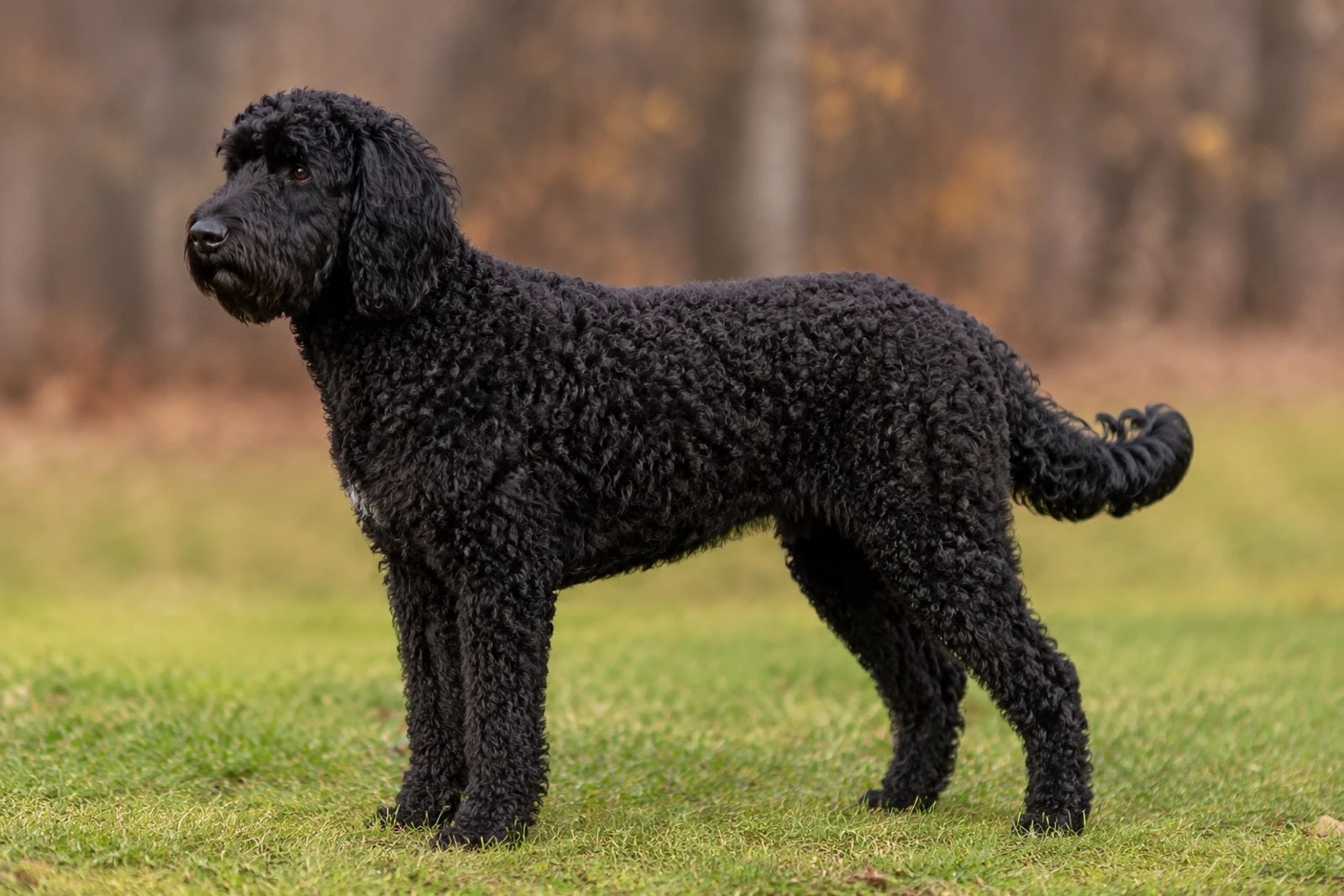
A medium Labradoodle stands 14 to 16 inches at the shoulder and weighs between 15 and 24 pounds — small enough to scoop up, sturdy enough to hike all afternoon. That compact build comes from carefully pairing a Labrador Retriever with a Miniature or Toy Poodle, and it shows in a dog that’s slightly longer than tall, with a solid, athletic frame.
From the front, you get an open, friendly expression. The skull is broad and rounded, with a defined stop where the muzzle meets the forehead. Eyes are large, set well apart, and carry that warm, intelligent look both parent breeds are known for. Drop ears frame the face, hanging close to the head and set just above eye level. The muzzle is strong, not snipey, with a nose that can be black, brown, or liver depending on coat color.
Walk around to the side and you’ll see a deep chest that tucks up cleanly into a moderate waist, with shoulders that slope smoothly into straight, well-boned front legs. The topline stays level from withers to hips. The tail often borrows from the Labrador side — thick at the base and carried with a jaunty upward curve, though some dogs have a slightly more plume-like tail if the Poodle influence is strong. Movement is springy and efficient; these dogs cover ground with a balanced, reaching stride.
From the rear, the hindquarters are muscular and the legs stand straight and parallel. The overall impression is balance, not exaggeration. Nothing looks heavy or fragile — just a dog built to move.
The coat is where Labradoodles really vary, and that matters because it dictates how much time you’ll spend grooming. Three basic types show up:
- Fleece coat: Soft, wavy, and the most common. Feels like fine mohair and sheds very little.
- Wool coat: Tight, curly, and dense, similar to a Poodle. Extremely low-shedding but mats fast without daily brushing.
- Hair coat: Straighter and more like a Labrador’s double coat. Sheds noticeably more, though usually less than a pure Lab.
Coat color runs the gamut — cream, chalk, gold, apricot, red, chocolate, café au lait, black, silver, and even parti (white patches with solid markings). Puppies often lighten or fade slightly as they mature, so a deep apricot pup may end up a soft cream by age two.
No coat type makes a dog 100% hypoallergenic, but fleece and wool coats typically produce far less dander and saliva protein spread than a shedding breed. If allergies are a dealbreaker, spend time with adult dogs of the same coat type before bringing a puppy home, and expect to brush a fleece or wool coat every day or two, with a professional clip every six to eight weeks. That’s the trade-off for the teddy-bear look.
History & origin
The Labradoodle started not as a designer fad, but as a practical solution to a single request in the late 1980s. Wally Conron, then the breeding manager for the Royal Guide Dog Association of Australia, received a letter from a blind woman in Hawaii. Her husband was allergic to dog hair, and she needed a guide dog that wouldn’t trigger his allergies. After multiple attempts with Standard Poodles—whose temperament often proved too nervy for service work—Conron tried something new: breeding a Labrador Retriever to a Standard Poodle, hoping to blend the Lab’s trainable, steady nature with the Poodle’s low-shedding coat.
The first cross produced three puppies in 1989. Only one, a male named Sultan, showed both the guide-dog aptitude and the coat type needed. Sultan went on to serve the woman successfully for over a decade. Conron later admitted he’d unleashed a phenomenon he couldn’t control, as demand for these “hypoallergenic” dogs surged well beyond working homes.
The name “Labradoodle” caught on quickly, and so did the cross-breeding. Through the 1990s and early 2000s, breeders in Australia and the U.S. began producing smaller versions. By introducing Miniature and Toy Poodles to the mix, they shrank the dog to the medium and miniature sizes you see today—like the 14–16 inch, 15–24 pound Labradoodle described here. That bite-sized version became a hit with suburban families who wanted a smart, active companion without the full-sized footprint.
A more deliberate path emerged later in Australia, where breeders infused additional bloodlines—such as the Cocker Spaniel and Irish Water Spaniel—into multi-generational lines to create the Australian Labradoodle. These dogs aim for a more predictable coat and temperament beyond first-generation crosses. While the classic Labradoodle remains an unregistered crossbreed bred informally worldwide, that early 1989 experiment shaped a whole category of low-shedding family dogs.
Temperament & personality
A well-socialized Labradoodle is a people magnet with an off switch that doesn’t always work. Expect an outgoing, quick-witted dog who wants to be part of everything you do, whether that’s a long morning walk or folding laundry. They inherit a double dose of retrieving instinct and a goofy sense of humor that makes training sessions feel like play — but that sharp mind also means boredom can set in fast. Without a solid hour of daily running, puzzle toys, or scent games, those smarts get channeled into creative chewing, barking, or reorganizing your trash.
Affectionate is an understatement. These dogs often shadow you from room to room and can struggle with real anxiety if left alone for long stretches. Neglect or isolation routinely shows up as howling, destruction, or indoor marking, because they’re wired to be near their people. Urine marking isn’t simply a house-training lapse; it leaves a scent cue the dog recognizes later, so a single missed cleanup can become a repeat problem. Use an enzymatic cleaner, not just soap and water, and never punish an indoor accident — instead, throw a quick party with a treat every time they go outside. That builds the right association without damaging their trust.
With family, a Labradoodle is typically gentle and patient, but those 15–24 pounds of enthusiasm can flatten a toddler in mid-zoom. Teach children to let the dog eat in peace. Standing over the bowl or tugging a chew can flip a normally easygoing dog into a defensive guarder. A relaxed, loose body and soft eyes mean all is well; a stiff, forward-leaning posture with a hard stare is a clear “give me space” signal that deserves respect. You’ll also see lip licking, yawning, or head turns when the dog is uncomfortable — they’re not tired, they’re trying to settle things down.
Puppy chewing is normal and so is an adult’s urge to gnaw for jaw strength and clean teeth. Offer appropriate chew items and redirect off-limits targets with a quick spritz of homemade citrus or vinegar spray. (A soak of boiled citrus peels in water does the job without synthetic deterrents.) The breed isn’t guardy by nature; they’ll alert-bark at a door knock but are far more likely to greet a stranger with a wagging tail than a growl. Just don’t mistake friendliness for a guarantee — any dog can have an off day, especially if they associate a certain scent with a bad past experience.
Calm, brave, gentle — these are observed tendencies, not factory settings. A Labradoodle’s final personality is a partnership between genetics and the calm, consistent leadership you bring. Give them clear boundaries, plenty of outlets, and the chance to be your constant sidekick, and you’ll get a dog who matches your energy — and maybe steals your spot on the couch.
Good with kids, dogs & other pets
A Labradoodle’s patience and easygoing nature tend to shine around children. This is a 15–24 lb dog that’s sturdy enough to handle a little clumsy hugging—but small enough that a toddler’s full-body flop could hurt. Always supervise, and teach kids to give the dog space when eating or resting. Because Labradoodles crave human company, they usually slot into family life as an up-for-anything playmate, happy to join a living-room wrestling match or a backyard chase. The flip side: they can get anxious and vocal if left alone for long stretches, so they’re not a fit for homes where everyone’s gone all day.
With other dogs, they’re generally sociable. A well-socialized Labradoodle will greet other pups with a wag, not a growl. The critical window for that starts early. Puppies need gradual, positive exposure to friendly dogs, new people, and everyday chaos between 3 and 16 weeks old. Without that foundation, a Labradoodle can turn timid, spooky around loud noises, or overly excitable on leash. Responsible breeders start this before you ever pick up your puppy—ask what they’ve done.
Cats and small pets require more finesse. A Labradoodle’s retriever and poodle ancestry can flick on a chase instinct. Introductions work best when the dog is young, using treats and calm, short sessions. With steady supervision, many live peacefully with indoor cats. Pocket pets like hamsters or rabbits, though, should stay securely housed. A wagging tail isn’t always a friendly one if those little instincts fire up.
Trainability & intelligence
A Labradoodle's smarts are both a gift and a not-so-secret challenge. They pick up new cues faster than you can get the treat pouch open — often after just a few repetitions — thanks to Labrador eagerness and Poodle sharpness rolled into one 15–24 lb package. But that quick mind also means they'll outthink a sloppy routine, so training is less about teaching them what to do and more about keeping them convinced it's worth their while.
What makes them tick
- Motivation comes in many flavors. Food works, but a squeaky ball or a quick game of tug often lights them up even more. Rotate rewards so they never know what's coming.
- Sensitive, not soft. Harsh corrections or even an impatient tone can cause a shutdown. These dogs thrive on clear, upbeat communication — think "Let's try again" rather than "No."
- Consistency is the real secret. If one family member lets them jump up and another doesn't, they'll exploit the gap. Decide on house rules early and stick to them.
The recall hurdle
Labradoodles tend to be social butterflies, so off-leash reliability requires deliberate work. Their nose can override their ears when a scent trail appears. Build a recall that pays out every single time — high-value treats like tiny bits of chicken, never just a pat on the head. Practice in low-distraction spots before expecting them to ignore a squirrel at the park.
Socialization that sticks
Start exposing your puppy to new people, different floor surfaces, traffic sounds, and calm dogs between 3 and 14 weeks. This isn't a one-and-done checklist; it's a pattern. Short, positive outings several times a week through that first year build a dog who doesn't default to fear-barking when the neighbor's trash can clatters. Given the medium size (14–16 inches), a fearful reaction can become a snappy one if you skip this.
Common sticking points
- Distractibility. Their friendly nature means every stranger is a potential best friend. Train focus exercises like "look at me" early, and practice them in boring environments before adding real-world chaos.
- Stubborn streaks. That Poodle brain can decide your treat isn't interesting enough. When they disengage, it's often a sign you need shorter sessions or better rewards — not more pressure.
Zero-force, relationship-based training isn't just kinder — it's flatly more effective with this mix. A Labradoodle who trusts you will try things for you, even when it's hard.
Exercise & energy needs
That compact 15‑ to 24‑pound body packs a surprising amount of drive — your Labradoodle won’t be content with a single relaxed stroll around the block. Plan on at least 45 to 60 minutes of real exercise every day, split across two sessions. A morning 30‑minute off‑leash romp or a vigorous game of fetch, followed by a 20‑minute walk or training game in the afternoon, keeps a level head on those shoulders.
Because both parent breeds were built to work, this dog shines when you mix movement with a job. A fenced yard is a bonus, not a substitute — they need interaction. Aim for a pace that gets them trotting and problem‑solving, not just sniffing.
What counts as good exercise:
- Fetch with a purpose: A Chuckit! throw or a tennis ball in a safe open area. They’ll run until you call it quits, so watch for fatigue.
- Swimming: Many take to water like a Labrador. It’s joint‑friendly and wipes them out faster than a dry‑land walk.
- Off‑leash trail hikes: Let them cover 2‑3 miles on varied terrain. Use a long line if recall is still a work in progress.
- Indoor agility or flirt pole sessions: For rainy days, 10 minutes of jumping, weaving, or chasing a lure toy burns a surprising amount of energy.
The mental half of the equation matters just as much. Without it, a bored Labradoodle invents jobs you’ll hate — chewing baseboards, excavating the couch, or barking at every delivery truck. Work in two or three short brain games daily:
- Scent games: Hide a handful of kibble in a snuffle mat or in different rooms and let them hunt.
- Puzzle feeders: A Kong Wobbler or a Nina Ottosson puzzle turns mealtime into a 15‑minute workout for their brain.
- Training bursts: Teach a new trick or reinforce a heel with high‑value treats. Their Poodle smarts soak this up fast.
Because this size stays between 15 and 24 pounds and stands 14 to 16 inches tall, you don’t need a huge space — an apartment works if you’re committed to those daily outings and indoor mental sessions. Skip the marathon forced runs, though: even a sturdy young adult still benefits more from varied, moderate‑intensity activity than from pounding pavement for an hour straight. If you see zoomies or restlessness at night, it’s almost always a sign you left the mental bucket full and the physical bucket half empty. Just add an extra game of hide‑and‑seek tomorrow.
Grooming & coat care
Your Labradoodle’s coat is the headline act here, but it demands real, daily backup. These dogs rarely have a standard double coat; instead, most grow a dense, wavy or curly fleece that traps dead hair against the skin rather than dropping it around your home. That means matting happens fast, especially behind the ears, under the collar, and in the armpits. Skip a day and you can end up with a solid felted mess that has to be shaved off.
Daily brushing is not a suggestion — it’s the baseline. Work through the coat in sections with a slicker brush (longer pins, rounded tips) to break up tangles near the skin, then follow with a greyhound-style metal comb to catch any snarls the brush missed. A quick once-over at night cuts down on bigger weekend sessions and lets you spot foxtails, hot spots, or early crusties that signal skin trouble.
Bathing every four to six weeks keeps the coat from turning oily and musty. Use a gentle dog shampoo and rinse until the water runs absolutely clear; leftover product is an itch magnet. After the bath, towel dry and then blow-dry while brushing — air-drying alone lets the curls tighten into knots as they coil up.
Professional grooming every six to eight weeks is the real secret for keeping a medium Labradoodle comfortable, not just cute. A good groomer trims the coat down to about half an inch all over, cleans up the face and sanitary areas, and thins out the thickest spots. If you let the coat grow long for that fluffy look, double the maintenance; it’s like owning a walking, dirt-collecting shag carpet.
Don’t let the fluffy exterior distract you from the basics. Ears need weekly attention — those drop ears hold moisture and wax like a vault, so wipe the inner flap with a dry cotton round and check for any yeasty smell. Nails: if you can hear them clicking on the floor, they’re too long. Clip a tiny bit every two weeks to keep the quick recessed. Teeth get a quick daily brush with dog-safe toothpaste; smaller dogs often develop tartar faster, and you’re aiming to avoid expensive dental cleanings down the road.
Seasonal care is more about management than dramatic shed. Even low-shedding dogs do a little coat turnover when daylight hours shift. Keep up that daily brushing, and plan an extra bath or a groomer visit around spring and fall to clear out any old undercoat that’s hanging on. A soaked-through run through wet grass is usually the bigger seasonal headache — dry thoroughly, or you’ll be dealing with matting behind the knees by morning.
Shedding & allergies
If you’re hoping a Labradoodle won’t shed, we need to get real: these dogs are a genetic lottery. Some shed every bit as much as a Labrador. Others keep their coat to themselves like a Poodle. There is no one-size-fits-all answer, and that’s the single most important thing to know before you bring one home.
Coat types and what they really mean for shedding
A Labradoodle’s coat usually falls into one of three camps, and each one tells you a lot about how much fur you’ll find on your sofa:
- Hair coat – This is the Labrador throwback. It’s straight or slightly wavy, feels coarse, and sheds heavily year-round with a serious seasonal blowout in spring and fall. If you’re allergic, this coat is bad news.
- Fleece coat – Soft, wavy, and somewhere in the middle. It sheds lightly to moderately. You’ll see tumbleweeds of hair, but nothing like a full Lab. Many fleece-coated Labradoodles still trigger mild allergy symptoms.
- Wool coat – Tight curls like a Poodle. This one sheds the least, often virtually nothing you’d notice. Dead hairs get trapped in the curls instead of falling out, which means you trade vacuuming for daily brushing and regular clipping every 6–8 weeks.
Even within a single litter, you can get all three types. A puppy’s fluffy baby coat isn’t a reliable clue, either — the adult coat comes in between 9 and 18 months and can change texture dramatically.
The hypoallergenic myth
No dog is 100% hypoallergenic. Allergies aren’t just about hair; they’re triggered by proteins in dander (skin flakes), saliva, and urine. A wool-coated Labradoodle produces less airborne dander than a hair-coated one, so some allergy sufferers do better. But responsible breeders won’t promise zero reaction, and you shouldn’t bank on it. If allergies in your household are severe, spend at least an hour with the adult dog you’re considering — not just a puppy — before deciding.
Drool and seasonal blowouts
Labradoodles aren’t big droolers. You might get the occasional damp chin after drinking or a little excitement drool, but compared to a Saint Bernard, they’re dry-mouthed. Seasonal shedding, on the other hand, is real for any dog with a hair- or fleece-type coat. Twice a year, you’ll need a good deshedding brush and a lot of lint rollers. Wool-coated dogs don’t have a seasonal shed, but if you skip brushing, those curls mat against the skin and turn into a painful mess.
At 15–24 pounds and standing 14–16 inches tall, a Labradoodle in the medium range still produces plenty of dander if shedding genes win out. The only guarantee is that there’s no guarantee — test the dog, not the breed label.
Diet & nutrition
A 20-pound Labradoodle who discovers the treat jar is a Labradoodle who will remember that spot for life. Food motivation runs deep in this cross, so the real work of feeding starts with honest portion control — even when those eyes say otherwise.
Daily portions for an adult
An adult Labradoodle in that 15–24‑pound sweet spot typically needs 1 to 1¼ cups of high-quality dry food per day, split into two meals. Swap in raw or home-cooked? Aim for a plate that’s roughly 60% meat (muscle and organ), 20–30% puréed vegetables and fruit, and 10% extras like eggs, plain yogurt, or a cooked grain. For a 20‑pound dog, that shakes out to around 6–8 ounces of meat and a generous half‑cup of veg daily — a kitchen scale keeps it honest while you learn the visuals. If your dog gets a solid hour of off‑leash running, nudge the portion up; a steady neighborhood walker needs less.
Puppy feeding timeline
- Up to 4 months: four evenly spaced meals.
- 4–6 months: three meals.
- 6+ months: transition to the adult two‑meal rhythm.
Start a puppy gradually on lightly cooked, puréed meat, fish, fruits, and vegetables, or a medium‑breed puppy formula you trust. Around 12 weeks, a raw chicken wing (supervised) introduces chewy texture and jaw work safely.
The obesity watch
Two extra pounds on a 20‑pound frame is 10% of body weight — enough to quietly strain joints and set up mobility trouble. Run your fingers along the ribs; you want to feel them without a hard press. Pull back treats (use a few pieces of their meal kibble instead) and lean on food‑puzzle bowls or snuffle mats. They slow gulping, add mental effort, and make a handful of kibble last long enough to actually register.
What belongs in the bowl
A dog’s jaw moves vertically — no grinding, no salivary digestive enzymes. That’s why puréeing or lightly processing vegetables and blending meats helps nutrient absorption. Think lean beef, chicken, turkey, or canned fish in water, plus cooked carrots, spinach, blueberries, or pumpkin. Pearl barley or white rice works for sensitive stomachs. A scrambled egg or a spoonful of plain yogurt a couple of times a week adds protein and calcium without fuss.
What doesn’t belong
Table scraps handed over under dinner‑table pressure create a professional beggar. Put leftovers in the dog’s own bowl, away from the human meal. Rich, fatty foods — especially holiday trimmings — can trigger pancreatitis. And a vegan or vegetarian diet? It simply doesn’t match the digestive equipment of a dog built to eat meat.
Keep an eye on the scale and the waistline instead of trusting the feeding guide on the bag: if your Labradoodle looks doughy or suddenly inhales every meal, recheck the math with your vet before the weight creeps up.
Health & lifespan
A well-bred Labradoodle of this size typically lives 12–14 years, sometimes longer with consistent care. Because the breed blends Labrador Retriever and Poodle lines, certain inherited conditions can show up, but a good breeder tests for the most common ones and shares the results openly.
Hip and elbow dysplasia remain the big-ticket worries on the Lab side. Responsible breeders screen parent dogs through OFA or PennHIP evaluations before breeding. Eye disorders — progressive retinal atrophy (PRA), cataracts, and retinal dysplasia — pop up in both Labs and Poodles, so you want proof that the parents had a recent CERF or equivalent eye exam. Allergies and skin trouble are an everyday reality in many of these dogs. You’ll see itching, hot spots, or recurrent ear infections, especially if the coat traps moisture. Staying on top of ear cleaning after baths and swims, and feeding a high-quality diet without common triggers, helps tamp that down. Smaller individuals in the 15–24 lb range can also be prone to dental crowding and the tartar buildup that comes with it. Regular tooth brushing and dental checks keep those problems from turning into larger health bills.
Heartworm prevention is non-negotiable. You’ll give a monthly preventive during mosquito season and for one full month after it ends. Rabies vaccination is required by law — there’s no effective treatment once symptoms appear, so staying current protects your dog and your family. Weight management matters more than most people realize. Even a couple extra pounds on a 17-lb frame strains joints and can nudge a genetically prone dog toward earlier arthritis. Measure meals, go easy on treats, and keep the body condition lean.
Pay attention to temperature sensitivity. A Labradoodle’s coat can be dense and insulating or light and wavy; either way, heat exhaustion hits fast in humid weather, and very thin coats leave the dog shivering in cold. You’ll avoid a lot of stress-related health issues — diarrhea, excessive barking, weakened immunity — by socializing the puppy early and handling it gently at the vet. Catch shifts in energy or appetite right away. A yearly wellness exam, paired with a quick chat about any breed-specific vulnerabilities you’re watching for, spots problems when they’re still small and fixable.
Living environment
This is a dog that wants to be where you are, not stuck behind a fence. A 15- to 24-pound Labradoodle thrives as an indoor companion and can settle nicely into an apartment — provided you meet a few non-negotiables. That means at least 30–45 minutes of daily movement, split into two or three shorter sessions. A single long walk around the block often isn’t the best fit; brief, focused outings plus a solid indoor play or scent-work session tap into the breed’s Labrador retrieving instincts and Poodle smarts without overdoing little joints.
A fenced yard is a bonus but not a driver of happiness. What matters more is how you use it — a quick potty break isn’t exercise. Most of these dogs would trade a patch of grass for a 15-minute game of fetch in the living room, a puzzle feeder, or a training drill that makes them think. Boredom quickly turns into barking, so a home with shared walls demands you take that mental load seriously. Labradoodles tend to be alert and will announce a knock at the door, but a well-exercised dog rarely becomes a nuisance barker.
Climate-wise, this isn’t an all-weather breed. The coat can range from thin and wavy to dense and curly, and many individuals feel the cold. In snowy or wet weather, a waterproof jacket helps keep walks comfortable. On hot pavement, the 14–16 inch frame puts them close to reflected heat, so summer exercise shifts to early mornings or indoor games.
The real sticking point is time left alone. Labradoodles form intense bonds and can unravel when isolated for long stretches. If your household is gone eight-plus hours a day, expect to find a walker or a daycare setup. Start practicing short, calm departures from the first week home. Leave a frozen stuffed Kong or a treat-dispensing toy to bridge the gap, and avoid dramatic greetings or goodbyes. Building that independence early is the difference between a relaxed apartment companion and a stressed-out dog who complains the entire time you’re gone.
Who this breed suits
Don’t let the 15–24 pound body and 14–16 inch height fool you. This is a compact, curly-coated athlete who needs a real job — or a convincing imitation of one — every single day. If you’re picturing a low-key lapdog you can carry in a tote, you’ll both end up unhappy. But if you want a clever, person-focused dog who’s up for anything from fetch in the yard to a weekend hike, you’re in the right frame of mind.
You’re a strong fit if:
- You’re a first-time owner who means business. Labradoodles are famously forgiving training partners, but they’re also whip-smart. They’ll learn bad habits just as fast as good ones. You don’t need experience; you need consistency and a willingness to sign up for a basic obedience class — then keep practicing daily.
- Your household is active, with kids who are old enough to play fair. This size can be a perfect family companion for children roughly six and up. Younger toddlers may get knocked over by a bouncy greeting, and the dog’s light bone structure means a clumsy hug can cause real injury. Supervised romping in the yard? Gold.
- You’re a senior who still logs daily miles — or at least a few spirited walks and a good game of tug. The small size makes handling easier, but this dog won’t be satisfied with a stroll to the mailbox. A retiree who wants a shadow for morning walks, errands, and afternoon training sessions will find a delightful, interactive companion.
- You work from home or can bring your dog along. Labradoodles tend to velcro themselves to their people. They do best when someone’s around for a good chunk of the day. Alone for 9 hours straight, many will protest with barking, chewing, or soiling — not out of spite, but genuine distress.
Better to reconsider if:
- Your exercise plan tops out at a quick potty break. At this weight, they still pack working-dog stamina. Count on 60 minutes minimum of active movement daily — and “movement” means running, fetch, off-leash exploration, or a serious flirt pole session, not just a leash walk around the block.
- You’re banking on a completely non-shedding, “hypoallergenic” dog. Coats vary; some shed lightly, and dander still exists. Frequent grooming is non-negotiable. Expect to brush daily and schedule a professional clip every 4–6 weeks. If that time or expense feels like a burden, this isn’t your breed.
- Quiet, independent dogs are more your style. These dogs talk — a lot of whines, playful grumbles, and alert barking. They want to be part of every conversation and will insert themselves physically and vocally. A person craving stillness might find it overwhelming.
- Your home is a high-rise with paper-thin walls and no nearby green space. Zoomies in a tight apartment can shake the ceiling below you. Without a safe off-leash area or a committed schedule of long sniffy walks, that pent-up energy morphs into destructive chewing and nonstop noise.
This dog shines when you treat their brain and body like a daily to-do list that can’t be skipped. Supply a solid hour of engaged activity — training sessions mixed with genuine running — and you get a loyal, goofy sidekick who’ll make you laugh. Skip it, and that bright mind will find its own entertainment, usually in the form of a shredded couch cushion.
Cost of ownership
Purchase Price
You pay for the mix. A Labradoodle puppy from a breeder who screens parents for hip, elbow, and eye disorders typically runs $1,500–$3,000. Multi-generational Australian Labradoodles or unusual color patterns can push well past $4,000. If a rescue or rehoming situation pops up, the fee usually lands between $300 and $600. Demand to see written health clearances on both parents — it’s the single move that may dodge a four-figure vet bill down the road.
Monthly Running Costs
- Food: Plan on $30–$50 for a high-quality dry kibble that matches a 15–24 lb dog. Raw, freeze-dried, or fresh diets easily double that number.
- Grooming: That fleece or wool coat mats fast. A professional clip and tidy every 6–8 weeks averages $60–$100 a visit. Keep $20–$30 on hand each month for a good pin brush, metal comb, and detangler to stay ahead of knots between appointments.
- Veterinary & Preventatives: Routine exams, core vaccines, and year-round heartworm/flea/tick meds average out to roughly $50–$75 a month. A dental cleaning adds several hundred dollars every year or two, so don’t let it surprise you.
- Pet Insurance: A solid accident-and-illness policy typically costs $30–$60 a month. Because Labradoodles can inherit hip dysplasia, allergies, and tricky ear canals, it’s a layer of protection worth considering early — before anything becomes a pre-existing condition.
- Extras: Treats, chews, poop bags, a new rope toy every other week, and the occasional daycare day easily add another $30–$50 monthly.
Count on roughly $300–$500 in one-time setup gear — crate, bed, bowls, leash, collar, and a travel carrier. A realistic monthly figure for a well-maintained small Labradoodle sits around $200–$300, not counting the initial purchase. Stash a $1,500–$2,000 emergency cushion for unplanned hiccups like an ear hematoma or a swallowed sock.
Choosing a Labradoodle
The 14–16 inch, 15–24 pound Labradoodle is usually called a miniature or small-medium. That size comes from breeding a Labrador to a Miniature Poodle, or from multigenerational pairings that consistently throw smaller pups. No matter the source, you’re looking for a dog whose health clearances and temperament are treated as non-negotiable—not a gamble on “hybrid vigor.”
Going through a responsible breeder
A breeder who does it right wants you to see the dam (and ideally the sire), the whelping setup, and the full stack of health paperwork. They’ll ask you as many questions as you ask them.
Health clearances to insist on:
- Hips: OFA or PennHIP evaluation, with a passing score. Even small Labradoodles can develop hip dysplasia.
- Elbows: OFA elbow clearance. Less common but possible when Miniature Poodles or Labs carry the genes.
- Eyes: Annual CAER exam by a veterinary ophthalmologist for both parents. Poodles and Labs share risks for progressive retinal atrophy (PRA) and cataracts.
- DNA tests: PRA-prcd, exercise-induced collapse (EIC), centronuclear myopathy (CNM), and von Willebrand’s disease Type I (if the Poodle side is miniature; standard Poodles also pass vWD). Some breeders also test for degenerative myelopathy and neonatal encephalopathy.
- Patellas: In the smaller size range, ask if the parents had patellar luxation checked, especially if the Poodle ancestor was toy or miniature.
Every clearance should be verifiable—get the dog’s registered name and look up the results yourself on OFA.org or the testing lab’s site. A verbal “they’re healthy” doesn’t cut it.
Red flags that should send you elsewhere:
- No health testing, or only one or two tests, with claims that “the vet said they’re fine.”
- Breeder who pushes you to take a puppy immediately, releases pups before 8 weeks (10–12 weeks is better for small breeds), or always seems to have a litter ready.
- Won’t let you meet the mother on-site, or the mother is fearful or aggressive and the breeder makes excuses.
- Puppies raised in a kennel or garage with minimal household exposure—Labradoodles need early handling, everyday noise, and gentle socialization to be solid family dogs.
- Selling through a broker, pet store, or online cart without a phone conversation and application process.
Picking the individual puppy:
Watch the litter for at least 20 minutes. A stable pup notices you, comes over with a loose tail wag, and recovers quickly after a startle. Extreme shrinking or nonstop bossiness in an 8-week-old is a warning. Ask how the puppies were raised—exposure to crate time, different floor surfaces, kids, and calm adult dogs matters. You want a pup that’s been vet-checked, dewormed, started on vaccines, and comes with a written health guarantee that includes a return-to-breeder clause if things don’t work out.
Rescue and adoption
Adopting an adult Labradoodle from a rescue or shelter sidesteps the puppy stage and often costs a fraction of a breeder’s price. Labradoodles end up in rescue for the same reasons they’re popular—energetic, smart, and sometimes more than a family bargained for. A good rescue will spay/neuter, vaccinate, microchip, and give you an honest assessment of the dog’s behavior in a foster home. Ask about any known health issues, reactions to kids or other dogs, and whether the dog came from a neglect scenario that might affect house-training or resource guarding. You may not get DNA proof of heritage, but a foster-based group can tell you how the dog actually lives day to day.
No matter whether you go with a breeder or a rescue, transparency is the dealbreaker. The right source will hand over records, answer hard questions without deflecting, and put the dog’s long-term welfare ahead of a quick placement.
Pros & cons
-
Low-shedding, allergy-friendly coat that opens doors for families who usually sneeze around dogs. No dog is truly hypoallergenic, but the Labradoodle’s fleece or wool coat puts far less hair on the sofa.
-
People-personality through and through. A 15–24 lb medium Labradoodle defaults to “love everyone”—kids, strangers, the mailman, other dogs. They’re wired for companionship and make lousy guard dogs in the best possible way.
-
Brainy and eager to please. Mixing Labrador loyalty with Poodle smarts means they pick up cues fast. Positive-reinforcement training sticks, and you get a dog who genuinely wants to figure out what you’re asking.
-
Apartment-friendly size with an athlete’s heart. Standing 14–16 inches tall, they fit under the coffee table but still have the gas for a mountain hike, a long fetch session, or a weekend camping trip. Indoors, they turn into world-class cuddlers.
-
Coat roulette and serious grooming bills. You might get a wiry, fleece, or wool coat—each with its own maintenance headache. Factor in professional grooming every 6–8 weeks and a daily 10-minute brush-out, or mats will take over.
-
More motor than body size. A calm stroll around the block won’t touch their gas tank. Count on a solid 45–60 minutes of running, hiking, or off-leash play, plus puzzle toys or nose work, unless you enjoy a dog redecorating your house with enthusiasm.
-
Velcro dog tendencies run deep. These dogs form intense family bonds and can spiral into separation anxiety if left alone for long workdays. A home with someone around often works best; otherwise, you’ll need a dog walker and a solid alone-time training plan.
-
Exuberance that can flatten small kids. That same friendliness, if not shaped with early socialization, turns into jumping up, mouthy greeting, and a general “I love you so much I must parkour off your chest” vibe. Puppy kindergarten pays off.
-
Health is a genetic grab bag. Labradoodles can be prone to hip and elbow dysplasia, progressive retinal atrophy, and the floppy-ear curse of chronic infections. Responsible breeders screen parent dogs, but crossing two purpose-bred lines never erases all risk.
Similar breeds & alternatives
Miniature Goldendoodle
A Miniature Goldendoodle in the 15–25 lb range feels familiar — another Poodle cross with a sunny, extroverted personality. You get a similar play-hard, nap-hard rhythm and a coat that ranges from wavy to curly. The Golden Retriever influence can tip the scales toward more goofy enthusiasm and a softer mouth, while a Labradoodle often inherits the Labrador’s fetch obsession and food drive. Both shed minimally if the coat leans Poodle, but some Goldendoodles blow a light undercoat seasonally. Grooming commitment is identical: brush every other day, scissors or clippers every 6–8 weeks. Exercise-wise, plan on a solid 45–60 minutes of running and sniffing daily.
Cockapoo
A Cockapoo (Cocker Spaniel × Poodle) sits in the same 12–24 lb, 12–15 inch package but usually lands a notch calmer. They’re affectionate, people-pleasing dogs that often do fine with two brisk 20-minute walks and some indoor play — less driven than the Labradoodle’s Labrador stamina and Poodle cleverness combined. The coat is reliably low-shed, but the cottony texture mats fast; daily combing down to the skin prevents painful knots. Temperament skews sweet and sensitive, with a tendency toward separation anxiety if left alone too long. If you want a lap-ready snuggler who still enjoys a romp, the Cockapoo swaps some of the Labradoodle’s exuberant, water-loving drive for spaniel softness.
Australian Labradoodle
Australian Labradoodles are multigenerational crosses that add Cocker Spaniel and other breeds to stabilize coat and temperament. Mini versions land right at 15–24 lb. A well-bred Aussie Labradoodle typically brings a more predictable, allergy-friendly fleece coat, a steady off-switch, and a calm, kid-friendly nature. The trade-off is availability and price: expect a waitlist and a higher purchase cost. Grooming needs remain intensive — trims every 6–8 weeks and regular brushing. For someone who loves the Labradoodle idea but wants a lower-shed, even-tempered dog, this is the upgrade path, provided you verify health testing for hips, elbows, and eyes.
Miniature Poodle
Skip the guessing game altogether with a purebred Miniature Poodle (11–15 inches, 10–15 lb). No shedding, high trainability, and a sharp, eager mind make them a top choice for motivated owners. They bond deeply and learn fast, but they’re more reserved with strangers than the back-slapping Labradoodle. Grooming is non-negotiable: clipper cuts every 4–6 weeks and daily brushing if kept long. Exercise is manageable — a long walk, a game of fetch, and some puzzle work satisfy them. You lose the Lab’s coarse, water-crazy edge and gain an elegant, sensitive companion that thrives on structure and clear cues.
Frequently asked questions
- Do Labradoodles shed a lot?
- Labradoodles are often low-shedding, but it varies by coat type. Their curly or wavy fur tends to trap loose hair, so many shed less than heavy-shedding breeds. Regular brushing helps manage any loose fur, though no dog is completely non-shedding.
- Are Labradoodles good with children?
- Yes, Labradoodles are generally friendly, playful, and patient, making them great family pets. Supervision is always recommended with young children to ensure safe interactions. Early socialization can help them be extra calm and tolerant around kids.
- How much exercise does a Labradoodle need?
- A Labradoodle typically needs 30–60 minutes of daily exercise, such as walks or active play. They are intelligent and energetic, so mental activities like puzzle toys are also important. Without enough stimulation, they may develop undesirable behaviors.
- How often do Labradoodles need grooming?
- Labradoodles require brushing 2–3 times per week to prevent mats, especially if their coat is curly. Professional clipping every 6–8 weeks helps keep the coat manageable. Routine ear cleaning and nail trimming are also necessary.
- Can Labradoodles live in an apartment?
- Yes, Labradoodles can adapt to apartment living if given sufficient daily exercise and mental engagement. Their moderate size and generally calm indoor demeanor suit smaller spaces. Occasional barking may occur, so early training on quiet cues can be helpful.
- Are Labradoodles easy to train for first-time owners?
- Labradoodles are often eager to please and intelligent, which can make training easier. However, their energy may require consistent, positive reinforcement methods. First-time owners might benefit from puppy training classes to build good habits early.
Tools & calculators for Labradoodle owners
Quick estimates tailored to Labradoodles — pre-filled with this breed’s size where it matters.
Articles & stories about the Labradoodle
Sources & standards
This profile follows recognized breed standards from the American Kennel Club (AKC) and the Fédération Cynologique Internationale (FCI), along with established veterinary and breed-club guidance. These describe general breed tendencies — every dog is an individual.