

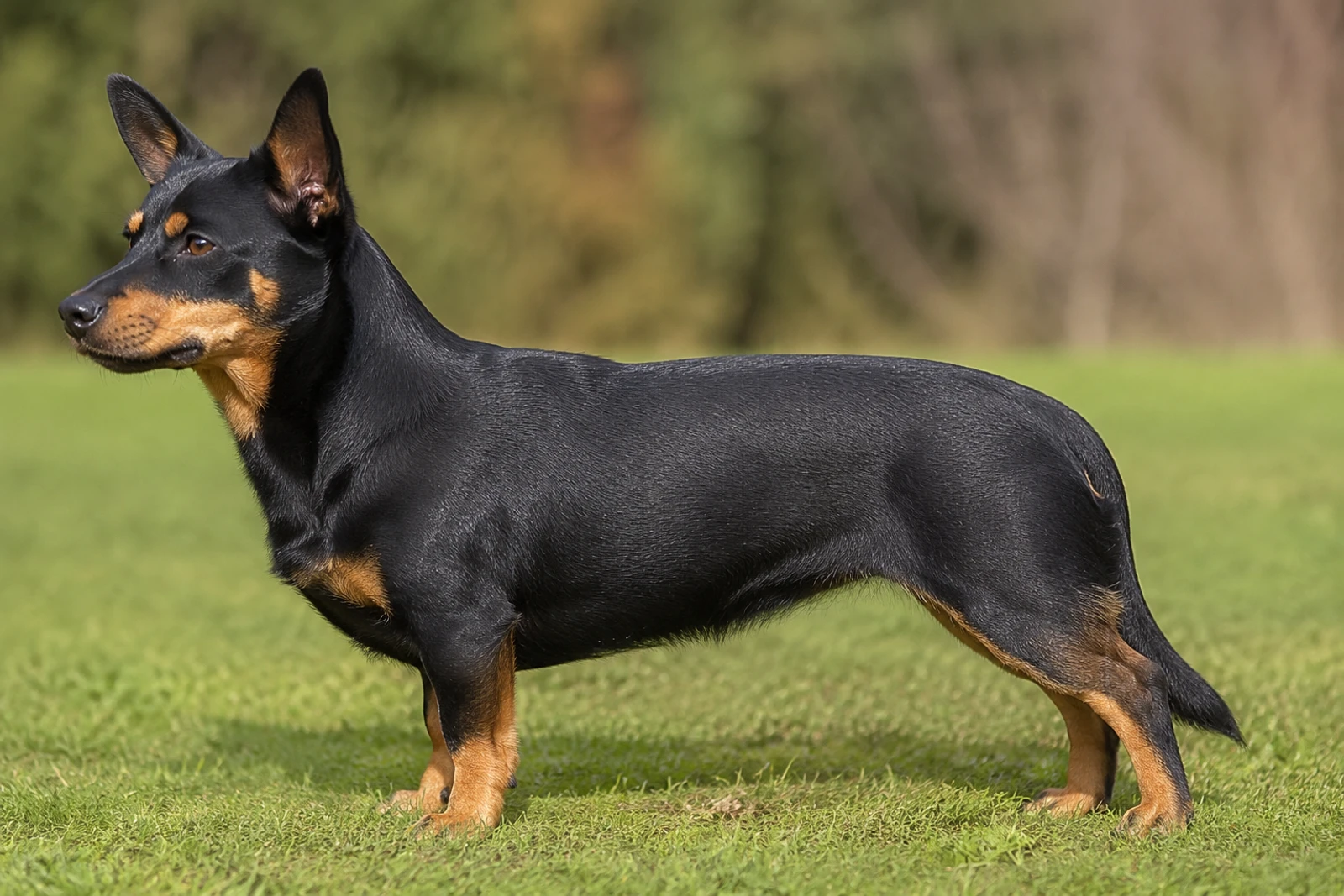
The Lancashire Heeler is a spirited, pint-sized herding dog ideal for active owners seeking a devoted companion. Standing just 10–12 inches tall, this breed thrives on purpose and play, excelling in dog sports, agility, and obedience. With a clever, mischievous streak, they need consistent training and plenty of exercise to channel their energy. Best suited to homes with a securely fenced yard, they bond deeply with their family but can be wary of strangers. Their small stature belies a big personality, making them a delightful challenge for experienced handlers.
At a glance
- Size
- Medium
- Height
- 10–12 in
- Weight
- 9–15 lb
- Life span
- 15 years
- Coat colors
- Black and tan, Liver and tan
- Coat type
- Short, dense, weather-resistant double coat
- Group
- Working
How much does a Lancashire Heeler cost?
Adopt / rescue
$75–$400
Usually includes spay/neuter, first shots, and a microchip.
Buy from a breeder
$700–$2,000
From a reputable, health-testing breeder.
Approximate USD. Prices vary widely by region, breeder, pedigree, age, and coat colour — adopting is the lower-cost and recommended route. Avoid suspiciously cheap “breeders”; they’re often puppy mills.
Estimate the full cost of a Lancashire Heeler →Want the ongoing number? Estimate the monthly food bill for a Lancashire Heeler with our dog food cost calculator.
Lancashire Heeler photos
Views
Front, side, rear and top — the full silhouette.Poses
How the breed sits, lies, moves and plays.Puppy to senior
The breed across its whole life.Expressions
The breed’s range of moods.Close-up details
Eyes, ears, nose, paws, tail and coat.Coat colors
The breed’s recognized colors.Click any photo to enlarge. We show the Lancashire Heeler from every angle — three views, poses, life stages, expressions, close-ups, coat and colors.
Appearance & size
The first thing that hits you is how much working dog they pack into such a small package. A Lancashire Heeler stands just 10 to 12 inches at the shoulder and weighs 9 to 15 pounds — technically medium by breed standard, but in your living room they’re clearly a compact powerhouse. Dense bone and solid muscle give them surprising heft when you scoop one up.
From the front, the chest is deep and the ribs are well-sprung between straight, sturdy forelegs. The head has a foxy silhouette: a flat skull, a medium-length muzzle that tapers only slightly, and dark, almond-shaped eyes set well apart. The eye rims are fully pigmented, adding to the keen expression. Ears stand sharply erect or tip forward — always on the move, tracking every sound. A clean, moderately long neck flows into well-laid-back shoulders with no trace of looseness.
Move to the side view and the picture stays balanced. The topline is level and firm without a dip or roach. A slight tuck-up at the belly and moderate rear angulation hint at the breed’s trademark low, quick heel-and-turn action. The tail is a talking point: historically docked, but today many puppies are born naturally bobtailed or completely tailless, a true breed trait. When a full tail is present, it’s set high and carried with a jaunty curve, never curled tightly over the back.
From behind, you see muscular hindquarters with parallel hocks, well let down. There’s no slipping of the patella here — they stand square and drive straight.
The coat is a short, weather-ready double coat. A dense, soft underlayer is covered by a harsh, close-lying outer coat that shrugs off rain and muck. Shedding is moderate but spikes a couple times a year. Two color patterns are recognized: black and tan, and liver and tan. The tan points are richly pigmented and crisply defined — above each eye, on the cheeks, muzzle, chest, lower legs, and under the tail. A black-and-tan Heeler has the sharp contrast of a miniature working dog; the liver-and-tan reads like warm chocolate.
- Height: 10–12 in
- Weight: 9–15 lb
- Body: Slightly longer than tall (roughly 1.2:1 ratio), level topline, deep chest
- Coat: Short, double, weather-resistant; black & tan or liver & tan with rich tan markings
- Distinctive features: Erect or forward-tipped triangular ears, almond-shaped eyes with dark rims, natural bobtail (common), and an intense, watchful expression
The overall effect isn’t delicate. It’s a tooled-down heeler — a sturdy, low-slung athlete that looks ready to put in a full day whether the job is herding cattle or outpacing the kids in the yard. When you lift a Lancashire Heeler, the heft and substance in your hands never match what your eyes expect.
History & origin
The Lancashire Heeler got its start on the farms and cattle markets of Lancashire, England, sometime in the 1600s or early 1700s. No one wrote down an exact date, but the little dog’s job was crystal clear: drive livestock by nipping at their heels, then drop flat to the ground to dodge the inevitable kick. That crouch-and-dodge instinct is still hardwired in the breed today, whether or not there’s a cow in sight.
Farmers needed a dog small enough to work beneath the bellies of cattle, tough enough to handle the daily grind, and sharp enough to keep rats out of the barn. The Heeler delivered on all three. Its likely recipe was a cross between the short-legged Welsh Corgi — already a proven drover — and some kind of terrier, possibly the black-and-tan Manchester Terrier, which added fire, speed, and that glossy black-and-tan coat. The result was a compact heeler that weighed under 15 pounds but had the grit of a much larger dog.
For generations, the breed earned its keep moving herds along the Lancashire roads to market and cleaning up vermin. Yet it stayed mostly under the radar, a practical farmhand rather than a show-ring star. By the mid-20th century, changing farming practices and two world wars nearly wiped it out. The population shrank to a handful of dedicated kennels. A revival effort in the 1960s and 1970s, spearheaded by breeders like Gwen Mackintosh, pulled the Lancashire Heeler back from the edge by carefully preserving the original working type without chasing extremes.
The Kennel Club in the UK recognized the breed in 1981 and placed it on its Vulnerable Native Breeds list, a reflection of just how few dogs were left. In the United States, the Heeler remained a rarity for decades — known mostly to a tight circle of fanciers — until the American Kennel Club welcomed it into the Working Group in 2024. Today, the Lancashire Heeler is still scarce on the ground, with a total global population that’s counted in the hundreds rather than thousands. Breeders keep a close eye on health and temperament, aiming for a sturdy 15-year companion that carries all the smarts and work ethic of its drover ancestors.
Temperament & personality
A Lancashire Heeler packs a working dog’s drive, quickness, and watchdog edge into a compact 9–15 pound frame. This is not a fluffy lap ornament — expect an alert, opinionated shadow who wants to be part of every family move and will bark to announce visitors long before the doorbell rings. Their 15-year lifespan means you’re signing up for a long, lively partnership.
A watchdog with a big bark
These dogs don’t miss a thing. A familiar scent or a stranger’s silhouette through the window triggers a sharp alarm bark, and they’ll stand their ground with the kind of forward-lean confidence that says they’re ready to move. All that boldness can become nuisance barking if left unchecked, especially when boredom or isolation sets in. A Heeler who’s ignored for hours may work himself into an anxious loop of barking and destructive chewing — a homemade citrus spray on furniture can buy you time, but the real fix is plenty of companionship and daily exercise.
Energy and engagement
Taller than they look at 10–12 inches, Heelers stay in perpetual motion unless you teach an off switch. A quick walk around the block barely registers; they need at least 45 minutes of moving with purpose — fetch, flirt pole, a herding ball — plus several short, focused training sessions to tire out that quick brain. When their energy is channeled, they settle into a relaxed, loose-bodied dog with soft eyes. Without it, they’ll invent their own jobs, which often involve chewing your baseboards or rearranging shoes. Puppies chew to explore and soothe teething gums; adults gnaw to keep jaws strong and teeth clean. Give them approved outlets and redirect with a vinegar spray (white or cider vinegar) on off-limits items — it also neutralizes urine odors that can invite repeat marking.
Living with family and other pets
Lancashire Heelers adore their people with a velcro loyalty, often following from room to room. They can be reserved with strangers, which makes early, positive exposure to visitors non-negotiable. Households with kids need to understand that a Heeler’s herding heritage shows in sharp, low-to-the-ground movement and a tendency to nip at heels during play. Teach children to read the dog’s body language: a stiff posture and direct stare often precede a correction, while lip licking, yawning, or turning the head away means “give me space.” Never allow a child to disturb the dog during meals; interruptions can trigger food guarding, a hard rule across any breed.
With other pets, a well-socialized Heeler often holds his own, but his feisty nature and drive to control motion can clash with larger, pushy dogs or cats that flee. Supervision and slow introductions matter.
Training a clever, strong-willed partner
This is a smart breed with an independent streak. Heavy-handed corrections backfire — instead, they thrive on respectful, consistent engagement that rewards cooperation rather than forcing it. A Heeler who’s treated fairly will work for you happily; one who’s pushed will dig in and offer nothing. House training benefits from a key trick: immediately reward outdoor elimination with a treat. Positive reinforcement builds a reliable habit faster than punishment, because the scent of a past accident, if left partially behind, acts like a neon “go here” sign. In less-used rooms, family members’ scent cues can define the dog’s territory, so unoccupied spaces may become accident zones unless you clean thoroughly with an enzymatic cleaner and follow up with vinegar spray to break the scent trail.
Good with kids, dogs & other pets
Lancashire Heelers pack a working dog’s brain into a 9-to-15-pound body, so they’re less fragile than many toy breeds—but that small frame still means kids need clear ground rules. These dogs are naturally patient and non-aggressive, yet it’s the heeler heritage that catches families off guard. Bred to move cattle by nipping at heels, they’ll often redirect that instinct into chasing and nipping at running, squealing children. Teach kids to walk calmly around the dog and avoid sudden high-pitched noises that flip the herding switch. Close supervision with toddlers is a must, not because the dog intends harm, but because a 15-pound dog can be injured by a stumble or a too-tight hug.
With other dogs in the home, Lancashire Heelers generally settle in well when introduced slowly and raised together. They enjoy canine company and form tight bonds. Strange dogs, though, often get a more cautious once-over. Early socialization makes or breaks this. The critical window is from about 3 to 14 weeks old—during that stretch, expose the puppy to a wide variety of calm, vaccinated dogs in positive setups. Without that foundation, a Heeler can become wary or reactive around unfamiliar dogs in adulthood. Even well-adjusted adults may try to herd housemates by nipping, so keep an eye out for annoyance from larger dogs.
Cats and small pets demand real management. A Heeler raised alongside a cat from puppyhood usually learns to respect boundaries, but the chase drive doesn’t disappear. Never leave them unsupervised with rabbits, guinea pigs, or other pocket pets—their instinct can override training in a heartbeat. Use baby gates for visual introductions and reward calm behavior heavily.
This breed hates being left alone for long stretches. That deep need for companionship means isolation can breed anxiety that spills into how they handle kids, visitors, and other animals. Put in the work early—broad socialization, consistent handling rules for children, and a predictable routine—and you get a sharp, devoted dog who’s genuinely good with the whole household.
Trainability & intelligence
A Lancashire Heeler learns fast — sometimes faster than you’re ready for. This is a clever, problem-solving little herder with the mental horsepower to figure out puzzles, routines, and even how to outsmart a handler who isn’t consistent. The catch is that “smart” doesn’t always mean “eager to please.” Heelers can have an independent streak that shows up the moment they sense a task isn’t worth their time. You’ll get the best results when you keep training sessions short, upbeat, and packed with clear payoffs.
What works: Reward-based, relationship-driven training. This breed shuts down or gets anxious under harsh corrections or punishment. Praise, a quick game of tug, or a tiny treat right when he gets it right builds trust and speed. You’ll see a Heeler light up when he understands what you want and knows something good is coming. Clicker training and shaping exercises tap into his natural drive to work with you instead of for you.
Common challenges: Repetitive drills bore him, and a bored Heeler redirects that smarts into digging, barking, or testing rules you thought were solid. Recall needs early, obsessive attention. Even a 12-pound Heeler has a herding dog’s instinct to chase bikes, squirrels, or moving feet, and if he learns that ignoring your call leads to more fun, breaking that habit later is tough. Use high-value rewards — real meat or a squeaky toy — and practice recall daily in low-distraction places before expecting it to stick around traffic.
The socialization window matters hard. Introduce a Heeler puppy to new people, dogs, surfaces, and sounds between 3 and 14 weeks, and keep those positive exposures going through adolescence. Without that early, gentle introduction, he can tip into wariness or fear-reactivity around strangers. A Heeler’s default mode around unfamiliar situations might be to hang back and assess; rush him into a flood of new stuff and you’ll get a dog who panics, not one who gets brave.
Start the way you mean to go on. By 8 weeks, teach simple cues with a soft voice and a pocketful of kibble. He’s quick — you can have a puppy who sits, comes, and waits within days — but expect him to test those cues around 6 months. Patience and a calm refusal to negotiate keep the partnership strong. Most Heelers want to be your shadow once they trust you, and that trust is what turns a whip-smart handful into a responsive, joyful working partner who’ll nail an agility course or just trot politely beside you at the farmers’ market.
Exercise & energy needs
Don’t let the Lancashire Heeler’s 10–12 inch height fool you: this is a working dog with serious stamina. Bred to drive cattle on Lancashire farms, they pack the physical and mental drive of a much larger herder into a compact 9–15 pound body. Count on providing 45–60 minutes of daily exercise, split into two sessions — a morning run-and-chase session, then an afternoon or evening mix of walking and brain work. A single loop around the block barely scratches the surface.
Intensity matters more than distance. Heelers thrive on quick bursts and sharp direction changes. Fetch, a flirt pole, or a sprint in a securely fenced yard lets them tap that innate herding instinct. You don’t need to run them for miles, but aim to get their heart pumping hard for at least 15–20 minutes in each session. Because they’re small and moderately long-backed, avoid repetitive jumping from heights or pounding on concrete; grass and dirt are easier on the joints.
Physical exercise alone isn’t enough. A Heeler left mentally idle will invent a job — usually by herding the kids, nipping ankles, or alert-barking at every squirrel. Daily mental stimulation is non-negotiable. Scent games, puzzle toys, and short trick-training bursts exhaust that busy brain far more efficiently than yet another walk. Hide treats around the house, work a snuffle mat, or practice a new behavior in 5-minute intervals. Many owners find that 10 minutes of focused nose work settles their Heeler better than 20 extra minutes of trotting along the sidewalk.
When you’re ready to go beyond the backyard, this breed truly shines. Agility, rally, and competitive obedience feel like play to a Lancashire Heeler. Barn hunt and Fast CAT tap the prey drive without requiring the full agility setup, while herding instinct tests let them work in their original element. Even learning advanced tricks can satisfy the deep need for a job.
The daily rhythm that works best for most Heelers: one session that works the legs with sprinting and chasing, and a separate one that works the nose and brain. Skip either, and you’ll likely see restlessness, excessive barking, or pestering behavior creep in by evening.
Grooming & coat care
Your Heeler’s coat is unfussy week to week — then twice a year, the undercarriage lets you know it’s shedding season. That short, dense double coat is weather-resistant and dirt-shedding, so a quick weekly brush-through usually keeps the house livable. Use a soft bristle brush or a rubber curry mitt to pull out loose hair and spread the natural oils that give the coat its shine. When the undercoat blows out in spring and fall, switch to a fine-toothed slicker or an undercoat rake every day or two until the flurry subsides — a few minutes on the back deck saves your sofa.
Baths are a whenever-they-need-it affair. These little cattle dogs stay surprisingly clean outdoors, so every few months or after a particularly aromatic roll is plenty. A gentle, oatmeal-based dog shampoo won’t strip the protective oils. Overbathing can dry the skin, so err on the side of muddy-moment spot rinses.
Trimming isn’t part of the equation — the coat does its own thing. Nails, ears, and teeth matter much more. Even on active dogs that romp on pavement, nail trims every 3–4 weeks prevent clicking on floors and skewed toe posture. Small drop ears trap moisture, so flip them open weekly and swipe with a vet-approved cleaner if you see wax or catch a musty smell. A quick dry-out after swimming or a wet walk goes a long way. Toothbrushing a few times a week, combined with dental chews, keeps that tiny mouth from brewing trouble down the line.
Start handling paws, ears, and mouth when your Heeler is a pup, and grooming turns into a calm ritual rather than a wrestling match. The real payoff isn’t a shiny coat — it’s catching a cracked nail or an ear twinge early, before a small dog becomes a miserable patient.
Shedding & allergies
This little herder has a short, dense double coat that does a steady job of shedding year-round, and twice a year it kicks into overdrive. You’ll find fine, needle-like hairs on dark pants and couch cushions during the spring and fall blowouts, when the undercoat cycles out. Weekly brushing with a rubber curry or slicker brush pulls out loose fur before it ends up on your floor, but you’ll still need a decent lint roller stash if you’re fastidious.
Drool is practically nonexistent. Lancashire Heelers aren’t jowly, so you won’t deal with slobber on your knees after a greeting. That’s a real plus for neat freaks.
Now, the allergy side. Because the coat is short, you’ll often hear it described as “low-allergen,” but don’t mistake that for hypoallergenic. No dog truly is. This breed produces dander and saliva just like any other — the lack of long, floating hair simply means less of that dander gets kicked into the air and onto surfaces. Someone with mild allergies might tolerate a Heeler better than a heavy-coated breed, but if you’re severely allergic, spend time around adult dogs in a home setting before committing. Regular grooming and keeping a clean house make a bigger difference than coat length alone.
Diet & nutrition
At 9 to 15 pounds, a Lancashire Heeler is small enough that a few extra treats or a heaping scoop can quickly tip the scale. Overfeeding hits this breed harder than it would a larger dog, and even a couple of extra ounces can strain a long back and small joints. The single most useful habit you can build is consistent portion control based on body condition — you should feel the ribs easily beneath a thin layer of fat, not see them, but also not have to dig for them.
Feeding amounts and schedule
Puppies do best with four evenly spaced meals a day until about four months old, then three meals until six months, at which point they can shift to the adult schedule of two meals daily. Transition any new food gradually over a week, starting with lightly cooked and puréed meats, dog-safe fruits, and vegetables, or a high-quality commercial puppy formula. Some owners introduce raw meaty bones like chicken wings around twelve weeks, but always under close supervision.
Adult portions depend on the individual dog’s metabolism and exercise level. Start with the feeding guide on a quality food, then adjust. A 10-pound Heeler who spends most of the day trotting after the kids will burn through more calories than a 15-pound couch companion. Use a puzzle bowl or snuffle mat if your Heeler inhales meals — Lancashire Heelers can be food-obsessed, and fast eating invites bloat and boredom.
Keeping weight in check
This is a breed that rarely says no to food, so you’ll need to be the one who holds the line. Obesity is a major health concern, especially as the dog ages and activity naturally drops. Extra weight puts unnecessary pressure on the spine and joints, so keep treats small (pea-sized bits of lean meat or carrot) and factor them into the daily calorie count. Weigh your dog monthly and reduce food slightly if you notice the waist disappearing from above.
What to put in the bowl
A species-appropriate diet built around animal protein makes the most sense for a Lancashire Heeler. Aim for about 60% raw or cooked meat, 20–30% dog-safe fruits and vegetables, and a small portion of extras like eggs, plain yogurt, or easily digested grains such as pearl barley or white rice. Those bland grains are especially helpful for a sensitive stomach. When vegetables are available, save unsalted cooking water as a light broth base for meals. Avoid rich, fatty scraps — pancreatitis is a real and painful risk, and it’s often triggered by holiday leftovers or greasy table handouts. Feed everything in the dog’s own bowl, never from your plate, or you’ll have a dedicated beggar in the kitchen for life.
Senior Heelers often benefit from smaller, more frequent meals, and if teeth become worn or missing, puréeing the food helps with nutrient absorption. You don’t need to reduce protein for an older dog; instead, watch total calories and cut back gently as their daily movement slows.
Health & lifespan
A healthy Lancashire Heeler often hits 15 years—a solid, long run for a dog this size. To get there, you’ll want to keep a few small-breed watchpoints on your radar. At 9 to 15 pounds, these dogs can be prone to dental disease and patellar luxation (a kneecap that slips out of place). Annual vet checks that include a close look at teeth and knees go a long way.
Weight management matters more than most people think. Even an extra pound on a frame this compact strains joints and sets the stage for arthritis. These are food-motivated, sturdy herders, so measure meals, limit treats, and keep them moving—a daily brisk walk and some off-leash play usually does it.
Eye health is another area where breeding choices make a difference. Responsible breeders screen for inherited eye conditions before pairing dogs. When you’re talking to a breeder, ask about eye exams and any history of luxating patellas. A good one will answer without hesitation.
Coat-wise, the Heeler’s short, dense fur offers limited insulation. In cold or wet weather, slap on a dog coat and limit time outside if it’s bitter. These dogs were built to work Lancashire farms, not to lounge in snowdrifts.
Early socialization and low-stress handling pay off physically too. A dog that’s comfortable being touched makes vet exams, tooth brushing, and nail trims infinitely easier—and that reduces the long-term toll of chronic stress on the immune system.
Like all dogs, heartworm prevention (monthly during mosquito season and a month after) and a rabies shot (required by law) are non-negotiable. Watch for subtle shifts: less sprinting, a new reluctance to jump, or a change in appetite. With little dogs, those small signs often point to something fixable if you catch it early.
Living environment
Apartment or house?
A Lancashire Heeler doesn’t need a sprawling property. At 9–15 pounds and under a foot tall, this compact herder slots into an apartment seamlessly — provided you meet her working-dog energy. A house with a yard is a bonus, not a requirement. What matters is daily, focused exercise, not square footage. Without it, that 15-year lifespan feels a lot longer for everyone.
Yard needs
If you do have a yard, fence it well. Heelers carry sharp chase instincts from their cattle-droving past, and a squirrel can trigger a full-throttle sprint right through an open gate. A fenced patch gives them space to blow off steam in short, intense bursts — exactly how they prefer to move. No yard? That’s fine, as long as you commit to at least two solid outings plus off-leash romps in a safe, contained area.
Climate tolerance
Their short, dense coat handles a brisk walk in chilly weather, but don’t mistake toughness for weatherproofing. At their size, they lose body heat quickly, so a coat in freezing rain makes sense. On hot days, shift exercise to early morning or evening — these dogs will keep going until they overheat, especially if a game of fetch is involved. Watch for heavy panting and call it sooner than you think.
Noise and barking
This is a vocal breed. Lancashire Heelers were bred to nip at heels and use their voice to move stubborn cattle, and that alertness translates to barking at the doorbell, the neighbor’s cat, or a suspicious leaf. You can teach a “quiet” cue, but expect some commentary. In an apartment, this means consistent training from day one and enough mental work — puzzle toys, scent games — to keep boredom barking at bay.
Being left alone
Here’s the honest downside. Lancashire Heelers bond like Velcro and can tip into genuine distress if left solo for long stretches. Separation anxiety isn’t guaranteed, but it’s common enough that you should plan for it. Gradual alone-time training, a predictable routine, and a stuffed frozen Kong can take the edge off. Still, they do best in a home where someone is around most of the day. If your schedule keeps you out for nine hours straight, this may not be your match.
Who this breed suits
This little dog packs the work ethic of a much larger herder into a 9–15 pound frame, and that mismatch drives everything about the right home. You’ll thrive together if you want a compact shadow who treats every walk, puzzle toy, or backyard game as a job to be done. A Lancashire Heeler isn’t a casual couch ornament — plan on at least 45 minutes of real engagement daily, mixing brisk movement with something that works the brain (food puzzles, trick training, or chasing a ball with rules).
Active singles and couples who want a weekend hiking buddy that fits in a carrier are an excellent match. Heelers bounce back quickly from a long outing but stay alert and ready for more. They tend to bond hard to one or two people, so owners who enjoy a dog that “reports in” constantly will find the loyalty unmatched. Seniors who still walk a couple of miles a day and have time for short, frequent training sessions can also do well — the breed’s 15-year lifespan means a retired owner often has the consistency that a young Heeler needs.
Families need to look hard at the herding instinct. These dogs were bred to move cattle by nipping, and that drive surfaces with running, squealing kids. You can manage it with early training and lots of impulse-control work, but homes with children under school age should think carefully. The Heeler’s sudden heel-nips can frighten a toddler and aren’t fair to either party. Older, dog-savvy kids who’ll follow “stand still” rules often get a delightful, playful companion.
First-time owners can succeed — but only if they genuinely want a smart, sometimes stubborn project dog, not an easygoing starter breed. Lancashire Heelers learn fast and get bored faster. You’ll need to enjoy teaching new cues, proofing behaviors, and staying two steps ahead of a problem solver who will invent her own games if you don’t provide enough. The payoff is a cheerful, dependable partner who just might live long enough to see your kids off to college.
Who should walk away
Skip this breed if you picture a low-energy lapdog or if your household is empty for eight-plus hours regularly. A bored Heeler turns vocals, nipping, and destructive busy-ness up to full volume. Likewise, if you’re house-proud to a fault, know that seasonal shedding from that dense double coat is substantial for a dog this small, and the herding bark carries. If your heart is set on a dog who greets every stranger like a friend, the Heeler’s breed-typical reserve can feel like a letdown — early and continuous socialization helps, but you’ll likely always have a watchful little sentry who needs a minute to warm up.
Cost of ownership
Purchase price
A well-bred Lancashire Heeler from health-tested parents typically runs $800 to $1,500 — on the higher side for a small dog, largely because the breed isn’t common. A few preservation breeders may charge more for show-potential pups. If you’re willing to go the rescue route, adoption fees usually land between $200 and $400, though Heelers rarely show up in general shelters. A breed-specific rescue may have older dogs or mixes for under $350.
Monthly expenses
This is a compact, 9–15 lb dog with a low-maintenance coat, so monthly costs stay manageable.
- Food: A high-quality kibble runs about $20–$30 a month. They eat less than a bag of cat food each month, and treats add maybe $5–$10. No special diet is required, but weight control matters because extra pounds strain their small frame.
- Grooming: You won’t need a professional. Their short, dense double coat sheds seasonally; a weekly brush with a rubber curry or slicker takes five minutes. Expect to pay around $10–$15 every 6–8 weeks for a nail trim if you’re not comfortable doing it yourself — so $0–$8 a month.
- Vet and preventive care: Annual exams, vaccinations, and heartworm/flea/tick prevention typically total $300–$450 a year, or $25–$40 per month. This breed can be prone to patellar luxation and Collie Eye Anomaly, so responsible breeders screen the parents. Routine dental care is worth budgeting for; small mouths are prone to tartar buildup.
- Pet insurance: Plans for a small, generally healthy breed fall between $20 and $40 monthly for accident and illness coverage. A wellness add-on bumps it slightly, but can offset annual shots and exams.
What catches some owners off guard
You’ll likely spend the same or less on monthly upkeep than on a house cat, but the commitment stretches over 15 years. That means a total lifetime cost (excluding purchase price) easily sits in the $13,000–$22,000 range, mostly driven by routine vet care and food. Planning for an emergency fund — or carrying insurance — is wise, because one patella surgery can top $3,000.
Choosing a Lancashire Heeler
You’re not going to trip over a Lancashire Heeler breeder at every dog show—this is a rare breed in the U.S., so plan on a waitlist. Rescue is an even longer shot. Occasionally an adult surfaces through herding-dog or terrier networks, but it’s sporadic. Most people buy through a breeder, and your homework matters.
Health clearances to ask for
Responsible breeders screen for inherited problems that can crop up in the breed. At a minimum, ask for written proof of these three:
- Primary lens luxation (PLL) DNA test—clear or carrier results only; affected dogs should never be bred.
- Collie eye anomaly (CEA) DNA test—again, no affected dogs used in breeding.
- Patellar luxation evaluation certified by the OFA or a veterinary specialist, ideally done at 12 months or older.
Many breeders also add an annual eye exam by a board-certified veterinary ophthalmologist. Hip dysplasia is less common in a 9–15 pound dog, but some will do a hip evaluation anyway for completeness.
Red flags you can’t ignore
Walk away if a seller dodges health testing, can’t produce results, or waves off questions with “they’re just a working breed.” No working heritage excuses bad genetics. Other warning signs: not meeting the dam (or at least seeing video if you’re buying from over a distance), releasing puppies before eight weeks, or selling multiple litters at once without a real focus on the dogs. A breeder who won’t ask you about your fence, your activity level, or previous dog experience isn’t screening homes—they’re just taking money.
Picking your puppy
When you visit the litter, look for a puppy that trots over to investigate you without panic. Lancashire Heelers are alert and a little pushy—it’s a herding thing. The pup that hangs back trembling may struggle in a busy household; the one that bounces up, gives a lick, then settles for a minute shows the typical blend of sass and softness. Watch the whole litter interact. They should move well, have clean eyes and coats, and be raised in a household area, not a backyard pen. Ask what early socialization the breeder does: exposure to different surfaces, household sounds, and gentle handling by kids or strangers. A good breeder matches specific puppies to specific homes, so be honest about whether you want a hiking buddy or a more laid-back companion. Expect a contract with a health guarantee, a spay/neuter requirement for non-show pups, and a clause that the breeder gets first dibs if you ever can’t keep the dog. That piece of paper is your first layer of protection—a poorly bred Heeler can be nervy and reactive, and a good breeder stands behind their dogs for life.
Pros & cons
Pros:
- A pocket-sized powerhouse in a tiny body — stands just 10–12 inches and 9–15 pounds, yet has the grit and brains of a full-size herder. Great for anyone who wants a working dog they can actually carry.
- Exceptional lifespan of around 15 years gives you a long-run partner for hiking, dog sports, and family life. Many stay spry well into their teens.
- Low-maintenance coat. The short, smooth double coat sheds modestly year-round (heavier a couple times a year) but needs little more than a weekly brush and the occasional bath. No professional grooming bills.
- Keen watchdog without the bulk. They’ll sound the alarm at odd noises and strangers, making you feel safer in an apartment or house — size is no obstacle to their confidence.
- Sharp mind that thrives on challenges. Lancashire Heelers excel in agility, rally, trick training, and herding trials. Boredom isn’t a problem if you enjoy teaching new things.
- Loyal and affectionate with their people. They form tight bonds, often choosing one favorite person, and are content to curl up beside you after a solid workout.
Cons:
- Herding instinct runs deep. Without a job, that smart brain redirects to shadowing kids, nipping heels, and circling legs — a disaster if you aren’t ready to redirect it into structured play.
- Exercise needs punch above their weight. A couple of strolls won’t cut it. Count on a minimum of 45–60 minutes of genuine movement (think off-leash running, fast-paced walks, or vigorous fetch) plus mental puzzles, every single day.
- Can be stubborn and independent-minded. They’re not blindly obedient; they’ll weigh whether your request is worth their time. Training requires consistency, fairness, and a good sense of humor — heavy-handed methods shut them down.
- Reserved with strangers and quick to vocalize. Early and frequent socialization is non-negotiable, or you’ll end up with a dog who barks at every passerby and dodges guests.
- Prey drive doesn’t clock off. Squirrels, cats, and small dogs can trigger a chase reflex that’s tough to call off if you haven’t built a solid recall from day one.
- Health issues exist, though manageable. Responsible breeders screen for Collie Eye Anomaly, Primary Lens Luxation, and patellar luxation. Even with good stock, the heeler’s short legs mean you’ll need to guard against high-impact injuries from jumping off furniture.
Similar breeds & alternatives
If the Lancashire Heeler’s mix of tiny package and big working brain is calling your name, but you want to weigh a few close cousins, these breeds hit similar notes — with their own twists.
Pembroke Welsh Corgi
- Height: 10–12 in
- Weight: 24–30 lb
- Lifespan: 12–13 years
Like the Heeler, the Pembroke is a low-slung, ankle-nipping herder, but it carries roughly double the heft. That extra weight means a Corgi can be harder to scoop up on a moment’s notice and more of a shedder. Both thrive on mental work, but the Heeler often brings a terrier-like tenacity (and a higher prey drive toward small critters) that feels distinct from the Corgi’s slightly softer, more comedic temperament. You’ll also wait longer for a Heeler — they’re a rare breed — while Pembrokes are widely available.
Swedish Vallhund
- Height: 11.5–13.5 in
- Weight: 20–35 lb
- Lifespan: 12–15 years
Think of the Vallhund as the spitz-shaped cousin: prick ears, a thicker double coat, and a curled or natural bob tail. It’s just as smart and active, but expect more vocalizing — this breed loves to sound the alarm. The Heeler is typically quieter and, at 9–15 lb, genuinely portable in a way the sturdier Vallhund isn’t. If you prefer a wolfish grin and can handle the barking, the Vallhund is a solid alternative; if you want a tiny needle-toothed partner who won’t shake the windows, stick with the Heeler.
Miniature American Shepherd
- Height: 13–18 in
- Weight: 20–40 lb
- Lifespan: 12–13 years
A small herder bred for ranches and dog sports, the MAS brings a long, easy-care coat and an eager-to-please nature that’s more biddable than the Heeler’s independent streak. The size gap is real: even a small Mini American outweighs the heaviest Heeler by a good five pounds. If your heart is set on a true heeling style — meaning a dog that will pivot, dart, and work livestock with zero hesitation — the Lancashire Heeler’s grit and compactness win out. The MAS fits a home that wants a trainable, medium-small companion more than a scrappy micro-drover.
Australian Cattle Dog
- Height: 17–20 in
- Weight: 35–50 lb
- Lifespan: 12–16 years
For those who love the idea of a driven heeler but have the space for a much larger athlete, the ACD is the clearest comparison. Both breeds are tenacious, brainy, and need a job, but the Heeler gives you all that fire in a 15-pound frame you can tuck under your arm. The Cattle Dog demands a serious running partner; a Heeler’s exercise needs are still high for its size, but you can wear it out on a smaller patch of ground. If the ACD’s intensity sounds like a lot of dog, the Heeler is the bite-sized version that won’t bowl over the kids.
Fun facts
- One of the smallest herding breeds, originally used for cattle and ratting in Lancashire, England.
- Nearly extinct in the 1970s, the breed was revived from a handful of dogs.
- Known for the 'Heeler Smile'—a characteristic baring of teeth when happy.
- Despite their size, they have a bold, courageous nature and excel at dog sports.
Frequently asked questions
- How much exercise does a Lancashire Heeler need?
- Lancashire Heelers are an energetic working breed that thrive with at least 30–60 minutes of daily exercise, including brisk walks and interactive play. They also benefit from mental challenges like puzzle toys or obedience training to stay content. Without enough activity, they can become restless or develop unwanted behaviors.
- Do Lancashire Heelers shed a lot?
- They have a short, dense double coat that sheds moderately year-round, with heavier shedding during seasonal changes. Weekly brushing helps control loose hair, and more frequent brushing during peak shedding can keep it manageable. They are generally not considered hypoallergenic.
- Are Lancashire Heelers good with children?
- When properly socialized from a young age, Lancashire Heelers can be affectionate and playful with children. However, their strong herding instinct may lead them to nip at heels during chase, so supervision and teaching both dog and child appropriate interactions are recommended.
- Can Lancashire Heelers live in an apartment?
- Their small size makes them adaptable to apartment living, but they are active dogs that require sufficient daily exercise and mental stimulation. They may bark at noises, so training to curb excessive vocalization is important in close quarters.
- Do Lancashire Heelers bark a lot?
- As alert herding dogs, they tend to be vocal and may bark to announce visitors or unusual sounds, making them good watchdogs. With consistent training, you can manage excessive barking, but some level of alert barking is typical for the breed.
- Are Lancashire Heelers easy for first-time dog owners?
- They are intelligent and eager to please, but their high energy and independent streak can be challenging for novice owners. First-timers can succeed with dedication to consistent training, socialization, and providing plenty of physical and mental activity.
Tools & calculators for Lancashire Heeler owners
Quick estimates tailored to Lancashire Heelers — pre-filled with this breed’s size where it matters.
Articles & stories about the Lancashire Heeler
Sources & standards
This profile follows recognized breed standards from the American Kennel Club (AKC) and the Fédération Cynologique Internationale (FCI), along with established veterinary and breed-club guidance. These describe general breed tendencies — every dog is an individual.