

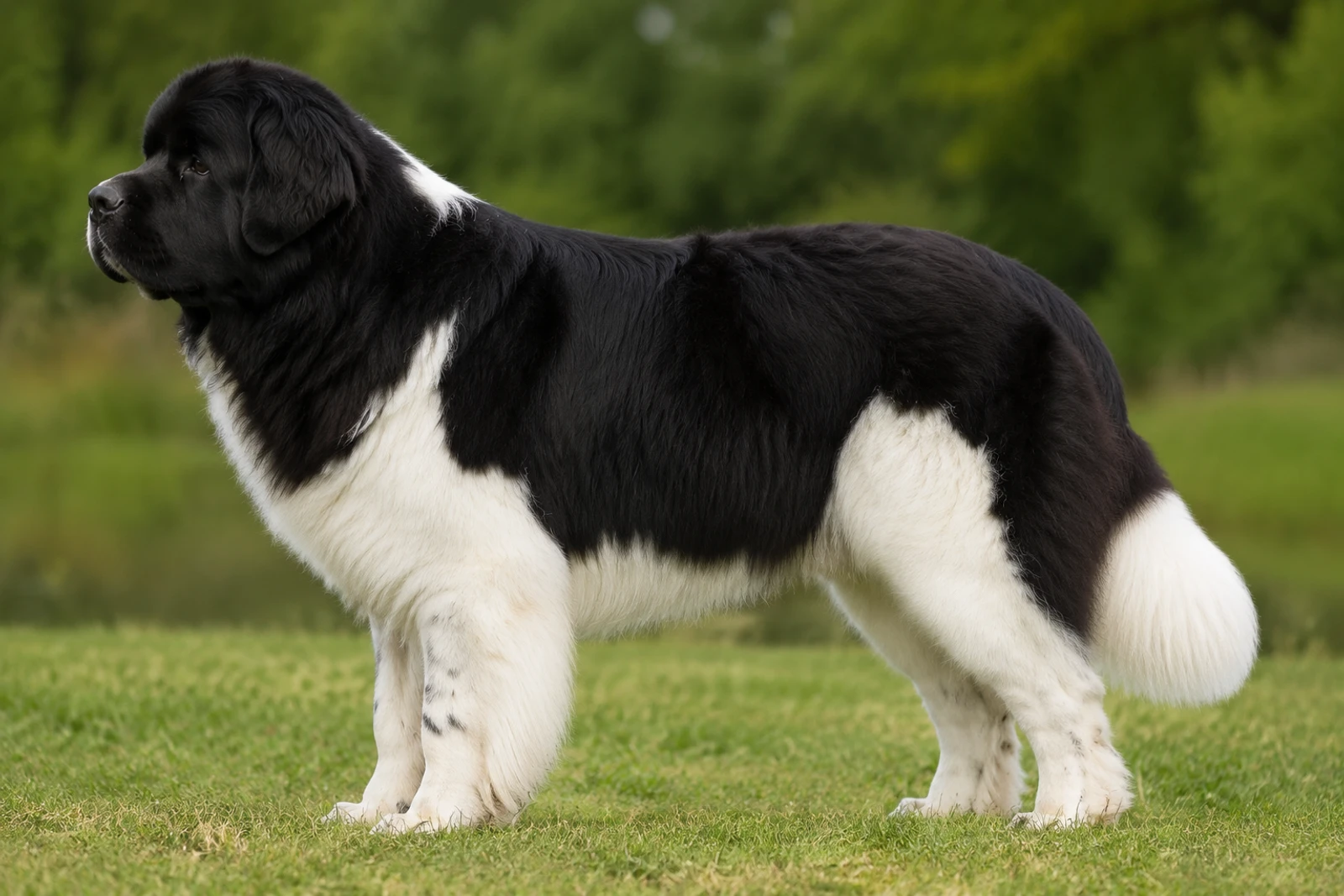
A gentle giant with a heart of gold, the Newfoundland is a devoted family companion especially suited to homes with ample space. Bred to work in water, this breed is a natural swimmer and rescuer, known for its sweet temperament and patience with children. While their massive size and heavy shedding require commitment, they repay owners with unwavering loyalty and affection. Ideal for active families seeking a calm yet protective presence, the Newfoundland thrives on human companionship and outdoor adventures.
Family fit
Is the Newfoundland a good family dog?
A giant companion profile whose size, cost, supervision, and individual temperament remain decisive.
- Children
- Family shortlist
- Energy
- Moderate
- First-time owners
- More experience helps
- Grooming
- Higher
Breed tendencies are only a starting point. Supervise children, meet the individual dog, and make sure the exercise, training, grooming, space, and cost fit your household.
At a glance
- Size
- Giant
- Height
- 26–28 in
- Weight
- 110–152 lb
- Life span
- 9–11 years
- Coat colors
- Black, Black and White (Landseer)
- Coat type
- Flat, dense, water-resistant double coat
- Origin
- Canada
How much does a Newfoundland cost?
Adopt / rescue
$100–$450
Usually includes spay/neuter, first shots, and a microchip.
Buy from a breeder
$1,200–$3,000
From a reputable, health-testing breeder.
Approximate USD. Prices vary widely by region, breeder, pedigree, age, and coat colour — adopting is the lower-cost and recommended route. Avoid suspiciously cheap “breeders”; they’re often puppy mills.
Estimate the full cost of a Newfoundland →Want the ongoing number? Estimate the monthly food bill for a Newfoundland with our dog food cost calculator.
Newfoundland photos
Views
Front, side, rear and top — the full silhouette.Poses
How the breed sits, lies, moves and plays.Puppy to senior
The breed across its whole life.Expressions
The breed’s range of moods.Close-up details
Eyes, ears, nose, paws, tail and coat.Coat colors
The breed’s recognized colors.Click any photo to enlarge. We show the Newfoundland from every angle — three views, poses, life stages, expressions, close-ups, coat and colors.
Appearance & size
A Newfoundland doesn’t just look big — every feature traces back to a job that demanded cold-water power and endurance. At the shoulder, these dogs stand 26–28 inches, but their width and bone make them appear even larger. A grown male can weigh 150 pounds or more; a smaller female often runs closer to 110. That’s a lot of dog — and every pound is working machinery.
The coat is a thick, oily double layer designed to shed water and trap warmth. The outer hairs are coarse and long; underneath sits a dense, woolly undercoat. It comes in two main color patterns: solid black, which is the most common, and the black-and-white Landseer. Landseers typically wear a white base with black patches — often a black head with a white blaze, a black saddle, and black covering the rump — but the distribution varies. Even a solid black dog can show a small white chest patch or a few white toes.
The head is broad and massive, with a mastiff-like muzzle that looks equally suited to hauling a rope or gently holding a person’s wrist in the water. Dark, expressive eyes sit wide apart, and the small, triangular ears hang close to the cheeks. That calm, soft expression belies the brute strength packed behind it.
From the front, the Newfoundland plants squarely. The chest is deep and broad, the front legs straight and bone-heavy, and the webbed feet are enormous — they splay slightly, giving the dog a paddle-like surface in the water and a shovel-like footprint on land.
From the side, the deep chest reaches to elbow level, the ribs spring well back, and the topline stays level. The hindquarters are the engine: angulation is pronounced, and the tail, thick at the base, hangs down with a slight upward curve — never curled over the back. Viewed from behind, muscled thighs and parallel hocks make it clear this dog is built to push off and power through surf. Lung capacity is enormous; a Newfoundland can swim for hours without tiring, using that thick tail as a rudder.
Those webbed feet track in mud and snow like scoops, and the double coat sheds heavily year-round, with massive seasonal blowouts. The majestic silhouette comes with a full-time maintenance reality.
History & origin
You wouldn’t look at a 150-pound dog with a massive bear-like head and think “shipmate,” but for centuries that’s exactly what the Newfoundland was. The breed emerged on the rocky coast of the Canadian island that gave it its name, where European fishermen put down roots in the 1600s and 1700s. Those early settlers needed a dog that could work in freezing, heaving salt water — hauling nets, towing lines between boats, and pulling full-grown men out of the sea when things went wrong. The dogs they shaped were built for it: 26 to 28 inches at the shoulder, 110 to 152 pounds of muscle, a deep barrel chest, and an oily double coat that sheds water like a duck. Their webbed paws and a strong, not frantic, swimming stroke made them practically unsinkable.
Back then, you’d see a Newfoundland curled on deck or plunging into icy Atlantic swells without hesitation. Fishermen often gave them nautical names — Bosun, Sailor, Boatswain — and treated them as working partners, not pets. The dogs retrieved gear, carried ropes through surf to shore, and kept a steady eye on anyone who fell overboard. That last job is where the breed earned a near-mythical reputation. One often-told story involves Napoleon Bonaparte. In 1815, when he fell into the sea during a botched escape from Elba, a Newfoundland supposedly swam out and kept him afloat until help arrived. True or not, the tale stuck because it matched what people already knew: these dogs don’t panic in the water; they save.
Another historical quirk adds to the intrigue. A Newfoundland once picked up a lost diplomatic letter in a harbor and carried it back to a ship, inadvertently sparking a minor international flap. The incident sounds absurd, but it underscores how the breed’s soft mouth and retrieving instinct weren’t just for nets — they’d pick up anything, and they’d bring it back.
Europe got its first real look at Newfoundlands in the late 1700s, when explorers and traders brought dogs back to England. British breeders refined the type while keeping the working drives intact. The black-and-white variety eventually caught the eye of painter Sir Edwin Landseer, giving that pattern its alternate name. The American Kennel Club recognized the breed in 1886, placing it in the Working Group. Even today, the modern Newfoundland still carries those shipboard instincts right under that lumbering, easygoing exterior. If there’s water nearby, a Newfie will know — and a lot of them still want to get in it and pull something out.
Temperament & personality
You’ll meet a Newfoundland and wonder how so much dog can be so gentle. The classic description holds up: calm, patient, and deeply attached to their people. This is a breed that earned its reputation by pulling fishermen from icy water, and that courage still surfaces whenever the dog thinks someone needs help — you might get “rescued” from the pool even if you were just floating.
Inside the house, a well-exercised Newf is a quiet presence. They tend to lounge rather than pace, often leaning their full body weight against your leg just to stay close. Affection is a full-contact sport here. Expect a heavy head resting on your lap, a body sprawled across your feet, and maybe some drool on your jeans. They’re watchful without being edgy, and they’ll let out a resonant bark if a stranger approaches, but they’re more likely to accept a guest than corner one.
That said, “gentle” doesn’t mean “pushover.” An untrained, socially isolated Newfoundland can develop anxiety-driven habits like barking or destructive chewing, and a dog this size doing the wrong thing is a legitimate problem. They’re smart and generally eager to please, yet they can also be strong-willed when something else strikes them as more interesting. Respectful consistency works far better than force. Use short training sessions, plenty of treats, and a sense of humor — because a 130-pound dog who decides “stay” means “think about it” is just part of the deal.
With children, Newfoundlands typically show extraordinary patience, but their sheer mass can accidentally knock over a toddler. Teach kids not to interrupt the dog while eating, to avoid hugs that feel like restraint, and to give the dog space when it yawns, licks its lips, or turns its head away — those are calming signals that say “I’d like a break.” Likewise, a stiff body and a direct stare mean it’s time to back up and reassess.
Around the home, a Newf’s quirks are part of the package: they’ll carry toys (or shoes) in a soft mouth, drink water like they’re storing it for winter, and sometimes roll in things that smell awful. Puppies chew to explore; adult dogs chew to keep their jaws strong and teeth clean. A homemade citrus or vinegar spray can redirect this onto appropriate items. House-training goes faster if you clean accidents with an enzyme-based cleaner to remove scent cues and immediately reward outdoor elimination with a treat — your nose and your rugs will thank you. Expect to share your personal space completely, because a Newfoundland sees no good reason to be in a different room than you.
Good with kids, dogs & other pets
With children, a Newfoundland’s patience is the real deal. That famous “nanny dog” instinct doesn’t mean you can turn your back on a 130-pound animal around a toddler, though. The sheer weight difference — a full-grown male can top 150 pounds — means an accidental bump or a too-enthusiastic lean can knock a small child flat. Always supervise, even with the sweetest dog. Teach kids not to climb on the dog, tug ears, or startle them during sleep. Newfies generally adore being part of a noisy family, but they’re not indestructible play structures.
Early socialization locks in the easygoing temperament. Expose the puppy to calm, respectful children of all ages, along with different handling and sounds, well before that 12-to-16-week window closes. A poorly socialized Newfie can still become fearful or head-shy, which in a dog this size is a serious management headache. Get the puppy used to having his paws touched, his mouth inspected, and his huge body handled — these are non-negotiables for a breed that will need frequent grooming and vet visits with an audience of grabby little hands.
With other dogs, Newfoundlands are typically mild-mannered and non-reactive. They often coexist peacefully, even with smaller dogs that yap in their face. Still, matchmaking matters. A pushy or dominant adult dog might take offense at a young Newf’s clumsy play style. Start introductions on neutral ground and keep early interactions short and positive. Because a Newf can clear a path without trying, watch body language around older or fragile dogs — a playful shoulder check can do real harm.
Cats and small pets living indoors tend to be accepted, especially when introduced during puppyhood. The breed lacks a high prey drive, but a squirrel darting through the yard might still flip a switch. A well-fed, well-exercised Newfoundland is more likely to give a house cat a good slobbering than a chase. Just never leave a Newf unattended with pocket pets — rodents and rabbits move fast and can trigger an instinct in any dog.
One thing people don’t always connect: Newfoundlands are deeply companionship-driven. A dog left in the backyard for hours on end while the family is inside will grow lonely and can develop destructive habits or barking. They want to be where you are, preferably within drooling distance. A tired Newf, after a morning romp with the kids or a dog buddy, is a calm, contented giant — but that socialization and inclusion is a daily job, not a one-and-done puppy class.
Trainability & intelligence
A Newfoundland doesn’t just learn commands — he wants to figure out what you need and do it, often before you ask. That’s the upside of a breed with centuries of working instinct behind it. The catch: this is a giant, powerful dog whose willingness to cooperate doesn’t always match his speed of comprehension. A 130-pound adolescent with a selective “sit” isn’t cute; it’s a safety hazard. Training starts the day the puppy comes home, and it never really stops.
A brain that’s eager — but not always fast
Newfoundlands are smart in a steady, thoughtful way, not in a flashy, obedience-ring way. They read situations and people well, which is why they historically hauled nets, carried lines to shore, and pulled drowning swimmers without being micromanaged. In training sessions, that same independent judgment can look like stubbornness. A Newfie who’s been asked to “come” three times while up to his chest in a pond might just decide the pond is more important. That’s not defiance; it’s centuries of water-rescue instinct overriding a human’s voice. You win that battle by building a recall on dry land with high-value rewards, then proofing it near water until it’s automatic.
The method that actually works
This breed shuts down under harsh handling. Punishment-based corrections erode the trust you need with a dog who can easily outweigh you. Instead, use positive reinforcement — treat rewards, a favorite tug toy, or just sincere, low-key praise — and keep sessions short (five to ten minutes, a couple times a day). Newfies bore quickly with repetition. If you drill the same “down” ten times in a row, lesson over. If you mix in a quick game of fetch or a chance to carry something in his mouth, he’s back in the game. Many Newfoundlands adore carrying objects, so channel that into “bring” and “hold” tasks that feel like jobs.
Socialization isn’t optional
A poorly socialized Newfoundland is a liability, not because of any innate aggression — these are famously gentle dogs — but because a hesitant 140-pounder who spooks at a new noise or a stranger can cause real damage just by scrambling away or bowling someone over. Start between 3 and 14 weeks, exposing the puppy gradually to different people, surfaces, sounds, and other calm dogs. One bad experience at a crowded street fair can imprint a fear that takes months to undo, so go at the dog’s pace. Reward calm, curious behavior immediately. Continue these exposures through adolescence; a confident adult Newfie greets the world with quiet interest instead of wariness.
Recall and the water obsession
If you have access to lakes, pools, or the ocean, assume the recall will be tested every single time. Train it long before you need it. Start on a long line in a boring environment, pair the word with a treat or a jackpot of play, and never call your dog to end the fun. With a water-loving breed, calling him away from the beach means “we’re leaving” in his mind, so call him back, reward lavishly, and release him to swim again a handful of times before you actually clip the leash and go. Be realistic: even a well-trained Newfoundland may swim out to “rescue” a perceived swimmer, so off-leash reliability around water requires months of deliberate practice.
The long game
Newfies mature slowly — mentally, they’re puppies until age two or three — so the calm, bombproof adult you’re picturing arrives only after sustained patience. Focus on relationship, not perfection. A dog who trusts you will try for you, even when the cues don’t suit him. That’s the whole training goal: a giant, gentle partner who sees you as worth listening to, pond or no pond.
Exercise & energy needs
A full-grown Newfoundland isn't a high-octane athlete, but calm doesn't mean lazy. These dogs were built to haul nets and tow lines through icy water, and they need a real daily outlet. Plan for at least 60 minutes of movement each day, split into two sessions — a morning walk and a late-afternoon outing, for example. One marathon stroll will wipe them out; two solid 30-minute blocks keep their mind and body even-keeled.
The right intensity takes a little finesse. At 110–152 pounds with a dense double coat, Newfies overheat fast. Walk or play during cool mornings and evenings, and swap pavement for grass, dirt trails, or — ideally — water. Swimming is this breed's superpower. A 20-minute pond session gives a full-body workout with zero impact on growing or aging joints. If you have safe lake or beach access, a Newfie will happily retrieve bumpers or just paddle alongside you.
Mental exercise counts just as much as the physical minutes. These are thinking dogs, not mindless gallopers. They thrive on draft work, carting, water rescue drills, and advanced obedience. At home, daily puzzle toys, frozen Kongs, or a simple scent game — hide a favorite toy with a treat in another room — burn the mental energy that otherwise gets redirected into rearranging your sofa cushions. Even 10–15 minutes of training woven into mealtime goes a long way.
Puppy exercise requires real restraint. Newfoundlands mature slowly, and forced running, repetitive jumping, or hard-impact play before growth plates close (around 18–24 months) can sow the seeds for lifelong hip and elbow trouble. Stick to gentle walks, short controlled play sessions, and loads of swimming until your dog's frame is fully developed. After that, a well-conditioned adult can handle longer hikes and carting competitions, but always watch for heavy panting, lagging, or the sudden flop — signs you've pushed into the danger zone.
When you hit the exercise sweet spot, you get the calm, devoted companion the breed is known for. Skip days too often, and the restlessness leaks out as pacing, nuisance barking, or a creeping waistline that strains those big joints even more. The real key is consistent, moderate, water-forward movement that respects a giant body's limits. Start with a daily swim plus a couple of short sniffy walks, then let your dog's recovery and enthusiasm guide you — dialing up or down by 10–15 minutes as needed. You'll both find a rhythm that leaves you with a tired, content Newfie sprawled at your feet.
Grooming & coat care
A Newfie’s coat is magnificent and functional—a dense, water-resistant double layer that sheds a steady stream of hair year-round, then dumps it by the handful twice a year. Plan on brushing 4–5 times a week, and daily during spring and fall coat blows. Skip it and you’ll quickly have mats behind the ears, in the feathering, and under the legs.
A slicker brush with long, rounded pins gets down to the woolly undercoat without scratching the skin. Follow up with a greyhound comb to find sneaky tangles, especially in the thick mane and rear trousers. A pin brush can work for a once-over between deeper sessions, but it won’t break up packed undercoat the way a slicker will. Don’t rely on a bristle brush for anything beyond a final polish—it can’t penetrate the depth of this coat.
Bathing every 6 to 8 weeks keeps that oily coat from getting musty, but use a gentle dog shampoo that won’t strip the natural waterproofing. The real chore is the dry-down: water gets trapped against the skin if you’re not thorough. Towel-dry, then use a high-velocity dryer on cool while working through the coat with a slicker. A damp Newfie is a hot spot waiting to happen.
That thick double coat means never shave a Newfoundland down to the skin. It protects against heat as much as cold, and shaving can permanently damage the texture of the regrowth.
- Ears: Floppy, hairy ears are airless zones for yeast and bacteria. Wipe them out weekly with a vet-approved cleaner and pluck excess hair inside the canal if your dog tolerates it.
- Nails: A 130-pound dog leaning on long nails hurts you and can strain the dog’s joints. Trim every 3–4 weeks—if you hear clicking on the floor, you’re late.
- Teeth: Brush twice a week with enzymatic dog toothpaste. Newfoundlands can be prone to tartar buildup, and dental neglect has a direct line to heart and kidney issues in giant breeds.
Shedding & allergies
If you bring home a Newfoundland, you sign up for fur that drifts into every corner and drool that ends up on ceilings. There is no sugar-coating it.
The coat is a dense, oily double layer built for icy North Atlantic water. It sheds moderately all year, then twice a year — spring and fall — the undercoat comes out in handfuls during a full-blown seasonal blowout. You’ll vacuum tumbleweeds of black hair off your floors, furniture, and clothing. Daily brushing becomes non-negotiable during those heavy shedding weeks, and a high-velocity dryer is the best tool for blasting loose fluff out of the coat before it lands on your sofa.
And then there’s the drool. Newfoundlands have deep, loose flews that funnel water and slobber straight onto your lap, your walls, and sometimes your dinner plate. After a drink, they leave a trail. When excited or waiting for a treat, long strands form and fling with a head shake. Keeping a drool rag in every room isn’t a joke; it’s basic housekeeping.
If you’re allergic, know that no dog is truly hypoallergenic, and a Newfoundland is especially tough. They produce plenty of dander and saliva proteins, the two biggest triggers. Someone with dog allergies should spend extended time around the breed before committing, but realistic expectations matter: this dog will fill your home with fur and slobber. A pristine, white-couch household and a Newfoundland simply don’t mix.
Diet & nutrition
A Newfoundland’s appetite can be as massive as his frame, but extra weight hits this breed especially hard. Every pound over ideal strains already-vulnerable hips, elbows, and knees, and can shorten a life that typically runs just 9–11 years. Keep your Newf lean — you should feel ribs beneath a light cover of flesh, not a thick blanket.
Puppy feeding schedule
Giant-breed puppies grow explosively, so steady, controlled nutrition matters more than speed.
- Up to 4 months: 4 evenly spaced meals daily.
- 4–6 months: 3 meals daily.
- 6 months onward: 2 meals daily (and stay with twice-a-day feeding for life — it lowers bloat risk).
Feed a commercial large- or giant-breed puppy formula that moderates the calcium-to-phosphorus ratio and avoids over-rapid growth. No free feeding; measure every portion.
Adult portions & bloat prevention
Most adult Newfoundlands land between 110 and 152 pounds. Exact amounts depend on your dog’s activity level and the food you choose, but start with the bag’s guideline for a dog 20% below the target weight and adjust from there. Split the daily ration into two meals. Never exercise vigorously right after eating, and consider a raised feeder only if your vet recommends it (the data on raised bowls and bloat is mixed).
If your Newf inhales food, use a puzzle bowl or scatter kibble on a snuffle mat — slow eating reduces air gulping and gives his brain a little workout.
What to put in the bowl
This breed thrives on meat-based nutrition. Aim for a diet anchored in animal protein (around 60% of calories), with vegetables, fruits, and some grains like pearl barley or white rice for digestible fiber. Canned fish (in water, no salt), lightly scrambled eggs, and cooked pumpkin make excellent toppers or part of a rotation. For homemade meals, purée vegetables and blend meals for older dogs with missing teeth, since canine jaws don’t grind side-to-side and lack salivary digestive enzymes.
Seniors & weight creep
After age 7 or so, your Newf’s activity often tapers off. Switch to smaller, more frequent meals if he’s having trouble finishing a large portion, and cut back total calories before you see the scale climb. Older dogs don’t need protein restriction — just adjust quantity to match a slowing metabolism. Purée or lightly steam meals when chewing becomes difficult.
Firm rules of the house
- Never feed from the table. A slobbery chin resting on your knee is endearing; a 130-pound counter-surfer who’s learned to beg is not.
- Rich, fatty scraps (holiday trimmings, bacon grease, skin) can trigger pancreatitis in a breed that’s already susceptible. Serve leftovers only in his own bowl, at his regular mealtime, and only if they’re safe.
- Raw introductions — like a raw chicken wing around 12 weeks — are fine under supervision, but transition slowly and get your vet’s sign-off on balanced raw feeding.
Measure every meal and ignore the woeful eyes — an extra year of sound joints beats the last bite of your dinner.
Health & lifespan
Nine to eleven years — that’s the typical window with a dog built this heavy and this big-hearted. A well-bred Newfoundland who stays lean and gets proactive care can push through the upper end, but there are no guarantees. You’ll get the most honest miles by knowing where the breed stumbles and catching trouble early.
Heart and joint screening are non-negotiable.
Responsible breeders don’t guess. They have the sire and dam’s hips and elbows scored by the OFA or PennHIP, because hip dysplasia and elbow dysplasia shadow nearly every giant breed. Newfoundlands also carry a notorious risk for subvalvular aortic stenosis (SAS), a heart defect that can cut a young dog’s life short with zero warning. A regular stethoscope exam misses mild SAS — you want to see a cleared echocardiogram performed by a veterinary cardiologist, not just a “heart checked” note. On the eye front, entropion, ectropion, and cataracts crop up often enough that yearly OFA CAER eye exams become part of the routine.
Cystinuria: the metabolic curveball.
This breed-prone disorder causes cystine crystals to form in the urine, leading to painful bladder stones or urethral blockages — sometimes in dogs still under a year old. A DNA test identifies carriers and affected dogs, and reputable breeders use it to avoid producing pups who will need specialized diets, medications, or surgery just to urinate freely. Ask to see the results.
Bloat is a ghost you don’t want to meet.
A deep, barrel chest makes gastric dilatation-volvulus a real threat. Prevention isn’t complicated: split the daily ration into two or three meals, use a slow feeder, and enforce a solid rest period after eating — no wild galloping in the yard right after dinner. Know the early signs: unproductive retching, a hard belly, pacing, drooling. A dog who looks “off” after a meal needs an emergency vet, not a wait-and-see approach.
Joints crave a lighter load.
Extra pounds on a 130-pound dog punish hips and elbows faster than you’d think. Keep your Newfie at a weight where you can feel ribs through a modest cover of flesh — not buried under padding. Growth matters, too. Don’t push a puppy to climb stairs endlessly or jog on pavement before the growth plates close; let them build strength on soft, uneven ground at their own pace. A lean puppyhood pays off in a longer, more comfortable adult life.
Heat hits harder than cold.
That thick double coat is a swimming asset and a winter fortress, but it turns summer afternoons into a hazard. Provide shade, cool water, and early-morning or late-evening exercise. Skip the midday pavement trudge. A kiddie pool in the yard often becomes the dog’s favorite feature.
Annual bloodwork and urine tests after age five or six help catch hypothyroidism, early kidney changes, or silent cystinuria before they snowball. Pair that with a once-over from a vet who listens closely to the heart, and you’re doing the kind of routine maintenance that buys you more good years with a breed that already gives you everything it’s got.
Living environment
A Newfoundland belongs inside with you, not in the backyard. These 110–152 lb dogs are famously calm and affectionate, but they need room to move without knocking over the coffee table every time they turn around. A house with a decent, securely fenced yard gives them a place to stretch out and do their business — but the yard is for potty breaks and the occasional romp, not for living. True to their working roots, Newfs want to be where their people are, preferably sprawled at your feet.
An apartment is a tough fit simply because of the real estate a 26–28 inch dog occupies. A ground-floor unit with easy outdoor access could work if you’re committed to multiple daily walks and your lease allows giant breeds, but tight stairwells and cramped hallways become an obstacle course fast. More importantly, this breed’s dense double coat and deep chest make them prone to overheating when the thermometer climbs above 70°F. Air conditioning is not a luxury — it’s a health necessity. In cold weather, though, they’re in their element; you’ll find a Newf lying happily in a snowdrift long after you’ve gone inside for hot cocoa.
Noise-wise, you won’t get constant barking. A Newfoundland has a deep, resonant woof reserved for genuine alerts — someone at the door, a strange noise — but they’re naturally steady and quiet. The bigger challenge is what happens when you head out the door without them. Newfoundlands form intense bonds with their families and can develop serious separation anxiety if left alone for long hours every day. This is not a dog you crate for a nine-to-five workday. If your schedule demands significant time away, you’ll need a plan: gradual desensitization, puzzle toys for mental stimulation, and possibly a midday dog walker or neighbor check-in. Crate training helps, but the real fix is time together. End the day with a sprawling, drooly giant by your side, and that’s exactly where they’ll want to stay.
Who this breed suits
If you’re picturing a 130-pound dog who thinks his full-time job is watching over kids, wading into any available water, and leaning against your legs like a furry anchor, you’re already starting from the right place. A Newfoundland fits best with an owner who genuinely enjoys a giant breed’s physical presence and doesn’t just tolerate the drool, the hair, and the sheer square footage a Newf occupies.
Families with sturdy kids and a water-friendly lifestyle are the classic match. Newfs are famously patient and gentle, but a 120-pound dog can easily knock over a toddler by accident, so they do better in homes where children are past the wobbly stage or supervised closely. A fenced yard and access to a lake, pond, or beach is about as close to Newfie heaven as you can get — water is in their DNA, and they’ll be soaking wet and thrilled about it at every opportunity.
Owners with prior large-dog experience have a head start. A Newfoundland isn’t cheap to feed, insure, or vet (think bloat, joint supplements, and heart screenings), and their strong-willed “what’s in it for me?” streak means training has to be consistent and patient — not a battle of brute force. A first-timer can absolutely succeed, but only if they’re prepared to put in serious work early on with loose-leash walking and polite greetings. Without that, a 150-pound pulling machine is a problem on every single walk.
Singles or couples in a spacious, grounded home can do well if they’re home enough and built for the mess. Newfs shed year-round and blow their dense undercoat twice a year with industrial-grade enthusiasm. Drool is a fact of life — on walls, ceilings, clothing, and unsuspecting guests. If a perfectly clean house is non-negotiable, this breed will make you unhappy.
Seniors usually need to think twice, unless they’re exceptionally fit and have a strong support system. Even a well-trained Newf can lunge after a squirrel or slip on ice, and lifting a 100-plus-pound dog into a car in an emergency isn’t something everyone can manage. Similarly, apartment dwellers and compact-home owners will struggle; these dogs need floor space to sprawl, a cool place indoors, and a short set of stairs that won’t punish growing joints.
Who should really think twice: Anyone who can’t say yes to a lifestyle built around daily brushing, weekly vacuuming, serious puppy training classes, and a grocery budget that looks like you’re feeding a small adult human. Also, if you’re away from home 10 hours a day, a Newf’s people-oriented heart and tendency toward separation anxiety make them a poor fit — they’ll express their loneliness through destructive chewing and an indoor slobber art gallery.
Cost of ownership
The sticker price for a well-bred Newfoundland puppy — one whose parents have certified hips, elbows, and heart clearances — lands between $1,500 and $3,500. A Landseer (black-and-white) or a pup from titled working lines can push closer to $4,000. That check is just the cover charge. The real money starts the day you bring a 100-plus-pound mud magnet home.
Food takes the single biggest bite out of your monthly budget. A male Newf can tip the scales at 150 pounds and will work through 40 to 60 pounds of high-quality large-breed kibble every month. At $70 to $90 per 30-pound bag, that’s $120 to $180 for food alone. Factor in joint supplements, probiotics, and the occasional frozen raw topper, and $200 isn’t unusual.
Grooming is another line item you can’t dodge. That famous thick, oily double coat sheds a small dog’s worth of hair year-round and mats fast behind the ears and britches. A professional grooming every six to eight weeks runs $100 to $150 per visit — more if there’s serious drool or undercoat compaction. If you buy a good forced-air dryer ($200 to $400), a long-pin slicker, and an undercoat rake, you can keep it to $30 to $50 a month in shampoo, conditioner, and tool replacement, but you’ll also invest a few hours of elbow grease each week.
Vet bills scale with size. Heartworm and flea preventatives are dosed by body weight, so your monthly parasite protection costs $40 to $60. An annual exam, vaccines, and bloodwork in a giant breed runs $350 to $600. And then there’s the list of what-if conditions responsible owners insure against: hip dysplasia, gastric dilatation-volvulus (bloat), cruciate ligament tears, and dilated cardiomyopathy. Pet insurance premiums for a Newf rarely dip below $60 a month and climb past $100 if you want a low deductible and solid surgical coverage. A bloat surgery with gastropexy can hit $5,000 to $8,000 overnight.
Add it up — food, preventatives, basic grooming supplies, insurance — and a quiet month with no surprises is still $300 to $450. Throw in a professional groom, a couple of giant breed toys that survive past Tuesday, and a training class for a dog that outweighs half your family members, and it’s easy to kiss $500 goodbye. Over a lifetime of 9 to 11 years, that’s a 30-foot sailboat, not a pet. Budget for the drool, too: slipcovers, washable rugs, and a dedicated mop are part of the contract.
Choosing a Newfoundland
Finding a Responsible Breeder
A good Newfoundland breeder is your front-line defense against the crushing costs and heartbreak of a poorly bred giant. They don’t sell puppies—they match families to a litter they’ve spent years planning for health, temperament, and structure. Expect to wait. Most put just one or two litters on the ground per year, and a waiting list is a sign of someone who cares about where every pup lands.
Interviews go both ways. A breeder will grill you about your home, fencing, experience with large breeds, and how you’ll handle a 130-pound dog that drools and sheds in industrial quantities. They’ll want to know about kids, other pets, and your plan for the dog’s whole life, including a contract that says the dog comes back to them if you ever can’t keep it. That’s not pushy—it’s the mark of someone who stands behind their dogs.
Health Clearances You Must See
Words like “vet-checked” mean nothing. You need verifiable, public health certifications on both parents. The Newfoundland Club of America lays out the minimums:
- Hips – OFA (Orthopedic Foundation for Animals) or PennHIP evaluation. Ask for the actual rating—fair, good, or excellent—not just “passed.”
- Elbows – OFA elbow dysplasia screening. Elbow problems can cripple a giant dog fast.
- Heart – A cardiac exam by a board-certified veterinary cardiologist to rule out subaortic stenosis (SAS). This inherited defect can cause sudden death in young Newfs. A clear test within the past year is critical.
- Cystinuria – A DNA test for this kidney stone disorder. Affected dogs form stones that can block the urinary tract.
- Additional tests breeders may run: thyroid panel and an eye exam by a veterinary ophthalmologist.
Get the OFA numbers or PennHIP report and look them up yourself at ofa.org. If a breeder can’t hand you that paperwork before you put down a deposit, walk away.
Red Flags That Should End the Conversation
- They can’t produce current health clearances on the sire and dam.
- Puppies leave before 8 weeks—10 to 12 weeks is far better for a giant breed developing bite inhibition and social skills around its littermates.
- Dogs live in separate kennel runs with minimal human contact. Well-adjusted Newfs are raised underfoot, in the thick of household noise and foot traffic.
- Lines are described as “100% healthy” or with no known issues. No line is pristine. A good breeder talks openly about problems they’re working to reduce.
- Multiple litters available at once or a constant stream of puppies.
- They rush the sale, take no deposit, or skip asking you a single question.
Picking Your Puppy
Let a conscientious breeder match you after temperament testing at 7 to 8 weeks. They’ve watched the litter daily and know which pup is a pushy bulldozer and which is a gentle wallflower. A bold, assertive puppy might steamroll toddlers; a shy one can shut down in a busy home. For most families, the middle-of-the-road pup who approaches on his own, investigates a new toy, and bounces back after a startle is the safest bet.
When you visit, check the puppy’s structure. Look for heavy bone, a broad chest starting to take shape, and a clean, non-wobbly gait. Avoid puppies that limp, have discharge from eyes or nose, or hide in a corner. The litter area should smell fresh, not like urine. Watching the dam is non-negotiable—her temperament tells you a lot. If she’s anxious, aggressive, or shut down, put your wallet away, even if the pups seem fine.
Both solid black and the Landseer (black and white) pattern are correct, but a breeder who charges a premium for “rare” colors or emphasizes color above health is a gamble.
The Rescue Route
Underestimating a 150-pound, shedding, expensive-to-feed dog lands plenty of purebred Newfs in rescue. A breed-specific rescue gives you a screened adult who’s often housebroken and past the landshark phase. Ask for any known health history, and be ready for a home visit. Some rescues offer foster-to-adopt periods, which let you see how a dog fits your household before committing. The adoption fee is far less than a breeder’s price, but the future vet bills remain giant-sized.
Plan to spend roughly $1,500–$3,000 from a health-testing breeder. That buys screening for cardiac disease, bad hips, and a lifetime of early socialization. A bargain puppy from a newspaper ad can quietly rack up $5,000 in SAS surgery or hip replacements before its third birthday. Take the slow road. A well-bred Newfoundland will be a steady, affectionate anchor for your family for close to a decade.
Pros & cons
Pros
- A natural with children. Newfoundlands have an uncanny, gentle patience that’s earned them the nickname “nanny dog.” They’ll let a toddler tug an ear without blinking, and their sheer size makes them a solid, steady presence in a busy household.
- Water rescue instincts you can’t train. This is the breed that will haul you to shore by your wrist if you’re swimming, whether you asked or not. Their webbed feet, thick waterproof coat, and powerful build make them born lifeguards.
- Surprisingly laid-back indoors. Despite tipping the scales at 110 to 152 pounds, an adult Newfie often acts more like a shaggy rug than a wrecking ball. They’re mellow and watchful, not hyperactive, once they’ve had their daily exercise.
- Cold-weather champion. If you live where winters are long and wet, this dog thrives. That dense double coat shrugs off snow and icy water, and they’ll happily lounge outside in conditions that send other breeds shivering back inside.
- Sensitive and responsive. Newfoundlands genuinely care about your mood. They’re quick to tune in and try to comfort you, which makes them surprisingly effective therapy dogs. Eager to please, they learn fast when training is kind and consistent.
Cons
- The drool is legendary—and constant. A Newfoundland’s loose jowls sling slobber onto walls, ceilings, and your work clothes. You’ll keep towels in every room and still find dried ropes of it. Not a breed for people who value a pristine home.
- Massive size means massive expenses. At 26 to 28 inches tall and well over 100 pounds, everything costs more: crates, food, preventives, and surgeries. A torn cruciate ligament or bloat surgery runs thousands, and housing with weight limits often excludes them.
- Heavy shedder, year-round. That lush coat blows thick undercoat twice a year, but you’ll deal with tumbleweeds of black fur constantly. Daily brushing helps, but you’ll still find hair in your butter.
- Short lifespan and structural problems. Just 9 to 11 years is all you can expect. Responsible breeders screen for hip and elbow dysplasia, heart issues, and a genetic condition called SAS, but giant breeds carry higher orthopedic risks regardless.
- Heat kills them. Anything above 70°F can make a Newfoundland miserable. They overheat fast, shun walks on warm afternoons, and need air conditioning or cool basements to cope. Southern summers require serious accommodations.
- Puppyhood is an uphill battle. That 20-pound fluffball becomes a 100-pound teenager with a mind of its own almost overnight. Without early, firm (but gentle) training, you’ll be dragged down the street by a 150-pound dog that doesn’t know its own strength.
Similar breeds & alternatives
If you love the Newfoundland’s patient, sweet nature but want to compare other giants with a similar family-first outlook, a few breeds overlap in key ways while offering real differences in drive, coat, and daily management.
-
Saint Bernard
Similar weight (140–180 lb) and height (26–30 in), with the same short 8–10 year lifespan and deep devotion to children. The Saint Bernard drools even more and sheds heavily year-round, whether you choose the short- or long-haired variety. They’re less obsessed with water, often even more content to sprawl indoors, but they demand the same careful heat management and joint care. Bred for alpine rescue, not sea rescue, they carry the same working-group steady nerve. -
Bernese Mountain Dog
Smaller (70–115 lb, 23–28 in) and tragically shorter-lived at 6–8 years, the Berner matches the Newf’s affectionate, gentle spirit. Its tri-color black, rust, and white coat sheds just as much, but drool is minimal by comparison. These dogs were built for draft work and droving, not swimming; they bond fiercely with one family and often struggle more with separation anxiety than the independent-minded Newf. Expect less water play and a louder demand for mental challenges. -
Leonberger
A close cousin that directly shares Newfoundland ancestry. Leonbergers run 90–170 lb and 25.5–31.5 in, with a thick, water-resistant double coat that sheds in blizzards. They drool less than Newfs but still plenty, and they tend to stay puppylike longer, needing a solid hour or more of daily exercise to settle indoors. If you want the water ability and lush mane without quite the same volume of slobber, the Leo delivers — just plan for serious brushing and a taller frame. -
Landseer (European Continental type)
In some registries, this black-and-white dog is a distinct breed, not just a color variant. They stand taller (28–31 in) and leaner (100–150 lb), with longer legs, less massive bone, and a notably more watchful, active personality. They still love water and kids, but shed and drool less than a standard Newfoundland. Choose the Landseer if you want the head-turning coat pattern in a more agile, slightly less slobbery package. -
Great Pyrenees
Another giant at 85–160 lb and 25–32 in, clad in a thick white double coat that sheds heavily. The Pyr is a livestock guardian through and through — calm with family but independent to a fault, often ignoring commands it considers pointless. They bark at night and need a securely fenced yard far more than a Newf does. Where the Newf plunges into water, the Pyr prefers cool, dry ground and makes its own decisions.
Fun facts
- Newfoundlands have webbed feet and a water-resistant coat, making them powerful swimmers.
- The breed is renowned for its lifesaving instincts; many have rescued drowning people.
- A Newfoundland named Seaman accompanied Lewis and Clark on their expedition to the Pacific.
- They were originally bred by fishermen in Newfoundland to haul nets and carry boat lines.
Frequently asked questions
- Are Newfoundlands good with children?
- Newfoundlands are famously gentle and patient with kids, often earning the nickname 'nanny dog.' Their calm, protective nature makes them an excellent family companion, though supervision is still essential due to their giant size.
- Do Newfoundlands shed a lot?
- Yes, Newfoundlands shed heavily year-round, with significant shedding seasons in spring and fall. Their thick double coat requires regular grooming to manage loose fur, so expect vacuuming to become a frequent chore.
- How much exercise does a Newfoundland need?
- Newfoundlands need moderate daily exercise, such as a couple of short walks or a swim, to stay healthy without overstressing their joints. They are not high-energy dogs but can become bored or destructive without regular activity.
- Are Newfoundlands suitable for apartment living?
- Given their giant size (up to 150 pounds) and love of space, Newfoundlands are not ideal for apartments. They can adapt with sufficient daily outdoor time, but a home with a fenced yard is much better suited to their needs.
- How often should a Newfoundland be groomed?
- Their dense double coat should be brushed at least two to three times a week to prevent matting and control shedding, with more frequent grooming needed during heavy shedding periods. Regular trimming around the paws and sanitary areas also helps maintain cleanliness.
- Are Newfoundlands easy for first-time dog owners?
- Newfoundlands can be a good choice for first-time owners due to their gentle, trainable temperament, but their sheer size, drooling, and grooming demands may overwhelm beginners. Early, consistent training and socialization are essential to manage a dog that can weigh over 100 pounds.
Tools & calculators for Newfoundland owners
Quick estimates tailored to Newfoundlands — pre-filled with this breed’s size where it matters.
Articles & stories about the Newfoundland
Best Large Dog Breeds for Kids: Gentle Dogs With Big Footprints
Looking for a big, kid-friendly dog? These gentle giants bring love and loyalty — but they also need space, training, and a good vacuum. Find your match.
Best Dog Breeds for Kids: 10 Family Dogs Ranked by Real Fit
A parent's honest guide to the 10 best breeds for children, ranked by real-world kid compatibility — not kennel-club clips. Real caveats included.
Sources & standards
This profile follows recognized breed standards from the American Kennel Club (AKC) and the Fédération Cynologique Internationale (FCI), along with established veterinary and breed-club guidance. These describe general breed tendencies — every dog is an individual.