

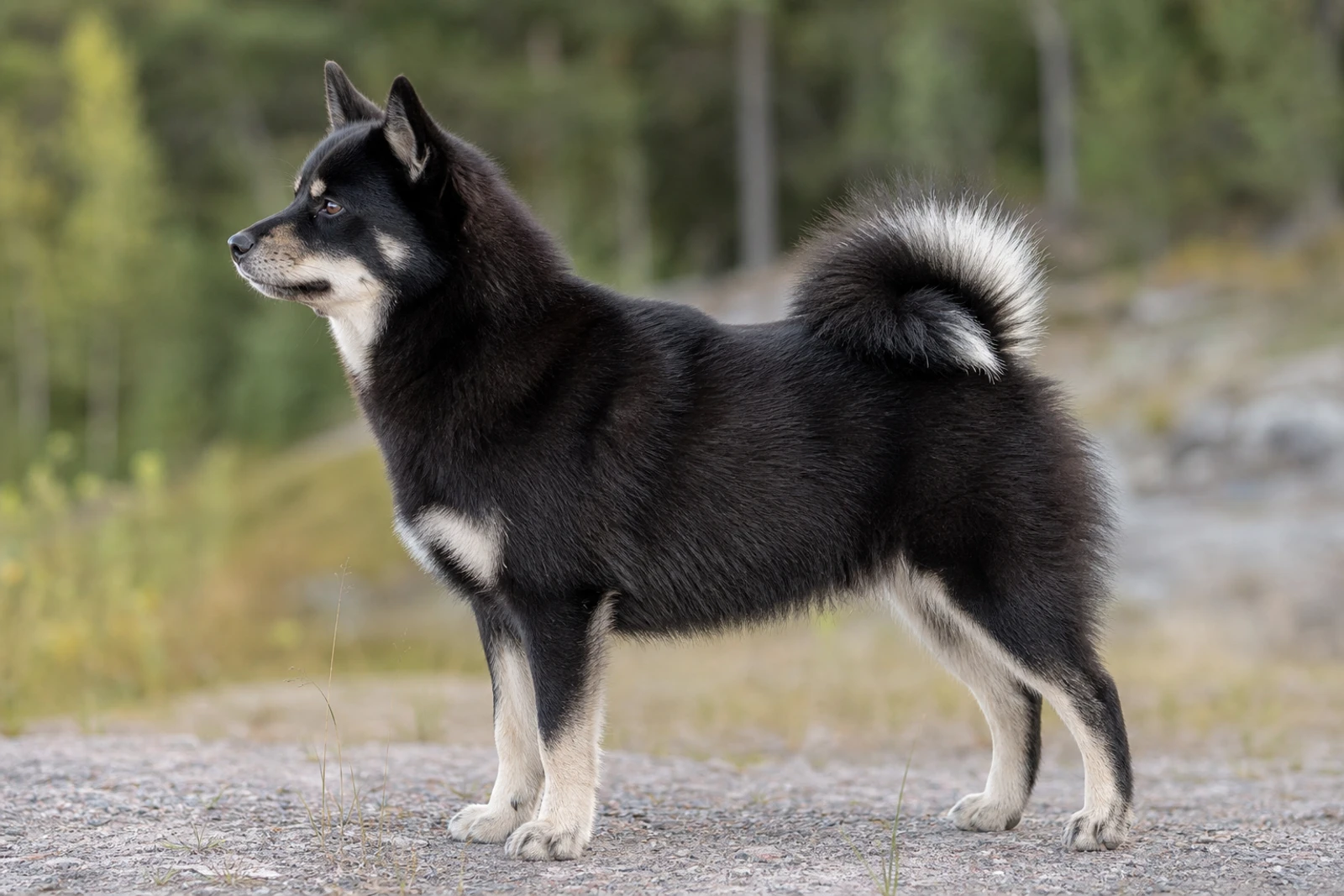
The Nordic Spitz is a lively, alert medium breed ideal for active families who enjoy the outdoors. With a fox-like face and a plume tail, this intelligent dog bonds deeply with its people but has a stubborn streak, requiring patient training. It thrives in homes with yards and owners who can provide daily exercise and mental stimulation. Its vocal nature makes it an excellent watchdog, though not suited for apartment living. Best for experienced dog owners, the Nordic Spitz rewards dedication with unwavering loyalty and a long, healthy life.
At a glance
- Size
- Medium
- Height
- 17–18 in
- Weight
- 18–33 lb
- Life span
- 15–20 years
- Coat colors
- Red, Gold, Cream, Black, Brown, White
- Coat type
- Dense double coat of medium length
How much does a Nordic Spitz cost?
Adopt / rescue
$75–$400
Usually includes spay/neuter, first shots, and a microchip.
Buy from a breeder
$700–$2,000
From a reputable, health-testing breeder.
Approximate USD. Prices vary widely by region, breeder, pedigree, age, and coat colour — adopting is the lower-cost and recommended route. Avoid suspiciously cheap “breeders”; they’re often puppy mills.
Estimate the full cost of a Nordic Spitz →Want the ongoing number? Estimate the monthly food bill for a Nordic Spitz with our dog food cost calculator.
Nordic Spitz photos
Views
Front, side, rear and top — the full silhouette.Poses
How the breed sits, lies, moves and plays.Puppy to senior
The breed across its whole life.Expressions
The breed’s range of moods.Close-up details
Eyes, ears, nose, paws, tail and coat.Coat colors
The breed’s recognized colors.Click any photo to enlarge. We show the Nordic Spitz from every angle — three views, poses, life stages, expressions, close-ups, coat and colors.
Appearance & size
You’ll recognize a Nordic Spitz by that compact, square-ish silhouette, the alert prick ears, and the bushy tail that curls all the way over the back. This is a medium-sized spitz built light enough to move fast across snow but sturdy enough to pull small sleds or work all day.
Size at a glance
- Height: 17–18 inches at the shoulder
- Weight: 18–33 pounds, with females often on the lighter end and males closer to 30–33 pounds
That weight range is wider than you might expect for a dog this height, so you’ll see some variation — a lean, working-line dog might hover around 20 pounds, while a show-bred, well-coated male can push the upper 30s. None of them should look heavy or coarse, though.
Coat and color
The Nordic Spitz wears a dense, weatherproof double coat. The undercoat is soft and thick; the outer coat stands slightly off the body — harsh to the touch, straight, and long enough to form a distinct ruff around the neck and shoulders. Legs carry moderate feathering, and the tail is heavily plumed.
Coat colors are classic northern spitz: clean red, sable, wolf-sable, cream, black, gray, and occasionally white. You’ll frequently see lighter shadings on the chest, belly, and legs without distinct patching. Many dogs have a darker mask or light spectacles around the eyes, adding to that sharp, foxy expression. The nose, eye rims, and lips are black — though a snow-nose (partial pink in winter) isn’t uncommon and doesn’t mean a flaw.
What you see from each angle
From the front — The head is a clean wedge, broad at the ears and tapering to a medium-length muzzle that’s never snipey. Triangular ears are set high, fully erect, and point just slightly forward. Eyes are almond-shaped, dark brown, set a little obliquely, and carry a bright, assessing look. The chest is deep enough for real lung capacity, the front legs straight with strong pasterns, and the feet are oval, tight, and well-furred between the toes.
From the side — You’ll notice the proud neck carriage and a level topline. The back is short, the loin strong, and the tail arches forward over the back in a single curl or a loose sickle shape — it can flop to one side when the dog is relaxed but never hangs down. The coat’s stand-off texture and the ruff create a beautiful, balanced outline, with a tuck-up that’s present but not Greyhound-deep.
From the rear — The plumed tail usually covers part of the back, but beneath it the hindquarters are well-muscled with moderate angulation. Hocks are parallel, not cow-hocked, and the breeches on the upper thighs add a full, rounded shape. Between the feathering and the dense undercoat, the rear end looks plush but perfectly functional.
The whole dog reads as alert, agile, and tireless — no exaggeration, no fancy frills, just a true working spitz that happens to be easy on the eyes.
History & origin
Nordic Spitz dogs are among the oldest canine types on the planet. They didn’t appear overnight — their ancestors padded alongside humans who moved north after the last Ice Age. Small, spitz-type skeletons have been unearthed in 2,000-year-old burial sites across Norway, Sweden, and Finland, putting these dogs at the center of northern life for millennia.
They were never a one-trick breed. A Nordic Spitz had to earn its keep on a small farm or hunting camp. Standing 17 to 18 inches and weighing just 18 to 33 pounds, they were light enough to follow a hunter into dense forest or rocky terrain without burning out. Farmers relied on them to herd sheep and cattle, guard the homestead, and rout vermin. Hunters prized them for a very specific skill: the dog would scent out game birds — capercaillie or black grouse — then bark ceaselessly to mesmerize the bird while the hunter crept into range. Some lines were even worked on moose and bear. That double coat, prick ears, and tightly curled tail weren’t decorations. They shed snow, prevented frostbite, and let the dogs sleep outside in subzero cold.
By the late 1800s, the whole thing nearly collapsed. Better roads and imported breeds diluted the original lines, and many remote villages traded their spitz dogs for larger herding breeds or simply stopped keeping dogs. A handful of sportsmen in Finland and Norway got nervous. They combed backcountry settlements for purebred specimens and, starting in the 1880s, wrote the first breed standards — what we’d now recognize as the Finnish Spitz and Norwegian Buhund. Their focus wasn’t just on looks. They wanted to lock in that barking-pointer instinct and the hard-as-nails constitution that made the dogs indispensable.
Today, Nordic Spitz dogs live across North America and Europe. They still flash their barking talent in bird-hunting trials and work as vigilant watchdogs in family homes. A 15-to-20-year lifespan isn’t a fluke — it’s a leftover from centuries of natural selection that left only the smartest, toughest dogs standing.
Temperament & personality
The Nordic Spitz is a thinking dog in a compact, foxy package — alert, clever, and more independent than your average eager-to-please retriever. Expect a loyal shadow who’s reserved with strangers but downright silly with his own people once trust is earned. The catch? That brain needs a job, and if you don’t provide one, he’ll happily invent his own: barking at every leaf that blows past the window, excavating the sofa cushions, or patrol-marking the corners of a room he’s decided is his territory. This is not a breed that does well with neglect or long hours of nothing; isolation can trigger howling, chewing, or anxiety-driven potty habits that are hard to undo.
Affection flows on the dog’s terms. A Nordic Spitz may curl up beside you for a nap, then hop down and give you a look that says “I’ll be back when I’m ready.” He’s often described as calm and gentle indoors, but that coziness can switch to high-alert watchdog mode in a split second. You’ll get a built-in doorbell — sharp, rapid-fire barks announce anything suspicious, from the mail carrier to a squirrel trespassing three houses down. That vocal nature can tip into excess without early training, so teaching a solid “quiet” cue is worth its weight in treats.
Around the household, the breed does best with respectful, consistent handling. Force or heavy-handed correction tends to make these dogs dig their paws in, while clear routines, positive reinforcement, and the occasional bribe with a high-value snack get much further. Kids need ground rules, especially at mealtime. A Nordic Spitz can develop food guarding if pestered while eating, so let him enjoy his bowl in peace. When training, remember that marking tendencies run deep; scrubbing indoor accidents with an enzymatic cleaner (not just soap) stops the scent from becoming an invitation to re-offend. A treat the second he finishes outside cements the lesson faster than any punishment.
Physical energy hovers around moderate to high. A 45-minute walk plus a few rounds of fetch or a puzzle feeder won’t cut it as an afterthought — plan for a solid hour of moving and thinking every day. Puppyhood adds another layer: those needle-sharp teeth will explore everything, from chair legs to your fingers. Frozen carrots, proper chew toys, and a homemade deterrent like diluted vinegar on forbidden items can save your furniture while the adult teeth come in. And yes, the breed’s scavenger heritage means a dead worm on the sidewalk smells like perfume. You might catch him rolling ecstatically in something foul; a solid “leave it” command and a sense of humor are your best tools.
With other pets, early socialization matters. Many Nordic Spitz live peacefully with cats or small dogs, but a strong prey drive can flick on around a fleeing rabbit or backyard bird. Watch his body language: a forward-leaning stance, stiff tail, and hard stare often precede a bolt. A relaxed, loose body and soft eyes, on the other hand, mean he’s content and trouble-free. Learn to read those signals and you’ll have a companion who thrives for the 15–20 years you share — a sharp, funny housemate who’s just stubborn enough to keep things interesting.
Good with kids, dogs & other pets
The Nordic Spitz brings a patient, gentle temperament to family life. At 18–33 pounds, they’re sturdy enough for kid play but not indestructible—always supervise, especially with toddlers prone to sudden grabs or shrieks. This breed is sensitive; one frightening episode can lead to skittishness or defensive nipping. Teach children calm approaches and respect for the dog’s space.
For living with other dogs, early socialization wins the day. Introduce your puppy to friendly, vaccinated dogs between 3 and 14 weeks, keeping every meeting upbeat and brief. Without this, the Nordic Spitz can become reactive or overly jumpy around strangers. An adult who’s content as your sole pet? Let them be. Forcing dog-park mingles often backfires, raising stress instead of sociability.
Cats and small pets require caution. The Nordic Spitz’s watchdog and hunting roots may pair a fleeing cat with a chase. Raise them together from puppyhood, rewarding calm coexistence with high-value treats, and never leave them unsupervised until you’re sure. Pocket pets need sturdy cages and closed doors.
Here’s the real non-negotiable: this dog cannot tolerate long hours alone. Isolation breeds anxiety that spills over into every relationship—whining at kids, snapping at housemate dogs, or frustration around the cat. A Nordic Spitz thrives only when embedded in a family that’s home most of the day.
Trainability & intelligence
The Nordic Spitz learns fast — sometimes too fast for its own good. This is a whip-smart dog that will figure out what you want in just a few repetitions, but it’s also independent enough to decide whether obeying is worth its time. The trick is convincing your dog that working with you pays off better than doing its own thing.
Ditch any thought of punishment or a heavy hand. Harsh corrections burn trust with this breed, and once trust is gone, you’ll be talking to a wall. Instead, use treats, a favorite toy, or a burst of excited praise to mark the behavior you want. A Nordic Spitz that knows a click or a “yes!” means something good is coming will lean into training with real enthusiasm. Keep sessions short — five or ten minutes, then a play break — because boredom sets in faster than you’d guess, and a bored Spitz will simply opt out.
Recall is where independence collides with prey drive. Off-leash reliability doesn’t come built in; you build it, layer by layer, starting from puppyhood. Practice in low-distraction spaces first, and reward every single check-in like you just won the lottery. High-value rewards (think real chicken, not dry biscuit) are non-negotiable when you’re competing with squirrels.
Early socialization makes a huge difference in how well your training sticks. Introduce your puppy to a wide variety of people, other calm dogs, different surfaces, and everyday noises before 16 weeks of age. Keep these experiences positive and let your pup set the pace. Without that early exposure, the breed’s natural wariness can slide into reactivity, which is much harder to undo later.
This is a thinking breed that thrives on puzzles, nose work, and new tricks. Give its brain a job, and the “stubbornness” people sometimes complain about often just melts into focused cooperation. Teach a “watch me” cue early and reward eye contact constantly — it’s your shortcut to getting attention back when distractions ramp up.
Exercise & energy needs
The Nordic Spitz is a working dog built for endurance, not a couch warmer. Figure on 60–90 minutes of real exercise every day, split into at least two sessions. A single stroll around the block won’t scratch the surface — these dogs need to run, pull, and problem-solve. Plan on a morning off-leash sprint in a secure area (recall can be iffy thanks to a strong prey drive) and an afternoon of steep hiking, canicross, or a solid bike ride. Without that outlet, a bored Spitz will invent its own entertainment, and you probably won’t like the upholstery-related result.
Physical exercise is only half the equation. This breed thrives on mental work that mimics the independent decision-making it was bred for. Skip the endless fetch and drop a scent work or puzzle toy session in its place. Hide treats in the yard, teach a new trick, or run a 10-minute nose work search — the mental drain is as important as the physical. Their thick double coat makes them perfect for winter skijoring and pull work, but in warm weather exercise early or late, and always bring water.
Good sports for the Nordic Spitz: agility, flyball, nose work, canicross, bikejoring, and rally. Their smaller size and nimble build suit obstacle courses, while the predatory streak makes lure coursing a hit. As your dog ages into that 15–20 year lifespan, swap high-impact jumping for swimming or longer, flatter hikes to protect joints. The bottom is always the same — tire the brain, then the body, and you’ll have a settled companion who’s not plotting to dismantle the trash can.
Grooming & coat care
The Nordic Spitz wears a dense double coat built for harsh winters — and it sheds like it means it. Beneath the weatherproof outer guard hairs sits a soft, insulating undercoat that dumps in waves, especially in spring and fall. During those blowouts, a weekly once-over won’t cut it; you’ll need a thorough daily brushing to keep the fur off your floors and the dog comfortable.
Brushing and tools
For everyday maintenance, aim for two to three solid sessions a week, each about 15–20 minutes. Start with a medium-to-large metal slicker brush with rounded pins to pull dead undercoat without scratching the skin. Follow up with a steel comb to catch the first signs of matting behind the ears, in the dense ruff, and along the feathery tail — those spots knot fast. Once the loose hair is gone, a few passes with a natural bristle brush bring out the coat’s natural shine and distribute skin oils.
Bathing
This is a surprisingly clean breed. The coat resists dirt and dries quickly, so you’re bathing only every two to three months, or when he’s genuinely muddy or smelly. Over-washing strips the protective oils that keep the topcoat weather-resistant. Use a mild dog shampoo, rinse until the water runs utterly clear, and then dry him down to the skin — trapped moisture in that thick fur invites hot spots. A high-velocity pet dryer (or a long session with a towel and a cool blow dryer) is worth the effort.
Nails, ears, and teeth
- Nails: Trim every 3–4 weeks. If you hear clicking on hard floors, you’ve waited too long.
- Ears: Check weekly. A quick swipe with a damp cotton ball and a vet-recommended cleaner removes wax and dirt. Never push into the canal; just clean what you can see.
- Teeth: Brush several times a week with dog-specific toothpaste. That 15–20 year lifespan means tartar control isn’t optional.
Seasonal shedding and coat care
When the undercoat blows — a heavy shed in spring and a lighter repeat in fall — switch to daily brushing. An undercoat rake becomes your best tool during these weeks. Work in sections, lifting the topcoat and pulling loose fluff from the skin outward. Take advantage of post-walk time: brisk outdoor exercise naturally boosts coat turnover, so a quick brush-out right after a good run loosens far more hair than tackling a sedentary dog on the couch. A sanitary trim around the rear and a quick snip of the fur between the paw pads (for traction) are all the “haircut” this breed ever needs. Stick to that rhythm — steady, short sessions rather than marathon de-shedding — and you’ll keep a Nordic Spitz cool, mat-free, and your home about as hair-free as it’s going to get.
Shedding & allergies
Shedding: Not a little, a lifestyle
This dog sheds. A lot. All year. The Nordic Spitz packs a dense double coat — a woolly, insulating undercoat and coarser guard hairs — that’s designed to handle bitter cold. That undercoat never really stops dropping, so you’ll find a fine layer of fluff on your floors, furniture, and dark clothing no matter how often you vacuum.
Twice a year the shedding cranks into overdrive. During these seasonal blowouts (usually spring and fall), loose fur comes out in fistfuls. For a few weeks, the dog tufts like a blown dandelion, and hair drifts into corners you didn’t know existed. With a lifespan that can reach 20 years, you’re signing up for a two-decade fur pact — lint rollers, sticky tape, and a good vacuum are non-negotiable. A slicker brush and an undercoat rake help, but they manage the fallout; they don’t eliminate it.
Allergies and the hypoallergenic myth
The Nordic Spitz is not hypoallergenic — and anyone who tells you otherwise is ignoring how allergies actually work. Allergens come from dander, saliva, and urine, not just hair. A heavy shedder like this spreads those proteins onto every surface and into the air. Even though the harsher guard hairs may carry less clinging dander than a soft, cottony coat, counting on that is a personal gamble, not a guarantee.
If you or someone in your home has dog allergies, spend meaningful time around an adult Nordic Spitz before committing. Some mildly allergic people build a tolerance; others react badly regardless. A breeder’s casual “they’re hypoallergenic” claim is a red flag, not a sales pitch.
Drool, at least, is a non-issue — this breed tends to be dry-mouthed and won’t leave ropes of slobber on your walls. But that’s thin comfort when you’re picking dog hair out of your butter dish for the third time this week.
Diet & nutrition
Keep your Nordic Spitz lean from day one—this is a dog built to last 15 to 20 years, and every extra ounce adds wear on joints that already work hard for a dog his size. He’s often a thrifty eater with an efficient metabolism, meaning he can stay sleek on less food than you’d guess. For an adult in that 18–33‑lb range, a typical 25‑pound dog does well on about 1 to 1½ cups of high‑quality dry food per day, split into two meals. Adjust up or down depending on his zip: a dog who runs hard for an hour needs more fuel than one who patrols the yard twice and calls it a day.
- Puppy rhythm: Four evenly spaced meals until 4 months, then three meals until 6 months, then settle into the adult two‑a‑day pattern. Transition a new puppy gradually—start with lightly cooked and puréed meats, fish, fruit, and vegetables, or a high‑quality commercial puppy food.
Weight sneaks up on this breed because many are genuinely food‑motivated and will inhale a bowl in seconds. Use a puzzle feeder or slow‑feed bowl to stretch mealtime and give his brain a little workout while he eats. If you prepare homemade meals, aim for roughly 60% animal protein (raw or cooked), 20–30% fruits and vegetables, and the rest from eggs, plain yogurt, or digestible grains like pearl barley or white rice. Because dogs don’t produce digestive enzymes in their saliva and chew only up‑and‑down, blending or lightly processing veggies and fruits helps him absorb more nutrients.
Senior dogs often do better with three smaller meals instead of two. Cut back calories as activity drops, and don’t panic about reducing protein—there’s no solid evidence it’s necessary. If teeth go missing, purée the meal to keep nutrition easy to grab. No matter the age, set aside a few pieces of his daily kibble for training rewards so you aren’t piling on extra calories. Keep the really rich stuff—holiday ham, fatty trimmings—out of his bowl entirely; even a small splurge can trigger pancreatitis in a small‑to‑medium dog.
Health & lifespan
You can bank on 15 to 20 years with a Nordic Spitz — a seriously long runway that blows past what you’d expect from most medium-sized dogs. That kind of longevity doesn’t happen by accident, though. It rests on two things: a breeder who’s honest about what can go wrong, and an owner who stays ahead of it.
The big-picture health story here is moderation. This isn’t a breed crushed by a single headline disorder, but that doesn’t mean you coast. The Nordic Spitz is built light and athletic — 18 to 33 pounds on a 17-to-18-inch frame — so keeping weight off is non-negotiable. Even an extra two or three pounds puts unnecessary strain on joints that already have a long retirement to look forward to. A lean dog is a long-lived dog, period.
- Patellar luxation. Those quick, agile back legs can have kneecaps that occasionally slip out of place. A responsible breeder screens both parents through the Orthopedic Foundation for Animals. You’ll spot the early signs — an occasional hop-skip step that corrects itself — but regular vet checks catch what you might shrug off.
- Eye issues. Progressive retinal atrophy and cataracts can creep in as the years pile up. A breeder who does annual CERF eye exams on breeding stock isn’t being fussy; they’re doing the job. If you’re looking at a puppy, that paperwork matters.
- Skin trouble. A thick double coat is gorgeous but can mask problems. Hot spots, yeast flare-ups, and general itchiness sometimes trace back to a food sensitivity or an environmental allergy. If your dog suddenly chews a paw raw or turns the household into a symphony of scratching, don’t wait it out — get it checked before a small thing turns into a cone-worthy infection.
Beyond the genetics talk, preventive care is the daily work that pays for itself later. Heartworm prevention runs monthly during mosquito season and for one month after it quits — skipping this because your winters get cold is an unnecessary gamble. Rabies vaccination is both the law and your only real play, since once symptoms surface, there’s no effective treatment.
A Nordic Spitz is too smart and too attached to people to be left as yard art. Isolation creates stress, and a stressed, under-socialized dog can slide into anxiety-driven barking and all the physical toll that comes with it. This breed does better when it’s part of the household rhythm — handled often, walked daily, and given a job, even if that job is just supervising your morning coffee routine.
Watch for the quiet shifts. A subtle drop in appetite, a reluctance to jump into the car that wasn’t there last month, or a general flatness can be the first ping that something’s off. Catching patellar issues, eye changes, or metabolic quirks early nearly always means simpler, cheaper fixes. For a dog that can share 20 years of your life, annual exams aren’t a calendar chore — they’re how you make sure you actually get those years.
Living environment
A Nordic Spitz is a compact 17–18 inch, 18–33 pound dog built for snowy forests, so climate tolerance is lopsided: they thrive in freezing temperatures with that dense double coat, but heat and humidity hit them hard. An air-conditioned home is non-negotiable in summer, and midday exercise shifts to early morning or late evening.
Whether you’re in an apartment or a house, the real dealbreaker is noise. This is a vocal breed — sharp, piercing barks that served as an alarm in ancestral hunting and herding roles. Expect them to announce delivery trucks, squirrels, and the neighbor’s cat with equal conviction. Apartment living can work only if you’re on the ground floor (fewer shared walls to annoy) and you’re committed to redirecting alert barking from day one. A detached house with a securely fenced yard gives you some breathing room. The fence matters: Nordic Spitz dogs are agile escape artists with a high prey drive, so a 5-foot barrier with no gaps is the starting point.
They’re not a “lounge around all day while you’re at the office” breed. Left alone for long stretches, their strong bond with the family can tip into distress — pacing, howling, or redecorating your baseboards. If you work full-time, a midday dog walker or doggy daycare goes a long way. Gradual desensitization to alone time and plenty of mental work (snuffle mats, scent games, puzzle toys) build the independence they need.
Daily activity isn’t just a walk around the block. Plan on at least an hour of combined physical and mental exercise, split into two or three sessions. Short, frequent bursts — a 20-minute sniff walk, a 15-minute trick-training session, a romp in the yard — fit this breed’s attention span better than one monotonous hour-long trudge. They’ll happily hike for miles in cold weather, but in summer, substitute indoor nose work or a frozen stuffed Kong to protect them from overheating. A bored Nordic Spitz invents his own entertainment, and you won’t like his choices.
Who this breed suits
If you love a dog with opinions — and you’re ready to hear them often — the Nordic Spitz could be a brilliant fit. This is a sharp, busy little dog that defaults to alertness. A long, loud conversation about the squirrel outside is just Tuesday afternoon. For the right person, that clear, communicative nature is the whole point.
A Nordic Spitz does best with an owner who treats him as a real partner, not a follower. He’s independent enough that heavy-handed training backfires, but he’s also playful, loyal, and eager to work when he respects you. You’ll get the most out of this breed if you enjoy teaching tricks, practicing scent games, or exploring hiking trails together — activities that keep a quick mind and a 18–33 lb body moving. A securely fenced yard buys you some sanity because that prey drive is hardwired; he’ll bolt after a chipmunk without a second thought.
The breed can slot happily into active families with older kids who understand that a fluffy 17-inch dog isn’t a stuffed animal. Younger children can accidentally provoke a sharp yap or a nip if the dog feels cornered. Singles and couples who like outdoor weekends get a tireless adventure buddy — point him at a hike, and he’ll still be pulling at mile six when you’re ready for a nap. His 15–20 year lifespan means you’re signing on for a long, engaging project, not a short-term commitment.
First-time owners should pause. This isn’t a beginner’s breed unless you genuinely embrace a highly vocal dog and are ready to channel his energy every single day. A bored Nordic Spitz is a creative menace: digging, chewing, and barking marathons that strain neighborly goodwill. Seniors or apartment dwellers may find the noise and the need for a solid daily run — not a gentle stroll — tough to manage. The double coat also drops a shocking amount of fur seasonally, so anyone hoping for a low-shedding dog will be disappointed. Skip this breed if you want a quiet, low-maintenance lapdog. Seriously, keep looking. But if you want a smart, spirited shadow who makes sure you never miss a delivery truck or a sunrise hike, a Nordic Spitz delivers it in spades.
Cost of ownership
Plan on a purchase price somewhere between $1,200 and $2,800 from a responsible breeder who screens for hips, patellas, and eye conditions. A well-bred Nordic Spitz isn’t a bargain-bin dog — you’re paying for health clearances on a long-lived breed, and the price climbs if you want show-quality lineage or a puppy from titled parents. Avoid the $400–$600 “bargain” in an online ad; that usually skips the health testing you’ll pay for later.
The big monthly expenses flatten out once you’re past the first year. Here’s what to pencil in:
- Food: A 20–33 lb dog with typical Spitz energy burns through about 1.5–2 cups of quality kibble a day. Figure $35–$55 a month; add a little more if you rotate in fresh toppers or raw.
- Grooming: Their dense double coat sheds seasonally and needs thorough brushing 2–3 times a week. A pro groom every 6–8 weeks runs $50–$80 a session, so budget $35–$55/month averaged out. Upfront, grab a sturdy undercoat rake and a slicker brush ($40–$60 total).
- Routine vet & prevention: Annual exams, vaccinations, and year-round flea/tick/heartworm meds land around $400–$600 a year, or $35–$50/month. Dental cleanings every 1–2 years add a few hundred if needed.
- Pet insurance: With a lifespan that can hit 20 years, insurance makes plain sense. For a medium mixed-spitz breed with potential patella or hip issues, expect $30–$60 a month for a decent accident-and-illness plan with a reasonable deductible.
All in, you’re looking at a steady $130–$210 per month for a healthy adult dog, not counting the initial setup (crate, bed, leash, bowls — roughly $200–$500). The real number to keep in mind is this dog can be your hiking buddy from your thirties well into your fifties, so small monthly differences add up over 15 or 20 years.
Choosing a Nordic Spitz
Start by deciding whether to go through a breeder or adopt. Nordic Spitz dogs pop up in rescue far less often than, say, a Labrador, but they’re not impossible to find. If you go the rescue route, be patient and reach out to regional Spitz or Nordic breed rescues. A rehomed adult skips the puppy chaos and lets you see the dog’s adult size and personality right away — a real plus when the breed can live 15 to 20 years.
If you buy a puppy, a responsible breeder is non-negotiable. That long lifespan means an inherited health problem isn’t a short-term sadness; it’s a commitment you could be managing for two decades. Ask the breeder to see documentation for the following health screenings on both parents:
- Hip dysplasia (OFA or PennHIP)
- Elbow dysplasia
- Patellar luxation — small, active Spitz types can be prone to slipping kneecaps.
- Eye clearance from a veterinary ophthalmologist (CERF or equivalent), since progressive retinal atrophy and cataracts can appear in Nordic breeds.
- Thyroid panel — autoimmune thyroiditis sometimes lurks in Spitz lines.
A breeder who waves off any of these or hands you a stack of papers without walking you through them should make you pause. Other red flags: litters always available, multiple breeds on site, puppies that never meet you outside, and a refusal to show where the dogs live.
When you visit a litter, don’t just fall for the fluffball that runs up first. Watch how the puppies react to you, to each other, and to a mild startle (a dropped set of keys, not a freight train). A Nordic Spitz should be alert, curious, and quick to recover — not cowering or snapping. Pick up each pup you’re considering: at 8 weeks, a pup in the middle of that 18 to 33 lb adult range often feels substantial but not bony. Check for clear eyes, clean ears, and a coat that smells like nothing in particular. Then ask the breeder one last question: “What’s the hardest thing about living with this line?” The answer — honest, specific, not sugarcoated — tells you more than any guarantee.
Pros & cons
- Remarkably long life: Nordic Spitz dogs routinely hit 15–20 years, giving you a long, steady partnership with a small but sturdy dog.
- Clean and low-maintenance coat: The dense double coat sheds dirt, dries fast, and carries little odor — you won’t have that wet-dog smell in the house.
- Crisp watchdog: They notice everything and bark at anything out of place, from a squirrel to a delivery. You’ll always know someone’s coming.
- Compact size, rugged build: At 17–18 inches and 18–33 pounds, they’re easy to lift, travel with, and fit into smaller homes without giving up toughness.
- Quick learner: When motivated with treats or play, they pick up new cues fast and enjoy having a job, whether it’s trick training or nose work.
- Bred to hunt: This isn’t a dog you can trust off-leash around rabbits, cats, or small dogs — prey drive is deep and instinctive. A securely fenced yard is a must.
- Barking is a feature, not a bug: Expect frequent, high-pitched alert barking; it’s hardwired, not something you can train away entirely. Apartment living with thin walls is a tough fit.
- Exercise needs go beyond a casual walk: A solid hour of running, sniffing, and brain work every day is baseline. Without it, they’ll find their own entertainment — digging, howling, rearranging the trash.
- Independent mind: “Come” gets evaluated against whatever is more interesting. You’ll need patience, a sense of humor, and long-line training before off-leash reliability happens.
- Not a greeter for every stranger: They can be reserved, sometimes aloof, with people they don’t know. Early, ongoing socialization keeps it from tipping into fearfulness, but don’t expect a Golden Retriever’s hello.
Similar breeds & alternatives
If the Nordic Spitz’s foxlike face, double coat, and big-dog alertness have caught your eye, a handful of close spitz cousins sit in the same size bracket — but none are identical twins. The differences in lifespan, energy, and noise level can make or break a match.
Finnish Spitz
The Finnish Spitz is the dedicated talker of the group. Where the Nordic Spitz tends to bark with purpose, a Finkie barks a lot — bred to hunt by pointing game with a non-stop yodel-like voice. They share similar height and weight (20–35 lb), but the Finnish Spitz carries a richer red-gold coat and a distinctly foxier tail set. Expect a shorter typical lifespan of 13–15 years, and a dog who needs an owner actively okay with noise.
Norwegian Buhund
More stocky and task-driven, the Buhund (26–40 lb) is a herding spitz with a denser build than the leaner Nordic Spitz. Its outer coat is harder and shorter, so you’ll deal with less fluff but still a heavy seasonal shed. Buhunds bond fiercely and have a lower threshold for boredom — a kicked whistle can turn into barking at the fence. Their life expectancy runs 12–15 years.
Keeshond
If the Nordic Spitz’s watchful nature appeals but you want more social enthusiasm, the Keeshond is the people-pleaser. Heavier (35–45 lb) with a thick, silver-and-black ruff that gives him a spectacled face, a Kees keeps that spitz alertness without sharp reserve. The trade-off: coat maintenance ramps up, and you’re looking at a 12–15 year lifespan. Excellent with kids, but less tolerant of being left alone all day.
American Eskimo Dog (Standard)
The standard Eskie (25–35 lb, 15–19 in) matches the Nordic Spitz in height and bright white coat glamour — but packs more bone. Equally smart and quick to learn, Eskies can tip into neurotic chewing or barking if under-exercised. Lifespan is shorter at 12–15 years, and the all-white coat needs regular brushing to stay mat-free.
Icelandic Sheepdog
A slightly smaller boned, friendly farm spitz (20–30 lb) with a weatherproof outer coat that’s less profuse. These dogs are bark-prone watchdogs, bred to protect lambs, and they love having a job. Plan on 12–14 years together. The Nordic Spitz’s standout 15–20 year potential makes it the long-haul choice if you’re ready for a genuinely durable companion.
Fun facts
- Ancient breed with origins tracing back thousands of years alongside northern tribes.
- Famous for a unique yodel-like bark that can carry over long distances.
- Its tightly curled tail is a hallmark spitz trait, often resting over the back.
- Bred as a versatile hunter, capable of pointing and retrieving game birds.
Frequently asked questions
- Do Nordic Spitz dogs shed a lot?
- Yes, Nordic Spitz dogs have a thick double coat that sheds heavily, especially during seasonal changes. Regular brushing several times a week can help manage loose fur, but you should expect a fair amount of hair around the home.
- How much do Nordic Spitz dogs bark?
- This breed is known to be quite vocal and may bark to alert you of anything unusual. Training and socialization from a young age can help moderate excessive barking, but they are naturally watchful dogs.
- What are the exercise needs of a Nordic Spitz?
- Nordic Spitz dogs have moderate to high energy levels and need daily exercise to stay healthy and happy. A brisk walk or active play session each day, along with mental stimulation, tends to be sufficient to meet their needs.
- Are Nordic Spitz dogs good with children?
- They can be good with children, especially when raised together, as they are loyal and playful. However, supervision is recommended with very young kids due to the breed's independent nature and sometimes boisterous play style.
- Can a Nordic Spitz live in an apartment?
- While they can adapt to apartment living if given enough outdoor exercise, their tendency to bark might be challenging in close quarters. A home with a yard where they can run is more ideal for this active and vocal breed.
Tools & calculators for Nordic Spitz owners
Quick estimates tailored to Nordic Spitzs — pre-filled with this breed’s size where it matters.
Articles & stories about the Nordic Spitz
Sources & standards
This profile follows recognized breed standards from the American Kennel Club (AKC) and the Fédération Cynologique Internationale (FCI), along with established veterinary and breed-club guidance. These describe general breed tendencies — every dog is an individual.