

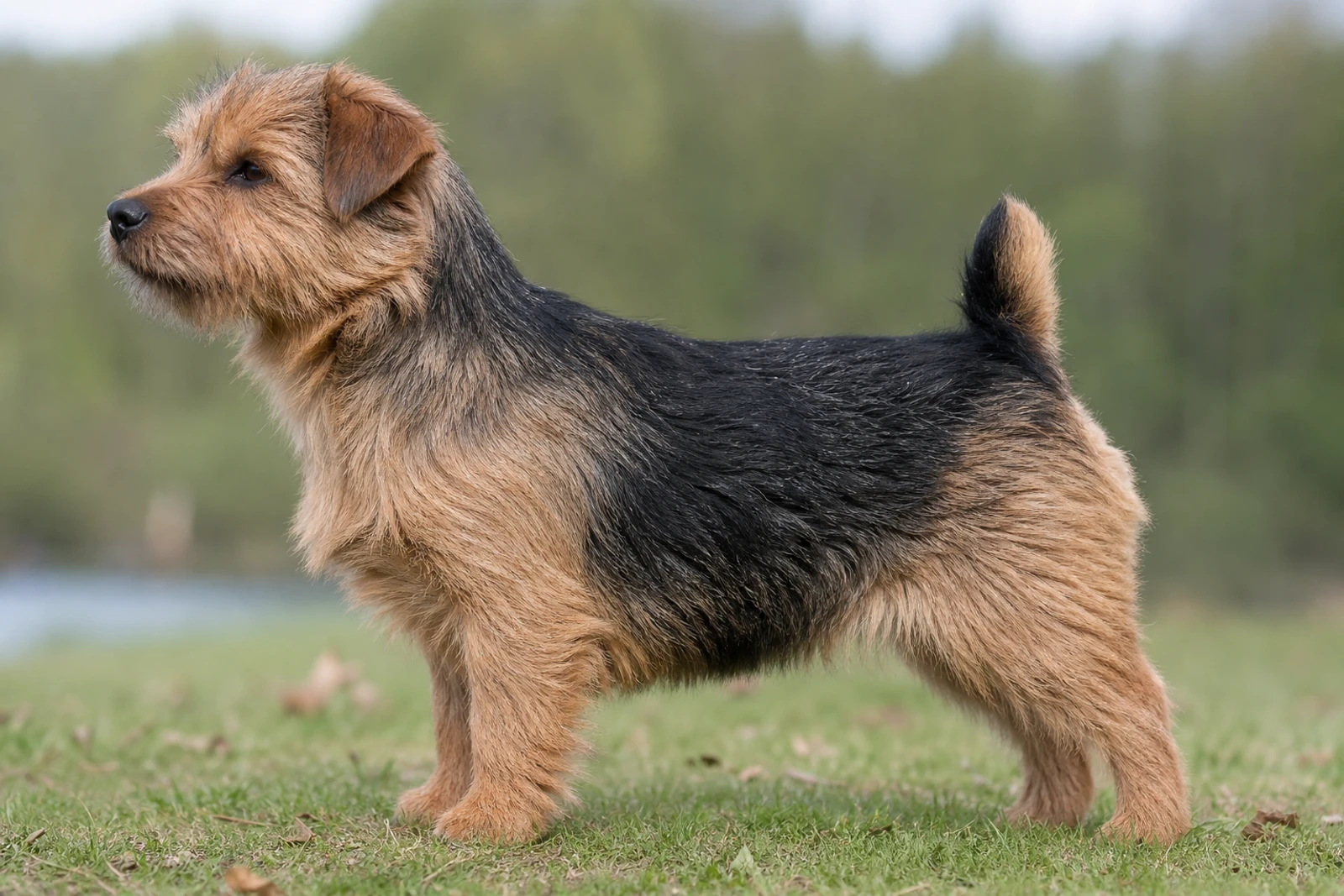
The Norfolk Terrier is a spirited, affectionate, small dog originally from England, where it was bred to hunt vermin. This breed suits active families, singles, or seniors who can provide daily exercise and consistent training. Norfolk Terriers are adaptable to apartment living, enjoy playtime, and form strong bonds with their humans. They are good with children and other dogs if socialized early, but their terrier instincts may lead them to chase small animals. With a wiry, low-shedding coat and a confident personality, they make loyal, entertaining companions for those who appreciate a dog with a dash of independence.
At a glance
- Size
- Small
- Height
- 9–10 in
- Weight
- 11–13 lb
- Life span
- 14–15 years
- Coat colors
- wheat, red, brown, black-and-tan
- Coat type
- wiry, dense, weather-resistant double coat
- Group
- Terriers
- Origin
- United Kingdom
How much does a Norfolk Terrier cost?
Adopt / rescue
$75–$400
Usually includes spay/neuter, first shots, and a microchip.
Buy from a breeder
$700–$2,000
From a reputable, health-testing breeder.
Approximate USD. Prices vary widely by region, breeder, pedigree, age, and coat colour — adopting is the lower-cost and recommended route. Avoid suspiciously cheap “breeders”; they’re often puppy mills.
Estimate the full cost of a Norfolk Terrier →Want the ongoing number? Estimate the monthly food bill for a Norfolk Terrier with our dog food cost calculator.
Norfolk Terrier photos
Views
Front, side, rear and top — the full silhouette.Poses
How the breed sits, lies, moves and plays.Puppy to senior
The breed across its whole life.Expressions
The breed’s range of moods.Close-up details
Eyes, ears, nose, paws, tail and coat.Coat colors
The breed’s recognized colors.Click any photo to enlarge. We show the Norfolk Terrier from every angle — three views, poses, life stages, expressions, close-ups, coat and colors.
Appearance & size
A Norfolk Terrier packs all the no-nonsense terrier attitude into a compact, low-to-the-ground frame that still looks like it could follow a fox right into its den. Standing just 9–10 inches at the shoulder and tipping the scales at a sturdy 11–13 pounds, there’s nothing fragile here. The body is short-backed and substantial, with good bone that feels solid when you scoop one up.
From the front, the head catches your eye first. The skull is wide and slightly rounded, with a well-defined stop and a strong, wedge-shaped muzzle that’s just a little shorter than the skull. Dark, oval eyes are set well apart and give the dog that keen, inquisitive expression—a hallmark of the breed. The ears are a defining feature: small, V-shaped, and always dropped, folding forward neatly against the cheeks. Unlike the closely related Norwich Terrier, you’ll never see a Norfolk with prick ears.
Turn to the side and you’ll notice a level topline that runs straight from the shoulders to the base of the tail. The chest is moderately deep, reaching just to the elbows, with well-sprung ribs that give the body a compact, athletic outline. The tail is set high and carried straight up. In the U.S., it’s traditionally docked to a medium length, but undocked tails are equally acceptable and naturally carried gaily.
From the rear, the hindquarters are muscular and drive the dog’s movement with purpose. Thighs are well developed, and the hocks are straight when viewed from behind, neither turned in nor out.
The coat is a hard, wiry double layer—a straight, weather-resistant outer jacket about 1–2 inches long, with a softer, insulating undercoat beneath. You’ll notice slightly longer hair around the neck and shoulders, forming a protective ruff. Color options stay grounded and natural: all shades of red, wheaten, black-and-tan, or grizzle. The only real variation is how the tones blend; a red coat might deepen over the back, while a black-and-tan dog sports a black body with rich tan on the legs, chest, and face.
Everything about this breed’s appearance says functional terrier—no exaggeration, just a tough little dog built to go to ground, with an alert, almost foxy face that never misses a thing.
History & origin
If you wanted a terrier in late Victorian England that could squeeze into a fox den, ride in a gamekeeper’s saddlebag, and still have enough grit left to face a bristling vixen underground, you bred for exactly what became the Norfolk Terrier. The story starts in the 1880s and 1890s on the farms and sporting estates of East Anglia, particularly around Norfolk. Local horsemen, students from Cambridge University, and hunt staff were crossing various small “red” terriers, cairn-type earthdogs, and scrappy native ratters to create a dog with a working terrier’s heart packed into the smallest possible frame.
Size was non-negotiable. A dog that couldn’t follow a fox into a tight set of pipes or a rabbit burrow was useless, so they arrived at a compact 9 to 10 inches and 11 to 13 pounds—small enough to be scooped up and carried on horseback, yet dense and muscular enough to get the job done. Coat colors fell into the warm, earthy range you still see today: red, wheaten, brown, and black-and-tan. The short, harsh, weather-resistant jacket meant a wet Norfolk morning never slowed the dog down, and a quick rub with a dry hand was all the grooming it got between jobs.
For years these terriers went by informal names—Trumpington Terriers, Cantab Terriers, or just “the little red dogs of Mr. Jones’s strain.” They were bred for function first, pedigree second. Their primary quarry was the European red fox, which they’d bolt from heavy earths so the waiting hounds could give chase. Between hunting seasons they kept granaries and barns clear of rats and rabbits, no quarter given.
The path to official recognition split along one startlingly visible line: ears. The same litters could produce pups with either pricked ears or button-drop ears. Through the 1930s and ’40s both types were exhibited as Norwich Terriers in the UK. But breeders eventually saw them as two distinct styles, and in 1964 The Kennel Club separated them into the prick-eared Norwich and the drop-eared Norfolk. The AKC followed suit in 1979. That’s why, when you look at a Norfolk today, the folded, V-shaped ears aren’t a cosmetic quirk—they’re the single trait that kept this breed’s identity intact, a direct link back to the pocket-sized earthdogs that worked the hedgerows of Norfolk a hundred and thirty years ago.
Temperament & personality
This is a small dog with a huge, scruffy-terrier engine. A Norfolk Terrier doesn’t lounge around waiting for permission to live—he’s busy investigating every crinkle, squeak, and shadow in the house, then inventing a game out of it. Expect a lively, curious, and occasionally mischievous housemate who’s always ready to abandon the toy you gave him in favor of the one he’s just discovered under the sofa cushion. That relentless curiosity is part of his charm, but it also means he’ll sniff out trouble if you leave him bored.
He needs a solid workout every day, not just a quick stroll. Think 45–60 minutes of walking, sniffing, and chasing a ball in a safe area, plus a few short training sessions to wear out that sharp brain. Without it, the same cleverness that lets him learn tricks fast can turn into creative destruction—digging, chewing, or incessant barking. Puppies chew to explore and relieve teething pain; adults will still gnaw on hard objects to keep their jaws strong. A homemade citrus spray (boiled citrus peels) or a vinegar solution can redirect that energy away from chair legs, and vinegar is especially handy because it also neutralizes urine odors, which reduces repeat marking indoors.
These dogs bond deeply with their people but they aren’t shadowy lap warmers. They’re affectionate on their own terms—think a quick cuddle, then back to patrol duty. And patrol they will. Norfolks are alert watchdogs, quick to announce a delivery truck or a squirrel’s existence with a surprisingly big bark for a 12-pound dog. That alertness, paired with a terrier’s natural suspicion, means they can be reserved with strangers. Early socialization is non-negotiable.
With kids, they do best in homes where everyone respects a dog’s space. They won’t tolerate tail-pulling or being disturbed during meals. Food guarding is a real possibility—teach children to let the dog eat in peace, every time. Around other dogs, same-sex scrappiness isn’t unheard of, and a Norfolk’s prey drive makes small pets like hamsters or a neighbor’s cat a risky combination unless you’ve done extensive training.
He’s strong-willed, not stubborn for the sake of it. Force just makes him dig in his heels; consistent, upbeat engagement gets results. When you’re training, watch his body language—a relaxed, loose body and soft eyes mean he’s calm, while a stiff posture with a hard stare often precedes a snap. Lip licking or yawning? Those are his ways of saying he needs a break. Housetraining relies on cleaning accidents with an enzymatic cleaner (or that vinegar spray) to erase the scent memory that draws him back to the same spot, and immediately rewarding outdoor potties with a treat. You’ll also learn that rolling in questionable smells—dead worm, fox scat, you name it—is a terrier’s idea of haute couture. A fenced yard and a sense of humor are your best counters. Provide a job, even if it’s just dismantling a puzzle toy for his kibble, or he’ll assign himself one you won’t like.
Good with kids, dogs & other pets
A Norfolk Terrier can be a fantastic family dog — sturdy enough for kid-level romps yet small enough at 11–13 pounds that he won’t accidentally bowl a toddler over. He’s got that patient, non-aggressive terrier temperament when raised right. But don’t let the easygoing demeanor fool you: he’s still all terrier. Kids need to learn not to yank ears or grab his toys, and you’ll want to supervise any play with children under six, because a wobbly toddler could step on such a compact dog.
- With kids: Early and upbeat exposure makes the difference. A Norfolk who grows up around gentle children tends to be a steadfast, tail-wagging buddy. He’ll happily chase a ball in the yard and then curl up for a movie. Because he bonds tightly to his people, leaving him crated or in the backyard while the kids are inside only leads to barking and digging — he’s meant to be part of the action.
- With other dogs: Most Norfolks get along with fellow canines, especially if they meet as puppies. Two males can sometimes butt heads, so think about opposite-sex pairings or introduce adults neutrally on walks first. His terrier spark means he won’t back down from a rude dog, but he’s not looking for a fight.
- Cats and small pets: This is where your terrier radar should go up. Bred to dispatch rats and other vermin, a Norfolk’s chase instinct is lightning-fast. A cat that stands its ground and swats him once often earns respect, but a fleeing cat, rabbit, hamster, or gerbil reads as prey. You might manage a truce if they’re raised together from puppyhood, but never trust them alone — a quick squeak and dash can flip the switch in a heartbeat.
Socialization is your glue. The critical window slams shut around 16 weeks, so pack those early months with positive, gradual introductions to big hats, skateboards, friendly dogs, and calm cats. Puppy class, short visits to the school drop-off line, and sidewalk-sitting sessions all teach him the world isn’t scary. If you bring home an adult Norfolk who missed that window, don’t force greetings. Respect his pace, keep experiences upbeat, and he’ll still become a more confident companion over time. The payoff? A 9- to 10-inch-tall charmer who wedges himself into family life without missing a beat.
Trainability & intelligence
Norfolk Terriers are whip-smart, but they come with a classic terrier trade-off: they learn fast and have their own opinions about what’s worth doing. This is a dog who can nail a new trick in a handful of repetitions, then give you a blank stare when you ask for it without a treat in sight. That independent streak keeps training honest — you’ll need to make the deal sweeter than whatever scent just drifted by.
On paper, they’re a solid 4 out of 5 for trainability. That’s because positive, reward-based methods click with their temperament. Harsh corrections or impatient handling will shut them down, and you’ll get a stubborn little dog who’s just biding his time. The tools that work are predictable: high-value treats, a favorite tug toy, or a genuinely excited “good boy.” Short, playful sessions — think two 10-minute rounds a day — beat a long, repetitive drill every time. They get bored easily, so you’ll need to keep things moving.
Recall is where the Norfolk’s heritage as a ratter shows up clearly. Squirrel, rabbit, fluttering leaf — it all triggers a chase instinct that can override training in a heartbeat. You can build a reliable check-in and come-around-the-house, but off-leash reliability in an unfenced field is a lifelong project. Many savvy owners simply keep a long line on hand for walks in open areas. That’s not a failure; it’s playing the hand you’re dealt with a 12-pound dog wired to hunt.
The social side of training matters just as much. Nerves can develop if a Norfolk isn’t carefully introduced to new people, dogs, sounds, and surfaces before about 16 weeks of age. A rush of novel experiences without positive backup can tip a confident puppy into a reactive adult. So take it steady — let him meet the neighbor’s calm dog, hear the vacuum from a distance while you toss treats, or walk on a wobbly sidewalk grate once he’s ready. This builds a dog who’s game for anything, not one who barks first and asks questions later.
Patience, a light touch, and a pocketful of chicken will get you a biddable, joyful partner who works with you, not just for you. Just don’t expect him to ignore a squirrel for the sake of good manners — that’s a negotiation, not a command.
Exercise & energy needs
Norfolks are terriers through and through: compact, curious, and ready to go. Plan on at least two 20‑minute sessions daily — a total of 40 minutes of purposeful movement, not just a leisurely stroll. A leashed walk around the block won’t cut it. What these 11‑to‑13‑pound dogs really crave is time to run, sniff, and investigate. A fenced yard or a long line in a safe open space lets them burn off steam and follow their nose, which tires them out faster than any amount of sidewalk pacing.
Mental exercise is just as important. Treat‑dispensing puzzle toys, scent games where you hide a favorite ball or a smelly treat, and even a sandbox or digging pit (you’ll save your flower beds) keep that sharp brain busy. Norfolk Terriers shine at earthdog trials — a sport built for their go‑to‑ground instinct — and they take to nosework classes with enthusiasm. Even a quick game of hide‑and‑seek inside the house counts.
While they’re sturdy little dogs, avoid letting them leap off high furniture or perform repetitive high‑impact tricks — small breeds can be prone to spinal strain. Instead, channel their energy into low‑to‑the‑ground agility or flirt pole sessions in the grass. Skip the marathon runs, but never skip the daily romp. A bored Norfolk will dig, bark, or reorganize your laundry pile. Give them the work their terrier brain expects, and you’ll have a tireless buddy who settles happily by your side afterward.
Grooming & coat care
The Norfolk’s coat is a practical, no-fuss double layer: a harsh, wiry outer coat that shrugs off dirt, paired with a soft, insulating undercoat. You’ll see it in shades of red, wheaten, black-and-tan, or grizzle. It doesn’t need daily primping, but a weekly hands-on routine keeps the skin healthy and the coat working as it should.
Weekly brushing
Run a slicker brush or a pin brush with rounded tips through the coat once a week — more often during the spring and fall shedding peaks. This pulls out dead undercoat, prevents small mats, and distributes natural oils. A stiff bristle brush or a grooming mitt afterwards can add a nice polish, though this breed isn’t about high gloss. Pay extra attention behind the ears and where the collar sits; those spots tangle first.
Stripping vs. clipping
To preserve the tight, weather-resistant texture, plan on hand-stripping — literally pulling out dead outer hairs by hand or with a stripping knife — two or three times a year. It sounds intense, but most Norfolks tolerate it well, and it keeps the coat harsh and self-cleaning. If you’re not showing, you can ask a groomer to clip the coat instead. Clipping is faster, but over time it softens the texture and may make the color fade a bit. Either route, you’ll avoid the stringy “blown coat” look that happens if you do nothing.
Bathing
Baths are needed only every few months, or when your dog rolls in something unforgivable. Use a mild dog shampoo and rinse thoroughly; that dense undercoat holds soap residue. Overbathing strips oils and dries the skin, so err on the side of too few baths.
Nails, ears, and teeth
Trim nails every 3–4 weeks — you’ll hear a click on hard floors if they’re too long. Those fold-over ears need a quick check weekly: wipe the outer flap with a damp cloth, sniff for any yeasty odor, and never poke anything into the canal. Daily tooth brushing with a dog toothpaste heads off tartar in a small mouth, but even dental chews a few times a week make a difference.
Seasonal shedding
This is a light shedder most of the year, but twice annually that undercoat lets go in earnest. During those weeks, step up brushing to every other day and consider a stripping session right as the coat “blows.” It’ll cut down on hair tumbleweeds and set your Norfolk up for comfort in the coming season.
Shedding & allergies
You’ll hardly find Norfolk Terrier hair on your couch — these little dogs are among the lightest shedders in the terrier group. Their wiry, hard double coat traps loose hairs instead of dropping them around the house. Most dead hair stays tucked in the jacket until you pull it out with a comb or your fingers. That’s why a quick cuddle leaves your black pants mostly clean, not covered in fuzz.
Seasonal changes don’t bring a big blowout either. You might see a modest uptick in loose hair as the undercoat thins in spring, but it’s nothing like the tumbleweeds you’d get from a double-coated shepherd. Drool isn’t part of the picture — Norfolk Terriers have tight lips and aren’t slobbery.
The allergy picture is promising but needs a reality check. Because they drop so little hair, they spread less dander around your home. Many people with mild allergies do well with a Norfolk. That said, no dog is 100% hypoallergenic. Allergens still show up in saliva, urine, and skin flakes. If you’re seriously allergic, don’t rely on breed reputation alone. Spend a few hours, then a full weekend, with an adult Norfolk before you commit to a puppy.
Diet & nutrition
A Norfolk Terrier’s appetite often punches above its 11‑ to 13‑pound weight class. These little dogs can be food-motivated vacuum cleaners, so measuring every meal is the simplest way to avoid a pudgy terrier. Extra pounds strain small joints — many Norfolks can be prone to luxating patellas — and obesity just makes that worse.
For an adult Norfolk, start with about ½ to ¾ cup of a high‑quality dry food per day, split into two meals. Use the back of the bag as a rough guide, then adjust based on rib feel and activity level. A terrier that gets a solid hour of running and sniffing will burn more than a weekend stroller.
Puppies need more frequent fuel. Serve four evenly spaced meals until four months old, then three meals until six months, then settle into the adult two‑a‑day rhythm. Transition a new puppy onto your chosen diet gradually, starting with lightly cooked and puréed meats, fish, fruits, and vegetables. Around 12 weeks, a raw chicken wing (always supervised) gives jaws and teeth a real workout.
What to put in the bowl: aim for roughly 60% high‑quality animal protein — raw or lightly cooked meat, plus occasional canned fish — 20–30% fruits and vegetables, and the remaining 10% from digestible extras like scrambled eggs, plain yogurt, pearl barley, or white rice. White rice is your bland go‑to when a sensitive stomach needs settling. Blending or puréeing ingredients can help nutrient absorption, especially for an older dog with a few missing teeth.
If your Norfolk inhales meals, a food puzzle bowl turns dinner into a brain game and prevents gulping air. And save those rich holiday trimmings for the humans; a single fatty feast can trigger pancreatitis in a small terrier. Finally, don’t buy into the idea that dogs do fine on plant‑only diets. Their teeth and digestive tracts evolved around meat — trying to make a terrier vegan deprives it of nutrients it was built to use. Keep your Norfolk lean and fed from the carnivore side of the menu, and he’ll be chasing squirrels long past his 14th birthday.
Health & lifespan
A healthy Norfolk Terrier often reaches 14 or 15 years old — and some push well past that. That’s a long partnership, but keeping this little dog sound means keeping an eye on a few specific issues.
Back and spinal problems top the list. Norfolk Terriers can be prone to intervertebral disc disease (IVDD) , where the cushioning discs between vertebrae bulge or rupture. A dog that suddenly yelps when picked up, holds its head low, or wobbles on its legs needs a vet now — not later. Extra weight multiplies the risk, so staying at a lean 11–13 pounds really matters.
Responsible breeders also screen for neurological conditions that occasionally show up in the breed, as well as urinary tract issues like bladder stones. Ask to see health clearances on both parent dogs. If a breeder shrugs off questions about these, walk away.
Like most tiny breeds, Norfolks collect tartar fast. Daily tooth brushing and professional cleanings keep dental disease from spiraling into liver, heart, or kidney problems. A loose kneecap (patellar luxation) sometimes announces itself with a skip or a hop mid-stride — your vet can catch it early during a routine exam.
- Weight creep is a quiet threat. Even an extra pound strains those short legs and long back. Use a food scale or measuring cup, not eyeballs.
- Heartworm prevention needs a monthly chewable during mosquito season and one month after (yes, even if your dog mostly lives indoors — one mosquito is all it takes).
- Rabies vaccination is legally required everywhere in the U.S., and there’s no treatment once symptoms appear. No skipping.
- The Norfolk’s wiry double coat isn’t built for arctic cold, so limit time outdoors when the temperature dives and dry ears thoroughly after wet weather.
Subtle red flags — sleeping more, a dull coat, less interest in food — deserve a call to the vet. Small problems turn big fast in a 12-pound dog. Yearly bloodwork and a hands-on exam catch what you can’t see, and that’s the main reason these terriers routinely outlive their larger cousins by half a decade.
Living environment
A Norfolk Terrier packs a big-dog attitude into an 11- to 13-pound body, so “small” doesn’t mean “couch potato.” This breed does best when it has room to move and a job to do, whether that’s patrolling a fenced yard or tearing apart a puzzle toy in the living room. A cramped studio and long hours alone are a quick path to a barky, destructive housemate.
- Apartment vs. house: You can absolutely keep a Norfolk in an apartment — if you’re serious about exercise. A couple of quick leash loops won’t cut it. Plan on at least two brisk, 20- to 30-minute outings a day, plus indoor fetch, tug, or nose games. Without that release, the barking that starts as terrier “alert mode” can become a neighbor complaint.
- Yard needs: A securely fenced yard is a huge plus. These little hunters were bred to bolt after vermin and will dig under a gap without a second thought. Check the fence line regularly, because a 9-inch dog can squeeze through a surprisingly small space. Digging is hardwired; give them a designated sandbox or spot if you value your flower beds.
- Climate tolerance: The Norfolk’s double coat — harsh and wiry on top, soft underneath — handles chilly, damp weather like the British Isles they came from. They can get overheated in summer, especially in high humidity, so shift walks to early morning and provide shade. In cold snaps, they’re game for a romp, but don’t leave them outside indefinitely; those little bodies lose heat fast.
- Noise and barking: A Norfolk will let you know when the mail arrives, a squirrel flicks its tail, or the wind rattles a gate. Early, consistent training can redirect the noise into a quick check-in instead of a full alarm chorus, but you won’t extinguish the instinct. They’re not constant yappers, but silence is not their default setting.
- Being left alone: This is where the breed’s people-loving nature turns into a real challenge. Norfolks form strong bonds and can develop separation anxiety if left alone all day, every day. They do better in a household where someone works from home, stops in at lunch, or can bring the dog along. Gradual alone-time training and stuffed Kongs help, but a lonely Norfolk may howl, chew baseboards, or lose house-training progress. If you’re gone ten hours straight, this isn’t the dog for you.
A tired Norfolk with a bit of company is a scrappy, affectionate shadow. Deprive them of movement and attention, and that terrier tenacity gets channeled in all the wrong directions.
Who this breed suits
Who’s a good match?
You’ll click with a Norfolk if you want a small dog with the grit and confidence of a terrier ten times his size. Weighing just 11-13 pounds, he’s portable but not fragile—perfect for active singles, couples, or families with school-age kids who can play a rousing game of fetch without treating him like a stuffed toy. First-time owners do well here, provided you’re ready for a clever, sometimes stubborn mind. He needs consistent, positive training that respects his independence, not drill-sergeant commands. Seniors who still enjoy a brisk 45-minute daily walk and can handle a dog that may bolt after a squirrel are terrific candidates; his exercise needs are real but not endless. Just remember this is a 14-15 year commitment, so line up a backup plan for his care if your health changes. Apartment dwellers can make it work if you’re committed to daily outings and don’t mind a sharp bark when the mail arrives. He generally gets along well with other dogs, and his wiry, low-shedding coat is a bonus for neatniks.
Who should think twice?
Skip the Norfolk if you want a quiet lapdog who’s content with a potty break around the block. His terrier brain demands mental work—puzzle toys, scent games, training sessions—or he’ll invent his own fun, usually involving holes in your flowerbeds. Homes with pet rodents, rabbits, or free-roaming birds aren’t safe; his prey drive is hardwired. While he can coexist with cats raised alongside him, a cat that runs triggers the chase. If you have toddlers still learning gentle hands, this dog’s no-nonsense personality may lead to a warning snap. Folk who prize an off-leash dog that stays close without a fence will be frustrated—a Norfolk follows his nose first and your voice second. Expect regular digging, some barking, and a partner who negotiates rather than obeys. Puppy-proof your yard—these little excavators will test every inch of fence.
Cost of ownership
A well-bred Norfolk Terrier puppy from a breeder who screens for patellar luxation, hip dysplasia, and eye disorders typically runs $2,000 to $3,500. That price reflects the small litter size and the work it takes to produce a sound, socialized dog from health-tested parents. Adoption through a breed-specific rescue is rarer but possible; expect fees in the $300 to $600 range. Set aside another $300 to $500 upfront for a crate, bed, bowls, collar, leash, and a few tough little toys that can survive a terrier.
Monthly care lands in the $110 to $200 range, depending on your choices around food and grooming.
- Food: A 12-pound dog with a quick metabolism typically eats about $30–$50 worth of high-quality kibble or wet food per month.
- Veterinary care and prevention: Annual exams, core vaccines, and heartworm tests average $150–$250 a year. Monthly flea, tick, and heartworm preventives add $15–$30. Dental cleanings (a real concern in small terriers) run $400–$800 every couple of years if your vet recommends them. Pet insurance softens the blow of unexpected issues; expect to pay $25–$40 a month for a decent accident-and-illness plan.
- Grooming: That harsh, weather-resistant coat needs regular attention. Professional hand-stripping or shaping every six to eight weeks costs $60–$90 a visit — roughly $30–$45 a month averaged out. You can learn to maintain a pet coat at home, but it’s a hands-on commitment.
- The little things: Treats, poop bags, chew toys, a county license, and the occasional training class easily add another $20–$50 per month.
Given a 14- to 15-year lifespan, the grooming line item alone quietly adds up to more than $5,000 over the dog’s life — a useful number to keep in mind if you’re comparing the breed to other small dogs with lower-maintenance coats.
Choosing a Norfolk Terrier
You can bring home a Norfolk Terrier from a meticulous breeder who screens for health and temperament, or through a rescue. Both paths come with specific steps that stack the odds of a sound companion in your favor.
Responsible breeder or rescue
Norfolks aren’t the most common terrier, so you may need to wait for a planned litter. A good breeder raises puppies in the home, keeps the pack small, and pours time into early socialization. They’ll ask you just as many questions as you ask them — about your yard, activity level, and experience with terriers. If you’d rather adopt, start with Norfolk Terrier-specific rescue groups. These dogs sometimes land in rescue through no fault of their own: an owner’s illness, a move, or a household that couldn’t keep up with terrier energy. Rescues often know the dog’s history and can help match you with a low-key adult or a lively young dog, both already crate-trained and housebroken.
Health clearances you should ask for
Norfolks typically live 14–15 years, but they carry a few inherited concerns. A breeder should hand you official health test results — not just a vet visit note. The big three clearances are:
- Patellar luxation (loose kneecaps): Look for an OFA evaluation. A slipping kneecap can cause intermittent lameness and early arthritis.
- Cardiac exam: Mitral valve disease is the heart problem that shows up most often. A clearance from a board-certified cardiologist is the gold standard.
- Eye exam: A yearly ophthalmologist exam catches cataracts and progressive retinal atrophy before vision fades.
Hip dysplasia is less common in a 11–13 lb dog, but some breeders screen for it anyway. Never accept a verbal “they’re fine” in place of documentation.
Red flags
Walk away fast if you spot these:
- You can’t meet at least one parent, or the dogs are kept in kenneled, dirty conditions.
- The breeder runs multiple litters at once or hypes a “rare” color — all four coat shades (wheat, red, brown, black-and-tan) are standard and equal in value.
- They pressure a sale, refuse to take a dog back if your situation changes, or sell puppies younger than eight weeks.
- No health testing, period. A breezy “never had a problem” isn’t a substitute for a paper trail.
Choosing a puppy
A Norfolk stands 9–10 inches at the shoulder and should be compact, sturdy, and square in proportion. When you visit the litter, watch how the puppies react to a stranger. You want a pup that trots over to investigate without hesitation — not one that cowers in a corner or one that bullies littermates relentlessly. A confident, moderately curious puppy typically matures into the even-tempered, people-focused terrier the breed is meant to be. Pick up the puppy and feel for a clean, wiry coat and bright eyes, with no damp or crusty spots around the muzzle. A breeder who matches you based on your lifestyle, rather than letting you simply point at the cutest face, signals they care about the dog’s long-term happiness — not just a sale.
Pros & cons
Pros
- Pound-for-pound toughness in a compact package. At 11–13 lb and 9–10 in tall, they’re small enough for apartment living but have the sturdy, no-fuss build of a working terrier.
- Ample lifespan and resilient health. A well-cared-for Norfolk can see 14–15 years, often staying active and spry into old age.
- Confident, cheerful nature. They tend to be less scrappy than some terriers, forming tight bonds and greeting the day with tail-wagging enthusiasm. With early socialization, they mesh well with respectful kids.
- Low-shedding coat. The wiry double coat traps dead hair, so you won’t find much tumbleweed on the sofa. Colors range from red, wheat, and brown to black-and-tan.
- Alert but not noise-obsessed. They’ll sound a warning bark at the door, but a well-exercised Norfolk typically settles indoors without constant yapping.
- Up-for-anything exercise partner. A good hour of brisk walking, digging-box time, or backyard zoomies satisfies their needs — they adapt to city or country life as long as you show up daily.
Cons
- Independent terrier brain. They were bred to work solo, so obedience can be a negotiation. Expect selective hearing when a scent trail or squirrel appears.
- Soaring prey drive. Cats, rabbits, and neighborhood rodents trigger hardwired chase-and-grab responses. Only trust them in securely fenced areas, and don’t count on reliable off-leash recall — instinct overrides training in a heartbeat.
- Digging and escape artistry. Norfolk Terriers are enthusiastic excavators. Weak or low fences invite a jailbreak; reinforce boundaries and provide a designated digging zone.
- Coat commitment. The tidy, no-shed coat needs hand-stripping twice a year or regular clipping. Clipping softens the texture and can increase shedding, so many owners learn to strip or pay a pro.
- Potential for same-sex aggression and bossiness. Some adults, especially intact dogs, don’t back down around same-sex rivals. Early, ongoing socialization helps, but supervision and management are smart.
- Not a hang-around-the-house-all-day breed. Without consistent mental and physical outlets, boredom surfaces as destructive chewing, nuisance barking, and escape digging. You’re signing up for a lively, hands-on companion who needs a real job, even if that job is dismantling a puzzle toy.
Similar breeds & alternatives
If the Norfolk’s peppy, people-friendly terrier vibe feels right but you want a slightly different look or temperament, a few other small earth dogs are worth a side-by-side look.
-
Norwich Terrier – The closest relative is almost the same dog with one physical tell: Norfolk ears fold forward; Norwich ears stand up prick-style. Some breeders say the Norwich has a pinch more tenacity, while the Norfolk is marginally more mellow, but the real-world gap is tiny. Size (9–10 in, 11–13 lb), hard wiry coat, lifespan, and energy demands are identical. You’re really picking an ear preference.
-
Cairn Terrier – A smidge taller and sturdier (10–13 in, 13–14 lb) with a shaggier, weatherproof double coat that needs weekly brushing to stay mat-free. Cairns lean more independent and scrappy—early and consistent socialization is critical if you have other dogs. They often bring a “what’s in it for me?” bargaining streak to training, whereas Norfolks tend to bend a little easier.
-
Border Terrier – If you want terrier grit with a famously easier attitude toward strangers and other pets, the Border is a strong alternative. They’re slightly rangier (11–16 in, 11–16 lb) with an otter-shaped head and a close, hard coat that sheds little. Expect the same hour-a-day exercise need but a dog that’s more likely to switch off and cuddle afterward. The catch: they can become velcro with their people, so separation needs gradual training.
-
Miniature Schnauzer – A larger option (12–14 in, 11–20 lb) with a distinct beard-and-eyebrows look. Lower prey drive and high trainability make this terrier-group breed a better fit for homes with rabbits or cats. Grooming is a bigger commitment—regular clipping or hand-stripping—but you get a non-shedding coat and a terrier brain that’s generally less stubborn.
Fun facts
- Norfolk Terriers were originally considered the same breed as the Norwich Terrier until separated in 1964 due to ear differences.
- They were bred to work in packs to hunt vermin on farms.
- The breed appears in the 2000 mockumentary 'Best in Show'.
- Despite their small size, they are hardy and have a weather-resistant coat.
Frequently asked questions
- Do Norfolk Terriers shed a lot?
- Norfolk Terriers have a wiry, double coat that sheds minimally. They require regular hand-stripping a few times a year to maintain coat texture, but overall they are considered a low-shedding breed.
- How much exercise does a Norfolk Terrier need?
- They are energetic and need daily walks plus playtime, usually totaling 30–45 minutes. They enjoy exploring and can adapt to more active lifestyles, but do well with consistent, moderate exercise.
- Are Norfolk Terriers good with children?
- They can be good with older, respectful children, but their terrier nature may make them less tolerant of rough handling. Early socialization and supervision are important to ensure positive interactions.
- Do Norfolk Terriers bark a lot?
- Norfolk Terriers tend to be alert and may bark at new sights or sounds, making them good watchdogs. With training, excessive barking can be managed, but they are not typically a quiet breed.
- Is a Norfolk Terrier a good choice for first-time dog owners?
- They are friendly and eager to please, but their independent terrier streak can require patient, consistent training. First-time owners can succeed if they are committed to socialization and positive reinforcement.
Tools & calculators for Norfolk Terrier owners
Quick estimates tailored to Norfolk Terriers — pre-filled with this breed’s size where it matters.
Articles & stories about the Norfolk Terrier
Sources & standards
This profile follows recognized breed standards from the American Kennel Club (AKC) and the Fédération Cynologique Internationale (FCI), along with established veterinary and breed-club guidance. These describe general breed tendencies — every dog is an individual.