

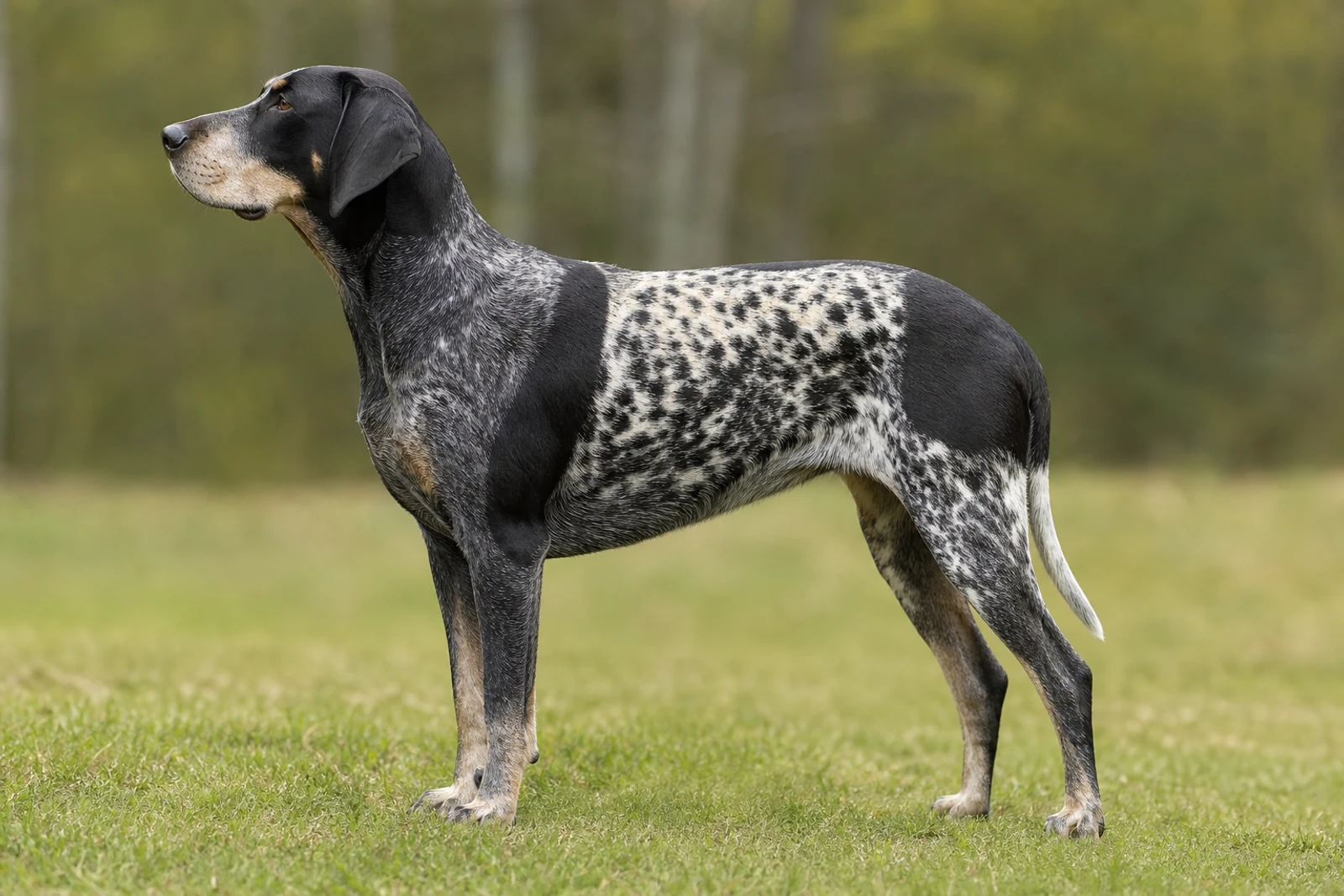
The Norwegian Hound, also known as the Dunker, is a noble scenthound suited for active families and outdoor enthusiasts. This breed thrives on long walks and sniffing adventures, making it ideal for those who enjoy hiking or running. Loyal and gentle, it bonds deeply with its family but retains an independent streak common to hounds. Its short, dense coat requires minimal grooming, and its friendly nature makes it a good companion for children. However, the Norwegian Hound needs plenty of exercise and mental stimulation to stay happy and may not suit apartment living or first-time owners unprepared for its stamina and occasional stubbornness.
At a glance
- Size
- Large
- Height
- 19–22 in
- Life span
- 11–14 years
- Coat colors
- Black and tan, Blue merle and tan
- Coat type
- Short, dense, straight
- Group
- Scenthounds
How much does a Norwegian Hound cost?
Adopt / rescue
$75–$400
Usually includes spay/neuter, first shots, and a microchip.
Buy from a breeder
$700–$2,000
From a reputable, health-testing breeder.
Approximate USD. Prices vary widely by region, breeder, pedigree, age, and coat colour — adopting is the lower-cost and recommended route. Avoid suspiciously cheap “breeders”; they’re often puppy mills.
Estimate the full cost of a Norwegian Hound →Want the ongoing number? Estimate the monthly food bill for a Norwegian Hound with our dog food cost calculator.
Norwegian Hound photos
Views
Front, side, rear and top — the full silhouette.Poses
How the breed sits, lies, moves and plays.Puppy to senior
The breed across its whole life.Expressions
The breed’s range of moods.Close-up details
Eyes, ears, nose, paws, tail and coat.Coat colors
The breed’s recognized colors.Click any photo to enlarge. We show the Norwegian Hound from every angle — three views, poses, life stages, expressions, close-ups, coat and colors.
Appearance & size
A Norwegian Hound is built to run—and built to do it for hours. Expect a large, rectangular dog standing 19 to 22 inches at the shoulder. Weight typically lands between 35 and 55 pounds, with males on the heavier side. That’s not massive, but the dense bone and deep chest give the dog real substance without tipping into clunkiness.
Build & proportions
Seen from the side, the body is slightly longer than tall, with a strong, level back, a muscular loin, and a moderately tucked-up belly. The chest reaches down to the elbows, ribs are well sprung, and the shoulders slope smoothly into straight, clean front legs. From the front, legs are parallel and paws point dead ahead. The rear shows powerful thighs and a moderate bend of stifle that translates directly into ground-covering strides. There is no suggestion of weakness or daintiness anywhere—this is a workhorse scent hound that can tackle rough Scandinavian terrain all day.
Head & expression
The head is long and moderately broad, with a slightly domed skull and a definite stop. The muzzle is straight and about the same length as the skull, giving the profile a clean, balanced wedge. A large black nose sits squarely at the end. Eyes are dark brown, calm, and intelligent; in blue merle dogs you may see one or both eyes partly or fully blue—a normal expression of the merle gene. Ears are set low, hang close to the cheeks, and reach about halfway along the muzzle. They’re soft, rounded at the tips, and never folded.
Coat & color
The coat is a hard, dense double layer made for weather. The outer hairs are straight and harsh to the touch, while the undercoat is soft and thick. This combination sheds dirt and dries quickly. Color comes in two patterns: black and tan or blue merle with fawn/tan markings. Tan points typically appear above the eyes, on the cheeks, legs, chest, and beneath the tail. White markings are common and usually show up as a collar, chest blaze, white feet, and tail tip. The merle pattern creates irregular patches of diluted black that can look almost silver-blue—striking, but it comes with a built-in warning: responsible breeders never breed two merles together, because double merle puppies risk serious hearing and vision defects.
Tail & gait
The tail is set on rather low, carried in a slight upward curve like a sabre, and never curled over the back. When the dog moves, the tail does a gentle pendulum thing—nothing frantic, just an easy rhythm. At a trot, the Norwegian Hound covers a lot of ground with a smooth, effortless stride, head held high, legs driving straight forward with no wasted motion. It’s a working gait designed to keep a hunter on foot company all day without the dog burning out or breaking down.
History & origin
The dog we call the Norwegian Hound today is really the Dunker — a rare scenthound that has been chasing hare across Scandinavian forests for close to 200 years. The whole thing started with a single man, Wilhelm Dunker, a Norwegian breeder who set out in the first half of the 19th century to create a hound that could handle Norway’s brutal winters and sprawling, rugged terrain.
Dunker began with a foundation bitch named Lona, a pied scenthound of mixed background, and bred her to a Russian Harlequin Hound — a striking black-and-white breed that added the distinctive mottled or merle-like coat pattern the Norwegian Hound still sometimes carries. From there, he crossed in other local Norwegian hounds, carefully selecting for endurance, an iron nose, and the ability to work independently over deep snow and dense undergrowth. By the 1850s, the breed was well-established enough that Dunker himself exhibited them and the first breed club formed in 1902. Their job was simple and demanding: track hare by scent, often for hours in freezing conditions, and do it without constant direction from a hunter.
What set the Norwegian Hound apart was a combination of cold-weather grit and a mellow, level-headed temperament. The dogs weren’t just chasing quarry — they were expected to work in close partnership with a hunter on foot, so aggression or overexcitement was weeded out early. For decades, the breed thrived as a working dog in Norway, but its fortunes took a dive during World War II. Like a lot of European breeds, the Dunker nearly vanished as breeding programs stalled and resources dried up. Dedicated Norwegian breeders rebuilt the population in the post-war years, though numbers have always stayed modest. Even today, you’ll rarely stumble on a Norwegian Hound outside of Norway, and the breed remains firmly in the hands of a small circle of hunting enthusiasts who prize the dog for exactly what it was bred to do: put its nose to frozen ground and run, hour after hour, without a word of complaint.
Temperament & personality
A Norwegian Hound is, above all, a nose on four legs. These friendly, even-tempered scenthounds would rather sniff out a trail than pick a fight any day. You bring one home and you get a dog who bonds tightly with the whole family, leans into affection, and saves any ferocity for the backyard squirrel population—not for people. They tend to greet strangers with a wagging tail, which makes them lousy guard dogs but excellent adventure buddies.
That said, this is a determined worker, not a fluffy couch ornament. Inside, a well-exercised Hound often settles into a surprisingly calm house dog, happy to sprawl at your feet. But mentally check out, and you’ll hear about it. Neglect or long hours alone can trigger anxious howling or barking that carries through the neighborhood. Plan on a solid hour of moving, sniffing exercise daily—long meandering walks, fenced runs, or scent games that give that brain something to chew on besides your baseboards.
The nose never clocks off. A Norwegian Hound can become deaf to your recall the instant a rabbit hops across the trail, so a securely fenced yard isn’t negotiable. Expect creative counter-surfing and a dog who will carefully catalog every scent in the house; a vinegar spray doesn’t just deter chewing—it wipes the urine scent cues that invite a repeat indoor mark. You’ll also need a sense of humor for the cologne choices. Like many hounds, they might roll in something wretched on a walk, a throwback to masking their own scent or simply because they think Eau de Dead Thing smells fantastic. A homemade citrus spray can help redirect chewing when that excellent nose leads them to your shoe collection.
With children, they’re generally patient and gentle, but two caveats apply. First, never let kids interrupt a Hound mid-meal; a peaceful, uninterrupted bowl prevents food guarding. Second, their size—19 to 22 inches at the shoulder, built solid—means an excited tail or a bouncy lean can knock over a toddler by accident. Early socialization keeps their natural friendliness from tipping into pushy greeting behavior.
Training requires respect, not repetition. A strong-willed Hound bristles at heavy-handed methods and shuts down. Short, positive sessions that harness their tracking brain—find-the-treat puzzles, “go sniff” on cue—get far better results than a battle of wills. Watch their body language: a forward lean and loose, soft eyes mean they’re all in; stiff posture and a direct stare, rare as it is, signals discomfort you should heed. Calming signals like yawning or turning the head away tell you they need a break before you push too far.
At day’s end, this breed thrives on connection. They’ll curl up near you, drift off, and then be ready to hit the trail again at sunrise. The payoff for all that nose-driven intensity is a dog who is genuinely easy to live with—provided you honor the hound part of the deal.
Good with kids, dogs & other pets
Your Norwegian Hound’s pack-hound roots make him one of the more naturally patient large breeds around children. These dogs were developed to work closely with other hounds and handlers, so a low-aggression, tolerant streak is built in. A child who accidentally leans on a sleeping hound or tugs an ear usually gets a sigh rather than a snap. Still, any dog, no matter how steady, needs supervision with young kids — and kids need to be taught not to crawl on the dog or interrupt meals. The hound’s size (19–22 inches at the shoulder) means a clumsy zoomie in the living room can knock over a toddler, so active play is best directed outdoors.
With other dogs, the news is equally straightforward. Norwegian Hounds are used to living in a pack, and most get on well with housemates. They read canine body language fluently and tend to avoid conflict. If you already have a dog, introductions on neutral ground and parallel walks will set the stage for a smooth transition. The real hurdle isn’t dog-to-dog friction; it’s the breed’s deeply ingrained prey drive. Like many scenthounds, these dogs were bred to pursue hare over long distances, which means cats, rabbits, and other small pets can be intensely interesting for all the wrong reasons. Some Norwegian Hounds coexist peacefully with indoor cats they’ve grown up with, but that requires very early, carefully managed exposure and a cat who stands its ground. A fleeing animal flips a switch, and even a well-trained hound can forget his manners when the nose takes over.
- Kids: naturally gentle when treated respectfully, but no unsupervised time with small children.
- Other dogs: generally easygoing; early socialization helps shy individuals warm up at their own pace.
- Cats and small pets: high risk; never leave them alone together unsupervised. A raised puppy with a confident cat might learn to share space, but off-leash bolt after a neighbor’s pet is a real possibility.
Socialization isn’t just nice-to-have — it’s what turns a steady genetic foundation into a bombproof adult. That window between 3 and 14 weeks is when a puppy builds his catalog of what’s normal. Introduce your Norwegian Hound to busy playground noise, different floor surfaces, wheelchairs, umbrellas, and friendly strangers of all ages before that window starts to close. After about four months, the brain shifts from “this is new and fine” to “this is new and maybe dangerous,” and undoing a fear response takes ten times the work. For a dog that will spend its life in a family setting, early and ongoing positive exposure to the chaos of kids, the presence of other dogs, and the sight of the household cat is the single biggest predictor of success.
Trainability & intelligence
A Norwegian Hound’s nose calls the shots — and that’s the single biggest factor shaping how you’ll train one. This is a scenthound bred to follow a track with single-minded focus, often at a distance from the hunter. So expecting a crisp, automatic recall right out of the gate sets you both up for frustration. The dog isn't ignoring you to be spiteful; he genuinely stops hearing you when a fresh deer trail lights up his brain. You need to treat recall as a long game, not a basic command. Start in a boring room, then a fenced yard, then on a long line in low-distraction woods, and pay heavily with high-value treats or a squeaky toy every single time he comes back. Skip a reward early on, and he’ll quickly decide checking in isn’t worth the loss of that interesting scent.
Intelligence-wise, a Norwegian Hound is sharp and an independent problem-solver. He’ll figure out puzzle toys and latch sequences fast, but he’s equally quick to notice whether you’re consistent. If you sometimes let him pull on leash to reach a bush and other times correct him, he’ll gamble on pulling every time — because the reward of sniffing might be just around the corner. This is where relationship-based training makes all the difference. Force, stern reprimands, or leash pops backfire dramatically. A hound that feels pressured will shut down, become evasive, or simply grow anxious and distrustful. What works is short, upbeat sessions built on treats, play, and genuine praise. End while he's still hungry for more.
-
Early socialization is non-negotiable. The critical window is 3–14 weeks. Expose a puppy to different people, calm dogs, varied surfaces, and household sounds in gradual, positive bites. Some Norwegian Hounds can be reserved with strangers or a bit slow to warm up, and a lack of early exposure can tip that into fear-based reactivity. Keep the experiences light: a new person means a scatter of kibble in the grass, not a crowd leaning over him. Continue regular, positive outings through adolescence to keep that confidence solid.
-
Patience is your biggest training tool. He may ace a “sit-stay” in the kitchen, then completely forget it outside when a rabbit runs by. That’s not defiance — it’s instinct overriding habit. Repetition in progressively harder environments, always rewarding calmly for checking in with you, builds reliability over months, not weeks.
-
Motivate with what actually matters to him. For many, that’s small, smelly treats (think dried liver or cheese) and the chance to sniff as a reward. For others, a quick tug session trumps food. Figure that out, and you’ve got his attention. Punishment-based methods don’t create a more obedient dog; they create one that avoids you. A Norwegian Hound who trusts you will work eagerly — but pushing too hard will shut him down every time. Build that trust first, and the rest follows.
Exercise & energy needs
Your Norwegian Hound isn’t built for mindless laps around the block. This scenthound runs on a nose full of interesting odors. Keep him happy by pairing steady exercise with mental work that puts his scenting talent to use.
Budget at least 60 minutes of active time daily, split into two sessions. A practical rhythm: a 30-minute sniffy morning walk, then a 30–45 minute evening outing—off-leash exploration in a secure area, a long-line hike, or a tracking game. The payoff isn’t raw speed; it’s the focus required to follow a scent trail for an hour that truly tires him. Without enough nose work, a Norwegian Hound often channels idle brainpower into barking and digging.
Good bets:
- Long, meandering walks on new routes where he’s free to sniff everything.
- Structured nose work or tracking classes.
- Puzzle toys and snuffle mats loaded with smelly treats.
- Hide-and-seek games indoors or outdoors.
- Hiking and supervised swimming sessions.
One non-negotiable: when he keys on a scent, his recall can vanish. Keep him on a long line or inside a secure fence unless his training is rock-solid. Puppies and adolescents need a gentler approach—skip forced roadwork until growth plates close. Focus on free play, short walks, and scent puzzles that tire the brain without stressing joints. If your dog has spinal or joint concerns, avoid high-impact jumping and lean toward swimming or soft trails.
Grooming & coat care
Your Norwegian Hound’s coat is a no-nonsense, all-weather shield — short, dense, and double-layered. The straight outer hairs repel water and brush, while a soft undercoat insulates against Scandinavian cold. That undercoat is also what drives the shedding cycle.
A bristle brush or a rubber curry mitt is your go-to tool. Once a week pulls out loose fur, spreads natural oils, and keeps the coat gleaming. When the undercoat blows out in spring and fall, you’ll need to step it up to every other day to stay ahead of the tumbleweeds. A de-shedding rake can speed up those seasonal bursts, but use it lightly — the tight, hound-smooth coat doesn’t mat, so you’re just capturing dead hair, not detangling.
Bathe only when necessary. These dogs have a low-odor, self-cleaning quality typical of many scenthounds; over-washing strips the protective oils that keep the coat weather-ready. Once every few months, or after a particularly fragrant roll in something pungent, is plenty. Use a mild dog shampoo and rinse thoroughly.
Ears need weekly attention. Those drop, velvety flaps are charming but trap moisture and limit airflow, making them infection-prone. Wipe the outer ear with a vet-approved cleaner on a cotton pad — never probe deep. Check for redness, odor, or head-shaking.
Nails grow fast on an active dog that spends time on soft ground. Trim every 3–4 weeks or as soon as you hear clicking on hard floors. Long nails can throw off gait and lead to joint strain in a breed built to cover miles. Dental care rounds out the routine: brush teeth several times a week with dog toothpaste to keep tartar at bay. After a muddy hunt, a quick wipe-down with a damp cloth often replaces a full bath.
Shedding & allergies
If you’re sharing your home with a Norwegian Hound, invest in a good vacuum and accept that dog hair is now a condiment. This is a double-coated scenthound that sheds steadily all year long — you’ll find wiry, short hairs on furniture, floors, and floating into your morning coffee. The undercoat is dense and designed to insulate them against harsh Scandinavian weather, which means two things: daily light shedding and a full-blown seasonal blowout once or twice a year when the coat renews itself. During those few weeks, brushing becomes a daily appointment, and you’ll pull out enough loose undercoat to knit a small throw pillow.
A rubber curry brush and a slicker are your tools of choice. Work through the coat at least two or three times a week in normal months, stepping it up to every day during a shed cycle. Baths help loosen dead hair but won’t stop the shedding — just channel it into the drain instead of the rug.
Drool is present but rarely extreme. You’ll see some slobber after drinking or when they’re hot, but this isn’t a breed that leaves ropes of saliva hanging from the ceiling. Wiping their mouth after a water bowl session is more cleanup than crisis.
For allergy sufferers, the honest picture: no dog is truly hypoallergenic, and a Norwegian Hound’s dander-laden hair and seasonal shedding make them a poor choice if you’re allergic. The volume of hair moving through your house carries allergens everywhere, and even a spotless cleaning routine won’t eliminate it. If sniffles and wheezes are a concern, you’d do better looking at breeds that shed less dander.
Diet & nutrition
A Norwegian Hound’s love for food is real — and that means portion control is the single most important daily habit you can build. These scenthounds are famously food-motivated, so if the kibble keeps coming, they’ll keep eating. Extra weight puts stress on joints, and in a large, active breed that already asks a lot of its frame, staying lean matters. Measure every meal with a standard dry-measuring cup and split the daily ration into two feedings. For a typical adult in the 50–70 pound range, that often lands around 3 to 3½ cups of high-quality dry food, but you adjust based on the brand’s calorie density and your dog’s real-time body condition — you should feel ribs without pressing hard.
- Puppies eat four times a day until four months old, then three meals until six months, then the adult two-meal rhythm. Introduce new diets slowly: start with lightly cooked and puréed meats, fish, fruits, and vegetables, or a well-formulated large-breed puppy food. Raw chicken wings can be offered around twelve weeks, always under supervision.
- Seniors do well with smaller, more frequent meals; there’s no strong case for cutting protein, but do watch the scale since activity naturally declines. Purée meals for any dog with missing teeth or a sensitive mouth to help them absorb nutrients.
- Fast gulpers benefit from a food-puzzle bowl that forces slower eating. It adds a little mental work and can cut the choking risk.
Build meals around animal protein. A practical split is roughly 60% cooked and raw meat, 20–30% fruits and vegetables, and the rest from eggs, digestible grains like white rice or pearl barley, or plain yogurt. Never impose a vegetarian or vegan diet — a dog’s digestive system evolved for meat. If you cook for your dog, lightly blending or processing the food can improve nutrient uptake since canine jaws lack the sideways grind and salivary enzymes that kick-start digestion. For sensitive stomachs, white rice works as a bland, easy carbohydrate.
Put every scrap into the dog’s own bowl — never feed from the table. Begging, once learned, is brutal to undo. And skip the fatty holiday leftovers; a single rich meal can trigger pancreatitis.
Health & lifespan
A well-bred Norwegian Hound typically lives 11 to 14 years — a solid run for a large scenthound. Hitting the high end of that range depends heavily on genetics, staying lean, and catching small problems early.
Joint health is the big one. Hip and elbow dysplasia show up in the breed, so responsible breeders screen both parents through OFA or PennHIP and share the results. Don’t skip that step. Extra weight on growing joints or an adult dog dramatically speeds up arthritis, so keep your Hound on the slim side of “fit.”
Bloat (gastric dilatation-volvulus) is a life-threatening danger because of the deep chest. Feed two or three smaller meals a day, avoid hard exercise right after eating, and learn the signs — restlessness, a swollen belly, unproductive retching. A fast trip to the vet is the only answer.
Ear infections come with the territory. Those floppy ears trap moisture and debris. Wipe them dry after the dog swims or gets wet, and clean them weekly with a vet-approved drying solution to head off yeast and bacteria.
Eye disorders vary by bloodline. Progressive retinal atrophy and cataracts aren’t present in every line, but a breeder who has both parents’ eyes examined annually by a veterinary ophthalmologist is one you want to talk to.
Skin allergies — often triggered by food or environment — can show up as chronic itching, licking, or recurring ear trouble. A high-quality diet, omega-3 fatty acids, and managing environmental allergens make a noticeable difference.
Routine care protects the rest. Give heartworm prevention monthly during mosquito season and for one month after it ends. Keep rabies vaccination current — it’s legally required and there’s no effective treatment once symptoms appear. Annual vet visits catch subtle shifts (a drop in stamina, changes in appetite) before they become big problems. For a Hound bred to push through discomfort, those little cues often tell the real story.
Living environment
A Norwegian Hound is a large, heavily driven scenthound bred to cover miles of Nordic terrain in cold weather. That tells you nearly everything about what kind of home works — and what doesn’t.
Apartment vs. house — an apartment is a poor match unless you’re ready to provide truly extensive outdoor exercise and you have neighbors who can tolerate noise. This is a breed that thrives in a house with direct access to a secure, spacious yard. Even in a house, the yard is non-negotiable; you can’t meet a Hound’s needs with leash walks alone.
Yard needs go far beyond a patch of grass. A 6-foot solid fence is the minimum. Norwegian Hounds will blow past an invisible fence or short barrier the instant a rabbit or deer scent grabs them. Expect digging along fence lines if boredom sets in. The yard is where you’ll do off-leash running, scent games, and hide-and-seek — not just a place to potty.
Climate tolerance leans hard toward cold. Their dense double coat shrugs off snow and freezing temps, so winter hiking is where they shine. Heat is a different story. During warm months, shift exercise to early morning or late evening, provide constant shade and water, and watch for overheating. They’re not a dog that can safely accompany you on a summer afternoon run.
Noise is a defining trait. Norwegian Hounds have a deep, resonant bay that carries. They use it on the trail, when they’re excited, and often when left alone. Close neighbors or thin walls are a recipe for complaints. This is not a quiet breed, and you won’t train the hound out of them.
Being left alone takes real management. These dogs are pack-oriented hunters, and isolation can trigger howling, digging, or destructive chewing. They cope far better with another confident dog for company. If you must be gone for full workdays, plan on a midday break from a dog walker, a meal-dispensing puzzle toy, and gradual alone-time desensitization from day one. Even then, a Norwegian Hound left solo for 8+ hours will often voice its displeasure — and that bay travels.
Who this breed suits
If you’re an active family or an outdoorsy single who genuinely likes being outside in all weather, a Norwegian Hound could be your ideal partner. These dogs are built to cover miles of rough Scandinavian terrain while tracking hare and fox, and that need for movement doesn’t switch off indoors. A leashed jog, a 60–90 minute hike, or a long session of scent work isn’t optional — it’s the daily baseline. Without it, you’ll get a restless, vocal dog who invents his own entertainment.
This isn’t a first-time-owner breed unless you’re exceptionally committed to training and exercise from day one. Norwegian Hounds are smart but independent problem-solvers, and they’ll tune you out when a scent trail is more interesting. They respond best to patient, consistent handling with plenty of positive food motivation. If you’ve owned a coonhound or another scenthound before, you’ll feel right at home.
They’re naturally social and friendly with people, including gentle kids, but those interactions need supervision simply because a joyful 50–60 lb hound can knock over a toddler without malice. They tend to get along with other dogs, especially if raised together, but the high prey drive is non-negotiable: cats, rabbits, and other small pets read as game. A secure, tall fence is a must, and off-leash reliability in unfenced areas is a long, chancy project — if it ever happens at all.
Who should think twice? Apartment dwellers, anyone who works long hours with no midday dog walker, or owners who prize a quiet home. Norwegian Hounds have a deep, carrying bray that they use freely when bored, excited, or on a hot scent. They shed seasonally, and their energy is more endurance-athlete than weekend-warrior. Seniors or low-energy households will quickly feel overwhelmed by the daily demands.
On the flip side, experienced hound lovers, trail runners, and active families with older kids who want a goofy, loyal adventure buddy will find a lot to love. You just have to be honest about whether your lifestyle matches the dog’s genetic hardwiring.
Cost of ownership
Bringing a Norwegian Hound into your life is a 11–14 year commitment, and the costs stack up well beyond the initial purchase. If you go through a responsible breeder who screens for hip and ear health, expect to pay $1,200–$2,500 for a well-bred puppy. You might luck into a young adult through a breed-specific rescue for a few hundred dollars, but they’re not common in shelters.
Monthly upkeep runs $150–$300, depending on your choices and your dog’s health. Here’s where it goes.
- Food: A large, active scenthound eats a lot. Budget $55–$85 a month for quality kibble that won't pack on empty calories. Tipping the scales just right matters — extra weight stresses those hips.
- Routine vet and prevention: Annual checkups, vaccinations, heartworm, and flea/tick meds average out to $40–$70 per month. This is not a breed that does well skipping preventatives in tick-heavy woods.
- Grooming: You've got a short, dense coat that sheds moderately. A monthly bath, nail trims, and a good rubber curry brush are about all you need. If you handle it yourself, the monthly cost is basically a bottle of shampoo. A professional session every six weeks adds $30–$50 a pop.
- Unexpected care and insurance: Scenthounds can be prone to ear infections (those drop ears trap moisture) and hip dysplasia. A single ear surgery or a year of allergy management can hit $1,500 fast. Pet insurance with good hereditary coverage runs $40–$75 a month, and it spares you a brutal choice between your wallet and your dog’s comfort. Without it, set aside at least that much in a dedicated emergency fund.
Choosing a Norwegian Hound
The first choice is whether to go through a responsible breeder or adopt. Norwegian Hounds aren’t a common breed in the U.S., so rescue options may be slim. The national parent club (or the Norwegian Hound Club of America, if one exists) sometimes has a breed-specific rescue or can point you to hound rescues that occasionally take them in. Adopting an adult means skipping the puppy chaos and often getting a good read on the dog’s real temperament around people, other dogs, and especially cats — a giant question mark in a scent-driven breed. If you go the breeder route, prepare to wait. Litters are small and planned infrequently.
Health clearances you can’t afford to skip
A Norwegian Hound’s long back and active, hard-running body put hips at risk. Insist on an OFA or PennHIP hip evaluation for both parents — a “fair” or better result is the minimum, not “good enough.” Because floppy, deep-set ears trap moisture, chronic ear infections can be a pain point; ask the breeder how they manage ear health in their lines and what you should expect. Eye exams by a board-certified veterinary ophthalmologist (look for a current CERF or OFA eye clearance number) are equally important. While not listed as a breed-specific requirement by all clubs, it’s a smart screen for a dog you’ll rely on outdoors. A breeder who also tracks thyroid levels and elbows through OFA is a bonus, not a luxury.
Red flags that send you walking
Any breeder who sidesteps providing documentation for those clearances is a hard pass. Same for anyone selling puppies before eight weeks, offering multiple litters year-round, or skipping a contract that takes back the dog if your situation ever changes. If you can’t meet at least the dam, or if the dogs are kenneled off-site and kept out of sight, that’s a deal-breaker. Norwegian Hounds are family-oriented scenthounds; a healthy line produces dogs that are curious, not cringing or aggressive. Avoid a puppy that hides in the corner or, conversely, one that bullies littermates nonstop — you want the pup who walks up to check you out, uses its mouth gently, and recovers quickly from a startle.
Choosing a puppy is only half the equation. A responsible breeder will grill you on your yard fencing, exercise plan, and experience with independent hounds. Bring your own list of questions, observe how the whole litter interacts, and trust your gut if something feels off — even if the waitlist took six months. A well-bred Norwegian Hound can live 11 to 14 years; a rushed decision can mean a decade of coping with avoidable health or temperament baggage.
Pros & cons
The Norwegian Hound is a durable, straight-up scenthound — affectionate with its own people but fueled by a nose that overrides nearly everything else. That independence makes the breed a joy for the right active owner and a source of endless frustration for someone expecting a biddable pet.
Pros
- Hardy and athletic in a medium-large package: stands 19–22 inches, typically 35–55 pounds, with a dense, low-maintenance coat built for cold, wet Nordic woods.
- Calm and friendly at home — forms strong family bonds and gets along well with children when raised with them. Not a frantic or nervy dog indoors.
- A true endurance partner for hikers, runners, and hunters. Happiest covering serious ground, tracking scent for hours without tiring.
- Moderate lifespan of 11–14 years for a large breed, with relatively few hereditary dramas when sourced from a responsible breeder.
- Quiet for a scenthound during downtime. Unlike some pack hounds, it’s not constantly howling in the backyard.
Cons
- Nose-driven and stubborn. If a scent trail fires up, recall becomes a suggestion, not a command. Off-leash reliability without a fence is a gamble.
- High prey drive toward cats, rabbits, and other small animals. Not a safe match for a house full of free-roaming pocket pets.
- Needs a real job. A couple of daily leash walks won’t cut it. Expect to provide at least an hour of hard, off-leash running or nose work, or you’ll see digging, baying, and escape artistry.
- Vocal when hunting or bored. The trademark melodious bay carries through walls and will strain neighbor relations in close quarters.
- Reserved with strangers and independent-minded. Early, thorough socialization is non-negotiable, and training requires patience — this is not a golden retriever.
Similar breeds & alternatives
A Beagle packs the same stubborn nose and musical bay into a shorter, 13–15 inch frame. It’s more overtly social with people and other dogs, but that also means a Beagle typically protests alone time with louder, more frequent howling. The Norwegian Hound is taller, more reserved with strangers, and often quieter indoors once its exercise need is met.
If you want a similar size without the Beagle’s clinginess, look at the Harrier (19–21 inches). Harriers were bred to hunt in packs, so they lean heavily on company—canine or human. The Norwegian Hound, developed for solo hare hunting, is far more independent and can be comfortable as an only dog, provided you deliver the daily off-leash running it craves.
The Hamiltonstövare, a Swedish scenthound, matches the Norwegian Hound’s height and love of a cold-weather sprint. The key difference is temperament: a Hamiltonstövare tends to be more eager to please and less naturally aloof with unfamiliar people. Both need a securely fenced area, because a scenthound’s selective deafness kicks in the moment a rabbit crosses the trail.
Another Nordic alternative, the Finnish Hound, shares the same sturdy build but demands a louder, more relentless baying session and often needs two hours of hard running—not just a long walk—to settle indoors. The Norwegian Hound typically does well with an hour of focused sniff work and a good sprint. All these breeds stay true to the hound rule: no off-leash freedom outside a fence or long line, no matter how solid your recall is on most days.
Fun facts
- The Norwegian Hound was developed in the 19th century by Wilhelm Dunker.
- It is renowned for its excellent cold weather tolerance and stamina in snow.
- Despite its qualities, it remains a rare breed outside Norway.
- It is primarily a hunting hound used for tracking hare and fox.
Frequently asked questions
- How much does the Norwegian Hound shed?
- The Norwegian Hound has a short, dense coat that sheds moderately year-round. Weekly brushing helps manage loose hair, and occasional baths keep the coat healthy. They are not considered heavy shedders compared to some breeds.
- Are Norwegian Hounds good with children?
- Norwegian Hounds are typically gentle and friendly with children, making them good family dogs. They are patient but energetic, so supervision is recommended with younger kids. Early socialization helps them interact well with everyone.
- How much exercise does a Norwegian Hound need?
- As an active scenthound, the Norwegian Hound needs daily vigorous exercise like long walks, runs, or scent games. They thrive with 1–2 hours of activity per day and can become destructive if under-stimulated. A tired hound tends to be a well-behaved companion.
- Are Norwegian Hounds barkers?
- Like many scenthounds, Norwegian Hounds can be vocal and may bark or bay when they catch an interesting scent. They are not incessant barkers, but their deep bark carries. Training can help manage unnecessary noise.
- Can a Norwegian Hound live in an apartment?
- Due to their high energy and tendency to vocalize, Norwegian Hounds are not ideal for apartment living. They do best in homes with a yard or access to outdoor space where they can run and explore. Boredom may lead to nuisance barking indoors.
- Is the Norwegian Hound good for first-time dog owners?
- Norwegian Hounds can be a good fit for first-time owners who are active and patient. They are intelligent but can be independent and stubborn, so consistent, positive training is important. Novice owners should be ready for their strong scent drive and exercise needs.
Tools & calculators for Norwegian Hound owners
Quick estimates tailored to Norwegian Hounds — pre-filled with this breed’s size where it matters.
Articles & stories about the Norwegian Hound
Sources & standards
This profile follows recognized breed standards from the American Kennel Club (AKC) and the Fédération Cynologique Internationale (FCI), along with established veterinary and breed-club guidance. These describe general breed tendencies — every dog is an individual.