

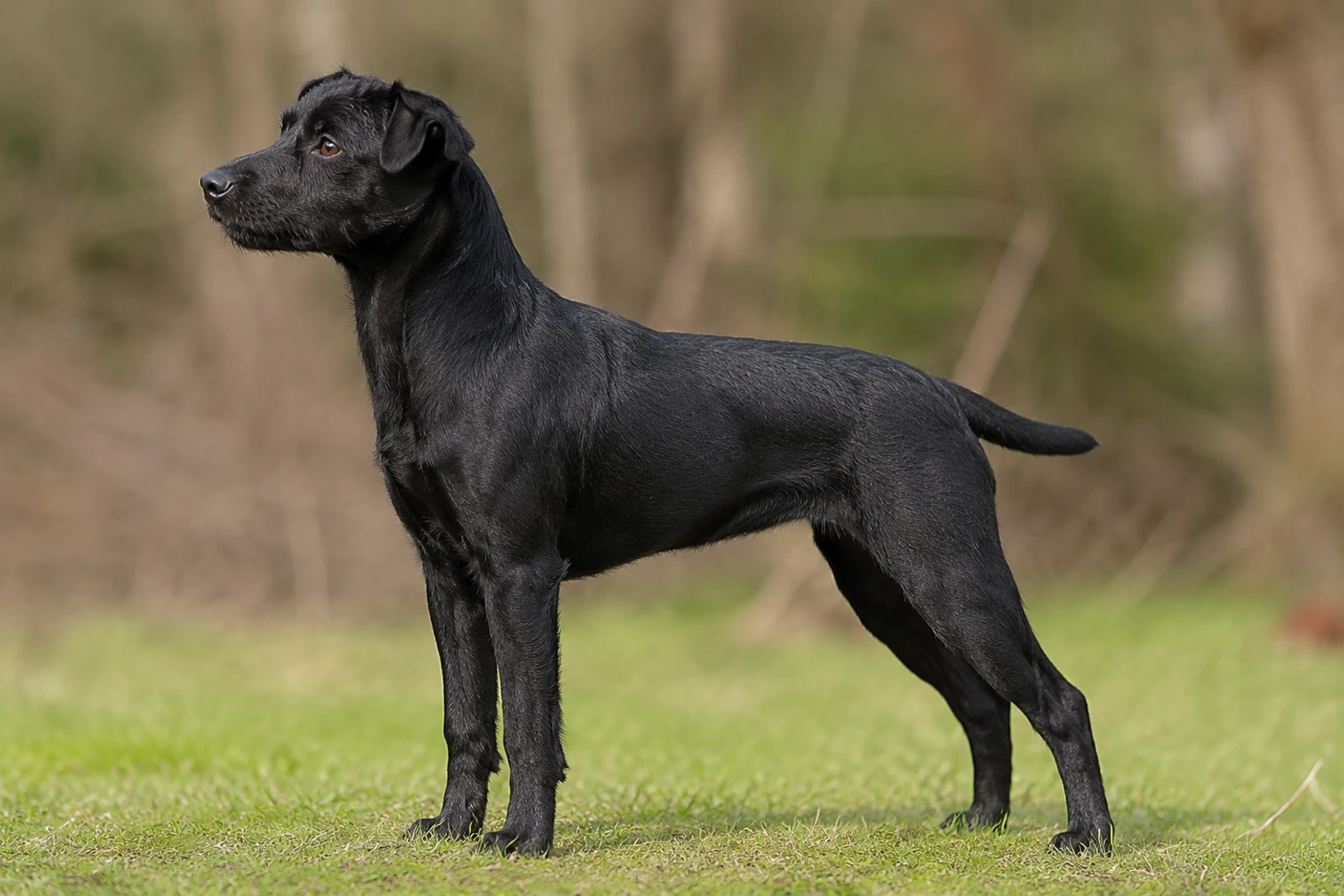
The Patterdale Terrier is a tenacious, high-energy working terrier built for endurance. Ideal for active singles or families with outdoor lifestyles, this breed thrives on having a job to do, whether it's hunting, agility, or long hikes. They are loyal and affectionate with their own but can be independent and challenging to train. Best suited to experienced owners who can provide firm, consistent leadership and ample daily exercise. Not recommended for homes with small pets due to strong prey drive.
At a glance
- Size
- Medium
- Height
- 10–15 in
- Weight
- 11–13 lb
- Life span
- 13–14 years
- Coat colors
- black, red, liver, grizzle, bronze, black and tan
- Coat type
- short, dense double coat, can be smooth, broken, or rough
How much does a Patterdale Terrier cost?
Adopt / rescue
$75–$400
Usually includes spay/neuter, first shots, and a microchip.
Buy from a breeder
$700–$2,000
From a reputable, health-testing breeder.
Approximate USD. Prices vary widely by region, breeder, pedigree, age, and coat colour — adopting is the lower-cost and recommended route. Avoid suspiciously cheap “breeders”; they’re often puppy mills.
Estimate the full cost of a Patterdale Terrier →Want the ongoing number? Estimate the monthly food bill for a Patterdale Terrier with our dog food cost calculator.
Patterdale Terrier photos
Views
Front, side, rear and top — the full silhouette.Poses
How the breed sits, lies, moves and plays.Puppy to senior
The breed across its whole life.Expressions
The breed’s range of moods.Close-up details
Eyes, ears, nose, paws, tail and coat.Coat colors
The breed’s recognized colors.Click any photo to enlarge. We show the Patterdale Terrier from every angle — three views, poses, life stages, expressions, close-ups, coat and colors.
Appearance & size
The Patterdale is a pocket powerhouse — a compact, squarely built terrier that looks like it was carved out of oak and wrapped in a no-fuss coat. He stands 10 to 15 inches at the shoulder and weighs a lean, dense 11 to 13 pounds. Everything about his frame says “functional.” There is zero exaggeration here: no spindly legs, no excessive bulk, just a hard, balanced little dog ready to go to ground.
Coat and color vary more than you might expect. You’ll come across three distinct coat types, all double-layered for weatherproofing:
- Smooth: short, tight, glossy hair that lies flat against the body.
- Broken: an in-between coat with longer guard hairs on the body and a smoother face, often with a wiry feel.
- Rough: a dense, harsh, wiry outer coat that may form a slight beard, eyebrows, and leg furnishings.
Colors run from solid black, red, liver/chocolate, and grizzle (a slatey blue-gray) to black-and-tan or even bronze. White chest markings and a dab on the toes pop up, but large white patches aren’t the norm — this is a working terrier, not a show-ring spectacle.
From the front, his chest is deep and moderately narrow, letting him squeeze through tight rock crevices. The forelegs are dead straight, sturdy, and set well under the body. A strong neck flows into well-laid-back shoulders. The head is a fist-like wedge: slightly domed skull, a strong muzzle that doesn’t pinch, and a jaw that means business. The small, triangular ears fold neatly forward or out to the side in a button or rose-carriage, framing an alert, terrier-sharp expression. Dark, almond-shaped eyes watch everything with a level, can-do stare — this isn’t a dog that looks soft or pleading.
Viewed from the side, the topline runs straight and level from the withers to the set-on of the tail. The ribs are well-sprung, carrying back into a short, powerful loin. There’s a definite tuck-up, but it’s athletic, not whippet-like. The rear legs show noticeable angulation at the stifle, loaded with driving muscle. Traditionally, the tail was docked to about a third of its length (handy for grabbing during a hunt), but you’ll see plenty of natural-length tails today — carried high and bouncy but never curled over the back.
From the rear, the back legs stand parallel, with broad, well-developed thighs and low-set hocks that give him that coiled-spring look. Even standing still, a Patterdale seems to be leaning forward just a little, all energy held in check.
History & origin
The Patterdale Terrier came straight out of England’s Lake District, purpose-built for one of the grittiest jobs a small dog can do. The breed is barely a century old, developed in the early to mid-20th century by fell terrier men who needed a dog that could bolt a fox from a tight rock crevice 12 feet underground — and come out alive.
Roots in the fells
The story starts in the rugged valleys around Ullswater, particularly the parish of Patterdale in Cumbria. Hard-bitten huntsmen kept lines of small, tough black terriers to protect livestock and clear foxes from the steep, stony fells. These dogs weren’t bred for a ring or a bench; they were bred strictly for work. Size mattered — a dog over 13 pounds might wedge itself in a tight spot and never come back. So the standard settled at a dense, muscular 11–13 pounds, with a 10–15 inch height that slips easily through narrow passages. Grit mattered more than looks, and the fellmen ruthlessly culled anything that didn’t show enough courage or endurance.
A handful of breeders refined and named the type. Legend credits Cyril Breay, a huntsman and earth-dog man who lived near Patterdale, with coining the name “Patterdale Terrier” in the 1960s. Breay’s compact black terriers became the backbone of the breed. Around the same time, Brian Nuttall’s “Nuttall” line contributed the rough-coated, game little dogs he used for fox and badger work, and Frank Buck’s line added further working traits. These early strains formed a loose, genetically diverse gene pool — never a closed studbook — that prioritized stamina, nose, and tenacity above a uniform blueprint.
Not a kennel-club creation
You won’t find the Patterdale in the AKC’s lineup, and that’s by design. For decades, the only registry that mattered was a soot-stained collar and a working reputation. The United Kennel Club (UKC) finally recognized the breed in 1995, and the American Dog Breeders Association and other working-dog organizations followed suit. Even so, many of the best working Patterdales today come from unregistered lines where the sole criteria are gameness and utility.
The jump to North America and beyond
Patterdales reached the United States with terrier-obsessed sportsmen in the latter half of the 20th century. They were valued for their ability to work groundhogs, raccoons, and fox in terrain that broke larger terriers. Because the dogs are compact, quiet in a crate, and tough as nails, they traveled easily and settled into rural American hunting packs. Over time, suburban families noticed the Patterdale’s bright, affectionate side and started bringing them in as companions. The breed is still a niche dog, but its numbers are growing — often split between two camps: working-kennel breeders who select for drive and home breeders who temper that fire for pet life. That split means a Patterdale from working lines may be too much dog for a casual owner, while a dog from softer pet lines still needs a serious outlet for its terrier brain.
What hasn’t changed is the breed’s core. A Patterdale remains a first-rate earth dog, a smart little predator who weighs 11–13 pounds soaking wet and will duck into a dark, tight hole without a backward glance. That’s exactly what the fellmen bred for, and it’s exactly what you get.
Temperament & personality
If you’re picturing a small lap dog, the Patterdale Terrier is here to change your mind. Every one of their 11–13 pounds is coiled, working-terrier muscle—bred to bolt after quarry underground, not lounge on pillows. Bold, independent, and whip-smart, this dog opens every door with both paws. You get a partner who demands a purpose, not a casual companion.
Energy in this package is intense. A morning stroll is background noise. A Patterdale needs a solid hour of hard running, scrambling, or focused scent work daily. Idle time gets spent on demolition: excavating your garden, shredding furniture, or chewing anything that fits in their mouth. Puppies chew to explore and relieve teething pain; adults gnaw to keep jaws strong. Soak citrus peels in water and spray off-limit items as a deterrent, but real relief comes from earthdog trials, puzzle feeders, and long games of flirt pole.
Affection runs deep, though it shows up on their own terms. Expect a little shadow who follows you room to room and may crash on your lap after the tank is empty—just don’t mistake aloofness for distance. Neglect or long isolation triggers anxiety that spills out as barking, pacing, or chewed baseboards. They’re built for homes where someone’s around most of the day. As watchdogs, they’re loud and unwavering: a leaf, a delivery, a neighbor three doors down—all get announced with full-throated conviction. Early socialization keeps that vigilance from becoming a constant state of high alert.
You can’t boss a Patterdale. You earn cooperation through consistent, respectful engagement. Force makes them dig in; positive reinforcement, delivered with humor and patience, actually works. Be more stubborn than they are, because they will test every boundary. Housetraining leans hard on scent memory: a single indoor accident leaves a smell cue that invites re-soiling. Clean it with vinegar spray (white or cider vinegar neutralizes urine odor) and reward outdoor elimination with a treat immediately. Dogs associate specific scents with past experiences, so a clean house is a blank slate.
Around the household, the picture sharpens. Patterdales can be fantastic with older kids who read dog body language—a stiff, staring posture and forward lean often come before a snap, not a game. Teach children never to interrupt a dog while eating; food guarding isn’t rare. A relaxed, soft-eyed dog is the one who’s ready to play. The same prey drive that makes them fearless ratters means cats, rabbits, and sometimes even smaller dogs trigger that chase—many Patterdales do best as the only pet or with careful, separate management. Intact males may mark territory indoors using urine to lay down familiar scent cues for themselves, so neutering and thorough potty routines matter.
You’ll see quirks that make you laugh and groan. They’ll roll in foul-smelling things—maybe to mask their own scent, maybe just because they like the stench—and track it straight onto the couch. Their center of gravity shifts forward, always ready to bolt. A 13–14-year lifespan gives you a long run with a dog who’s equal parts tenacious hunter and loyal companion, never fully tamed, always ready for the next adventure.
Good with kids, dogs & other pets
With children
A Patterdale Terrier at 11–13 pounds is small enough to be unintentionally hurt by a clumsy toddler, yet tough and energetic enough to knock over a young child in play. They’re not aggressive by nature, and with gentle handling and clear boundaries they can be a fantastic, playful companion for older kids who understand how to interact with a dog. Always supervise — not because the dog is mean, but because these terriers react fast. A tail pulled or a toy grabbed at the wrong moment can trigger a startled snap. Kids who run and squeal can also spark the Patterdale’s chase instinct, turning cuddle time into a high-speed game that ends with someone bumped or nipped. Teach children to let the dog approach on its own terms, and never disturb it when it’s resting or eating.
With other dogs
Patterdales are terriers first — feisty, confident, and often pushy with other dogs. Many live happily with a canine housemate they’ve been raised alongside, especially of the opposite sex. But rushing into a dog-park free-for-all or introducing a strange adult dog onto “their” turf can go sideways quickly. Early, positive socialization is the only reliable way to build a dog that reads social cues well and doesn’t default to a scrappy response. Puppy classes, controlled playdates, and lots of exposure to friendly, vaccinated dogs before 16 weeks old lay the groundwork. Without that, an adult Patterdale may decide he doesn’t need dog friends — and that’s okay. Forcing interactions with unfamiliar dogs later in life typically raises stress rather than sociability, and can trigger fights that mimic the breed’s quarry-driven intensity rather than healthy play.
With cats and other small pets
Assume a hard “no” for small furries like hamsters, rabbits, or gerbils — the Patterdale was bred to dispatch vermin underground, and that prey drive doesn’t switch off just because the animal lives in your house. Cats are a maybe, but only with careful management. A Patterdale puppy raised with a confident, dog-savvy cat from day one can learn to coexist, often snuggling on the couch without incident. The risk spikes when the cat runs, because that flicker of motion triggers a chase that can end badly. Even a cat-friendly Patterdale should never be left loose with a cat when you’re not there to intervene. Outdoor cats, strays, or a neighbor’s pet are almost always fair game in the dog’s mind. If you have small pets, think hard about whether you can commit to lifelong separation and supervision.
The early socialization edge
Everything hinges on what happens during the critical window between 3 and 16 weeks. This is when a Patterdale puppy’s brain is most open to learning that new people, dogs, cats, kids’ voices, skateboards, and vacuum cleaners are normal parts of life. Puppies that miss this window — especially those from isolated backgrounds — often grow into adults who react with fear or aggression to things they didn’t meet in time. You can still help an older dog cope through desensitization and training, but you won’t get that same easygoing adaptability. Make those early weeks count with calm, consistent introductions and plenty of positive rewards. A well-socialized Patterdale brings tenacity and heart without the constant edge of reactivity, making family life far easier.
Trainability & intelligence
Patterdales learn fast — sometimes too fast. They’ll nail a new trick in a handful of repetitions if the payoff is right, then decide they’re bored and invent their own game. That sharp, problem-solving brain comes wrapped in classic terrier independence. You’re not training a dog who lives to please; you’re negotiating with a partner who needs a clear reason to cooperate.
Force, harsh corrections, or repetitive drilling kill their motivation quickly. A Patterdale met with intimidation either shuts down or pushes back harder. What actually works is trust and a reward system that speaks to this dog. For most, tiny cubes of chicken, a thrown squeaky toy, or a minute of rough tug trumps a bag of kibble. Pair the reward with genuine, energetic praise and you’ll see more progress than a week of grudging compliance.
Start early and socialize on purpose
That independent streak means puppyhood is not optional — it’s when the foundation gets laid or cracks show up later. Start reward-based training by 8 weeks, focusing on recall and impulse control before anything else. A Patterdale’s prey drive is hardwired; a flushed squirrel can erase a year of practice in a heartbeat. Build a “come” cue that always pays off — high-value treats, a rolling game of chase toward you — and never correct a dog that finally returns, even if it took five minutes. Any punishment there teaches them to avoid you.
Between 3 and 14 weeks, calmly expose your pup to a wide range of people, surfaces, sounds, and other animals. A poorly socialized Patterdale often turns reactive out of fear, barking and lunging at things they didn’t meet early on. Keep every new experience positive, short, and at the pup’s own pace. If they hesitate, don’t flood them — back up and reward calm curiosity. Ongoing, low-pressure outings through adolescence and adulthood prevent that fear-based reactivity from settling in permanently.
Consistency, not intensity
Short, lively sessions scattered through the day beat a stale half-hour. Two to three 5-minute bursts keep their brain engaged without triggering stubborn shutdown. Patterdales test boundaries like a hobby — if you let them drag you on leash just once because you’re tired, they’ll remember and try again tomorrow. Be steady with the rules, but don’t turn into a drill sergeant. Over time, you get a dog who listens because cooperating is the best deal going, not because they’re afraid of what happens if they don’t. That trust-based reliability is the only kind a Patterdale respects.
Exercise & energy needs
A Patterdale Terrier packs the drive of a much larger working dog into an 11–13 lb frame. If you’re picturing a casual stroll around the block, think again. This is a dog built to cover rough terrain all day in pursuit of quarry, and that genetic wiring hasn’t dulled. Aim for at least 60–90 minutes of real exercise every day, split across two sessions. A quick morning walk won’t touch it — plan on off-leash running, vigorous fetch, or a solid hike where the dog sets the pace.
Intensity matters more than simple minutes. Patterdales thrive on explosive, purpose-driven movement. They want to dig, chase, and investigate. A fenced yard is helpful, but it’s not a substitute: you’ll still need to engage that busy brain. Combine physical work with mental jobs. Scent games, puzzle toys, and hiding treats in a snuffle mat can take the edge off on days when weather limits outdoor time. Even indoors, a 10–15 minute session of tug or “find it” buys you a calmer dog.
- Earthdog and barn hunt trials are tailor-made for the breed’s instinct to go to ground. If you have access to a club, go for it.
- Agility, flyball, and canicross channel that speed and tenacity into structured teamwork.
- Long sniffy walks on varied terrain — let the nose lead; it’s mentally exhausting in the best way.
- Interactive toys and frozen stuffed Kongs help mitigate restlessness between workouts.
A bored Patterdale will redecorate your home, dig craters in the garden, or develop reactive habits. Young dogs under 18 months still have open growth plates, so avoid repetitive high-impact jumping on hard surfaces, but don’t skimp on exercise — just keep it on grass and dirt. Consistent daily output prevents the anxiety and destructive chewing that surface when these terriers don’t get enough to do. If you can’t commit to two vigorous sessions daily, plus ongoing mental puzzles, this isn’t the right fit. Give them the work, and you’ll have a tired, happy, deeply loyal shadow at your feet by evening.
Grooming & coat care
Patterdales are wash-and-wear dogs, but a simple weekly brushing goes a long way toward keeping loose hair off your floors and the coat in working condition. Both the smooth and broken coat varieties have a dense, harsh outer layer and a soft insulating undercoat — a true double coat that sheds moderately year-round and blows heavily in spring and fall.
- For a smooth coat, a rubber curry mitt or a stiff-bristle brush is your best friend. It massages the skin, pulls out dead undercoat, and brings up a healthy shine without catching on the short, flat hair.
- For a broken coat (longer, wiry guard hairs), reach for a metal slicker brush with rounded pins. It detangles the longer hairs and grabs loose undercoat before it can mat.
Once a week is plenty for normal months. During the twice-a-year shed, daily to every-other-day brushing for a week or two will keep the fur tumbleweeds manageable. A quick wipe-down with a damp cloth after brushing lifts any leftover dust and enhances the natural gloss. Bathe only when the dog is genuinely dirty — too much soap strips the coat’s protective oils and softens the harsh texture that helps these terriers shrug off brambles and wet weather.
Nails usually need attention every three to four weeks, though an active outdoor dog may wear them down naturally. Check ears once a week for grit or wax, especially after a digging session. A few swipes with a vet-approved cleanser prevent trouble. Brush teeth several times a week to avoid tartar buildup in a small mouth.
A broken coat can be hand-stripped a couple of times a year to preserve the crisp, wiry feel, but many pet owners simply brush it out. Avoid clipping or shaving — it ruins the coat’s weather resistance and can lead to patchy regrowth. Stick with a 10-minute brush routine and you’ll catch any burs, ticks, or hot spots early while keeping shedding in check.
Shedding & allergies
Patterdales are light-to-moderate shedders, not the “I vacuum twice a day” type—but they definitely leave hair around the house. How much depends a lot on their coat, which can be smooth, broken, or rough. All three shed, just in different ways.
- Smooth coat: Short, dense, and lies flat. This coat sheds the most visibly because every loose hair lands directly on your dark pants. Year-round low-grade shedding, with a noticeable uptick in spring and fall.
- Broken coat: A wiry, slightly longer coat, often with longer guard hairs. Dead hair tends to tangle among the other coat rather than dropping, so you see less on the floor—until you brush it.
- Rough coat: Longer, fully wiry, and almost terrier-shaggy. Like the broken coat, it traps dead hair. Without regular stripping, those trapped hairs build up and eventually mat, then break off in clumps.
Seasonal blowout is real, especially with the smooth coat. Twice a year you’ll get a couple of weeks of heavier shedding where a daily once-over with a rubber curry brush or hound glove makes a big difference. The broken and rough coats don’t blow out on their own the same way; if left un-stripped, they’ll just hold the dead hair until you pull it out by hand or with a stripping knife. A good stripping session 2–3 times a year cuts way down on loose hair in the house.
Drool is basically a non-issue. Patterdales have tight flews, so they don’t slobber after drinking or leave wet spots on your knee.
On allergies: no Patterdale is hypoallergenic. The idea that wiry coats are allergy-friendly is a half-truth. They may release less hair into the air, but allergens come from dander and saliva too. If you react to dogs, spending time with an adult Patterdale before you commit is the only way to know whether your immune system will kick off. A responsible breeder won’t promise a sneeze-free pup.
Diet & nutrition
A lean, muscular 13-pound Patterdale Terrier burns through a surprising number of calories — but 11 extra ounces on a dog this small is a big deal. Since this is a breed that will happily polish off whatever you put in front of her, portion control isn’t optional. Most adult Patterdales do well on ½ to ¾ cup of high-quality dry kibble per day, split between two meals. If you feed raw, canned, or homemade, the daily caloric target typically lands between 300 and 400 calories, closely tied to how much she actually moves. A dog who works rats all afternoon needs the top end; a weekend warrior snuggling on the couch needs the bottom.
Puppy feeding schedule
From weaning until four months, give your puppy four evenly spaced meals a day. Drop to three meals from four to six months old, then transition to the adult two-meal rhythm. Stick with a high-quality commercial puppy food or a vet-approved blend of lightly cooked, puréed meats, fish, fruits, and vegetables. Around twelve weeks you can offer a raw chicken wing under supervision — just make sure bones are raw and size-appropriate, never cooked. Switch any new food gradually over a week or more so her digestive system can adapt without rebellion.
Keeping the weight off
Patterdales carry a terrier’s “eat first, ask questions later” food drive. Free-feeding a bowl of kibble all day invites obesity, which puts unnecessary strain on joints and the spine — luxating patellas and back trouble aren’t rare in small, high-energy breeds. Use a food puzzle bowl or a snuffle mat to slow down a gulper and give her brain a workout. Measure every meal with a real measuring cup or a kitchen scale. If you can’t easily feel her ribs beneath a thin layer of flesh, cut back a little and up the exercise.
What goes in the bowl
A biologically appropriate diet leans heavy on animal protein and fat. Aim for about 60% quality meat (raw or cooked), 20–30% dog-safe fruits and vegetables, and the remaining 10% from things like eggs, plain yogurt, or digestible grains such as pearl barley or white rice. If you batch-cook grains or vegetables, keep a container in the fridge to quickly build a meal — just avoid dumping in holiday scraps, because a single fatty meal can trigger pancreatitis. Unsalted water from cooking vegetables works as a no-cost broth to moisten dry food.
As your dog ages, the fundamentals don’t shift much. Seniors still need ample protein to hold onto muscle, but calorie needs drop if the daily trot becomes a slow stroll. Switch to two or three smaller meals if she gets picky or develops dental issues, and purée food when teeth go missing. Weigh your senior every few weeks and shave off a few kibbles before you see that waistline fade — preventing the pounds is simpler than peeling them off later.
Never feed from the table. If you want to share a bite of your dinner, put it in her own bowl, on her mat. Begging takes about one reinforced incident to become a lifelong habit, so draw that line early. With a Patterdale’s appetite and charm, you’ll need it.
Health & lifespan
A typical Patterdale Terrier lives 13 to 14 years—a solid, full run for a working terrier of this size. Plenty stay sharp and active well into their teens when they get consistent, no-nonsense care.
These dogs were built to go to ground after foxes, so they tend to be sturdy. That doesn’t make them bulletproof. A few health patterns show up often enough to mention. Luxating patellas (slipping kneecaps) crop up in small, muscular terriers. You might see a hop or a skip for a stride, then it pops back—mild cases often don’t need surgery, but a vet should check it. Dental disease is another common headache. A 12-pound mouth packs tight teeth that catch tartar fast, so daily brushing and dental cleanings under anesthesia when your vet recommends them go a long way. Eye issues like lens luxation or cataracts aren’t rampant, but responsible breeders screen breeding stock for inherited eye diseases; ask to see those clearances.
Skin problems deserve a nod. Some Patterdales develop atopic dermatitis—itchy, inflamed skin triggered by pollen, dust mites, or certain foods. If your dog scratches constantly or chews his feet, don’t shrug it off as a terrier quirk. A good diet, omega-3 supplements, and avoiding known allergens can settle things down, but you want a vet in the loop early.
Weight is a sneaky one. At 11–13 pounds, three extra ounces shifts the load on tiny joints. These dogs are incredibly food-driven, so it falls on you to keep treats measured and meals boring-consistent. An extra lap around the block or a solid game of fetch daily helps burn the edge off.
Basic preventive care isn’t optional. Heartworm prevention needs to be given monthly during mosquito season and for one month after it ends—no skipping. Rabies vaccination is a legal must, and there’s no rescue once symptoms appear. Annual vet visits, ideally with bloodwork once your dog hits middle age, catch problems while they’re small. Watch for subtle shifts: a Patterdale who loses his appetite or starts hanging back on walks isn’t just being stubborn—that’s a signal.
Strong-willed dogs like these can stress themselves into a state. Isolation or harsh handling fuels anxious behaviors that wear down health. Early, low-pressure handling and a consistent, respectful routine keep the whole dog sound.
Living environment
An apartment is rarely the right fit for a Patterdale unless you’re home most of the day, deeply committed to off-site exercise, and have tolerant neighbors who don’t mind sharp, excited barking. These little dogs were built to hunt, dig, and make decisions underground — so a boring indoor life without a yard almost always spills into destruction and noise.
A secure, well-fenced yard is close to a necessity. Plan for at least a five-foot fence that goes a few inches into the ground or has an L-footer; a determined Patterdale can scale chain link and will dig right under a short barrier. The yard isn’t just for bathroom breaks — it’s the daily outlet for sniffing, sprinting, and self-directed “patrols.”
Exercise needs to match the dog, not a generic clock. Expect to provide a solid 60 to 90 minutes of moving each day, often broken into two or three fierce bouts: a long off-leash hike, a fast game of fetch, or structured flirt-pole work. Fifteen-minute strolls won’t touch their energy. Pair physical activity with real mental work — scent games, puzzle toys, or nose-work classes — or you’ll end up with a terrier who redesigns your baseboards.
Climate-wise, Patterdales are scrappy and adaptable, but they aren’t invincible. Their short, dense coat offers some protection, yet in freezing weather a coat and limited outdoor time make sense. In heat, they’ll push themselves past the point of good sense, so you have to enforce shade and water breaks.
Noise is part of the package. A Patterdale barks — at the door, at squirrels, at the breeze that might be a squirrel. Early training can dial it back, but you’ll never get a silent dog. If you live in a townhouse or have noise-sensitive neighbors, this alone can be a dealbreaker.
Being left alone is a weak spot. Patterdales bond hard and can spiral into barking, chewing, or anxiety if routinely isolated for eight hours. Short absences built up slowly, crate training, and leaving behind food-stuffed toys help, but this isn’t a breed that does well when the house sits empty all day. A dog walker at midday or working from home is far closer to what they need to stay sane — and keep your couch intact.
Who this breed suits
A Patterdale Terrier fits a very specific kind of home — one that treats an 11–13 pound dog like a high-octane working partner, not a portable lap warmer. The right owner is active, outdoorsy, and genuinely enjoys the terrier mind: clever, persistent, and always scanning for the next job. You’ll click with this breed if you hike, trail-run, or work outdoors and can bring the dog along, because a walk around the block barely registers. These dogs need a solid hour or more of intense exercise every day — off-leash scrambling, scent games, digging pits, or structured sports like earthdog trials. A securely fenced yard is a major asset; Patterdales are escape artists who scale and burrow, so 4-foot picket fencing won’t hold them.
Experience matters. The breed tends to do best with dog-savvy singles, couples, or active families who have older children (school-age and up) that understand consistent, no-nonsense training. Patterdales aren’t wired to blindly obey — they’ll negotiate and push boundaries the moment you slack off. That grit can make them a rough fit for first-time owners without a trainer’s support.
Households with cats, rabbits, or pocket pets should think twice. The prey drive is hard-wired and doesn’t switch off; even a well-socialized Patterdale can make a split-second mistake. Homes with toddlers or very young children also need caution — the dog’s quick movements and low tolerance for clumsy handling can lead to a warning snap. Apartments are possible only if you can meet the exercise demand and handle a vocal watchdog who doesn’t whisper. Seniors or less active folks looking for a calm, low-maintenance companion will be happier with a different breed.
If your weekends revolve around mud, miles, and a dog that matches your stamina, a Patterdale brings 13–14 years of fearless, up-for-anything companionship.
Cost of ownership
A well-bred Patterdale isn’t a commodity, and that shows in the price. You’re generally looking at $800 to $1,500 from a breeder who health-tests and breeds for working drive, not just looks. A pup out of proven hunting lines can push higher. If cost is the first filter, a Patterdale-specific rescue or a terrier network adoption often lands between $200 and $400, though puppies are rare in rescue.
Ongoing monthly costs
Once the dog is home, the bills settle into a modest rhythm because these are compact, no-fuss dogs.
- Food: An 11–13 lb terrier with a fast metabolism does best on high-protein kibble or raw. Budget $25–$40 a month for quality food; cheap fillers just turn into extra yard energy you’ll have to burn off later.
- Grooming: The smooth, dense coat is blessedly low-maintenance. A rubber curry mitt and an occasional bath at home keep things clean. All you’ll really spend on routinely is nail trims — maybe $10–$15 every few weeks if you don’t do them yourself. Factor in practically zero professional grooming.
- Vet and preventives: Routine checkups, core vaccines, and year-round flea, tick, and heartworm prevention will run $250–$400 a year ($21–$33/month). Patterdales can be prone to patellar luxation and some eye issues like lens luxation, so responsible breeders screen for those. Having an emergency fund or a small health-savings cushion matters.
- Pet insurance: For a breed that treats life like a full-contact sport, a solid accident-and-illness policy typically costs $25–$40 a month, depending on deductible and location. It’s cheaper than rebuilding a terrier who lost an argument with a barbed-wire fence.
The real number
All in, a Patterdale Terrier’s routine monthly outlay sits between $60 and $110, not counting the initial purchase. The wildcard is always activity gear — a truly indestructible tug toy and a long line for scent work are better investments than a fancy bed they’ll just un-stuff by Tuesday.
Choosing a Patterdale Terrier
Responsible Breeder vs Rescue
Most Patterdale Terriers in the U.S. are still bred as serious earth dogs, so the network looks different from a typical toy breed. You’ll rarely trip over one at a pet store or a casual online marketplace. Start by reaching out to the Patterdale Terrier Club of America or working-terrier registries to find a breeder who hunts, tests, or trials their dogs. A responsible breeder will let you meet the dam (and the sire if he’s on-site), show you where the pups are raised, and ask you pointed questions about your yard, fencing, and experience with high-drive terriers.
Rescue is a thinner path but not impossible. Occasionally an adult Patterdale lands in a breed-specific rescue or a shelter mislabeled as a “terrier mix.” Be prepared for a dog that may have missed early socialization; you’re often adopting a project, not a plug-and-play pet.
Health Clearances to Ask For
Patterdales are a rugged 11–13 lb terrier with a 13–14 year life expectancy, but a handful of inherited issues can show up. Responsible breeders screen for primary lens luxation (PLL) through DNA testing and yearly eye exams by a veterinary ophthalmologist, because this condition can blind a dog quickly. You should also see patella evaluations (knees) and a frank conversation about any history of allergies or cardiac quirks in the line. Since the breed isn’t AKC-recognized, you won’t find an OFA CHIC number, but the breeder should still hand over paperwork and lab reports without hesitation.
Red Flags
- No health testing at all, or vague “vet checked” substitutes for actual eye and patella screening.
- Litters available to any buyer with a credit card, no questions about your lifestyle.
- Someone selling “rare” colors (blue, liver) at a markup—color hype rarely overlaps with sound temperament.
- Puppies leaving before eight weeks. Patterdales need that extra littermate time to learn bite inhibition and social cues.
- A breeder who has multiple litters on the ground year-round or can’t produce working titles, field photos, or verifiable references for the parents.
Picking a Puppy
Forget the idea of picking the smallest or cutest face. Watch the litter for at least half an hour. You want a 10–15 inch tall terrier pup that is bold but not a bully—the one that investigates your shoe, flops into your lap briefly, then trots off to tackle a toy. A pup that bolts to the far corner and trembles will be a lifetime of heavy-lifting rehabilitation in a breed already prone to wariness. Likewise, the pup that growls over a food bowl or relentlessly pins its siblings is too much for a typical family home. A good breeder will have already started crate exposure and short car rides, so ask what they’ve observed about each pup’s nerve and recovery time after a startle.
Pros & cons
-
A pint-sized package with a huge personality. At 11–13 lb and 10–15 inches tall, a Patterdale fits into small homes or apartments if you meet their intense needs. They’re easy to scoop up and transport, yet have the grit of a dog twice their size.
-
Low grooming, low fuss. The short, smooth, broken, or rough coat sheds minimally and needs little more than an occasional brush and a wipe-down after a muddy romp.
-
A healthy workhorse. With a 13–14 year lifespan and few breed-specific health issues, a well-bred Patterdale from a responsible breeder who screens for primary luxating patellas and eye problems is a long-term companion.
-
Boundless stamina for the active owner. If you’re a hiker, runner, or ratter, you get a tireless sidekick who will go hard all day. A brisk leash walk won’t cut it — this dog needs a solid hour or more of off-leash running, digging, and problem-solving.
-
Sharp mind, big loyalty. Quick to learn and treat-motivated, they bond fiercely with their people and excel at earthdog trials, barn hunt, and trick training if you keep it positive and non-repetitive.
-
A relentless prey drive. Bred to chase fox and vermin, a Patterdale will bolt after squirrels, cats, and small dogs. Recall off-leash can be shaky unless you’ve put in extensive, patient training from puppyhood.
-
Not for the casual or first-time owner. Smart but stubborn, they’ll out-negotiate you. Training takes consistency and a sense of humor; harsh corrections backfire. If you let them run the show, they’ll redecorate your yard with crater-sized holes.
-
A canine escape artist. Boredom leads to destructive chewing, digging, and fence-scaling. They need a securely fenced yard and daily mental challenges — food puzzles, scent work, or hide-and-seek — or your couch becomes the casualty.
-
Vocal watchdog tendencies. A knock at the door or a squirrel on the window sill triggers an alarm that’s tough to mute. Apartment living demands careful management unless you’re fond of neighbor complaints.
-
Selective with other dogs. Plenty of Patterdales live peacefully with a well-chosen buddy, but same-sex aggression can surface. Early socialization helps, but some adults prefer being the only pet in the house.
Similar breeds & alternatives
If you’re drawn to the Patterdale’s scrappy, nothing-held-back personality but need a terrier who dials down a notch in the house, look at the Border Terrier. You get the same 10–15 pounds of wiry grit in a package that’s more likely to curl up on the couch after a solid run. Borders still need a good off-leash tear and plenty of mental chewing—puzzle toys, earthdog work—but they tend to be less obsessive about digging and exterminating every squirrel in the zip code. Coat care is similar: a harsh, tight jacket that needs hand-stripping a couple of times a year.
A Jack Russell Terrier shares the Patterdale’s spring-loaded body and lightning brain, but the pedigree matters a lot. Show-bred or companion-oriented Jacks often channel their drive into competitive sports and can be a shade more biddable around the house. The Patterdale, by contrast, remains overwhelmingly a working terrier. Most breeders expect you to work the dog, and the instinct to bolt down a hole, kill vermin, and rearrange your yard in a single afternoon sits right at the surface. Both are 10–15 inches tall, with the Patterdale typically a stockier 11–13 pounds versus the Jack’s 13–17 pounds.
If you want a cousin from the same fells that’s built a little taller and a little less “pedal to the floor” in the living room, consider the Lakeland Terrier. At 14–15 inches and 15–17 pounds, the Lakeland was bred to follow hounds rather than vanish down the fox den. That extra leg and a marginally softer temperament can make him a more forgiving choice for an active home that isn’t a working terrier kennel. He’s still a feisty, independent hunter who digs and barks with conviction—just not always with the Patterdale’s single-minded, all-day intensity.
Fun facts
- Originally bred in the Lake District of England to hunt foxes and badgers.
- Named after the village of Patterdale in Cumbria.
- Their double coat is weather-resistant, allowing them to work in harsh conditions.
- Often called a 'big dog in a small body' due to their bold, determined nature.
Frequently asked questions
- Are Patterdale Terriers good family dogs with children?
- Patterdale Terriers can be good with children they are raised with, but their high energy and strong prey drive mean interactions require close supervision. They may be too boisterous for toddlers and may chase small running children. Early socialization and training are essential to help them coexist peacefully in a family setting.
- How much exercise does a Patterdale Terrier need daily?
- Patterdale Terriers are very energetic and need at least 60–90 minutes of vigorous exercise each day. They thrive on activities like long walks, running, fetch, or dog sports such as agility. Without sufficient physical and mental stimulation, they can become restless and develop destructive behaviors.
- Do Patterdale Terriers shed a lot?
- Patterdale Terriers have a short, dense coat that sheds moderately throughout the year. Regular brushing, once or twice a week, helps manage loose hair and keeps the coat healthy. They are not considered hypoallergenic and may not be suitable for severe allergy sufferers.
- Can a Patterdale Terrier live happily in an apartment?
- Apartment living can be challenging for a Patterdale Terrier due to their high energy and tendency to bark. If their exercise needs are fully met and they have plenty of mental enrichment, it may be possible, but a home with a securely fenced yard is generally more suitable.
- Are Patterdale Terriers easy for first-time dog owners?
- Patterdale Terriers can be a challenge for first-time owners due to their independent and sometimes stubborn nature. They are intelligent but have a strong will, requiring consistent, firm, and patient training. Owners without experience in terrier-type dogs might find them overwhelming.
- What is the average lifespan and size of a Patterdale Terrier?
- The Patterdale Terrier typically lives 13–14 years. They are a small but sturdy breed, generally standing 10–15 inches tall at the shoulder and weighing between 11–13 pounds.
Tools & calculators for Patterdale Terrier owners
Quick estimates tailored to Patterdale Terriers — pre-filled with this breed’s size where it matters.
Articles & stories about the Patterdale Terrier
Sources & standards
This profile follows recognized breed standards from the American Kennel Club (AKC) and the Fédération Cynologique Internationale (FCI), along with established veterinary and breed-club guidance. These describe general breed tendencies — every dog is an individual.