

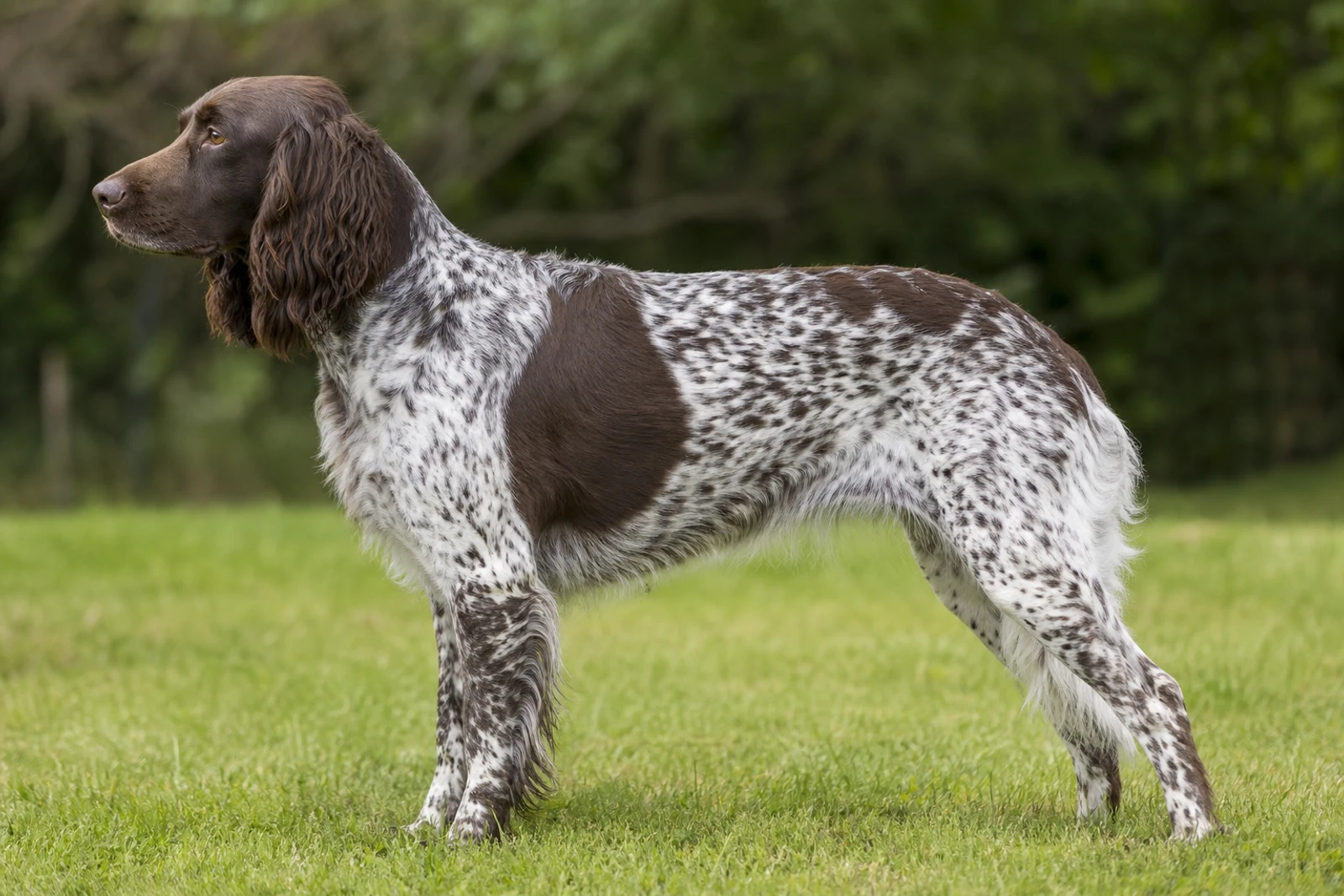
The Picardy Spaniel is a versatile, medium-to-large gundog with a gentle, affectionate nature, making an excellent family companion for active households. He thrives in rural or suburban settings where he can exercise his keen hunting instincts and enjoy regular outdoor adventures. Calm indoors yet eager afield, he bonds deeply with his people and is patient with children. This rare breed suits experienced owners who appreciate a devoted, trainable partner with a love of water and a low-maintenance, wavy coat.
At a glance
- Size
- Large
- Height
- 22–24 in
- Weight
- 44–55 lb
- Life span
- 12–14 years
- Coat colors
- Liver and white, Liver roan, White with liver ticking
- Coat type
- Medium-length, dense, wavy, water-resistant
How much does a Picardy Spaniel cost?
Adopt / rescue
$75–$400
Usually includes spay/neuter, first shots, and a microchip.
Buy from a breeder
$700–$2,000
From a reputable, health-testing breeder.
Approximate USD. Prices vary widely by region, breeder, pedigree, age, and coat colour — adopting is the lower-cost and recommended route. Avoid suspiciously cheap “breeders”; they’re often puppy mills.
Estimate the full cost of a Picardy Spaniel →Want the ongoing number? Estimate the monthly food bill for a Picardy Spaniel with our dog food cost calculator.
Picardy Spaniel photos
Views
Front, side, rear and top — the full silhouette.Poses
How the breed sits, lies, moves and plays.Puppy to senior
The breed across its whole life.Expressions
The breed’s range of moods.Close-up details
Eyes, ears, nose, paws, tail and coat.Coat colors
The breed’s recognized colors.Click any photo to enlarge. We show the Picardy Spaniel from every angle — three views, poses, life stages, expressions, close-ups, coat and colors.
Appearance & size
The Picardy Spaniel stands square and sturdy — a solid 22 to 24 inches at the shoulder, carrying 44 to 55 pounds of muscle without an ounce of bulk you’d call heavy. That weight sits on a frame built to hunt all day in thick cover, so you get a deep chest, well-sprung ribs, and a level topline that doesn’t slope or sag when the dog moves. From the side you’ll see the hallmark of a versatile gun dog: the chest drops to the elbows, the loin is short and strong, and the tail — usually docked by a few inches, or left natural in countries that ban docking — extends the line without curling over the back.
What catches your eye first is the coat. It’s dense, flat or slightly wavy, and just long enough on the body to protect against brambles — about two inches or so — with longer feathering on the ears, legs, belly, and tail. The texture feels crisp to the touch, never silky or fluffy. Color comes in distinctive roan patterns: brown roan or chestnut roan, often with large patches of solid brown or chestnut, and frequently flecked with ticking on the legs and muzzle. Some dogs show a bit of tan marking over the eyes, on the cheeks, or under the tail, but it’s the mottled, almost heathery blend of dark and light hairs that makes the breed stand out in the field.
From the front, you’re met with a broad, kind face. The head is long, the muzzle rectangular, and the stop slopes gently rather than dropping off sharply. Eyes are dark amber and set well apart, giving a calm, alert expression. Ears drop flat against the cheeks, set at eye level, and that wavy hair frames them almost like a setter’s — a practical feature that helps funnel scent. Move around to the rear and you’ll notice the thighs are well muscled, the hocks low and straight, with no cow-hocks or weak pasterns. The feathering on the back legs forms light “culottes” that blend into the belly coat.
You’ll need a slicker brush for those ears and feathering; they mat easily if you let dead hair sit. A weekly once-over and a trim behind the ears keeps the dog looking tidy without any fussy grooming routine.
History & origin
The Picardy Spaniel traces its roots back to the marshlands and thickets of northern France long before firearms changed the hunting world. It’s one of the oldest pointing spaniels in existence, with written references to similar dogs in the Picardy region showing up as early as the 14th century. These were the descendants of the original quail and partridge dogs that worked alongside the nobility’s falconers and net hunters. When a dog pointed game, the handler could quietly throw a net over the birds — a partnership built on a patient, steady point and absolute silence.
For centuries, the breed developed in relative isolation around the Somme River valley and the forests of what’s now Hauts-de-France. Farmers and hunters cared more about a dog’s nose, endurance, and willingness to plunge into cold water than about pedigree papers. That practical selection produced a muscular, medium-to-large spaniel (males stand 22–24 inches and weigh 44–55 pounds) with a chest broad enough to power through reeds and a dense, water-resistant brown-gray coat that shrugged off brambles and winter weather.
The transition from net hunting to wing shooting in the 18th and 19th centuries didn’t bump the Picardy Spaniel out of the picture — it just shifted his job description. The same rock-steady point now gave gunners time to close in on pigeons, ducks, or woodcock. The breed’s close-working style and soft-mouthed retrieve earned it a strong local following, but it never got caught up in the show ring frenzy that reshaped many other spaniels. People in the field bred for a practical gun dog, period.
That low profile nearly cost the breed everything. World War I trenches scarred Picardy’s landscape, and World War II scattered the human families who had preserved the dogs for generations. By the mid-1940s, the Picardy Spaniel was close to extinction. A handful of French breeders combed the countryside in the 1950s, rounding up the best remaining specimens. The breed was officially recognized by the Fédération Cynologique Internationale in 1955, and the French breed club (Club de l’Épagneul Picard) was established to safeguard its future.
Today, the Picardy Spaniel remains a rare but respected gundog, both in its homeland and among dedicated hunters and families in other European countries and North America. You won’t find it flooded with fads or split into show and field lines. Breeders still talk first about a dog that lives to work cover, holds a point all day, and settles into the home in the evening — no more, no less.
Temperament & personality
The Picardy Spaniel brings a steady, gentle presence into your home — not a frantic whirlwind, but a calm and deeply connected hunting dog that wants to be right at the center of family life. These dogs form intense bonds and thrive when included in daily routines, whether that means supervising backyard play or curling up on the rug while you cook. They’re even-tempered and remarkably affectionate, which makes them a solid match for households with respectful older children. Early socialization matters, though: a Picardy who hasn’t learned to read a variety of people and situations may become reserved or uneasy around strangers, falling back on the breed’s natural watchfulness without tipping into outright aggression.
Energy-wise, expect a dog built for a full morning in the field, not a sprint around the block. A 44–55 lb adult needs at least an hour of purposeful exercise every day — off-leash runs, long hikes, or retrieving work. Without it, that calm demeanor can curdle into restlessness and anxiety-driven habits like excessive barking or destructive chewing. Mental exercise counts just as much. A bored Picardy will invent its own jobs, and you probably won’t like them.
Affection that doesn’t know personal space
This is a “Velcro” breed. Your Picardy will shadow you from room to room, lean against your legs, and rest a heavy head on your knee at every opportunity. They don’t do well with isolation. Left alone for long periods, they may develop separation anxiety that shows up as indoor accidents, vocalization, or gnawing on door frames. Crate training helps create a safe den, but the real fix is a lifestyle where someone’s usually around.
Watchful, not sharp
Picardy Spaniels notice everything. A delivery truck, a squirrel on the fence, an unfamiliar car in the driveway — you’ll get a deep, rolling bark that says “alert” without tipping into neurotic noise. They’re not guard dogs, but their alertness makes them decent watchdogs. The bark usually stops once they’ve investigated and you’ve acknowledged the “threat.”
Quirks and the dog underneath the breed label
For all their sweetness, Picardys have a streak of quiet independence. They’re intelligent enough to think a command over before complying, so heavy-handed training backfires. Respectful, consistent engagement — short sessions full of positive reinforcement — gets you much further than force. Reading their body language is part of the deal. A relaxed, loose body and soft eyes tell you your dog is content; lip licking, yawning, or turning the head away are calming signals that mean back off a little. Stiff posture and direct staring, while rare in a well-socialized Picardy, should never be ignored.
Like any dog, a Picardy reads the world through its nose. That means you’ll contend with some universal canine behaviors. Males (and some females) may urine-mark to deposit scent cues, especially in new environments or homes that still carry odors from previous pets. Thorough enzymatic cleanup of accidents breaks that cycle far better than punishment. Puppies chew to explore and ease teething pain; adults chew hard objects to keep jaws strong and teeth clean. Redirect them with appropriate chews, and if you need to protect your furniture, a homemade citrus spray (boiled peels) or a vinegar mix works as a deterrent without harming the dog. Never interrupt a Picardy while it’s eating — teach children to let the dog have peaceful mealtimes to prevent guarding issues.
You’ll also notice the occasional head-scratcher, like your dog joyfully rolling in something foul. Theories abound — masking scent, signaling a great find to the pack, or just enjoying a funky perfume the way humans like fruity scents — but practical management (a solid “leave it” cue and a ready towel) is what you’ll actually lean on.
The household dynamic
Inside the home, a well-exercised Picardy is a quiet, clean housemate who’s often content to doze as long as you’re nearby. They typically live 12–14 years, so this is a long-term shadow. With other dogs, they’re generally amiable if raised together or introduced carefully. A strong prey drive inherited from generations of pointing work means small pets like rabbits or backyard chickens require supervision and secure enclosures. Early and ongoing socialization — exposing puppies calmly to new sounds, people, and places — builds the steady, confident adult the breed is known for. Provide a treat immediately after outdoor elimination to lock in housetraining, because that positive association sticks better than any punishment for mistakes.
Above all, a Picardy Spaniel isn’t a breed that bounces back from neglect. They read your mood, follow your routines, and build their world around your presence. If you can offer time, patience, and a calm hand, you’ll get a dog that matches your rhythm and sleeps soundly at your feet every night.
Good with kids, dogs & other pets
With kids
The Picardy Spaniel’s patient, low-key temperament makes them a natural around respectful children, but their size demands common sense. At 44–55 pounds and 22–24 inches at the shoulder, an enthusiastic greeting can knock a toddler flat. You’ll want steady supervision during play—no grabbing ears, tail, or fur—and you’ll teach kids to give the dog a quiet place to retreat. When raised together with gentle, consistent handling, a Picardy forms a close bond with every family member, not just one favorite person. The real foundation is early exposure: let a puppy meet children of different ages several times a week during the 3–14 week window, rewarding calm behavior with treats so the dog learns that small humans are good news.
With other dogs
These spaniels were bred to work in the field alongside other dogs, and that cooperative streak usually carries into the home. Most Picardy Spaniels live happily with a canine housemate, especially when introductions happen on neutral ground, on leash, and without toys or food bowls in the picture. They’re pack-oriented dogs who hate being left alone for a full workday—loneliness can spiral into howling or chewing. A second dog often helps, but it doesn’t replace daily exercise and human-based activities. Expect to manage the normal squabbles over resources, and never force an adult Picardy who clearly wants space. Some individuals are simply more selective, and that’s fine as long as you respect the dog’s signals.
With cats and small pets
You need to be honest about prey drive. This is a flushing spaniel with centuries of instinct to chase and retrieve birds. A cat who bolts across the room can trigger that chase in a heartbeat, and a free-range rabbit or guinea pig will likely read as something to carry in a soft mouth. Some Picardys learn to coexist with a confident, dog-savvy cat when they’re raised together from puppyhood and heavily rewarded for ignoring the cat. The safe call: always separate them when you’re not there to supervise. Use baby gates and sturdy enclosures. If you’re adopting an adult dog without a known history around small animals, assume a strong chase drive and manage the environment rather than hoping for a fairy-tale truce.
Socialization that lasts
Picardy Spaniels are sensitive—a bad scare can stick with them. The prime window for hardening confidence slams shut around 14–16 weeks. Between 3 weeks and that point, your puppy needs daily, positive introductions to friendly strangers, calm kids, traffic noise, slick floors, and the vet’s exam table, each paired with treats or play. Skip this, and you might end up with a dog who startles at leaf blowers and panics in a busy park. Once the window closes, steady, low-pressure outings still help, but forcing a fearful adult into chaotic social scenes just deepens the worry. Work at the dog’s pace, get a force-free trainer if needed, and you’ll have a steady companion who can handle real life without shutting down.
Trainability & intelligence
You’re not going to wear out a Picardy Spaniel’s brain — he’s sharp, tuned in to your mood, and genuinely wants to get it right. That sensitivity cuts both ways: a harsh tone can make him shut down for the rest of the session. So the rule is simple: reward the behavior you want, and either ignore or redirect the rest. A piece of chicken, a quick toss of a canvas dummy, or even permission to put his nose back in the grass after a successful recall — these are the currencies this breed understands.
Because you’re dealing with a 44–55 lb gun dog bred to quarter and point, recall will be the command you practice the most, and the one that fails first if you get sloppy. Start inside at eight weeks, say his name, and make eye contact a treat-worthy event. Move to a long line in the yard, and don’t hike the difficulty until his response is automatic. Crucially, never call him when he’s already locked onto a scent and you’re frustrated. Wait for that split-second of disengagement, then call with a voice that promises a party. Punish a slow return just once, and you’ll watch him calculate that coming back isn’t worth the risk.
Socialization works on the same trust-first principle. Many Picardies possess a quiet reserve around strangers, so the 3-to-14-week window is your chance to stockpile good experiences. Introduce him to calm people, friendly dogs, vacuum cleaners, gravel paths — and pair every encounter with high-value food or play. Keep sessions short and stop before he looks worried. Without this early work, that reserve can tip into fear-based barking or bolting, especially around unpredictable kids or crowded spaces.
Training that works:
- Short, game-based sessions (three 5-minute rounds a day beat a 15-minute grind)
- High-value treats phased out slowly with environmental rewards like flushing a bird or sniffing a new hedgerow
- Calm, consistent criteria — he’ll learn faster if you never move the goalposts
What will sink you: leash pops, yelling, or drilling the same thing over and over. This is not a dog you can bully into compliance.
When you build the partnership first, you get a bird dog who checks in with you naturally, holds a steady point, and delivers a soft-mouthed retrieve without being nagged. The key is understanding that for a Picardy, every interaction is a deposit or withdrawal from the trust account. Keep that balance in the black, and you’ll have a teammate who learns anything you’re willing to teach.
Exercise & energy needs
Plan on giving a Picardy Spaniel a full hour of movement every day, split into at least two sessions. This isn’t a breed that does well on a single, loose-leash walk around the block. A 30-minute morning walk paired with an afternoon off-leash run in a secure area is a good baseline. These dogs were built to push through thick cover and water for hours, so they have real staying power. A mentally and physically satisfied Picardy settles in the house easily; one that’s been shortchanged gets restless, vocal, or starts redecorating your baseboards.
- What counts as real exercise? Off-leash running, swimming, retrieving, and long-line hikes through woods or fields. A fenced yard is helpful, but it won’t exercise itself — interactive work with you is what burns off the edge.
- Nose work is non-negotiable. Picardy Spaniels are gundogs with a deep instinct to hunt scent. A hidden retrieving dummy, a scatter feed in the grass, or a few short, steady “hunt dead” retrieves do as much to tire them out as a 20-minute run. Puzzle toys and frozen Kongs fill the gaps on rainy days.
- Dog sports and real-world activities: Spaniel hunt tests, field work, scent work, rally, and agility all tap into their natural abilities. They usually take to water without hesitation, so dock diving is a solid option.
- Puppy sense. Until growth plates close around 12–14 months, avoid repetitive, high-impact exercise like jogging on pavement or endless fetch. Let pup set the pace on soft ground and keep sessions shorter — two or three 15-minute rambles work better than one long march.
If you hunt, a Picardy will happily put in a half-day’s work. In a pet home, aim for that honest hour of physical exercise, plus daily brain games. The consistency matters as much as the minutes — same time, same rhythm — because that’s what keeps a sensitive gundog steady and settled.
Grooming & coat care
The Picardy Spaniel’s coat is a dense, medium-length double coat that feels slightly coarse to the touch, with moderate feathering on the legs, belly, ears, and tail. It offers solid weather resistance, which means dirt and water tend to slough off naturally. That doesn’t mean it’s maintenance-free, but it does buy you some breathing room between baths.
Brushing
Two to three thorough brushings a week keep things under control in normal conditions. When the seasons shift in spring and fall, shed hair ramps up—plan to brush every other day to stay ahead of the loose undercoat on your furniture. Use a slicker brush with rounded pins to work through the topcoat and lift dead hair. Follow up with a metal comb on the feathering behind the ears, the tail, and the back of the legs, where tangles like to hide. A pin brush can detangle any light mats before they turn into tight knots. Regular handling of the feathering also gives you a chance to check for burrs, foxtails, or ticks after outdoor runs—something a working spaniel picks up often.
Bathing
Bathe only every 6 to 8 weeks, or when your dog rolls in something truly foul. Over-washing strips the natural oils that make the coat weather-resistant. Use a mild dog shampoo, rinse thoroughly, and always dry the ears inside and out with a soft towel.
Ears, Nails & Teeth
Drop ears trap moisture and warmth, making ear infections a real risk. Check them weekly for redness or odor, and wipe gently with a vet-approved ear cleaner. Nails need trimming roughly every 3 to 4 weeks—if you hear clicking on hard floors, you’ve waited too long. Aim to brush teeth two to three times a week with an enzymatic dog toothpaste to prevent tartar buildup and gum disease.
Seasonal Notes
Spring and fall bring a heavier blow of the undercoat. For those few weeks, add a quick daily session with the slicker brush or an undercoat rake designed for medium-length coats. The extra effort then pays off with a cleaner house and a dog whose skin can breathe as the weather warms or cools.
Shedding & allergies
If you’re picturing a dog that barely sheds, the Picardy Spaniel isn’t it. This breed has a dense, medium-length double coat with soft underfur and a slightly wavy, weather-resistant outer layer. That combination means steady, year-round shedding — not the tumbleweed extremes of some double-coated dogs, but enough that you’ll see hair on furniture, floors, and clothing every week.
Twice a year, usually in spring and fall, expect a real seasonal blowout when the undercoat comes out in clumps. For a few weeks, daily brushing becomes non-negotiable to keep the fur from taking over. The feathering on the legs, tail, and ears mats easily during these periods, so a slicker brush and a metal comb are your best friends. You’ll still find stray hairs drifting into corners regardless.
Drool is a minor thing here. The Picardy Spaniel has a fairly tight flews, so slobber isn’t a big concern. You might notice a wet beard after a drink of water or a little drool when food is involved, but it’s nothing like the drool you’d get from a mastiff or bloodhound.
And no, this isn’t a hypoallergenic breed. No dog truly is, but the Picardy’s combination of shed fur and dander — tiny skin flakes that stick to hair — makes it a poor match for someone with dog allergies. If allergies are a dealbreaker, spend time around an adult Picardy before committing to a puppy. Bathing and vacuuming can help, but the fur and dander will still circulate.
Diet & nutrition
How much to feed
Your Picardy Spaniel weighs between 44 and 55 pounds, so base portions on that frame and his daily exertion. A dog that hunts or retrieves for hours needs a noticeably larger ration than a weekend walking buddy. Start with the feeding guide on a high-quality kibble — roughly 2 to 2¾ cups a day for an active adult, split into two meals — then adjust. The real gauge is his body condition. You want to feel ribs under a thin layer of padding and see a defined waist from above. If you can’t, cut back.
Because this breed was built to cover ground all day, an underexercised dog packs on weight quietly. Even a few extra pounds add stress to elbows and hips, joints responsible breeders already screen for. Feed for the dog in front of you, not the one you wish you were training for field trials.
What to put in the bowl
A meat-first diet fits their carnivore-leaning digestive system. Whether you choose a premium commercial food or make meals at home, aim for a plate that’s roughly 60% animal protein (raw or lightly cooked meat, fish, eggs), 20–30% dog-safe fruits and vegetables, and the remaining 10% from extras like cooked grains or plain yogurt. Pearl barley and white rice are gentle carbohydrate options if your dog’s stomach gets upset.
Blend or purée fresh meals — dogs lack salivary enzymes and their jaw motion doesn’t grind food the way ours does, so smaller particles mean better nutrient absorption. It’s a small step that makes a big difference, especially for a senior dog with worn teeth. Avoid rich, fatty scraps altogether; a holiday ham bone or greasy pan drippings can trigger pancreatitis fast. Leftovers go in the dog’s own bowl, never from your plate, to keep begging from taking root.
If your Picardy inhales meals, swap the shiny metal bowl for a food puzzle. It forces him to eat slower and burns a little mental energy at the same time.
Puppy and senior shifts
Puppies under four months need four meals spaced evenly through the day. From four to six months, drop to three meals, then settle into the adult two-meal rhythm. Start with lightly cooked, puréed meats and veggies or a high-quality puppy formula, transitioning gradually. Around 12 weeks you can offer a raw chicken wing under close supervision for the gnawing practice.
For older dogs whose pace slows, monitor the scale closely. Switch to smaller, more frequent meals if that helps digestion, but don’t slash protein based on age alone — there’s no solid evidence that healthy seniors need less. Just cut total calories as activity drops, keeping the same meat-forward ratio so he holds onto muscle while the number on the scale stays steady.
Health & lifespan
A well-cared-for Picardy Spaniel lives 12 to 14 years, and many stay active and sharp into that upper range. This is a robust spaniel built for a long working life, but a few health patterns pop up often enough that owners should keep them on the radar.
The biggest everyday concern is ears. Those floppy, hairy ears trap moisture and debris, so weekly checks and a wipe after swimming or hunting in wet cover prevent painful infections. Bloat is another deep-chested breed risk. Feed two meals a day rather than one large one, and don’t let him run hard for at least an hour after eating.
Responsible breeders screen the parents for conditions that can show up later. Hip and elbow dysplasia aren’t epidemic, but they happen in dogs that carry 44 to 55 pounds on a 22-to-24-inch frame, so look for OFA or PennHIP ratings. Eye disorders — progressive retinal atrophy, cataracts — also run in spaniel lines, meaning breeding dogs should have current CERF or equivalent clearances. That dense, slightly wavy coat makes for a dog who shrugs off cold and damp, but he can overheat fast. Exercise in the early morning or evening during summer, and always have water and shade handy.
Weight management matters. This is a food-motivated breed that will gladly eat more than he burns; extra pounds stress joints, strain the heart, and can shave years off that 12–14 lifespan. Keep him lean with measured portions, and use slender training treats.
Yearly vet exams catch small problems before they become big ones. Stay current on rabies vaccination — it’s legally required — and give monthly heartworm prevention from the start of mosquito season through one month after it ends. Early, positive socialization lowers the chronic stress that can suppress immunity, so a dog who learns the world is safe tends to stay physically healthier, too. If you notice a dull coat, a drop in energy, or a change in appetite, don’t wait it out. Picardy Spaniels are generally sound dogs; a little routine attention buys a lot of good years.
Living environment
A Picardy Spaniel is a big-hearted pointing dog that wants to be part of your daily rhythm, not a yard ornament. A house with a securely fenced yard is the closest thing to ideal — this breed lives to gallop, sniff every inch, and point butterflies on a whim. But a yard alone isn’t an exercise plan. Count on at least 60–90 minutes of real movement each day, split into two sessions: think off-leash runs, long hikes, or a solid hour of retrieving and sniffing games, not a polite stroll around the block.
Apartment living is possible, but it’s a serious commitment. Without a yard you’ll be trading your lunch break for a vigorous walk and your evening for a trip to a safe off-leash area. Mental work matters just as much: puzzle toys, hide-and-seek with a favorite toy, or indoor scent games tire out a Picardy’s busy brain when the weather won’t cooperate.
Climate & coat — Their dense, water-resistant coat shrugs off drizzle and chilly mornings, so they’ll happily join you in damp, cool conditions. Heat is a different story. Avoid hard exercise during the hottest part of summer days; early morning or late evening sessions are safer.
Noise & barking — Expect an alert barker. A Picardy will announce the delivery truck, the neighbor’s cat, or a leaf that looked suspicious. Training can curb it, but this isn’t a silent breed. If you share walls, work on a solid “quiet” cue early.
Being left alone — These dogs bond tightly with their people and don’t do well with long stretches of isolation. A family where someone works from home or a schedule that limits absences to a few hours works best. A bored, lonely Picardy may dig, chew, or howl. Crate training, gradual desensitization, and a midday dog walker can ease the strain, but if your household is empty from 8 to 6 every day, this breed will struggle.
Who this breed suits
This is a dog for people who want a shadow. The Picardy Spaniel lives in your hip pocket. If weekends mean long hikes, upland hunting, or field training, you’ll have a tireless, close-working partner who crashes quietly at your feet later.
Active singles, couples, and families who make the dog part of daily life hit the sweet spot. The breed is famously gentle with children, though a tail-wagging 50-pounder can knock over a toddler. Older kids who can throw bumpers and join reward-based training connect best. First-time owners willing to commit to daily off-leash exercise and positive handling can absolutely succeed — the Picardy is sensitive and eager to please, but wilts under harsh corrections.
Now think twice. Without at least an hour of hard running, retrieving, or scent work daily, you’ll get a destructive dog. You need safe off-leash access — a backyard alone isn’t enough. Strong prey drive makes free-roaming rabbits, chickens, or similar pocket pets a serious risk. The breed hates being alone; empty houses lead to anxiety and barking. Seniors should honestly assess whether they can handle a 50-pound dog who bolts after wildlife on a dime. And this is no guard dog — strangers get a wagging tail, not suspicion.
Cost of ownership
Bringing a rare breed into your life often means a higher initial investment, and the Picardy Spaniel is no exception. Expect a well-bred puppy from a responsible breeder who screens for health and temperament to run anywhere from $1,800 to $2,800. The price reflects the breed’s scarcity in the U.S. and the dedication of breeders who prioritize working ability and genetic soundness. You may face a waiting list.
Monthly costs settle into a steady rhythm. Plan on roughly $60 to $80 a month for high-quality kibble formulated for an active, medium-to-large dog — that’s around 2 to 3 cups per day split between meals. A sturdy, 44–55 lb athlete burns calories.
- Grooming: The Picardy’s dense, slightly wavy coat is relatively low-fuss, but it will mat without weekly brushing. A professional grooming session every 8–10 weeks will cost $50 to $70, though many owners learn to handle ear cleaning and sanitary trims at home.
- Vet and prevention: Annual exams, vaccinations, and year-round heartworm/flea/tick preventatives typically land at $500 to $700 per year. This is a generally healthy breed with a 12–14 year lifespan, but as a deep-chested dog, bloat is a real emergency risk. Set aside savings or keep a credit line open for the unexpected.
- Insurance: Monthly premiums for accident-and-illness coverage run $40 to $65, depending on your location and deductible. You’ll thank yourself if a cruciate ligament tear or a foreign-body surgery ever comes up.
Tallying it up, a reasonable ongoing budget sits between $150 and $220 per month, not counting the one-time splurge on a solid crate, lead, and a few canvas dummies if you tap into the breed’s retrieving instincts.
Choosing a Picardy Spaniel
Unless you’re in France or a small handful of European countries, finding a Picardy Spaniel takes patience. The breed is rare on this side of the Atlantic, so the responsible-breeder route is your only real option — rescue organizations almost never see them. Plan on a waitlist and a willingness to travel, perhaps a long way, for the right puppy.
Start your search with the national breed club or its US equivalent, if one exists. A breeder worth your time runs their dogs on birds or in field tests, not just around the backyard. They’ll grill you about your hunting plans or at least your commitment to heavy daily exercise — a dog that stands 22–24 inches at the shoulder and weighs 44–55 pounds was built to cover ground, not just cuddle.
Health clearances are non-negotiable. Ask to see OFA hip scores (fair or better) and current eye certification from a veterinary ophthalmologist (CERF or OFA Eye). A few breeders also screen elbows and thyroid. Without these, you’re gambling on a dog whose lifespan can reach 12–14 years with sound genetics. Don’t be shy — ask for paperwork and verify it online.
Watch for red flags: multiple litters on the ground at once, a breeder who can’t produce the dam on site, refusal to let you meet at least one parent (the stud may live elsewhere), or puppies that seem wary, tucked-away, and unsocialized. A responsible breeder will have pups underfoot in the house, well accustomed to noise, handling, and visitors by 7–8 weeks.
Most breeders match puppies to homes rather than letting you pick by color or a single visit. They’ll evaluate drive, confidence, and people-orientation over several weeks. A well-bred Picardy puppy should trot right up to inspect you — maybe with a light mouth on your shoelaces — and settle into a relaxed posture once curiosity is satisfied. If the whole litter shrinks back, walk away.
Rescue is a long shot, but not zero. Join Picardy Spaniel or general pointing-breed groups online, and let folks know you’re looking. Occasionally an adult dog needs rehoming when an owner’s circumstances change. Expect to provide the same proof of active lifestyle and breed knowledge you’d give a breeder.
Pros & cons
Pros
- A devoted family companion with a famously gentle, patient nature — they genuinely enjoy children and adapt their energy to the household’s rhythm once daily needs are met.
- The 44–55 lb weight range means you get a sturdy, large-spaniel presence without the heft that can overwhelm smaller spaces or older kids.
- Moderate size (22–24 inches at the shoulder) makes them easy to load into a car, clean up after, and manage on a leash even in wet, muddy conditions.
- Their thick, wavy coat is more weather-resistant than many spaniels’, so you aren’t stuck toweling off every five minutes in light rain or damp cover.
- A working dog at heart — they’re versatile pointers and retrievers — but they settle indoors with calm dignity. Forty-five minutes of real off-leash running plus a short training session often does the trick, not a marathon.
- Life span of 12–14 years is strong for a breed this size, giving you a long stretch with a single, steady companion.
- They’re known for a soft, intelligent expression and an almost intuitive sensitivity to mood, which makes them responsive to positive training and a pleasure to live with daily.
Cons
- Exercise demands are non-negotiable. Without at least 60–90 minutes of active movement — running, swimming, or focused bird work — they’ll redirect that drive into digging, chewing, or pacing.
- The brain needs as much work as the body. Repetitive walks around the block won’t cut it; you’ll need retrieve drills, scent games, or advanced obedience to keep them settled.
- That beautiful, feathered coat mats quickly behind the ears and in the pants if you skip weekly brushing. During seasonal sheds you’ll be pulling out undercoat daily to prevent hot spots.
- Long, hanging ears trap moisture and debris, so ear infections can be a recurring battle if you don’t dry them after swims or rainy outings.
- They bond hard and can develop separation anxiety when left alone for a full workday — a clingy, vocal dog isn’t what you sign up for, but it’s common if their person disappears for eight-plus hours.
- Watchfulness around strangers is standard (reserved, not aggressive), but without early socialization it can tip into shyness or nervous reactivity that’s tough to undo.
Similar breeds & alternatives
-
The Blue Picardy Spaniel is the Picardy’s closest lookalike. Same height (22–24 in) and weight (44–55 lb), but with a distinctive blue-gray speckled coat instead of brown or gray roan. Temperament is nearly identical: calm indoors, sweet with kids, soft-mouthed. The Blue Picardy can be a shade more reserved around strangers. Both are scarce in the US, so expect a long wait for either.
-
The French Spaniel, the Picardy’s direct ancestor, runs a touch taller (23–25 in) and often tips 55–60 lb. They share pointing instincts, but the French Spaniel leans sharper and more driven. If you hunt hard and want a gentle house dog, the Picardy’s more phlegmatic nature might suit you better.
-
English Springer Spaniels are far more common. They top out at about 20 inches and 50 pounds—noticeably smaller. Springers bring cheerful, biddable energy but are bouncier indoors and harder to tire out. A Picardy gives you genuine off-switch calm; a Springer needs a daily run plus brain games to stay level.
-
German Shorthaired Pointers fill the same versatile hunting niche at higher horsepower. GSPs stand 21–25 inches and weigh 45–70 pounds, but they demand an hour or more of hard off-leash running and rarely self-settle the way a Picardy does after a walk. If your household wants a pointing breed without the extreme daily output, the Picardy fits a quieter rhythm.
-
Brittanys are smaller, zippier cousins (17.5–20.5 in, 30–40 lb). They’re lively family dogs but more distractible and constantly on the go. The Picardy’s larger frame and steadier, lower-key disposition make it the calmer pointing spaniel inside the home.
-
Large Munsterlanders (23–26 in, 50–70 lb) offer a similar long-coated, gentle-temperament package. They come in black-and-white or brown-and-white, not roan, and mature into patient housemates—though they’re equally rare in North America.
Fun facts
- One of the oldest French pointing breeds, dating back to the 14th century.
- Nearly extinct after World War II, revived by dedicated enthusiasts.
- Renowned for a gentle, soft-mouthed retrieving ability, ideal for hunters.
- Often called 'the gentleman of spaniels' for their expressive, soulful eyes.
Frequently asked questions
- Is the Picardy Spaniel good with children?
- The Picardy Spaniel is known for being gentle and affectionate, making it a good family companion for households with children. Early socialization is important to foster their patience and playful nature. As with any large breed, supervision is recommended with very young children to prevent accidental knocks. Overall, they tend to bond well with all family members.
- How much does a Picardy Spaniel shed?
- This breed has a medium-length, wavy coat that sheds moderately throughout the year. Regular brushing a few times a week can help manage loose hair and keep shedding under control. They are not considered hypoallergenic and do experience seasonal increases in shedding. Overall grooming is manageable with consistent care.
- How much exercise does a Picardy Spaniel need?
- As an active hunting breed, the Picardy Spaniel requires substantial daily exercise—typically at least an hour of physical activity. They enjoy long walks, runs, and opportunities to swim or retrieve. Mental stimulation, such as training games or scent work, is also important to prevent boredom. Without adequate exercise, they may become restless or develop undesirable behaviors.
- What are the grooming requirements for a Picardy Spaniel?
- Their dense, wavy coat needs brushing two to three times per week to prevent mats and remove debris, especially after outdoor adventures. Occasional trimming around the ears and paws helps keep them tidy. They do not require frequent bathing unless particularly dirty. Regular ear checks and cleaning are essential due to their floppy ears, which can trap moisture.
- Can a Picardy Spaniel live in an apartment?
- A Picardy Spaniel can adapt to apartment living if provided with sufficient daily exercise and mental engagement. However, their size and energy levels make them better suited to a home with a securely fenced yard. They are generally calm indoors when well-exercised, but they need dedicated outdoor activity time. Potential owners should be prepared to meet their needs regardless of living space.
- Is the Picardy Spaniel a good breed for first-time dog owners?
- This breed is intelligent and eager to please, which can make training relatively straightforward. However, their high energy and need for consistent guidance may be challenging for novice owners. They respond best to positive reinforcement and benefit from early socialization and obedience training. With commitment and patience, a first-time owner can succeed, but experienced handlers may find them easier to manage.
Tools & calculators for Picardy Spaniel owners
Quick estimates tailored to Picardy Spaniels — pre-filled with this breed’s size where it matters.
Articles & stories about the Picardy Spaniel
Sources & standards
This profile follows recognized breed standards from the American Kennel Club (AKC) and the Fédération Cynologique Internationale (FCI), along with established veterinary and breed-club guidance. These describe general breed tendencies — every dog is an individual.