

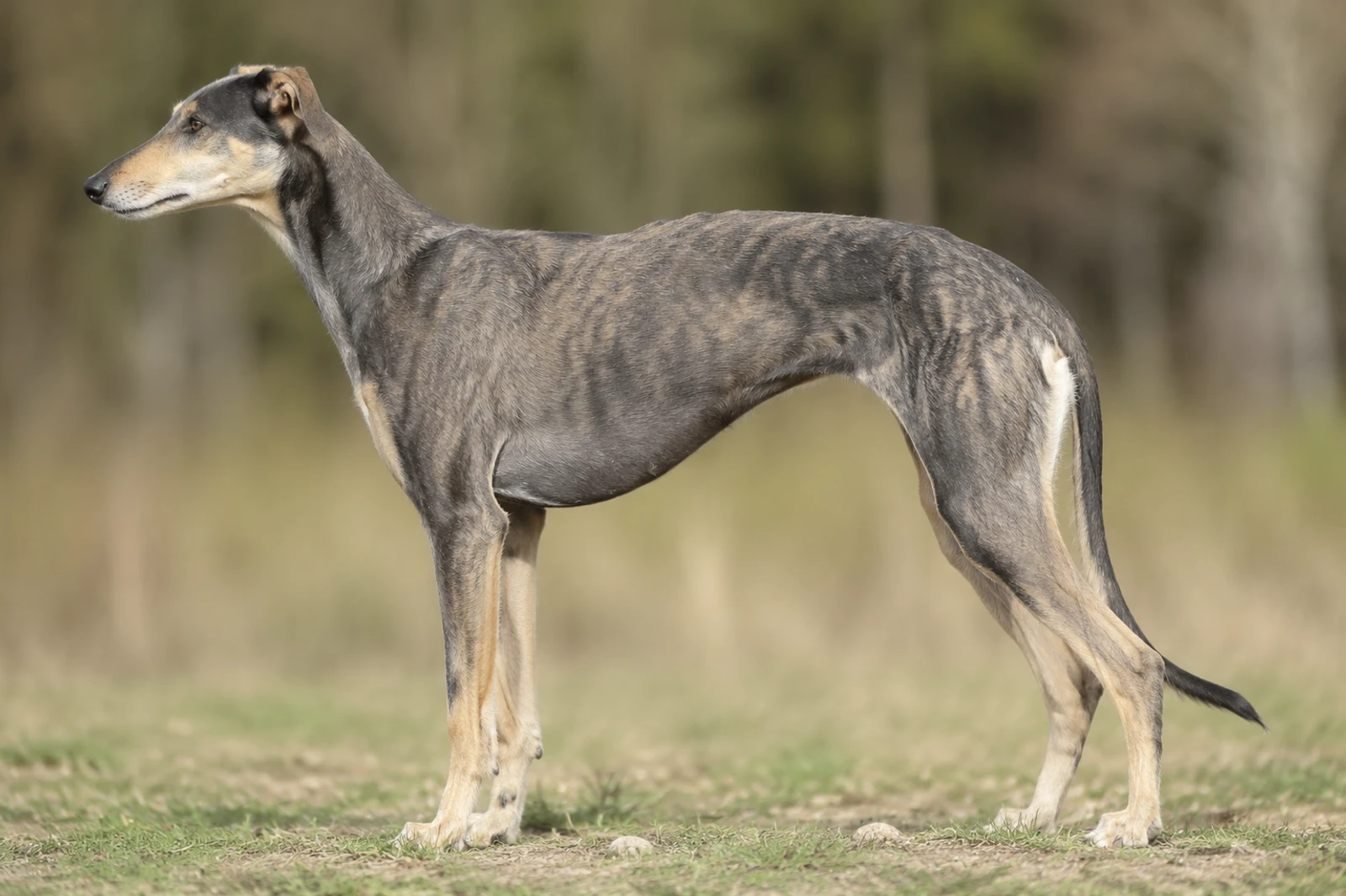
The Polish Greyhound is a majestic and rare giant sighthound, ideally suited for experienced owners who can provide ample space, structured exercise, and consistent training. This breed bonds deeply with its family, showing unwavering loyalty and a gentle yet protective nature. While affectionate with loved ones, it remains aloof with strangers and may not tolerate rough handling from children. Its strong prey drive makes it incompatible with small pets or off-leash walks in unfenced areas. Owners must appreciate an independent thinker that thrives on routine and human companionship, not ideal for novice dog parents or apartment living. With proper socialization and a secure yard, this noble hunter becomes a devoted companion for active households.
At a glance
- Size
- Giant
- Height
- 27–31 in
- Weight
- 143–187 lb
- Life span
- 12–15 years
- Coat colors
- Black and Tan, Blue, Beige, Brindle
- Coat type
- Short, smooth, and dense
- Group
- Sighthounds
- Origin
- Poland
How much does a Polish Greyhound cost?
Adopt / rescue
$75–$400
Usually includes spay/neuter, first shots, and a microchip.
Buy from a breeder
$700–$2,000
From a reputable, health-testing breeder.
Approximate USD. Prices vary widely by region, breeder, pedigree, age, and coat colour — adopting is the lower-cost and recommended route. Avoid suspiciously cheap “breeders”; they’re often puppy mills.
Estimate the full cost of a Polish Greyhound →Want the ongoing number? Estimate the monthly food bill for a Polish Greyhound with our dog food cost calculator.
Polish Greyhound photos
Views
Front, side, rear and top — the full silhouette.Poses
How the breed sits, lies, moves and plays.Puppy to senior
The breed across its whole life.Expressions
The breed’s range of moods.Close-up details
Eyes, ears, nose, paws, tail and coat.Coat colors
The breed’s recognized colors.Click any photo to enlarge. We show the Polish Greyhound from every angle — three views, poses, life stages, expressions, close-ups, coat and colors.
Appearance & size
When you first see a Polish Greyhound, the word that registers is giant — not just tall, but dense with bone and muscle in a way that separates it from every other sighthound. You’re looking at a dog that stands 27 to 31 inches at the shoulder and carries 143 to 187 pounds without an ounce of softness. This is a powerful endurance galloper, not a fragile coursing specialist.
The build is a study in functional mass. Beneath the short, close-lying coat you’ll find a deep, broad chest that reaches to the elbows, a gently arched loin, and a noticeable tuck-up that never crosses into waspiness. The back is straight and long, the withers prominent, and the croup slopes just enough to allow a ground-covering stride. From the side you see a silhouette that’s all lever arms: a long, well-muscled neck flowing into laid-back shoulders, a deep heart girth for lung capacity, and strong hindquarters set slightly back. The dog looks ready to accelerate from a standstill across open ground.
Seen from the front, the Polish Greyhound’s stance is wide and steady. Forelegs are long, straight, and powerfully boned, with tight feet and well-knuckled toes. The head is carried high, lean but never skinny, with a long, strong muzzle and a barely perceptible stop. The eyes are dark and almond-shaped, giving a keen, self-assured expression. Small, rose-shaped ears fold back when the dog is relaxed and prick forward when something catches its attention.
From behind, the rear is a wall of sinew. Thighs are broad and heavily muscled, the stifle is moderately angulated, and the tail — long, thick at the base, and carried in a saber curve at rest — tapers to a point. The tail never curls over the back; when the dog moves, it drops to a lower carriage.
The coat is all business: smooth, elastic, and just dense enough to turn brambles without requiring upkeep. Colors run from sand and fawn to blue-gray and dark brindle, often with a black mask and dark nails. White markings on the chest, toes, and tail tip are common, but piebald or heavily patched coats are outside the breed standard.
This is not a dog you walk past without a second look. At full height, a male’s head can reach your ribcage, and the combination of that massive frame and quiet, watchful gaze leaves a lasting impression of controlled, ready strength.
History & origin
The Polish Greyhound’s story doesn’t begin in a kennel — it begins on the open steppe. By the 13th century, sleek coursing dogs from Asia, likely related to the Saluki and other primitive sighthounds, had followed trade routes and nomadic migrations into the Polish heartland. Over centuries, these imports were crossed and selectively hardened into a dog capable of tackling Eastern Europe’s brutal winters and outsized quarry.
Built for wolf country
Polish nobles didn’t want a fragile sprinter. They wanted a dog that could pull down a wolf, a red deer stag, or a fast-running hare over snow-covered ground, then do it again the next day. So the Chart Polski became a giant — 27 to 31 inches at the shoulder, 143 to 187 pounds of dense muscle and bone — with a dense, double coat that shrugs off ice and rain. Packs of these hounds coursed game across the vast estates, hunting by sight and sustained by pure grit. Their job was not a quick sprint; it was a long, punishing chase ending in a hold-and-kill that demanded real power.
Near extinction and quiet revival
World War II and the Soviet era almost erased the breed. Large-scale hunting with sighthounds was banned, and the dogs became symbols of the aristocracy the new regime wanted to forget. By the 1970s, only a handful of pure Chart Polski remained, scattered on farms and with a few devoted fanciers. A deliberate reconstruction effort, led by breeders like Małgorzata and Izabella Szmurło, gathered the surviving foundation stock and bred carefully to preserve working ability and ancient type without resorting to outcrosses that would dilute the bloodline.
The breed today
The Polish Greyhound remains rare — you will not stumble across one at every dog park. Recognized by the FCI, the breed still lives by its sighthound instincts, and dedicated owners now channel that drive into lure coursing and open-field trials. It’s a living piece of Polish cultural history, a dog shaped by centuries of necessity, not fashion, and still thriving on the same toughness that once let it stare down a wolf.
Temperament & personality
This is a watchful, even-tempered giant who would rather observe the action from his favorite spot than be the center of it. He’s affectionate with his own people, but never needy — a quiet presence that leans against your leg when he wants reassurance, then drifts back to his own space. Strangers get a polite, aloof once-over; this is not a tail-wagging, everyone’s-my-friend greeter. That reserve, combined with his sheer size, makes him a natural sentinel. He’ll note every delivery truck without raising a racket — a long, hard stare is usually his only comment.
Inside the house he’s practically a piece of furniture, content to doze for hours on a soft bed. Outside, the switch flips. This is a 143–187-pound sighthound engineered for explosive speed. He needs a secure, fully fenced area to sprint full-out several times a week. A couple of slow walks around the block won’t settle his mind or body. Once he’s had that hard run, he’s back to being a calm, undemanding housemate.
His watchful streak means he reads body language with unsettling accuracy. A stiff, forward-leaning posture from a new person can put him on alert; a relaxed, loose family member lets him stay soft-eyed. You’ll see him use calming signals — a lip lick, a yawn, a head turn — when he’s figuring out a tense moment. He responds best to respectful, consistent handling, not heavy-handed corrections. Strong-willed and independent, he thrives with an owner who sets fair rules without turning every lesson into a power struggle.
A few scent-driven quirks come with the territory. He may urine-mark in new places or when another dog’s calling card is present. Cleaning accidents with an enzymatic cleaner (or simple white vinegar and water) neutralizes that invisible “pee here” cue, and a high-value treat the instant he potties outdoors builds the right habit fast. His scavenger ancestry also means he finds eau de dead worm or mystery filth genuinely delightful, so don’t be shocked if he rolls in something foul. A homemade citrus spray (boiled peels steeped in water) or a vinegar mix can discourage him from gnawing off-limits objects; provide sturdy chews for teething puppies and for the adult drive to keep jaws strong and teeth clean.
With his own family he’s instinctively gentle, but a 170-pound dog can accidentally knock over a toddler, so supervision around small children is non-negotiable. He generally coexists with other dogs if raised alongside them, though same-sex tensions can flare, and that intense prey drive makes him a risky housemate for cats, rabbits, or other small pets unless carefully proofed from puppyhood. He’s a clean, relatively low-odor breed who sheds moderately and rarely drools. Expect a dog that wants to be part of the household without demanding constant interaction — a noble, undemanding companion who settles in as a calm presence for the next 12 to 15 years.
Good with kids, dogs & other pets
This is a giant breed with a patient, non-aggressive nature — so a well-socialized Polish Greyhound can be a calm, affectionate companion for kids. What you really need to watch is his size. At 143–187 pounds and up to 31 inches at the shoulder, he can accidentally knock over a toddler just by turning around or leaning in for a chin scratch. Close supervision around small children is non-negotiable. Teach kids not to climb on him, yank ears, or shriek directly in his face; his sensitive side means rough handling can make him skittish. When he’s raised alongside respectful children from puppyhood, though, the bond is often rock-solid.
With other dogs, the Polish Greyhound tends toward easygoing tolerance, not aggression. He usually does fine with dogs of his own size, especially if you hit the ground running with early socialization — the prime window closes around 12–16 weeks. Puppy classes, structured play dates, and walks where he meets calm adult dogs all help him read canine body language. Because he’s sensitive, throwing him into a chaotic dog park with over-the-top greeters can backfire and leave him overwhelmed. Let relationships develop at his own pace.
The hardest truth involves cats, rabbits, and other small pets. The Polish Greyhound is a sighthound through and through, and his chase instinct runs deep. A darting squirrel or a cat bolting across the room can flip a switch that centuries of breeding won’t let him ignore. Some individuals learn to live peaceably with a family cat if introduced as a young puppy and managed with relentless consistency, but you should never leave them unsupervised together. For many, the prey drive remains so strong that small animals are simply never safe. If you have free-roaming pocket pets or a multi-cat household, this breed is a genuine risk.
Start exposing your puppy to children, other dogs, a variety of surfaces, and everyday sounds before 14 weeks old, and keep those experiences positive. A Polish Greyhound who misses that early window can become timid or reactive, which is tough to unwind in a dog this large. Adult rescues who are already comfortable in their own little world may not need to meet every dog on the block — don’t force interactions, as that can spike stress and backfire. Keep an eye on his companionship needs, too; he’s a close-bonding dog who struggles when left alone for long stretches, so a household where someone is often around will fit him far better than one where he’s isolated in the backyard.
Trainability & intelligence
A Polish Greyhound picks up new cues fast — often in a handful of repetitions — but he’s a 150-pound independent thinker, not a push-button obedience machine. He responds to partnership, not pressure. Punishment, harsh corrections, or even a stern tone can damage his trust and make him shut down or sidestep you entirely. Think of training as a conversation, not a command.
Positive reinforcement is the only road that works. High-value treats, calm praise, and a quick tug session get results far better than repetition or force. Because this dog is sensitive despite his size, you’ll see the most reliable behavior when training feels like a cooperative game. Keep sessions short (5–10 minutes) and end on a win — a bored Polish Greyhound simply checks out.
To set him up for success:
- Start reward-based training the day you bring your puppy home.
- Socialize broadly before 16 weeks; introduce him gradually to different people, dogs, sounds, surfaces, and situations — and continue positive exposures throughout adolescence.
- Use high-value rewards, not plain kibble, to hold his attention around distractions.
- Never use scolding, leash pops, or intimidation. They erode trust and create a dog that avoids you.
Socialization is non-negotiable. A poorly socialized Greyhound can become fearful or reactive, and at nearly 190 pounds that’s a safety risk you don’t want. Early and ongoing positive experiences prevent fear-based reactivity and help him take new situations in stride.
Recall is the hard truth. The breed’s sighthound prey drive is hardwired; if a squirrel shoots across a field, his ears turn off. You can and should teach an emergency recall using a long line, practice in fenced areas, and heavily reward every check-in — but never stake his safety on a perfect off-leash response near traffic or open spaces. Instead, pour your effort into a rock-solid “leave it” and attentive focus around distractions. A leash or securely fenced yard is your real safety net.
Exercise & energy needs
A 160-pound sighthound isn’t a casual pet, but his exercise needs are less about grinding out miles and more about letting him do what he was bred for—run full-out in short, spectacular bursts. Plan on 60 to 90 minutes of daily activity, split into at least two distinct sessions. One of those should involve a safe space to sprint; the other can be a long, sniffy walk or mental work.
Think sprinter, not marathoner. A Polish Greyhound can hit 40 mph in seconds, then he’s ready to lounge for hours. A single leashed jog around the neighborhood won’t scratch the itch. Instead, seek out a fully fenced field, a lure coursing trial, or a quiet beach where he can really stretch his legs a few times a week. Off-leash time anywhere without a secure barrier is a gamble—his prey drive overrides even the best recall training.
Because these dogs tip the scales between 143 and 187 pounds, protecting growing joints matters. Avoid pounding pavement or repetitive high-impact exercise until a young dog’s growth plates have closed, usually around 18 months. Soft grass, sand, or dirt are your friends. Once mature, most Polish Greyhounds stay sound for 12 to 15 years when you prioritize sane, controlled sprinting over endless hard-surface mileage.
Mental stimulation counts just as much. Puzzle toys, scent games, and hide-and-seek with a favorite toy wear out that clever sighthound brain on days when weather or schedule limit outdoor running. A bored Polish Greyhound will find his own fun—often in the form of counter surfing, digging, or barking. Provide a consistent outlet, and you’ll have a calm, easygoing companion in the house. Skip it, and the same dog can become anxious and destructive. Pair a morning sprint session with an evening training game or a long, slow exploratory walk on a soft trail, and you’ll meet both the body and mind demands of this big, sensitive athlete.
Grooming & coat care
Keeping a Polish Greyhound’s coat looking its best is surprisingly low-effort, but it isn’t no effort. The breed sports a short, hard, dense single coat with no insulating underlayer. That means you won’t fight mats or tangles, but you will see a steady trickle of shed hair year-round, with a heavier dump in spring and fall.
Brushing
A bristle brush (pig bristle works beautifully) is your go-to tool. It pulls loose hair, distributes natural oils, and leaves that sleek coat with a glossy finish. One or two passes per week takes care of the bulk of it. During seasonal shedding, step it up to every other day — it’s a quick job on a dog this smooth, and it keeps the furniture from growing its own fur coat. A rubber curry mitt can also loosen dirt and dead hair on a lazy Sunday.
Bathing
The Polish Greyhound is an oddly clean breed — many owners joke they have cat-like grooming habits. You won’t need to bathe them often. Once every couple of months, or when they’ve rolled in something regrettable, is plenty. Over-bathing strips the natural oils that protect the skin and keep the coat shining. When you do suds up, use a mild, dog-formulated shampoo to avoid drying out the skin.
Nails & ears
This is a giant breed; nails that grow too long alter the way the foot meets the ground and can stress joints. Trim nails every 3–4 weeks. If you hear clicking on hard floors, they’re overdue. Start handling paws early — a 160-pound dog who hates nail trims is a problem you don’t want. The breed’s rose-shaped ears sit folded back, which can trap a bit of moisture. Check them weekly, wipe out any wax or debris with a damp cloth, and dry them thoroughly after a bath or swim.
Teeth
Brush teeth at least twice a week using a dog toothpaste. Long-lived breeds (12–15 years) benefit enormously from preventing tartar buildup and gum disease early.
Seasonal notes
Because the coat lacks an undercoat, shedding isn’t the epic cloud you get from a husky, but it’s still noticeable. The spring shed can make the coat look a little dull for a few weeks. More frequent brushing during that stretch — plus plenty of outside exercise, which supports healthy skin turnover — helps the new summer gloss come in faster. In winter, a short coat with no undercoat means this dog feels the cold; that’s not a grooming issue per se, but it’s something to keep in mind before you shoo them off the couch.
Shedding & allergies
A Polish Greyhound sheds a surprising amount for a short-coated dog. That tight, sleek jacket drops hair constantly, and twice a year — usually spring and fall — you’ll see a full-scale blowout that leaves drifts of fine, pale fur in every corner of your house. Weekly brushing with a rubber curry or a hound glove takes the edge off year-round shedding, but during seasonal peaks you’ll want to brush outdoors two or three times a week to keep the airborne tufts from taking over your furniture and clothes.
Drool isn’t a big part of the picture. You might get a damp chin after a long drink, but this is not a breed that slings ropes of saliva or leaves wet spots on your lap.
There’s no such thing as a truly hypoallergenic dog, and the Polish Greyhound is no exception. The main allergy triggers — dander, saliva proteins, and the dust that clings to shedding hair — are all present here. A person with mild dog allergies might react less to a short coat that doesn’t trap pollen as much, but this breed still sheds and produces dander daily. Spend time around the dog before bringing one home if allergies are a concern.
Diet & nutrition
Puppy feeding: slow and steady
A Polish Greyhound puppy turns into a 150-plus-pound athlete at warp speed, and how you feed that first year directly affects joint health. From weaning to 4 months, split their daily ration into four evenly spaced meals. Then drop to three meals until 6 months, and finally to the two-meal adult rhythm. Giant breeds crash hard when overfed — rapid growth stresses developing elbows and hips, so keep puppies lean, not round. Transition gently from the breeder’s diet, starting with lightly cooked, puréed meats, fish, and pulped veggies, or a high-quality giant-breed puppy kibble. Around 12 weeks you can introduce raw, meaty bones like chicken wings under direct supervision to exercise those vertical jaws.
Adult portions and weight control
At a full-grown 143 to 187 pounds, this is a dog that can pack away calories — and some lines are genuinely food-obsessed. That combination makes portion control non-negotiable. Plan on feeding roughly 2–3% of ideal body weight per day in a raw or home-prepared diet, divided into two meals. For a 160-pound dog that means about 3 to 5 pounds of food total. If you use kibble, start at the manufacturer’s recommendation for a giant, low-activity dog and adjust every two weeks based on feel — you want to see a waist from above and easily feel ribs through a thin fat pad.
Obesity here isn’t just about looks; extra pounds punish the massive frame and can tip a dog toward joint and spinal trouble over a 12-to-15-year lifespan. If your Polish Greyhound inhales meals, swap a regular bowl for a food puzzle to slow them down and add mental engagement. Never feed from the table — begging is a one-way street — and when there are leftovers, serve them in the dog’s own bowl.
What to put in the bowl
They’re built to run, and their digestive system reflects a meat-based design. Aim for a diet around 60% raw and cooked meat, 20–30% fruits and vegetables, and about 10% extras like eggs, plain yogurt, or digestible grains. Pearl barley gives high-fiber bulk without upsetting sensitive stomachs, while plain white rice offers a bland carbohydrate base if your dog’s gut is off. Blend or process meals when you can; dogs lack salivary digestive enzymes and their jaws only move up and down, so a puréed mix aids nutrient uptake — especially helpful for older dogs with worn or missing teeth.
Steer clear of suddenly rich, greasy foods, including holiday trimmings that can kick off pancreatitis in a breed this size. Unsalted vegetable-cooking water makes a fine liquid base for mixing meals when you’re out of stock, and pre-cooking batches of grains or proteins means you always have a healthy foundation on hand.
Senior years
Once the sprinting slows, cut back calories in lockstep with exercise. An older Polish Greyhound gains weight frighteningly fast on an adult athlete’s ration. Switch to smaller, more frequent meals if they seem less enthusiastic at dinner; there’s little evidence you need to slash protein for a healthy senior. Just keep the scale in check, watch body condition, and purée meals if teeth become an issue — it makes every bite count.
Health & lifespan
Polish Greyhounds often live 12 to 15 years — a solid run for a dog that can stand 31 inches at the shoulder and weigh up to 187 pounds. That lifespan doesn’t happen by accident. These are giant, deep-chested dogs, and their size brings a handful of vulnerabilities you need to stay ahead of.
The biggest acute danger is bloat (gastric dilatation-volvulus, or GDV). The stomach can twist, cutting off blood flow, and a dog can go from restless to critical in minutes. Feed two or three smaller meals a day instead of one big one, keep hard exercise and rolling/roughhousing separate from mealtimes by at least an hour, and memorize the early signs: a swollen belly, pacing, drooling, unproductive retching. Many owners ask their vet about a prophylactic gastropexy — tacking the stomach — during spay or neuter.
Large, fast-growing frames put hips and elbows under stress, so hip and elbow dysplasia show up in the breed. Responsible breeders screen breeding dogs through OFA or PennHIP evaluations and show you those certificates, no questions asked. The heart needs screening too: dilated cardiomyopathy can develop without much outward warning. Annual cardiac exams by a veterinary cardiologist are a standard piece of a good breeding program.
Like many giant breeds, Polish Greyhounds have an elevated risk of osteosarcoma (bone cancer). A limp that doesn’t go away or a swollen toe isn’t something to watch and wait on — it’s a same-week vet visit. Their lean, thin-skinned build also means they chill fast, so a well-fitted coat in cold weather is practical, not a fashion statement, and they can be extra sensitive to certain anesthetics. Your vet should use sighthound-safe protocols.
- Weight management directly impacts joint health and longevity. Keep your dog lean: a visible waist from above, and the last rib easily felt under a light cover of flesh. Even 5 extra pounds is a lot on those joints.
- Heartworm prevention runs monthly during mosquito season and for one month after it ends. Rabies vaccination is legally required; there’s no effective treatment once symptoms appear.
- Thin skin tears more easily, and environmental allergies can flare. A diet that supports skin health and prompt cleaning of minor cuts help you avoid bigger problems.
Yearly wellness exams catch subtle shifts — a soft heart murmur, a slightly off gait, a drop in appetite — long before they become emergencies. With a dog this big and stoic, you learn to act on those small cues early.
Living environment
Space and Yard Needs
A Polish Greyhound is a 143–187-pound athlete who needs room to unfold, both indoors and out. A cramped apartment is a tough fit—not impossible, but only if you’re willing to hustle. This is a house dog through and through. Inside, they’ll claim your largest couch and sprawl like a piece of modern art, so tight hallways and fragile decor are asking for trouble.
The real non-negotiable is a securely fenced yard. We’re talking a 6-foot minimum barrier, with no gaps at the base and a latch that can’t be nudged open. Sight-driven to their core, these dogs launch after motion—a squirrel, a plastic bag, a jogger in the distance—and they clear a 4-foot fence without a second thought. A simple chain-link setup often isn’t enough; solid wood or welded wire with a dig guard is smarter.
Exercise Reality
A pair of 30-minute leash walks won’t cut it. Polish Greyhounds thrive on at least 60 minutes of daily activity split into two sessions, and one of those needs to be a full-throttle sprint in a safe, enclosed space. That means your yard, a rented Sniffspot, or a local fenced ball field—anywhere they can hit top speed without a leash holding them back. Without that explosive release, a dog bred to course game turns into a restless housemate who may chew baseboards or pace tracks into the floor. Add mental stimulation: scatter feeding, scent work, or a stuffed frozen Kong to give their brain a workout.
Climate Sensitivity
A single-layer coat and nearly zero body fat leave them exposed. When temperatures dip below 50°F, a weatherproof coat with some belly coverage is basic comfort, not a fashion statement. In summer, shift walks to dawn or dusk. Their deep chest and sprinting style make them prone to overheating—never jog alongside them on a hot afternoon. A spot in the shade and a kiddie pool in the yard go a long way.
Noise and Alone Time
They’re naturally quiet. An alert bark might announce a delivery truck, but a nuisance barker who drives the neighbors crazy is rare. That’s a plus for any living situation. Separation tolerance depends heavily on the individual. Many bond so tightly with their people that a full workday alone triggers stress—whining, destruction, or house soiling. Gradual desensitization from puppyhood helps, as does a rock-solid routine and leaving puzzle toys behind. Realistically, someone should be around for part of the day, or a dog walker breaks up the long stretch. A bored, lonely sighthound is a sad, expensive problem to fix.
Who this breed suits
A Polish Greyhound is a serious animal—not a project for a first-time dog owner. You’re looking at a dog that can weigh 187 pounds, stand 31 inches at the shoulder, and was bred to run down wolves. If you’ve never lived with a giant sighthound, the combination of raw athletic power and deeply independent prey drive will overwhelm you fast. This breed needs an owner who already knows how to manage a dog that will not negotiate when it spots something moving fast.
The right home has a yard with a six-foot solid fence and plenty of room to sprint. A daily loop around the block doesn’t cut it. Plan on at least 45–60 minutes of off-leash running in a safe, contained area—this is a galloping breed, not a jogging companion you can let loose in an open park. Apartment life is a poor fit unless you own or have exclusive access to a large, private fenced field and treat that outing like a second job. Indoors, the Polish Greyhound transforms into a calm, clean couch fixture that sheds lightly and rarely makes a mess. But they overheat quickly; you’ll need air conditioning and summer walks only at dawn or dusk.
Families with older, dog-savvy kids often do beautifully. The breed is gentle and deeply attached to its people, often shadowing a favorite person from room to room. Just know that a 160-pound dog moving at top speed through a hallway will knock a toddler flat without meaning to. Seniors need to be honest about their strength—when this dog bolts after a squirrel, you’ll feel it all the way through the leash. Small pets like cats or toy dogs usually trigger the coursing instinct unless the dog was raised alongside them, and even then, unsupervised mixes are a gamble. With other large dogs, especially fellow sighthounds, they can coexist happily with patient introductions.
You’re a solid match if you want a long-lived (12–15 years is exceptional for a giant), low-shedding dog that’s reserved with strangers, loyal to the core, and built for explosive sprinting. Think twice if your yard is the size of a postage stamp, you dream of off-leash hiking in unfenced terrain, or you’re looking for a dog that greets everyone like a long-lost friend. Factor in giant-breed realities, too: deep-chested dogs like this are at risk for bloat, so you’ll be splitting meals and enforcing strict rest periods after eating. When that becomes routine, you’ll get one of the most dignified and athletic companions out there—just not one that ever bends to a casual “c’mere” when a rabbit crosses its path.
Cost of ownership
A Polish Greyhound puppy from a responsible breeder typically runs $2,000 to $4,000 in the US, though show-prospect pups or dogs from well-known hunting lines can push higher. The real sticker shock comes after you bring that lanky puppy home — this is a 143- to 187-pound athlete, and everything from food to preventatives is dosed by weight.
What you’ll spend every month
- Food: Figure on 5 to 6 cups of high-quality dry kibble daily, plus the odd raw meaty bone or joint supplement. That’s easily $100 to $150 a month. Cutting corners here isn’t wise; fast-growing giant breeds need balanced nutrition to protect their joints.
- Routine vet and preventatives: Annual exams, vaccines, and monthly heartworm/flea/tick medication for a dog this size will average $70 to $100 a month. Giant breeds can be prone to bloat, hip dysplasia, and cardiac issues — all require immediate (and expensive) care.
- Pet insurance: A solid accident-and-illness policy for a giant sighthound often falls in the $70 to $100 per month range. You’re insuring against a $5,000 emergency surgery, not just an upset stomach.
- Grooming: The short, hard coat is blessedly low-maintenance. A rubber curry brush at home and occasional nail trims keep costs minimal — budget $20 to $40 a month if you use a pro for nails and the rare bath.
One-time and occasional costs you shouldn’t skip
- Training: A 170-pound sighthound with a high prey drive and independent streak needs early socialization and leash manners. Group classes run $150 to $250 for a six-week session. Private lessons cost more but are smart money if you’re new to the breed.
- Gear: Beds and crates must be giant-sized — expect to spend $100 to $250 for a heavy-duty dog bed that won’t flatten. A secure 6-foot fence is non-negotiable, and if your yard needs upgrading, that’s a serious upfront cost.
- Emergency fund: Even with insurance, set aside at least $2,000 to $3,000 for the deductible and immediate treatment if bloat or an injury strikes. Large, deep-chested dogs don’t give you the luxury of waiting until Monday morning.
Choosing a Polish Greyhound
A Polish Greyhound is a rare giant, and finding a well-bred one takes real legwork. Most responsible breeders are in Poland and other parts of Europe, so you’ll likely work with someone overseas. Rescues occasionally get one—usually through sighthound-specific groups—but don’t count on a convenient local adoption. If you go the rescue route, expect a home check and honest conversation about the dog’s prey drive and previous life.
Buying a puppy means vetting the breeder ruthlessly. Insist on verifiable health clearances that go beyond “the vet said they look healthy.” For this breed, that means:
- Hip dysplasia screening: OFA (excellent, good, or fair) or PennHIP, performed on both parents. A giant frame needs sound hips.
- Cardiac evaluation: An echocardiogram by a board-certified cardiologist, looking for dilated cardiomyopathy. Ask for the report, not just a listening check.
- Eye exam: A current CERF or OFA eye clearance from a veterinary ophthalmologist, because inherited eye issues can arise.
Deep chests make Polish Greyhounds vulnerable to bloat. No genetic test exists, but a breeder should openly discuss any gastric torsion in the line and what they do to reduce risk (feeding strategies, not breeding from dogs with close bloat history).
Red flags are easy to spot if you’re paying attention. Walk away if the breeder: dismisses clearances as unnecessary, ships a puppy under 10 weeks (giant sighthound pups need that extra time with littermates for bite inhibition and social skills), or refuses to let you meet the dam (at minimum over video). No health guarantee in the contract? No return clause? These are non-negotiable.
When you evaluate a litter, you’re looking for a puppy that is curious without being reckless, and never one that hides or freezes. A shy giant sighthound can become a dangerous, fear-biting adult. The pup’s environment matters—raised indoors, around household noise, and handled daily. Ask to see the dam’s temperament up close. A reserved but steady adult is fine; a nervous or aggressive one isn’t. Expect to wait months or even a year for the right puppy, and have a thick skin for the price tag. A well-bred Polish Greyhound from health-tested lines costs a premium, and the expense only starts there.
Pros & cons
-
Quiet, calm housemate once exercised — don’t mistake the giant size for a high-energy indoor terror. A well-run Polish Greyhound collapses into a 180-pound couch cushion and stays there for hours.
-
Impressive lifespan for a giant breed — 12 to 15 years is uncommon among dogs this size, giving you more time with a healthy, responsibly bred companion.
-
Low-maintenance coat — the short, dense fur needs a quick rubber curry or hound glove once a week, and shedding is far less dramatic than you’d expect from a dog that outweighs most adult men.
-
Deeply loyal, not needy — they form tight bonds with their people and keep an affectionate, watchful eye without shadowing you relentlessly. Natural guarding instincts are there, but aggression toward family is not the norm.
-
Speed and grace you can watch all day — a full-out sprint in a safe, enclosed field is breathtaking, and they carry that athletic beauty with a surprisingly easygoing stride on leash.
-
Size is a daily logistics puzzle — at 143–187 pounds and up to 31 inches at the shoulder, they need a vehicle with a low entry and ample cargo room, a sturdy bed that won’t pancake, and doorways wide enough to pass through comfortably.
-
Prey drive rules your off-leash life — anything that bolts — squirrel, cat, remote-controlled toy — triggers an explosive chase response. A securely fenced yard or field is non-negotiable; an open park is a runaway waiting to happen.
-
Training takes patience and a sense of humor — this is not a dog that hangs on your every word. Polish Greyhounds are independent problem-solvers who’ll offer a yawn when you ask for the third sit in a row. Keep sessions short, varied, and positive, or they’ll check out entirely.
-
Exercise is a requirement, not a choice — a 20-minute stroll won’t cut it. They need daily opportunities to gallop flat-out, plus mental engagement. A bored giant becomes a counter-surfing, sofa-rearranging wrecking crew.
-
Aloofness can flip into fear — early, ongoing socialization is heavy lifting here. Without it, the natural reserve with strangers can slide into skittishness or defensive barking, which is a real problem in a dog this powerful. Deep chests also bring a serious bloat risk, so feed multiple small meals and avoid exercise right after eating.
Similar breeds & alternatives
If the Polish Greyhound’s dense, 187-pound frame feels like more dog than you can physically manage, a different sighthound might still deliver the elegant silhouette and blistering speed without the same heft.
-
Irish Wolfhound — The tallest of the sighthounds, often hitting 34 inches, but surprisingly lighter: males typically weigh 105–120 pounds. The Polish Greyhound stands a few inches shorter yet packs 40–60 extra pounds of solid muscle, giving it a noticeably more powerful, compact build. Wolfhounds carry a rough, wiry coat that needs regular stripping; the Polish Greyhound’s short, dense double coat is far less high-maintenance. The real trade-off is lifespan: a Polish Greyhound’s 12–15 years dwarfs the Wolfhound’s 6–10.
-
Scottish Deerhound — Similar height range and a shaggy, gray-brindle look, but the Deerhound is a featherweight by comparison (75–110 pounds). That lighter bone can make him a more manageable hiking partner if you don’t need the Polish Greyhound’s old-world wolf-hunting grit and mass. Both breeds are reserved with strangers, but the Deerhound tends to be softer and less intense.
-
Borzoi — The Russian cousin shares the long head, deep chest, and quiet indoor manners, yet is far lighter (60–105 pounds) and more angular. Borzoi carry a silky, flowing coat that demands more brushing than the Polish Greyhound’s no-fuss jacket. Their temperament can be more cat-like and aloof, where the Polish Greyhound often bonds with a steadier, guardier edge.
-
Greyhound — The streamlined racer stands about as tall but half the weight (60–70 pounds), perfect if you want a sighthound you can easily lift into a car. A retired racing Greyhound fits a low-key lifestyle with short sprint-and-couch sessions; the Polish Greyhound, bred to pull down large game over distance, needs a solid hour of hard running daily and won’t be satisfied with a few laps around a dog park.
Keep in mind the Polish Greyhound’s extreme rarity in North America: finding a responsible breeder can take months or years. Irish Wolfhound and Borzoi breeders are far easier to locate, and the adoption pipeline for ex-racing Greyhounds always has dogs waiting. If you want the power and longevity of a giant coursing dog but not the wait, Irish Wolfhound sits closest, just be ready for a shorter time together.
Fun facts
- The Polish Greyhound's lineage dates to the 13th century, with depictions in Polish hunting art.
- It was nearly extinct after World War II, but a dedicated breeding program saved the breed.
- Despite its massive size, it can reach speeds up to 40 mph (64 km/h) in short bursts.
- This breed is known as Chart Polski in its native Poland.
Frequently asked questions
- How much exercise does a Polish Greyhound need?
- Polish Greyhounds require significant daily exercise, typically a long walk plus opportunities to run safely in a fenced area. As a sighthound, they thrive on sprinting but can be prone to overheating, so avoid intense activity during hot weather. Mental stimulation through training or puzzle toys also helps prevent boredom.
- Is the Polish Greyhound good with children?
- They tend to be gentle and affectionate with family children, but their large size can accidentally knock over small kids. Supervision is always advised, and early socialization helps ensure a calm, patient demeanor. Because of their strong prey drive, they might chase running children if not trained.
- Do Polish Greyhounds shed a lot?
- Polish Greyhounds have a short, dense coat that sheds moderately year-round, with a slight increase during seasonal changes. Weekly brushing with a hound glove or rubber curry brush helps manage loose hair and keeps the coat glossy. They are generally not considered heavy shedders compared to some breeds.
- Can a Polish Greyhound live in an apartment?
- Apartment living can work if the dog gets sufficient daily exercise, but this giant breed typically does best in a home with a securely fenced yard. Their size and need for sprinting space make cramped quarters challenging. They are relatively quiet indoors, but boredom may lead to destructive behavior.
- Is a Polish Greyhound a good choice for first-time dog owners?
- Polish Greyhounds are usually not recommended for novices due to their size, strength, high prey drive, and independent nature. They require consistent training and a confident handler to manage their sighthound instincts. First-time owners might find a smaller, more biddable breed easier to handle.
- How much does a Polish Greyhound typically weigh?
- As a giant breed, adult Polish Greyhounds typically weigh between 143 and 187 pounds, with males usually at the heavier end. Proper diet and regular veterinary checkups are essential to prevent obesity and strain on their joints. Weight can vary slightly based on lineage and activity level.
Tools & calculators for Polish Greyhound owners
Quick estimates tailored to Polish Greyhounds — pre-filled with this breed’s size where it matters.
Articles & stories about the Polish Greyhound
Sources & standards
This profile follows recognized breed standards from the American Kennel Club (AKC) and the Fédération Cynologique Internationale (FCI), along with established veterinary and breed-club guidance. These describe general breed tendencies — every dog is an individual.