

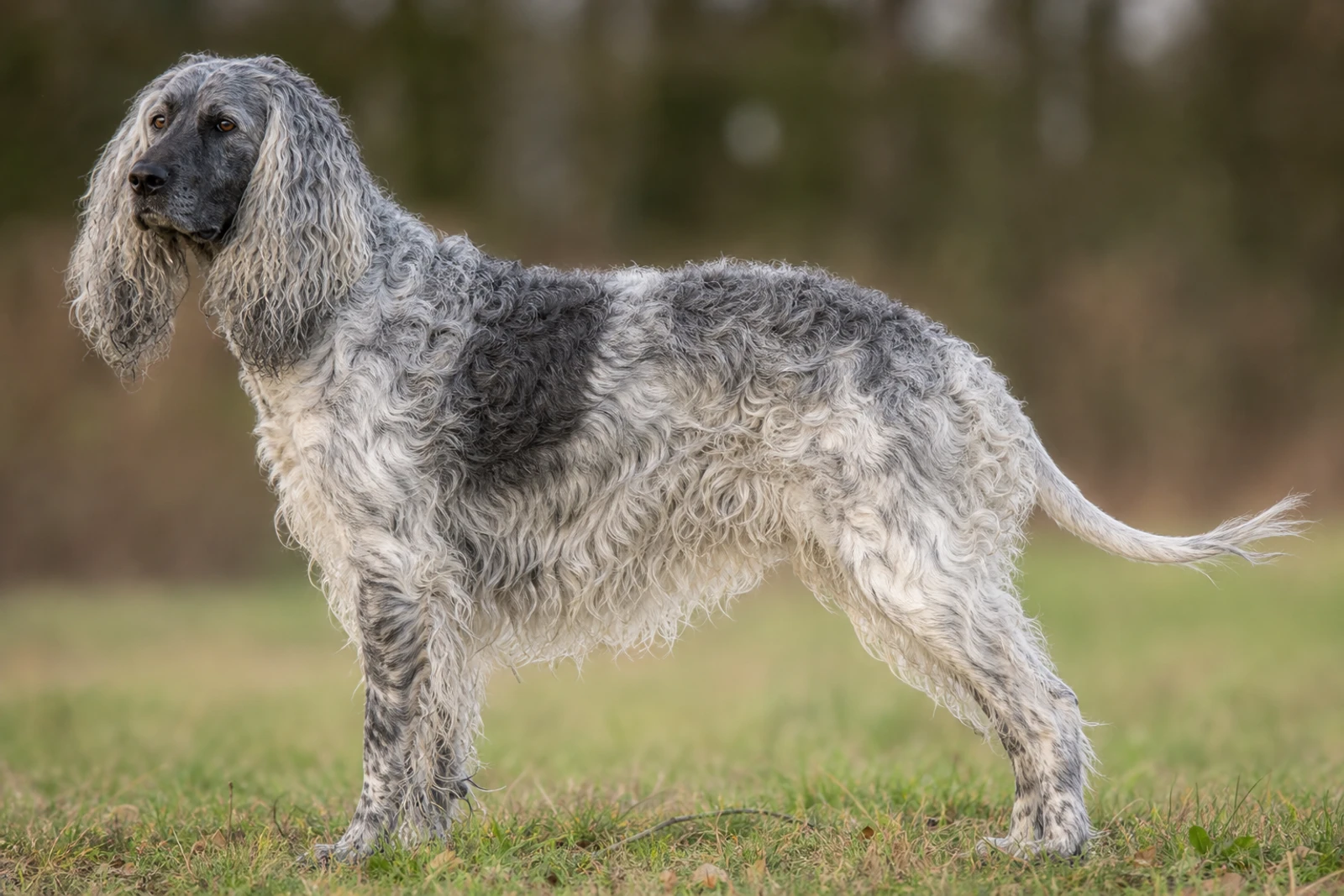
The Pont-Audemer Spaniel is a rare, versatile gun dog perfect for active families who love the outdoors. With their boundless energy and affectionate nature, they thrive with owners who can provide plenty of exercise and mental stimulation. Their waterproof coat and webbed feet make them excellent swimmers, while their eager-to-please temperament ensures they form deep bonds. Not for couch potatoes, this loyal breed excels in hiking, hunting, and dog sports. They are gentle with children and other dogs, but may chase small pets, so early socialization is key.
At a glance
- Size
- Large
- Height
- 20–23 in
- Weight
- 40–53 lb
- Life span
- 12–14 years
- Coat colors
- Liver and white, Liver roan and white
- Coat type
- Dense, waterproof, wavy or curly coat
- Group
- Gun
How much does a Pont-Audemer Spaniel cost?
Adopt / rescue
$75–$400
Usually includes spay/neuter, first shots, and a microchip.
Buy from a breeder
$700–$2,000
From a reputable, health-testing breeder.
Approximate USD. Prices vary widely by region, breeder, pedigree, age, and coat colour — adopting is the lower-cost and recommended route. Avoid suspiciously cheap “breeders”; they’re often puppy mills.
Estimate the full cost of a Pont-Audemer Spaniel →Want the ongoing number? Estimate the monthly food bill for a Pont-Audemer Spaniel with our dog food cost calculator.
Pont-Audemer Spaniel photos
Views
Front, side, rear and top — the full silhouette.Poses
How the breed sits, lies, moves and plays.Puppy to senior
The breed across its whole life.Expressions
The breed’s range of moods.Close-up details
Eyes, ears, nose, paws, tail and coat.Coat colors
The breed’s recognized colors.Click any photo to enlarge. We show the Pont-Audemer Spaniel from every angle — three views, poses, life stages, expressions, close-ups, coat and colors.
Appearance & size
The Pont-Audemer Spaniel gives you a rangy, solidly built gundog that stands 20 to 23 inches at the shoulder and weighs anywhere from 40 to 53 pounds. That’s large enough to power through cold water retrieves without tiring, but not so heavy that the dog loses the quick, buoyant movement the breed was developed for. A well-constructed Pont-Audemer carries a bit more length than height—the body is slightly rectangular—with a deep chest that reaches to the elbows, well-sprung ribs, and a strong, straight back that slopes gently at the croup. The neck is clean, slightly arched, and long enough to let the dog scoop up game easily. The tail, whether docked short or left natural, is thick at the base and carried with a lively upward set.
The coat is what most people remember first. It’s a true water dog’s jacket: dense, crisp, and either tightly curled or prominently wavy, never lying flat or open. The texture feels slightly oily to the touch, and underneath there’s a fine, insulating undercoat. Coat color stays in the liver family—solid liver or, far more commonly, liver roan, where white and liver hairs mix to create a brownish-gray or lilac-roan look. You’ll often see patches of solid liver, roan ticking on the legs, and maybe a small bit of white on the chest or toes, but the overall impression remains dark.
Distinctive features make the breed easy to pick out. The head is topped by a soft, full topknot of curls that falls over the forehead like a natural wig—this is a breed hallmark. Long, broad ears are set at eye level, heavily covered in wavy hair, and hang past the jawline, framing the face. The muzzle is squarish at the end, slightly shorter than the skull, with a straight nasal bone and a medium stop. Nose leather is always liver. Eyes are medium-sized, dark amber to hazel, with a direct, gentle expression that’s more businesslike than soft.
From the front, the chest appears broad and deep, and the straight forelegs stand parallel with good bone and moderate feathering—the topknot draws the eye immediately. In profile, the rectangular body, deep brisket, and strong topline show a dog built for endurance, with balanced angulation front and rear. From behind, the hindquarters look powerful and moderately angled, with well-let-down hocks and wavy feathering along the back of the thighs. The dog never appears exaggerated or heavy; it reads as a practical, athletic spaniel with a rustic silhouette that reflects its old French marshland origins.
History & origin
The Pont-Audemer Spaniel was built for the soaked, tangled landscape of Normandy’s river valleys, around the market town that gave the breed its name. In the 19th century, hunters in the Pont-Audemer region needed a dog that could slip through reed beds, plunge into icy channels after a downed duck, and still hold a steady point on snipe in the marshes. They didn’t set out to create a breed for the show ring. They wanted a tireless, weatherproof gun dog that could handle the job day after day, and they cobbled it together from whatever worked.
The recipe almost certainly started with old French spaniel types, then added a generous dose of Irish Water Spaniel to lock in the liver-colored, tightly curled coat and the love of water. Some breed histories also point to Barbet or Poodle influence—anything that would produce a soft-mouthed retriever with a dense, protective jacket. By the late 1800s, the result was a muscular, medium-to-large spaniel that stood 20 to 23 inches at the shoulder and weighed 40 to 53 pounds, with a distinctive topknot and a methodical, ground-covering hunting style. Locals called it le petit épagneul de Pont-Audemer, though “little” only made sense next to some of the larger French griffons.
The two world wars nearly erased the breed. Normandy saw brutal fighting, and dogs that weren’t killed outright often disappeared as hunting traditions collapsed. By the 1940s, the Pont-Audemer Spaniel was down to a tiny remnant. A handful of determined breeders in the 1960s and 1970s painstakingly tracked down surviving animals, sometimes crossing carefully with related spaniel lines to restore genetic viability without sacrificing working ability. They succeeded, but just barely—the breed never recovered the numbers it had before the wars.
That tight survival story still defines the Pont-Audemer Spaniel today. It remains one of the rarest gun dogs in the world, with most of its population still clustered in France. You’ll occasionally encounter one outside the country, almost always in the hands of a serious waterfowler or a breed enthusiast who stumbled onto it and couldn’t let go. The dogs still think and work like the marsh dogs of the 1800s. No exaggerated features, no show-ring fluff—just a quiet, focused hunter that seems to belong with mud on its paws and river water dripping from its curls.
Temperament & personality
A Pont-Audemer Spaniel is, at heart, a working gun dog wired for long, wet days in the field — which means you're getting a tireless, cheerful athlete who bonds hard with the family. These dogs live for purposeful exercise and close human contact. A simple stroll on a leash won't make a dent; plan on a solid hour or more of off-leash running, swimming, or fast-paced fetch, split across the day if needed. A 40–53 lb dog with this much drive left underworked can turn that energy toward barking, chewing, or creative indoor redecorating.
At home and afield
Inside, a well-exercised Pont-Audemer is surprisingly calm and tidy — many owners describe them as "quiet house dogs" who are happy to curl up next to you once their tank is empty. They are naturally sociable, usually gentle with children, and tend to follow you from room to room, drawn by the scent of their people. That same nose makes them attentive watchdogs; they'll announce visitors with a bay, but genuine aggression is uncommon. Still, early and consistent socialization matters. They can be reserved with strangers, and a large, stiff-looking dog with direct staring can escalate a situation — so teach your dog that new people equal good things.
The breed leans a bit strong-willed. Force or repeated corrections tend to backfire. Respectful, positive-reinforcement work — treat immediately when they eliminate outdoors, use short training games, and keep your voice calm — gets the best results. Neglect or harsh handling can bring out anxiety-driven behaviors like excessive barking or marking inside. Speaking of marking: intact males especially may urine-mark new environments. A vinegar-based cleaner that neutralizes odor helps prevent a repeat performance on the same rug.
A few quirks to expect
- Rolling in foul-smelling stuff. Like many spaniels, the Pont-Audemer can find week-old fish or swamp muck irresistible. It may be a scavenger's instinct or just a perfume preference, but expect to keep a bottle of dog shampoo handy.
- Food-zone boundaries. Never interrupt a dog while eating, and teach children to do the same. Even the sweetest Pont-Audemer can develop resource guarding if rushed at mealtime.
- Chewing cycles. Puppies chew to explore and relieve teething pain; adults keep jaws strong and teeth clean with hard chews. A homemade citrus spray can direct chomping away from chair legs if needed.
- Communication signals. A loose body, soft eyes, and a gently waving docked tail signal a content dog. Lip licking, yawning, or turning the head away means he’s asking for space — listen before the dog has to escalate.
These personality traits aren't a one-size-fits-all guarantee; they’re tendencies. A responsible breeder will have screened breeding stock for stable, biddable temperaments. In the right home — one that respects his physical needs, his sensitive nature, and his deep desire to be part of the action — a Pont-Audemer Spaniel gives you twelve to fourteen years of devoted, tail-wagging partnership.
Good with kids, dogs & other pets
The Pont-Audemer Spaniel’s laid-back, non-aggressive temperament makes him one of the safer gun dogs to have around children. He’s patient when ears get tugged and rarely flinches at the chaos of a busy household. At 40–53 lb, he’s solid enough to handle clumsy toddler hugs without breaking, but not so huge that he’ll accidentally body-slam a three-year-old — though a full-speed zoomie in the yard still warrants a watchful eye. Supervise interactions with young kids mainly because this breed lives for companionship and wants to be where the action is; he’s just as likely to steal a spot on the couch next to a napping child as he is to join an impromptu game of fetch.
The flip side is sensitivity. A Pont-Audemer doesn’t do well with harsh voices or rough handling. Teach children to be gentle early on, and the dog will repay you with unwavering loyalty. He also hates being left out. If the family disappears for a weekend and he’s stuck in a kennel or yard, expect moping. This is a breed that needs to be inside, part of the day-to-day rhythm.
Other dogs
Early socialization pays off enormously here. A Ponty who meets a variety of calm, friendly dogs as a puppy usually grows into a dog who greets both familiar and unfamiliar canines with a wagging tail — no posturing, no snark. He’s not a fighter; the same patient streak applies to dog greetings. That said, an undersocialized adult can become shy or hesitant around strange dogs, so don’t skip the work between 3 and 14 weeks. If you have a multi-dog household, slow, neutral introductions on leash and plenty of parallel walks set the stage for an easygoing pack dynamic. Because he’s so attached to his people, he won’t default to rough wrestling the way some terriers might, but he’ll enjoy a romping buddy who matches his energy level.
Cats and small pets
Spaniel brains come wired to notice fluttering and bolting things. A Pont-Audemer raised alongside a cat from puppyhood often learns to coexist just fine, especially if you reinforce calm behavior around the feline from day one. But the retrieve instinct doesn’t vanish. A cat that tears through the house can flip a switch, and your sweet family dog may suddenly treat it like a winged bird down. Manage the environment: baby gates, a cat-only high-up space, and a bombproof “leave it” command are your backup plans.
For rabbits, guinea pigs, or pet birds, the risk is higher. Separate secure housing is non-negotiable. Never leave a spaniel unsupervised with small furry or feathered pets, no matter how gentle he’s been in the past. The dog’s intention isn’t aggression — it’s pure predatory sequence — but the outcome for a pet hamster is the same. With clear boundaries and lifelong training, some individuals live politely with free-roaming small animals, but you’re betting against genetics if you push it.
Trainability & intelligence
This is a thinking dog that wants to work with you — not just for a treat, but because the partnership itself is rewarding. A Pont-Audemer Spaniel learns fast when lessons are built on trust and clear communication. Heavy-handed corrections backfire; they’ll shut down or get crafty about avoiding pressure. What does work is a mix of praise, play, and food rewards delivered the instant they get it right.
Start the day you bring your puppy home. Window of real soak-it-up social learning is wide open between 3 and 16 weeks. Introduce new people, sounds, surfaces, and other animals in short, positive doses. One bad scare during that stretch can linger as adult reactivity, so go at the pup’s pace, not a checklist’s.
These spaniels have a sharp nose and a working gun dog’s focus, which means they’re naturally inclined to please and quick to chain behaviors together. Basic obedience often locks in with just a few short sessions. But that same drive has a flip side: if a scent catches their attention, your voice can drop to background noise. Recall is the skill that demands the most reps and the highest-value rewards. Practice it everywhere — your yard, a quiet field, eventually around mild distractions — and never call them to you to end the fun. Always pair coming when called with something good, even if it’s just a quick game of tug before you clip the leash.
Common challenge is that they’re soft. They read your mood. Get frustrated, raise your voice, and you’ll see a dog that suddenly seems “stubborn” when really they’re worried. Keep sessions upbeat and short. End on a win. Their independent streak, typical of many spaniels bred to quarter and work at a distance, means you’ll earn their cooperation faster by showing them what’s in it for them than by demanding blind compliance.
Long-term, consistent proofing keeps that reliable obedience. A dog this attuned to you will stay sharp with a few minutes of mixed practice daily — even teaching them novel little tricks to keep their mind in the game.
Exercise & energy needs
Plan on two solid workouts a day, not just a leashed stroll around the block. The Pont-Audemer Spaniel was built to hunt waterfowl in marshes, so this dog has a real working engine. Figure on 60 to 90 minutes of daily exercise, split into at least two sessions. A single long walk won’t cut it — he needs to run, swim, and use his brain.
- A hard run or off-leash hike in the morning and a long walk mixed with retrieving drills in the afternoon keeps him settled indoors. This breed loves water, so if you have safe access to a pond or lake, swimming becomes a low-impact way to burn off steam while protecting developing joints.
- Mental work is non-negotiable. Bred to track, flush, and retrieve, these spaniels thrive on scent games, hide-and-seek with a favorite bumper, and puzzle toys that make them problem-solve. A 15-minute nose-work session inside can tire him out as much as a 30-minute walk.
- Beware of forced high-impact exercise on hard surfaces, especially during puppyhood. Large spaniels can be prone to joint issues, and responsible breeders screen hips and elbows; gentle, varied terrain and swimming are safer for growing bodies.
Without enough physical and mental outlets, expect a creative, wet, and sometimes destructive housemate. Channel that prey drive into a sport like hunt tests, dock diving, or rally obedience and you’ll have a dog who crashes happily on the rug rather than redecorating the living room.
Grooming & coat care
The dense, curly double coat of a Pont-Audemer Spaniel isn’t just decoration—it’s a waterproof work jacket that mats the moment it’s ignored. Daily brushing is the baseline, not a nicety. Skip a day, and you’ll find tangles fusing into tight, skin-pulling clumps behind the ears, under the legs, and along the belly.
Work through the coat with a medium-to-long pin brush or a slicker brush with rounded pins to detangle without scraping the skin. Follow up with a wide-toothed comb on the feathering—especially the long ear fringes and the plumed tail—to catch what the brush missed. This routine also whisks out burrs, twigs, and dried mud the dog picks up on every outing.
Bathing and drying
A bath every 6–8 weeks (or after a swampy retrieve) keeps the coat in working order without stripping the natural oils that give it grit. Use a mild dog shampoo and rinse until no suds remain; any leftover residue will have the dog itching and licking. The real trick is the dry. Towel-squeeze the soaked curls, then blow-dry on a cool setting while you brush. Air-drying on its own lets the undercoat shrink into a matted mess—and that damp, warm layer is an open invitation to hot spots.
Trimming for a practical life
Pet dogs don’t need show-ring sculpting, but a few strategic trims make a big difference. Clip the hair between the paw pads to stop snowballing in winter and mud-slick slipping at other times. Neaten the feathering on the legs, tail, and ears with thinning shears to cut down on burr collection. A sanitary trim under the tail keeps things clean. If the coat grows thick around the ear canal, ask a groomer to thin it out—it helps air circulate and reduces the risk of infection.
Ears, nails, and teeth
Those long, heavily feathered ears trap moisture deep in the canal. Check ears weekly: wipe the accessible flap and entrance with a vet-approved cleaner, and dry them thoroughly after any swim or bath. Redness, odor, or head-shaking means a vet visit, not a home remedy. Nails need attention every 3–4 weeks; if you hear clicking on hardwood, they’re already too long. Teeth benefit from brushing several times a week with dog-specific toothpaste. Tartar buildup can turn into gum disease fast, especially in a dog whose life span runs 12–14 years.
Seasonal coat blows
Twice a year, the undercoat lets go in earnest. For a few weeks, daily brushing shifts to twice-daily sessions, and an undercoat rake or de-shedding tool pulls out the loose fuzz before it blankets the furniture. This breed was built for hard outdoor work, and real exercise—swimming, long-running, vigorous fieldwork—speeds up coat turnover and reduces stress-related shedding better than any supplement can.
Shedding & allergies
The Pont-Audemer Spaniel’s dense, corkscrew-curled coat is a working coat — built for icy marshes, not for a hair-free sofa. You’ll deal with moderate shedding year-round, but the way the fur gets released is a little sneaky. Instead of drifting onto every surface, dead hair tends to tangle into the curls, where it sits until you brush it out. Skip a week of grooming and those hidden clumps turn into mats that pull on the skin. Stay on schedule, and you’ll collect most of the shed hair right on the brush.
Twice a year — usually spring and fall — expect a full-blown blowout. For two or three weeks, the undercoat lets go in earnest. Daily line brushing (a slicker brush followed by a metal comb down to the skin) is the only way to keep up.
Drool is a minor footnote. After a deep drink from the bowl, the flews may leave a couple of wet spots on the floor, but this isn’t a breed that trails strings of slobber day in and day out. A simple towel near the water station handles it.
When it comes to allergies, don’t let the curly coat sell you a false promise. No dog is hypoallergenic — allergies are triggered by proteins in dander, saliva, and urine, not just floating hair. The Pont-Audemer’s tight curls do trap some dander close to the skin, which can mean less airborne allergen than a heavy-shedding, short-coated dog. That said, a mild allergy sufferer might still react to a face full of excited licks or a dusty couch. Spend real time with adult dogs of the breed before committing, and keep baths every 4–6 weeks to rinse away dander buildup.
Diet & nutrition
A Pont-Audemer Spaniel who learns that mealtime means a full bowl and an empty thirty seconds is a dog who can quickly put on extra pounds—especially since this athletic gun dog will happily match your activity level, then match your snack level too. Because excess weight strains hips, elbows, and a deep chest, portion control matters as much as the run you take him on.
Start with a schedule, not a guess.
- For a 40–53 lb adult, divide his daily ration into two meals. Use the feeding chart on a high-quality food as a baseline, then adjust up or down by a quarter cup based on his waistline and weekly energy output. You want to feel ribs without pressing hard.
- Puppies need four evenly spaced meals until about four months old, then three meals until six months. At that point, switch to the adult two-meal rhythm.
What to put in the bowl. A diet built around meat suits a spaniel’s digestive anatomy. Aim for roughly:
- 60% raw or cooked meat and meaty bone
- 20–30% puréed fruits and vegetables (carrots, blueberries, green beans)
- 10% other foods like eggs, plain yogurt, or cooked grains such as pearl barley or white rice
Blending or processing the whole meal slightly aids nutrient absorption—dogs lack salivary amylase and their jaws only shear, not grind. If your Pont-Audemer wolfs down food, switch to a puzzle bowl or a slow-feeder to stretch mealtime and engage his nose.
Senior years and sensitive stomachs. Older dogs often do better with three smaller portions instead of two, especially as exercise tapers off. Watch the scale and reduce food gradually; don’t wait for a visible layer of fat. There’s no strong evidence that healthy seniors need less protein, so keep the meat content robust unless your vet advises otherwise. For a dog with missing teeth or a tender mouth, puréeing the whole meal makes a real difference.
A few ground rules.
- Never pour rich holiday leftovers into his dish or let him clean the roasting pan—suddenly fatty meals can trigger pancreatitis.
- If you batch-cook rice, vegetables, or poached fish, stash them in the fridge for instant, healthy meals. Unsalted veggie cooking water works as a base if you’re out of stock.
- Feed him in his own bowl, every time. Handing bites from the counter teaches begging that’s tough to reverse, so treat his bowl as the only portal to food, and you’ll keep a trim, well-mannered spaniel.
Health & lifespan
A well-cared-for Pont-Audemer Spaniel often lives 12–14 years, right in line with other mid-to-large gundogs. That long partnership depends on a few things you can actually control: keeping the dog lean, staying ahead of parasites, and never letting a wet, floppy ear fester.
Common health concerns
- Ear infections top the list. Those heavy, pendulous ears trap moisture and cut off airflow, especially after a swim or a rainy hunt. Check ears weekly and dry them thoroughly after water work. A faint yeasty smell or head-shaking usually means trouble before you see redness.
- Skin and coat issues can flare up if the dense, curly coat stays damp against the skin. Hot spots and bacterial overgrowth are real risks for a dog built to plunge into marshes. Rinse off pond muck after outings and get the coat fully dry down to the skin.
- Like most large, active spaniels, they may carry a genetic predisposition toward hip dysplasia. Responsible breeders screen breeding stock with OFA or PennHIP evaluations and share those results openly. Ask for those clearances before you bring a puppy home.
- Eye conditions, including progressive retinal atrophy and entropion, show up in some spaniel lines. Annual eye exams by a veterinary ophthalmologist are a smart routine, starting around age two or three.
- Weight management cuts across everything. Carrying extra pounds on a 40–53 lb frame stresses joints, dampens stamina, and can shave years off that 12–14 year window. Monitor body condition, not the food scoop, and adjust portions when the dog’s activity dips.
Preventive habits that pay off
- Heartworm prevention is non-negotiable for a dog that works in mosquito-heavy wetlands. Give a monthly preventive dose during mosquito season and continue for at least a month after temperatures drop.
- Rabies vaccination is legally required everywhere in the US. There is no effective treatment once symptoms start, so keep it current.
- Regular vet checkups — at least annually, twice a year once the dog hits senior status — catch subtle shifts in joint comfort, hearing, and vision early. A dog that flushes strong one season but seems stiff the next might just need a management plan, not a forced retirement.
- This breed thrives on human connection. Isolation or neglect can spiral into anxiety-driven behaviors like obsessive barking or chewing. Early socialization and consistent, positive handling aren’t just nice-to-haves; they prevent stress-related health problems that show up as digestive upset or suppressed immunity.
Schedule that first wellness visit within days of bringing your Pont-Audemer Spaniel home, and then stick to the yearly rhythm. It’s the simplest way to get 14 good years instead of 12 mediocre ones.
Living environment
A Pont-Audemer Spaniel doesn’t just prefer space—he truly needs it. Apartment living sets you both up for frustration. These are large, mud-loving gun dogs bred to work water and marsh all day, and they’ll turn a cramped living room into a reenactment of that unless you’ve got a serious outdoor plan.
Yard and space. A house with a securely fenced yard is the baseline. The fence needs to be at least five or six feet high, not just to keep him in but to prevent him from following his nose over or under it. What you can’t see: his intense prey drive. A squirrel, a scent trail, or the neighbor’s cat will short-circuit any recall if he’s loose. A yard gives him a safe spot to sniff, patrol, and burn off steam between your outings, but it doesn’t replace active exercise. Standing in the grass won’t do it.
Exercise reality. Count on at least 60–90 minutes of real movement every day, split into two sessions. This is a water spaniel. If you aren’t giving him a pond, lake, or a hose and a kiddie pool to splash in, you’re ignoring half his wiring. He needs to run, swim, and retrieve until he’s genuinely tired. Short leash walks around the block leave a dog like this wired and destructive. He shines with off-leash time in safe, fenced natural areas, scent games, and training sessions that double as mental workouts.
Climate tolerance. That dense, water-resistant coat is built for cold, wet conditions. He’ll happily plunge into icy water and shake it off. Heat is the real risk. In warm weather, move exercise to early morning or late evening, provide shade and cool water, and watch for heavy panting. He was never designed for a midday run in July.
Noise and barking. He’s not a constant yapper, but he’s vocal in his own way—alert barks when someone approaches, excited yelps when you pick up the leash. He’ll let you know a delivery driver is on the porch. In a shared-wall setting, that’s enough to cause friction. In a house with some distance from neighbors, it’s manageable.
Being left alone. This is the dealbreaker for a lot of homes. Pont-Audemer Spaniels bond tightly with their people and can slide into anxiety if left alone for a full workday. You’ll see chewed door frames, barking, or indoor “accidents” even from a house-trained adult. Start crate training and alone-time practice from day one, and provide frozen puzzle toys, scent work, and long-lasting chews. Even then, a home where someone is around more than they’re gone suits him best. If your schedule keeps you out eight-plus hours regularly, this isn’t the breed to bring home.
Who this breed suits
The right fit
A Pont-Audemer Spaniel plugs straight into a life shaped around water, woods, and steady companionship. At 40–53 pounds and 20–23 inches tall, he’s a sturdy, medium-large gundog that needs a real outlet for his breeding—not just a backyard. The owner who thrives with this breed is an active outdoors person: a duck hunter, a dedicated hiker, someone who sees a rainy weekend as a reason to grab the boots, not the remote. He’s built for marsh work with a curly, water-resistant coat, and that means a fondness for mud that you’ll need to accept (and hose off).
Active families get on famously with this spaniel. He’s gentle and playful with children, rarely sharp, and naturally social with other dogs. Count on a minimum 60–90 minutes of hard exercise daily—off-leash running, swimming, retrieving—paired with nosework or training sessions that tire out his sharp, busy brain. Underworked, he’ll redecorate with enthusiasm. Seniors who are fit and genuinely outdoorsy can match his pace, but a casual stroll around the block won’t cut it; he needs to run flat out and swim until he’s satisfied.
First-time dog owners can succeed here if they’re prepared to commit to positive, consistent training. He’s eager to please and more biddable than many pointing breeds, but he’s also sensitive and won’t respond well to heavy-handed corrections. Singles who work long hours should budget for midday dog walkers or doggy daycare because this is a people-focused dog that forms tight bonds and can develop separation anxiety when left alone too long. He’s a housedog first—not a kennel dog.
Think twice if…
You live in an apartment without direct, daily access to off-leash trails or open water. This breed’s energy isn’t negotiable, and his size makes a cramped space feel even smaller when he’s bouncing off the walls.
You want a low-maintenance lap dog that’s content with a few short walks. The Pont-Audemer will get destructive, anxious, and hard to live with without a job.
Small pets like rabbits or free-roaming cats are part of your household. Generations of selective breeding for finding and flushing game means his prey drive runs high. He may learn to coexist with a calm indoor cat if introduced young, but it’s a gamble.
You’re gone 10 hours a day, most days. A people-oriented spaniel left alone that long often spikes toward barking, chewing, or house-soiling—no amount of good intentions changes that wiring.
A 12- to 14-year commitment is heavy. If you can’t give him mud, water, structured work, and steady company for the long haul, look for a less demanding dog. This one is a true working partner who just happens to sleep indoors.
Cost of ownership
A Pont-Audemer Spaniel isn’t a breed you stumble onto through a quick online search. A puppy from a responsible breeder who health-tests for hip dysplasia, eye conditions, and ear issues will typically run $1,500 to $2,500, and can climb past $3,000 if you’re importing from France or dealing with an extremely small North American litter. This remains a rare gun dog, so expect to get on a waiting list and possibly travel for pickup.
Once the pup is home, the monthly rhythm of costs looks like this:
- Food: Count on $50–70/month for a high-quality kibble formulated for an active, medium-to-large breed. These are muscular 40–53 lb dogs built for water work, so free-feeding junk food is a fast track to joint stress and poor conditioning.
- Grooming: Their dense, curly or wavy coat needs brushing twice a week to prevent mats and trap burrs. A DIY setup with a pin brush, metal comb, and ear cleaner runs under $30 upfront. If you use a professional groomer for a tidy-up and sanitary trim, budget $50–80 every 6–8 weeks. Don’t skip ear care — those drop ears are magnets for infection after a swim.
- Vet and prevention: Routine checkups, vaccines, and year-round heartworm, flea, and tick preventatives generally average $40–60/month. Given the breed’s working history, cruciate ligament tears and ear trouble are realistic worries, so having a financial cushion for the unexpected matters.
- Insurance: A decent accident-and-illness policy for a healthy young spaniel runs $30–50/month, often with a higher deductible if you want a lower premium. You might pay less early on, but don’t bank on it without checking the fine print for hereditary exclusions.
All told, plan for a monthly baseline somewhere around $200–300, not counting initial gear like a sturdy crate, lead, bed, and puppy vaccinations. The real sticker shock, though, often isn’t the money — it’s the rarity. Finding a well-bred litter may mean an international flight and a year of patience.
Choosing a Pont-Audemer Spaniel
This isn’t a breed you’ll stumble across at a local shelter. The Pont-Audemer Spaniel is rare even in its native France, so your search almost always leads to a dedicated breeder—often one who hunts over their own dogs. That’s not a downside; it means you can build a direct relationship with someone who has stacked the deck for health, temperament, and working ability.
Breeder vs. rescue. A dog in need of rehoming occasionally surfaces through spaniel rescue networks or the U.S. breed club, but don’t count on it. Breeders who really know their lines are your primary route. Look for someone who competes in field trials or hunts consistently, not just someone producing puppies because they’re rare. They’ll ask you plenty of questions about your lifestyle, yard, and experience with high-energy gun dogs before they’ll put you on a waitlist.
Health clearances you absolutely want to see. A responsible breeder tests both sire and dam—not just says they’re healthy. At minimum, insist on:
- Hip evaluation (OFA or PennHIP) at 2 years or older.
- Annual eye exam by a veterinary ophthalmologist (OFA Eye or CERF registration).
- Many also screen elbows and cardiac, especially since the breed’s gene pool is small.
Don’t accept a verbal promise. Ask to look up results yourself in the OFA database or see the certificates. These dogs can be prone to hip dysplasia and inherited eye issues, so skipping clearances is gambling with your wallet and your dog’s comfort.
Red flags that should make you walk away. Puppies available right now with no waitlist. Breeder can’t or won’t let you meet the dam on-site (videos aren’t the same). Dogs bred before age 2, when hip and elbow results aren’t final. No written contract that takes the dog back if your circumstances change. A string of different litter announcements every month—that’s a puppy mill, not a careful preservation breeder.
Picking your puppy. You’ll likely visit when the litter is 7–8 weeks old. Watch the dam’s demeanor; she should be calm and approachable, not skittish or absent. Pups in a well-raised litter move confidently, investigate new things, and bounce back from a startle. A good breeder matches temperament to your home—a pup that scales the ex-pen and demands attention might be a blast for an active hunting household but a wrecking ball for a quieter family. Your breeder’s judgment here is worth more than you picking the cutest one.
Pros & cons
Pros
- Affectionate, even-keeled family companion that bonds deeply with everyone — including respectful kids — and tends to be gentle inside the house.
- Trainability is a genuine strength. Eager to please and quick to pick up on what you want, they shine in positive-reinforcement obedience, field work, and any job that involves water.
- Purpose-built water dog. Webbed feet, a dense water-repellent coat, and a natural retrieving instinct mean they’re in their element fetching from ponds, marshes, or the lake all day.
- Manageable size for an active home. At 40–53 pounds and 20–23 inches tall, they’re sturdy enough for a full day in the field but not so large they overwhelm a modest house.
- Low-shedding coat when maintained properly, which can be a relief if you don’t want drifts of hair on the furniture.
- Solid lifespan of 12–14 years with a generally healthy baseline; responsible breeders screen hips and eyes, so a well-bred Pont-Audemer stays a lively partner well into old age.
Cons
- Serious grooming commitment. That wavy, top-knotted coat mats fast without thorough brushing several times a week, and the ears and furnishings need trimmed regularly to avoid a damp, tangled mess.
- Ear infections are a constant risk. Dropped ears trap moisture and debris — especially after swimming — so you’ll be cleaning and drying them religiously to stay ahead of trouble.
- High-octane exercise needs, every day. A quick sidewalk walk won’t cut it. Plan on a solid hour of off-leash running, swimming, or vigorous retrieving, plus mental puzzles to keep a clever brain occupied. A bored spaniel quickly turns to barking, digging, or redecorating.
- Reserved with strangers and can tip into shyness. Without deliberate, ongoing socialization from puppyhood, they can be aloof or skittish — not the goofy greeting committee some families expect.
- Hard to find and rarely cheap. The breed’s rarity means long waiting lists, limited breeder options, and a higher price tag. Rescues or adults are almost nonexistent, so you’re likely in for a puppy wait.
- Velcro-dog tendencies. They thrive on being woven into your daily rhythm and can develop separation anxiety if left alone for long stretches, so a household where someone is around most of the day works best.
Similar breeds & alternatives
English Springer Spaniel
If you love the Pont-Audemer’s medium-large, friendly gun dog vibe but want a breed you can actually find without a transatlantic treasure hunt, the Springer is the practical switch. Both run 40–50 pounds, though Springers stand a bit shorter at 19–20 inches, and they flush game instead of pointing. That means a busy, close-ranging hunt style, whereas a Pont-Audemer is more methodical and will hold a point. At home, both are effusive family dogs, but a Springer’s less curly coat is easier to maintain—still sheds, but you skip the mat-prone curls. Exercise requirements match: a solid hour of hard running daily, not a stroll. Springers are famously biddable, while a Pont-Audemer can bring a dash more independence.
Brittany
Shave off 10–15 pounds and a few inches, and you get the Brittany (17.5–20.5 inches, 30–40 pounds). This smaller pointing breed shares the Pont-Audemer’s athleticism and need for real off-leash exercise, but the coat is a flat or lightly wavy wash-and-wear job—no dense curls that demand frequent combing. Brittanys can be more sensitive and vocal, yet both are soft-mouthed, eager hunters and affectionate companions. If the pointing spaniel brain appeals but you live tighter on space or have small children who might get toppled, the Brittany’s lighter frame is a plus. Lifespan lines up at 12–14 years.
Irish Water Spaniel
When the curly, water-obsessed coat is the main draw, the Irish Water Spaniel is the closest counterpart—dense curls, built for cold water, and sporting a rat tail. The size difference is real: 21–24 inches tall and 55–65 pounds, so more dog to manage in the water and on the grooming table. Irish Water Spaniels tend to be reserved with strangers, while Pont-Audemers usually offer a wagging, open greeting. Both are smart, can be strong-willed, and need a job. Pick an IWS if you genuinely require a bigger, more powerful retriever; a Pont-Audemer delivers the same swimming spirit in a slightly lighter, more approachable package.
Picardy Spaniel
The Picardy is the Pont-Audemer’s French cousin built for upland fields instead of marshes. Similar height and weight (22–24 inches, 44–55 pounds), same calm indoor manner and steady pointing instinct. The coat is longer and wavier, not densely curled, so you trade less tangling for more shedding. If the Pont-Audemer’s intense water drive isn’t a priority and you hunt dryer ground or just want a mellow, family-centered hunting breed, the Picardy slots right in. Both are rare outside France, but the Picardy has a slightly larger North American presence, making a puppy a bit easier to find than the exceedingly scarce Pont-Audemer.
Fun facts
- Originated in the Pont-Audemer region of France in the 19th century.
- Nearly extinct after World War II; revived by careful breeding.
- Boasts a waterproof double coat and webbed feet, making them excellent swimmers.
- Recognizable by their distinctive curly topknot.
Frequently asked questions
- Is the Pont-Audemer Spaniel good with children?
- With proper socialization, this breed tends to be gentle and patient, making it a good companion for families with kids. Its playful nature and sturdy build can be a good match for active children, though supervision is always recommended with younger kids.
- How much exercise does a Pont-Audemer Spaniel need?
- As a gun dog, the Pont-Audemer Spaniel has high energy levels and requires at least an hour of vigorous exercise daily. Activities like running, swimming, or retrieving games can help meet its needs and prevent boredom-related behaviors.
- Does the Pont-Audemer Spaniel shed a lot?
- This breed has a medium-length, wavy coat that sheds moderately throughout the year, with heavier shedding during seasonal changes. Weekly brushing can help manage loose hair and keep the coat healthy.
- Is the Pont-Audemer Spaniel suitable for apartment living?
- Due to its size and high energy, this breed is generally better suited to a home with a yard. Apartment living may be possible if the dog receives ample outdoor exercise and mental stimulation, but its active nature can make small spaces challenging.
- Are Pont-Audemer Spaniels easy for first-time dog owners?
- While intelligent and eager to please, this breed can be strong-willed and requires consistent, positive training. First-time owners may succeed if they are committed to providing firm guidance, early socialization, and plenty of exercise.
Tools & calculators for Pont-Audemer Spaniel owners
Quick estimates tailored to Pont-Audemer Spaniels — pre-filled with this breed’s size where it matters.
Articles & stories about the Pont-Audemer Spaniel
Sources & standards
This profile follows recognized breed standards from the American Kennel Club (AKC) and the Fédération Cynologique Internationale (FCI), along with established veterinary and breed-club guidance. These describe general breed tendencies — every dog is an individual.